

When JBL launched the PartyBox 310 in 2020, they established a new standard for what a portable party speaker could accomplish. A year later, the PartyBox 110 arrived as a more accessible option, bringing many of the same core features to a smaller, lighter package. Now, several years into their market presence, both speakers have proven themselves as solid choices, but they serve distinctly different purposes.
The question isn't whether these are good speakers—they both are. The real question is which one matches your specific needs and budget. After diving deep into user reviews, expert evaluations, and technical specifications, the answer depends largely on the scale of your events and how you prioritize portability versus raw power.
Party speakers occupy a unique niche in the audio world. Unlike bookshelf speakers designed for critical listening or portable Bluetooth speakers meant for personal use, party speakers prioritize three key elements: volume, visual impact, and interactive features.
These speakers need to fill large spaces with sound, often competing with ambient noise from crowds, outdoor environments, or other activities. They typically feature LED lighting systems that sync with the music, creating a visual spectacle that enhances the party atmosphere. Most importantly, they include inputs for microphones and instruments, transforming them into complete entertainment systems for karaoke, speeches, or live performances.
The technical challenge lies in balancing all these features while maintaining portability. More powerful speakers require larger batteries, heavier amplifiers, and bigger drivers—all of which work against easy transport. Both the PartyBox 110 and PartyBox 310 tackle this challenge differently, leading to their distinct personalities.
The most significant difference between these speakers lies in their power output and the resulting sound quality. The PartyBox 310 delivers 240 watts of RMS power compared to the PartyBox 110's 160 watts. RMS (Root Mean Square) represents the continuous power a speaker can handle without damage, making it a more reliable measure than peak power ratings that some manufacturers use.
This 50% power advantage translates into noticeably louder maximum volumes and better headroom—the ability to play music cleanly without distortion even when pushed hard. In practical terms, the PartyBox 310 can comfortably fill spaces with 100+ people, while the PartyBox 110 works best for gatherings of 30-60 people.
The PartyBox 310 employs two 6.5-inch woofers alongside two 2.5-inch tweeters, while the PartyBox 110 uses dual 5.25-inch woofers with dual 2.25-inch tweeters. Woofers handle low-frequency sounds (bass), while tweeters reproduce high frequencies (treble and vocals).
The 310's larger woofers move more air, creating deeper bass extension and more impactful low-end response. This becomes particularly noticeable with bass-heavy music genres like EDM, hip-hop, or modern pop. Both speakers include Bass Boost features with multiple levels, but the PartyBox 310 has more headroom to work with, meaning it can enhance bass without sacrificing clarity in other frequencies.
Both speakers share the same frequency response range of 45Hz to 20kHz, covering the full spectrum of human hearing. However, the PartyBox 310 delivers more energy at the low end of this range, resulting in bass you can feel as well as hear.
Maximum volume capability often determines a party speaker's usefulness. Based on our research into user experiences and expert reviews, the PartyBox 310 consistently outperforms its smaller sibling in loud environments. Users report that the 110 begins showing compression artifacts—where the sound becomes slightly crushed or distorted—at maximum volumes, while the PartyBox 310 maintains better composure.
Dynamic range, the difference between the quietest and loudest sounds a speaker can reproduce, also favors the larger model. This means orchestral music with soft passages and thunderous crescendos, or hip-hop tracks with quiet verses and booming choruses, sound more realistic through the PartyBox 310.
However, at moderate listening levels—which covers most actual usage scenarios—both speakers perform admirably. The PartyBox 110 delivers clear vocals, balanced midrange frequencies, and punchy bass that satisfies most listeners. The difference becomes apparent only when you need to fill large spaces or compete with significant background noise.
Battery performance often determines whether your party continues or comes to an abrupt halt. The PartyBox 310 houses a 72-watt-hour battery compared to the PartyBox 110's 36-watt-hour capacity—exactly double the energy storage.
JBL rates the PartyBox 310 for 18 hours of playback versus 12 hours for the PartyBox 110. However, real-world performance varies significantly based on volume levels, bass boost settings, and LED lighting usage. Our research into user experiences suggests both speakers typically deliver about 10-15% less than their rated battery life under normal party conditions with lights enabled and bass boost activated.
Both speakers charge completely in about 3.5 hours using their included AC adapters. Neither offers fast-charging capabilities, so planning ahead remains important for multi-day events or back-to-back parties.
The battery advantage extends beyond just playtime. Longer battery life means less stress about power management during events and more flexibility in speaker placement, since you're not tethered to power outlets.
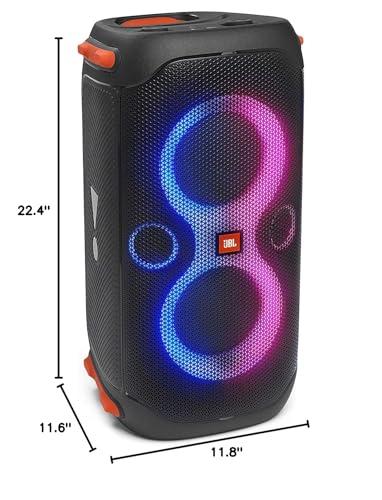
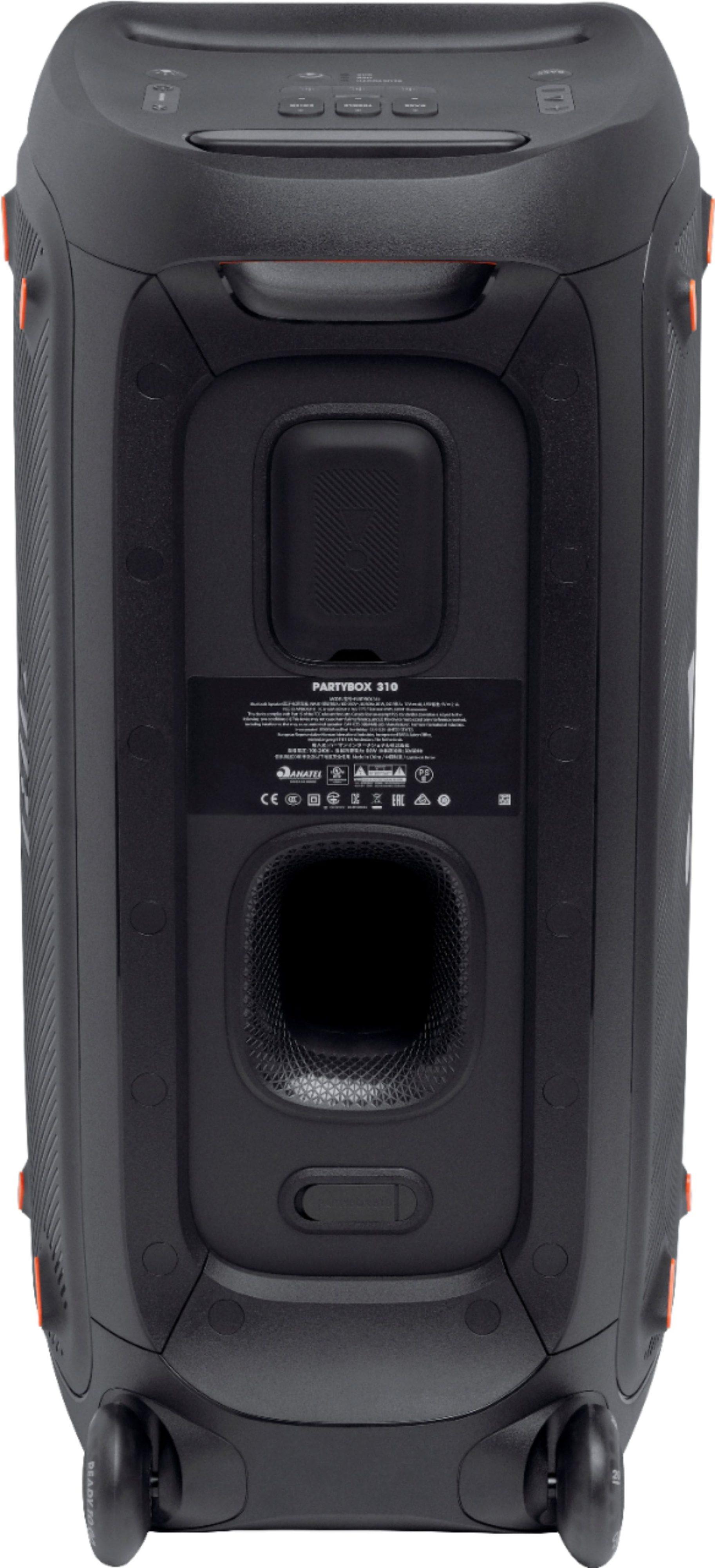
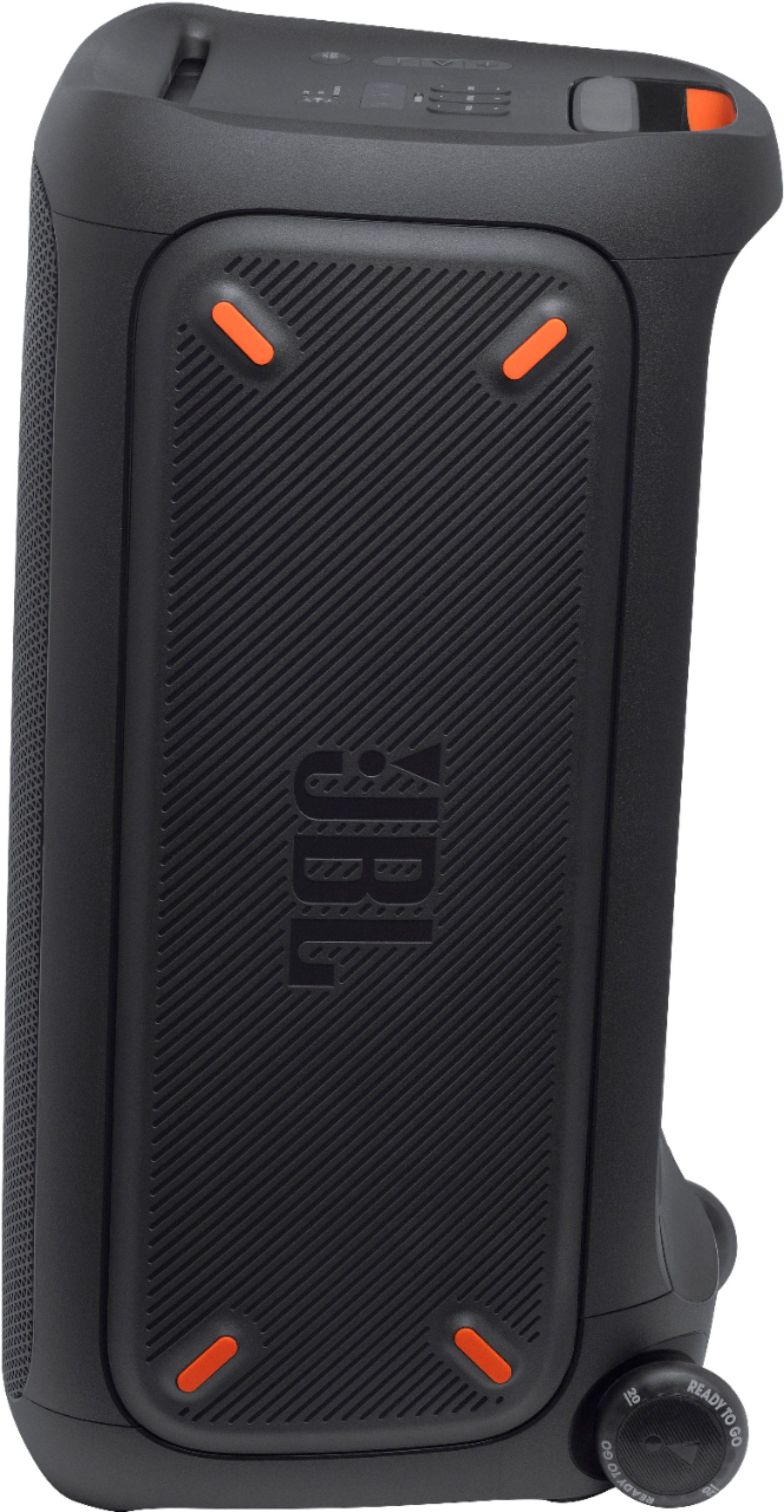
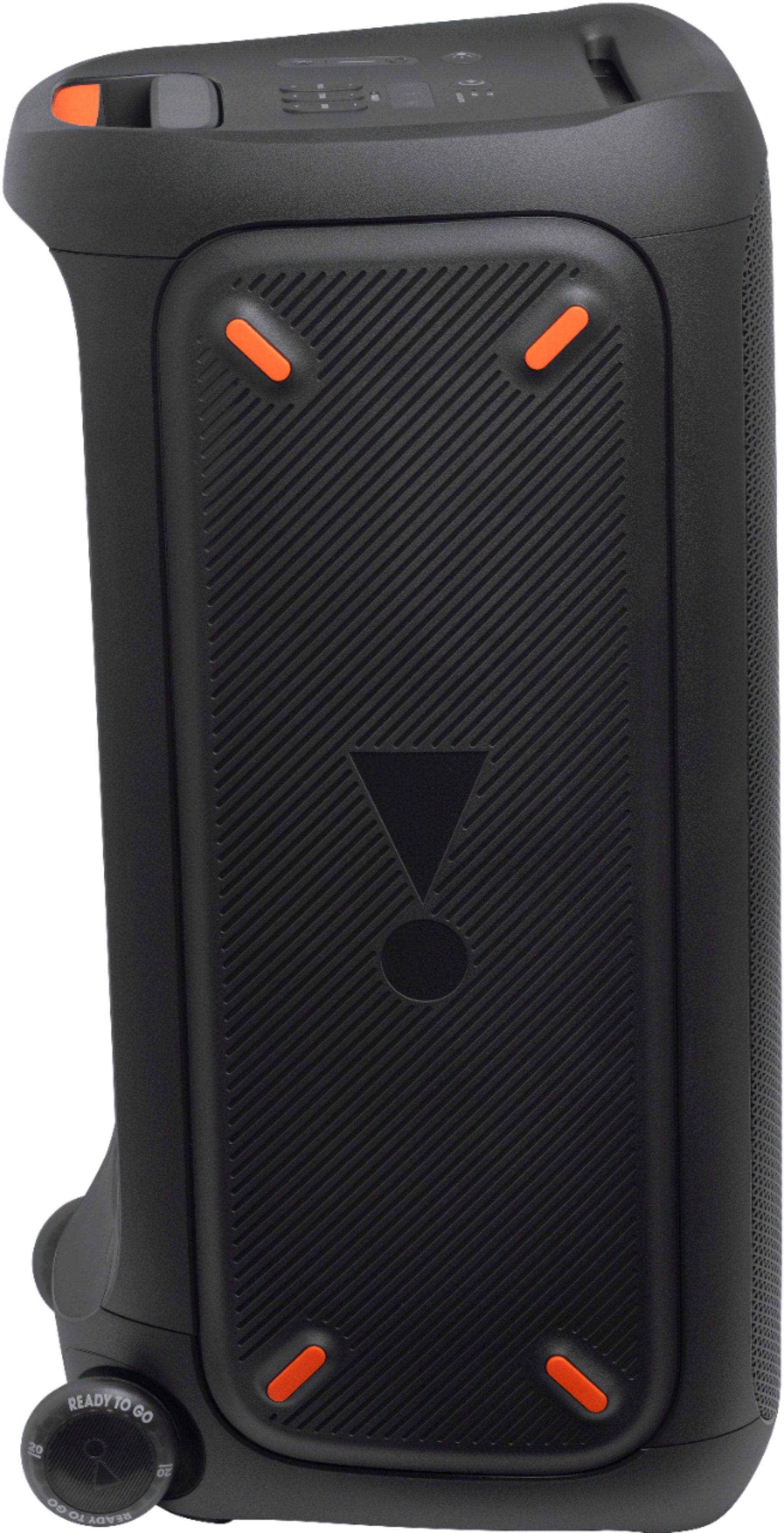
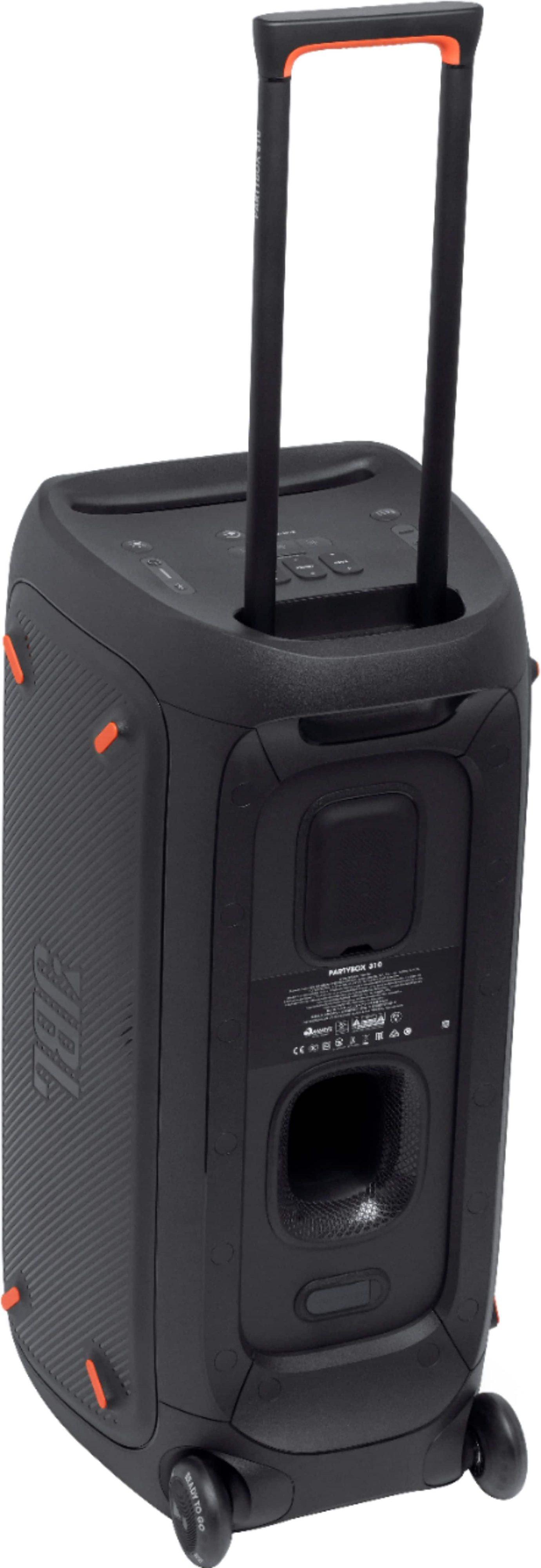
Here's where the choice becomes intensely personal. The PartyBox 110 weighs 24 pounds and features dual recessed handles for manual carrying. The PartyBox 310 tips the scales at 38.4 pounds but includes a telescoping handle and smooth-rolling wheels.
For users who frequently move their speaker by hand—up stairs, into cars, or through tight spaces—the PartyBox 110's lighter weight provides a clear advantage. Carrying 24 pounds for short distances remains manageable for most people, while 38.4 pounds becomes cumbersome quickly.
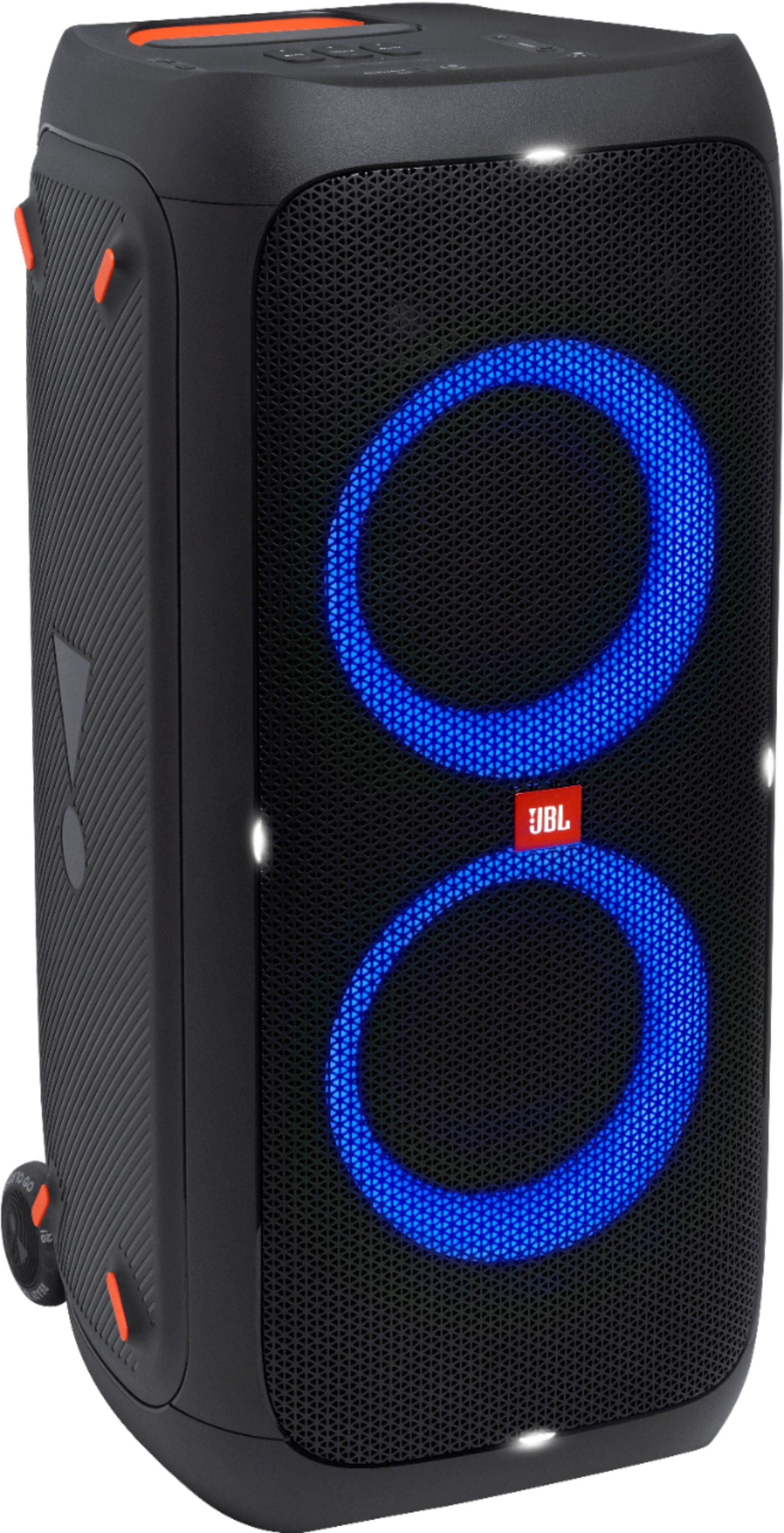
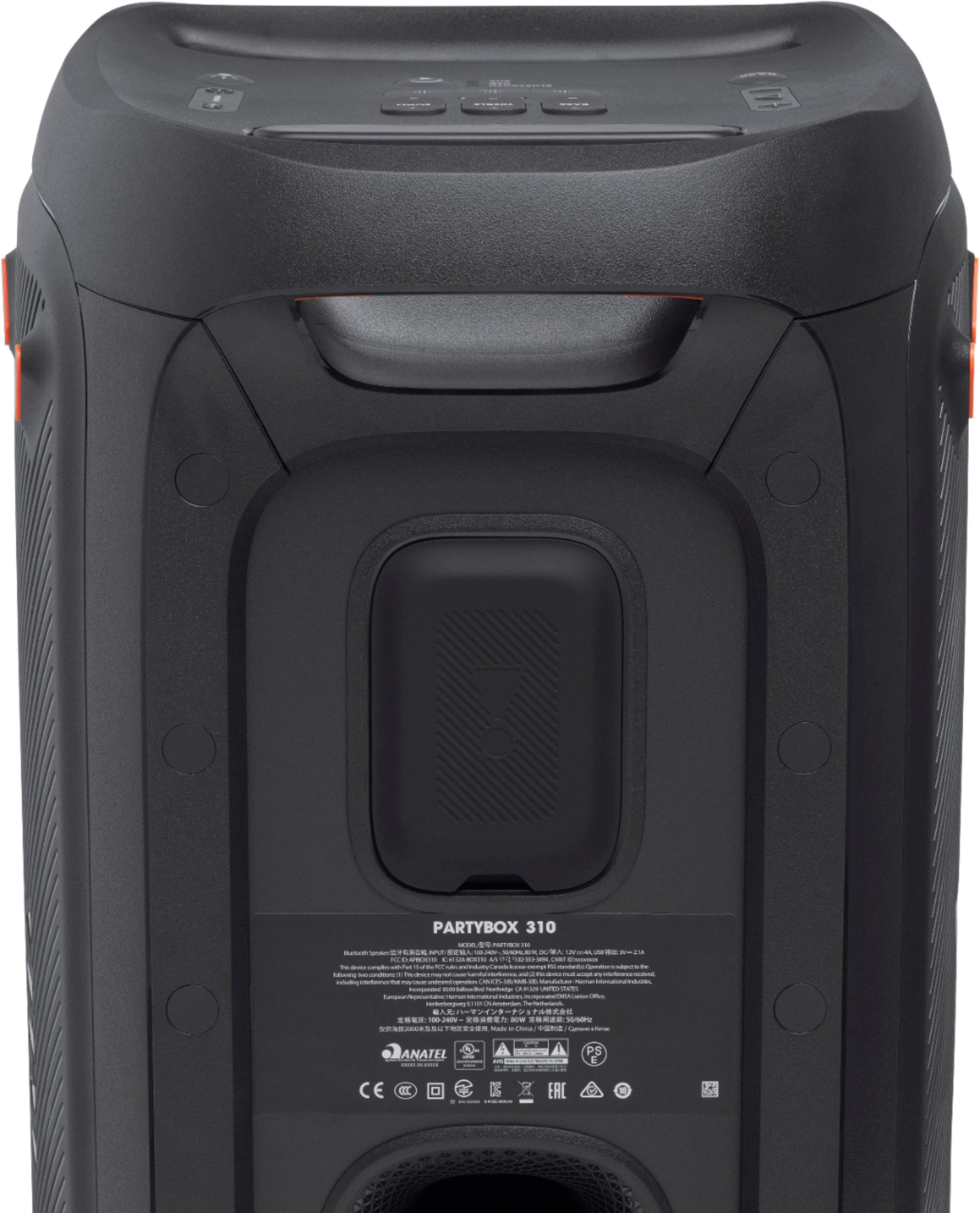
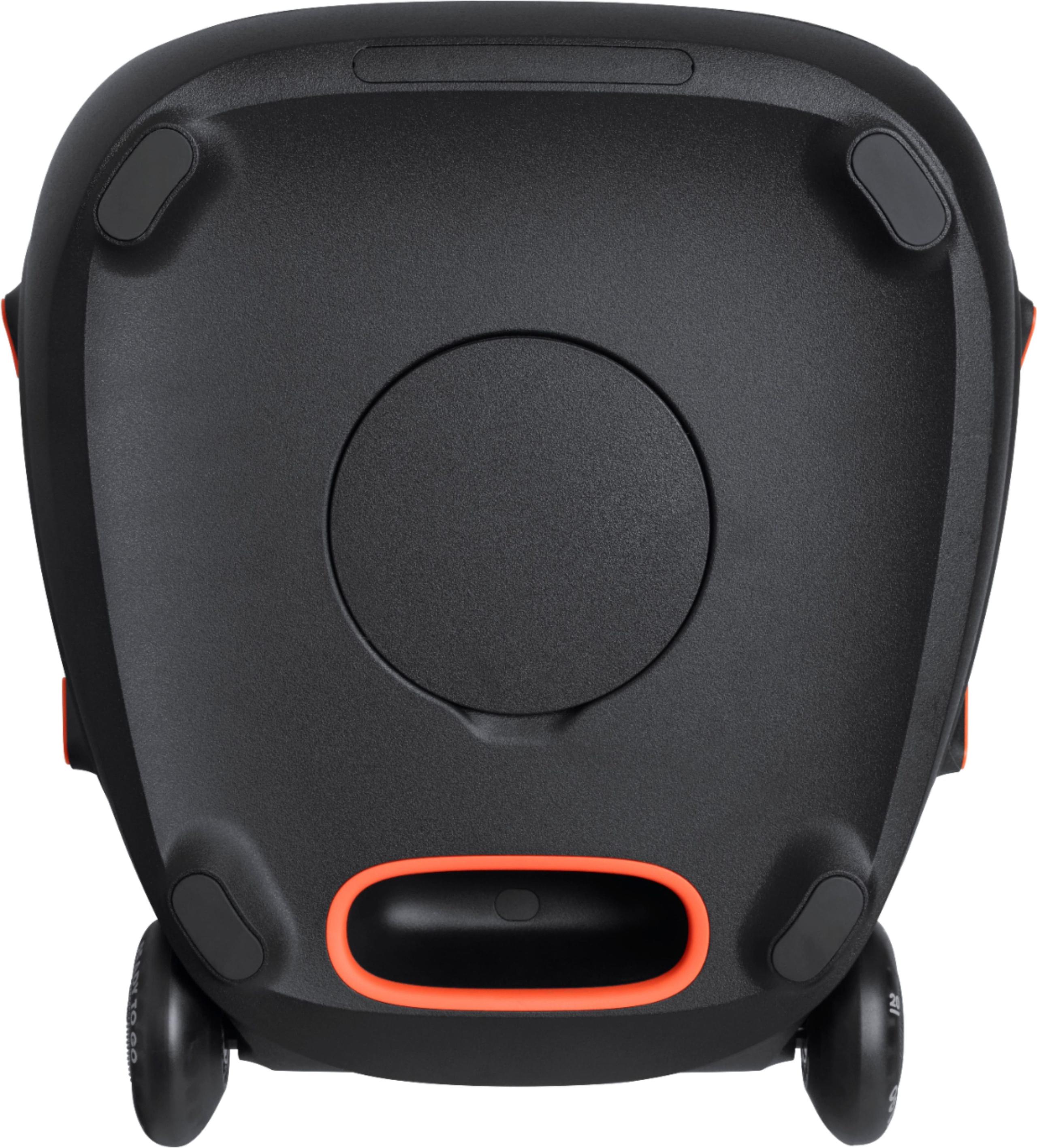
However, the PartyBox 310's wheel system transforms transport over flat surfaces. Rolling the speaker across parking lots, through venues, or around large outdoor spaces requires minimal effort. The telescoping handle extends to a comfortable height, reducing back strain during longer moves.
Both speakers include mounting points for standard tripod speaker stands, allowing elevated placement for better sound projection. This feature proves particularly valuable in crowded venues where floor-level speakers can become muffled by people and furniture.
Both speakers share most connectivity features, including Bluetooth 5.1, USB playback, and 3.5mm auxiliary inputs and outputs. Bluetooth 5.1, introduced around 2019, offers improved connection stability and energy efficiency compared to earlier versions, though you won't notice dramatic differences in daily use.
One notable difference lies in Bluetooth range. The PartyBox 310 maintains connections up to 334 feet away, while the PartyBox 110 tops out around 165 feet. In practical terms, this means greater flexibility in controlling music from across large outdoor venues or multi-room indoor spaces.
Both speakers support JBL's True Wireless Stereo (TWS) technology, allowing you to pair two identical speakers for stereo separation or simply louder output. This feature works seamlessly when it functions properly, though some users report occasional connection hiccups that require re-pairing.
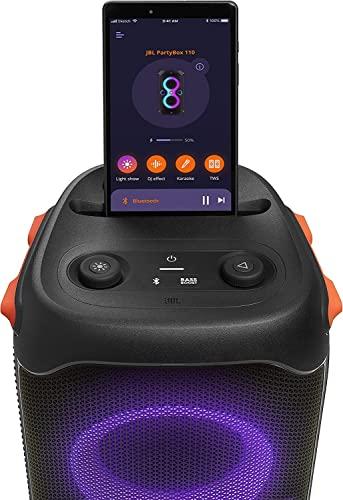
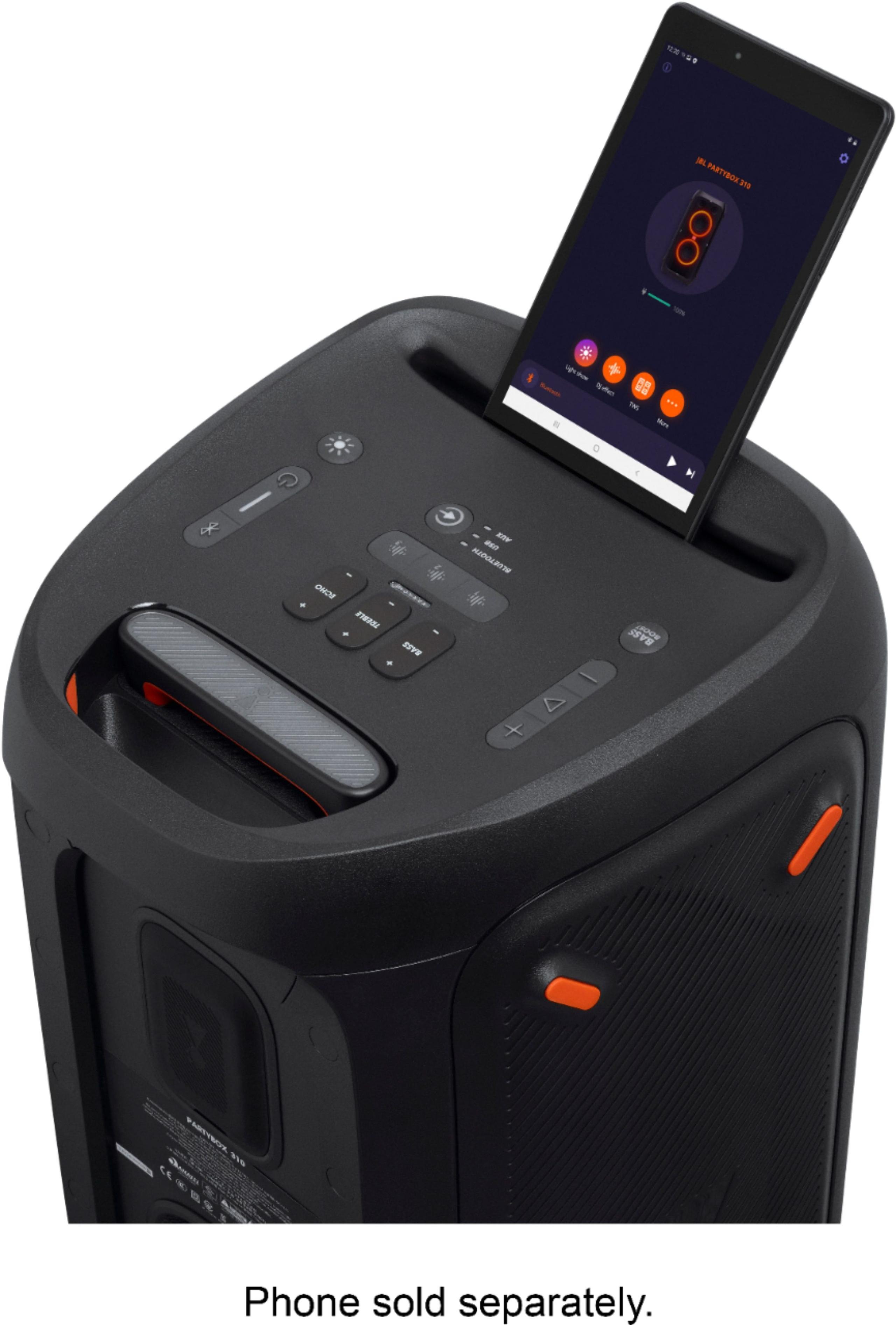
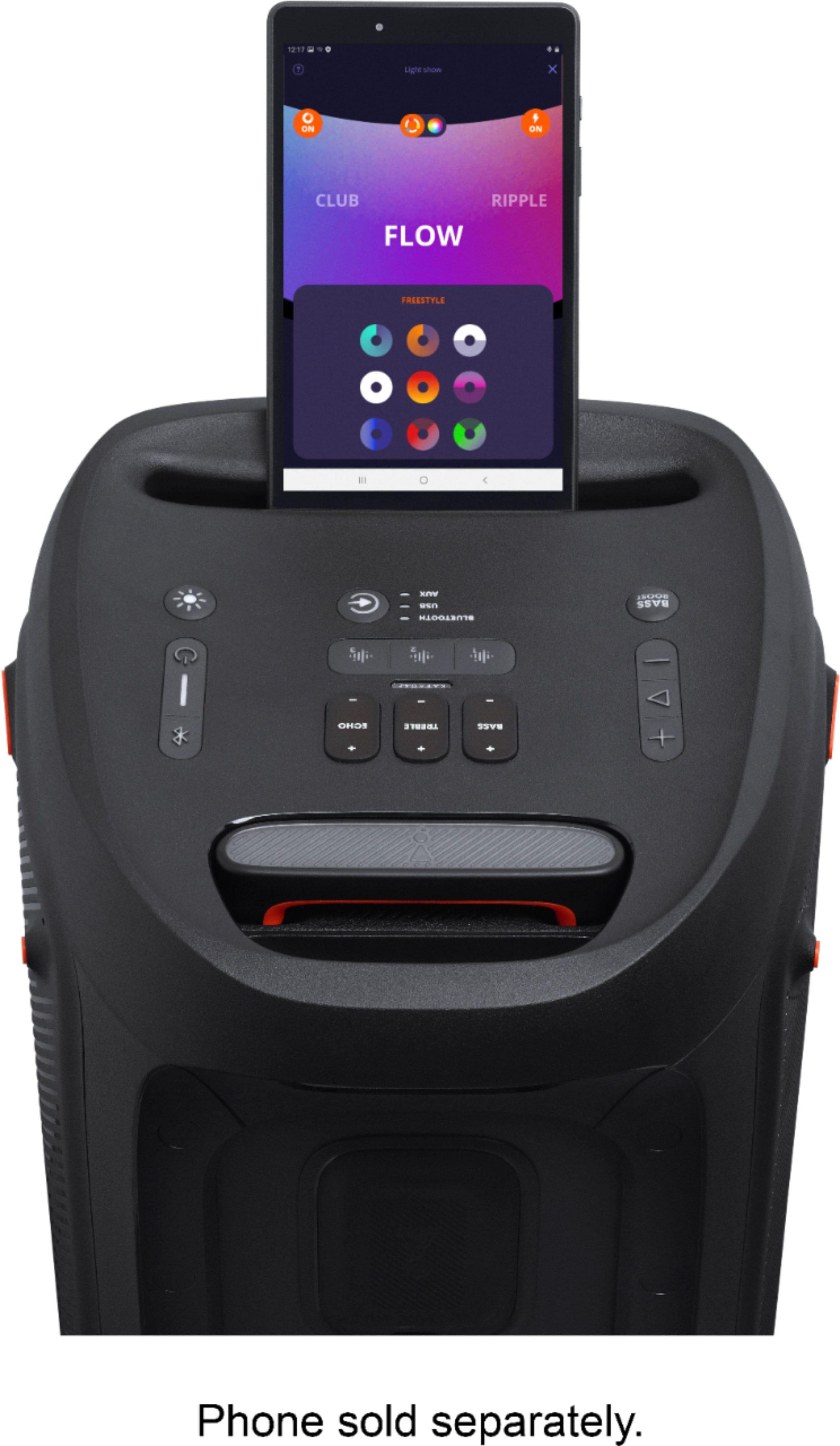
The JBL PartyBox app provides control over EQ settings, lighting patterns, and speaker pairing. While functional, the app feels somewhat basic compared to competitors like Sony or Ultimate Ears, lacking advanced features like room correction or detailed sound customization.
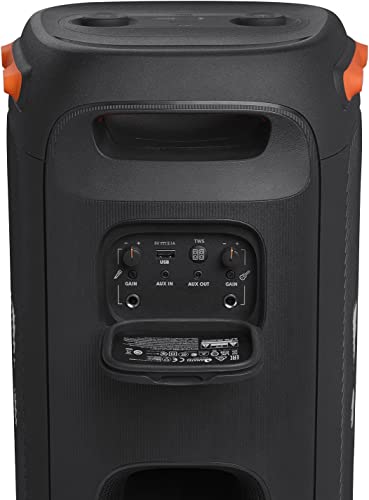
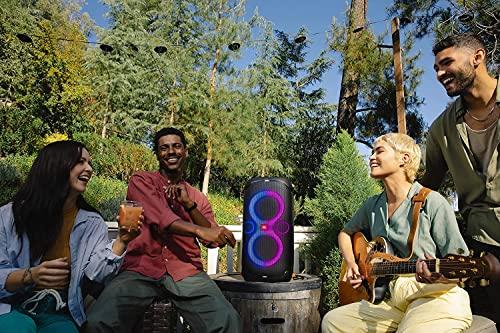
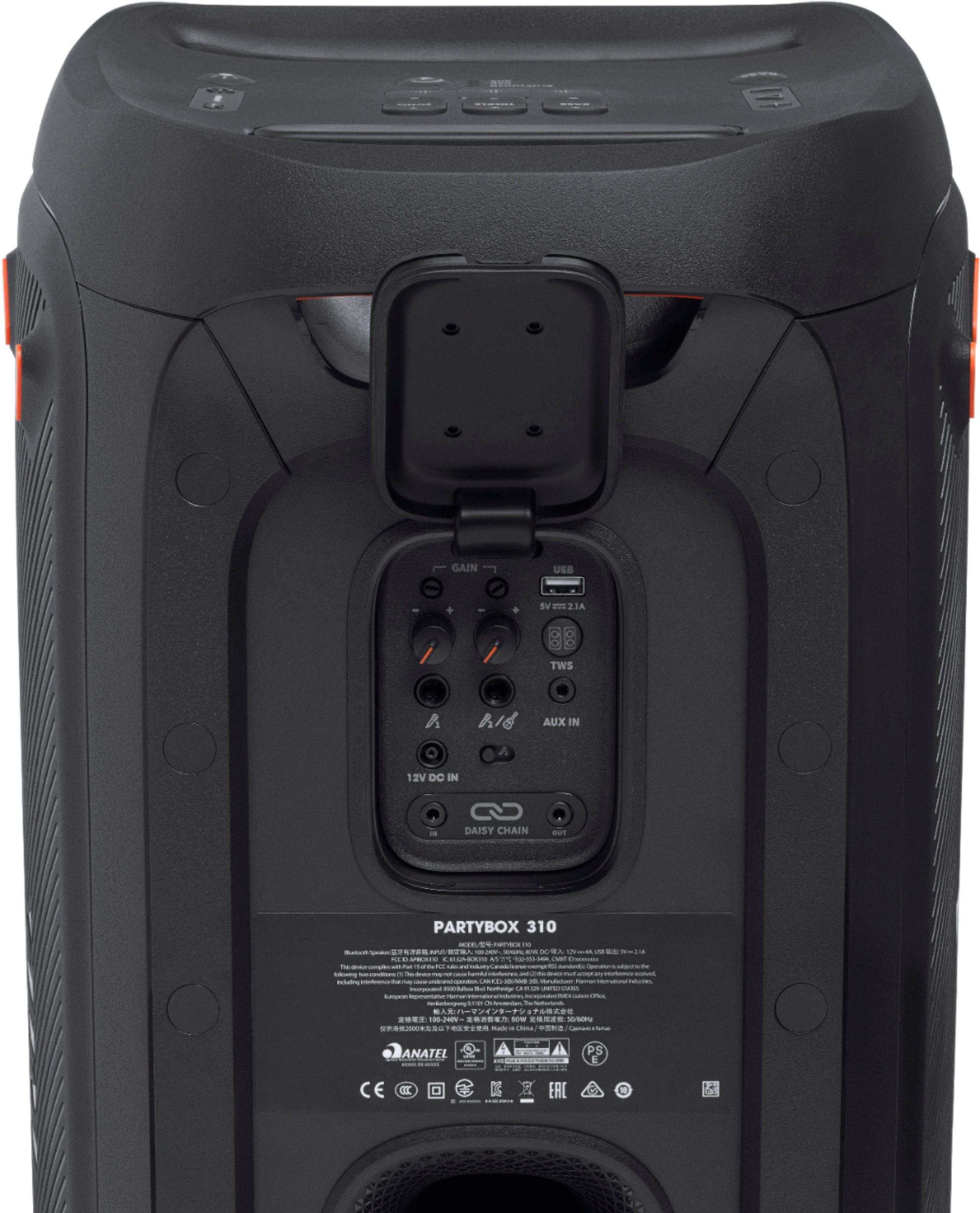
Both speakers include dual 1/4-inch input jacks for microphones and instruments, with independent volume controls for each input. These connections use standard professional audio connectors, meaning any decent microphone or electric guitar will work without adapters.
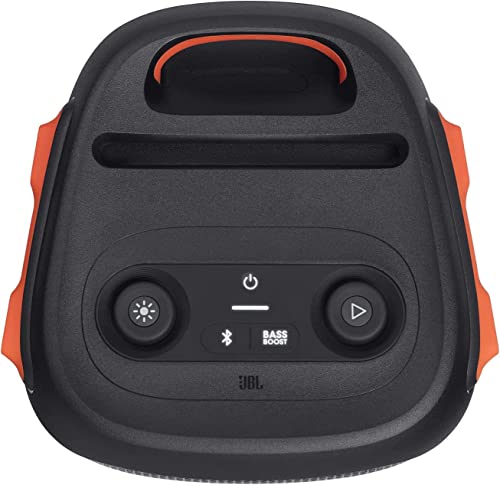
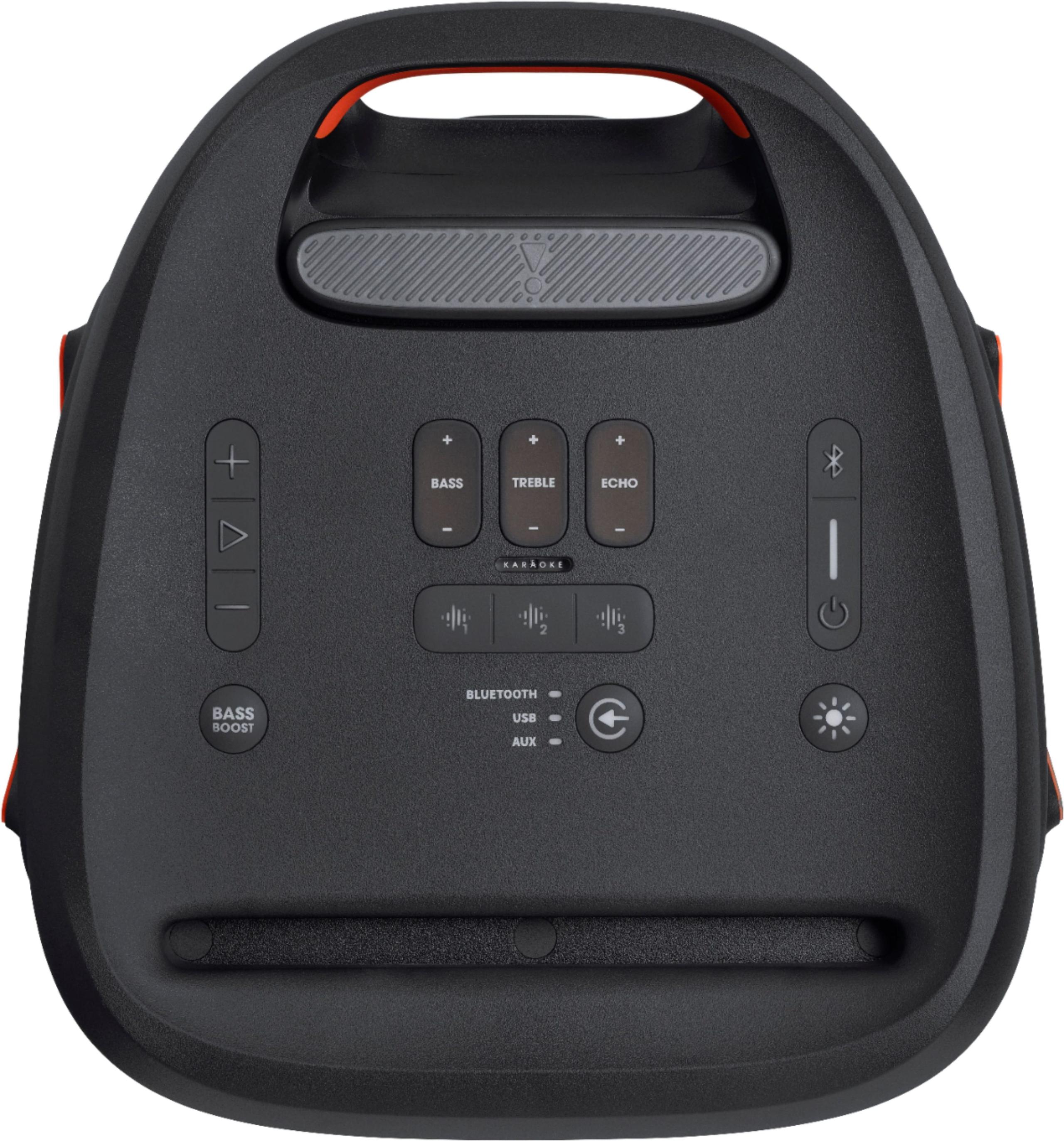
The PartyBox 310 adds dedicated EQ controls and sound effect buttons directly on the speaker, while the PartyBox 110 relies more heavily on app-based adjustments. For live performance situations, having physical controls proves more reliable and faster to adjust than fumbling with smartphone apps.
Both speakers include echo/reverb effects for microphones, adding a professional touch to karaoke performances or announcements. The quality won't match dedicated PA systems, but it's perfectly adequate for casual entertainment.
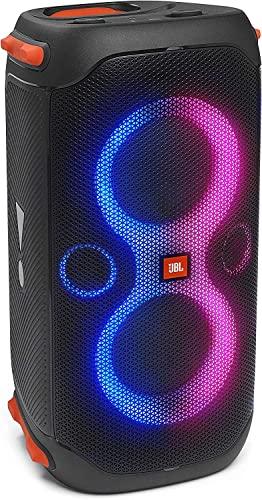
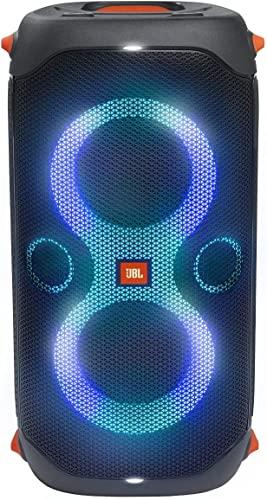
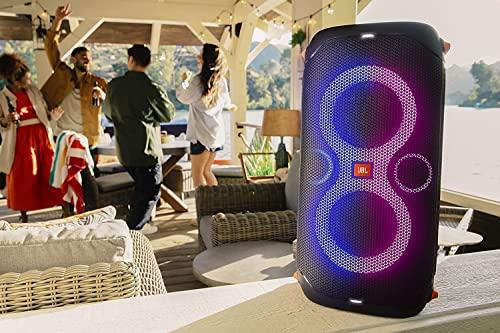
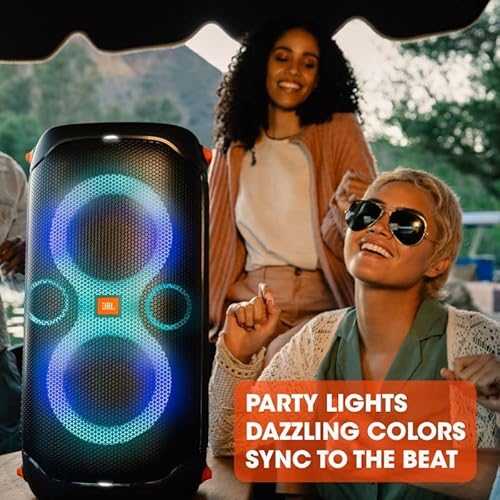
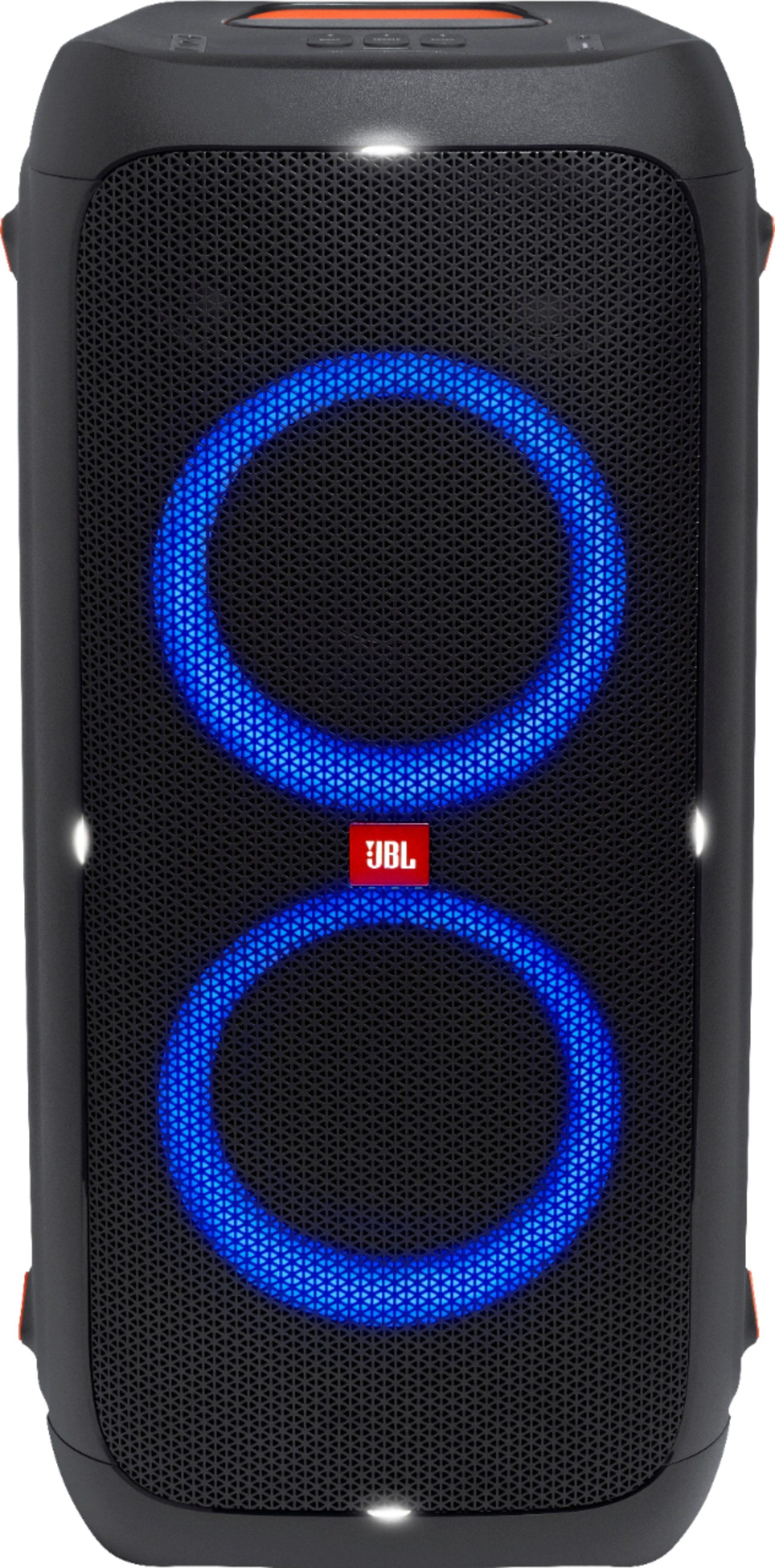
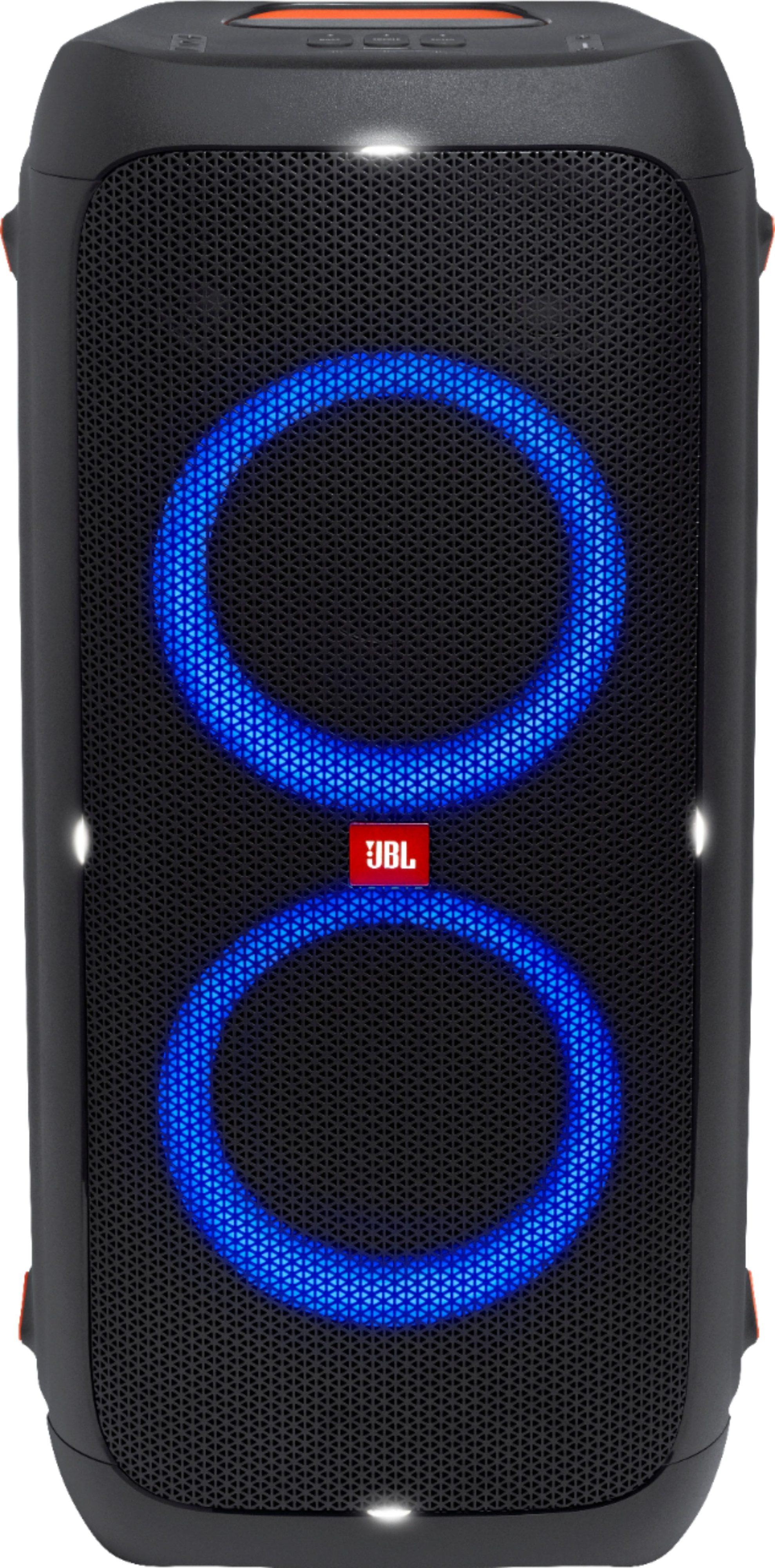
LED lighting systems in both speakers create synchronized light shows that pulse, strobe, and change colors in time with the music. The PartyBox 110 features four colored LED rings plus two white strobe LEDs, while the PartyBox 310 uses two colored rings with four white strobes.
The light patterns prove surprisingly engaging, particularly in darker environments. Beat detection works reliably with most music genres, though complex compositions sometimes confuse the synchronization algorithms. Both speakers allow you to disable the lights entirely if you prefer to conserve battery or reduce visual distraction.
Color customization through the app provides reasonable flexibility, though the selection feels limited compared to dedicated smart lighting systems. For most party applications, the built-in patterns and colors prove sufficient to create atmosphere without being overwhelming.
At the time of writing, the PartyBox 110 typically costs around $100-150 less than the PartyBox 310, representing roughly a 25-30% price difference. This creates an interesting value equation where you're paying about 30% more for 50% more power, 50% longer battery life, and significantly enhanced portability features.
For many users, the PartyBox 110 provides excellent value, delivering most of the PartyBox 310's capabilities at a more accessible price point. The performance gap, while measurable, isn't overwhelming for smaller gatherings or indoor use.
However, the PartyBox 310's convenience features—particularly the wheel system and extended battery—justify the premium for users who regularly host larger events or need professional-grade portability. The ability to roll rather than carry the speaker, combined with 6+ additional hours of battery life, can make the difference between a successful event and a stressful one.
While neither speaker targets home theater applications directly, both can enhance movie nights or gaming sessions with their powerful bass and wide dynamic range. However, several factors limit their home theater utility.
Both speakers excel at party-oriented music but lack the precise imaging and balanced frequency response preferred for critical movie dialog and subtle sound effects. Their bass-heavy tuning, while perfect for EDM and hip-hop, can overwhelm quieter soundtrack elements.
For casual home theater use—action movies, gaming, or background music—either speaker provides engaging sound with impressive impact. The PartyBox 110's smaller footprint makes it more practical for typical living rooms, while the PartyBox 310's extra power suits larger spaces or outdoor movie setups.
Neither speaker offers sophisticated surround sound processing or the precise stereo imaging that dedicated home theater speakers provide. They're best viewed as fun alternatives rather than serious home theater components.
The PartyBox 110 makes the most sense for users who host smaller gatherings, prioritize portability over maximum power, or work within tighter budgets. It's ideal for apartment dwellers who need to carry speakers up stairs, college students hosting dorm parties, or casual entertainers who want great sound without premium features.
This speaker shines at backyard barbecues, small birthday parties, or indoor gatherings where 50 people or fewer need entertainment. Its lighter weight makes it practical for users who frequently move between locations but don't have access to smooth surfaces for rolling.
The PartyBox 310 targets more serious entertainers who regularly host larger events or need professional-grade convenience features. It's the better choice for outdoor weddings, corporate events, large family gatherings, or anyone who considers themselves the designated party host in their social circle.
The wheel system alone justifies the premium for users who frequently set up in different locations. Combined with the extended battery life and superior power handling, the PartyBox 310 transforms from a luxury into a necessity for ambitious party planners.
Both the PartyBox 110 and PartyBox 310 succeed at their intended purposes, but they serve different scales of ambition. The 110 delivers exceptional value for most users, providing professional-quality party features without the premium price. The 310 justifies its higher cost through measurably better performance and significantly enhanced convenience.
The decision ultimately comes down to honest assessment of your typical usage patterns. If you're hosting intimate gatherings and prioritize easy manual transport, the PartyBox 110 offers everything you need with money left over for music subscriptions or party supplies. If you're planning larger events or value convenience features that reduce setup stress, the PartyBox 310 proves worth the investment through superior performance and professional-grade portability.
Either choice will elevate your parties beyond what standard Bluetooth speakers can achieve. The question isn't whether you'll be happy with your choice—both speakers deliver on their promises. The question is whether you need the extra capabilities that justify the PartyBox 310's premium, or whether the PartyBox 110's excellent value proposition better matches your needs and budget.
| JBL PartyBox 110 | JBL PartyBox 310 |
|---|---|
| Power Output - Determines maximum volume and bass impact | |
| 160W RMS (good for 30-60 people) | 240W RMS (handles 100+ people easily) |
| Battery Life - Critical for all-day events | |
| 12 hours (adequate for most parties) | 18 hours (covers extended events without worry) |
| Weight & Portability - Affects transport ease | |
| 24 lbs with dual handles (manual carry only) | 38.4 lbs with wheels & telescoping handle (rolls smoothly) |
| Driver Configuration - Impacts sound quality and bass depth | |
| Dual 5.25" woofers + dual 2.25" tweeters | Dual 6.5" woofers + dual 2.5" tweeters (deeper bass) |
| Bluetooth Range - Matters for large venues | |
| 165 feet (sufficient for most indoor/outdoor spaces) | 334 feet (excellent for large events and venues) |
| Physical Controls - Important for live performance | |
| Basic controls (relies on app for advanced features) | Dedicated EQ, sound effects, and input controls on speaker |
| LED Lighting System - Visual party enhancement | |
| 4 colored rings + 2 white strobes | 2 colored rings + 4 white strobes (similar visual impact) |
| Water Resistance - Outdoor durability | |
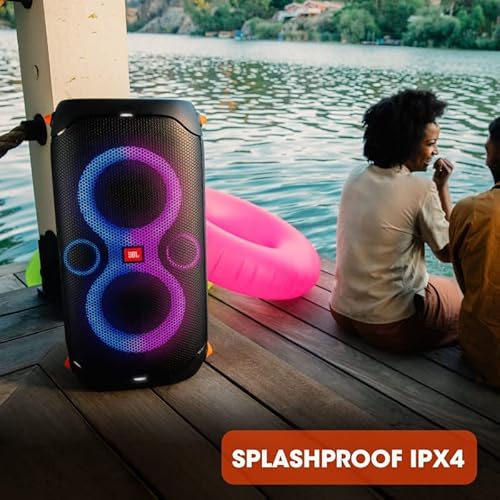
| IPX4 splashproof (handles light rain and spills) | IPX4 splashproof (same weather protection) |
| Microphone/Guitar Inputs - Karaoke and live performance | |
| Dual 1/4" inputs with volume controls | Dual 1/4" inputs with enhanced controls and effects |
| Charging Time - Downtime between events | |
| 3.5 hours to full charge | 3.5 hours to full charge (same convenience) |
| Tripod Mounting - Professional setup options | |
| Compatible with standard PA stands | Compatible with standard PA stands (same flexibility) |
The primary difference is power and portability design. The JBL PartyBox 310 delivers 240W of power compared to the JBL PartyBox 110's 160W, making it 50% more powerful for larger events. The PartyBox 310 also includes wheels and a telescoping handle for easy transport, while the PartyBox 110 relies on manual carrying with built-in handles.
The JBL PartyBox 310 gets significantly louder thanks to its 240W power output and larger 6.5-inch woofers. It can easily fill spaces with 100+ people, while the JBL PartyBox 110 works best for gatherings of 30-60 people. For large outdoor events, the PartyBox 310 provides the volume needed to compete with ambient noise.
The JBL PartyBox 310 offers 18 hours of battery life compared to the JBL PartyBox 110's 12 hours - that's 50% longer playback time. This extra 6 hours can make the difference between your party lasting all day or running out of power during peak hours.
This depends on your transport needs. The JBL PartyBox 110 weighs 24 pounds and is easier to carry manually up stairs or into cars. However, the JBL PartyBox 310 features wheels and a telescoping handle that makes rolling across flat surfaces effortless, despite weighing 38.4 pounds.
Both the JBL PartyBox 110 and PartyBox 310 feature LED light shows that sync with music, but with slightly different configurations. The PartyBox 110 has 4 colored LED rings plus 2 white strobes, while the PartyBox 310 uses 2 colored rings with 4 white strobes. Both offer similar visual impact and app-controlled customization.
Yes, both the JBL PartyBox 110 and PartyBox 310 include dual 1/4-inch inputs for microphones and guitars with independent volume controls. The PartyBox 310 offers additional built-in sound effects and EQ controls, while the PartyBox 110 relies more on app-based adjustments for advanced features.
The JBL PartyBox 110 typically offers better value for most users, providing about 67% of the PartyBox 310's power at roughly 75% of the cost. However, if you regularly host large events or need the convenience features like wheels and extended battery life, the PartyBox 310 justifies its premium pricing.
Neither the JBL PartyBox 110 nor PartyBox 310 is designed primarily for home theater, but both can enhance movie nights with powerful bass and wide dynamic range. They work better for action movies and gaming than critical dialog, due to their bass-heavy tuning optimized for party music rather than precise home theater sound.
Both the JBL PartyBox 110 and PartyBox 310 charge completely in 3.5 hours using their included AC adapters. Neither offers fast-charging capabilities, so planning ahead remains important for back-to-back events.
Yes, both the JBL PartyBox 110 and PartyBox 310 support JBL's True Wireless Stereo (TWS) technology, allowing you to pair two identical speakers wirelessly for stereo sound or simply louder output. You can also daisy-chain them using the 3.5mm audio output connections.
The JBL PartyBox 310 offers superior Bluetooth range at 334 feet compared to the JBL PartyBox 110's 165 feet. This extended range provides more flexibility for controlling music from across large outdoor venues or multi-room indoor spaces without connection drops.
The JBL PartyBox 110 works best for small to medium gatherings of 10-50 people, making it ideal for backyard parties, small birthday celebrations, or apartment gatherings. The JBL PartyBox 310 excels at larger events with 50-100+ people, such as outdoor weddings, corporate events, or large family reunions where maximum volume and extended battery life are essential.
We've done our best to create useful and informative comparisons to help you decide what product to buy. Our research uses advanced automated methods to create this comparison and perfection is not possible - please contact us for corrections or questions. These are the sites we've researched in the creation of this article: rtings.com - youtube.com - bestbuy.com - gadgets360.com - popsci.com - youtube.com - audioadvice.com - popsci.com - youtube.com - versus.com - youtube.com - rtings.com - jbl.com - in.jbl.com - jbl.com.tw - bhphotovideo.com - in.jbl.com - jbl.com - youtube.com - hu.harmanaudio.com - jbl.com.au - global.jbl.com - support.jbl.com - youtube.com - kh.jbl.com - onward.ph - jbl.com.ph - support.jbl.com - youtube.com - rtings.com - comparisontabl.es - crutchfield.com - youtube.com - bestbuy.com - youtube.com - versus.com - youtube.com - youtube.com - jbl.com - youtube.com - crutchfield.com - manuals.plus - in.jbl.com - jbl.com.tw - mm.jbl.com - bestbuy.com - jbl.com - onward.ph - youtube.com - manuals.plus - harmanaudio.com - kh.jbl.com - bestbuy.com

Privacy Policy
Terms and Conditions - Affiliate Policy
Home Security
© Copyright 2008-2026.
11816 Inwood Rd #1211, Dallas, TX 75244