

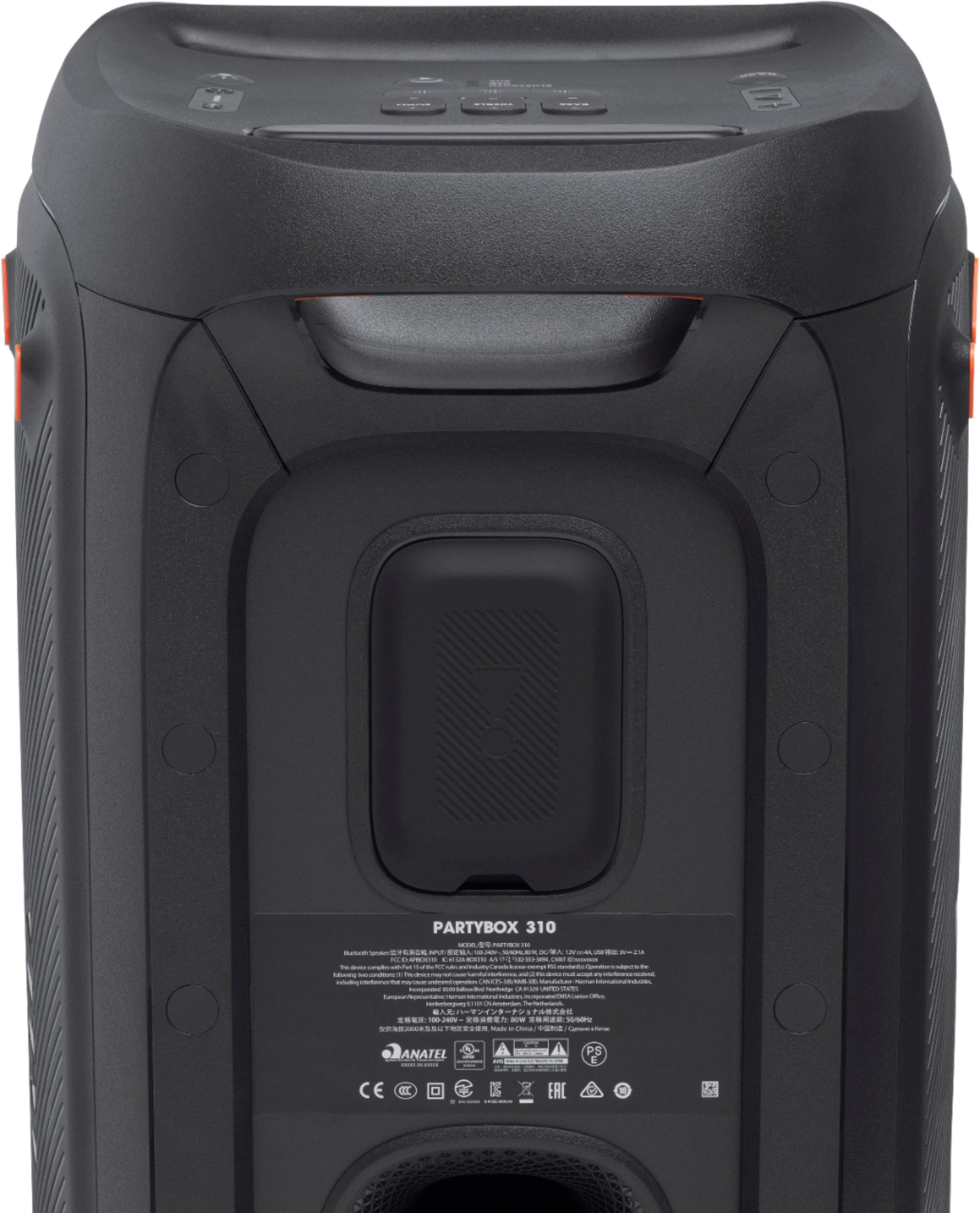
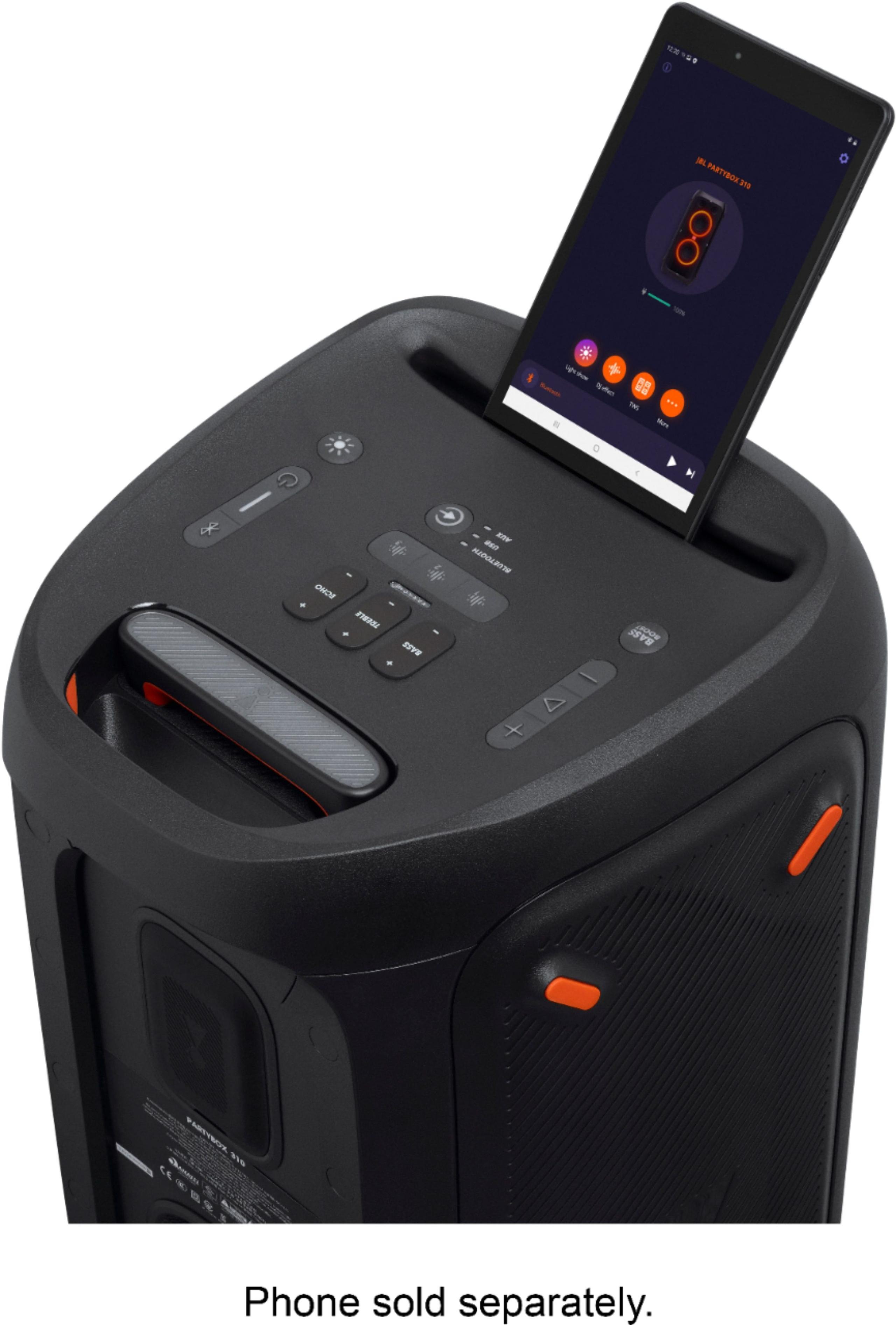
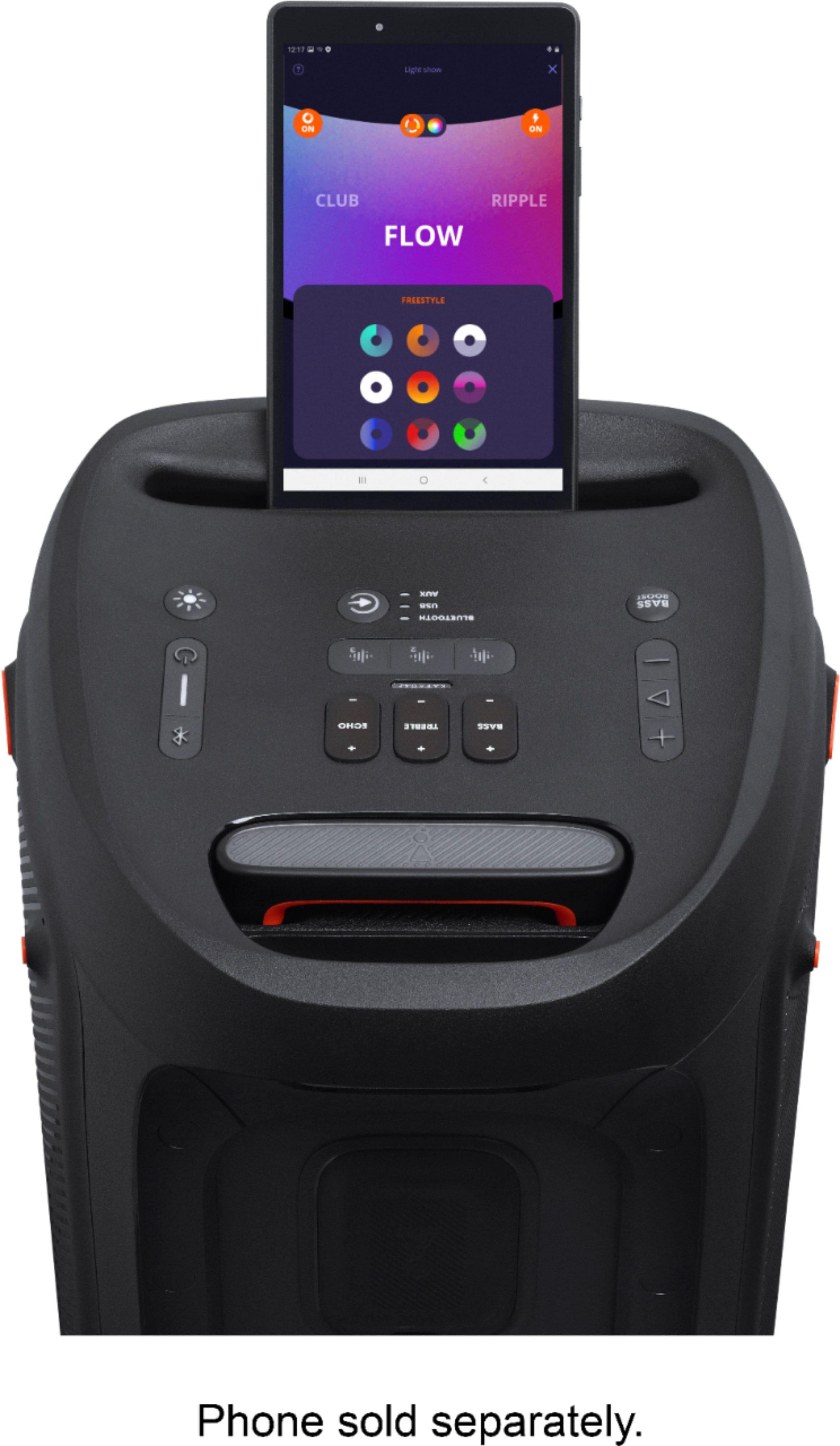
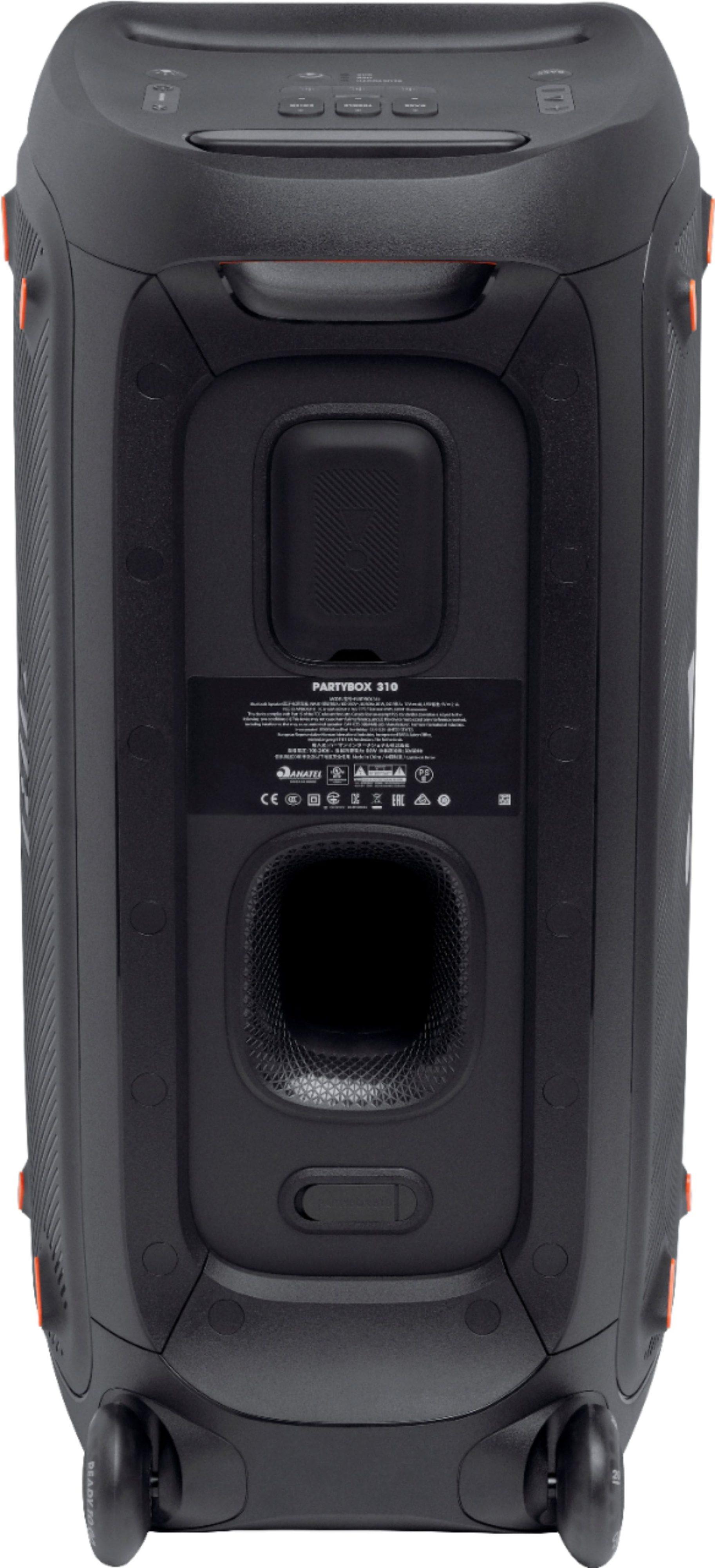
Party speakers have evolved into something far beyond your average Bluetooth speaker. These powerhouse devices combine massive audio output, dazzling light shows, and professional-grade features to transform any space into an entertainment venue. But choosing between models like the JBL PartyBox 310 and JBL PartyBox Ultimate requires understanding some fundamental trade-offs between portability and pure performance.
The party speaker category prioritizes volume, bass impact, and entertainment features over the nuanced sound quality you'd want for critical music listening. Think of them as the audio equivalent of a sports car versus a luxury sedan—they're built for excitement, not refinement. The key considerations boil down to how much power you need, where you'll use the speaker, and whether you value mobility or maximum performance.
The PartyBox 310 launched in 2020 as JBL's answer to portable party audio, while the PartyBox Ultimate arrived in 2023 representing their flagship "no compromises" approach. At the time of writing, there's roughly a three-fold price difference between them, with the 310 positioned as the accessible option and the Ultimate commanding premium pricing for premium performance.
This isn't simply a case of "bigger equals better." These speakers represent fundamentally different philosophies. The 310 prioritizes versatility and independence—it can go anywhere and run all day on battery power. The Ultimate throws portability out the window in pursuit of the kind of audio performance that can fill venues most people would never attempt to cover with a single speaker.
The three years between their releases saw significant advances in wireless technology, driver design, and digital signal processing. The Ultimate benefits from Wi-Fi 6 connectivity (the latest wireless standard for faster, more reliable connections), Bluetooth 5.3 (which offers better stability and range than older versions), and sophisticated room calibration technology that automatically adjusts the sound based on the speaker's environment.
When we talk about party speakers, raw power output measured in watts RMS (Root Mean Square—essentially the continuous power a speaker can handle without distortion) tells most of the story. The PartyBox 310 delivers 240 watts RMS, while the Ultimate pumps out a massive 1,100 watts RMS—nearly five times more power.
But what does this mean in real-world terms? Based on our analysis of professional measurements and user reports, the 310 can comfortably fill a medium-sized backyard party or indoor space for 20-50 people. Push it to maximum volume, and you'll start hearing compression artifacts—that slightly "crunched" sound when the speaker can't quite keep up with the demands of the music.
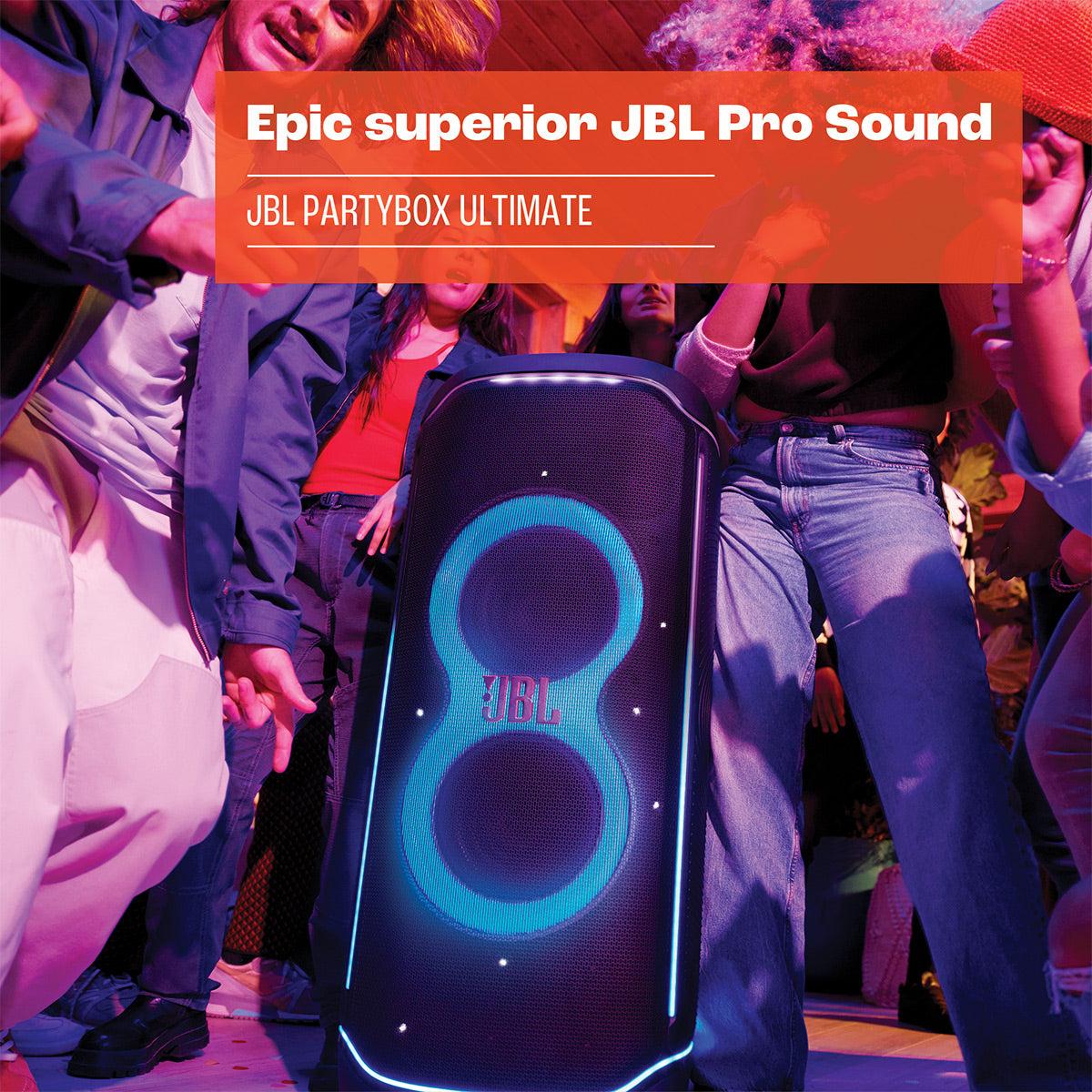
The Ultimate, however, operates in an entirely different league. User reviews consistently report it can fill spaces equivalent to "two basketball courts" while maintaining clean, undistorted audio. In direct comparisons, it reaches sound pressure levels around 116 dB—roughly equivalent to standing near a chainsaw or attending a rock concert. For context, every 10 dB increase represents roughly a doubling of perceived loudness, so the Ultimate doesn't just sound a bit louder—it's dramatically more powerful.
This power difference becomes crucial for outdoor events where sound dissipates quickly. The 310 works well for intimate gatherings but struggles in open spaces. The Ultimate has the headroom to overcome ambient noise and distance, making it viable for large outdoor festivals or events where people might be scattered across a significant area.
Here's where things get technically interesting. The PartyBox 310 uses what's called a "shared driver" configuration—its 6.5-inch woofers handle both bass and midrange frequencies. This is common in portable speakers because it's efficient and keeps costs down, but it creates a fundamental physics problem called frequency cancellation.
When a single driver tries to produce both low bass and midrange frequencies simultaneously, the different sound waves can interfere with each other. Bass notes might mask vocals, or the driver might struggle to accurately reproduce both frequency ranges at high volumes. This is why the 310 can sound somewhat boomy or muddy when pushed hard, though it's still quite enjoyable for most party music.
The Ultimate solves this problem with a separated driver system featuring dedicated 9-inch subwoofers that handle only bass frequencies, while separate 4.5-inch midrange drivers and 2.75-inch tweeters handle vocals and high frequencies. This is similar to how high-end home theater systems work—each driver specializes in what it does best, eliminating frequency conflicts and producing cleaner, more balanced sound.
The bass extension tells another part of the story. The 310 reaches down to 45Hz, which covers most musical bass content well. The Ultimate digs down to 30Hz, venturing into sub-bass territory where you feel the music as much as hear it. For electronic music, hip-hop, and other bass-heavy genres, this deeper extension creates that chest-thumping experience that defines great party audio.
In our evaluation of user feedback, the Ultimate consistently receives praise for maintaining clarity even at ear-splitting volumes, while the 310 gets solid marks for its sound quality at moderate to high levels, with some compromise at maximum output.
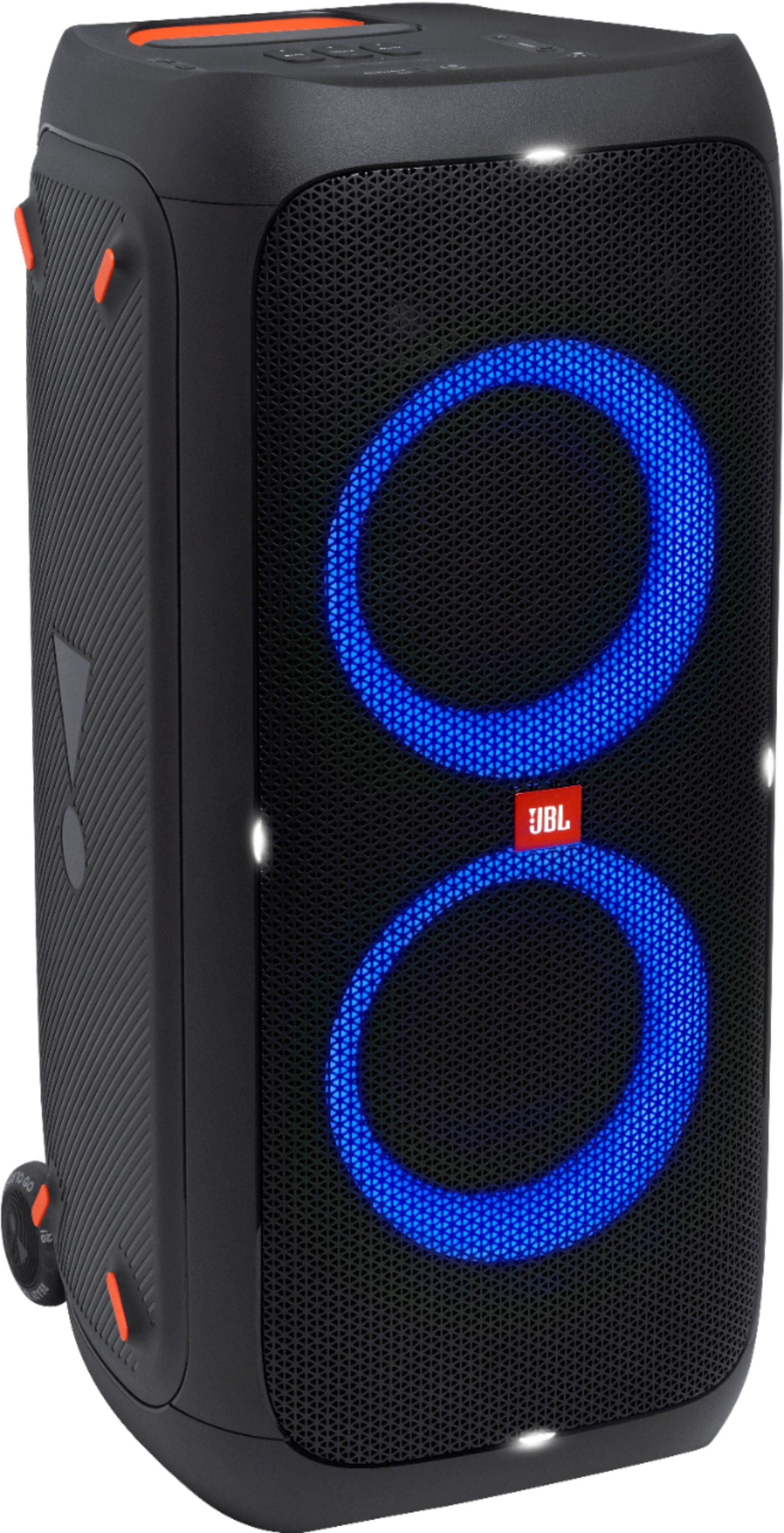
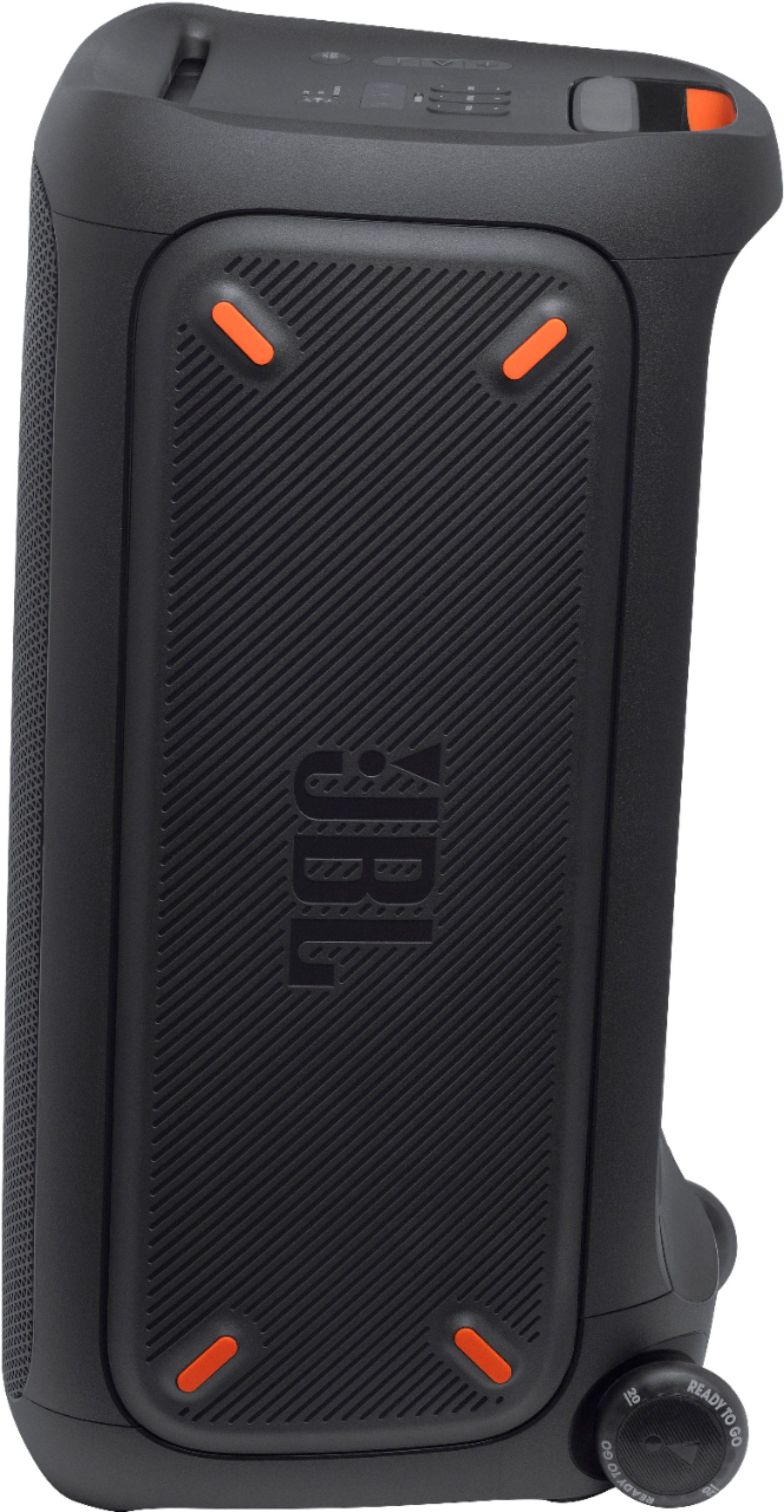
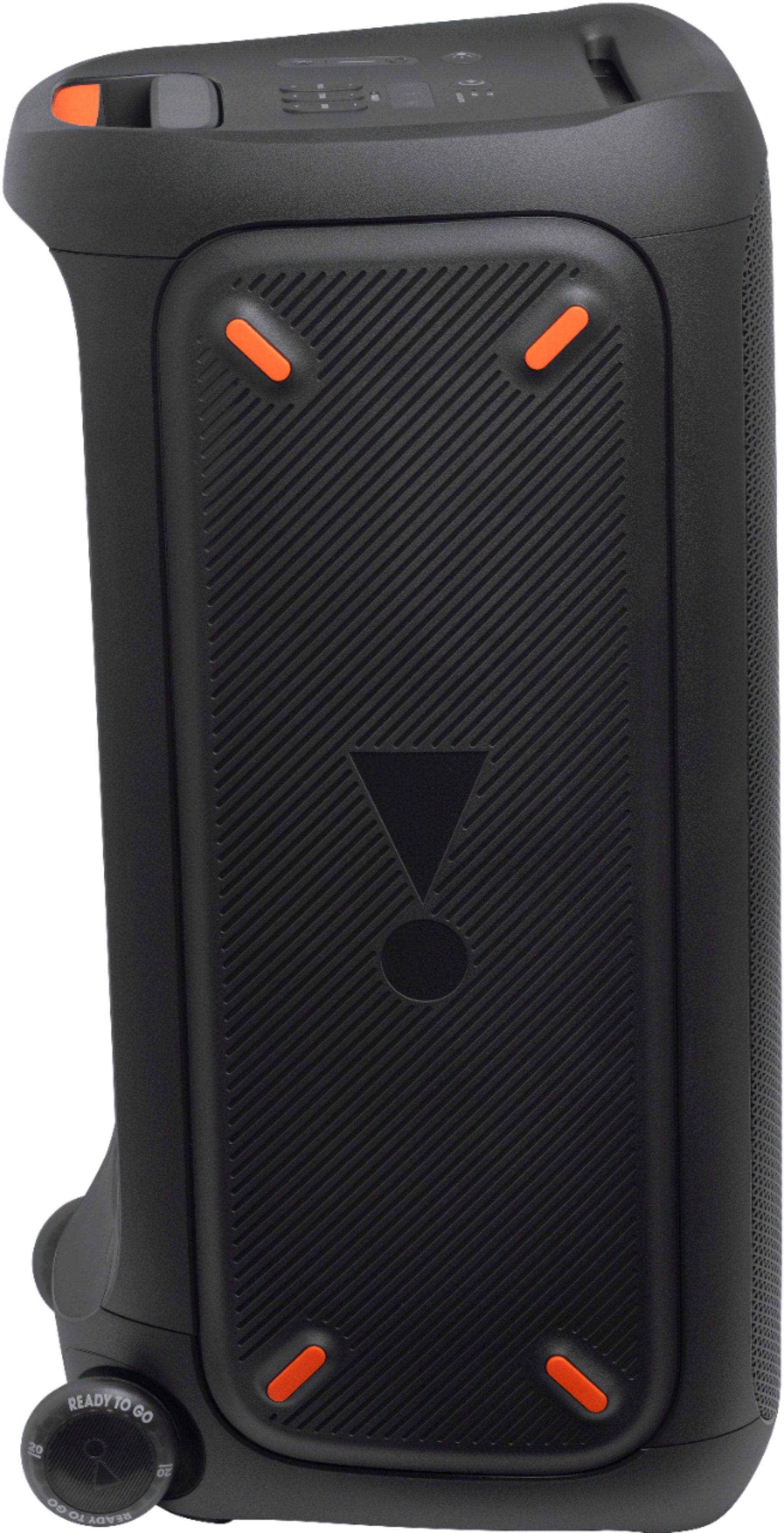
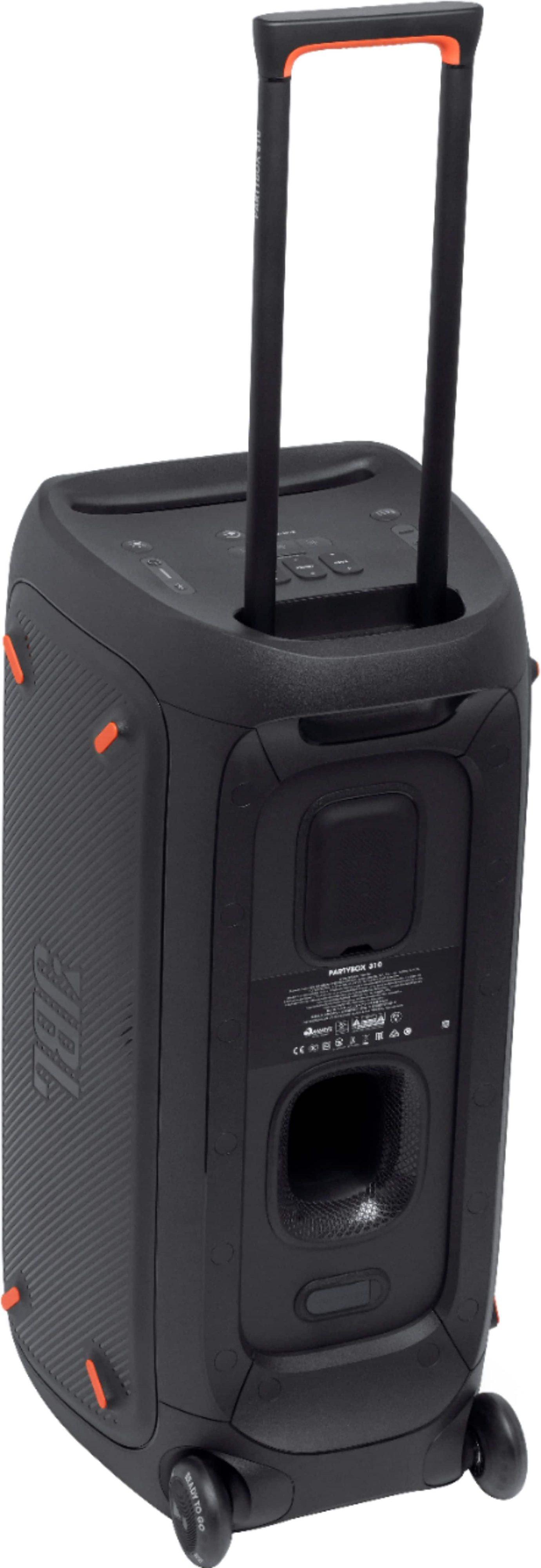
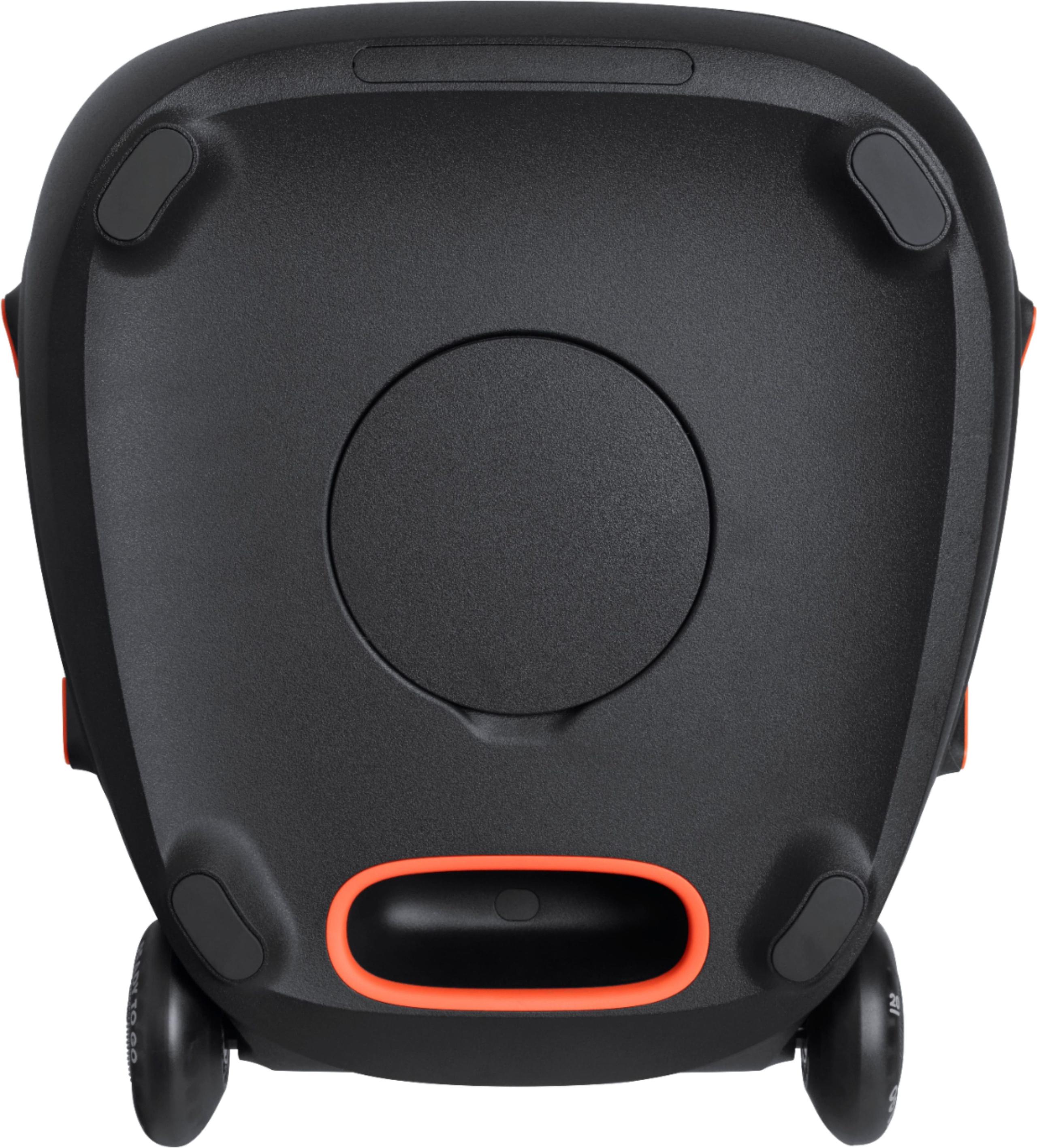
This might be the most crucial decision factor. The PartyBox 310 weighs 38.4 pounds and includes a telescoping handle with smooth-rolling wheels—you can genuinely take this thing anywhere. Its 18-hour battery life means complete independence from power outlets, charging fully in just 3.5 hours.
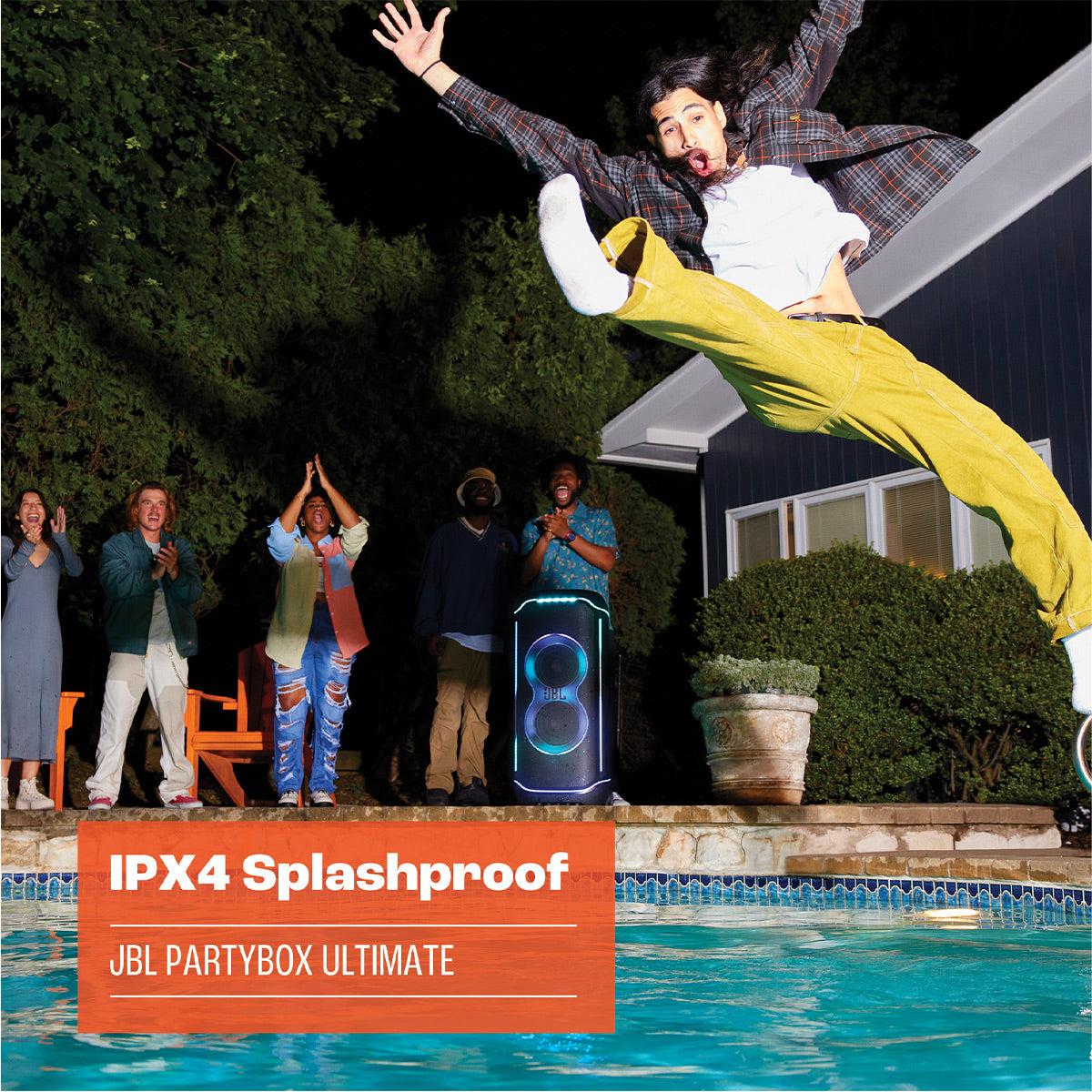
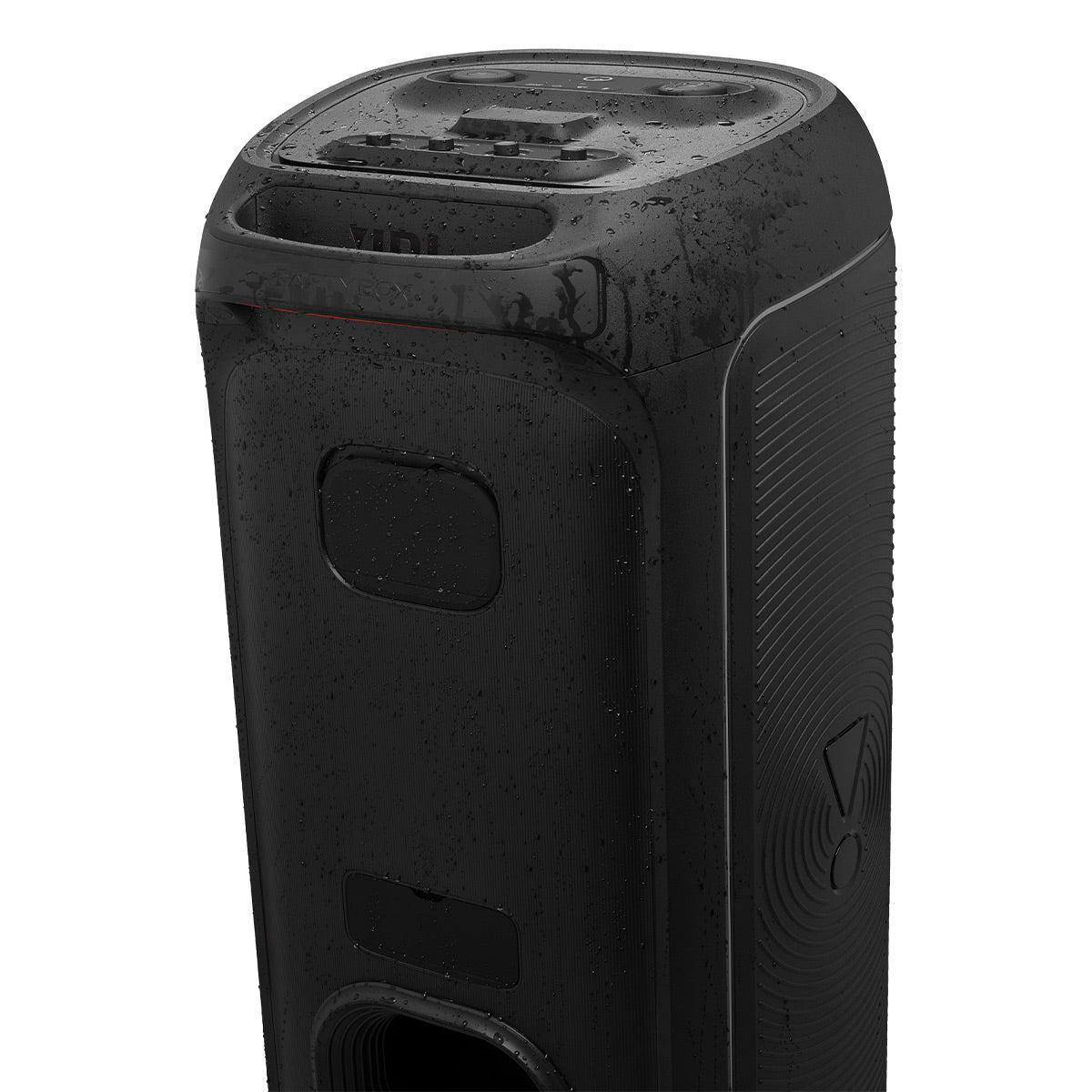
I've seen the practical impact of this portability in user reviews. People take their 310 camping, to beach parties, on boats, and to friend's houses without worrying about finding an electrical outlet. The IPX4 splash-proof rating means light rain or poolside splashes won't kill the fun. This freedom fundamentally changes how you think about using the speaker.
The Ultimate, at 87 pounds with no battery, represents the opposite approach. It has wheels and a sturdy handle, but moving it is a two-person job, and it must stay plugged into AC power. This isn't really a portable speaker in any practical sense—it's a semi-permanent installation that you might relocate occasionally with significant effort.
However, this weight comes with benefits beyond just more powerful drivers. The mass helps control cabinet resonance (unwanted vibrations that can color the sound), and the lack of battery constraints allows for much more powerful amplification. Some users report the Ultimate's sheer weight actually improves its sound by providing a more stable platform for those massive drivers to work against.
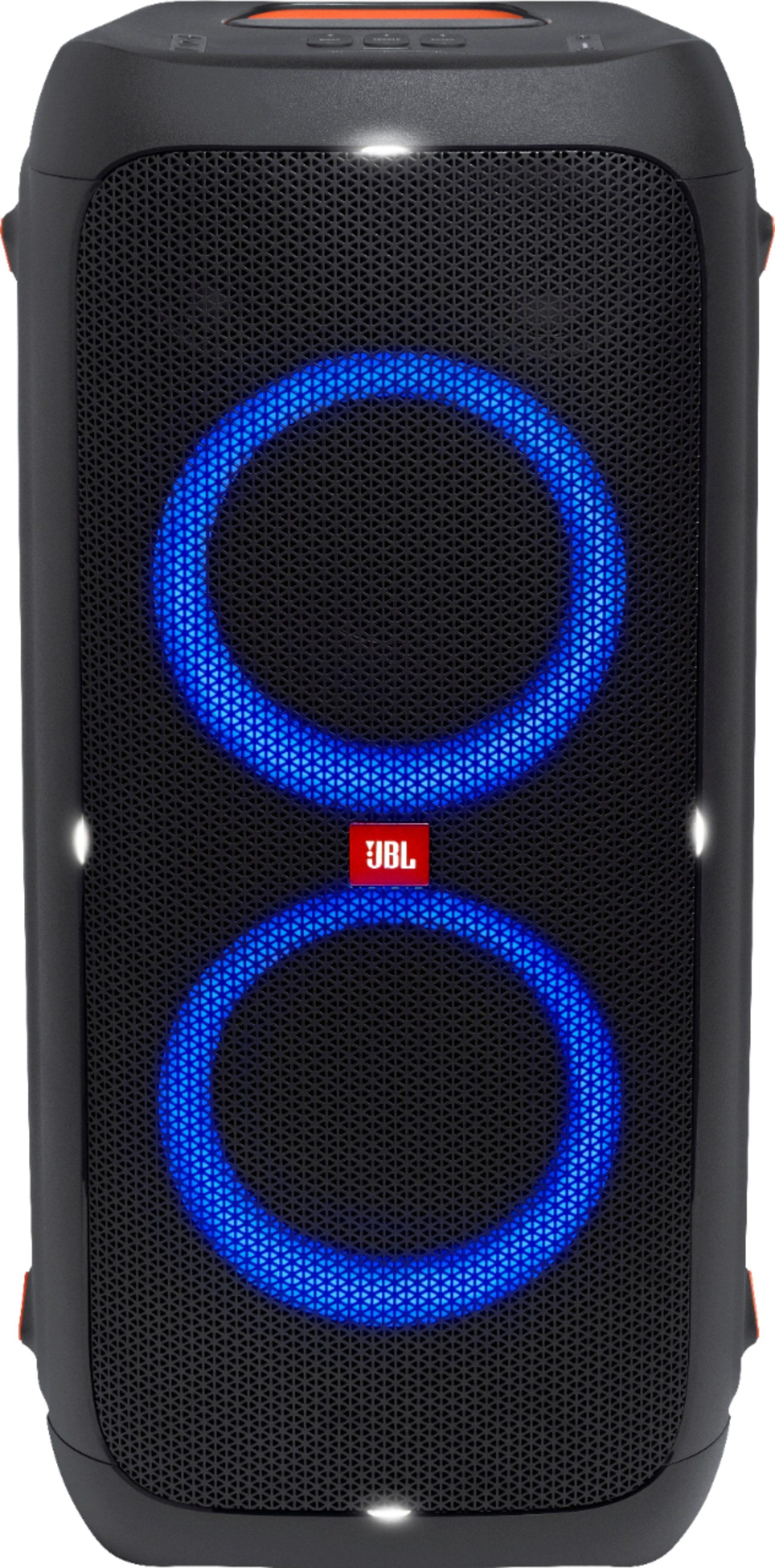
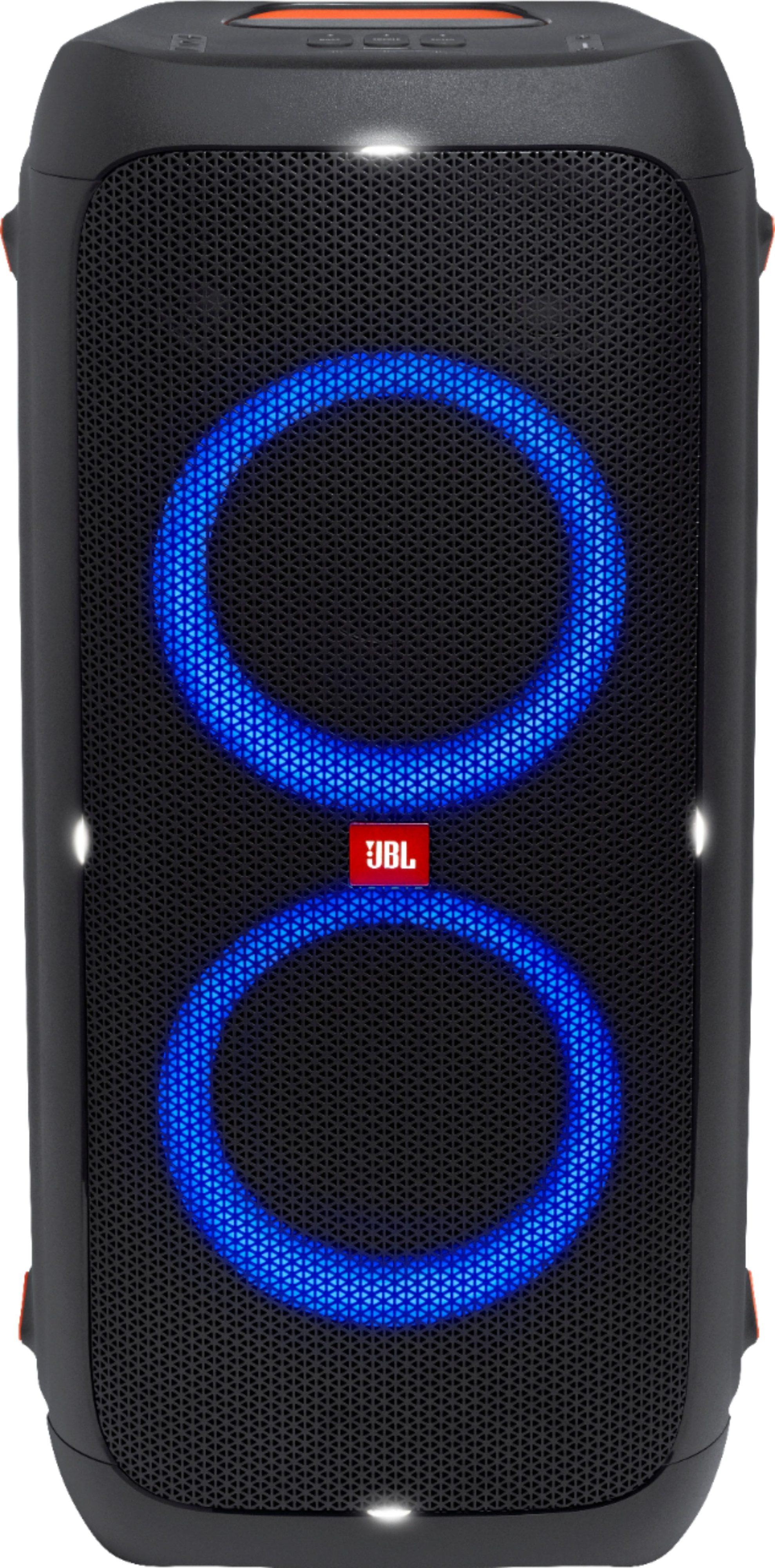
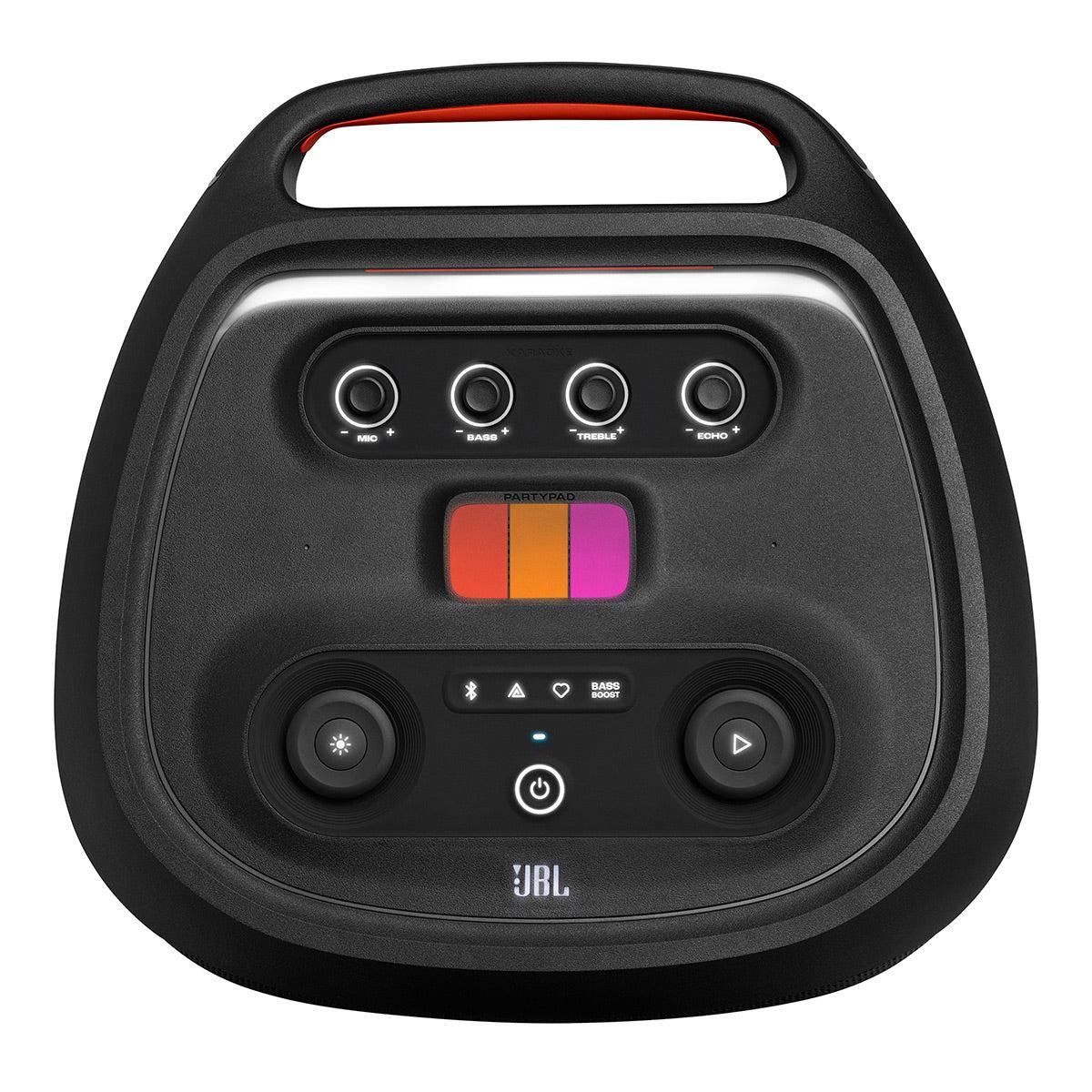
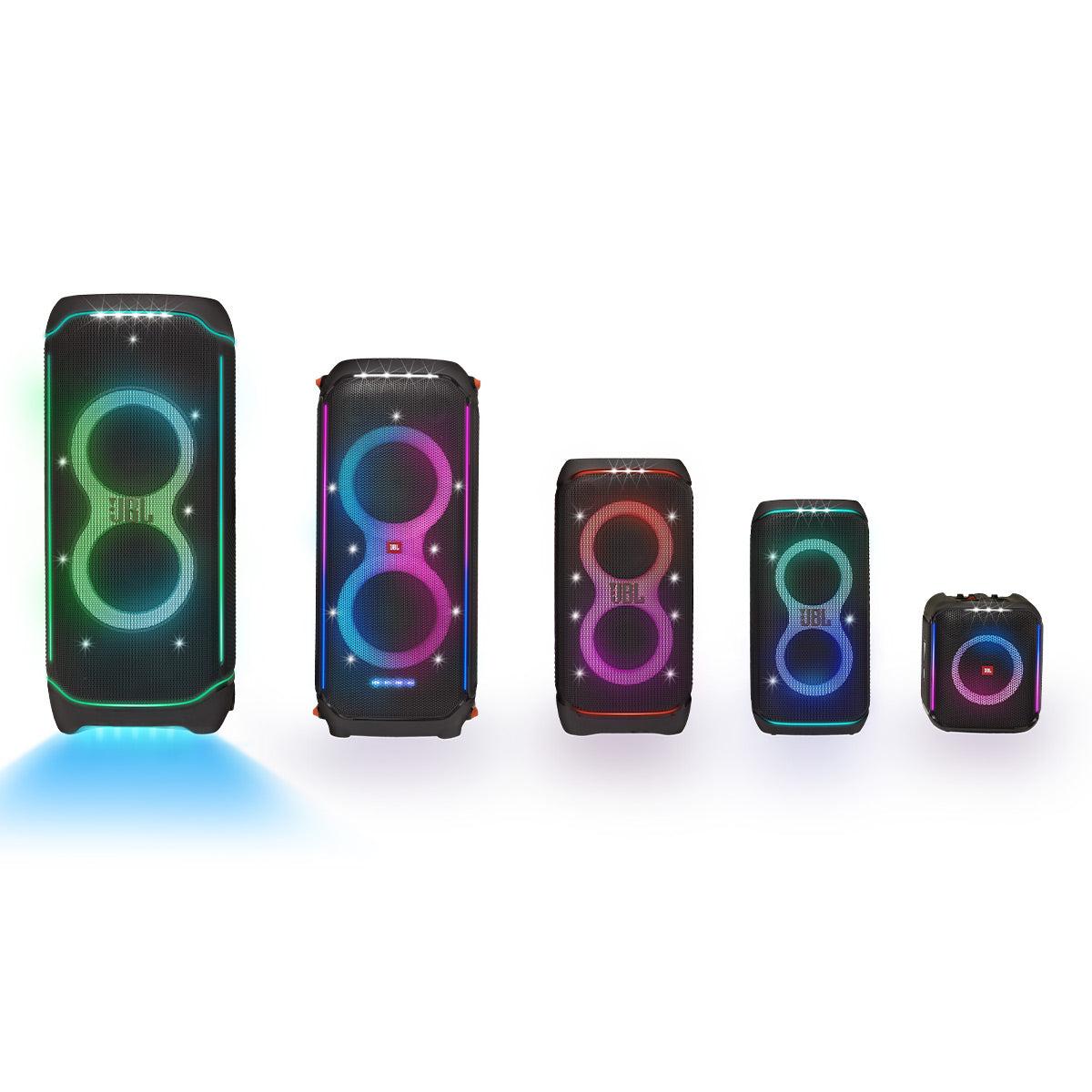
Party speakers aren't just about sound—the visual spectacle often matters just as much. The 310 includes a respectable light show with dual LED rings and four white strobe lights that sync to your music. It's engaging and fun, with five different lighting modes to match different moods.
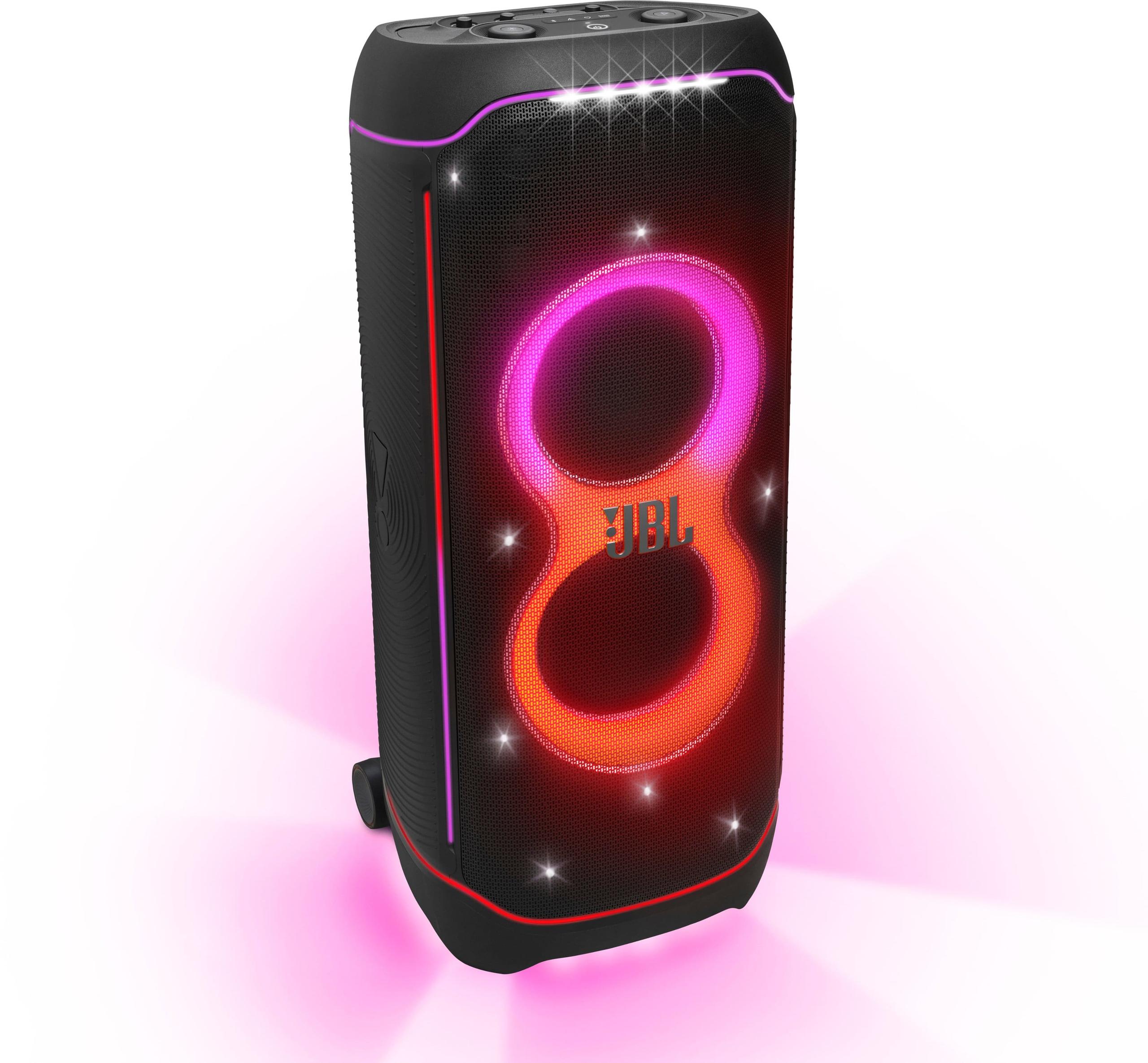
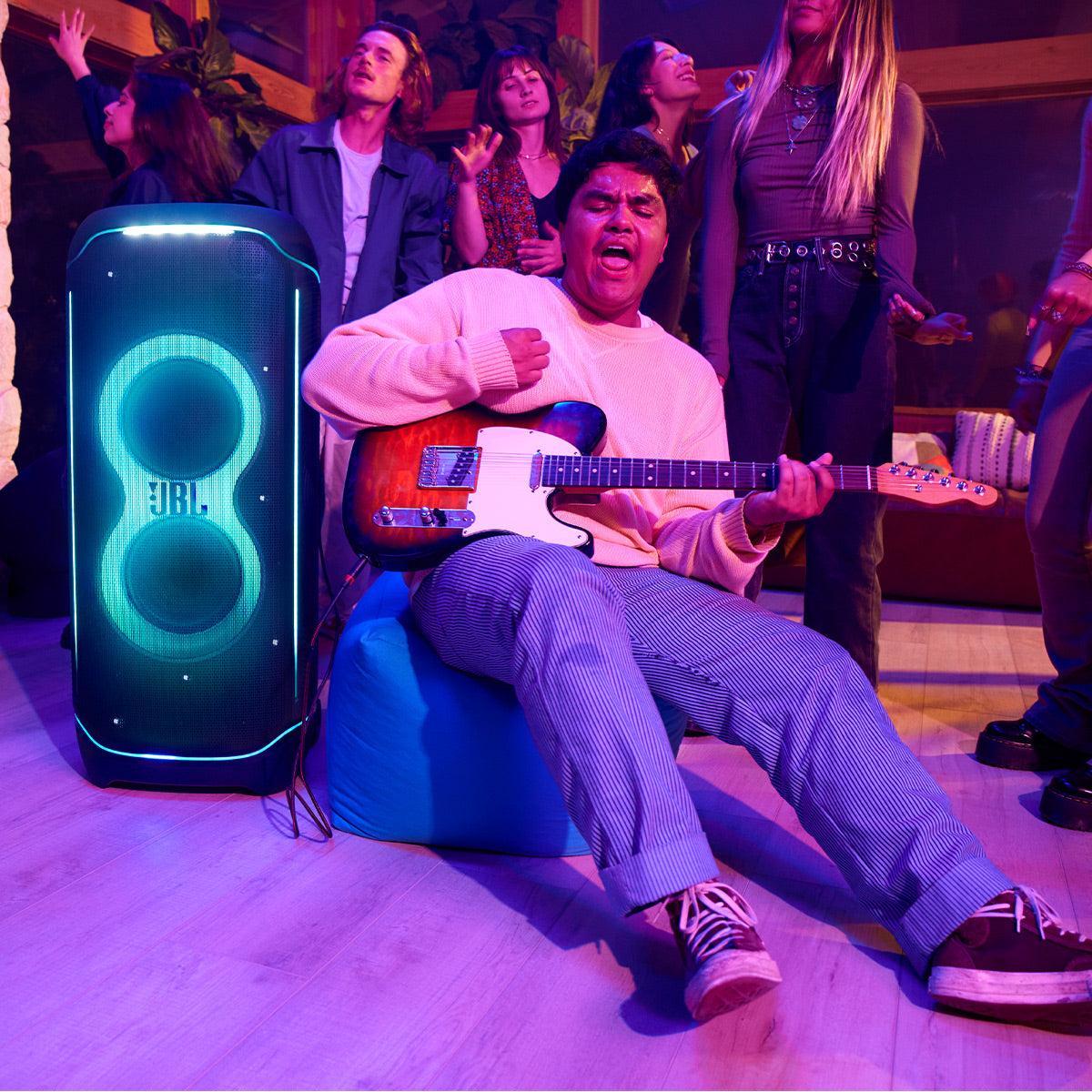
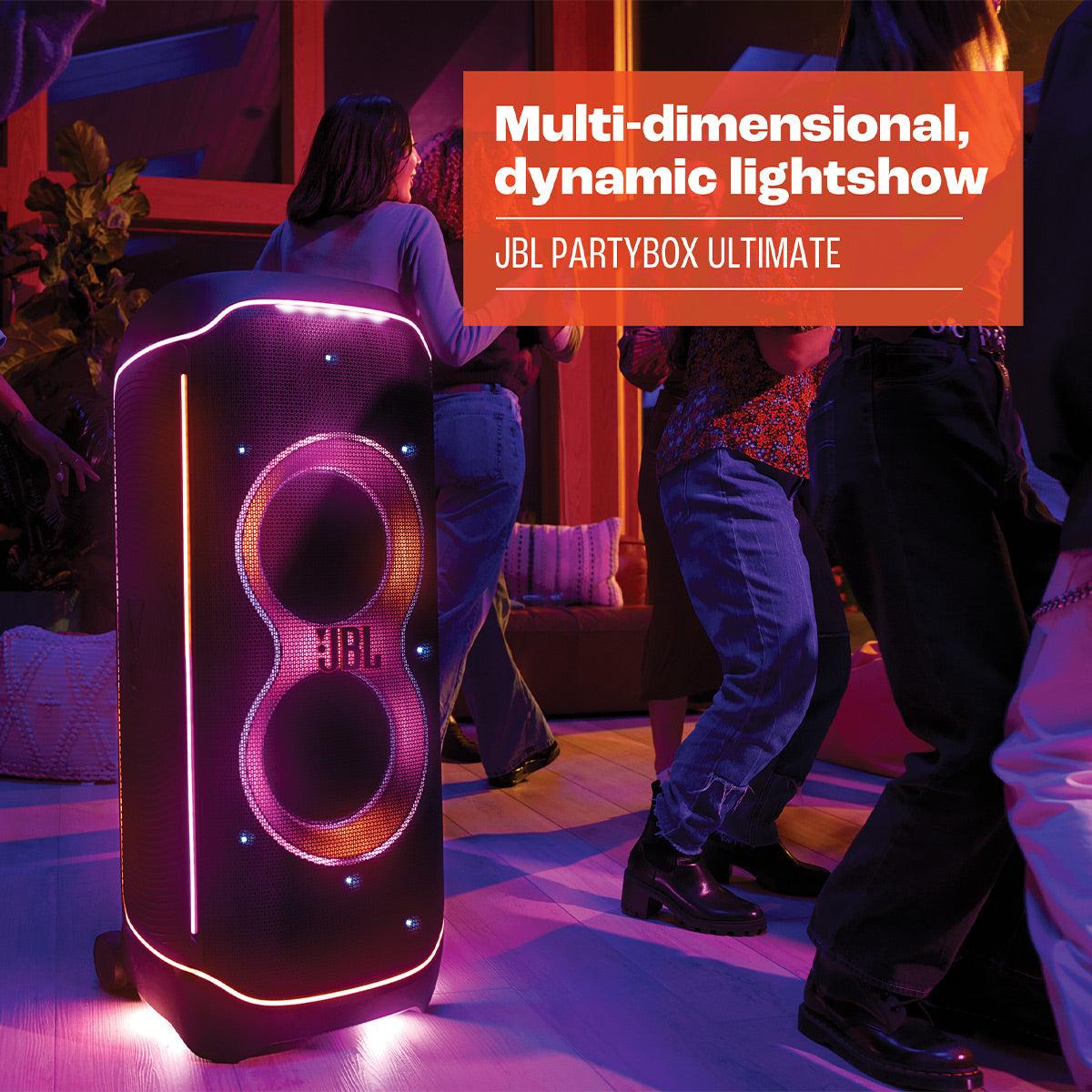
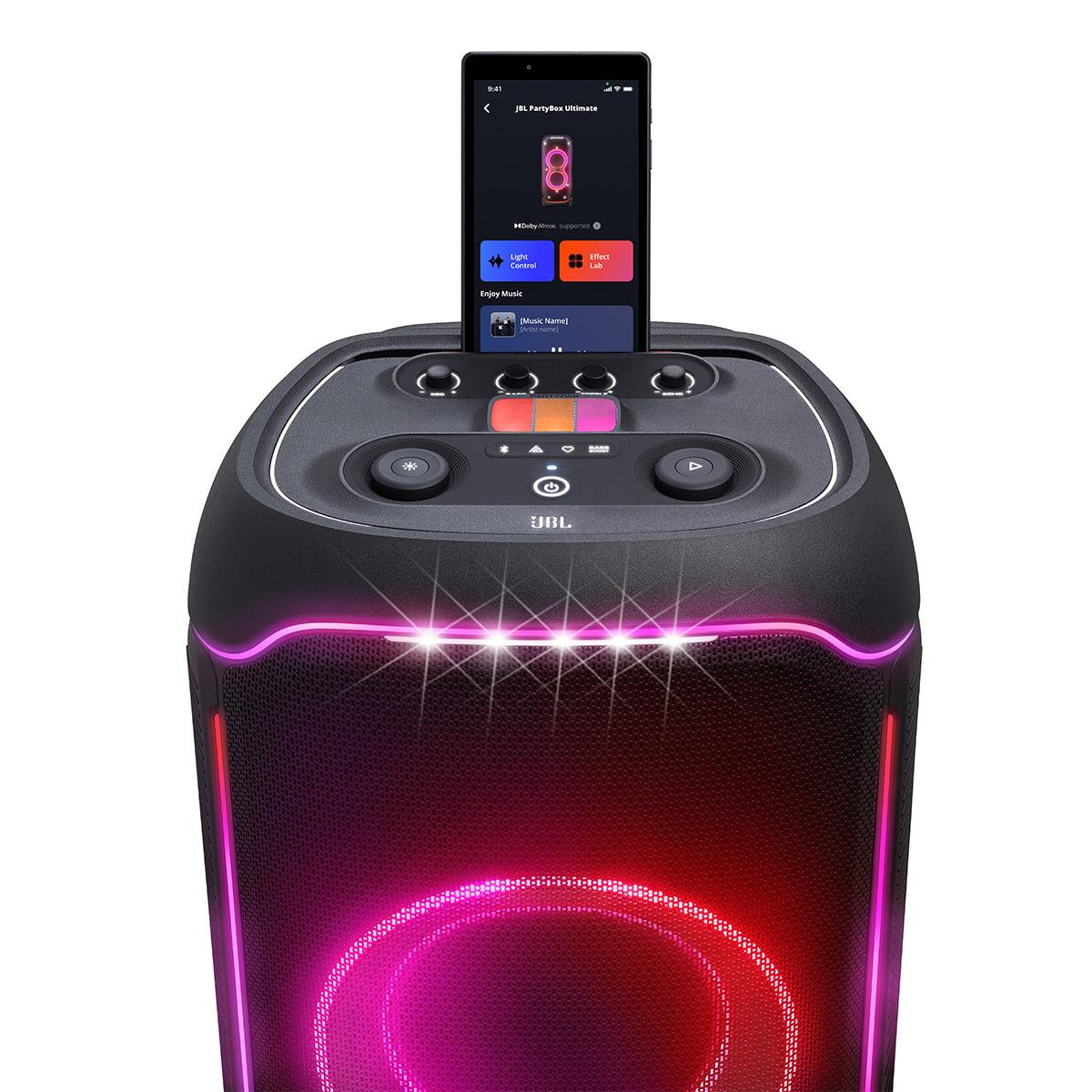
The Ultimate takes this concept to theatrical levels. With 22 white strobe LEDs, three LED strips, and sophisticated multi-dimensional effects including "starry night" patterns and ground projection, it creates an immersive visual experience that rivals dedicated DJ lighting setups. Users consistently describe the lighting as "incredible" and "mesmerizing."
For most backyard gatherings, the 310's lighting is perfectly adequate and adds that special party atmosphere. But if you're trying to create a truly memorable visual experience—maybe for a milestone birthday, wedding reception, or regular entertaining where the "wow factor" matters—the Ultimate's lighting system justifies its existence.
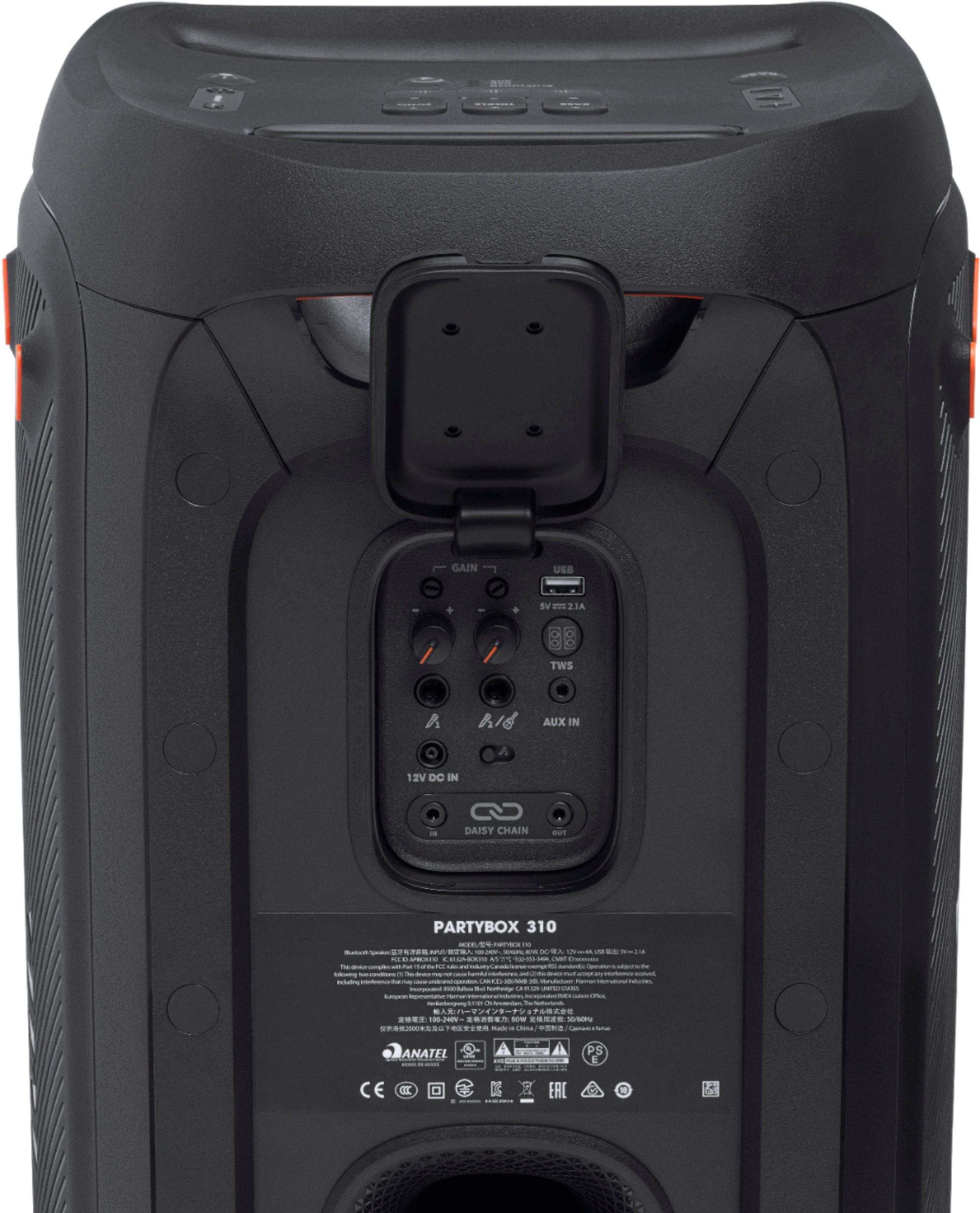
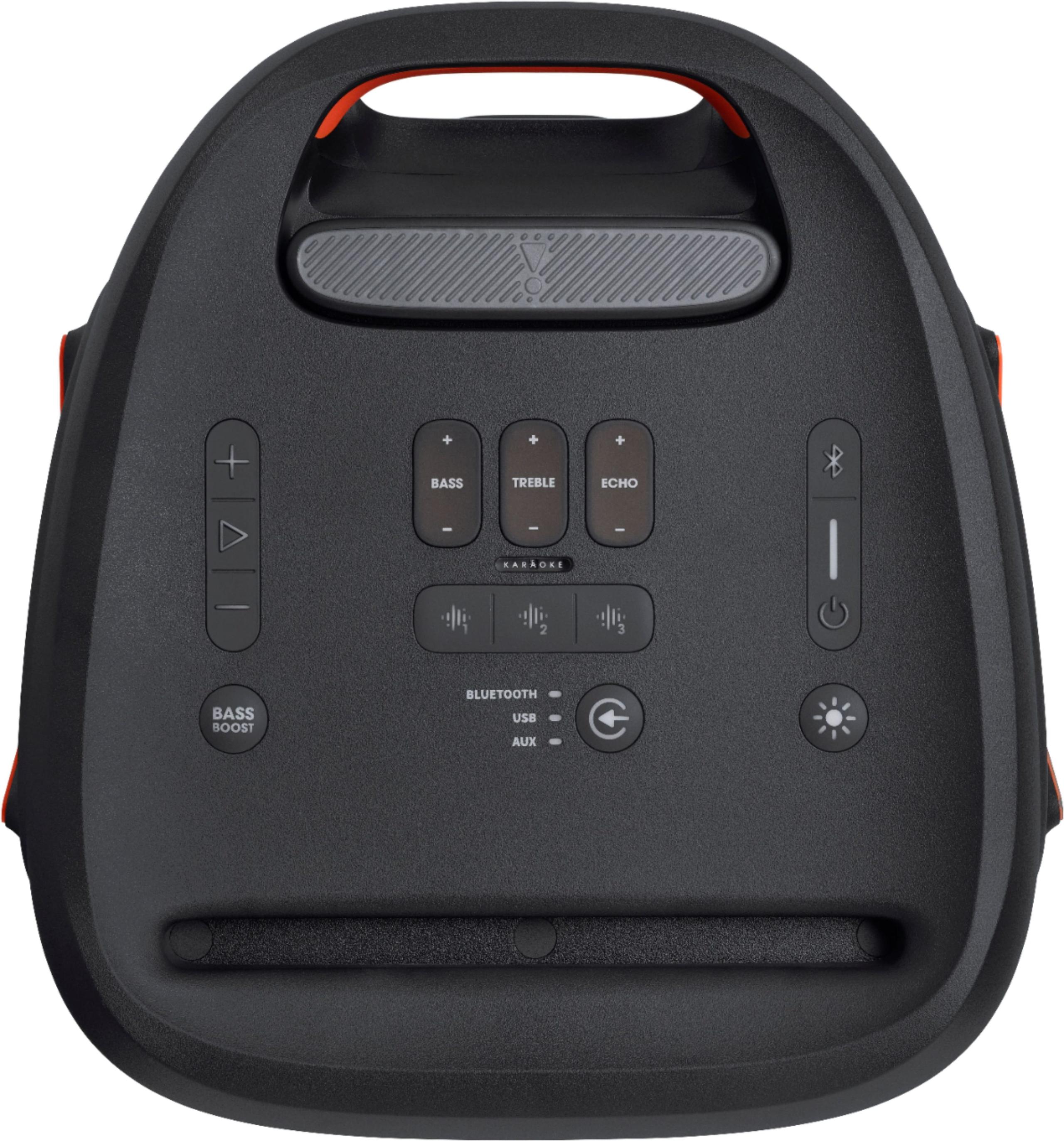
Both speakers include the essentials: Bluetooth connectivity, dual microphone inputs for karaoke, guitar inputs for live performance, USB playback, and auxiliary inputs. But the Ultimate adds several modern conveniences that reflect its 2023 design.
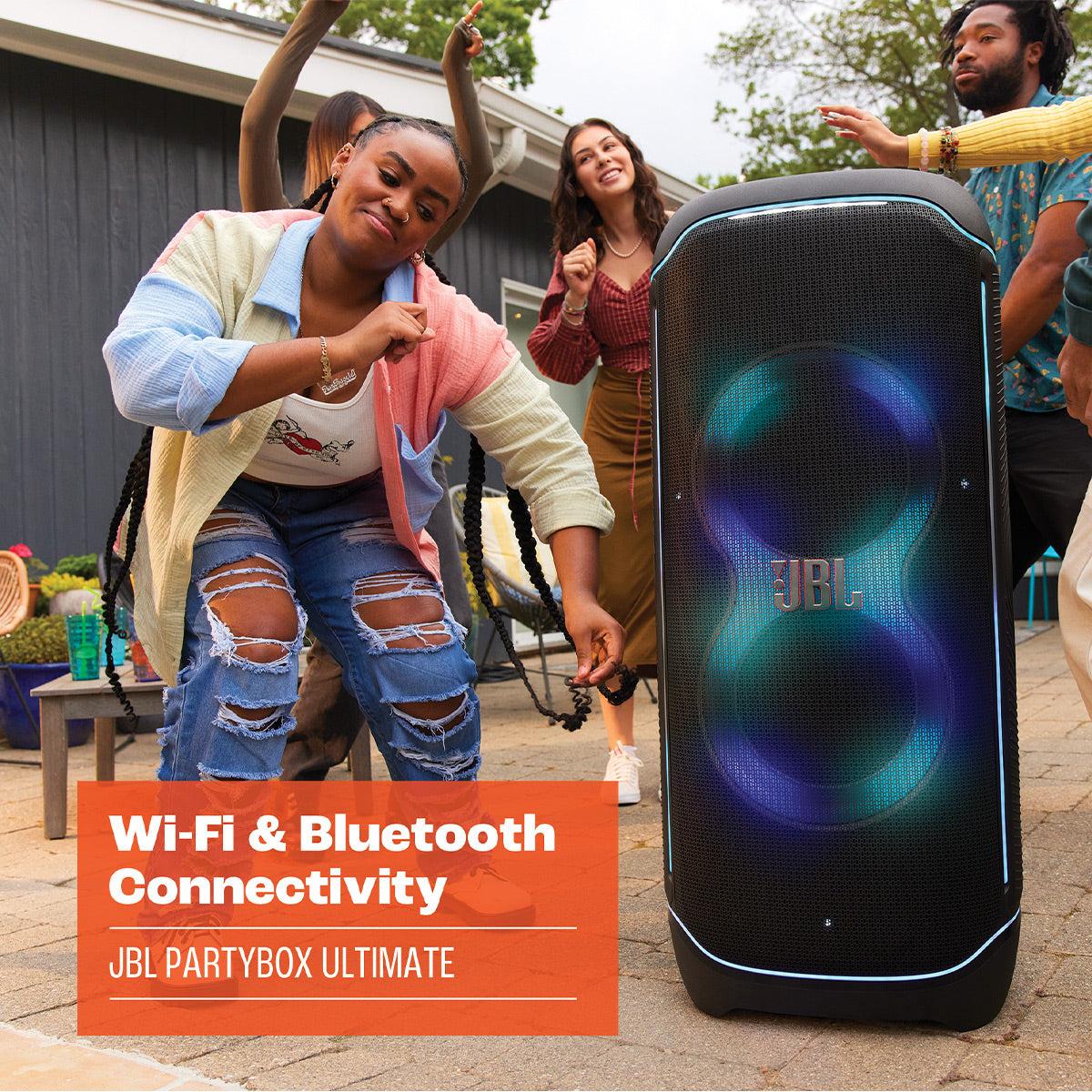
Wi-Fi 6 connectivity enables features impossible with Bluetooth alone. You can stream high-resolution audio without the compression artifacts inherent in Bluetooth transmission. The speaker supports Dolby Atmos over Wi-Fi—a 3D audio technology that creates the illusion of sound coming from above and around you, not just from the speaker itself. AirPlay 2, Chromecast built-in, and Spotify Connect mean you can stream directly from apps without going through your phone.
The Ultimate also includes self-tuning technology that uses built-in microphones to analyze its acoustic environment and automatically adjust the sound profile. Place it in a corner, and it compensates for bass buildup. Set it up outdoors, and it adjusts for the lack of room reflections. This kind of sophisticated digital signal processing wasn't available when the 310 was designed.
Perhaps most intriguingly, the Ultimate features the JBL PartyPad—an interactive DJ control surface on top of the speaker. You can trigger sound effects, apply filters, and manipulate the music in real-time just by touching and sliding on the control pads. It's surprisingly responsive and adds an interactive element that gets people more engaged with the music.
While neither speaker is designed specifically for home theater use, both can serve double duty for movie nights or TV audio enhancement. The 310 works reasonably well for this purpose, though its party-oriented sound signature (emphasized bass and treble) isn't ideal for dialogue clarity.
The Ultimate makes a more compelling case for home theater use, particularly in large rooms where conventional soundbars struggle. Its Dolby Atmos support over Wi-Fi can provide genuine 3D audio for compatible content, and the massive power output ensures action sequences have proper impact. The separated driver design also helps with dialogue clarity compared to the 310.
However, both speakers lack optical or HDMI inputs, so you'd need to connect via Bluetooth, Wi-Fi, or the auxiliary input. The Ultimate's Wi-Fi connectivity provides the highest audio quality for this application.
In the party speaker category, certain measurements tell the whole story:
Maximum SPL (Sound Pressure Level): How loud the speaker can get before significant distortion. The Ultimate achieves around 116 dB versus roughly 108 dB for the 310—a substantial difference in perceived loudness.
Bass Extension: How low the speaker can reproduce frequencies. The Ultimate's 30Hz capability versus the 310's 45Hz means more impactful bass for electronic music and movies.
Power Handling: The Ultimate's 1,100 watts versus 240 watts for the 310 represents a 4.6x advantage in sustained power output.
Battery Life: The 310's 18-hour runtime is exceptional in this category, while the Ultimate requires constant AC power.
Based on extensive user feedback analysis, the 310 performs admirably within its design limits but shows strain at maximum volume. The Ultimate maintains composure even at levels that would be uncomfortable for most listeners.
The PartyBox 310 makes perfect sense for people who value flexibility above all else. If you host gatherings in different locations, enjoy outdoor events, or simply want the freedom to place your speaker anywhere without worrying about power outlets, it's the clear choice. It's also the better option for most casual entertainers who host parties for 20-50 people and don't need to fill massive spaces.
College students, renters who might move frequently, and anyone who prioritizes value will find the 310 delivers impressive performance at a reasonable price point. Its smaller size also makes it more apartment-friendly—you can get great party sound without completely overwhelming your neighbors.
The PartyBox Ultimate is for people who want to make a statement. If you have a dedicated entertainment space, regularly host large gatherings, or simply want the best possible performance regardless of other constraints, it's worth the premium pricing. Venue owners, serious entertainers, and audio enthusiasts who can appreciate the technical improvements will find it justifies its cost.
The Ultimate also makes sense for anyone planning to "grow into" their speaker. Its massive power reserves mean it can handle increasingly large gatherings without strain, making it somewhat future-proof as your entertaining ambitions expand.
At the time of writing, the price difference between these speakers is significant enough that most buyers will know intuitively which category they fall into. The 310 represents excellent value for versatile party audio, while the Ultimate commands premium pricing for premium performance.
Both speakers succeed brilliantly at their intended purposes. The 310 brings professional-quality party features to a portable, affordable package that works almost anywhere. The Ultimate delivers uncompromising performance for users who need maximum impact and are willing to sacrifice portability to get it.
Your choice ultimately depends on how you answer one key question: Do you need a speaker you can take anywhere, or do you want the most powerful party audio experience available? Everything else flows from that fundamental decision.
| JBL PartyBox 310 | JBL PartyBox Ultimate |
|---|---|
| Power Output - Determines maximum volume and bass impact | |
| 240W RMS (suitable for medium gatherings) | 1,100W RMS (fills extremely large spaces) |
| Driver Configuration - Affects sound quality and clarity | |
| 2x 6.5" woofers + 2x 2.5" tweeters (shared frequency handling) | 2x 9" subwoofers + 2x 4.5" midrange + 2x 2.75" tweeters (dedicated drivers) |
| Frequency Range - How deep the bass extends | |
| 45Hz-20kHz (good for most music) | 30Hz-20kHz (sub-bass for electronic music and movies) |
| Weight and Portability - Critical for mobile use | |
| 38.4 lbs with telescoping handle and wheels (truly portable) | 87.1 lbs with fixed handle (semi-permanent installation) |
| Battery Life - Essential for outdoor/remote use | |
| 18 hours (complete independence from power outlets) | None (requires AC power connection) |
| Charging Time - Affects usability between events | |
| 3.5 hours full charge | N/A (AC powered only) |
| Bluetooth Version - Impacts connection stability and range | |
| Bluetooth 5.1 (reliable, ~33ft range) | Bluetooth 5.3 (improved stability and range) |
| Wi-Fi Connectivity - Enables high-quality streaming and smart features | |
| None (Bluetooth only) | Wi-Fi 6 dual-band with AirPlay 2, Chromecast, Spotify Connect |
| Lighting System - Visual entertainment impact | |
| 2 LED rings + 4 white strobes (good party atmosphere) | 2 LED rings + 3 LED strips + 22 white strobes (immersive light show) |
| Special Features - Unique capabilities | |
| Basic app control, True Wireless Stereo pairing | JBL PartyPad DJ controls, Dolby Atmos, self-tuning, multiroom audio |
| Release Year - Technology generation | |
| 2020 (proven, stable platform) | 2023 (latest connectivity and processing) |
| Weather Resistance - Outdoor durability | |
| IPX4 splashproof (poolside safe) | IPX4 splashproof (poolside safe) |
| Microphone Inputs - Karaoke and live performance | |
| Dual 1/4" inputs with volume/echo controls | Dual 1/4" inputs with advanced karaoke EQ tuning |
| Best Use Cases - Who should choose this | |
| Mobile parties, camping, beach events, budget-conscious buyers | Large venues, permanent installations, audiophiles, maximum performance needs |
The JBL PartyBox Ultimate is significantly more powerful with 1,100 watts RMS compared to the JBL PartyBox 310's 240 watts RMS. This means the Ultimate can get much louder and fill larger spaces, making it better for big events or outdoor gatherings where you need maximum volume.
Only the JBL PartyBox 310 has a built-in battery that lasts up to 18 hours, making it perfect for outdoor events, camping, or anywhere without power outlets. The JBL PartyBox Ultimate requires constant AC power and cannot run on battery, limiting it to locations with electrical access.
The JBL PartyBox 310 is better for most outdoor parties because of its portability and 18-hour battery life. However, if you have power access and need to fill an extremely large outdoor space, the JBL PartyBox Ultimate has the raw power to overcome outdoor sound dissipation more effectively.
The JBL PartyBox 310 weighs 38.4 pounds and has a telescoping handle with wheels, making it genuinely portable for one person. The JBL PartyBox Ultimate weighs 87 pounds and requires two people to move safely, making it more of a semi-permanent installation despite having wheels.
The JBL PartyBox Ultimate has superior sound quality due to its separated driver system with dedicated subwoofers, midrange drivers, and tweeters. This prevents frequency interference and maintains clarity at high volumes. The JBL PartyBox 310 has good sound quality but may show some compression at maximum volume.
Yes, both the JBL PartyBox 310 and JBL PartyBox Ultimate include dual microphone inputs and guitar inputs for karaoke and live performances. The Ultimate offers more advanced karaoke EQ tuning, while the 310 provides solid basic karaoke functionality with volume and echo controls.
The JBL PartyBox Ultimate has superior connectivity with Wi-Fi 6, Bluetooth 5.3, AirPlay 2, Chromecast, and Spotify Connect for high-quality streaming. The JBL PartyBox 310 only has Bluetooth 5.1 connectivity, which is reliable but more limited in streaming options and audio quality.
The JBL PartyBox Ultimate works better for home theater due to its Dolby Atmos support, separated drivers for clearer dialogue, and massive power for action scenes. The JBL PartyBox 310 can work for casual movie watching but lacks the audio processing and clarity ideal for dedicated home theater use.
The JBL PartyBox Ultimate has a dramatically better light show with 22 white strobe LEDs, three LED strips, and multi-dimensional effects including starry patterns and ground projection. The JBL PartyBox 310 has a more basic but still enjoyable light show with two LED rings and four strobe lights.
The JBL PartyBox 310 takes 3.5 hours to fully charge its 18-hour battery, allowing for quick turnaround between events. The JBL PartyBox Ultimate doesn't have a battery and must remain plugged into AC power at all times.
The JBL PartyBox 310 offers better value for most users, providing excellent party features, portability, and long battery life at a much lower cost. The JBL PartyBox Ultimate commands premium pricing for premium performance and is only worth the extra cost if you need maximum power and advanced features.
Both the JBL PartyBox 310 and JBL PartyBox Ultimate support wireless pairing and daisy-chaining multiple speakers. The Ultimate offers more advanced multi-room capabilities through its Wi-Fi connectivity, while the 310 provides basic True Wireless Stereo pairing for creating a larger soundstage.
We've done our best to create useful and informative comparisons to help you decide what product to buy. Our research uses advanced automated methods to create this comparison and perfection is not possible - please contact us for corrections or questions. These are the sites we've researched in the creation of this article: rtings.com - comparisontabl.es - crutchfield.com - youtube.com - bestbuy.com - rtings.com - youtube.com - versus.com - youtube.com - youtube.com - jbl.com - youtube.com - crutchfield.com - manuals.plus - in.jbl.com - jbl.com.tw - mm.jbl.com - bestbuy.com - jbl.com - onward.ph - youtube.com - manuals.plus - harmanaudio.com - support.jbl.com - youtube.com - kh.jbl.com - bestbuy.com - audioadvice.com - youtube.com - crutchfield.com - youtube.com - youtube.com - youtube.com - youtube.com - versus.com - youtube.com - youtube.com - youtube.com - jbl.com - pcx.com.ph - global.jbl.com - gzhls.at - electronicexpress.com - harmanaudio.in - jbl.com - dell.com - robot-advance.com - device.report - ro.harmanaudio.com

Privacy Policy
Terms and Conditions - Affiliate Policy
Home Security
© Copyright 2008-2026.
11816 Inwood Rd #1211, Dallas, TX 75244