

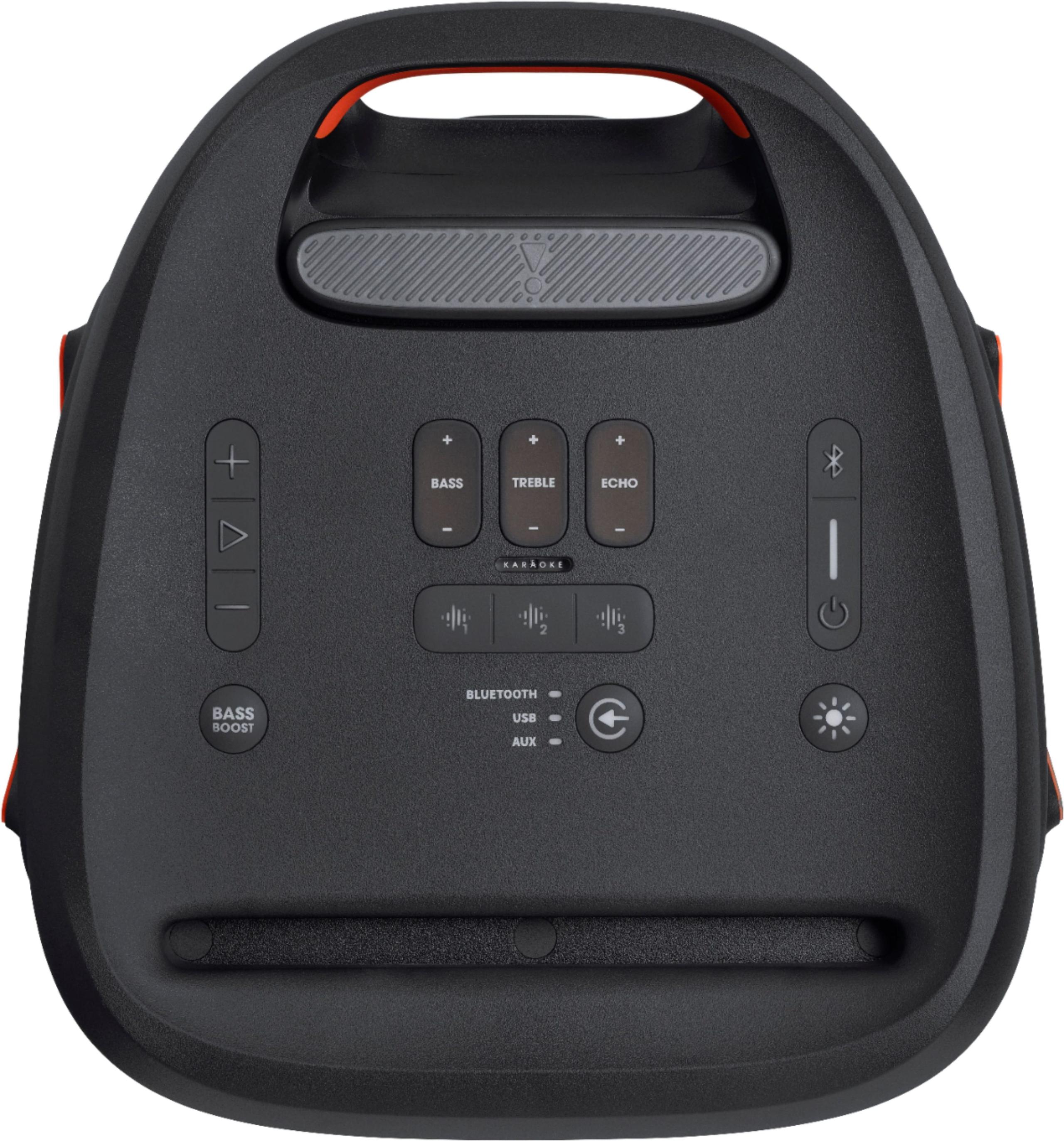
When you're planning the perfect party, nothing kills the vibe quite like weak sound that can't fill the space or get people moving. That's where JBL's PartyBox series comes in—these aren't your typical Bluetooth speakers. They're purpose-built entertainment machines designed to deliver the kind of room-shaking audio that transforms any gathering into an unforgettable experience.
The portable party speaker category sits in a unique spot in the audio world. Unlike audiophile speakers that prioritize perfect sound reproduction, or compact Bluetooth speakers focused on convenience, party speakers are all about impact. They need to pump out massive volume without distorting, deliver bass you can physically feel, and do it all while looking the part with flashy light shows and rugged builds that can handle being dragged from basement parties to beach bonfires.
Today we're diving deep into two standouts from JBL's lineup: the powerhouse PartyBox 710 and the versatile PartyBox 310. While they share the same DNA, these speakers take very different approaches to the party experience—and understanding those differences is crucial for making the right choice.
Before we get into the specifics, let's talk about what separates party speakers from everything else on the market. The most important performance metric is maximum clean volume—measured in watts RMS (Root Mean Square), which tells you how much continuous power the speaker can handle without distortion. While a typical home speaker might put out 20-50 watts, party speakers regularly push 200-800 watts or more.
Bass response is equally critical. Most party music—from EDM to hip-hop to reggaeton—relies heavily on sub-bass frequencies (those super-low notes below 60Hz that you feel more than hear). Party speakers use large woofers (the big drivers that handle low frequencies) and specially tuned ports to maximize this physical bass impact.
Sound signature also differs from neutral home audio. Party speakers typically boost the bass and often emphasize midrange frequencies where vocals sit, creating a more exciting, energetic sound that cuts through crowd noise and gets people moving.
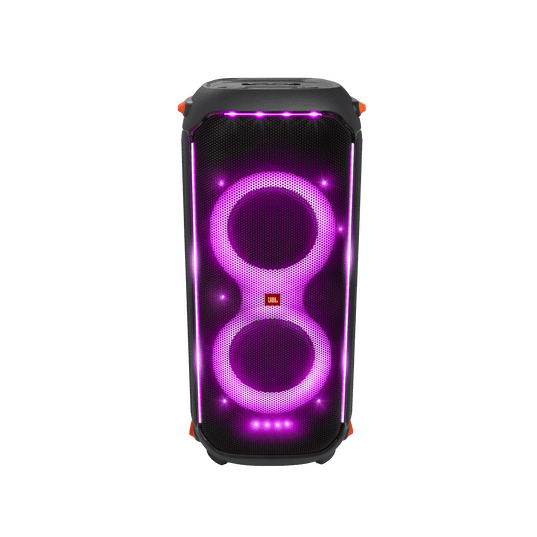
Released in 2021, the PartyBox 710 represents JBL's approach to maximum impact. This 61-pound beast pumps out 800 watts RMS through dual 8-inch woofers and dual 2.75-inch tweeters (the smaller drivers that handle high frequencies). With a frequency response extending down to 35Hz, it reaches into true sub-bass territory that most speakers simply can't touch.
The trade-off? This monster requires constant AC power—there's no battery option. JBL designed it for scenarios where maximum performance trumps portability concerns.
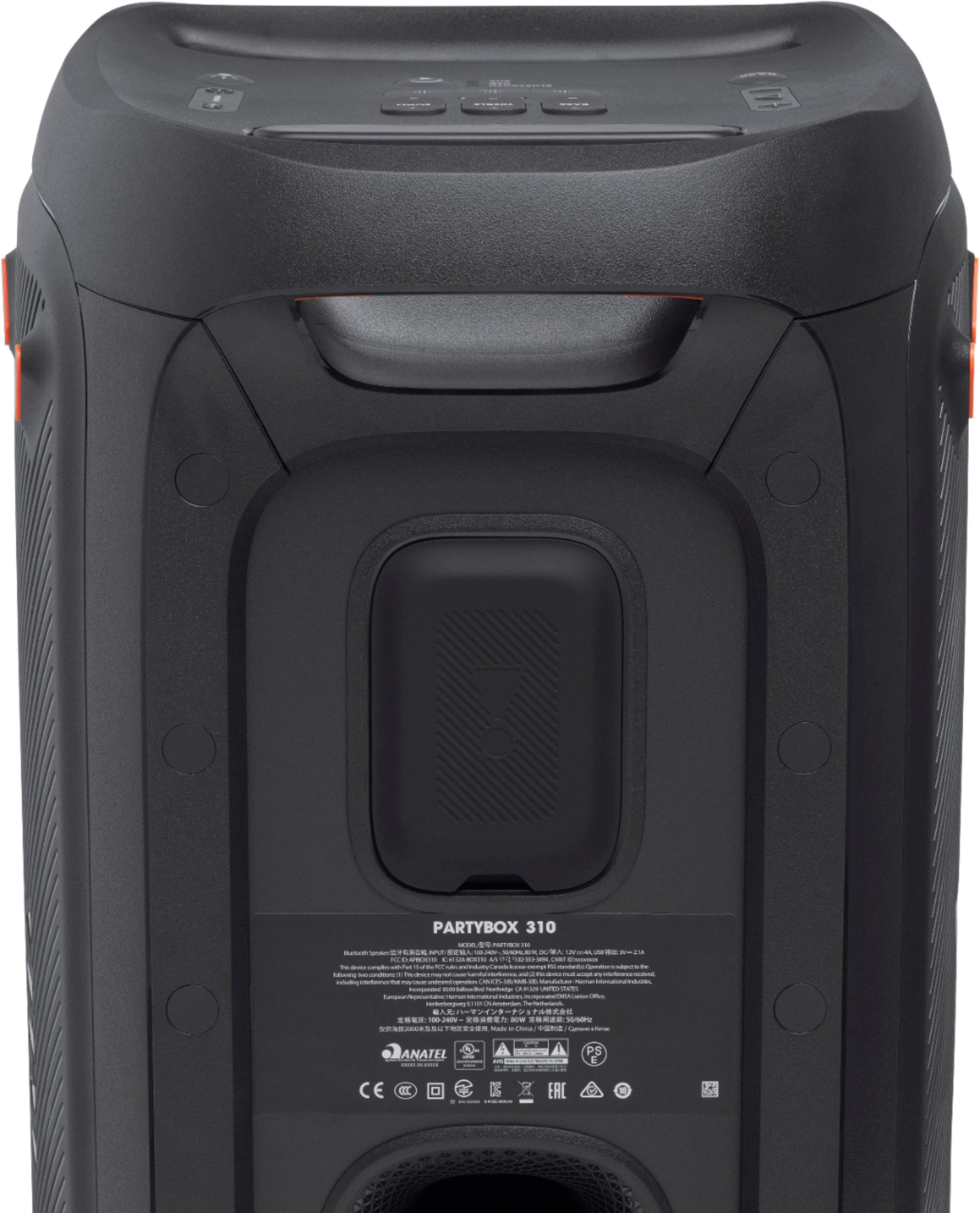
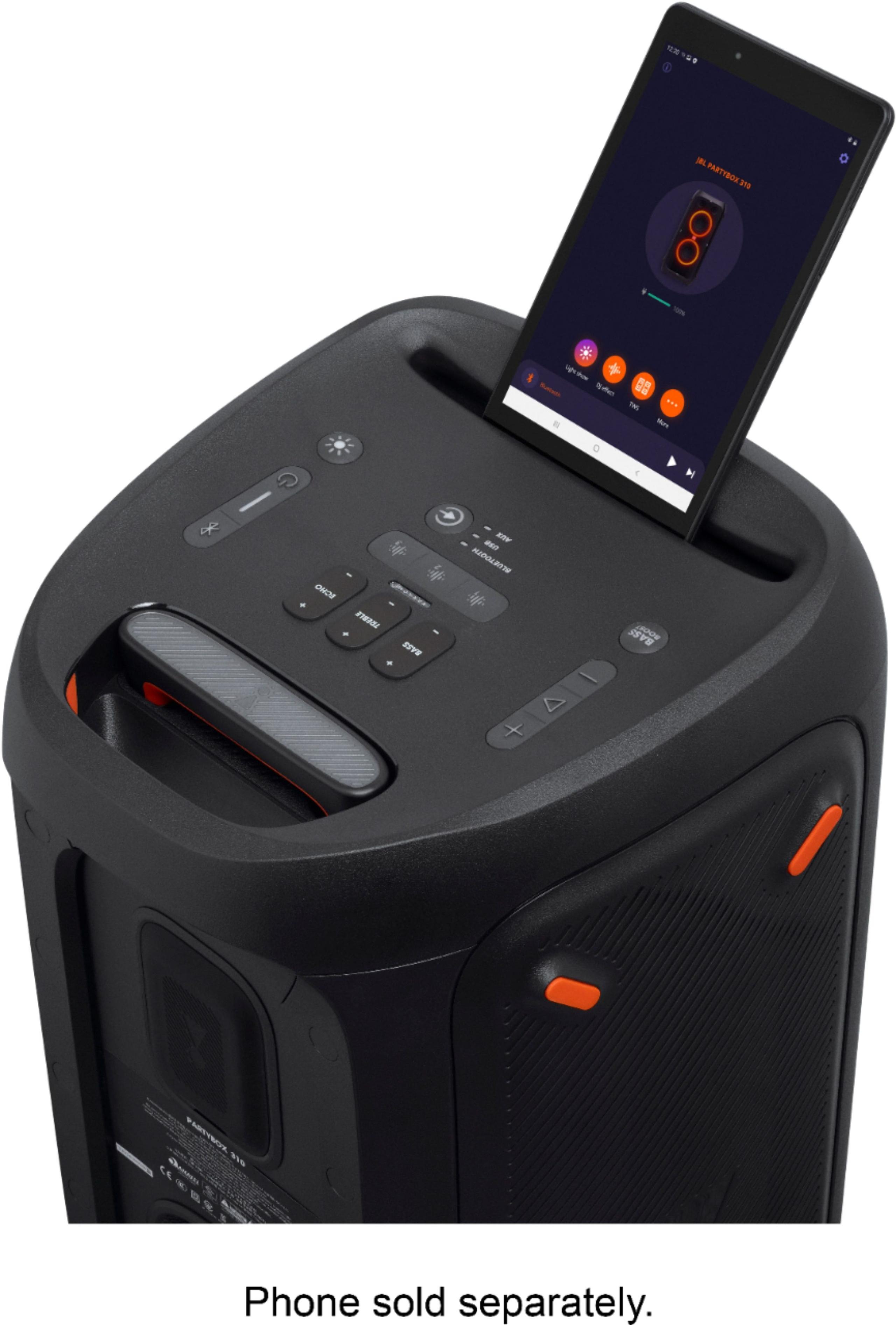
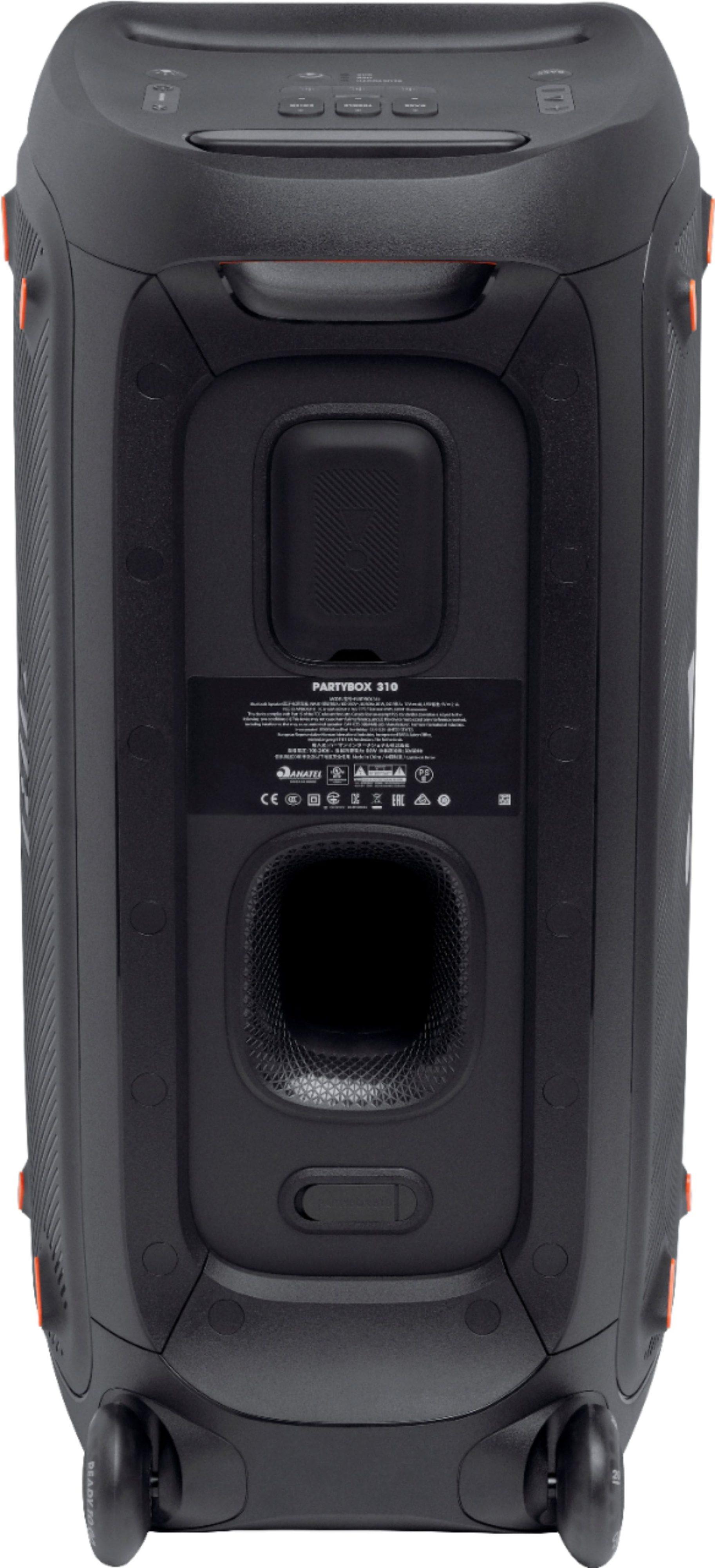
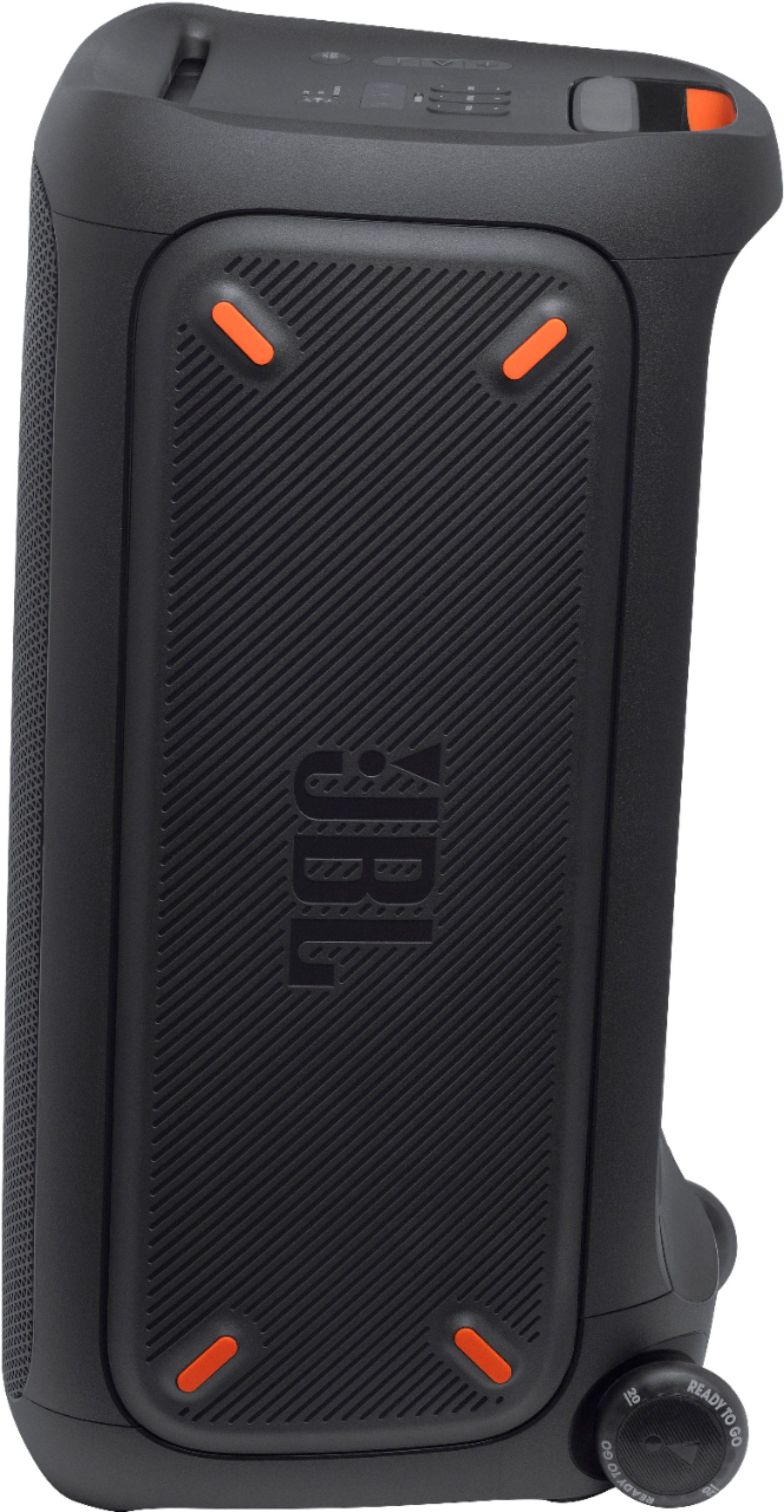
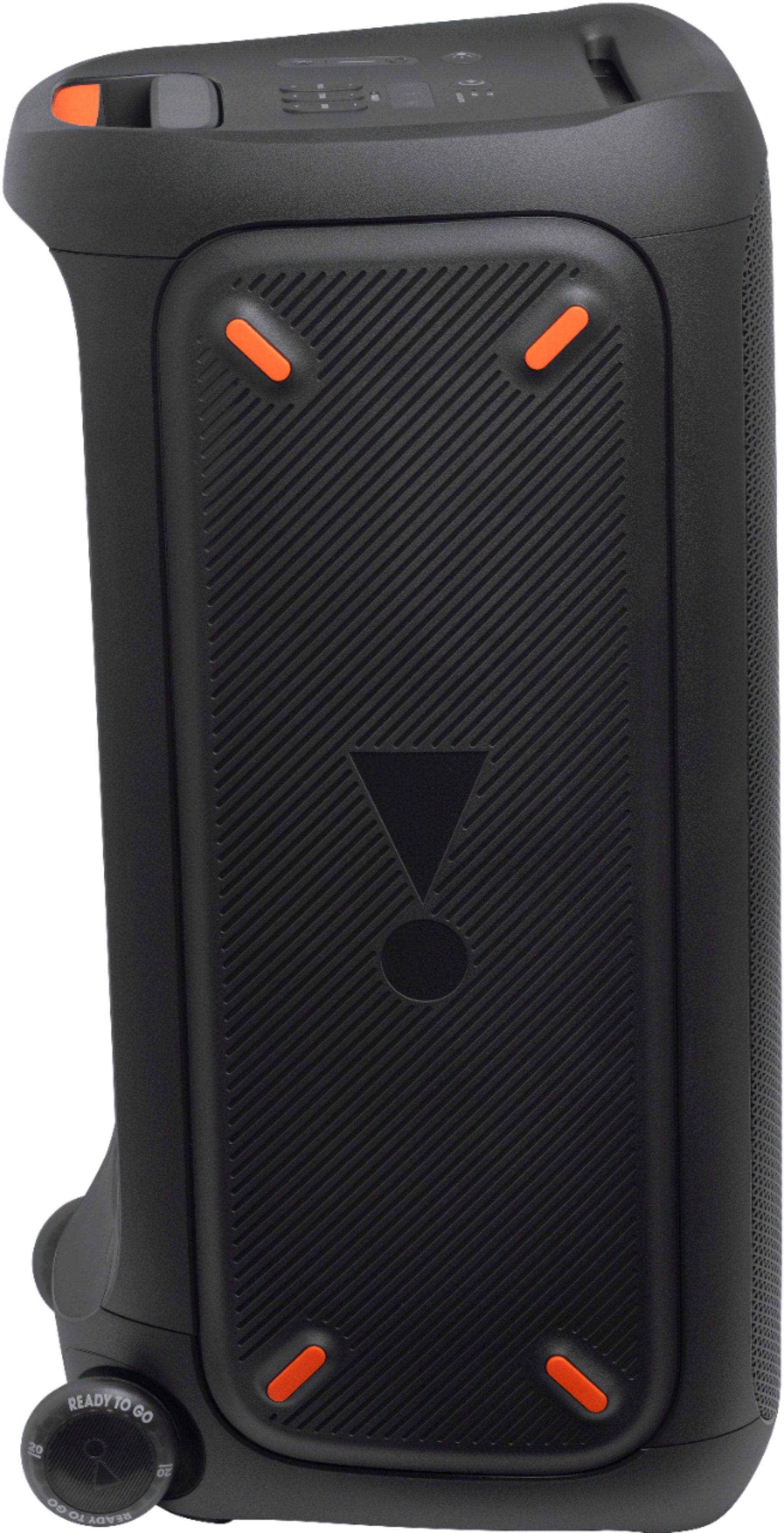
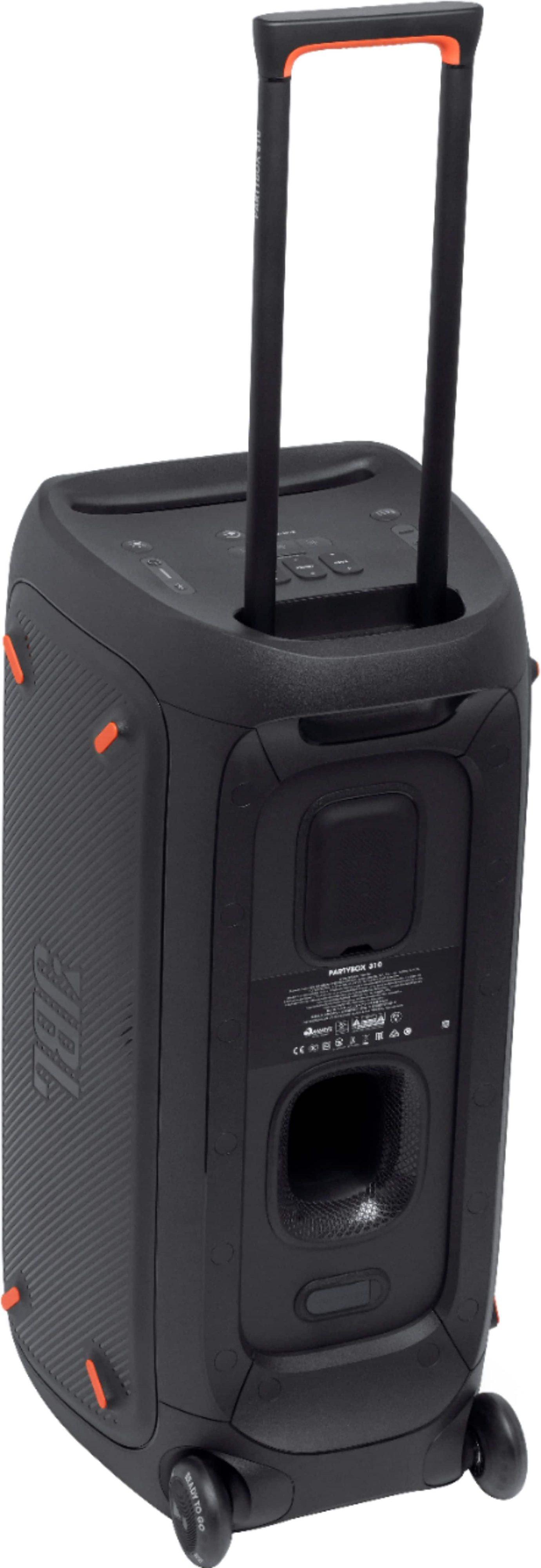
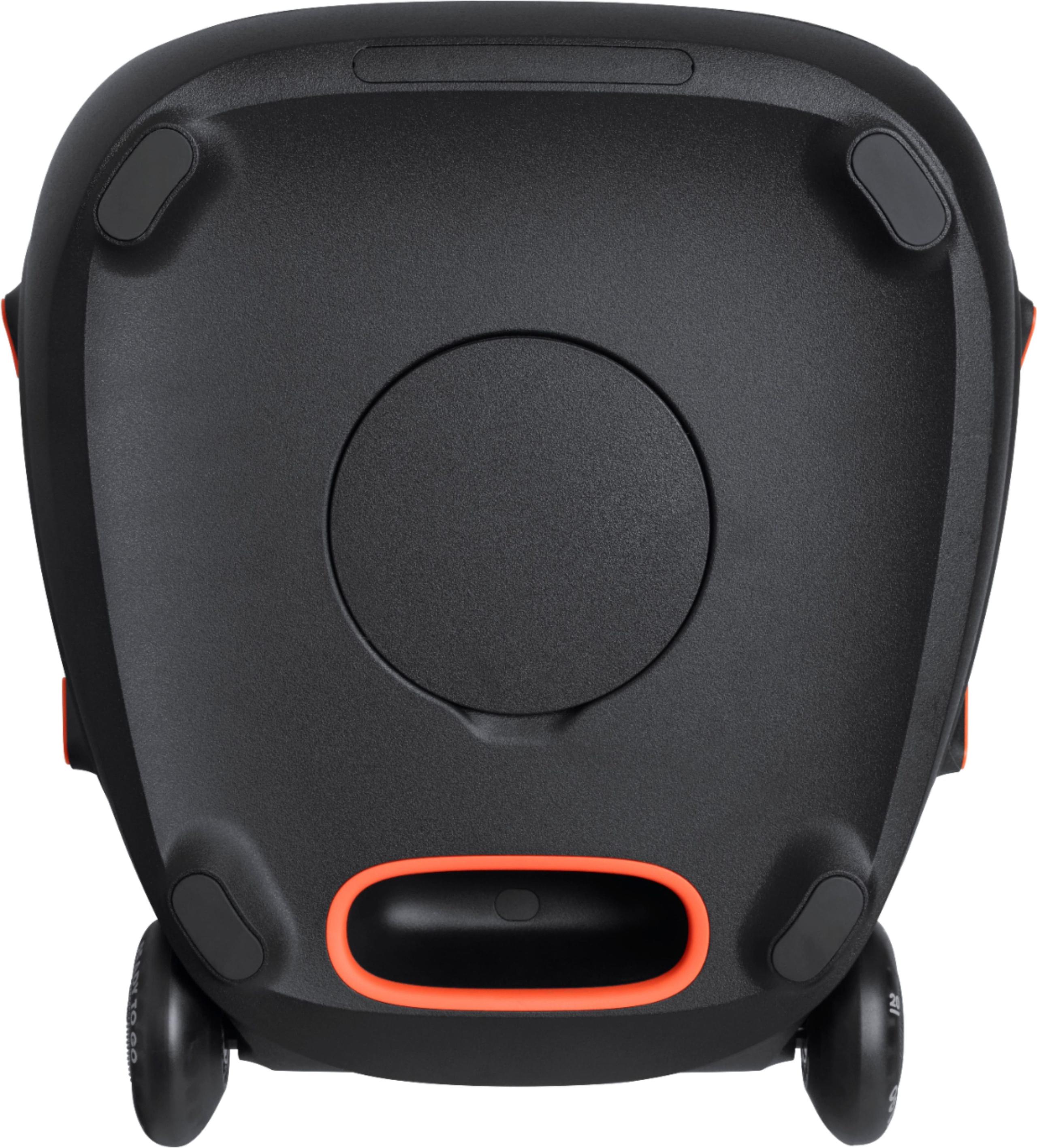
The PartyBox 310, released in 2020, takes a more balanced approach. At 38 pounds with 240 watts RMS (when plugged in), it delivers serious sound while maintaining true portability through an 18-hour battery. Its dual 6.5-inch woofers and 2.25-inch tweeters create a frequency response down to 45Hz—still impressive bass extension, just not quite as earth-shaking as its bigger sibling.
Both speakers received updates since launch, particularly in their companion apps and Bluetooth connectivity, with both now supporting Bluetooth 5.1 for more stable wireless connections.
The power difference between these speakers isn't just numbers on a spec sheet—it translates to dramatically different real-world performance. The PartyBox 710's 800 watts RMS represents genuine muscle. Based on our research into user experiences and professional testing, this speaker can comfortably fill large outdoor spaces—we're talking areas the size of a third of an acre—at just 65-70% volume with plenty of headroom remaining.
The PartyBox 310's 240 watts (when plugged in) is no slouch either, but it's operating in a different league. It excels in medium-sized indoor spaces and smaller outdoor gatherings, but when you need to project sound across a large backyard party or outdoor event, the volume limitations become apparent.
Here's where it gets interesting: the 310's performance drops significantly on battery power, down to just 140 watts RMS. That's still loud enough for most situations, but the difference is noticeable both in maximum volume and in the speaker's ability to maintain clean sound at higher levels.
Bass performance is where the PartyBox 710 truly separates itself. Those dual 8-inch woofers aren't just larger than the 310's 6.5-inch drivers—they're specifically designed to move more air and create more physical impact. The 10Hz difference in low-frequency extension (35Hz vs 45Hz) might not sound like much, but it represents the difference between bass you hear and bass you feel in your chest.
User reviews consistently describe the 710's bass as "earth-shattering" and "in a league of its own." This isn't hyperbole—the larger drivers and more powerful amplification create sub-bass impact that's genuinely impressive for a portable speaker. If you're playing genres like dubstep, trap, or any electronic music with deep synthesizer basslines, the difference is immediately apparent.
The PartyBox 310 delivers respectable bass for its size class, and the Bass Boost feature helps compensate somewhat, but physics is physics. Smaller drivers simply can't move the same amount of air or reach as deep into the frequency spectrum.
Both speakers share JBL's house sound signature—slightly warm with boosted bass and clear, forward midrange that keeps vocals prominent in the mix. This tuning works perfectly for party environments where you want vocals to cut through ambient noise while maintaining the energy that gets people dancing.
The PartyBox 710's larger tweeters and more powerful amplification provide better dynamics and less compression at high volumes. When you're really pushing these speakers hard, the 710 maintains its composure better, with less distortion and a cleaner sound overall.
The PartyBox 310 shows its limitations when pushed to maximum volume, with some compression artifacts creeping in. However, at moderate to loud levels (which covers most real-world use), the sound quality difference is less pronounced.
Neither speaker creates the wide, enveloping soundstage you'd get from a proper stereo setup, but that's not really the point. Both feature somewhat directional sound projection, meaning you get the best experience when positioned in front of the speakers rather than off to the sides.
The PartyBox 710 does have a slight advantage here, with better sound dispersion thanks to its larger cabinet and driver arrangement. For larger gatherings where people will be positioned at various angles around the speaker, this improved coverage is noticeable.
This is where the fundamental philosophy difference between these speakers becomes crystal clear. The PartyBox 310 was designed with genuine portability in mind, while the PartyBox 710 prioritizes performance over convenience.
The numbers tell the story: 38.4 pounds versus 61.3 pounds. That 23-pound difference might not seem massive on paper, but in practice, it's the difference between a speaker one person can reasonably manage and one that really needs two people for safe transport.
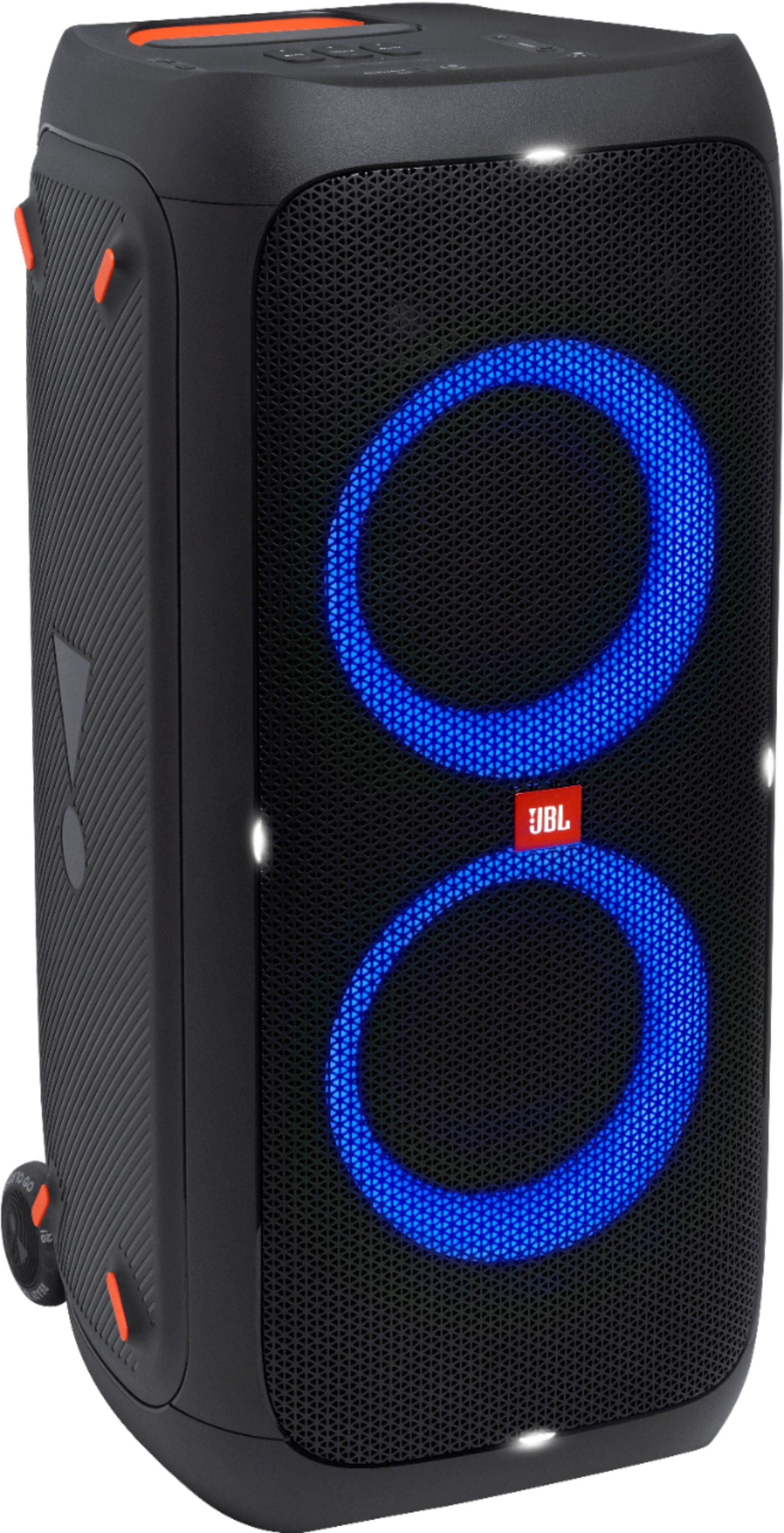
The PartyBox 310's telescoping handle is a game-changer for solo transport. Combined with smooth-rolling wheels, it transforms into something more like rolling luggage. You can easily maneuver it up stairs, through doorways, and across uneven surfaces without throwing out your back.
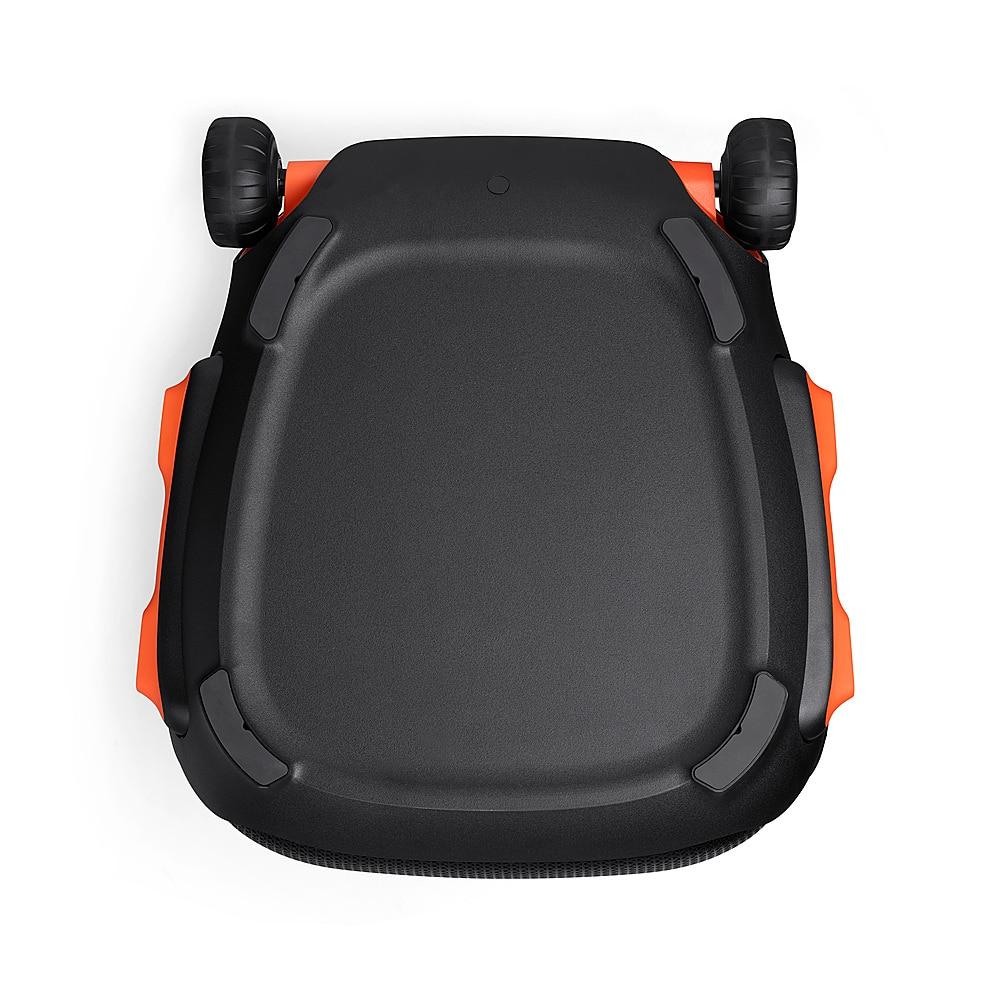
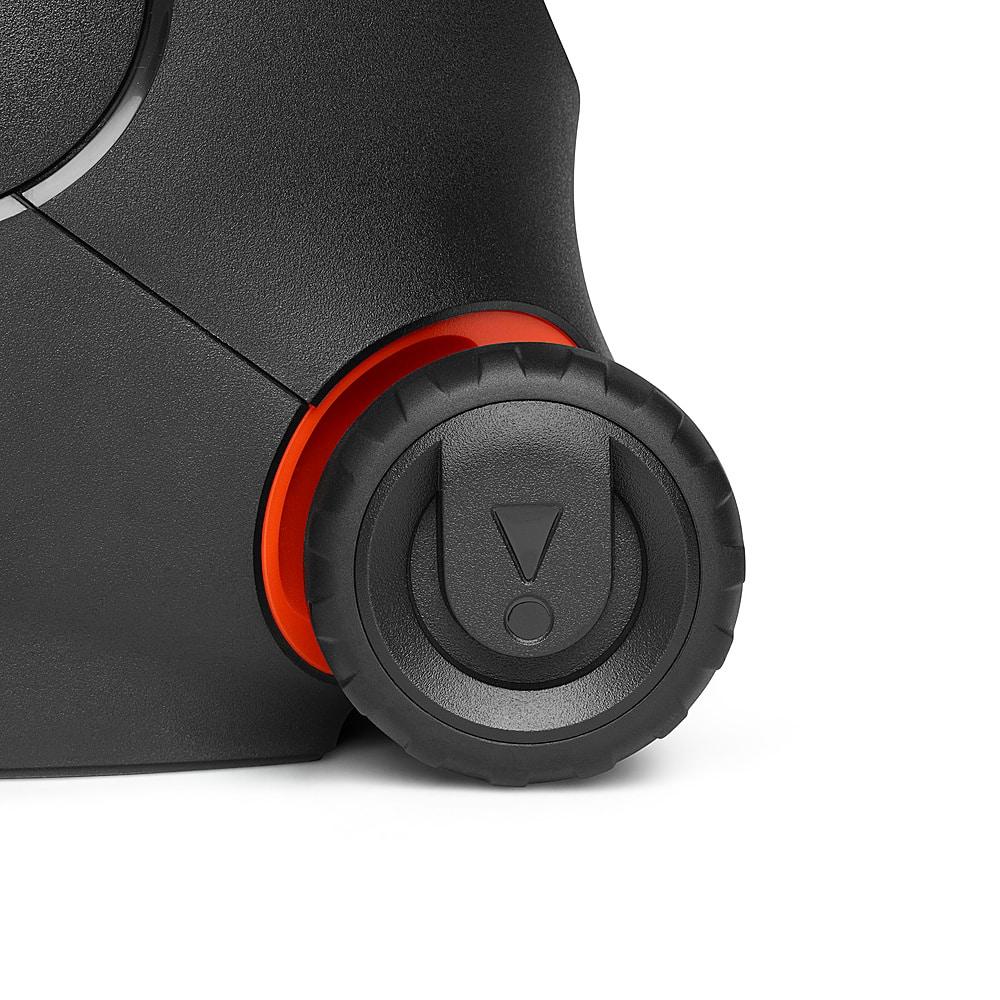
The PartyBox 710's wheels and handle require more coordination. While one person can technically move it on flat surfaces, anything involving stairs, curbs, or rough terrain becomes a two-person job. This isn't necessarily a dealbreaker if you're setting up in one location for extended periods, but it definitely affects spontaneous use.
The battery situation represents the most fundamental difference between these speakers. The PartyBox 310's 18-hour rating comes with some important caveats. That number assumes moderate volume (around 50%) with bass boost and lights disabled. In real-world party conditions—higher volume, bass boost active, lights strobing—expect closer to 8-10 hours.
Still, even reduced battery life provides crucial flexibility. Being able to set up at a beach, campsite, or any location without convenient power access opens up use cases that simply aren't possible with the PartyBox 710. The 310 also includes 12V DC charging capability, so you can charge it from a car's power outlet during road trips or camping expeditions.
The PartyBox 710's AC-only operation isn't necessarily a limitation if you're using it primarily in locations with power access. But it does mean planning ahead for extension cords or portable generators for outdoor events without convenient outlets.
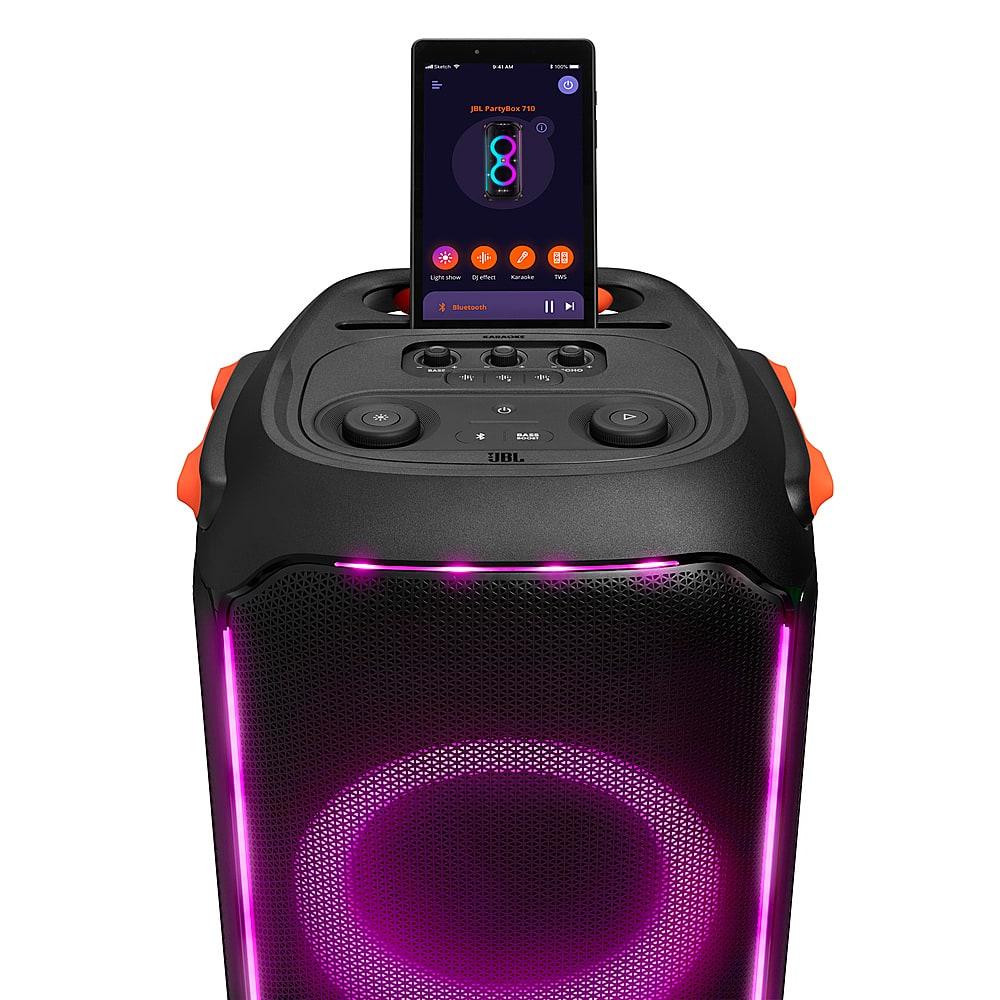
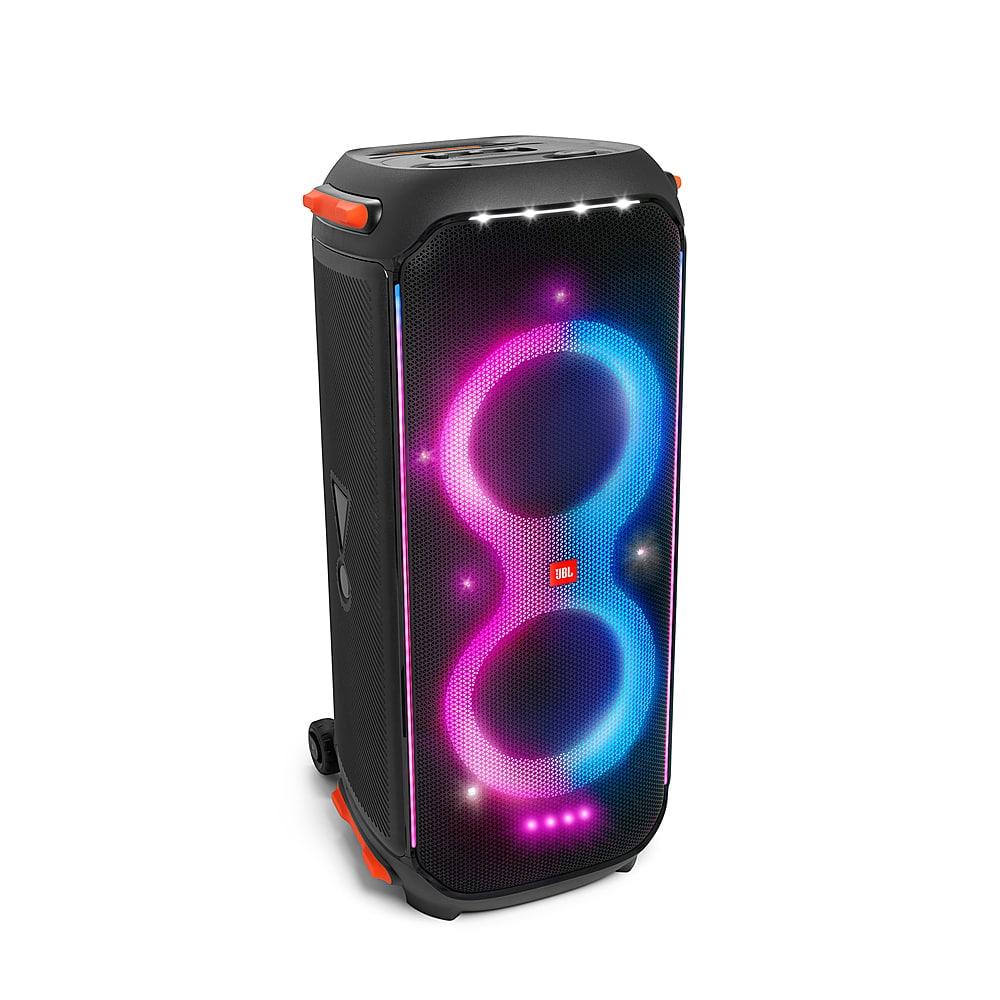
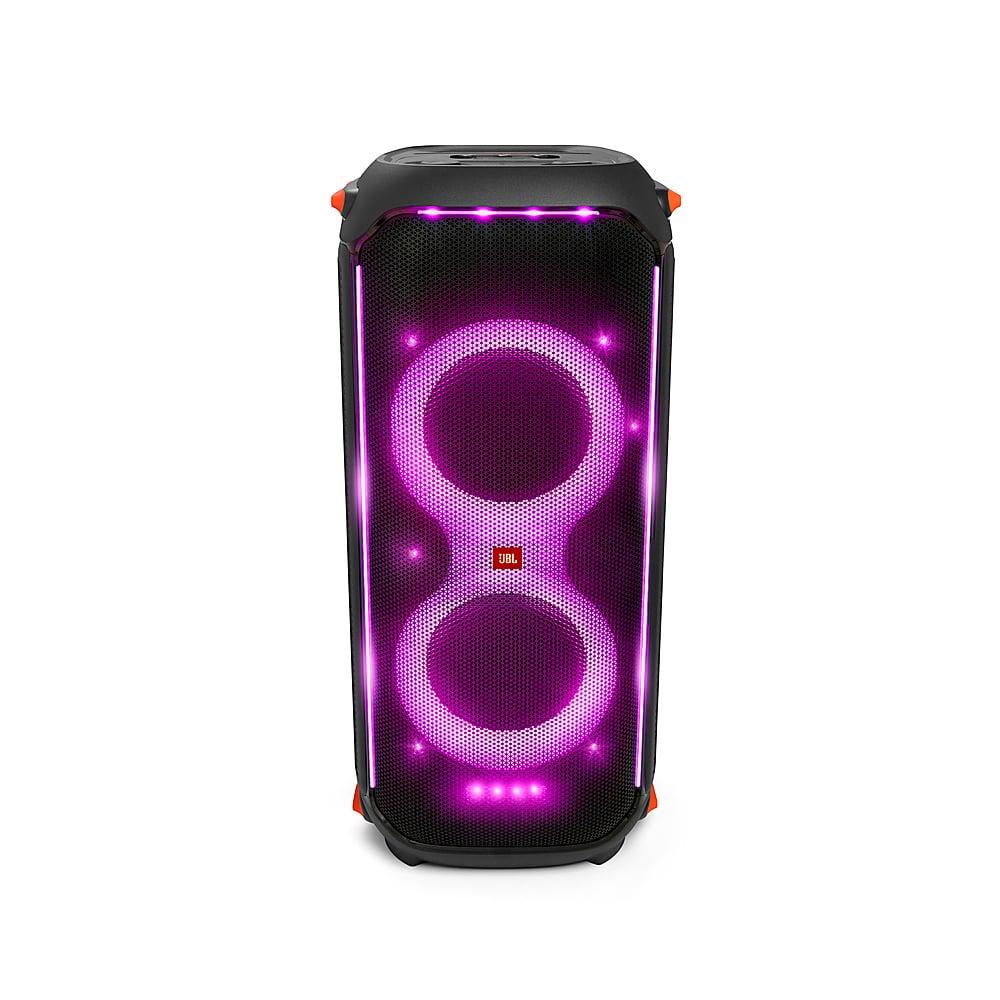
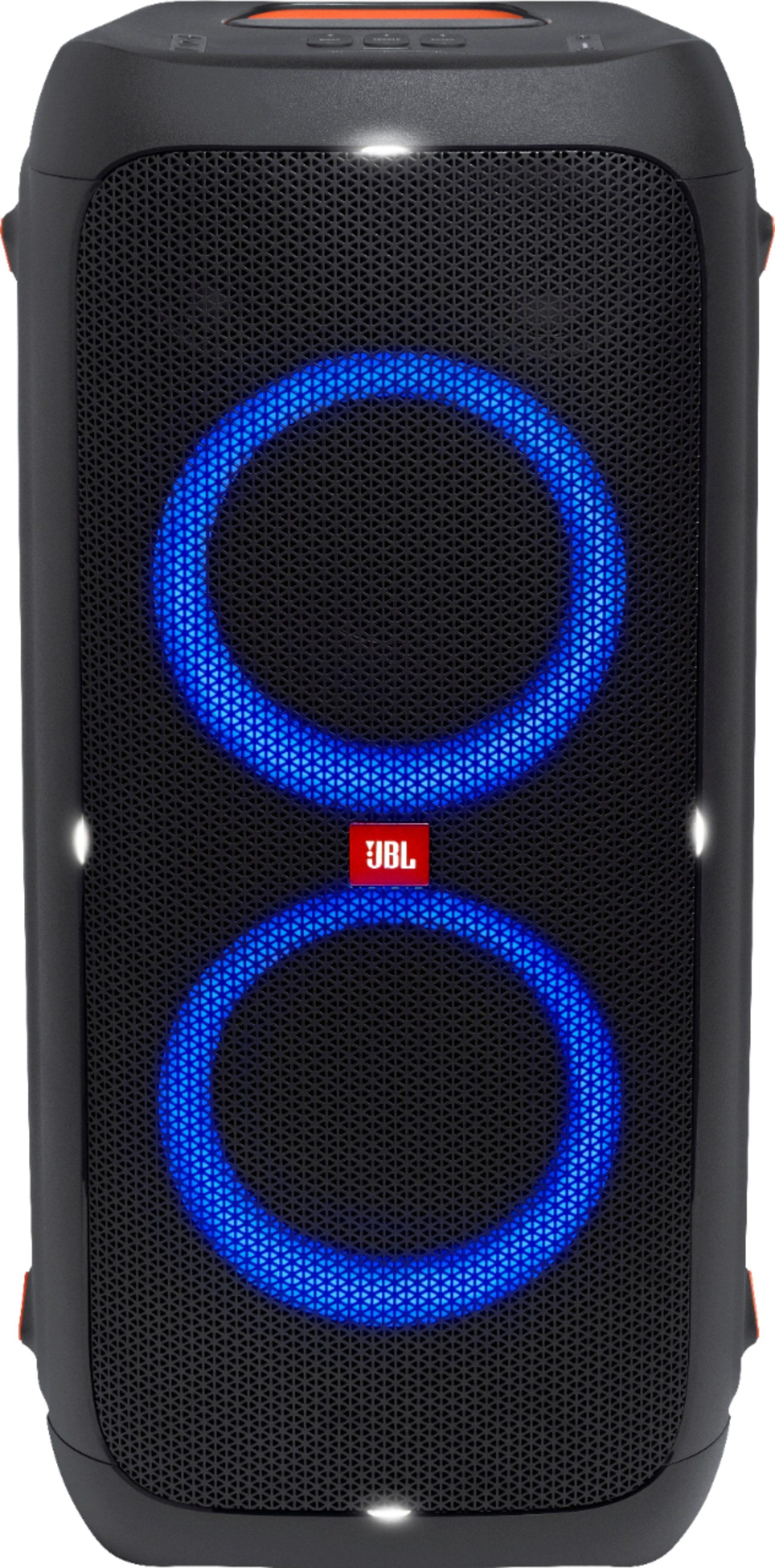
Both speakers feature customizable RGB lighting that syncs with your music, but the PartyBox 710 takes the visual experience to another level. Its lighting system includes LED rings around each woofer plus additional LED strips down the sides, creating a more immersive and customizable light show.
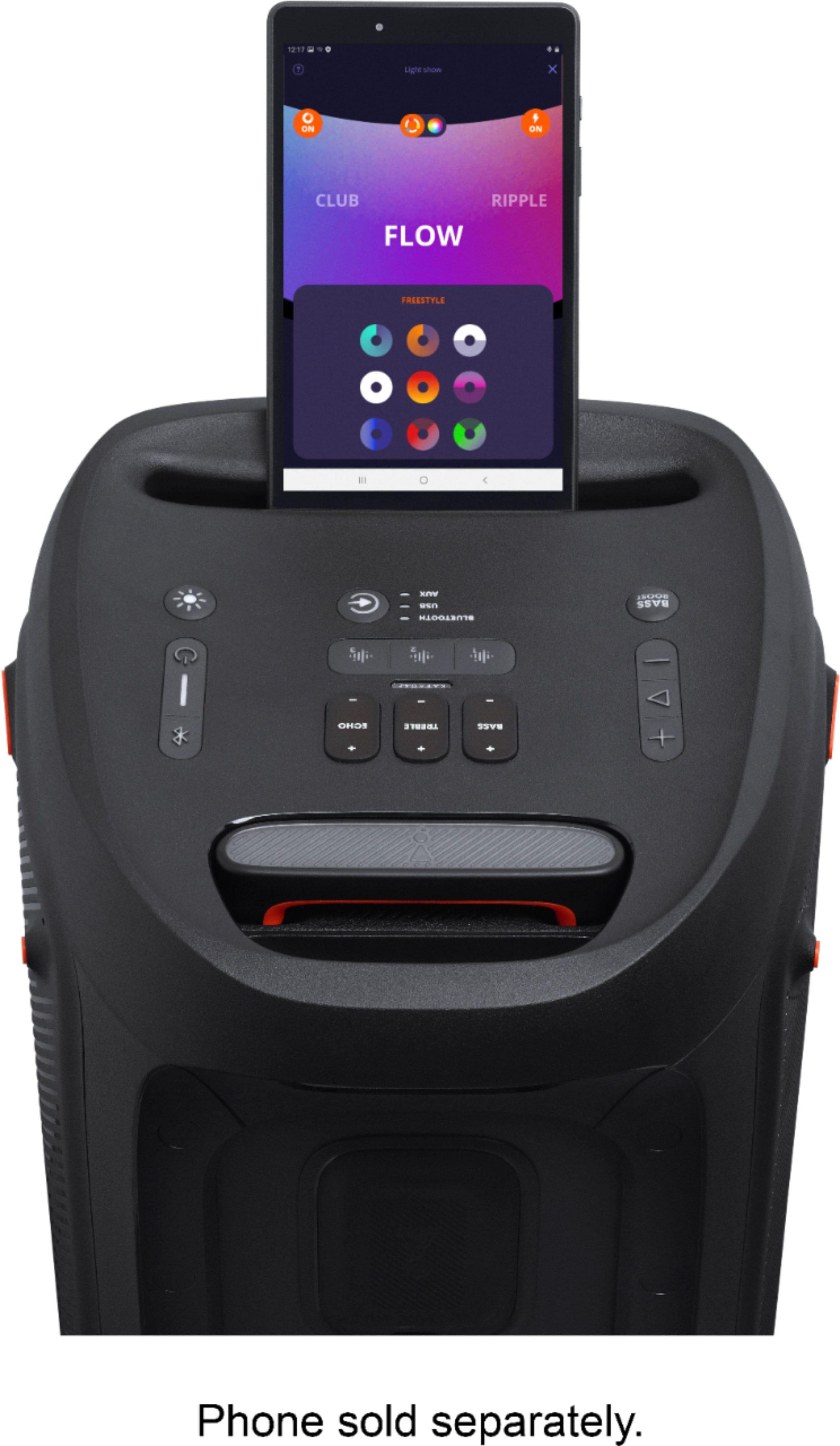
The lighting isn't just for show—it genuinely adds to the party atmosphere, especially in dimmer environments. The JBL PartyBox app lets you customize colors, patterns, and intensity, or you can set it to automatic mode where the lights react dynamically to the music's beat and volume.
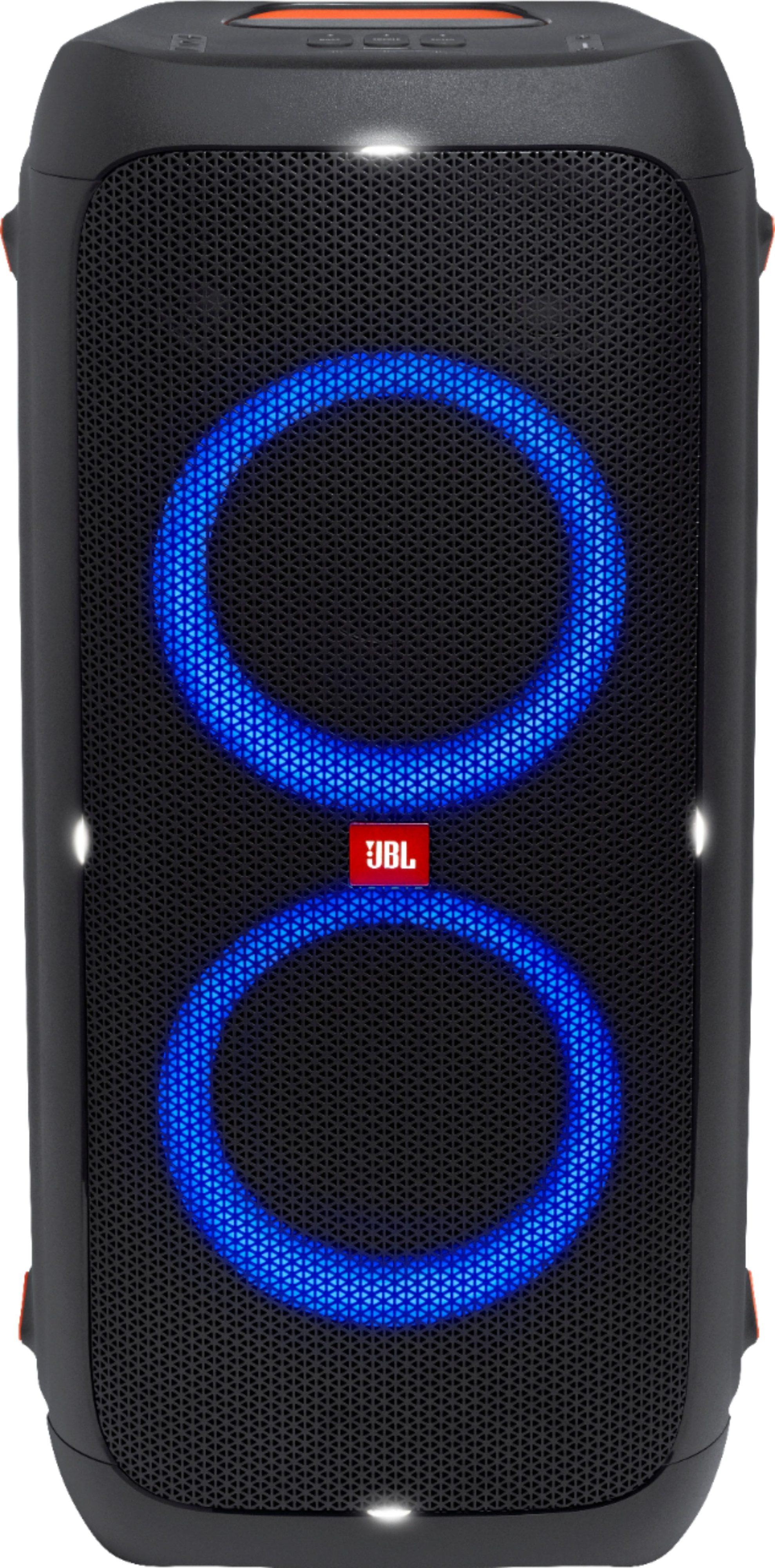
The PartyBox 310's simpler LED ring system still creates an engaging visual experience, just with less complexity and customization options. For most users, it's perfectly adequate, but if you're someone who loves going all-out with party production values, the 710's superior lighting makes a difference.
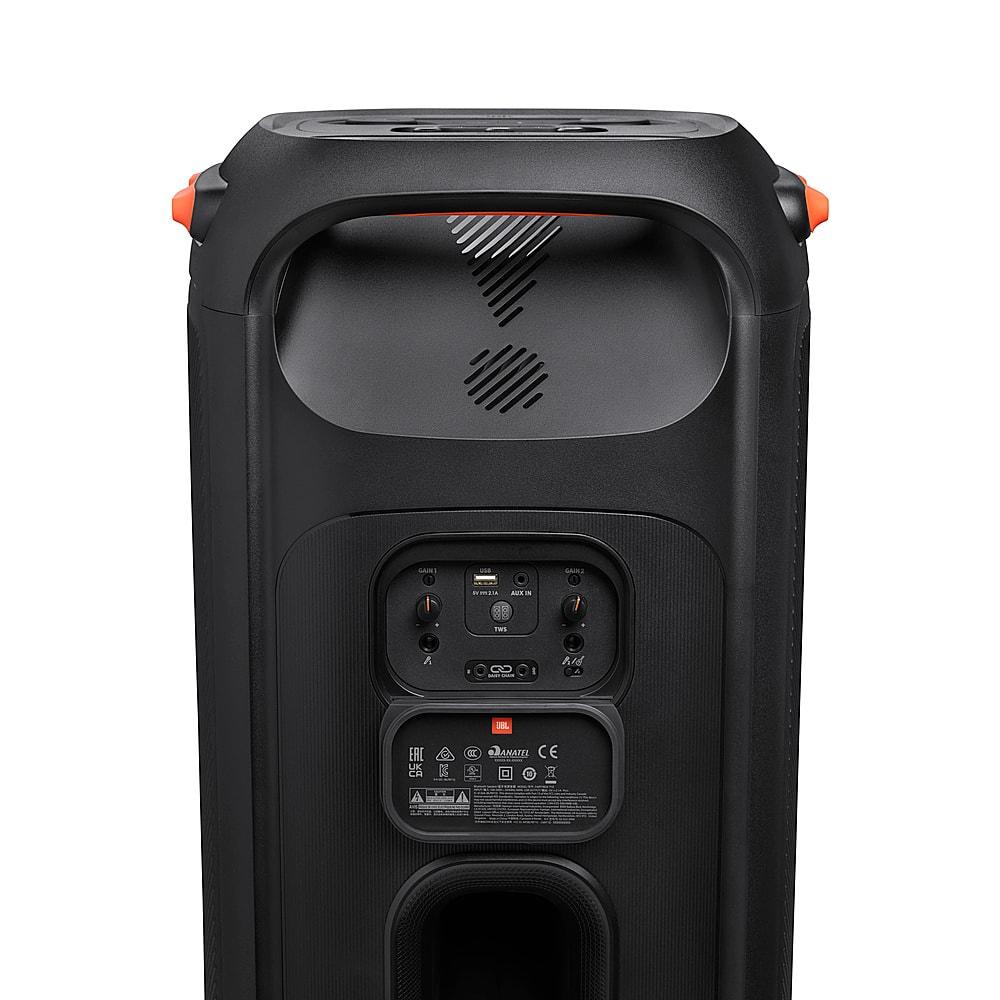
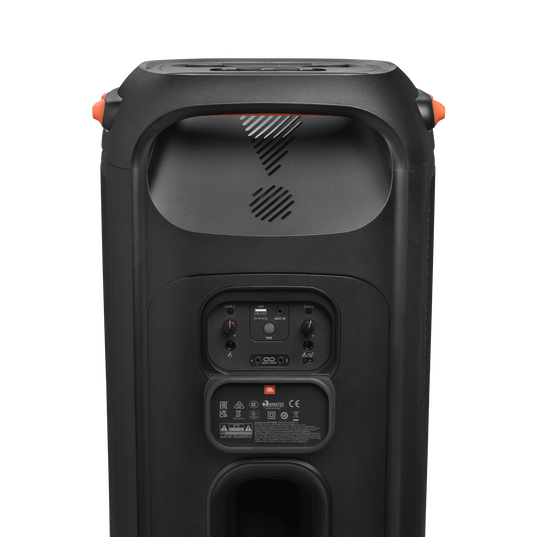
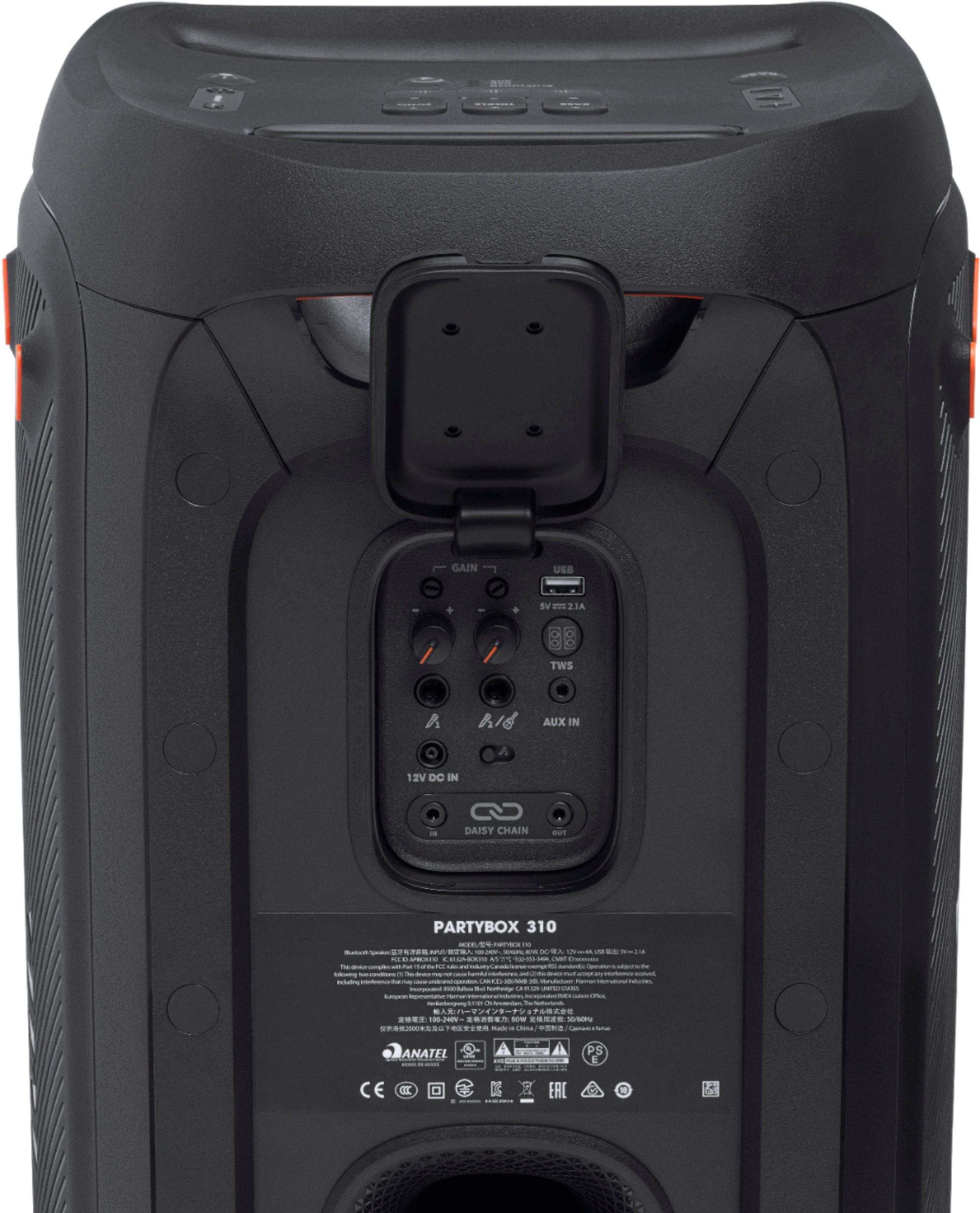
Both speakers offer identical connectivity options, which is refreshing in a market where manufacturers often artificially segment features. You get Bluetooth 5.1 for stable wireless connections, USB-A for direct music playback from flash drives, and both 3.5mm auxiliary input and output jacks.
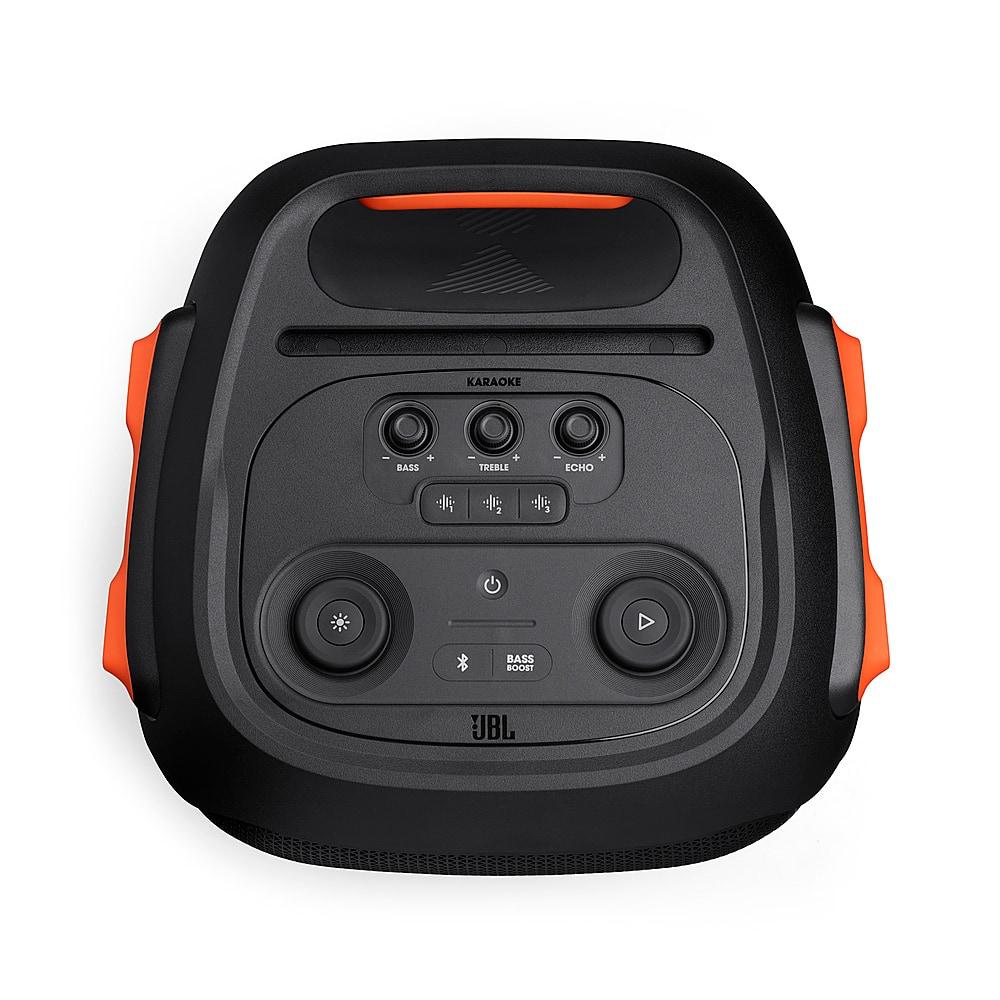
The dual microphone/guitar inputs deserve special mention. These aren't afterthoughts—they're proper quarter-inch TRS connections with independent volume controls and EQ adjustments. The karaoke capabilities are genuinely impressive, with dedicated bass, treble, and echo controls for the mic channels.
Both speakers can also function as powerbanks, charging your devices through their USB-A ports. This might seem like a small feature, but it's incredibly useful during outdoor events where device battery life becomes a concern.
Both speakers support TWS (True Wireless Stereo) pairing, letting you connect two identical units wirelessly for proper stereo separation. This feature works particularly well with two PartyBox 310 units for medium-sized events, or two PartyBox 710 units when you need to fill truly massive spaces with sound.
The setup process is straightforward through the app, and the wireless connection remains stable during use. However, the feature only works between identical models—you can't pair a 710 with a 310.
At the time of writing, the PartyBox 710 commands a premium of roughly $250-300 over the PartyBox 310. The question isn't whether the 710 is objectively better—it clearly offers more power, deeper bass, and more elaborate features. The real question is whether that additional performance justifies the extra cost for your specific needs.
For users prioritizing maximum impact and who primarily use the speaker in locations with AC power, the 710's price premium delivers genuine value. You're getting 3.3x the power output, significantly deeper bass extension, and a more elaborate light show—improvements that are immediately audible and visible.
However, the PartyBox 310's battery operation and superior portability aren't just convenience features—they enable entirely different use cases. If you need genuine portability or plan to use the speaker in locations without power access, the 310 becomes the only viable option regardless of price.
While neither speaker is designed primarily for home theater use, both can function in that role with some caveats. The built-in light shows would be distracting during movie watching (though you can disable them), and both speakers are tuned for party music rather than dialog clarity.
If you're considering either for occasional movie use, the PartyBox 710's superior power and bass extension would provide more cinematic impact for action movies. However, dedicated home theater speakers or soundbars would serve this purpose much better while taking up less space.
You're serious about audio impact and have a dedicated space for entertaining. This speaker excels when maximum volume and bass depth are priorities—think large backyard parties, outdoor events with 50+ people, or dedicated party rooms where the speaker can stay semi-permanently installed.
The lack of battery operation isn't a limitation if you primarily host at home or venues with convenient power access. The superior performance justifies the extra cost and reduced portability for users who prioritize audio impact above all else.
You need versatility and true portability. This speaker shines for users who entertain in multiple locations, enjoy outdoor activities like camping or beach trips, or need the flexibility of battery operation.
The performance is still genuinely impressive—loud enough for most gatherings and with sufficient bass impact for party music. The easier transport and battery operation enable use cases that simply aren't possible with the larger speaker.
You need maximum portability: Look at smaller PartyBox models or traditional portable Bluetooth speakers. You prioritize audiophile sound quality: Consider studio monitors or hi-fi speakers instead. You want multi-room audio integration: Explore Wi-Fi-connected speaker ecosystems.
The choice between the PartyBox 710 and PartyBox 310 ultimately comes down to one fundamental question: Do you prioritize maximum performance or versatility?
The 710 is purpose-built for situations where audio impact is paramount. Its earth-shaking bass and room-filling volume create an experience that smaller speakers simply can't match. If you host large gatherings, have a dedicated entertainment space, or just want the most impressive party speaker possible, the 710's performance justifies its premium price and reduced portability.
The 310 takes a more balanced approach, delivering genuinely impressive performance while maintaining the flexibility that comes with battery operation and easier transport. It's the better choice for users who need versatility, entertain in multiple locations, or want a speaker that can adapt to different scenarios.
Both speakers represent excellent value in their respective niches. The key is honestly assessing your priorities and use cases. In our evaluation, most users would be better served by the PartyBox 310's versatility, but those who prioritize maximum impact and have the space and power requirements will find the PartyBox 710's performance genuinely impressive.
Either way, you're getting a speaker that can transform any gathering into a proper party—and isn't that really the point?
| JBL PartyBox 710 | JBL PartyBox 310 |
|---|---|
| Power Output - Determines maximum volume and headroom | |
| 800W RMS (significantly louder, fills large outdoor spaces) | 240W RMS AC / 140W RMS battery (loud enough for most gatherings) |
| Bass Extension - Critical for party music impact | |
| 35Hz (deep sub-bass you can feel physically) | 45Hz (solid bass but less physical impact) |
| Driver Configuration - Affects sound quality and volume capacity | |
| Dual 8" woofers + dual 2.75" tweeters (larger drivers = more air movement) | Dual 6.5" woofers + dual 2.25" tweeters (smaller but still capable) |
| Battery Operation - Enables portable use without power outlets | |
| No battery (requires AC power at all times) | 18-hour battery (8-10 hours real-world with features active) |
| Weight & Portability - Affects ease of transport | |
| 61.3 lbs (requires two people for stairs/rough terrain) | 38.4 lbs with telescopic handle (manageable solo transport) |
| Light Show System - Visual entertainment value | |
| LED rings + side strips with advanced customization | LED rings with basic light patterns |
| Weather Resistance - Outdoor use protection | |
| IPX4 splashproof (handles rain and poolside splashes) | IPX4 splashproof (same protection level) |
| Connectivity Options - Input flexibility for different sources | |
| Bluetooth 5.1, USB, AUX in/out, dual mic/guitar inputs, powerbank | Bluetooth 5.1, USB, AUX in/out, dual mic/guitar inputs, powerbank |
| Additional Features - Unique capabilities | |
| Wheels + handle, TWS pairing, app control | Wheels + telescopic handle, tripod mounting, 12V car charging, TWS pairing |
| Release Year - Technology generation | |
| 2021 (newer generation with refined features) | 2020 (proven design with solid feature set) |
The JBL PartyBox 710 is significantly louder with 800W RMS compared to the PartyBox 310's 240W RMS. The 710 can easily fill large outdoor spaces and handle crowds of 100+ people, while the 310 works best for medium-sized gatherings and smaller outdoor events.
Yes, the PartyBox 310 has an 18-hour battery that enables portable use without power outlets. The JBL PartyBox 710 does not have a battery and requires constant AC power connection.
The JBL PartyBox 710 delivers deeper, more impactful bass with its dual 8-inch woofers and 35Hz frequency response. The PartyBox 310 has solid bass with 6.5-inch woofers extending to 45Hz, but can't match the physical impact of the larger speaker.
Both the PartyBox 710 and PartyBox 310 feature dual microphone inputs with dedicated volume controls, bass/treble adjustments, and echo effects. Both speakers excel at karaoke with independent vocal tuning capabilities.
The PartyBox 310 is much more portable at 38.4 lbs with a telescopic handle, making it manageable for one person. The JBL PartyBox 710 weighs 61.3 lbs and typically requires two people for safe transport over stairs or rough terrain.
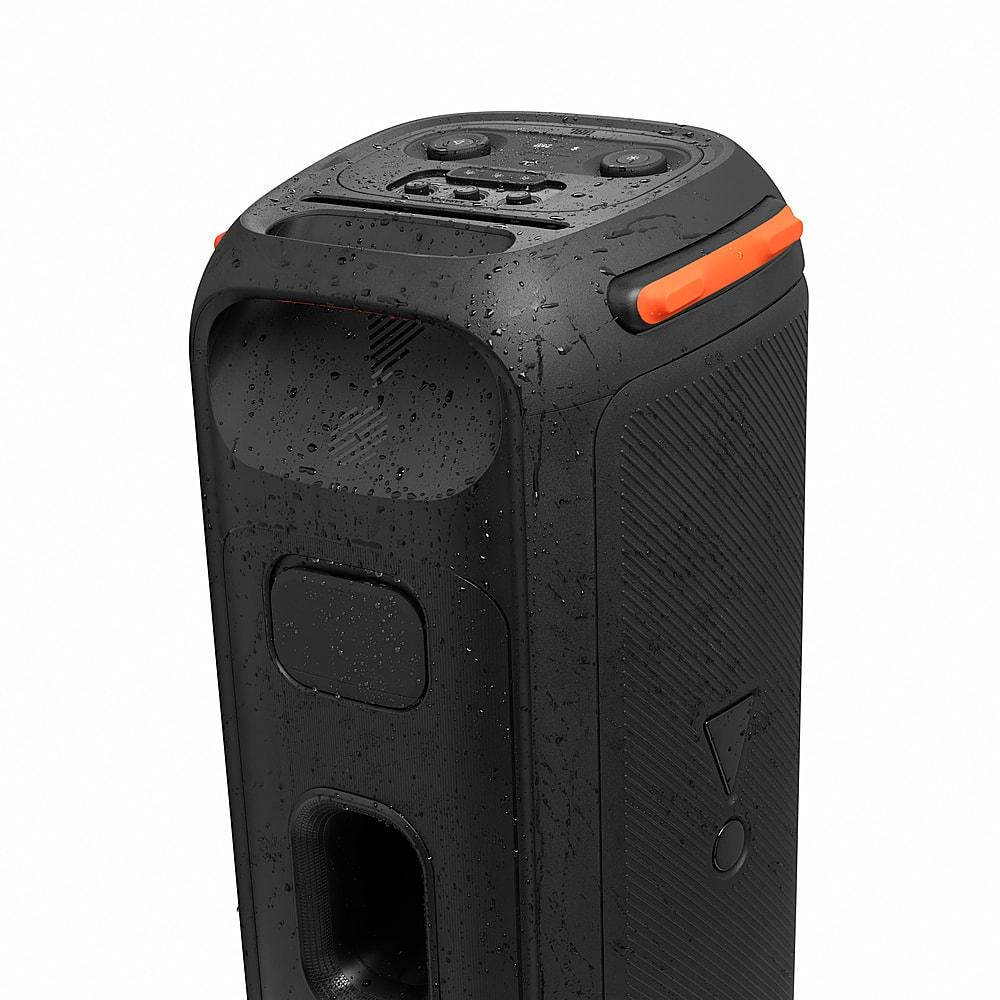
Both the PartyBox 710 and PartyBox 310 feature IPX4 splashproof rating, protecting against rain and poolside splashes. They're not fully waterproof but can handle typical outdoor weather conditions.
Yes, both the JBL PartyBox 710 and PartyBox 310 support True Wireless Stereo (TWS) pairing. You can wirelessly connect two identical speakers for stereo sound, but you cannot pair different models together.
The JBL PartyBox 710 features more elaborate lighting with LED rings around each woofer plus side-mounted LED strips. The PartyBox 310 has simpler LED ring lighting that's still engaging but less customizable.
The PartyBox 310 provides up to 18 hours of battery life at moderate volume with lights and bass boost disabled. In real-world party conditions with higher volume and active features, expect 8-10 hours of playback time.
While both speakers can work for occasional movie watching, they're optimized for party music rather than home theater. The JBL PartyBox 710 would provide more cinematic bass impact, but dedicated soundbars or home theater speakers offer better dialog clarity and room integration.
The key difference is power versus portability: the PartyBox 710 delivers maximum audio impact with 800W power but requires AC power, while the JBL PartyBox 310 balances strong performance with battery operation and easier transport.
The PartyBox 310 offers better value for most users with its versatility, battery operation, and easier portability. The PartyBox 710 provides superior value only if you prioritize maximum volume and bass impact over convenience features.
We've done our best to create useful and informative comparisons to help you decide what product to buy. Our research uses advanced automated methods to create this comparison and perfection is not possible - please contact us for corrections or questions. These are the sites we've researched in the creation of this article: rtings.com - audioadvice.com - crutchfield.com - youtube.com - bestbuy.com - rtings.com - youtube.com - youtube.com - youtube.com - versus.com - worldwidestereo.com - rtings.com - jbl.com - youtube.com - expertvoice.com - jbl.com - jbl.com.tw - robot-advance.com - youtube.com - hu.harmanaudio.com - onward.ph - harmanaudio.in - youtube.com - youtube.com - manuals.plus - global.jbl.com - de.jbl.com - ro.harmanaudio.com - rtings.com - comparisontabl.es - crutchfield.com - youtube.com - bestbuy.com - youtube.com - versus.com - youtube.com - youtube.com - jbl.com - youtube.com - crutchfield.com - manuals.plus - in.jbl.com - jbl.com.tw - mm.jbl.com - bestbuy.com - jbl.com - onward.ph - youtube.com - manuals.plus - harmanaudio.com - support.jbl.com - youtube.com - kh.jbl.com - bestbuy.com

Privacy Policy
Terms and Conditions - Affiliate Policy
Home Security
© Copyright 2008-2026.
11816 Inwood Rd #1211, Dallas, TX 75244