

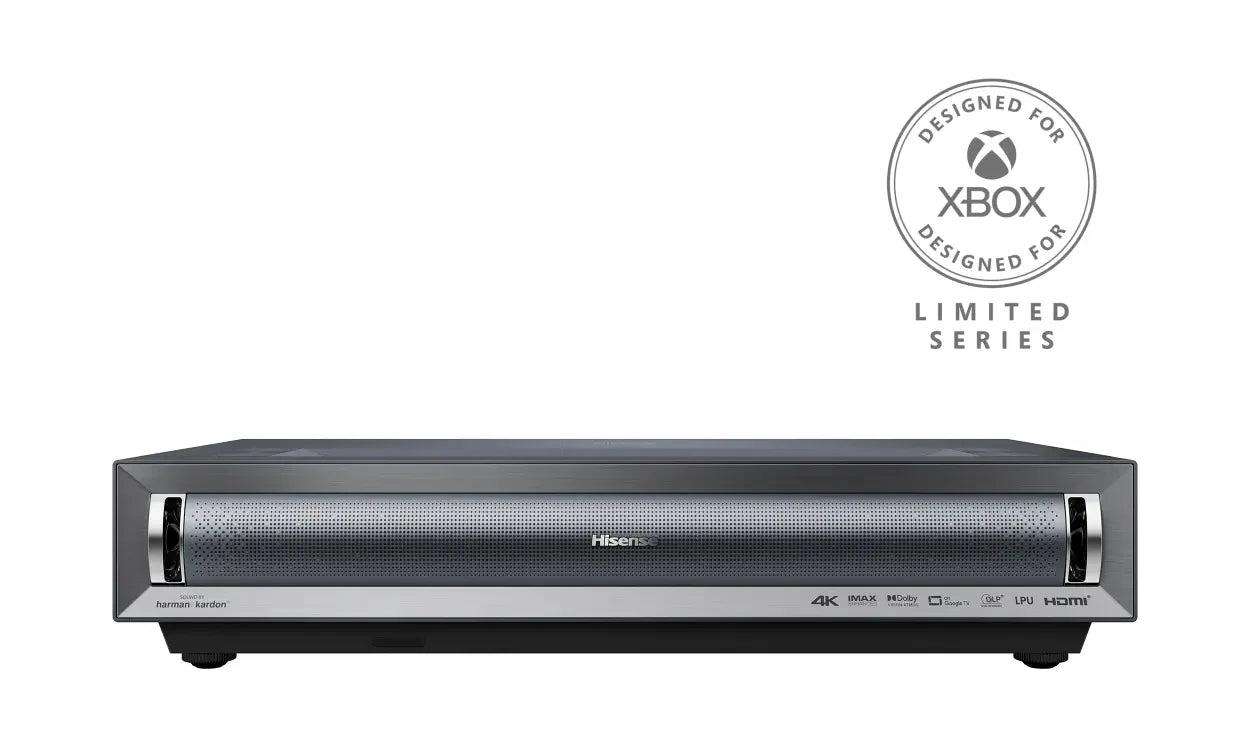
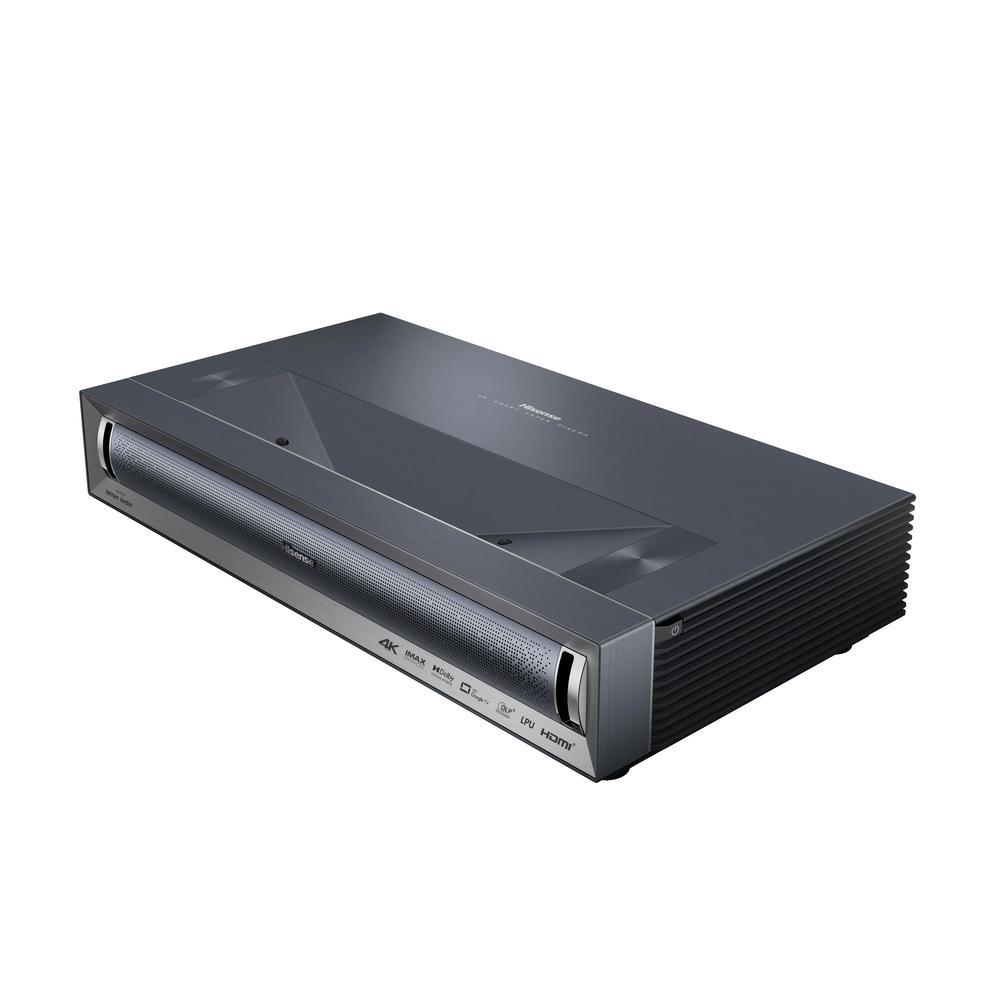
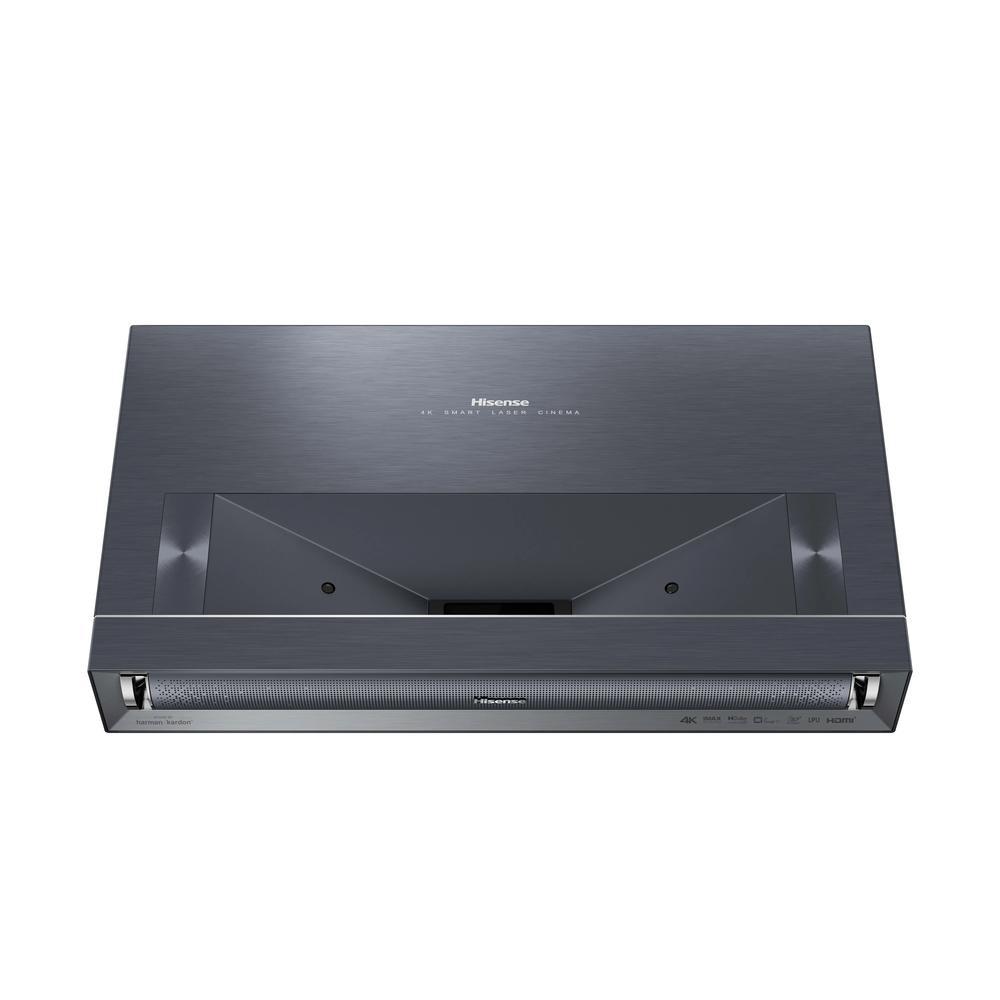
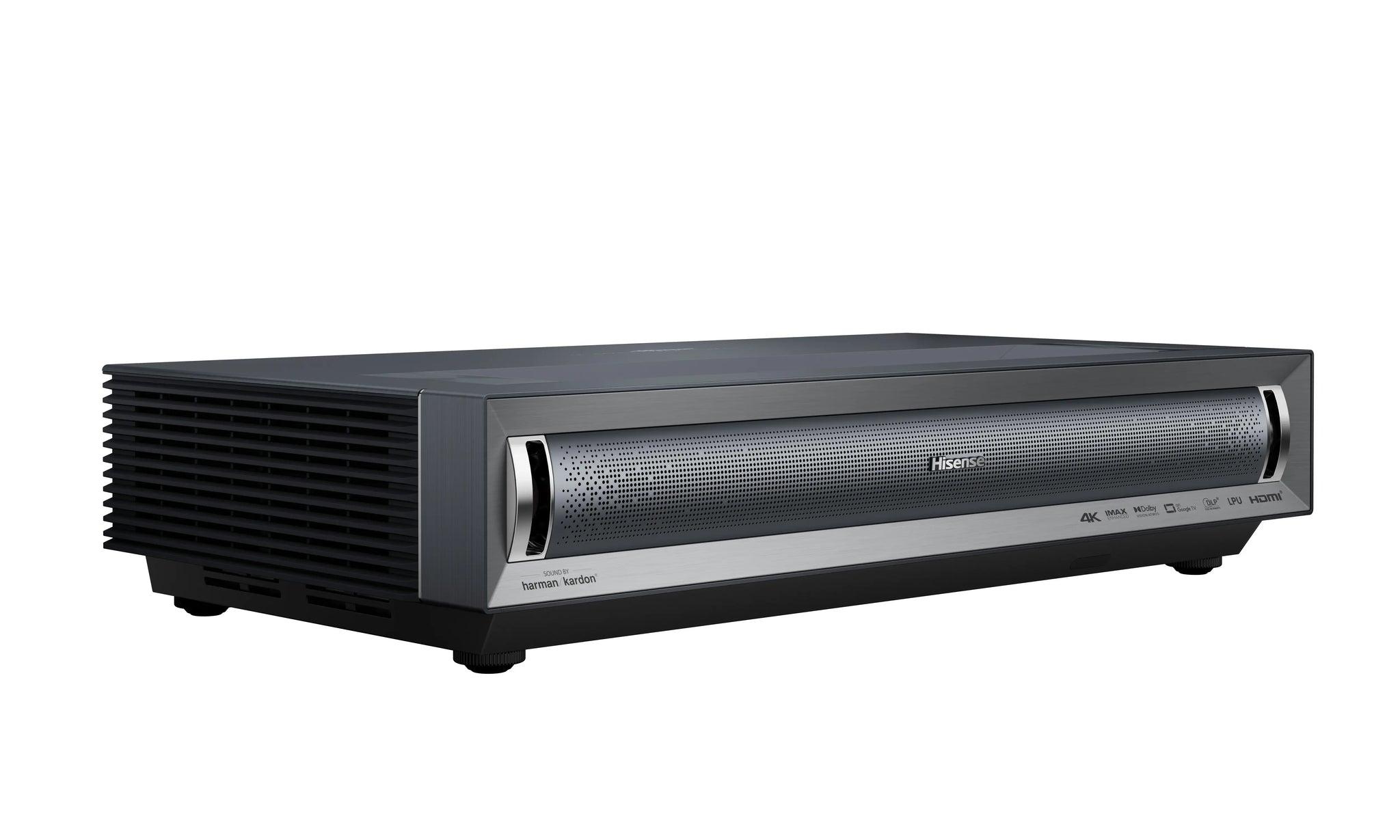
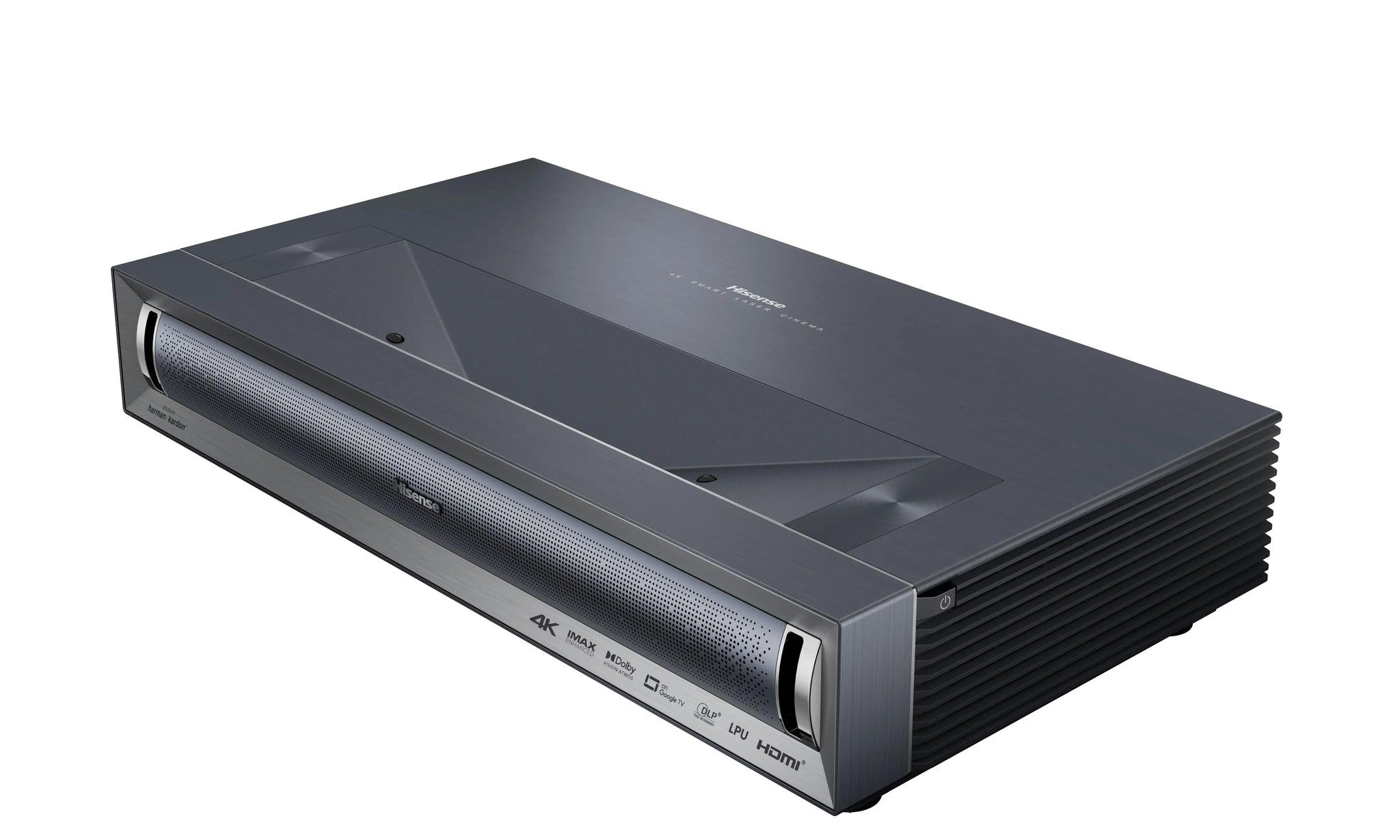
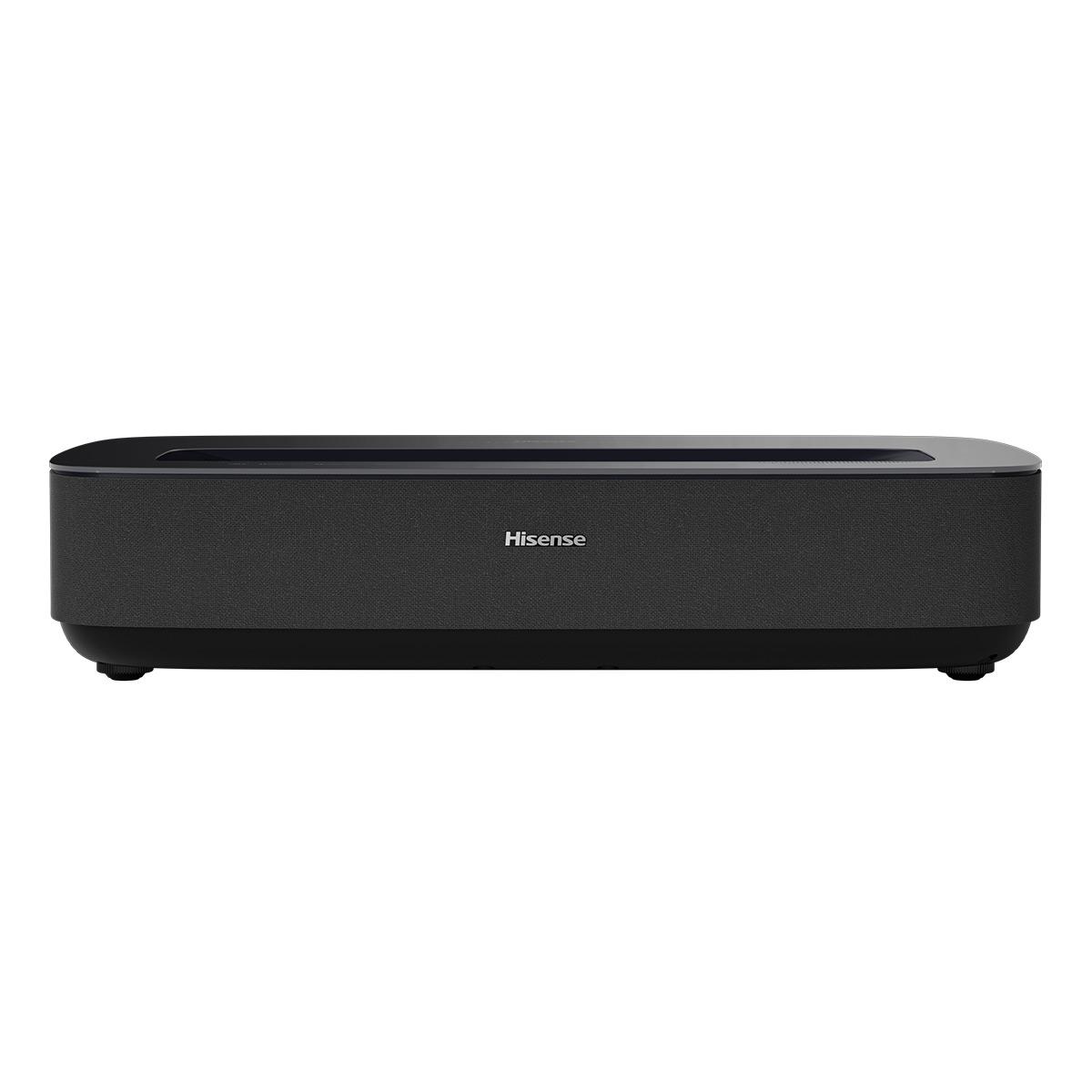
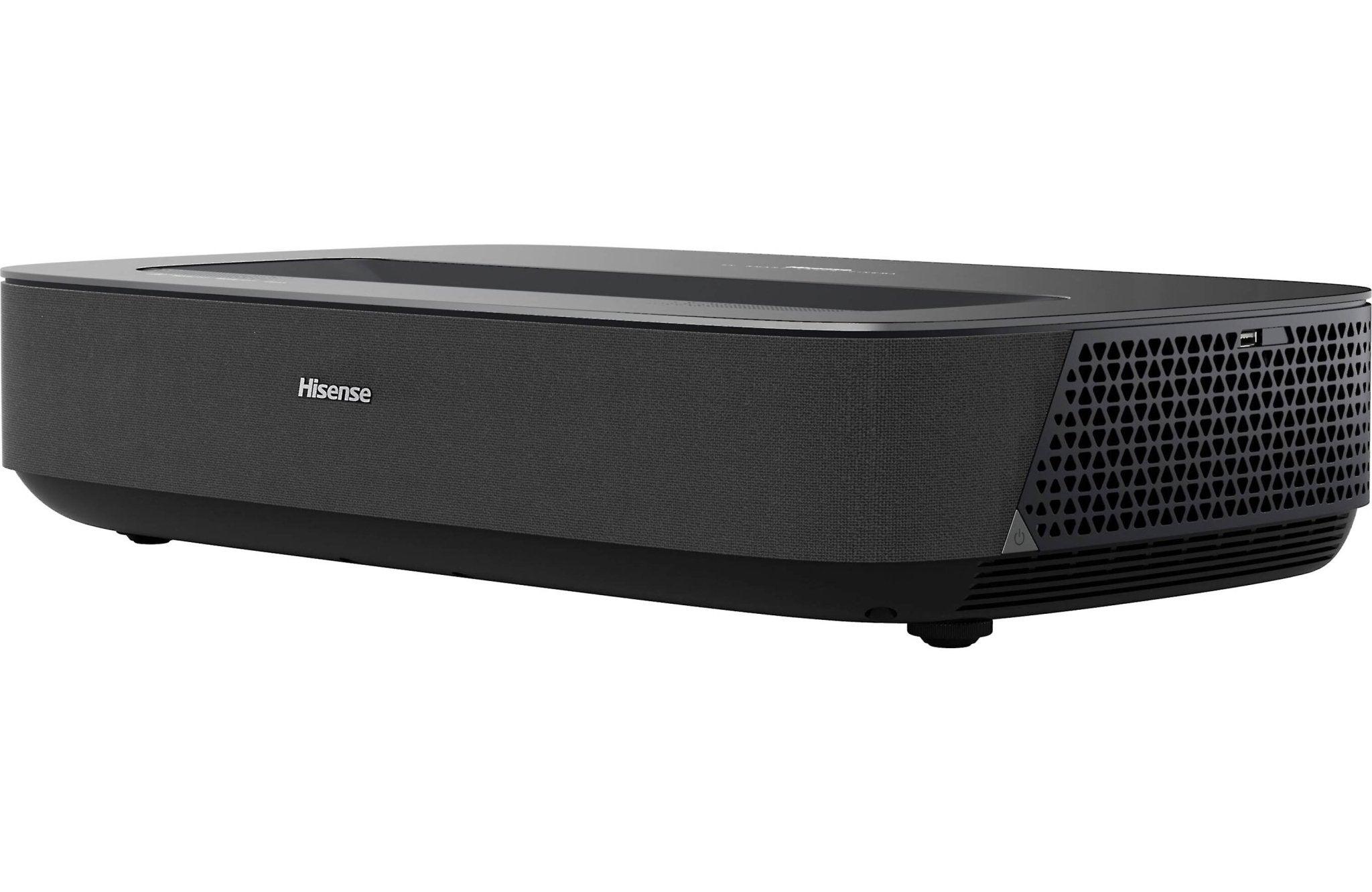
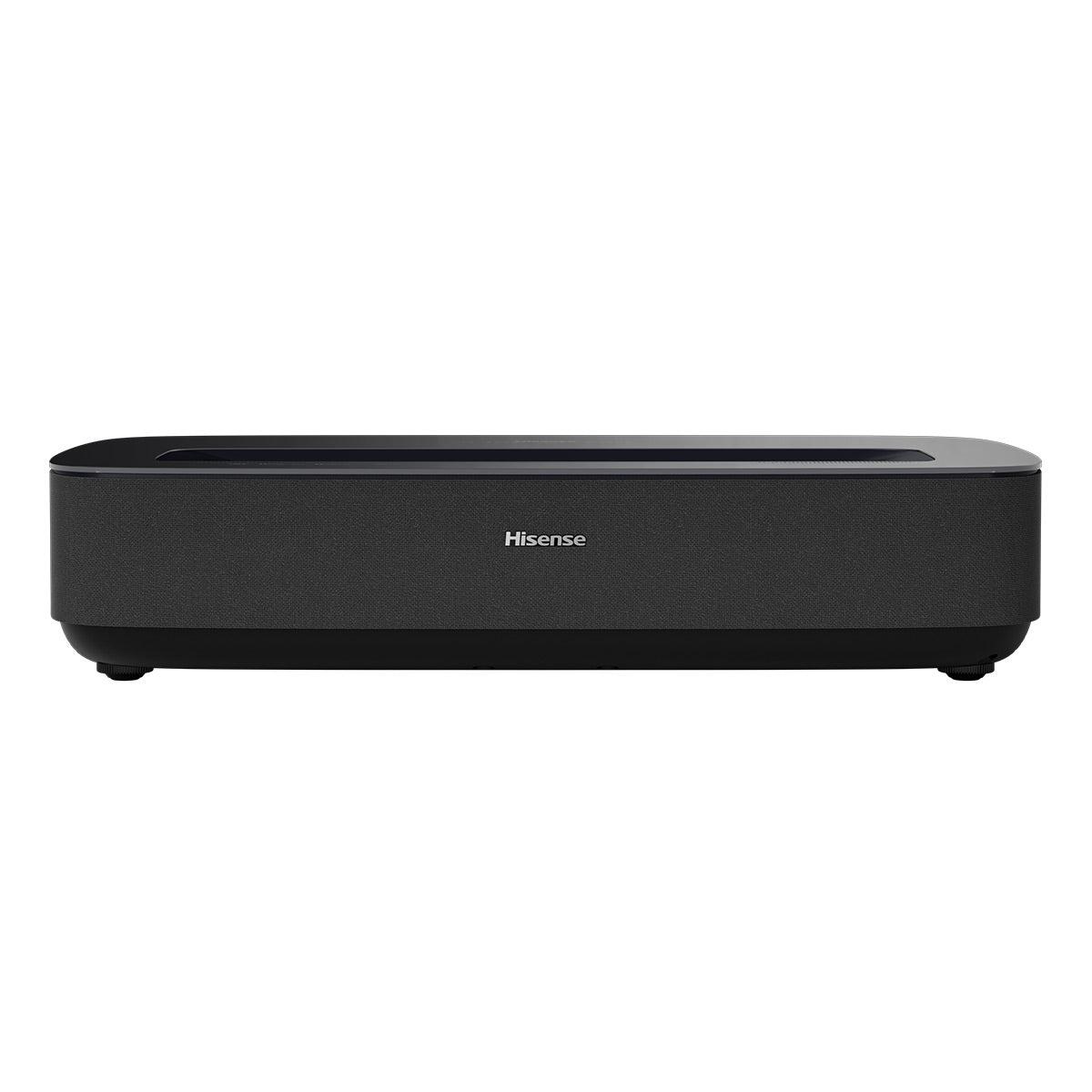
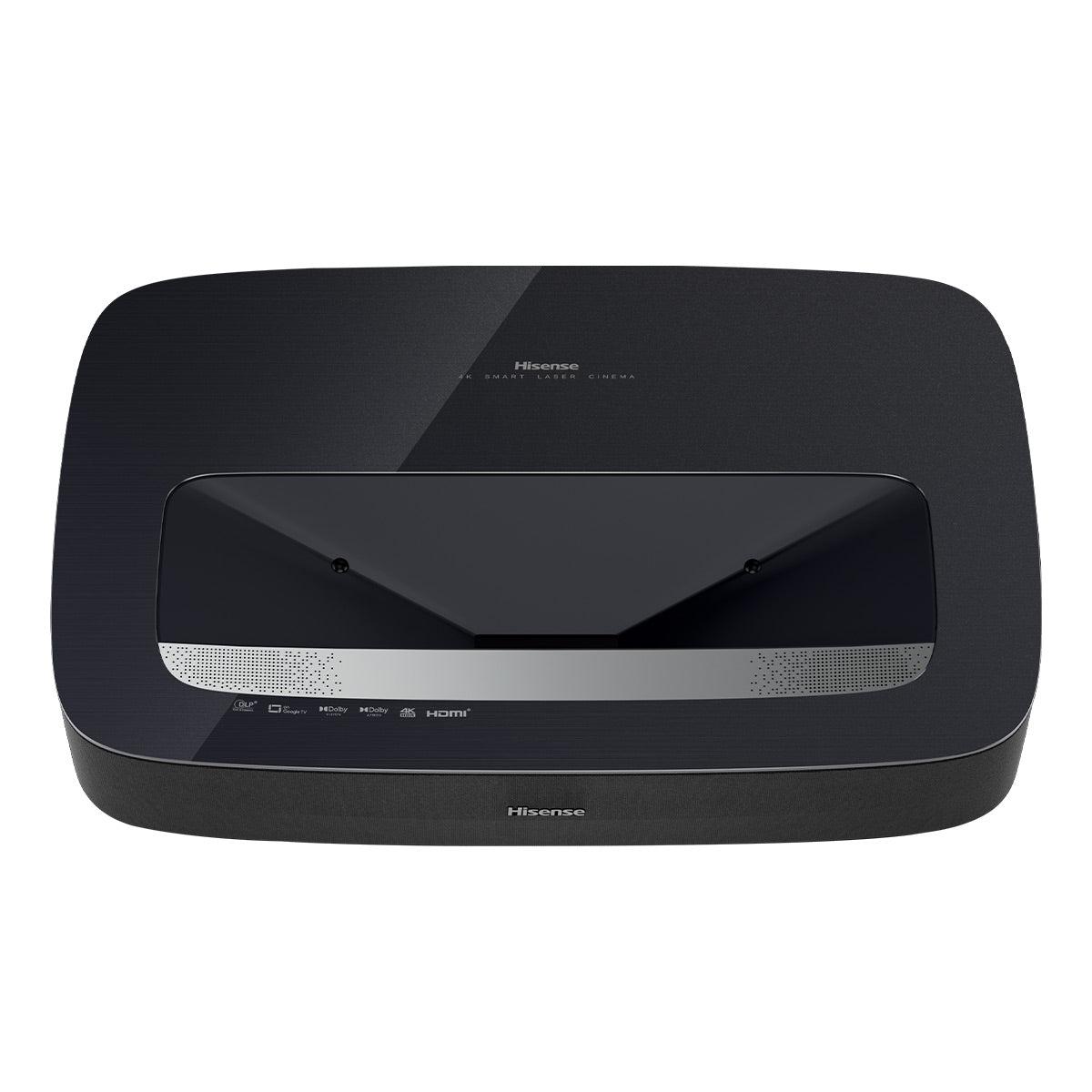
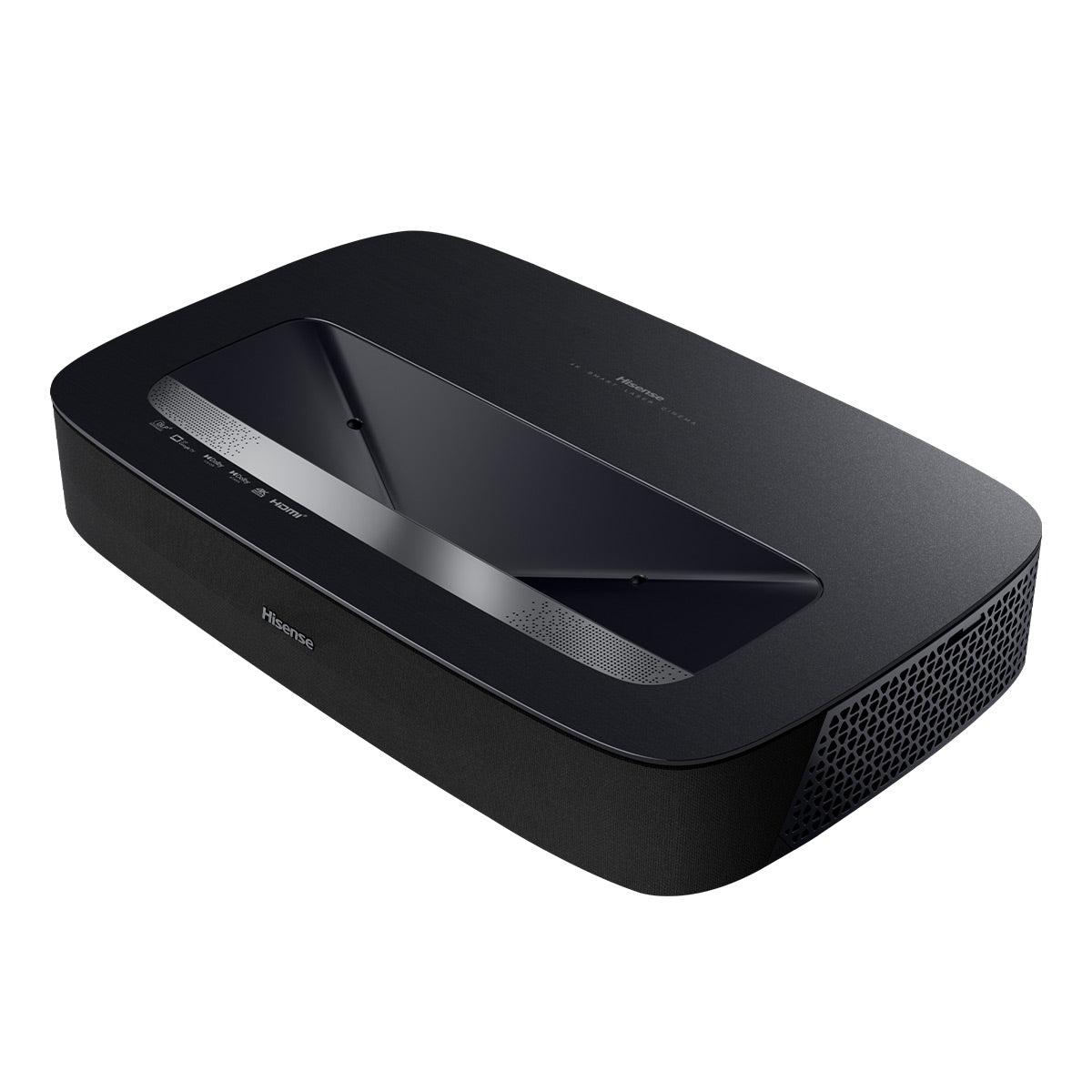
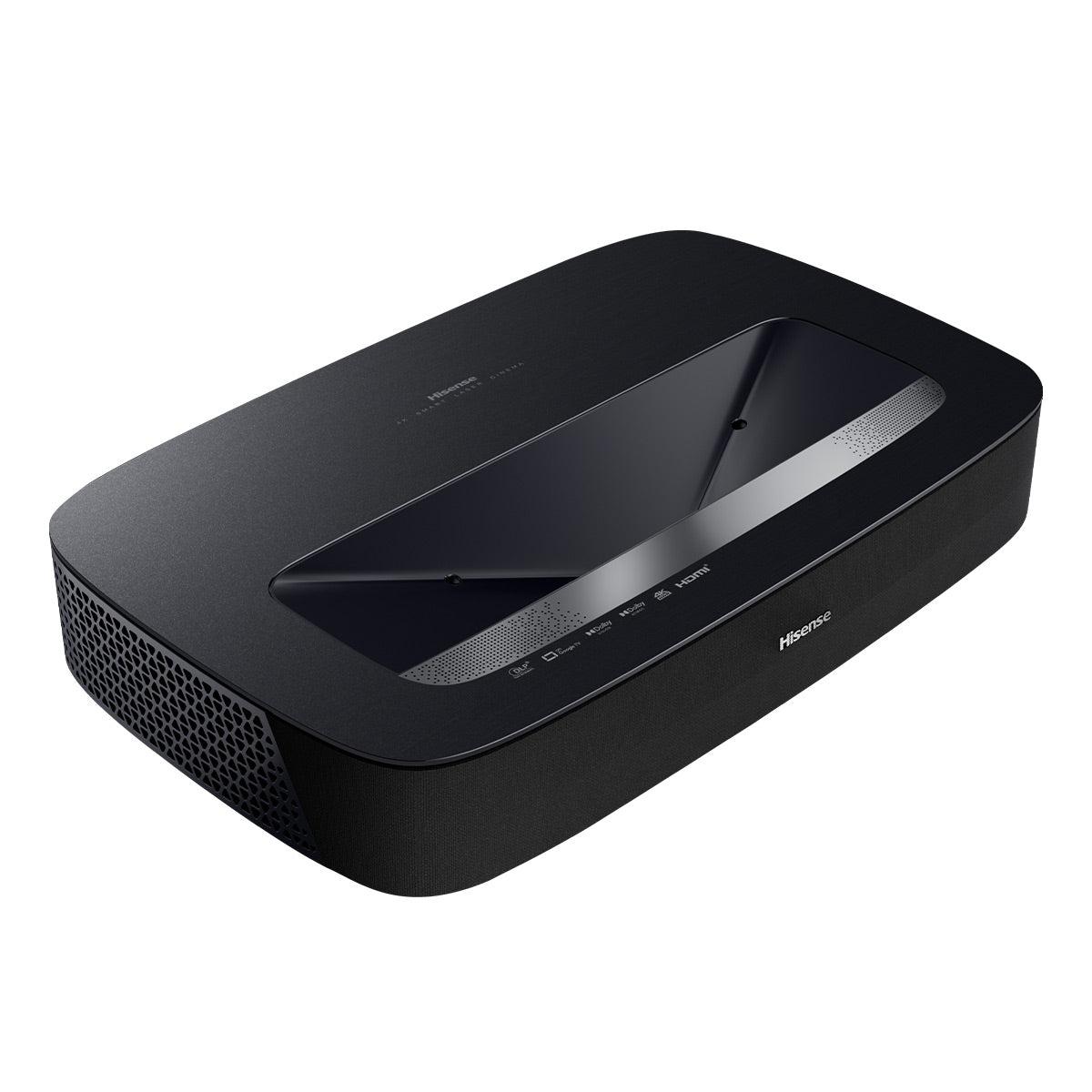
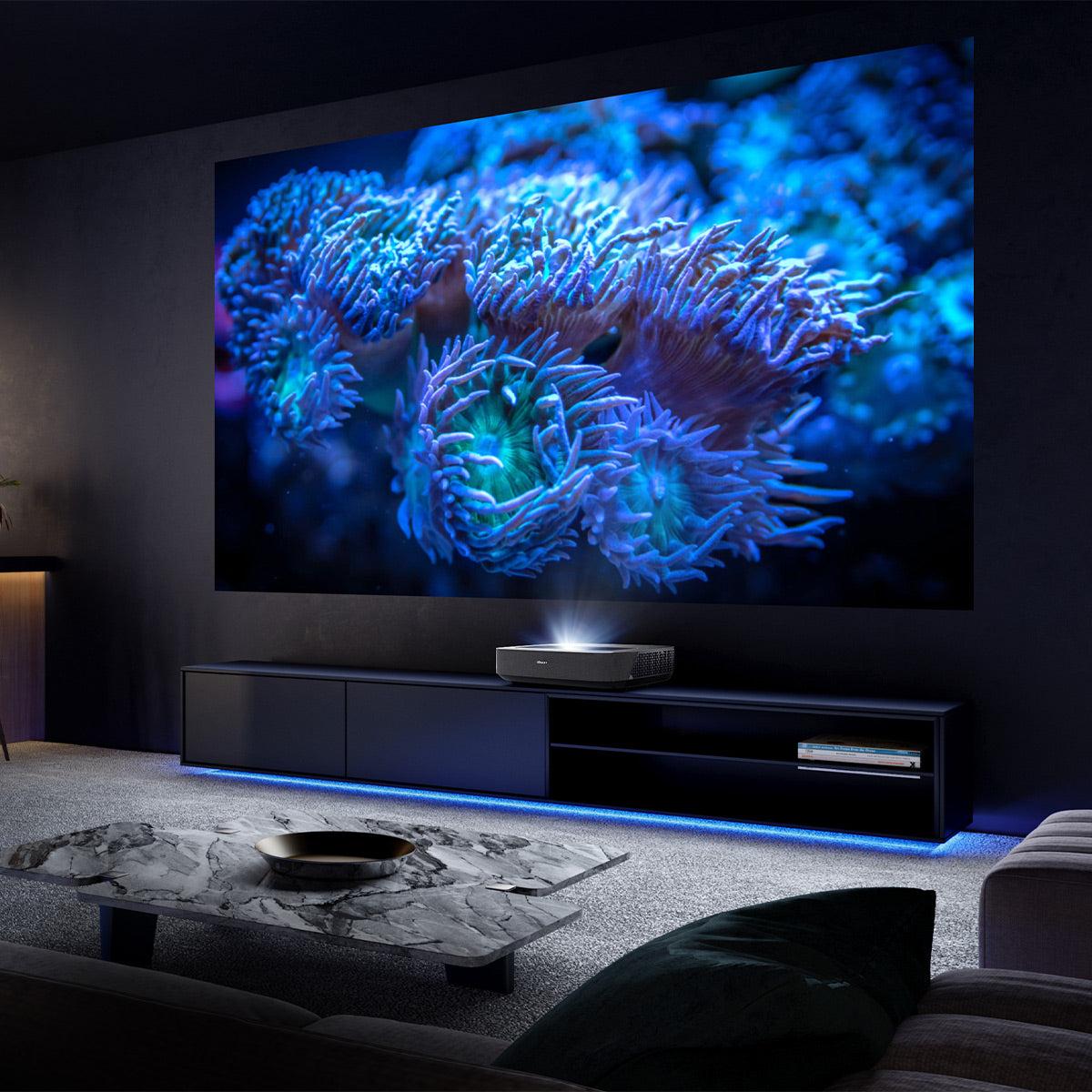
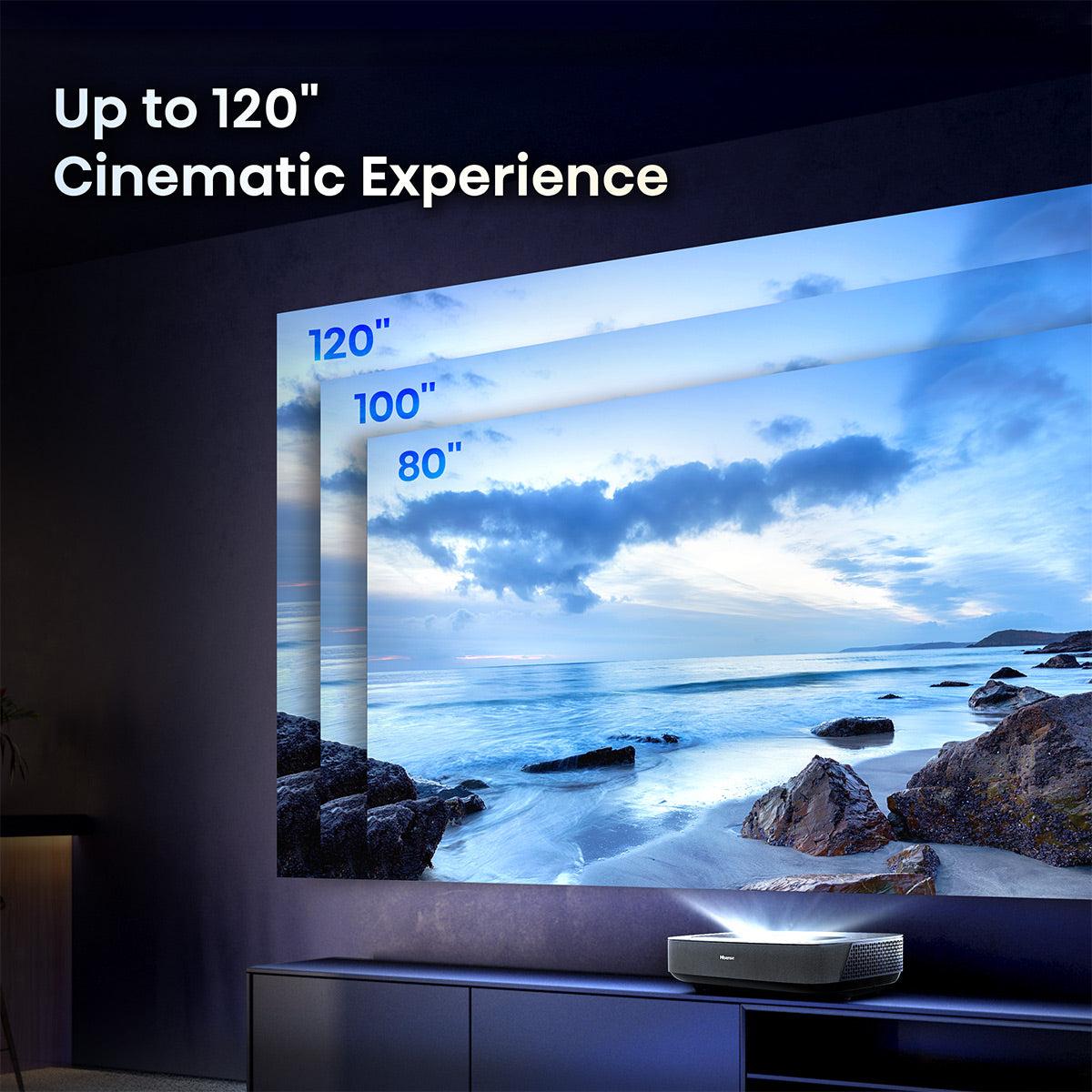
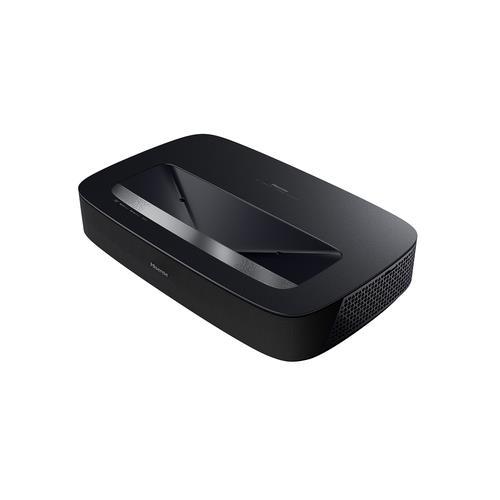
Ultra short throw projectors have completely changed how we think about home entertainment. Instead of mounting a projector on your ceiling and dealing with shadows when you walk in front of it, these innovative devices sit just inches from your wall—like a soundbar under a TV—and project massive images up to 150 inches diagonally. It's like having a movie theater in your living room without the major installation headaches.
The two Hisense models we're comparing today represent very different approaches to this technology. The Hisense PX3-PRO, released in 2024, showcases the latest in projector innovation with premium features and cutting-edge laser technology. The Hisense PL1, launched in 2023 but discontinued in early 2025, offers solid performance at a more accessible price point. At the time of writing, you can find these projectors with roughly a $1,300 price difference, making this comparison particularly relevant for anyone trying to balance performance with budget.
Before diving into the comparison, it helps to understand what makes these projectors special. Traditional projectors use a "throw ratio" that requires several feet of distance to create large images. Ultra short throw projectors have extremely low throw ratios (typically 0.25:1 or less), meaning they can project a 100-inch image from just 10-12 inches away from the wall.
This technology relies on sophisticated lens systems and precise engineering. The projector shoots light at an extreme angle upward toward the wall, creating these massive images without requiring ceiling installation or worrying about people walking through the light path. It's particularly appealing for living rooms where you want the convenience of a TV but the impact of a true large screen experience.
Both the PX3-PRO and PL1 excel in this fundamental capability, but they achieve it through different technological approaches that significantly impact their performance and price.
The most significant distinction between these projectors lies in their light sources, which determines almost everything about their performance capabilities.
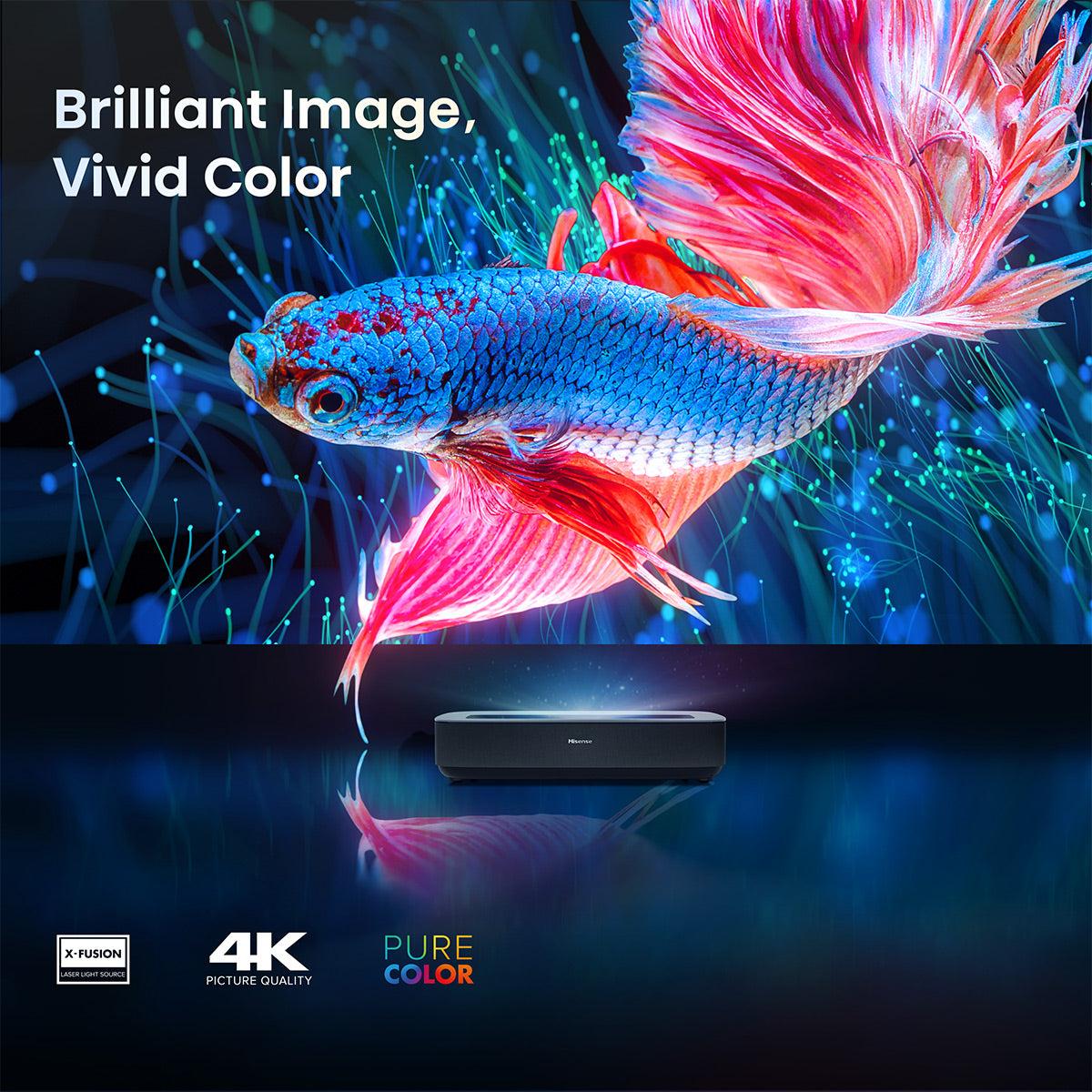
The Hisense PX3-PRO uses what's called a "TriChroma RGB triple laser system." This means it has three separate lasers—one red, one green, one blue—that combine to create the full spectrum of colors you see on screen. Think of it like having three perfectly tuned flashlights, each producing pure color, working together to paint every pixel. This approach allows the projector to produce colors that are more vivid and accurate than what most displays can achieve, covering 110% of the BT.2020 color space (a technical standard that represents the colors visible to human eyes).
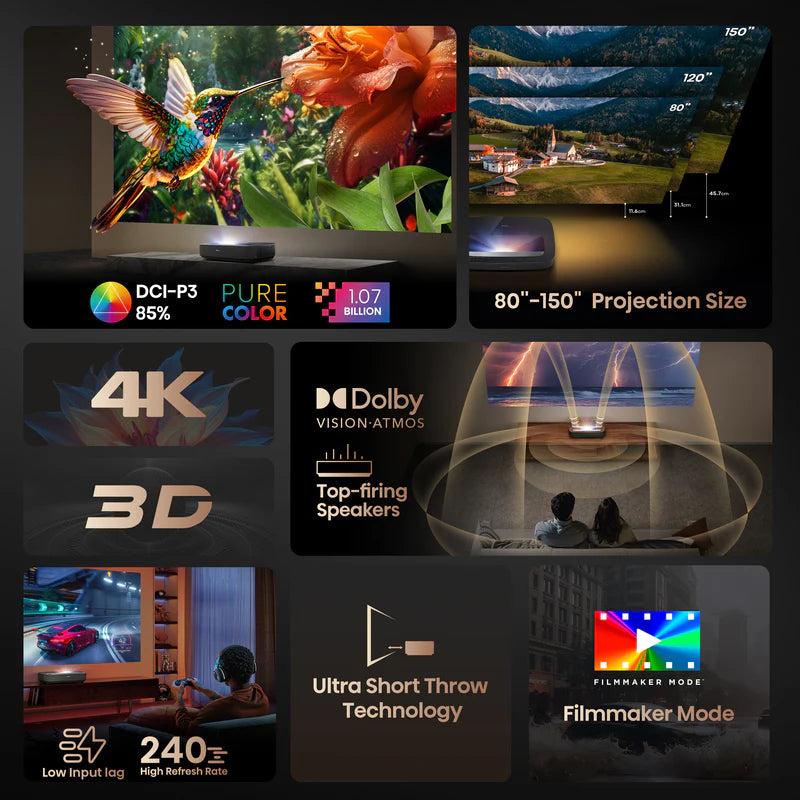
The PL1, on the other hand, uses blue laser phosphor technology. This system starts with a single blue laser, then uses special phosphor materials to convert some of that blue light into green and red. It's more cost-effective to manufacture, but it inherently limits the range of colors the projector can display—specifically to about 85% of the DCI-P3 color standard used in movie theaters.
To put this in practical terms: when you're watching a nature documentary with vibrant green forests or red sunsets, the PX3-PRO will show these colors with an intensity and accuracy that's closer to what you'd see in real life. The PL1 will still look good, but certain colors will appear slightly muted or less saturated.
Brightness, measured in ANSI lumens, determines how well a projector performs in rooms with ambient light. This specification becomes crucial for ultra short throw projectors because they're typically used in living rooms rather than dedicated dark theaters.
The PX3-PRO produces 3,000 ANSI lumens, while the PL1 outputs 2,200 lumens. That 36% difference might not sound dramatic, but in real-world use, it's substantial. Based on expert reviews and user feedback, the PX3-PRO maintains excellent image quality even with lights on and windows open during daytime viewing. You can comfortably watch content with normal room lighting without the image appearing washed out or losing contrast.
The PL1, while still capable in moderately lit rooms, requires more careful light management. It performs beautifully in controlled lighting situations—think evening viewing with curtains drawn and dimmed lights. However, in bright living rooms or during daytime viewing, you'll notice the image loses some of its punch, particularly in darker scenes where details can disappear.
This brightness difference becomes even more important as screen sizes increase. Both projectors can create images up to 120 inches, but the PX3-PRO can go even larger—up to 150 inches—while maintaining image quality. At these extreme sizes, every lumen matters for maintaining a bright, vibrant picture.
Both projectors achieve 4K resolution through a technology called XPR pixel shifting. Instead of having native 4K chips (which would make them prohibitively expensive), they use high-quality 1080p DLP chips that rapidly shift the projected pixels to create the appearance of 4K detail. This approach has become the standard for consumer 4K projectors and, when done well, produces images that are virtually indistinguishable from native 4K.
Where they differ is in contrast ratio and image processing. The PX3-PRO achieves a 3,000:1 native contrast ratio, meaning the brightest whites are 3,000 times brighter than the darkest blacks it can produce. This specification directly translates to better shadow detail and more impactful HDR content. When you're watching a movie with both bright explosions and dark underground scenes, you'll see more detail in both extremes.
The PL1 lists a 2,000,000:1 dynamic contrast ratio, but this measurement uses different criteria (dynamic contrast adjusts the light source between scenes) and isn't directly comparable to native contrast. In practice, the PL1 produces good contrast for its price range but doesn't match the PX3-PRO's ability to simultaneously display deep blacks and bright highlights.
The PX3-PRO also incorporates advanced AI processing that analyzes content frame-by-frame to optimize brightness, contrast, and reduce noise. This technology works particularly well with lower-quality streaming content, essentially upscaling and enhancing it in real-time. While the PL1 includes basic processing features, it lacks this sophisticated AI enhancement.
High Dynamic Range (HDR) support has become essential for modern home theater, and both projectors handle the major formats, but with different levels of sophistication.
The PX3-PRO supports HDR10+, Dolby Vision, and carries IMAX Enhanced certification—the first projector to achieve this designation. IMAX Enhanced means the projector has been specifically tested and approved to deliver the color accuracy, brightness, and contrast that IMAX considers worthy of their brand. For movie enthusiasts, this certification provides confidence that you're seeing films as directors intended.
The PL1 supports HDR10, Dolby Vision, and HLG, covering the essential formats but without the premium certifications. In practice, both projectors will play HDR content, but the PX3-PRO's superior brightness and color gamut means HDR highlights appear more brilliant and HDR color gradations are smoother and more detailed.
Color accuracy becomes particularly important for longer viewing sessions. The PX3-PRO's TriChroma laser system produces colors that are not only more vibrant but also more accurate to industry standards. This means less eye strain during extended viewing and colors that look natural rather than oversaturated or artificial.
Both projectors include integrated speaker systems, which is unusual and valuable for ultra short throw projectors since they often replace traditional TV setups where built-in audio is expected.
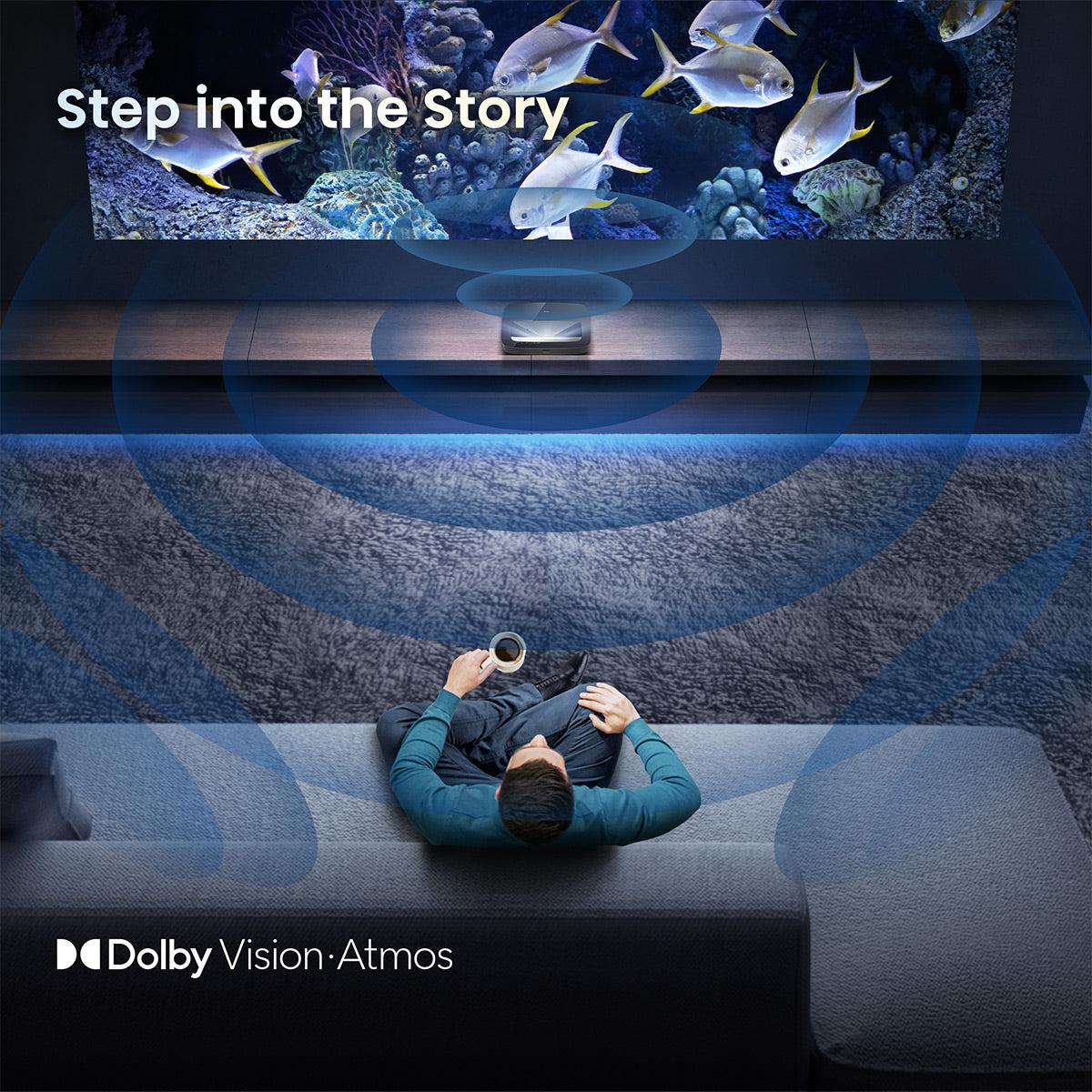
The PX3-PRO features a Harman Kardon-designed 50-watt speaker system with Dolby Atmos support. This partnership with Harman Kardon, known for premium audio equipment, results in notably better sound quality with clearer dialogue, better bass response, and improved spatial audio effects. The front-firing design also provides better sound dispersion compared to typical projector speakers.
The PL1 includes a 30-watt Dolby Atmos system that's adequate for most rooms but lacks the refinement of the PX3-PRO's audio system. While it supports the same Dolby Atmos technology for spatial audio, the lower power output and less sophisticated drivers mean you'll get decent but not impressive sound quality.
For serious home theater setups, most enthusiasts eventually add external audio systems regardless of built-in speaker quality. However, the PX3-PRO's superior audio means you can delay that additional investment or might find the built-in system sufficient for casual viewing.
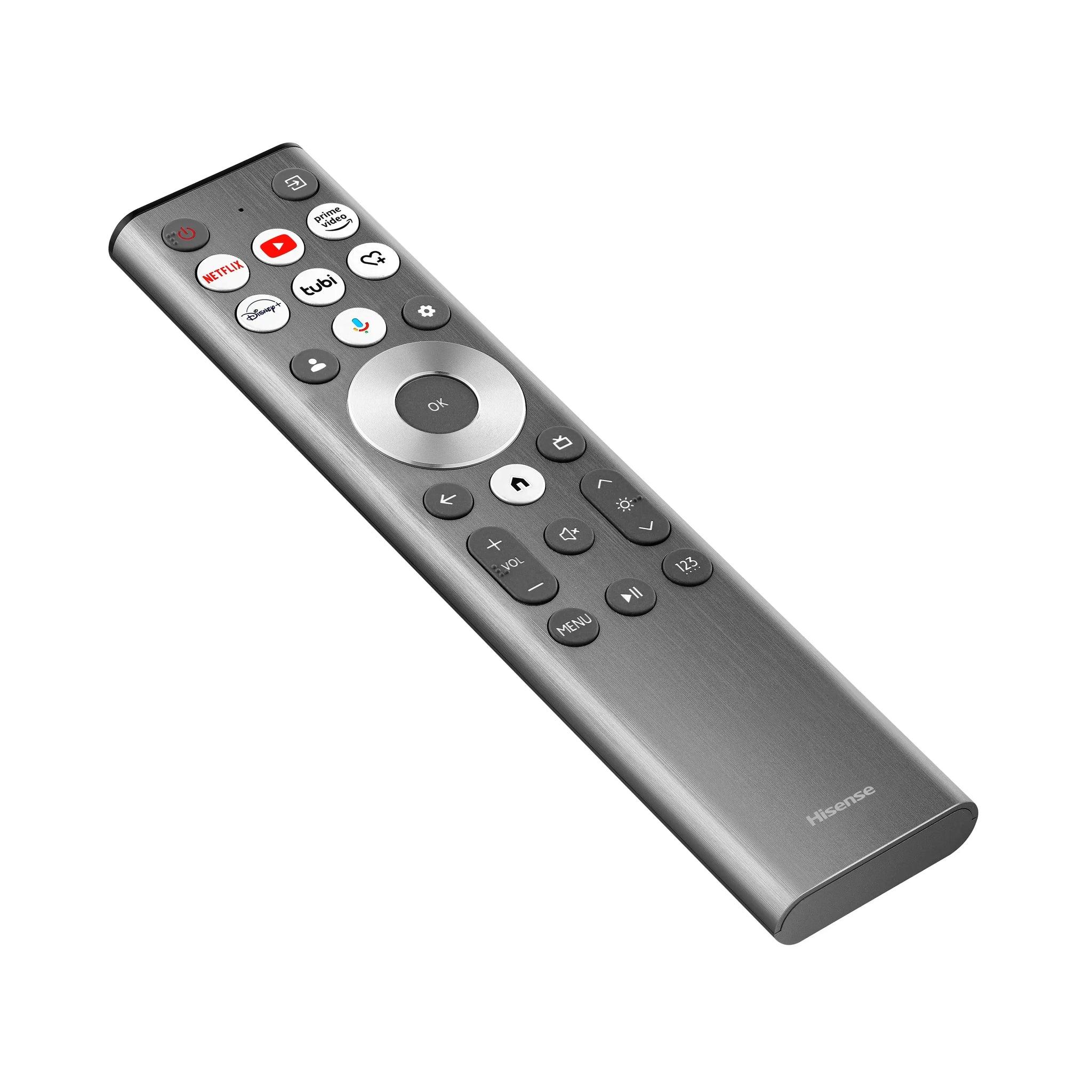
Both projectors run Google TV, which provides access to all major streaming services including Netflix, Amazon Prime Video, Disney+, and others. This smart platform integration means you might not need any external devices—the projector can handle everything from streaming to gaming.
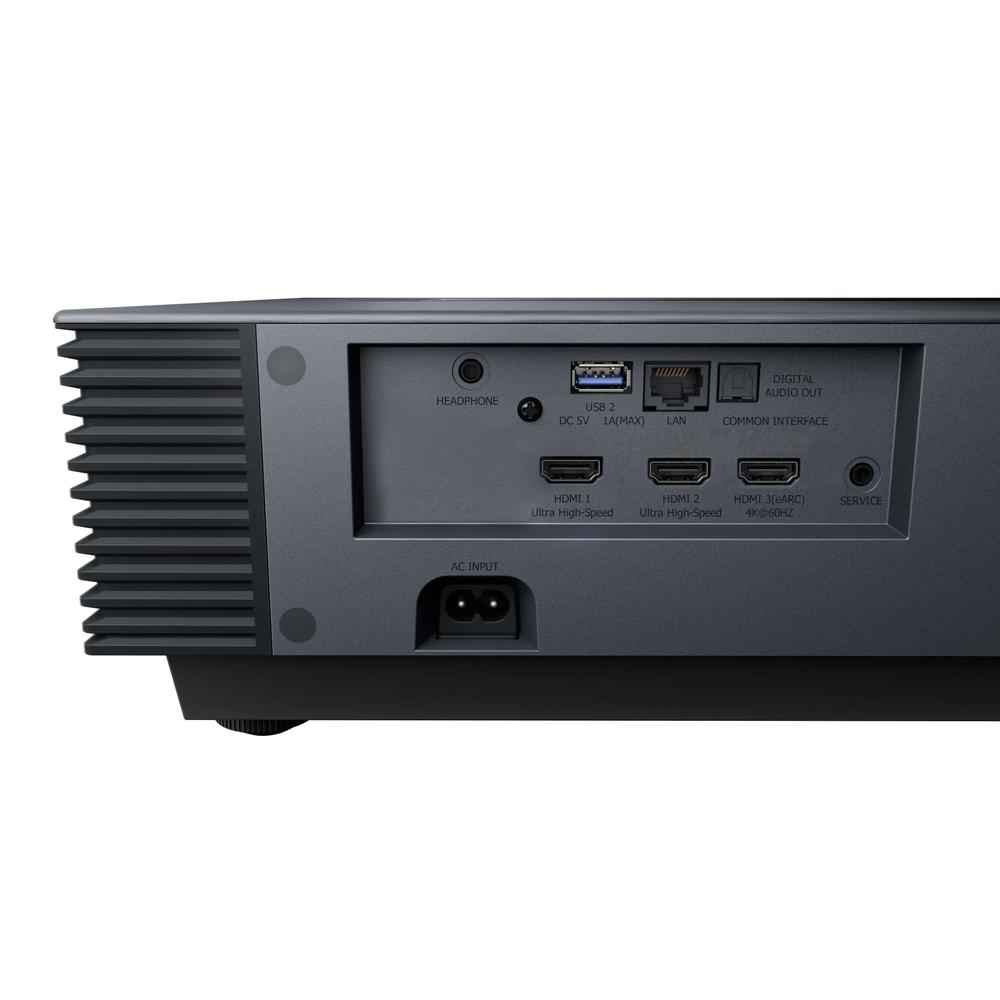
The PX3-PRO includes enhanced processing power that makes the Google TV interface more responsive and supports more demanding apps without stuttering. It also features HDMI 2.1 ports with full 48Gbps bandwidth, important for next-generation gaming consoles and high-refresh-rate content.
The PL1 provides the same basic smart TV functionality but with HDMI 2.0 connections and less processing power. For most users, this difference won't be noticeable during typical streaming, but gamers using PlayStation 5 or Xbox Series X consoles might prefer the PX3-PRO's enhanced connectivity.
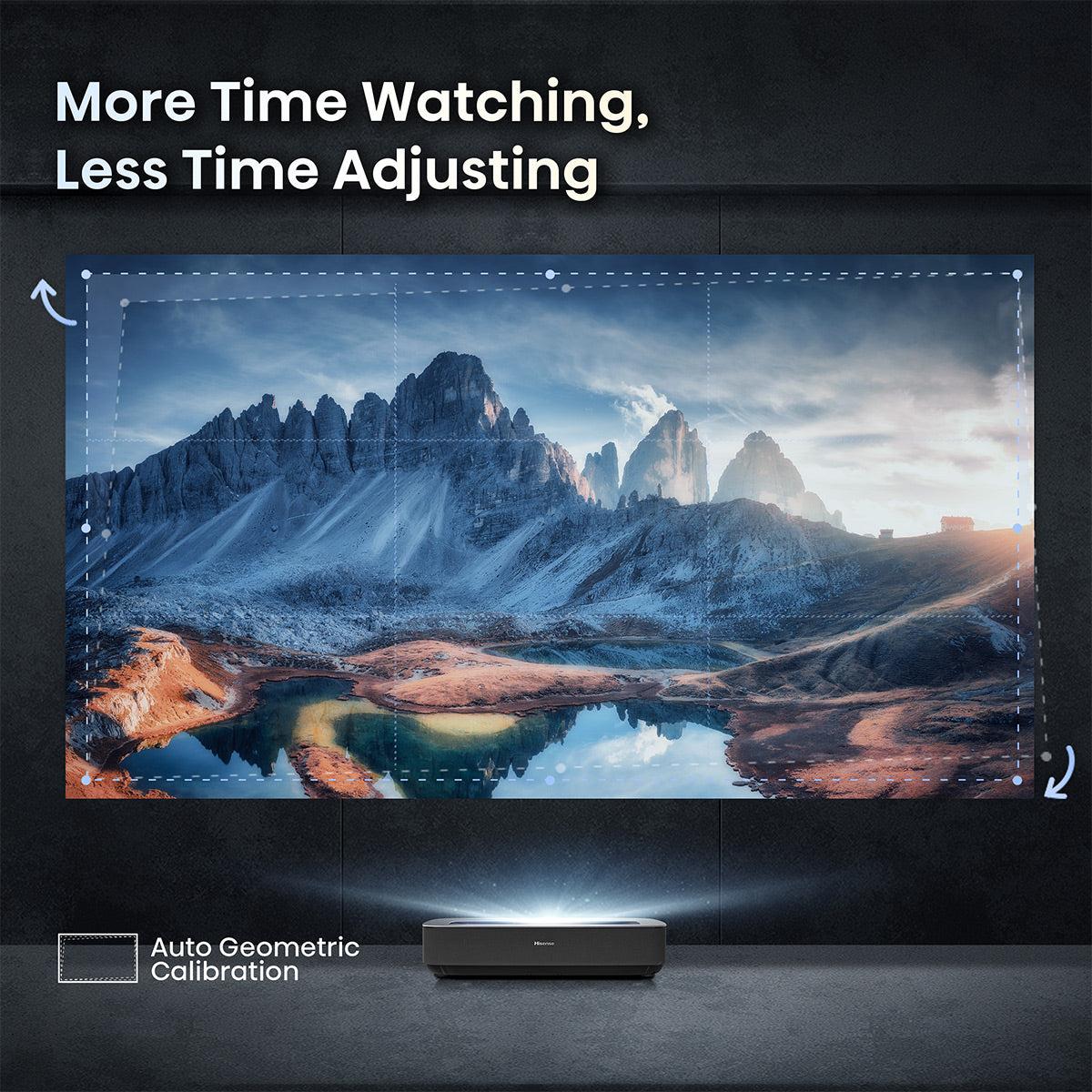
Both projectors support automatic geometry correction, which helps align the projected image perfectly with your wall or screen using smartphone apps. This feature significantly simplifies setup compared to traditional projectors that require manual adjustments.
Gaming performance has become increasingly important as ultra short throw projectors replace traditional TVs in living rooms. Both projectors include dedicated game modes that reduce input lag—the delay between pressing a button and seeing the result on screen.
The PX3-PRO provides superior gaming performance with lower input lag and better motion handling. Its advanced processing maintains image quality even in game mode, whereas some projectors sacrifice picture quality for reduced latency. The higher brightness also helps maintain visibility in fast-paced games with dark scenes.
The PL1 offers adequate gaming performance for casual players but might not satisfy competitive gamers or those who prioritize the smoothest possible experience. The motion processing, while present, isn't as sophisticated as the PX3-PRO's system.
Ultra short throw projectors require more precise positioning than traditional projectors, and both models include features to simplify this process. However, there are practical differences worth considering.
The PX3-PRO weighs approximately 20 pounds and measures about 22 inches wide, making it substantial but manageable for most furniture. Its adjustable feet provide fine-tuning capabilities for perfect alignment. The higher brightness also provides more flexibility in positioning since it can overcome slight alignment imperfections through sheer light output.
The PL1 is slightly lighter at 17 pounds and more compact, potentially fitting better in smaller entertainment centers. However, its lower brightness means positioning becomes more critical—small alignment issues that the PX3-PRO could overcome might result in noticeable image quality degradation.
Both projectors benefit significantly from pairing with ambient light rejecting (ALR) screens, which are specially designed to reflect projected light while absorbing ambient room light. These screens can improve contrast and color performance dramatically, particularly beneficial for the PL1 in brighter rooms.
The PX3-PRO, being Hisense's current flagship model, represents their latest technology and will likely receive firmware updates and support for several years. The TriChroma laser system is also more future-proof, supporting wider color standards that may become more common as content creation evolves.
The PL1, discontinued in early 2025, represents a different value proposition. While it won't receive major feature updates, its core performance remains solid, and the significant price difference (at the time of writing) makes it attractive for budget-conscious buyers. However, potential buyers should consider the implications of purchasing a discontinued model for warranty support and long-term reliability.
Both projectors feature laser light sources rated for 25,000+ hours of operation, which translates to roughly 10 years of typical use. This longevity is a major advantage over traditional lamp-based projectors that require expensive bulb replacements every few thousand hours.
Based on extensive research into expert reviews and user feedback, clear usage patterns emerge for each projector.
The PX3-PRO suits users who prioritize image quality and versatility. If your living room has windows, if you frequently watch during daytime, or if you want the largest possible screen sizes, the additional investment pays dividends. Home theater enthusiasts who appreciate color accuracy, HDR performance, and premium audio will find the PX3-PRO delivers a notably superior experience. It's also the better choice for mixed-use living rooms where the projector needs to perform well across various lighting conditions and content types.
The PL1 makes sense for budget-conscious buyers who can work within its limitations. If you primarily watch in controlled lighting conditions, if your desired screen size stays around 100 inches or smaller, and if the significant cost savings allow investment in other components (like a premium screen or external audio system), the PL1 can provide excellent value. It's particularly appealing for secondary installations, bedrooms, or dedicated media rooms where ambient light isn't a concern.
The choice between these projectors ultimately depends on your priorities and room conditions. The PX3-PRO represents a clear technological advancement with measurable performance benefits across every category. Its TriChroma laser system, superior brightness, and premium features justify the higher cost for users who want the best possible ultra short throw experience.
The PL1, while discontinued, remains a capable projector at its reduced pricing (at the time of writing). For users with appropriate room conditions and realistic expectations about its limitations, it provides solid performance at substantial savings.
Consider your room's lighting, your desired screen size, and whether you prioritize having the latest technology versus maximizing value. Either choice will deliver the unique benefits of ultra short throw projection—that massive screen experience without the installation complexity of traditional projectors. The question is whether the PX3-PRO's performance advantages align with your specific needs and budget.
| Hisense PX3-PRO | Hisense PL1 |
|---|---|
| Brightness - Critical for daytime viewing and larger screen sizes | |
| 3,000 ANSI lumens (excellent performance in bright rooms) | 2,200 ANSI lumens (requires controlled lighting for best results) |
| Light Source Technology - Determines color accuracy and longevity | |
| TriChroma RGB triple laser system (pure color reproduction) | Blue laser with phosphor (X-Fusion technology, cost-effective) |
| Color Gamut Coverage - How vibrant and accurate colors appear | |
| 110% BT.2020 (exceptional color range, professional-grade) | 85% DCI-P3 (good color performance for the price) |
| Maximum Screen Size - How large your projection can be | |
| 80-150 inches (maintains quality at maximum size) | 80-120 inches (best performance under 100 inches) |
| Native Contrast Ratio - Shadow detail and HDR performance | |
| 3,000:1 (excellent black levels and highlight detail) | 2,000,000:1 dynamic (good but not directly comparable) |
| Audio System - Built-in sound quality and power | |
| Harman Kardon 50W with Dolby Atmos (premium audio) | 30W Dolby Atmos speakers (adequate for most rooms) |
| HDR Format Support - Premium content compatibility | |
| HDR10+, Dolby Vision, IMAX Enhanced certified | HDR10, Dolby Vision, HLG (covers essential formats) |
| HDMI Connectivity - Gaming and high-bandwidth content | |
| Two HDMI 2.1 ports with 48Gbps (future-proof for gaming) | HDMI 2.0 with eARC (sufficient for current content) |
| Product Status - Ongoing support and availability | |
| Current flagship model (active support and updates) | Discontinued May 2025 (limited warranty support) |
| Value Positioning - Performance per dollar consideration | |
| Premium pricing for cutting-edge technology | Significant cost savings with performance compromises |
The Hisense PX3-PRO produces 3,000 ANSI lumens compared to the Hisense PL1's 2,200 lumens, making it 36% brighter. This difference is significant for daytime viewing or rooms with ambient light, where the PX3-PRO maintains better image quality and color saturation.
The Hisense PX3-PRO uses TriChroma RGB triple laser technology covering 110% of BT.2020 color space, while the PL1 uses blue laser phosphor technology covering 85% DCI-P3. This means the PX3-PRO displays significantly more vibrant and accurate colors, especially noticeable in nature documentaries and HDR content.
The Hisense PX3-PRO supports screen sizes from 80-150 inches, while the PL1 handles 80-120 inches. For screens larger than 120 inches, only the PX3-PRO maintains adequate brightness and image quality.
The Hisense PX3-PRO features Harman Kardon 50-watt speakers with Dolby Atmos, providing superior audio quality with clearer dialogue and better bass response. The PL1 has 30-watt Dolby Atmos speakers that are adequate but less powerful and refined than the PX3-PRO's premium audio system.
The Hisense PX3-PRO offers superior gaming performance with HDMI 2.1 ports supporting full 48Gbps bandwidth, lower input lag, and better motion handling. While both projectors have game modes, the PX3-PRO is better suited for next-gen gaming consoles and competitive gaming scenarios.
The Hisense PX3-PRO excels in bright living rooms due to its higher brightness output, maintaining excellent image quality even with lights on and windows open. The PL1 performs well in moderately lit rooms but requires more controlled lighting conditions for optimal viewing experience.
The Hisense PX3-PRO supports HDR10+, Dolby Vision, and is IMAX Enhanced certified, making it the first projector with this premium designation. The PL1 supports HDR10, Dolby Vision, and HLG, covering essential formats but without the premium certifications that enhance the PX3-PRO's performance.
Value depends on your priorities and budget. The Hisense PL1 offers exceptional value at its lower price point, especially for controlled viewing environments. The PX3-PRO justifies its premium pricing with superior brightness, color accuracy, and future-proof features for users wanting the best possible performance.
Both the Hisense PX3-PRO and PL1 feature laser light sources rated for 25,000+ hours of operation, equivalent to roughly 10 years of typical use. This longevity eliminates the need for expensive bulb replacements required by traditional lamp-based projectors.
Yes, both projectors are designed as TV replacements with Google TV smart platforms, built-in speakers, and ultra short throw design that sits like a soundbar. The Hisense PX3-PRO is better suited for typical living room lighting conditions, while the PL1 works well in more controlled environments.
Both the Hisense PX3-PRO and PL1 run Google TV with access to all major streaming services. The PX3-PRO has more processing power for smoother interface performance and enhanced app compatibility, while the PL1 provides adequate smart TV functionality for basic streaming needs.
The Hisense PL1 remains a solid choice despite discontinuation, especially at reduced pricing. However, consider limited warranty support and no future updates. If you can work within its brightness and size limitations, the PL1 offers good performance, but the PX3-PRO provides better long-term value with ongoing support.
We've done our best to create useful and informative comparisons to help you decide what product to buy. Our research uses advanced automated methods to create this comparison and perfection is not possible - please contact us for corrections or questions. These are the sites we've researched in the creation of this article: shop.hisense-usa.com - avsforum.com - youtube.com - projectorcentral.com - avsforum.com - youtube.com - projectorreviews.com - avsforum.com - projectorcentral.com - en.heimkinowelten.de - dreamediaav.com - projectorscreen.com - dreamediaav.com - projectorcentral.com - trustedreviews.com - crutchfield.com - hometheaterhifi.com - projectorcentral.com - projectorreviews.com - vividstormscreen.com - bhphotovideo.com - shi.com - crutchfield.com

Privacy Policy
Terms and Conditions - Affiliate Policy
Home Security
© Copyright 2008-2026.
11816 Inwood Rd #1211, Dallas, TX 75244