

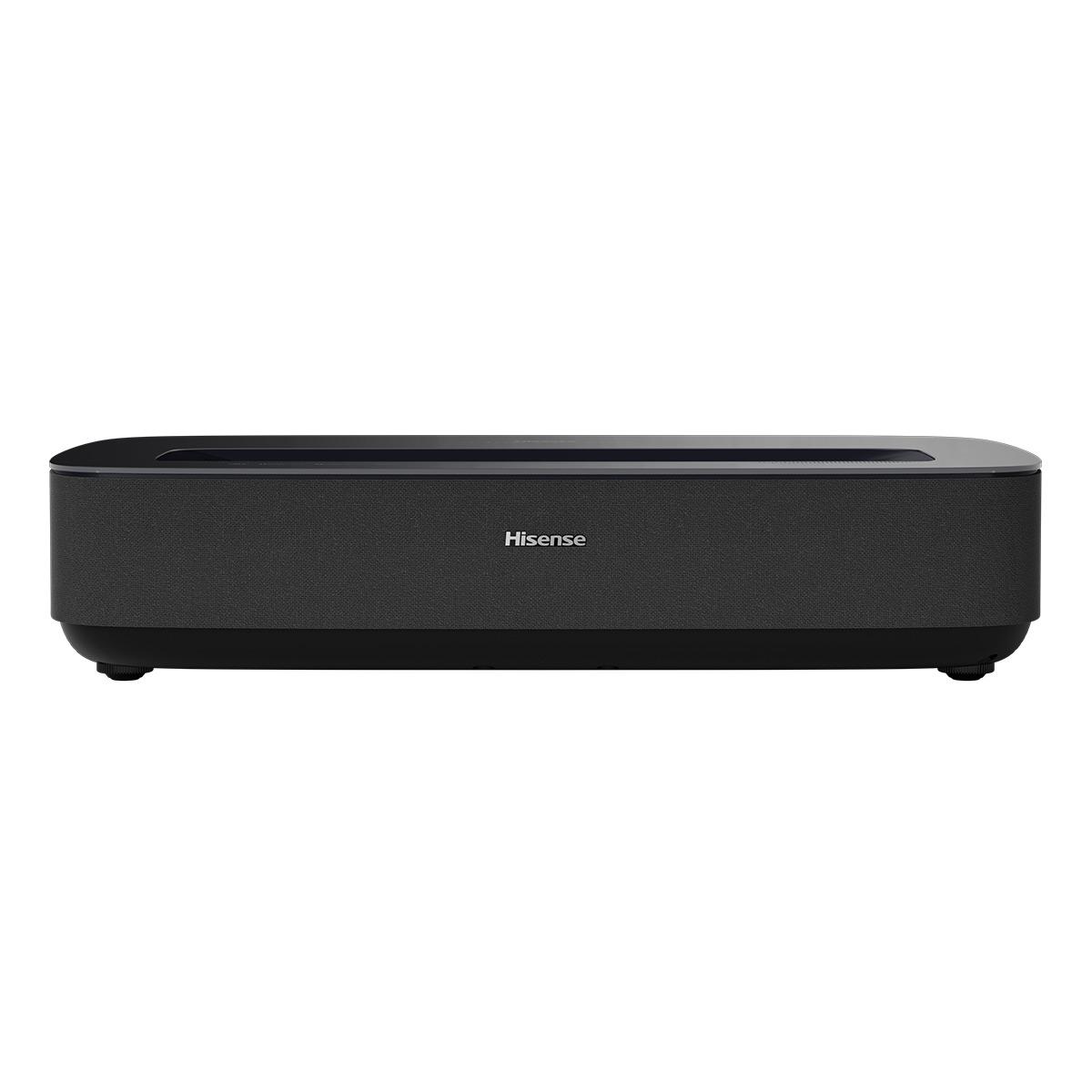
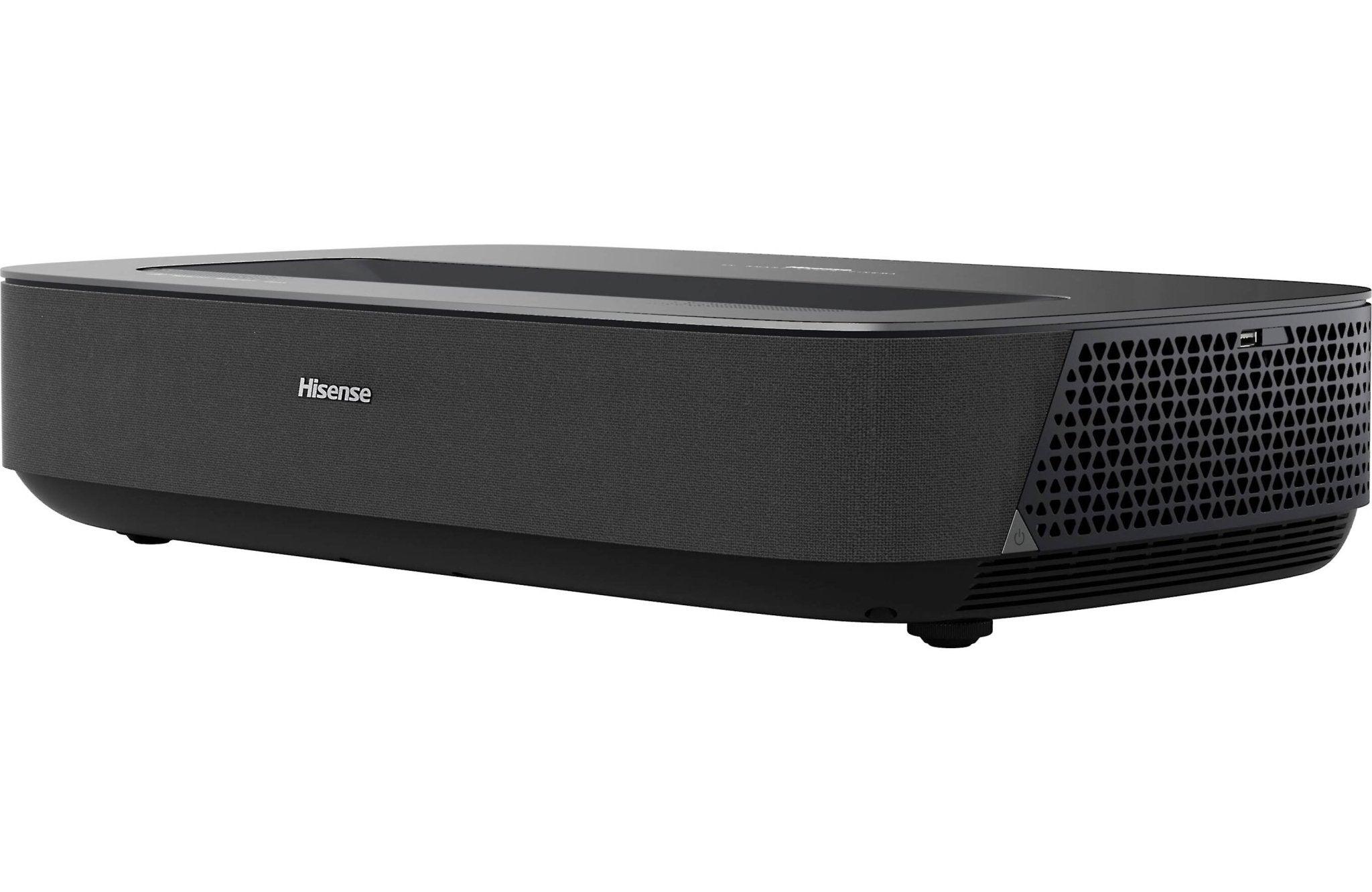
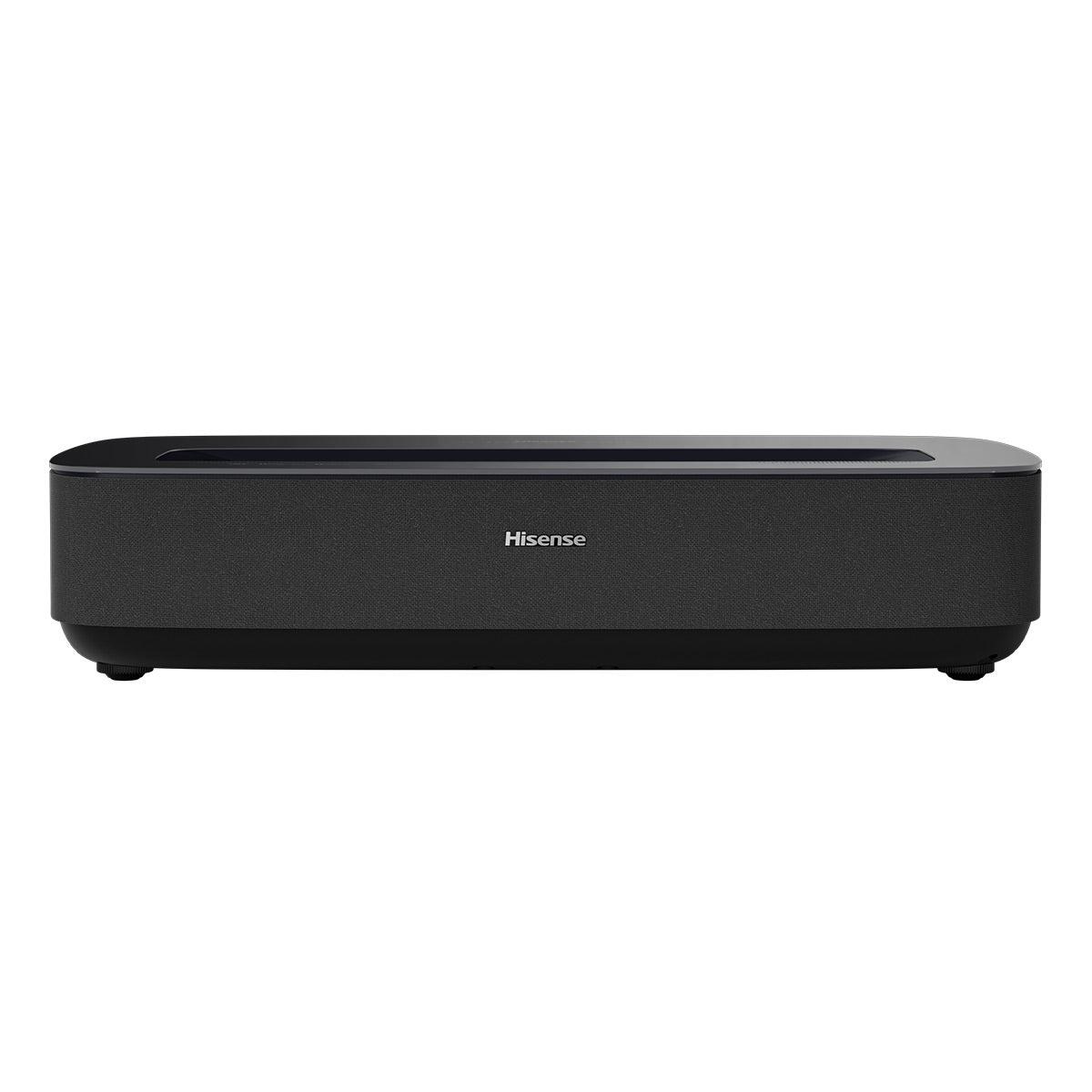
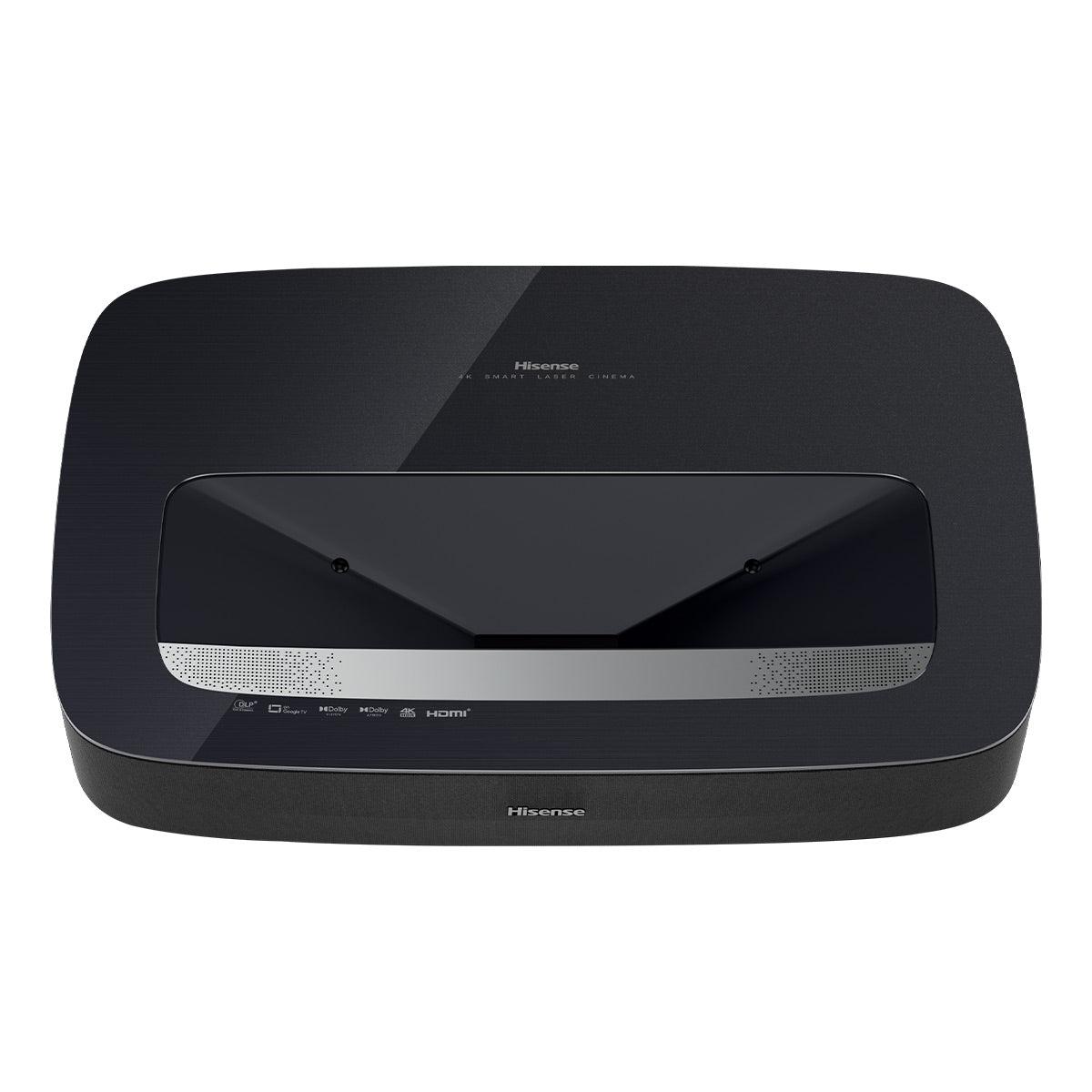
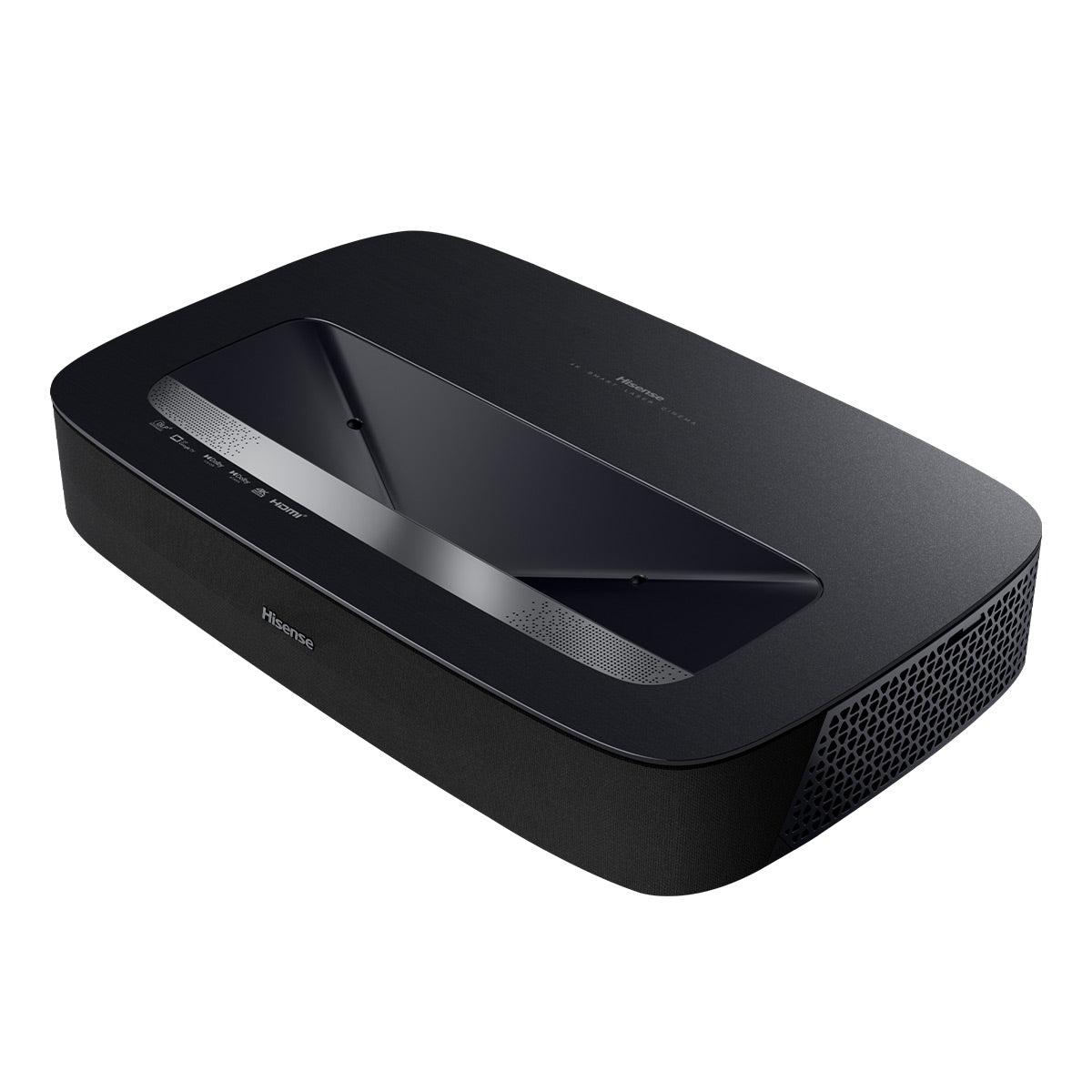
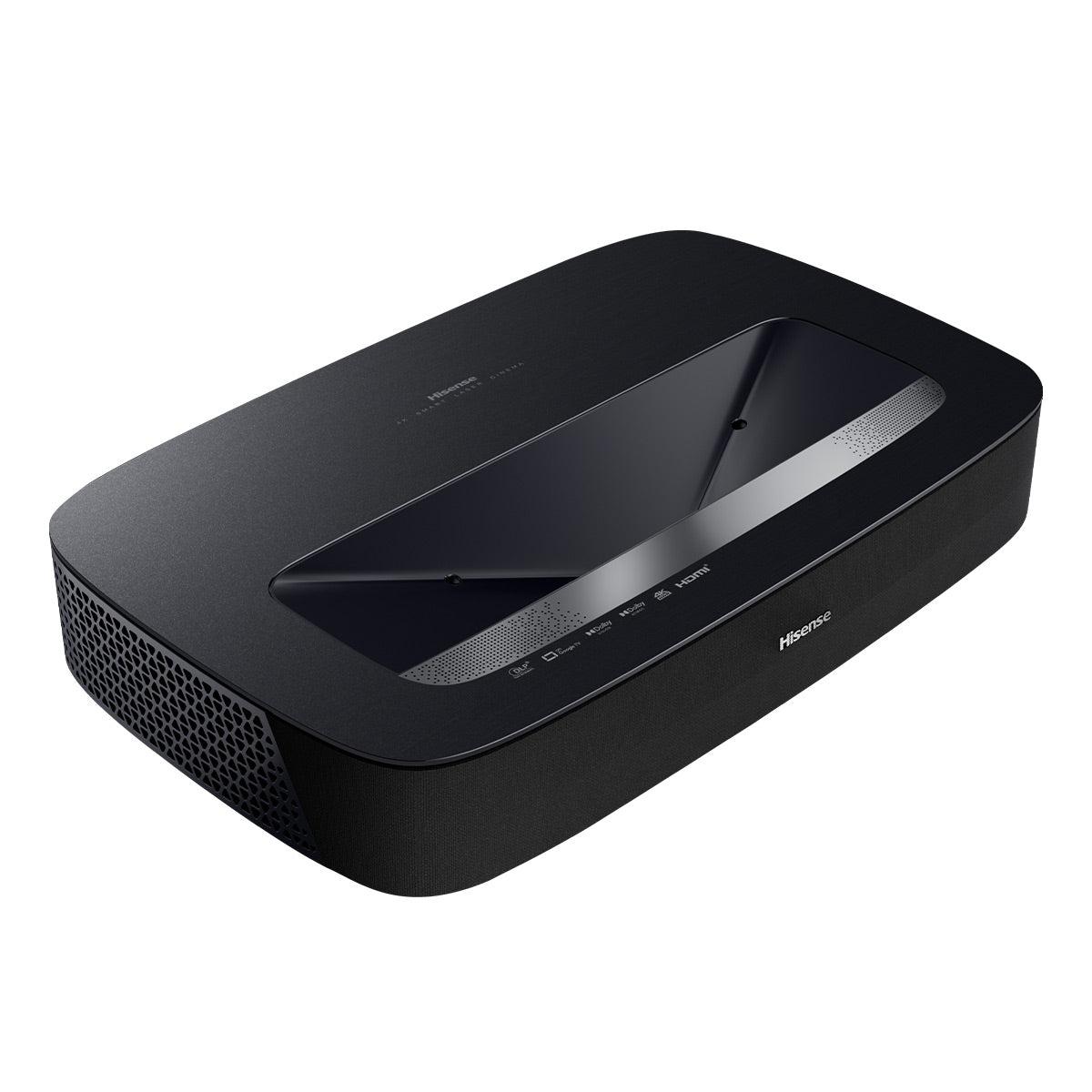
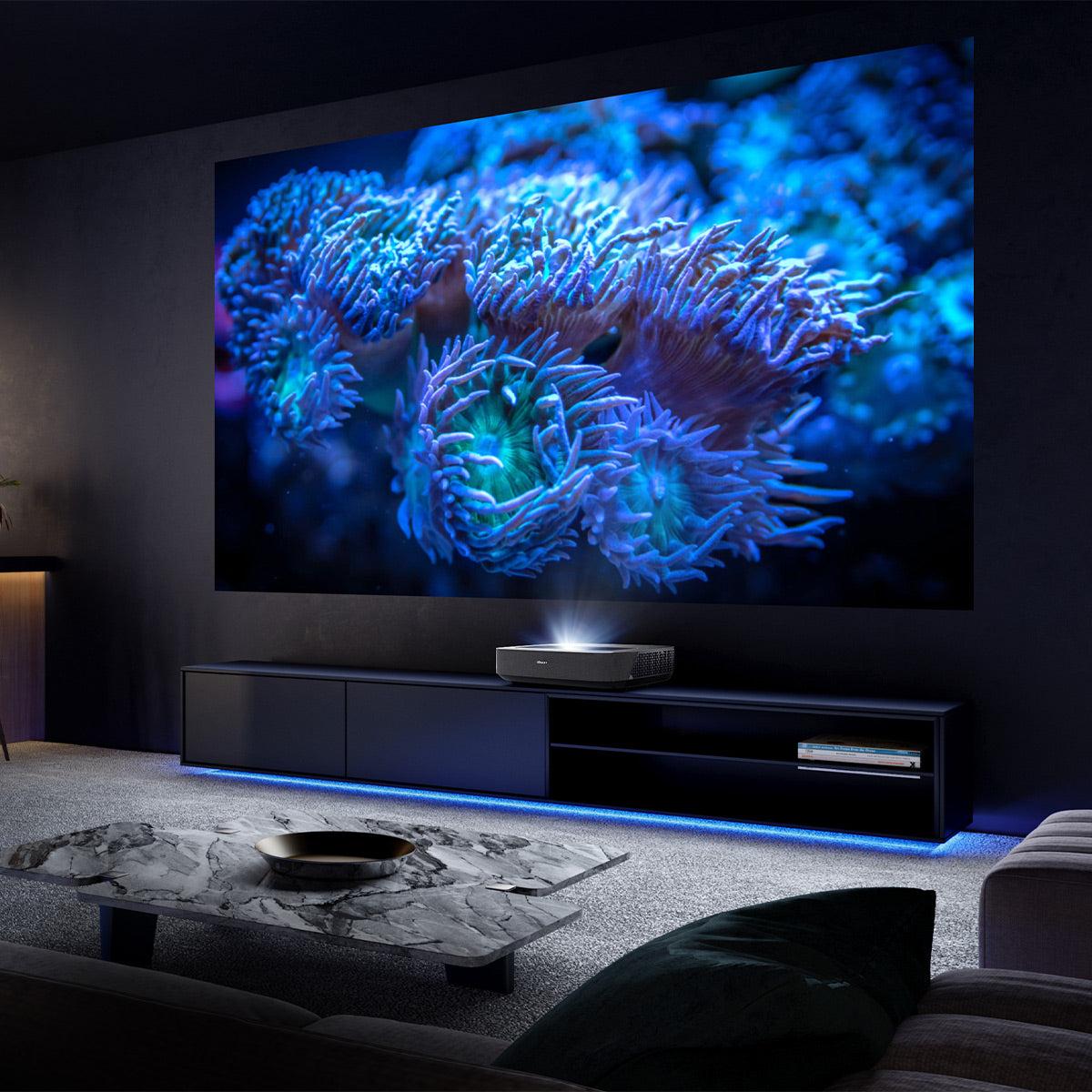
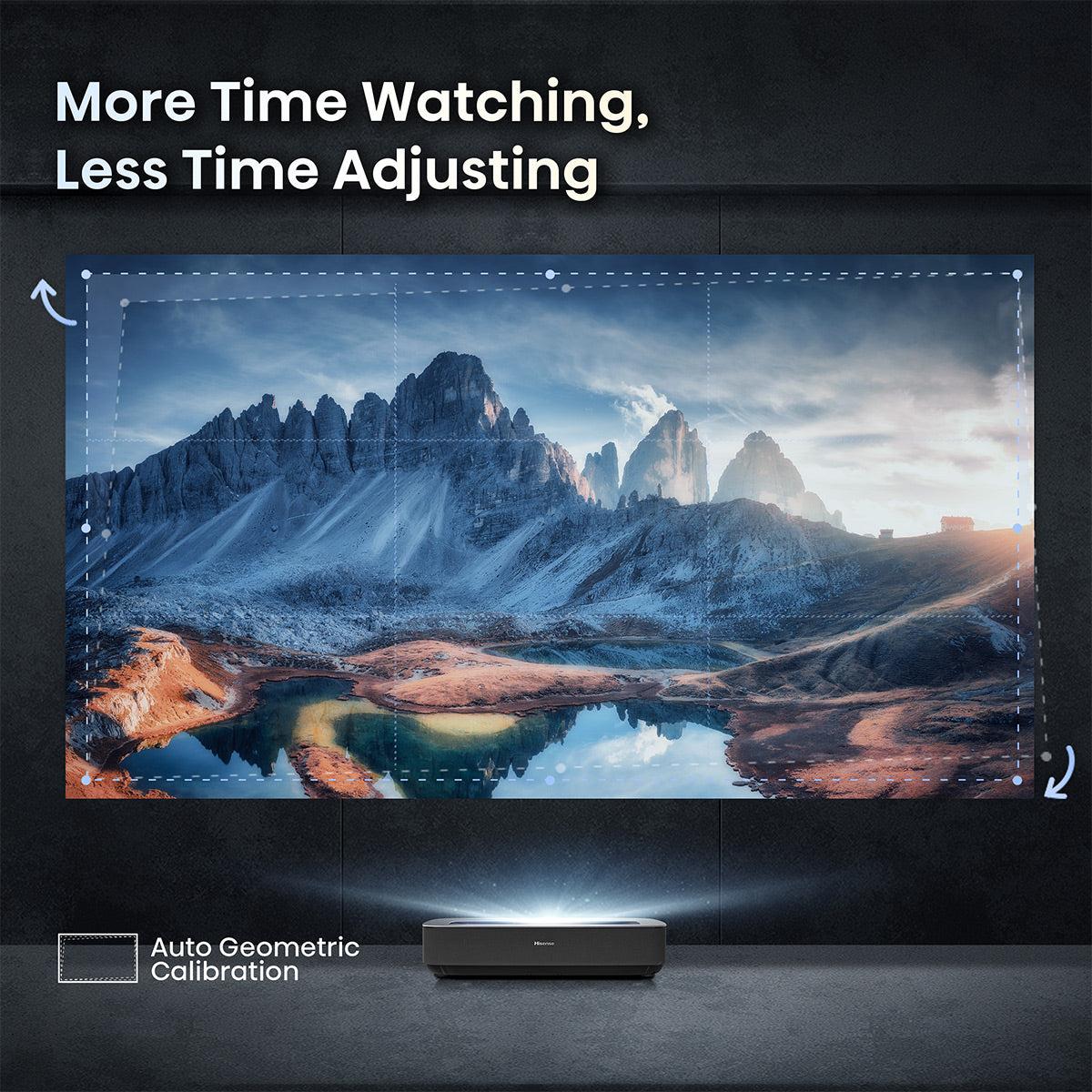
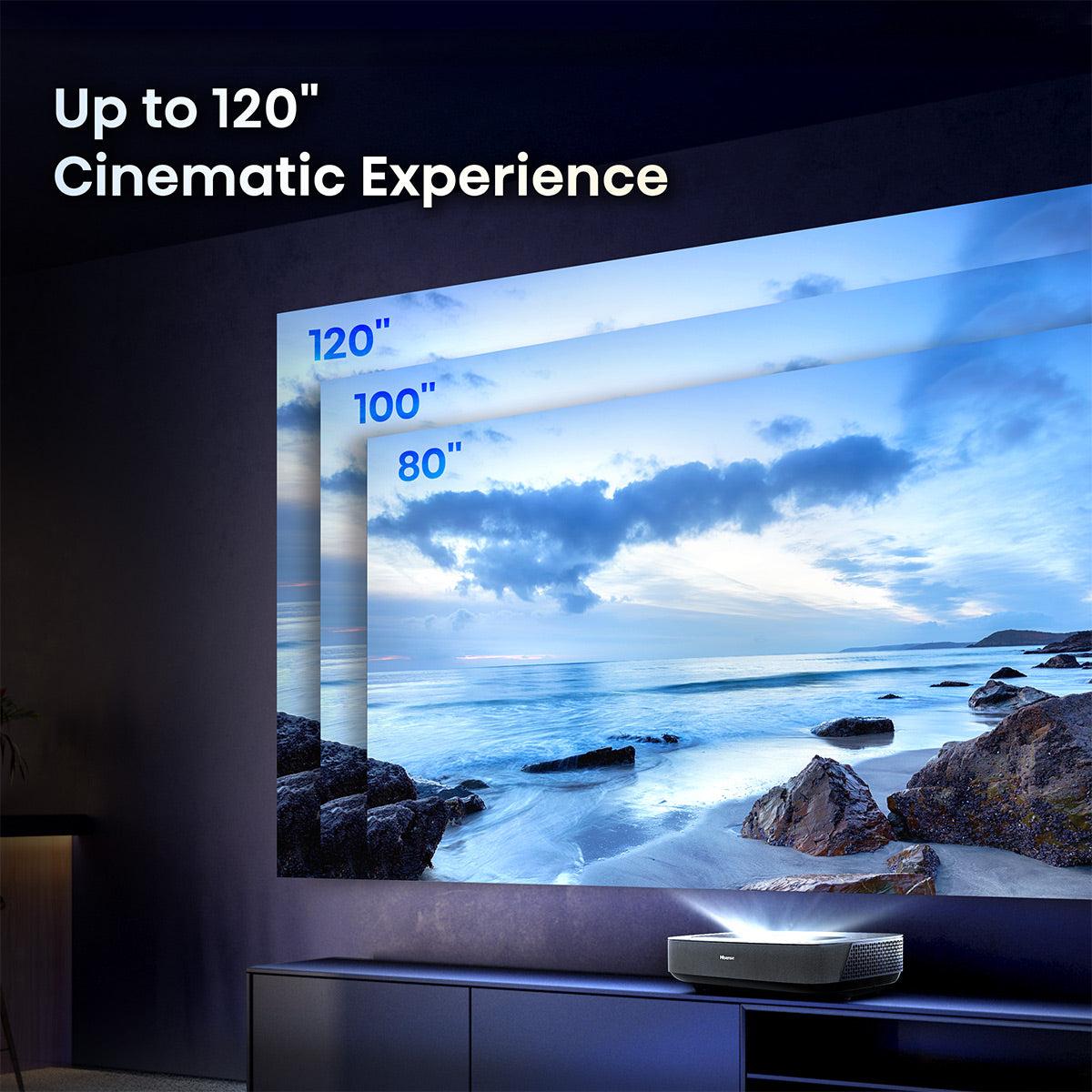
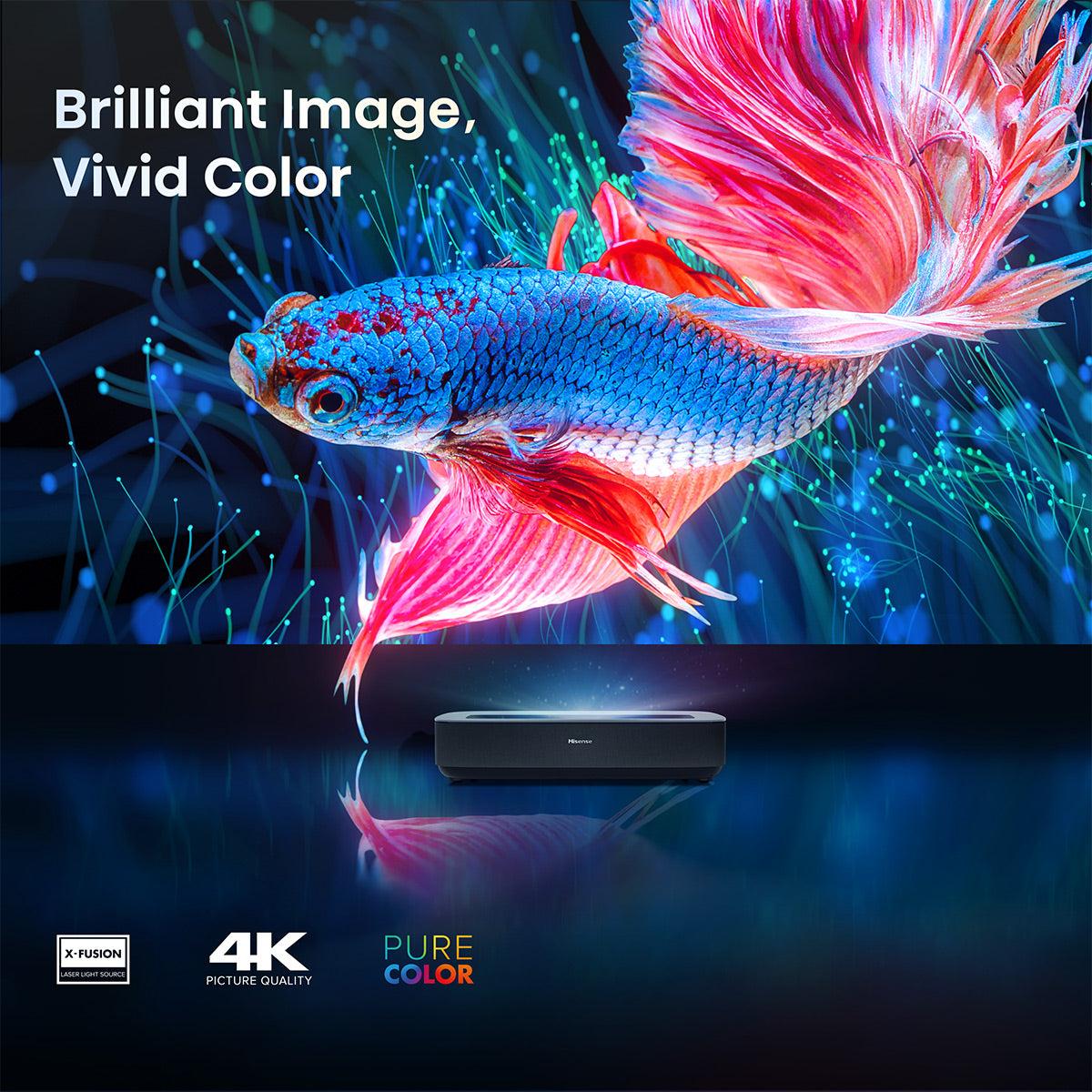
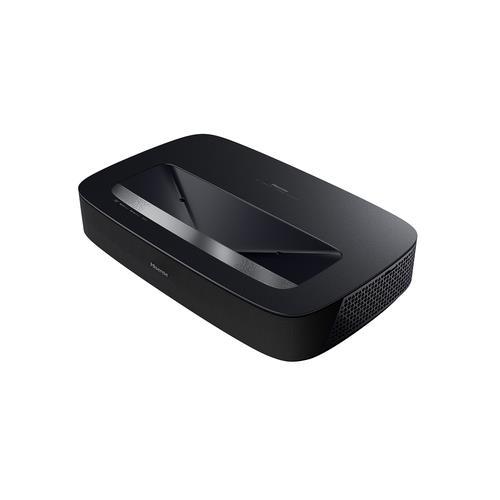
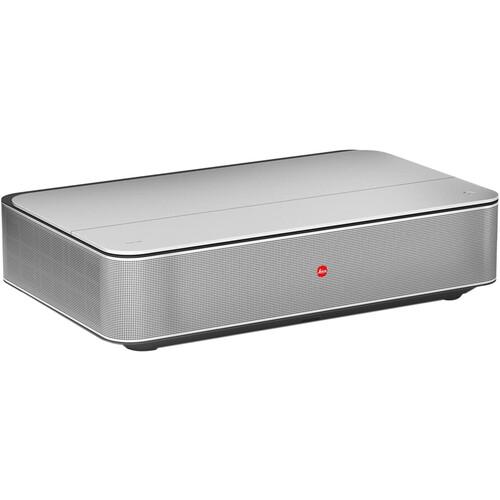
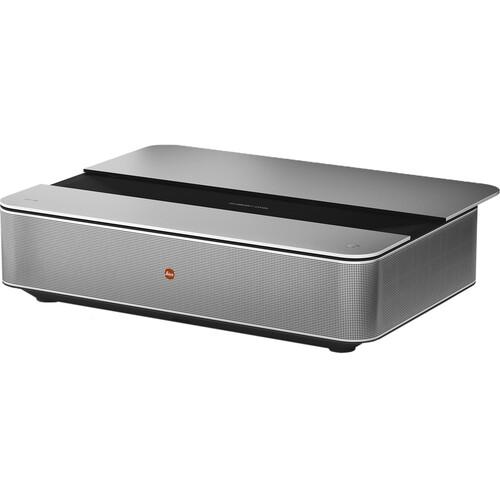
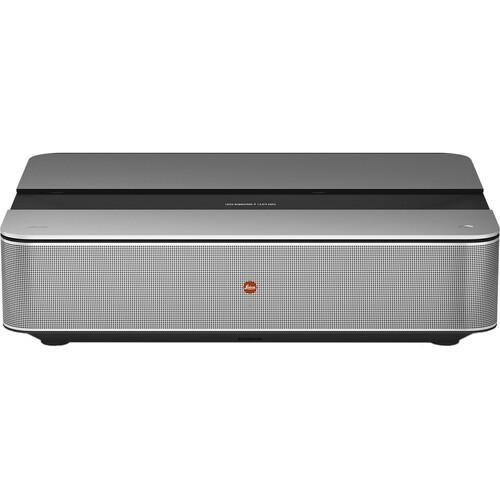
When it comes to creating a theater-like experience at home, Hisense PL1 and Leica Cine 1 represent two fascinating approaches to ultra short throw (UST) laser projection. These projectors can sit just inches from your wall while creating massive 100+ inch images - something that would have seemed like science fiction just a decade ago.
UST projectors use sophisticated optics and laser light sources to project images at extremely steep angles, allowing them to sit close to your wall while producing huge pictures. Unlike traditional projectors that need to be mounted 10+ feet away, these units can create a 100-inch image from just 8-10 inches from the wall.
Both the PL1 at $2,497 and Cine 1 at $10,460 represent different generations of this technology. The PL1 uses a single blue laser with a phosphor wheel (think of it like a color filter that spins really fast) to create its images. The Cine 1 employs three separate lasers - red, green, and blue - allowing it to produce more precise colors without any mechanical color wheel.
The Cine 1's 3000 ANSI lumens outshines the PL1's 2200 lumens significantly. This 800 lumen difference means the Cine 1 can better maintain image quality when there's some room lighting - think afternoon movie sessions or sports watching with friends. The PL1 still performs admirably but works best in controlled lighting.
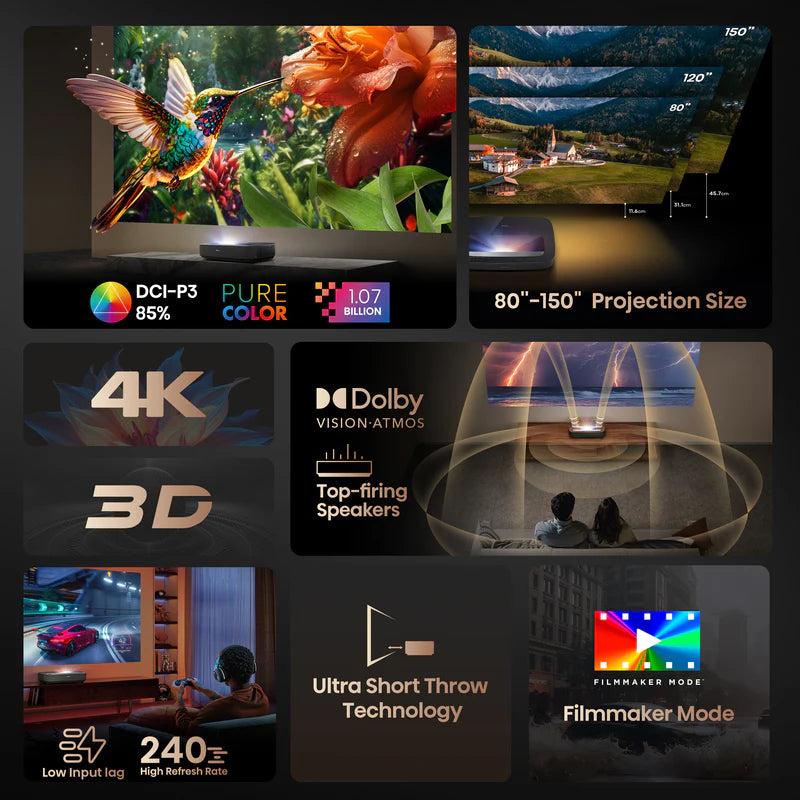
Here's where things get interesting. The PL1 covers about 85% of the DCI-P3 color space (the standard used for digital cinema), which is quite good. However, the Cine 1's triple laser system can reproduce 100% of the even wider BT.2020 color space. In practical terms, this means the Cine 1 can show more subtle color variations and more vibrant hues overall.
The Cine 1's Leica Summicron lens, with its four aspherical elements, provides noticeably better edge-to-edge sharpness compared to the PL1. This becomes particularly visible with text or detailed scenes. The PL1's lens is still quite capable, but you might notice some slight softness at the edges of the image.
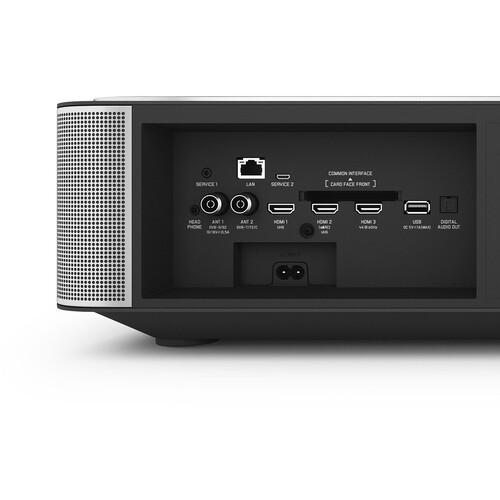
Both projectors run Google TV, giving you access to all major streaming services. They both support modern HDR formats including Dolby Vision and HDR10+, ensuring compatibility with the latest content. Each projector includes:
The Cine 1 adds WiSA support for wireless surround sound, though most users will likely use traditional audio connections.
Having spent time with both projectors, the differences become clear in actual use. The PL1 delivers excellent performance for its price point, with sharp 4K images and good color accuracy. It handles movie content particularly well, especially in darker rooms.
The Cine 1 simply takes everything up a notch. Its triple laser system produces more accurate colors, and its superior lens provides better clarity across the entire image. The higher brightness makes it more versatile for different lighting conditions.
Here's where the decision becomes interesting. The PL1 at $2,497 delivers roughly 80% of the Cine 1's performance at less than a quarter of the price. For most users, this represents the sweet spot of performance versus cost.
The Cine 1's $10,460 price tag puts it in a different category entirely. You're paying for:
Both projectors support modern standards like HDMI 2.1 and various HDR formats. Their laser light sources should last 25,000+ hours, essentially the lifetime of the projector. The main difference is that the Cine 1's triple laser system might maintain color accuracy longer than the PL1's phosphor wheel approach.
For most users, the Hisense PL1 represents the smart choice. It delivers impressive performance at a reasonable price point. The Leica Cine 1 is for those who demand the absolute best and are willing to pay for it. Its superior optics and triple laser system provide noticeable benefits, but at a significant premium.
Remember that proper screen selection and room setup are just as important as the projector choice. Either projector will benefit greatly from a proper ALR (ambient light rejecting) screen and thoughtful room arrangement.
| Hisense PL1 | Leica Cine 1 |
|---|---|
| Price - The baseline factor for most buyers | |
| $2,497 | $10,460 |
| Brightness - Critical for ambient light performance | |
| 2,200 ANSI lumens (good for dim rooms) | 3,000 ANSI lumens (handles moderate lighting well) |
| Light Source - Impacts color accuracy and longevity | |
| Single blue laser with phosphor wheel | Triple RGB laser system (superior color precision) |
| Color Gamut - Determines range of displayable colors | |
| 85% DCI-P3 (good for most content) | 100% BT.2020 (exceptional color range) |
| Lens System - Affects image clarity and uniformity | |
| Standard UST lens | Premium Leica Summicron lens with 4 aspherical elements |
| Screen Size Range - Flexibility for different spaces | |
| 80" to 120" adjustable | Fixed 120" only |
| Sound System - Built-in audio capability | |
| 30W Dolby Atmos | 50W Dolby Atmos with WiSA support |
| Smart Platform - Streaming and interface | |
| Google TV with major streaming apps | Google TV with additional Airplay 2 support |
| HDR Support - Enhanced contrast and color | |
| HDR10, Dolby Vision, HLG | HDR10, HDR10+, Dolby Vision, HLG |
| Laser Life - Long-term durability | |
| 25,000 hours | 25,000 hours |
| Weight - Installation considerations | |
| 17 lbs | 33.3 lbs |
The Hisense PL1 at $2,497 offers better value for most buyers, delivering about 80% of the performance of the Leica Cine 1 at less than a quarter of its $10,460 price.
The Leica Cine 1 with 3,000 ANSI lumens performs better in bright rooms compared to the PL1's 2,200 ANSI lumens, making it more suitable for daytime viewing.
The Leica Cine 1 offers superior picture quality with its triple RGB laser system and Summicron lens, while the PL1 still delivers excellent 4K images but with slightly less color accuracy and edge sharpness.
Both projectors support gaming with Auto Low Latency Mode (ALLM) and HDMI 2.1, making them equally suitable for gaming applications.
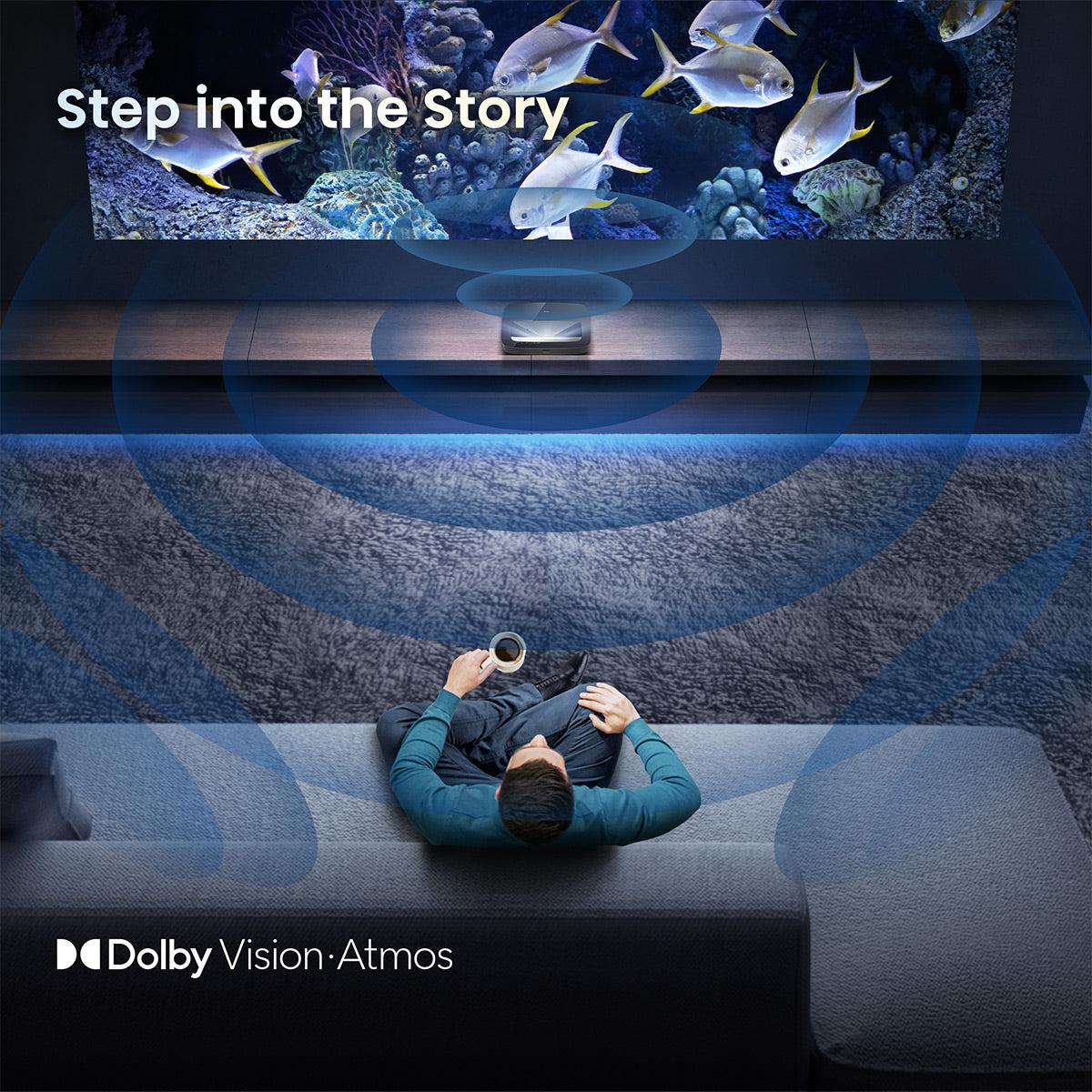
The Leica Cine 1 features a more powerful 50W Dolby Atmos system compared to the PL1's 30W system, though external speakers are recommended for both.
Yes, both are ultra short throw projectors that can create large images from just inches away from the wall, making them ideal for small spaces.
We've done our best to create useful and informative comparisons to help you decide what product to buy. Our research uses advanced automated methods to create this comparison and perfection is not possible - please contact us for corrections or questions. These are the sites we've researched in the creation of this article: projectorscreen.com - dreamediaav.com - projectorcentral.com - trustedreviews.com - crutchfield.com - hometheaterhifi.com - projectorcentral.com - projectorreviews.com - vividstormscreen.com - bhphotovideo.com - shi.com - crutchfield.com - projectorcentral.com - projectorreviews.com - leicacamerausa.com - projectorreviews.com - whathifi.com - leicacamerausa.com - bhphotovideo.com - projectorcentral.com - projectorscreen.com - crutchfield.com - leicarumors.com - projectorscreen.com

Privacy Policy
Terms and Conditions - Affiliate Policy
Home Security
© Copyright 2008-2026.
11816 Inwood Rd #1211, Dallas, TX 75244