

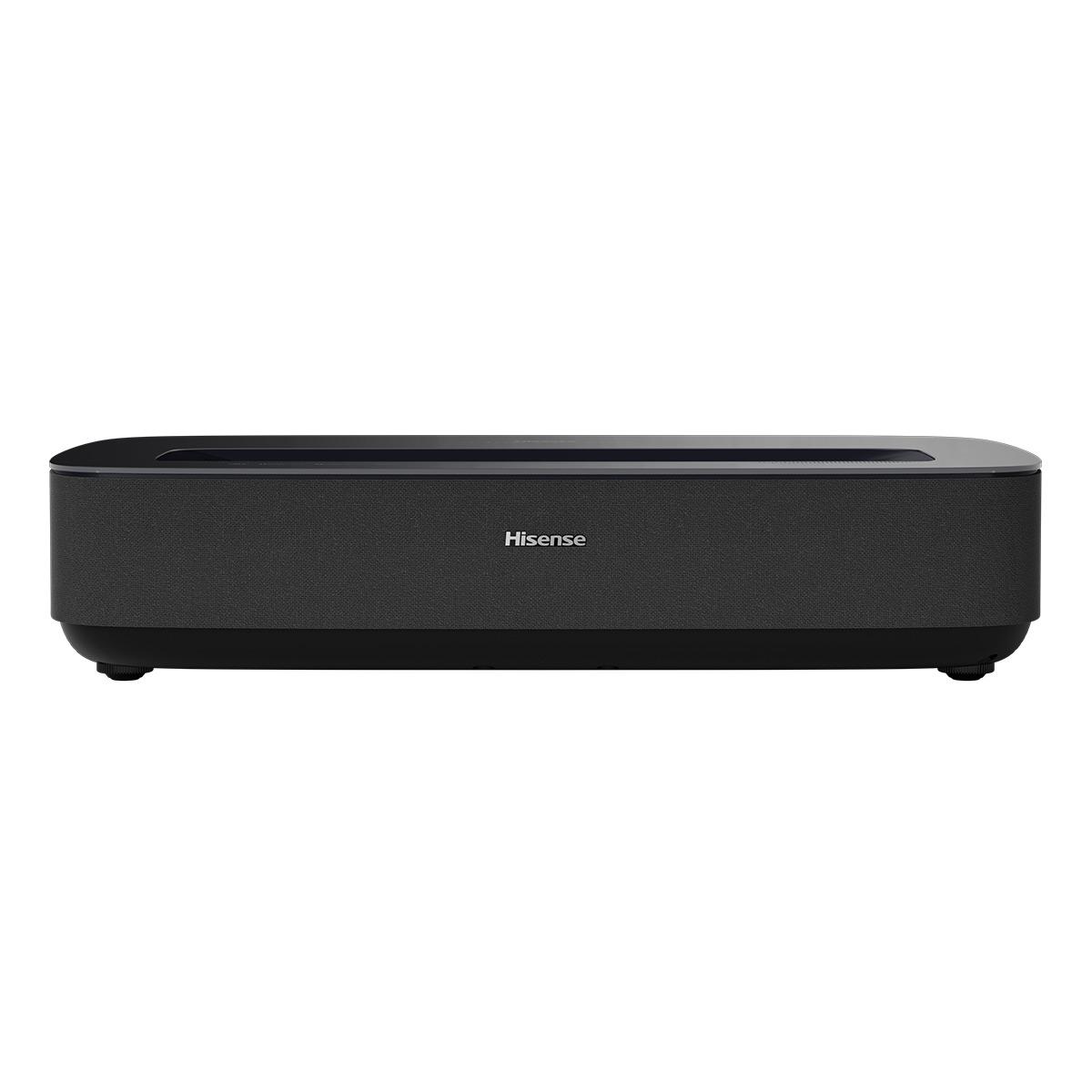
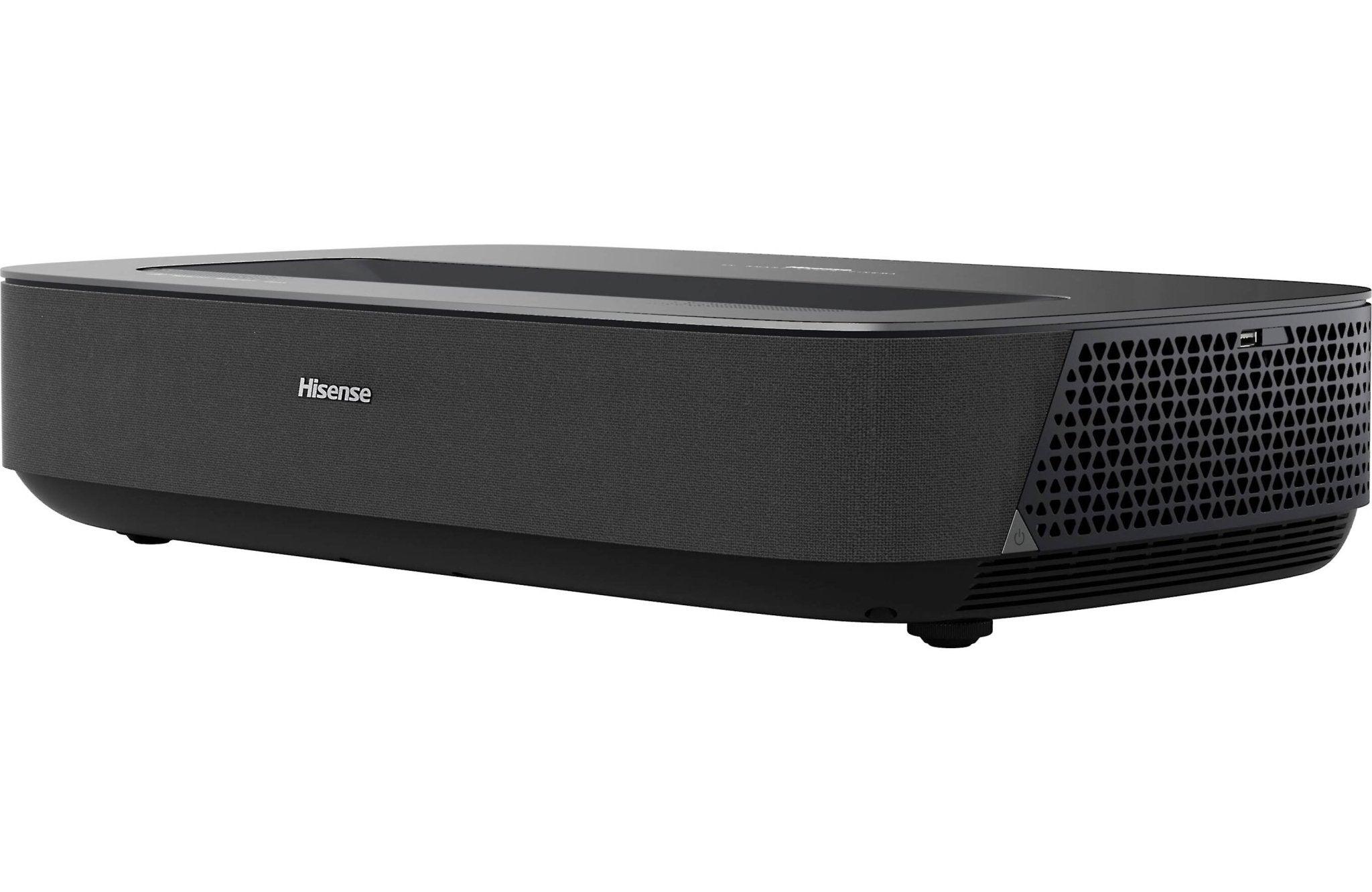
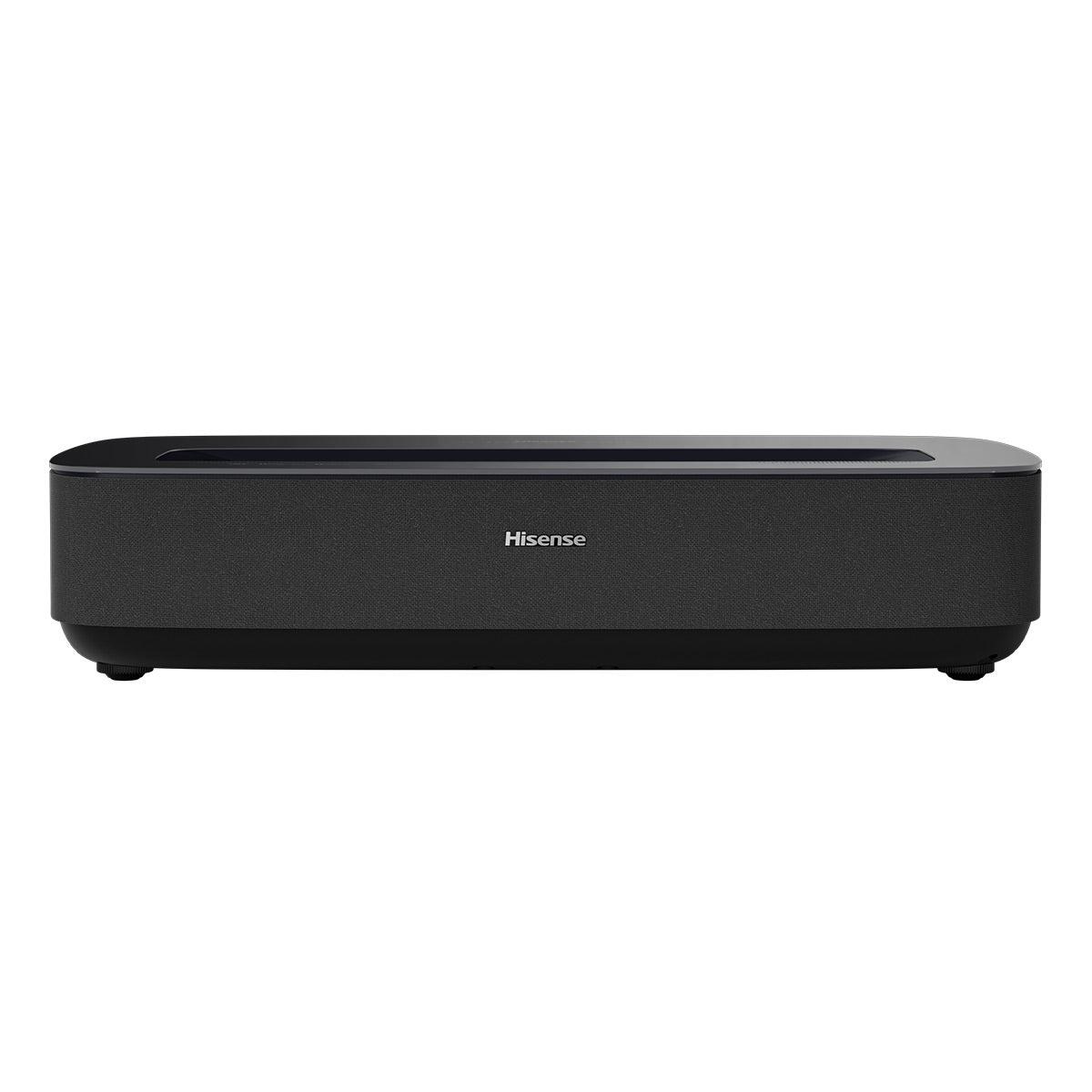
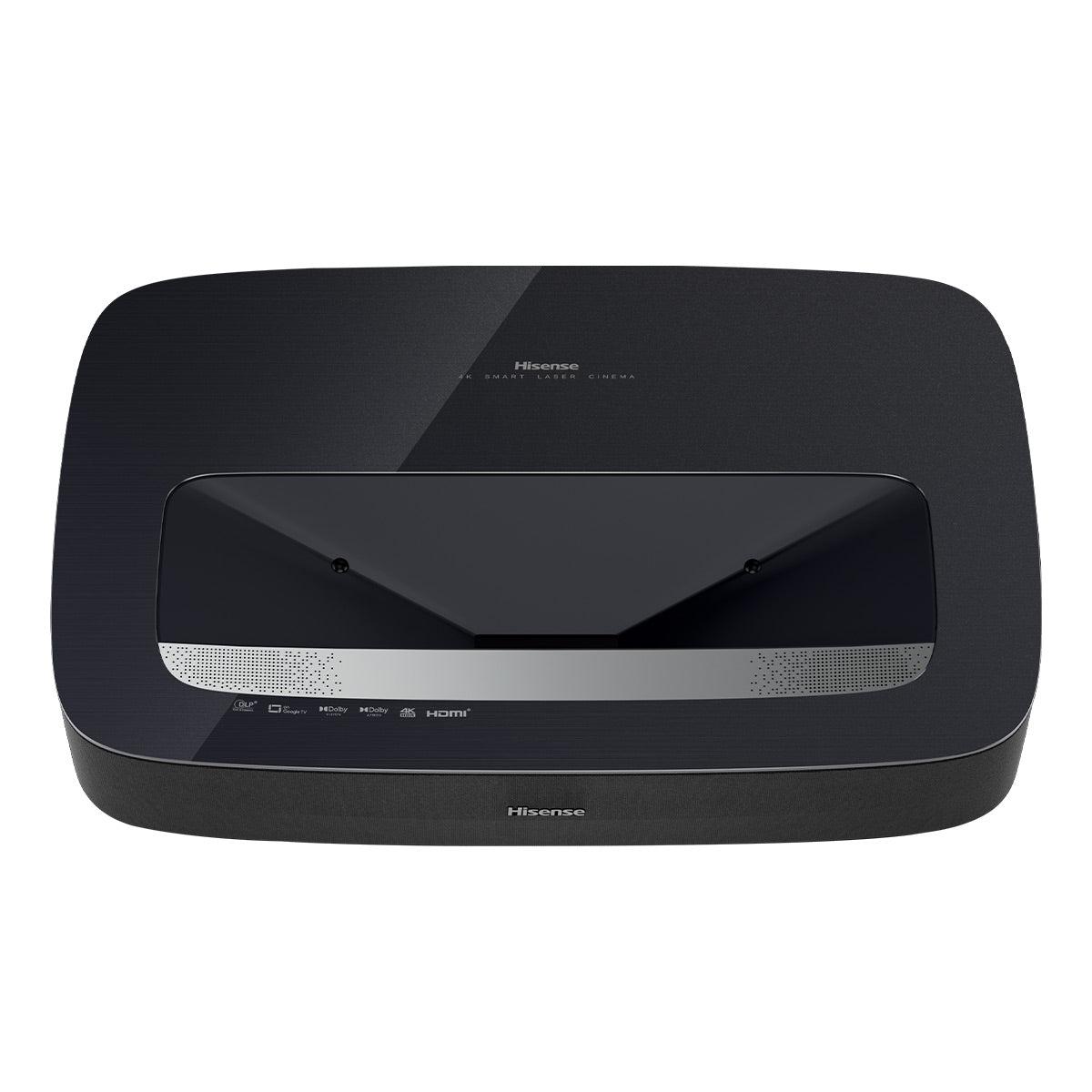
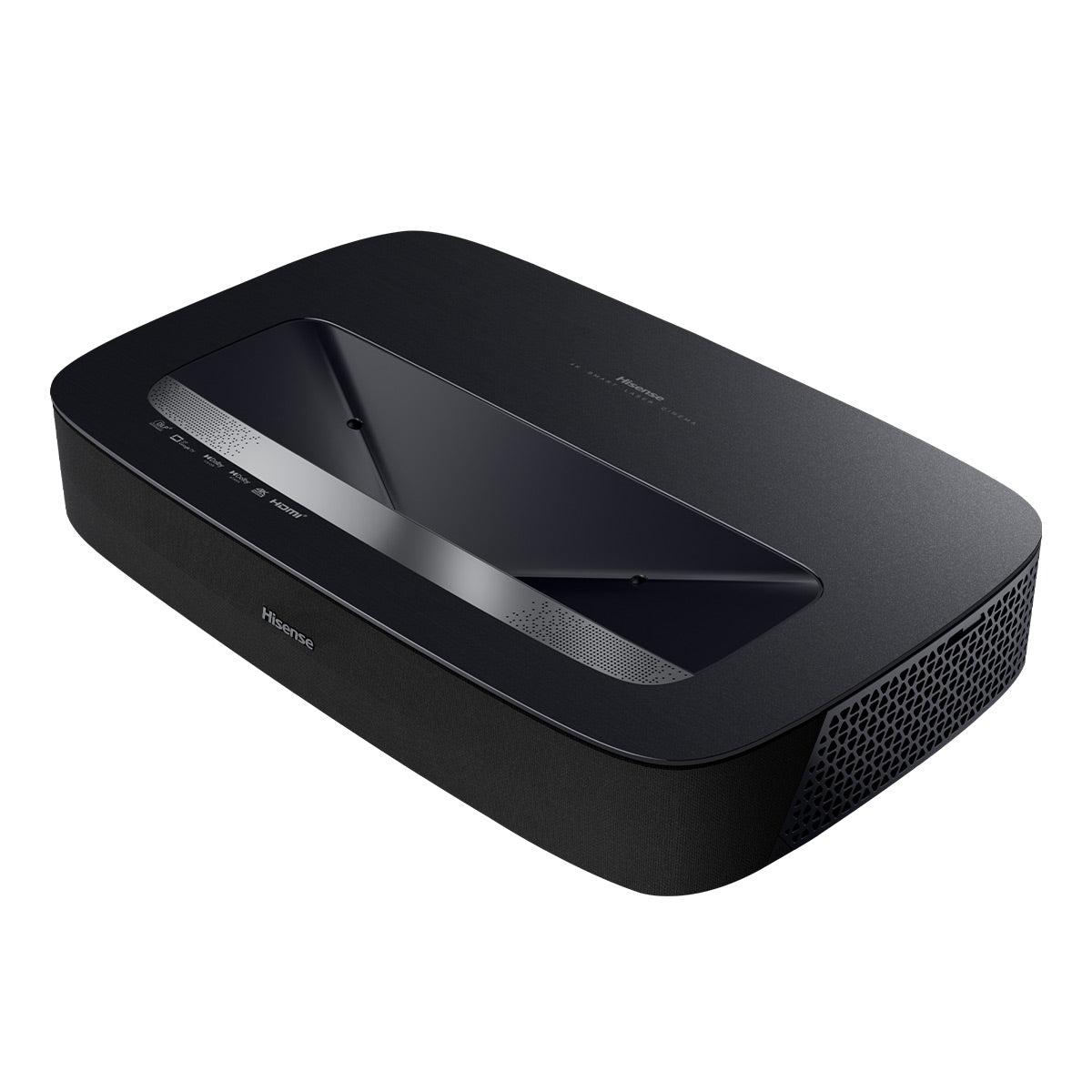
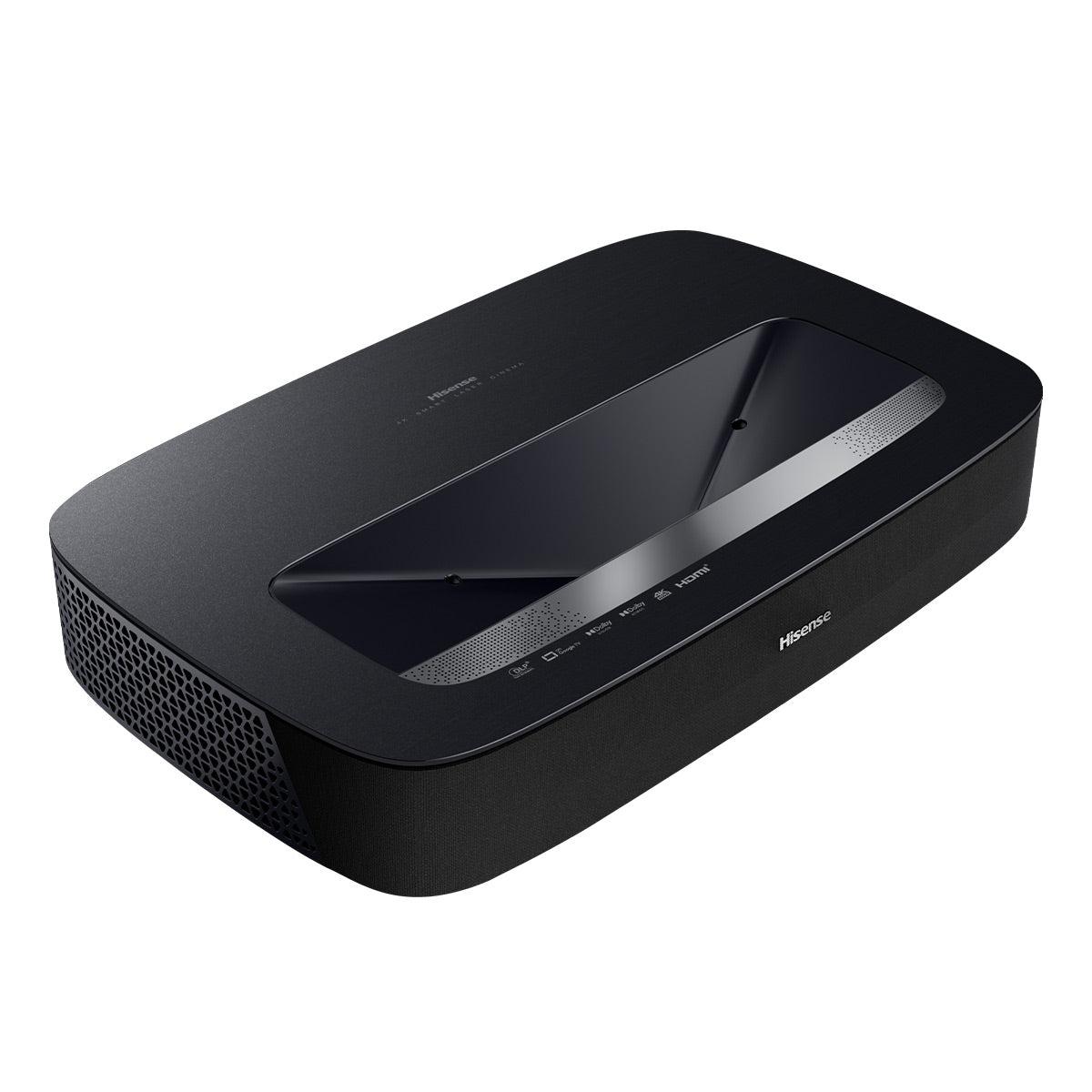
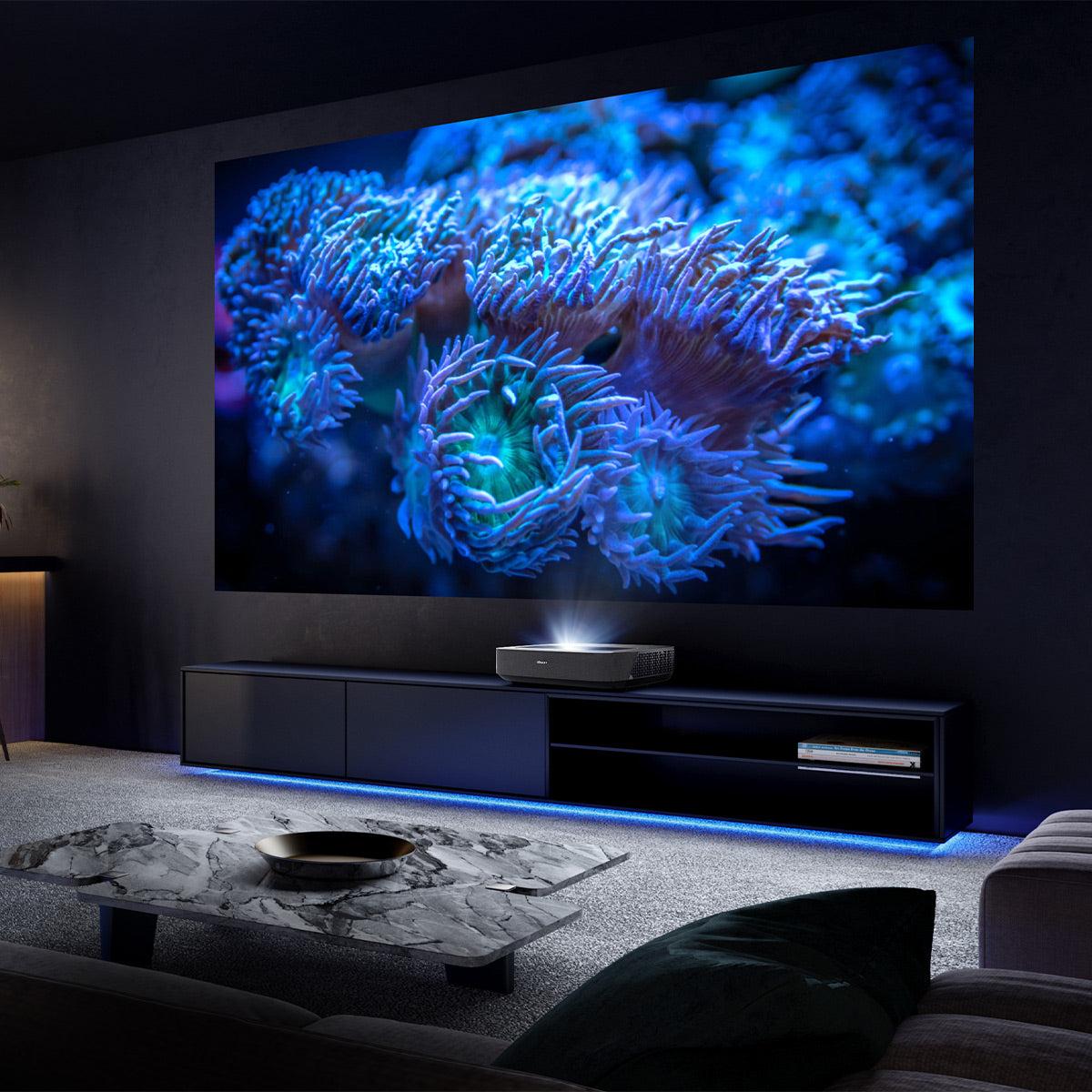
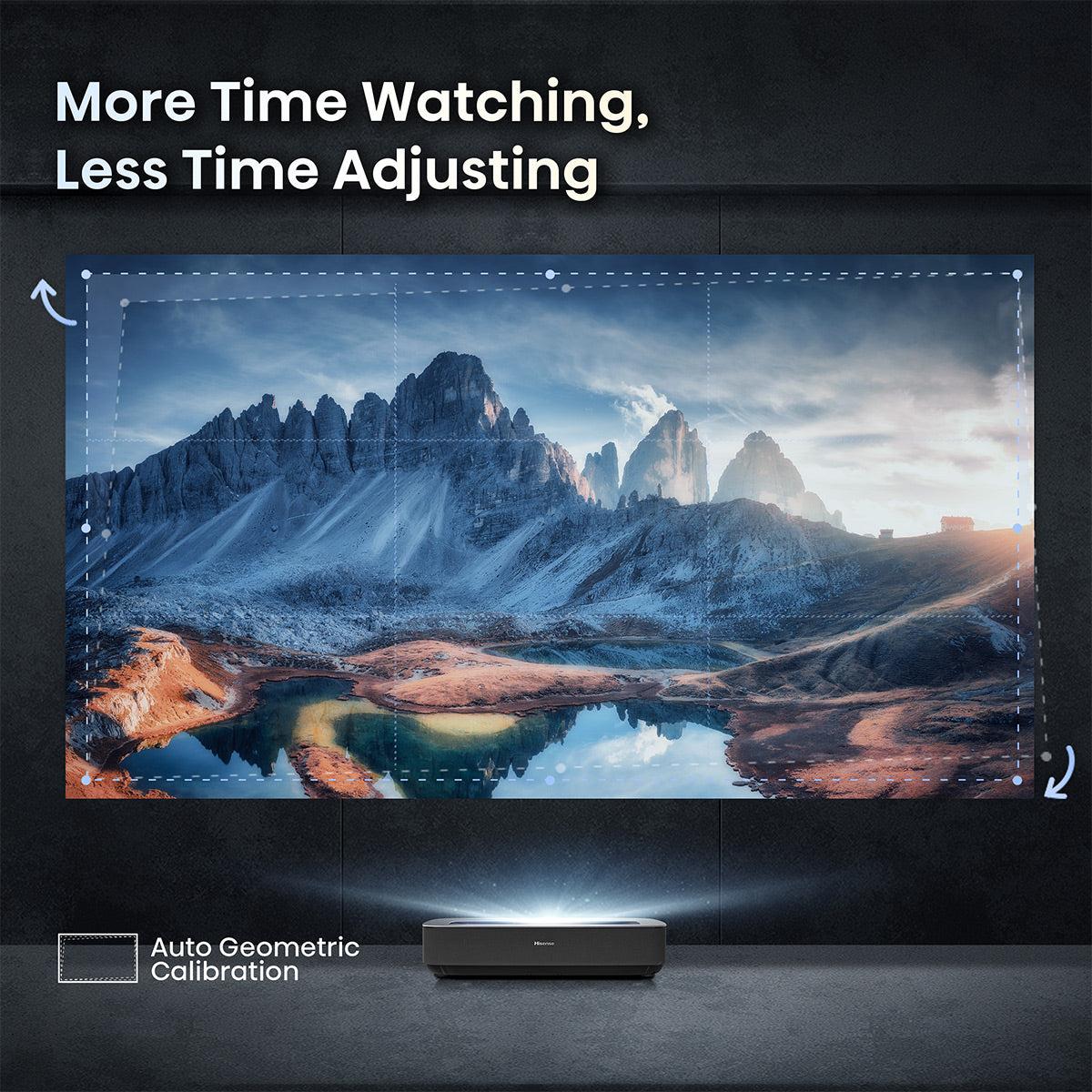
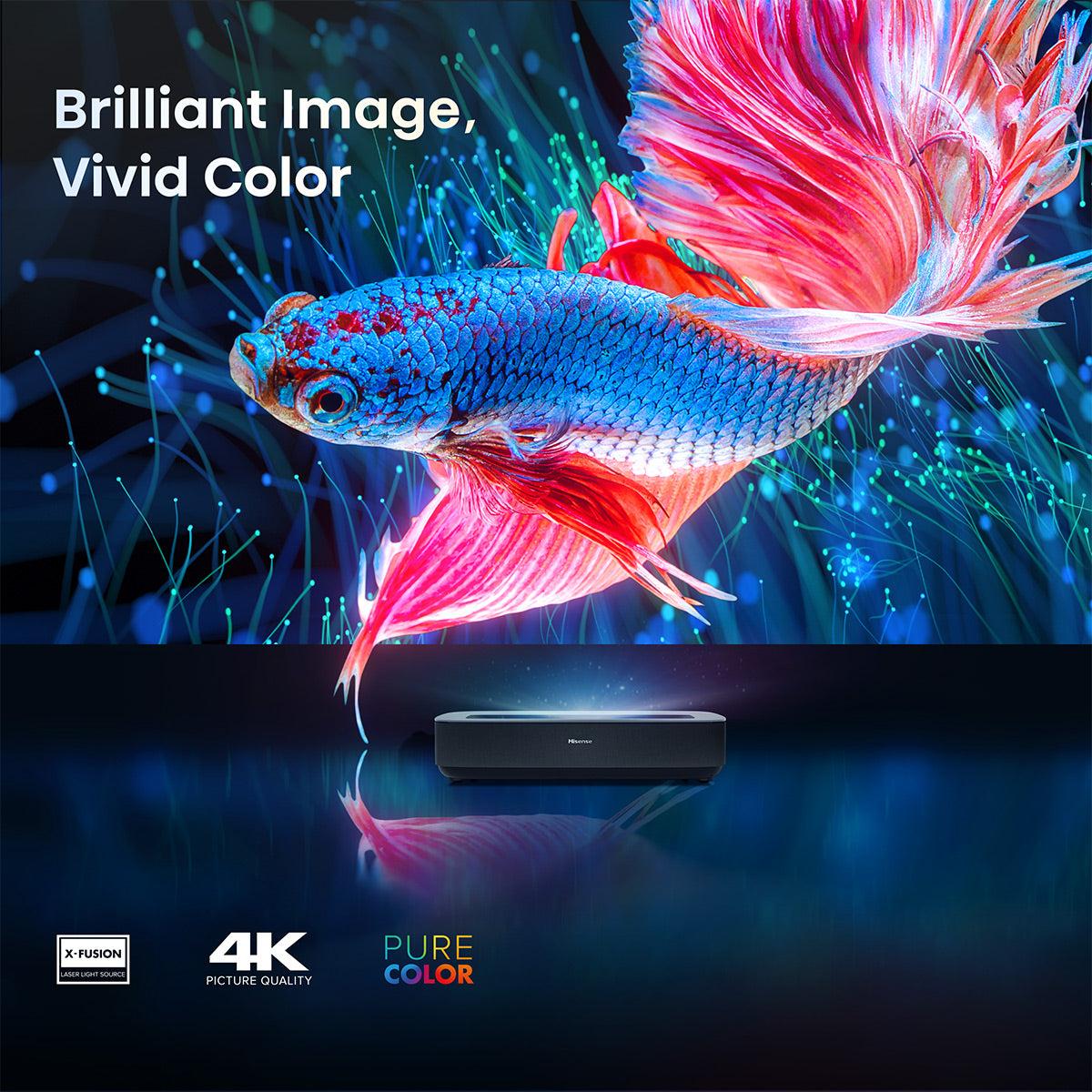
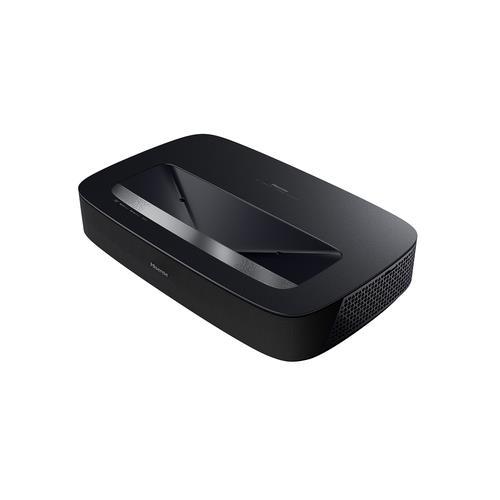
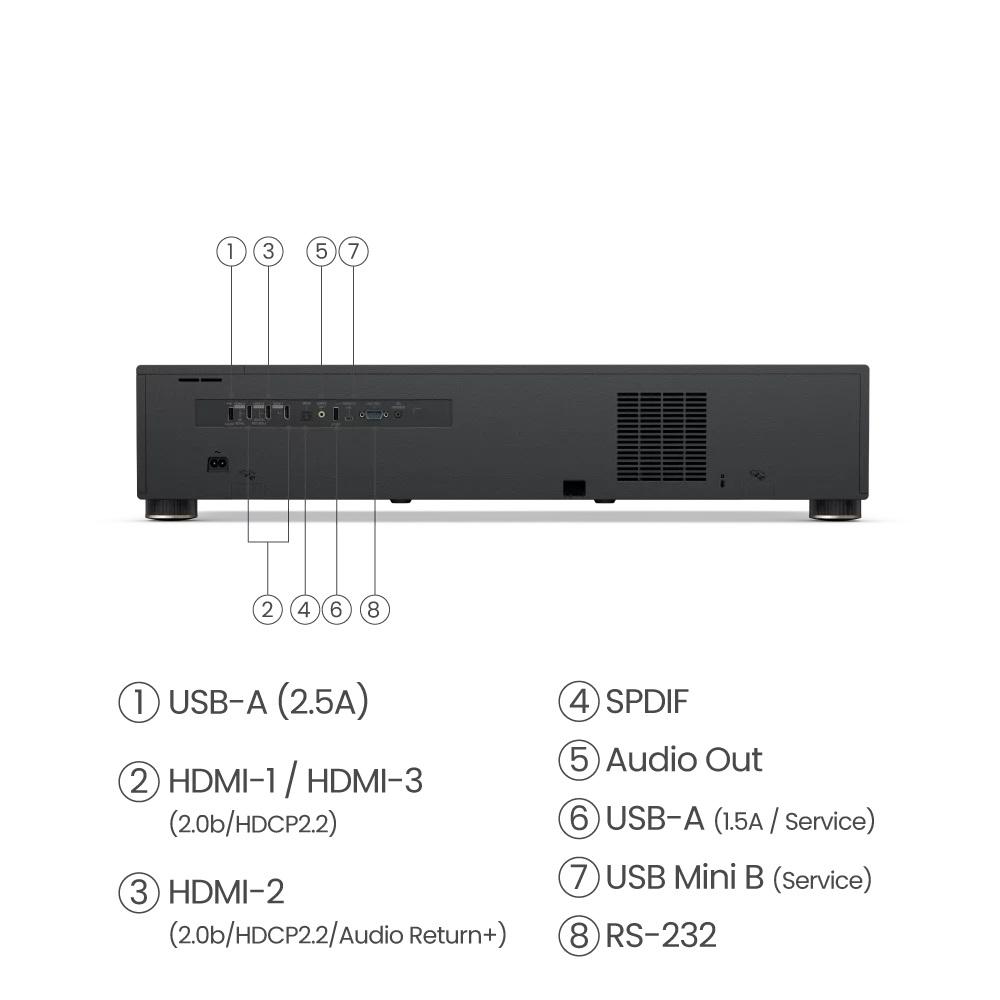
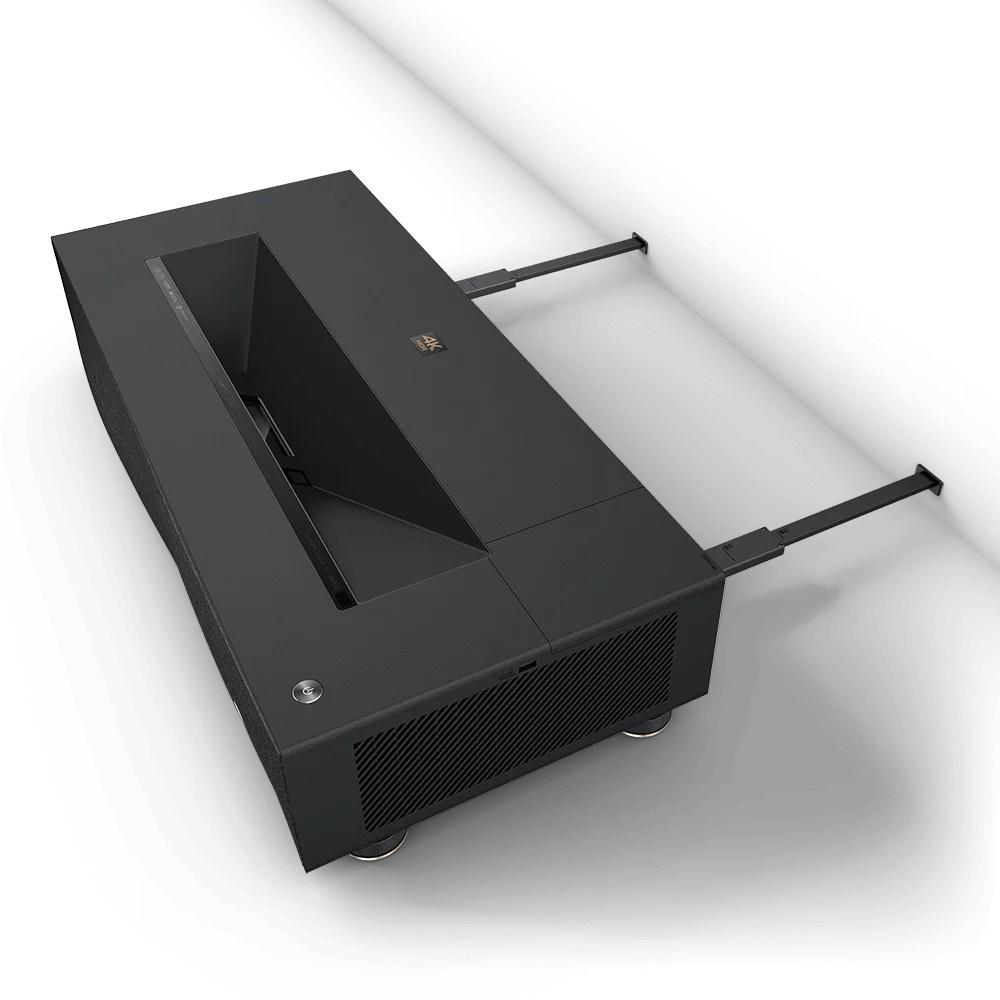
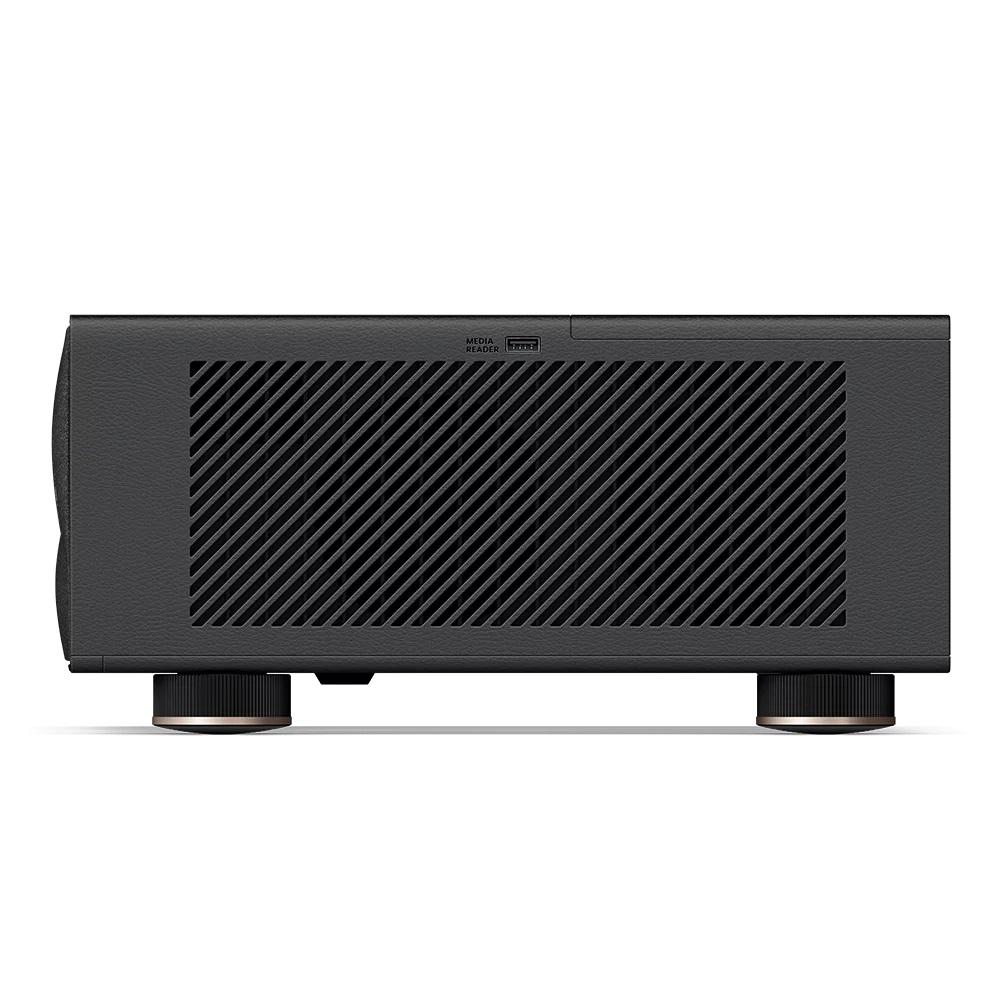
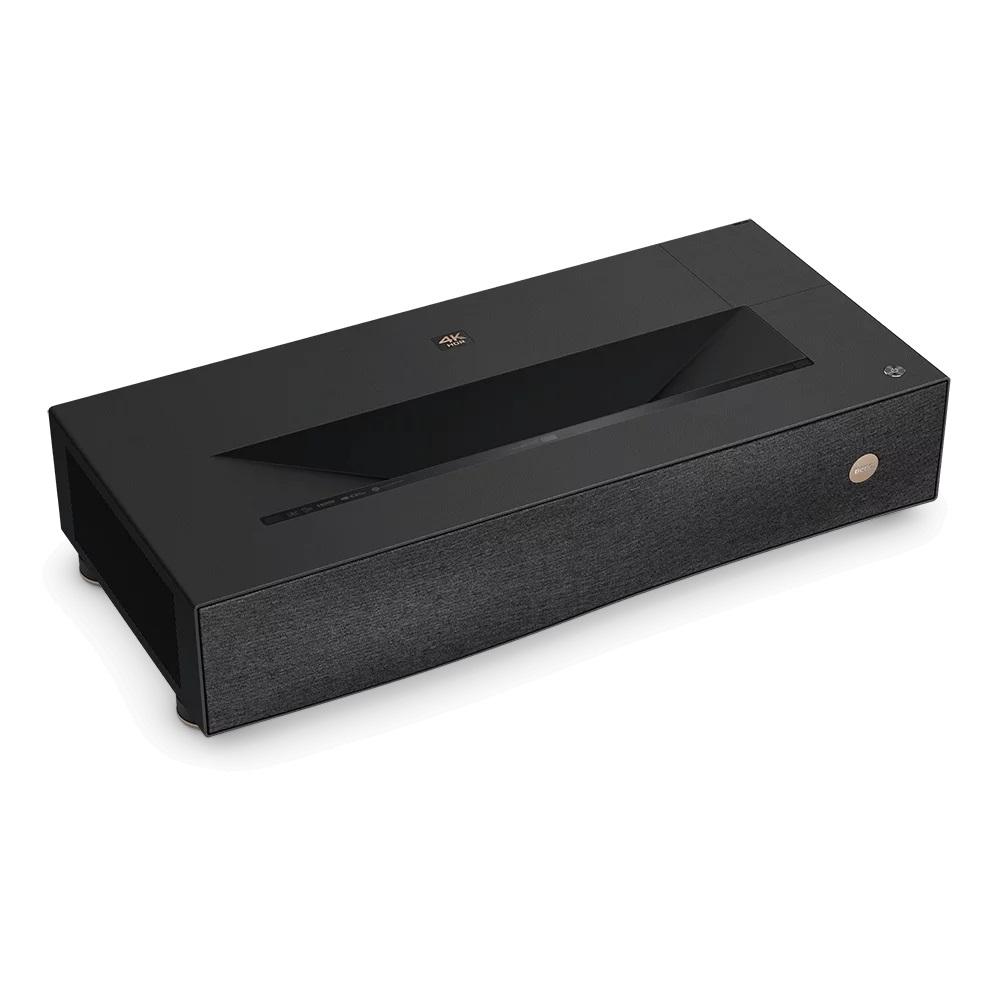
Ultra Short Throw (UST) projectors have revolutionized home theater by allowing massive screen sizes from just inches away from your wall. The Hisense PL1 ($2,497) and BenQ V5000i ($3,499) represent two compelling 2023 entries in this growing category. These advanced projectors use laser light sources instead of traditional lamps, offering longer lifespans and more consistent brightness over time.
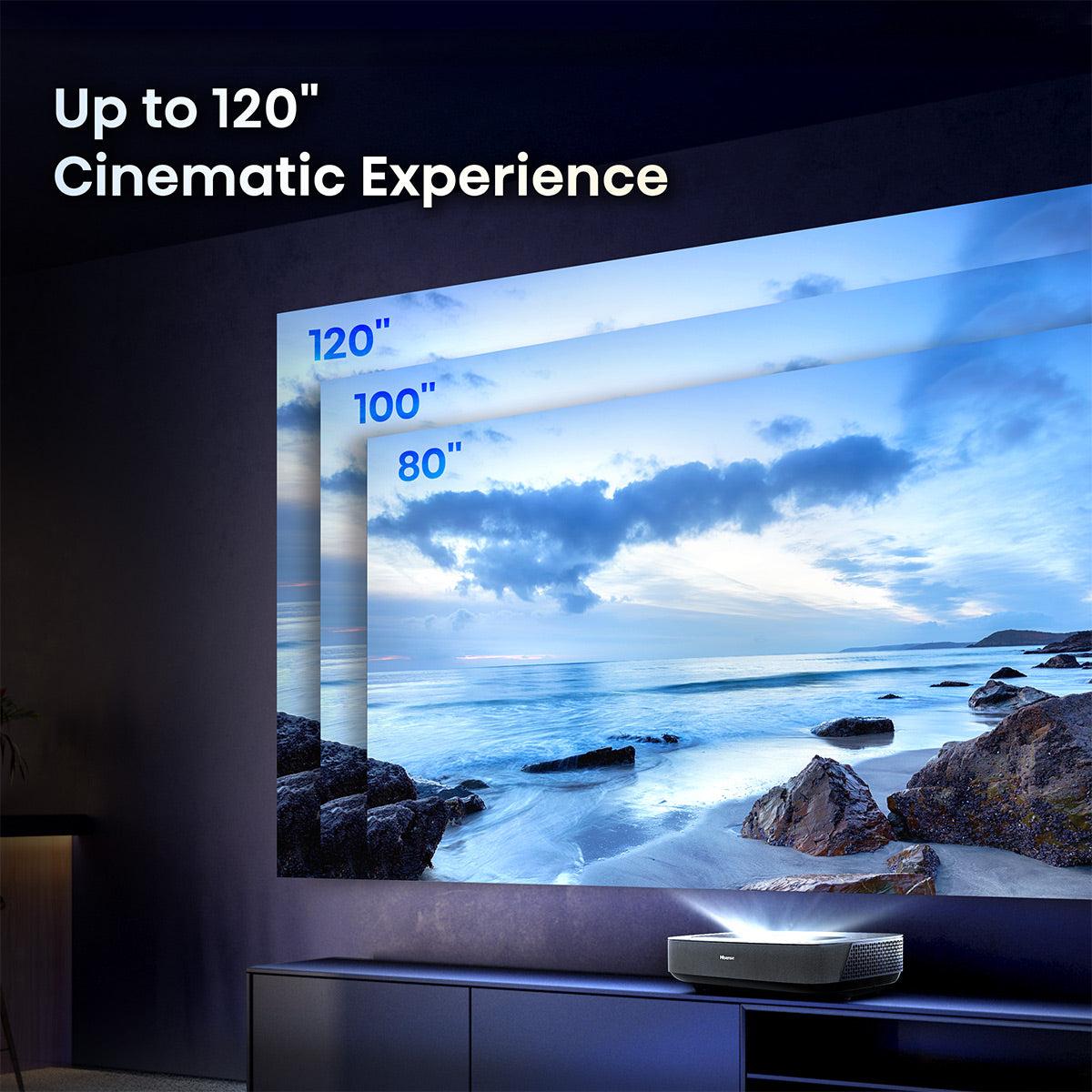
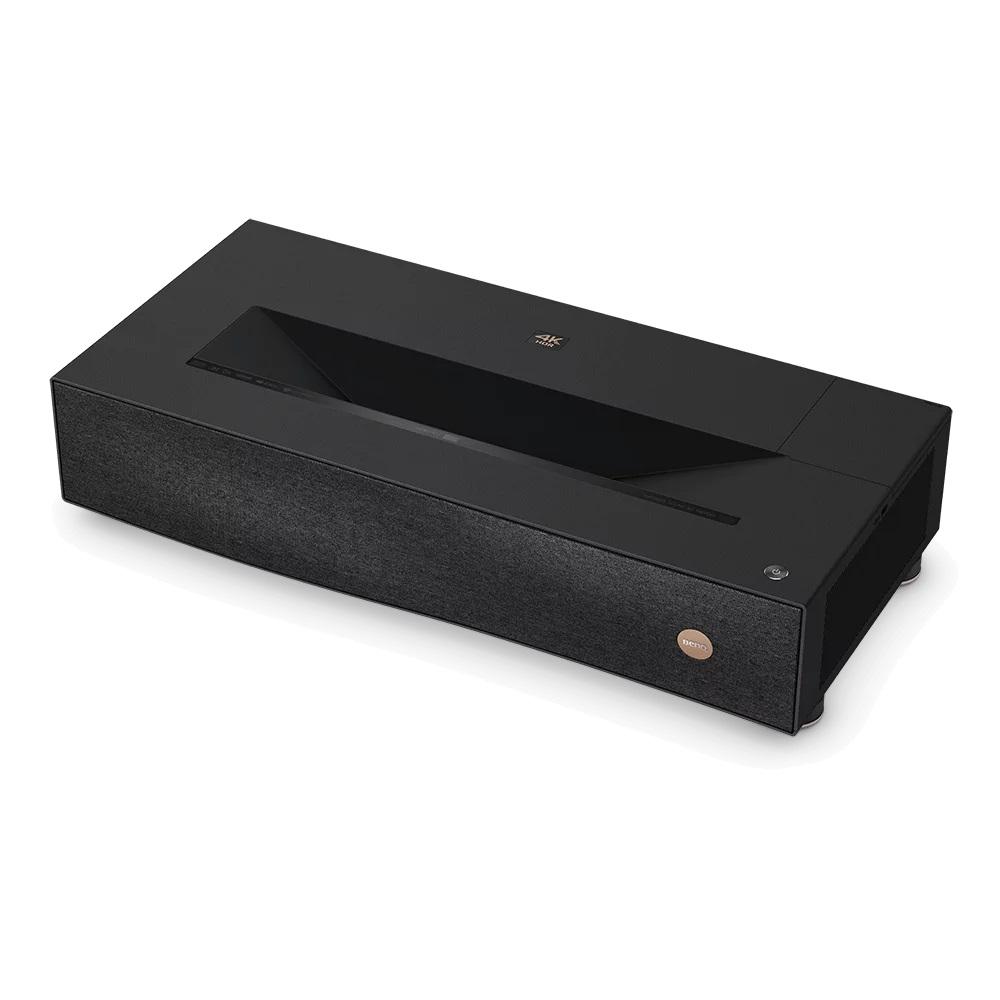
Unlike standard projectors that need significant distance, UST projectors sit close to your wall and beam the image upward at a steep angle. This design lets you place them in a TV console while projecting images up to 120 inches - far larger than most practical TV sizes.
When evaluating UST projectors, several key factors determine real-world performance. Brightness becomes crucial since these often live in multi-purpose rooms rather than dedicated theater spaces. The Hisense PL1 delivers 2,200 ANSI lumens while the BenQ V5000i pushes slightly higher at 2,500 ANSI lumens. Both are suitable for moderately lit rooms, though you'll want to control ambient light for the best picture.
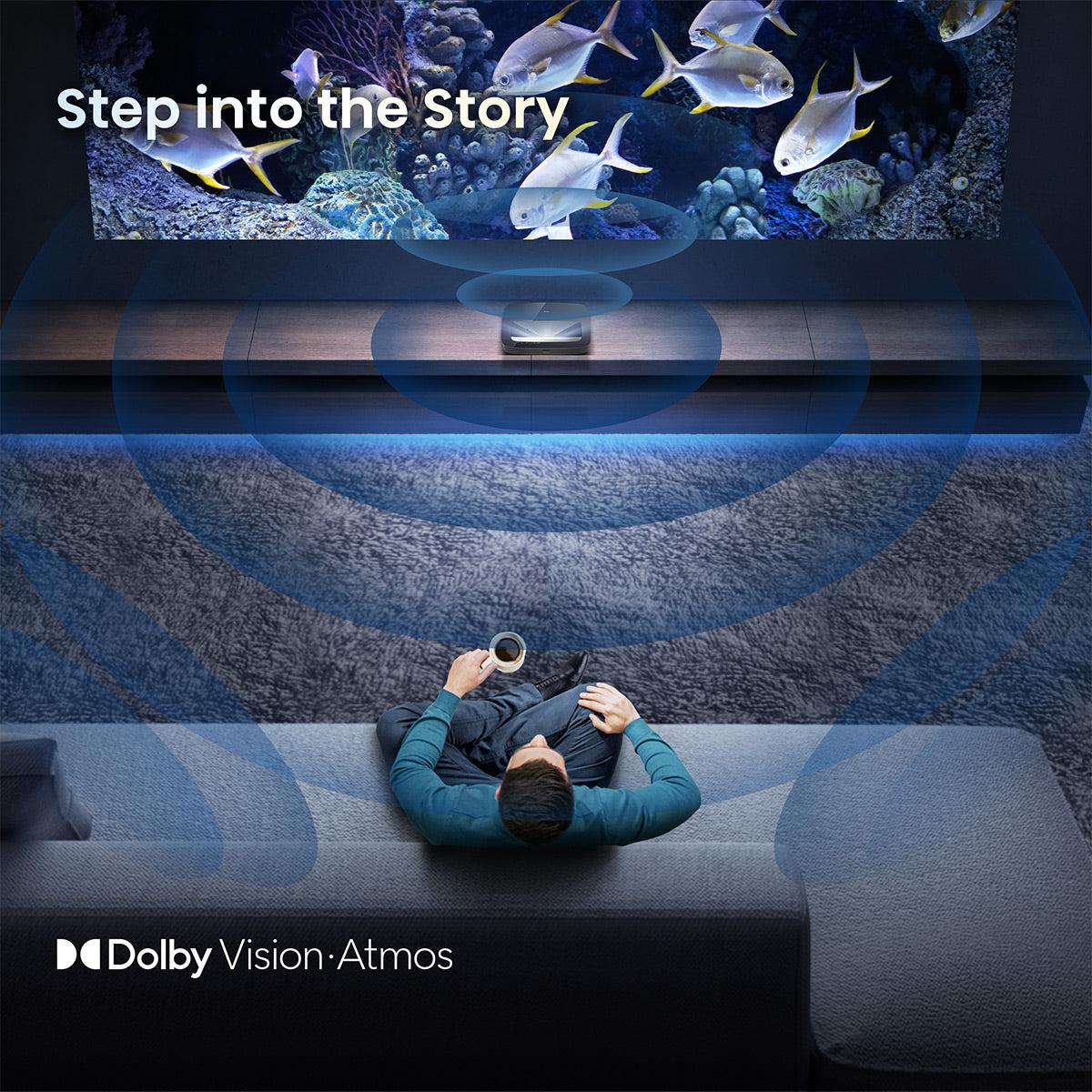
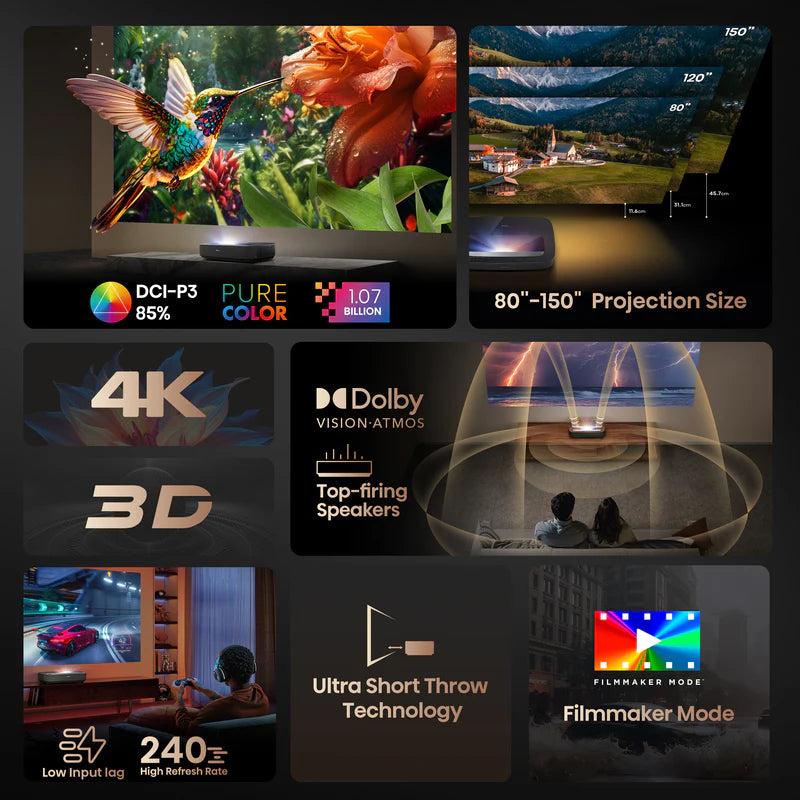
Color accuracy and HDR (High Dynamic Range) capabilities significantly impact image quality. The BenQ employs a more advanced RGB triple laser system, achieving 98% of the DCI-P3 color space compared to the Hisense's 85% coverage. However, the Hisense counters with Dolby Vision support, which can provide better HDR performance through dynamic metadata optimization.
Both projectors deliver sharp 4K resolution using pixel-shifting technology (displaying multiple 1080p images rapidly to create a 4K image). The BenQ's triple laser system provides slightly better color accuracy out of the box, but the Hisense's Dolby Vision support means it can optimize HDR content scene-by-scene.
In real-world testing, the Hisense shows stronger contrast (1804:1 vs 1109:1), producing deeper blacks in dark scenes. The BenQ's higher brightness gives it an edge in rooms with some ambient light, though both perform best in controlled lighting conditions.
Here's where we see significant differences. The BenQ V5000i offers exceptional gaming features with just 17.9ms input lag at 4K/60Hz and support for 1080p at up to 240Hz. The Hisense PL1's 46.6ms input lag is adequate for casual gaming but may frustrate competitive players.
Both projectors include automatic low latency modes (ALLM) that detect gaming consoles and optimize settings, but the BenQ's superior refresh rate support and lower lag make it the clear choice for serious gamers.
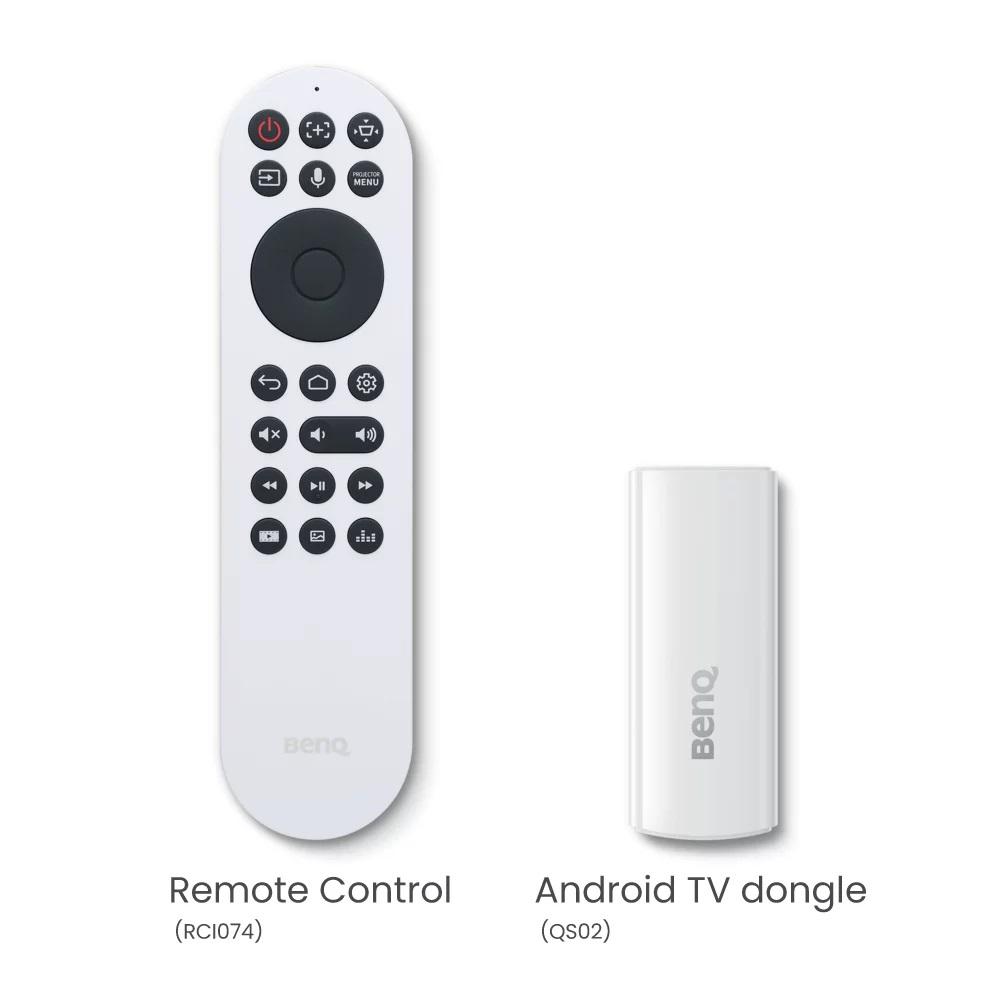
The Hisense PL1 integrates Google TV, providing a familiar streaming interface with broad app support. The BenQ V5000i runs Android TV 11, offering similar functionality but with slightly older software. Both handle streaming duties well, though the Hisense's newer Google TV interface feels more polished.
At $2,497, the Hisense PL1 represents strong value, offering comparable image quality to projectors costing significantly more. Its Dolby Vision support and Google TV integration make it particularly appealing for streaming-focused users.
The BenQ V5000i's $3,499 price tag buys superior gaming performance, slightly higher brightness, and potentially better color accuracy through its triple laser system. Whether these advantages justify the $1,000 premium depends heavily on your intended use.
Both projectors work best with ALR (Ambient Light Rejecting) screens, which help preserve contrast and color saturation in brighter rooms. These screens can add $500-1,500 to your total cost but significantly improve daytime viewing.
The Hisense offers more flexible placement with its 80-120 inch image size range, while the BenQ maxes out at 100 inches. Consider your room size and viewing distance when choosing between them.
Choose the Hisense PL1 if:
Choose the BenQ V5000i if:
For most users, the Hisense PL1 offers the better value proposition. Its combination of Dolby Vision support, strong contrast, and current-generation smart features make it an excellent choice for movie and TV viewing. The $1,000 saved versus the BenQ could go toward a quality screen or sound system.
The BenQ V5000i justifies its premium for specific users - particularly gamers and those seeking maximum color accuracy. Its superior gaming performance and triple laser system deliver tangible benefits for the right audience.
Both represent significant improvements over previous generation UST projectors, with better color accuracy, lower input lag, and more sophisticated smart features. They demonstrate how quickly this category is maturing, offering increasingly compelling alternatives to traditional TVs for those seeking a true cinema experience at home.
| Hisense PL1 | BenQ V5000i |
|---|---|
| Price - Total investment required | |
| $2,497 (better overall value) | $3,499 (premium features) |
| Brightness - Determines usability in ambient light | |
| 2,200 ANSI lumens (good for moderate lighting) | 2,500 ANSI lumens (better bright room performance) |
| Contrast Ratio - Impacts image depth and black levels | |
| 1,804:1 (superior contrast) | 1,109:1 (adequate but lower) |
| Color Gamut - Range of displayable colors | |
| 85% DCI-P3 (good for most content) | 98% DCI-P3 (excellent color coverage) |
| HDR Support - Enhanced dynamic range capabilities | |
| HDR10, HDR10+, Dolby Vision (more formats) | HDR10, HDR10+ (no Dolby Vision) |
| Gaming Performance - Critical for responsive gameplay | |
| 46.6ms input lag (casual gaming only) | 17.9ms input lag (excellent for serious gaming) |
| Image Size Range - Installation flexibility | |
| 80-120 inches (more flexible) | Up to 100 inches (more limited) |
| Smart Platform - Streaming and interface | |
| Google TV (newer, more refined) | Android TV 11 (slightly older) |
| Light Source - Longevity and color performance | |
| Single Blue Laser (25,000 hours) | RGB Triple Laser (20,000 hours) |
| Audio System - Built-in sound capability | |
| 30W Dolby Atmos (good for casual use) | 40W Trevolo (better built-in audio) |
| Dimensions - Space requirements | |
| 20.9" x 4.7" x 13.2" (more compact) | 30" x 6.4" x 14" (larger footprint) |
| Weight - Installation considerations | |
| 17 lbs (easier to handle) | 29 lbs (requires sturdy support) |
The BenQ V5000i is significantly better for gaming with its 17.9ms input lag compared to the Hisense PL1's 46.6ms. The BenQ also supports higher refresh rates and includes dedicated gaming features like Auto Low Latency Mode.
The BenQ V5000i is brighter with 2,500 ANSI lumens versus the Hisense PL1's 2,200 ANSI lumens. This difference is noticeable in rooms with ambient light, though both perform best in controlled lighting.
The Hisense PL1 costs $2,497 while the BenQ V5000i is priced at $3,499. The $1,000 difference is significant and makes the Hisense a better value for most users unless specific premium features are needed.
Both offer excellent 4K picture quality, but they excel in different areas. The BenQ V5000i has better color accuracy with its triple laser system, while the Hisense PL1 offers superior contrast and Dolby Vision support.
The Hisense PL1 can project images from 80-120 inches, offering more flexibility than the BenQ V5000i which maxes out at 100 inches. Consider your room size when choosing between them.
The Hisense PL1 uses the newer Google TV platform, while the BenQ V5000i runs Android TV 11. Both work well, but Google TV offers a more modern interface and better content recommendations.
Yes, both projectors work best with an ALR (Ambient Light Rejecting) screen for optimal picture quality. This is true for both the Hisense PL1 and BenQ V5000i.
The BenQ V5000i has a more powerful 40W Trevolo sound system compared to the Hisense PL1's 30W system. However, for the best experience, external speakers are recommended for both.
The Hisense PL1 offers 25,000 hours of laser life, while the BenQ V5000i provides 20,000 hours. Both should last many years under normal use.
The Hisense PL1 has an advantage with Dolby Vision support and Google TV, making it slightly better for streaming content compared to the BenQ V5000i.
Both can handle some ambient light, but the BenQ V5000i performs better with its higher brightness. However, both projectors perform best in controlled lighting conditions.
The Hisense PL1 is lighter and more compact, making it easier to handle during setup. Both projectors require careful placement and alignment, but the Hisense's lighter weight (17 lbs vs 29 lbs) makes it more manageable.
We've done our best to create useful and informative comparisons to help you decide what product to buy. Our research uses advanced automated methods to create this comparison and perfection is not possible - please contact us for corrections or questions. These are the sites we've researched in the creation of this article: projectorscreen.com - dreamediaav.com - projectorcentral.com - trustedreviews.com - crutchfield.com - hometheaterhifi.com - projectorcentral.com - projectorreviews.com - vividstormscreen.com - bhphotovideo.com - shi.com - crutchfield.com - projectorscreen.com - projectorscreen.com - avsforum.com - techradar.com - projectorreviews.com - digitaltrends.com - digitaltrends.com - ooberpad.com

Privacy Policy
Terms and Conditions - Affiliate Policy
Home Security
© Copyright 2008-2026.
11816 Inwood Rd #1211, Dallas, TX 75244