

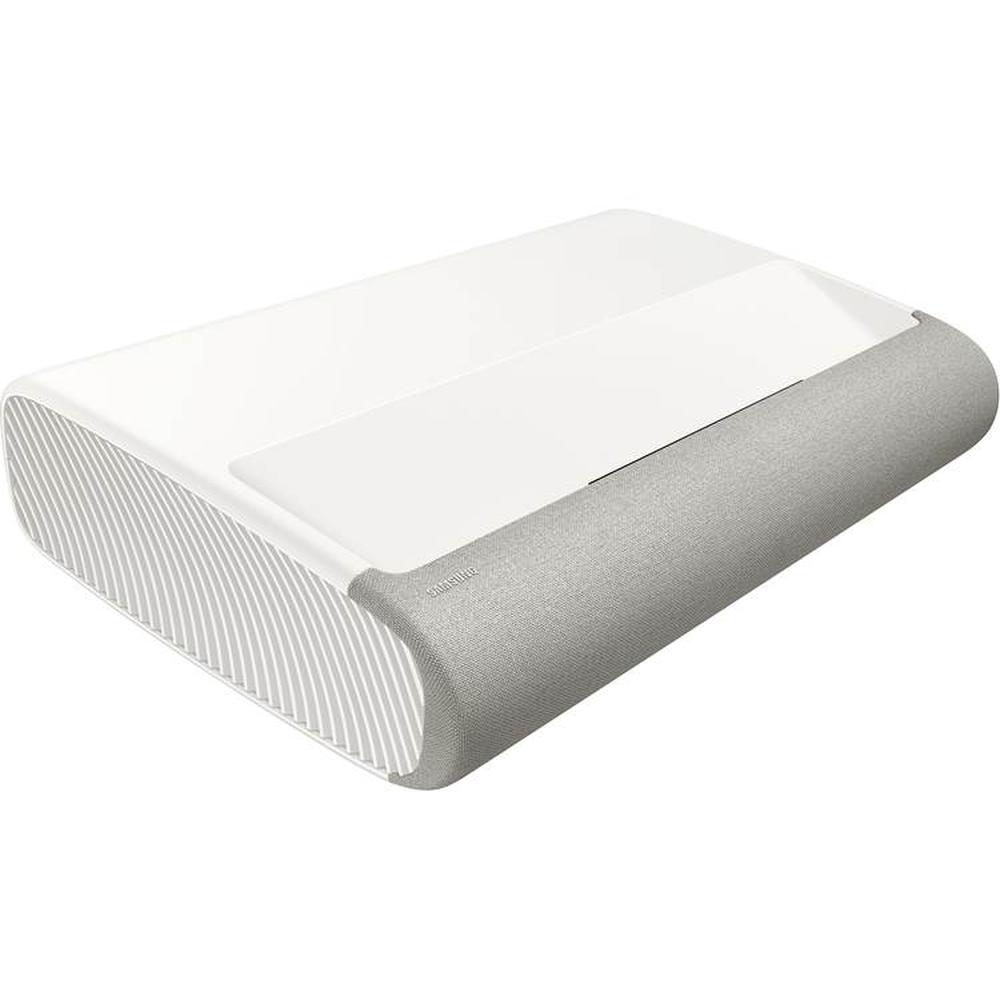
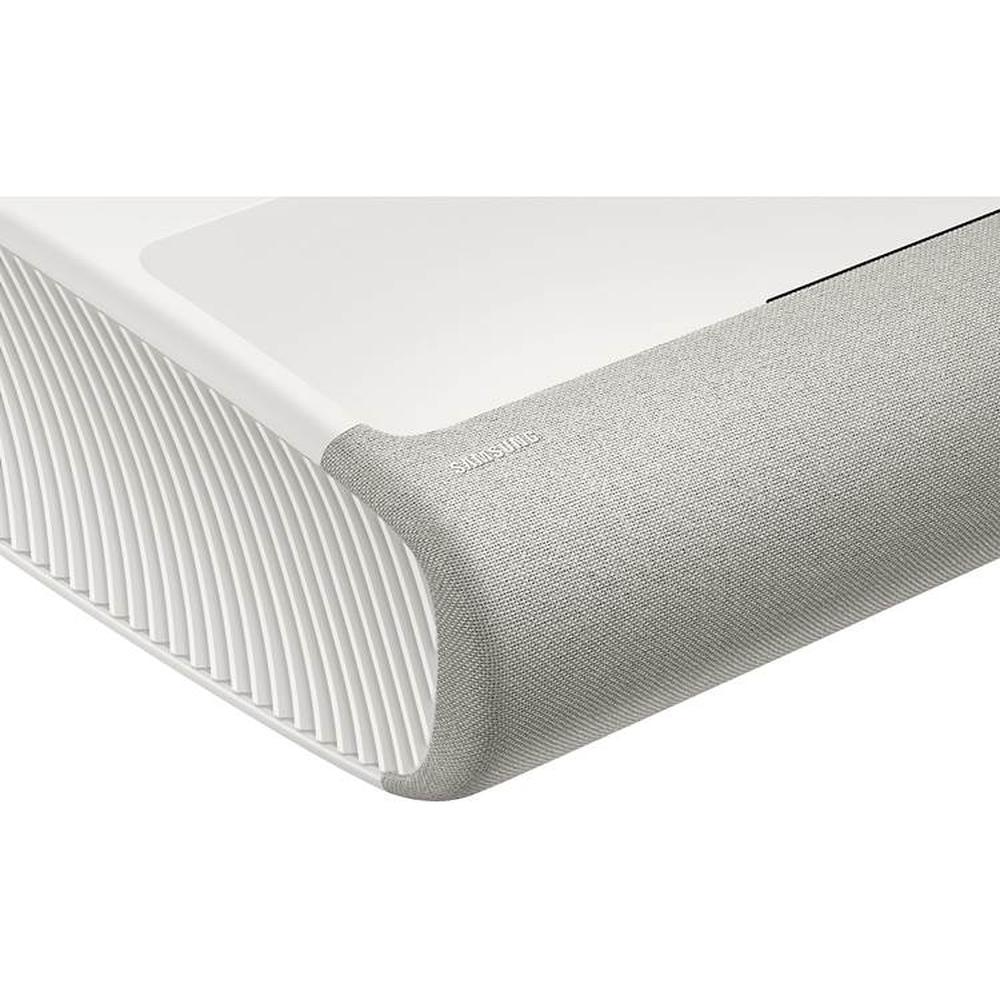
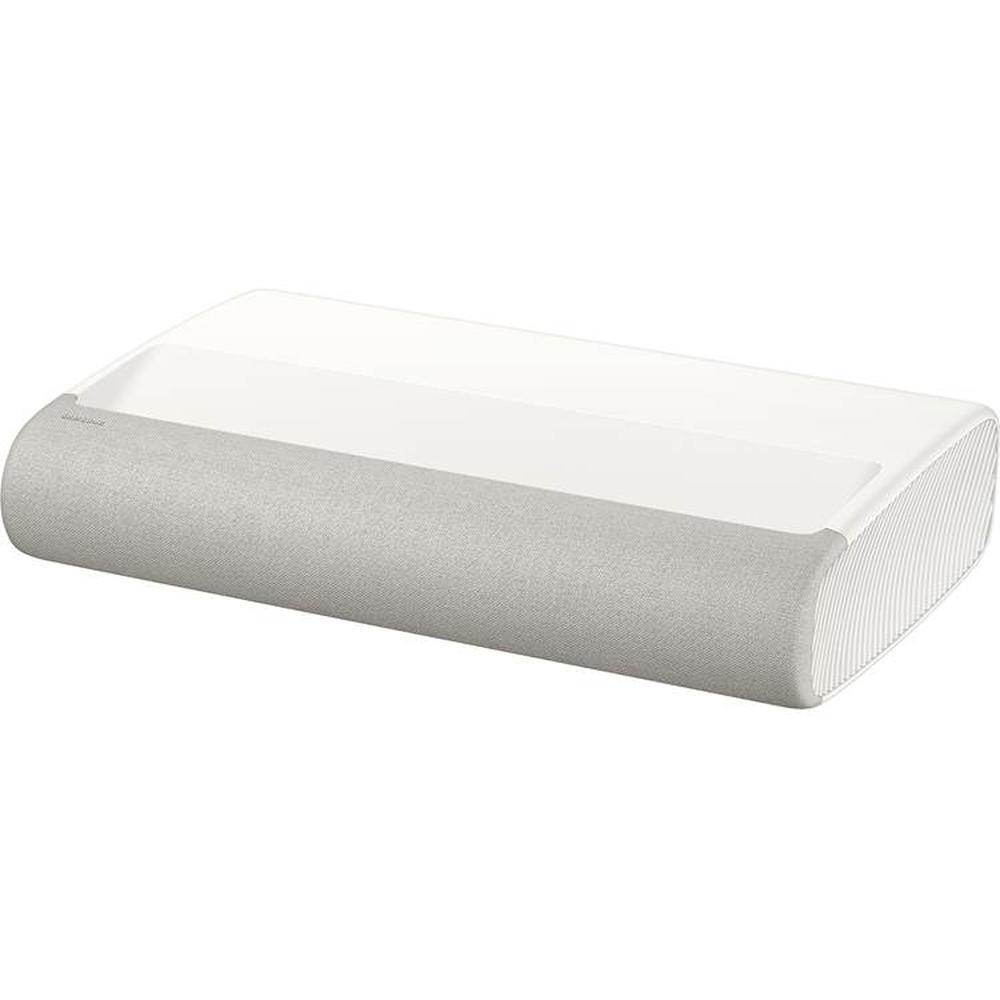
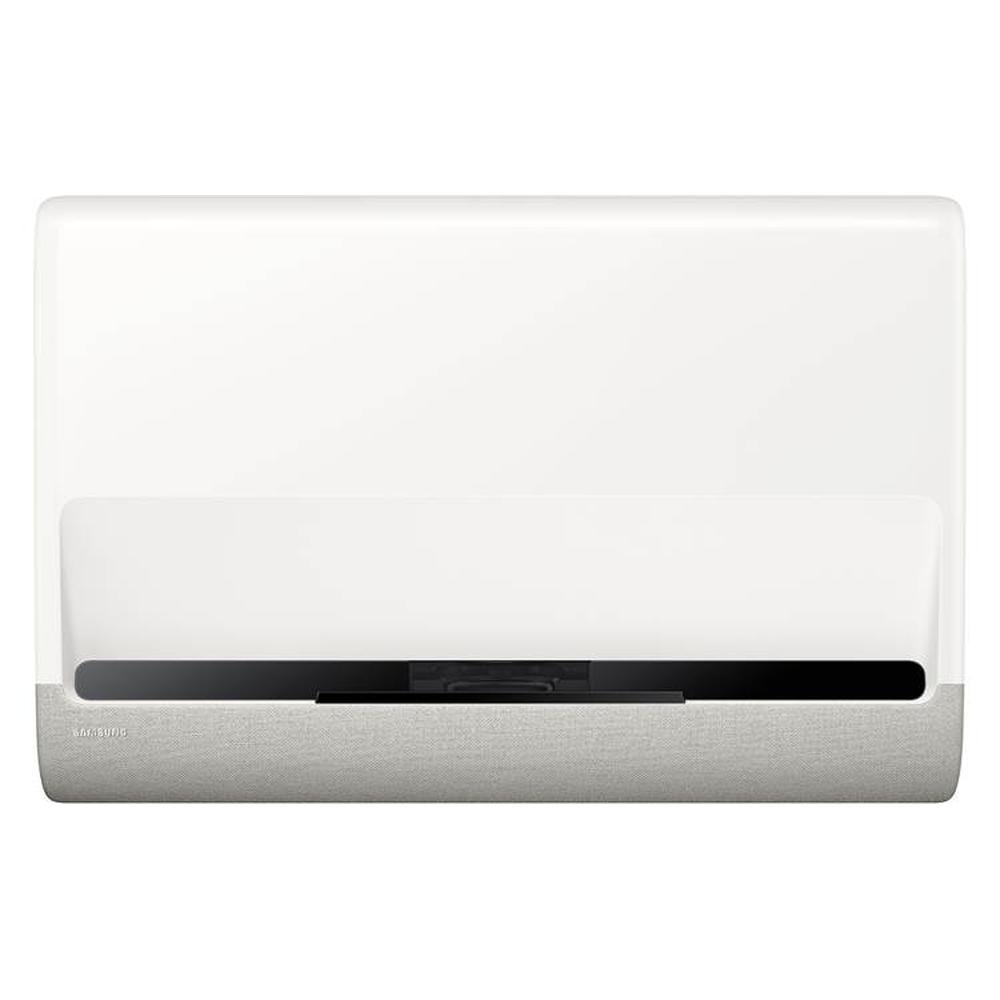
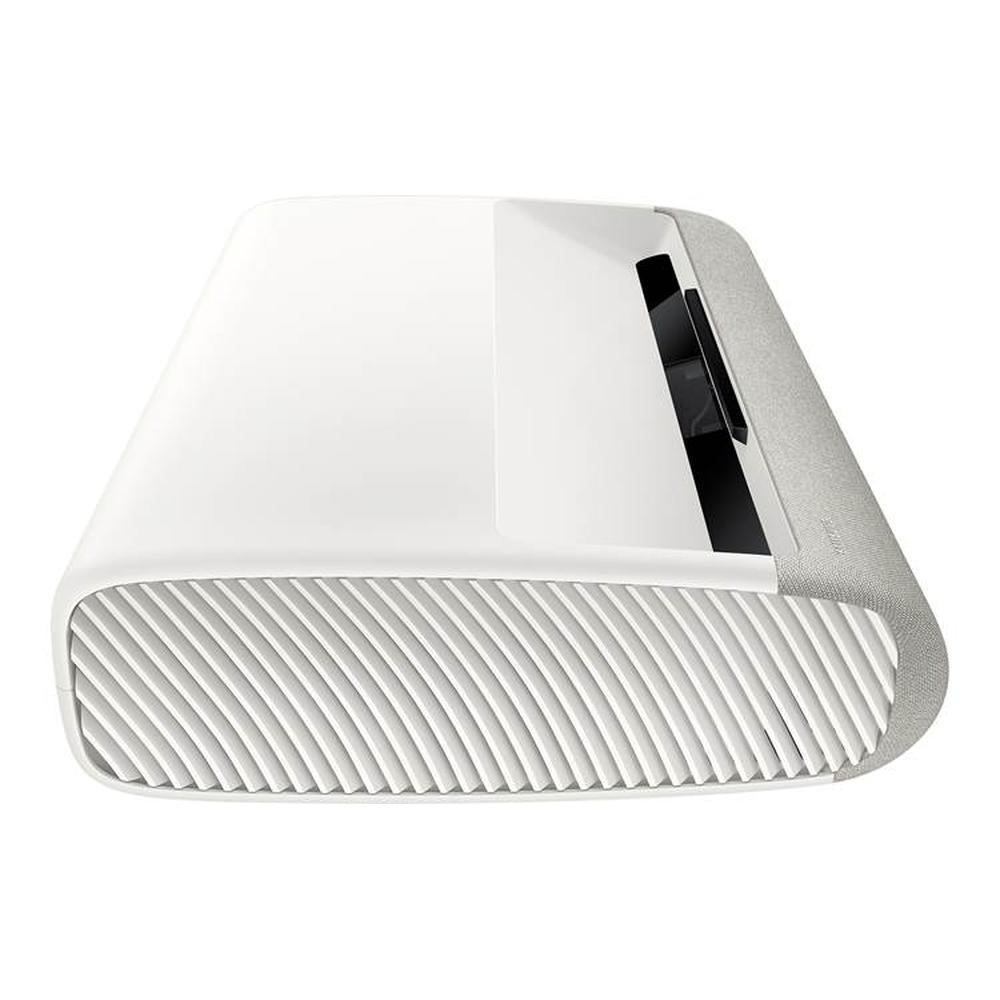
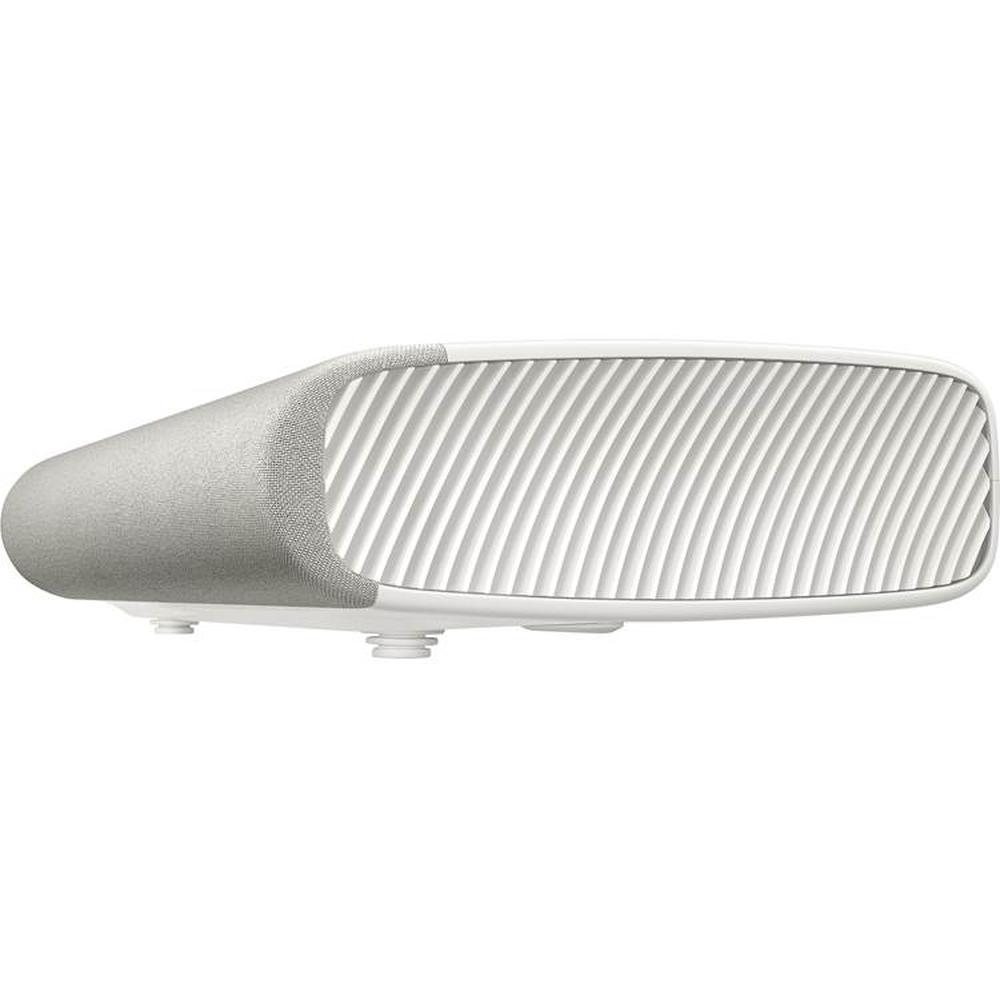
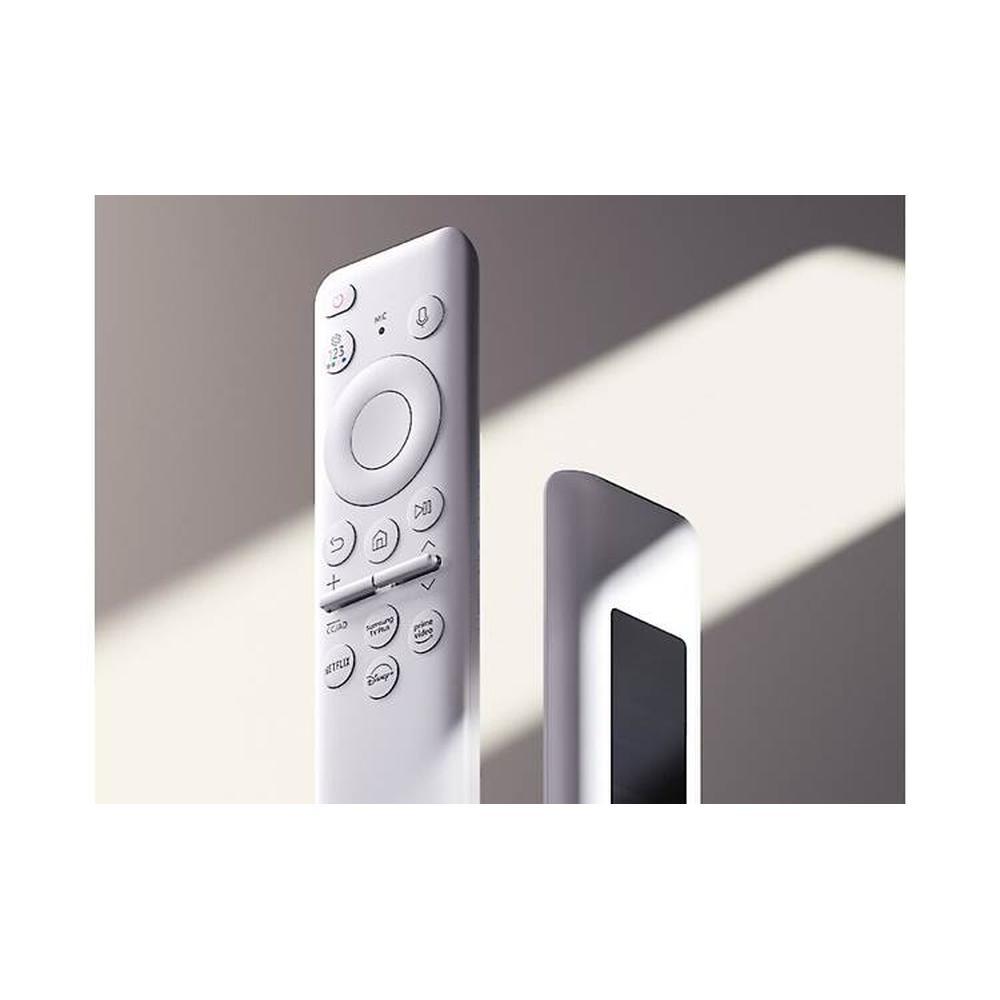
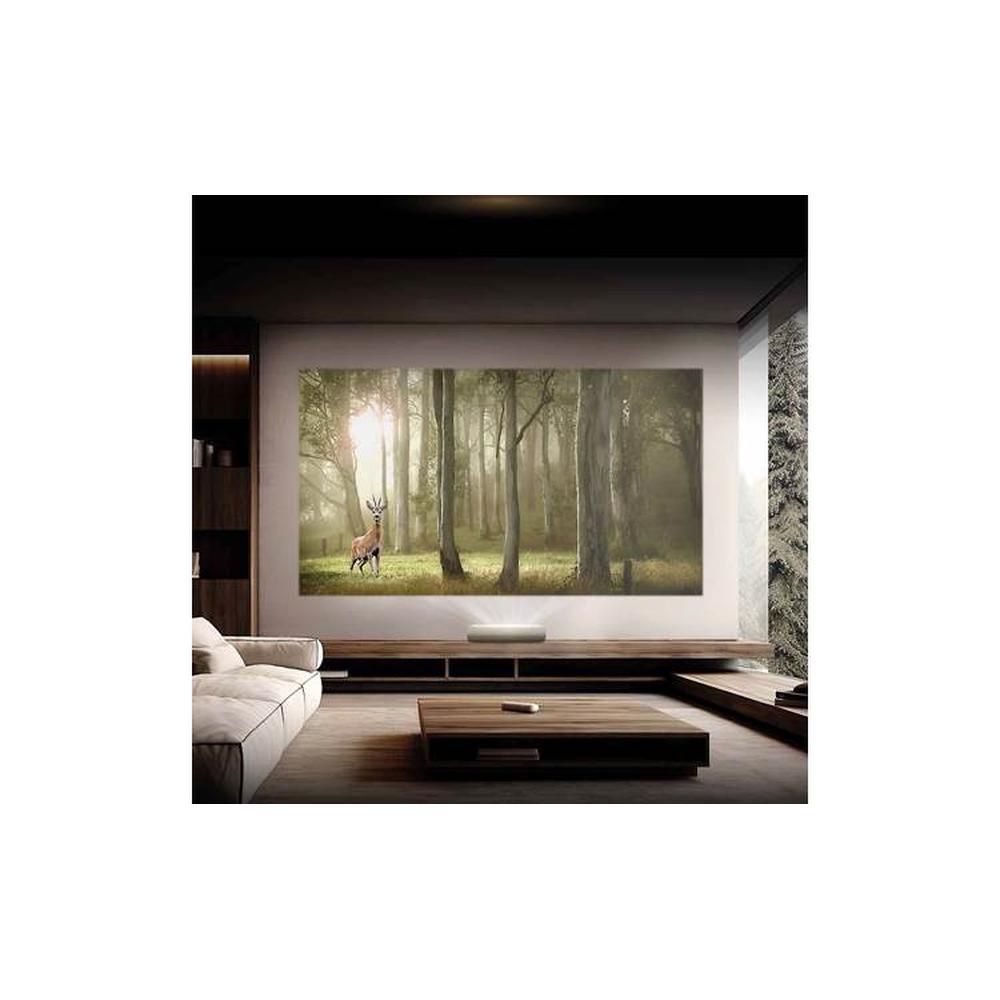
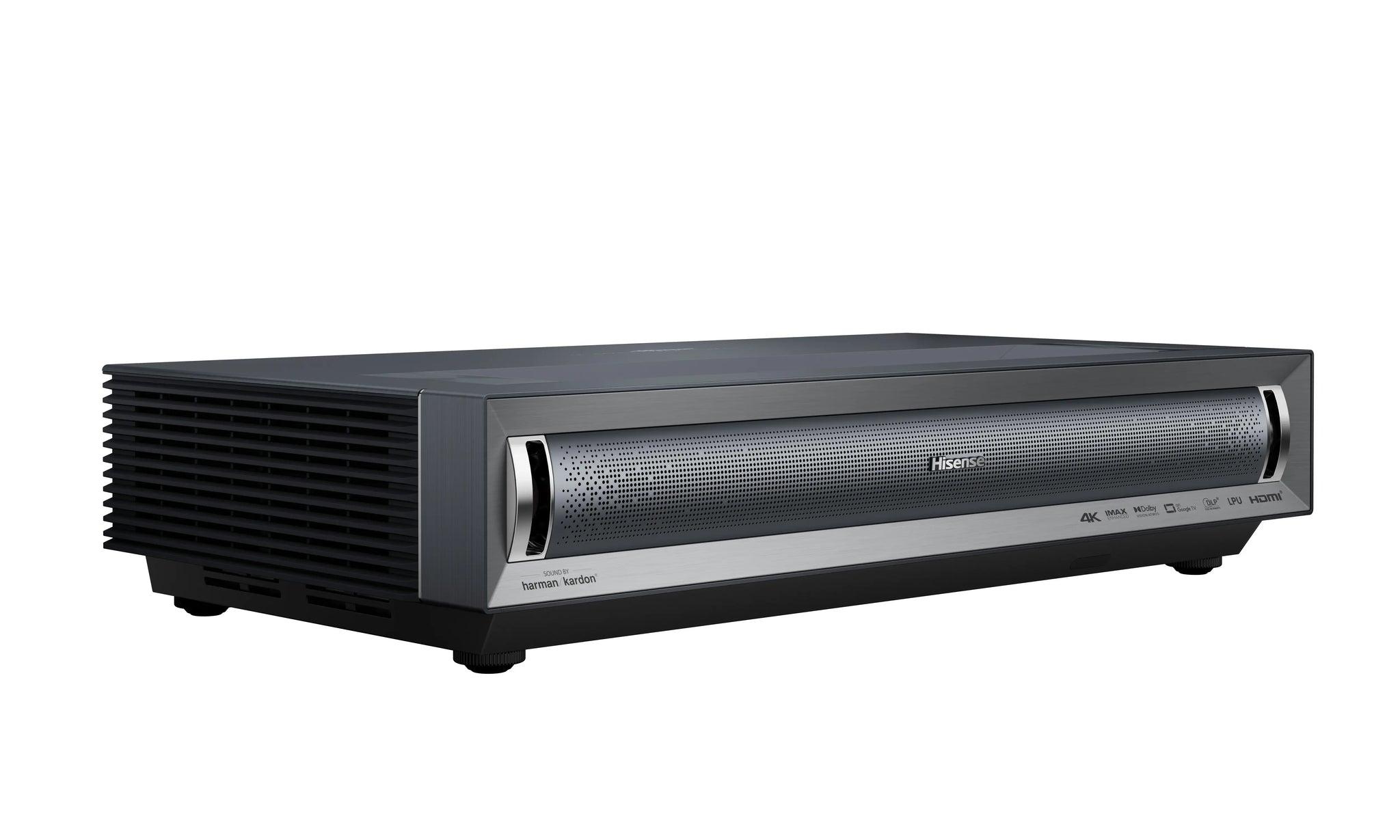
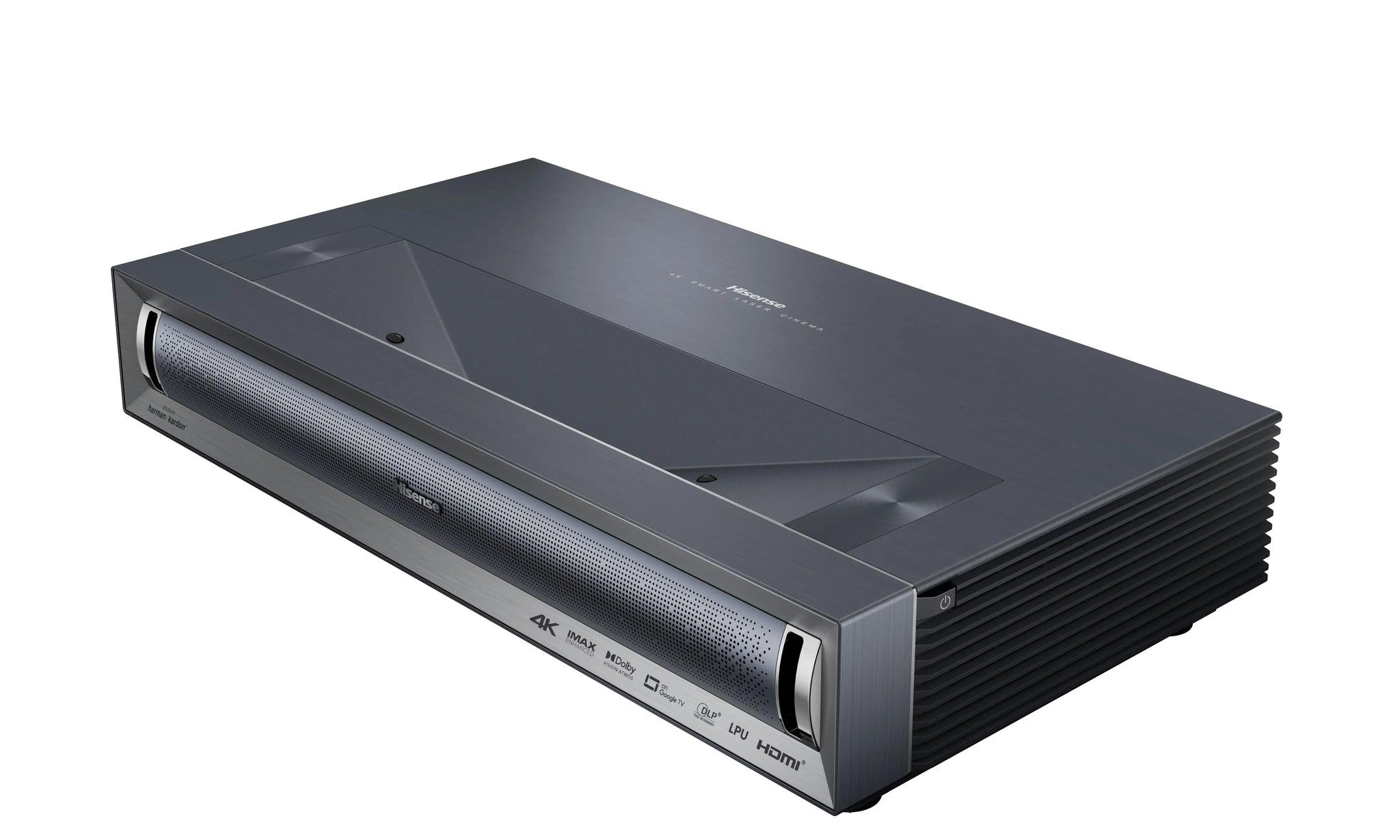
If you've ever dreamed of having a massive 100+ inch screen in your living room but balked at the cost and complexity, ultra short throw (UST) projectors might be exactly what you're looking for. These clever devices sit just inches from your wall yet can fill it with cinema-sized images, eliminating the mounting hassles and space constraints of traditional projectors.
Today we're comparing two standout models that represent different philosophies in the UST space: the gaming-focused Hisense PX3-PRO and the premium cinema-oriented Samsung Premiere 9. Both launched in 2024, but they take distinctly different approaches to delivering large-screen entertainment.
Before diving into specifics, let's clarify what makes UST projectors special. Traditional projectors need to be mounted several feet from your screen, creating shadows when people walk by and requiring ceiling installations. UST projectors flip this concept entirely, using specialized optics to project massive images from just a few inches away from the wall.
The "throw ratio" is the key measurement here – it tells you how far the projector needs to be from the wall to create a certain screen size. Both our contenders achieve impressive throw ratios around 0.19:1, meaning they can project a 100-inch image while sitting less than 8 inches from your wall. This makes them perfect for living rooms where space is at a premium.
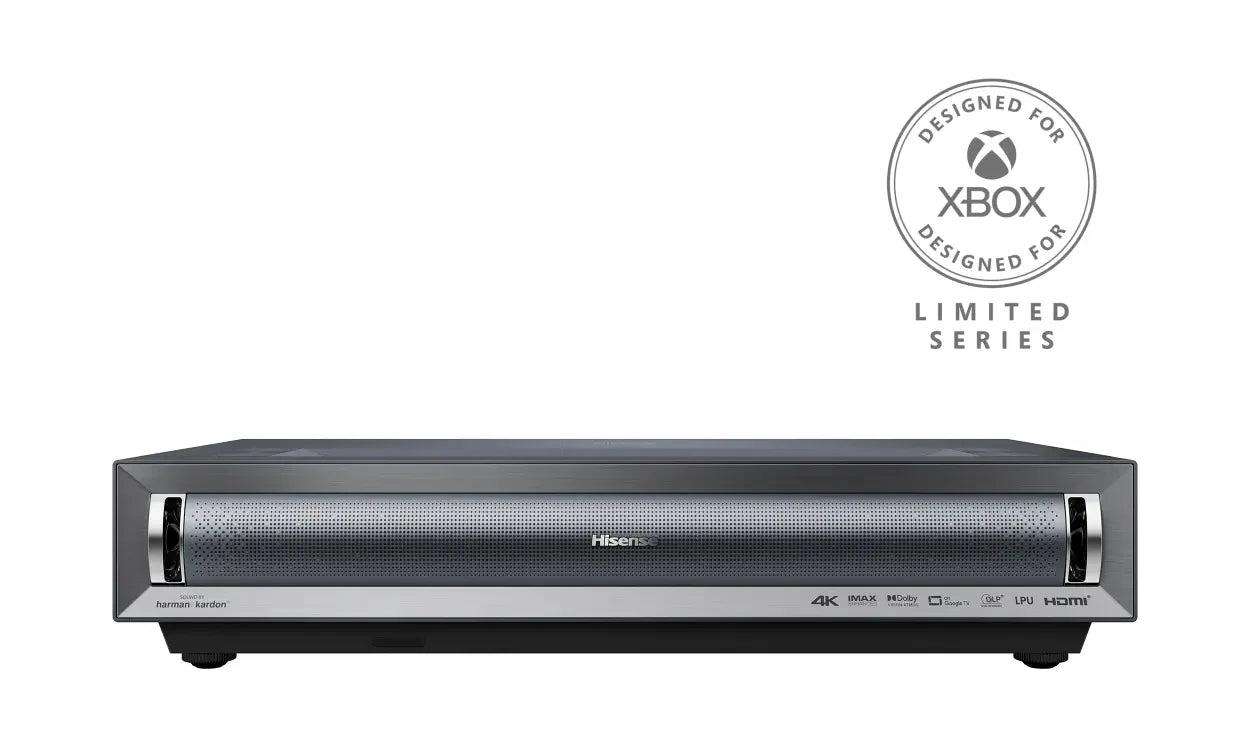
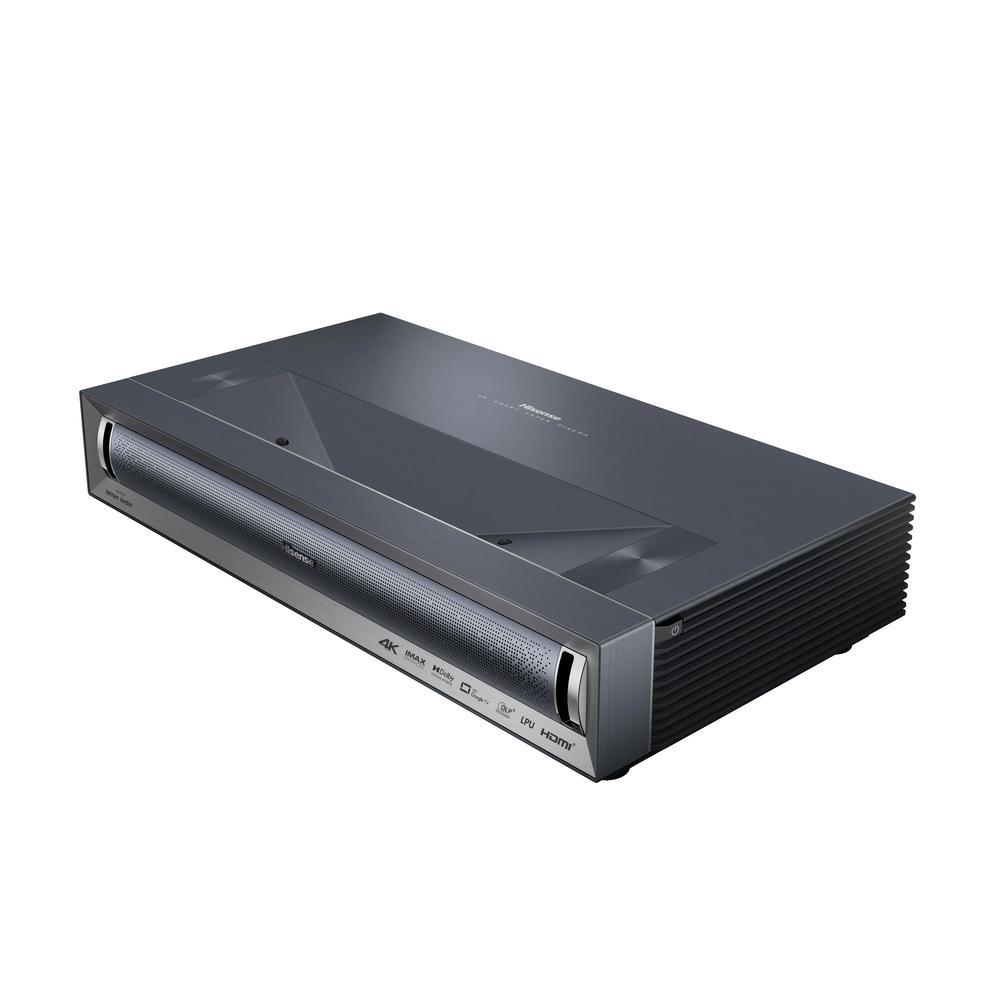
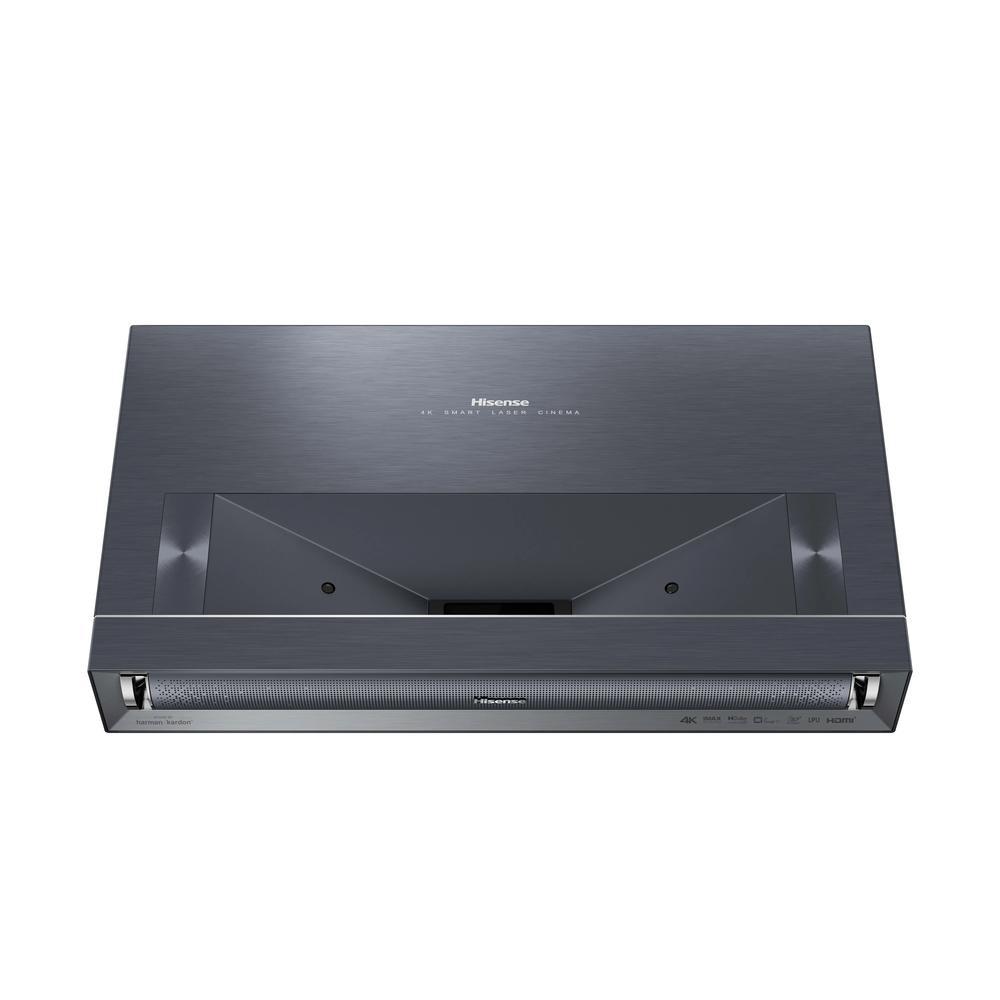
Released in late 2024, the Hisense PX3-PRO represents Hisense's most ambitious gaming-focused projector yet. At the time of writing, it's priced significantly lower than premium alternatives while delivering features that serious gamers have been waiting years for in the projector space.
What sets this projector apart is its "Designed for Xbox Limited Series" certification – not marketing fluff, but actual Xbox optimization that enables 4K gaming at 120Hz and 1080p gaming at an impressive 240Hz. These refresh rates were practically unheard of in projectors until recently, making the PX3-PRO a genuine game-changer for console gaming.
Samsung's Premiere 9, also launching in 2024, takes a more traditional premium approach. Priced at roughly 70% more than the Hisense at the time of writing, it positions itself as a direct competitor to massive 85+ inch premium TVs rather than trying to undercut the market.
The Samsung Premiere 9 focuses on delivering the most accurate, bright image possible, with advanced processing that Samsung has refined over years of TV manufacturing. It's the projector for people who want their living room to rival a commercial cinema.
Brightness measured in ANSI lumens determines how well your projector performs in rooms with ambient light. Traditional projectors often struggle in anything but dark rooms, but both these models break that limitation.
The Hisense PX3-PRO delivers 3,000 ANSI lumens, which in practical terms means you can watch comfortably with some lights on or during overcast daytime viewing. Based on user experiences we've researched, this brightness level handles most living room scenarios admirably, though direct sunlight will still wash out the image.
The Samsung Premiere 9 pushes brightness further to 3,450 ISO lumens (a slightly different measurement standard, but comparable). This extra brightness might seem marginal on paper, but in practice, it provides noticeably better performance in challenging lighting conditions. If your living room has large windows or you frequently watch with overhead lights on, this difference becomes meaningful.
Both projectors use laser light sources, but with different approaches. The Hisense PX3-PRO employs a "TriChroma RGB laser" system – essentially separate red, green, and blue lasers that combine to create colors. This setup can reproduce an impressive 110% of the BT.2020 color space, which is the standard for premium HDR content.
To put this in perspective, most budget projectors struggle to cover even the smaller Rec. 709 color space (the standard for regular HD content). The PX3-PRO's coverage extends well beyond even the DCI-P3 cinema standard, meaning you're seeing colors that are actually more vivid than most movie theaters can display.
The Samsung Premiere 9 also uses triple laser technology but pairs it with Samsung's advanced processing. While exact color gamut numbers vary between reviews, Samsung's decade-plus experience in premium TV processing shows in the final image. Colors appear more natural and film-like, which some users prefer over the more saturated look that wider color gamuts can sometimes produce.
Projector contrast has always been challenging because you're essentially shining light at a wall. Both models achieve impressive native contrast ratios – the Hisense PX3-PRO measures over 3,000:1 in most reviews, while the Samsung Premiere 9 claims a dynamic contrast ratio of 2,000,000:1.
These numbers need context. The Hisense figure represents "native contrast" – the difference between the brightest white and darkest black the projector can produce simultaneously. The Samsung figure includes dynamic processing that adjusts brightness based on content, which can create deeper blacks but isn't the same measurement.
In practical terms, both projectors deliver blacks that are remarkably good for projection technology, though they can't match OLED TVs in dark room scenarios. However, in typical living room lighting, the difference becomes much less noticeable.
This is where the Hisense PX3-PRO truly shines and justifies its gaming-focused positioning. Modern gaming demands low input lag (the delay between pressing a button and seeing the result on screen) and high refresh rates for smooth motion.
Input lag under 20 milliseconds is generally considered excellent for gaming. Based on user reports and reviews, the PX3-PRO achieves input lag in the low teens when gaming mode is enabled – competitive with dedicated gaming monitors. This responsiveness makes fast-paced games like first-person shooters and racing games feel immediate and responsive.
The Samsung Premiere 9, while capable of gaming, doesn't prioritize these ultra-low latency numbers. Its game mode reduces lag compared to cinema modes, but it's clearly designed with casual gaming in mind rather than competitive play.
Here's where the Hisense PX3-PRO becomes genuinely unique. Most projectors, even expensive ones, max out at 60Hz refresh rates. The PX3-PRO supports 4K at 120Hz and 1080p at 240Hz, numbers that were exclusive to high-end gaming monitors until recently.
Why does this matter? Games that support 120fps on Xbox Series X or PlayStation 5 will appear dramatically smoother, with reduced motion blur and more responsive controls. Racing games, in particular, benefit enormously from these higher refresh rates, making the experience feel more realistic and immersive.
The 240Hz capability at 1080p opens up competitive gaming possibilities that simply don't exist elsewhere in the projector market. For gamers who prioritize competitive performance over absolute resolution, this feature alone justifies the PX3-PRO's existence.
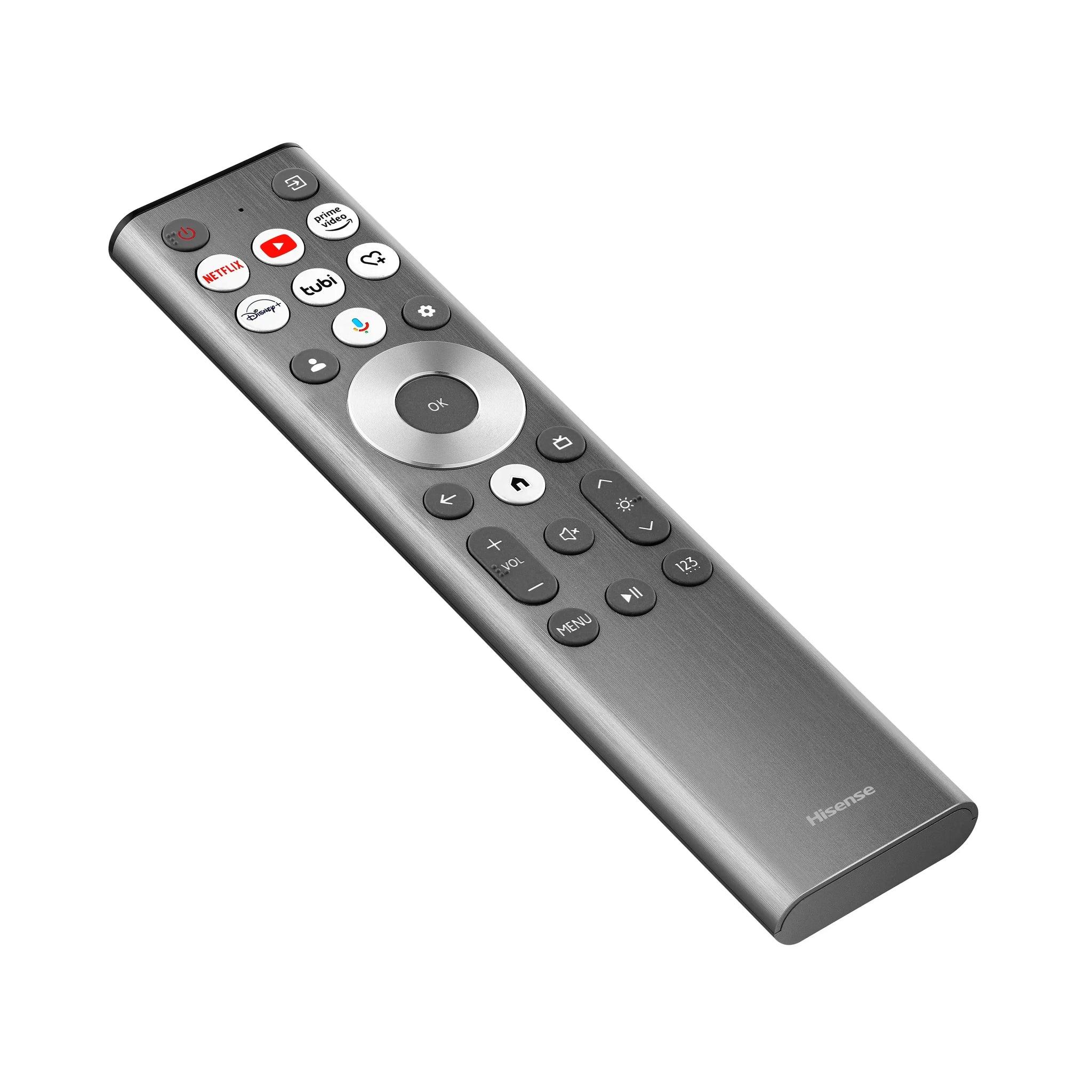
The Hisense PX3-PRO runs Google TV, which has become the most comprehensive smart TV platform available. Netflix, Disney+, Amazon Prime, and virtually every streaming service work perfectly, often with better performance than their smart TV counterparts. Google TV's recommendation engine is also genuinely helpful, surfacing content from across your subscribed services.
Samsung's Premiere 9 uses Tizen OS, the same platform found on Samsung's premium TVs. While not as open as Google TV, Tizen is mature and polished, with excellent app support and deep integration with Samsung's broader ecosystem. If you own Samsung phones, tablets, or appliances, the synergy can be quite compelling.
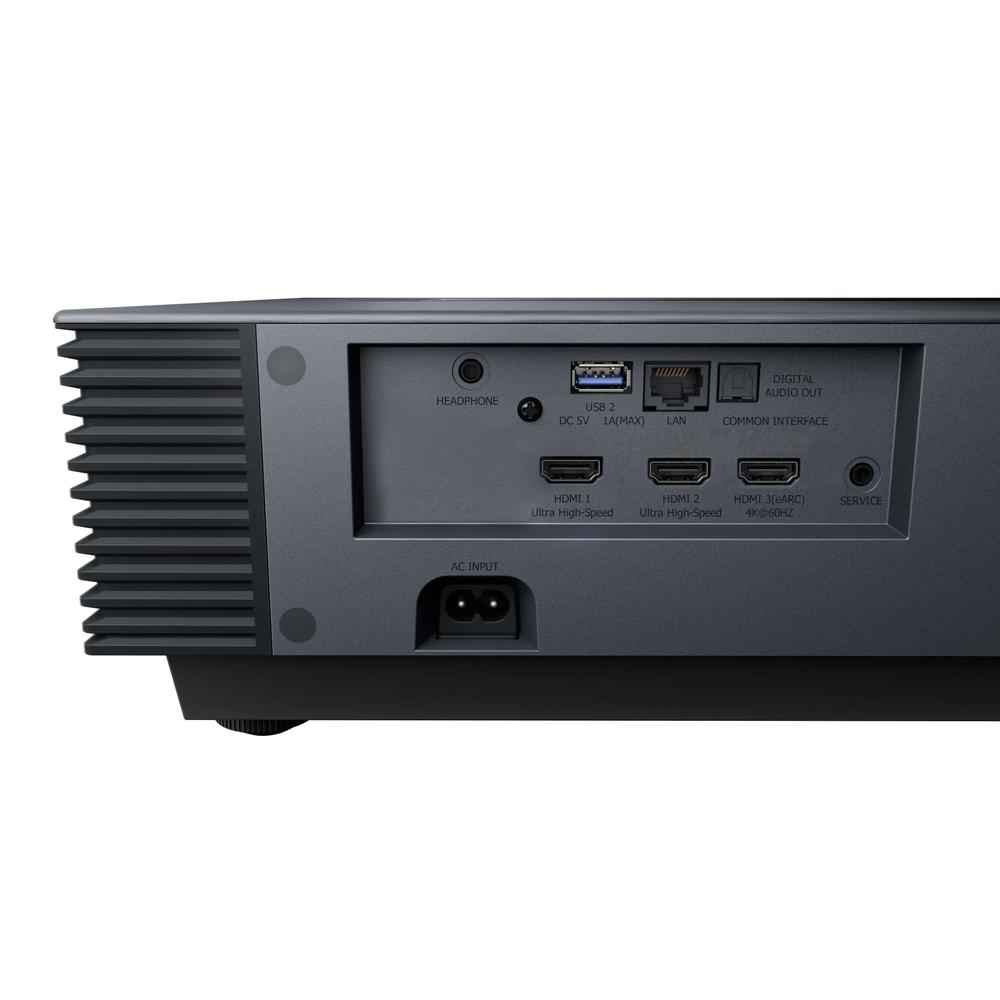
Both projectors offer comprehensive connectivity, but with different priorities. The PX3-PRO includes two full-bandwidth HDMI 2.1 ports capable of handling 4K/120Hz signals, plus one HDMI 2.0 port with eARC for audio equipment. This setup is ideal for connecting multiple gaming consoles plus a streaming device or soundbar.
The Samsung Premiere 9 provides three HDMI ports, but they're limited to 4K/60Hz. For most users, this limitation won't matter, but gamers with next-generation consoles will miss out on the highest refresh rate gaming.
Both projectors include surprisingly capable built-in audio systems, though with different approaches. The PX3-PRO features 50W Harman Kardon-designed speakers that fire forward, creating a more directional sound that complements the projected image. Dolby Atmos processing helps create some sense of surround sound, though true surround requires external speakers.
The Samsung Premiere 9 uses a 2.2.2 channel system with 40W of power and Samsung's Object Tracking Sound technology. This system attempts to make audio follow the action on screen, which works surprisingly well with compatible content.
Both systems are good enough for casual viewing, but serious home theater enthusiasts will want to connect external sound systems. The eARC support on both projectors makes this straightforward with compatible soundbars or AV receivers.
At the time of writing, the Hisense PX3-PRO costs significantly less than the Samsung Premiere 9 while delivering comparable picture quality and superior gaming features. This creates a clear value equation for different user types.
If gaming is a priority, the PX3-PRO isn't just better value – it's the only real choice. No other projector at any price offers its combination of high refresh rates, low input lag, and Xbox optimization. Even expensive dedicated gaming projectors rarely match these specifications.
The price difference compared to the Samsung Premiere 9 is substantial enough to fund a premium sound system, making the overall home theater experience potentially better for less money.
The Samsung Premiere 9 justifies its premium pricing through superior brightness, more refined processing, and better performance in challenging lighting conditions. If you're replacing a large premium TV and want the best possible picture quality regardless of cost, the Samsung delivers.
Consider that 85-inch premium TVs from major manufacturers often cost as much or more than the Premiere 9, while offering significantly smaller screen sizes. In this context, the Samsung's pricing becomes more reasonable.
Both projectors work excellently in dedicated home theater spaces, but they're really designed for living room integration. Their ultra-short throw design means you can place them on a TV stand or coffee table without professional installation.
For dark, dedicated home theater rooms, both projectors perform admirably, though you'll want to pair them with external audio systems for the full cinema experience. The Samsung Premiere 9's superior brightness is less critical in controlled lighting, making the PX3-PRO an excellent value choice for this scenario.
In living rooms with ambient light, the Samsung Premiere 9's extra brightness becomes more valuable. If you frequently watch during the day or with lights on, the Samsung's performance advantage justifies its higher cost.
The Hisense PX3-PRO represents something genuinely new in the projector world – a gaming-first device that doesn't compromise on overall quality. Its combination of high refresh rates, low input lag, and competitive pricing makes it the obvious choice for gaming households. Even if gaming isn't your primary use case, the exceptional value proposition makes it compelling for anyone wanting premium large-screen entertainment without premium pricing.
The Samsung Premiere 9 takes the traditional premium approach, delivering the best possible picture quality and brightness for users who prioritize absolute performance. If your room has challenging lighting conditions, if you want the most refined image processing available, or if budget isn't a primary concern, the Samsung justifies its higher cost.
Both projectors represent the current state of the art in UST technology and either will deliver a transformative large-screen experience. Your choice ultimately depends on whether you prioritize cutting-edge gaming features and value (PX3-PRO) or premium picture quality and versatility (Premiere 9). Either way, you'll be getting technology that would have seemed impossible just a few years ago.
| Hisense PX3-PRO | Samsung Premiere 9 |
|---|---|
| Brightness - Critical for daytime viewing and bright rooms | |
| 3,000 ANSI lumens (excellent for most lighting conditions) | 3,450 ISO lumens (superior performance in challenging ambient light) |
| Gaming Performance - Essential for console and PC gaming | |
| 4K@120Hz, 1080p@240Hz, Xbox certified, ultra-low input lag | Standard 4K@60Hz gaming, higher input lag, casual gaming focus |
| Color Gamut - Determines color vibrancy and accuracy | |
| 110% BT.2020, 99.82% DCI-P3 (exceptional color range) | Triple laser with advanced processing (more natural, film-like colors) |
| Smart Platform - Affects app selection and user experience | |
| Google TV (comprehensive app support, excellent recommendations) | Samsung Tizen OS (polished interface, Samsung ecosystem integration) |
| Audio System - Important if not using external speakers | |
| 50W Harman Kardon front-firing speakers with Dolby Atmos | 40W 2.2.2 channel system with Object Tracking Sound |
| Connectivity - Determines device compatibility | |
| 3 HDMI ports (2x HDMI 2.1 for high refresh gaming, 1x eARC) | 3 HDMI ports (all 4K@60Hz max, eARC support) |
| HDR Support - Enhances contrast and color in compatible content | |
| HDR10+, Dolby Vision, IMAX Enhanced (comprehensive support) | HDR10, HDR10+, HLG (excellent but no Dolby Vision) |
| Contrast Performance - Affects black levels and image depth | |
| 3,000:1 native contrast (excellent for laser projection) | 2,000,000:1 dynamic contrast (advanced processing for deeper blacks) |
| Target User - Who each projector serves best | |
| Gamers and value-conscious buyers wanting premium features | Home cinema enthusiasts prioritizing absolute picture quality |
| Value Proposition - Cost vs performance consideration | |
| Exceptional gaming features at competitive pricing | Premium experience with superior brightness, justified for cinema purists |
The Hisense PX3-PRO is significantly better for gaming. It supports 4K gaming at 120Hz and 1080p at 240Hz with ultra-low input lag, plus it's Xbox certified. The Samsung Premiere 9 only supports standard 4K at 60Hz gaming with higher input lag, making it better suited for casual gaming rather than competitive or high-performance gaming.
The Samsung Premiere 9 is brighter at 3,450 ISO lumens compared to the Hisense PX3-PRO's 3,000 ANSI lumens. While both perform well in most lighting conditions, the Samsung handles challenging ambient light situations better, making it more versatile for bright living rooms or daytime viewing.
The Hisense PX3-PRO offers exceptional value, providing premium features like high refresh rate gaming and excellent picture quality at a significantly lower cost than the Samsung Premiere 9. However, the Samsung justifies its higher price with superior brightness and more refined processing for users who prioritize absolute picture quality.
Yes, both the Hisense PX3-PRO and Samsung Premiere 9 excel in home theater environments. The Samsung's higher brightness gives it an edge in living rooms with ambient light, while the Hisense PX3-PRO performs excellently in controlled lighting and offers better value for dedicated theater rooms.
Both projectors deliver excellent 4K picture quality with laser light sources. The Hisense PX3-PRO offers wider color gamut coverage (110% BT.2020) for more vivid colors, while the Samsung Premiere 9 focuses on more natural, film-like color reproduction with advanced processing. The Samsung also provides better contrast through dynamic processing.
The Hisense PX3-PRO uses Google TV, which offers more comprehensive app support and better content recommendations across services. The Samsung Premiere 9 runs Tizen OS, which is more polished and integrates well with Samsung devices but has a more limited app ecosystem. Both platforms support all major streaming services.
Absolutely. Both the Hisense PX3-PRO and Samsung Premiere 9 are designed as TV replacements, offering 100+ inch screens while sitting just inches from your wall. The Samsung Premiere 9 handles bright rooms better due to higher brightness, while the Hisense PX3-PRO offers better gaming performance at a lower cost.
The Hisense PX3-PRO includes two HDMI 2.1 ports that support high refresh rate gaming plus one HDMI 2.0 with eARC. The Samsung Premiere 9 has three HDMI ports but they're limited to 4K at 60Hz maximum. Both offer comprehensive connectivity including USB, Ethernet, and wireless options.
The Hisense PX3-PRO features 50W Harman Kardon front-firing speakers with Dolby Atmos, while the Samsung Premiere 9 uses a 40W 2.2.2 channel system with Object Tracking Sound technology. Both provide decent audio for casual viewing, though serious home theater users will want external sound systems with either projector.
The Samsung Premiere 9 performs better in bright rooms due to its higher 3,450 ISO lumen brightness compared to the Hisense PX3-PRO's 3,000 ANSI lumens. While both handle ambient light well, the Samsung provides noticeably better visibility when competing with overhead lights or daylight from windows.
The Hisense PX3-PRO supports a wider range of HDR formats including HDR10+, Dolby Vision, and IMAX Enhanced. The Samsung Premiere 9 supports HDR10, HDR10+, and HLG but lacks Dolby Vision support. For the widest compatibility with streaming content, the Hisense PX3-PRO has the advantage.
Choose the Hisense PX3-PRO if gaming is important, you want excellent value, or you have controlled lighting. Choose the Samsung Premiere 9 if you prioritize absolute picture quality, have a very bright room, or want the most premium experience regardless of cost. Both projectors deliver exceptional large-screen entertainment that rivals or exceeds traditional TVs.
We've done our best to create useful and informative comparisons to help you decide what product to buy. Our research uses advanced automated methods to create this comparison and perfection is not possible - please contact us for corrections or questions. These are the sites we've researched in the creation of this article: shop.hisense-usa.com - avsforum.com - youtube.com - projectorcentral.com - avsforum.com - youtube.com - projectorreviews.com - avsforum.com - projectorcentral.com - en.heimkinowelten.de - dreamediaav.com - avsforum.com - valueelectronics.com - youtube.com - techradar.com - youtube.com - news.samsung.com - samsung.com - soundandvision.com - samsung.com - sound-advice.online - trustedreviews.com

Privacy Policy
Terms and Conditions - Affiliate Policy
Home Security
© Copyright 2008-2026.
11816 Inwood Rd #1211, Dallas, TX 75244