

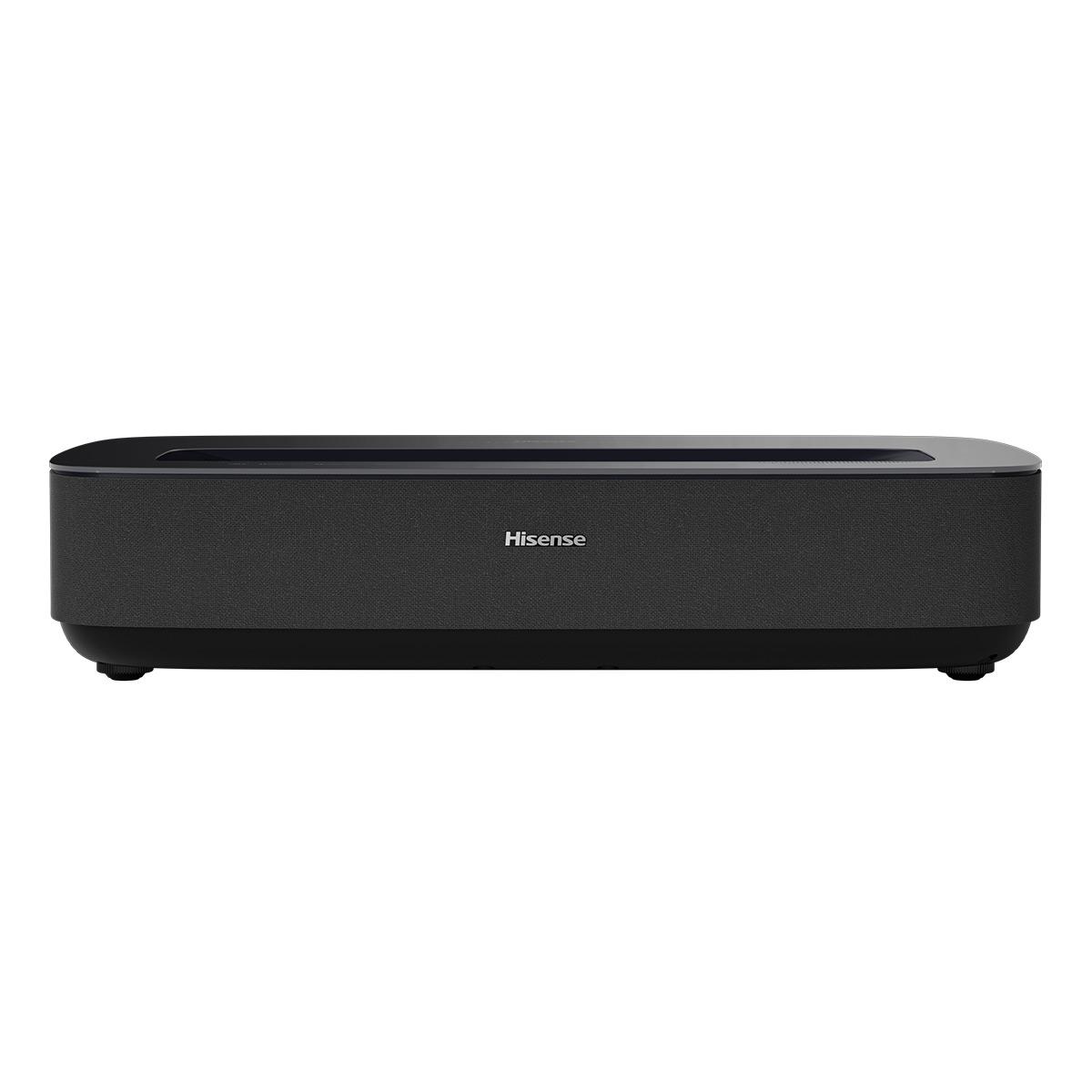
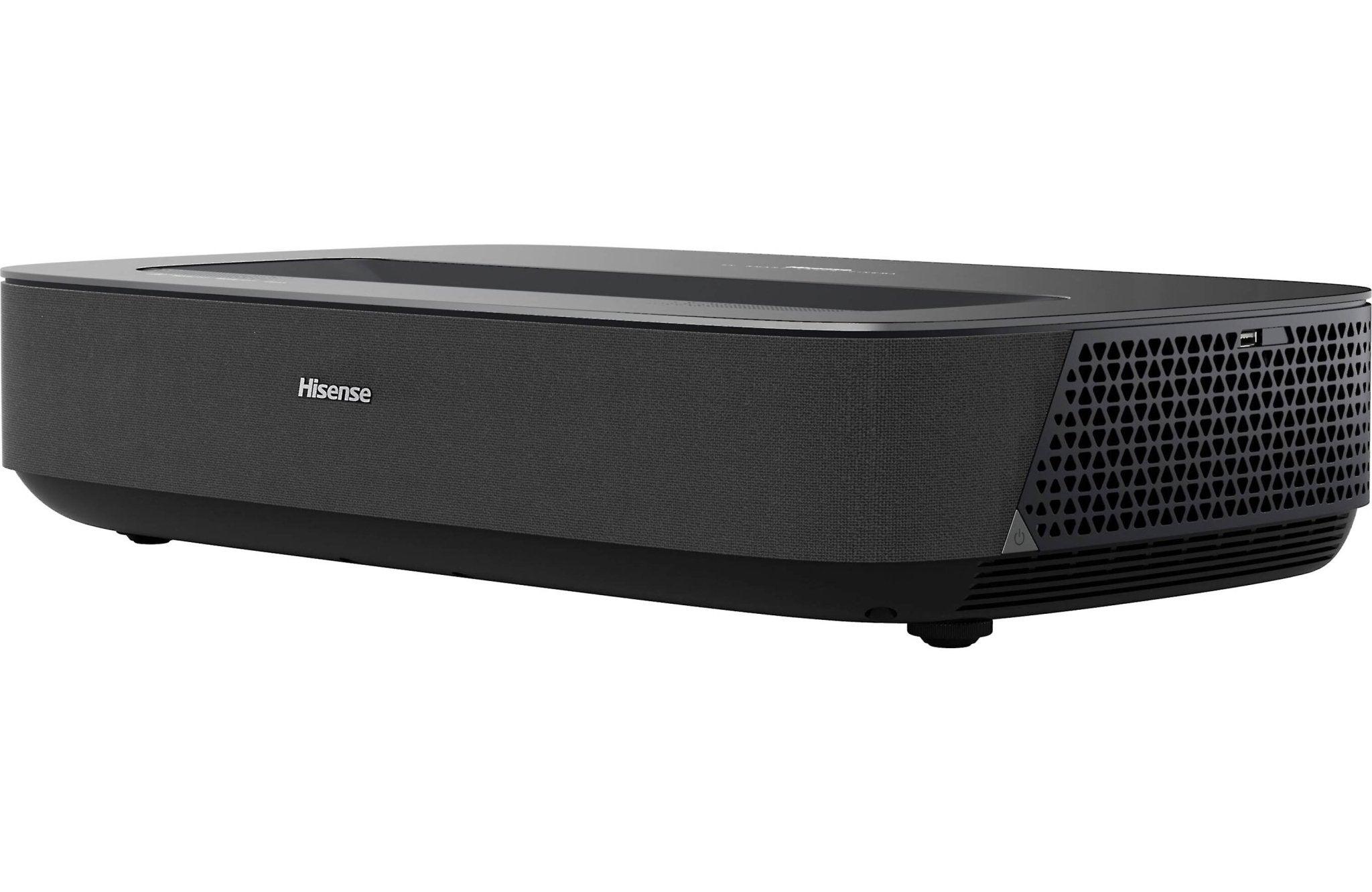
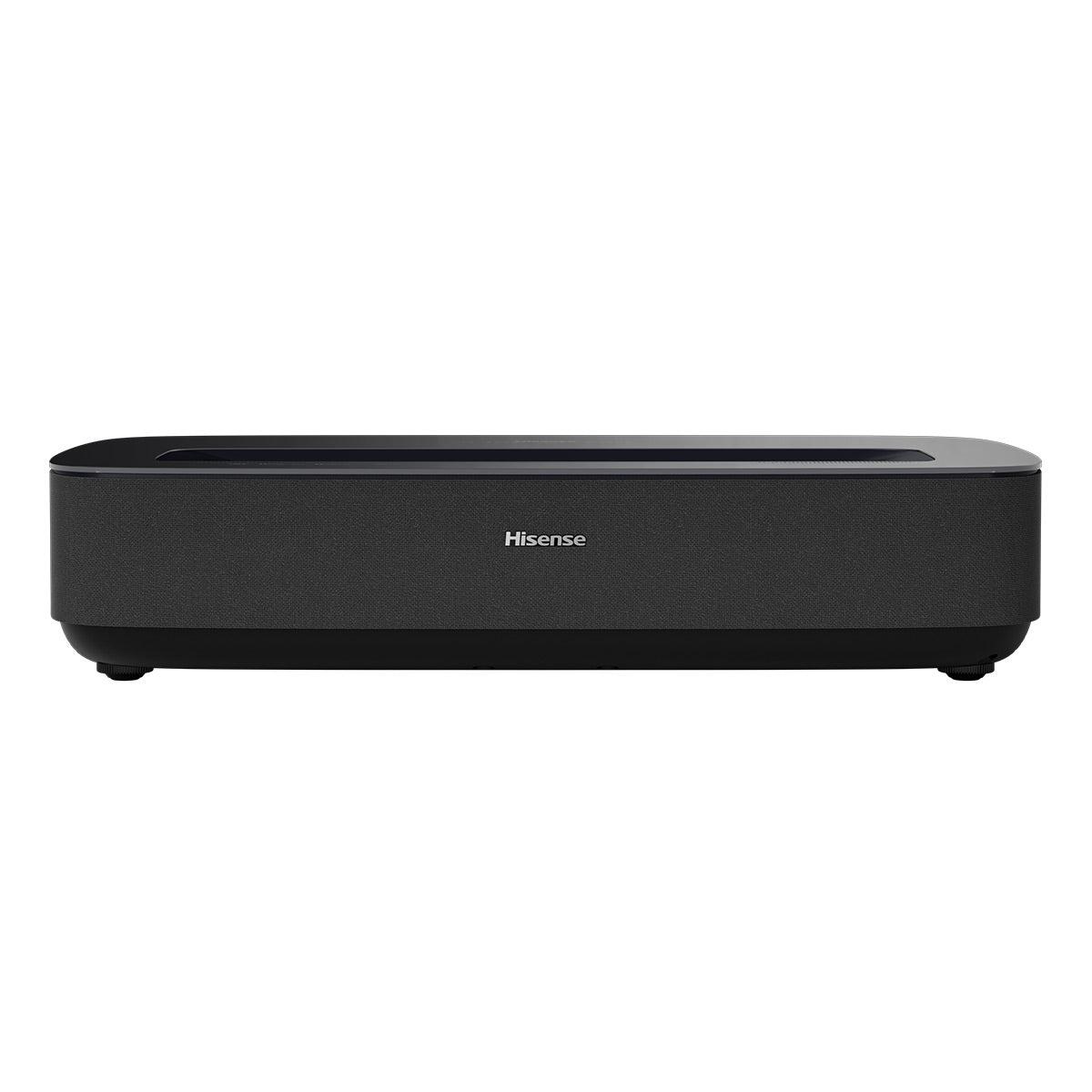
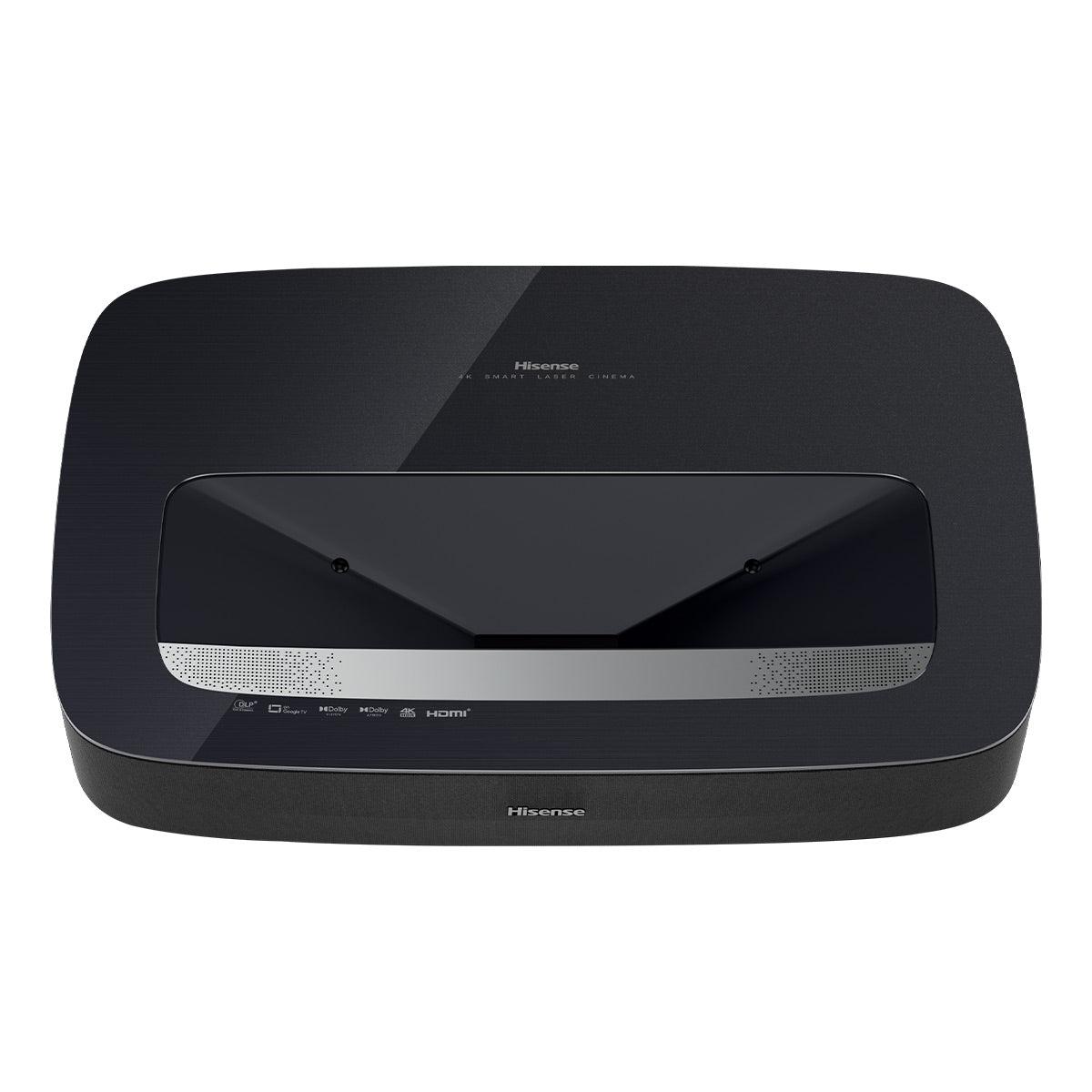
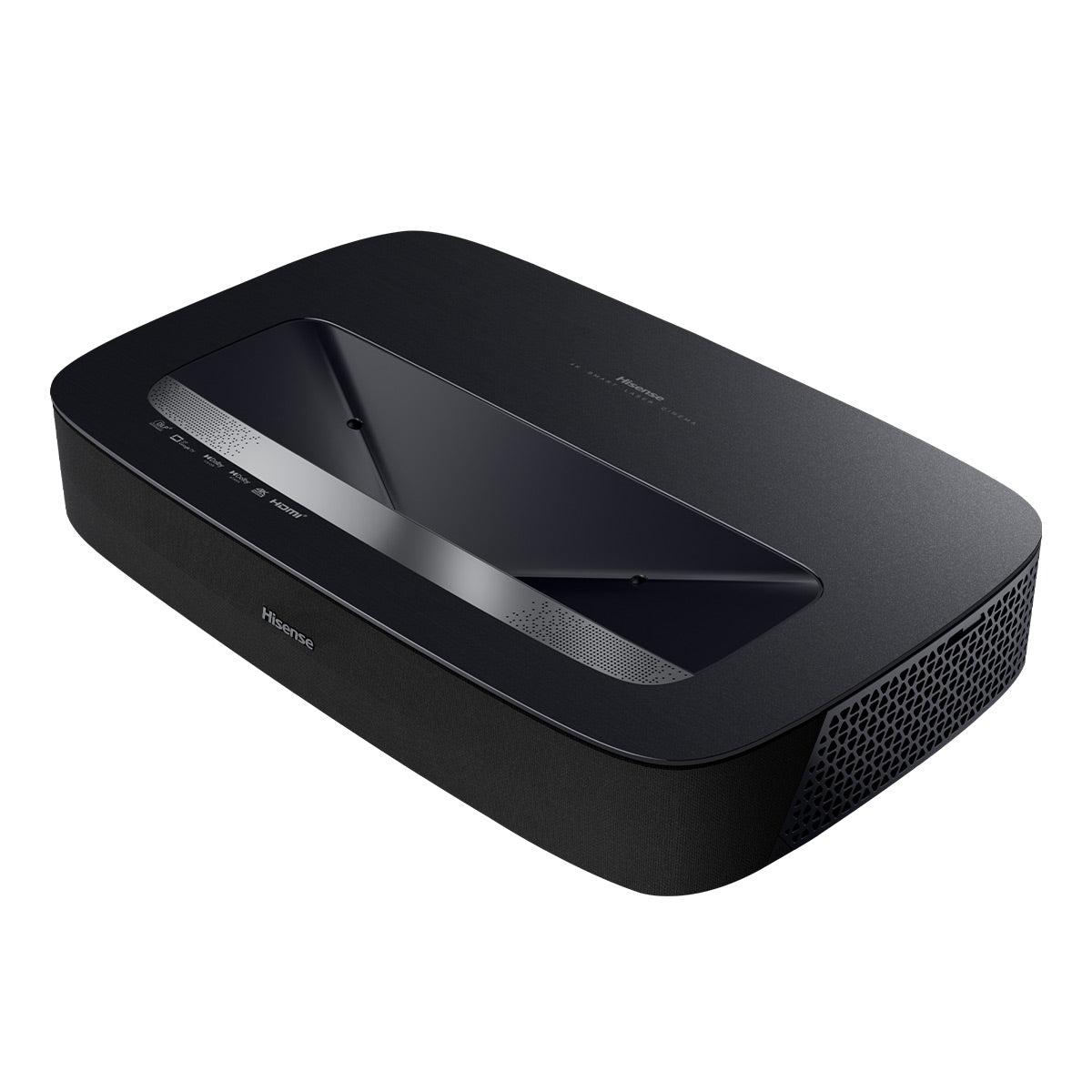
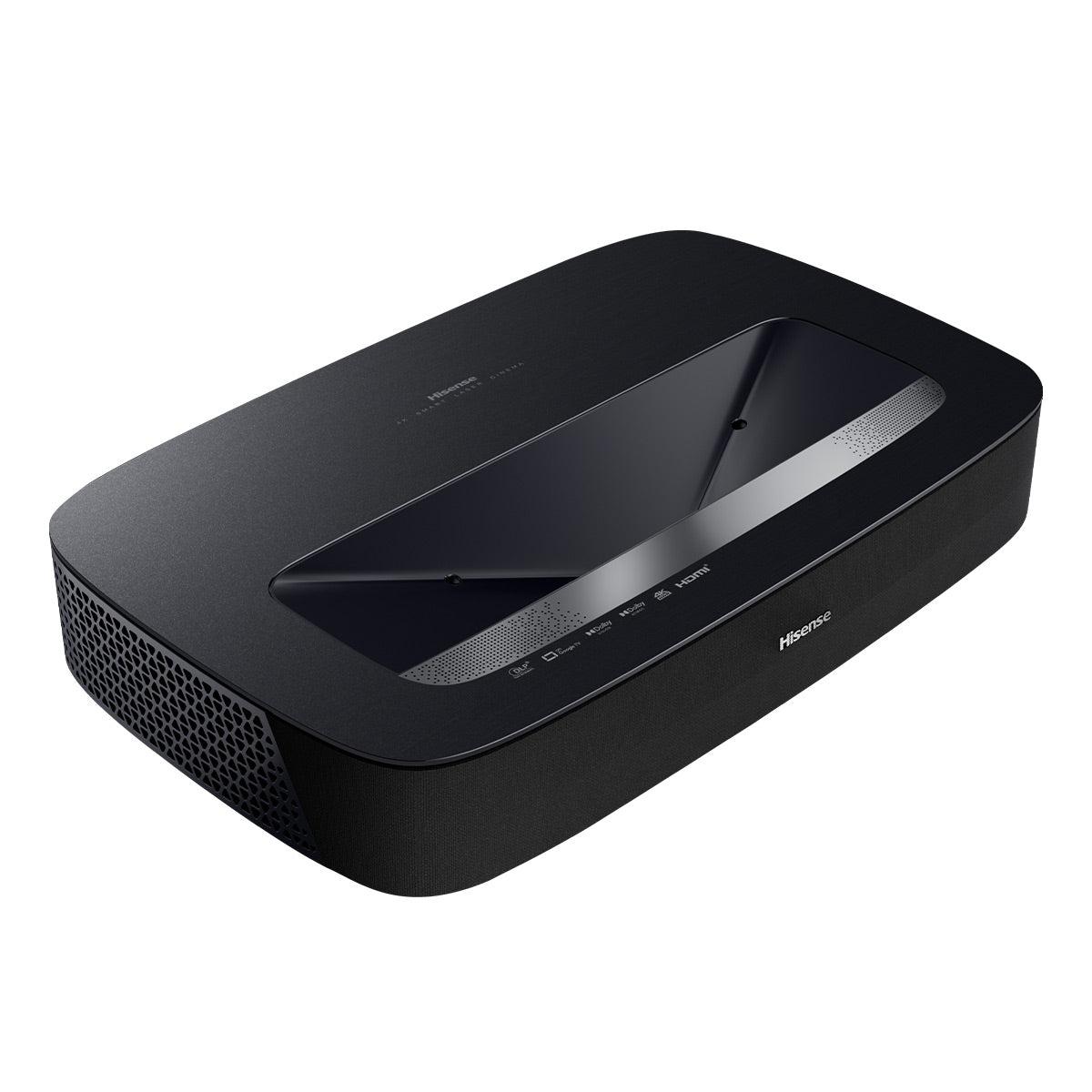
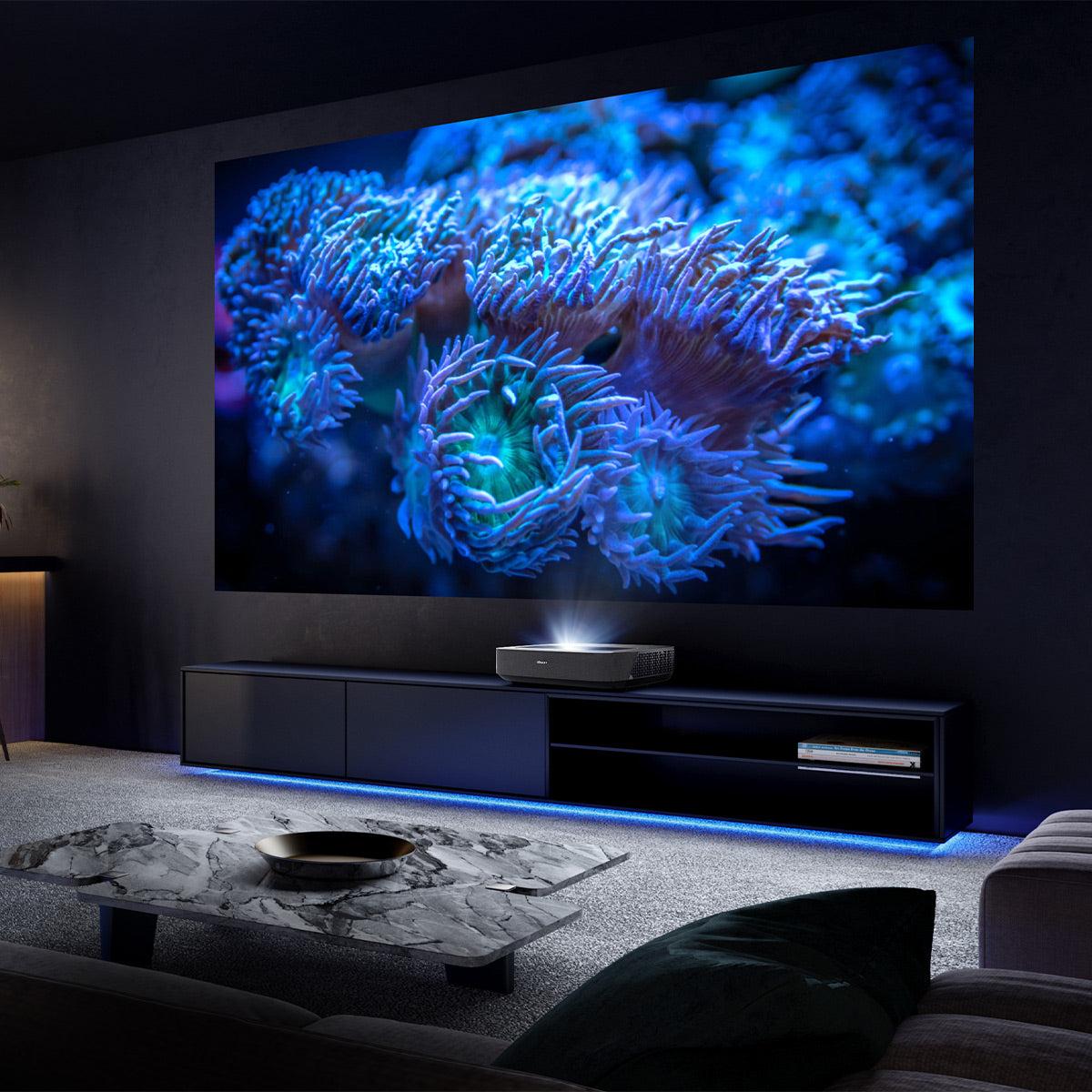
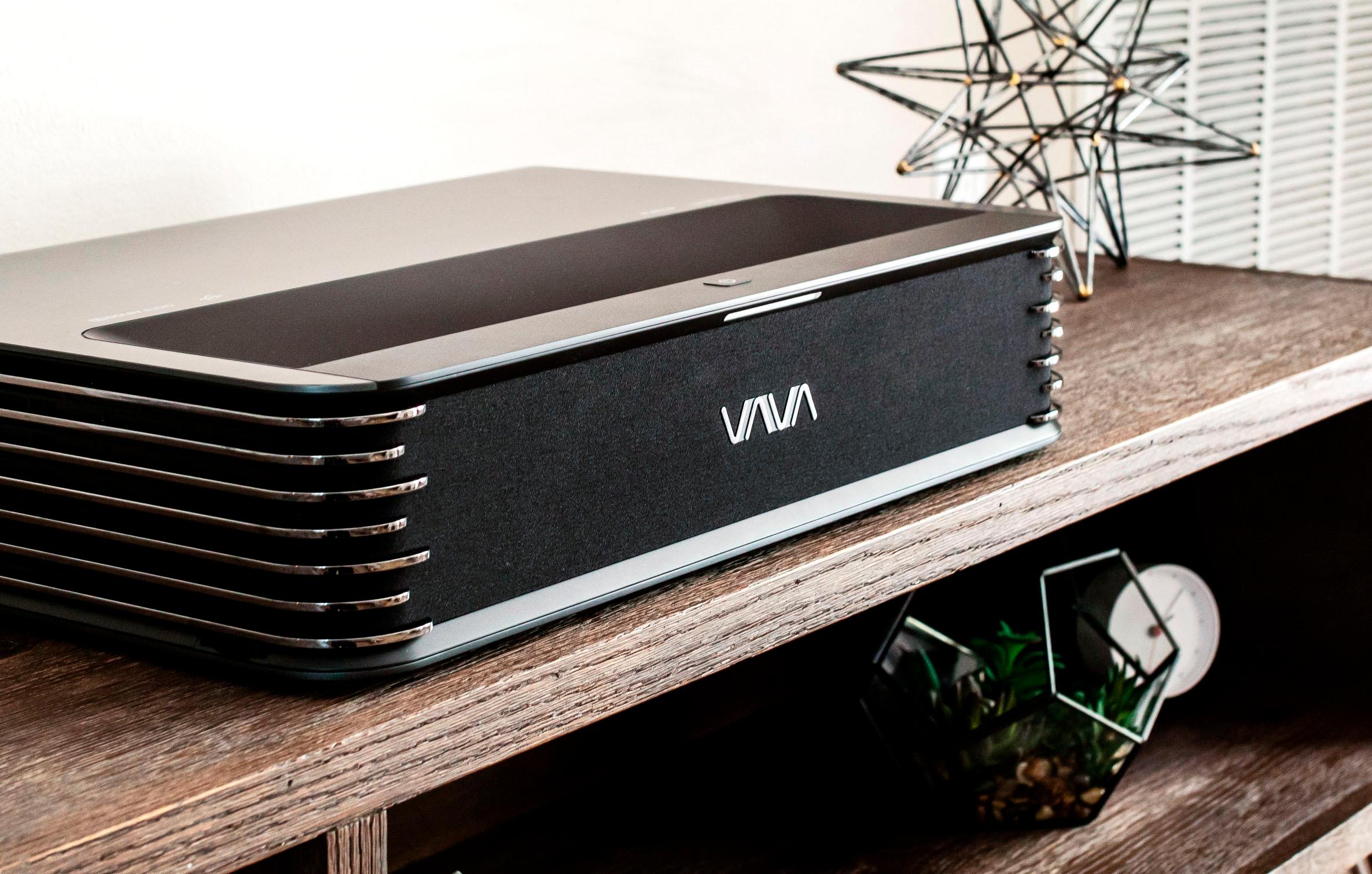
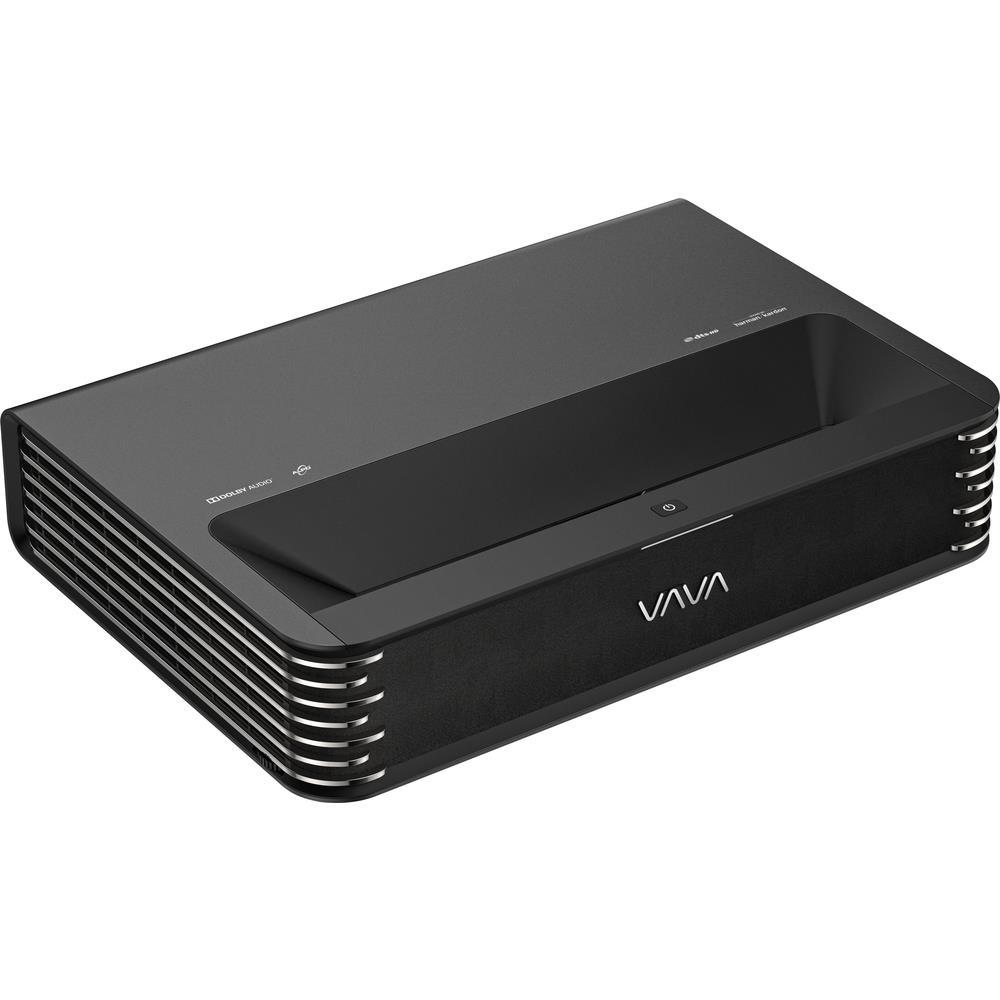
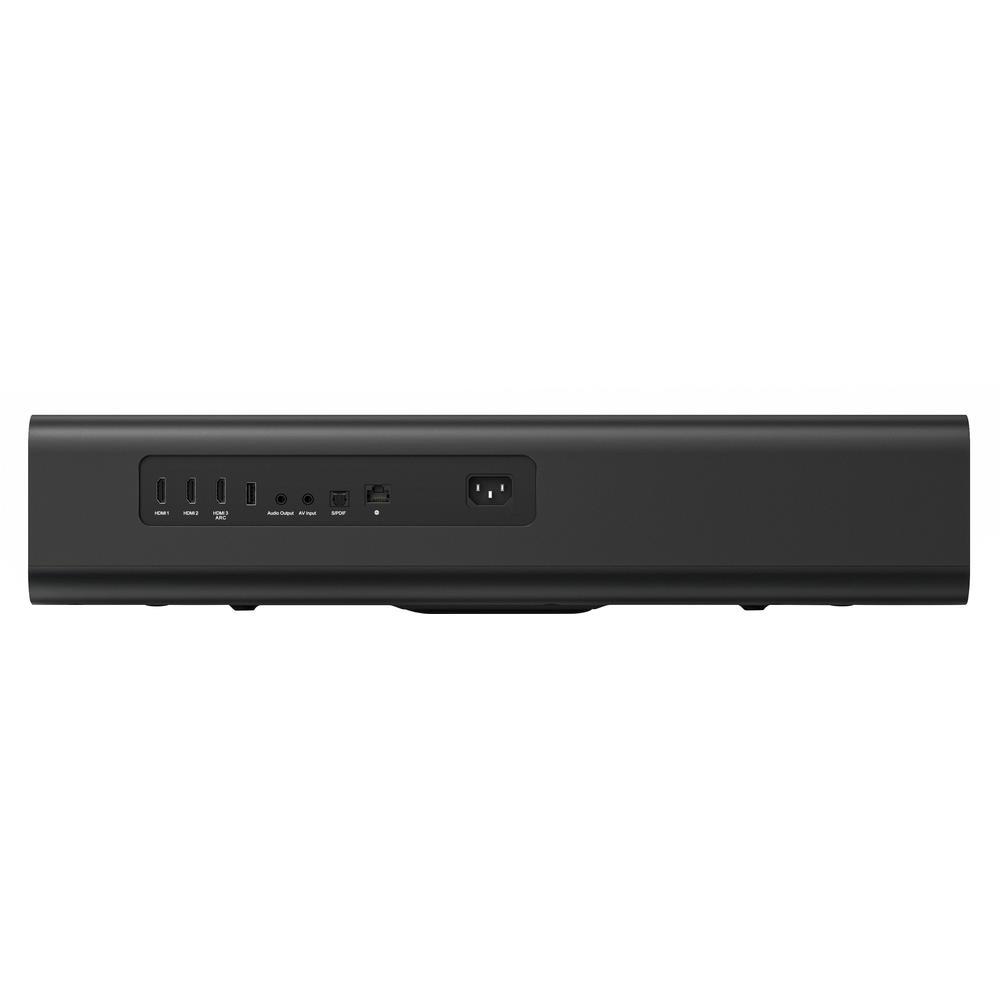
In late 2021, both Hisense PL1 ($2,497.97) and VAVA Chroma ($3,599) entered the ultra short throw (UST) laser projector market, offering compelling alternatives to traditional large TVs. Let's dive deep into how these projectors compare and which might be right for your setup.
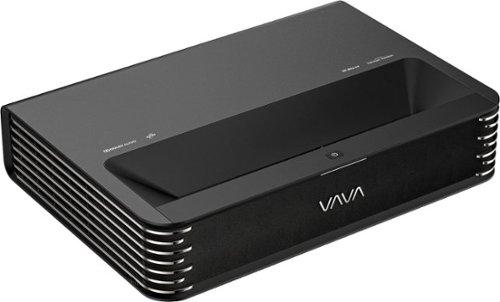
Unlike traditional projectors that need significant distance from the screen, UST projectors sit just inches from your wall. Using advanced optics and laser light sources, they can create massive images from very close distances. This technology has revolutionized home theater setups, especially for those wanting 100"+ screens without ceiling mounting or complex installation.
The key advantage of laser light sources over traditional bulbs is their consistency and longevity - both projectors offer around 25,000 hours of use without significant brightness degradation. That's about 17 years of watching 4 hours daily!
The VAVA Chroma edges out the Hisense PL1 in brightness (2500 vs 2200 ANSI lumens). In practical terms, this means the Chroma performs better in rooms with some ambient light. I've found that both projectors work well in controlled lighting, but the Chroma's extra brightness provides more flexibility for casual viewing with some lights on.
ANSI lumens, unlike marketing lumens, represent standardized brightness measurements you can actually rely on. Think of it like comparing true horsepower versus theoretical engine output.
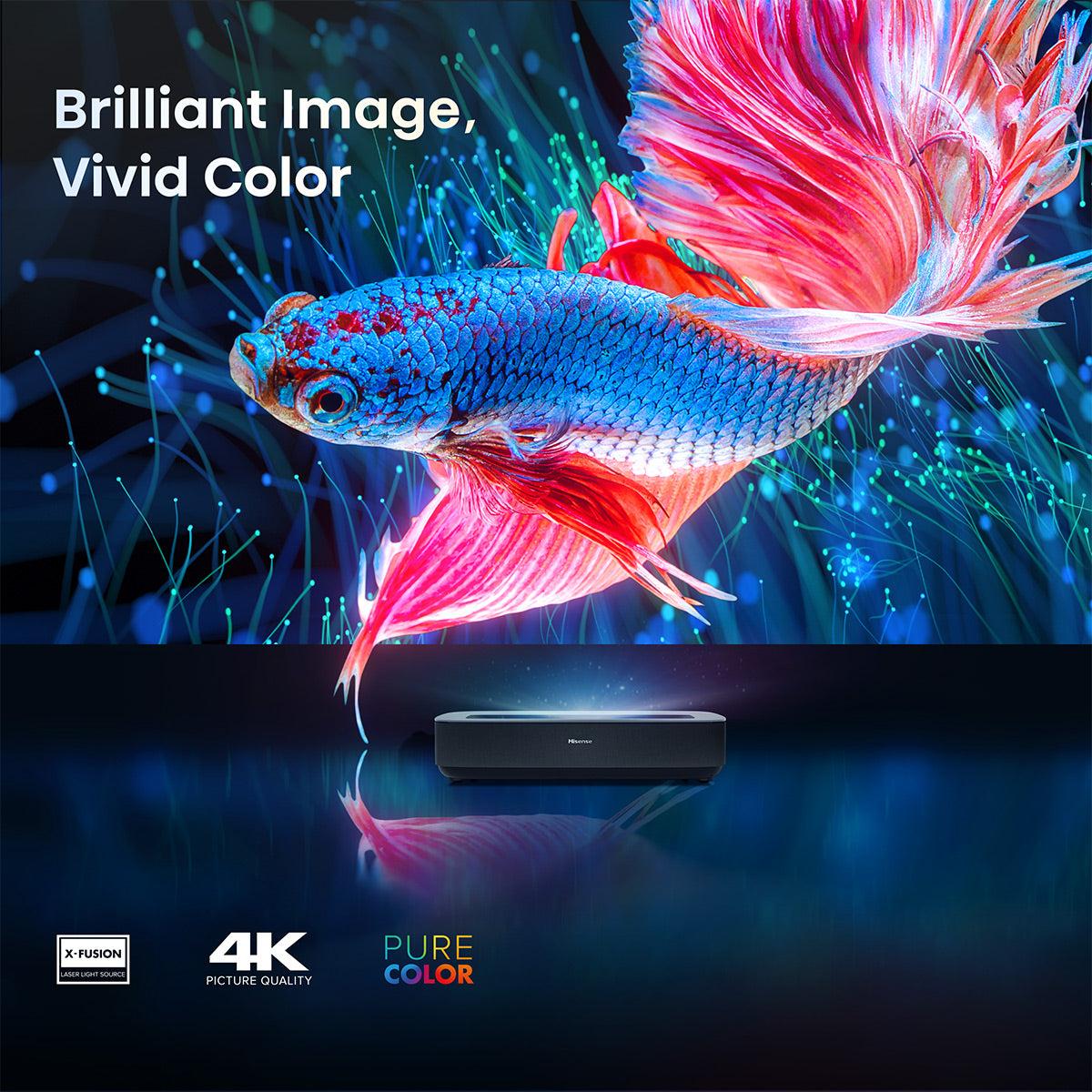
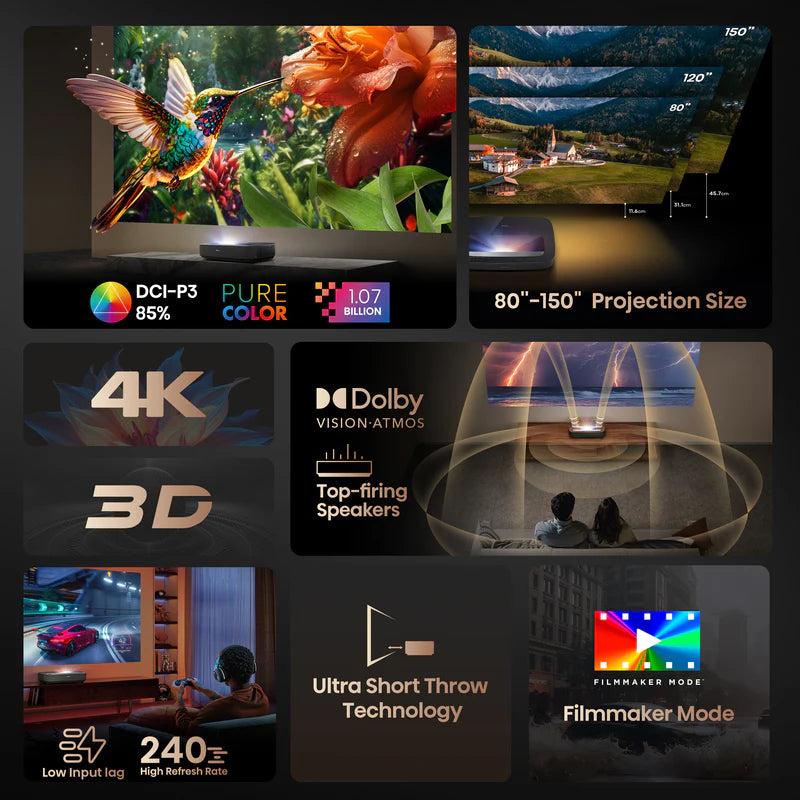
Here's where things get interesting. The Chroma uses a triple laser system (separate red, green, and blue lasers) to achieve an impressive 106% of the Rec.2020 color space. The PL1 uses a single blue laser with a phosphor wheel, covering about 90% of the smaller DCI-P3 color space.
In everyday viewing:
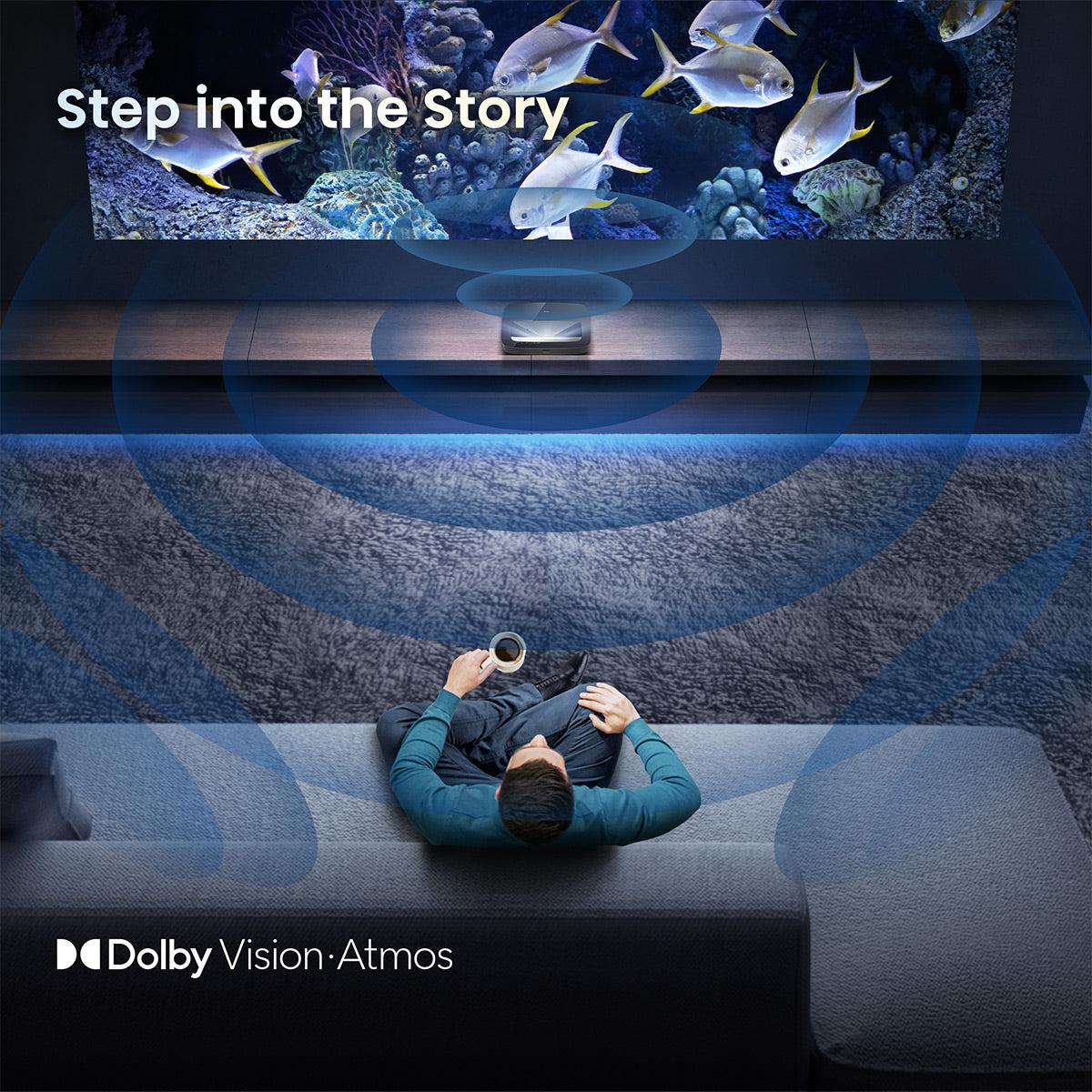
The PL1's support for Dolby Vision gives it a significant advantage in HDR content. Dolby Vision provides dynamic scene-by-scene optimization, while the Chroma's HDR10+ support, while good, doesn't quite match up in real-world viewing. When watching complex HDR scenes (think sunsets or dark scenes with bright highlights), the PL1's handling feels more refined.
Both projectors handle 4K/60Hz gaming well, but there are important differences:
For casual gaming, either projector works great. Competitive gamers might prefer the PL1's lower latency.
In a dedicated home theater setting, both projectors shine but in different ways:
The PL1 excels with:
The Chroma stands out for:
The Chroma's 60W Harman Kardon speakers outperform the PL1's 30W Dolby Atmos system in terms of raw power and clarity. However, in a proper home theater setup, you'll likely use external speakers anyway. The PL1's Dolby Atmos support becomes more valuable when connected to a compatible sound system.
Both projectors offer smart TV platforms, but their approaches differ:
PL1:
Chroma:
Since their late 2021 debut, both projectors have received firmware updates improving their performance:
The PL1 has seen:
The VAVA Chroma received:
When considering value, it's important to look at the total package:
PL1 at $2,497:
Chroma at $3,599:
Choose the PL1 if you:
Choose the Chroma if you:
Both the Hisense PL1 and VAVA Chroma represent excellent choices in the UST projector market, but they serve slightly different needs. The PL1 offers tremendous value and excellent picture quality, making it my general recommendation for most users. However, if you need the extra brightness and screen size of the Chroma and don't mind paying the premium, it's also a fantastic choice.
Remember that proper screen selection and room setup are crucial for either projector. A good ALR (ambient light rejecting) screen will significantly improve performance, especially in rooms with ambient light.
Consider your specific viewing environment, content preferences, and budget when making your final decision. Both projectors will provide years of enjoyable big-screen entertainment when properly set up and matched to your viewing needs.
| Hisense PL1 ($2,497.97) | VAVA Chroma ($3,599) |
|---|---|
| Light Technology - Impacts color accuracy and longevity | |
| Single blue laser with phosphor wheel | Triple RGB laser system |
| Brightness - Critical for ambient light performance | |
| 2,200 ANSI lumens (good for dim rooms) | 2,500 ANSI lumens (better bright room performance) |
| Color Gamut - Determines color range and vibrancy | |
| 90% DCI-P3 (more accurate, cinema-like) | 106% Rec.2020 (wider, more vibrant colors) |
| HDR Support - Affects contrast and dynamic range | |
| HDR10, Dolby Vision, HLG (superior processing) | HDR10+ (good but less sophisticated) |
| Screen Size Range - Installation flexibility | |
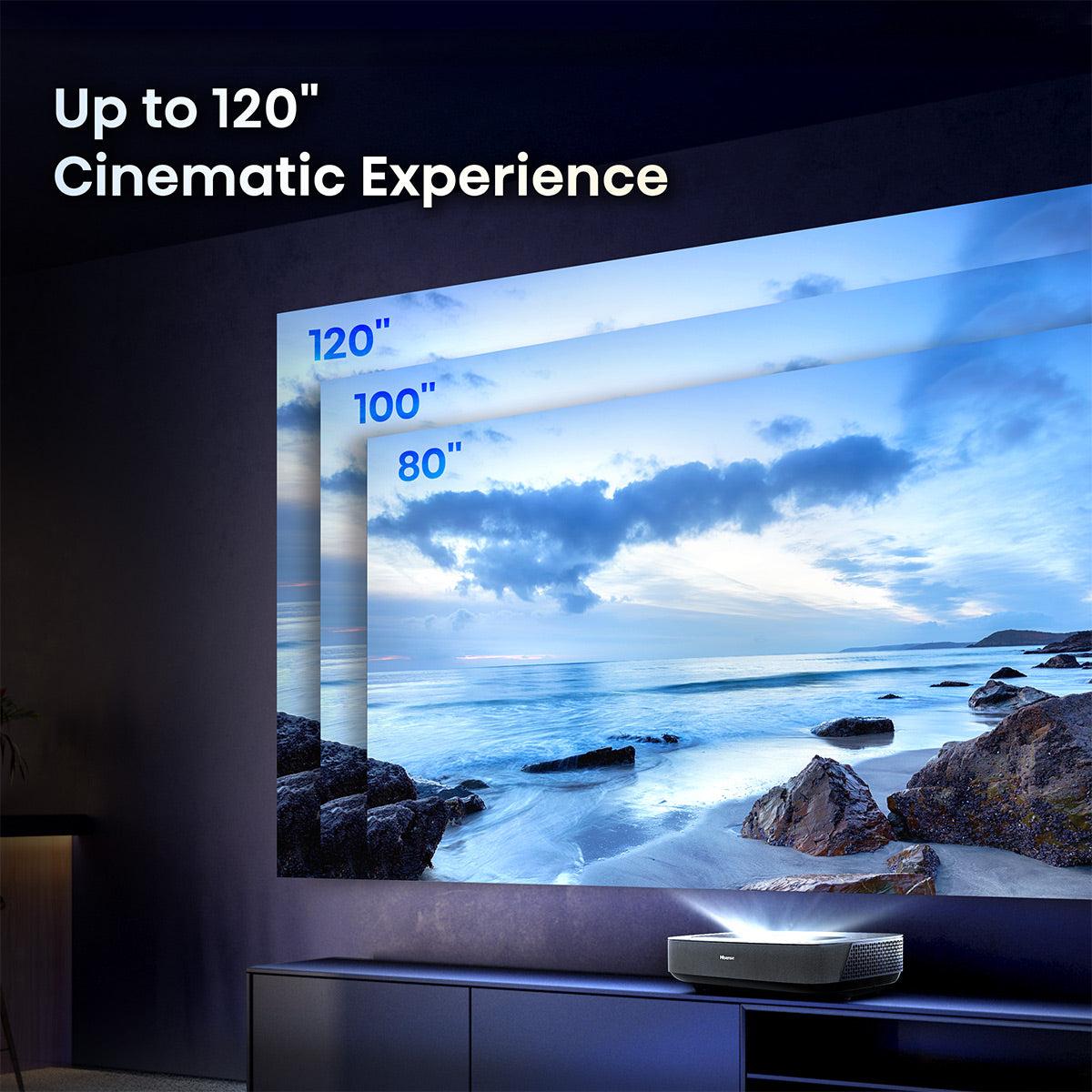
| 80" to 120" (more limited) | 80" to 150" (more versatile) |
| Built-in Audio - Important if not using external speakers | |
| 30W Dolby Atmos (adequate) | 60W Harman Kardon (more powerful) |
| Smart Platform - Affects ease of use | |
| Google TV (more polished, better app support) | Android TV with Alexa (more customizable) |
| Throw Ratio - Distance needed from wall | |
| 0.25:1 (needs 7.8" for 100") | 0.233:1 (needs 7.2" for 100") |
| Gaming Features - Important for gamers | |
| Lower input lag, ALLM support | Better motion handling, higher input lag |
| Connectivity - Flexibility for devices | |
| 2 HDMI 2.1 ports (limited) | 3 HDMI ports (more flexible) |
| Laser Life - Long-term value | |
| 25,000 hours (17 years at 4hrs/day) | 25,000 hours (17 years at 4hrs/day) |
The Hisense PL1 ($2,497.97) offers better movie watching with Dolby Vision support and more accurate colors. However, the VAVA Chroma ($3,599) provides a brighter image and larger maximum screen size of 150 inches.
The VAVA Chroma is better for bright rooms with its 2500 ANSI lumens compared to the PL1's 2200 lumens. This difference is noticeable when watching with ambient light.
The Hisense PL1 is more affordable at $2,497.97, while the VAVA Chroma costs $3,599. The PL1 offers better value for most users unless maximum brightness or screen size is needed.
The VAVA Chroma has superior built-in audio with 60W Harman Kardon speakers, compared to the PL1's 30W Dolby Atmos system. However, most home theater setups will use external speakers.
Yes, both the Hisense PL1 and VAVA Chroma support true 4K resolution (3840x2160) using pixel-shifting technology.
The Hisense PL1 is better for gaming with lower input lag and dedicated game mode, though the VAVA Chroma offers smoother motion handling.
Both are ultra-short throw projectors requiring about 7-8 inches from the wall for a 100-inch image. The VAVA Chroma needs slightly less distance with a 0.233:1 throw ratio versus the PL1's 0.25:1.
Both projectors have the same 25,000-hour laser light source lifespan, equivalent to about 17 years of use at 4 hours per day.
Yes, both include smart TV platforms. The PL1 uses Google TV with better app support, while the Chroma uses Android TV with Alexa integration.
Yes, both projectors work best with an ALR (ambient light rejecting) screen designed for ultra-short throw projectors to maximize image quality.
The VAVA Chroma produces more vibrant colors with its triple laser system, while the Hisense PL1 offers more accurate, cinema-like colors.
The VAVA Chroma offers more connectivity with 3 HDMI ports, while the PL1 has 2 HDMI 2.1 ports. Both support various other connections like USB and audio outputs.
We've done our best to create useful and informative comparisons to help you decide what product to buy. Our research uses advanced automated methods to create this comparison and perfection is not possible - please contact us for corrections or questions. These are the sites we've researched in the creation of this article: projectorscreen.com - dreamediaav.com - projectorcentral.com - trustedreviews.com - crutchfield.com - hometheaterhifi.com - projectorcentral.com - projectorreviews.com - vividstormscreen.com - bhphotovideo.com - shi.com - crutchfield.com - androidcentral.com - avsforum.com - projectorcentral.com - projectorreviews.com - vava.com - projectorscreenstore.com - youtube.com - projector.com.my - ust-projector.com

Privacy Policy
Terms and Conditions - Affiliate Policy
Home Security
© Copyright 2008-2026.
11816 Inwood Rd #1211, Dallas, TX 75244