

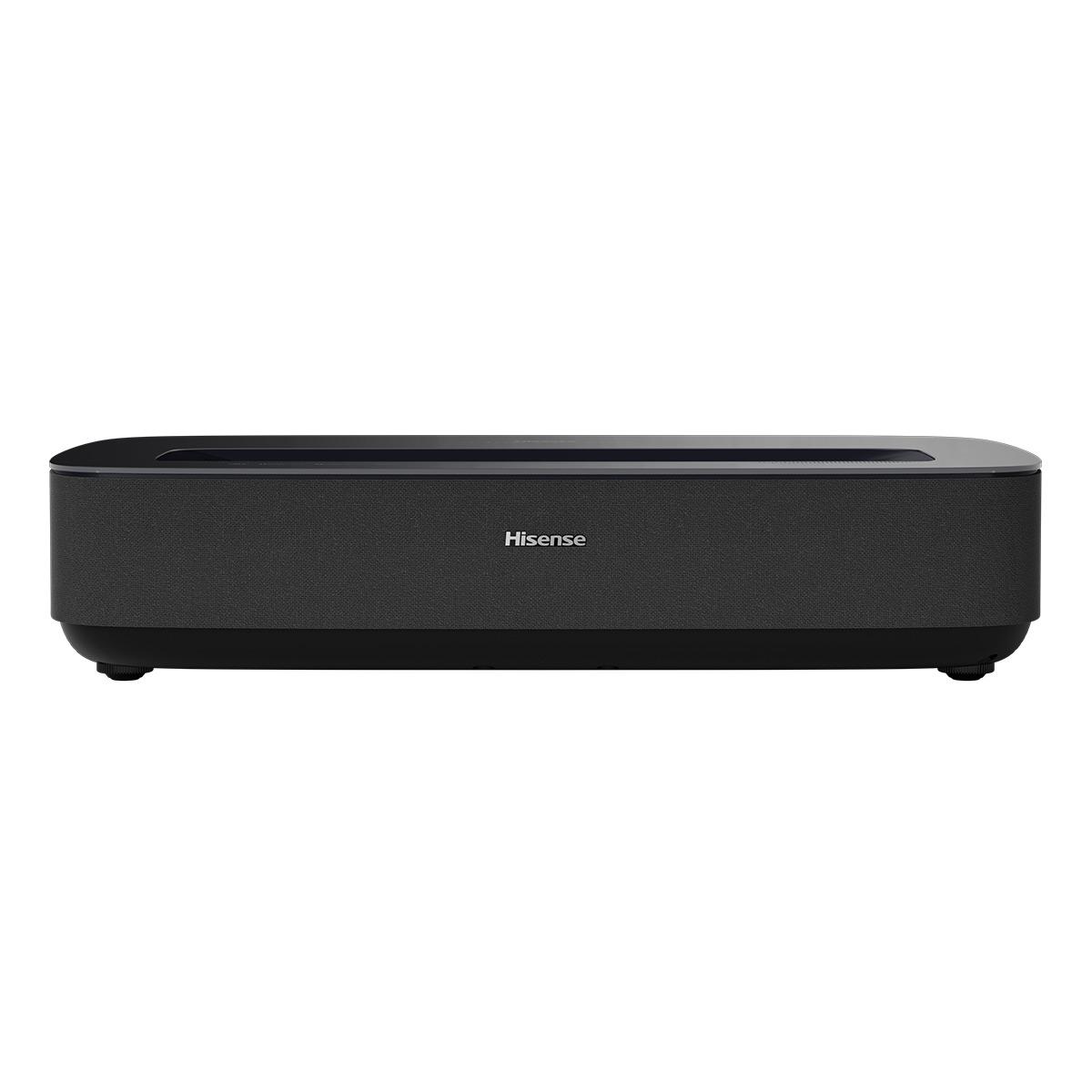
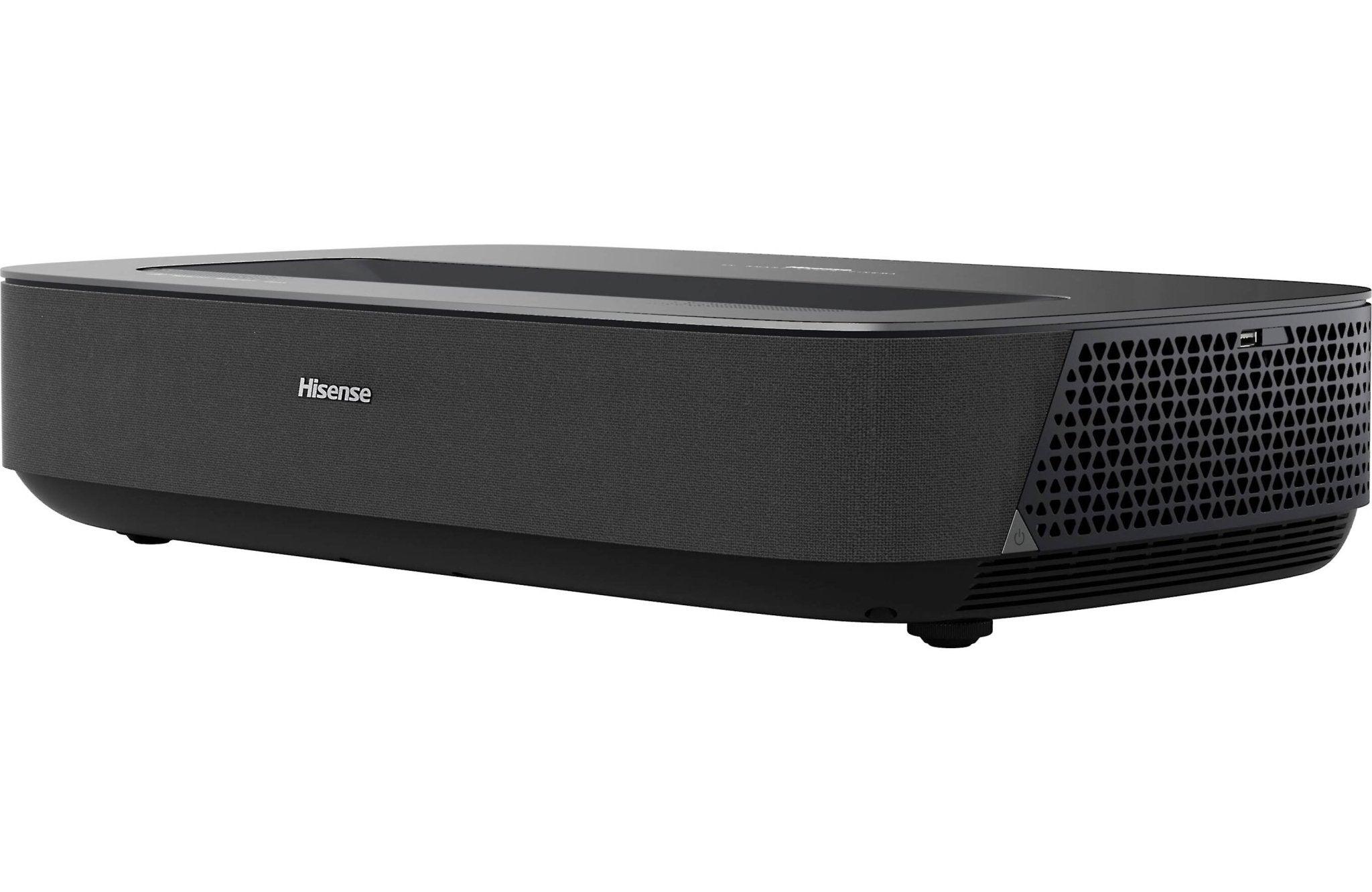
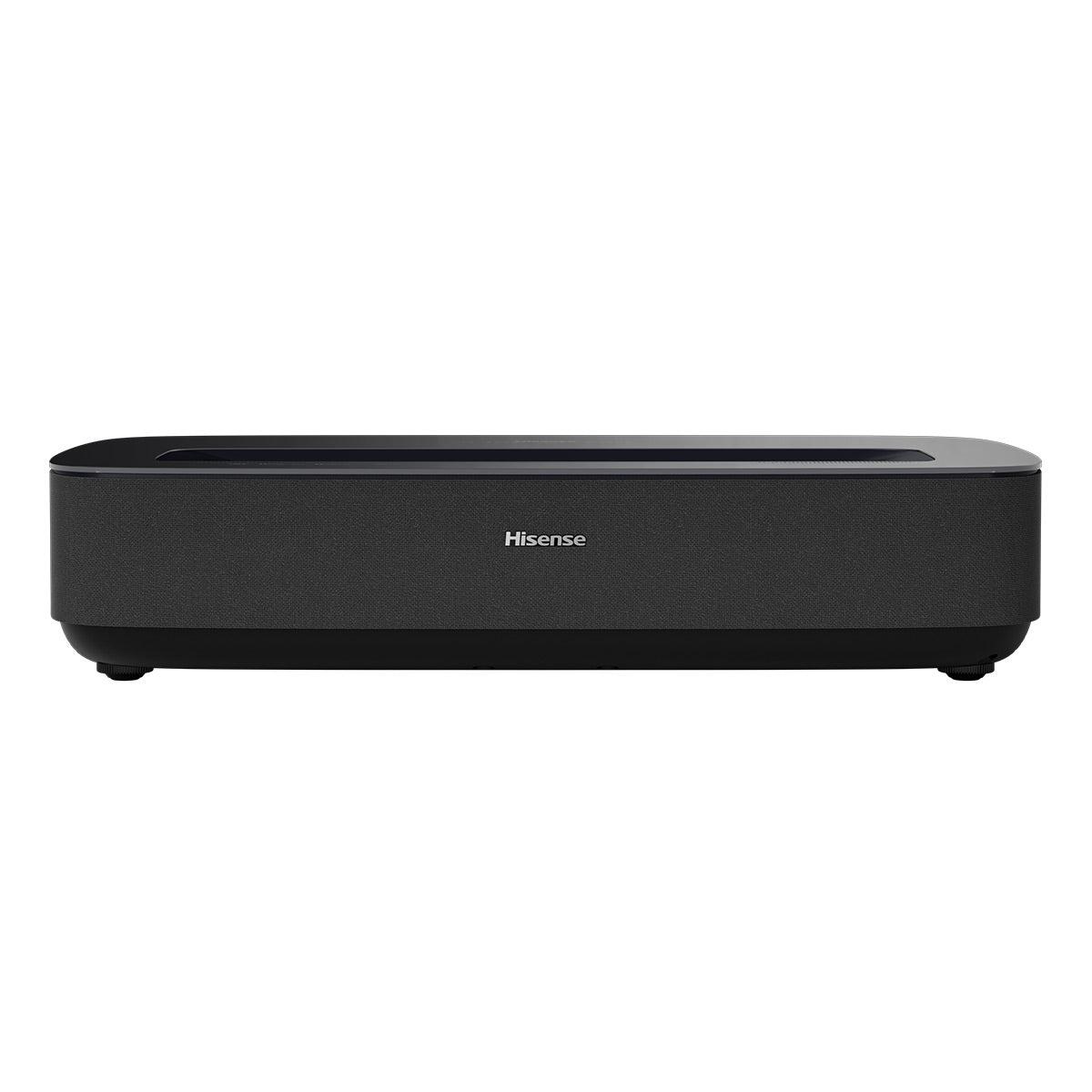
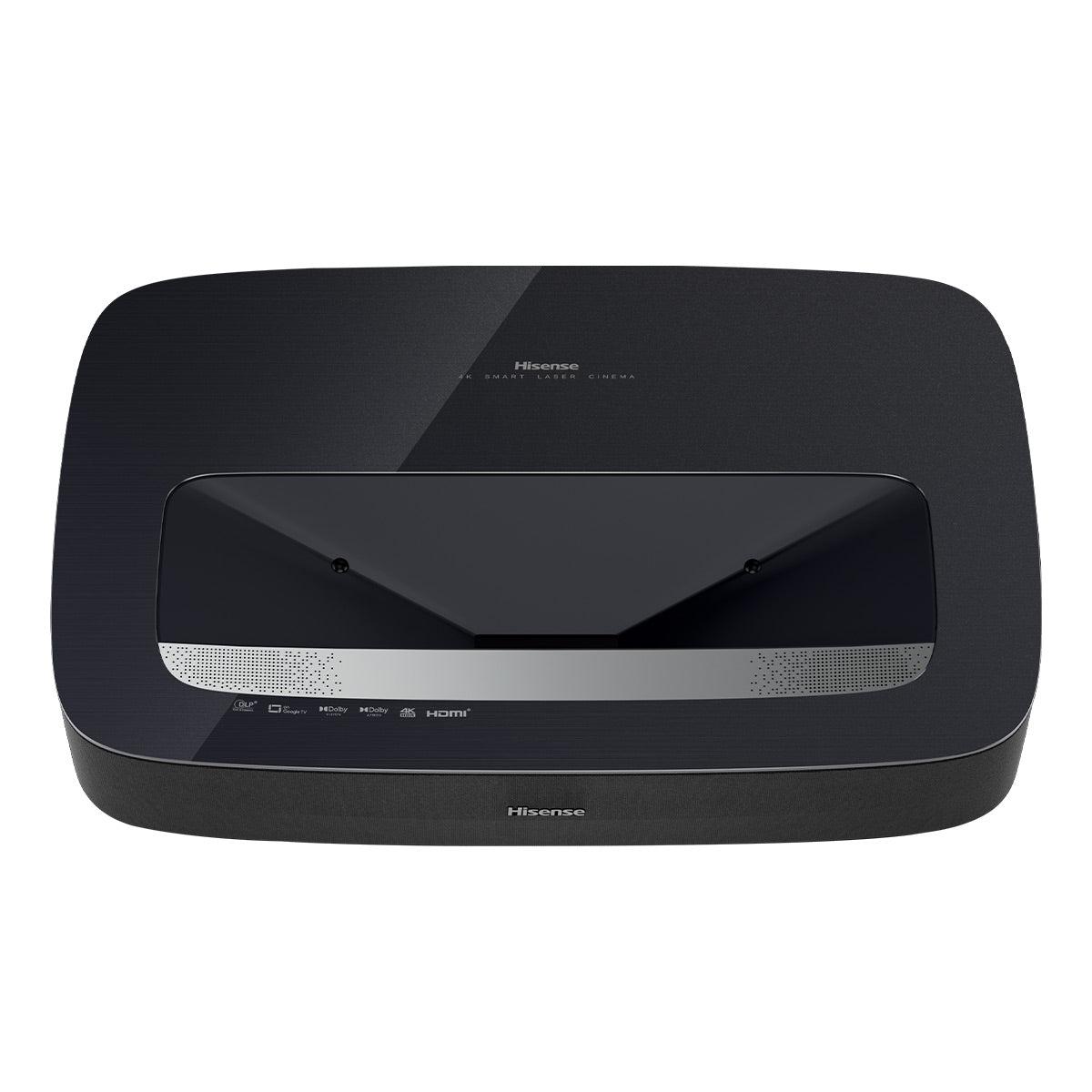
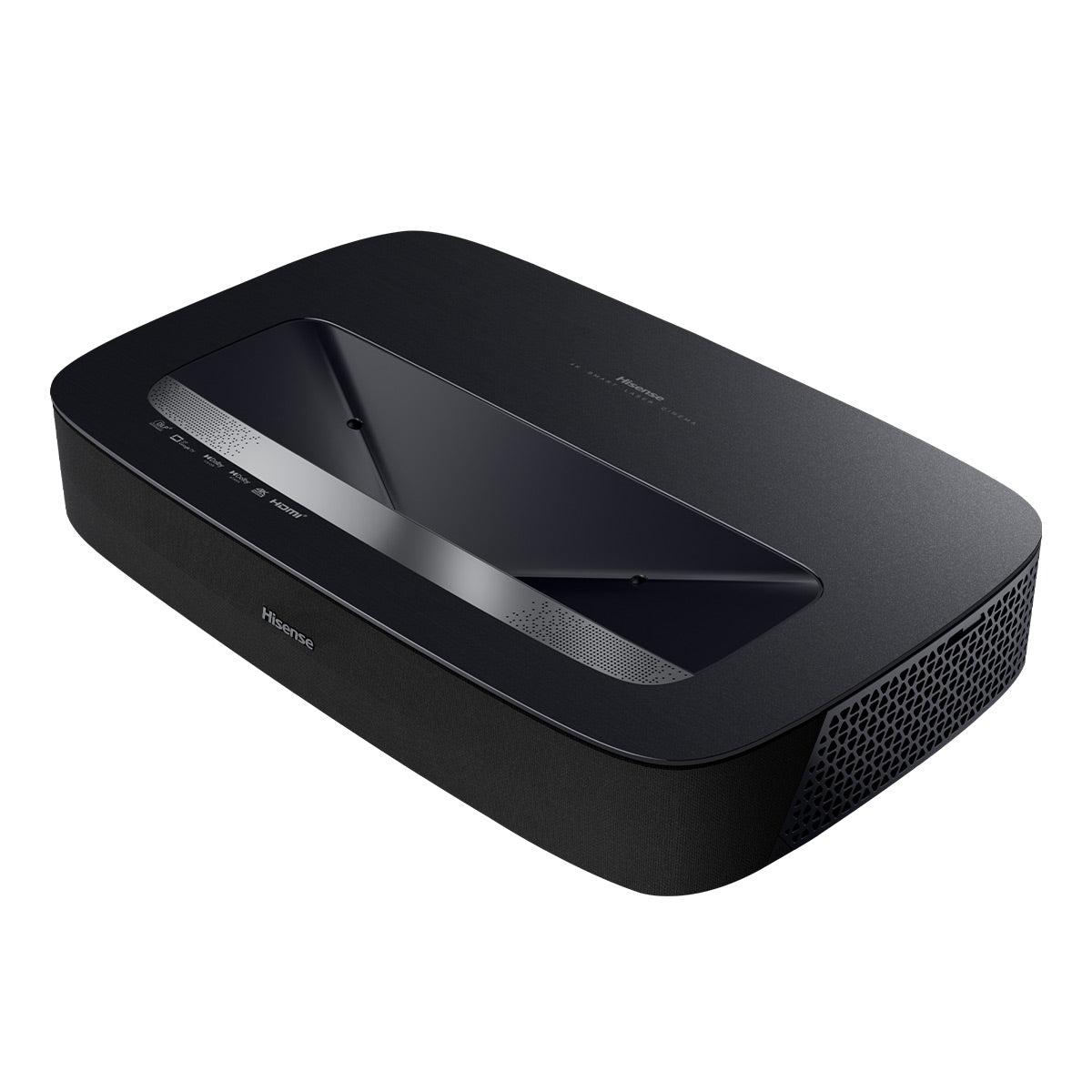
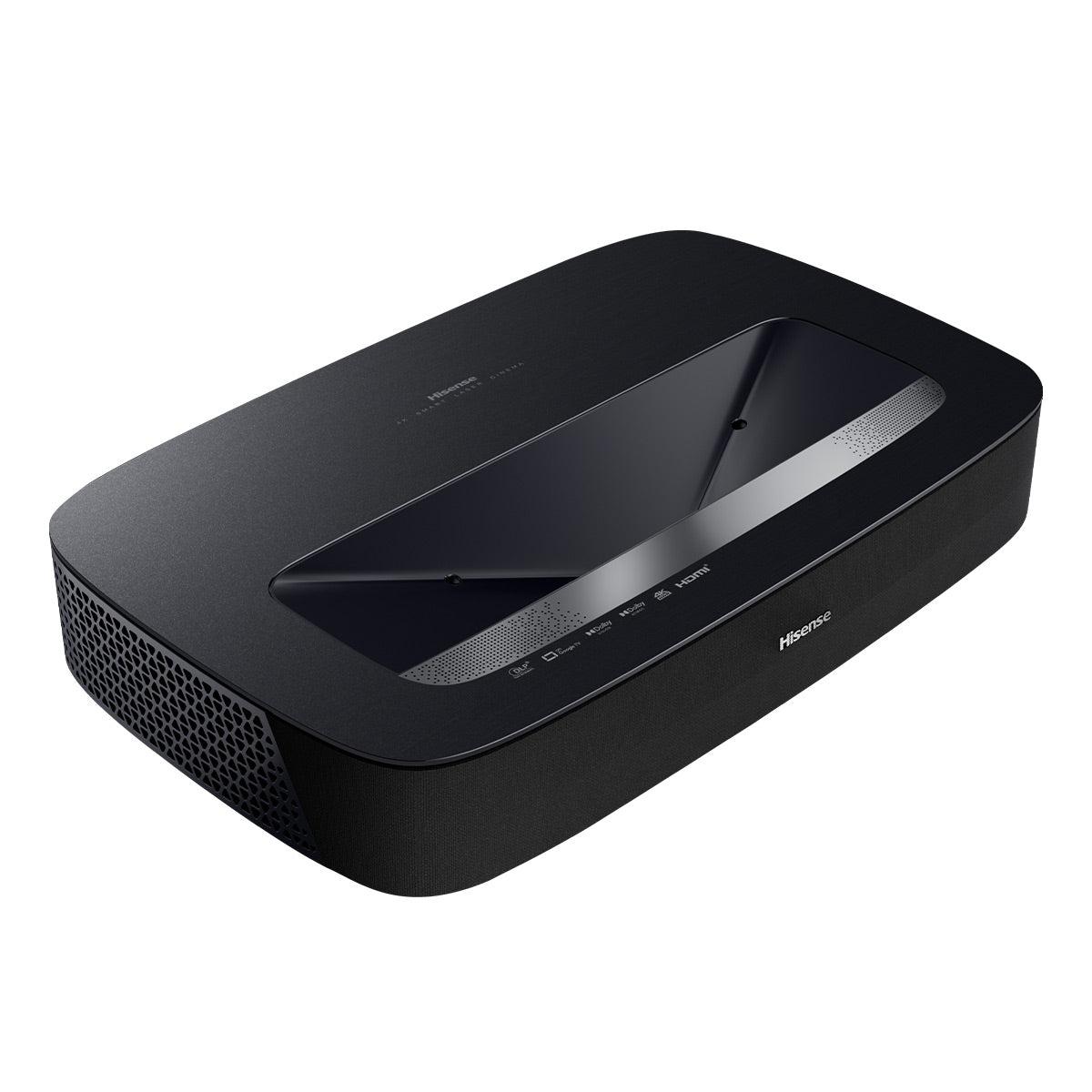
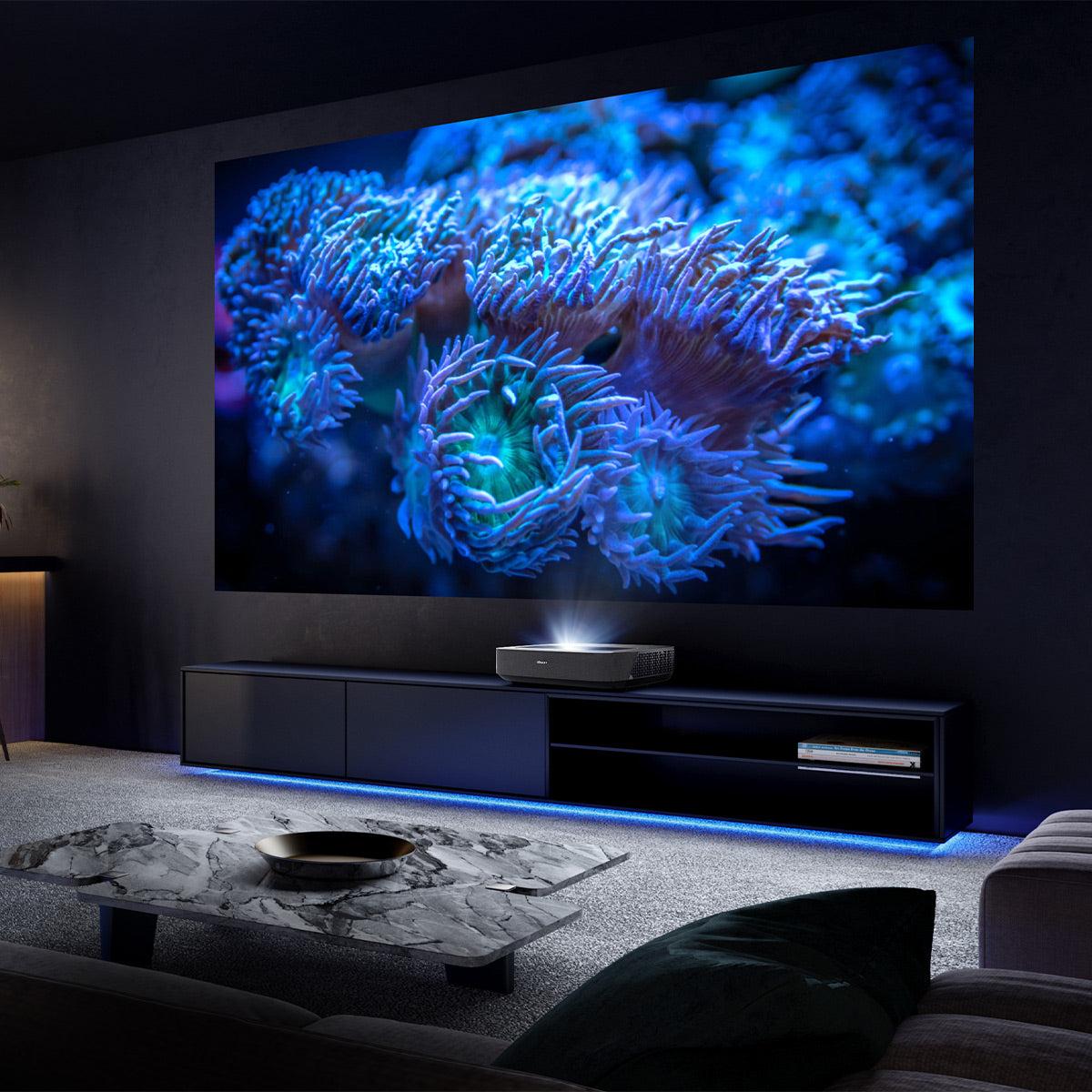
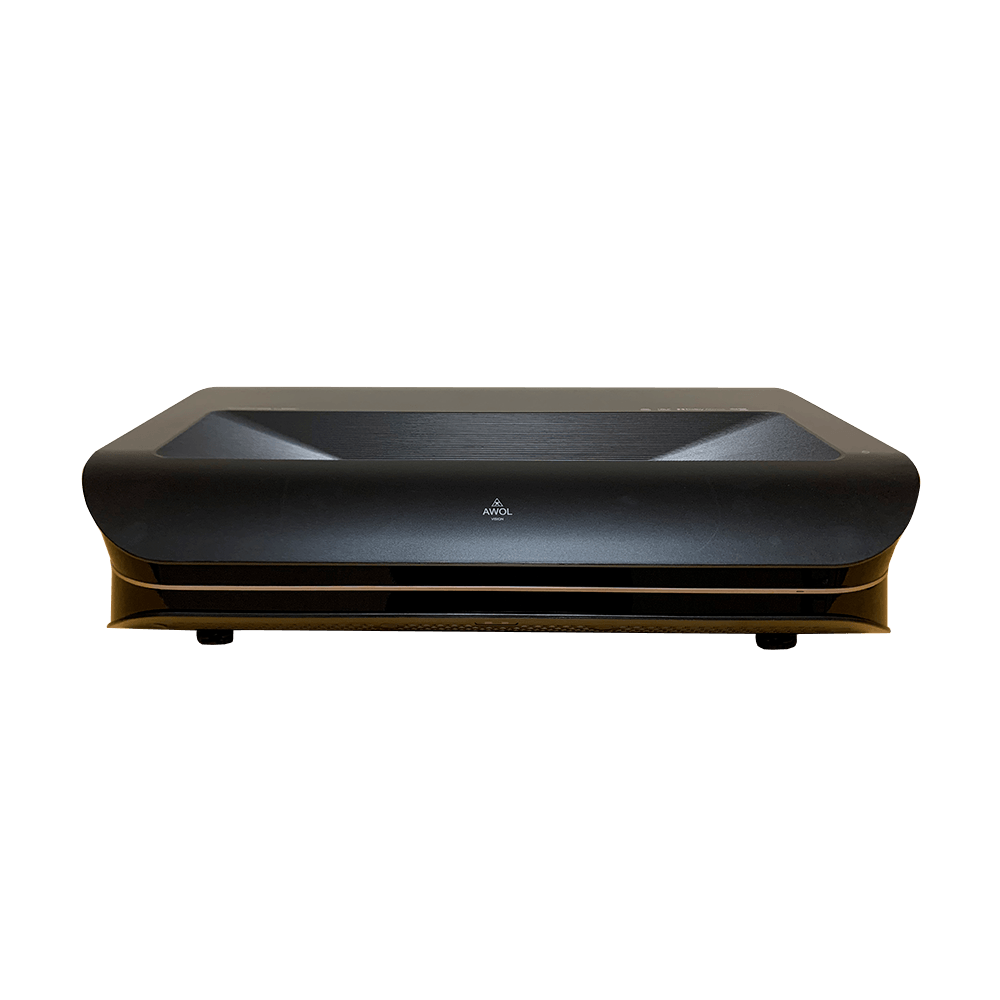
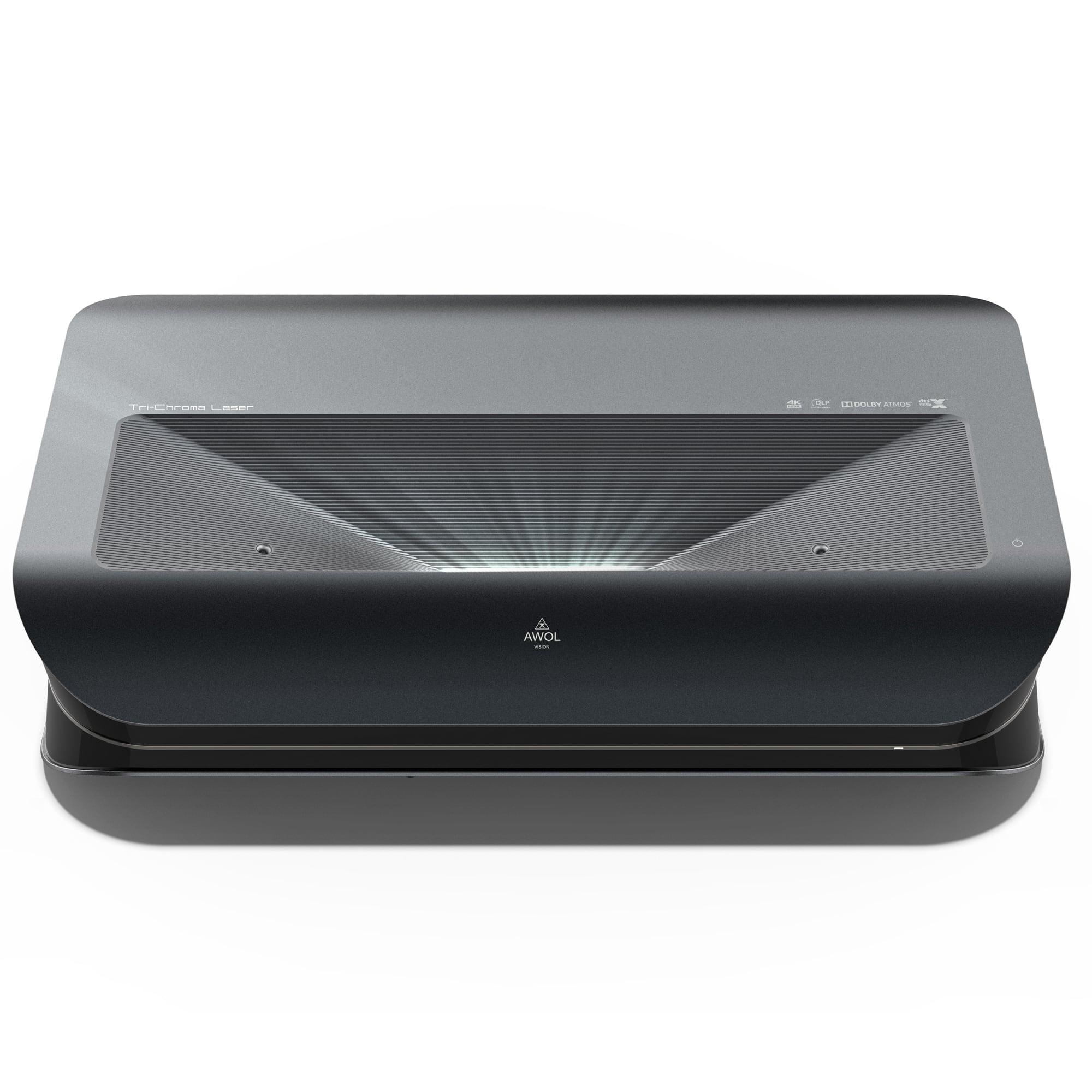
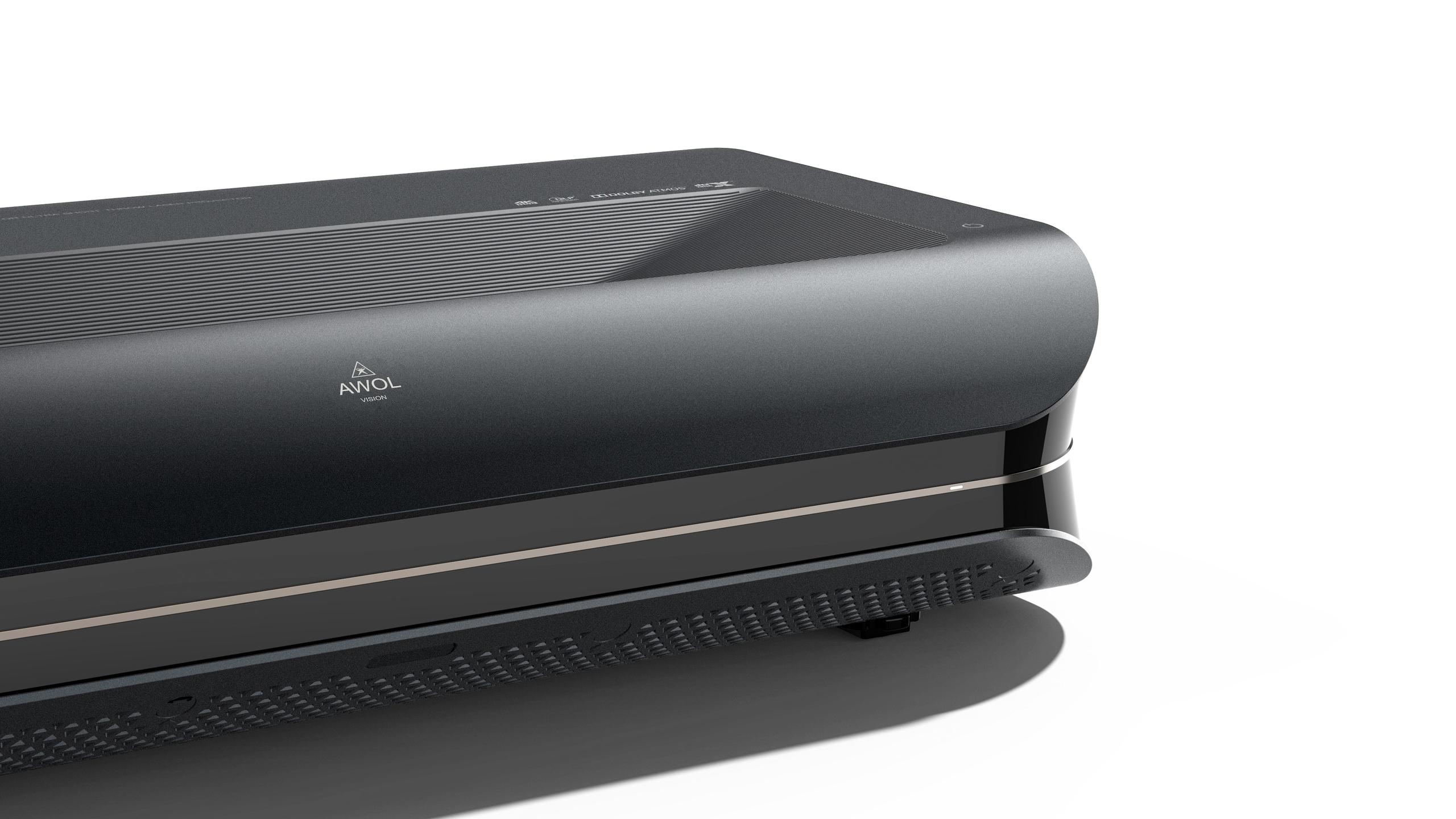
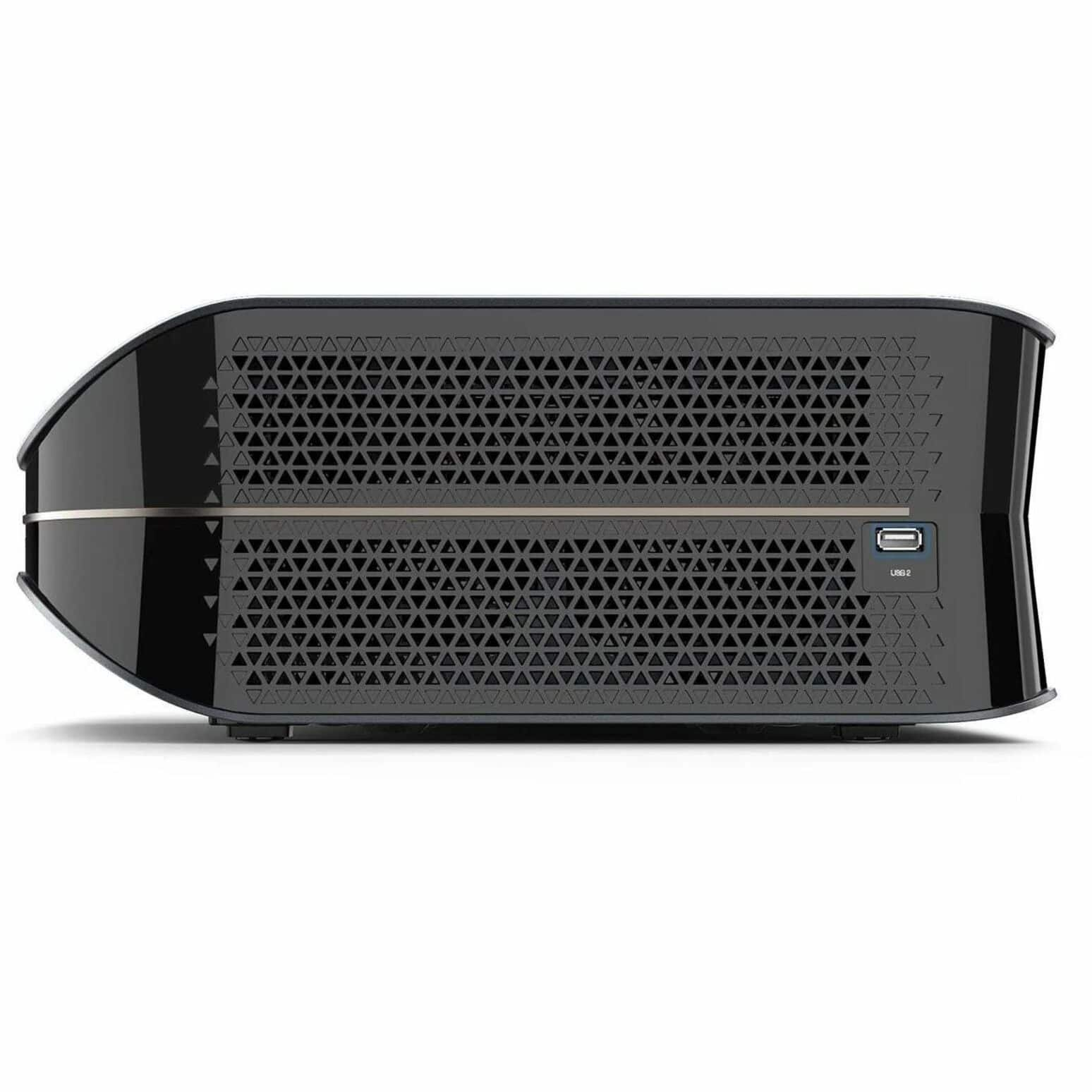
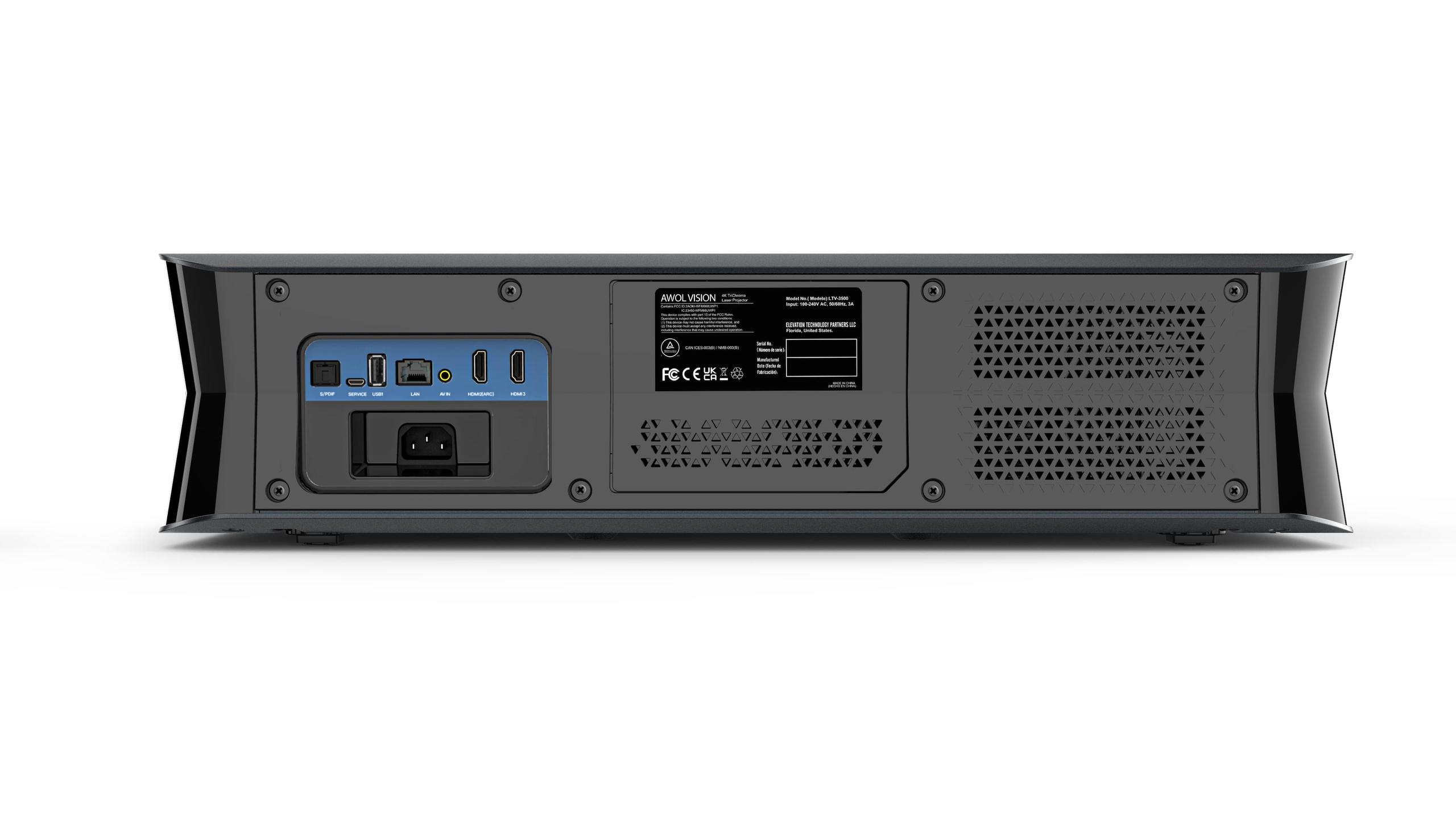
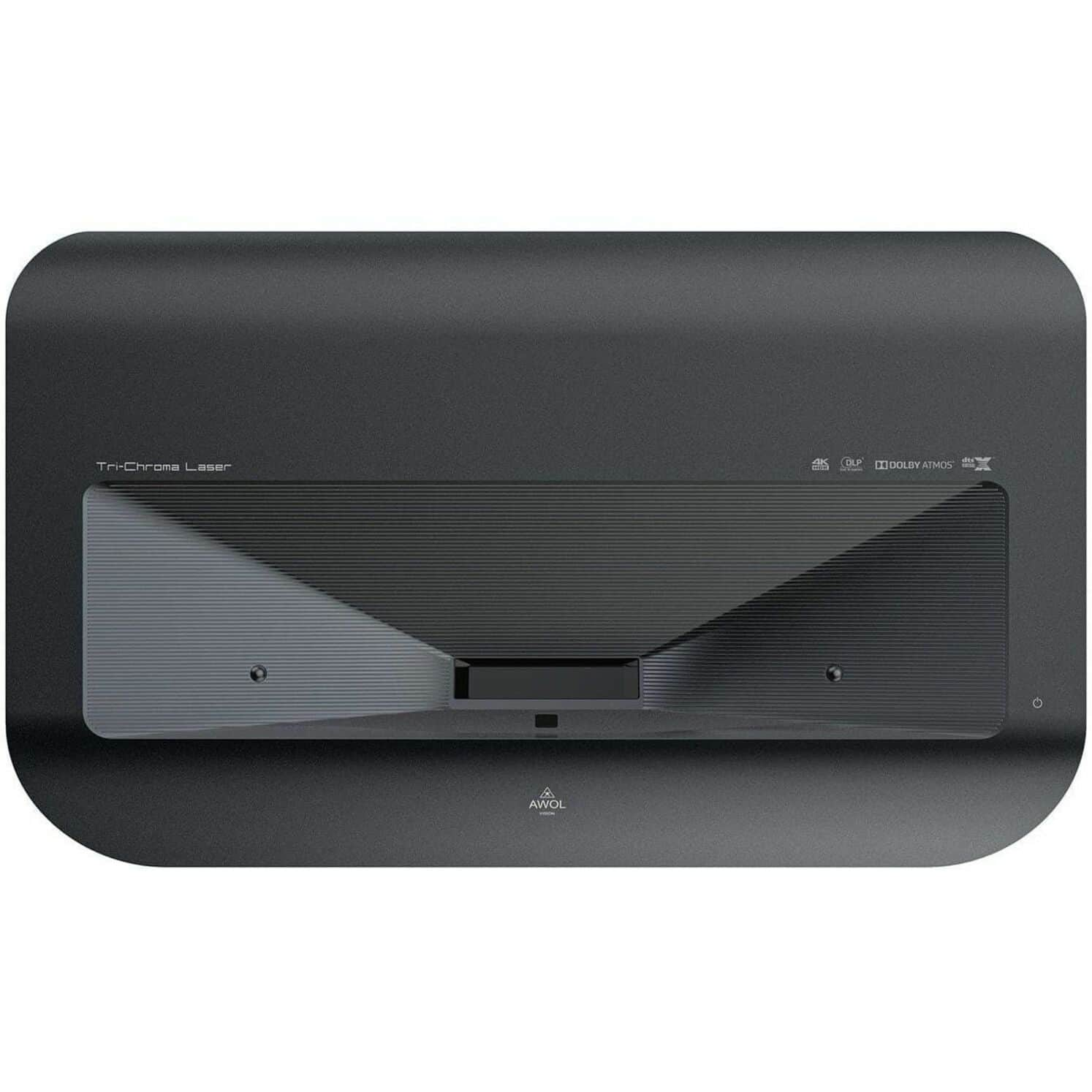
When it comes to creating a huge cinematic display at home, ultra short throw (UST) laser projectors have become an exciting alternative to massive TVs. Today we're comparing two compelling options: the mid-range Hisense PL1 ($2,498) and premium AWOL Vision LTV-3500 Pro ($5,699). Both launched within the past year and represent the latest in projection technology.
Unlike traditional projectors that need significant distance, UST projectors use specially designed optics to create large images from just inches away from your wall or screen. This clever engineering means you can place them in a TV-like cabinet without worrying about people walking through the projection beam or complex ceiling mounts.
The "laser" part refers to their light source - instead of replaceable bulbs, they use lasers that last 25,000+ hours while providing better color accuracy and instant on/off capability. Think of it like upgrading from fluorescent to LED lighting, but for projectors.
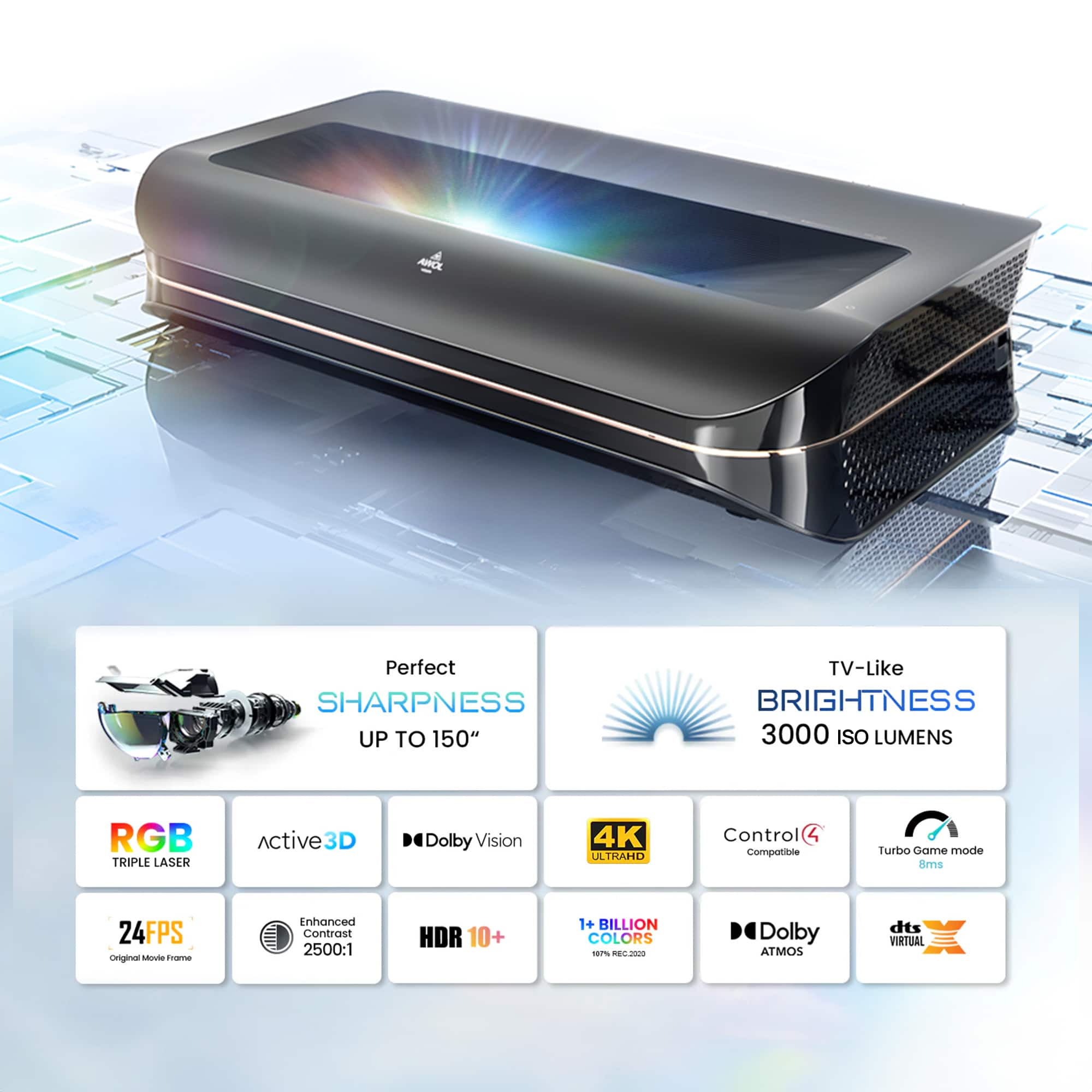
One of the biggest practical differences between these projectors is their ability to combat room lighting. The AWOL LTV-3500 Pro boasts 3,500 ANSI lumens (a standardized brightness measurement), while the Hisense PL1 outputs 2,200 ANSI lumens.
This difference is significant in real-world use. The PL1 performs well in dim to moderately lit rooms, but you'll want good light control for the best experience. The LTV-3500 Pro's extra brightness means it can maintain vibrant images even with some lights on or during daytime viewing. This flexibility might be worth the premium if you're not planning to always watch in a dark room.
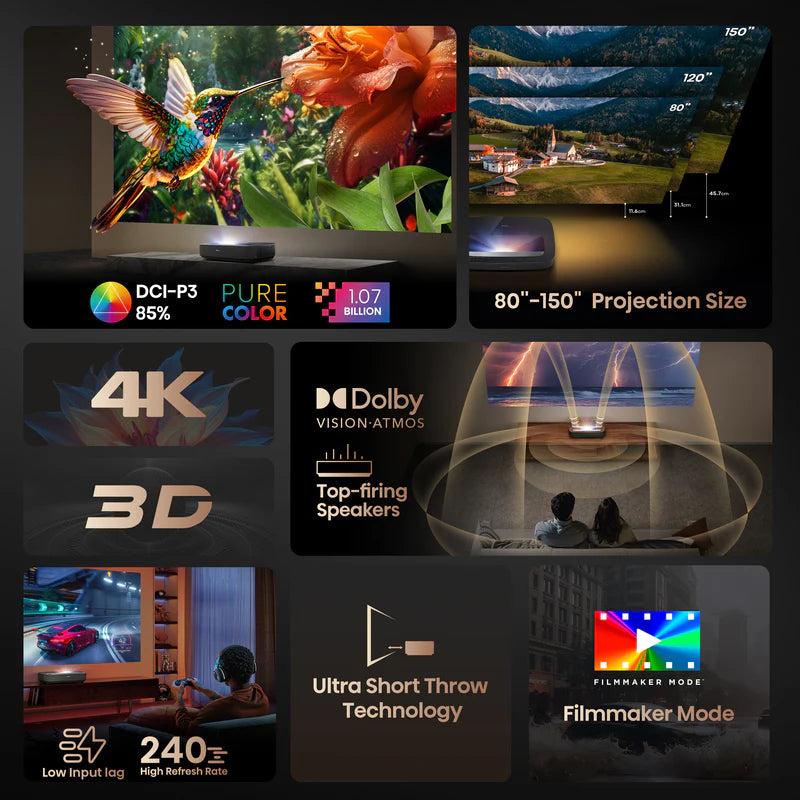
The technology behind color reproduction marks a key distinction between these projectors. The PL1 uses a single blue laser with a phosphor wheel (similar to how white LEDs work) to create colors. This proven approach delivers solid results, covering 85% of the DCI-P3 color space used in modern movies.
The LTV-3500 Pro takes a more advanced approach with separate red, green, and blue lasers. This triple-laser system achieves an impressive 107% of the even wider BT.2020 color space. In practical terms, this means more saturated colors and better HDR performance when watching the latest movies and TV shows.
Both projectors support HDR10 and Dolby Vision, modern standards that allow for greater contrast and color range. However, the LTV-3500 Pro adds HDR10+ support and combines it with superior processing power for better handling of bright highlights and dark scenes.
The triple-laser system also gives the LTV-3500 Pro an advantage in contrast capability. While both projectors can create bright highlights, the AWOL's more sophisticated light engine can better control dark scenes while maintaining brightness elsewhere in the image.
For gamers, input lag (the delay between pressing a button and seeing the result) is crucial. The PL1's 46.6ms lag is acceptable for casual gaming but might frustrate competitive players. The LTV-3500 Pro's impressive 8ms in 1080p/120Hz mode and 15ms at 4K/60Hz rivals good gaming TVs.
The LTV-3500 Pro also offers better motion handling and supports higher refresh rates, making fast-paced games look smoother and more responsive. This makes it a more versatile choice if gaming is a priority alongside movie watching.
The PL1 integrates Google TV, providing direct access to streaming services and voice control. It's a polished experience that works just like a smart TV. The LTV-3500 Pro takes a different approach, bundling an Amazon Fire TV Stick 4K Max for streaming. While this means an extra HDMI port is occupied, it allows for easy updates by simply replacing the streaming stick.
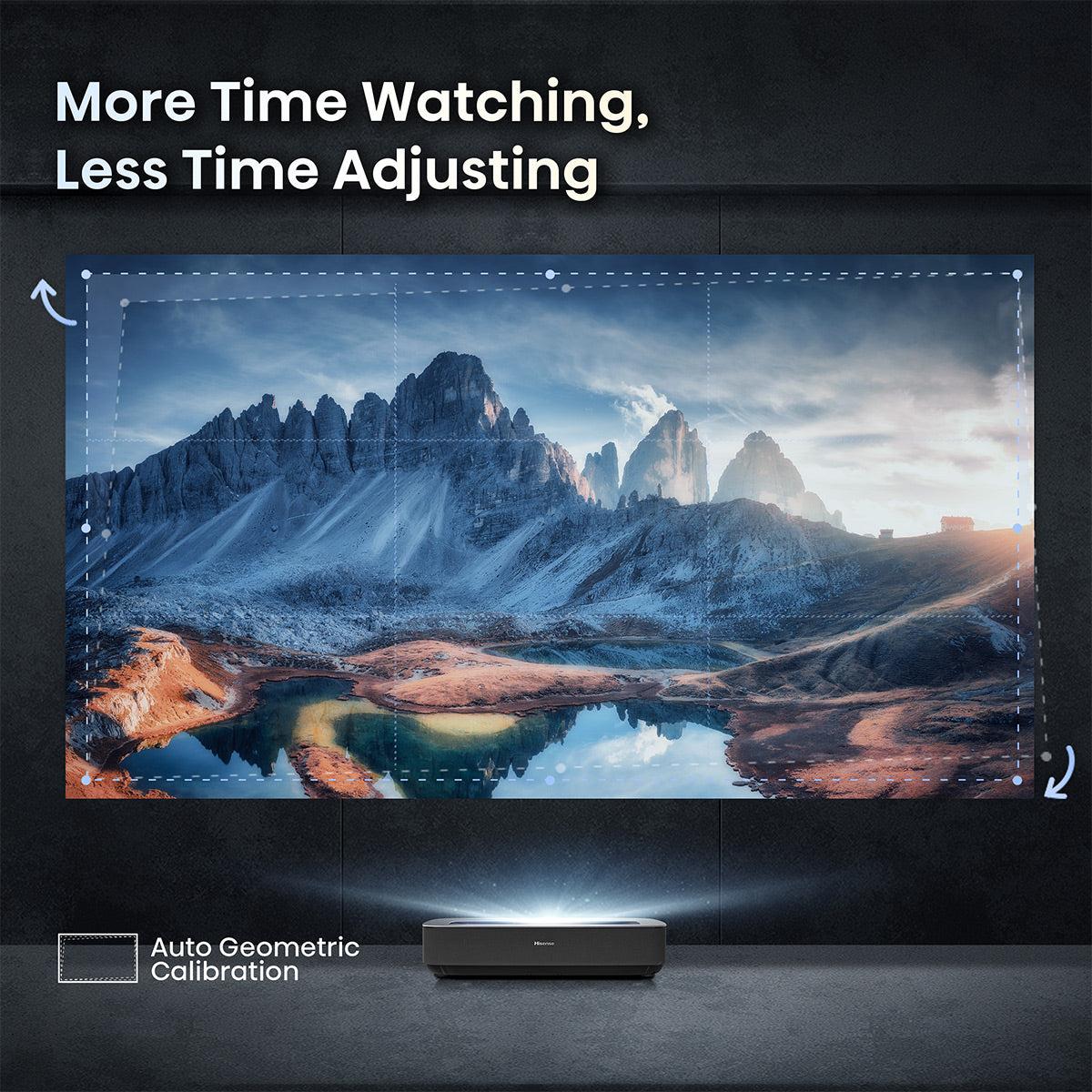
Both projectors offer automatic geometric correction to help align the image with your screen, but the PL1's system is more refined and user-friendly. This might seem minor, but it makes initial setup and any subsequent adjustments much easier.
At roughly $2,500, the Hisense PL1 represents solid value for anyone wanting to explore big-screen projection without breaking the bank. Its performance is more than adequate for most users, especially in controlled lighting conditions.
The AWOL LTV-3500 Pro at $5,700 requires a bigger investment but justifies it with superior performance across the board. The brightness advantage alone might be worth it for many users, while the better color accuracy, gaming performance, and contrast make it a more future-proof choice.
Consider these key factors when choosing between these projectors:
Both projectors represent impressive technology that can transform your home entertainment experience. The PL1 hits a sweet spot of performance and value that will satisfy most users. The LTV-3500 Pro's premium features and performance make it the better choice for enthusiasts and those with more demanding requirements.
For my home theater, I'd lean toward the LTV-3500 Pro despite the higher cost, primarily because of its superior brightness and color performance. However, I wouldn't hesitate to recommend the PL1 to friends looking for a more budget-conscious big-screen solution.
Remember, either projector will need proper positioning and ideally a good screen to perform its best. Factor these additional costs into your decision-making process, and consider your specific viewing environment and habits when making your choice.
| Hisense PL1 ($2,498) | AWOL Vision LTV-3500 Pro ($5,699) |
|---|---|
| Light Source Technology - Impacts color accuracy and longevity | |
| Single blue laser with phosphor wheel | RGB triple laser system |
| Brightness - Critical for ambient light performance | |
| 2,200 ANSI lumens (good for moderate lighting) | 3,500 ANSI lumens (excellent for bright rooms) |
| Color Gamut - Determines range of displayable colors | |
| 85% DCI-P3 (good for standard content) | 107% BT.2020 (exceptional for HDR content) |
| Gaming Performance - Important for interactive content | |
| 46.6ms input lag at 4K/60Hz | 8ms at 1080p/120Hz, 15ms at 4K/60Hz |
| HDR Support - Affects dynamic range and color depth | |
| HDR10, Dolby Vision, HLG | HDR10, HDR10+, Dolby Vision, HLG |
| Smart Platform - Determines streaming capability | |
| Integrated Google TV | External Fire TV Stick 4K Max included |
| Maximum Screen Size - Affects installation flexibility | |
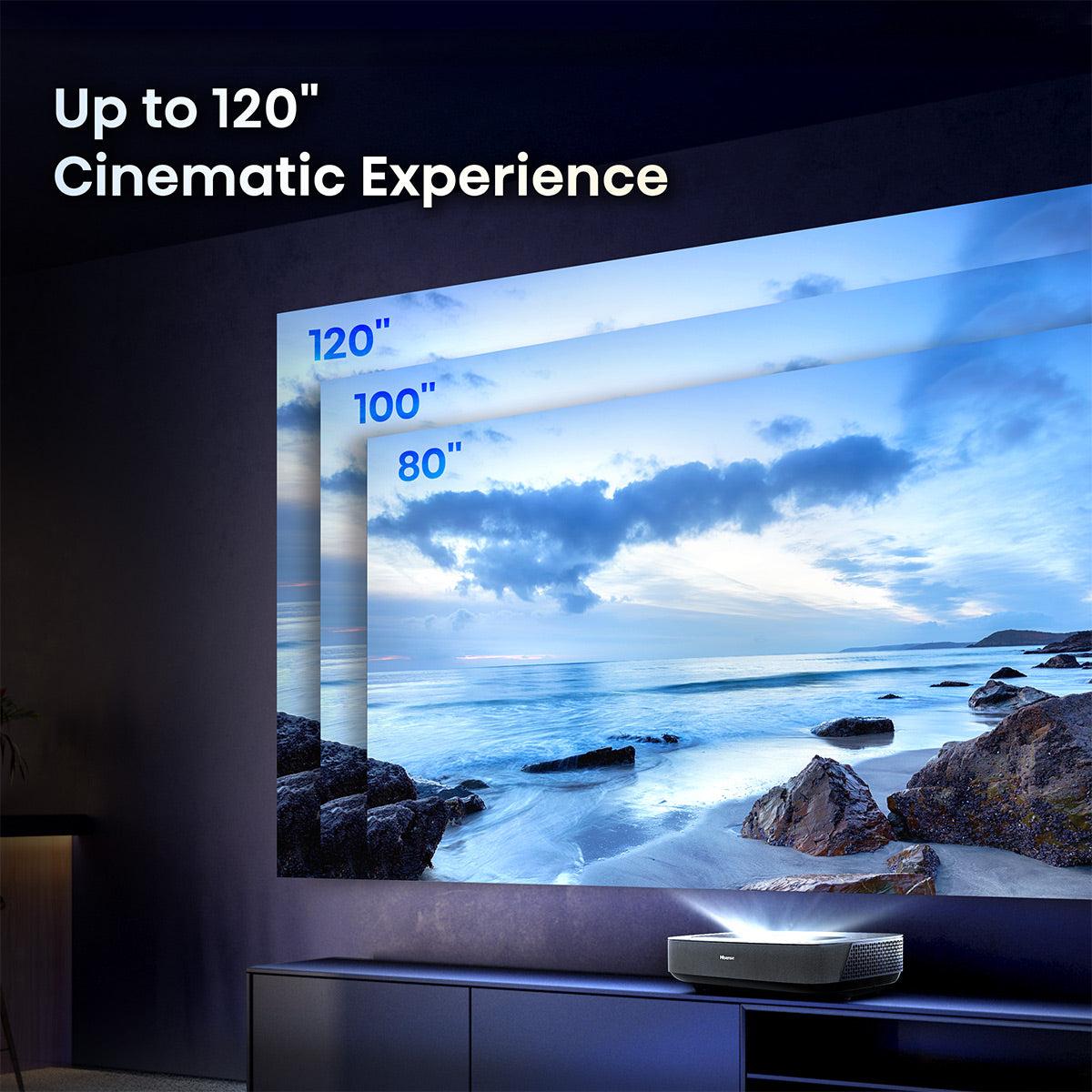
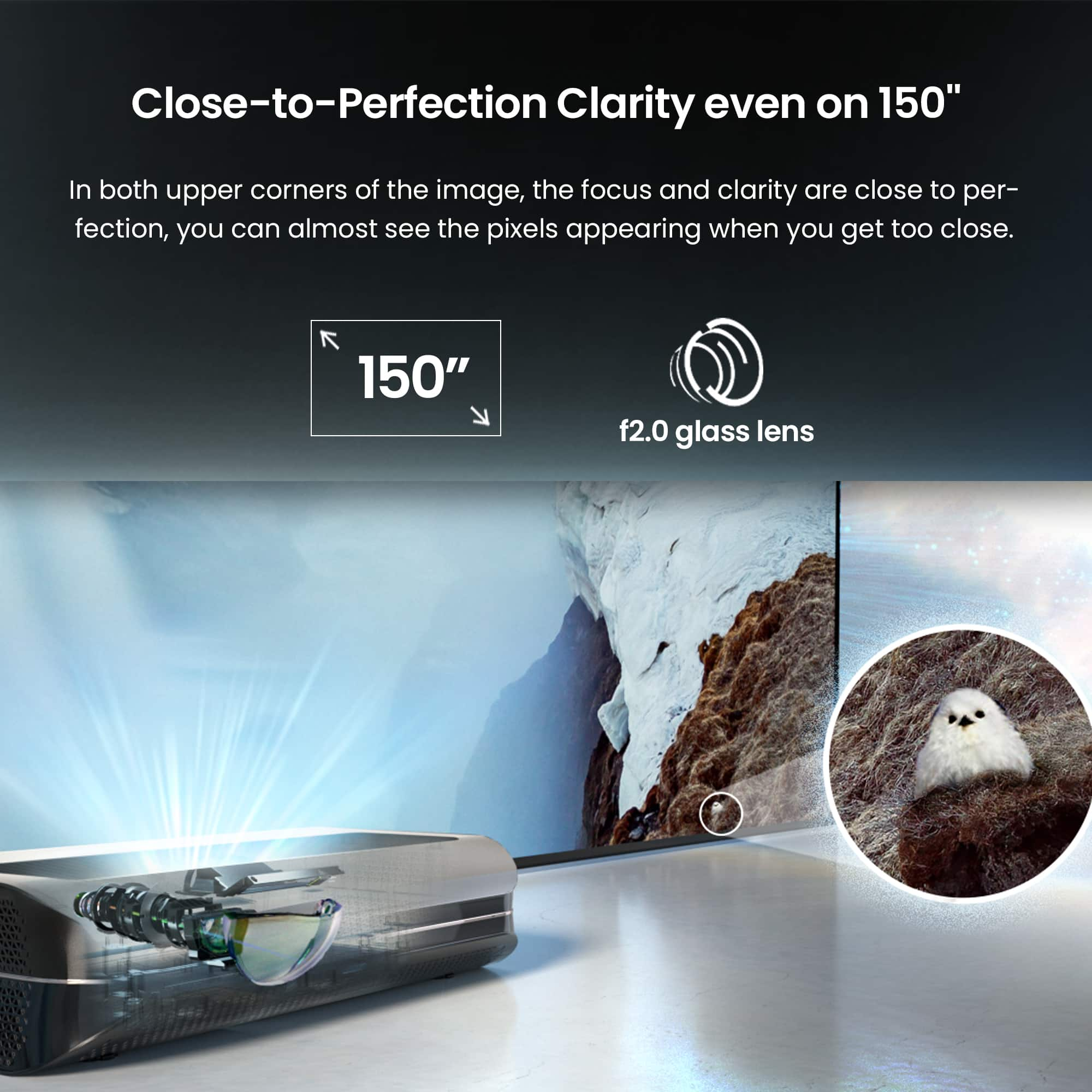
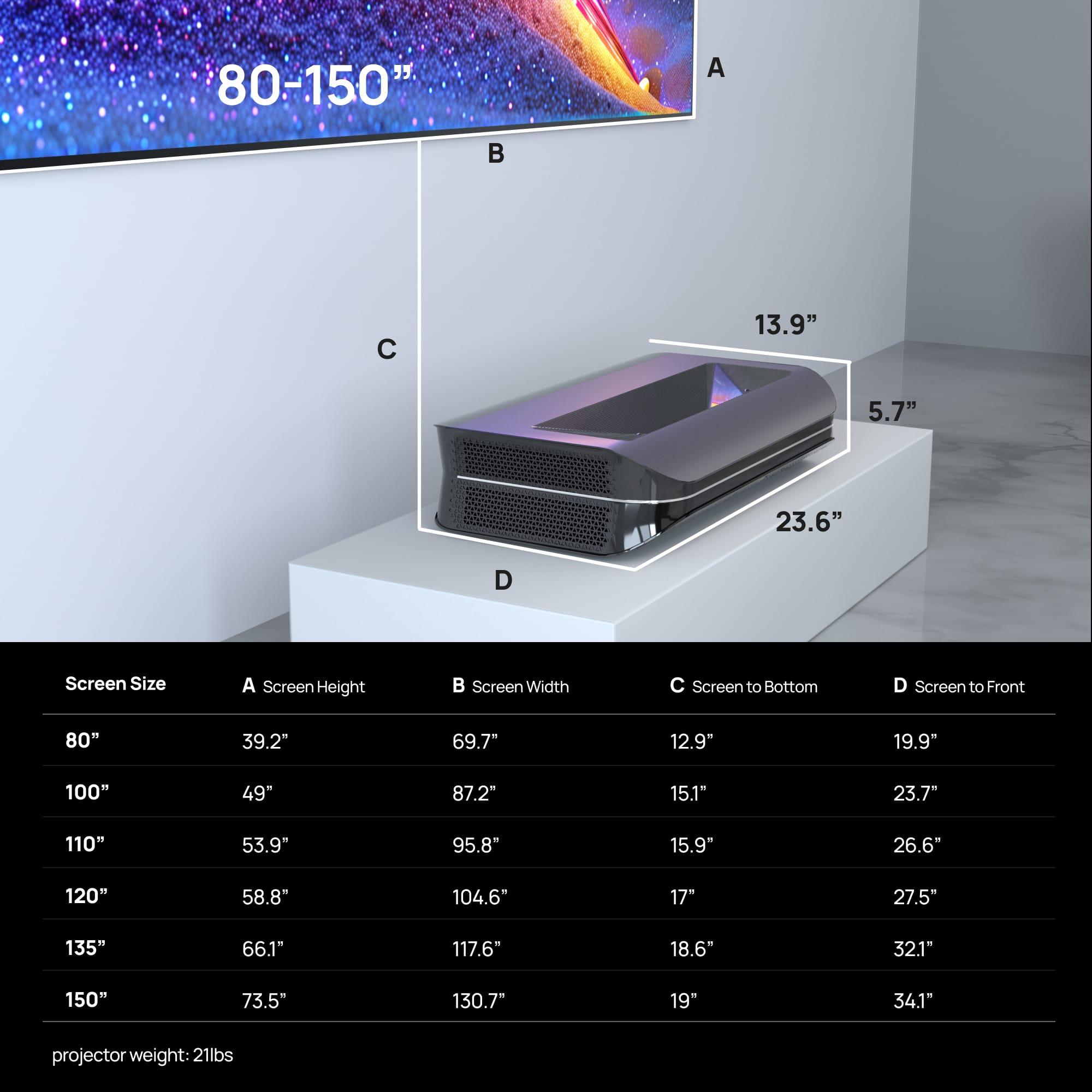
| 80" to 120" | 80" to 150" |
| Sound System - Built-in audio capability | |
| 30W Dolby Atmos | 36W Dolby Atmos |
| Lifespan - Long-term value consideration | |
| 25,000 hours | 25,000 hours |
| Setup Features - Affects ease of installation | |
| Advanced auto geometric correction, digital focus | Basic geometric correction, manual focus |
The AWOL Vision LTV-3500 Pro ($5,699) performs significantly better in bright rooms with its 3,500 ANSI lumens compared to the Hisense PL1's ($2,498) 2,200 ANSI lumens. This makes the LTV-3500 Pro better suited for daytime viewing or rooms with ambient light.
The Hisense PL1 offers better value for casual viewers at $2,498, while the AWOL LTV-3500 Pro justifies its $5,699 price with superior performance. The PL1 is the better value choice unless you specifically need the higher brightness and advanced features.
The AWOL Vision LTV-3500 Pro is significantly better for gaming with its 8ms input lag at 1080p/120Hz and 15ms at 4K/60Hz. The Hisense PL1 has higher input lag at 46.6ms, making it less suitable for competitive gaming.
Yes, both the Hisense PL1 and AWOL LTV-3500 Pro support true 4K resolution (3840x2160), using pixel-shifting technology to achieve sharp, detailed images.
The Hisense PL1 has integrated Google TV for seamless smart features, while the AWOL LTV-3500 Pro uses an included Fire TV Stick 4K Max. The PL1's integrated solution is more convenient but the Fire TV stick is easily upgradeable.
Both projectors are ultra-short throw and can create 100-inch images from approximately 8-9 inches from the wall, making them ideal for furniture placement similar to a TV stand.
The AWOL LTV-3500 Pro has more comprehensive HDR support, including HDR10+ in addition to HDR10 and Dolby Vision. The Hisense PL1 supports HDR10 and Dolby Vision, which is still excellent for most content.
Both the Hisense PL1 and AWOL LTV-3500 Pro are rated for 25,000 hours of use, which equals about 17 years at 4 hours of daily use.
The Hisense PL1 has more advanced auto geometric correction and focus features, making it easier to set up than the AWOL LTV-3500 Pro, which requires more manual adjustment.
Yes, both projectors can effectively replace a TV, but the AWOL LTV-3500 Pro is better suited for bright room viewing, while the Hisense PL1 works best in controlled lighting conditions.
While both projectors can project onto a white wall, an ALR (Ambient Light Rejecting) screen is recommended for optimal performance, especially for the Hisense PL1 in brighter rooms.
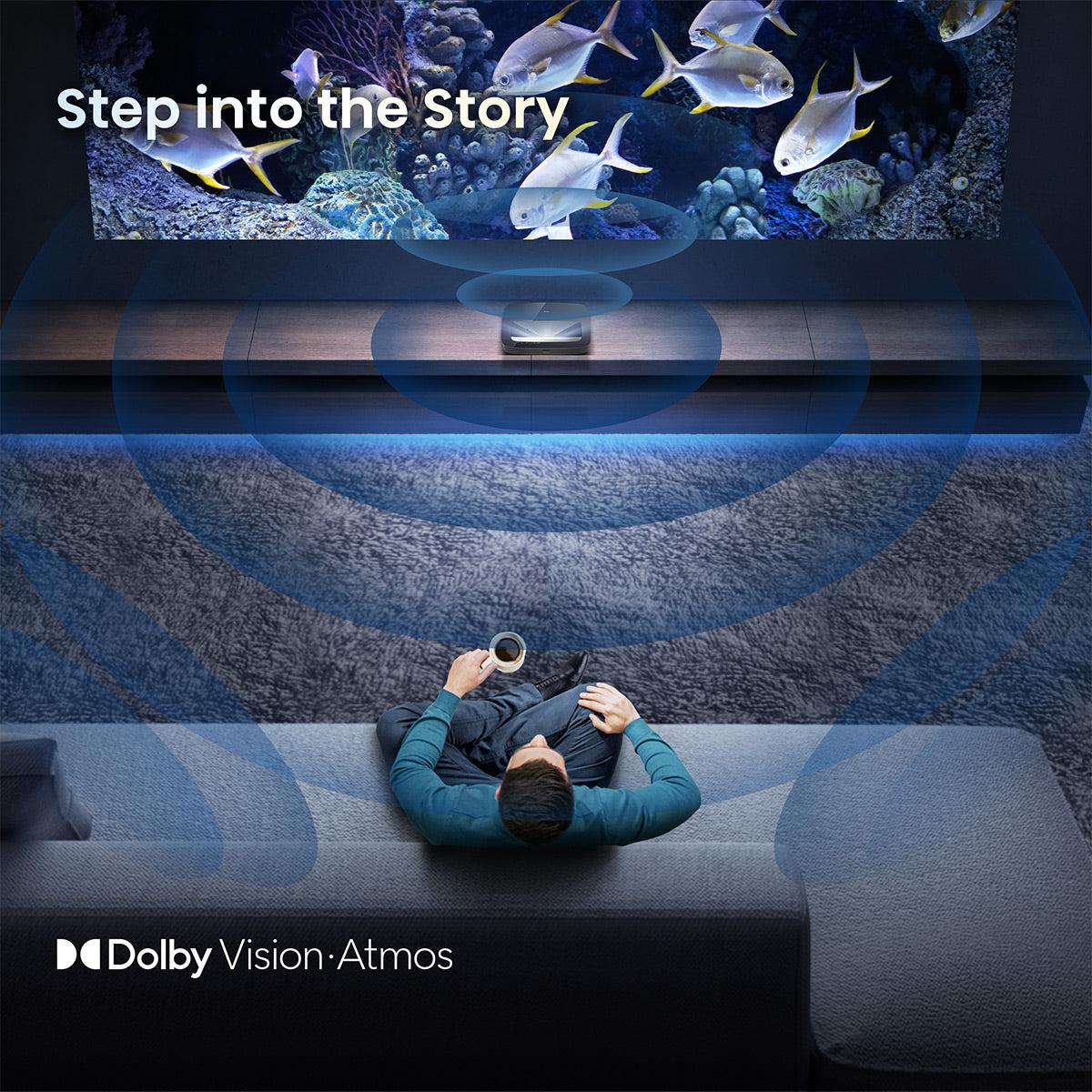
The AWOL LTV-3500 Pro has a slightly more powerful 36W Dolby Atmos system compared to the Hisense PL1's 30W system, but both benefit from an external sound system for the best home theater experience.
We've done our best to create useful and informative comparisons to help you decide what product to buy. Our research uses advanced automated methods to create this comparison and perfection is not possible - please contact us for corrections or questions. These are the sites we've researched in the creation of this article: projectorscreen.com - dreamediaav.com - projectorcentral.com - trustedreviews.com - crutchfield.com - hometheaterhifi.com - projectorcentral.com - projectorreviews.com - vividstormscreen.com - bhphotovideo.com - shi.com - crutchfield.com - projectorjunkies.com - digitaltrends.com - youtube.com - avsforum.com - dreamediaav.com - awolvision.de - projectorreviews.com - bhphotovideo.com - youtube.com - projectorjunkies.com

Privacy Policy
Terms and Conditions - Affiliate Policy
Home Security
© Copyright 2008-2026.
11816 Inwood Rd #1211, Dallas, TX 75244