

When it comes to throwing an epic party, your speaker choice can make or break the entire vibe. Whether you're hosting a backyard barbecue, a birthday celebration, or just want to blast your favorite playlist loud enough for the whole neighborhood to appreciate, you need a speaker that can deliver both serious power and the kind of bass that gets people moving.
Today we're diving deep into two popular party speakers that take very different approaches to getting the job done: the JBL PartyBox 710 and the Samsung MX-ST50F. One prioritizes raw power and professional features, while the other focuses on portability and convenience. Let's break down which one deserves a spot at your next gathering.
Before we jump into the specifics, it's worth understanding what separates party speakers from your typical Bluetooth speaker or home audio system. Party speakers are designed with one primary goal: filling large spaces with loud, energetic sound that can compete with background noise from conversations, laughter, and general party chaos.
The most important performance metrics for party speakers include maximum volume output (measured in decibels), bass response (how low and powerful the low frequencies sound), and something called "headroom" – basically how clean the audio stays when you crank it up to maximum volume. Unlike audiophile speakers that focus on accurate sound reproduction, party speakers are tuned to emphasize excitement and energy, often boosting bass and adding features like customizable lighting to enhance the party atmosphere.
Sound dispersion also matters significantly. Some speakers project sound in one direction (directional), while others spread it more evenly around the room (omnidirectional). The choice between these affects where you can place the speaker and how well it fills your space.
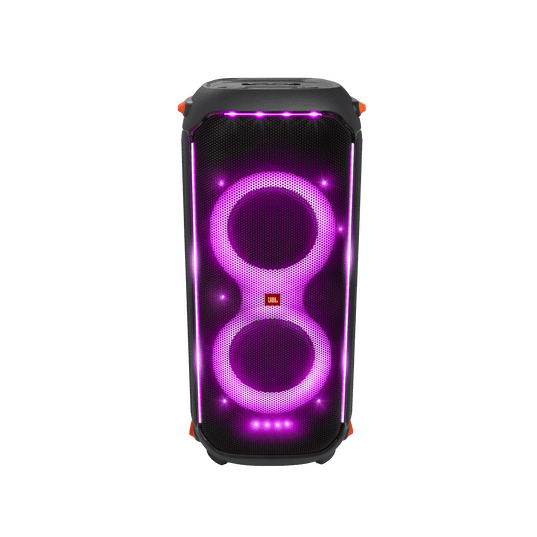
The JBL PartyBox 710, released in 2021, represents JBL's premium approach to party audio. At the time of writing, it commands a significantly higher price than the Samsung but delivers accordingly massive performance. This speaker demands to be plugged into a wall outlet – there's no battery option – but in exchange, you get 800 watts of pure audio power.
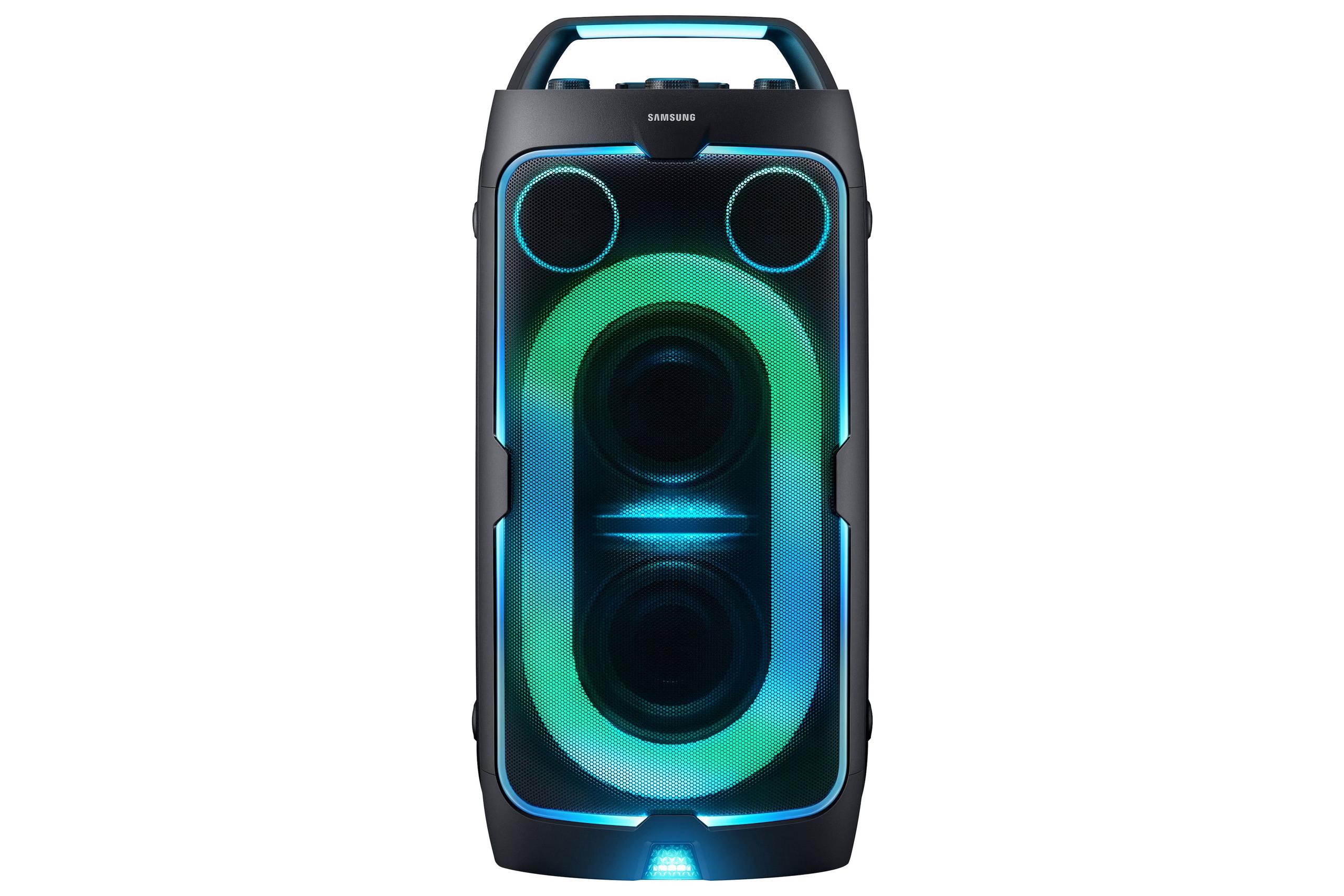
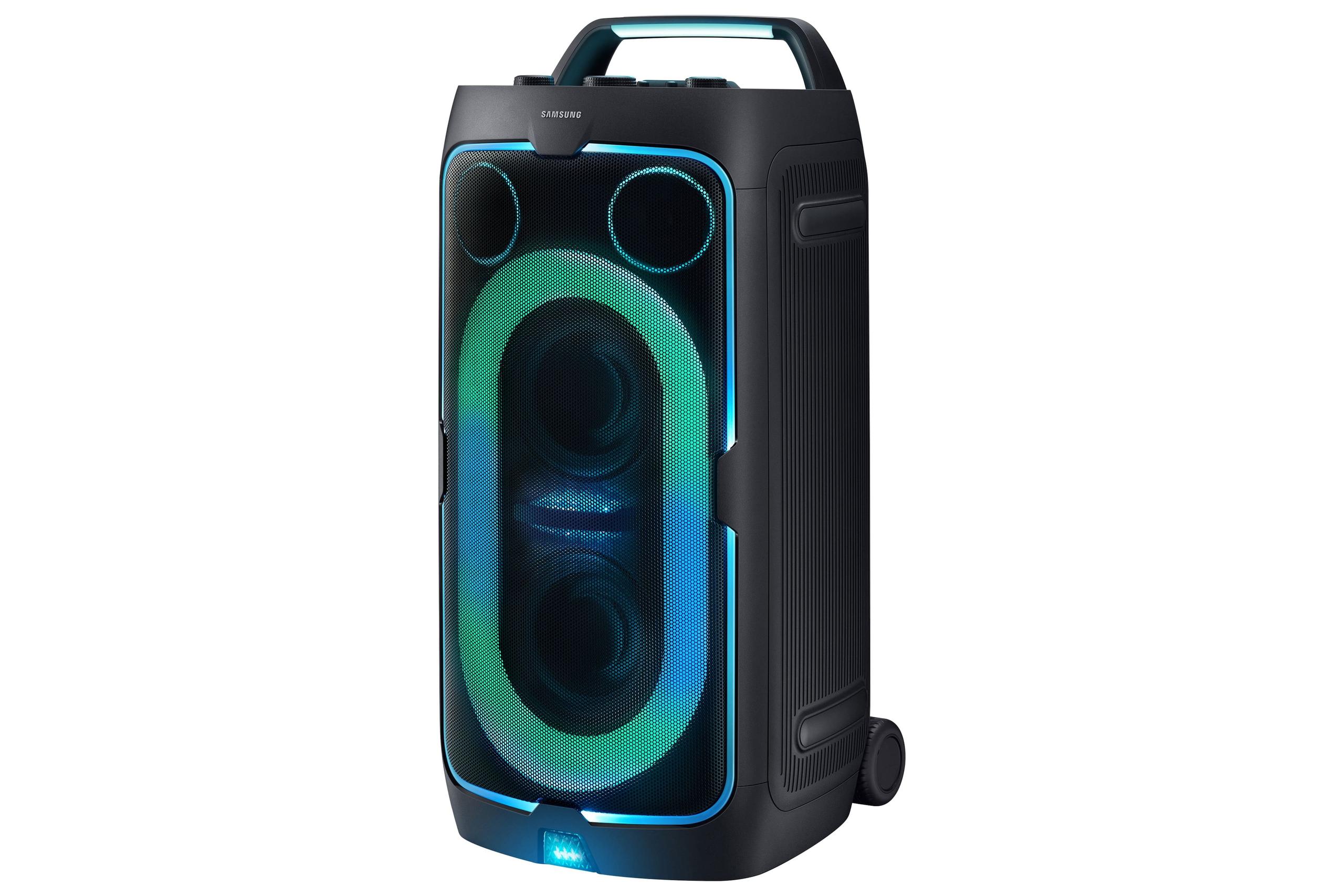
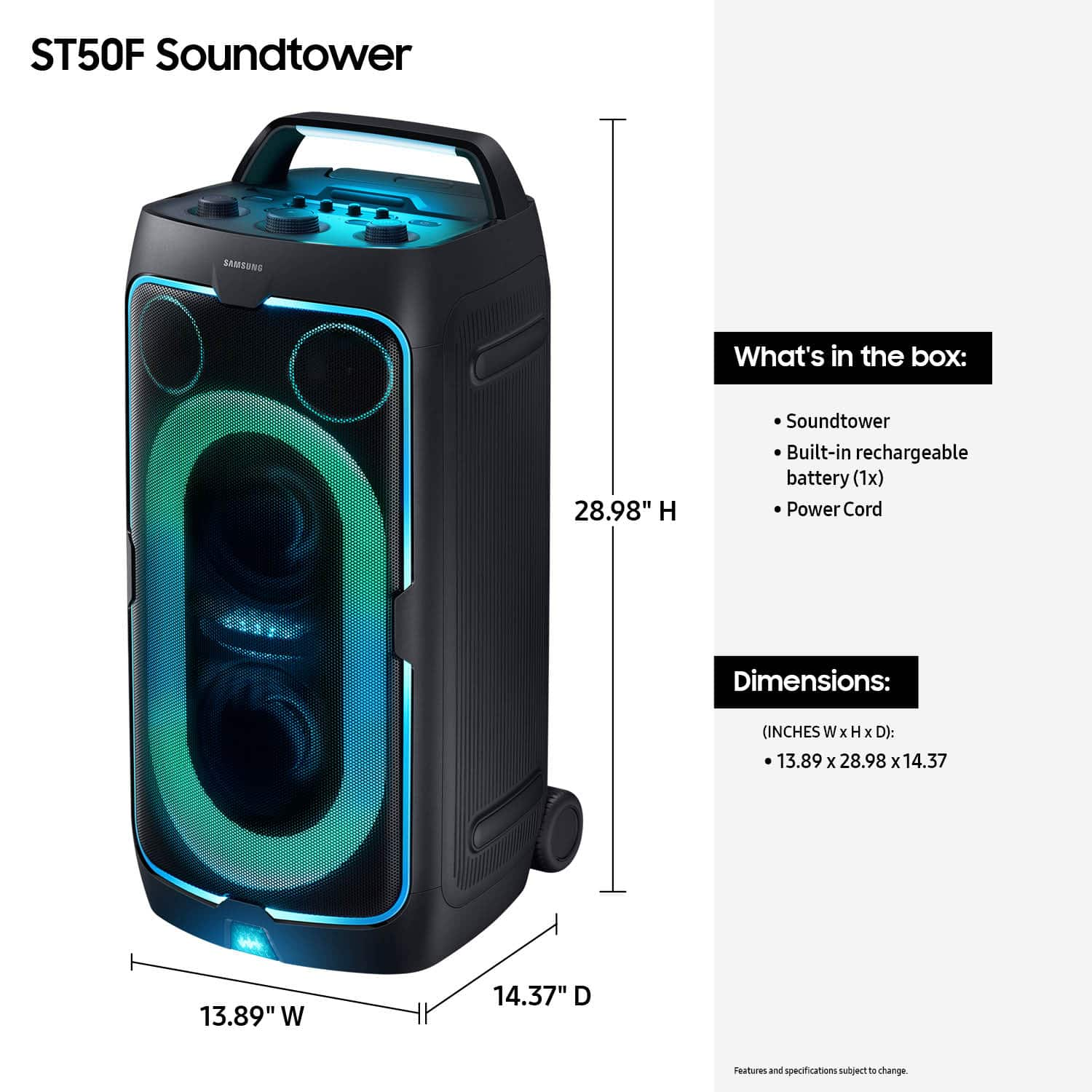
The Samsung MX-ST50F, which hit the market in 2023, takes a more versatile approach. Samsung designed this as a "sound tower" with a tall, narrow profile and included a built-in battery, making it truly portable. While it costs considerably less than the JBL, it also produces significantly less power – 240 watts when plugged in, dropping to just 90 watts on battery power.
These different philosophies create distinct use cases, and understanding which approach fits your needs is crucial to making the right choice.
When we talk about power in party speakers, we're primarily concerned with RMS (Root Mean Square) power, which represents the continuous power output the speaker can sustain. Peak power numbers are often misleading marketing terms, so focus on RMS when comparing speakers.
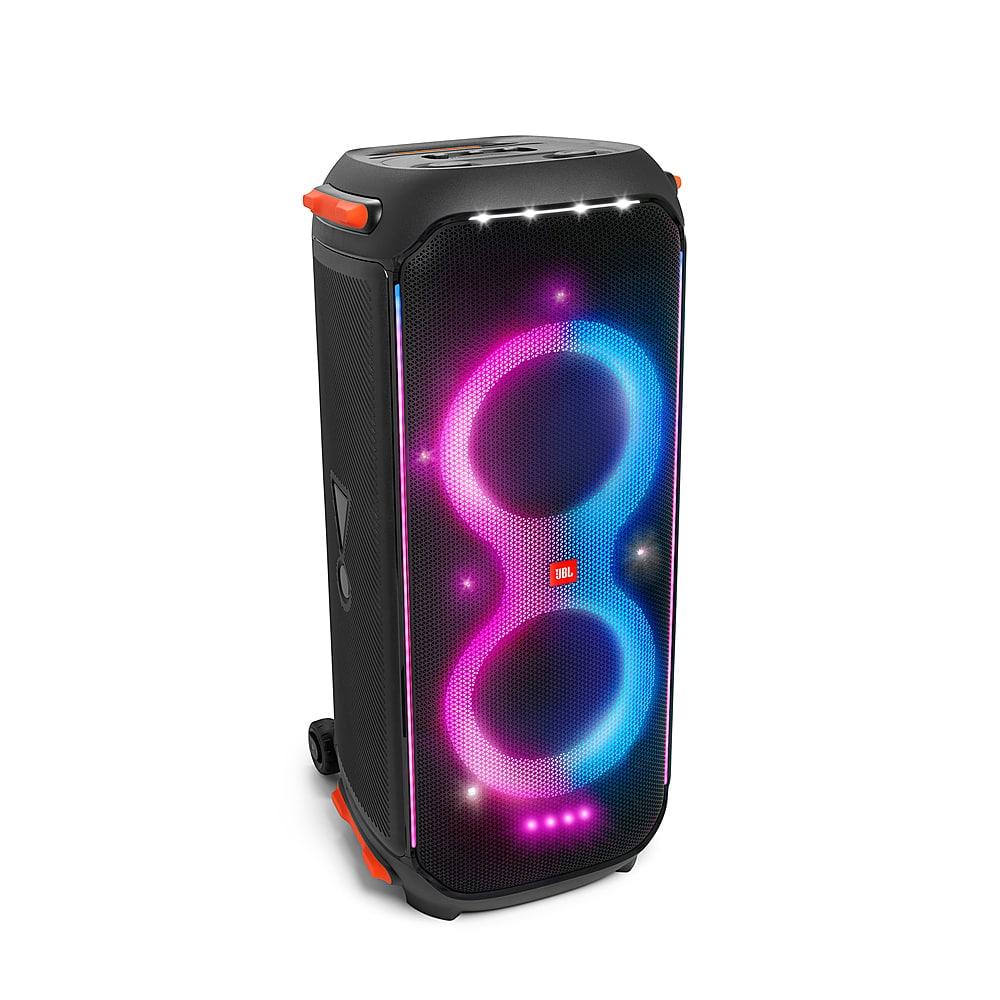
The JBL PartyBox 710 delivers an impressive 800 watts RMS through its dual 8-inch woofers (the large drivers that produce bass) and dual 2.75-inch tweeters (smaller drivers for high frequencies). Based on our research of professional testing and user experiences, this translates to maximum volume levels reaching approximately 110 decibels – loud enough to easily fill outdoor spaces covering a third of an acre.
To put this in perspective, normal conversation happens around 60 decibels, a lawnmower produces about 90 decibels, and anything above 105 decibels can cause hearing damage with extended exposure. The JBL PartyBox 710 operates in the range where you genuinely need to shout to be heard over the music, which is exactly what you want for large parties.
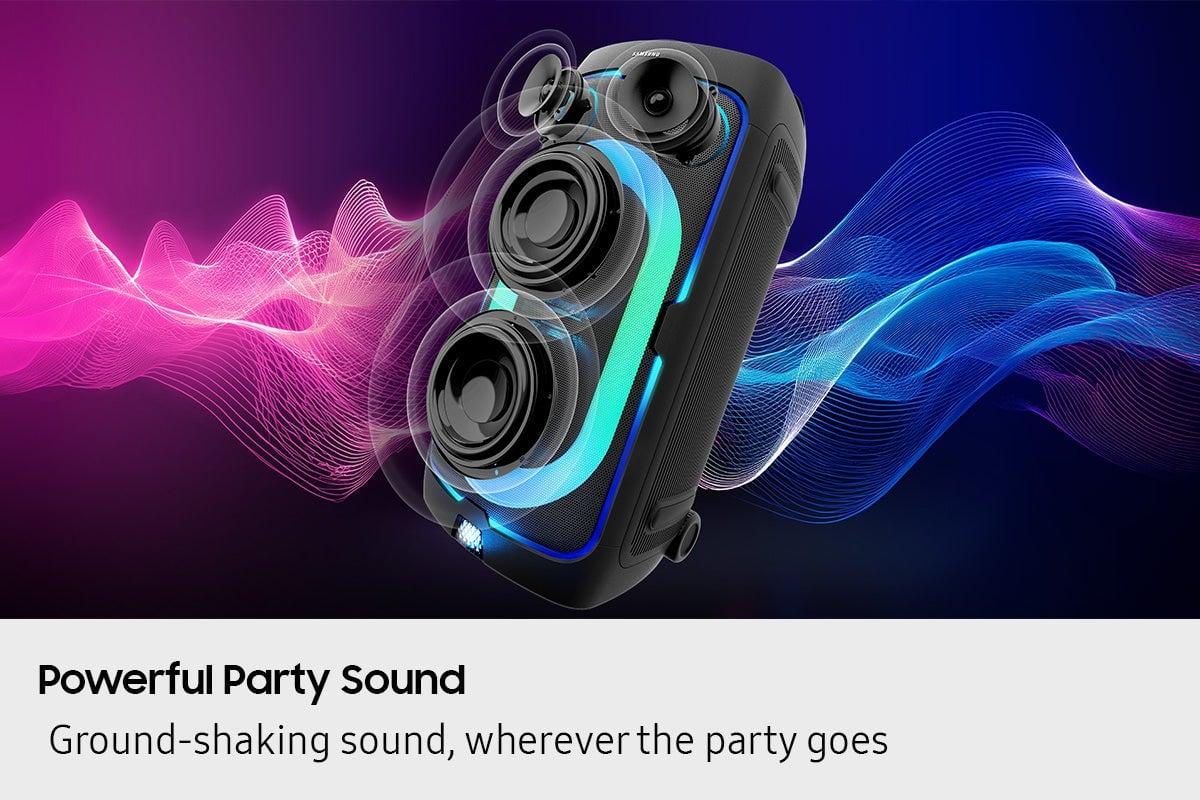
The Samsung MX-ST50F takes a more modest approach with dual 6.5-inch woofers and dual 1-inch tweeters producing 240 watts when plugged into AC power. While this sounds like a huge difference on paper, 240 watts is still substantial – enough to properly energize gatherings of 50-100 people. However, when running on battery power, the output drops to just 90 watts, which limits its impact significantly for larger gatherings.
This power difference becomes most apparent when you're trying to fill outdoor spaces. The JBL PartyBox 710 maintains its authority even in open air environments, while the Samsung MX-ST50F works better for covered areas or indoor spaces where sound doesn't dissipate as quickly.
Bass performance might be the most critical aspect of any party speaker. Deep, impactful bass doesn't just make music sound better – it creates a physical sensation that gets people moving and adds energy to the entire atmosphere.
The JBL PartyBox 710 excels here with its larger 8-inch woofers and dedicated bass reflex port (an opening designed to enhance low-frequency output). The speaker's frequency response extends down to 35Hz, which means it can reproduce the deepest bass notes in most music. More importantly, it does this with enough power to create that physical "thump" you feel in your chest during bass-heavy songs.
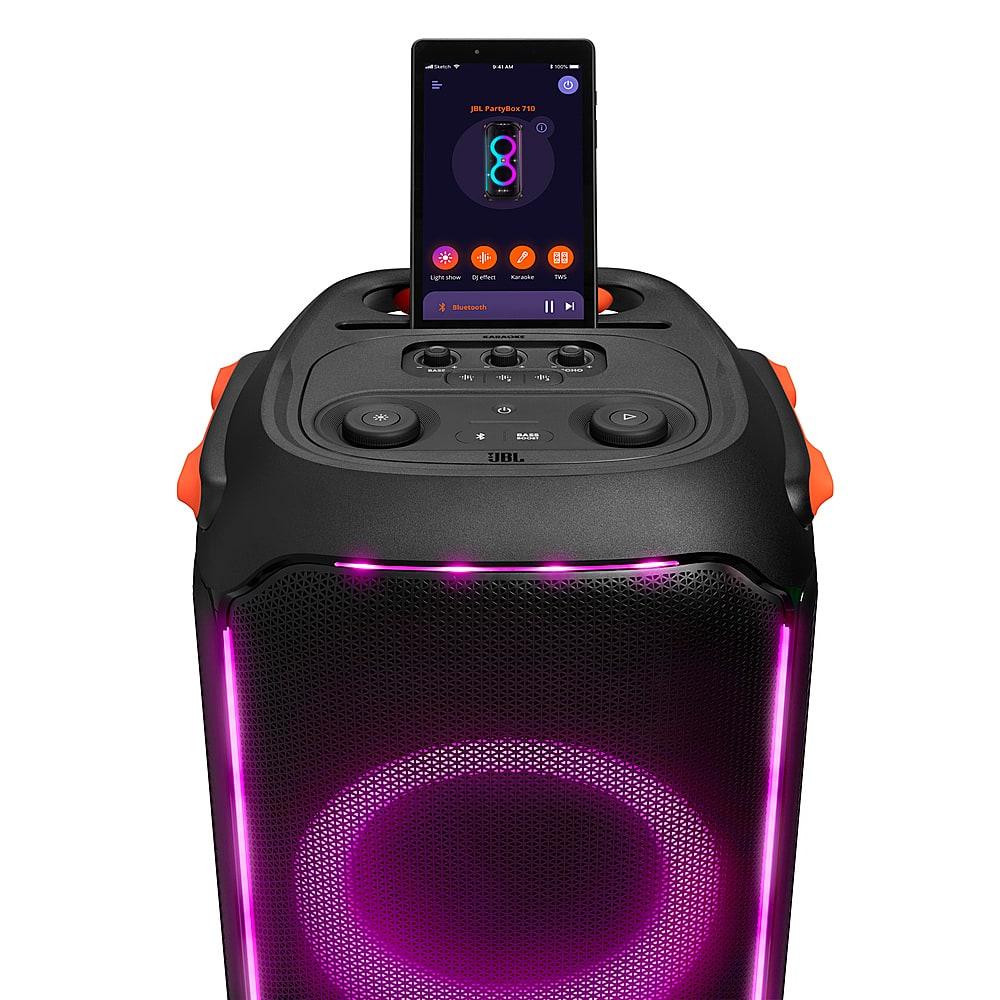
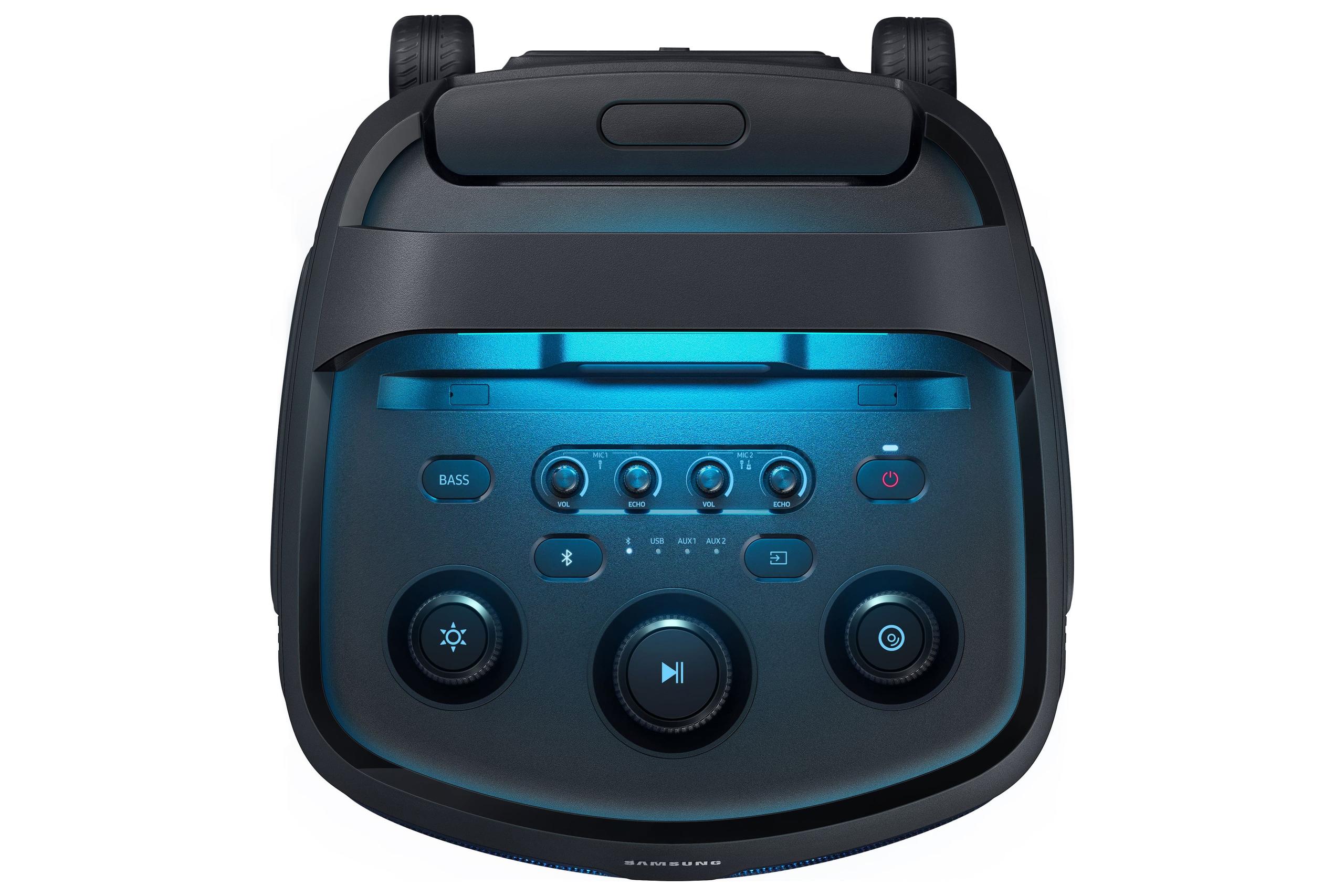
JBL includes a Bass Boost feature with "Deep" and "Punchy" settings that let you tailor the low-end response. The Deep setting emphasizes sub-bass frequencies – those really low notes you feel more than hear – while Punchy mode focuses on mid-bass that adds impact to kick drums and bass guitars. This level of bass customization is particularly valuable since different music genres benefit from different bass tuning.
The Samsung MX-ST50F, with its smaller 6.5-inch woofers, produces respectable but less impactful bass. Samsung includes three bass modes (Deep, Punchy, Gentle) that provide some customization, but the smaller drivers and lower power output limit how much physical impact it can create. For genres like electronic dance music or hip-hop that rely heavily on deep bass, the difference is quite noticeable.
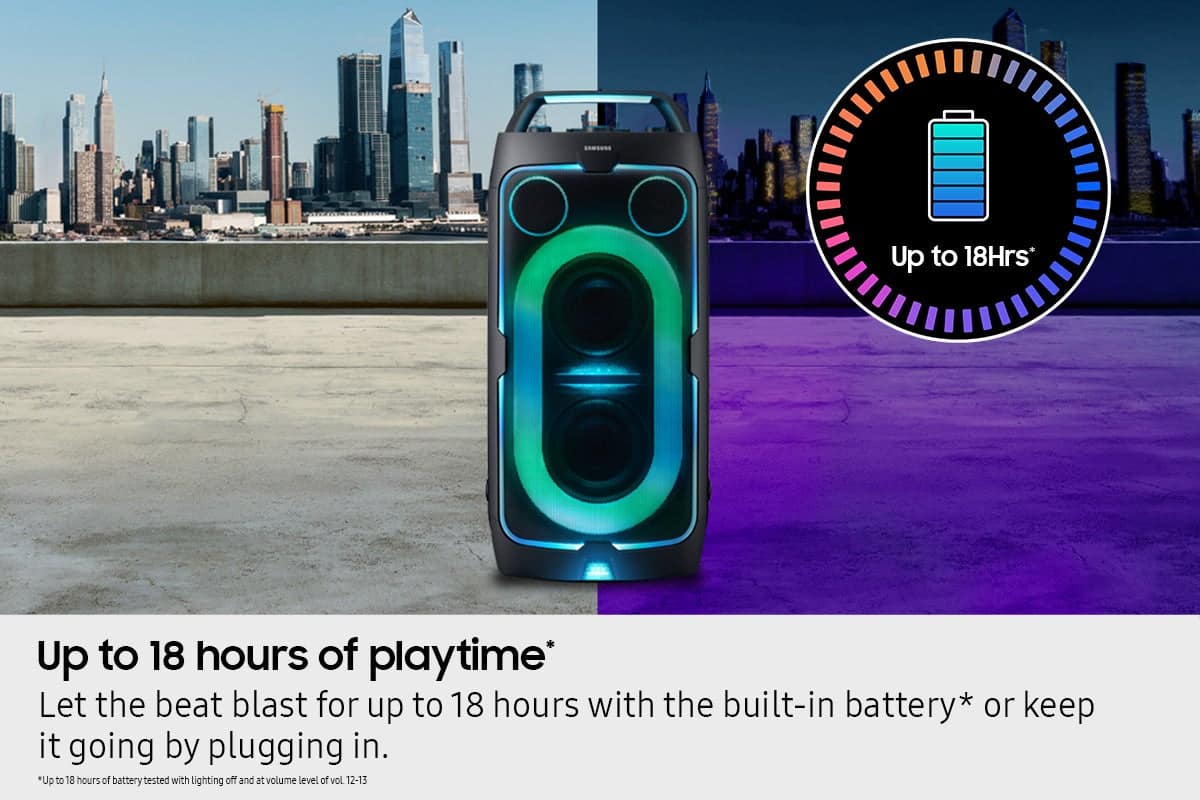
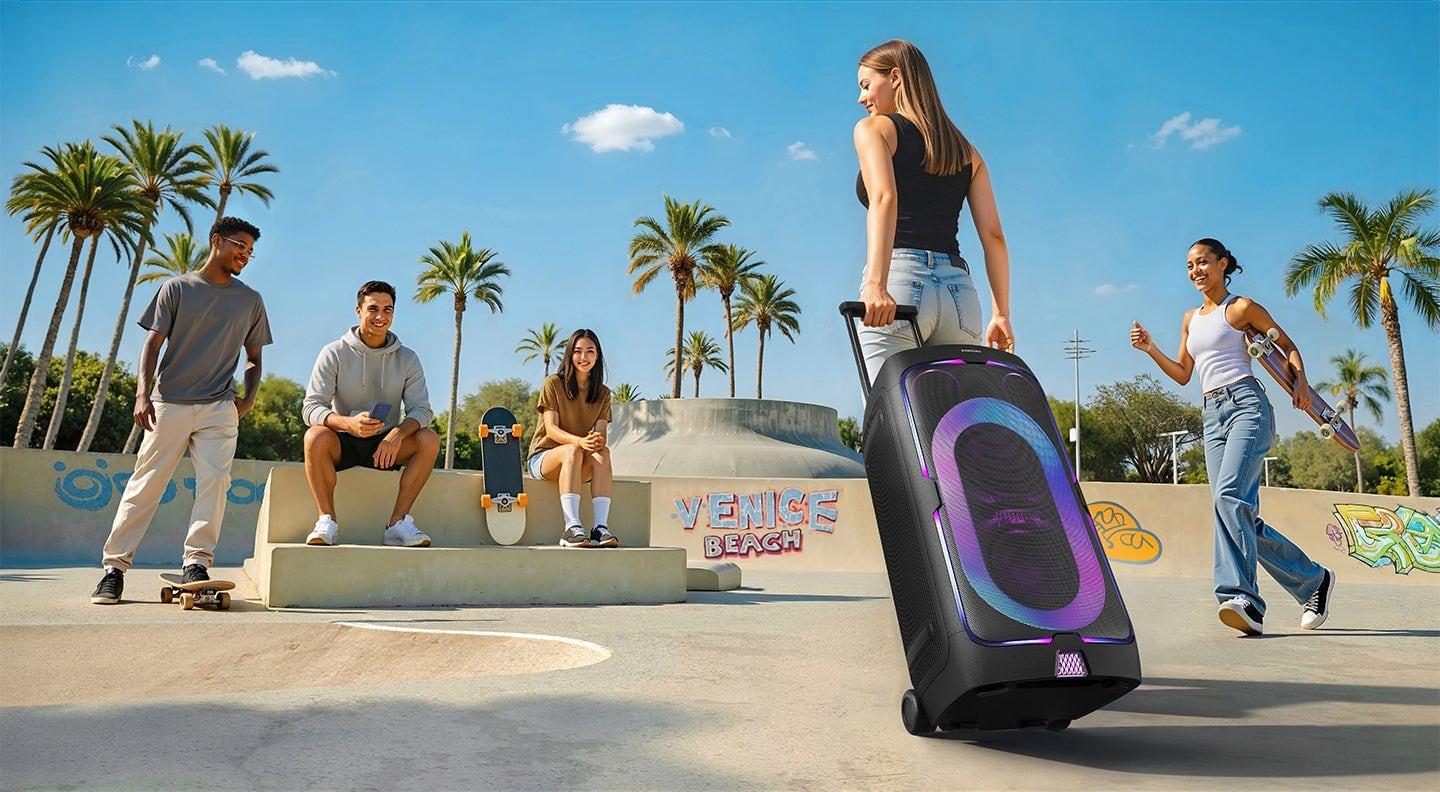
Here's where these speakers diverge most dramatically. The Samsung MX-ST50F includes a replaceable battery rated for up to 18 hours of playback (though this drops significantly with lights enabled or at higher volumes). This battery capability transforms your party possibilities – beach gatherings, camping trips, tailgate parties, or any event where power outlets aren't available becomes feasible.
The battery is also user-replaceable, which means as it degrades over time (all rechargeable batteries eventually do), you can swap in a fresh one rather than replacing the entire speaker. This thoughtful design choice extends the speaker's useful life significantly.
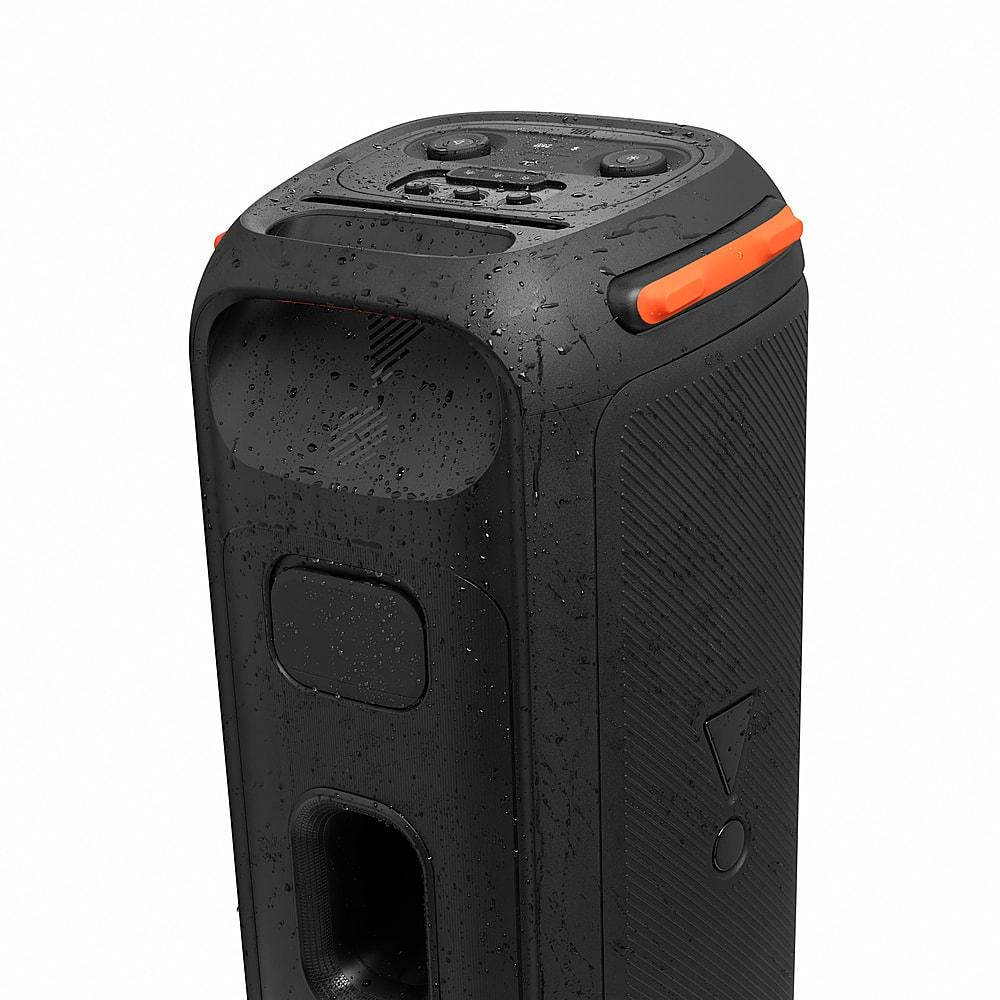
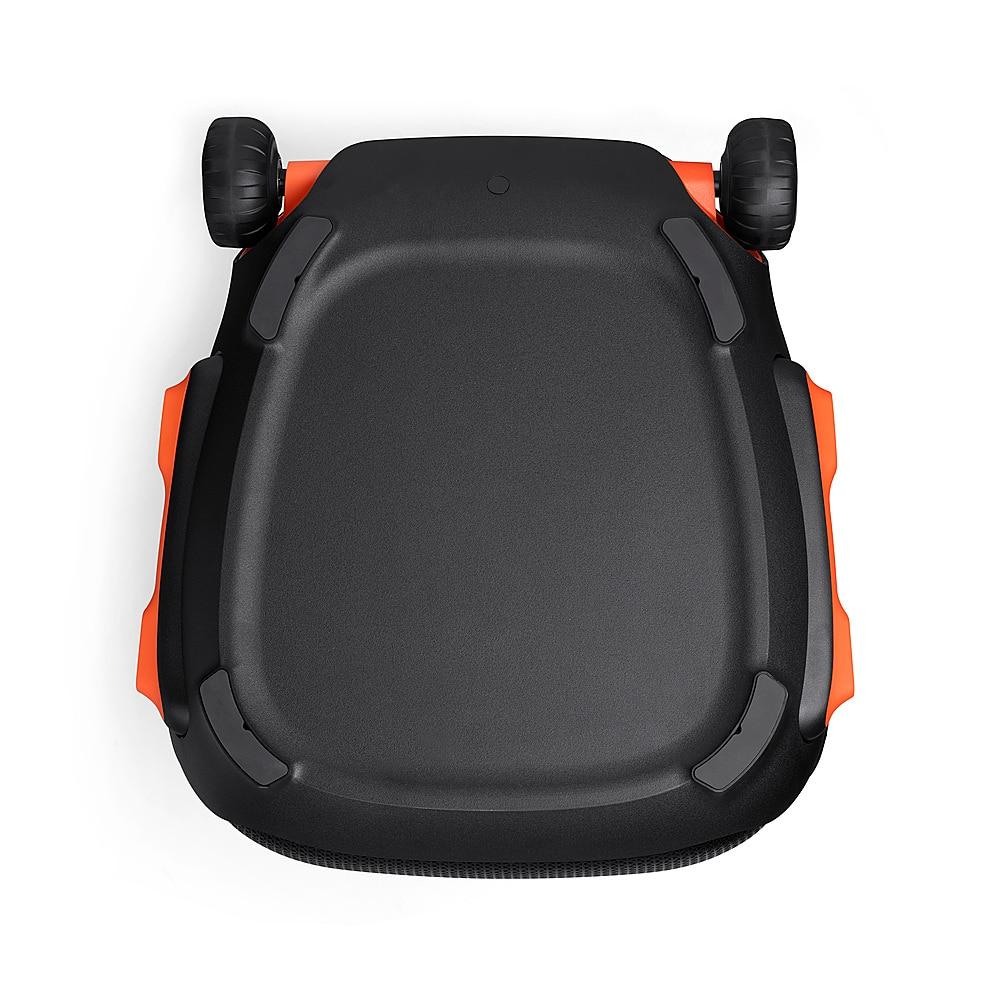
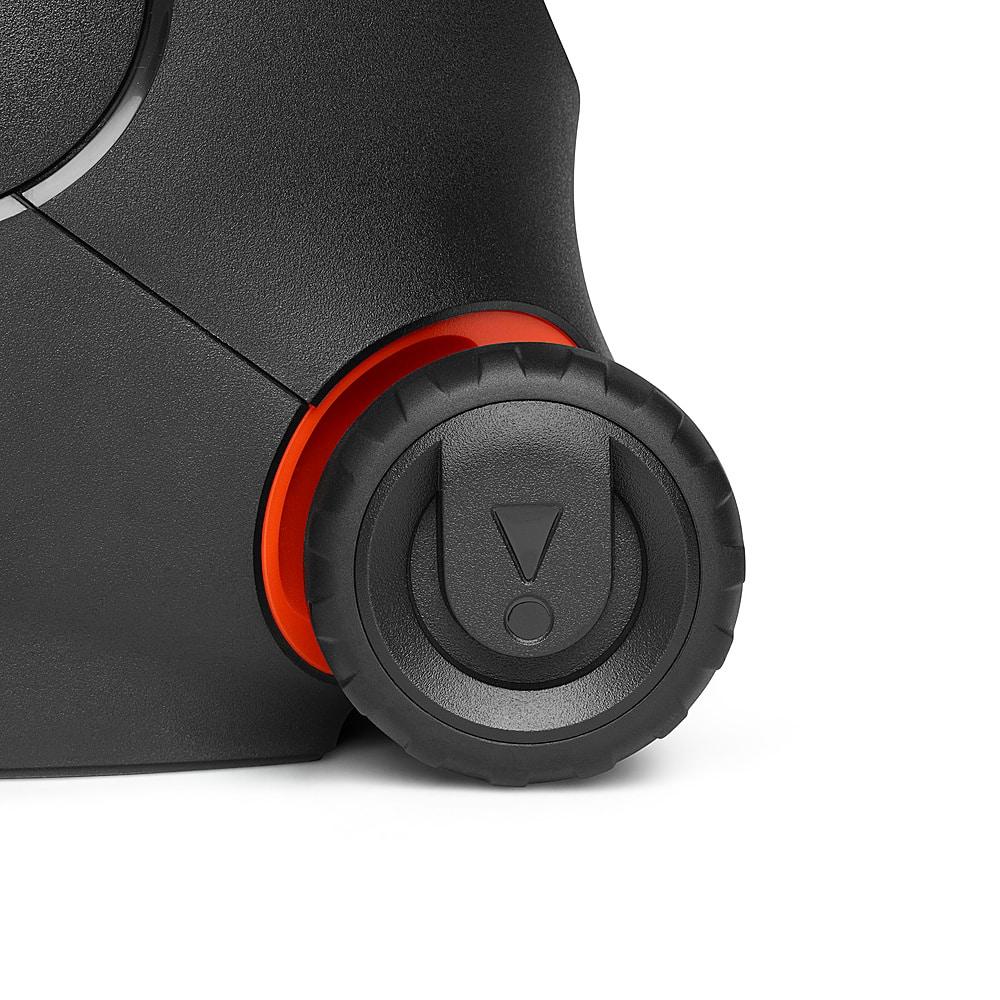
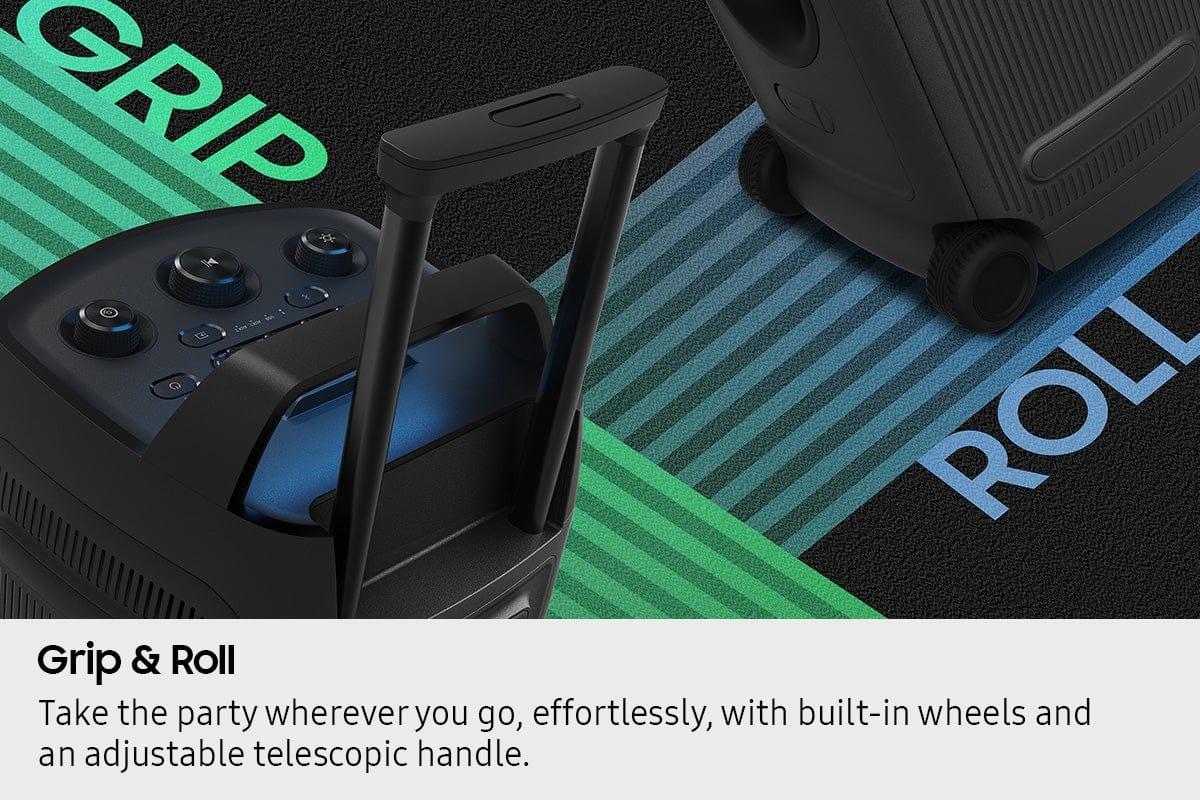
The JBL PartyBox 710 makes no compromises on this front – it requires constant AC power to operate. While this limits where you can use it, JBL includes robust wheels and an easy-grip handle to help transport its substantial 61-pound weight. The wheels roll smoothly on flat surfaces, though navigating stairs or rough terrain becomes challenging.
The physical designs reflect their different priorities. The Samsung MX-ST50F uses a tall, narrow tower format (about 29 inches high) that takes up minimal floor space but provides less stability on uneven surfaces. The JBL PartyBox 710 adopts a wider, lower profile that's more stable but requires more room.
Beyond raw power and bass, the character and distribution of sound matters enormously for party applications. The JBL PartyBox 710 projects sound primarily forward, making speaker placement important – you'll want to position it so the front faces your main gathering area.
However, JBL's tuning is quite sophisticated. The speaker maintains vocal clarity even at high volumes, which is crucial for sing-alongs and karaoke sessions. The companion app includes a graphic equalizer that lets you fine-tune the sound signature, though many users find the default tuning works well for most party scenarios.
The Samsung MX-ST50F incorporates Samsung's Waveguide technology in its tower design, which creates more omnidirectional sound dispersion. This means it spreads audio more evenly around the room rather than focusing it in one direction. For parties where people are scattered around a space rather than gathered in front of the speaker, this can be advantageous.
Samsung includes four sound modes (Standard, Wide, Stadium, Outdoor) that adjust the audio characteristics for different environments. The Outdoor mode, for instance, compensates for the way sound dissipates in open air, while Stadium mode emphasizes the midrange frequencies where vocals sit.
Both speakers recognize that modern party audio isn't just about sound – it's about creating an immersive experience that includes visual elements. However, they approach lighting very differently.
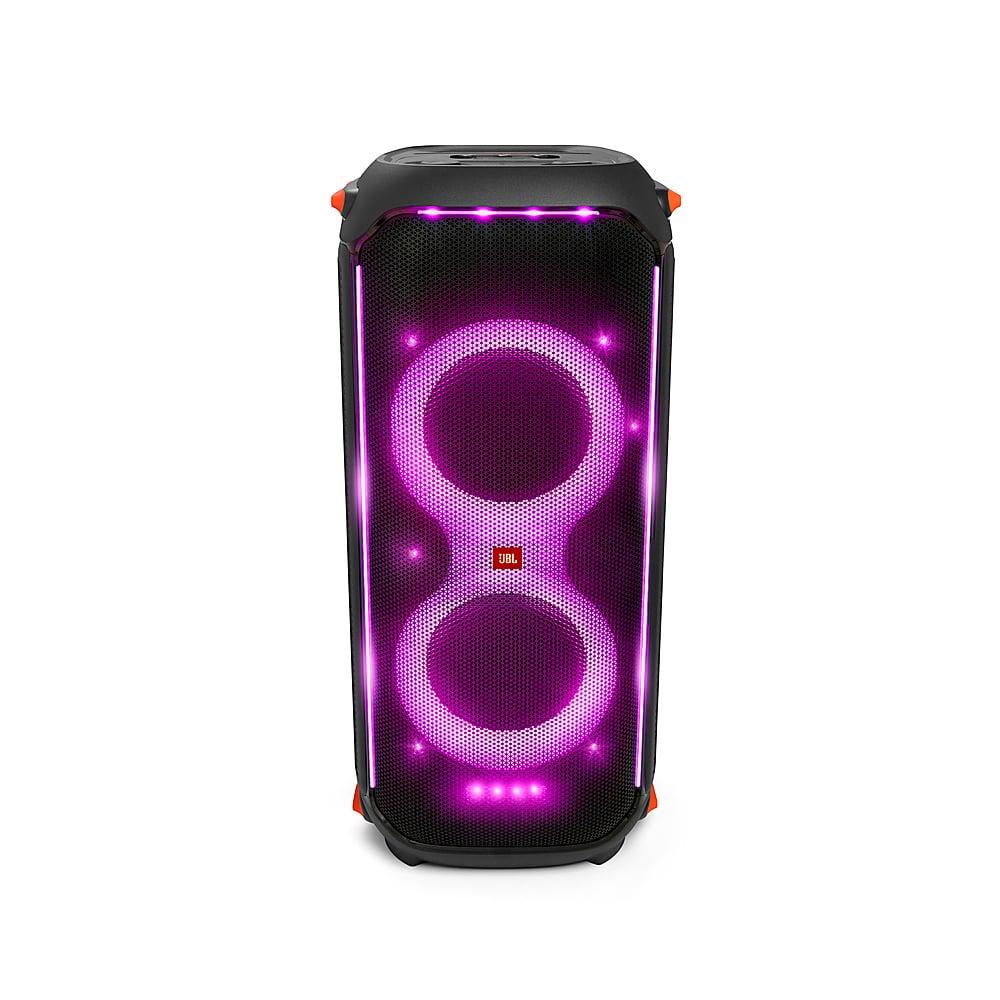
The JBL PartyBox 710 features an elaborate RGB LED light show that covers much of the speaker's front surface and sides. The lighting patterns include strobes, flowing effects, and what JBL calls "starry night" patterns. These lights sync to the music's beat and can be customized through the companion app for different colors, intensities, and patterns.
Based on user feedback, JBL's lighting system creates a more dramatic, nightclub-like atmosphere that works particularly well in darker environments. The lights are bright enough to serve as accent lighting for medium-sized rooms.
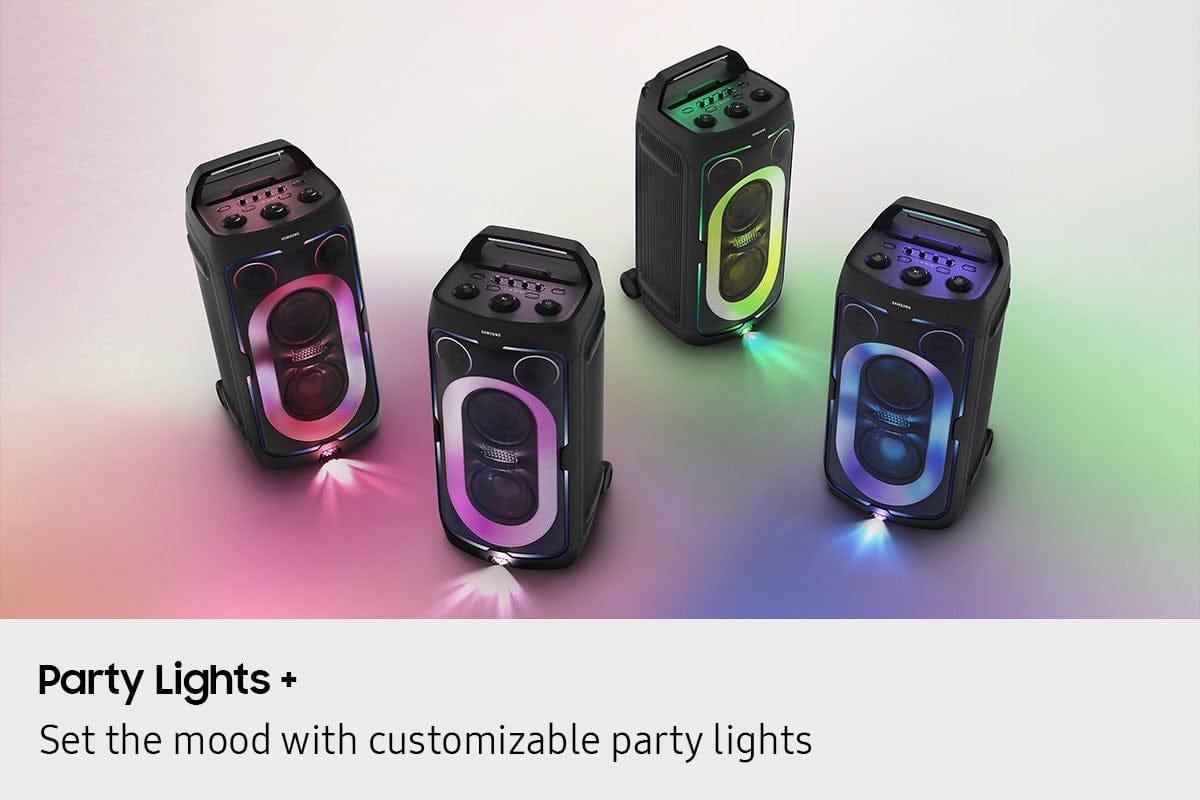
The Samsung MX-ST50F takes a more subtle approach with its "Party Lights+" system. LEDs are integrated into five zones around the speaker, creating a 360-degree light show with six different patterns and five mood presets. While less intense than JBL's system, the lighting still reacts to music and can be controlled via Samsung's app.
The Samsung's lighting tends to be more ambient and less attention-grabbing, which some users prefer for gatherings where conversation is important alongside music.
Both speakers handle the connectivity basics well – Bluetooth pairing, USB playback, and auxiliary inputs are standard. However, they differentiate themselves in advanced features.
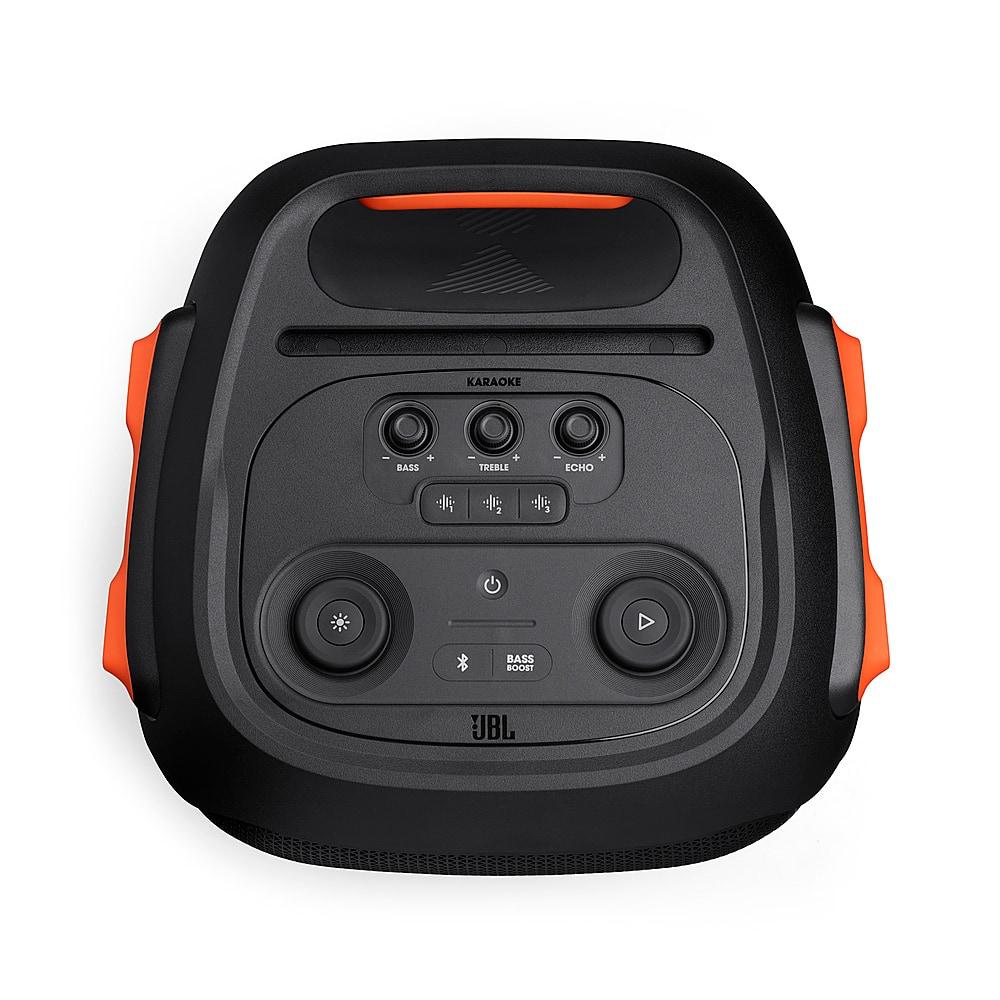
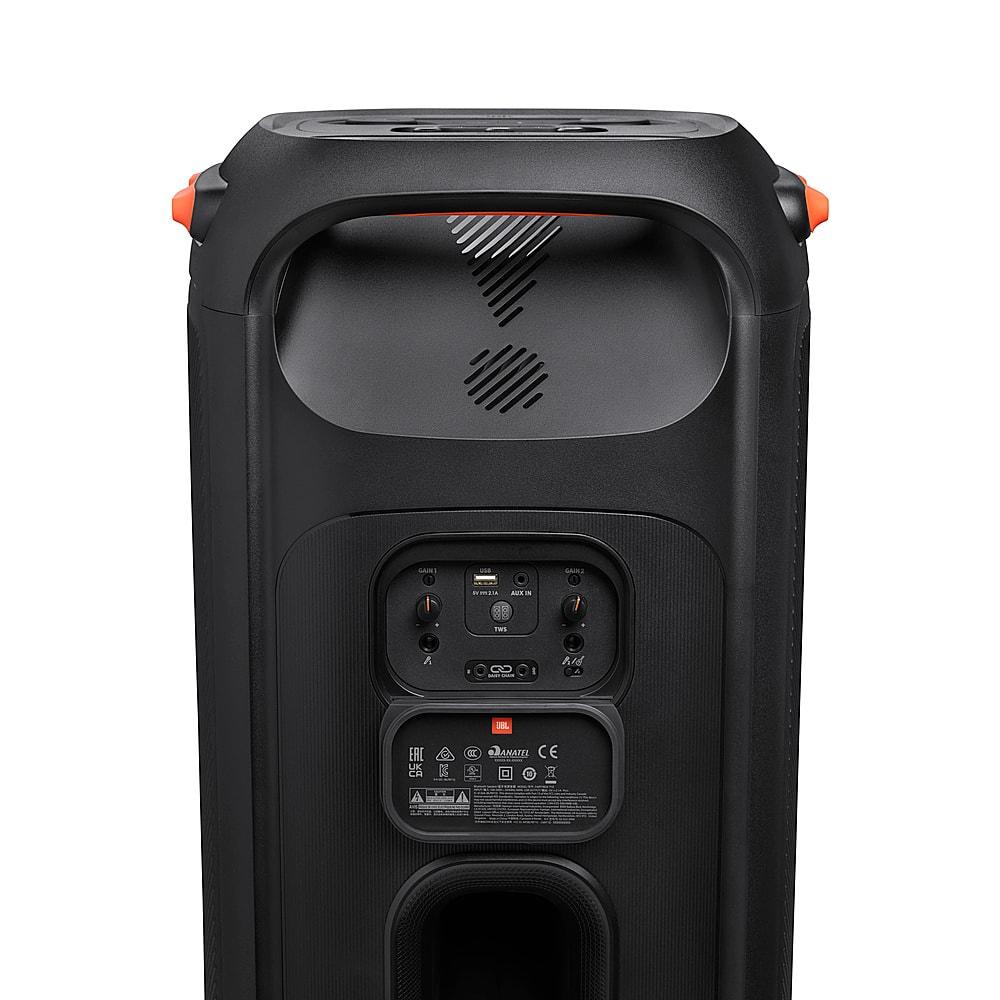
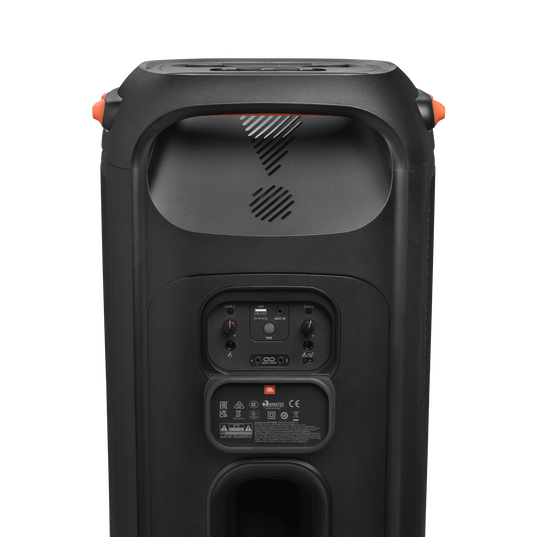
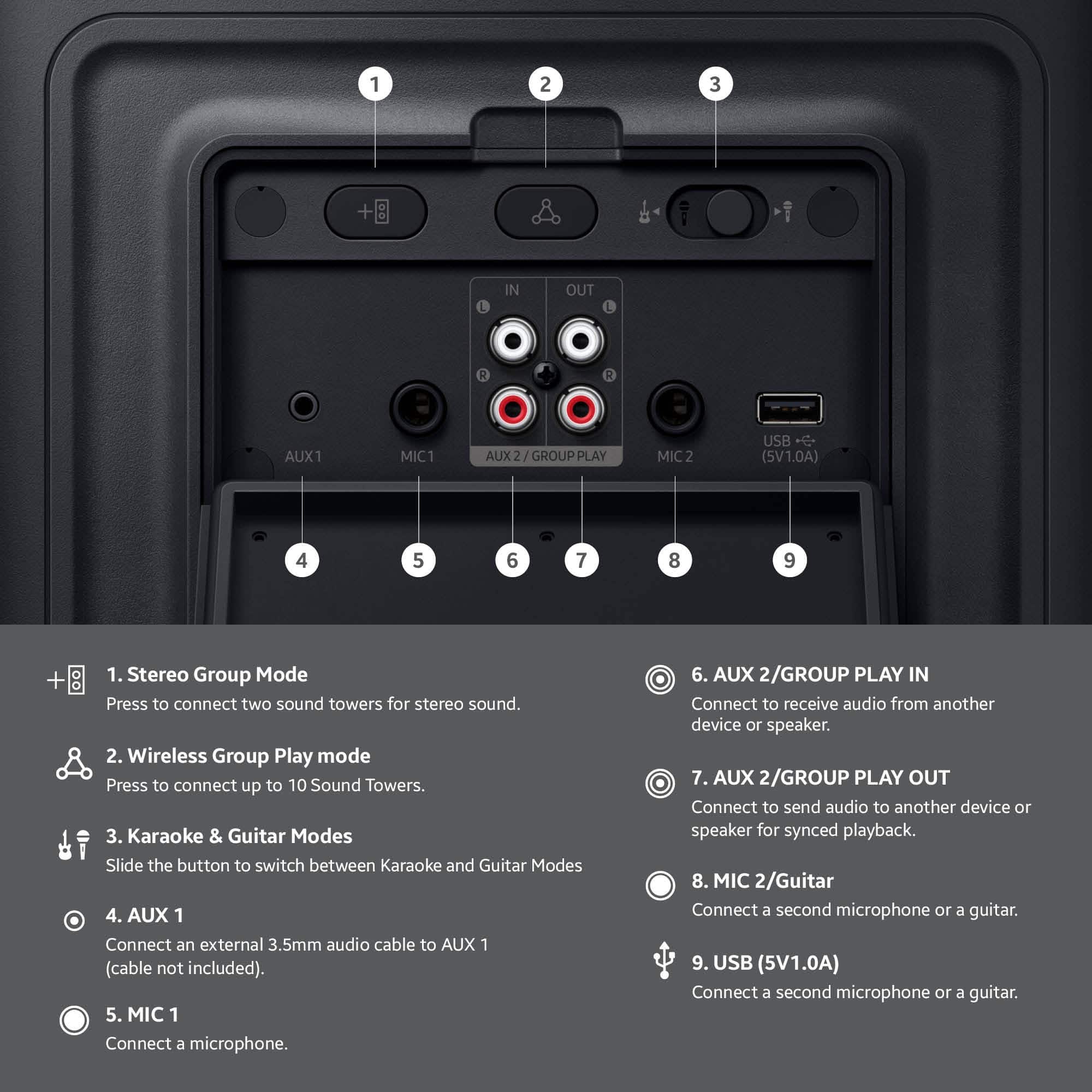
The JBL PartyBox 710 includes dedicated microphone and guitar inputs with independent volume controls and a specialized karaoke EQ section. This isn't just a basic mic input – you get separate bass, treble, and echo controls for vocals, plus programmable sound effect buttons. For karaoke enthusiasts or anyone who wants to occasionally perform live music, these professional-grade controls make a significant difference.
JBL also supports True Wireless Stereo pairing, meaning you can connect two PartyBox 710 units wirelessly to create a stereo setup with dramatically expanded sound coverage. This is particularly valuable for large events or users who want to gradually build a more powerful system.
The Samsung MX-ST50F includes dual microphone inputs and supports Samsung's Auracast technology, which allows you to connect up to 10 Samsung speakers wirelessly. While this sounds impressive, in practice, most users won't have access to multiple units. The speaker can also connect to two Bluetooth devices simultaneously and seamlessly switch between them.
Samsung includes DJ effects and sound sampling capabilities through their companion app, though these features are more novelty than professional tools.
Both manufacturers provide companion apps, but with different focuses. JBL's PartyBox app emphasizes audio customization with its graphic equalizer and detailed light control options. The EQ is particularly useful since the default tuning, while good, may not suit all music genres or room acoustics.
Samsung's Sound Tower app focuses more on convenience features like DJ effects, lighting presets, and multi-device connectivity management. It's functional but less sophisticated than JBL's offering for serious audio customization.
Through our research of user experiences and professional reviews, several clear performance patterns emerge:
For large outdoor events (75+ people), the JBL PartyBox 710 consistently receives praise for its ability to maintain energy and clarity across wide areas. Users report successfully covering backyard parties where people are spread across large distances, with the speaker maintaining its impact even at the edges of the gathering.
For medium-sized gatherings (25-75 people), the Samsung MX-ST50F receives positive feedback, particularly when AC power is available. However, users consistently note the significant performance drop when switching to battery power, especially for bass-heavy music genres.
Battery life testing by users suggests the Samsung's 18-hour rating is achievable only at moderate volumes (around 50%) with lighting disabled. Real-world party volumes typically yield 6-8 hours of playback, which is still reasonable for most events.
While these are primarily party speakers, both can serve as temporary home theater solutions, though with limitations.
The JBL PartyBox 710 can deliver impressive impact for action movies, particularly for the low-frequency effects in explosions and chase scenes. However, its tuning emphasizes excitement over accuracy, which can make dialogue sound colored or unnatural. It's fun for occasional movie watching but not ideal as a primary home theater speaker.
The Samsung MX-ST50F's omnidirectional dispersion actually works against it for home theater use, where you want focused, directional sound. Its more balanced tuning handles dialogue better than the JBL, but lacks the power for truly cinematic impact.
Neither speaker provides the stereo separation or surround sound processing that dedicated home theater systems offer, so consider them emergency solutions rather than primary home theater speakers.
After extensive research into user experiences, professional reviews, and technical specifications, clear recommendations emerge:
Choose the JBL PartyBox 710 if you regularly host large parties, prioritize maximum audio impact, and have reliable access to AC power at your party locations. Its superior bass response, higher maximum volume, and professional features justify the higher investment for serious party hosts. The requirement for AC power is a limitation, but one that serious users can work around.
Choose the Samsung MX-ST50F if portability is essential, you host medium-sized gatherings, or budget considerations are important. Its battery operation opens up party possibilities that the JBL simply can't match, and its performance is more than adequate for most social gatherings.
The $300+ price difference (at the time of writing) represents a significant consideration. The Samsung offers excellent value for users who don't need maximum performance, while the JBL provides superior performance per dollar for those who do need maximum impact.
Consider your typical party size, available power options, and budget constraints. The JBL PartyBox 710 is an investment in maximum performance, while the Samsung MX-ST50F is a smart choice for versatility and value. Both will elevate your parties significantly compared to standard Bluetooth speakers, just in different ways.
Ultimately, the "best" choice depends on your specific needs, but either speaker will transform your gatherings from ordinary to memorable. The key is matching the speaker's strengths to your party hosting style and requirements.
| JBL PartyBox 710 | Samsung MX-ST50F |
|---|---|
| Power Output - Determines maximum volume and room coverage | |
| 800W RMS (extremely loud, fills large outdoor spaces) | 240W AC / 90W Battery (adequate for medium gatherings) |
| Power Source - Critical for where you can use the speaker | |
| AC power only (must stay plugged in) | Built-in battery + AC (up to 18 hours portable use) |
| Bass Performance - Most important for party atmosphere | |
| Dual 8" woofers, 35Hz response (deep, physical bass impact) | Dual 6.5" woofers, higher rolloff (respectable but less impactful) |
| Weight & Portability - Affects ease of transport | |
| 61.3 lbs with wheels and handle (heavy but manageable) | 40.5 lbs with telescopic handle (lighter, truly portable) |
| Maximum Volume - How loud it gets for large crowds | |
| ~110 dB (covers 1/3 acre outdoors) | ~100 dB (suitable for medium indoor/outdoor spaces) |
| Lighting System - Visual entertainment factor | |
| Comprehensive RGB across front/sides (nightclub-style) | Multi-zone LEDs with 360° coverage (ambient lighting) |
| Professional Features - For karaoke and live performance | |
| Mic/guitar inputs with dedicated EQ controls | Dual mic inputs with basic controls |
| Sound Dispersion - How evenly sound spreads | |
| Forward-directional (requires strategic placement) | Omnidirectional tower design (fills room evenly) |
| App Control - Customization capabilities | |
| Graphic EQ, detailed light control | DJ effects, basic sound modes |
| Multi-Speaker Pairing - Expanding your system | |
| True Wireless Stereo with another PartyBox 710 | Auracast connects up to 10 Samsung speakers |
| Water Resistance - Outdoor durability | |
| IPX4 splashproof | IPX4 splashproof |
| Best Use Case - Who should buy this speaker | |
| Large parties, maximum impact, AC power available | Medium gatherings, portability essential, budget-conscious |
The JBL PartyBox 710 is significantly louder, delivering 800W RMS compared to the Samsung MX-ST50F's 240W AC power. The JBL can reach approximately 110 dB and easily fill large outdoor spaces, while the Samsung is better suited for medium-sized gatherings. If maximum volume is your priority, the JBL PartyBox 710 is the clear winner.
The Samsung MX-ST50F has a built-in rechargeable battery providing up to 18 hours of playback, making it truly portable. The JBL PartyBox 710 requires constant AC power and has no battery option. If you need portability for outdoor events without power access, the Samsung MX-ST50F is your only choice between these two.
The JBL PartyBox 710 produces significantly deeper and more impactful bass with its dual 8-inch woofers and 35Hz frequency response. The Samsung MX-ST50F has smaller 6.5-inch woofers that provide respectable but less physical bass impact. For bass-heavy music genres like EDM and hip-hop, the JBL PartyBox 710 delivers a more satisfying experience.
The JBL PartyBox 710 weighs 61.3 pounds but includes wheels and a handle for transport. The Samsung MX-ST50F is lighter at 40.5 pounds with a telescopic handle and wheels. While both are portable, the Samsung's lighter weight and battery operation make it more convenient for frequent transport and outdoor use.
Both speakers support microphones, but the JBL PartyBox 710 offers more professional karaoke features with dedicated mic and guitar inputs, independent volume controls, and specialized vocal EQ with bass, treble, and echo adjustments. The Samsung MX-ST50F has dual mic inputs with basic controls. For serious karaoke use, the JBL PartyBox 710 is superior.
The Samsung MX-ST50F offers better overall value due to its lower price point and battery operation, which adds significant utility. While the JBL PartyBox 710 provides superior performance per dollar for power users, the Samsung delivers adequate performance for most party scenarios at a more accessible price point with true portability.
Both work for outdoor use with IPX4 splashproof ratings, but they excel in different scenarios. The JBL PartyBox 710 is better for large outdoor gatherings where AC power is available, thanks to its superior volume and bass. The Samsung MX-ST50F is ideal for outdoor events without power access, though its performance is more suited to medium-sized groups.
The JBL PartyBox 710 supports True Wireless Stereo pairing with another PartyBox 710 for expanded stereo sound. The Samsung MX-ST50F uses Auracast technology to connect up to 10 Samsung speakers wirelessly. Both offer multi-speaker capabilities, but the Samsung MX-ST50F has more flexibility for large installations.
The JBL PartyBox 710 features more dramatic RGB lighting across the entire front panel and sides with customizable patterns that create a nightclub atmosphere. The Samsung MX-ST50F offers more subtle 360-degree lighting with multiple zones and mood presets. For impressive party lighting, the JBL PartyBox 710 is more visually striking.
Neither speaker is ideal for dedicated home theater use, as both are tuned for party environments rather than accurate audio reproduction. The JBL PartyBox 710 can provide impressive impact for action movies but may color dialogue. The Samsung MX-ST50F has more balanced sound but lacks the power for cinematic impact. Both work as temporary solutions but not as primary home theater speakers.
For small to medium parties (25-75 people), the Samsung MX-ST50F is often the better choice due to its adequate power, battery operation, and lower cost. The JBL PartyBox 710 may be overkill for smaller gatherings and requires AC power. However, if maximum impact is desired regardless of party size, the JBL PartyBox 710 delivers superior performance.
Only the Samsung MX-ST50F has a battery, rated for up to 18 hours at moderate volumes with lighting off. Real-world party volumes typically provide 6-8 hours of playback. The battery is user-replaceable, extending the speaker's lifespan. The JBL PartyBox 710 has no battery option and requires constant AC power to operate.
We've done our best to create useful and informative comparisons to help you decide what product to buy. Our research uses advanced automated methods to create this comparison and perfection is not possible - please contact us for corrections or questions. These are the sites we've researched in the creation of this article: rtings.com - audioadvice.com - crutchfield.com - youtube.com - bestbuy.com - rtings.com - youtube.com - youtube.com - youtube.com - versus.com - worldwidestereo.com - rtings.com - jbl.com - youtube.com - expertvoice.com - jbl.com - jbl.com.tw - robot-advance.com - youtube.com - hu.harmanaudio.com - onward.ph - harmanaudio.in - youtube.com - youtube.com - manuals.plus - global.jbl.com - de.jbl.com - ro.harmanaudio.com - bestbuy.com - news.samsung.com - youtube.com - youtube.com - videoandaudiocenter.com - youtube.com - youtube.com - samsung.com - crutchfield.com - youtube.com - arrowassociatedstores.com - brandsmartusa.com - bestbuy.com - crutchfield.com - samsung.com - icecat.in - thefrogpadappliances.com - news.samsung.com

Privacy Policy
Terms and Conditions - Affiliate Policy
Home Security
© Copyright 2008-2026.
11816 Inwood Rd #1211, Dallas, TX 75244