

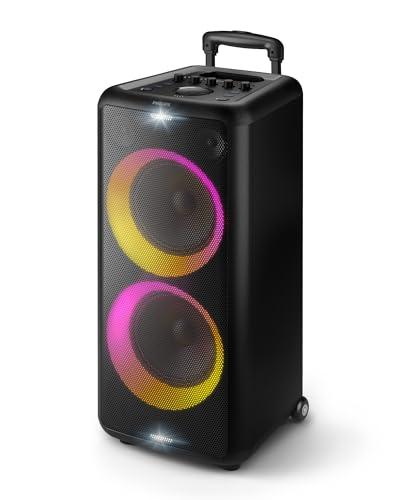

When your next gathering needs serious sound, choosing between portable party speakers can feel overwhelming. Two speakers that consistently appear in shopping comparisons are the Philips TAX5206 and the JBL PartyBox 710 – but they represent completely different philosophies in party audio. One prioritizes true portability with battery power, while the other delivers professional-grade performance that requires staying plugged in.
Understanding which approach fits your needs requires diving into what makes these speakers tick, from their driver configurations to their power requirements. Let's break down everything you need to know to make the right choice.
Party speakers occupy a unique space in audio equipment. Unlike bookshelf speakers designed for critical listening or Bluetooth speakers meant for personal use, party speakers prioritize maximum volume output, entertainment features, and the ability to energize large groups of people. They're engineered to cut through ambient noise at outdoor gatherings and deliver the kind of bass impact that gets people moving.
The most critical performance factors for party speakers include power output (measured in watts RMS – that's the continuous power the speaker can handle, not peak power), driver configuration (the actual speakers inside that produce sound), frequency response (how low and high the speaker can reproduce sounds), and entertainment features like lighting and karaoke capabilities.
When evaluating party speakers, consider where you'll use them most often. Indoor parties with AC power access open up different possibilities than outdoor beach gatherings or camping trips. The venue directly impacts which features matter most.
The Philips TAX5206, released in 2021, represents the "take anywhere" philosophy of party speakers. At its core, it's designed for people who want to bring the party to locations where wall outlets don't exist. The JBL PartyBox 710, launched in 2022, takes the opposite approach – it's engineered for maximum performance when you have access to AC power.
These different philosophies create interesting trade-offs. Battery-powered speakers must balance power consumption with performance, while AC-powered speakers can dedicate all their energy to sound production. This fundamental difference shapes everything from driver selection to amplifier design.
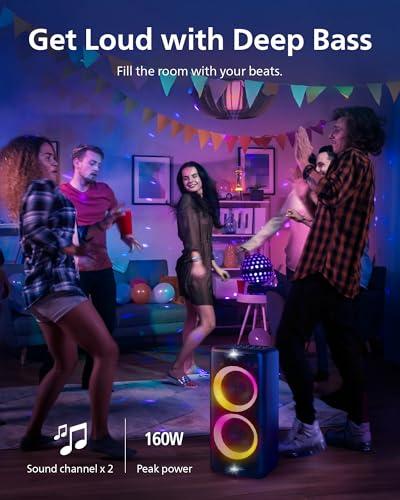
The most dramatic difference between these speakers lies in their power output capabilities. The Philips TAX5206 delivers 80 watts RMS (160 watts maximum), while the JBL PartyBox 710 produces 800 watts RMS – a ten-fold difference that translates to dramatically different volume capabilities.
To understand what this means practically, consider that doubling perceived loudness requires roughly ten times more power. The JBL PartyBox 710's massive power advantage means it can fill spaces the Philips TAX5206 simply can't handle. User reports indicate the JBL can effectively cover outdoor areas up to a third of an acre at comfortable listening levels, while the Philips works well for smaller backyard gatherings or indoor parties.
However, power isn't everything. The Philips TAX5206 includes intelligent power management to optimize its 80 watts. It performs noticeably better when plugged into AC power compared to battery operation, suggesting the amplifier can access more power when not constrained by battery limitations.
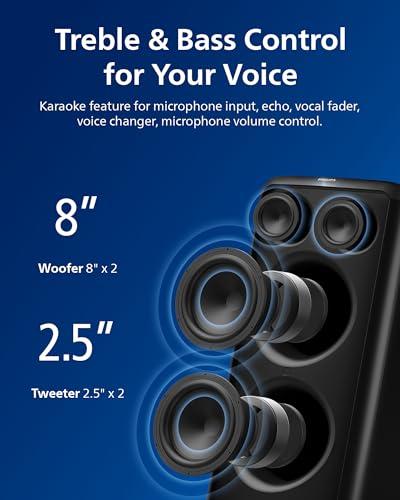
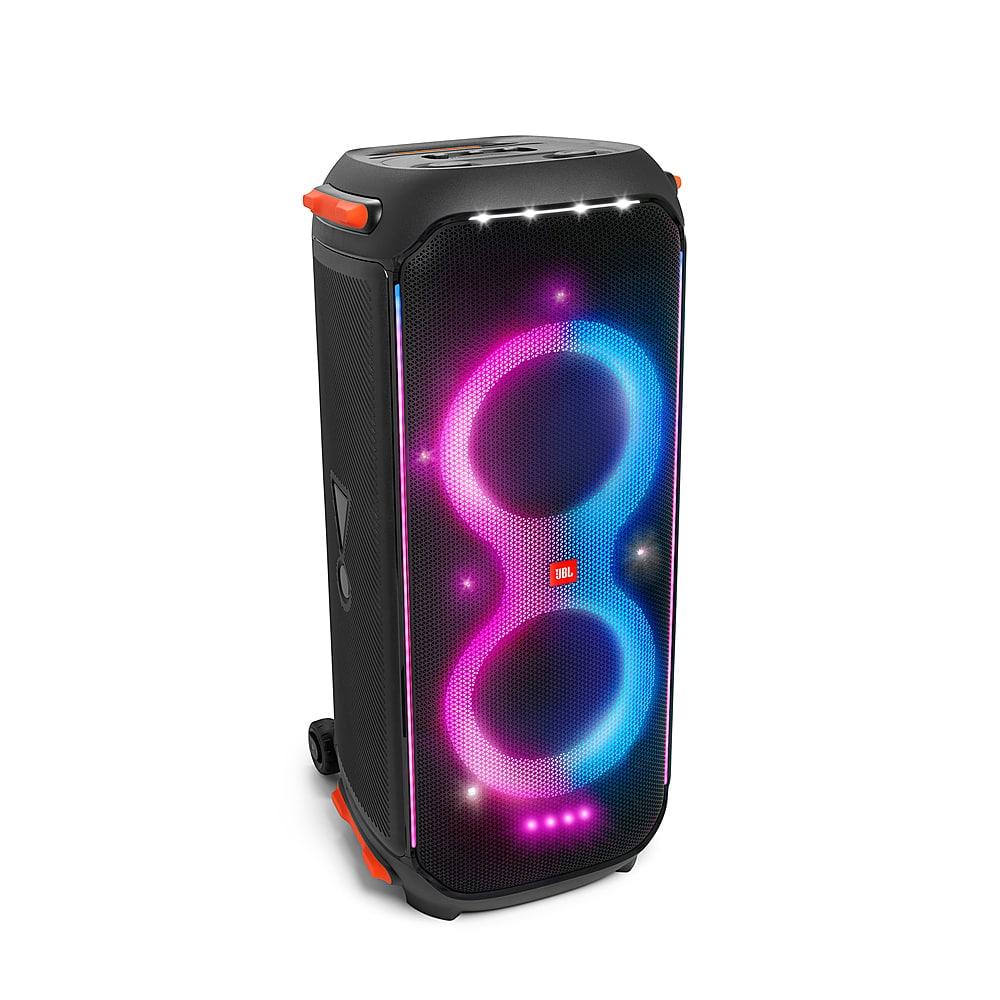
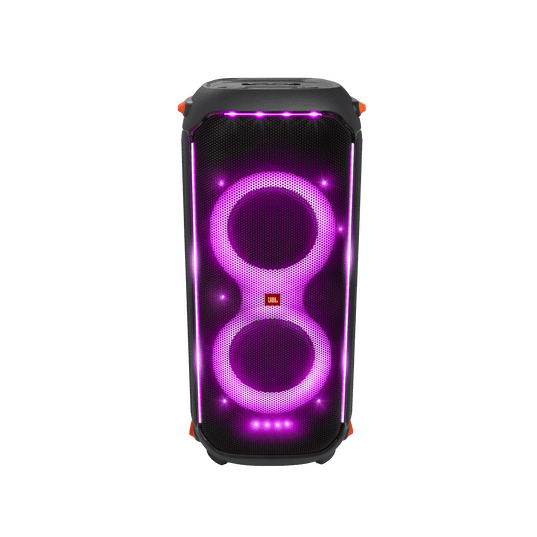
Both speakers use a two-way driver configuration, meaning they split audio frequencies between dedicated woofers (for bass and midrange) and tweeters (for high frequencies). The Philips TAX5206 features dual 8-inch woofers paired with dual 2.5-inch tweeters, while the JBL PartyBox 710 uses dual 8-inch woofers with dual 2.75-inch tweeters.
The slightly larger tweeters in the JBL PartyBox 710 help it maintain clarity at higher volumes. Tweeters are delicate components that can struggle when pushed hard, so the extra surface area helps prevent distortion during loud playback. The identical woofer sizes mean both speakers have similar bass driver capabilities, but the JBL's dramatically higher power can drive those woofers much harder.
Frequency response specs reveal another key difference. The JBL PartyBox 710 reaches down to 35Hz, while the Philips TAX5206 starts at 40Hz. That 5Hz difference might seem small, but it represents meaningful bass extension. Frequencies below 40Hz are where you feel bass in your chest rather than just hearing it – crucial for dance music and hip-hop.
Based on extensive user feedback analysis, these speakers have distinctly different sound signatures. The JBL PartyBox 710 emphasizes bass impact, with reviewers consistently praising its ability to produce deep, physically felt low frequencies. However, some users note the sound can feel somewhat "dark" or lacking in treble brightness, particularly at moderate volumes.
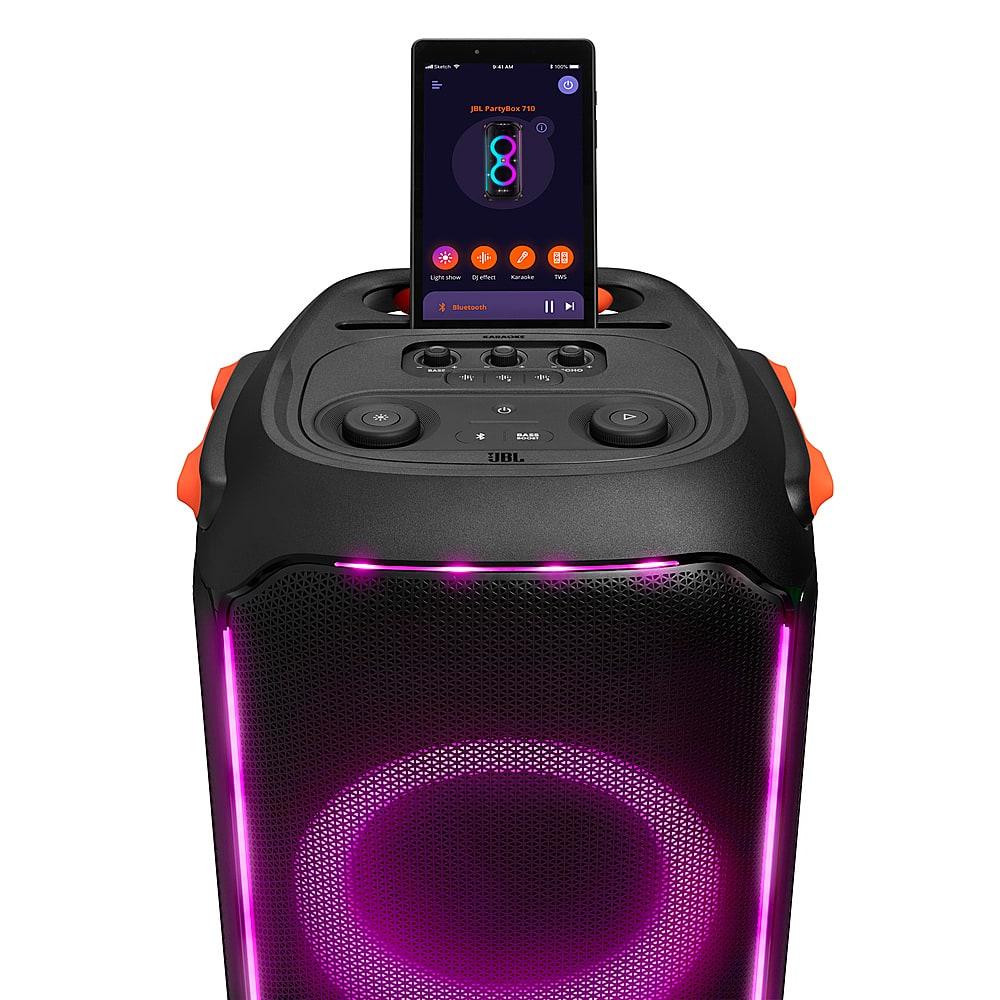
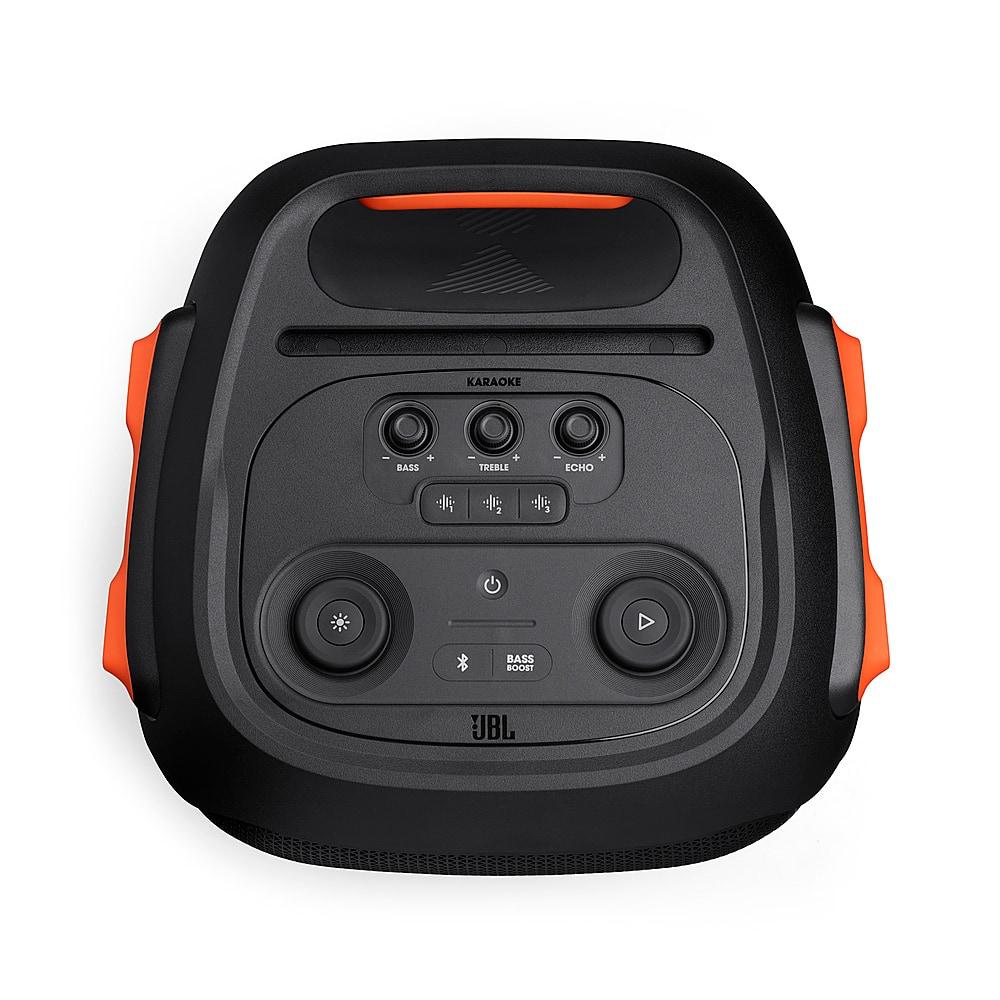
The Philips TAX5206 takes a more balanced approach, offering manual bass and treble controls via rotary knobs. This gives users direct control over the sound signature, something the JBL PartyBox 710 handles through its mobile app. For those who prefer hands-on control without smartphone dependency, the Philips approach has merit.
Distortion handling differs significantly between the speakers. The JBL PartyBox 710 maintains composure even at maximum volume, though some compression occurs. The Philips TAX5206 shows its limits more readily when pushed hard, with user reviews noting that sound quality degrades at maximum battery-powered volume levels.
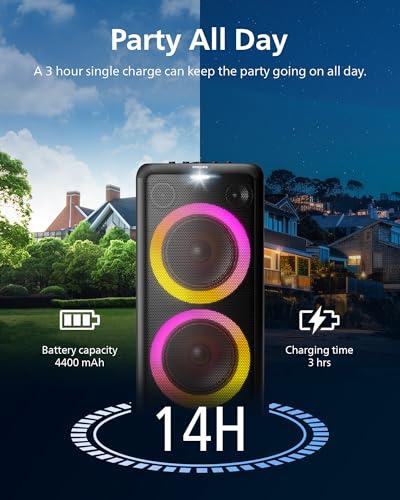
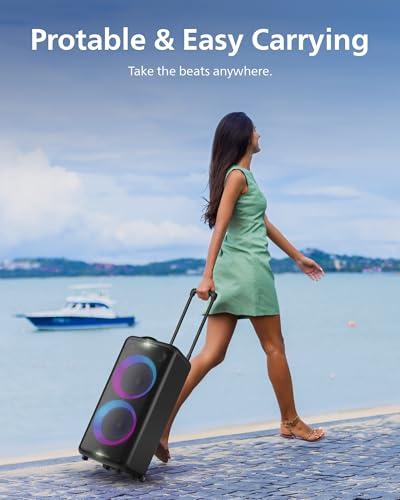
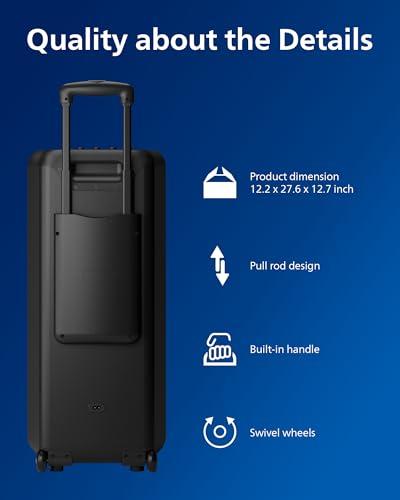
Here's where these speakers diverge most dramatically. The Philips TAX5206 includes a 4400mAh lithium-ion battery providing up to 14 hours of continuous playback. Combined with its trolley design featuring wheels and a telescoping handle, it weighs just 23 pounds – manageable for most people to transport.
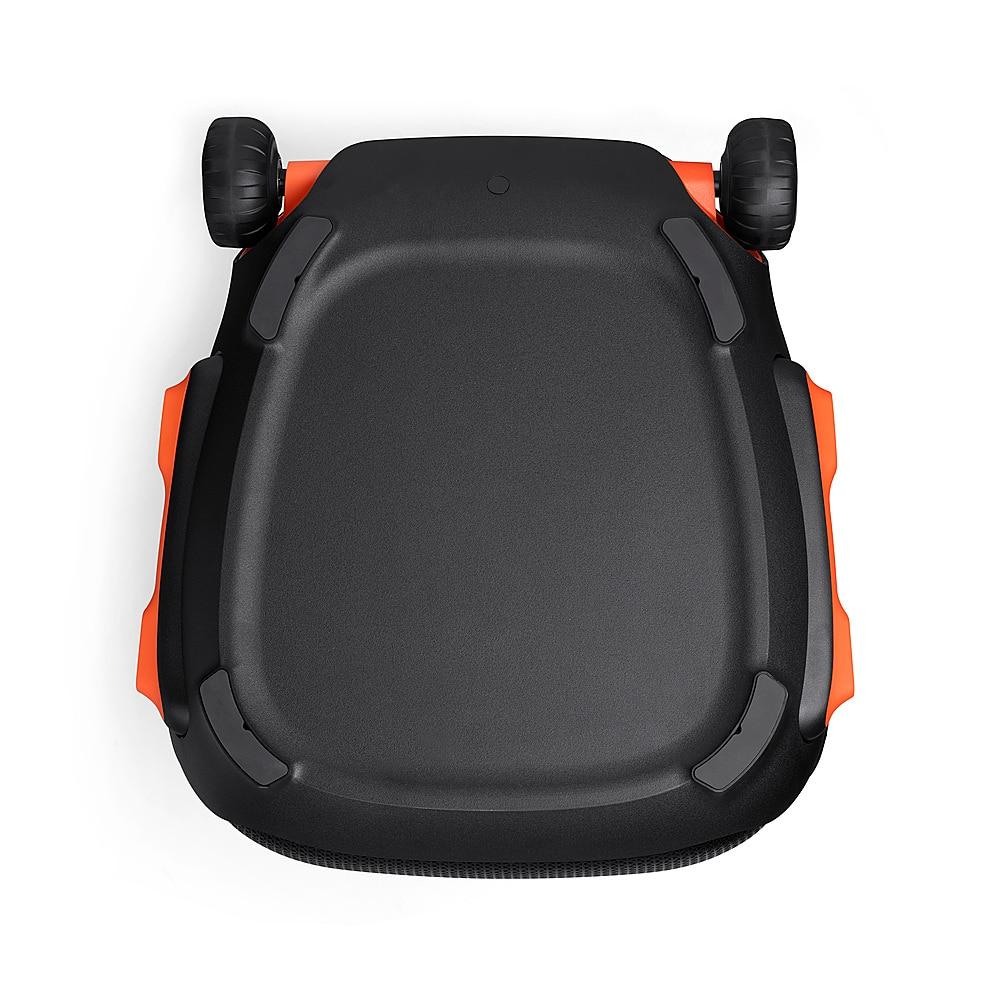
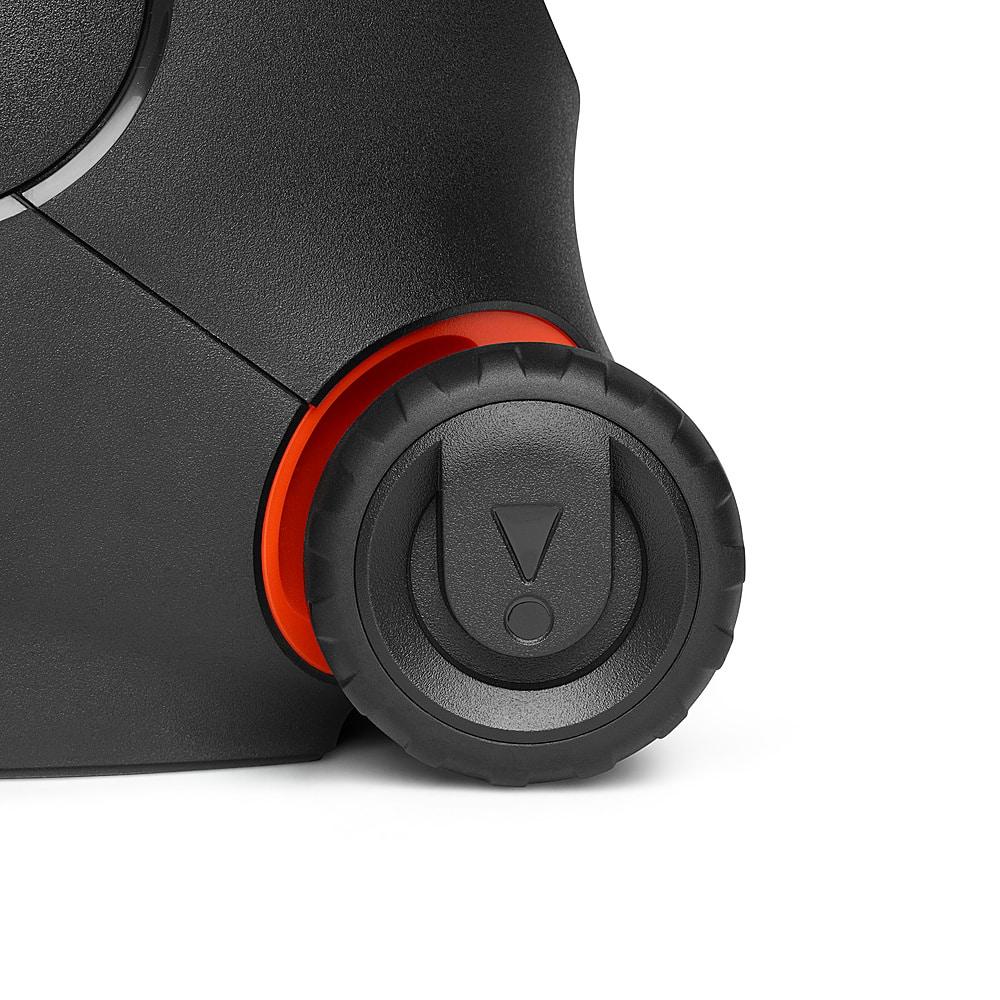
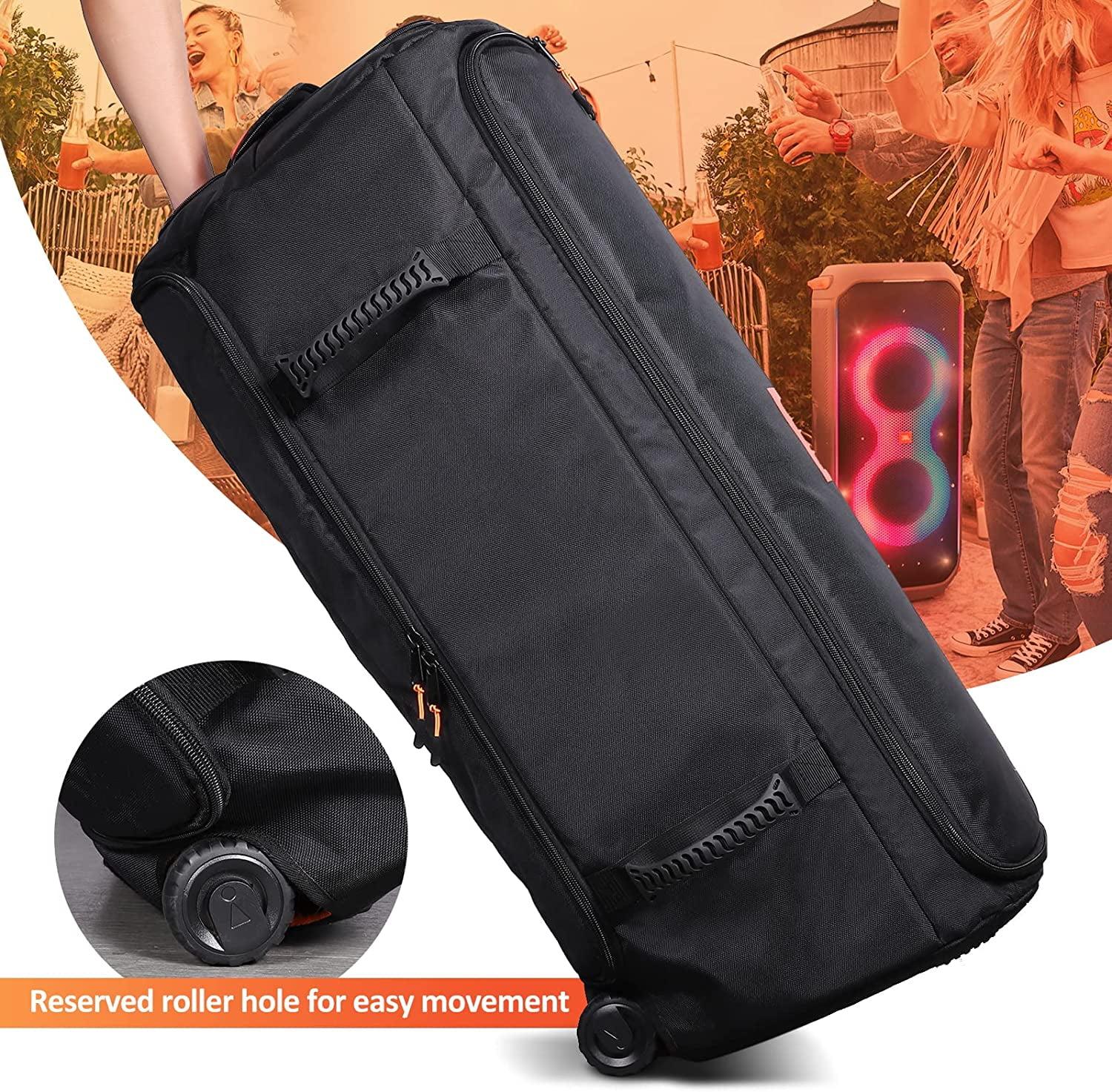
The JBL PartyBox 710 weighs 61 pounds and requires constant AC power. While it includes robust wheels and a handle, multiple users report difficulty maneuvering it over uneven terrain like grass or gravel. The weight becomes particularly challenging when loading it into vehicles or carrying it up stairs.
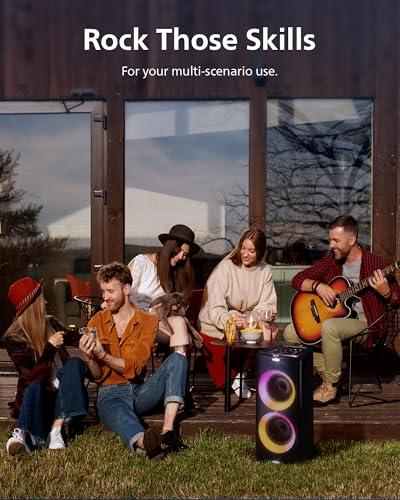
This fundamental difference determines use cases. The Philips TAX5206 excels at beach parties, camping trips, tailgating, and any outdoor event where power outlets don't exist. The JBL PartyBox 710 works best for backyard parties, garage gatherings, and venues with reliable AC power.
Battery technology has improved since these speakers were released, but physics still limits what's possible. High-powered amplifiers consume substantial energy, making truly portable high-output speakers challenging to engineer. The Philips TAX5206 represents a reasonable compromise, while the JBL PartyBox 710 abandons portability entirely for maximum performance.
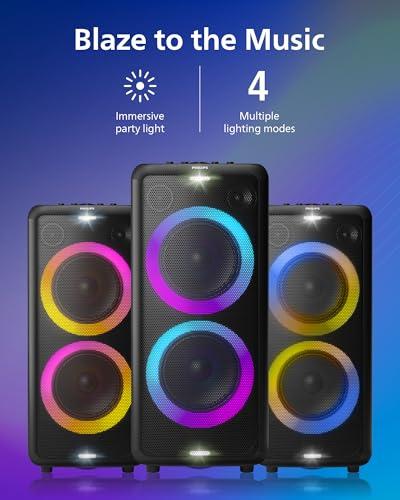
Both speakers include LED lighting systems that pulse and flash in sync with music, but their implementations differ significantly. The Philips TAX5206 features a simpler system with four selectable lighting modes and basic strobe effects. The lights create atmosphere without overwhelming complexity.
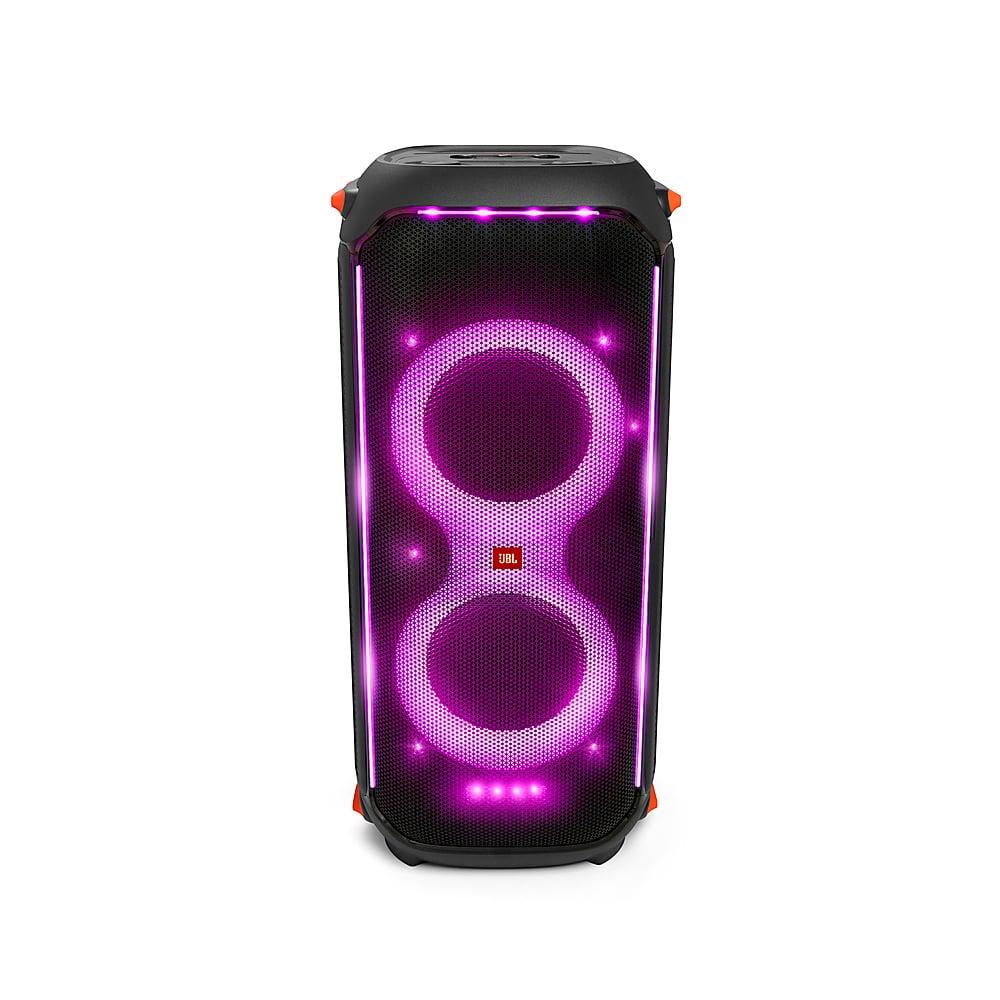
The JBL PartyBox 710 incorporates a sophisticated RGB lighting system with customizable strobes, unique "starry night" effects, and dynamic club-style patterns. Through the PartyBox mobile app, users can control colors, patterns, and intensity in real-time. The lighting wraps around the woofers and extends down the speaker grille, creating a more immersive visual experience.
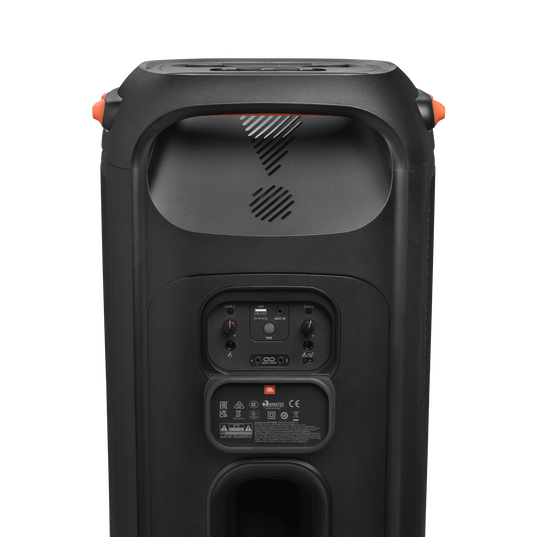
For karaoke enthusiasts, both speakers offer dedicated microphone inputs with volume controls. The Philips TAX5206 includes voice changing effects, echo control, and vocal fader capabilities – features that add entertainment value for casual karaoke sessions. The JBL PartyBox 710 focuses more on audio quality, providing cleaner vocal reproduction but fewer novelty effects.
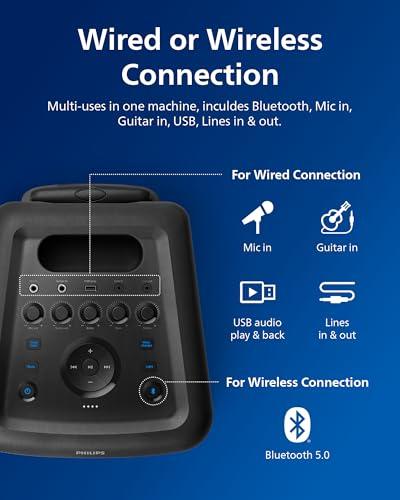
Modern party speakers need multiple connection options, and both deliver here. The Philips TAX5206 supports Bluetooth 5.0 with multipoint connectivity, allowing multiple devices to pair simultaneously. It also includes USB playback supporting multiple audio formats (MP3, WAV, WMA, FLAC), 3.5mm auxiliary input, and a line output for connecting additional speakers.
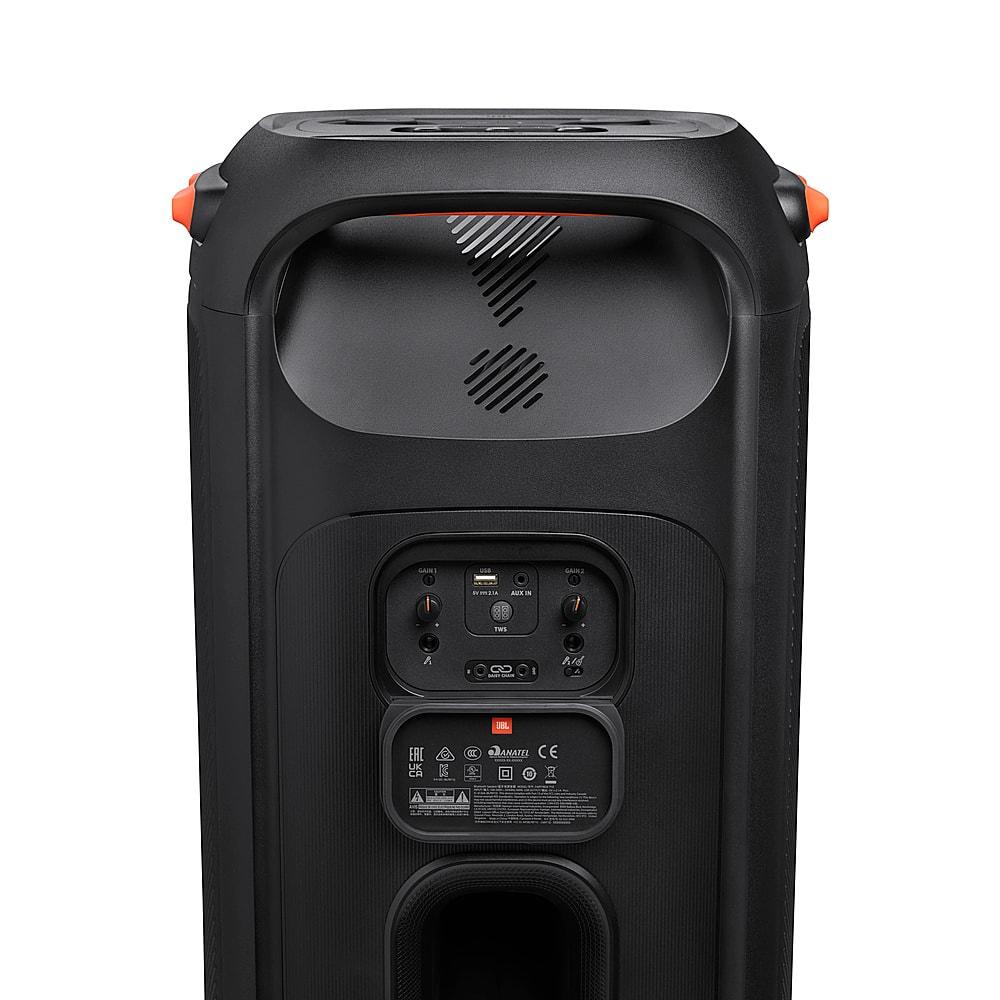
The JBL PartyBox 710 uses newer Bluetooth 5.1 technology, which offers improved connection stability and lower latency. Its standout feature is True Wireless Stereo (TWS) capability – you can wirelessly pair two PartyBox 710 units to create a stereo system with dramatically expanded coverage area.
Both speakers handle Bluetooth well, though the JBL PartyBox 710's newer protocol shows advantages with iOS devices. Android users may experience slightly higher latency with both speakers, potentially causing audio-video sync issues when watching content.
Neither speaker is designed primarily for home theater use, but they can serve this purpose with caveats. The JBL PartyBox 710's higher power output and better low-frequency extension make it more capable for movie soundtracks, particularly action films with substantial bass content.
However, both speakers are optimized for party environments rather than critical listening. They emphasize impact and excitement over nuanced detail reproduction. For serious home theater applications, dedicated soundbars or bookshelf speakers typically provide better dialogue clarity and more balanced frequency response.
That said, if you want a single speaker that can handle both party duties and occasional movie watching, the JBL PartyBox 710 is more versatile, though it lacks the surround sound processing and dialogue enhancement features found in dedicated home theater equipment.
At the time of writing, these speakers occupy different price tiers, with the JBL PartyBox 710 costing nearly three times more than the Philips TAX5206. This price difference reflects their different target audiences and performance capabilities.
The Philips TAX5206 offers exceptional value for casual party hosts who need battery portability. Its feature set covers the essentials – decent volume output, basic lighting effects, karaoke capabilities, and multiple connectivity options – at an accessible price point. For many users, it provides everything needed for successful gatherings without premium pricing.
The JBL PartyBox 710 justifies its higher price through dramatically superior audio performance, advanced lighting systems, and robust build quality designed for frequent use. However, the price increase exceeds the performance improvement for many use cases. It's best suited for serious entertainers who prioritize maximum audio impact and can utilize the advanced features.
Choose the Philips TAX5206 if battery portability is essential for your use cases. This includes outdoor events without power access, camping trips, beach parties, and situations where you need to move the speaker frequently. Its lighter weight and true portability make it ideal for people who want flexibility in venue selection. The moderate price point also makes it accessible for occasional use without significant investment.
The JBL PartyBox 710 makes sense for users who prioritize maximum audio performance and have access to AC power. This includes large indoor parties, backyard gatherings with outdoor outlets, and semi-professional applications where sound quality matters most. If you host parties regularly and want to impress guests with both audio and visual impact, the JBL PartyBox 710 delivers professional-grade performance.
Consider your typical party size when deciding. The Philips TAX5206 handles gatherings of 10-50 people effectively, while the JBL PartyBox 710 can energize much larger crowds. Think about your venues too – if you frequently entertain in locations without power access, battery operation isn't just convenient, it's necessary.
For most users, the choice comes down to portability versus performance. The Philips TAX5206 sacrifices some audio quality for true mobility, while the JBL PartyBox 710 abandons battery operation for maximum sound impact. Both approaches have merit depending on your priorities and how you plan to use your party speaker.
The speaker you choose should match your entertainment style and venues. Neither option is inherently better – they're optimized for different use cases and budgets. Understanding these differences ensures you'll select the speaker that best serves your party needs for years to come.
| Philips TAX5206 | JBL PartyBox 710 |
|---|---|
| Power Output - Determines maximum volume and room coverage | |
| 80W RMS (160W MAX) - suitable for small to medium gatherings | 800W RMS - fills large spaces and outdoor areas up to 1/3 acre |
| Power Source - Critical for venue flexibility | |
| Built-in 4400mAh battery (14 hours) + AC power - true portability | AC power only - must stay plugged in at all times |
| Weight & Portability - Affects transport convenience | |
| 23 lbs (10.52kg) with trolley wheels and handle - easy single-person transport | 61 lbs (27.8kg) with wheels and handle - challenging over uneven terrain |
| Audio Drivers - Impacts sound quality and frequency response | |
| Dual 8" woofers + dual 2.5" tweeters | Dual 8" woofers + dual 2.75" tweeters |
| Frequency Response - Lower bass = more felt impact | |
| 40Hz - 20kHz (-12dB) - good bass extension | 35Hz - 20kHz (-6dB) - deeper bass you can feel physically |
| Lighting Effects - Entertainment value varies significantly | |
| 4 LED modes with basic strobe and color ring | Advanced RGB system with app control, starry night effects, customizable patterns |
| Connectivity - Bluetooth version affects stability and latency | |
| Bluetooth 5.0, USB, AUX, mic/guitar inputs | Bluetooth 5.1, USB charging port, TWS pairing, mic/guitar inputs |
| Karaoke Features - Important for vocal entertainment | |
| Voice changer, echo control, vocal fader, manual EQ knobs | Professional vocal quality, app-based EQ, cleaner sound reproduction |
| Weather Resistance - Outdoor use protection | |
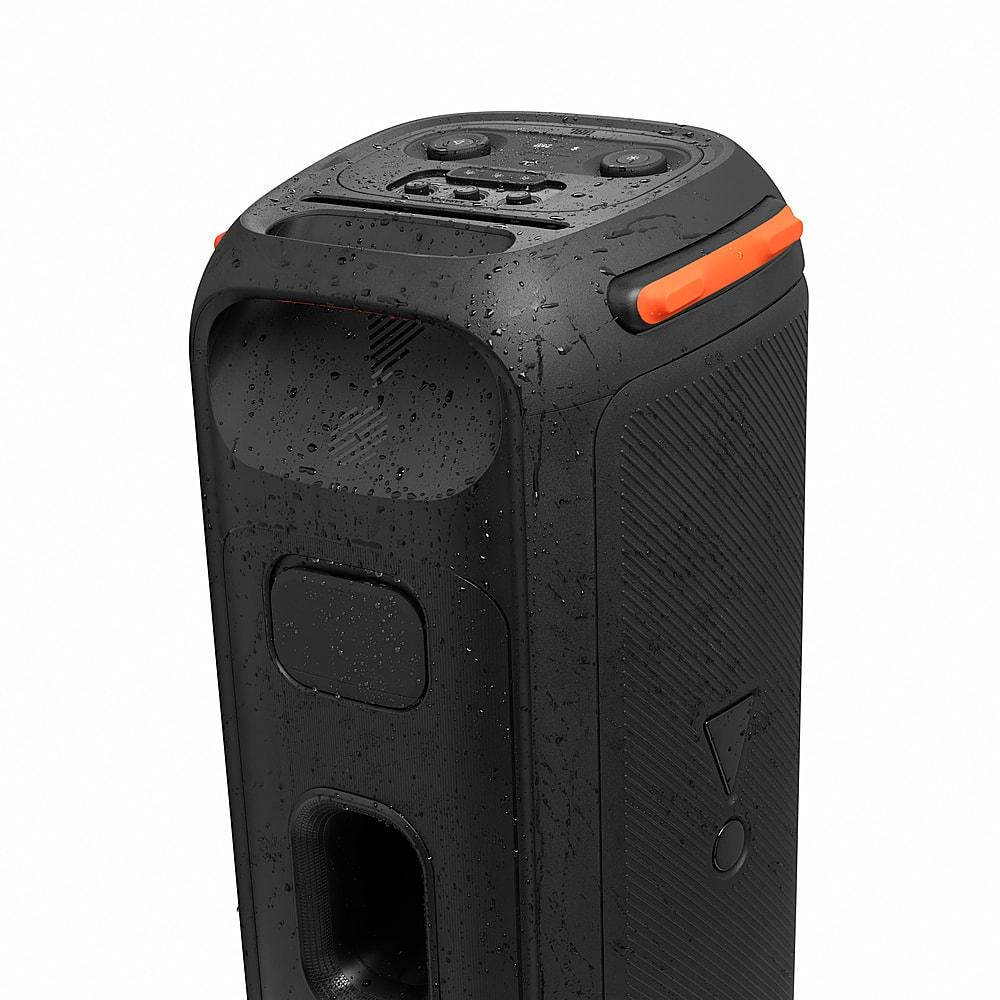
| Basic splash resistance | IPX4 splashproof rating - protected against water splashes |
| App Integration - Modern control convenience | |
| Physical controls only - no smartphone app | PartyBox app for lighting control, EQ, and TWS pairing |
| Ideal Use Cases - Where each speaker excels | |
| Outdoor events without power, camping, beach parties, budget-conscious buyers | Large indoor parties, AC-powered venues, professional/semi-professional use, maximum audio impact |
The JBL PartyBox 710 is significantly louder with 800W RMS output compared to the Philips TAX5206's 80W RMS. The JBL can fill large outdoor spaces up to 1/3 acre, while the Philips TAX5206 is better suited for smaller gatherings and indoor parties.
Only the Philips TAX5206 offers battery operation with its built-in 4400mAh battery providing 14 hours of playback. The JBL PartyBox 710 requires AC power at all times and cannot operate on battery power, limiting its portability to locations with electrical outlets.
For true outdoor portability, the Philips TAX5206 is better due to its battery operation and lighter 23-pound weight. However, if you have access to outdoor power outlets, the JBL PartyBox 710 delivers much more powerful sound for large outdoor gatherings.
Yes, both the Philips TAX5206 and JBL PartyBox 710 include microphone inputs and karaoke functionality. The Philips TAX5206 offers voice changer and echo effects, while the JBL PartyBox 710 provides cleaner vocal reproduction with app-based controls.
The JBL PartyBox 710 has superior bass with deeper frequency response down to 35Hz compared to the Philips TAX5206's 40Hz. The JBL's higher power also drives bass frequencies with more impact, creating the physical "felt" bass experience preferred for dance music.
Neither speaker is designed primarily for home theater, but the JBL PartyBox 710 is more capable due to its higher power output and better low-frequency extension. Both lack surround sound processing and dialogue enhancement features found in dedicated home theater equipment.
The Philips TAX5206 is much easier to transport at 23 pounds with trolley wheels and handle. The JBL PartyBox 710 weighs 61 pounds and, while it has wheels, users report difficulty moving it over uneven surfaces like grass or gravel.
Yes, both speakers support Bluetooth connectivity. The Philips TAX5206 uses Bluetooth 5.0 with multipoint support, while the JBL PartyBox 710 features newer Bluetooth 5.1 technology with improved stability and the ability to pair two devices simultaneously.
The JBL PartyBox 710 has significantly more advanced lighting with RGB effects, starry night patterns, and app control for customization. The Philips TAX5206 offers simpler lighting with four basic modes and strobe effects, but lacks the sophisticated control options.
The JBL PartyBox 710 supports True Wireless Stereo (TWS) pairing to connect two units wirelessly for stereo sound. The Philips TAX5206 doesn't have TWS capability but includes a line-out port for wired connection to additional speakers.
The Philips TAX5206 offers better value for casual users needing portable battery operation at a much lower price point. The JBL PartyBox 710 provides professional-grade performance but costs significantly more, making it better value only for users who need maximum power and advanced features.
Only the Philips TAX5206 has a battery, providing up to 14 hours of continuous playback with a 3-hour charging time. The JBL PartyBox 710 has no battery and must remain plugged into AC power for operation, which limits its use to locations with electrical outlets.
We've done our best to create useful and informative comparisons to help you decide what product to buy. Our research uses advanced automated methods to create this comparison and perfection is not possible - please contact us for corrections or questions. These are the sites we've researched in the creation of this article: youtube.com - documents.philips.com - cutetechgadgets.com - odpbusiness.com - usa.philips.com - hitechers.com - youtube.com - documents.philips.com - youtube.com - walmart.com - walmart.com - device.report - flipkart.com - brightstarcomp.com - youtube.com - philips.co.in - documents.philips.com - fullspecs.net - documents.philips.com - rtings.com - audioadvice.com - crutchfield.com - youtube.com - bestbuy.com - rtings.com - youtube.com - youtube.com - youtube.com - versus.com - worldwidestereo.com - rtings.com - jbl.com - youtube.com - expertvoice.com - jbl.com - jbl.com.tw - robot-advance.com - youtube.com - hu.harmanaudio.com - onward.ph - harmanaudio.in - youtube.com - youtube.com - manuals.plus - global.jbl.com - de.jbl.com - ro.harmanaudio.com

Privacy Policy
Terms and Conditions - Affiliate Policy
Home Security
© Copyright 2008-2026.
11816 Inwood Rd #1211, Dallas, TX 75244