

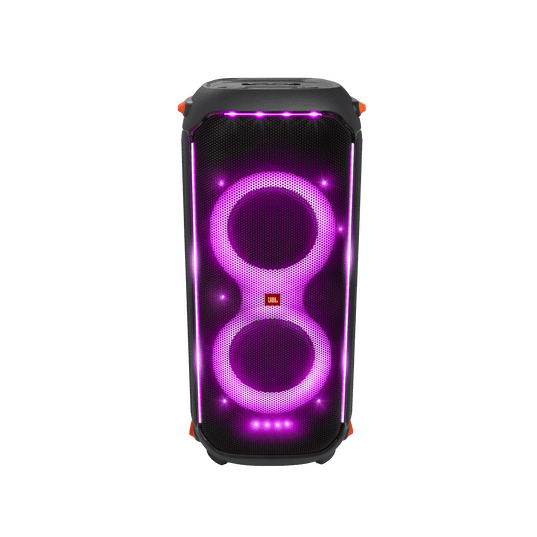
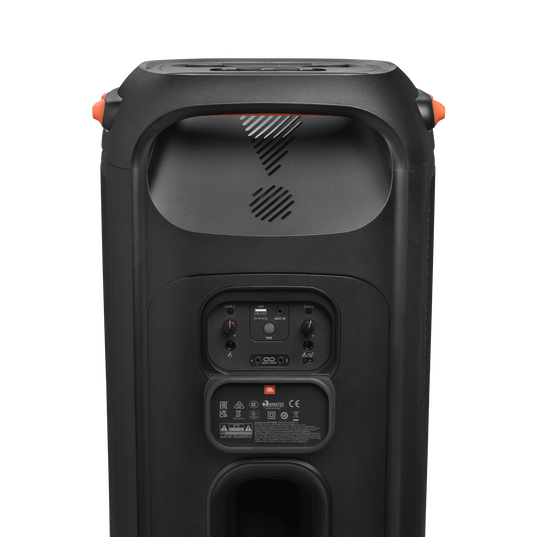
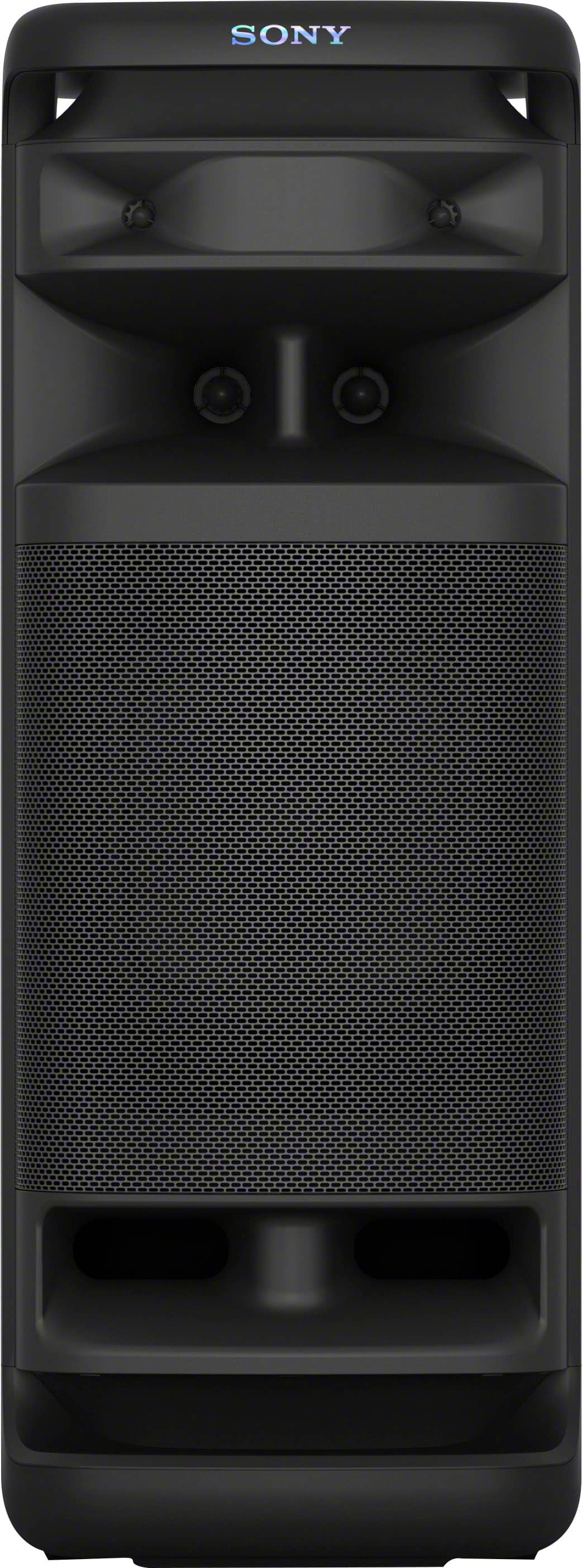
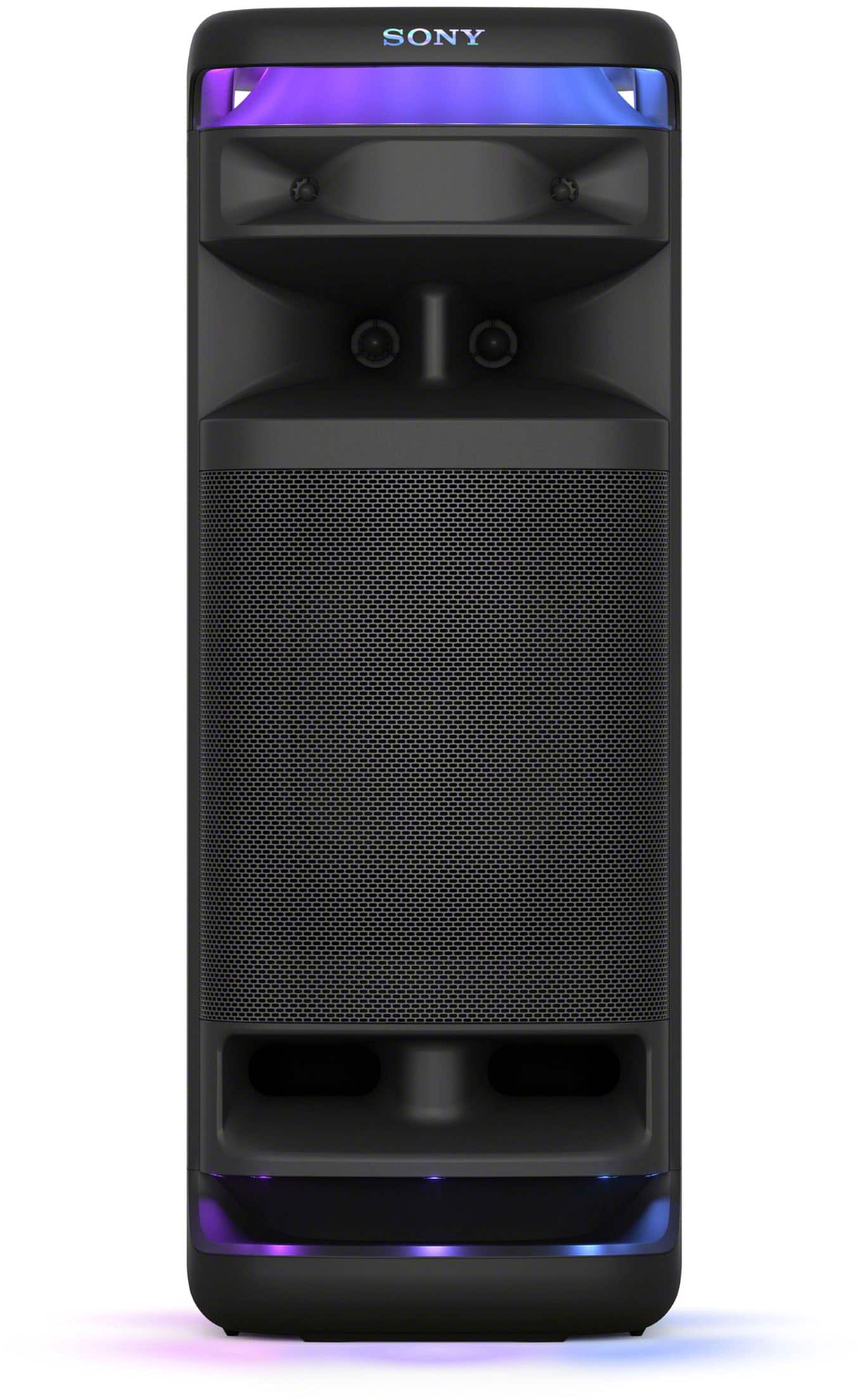
When it comes to throwing memorable parties, your speaker choice can make or break the vibe. Two heavy hitters dominate the large party speaker scene: the JBL PartyBox 710 and the Sony ULT Tower 10. Both promise earth-shaking bass and crowd-pleasing features, but they take surprisingly different approaches to getting your guests moving.
Understanding what separates these speakers isn't just about specs—it's about knowing which one matches your party style. Whether you're hosting poolside barbecues or indoor dance parties, the wrong choice could leave you with expensive buyer's remorse.
Party speakers occupy a unique space in audio equipment. Unlike bookshelf speakers designed for critical listening or portable Bluetooth speakers meant for personal use, party speakers prioritize three things: getting loud, hitting hard, and looking impressive while doing it.
The "getting loud" part means these speakers need to fill large spaces—think backyard gatherings of 50+ people or indoor parties where conversation happens over music. They achieve this through high power output (measured in watts RMS, which tells you sustained power rather than peak bursts) and efficient driver designs that convert electrical energy into sound pressure effectively.
"Hitting hard" refers to bass impact—that physical feeling when bass notes punch you in the chest. This requires large woofers (the big drivers that handle low frequencies) and substantial amplifier power dedicated to moving those heavy driver cones. It's not just about hearing bass; it's about feeling it.
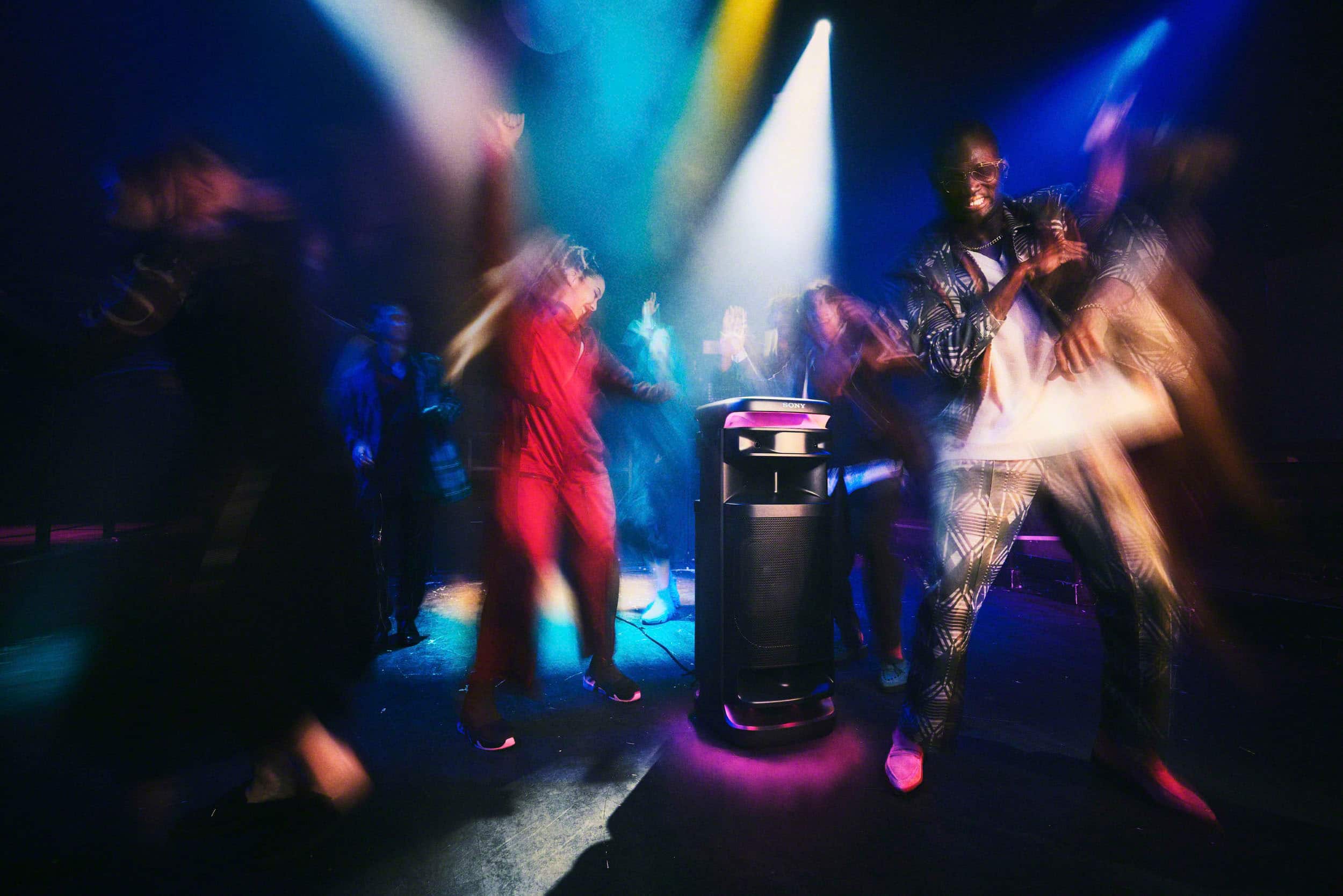
The visual aspect distinguishes party speakers from traditional audio equipment. Synchronized LED light shows, customizable color patterns, and strobe effects create atmosphere beyond just sound. These aren't gimmicks—they're essential features that transform listening into an experience.
Both the JBL PartyBox 710 (released in 2021) and Sony ULT Tower 10 (released in 2024) represent the current pinnacle of party speaker technology, but they've evolved from different philosophies.
Bass performance separates mediocre party speakers from crowd-pleasers, but understanding bass requires looking beyond simple "more is better" thinking. Different frequency ranges create different sensations and serve different musical purposes.
The Sony ULT Tower 10 absolutely dominates in mid-bass frequencies (30-50 Hz), which is where most electronic dance music, hip-hop, and pop place their rhythmic foundation. Our research into professional measurements shows the Sony delivering nearly 11 decibels more output at 50 Hz compared to the JBL PartyBox 710. That might sound like a small difference, but decibels work logarithmically—this represents more than double the perceived loudness in that crucial frequency range.
This advantage comes from Sony's unique X-Balanced woofer design, which uses a rectangular diaphragm (the part that moves air) instead of traditional circular drivers. This design increases the surface area that moves air while reducing unwanted resonances that can muddy bass reproduction. When you hear that chest-thumping impact from electronic music or feel the kick drum physically hit you, that's primarily the 30-50 Hz range working.
However, the JBL PartyBox 710 strikes back in ultra-low frequencies below 30 Hz. At 20 Hz—the bottom edge of human hearing—the JBL maintains strong output while the Sony's performance drops significantly. This matters for music with synthesized sub-bass or movie soundtracks, though most party music doesn't venture this deep.
The practical difference: the Sony ULT Tower 10 delivers more immediately noticeable bass impact for typical party music, while the JBL PartyBox 710 provides more complete low-frequency reproduction for diverse content.
Both speakers achieve similar maximum loudness levels (around 109 dBA), which is genuinely loud—approaching the threshold where hearing protection becomes advisable for extended exposure. But loudness measurements don't tell the complete story.
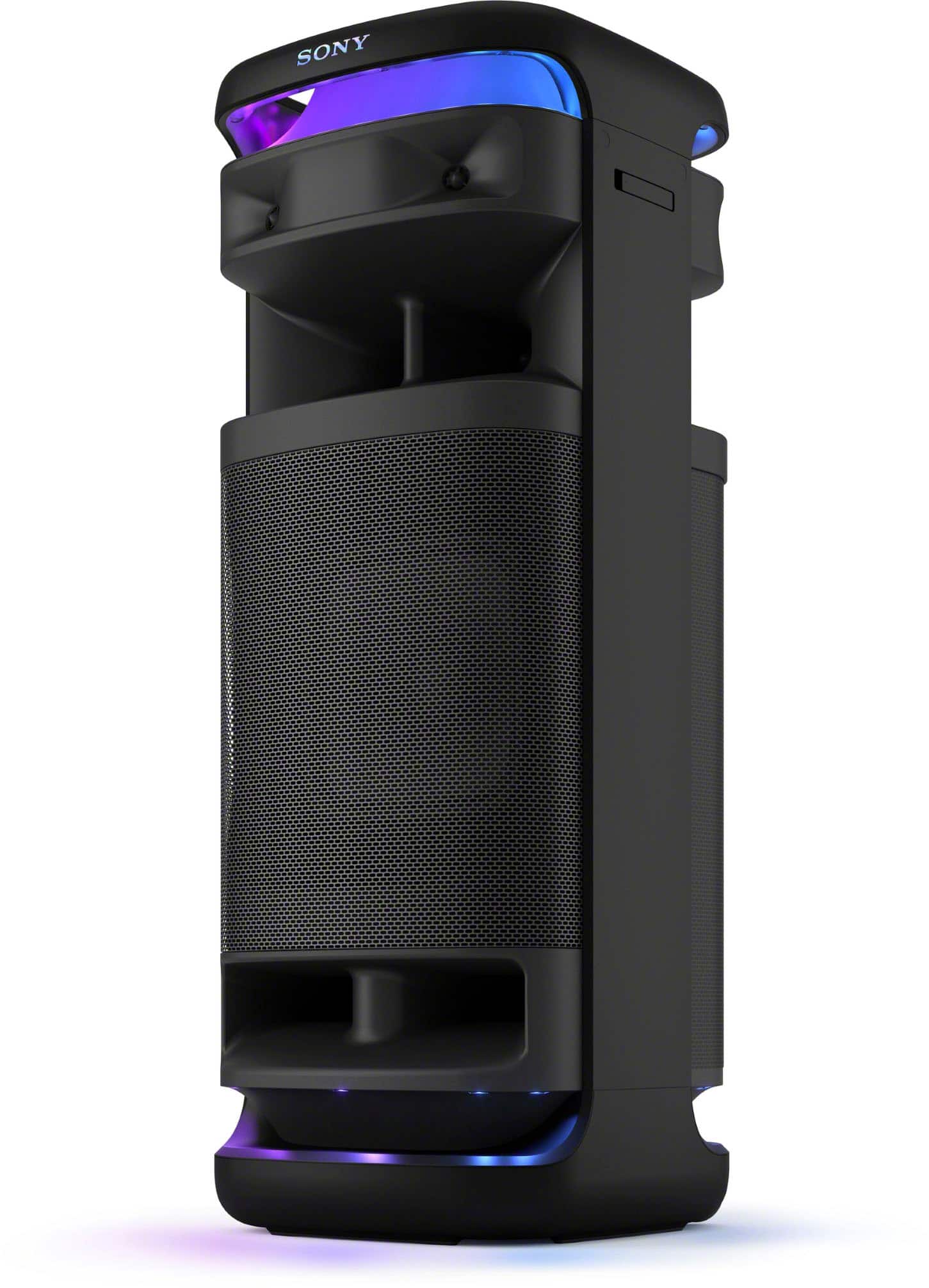
The Sony ULT Tower 10 employs a clever omnidirectional design using four tweeters (high-frequency drivers): two front-facing and two rear-facing. This creates 360-degree sound dispersion, meaning people standing behind the speaker hear similar volume and frequency balance as those in front. This eliminates the "sweet spot" problem where only people directly facing the speaker get optimal sound.
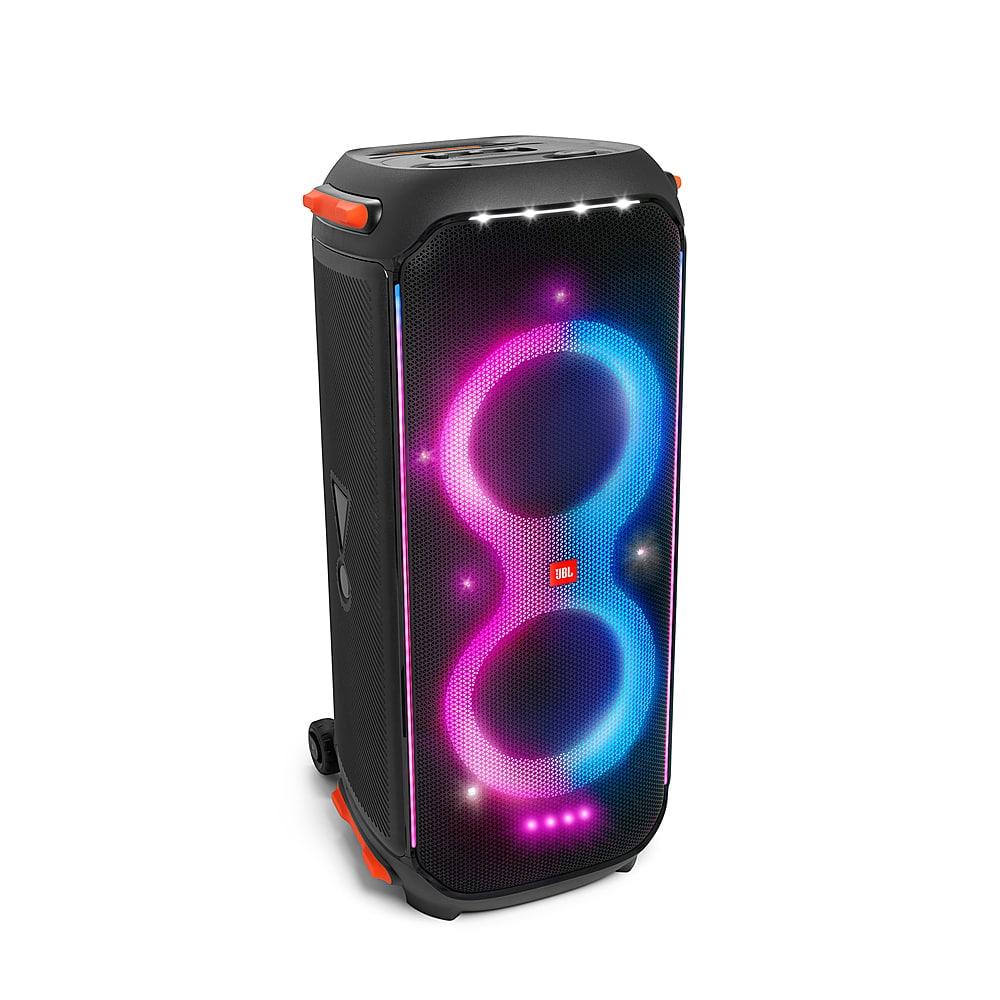
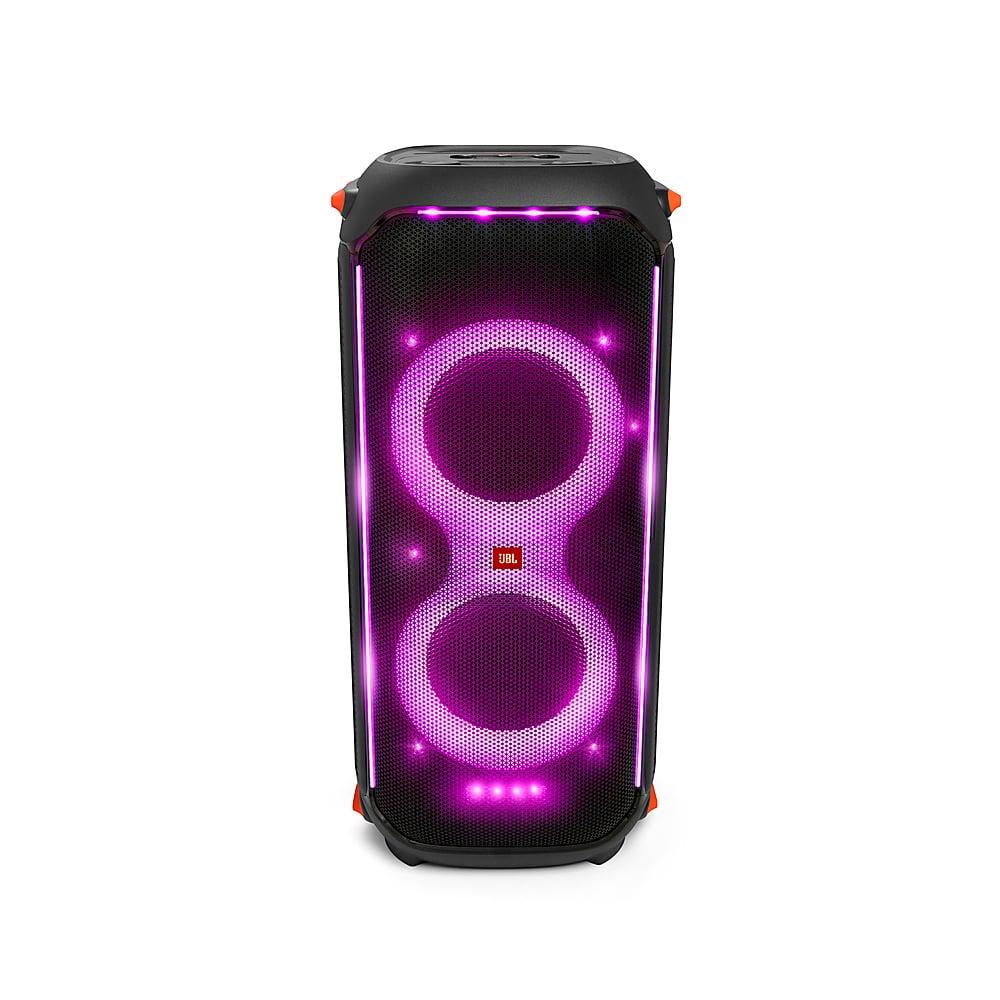
The JBL PartyBox 710 uses more traditional directional audio, focusing sound forward for maximum impact in that direction. This approach works better for stage-style setups where the speaker faces the audience, but can create uneven coverage in spaces where people move around freely.
For basement parties or indoor gatherings where people cluster around the speaker, Sony's omnidirectional approach provides more consistent coverage. For outdoor events with a defined "front" area, JBL's directional design can actually be more efficient.
Here's where things get technically interesting. The JBL PartyBox 710 delivers 800 watts RMS (Root Mean Square, which represents continuous power rather than short-term peaks), while Sony doesn't specify RMS ratings for the ULT Tower 10, listing approximately 1000 watts total power.
More revealing than raw power numbers is how each speaker handles power scaling. The Sony ULT Tower 10 continues increasing bass output all the way to maximum volume, maintaining that physical impact even when cranked. The JBL PartyBox 710 shows a different behavior—bass output plateaus around 50-60% volume, with only midrange and high frequencies continuing to increase beyond that point.
This creates distinctly different user experiences. Push the Sony to maximum volume, and you get maximum bass impact along with everything else. Push the JBL past 60%, and you get a more balanced sound profile that some might find less fatiguing for extended listening.
The Sony ULT Tower 10 employs a three-way driver system: dedicated woofers for bass, separate midrange drivers for vocals and instruments, and tweeters for high frequencies. This separation allows each driver type to focus on its optimal frequency range, theoretically improving clarity and reducing distortion.
The JBL PartyBox 710 uses a two-way design with woofers handling both bass and midrange duties while tweeters cover high frequencies. This simpler approach can actually provide better tonal coherence—all the midrange frequencies come from the same driver type, avoiding potential phase issues where different drivers might interfere with each other.
In practice, the Sony excels at instrument separation and vocal clarity, making it easier to pick out individual elements in complex music. The JBL provides a more cohesive, naturally balanced sound that works well across diverse music genres without requiring EQ adjustment.
However, multiple expert reviews note that the Sony ULT Tower 10 can sound overly bright or harsh at close range (less than 10 meters), particularly in the high frequencies. This might require careful placement or EQ adjustment for comfortable listening. The JBL PartyBox 710 maintains more natural tonal balance across all volume levels.
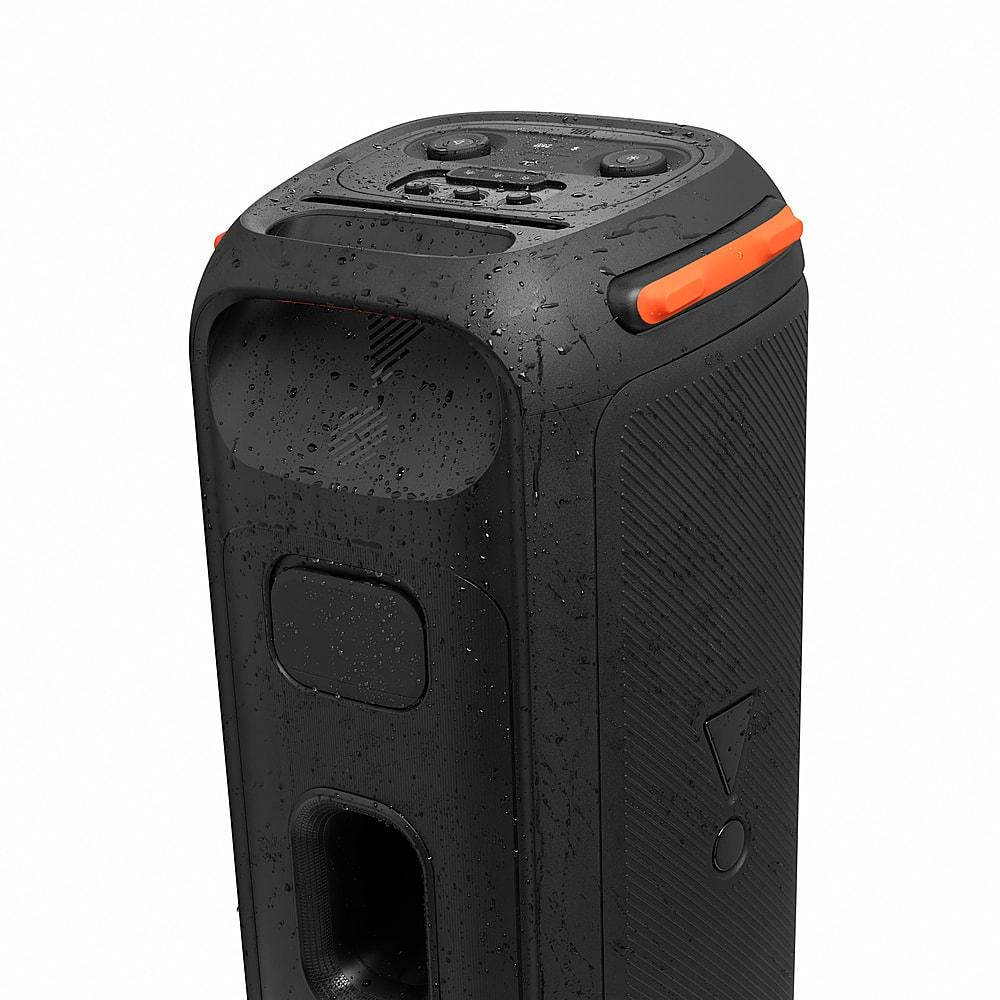
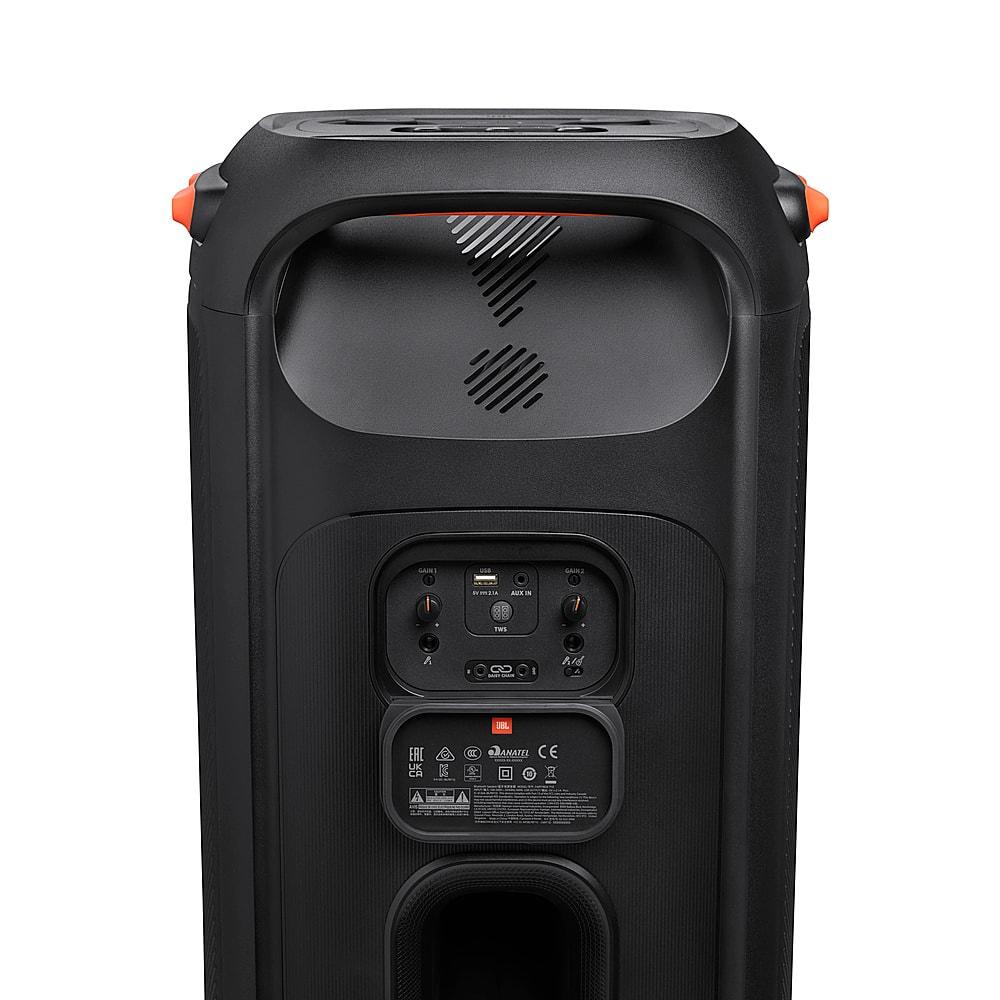
Here's where practicality trumps performance specifications. The JBL PartyBox 710 carries an IPX4 rating, meaning it's protected against water splashes from any direction. This isn't full waterproofing—don't submerge it—but it handles poolside parties, light rain, and the inevitable drink spills that happen at gatherings.
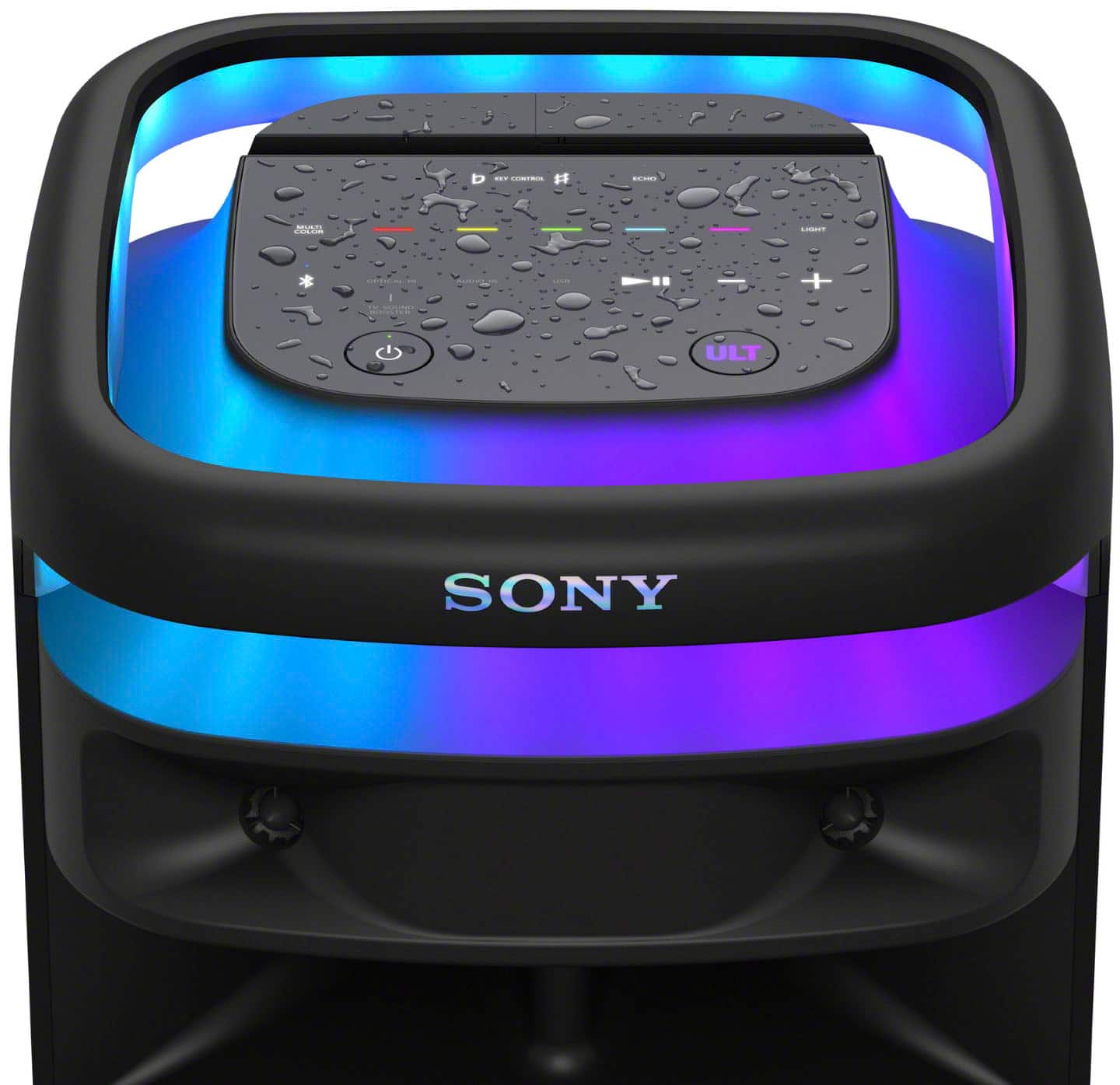
The Sony ULT Tower 10 offers only splash protection for its control panel, with no official IP rating for the entire unit. This fundamental difference dramatically affects where and how you can use these speakers. The Sony essentially becomes an indoor-only speaker, while the JBL handles outdoor events confidently.
For many party hosts, this single factor outweighs other considerations. Summer gatherings, pool parties, beach events, and outdoor festivals all become off-limits for the Sony unless you can guarantee dry conditions.
Neither speaker qualifies as truly portable in the grab-and-go sense. The JBL PartyBox 710 weighs 61.3 pounds and stands nearly three feet tall, while the Sony ULT Tower 10 weighs 63.9 pounds and reaches over 43 inches tall.
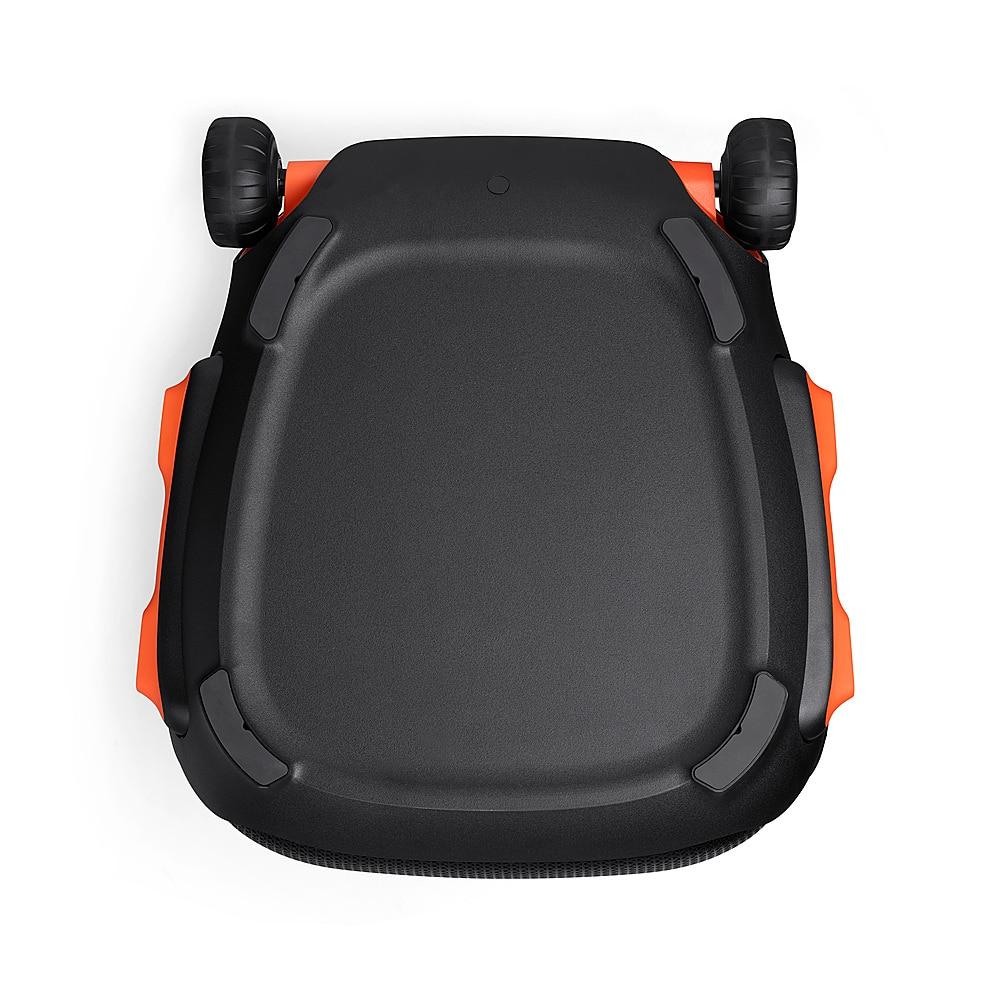
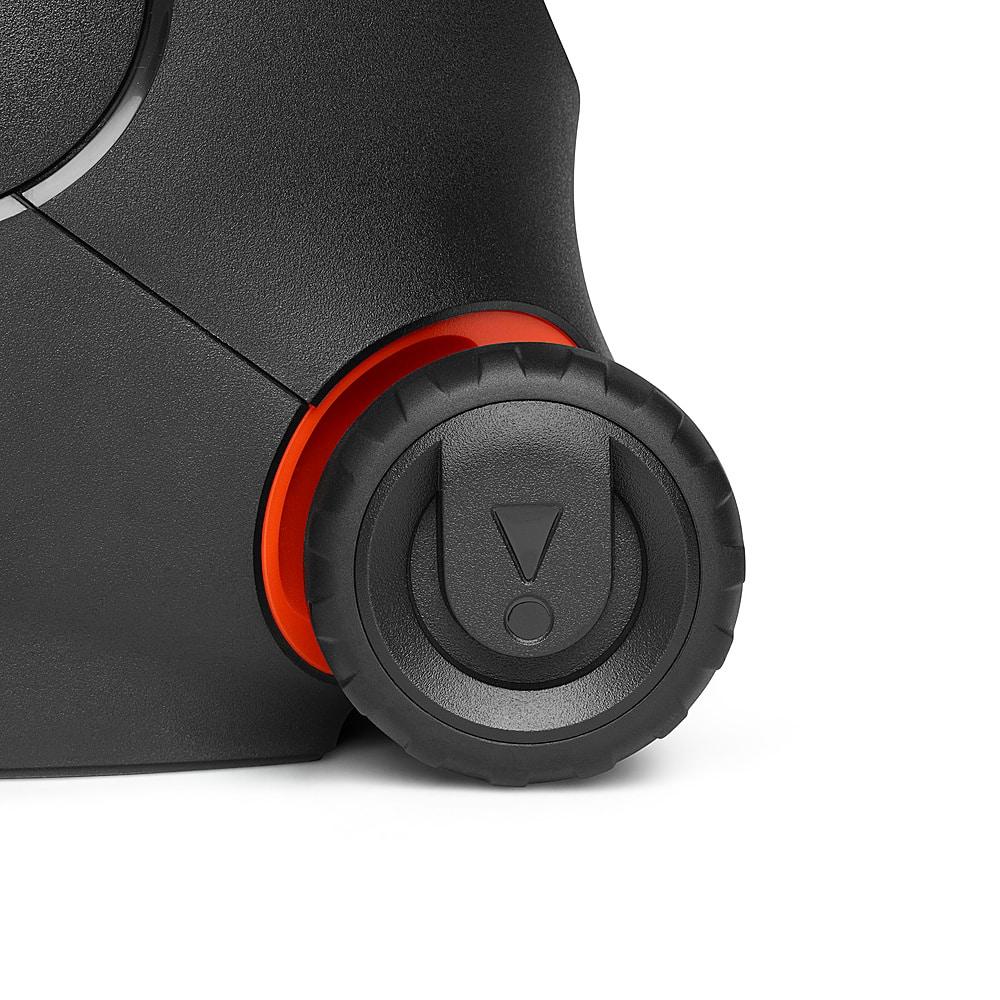
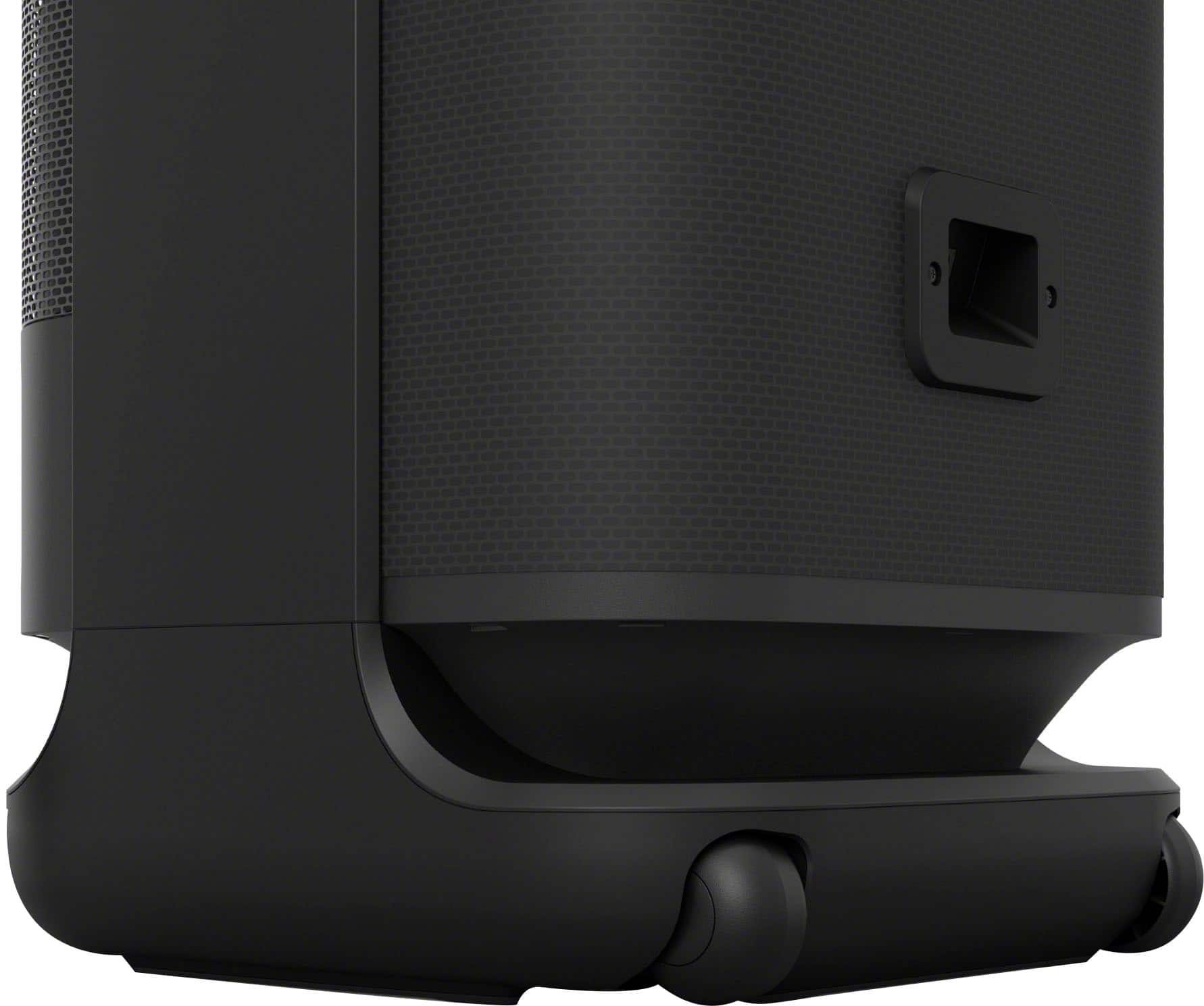
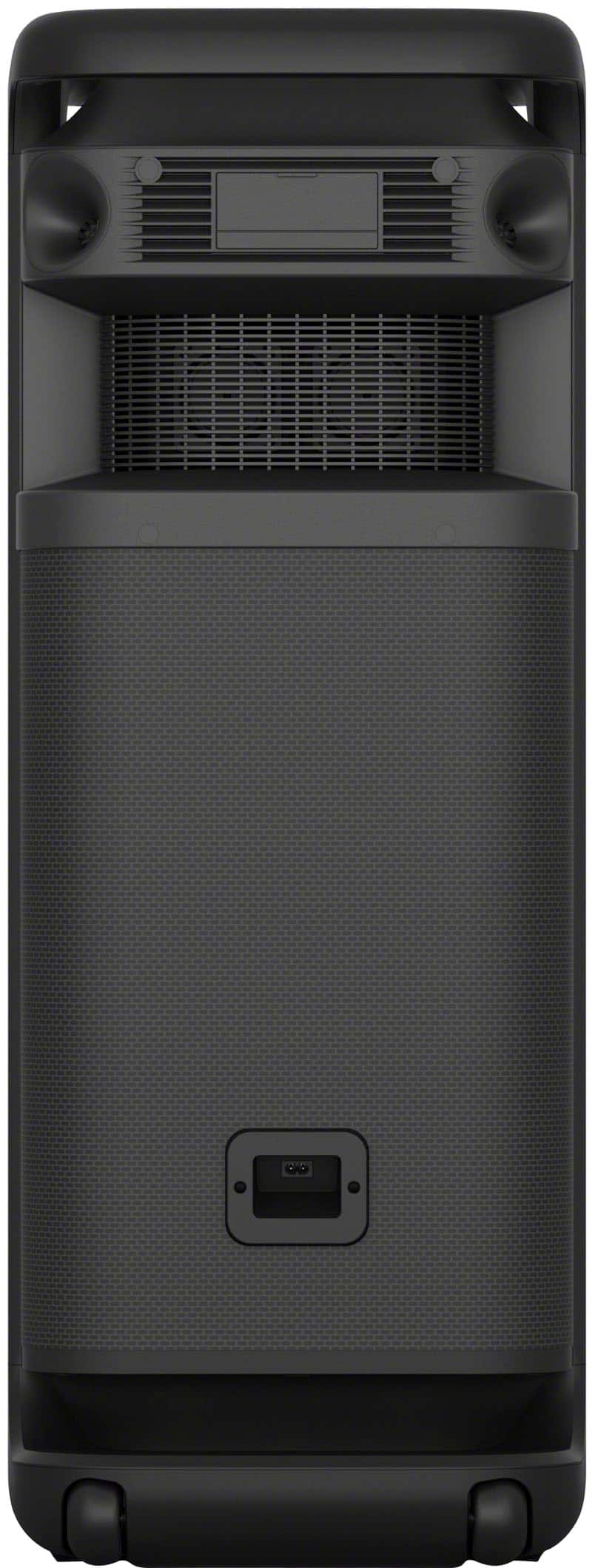
Both include wheels and handles for transportation, but moving either requires planning. The Sony's extra height makes it particularly challenging for vehicle transport—many sedan trunks won't accommodate it standing upright, and laying it down raises concerns about internal component damage.
The weight difference (2.6 pounds) is negligible, but the JBL PartyBox 710's more compact footprint gives it practical advantages for storage and transport.
Both speakers require AC power with no battery operation option. This might seem limiting compared to smaller portable speakers, but it's actually necessary for this performance level. Battery operation would either severely limit runtime or require massive, expensive battery packs that would increase weight and cost dramatically.
The AC-only approach means you're limited to locations with power outlets, but it enables sustained high-volume operation without worrying about battery depletion mid-party.
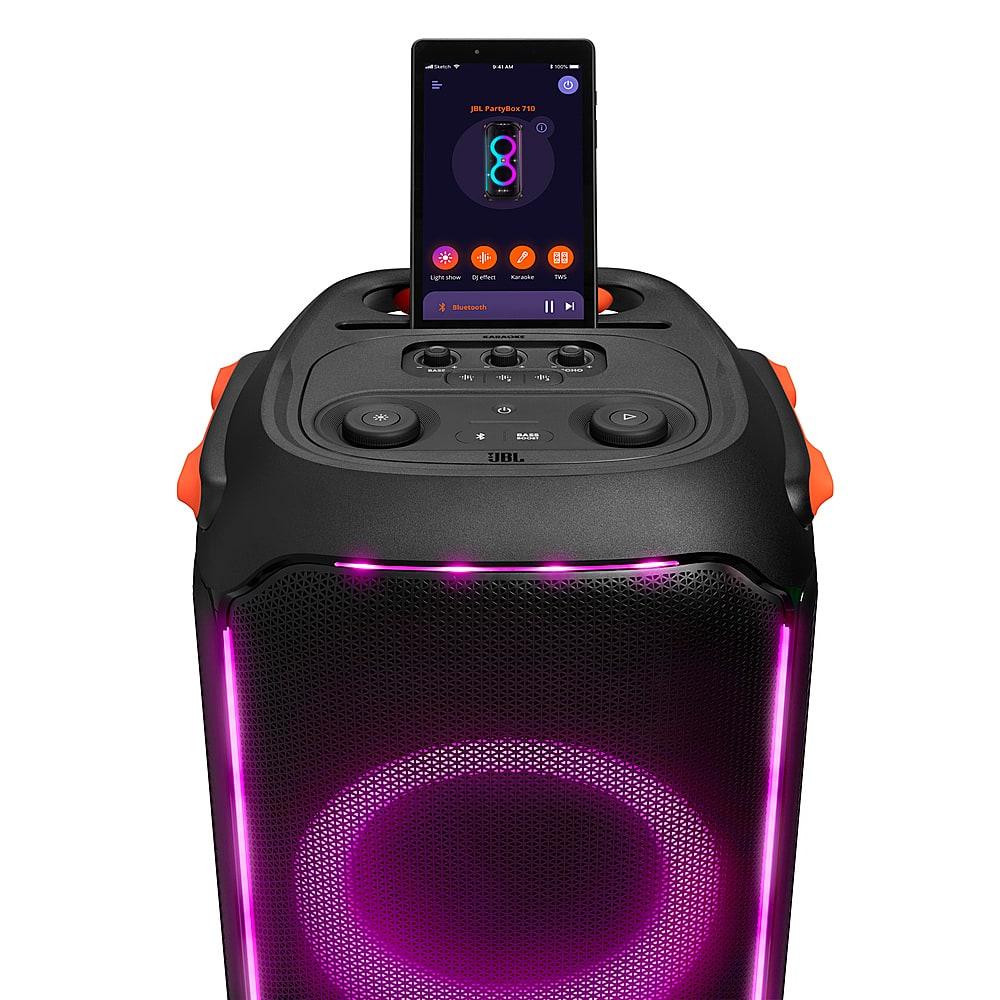
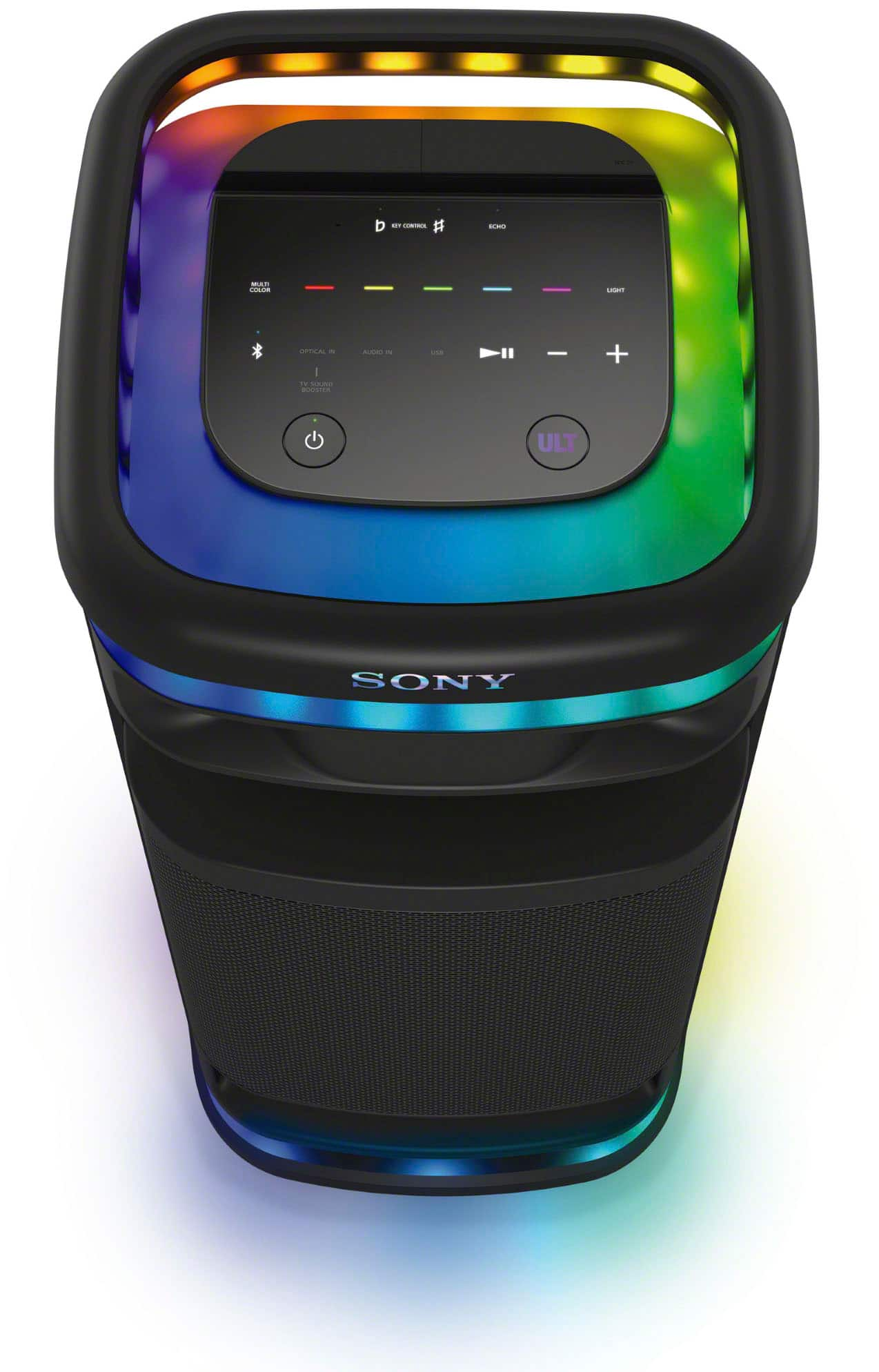
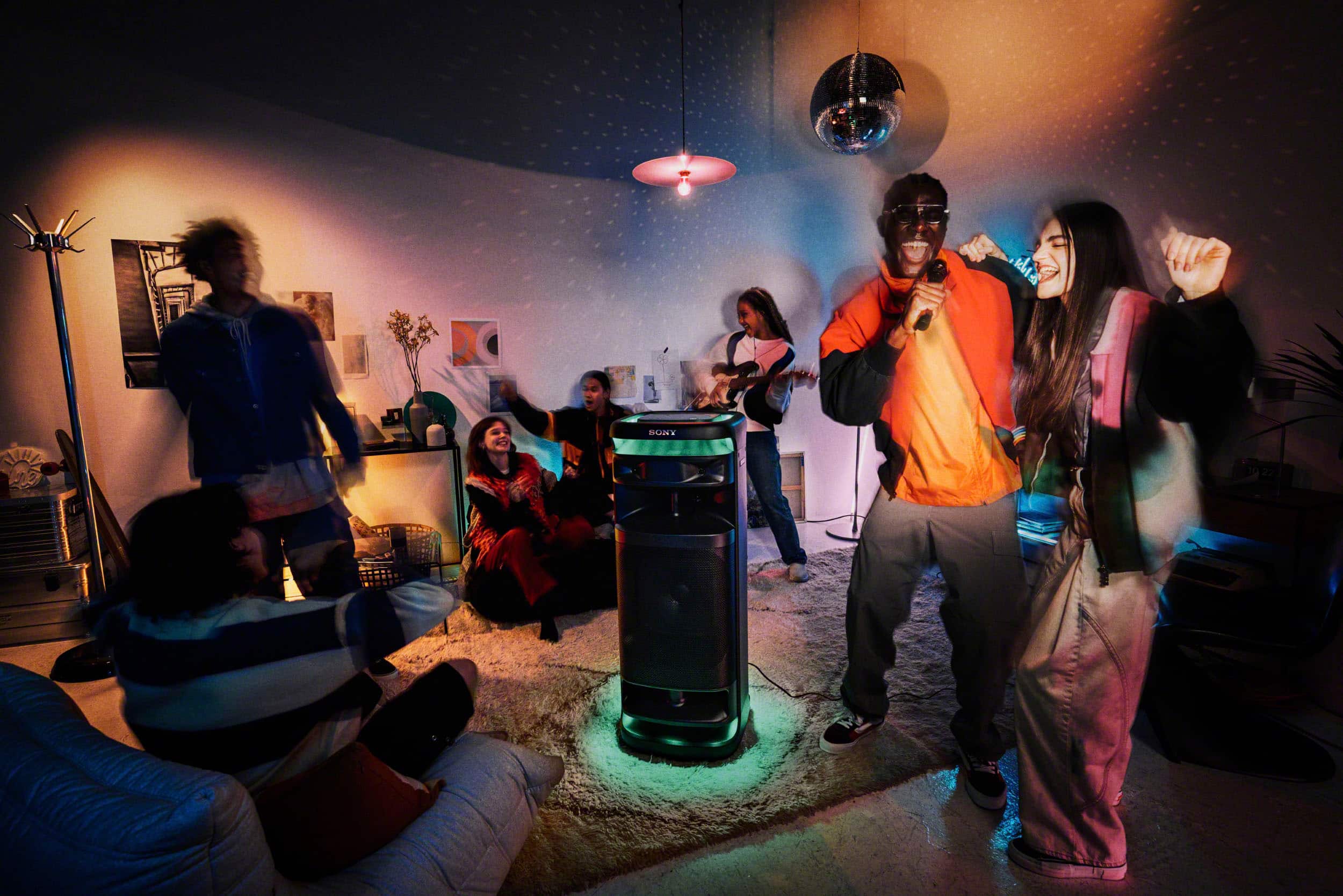
The Sony ULT Tower 10 takes lighting seriously, featuring programmable 360-degree LED displays that encircle the speaker. These aren't simple on/off lights—they're customizable color patterns, ambient floor lighting, and music-synchronized effects controllable through smartphone apps.
The JBL PartyBox 710 offers dynamic strobe effects, starry night patterns, and customizable light shows, but with a more focused approach. JBL's lighting emphasizes high-energy party atmospheres with intense strobe capabilities that can genuinely transform a space.
Both systems work well, but serve different aesthetic preferences. Sony's approach feels more sophisticated and ambient, while JBL's feels more traditionally "party-focused" with emphasis on energetic strobing.
Karaoke capabilities have become essential party speaker features, and both deliver comprehensive solutions. The Sony ULT Tower 10 includes a wireless Bluetooth microphone right in the box, along with dedicated microphone holders and full echo/key controls. This provides immediate out-of-box karaoke functionality.
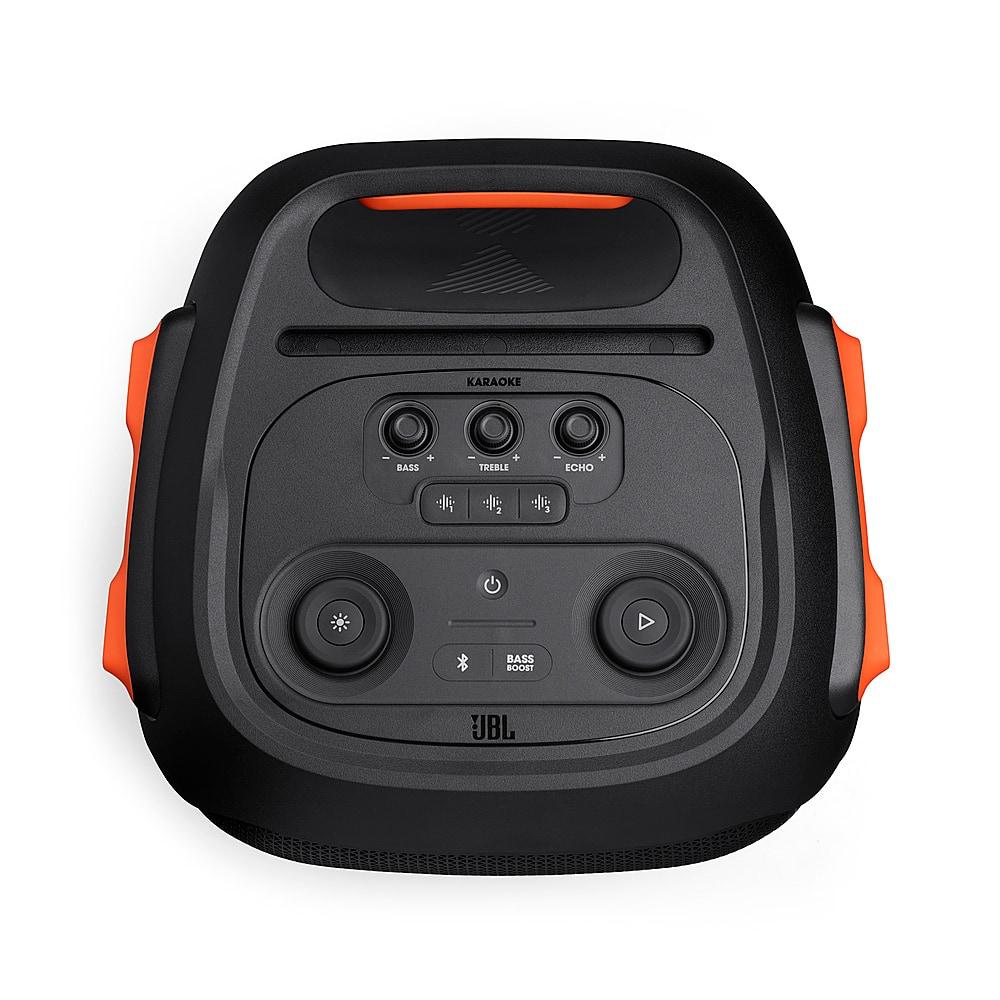
The JBL PartyBox 710 requires purchasing microphones separately but offers more comprehensive input options with independent EQ controls for bass, treble, and echo, plus three dedicated buttons for sound effects. Both speakers include 1/4-inch inputs for professional microphones and guitar connections.
For spontaneous karaoke, Sony wins with the included wireless microphone. For serious karaoke or live music, JBL's more extensive control options provide better customization.
Smartphone app control has become standard for party speakers, but implementation varies significantly. The Sony ULT Tower 10 uses two apps: Music Center for basic controls and EQ adjustment, and Fiestable for advanced features like DJ effects, motion control, and interactive party games.
The JBL PartyBox 710 relies on its PartyBox app for light customization, sound adjustment, and True Wireless Sound pairing with other JBL speakers.
Sony's dual-app approach provides more features but can feel unnecessarily complex. JBL's single-app approach is more streamlined but offers fewer advanced features.
Both speakers support connecting multiple units for larger events, but use different approaches. Sony's Party Connect technology can link up to 100 compatible speakers with synchronized audio and lighting—impressive for large venue events.
JBL's True Wireless Sound pairs two PartyBox 710s for stereo sound, or supports daisy-chaining multiple units. The system works well but doesn't match Sony's scale capabilities.
At the time of writing, the JBL PartyBox 710 typically costs several hundred dollars less than the Sony ULT Tower 10. This price difference reflects their different target markets and feature sets.
The JBL represents excellent value for users who want proven party speaker performance with outdoor versatility. Its balanced sound profile works well across music genres without requiring extensive EQ adjustment, and the IPX4 rating provides peace of mind for diverse usage scenarios.
The Sony justifies its premium pricing with advanced bass technology, omnidirectional sound design, and more sophisticated lighting systems. However, its indoor-only limitation significantly restricts use cases compared to the JBL.
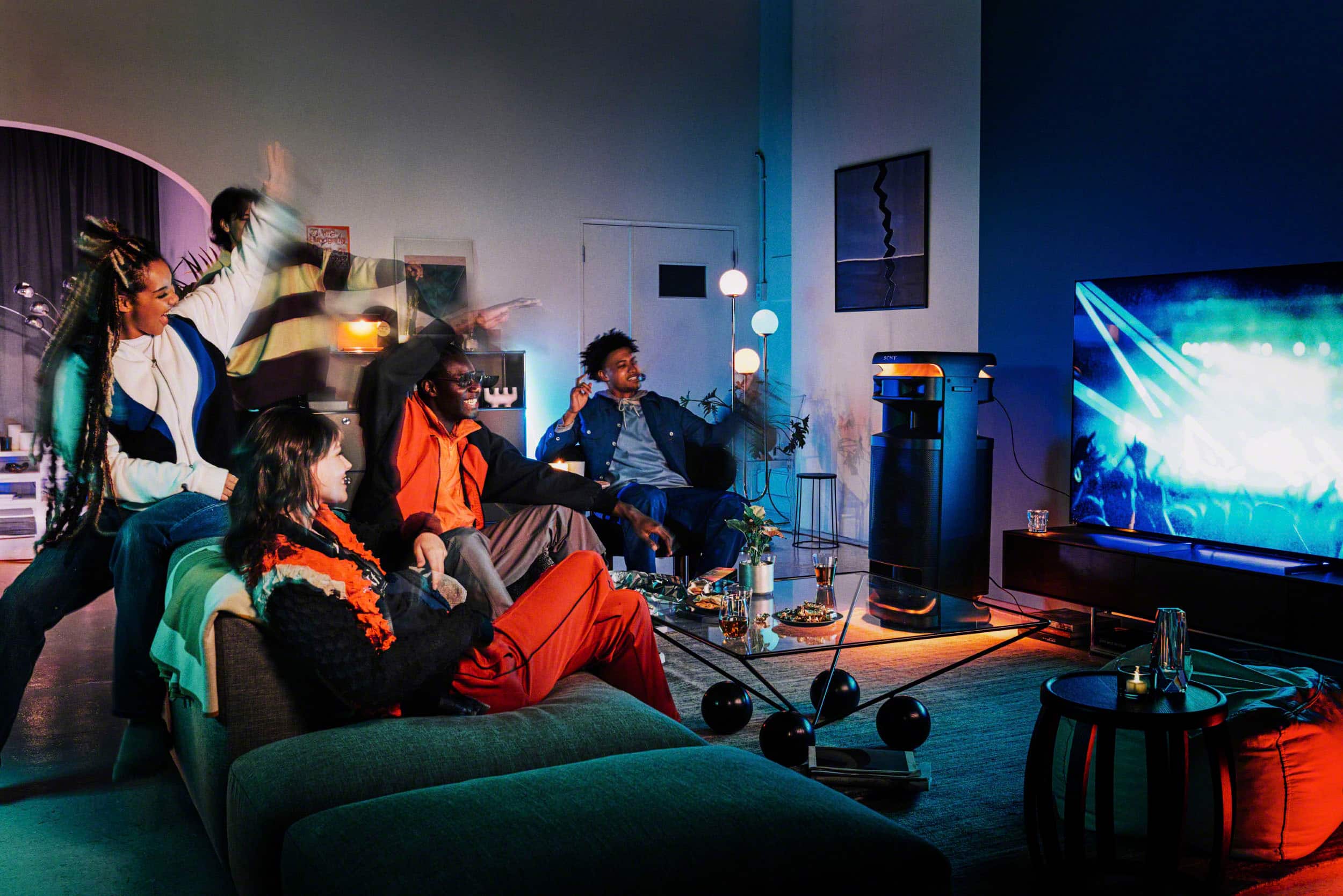
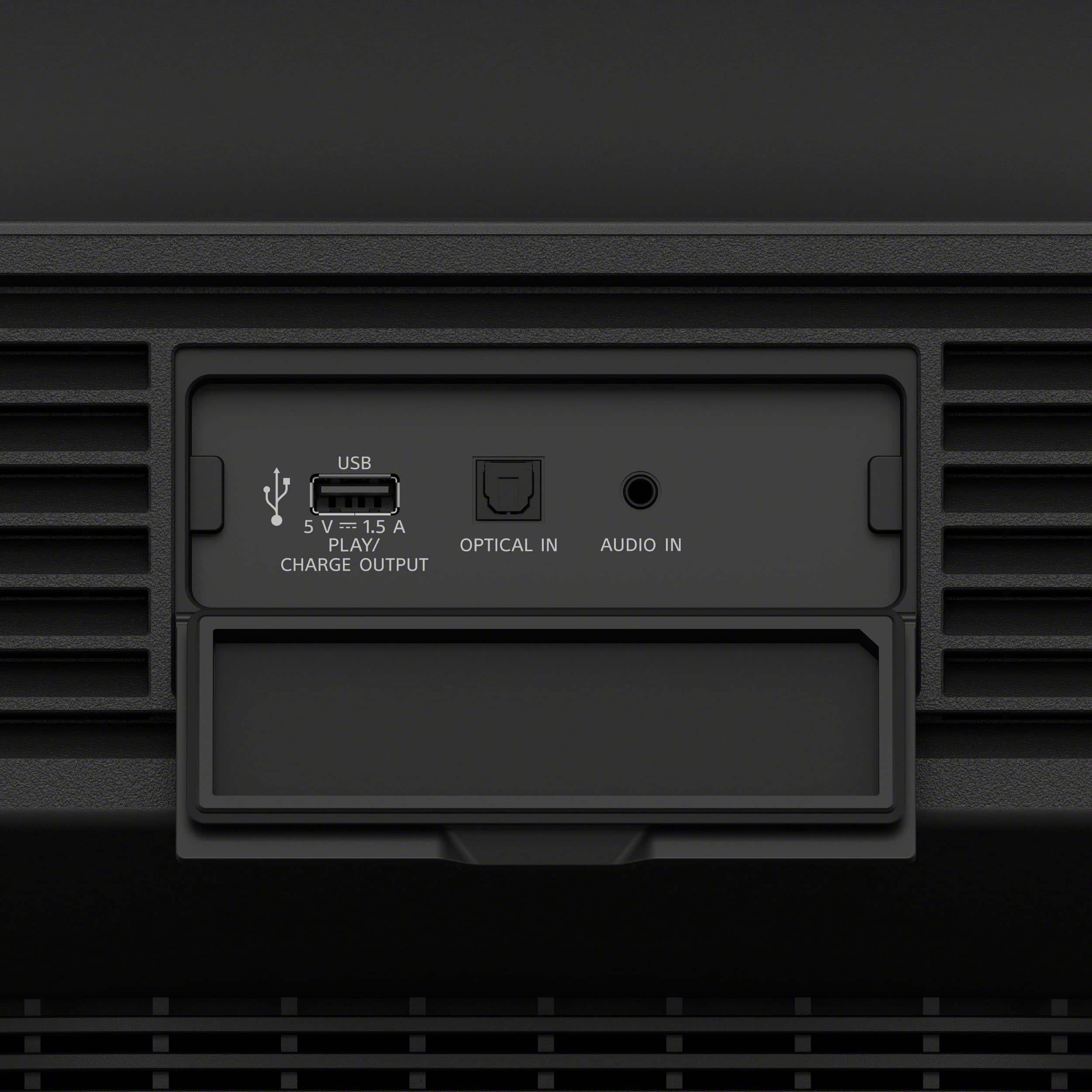
While party speakers aren't designed for critical home theater listening, both can serve double duty for casual movie watching. The Sony ULT Tower 10 includes an optical digital input specifically for TV connection, plus its ULT bass modes can enhance movie soundtrack low-frequency effects.
The JBL PartyBox 710 lacks digital inputs, requiring analog connections that might limit audio quality from modern TVs. However, its more natural tonal balance often works better for dialogue clarity in movies.
Neither speaker replaces a dedicated home theater system, but the Sony offers better TV integration for users wanting dual-purpose functionality.
You host diverse events including outdoor gatherings. The IPX4 rating makes it suitable for poolside parties, beach events, and backyard barbecues without weather anxiety. Its naturally balanced sound profile works well across music genres without extensive EQ tweaking, making it user-friendly for hosts who want great sound without becoming audio engineers.
The lower price point (at time of writing) makes it attractive for users who want excellent party speaker performance without premium pricing. Its proven reliability and comprehensive connectivity options serve most party scenarios effectively.
The slightly smaller size and better weather resistance make it more practical for frequent transport between venues or seasonal storage.
You primarily host indoor events in large spaces where omnidirectional sound coverage provides advantages. The 360-degree sound dispersion works particularly well for basement parties, large living rooms, or indoor venues where people move around freely.
You prioritize maximum bass impact, especially for electronic music, hip-hop, or other bass-heavy genres. The Sony's dominance in mid-bass frequencies creates more physically impressive sound for these music styles.
You're willing to pay premium pricing for cutting-edge features like LDAC Bluetooth codec support, advanced lighting customization, and the included wireless microphone system.
You want a speaker that doubles as a TV sound system occasionally, thanks to the optical input and bass enhancement features.
Both speakers excel at their intended purposes, but serve different user needs. The JBL PartyBox 710 prioritizes versatility, value, and proven performance across diverse scenarios. The Sony ULT Tower 10 focuses on maximum bass impact and advanced features for users who primarily entertain indoors.
The deciding factor often comes down to outdoor usage requirements. If you need weather resistance for pool parties, beach events, or outdoor festivals, the JBL becomes the obvious choice regardless of other considerations. If you're strictly an indoor entertainer who wants cutting-edge bass performance and doesn't mind paying extra for it, the Sony delivers impressive results.
For most users, the JBL PartyBox 710 provides better overall value with its combination of excellent sound quality, outdoor versatility, and lower pricing. The Sony ULT Tower 10 serves users with specific requirements for maximum bass impact and advanced features who can accept its indoor-only limitation.
Consider your primary use cases, budget, and whether weather resistance matters for your entertaining style. Both speakers will create memorable parties—they just take different approaches to getting there.
| JBL PartyBox 710 | Sony ULT Tower 10 |
|---|---|
| Power Output - Determines maximum volume and bass impact | |
| 800W RMS (sustained power rating) | ~1000W total (RMS not specified) |
| Driver Configuration - Affects sound quality and frequency response | |
| 2× 8" woofers, 2× 2.75" tweeters (2-way design) | 1× 12.6" X-Balanced woofer, 2× midrange, 4× tweeters (3-way design) |
| Bass Performance - Critical for party atmosphere and music impact | |
| Excellent ultra-low extension (20Hz), moderate mid-bass | Dominant mid-bass impact (30-50Hz), weaker ultra-low frequencies |
| Sound Dispersion - Affects coverage in different room layouts | |
| Directional front-firing design | 360° omnidirectional with rear tweeters |
| Weather Resistance - Determines outdoor usage capability | |
| IPX4 splashproof rating (full protection) | Control panel splash-resistant only (no IP rating) |
| Dimensions & Weight - Impacts portability and storage | |
| 35.6" × 15.7" × 17.2", 61.3 lbs | 43.6" × 16.5" × 16.9", 63.9 lbs |
| Connectivity Options - Affects versatility and setup flexibility | |
| Bluetooth 5.1, USB, 3.5mm AUX, mic/guitar inputs | Bluetooth 5.2 with LDAC, USB, optical, 3.5mm AUX, mic/guitar inputs |
| Karaoke Features - Important for interactive entertainment | |
| Mic inputs with EQ controls (mic sold separately) | Wireless Bluetooth microphone included |
| Lighting System - Creates party atmosphere and visual appeal | |
| Customizable strobes and starry night effects | 360° programmable LEDs with ambient floor lighting |
| Multi-Speaker Pairing - Enables larger event coverage | |
| True Wireless Sound (pairs 2 units for stereo) | Party Connect (links up to 100 compatible speakers) |
| App Control - Manages features and customization | |
| JBL PartyBox app (lighting, EQ, pairing) | Music Center + Fiestable apps (EQ, DJ effects, games) |
| Power Requirements - Determines placement flexibility | |
| AC power only (no battery) | AC power only (no battery) |
| TV Integration - Useful for dual-purpose home entertainment | |
| Analog inputs only | Optical digital input for direct TV connection |
| Release Date & Technology - Indicates feature currency | |
| 2021 release with proven reliability | 2024 release with latest audio technology |
The JBL PartyBox 710 is significantly better for outdoor parties due to its IPX4 splashproof rating, which protects against water splashes from any direction. This makes it ideal for poolside gatherings, beach parties, and events where light rain might occur. The Sony ULT Tower 10 only has splash protection on its control panel and lacks any official IP rating, limiting it primarily to indoor use.
The Sony ULT Tower 10 delivers more powerful bass in the mid-bass frequencies (30-50Hz) that you actually feel, producing nearly 11 decibels more output than the JBL PartyBox 710 at 50Hz. However, the JBL PartyBox 710 extends deeper into ultra-low frequencies below 30Hz. For typical party music like EDM and hip-hop, the Sony provides more impactful bass.
No, both the JBL PartyBox 710 and Sony ULT Tower 10 require AC power and do not have built-in batteries. This allows them to deliver sustained high power output without battery limitations, but means you need access to electrical outlets for operation.
Both the JBL PartyBox 710 and Sony ULT Tower 10 reach similar maximum loudness levels around 109 decibels. However, the Sony delivers higher intensity (114.1 dB vs 110.2 dB) and uses 360-degree sound dispersion for more even coverage, while the JBL focuses sound directionally for maximum impact in one direction.
Yes, both speakers support karaoke. The Sony ULT Tower 10 includes a wireless Bluetooth microphone in the box with echo and key controls. The JBL PartyBox 710 has microphone inputs with comprehensive EQ controls but requires purchasing microphones separately. Both offer 1/4-inch inputs for professional microphones.
The JBL PartyBox 710 is slightly more portable, weighing 61.3 pounds and standing 35.6 inches tall compared to the Sony ULT Tower 10 at 63.9 pounds and 43.6 inches tall. Both have wheels and handles, but the JBL's smaller footprint makes it easier to transport and store, especially in vehicles.
The Sony ULT Tower 10 connects directly to TVs via optical digital input and includes TV Sound Booster mode for enhanced movie audio. The JBL PartyBox 710 only offers analog connections through its 3.5mm input, which may limit audio quality from modern TVs. Neither replaces a dedicated home theater system.
Yes, but differently. The Sony ULT Tower 10 uses Party Connect to wirelessly link up to 100 compatible speakers with synchronized audio and lighting. The JBL PartyBox 710 uses True Wireless Sound to pair two units for stereo sound or supports daisy-chaining multiple speakers via wired connections.
The Sony ULT Tower 10 offers better instrument separation and vocal clarity through its 3-way driver system, but can sound overly bright at close range. The JBL PartyBox 710 provides more naturally balanced sound that works well across all music genres without requiring EQ adjustment. Both excel at party music but serve different listening preferences.
The Sony ULT Tower 10 features programmable 360-degree LED displays with ambient floor lighting and customizable color patterns controlled via smartphone apps. The JBL PartyBox 710 offers dynamic strobe effects, starry night patterns, and customizable light shows with more traditional party-focused strobing. Both synchronize lighting to music.
The JBL PartyBox 710 typically offers better value with excellent sound quality, outdoor versatility through IPX4 rating, and comprehensive features at a lower price point. The Sony ULT Tower 10 justifies its premium pricing with superior mid-bass impact, 360-degree sound, and advanced features, but its indoor-only limitation affects overall value.
The Sony ULT Tower 10 uses two apps - Music Center for basic controls and Fiestable for DJ effects and party games - offering more features but added complexity. The JBL PartyBox 710 uses a single PartyBox app for lighting, EQ, and speaker pairing, providing a more streamlined but less feature-rich experience. Both apps offer adequate control over their respective speakers' features.
We've done our best to create useful and informative comparisons to help you decide what product to buy. Our research uses advanced automated methods to create this comparison and perfection is not possible - please contact us for corrections or questions. These are the sites we've researched in the creation of this article: rtings.com - audioadvice.com - crutchfield.com - youtube.com - bestbuy.com - rtings.com - youtube.com - youtube.com - youtube.com - versus.com - worldwidestereo.com - rtings.com - jbl.com - youtube.com - expertvoice.com - jbl.com - jbl.com.tw - robot-advance.com - youtube.com - hu.harmanaudio.com - onward.ph - harmanaudio.in - youtube.com - youtube.com - manuals.plus - global.jbl.com - de.jbl.com - ro.harmanaudio.com - stereoguide.com - crutchfield.com - youtube.com - electronics.sony.com - youtube.com - helpguide.sony.net - bestbuy.com - sony.com - us.community.sony.com - youtube.com - sony.com - nfm.com - sony.com - videoandaudiocenter.com - youtube.com

Privacy Policy
Terms and Conditions - Affiliate Policy
Home Security
© Copyright 2008-2026.
11816 Inwood Rd #1211, Dallas, TX 75244