

Party speakers have exploded in popularity over the past few years, transforming from simple boom boxes into sophisticated entertainment systems that can power everything from backyard barbecues to beach parties. These aren't your typical Bluetooth speakers—they're designed to fill large spaces with sound, survive outdoor conditions, and create an atmosphere that gets people moving.
When you're shopping for a party speaker, you're essentially looking for a balance between raw power, portability, durability, and features that enhance the social experience. The two speakers we're comparing today—the JBL PartyBox 710 released in 2022 and the Marshall Bromley 750 launched in 2024—represent very different approaches to this challenge, with distinct philosophies about what makes a great party speaker.
Before diving into the comparison, it's worth understanding what sets party speakers apart from regular portable speakers. These devices prioritize maximum volume output and bass response over subtle audio nuances. They're built to overcome ambient noise—conversations, wind, traffic—and deliver sound that you can feel as much as hear.
The most critical performance metrics for party speakers include maximum sound pressure level (measured in decibels or dB), frequency response (particularly how low the bass extends), power handling, and something called "dynamic range"—basically how well the speaker handles sudden changes from quiet to loud passages without distorting.
Weather resistance is equally important since these speakers often end up poolside or at beach parties. The IP rating system (like IP54 or IPX4) tells you how well a speaker handles dust and water, with the first number indicating dust protection and the second indicating water resistance.
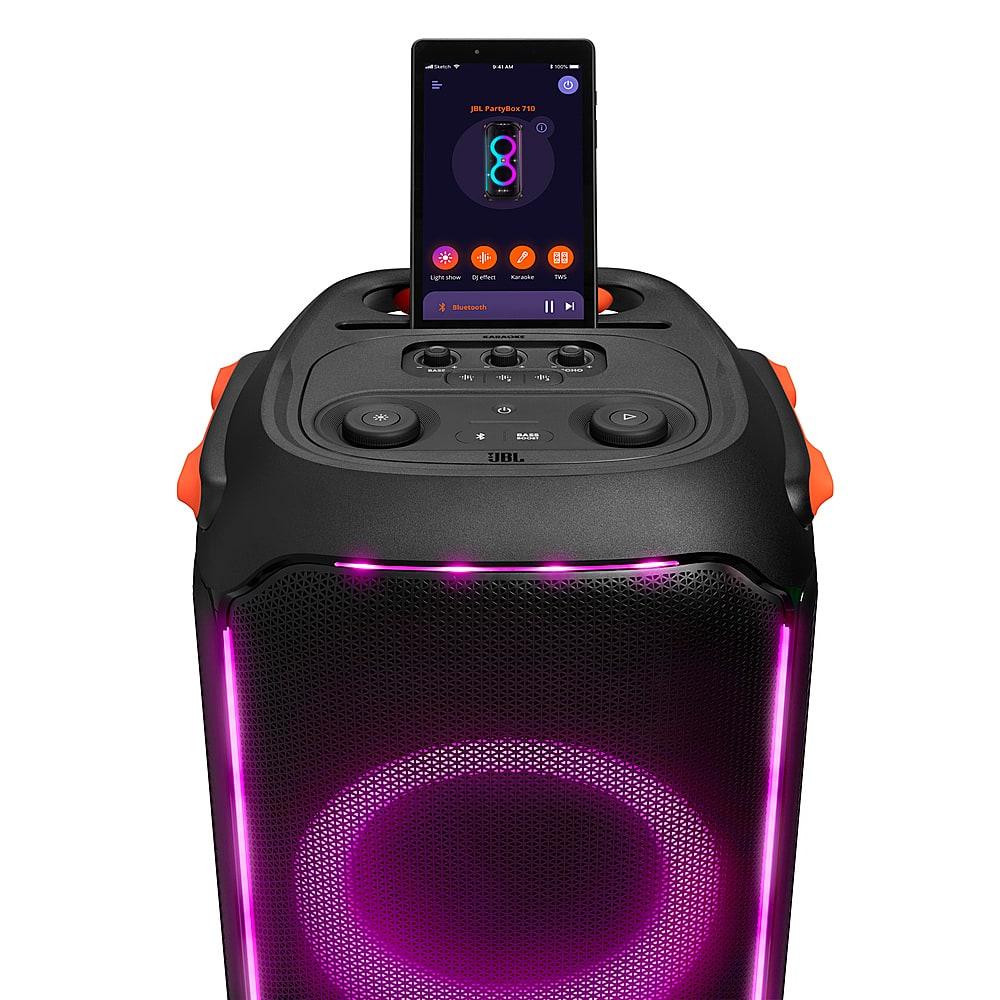
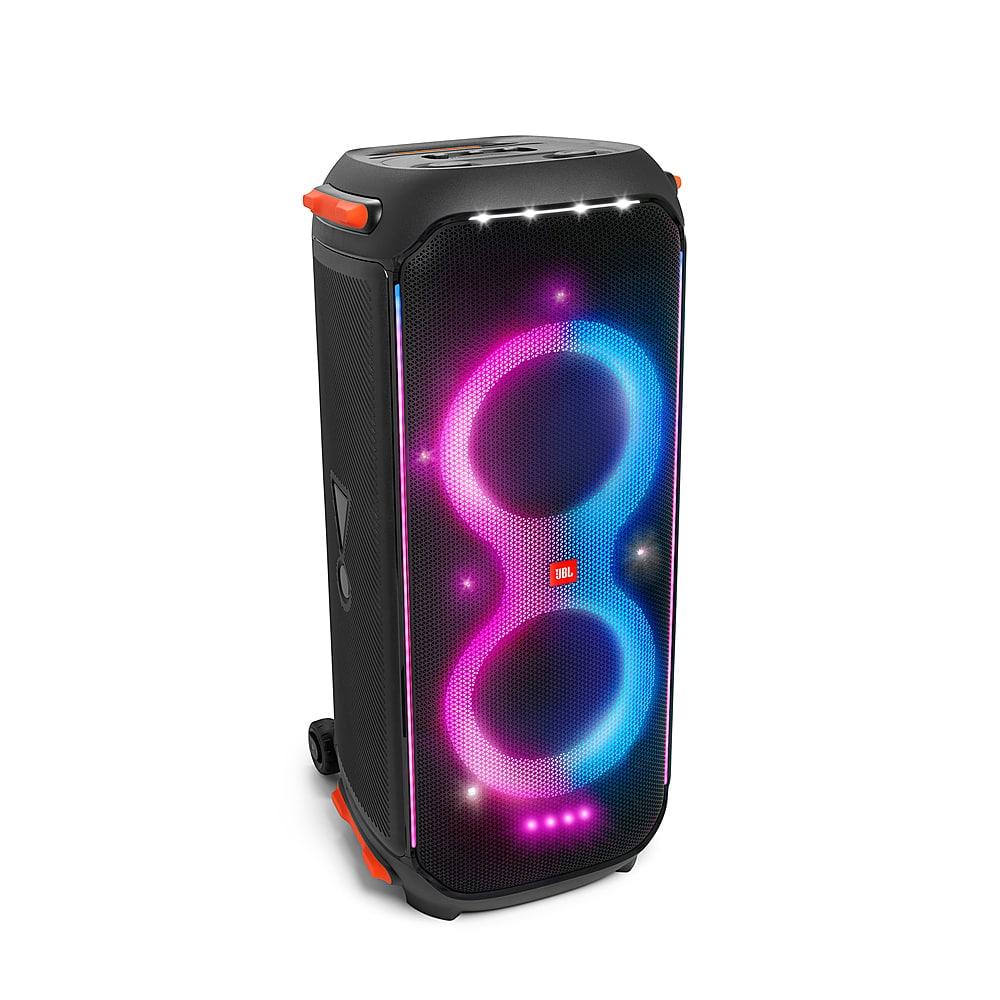
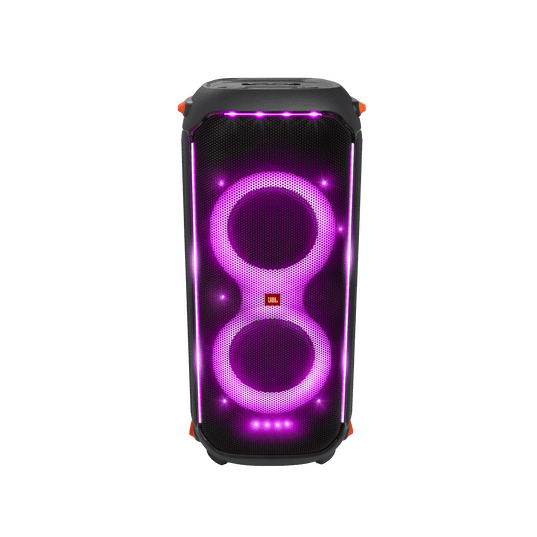
The JBL PartyBox 710, at the time of writing, sits in the upper-mid range of party speaker pricing and has established itself as a bass-heavy powerhouse since its 2022 release. It delivers 800 watts RMS (Root Mean Square, which is a more honest power rating than peak watts) through a combination of dual 8-inch woofers and tweeters, all while requiring constant AC power.
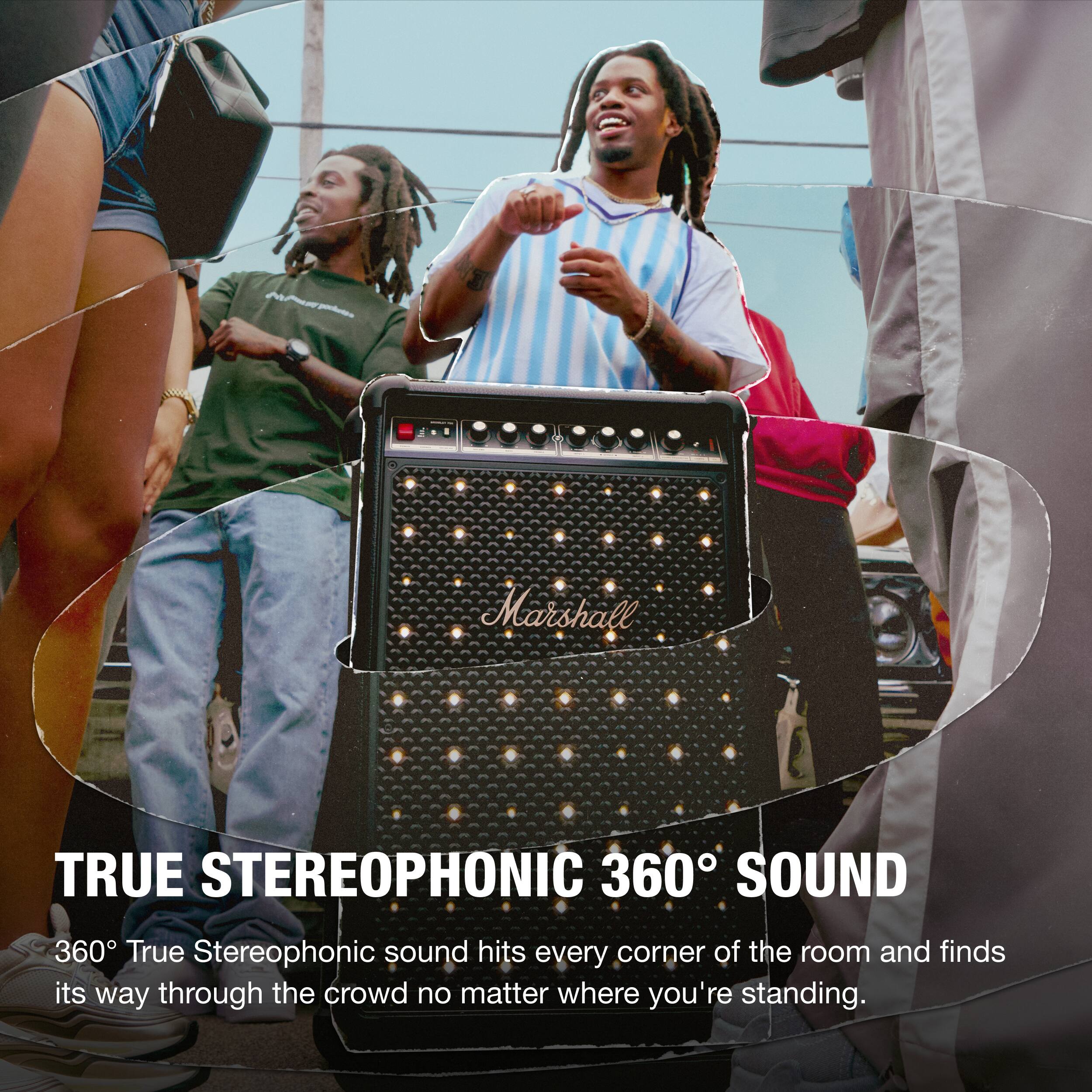
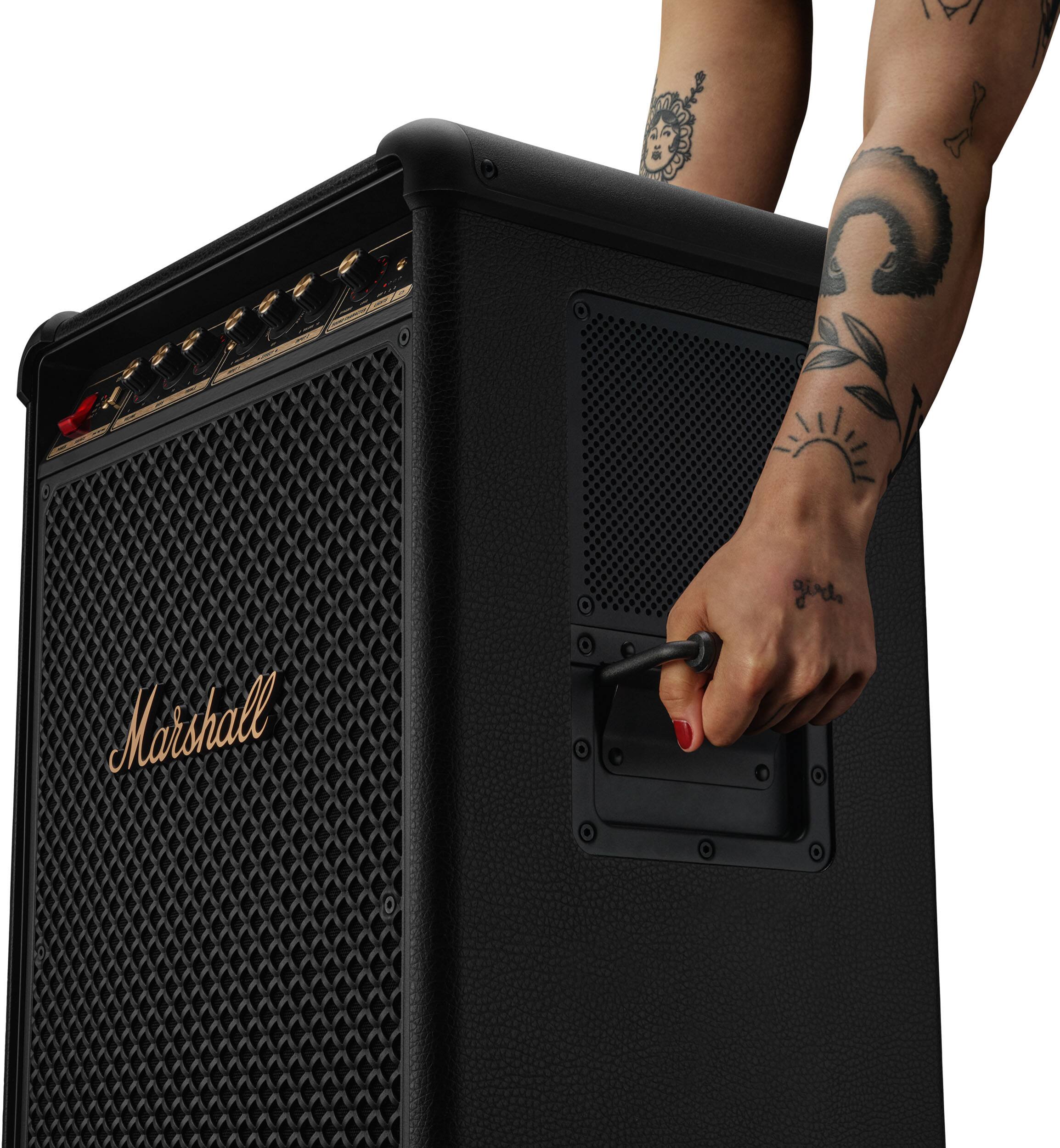
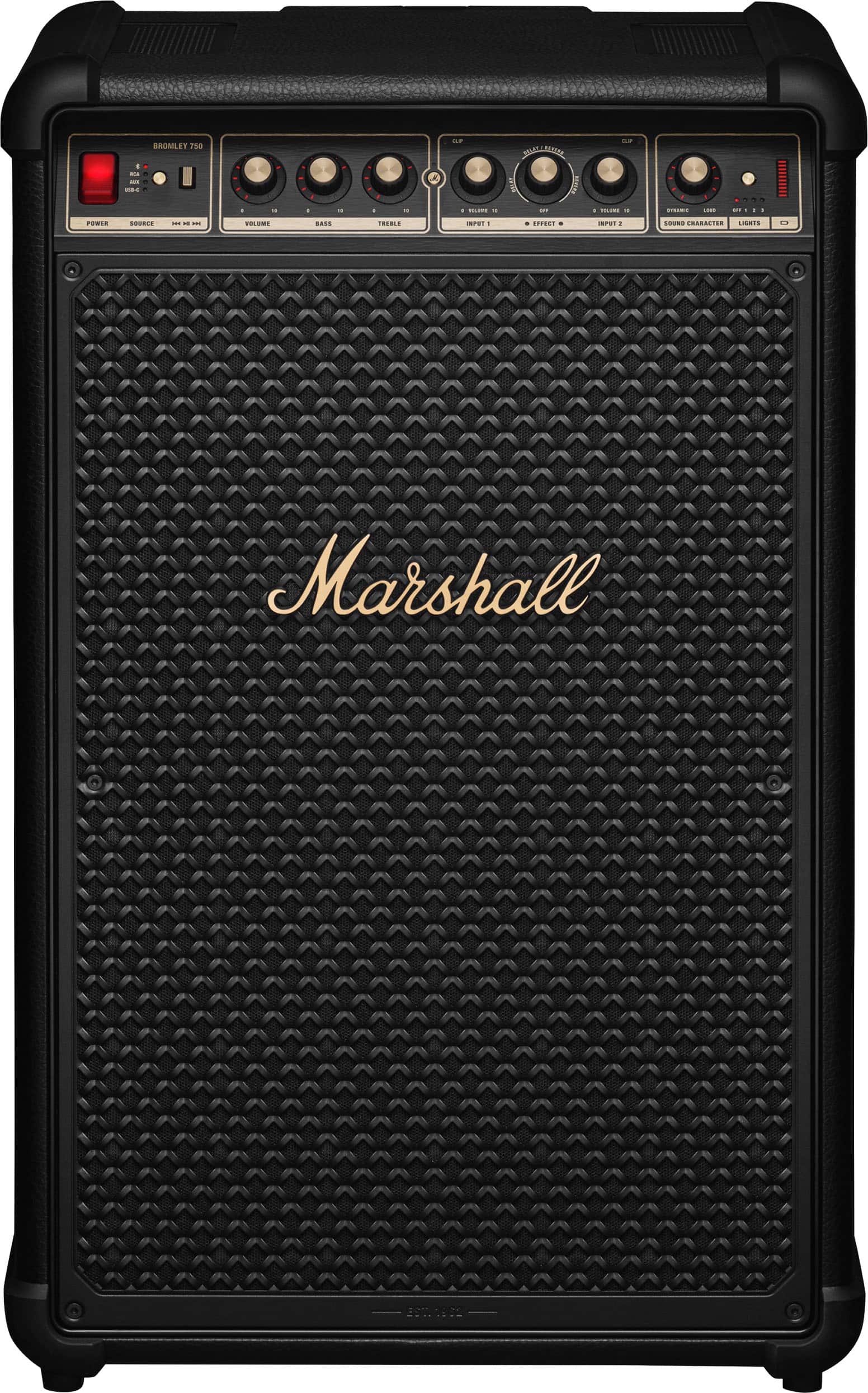
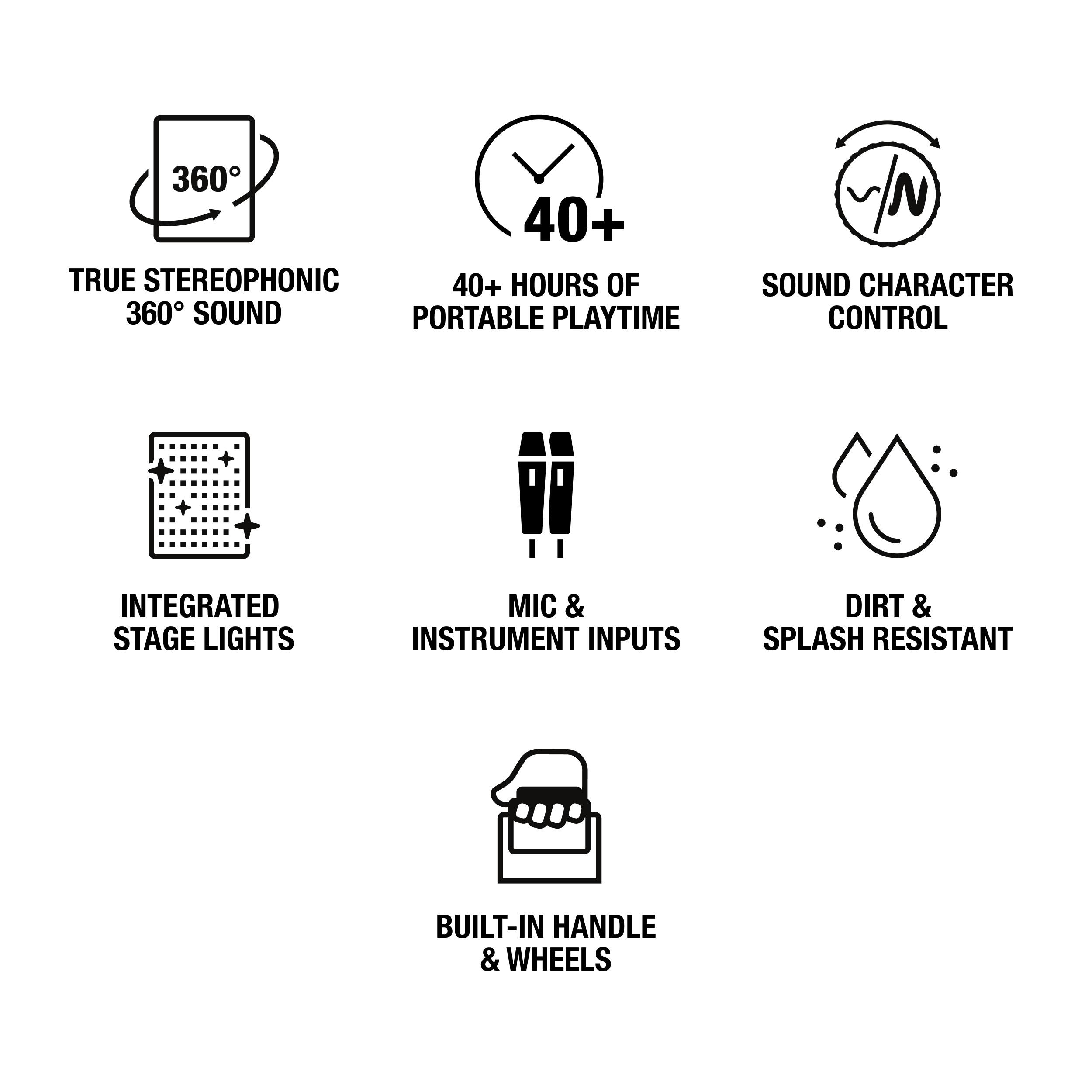
The Marshall Bromley 750, released in 2024, takes a premium approach with more sophisticated engineering and a significantly higher price point. It uses eight separate amplifiers powering a complex array of drivers to create what Marshall calls "360-degree True Stereophonic" sound, while offering over 40 hours of battery life.
When it comes to sheer volume capability, the JBL PartyBox 710 has a clear advantage in raw power output. Its 800W RMS rating translates to serious sound pressure levels that can easily fill large outdoor spaces. Based on user reports and expert testing, this speaker can comfortably cover areas up to a third of an acre without breaking a sweat.
The bass response is particularly impressive, thanks to those dual 8-inch woofers working in a bass-reflex design (which uses a port to enhance low-frequency output). The PartyBox 710's frequency response extends down to 35Hz, which means you'll feel the deep bass in electronic dance music and hip-hop tracks. This speaker truly shines with bass-heavy genres where that physical impact enhances the party atmosphere.
The Marshall Bromley 750, while rated at 500W total power, uses a completely different approach. Instead of brute force, it employs eight separate Class D amplifiers (which are more efficient and generate less heat than traditional amplifiers) powering strategically positioned drivers throughout the enclosure. This includes two 10-inch woofers, two mid-range drivers, and four tweeters arranged to create omnidirectional sound.
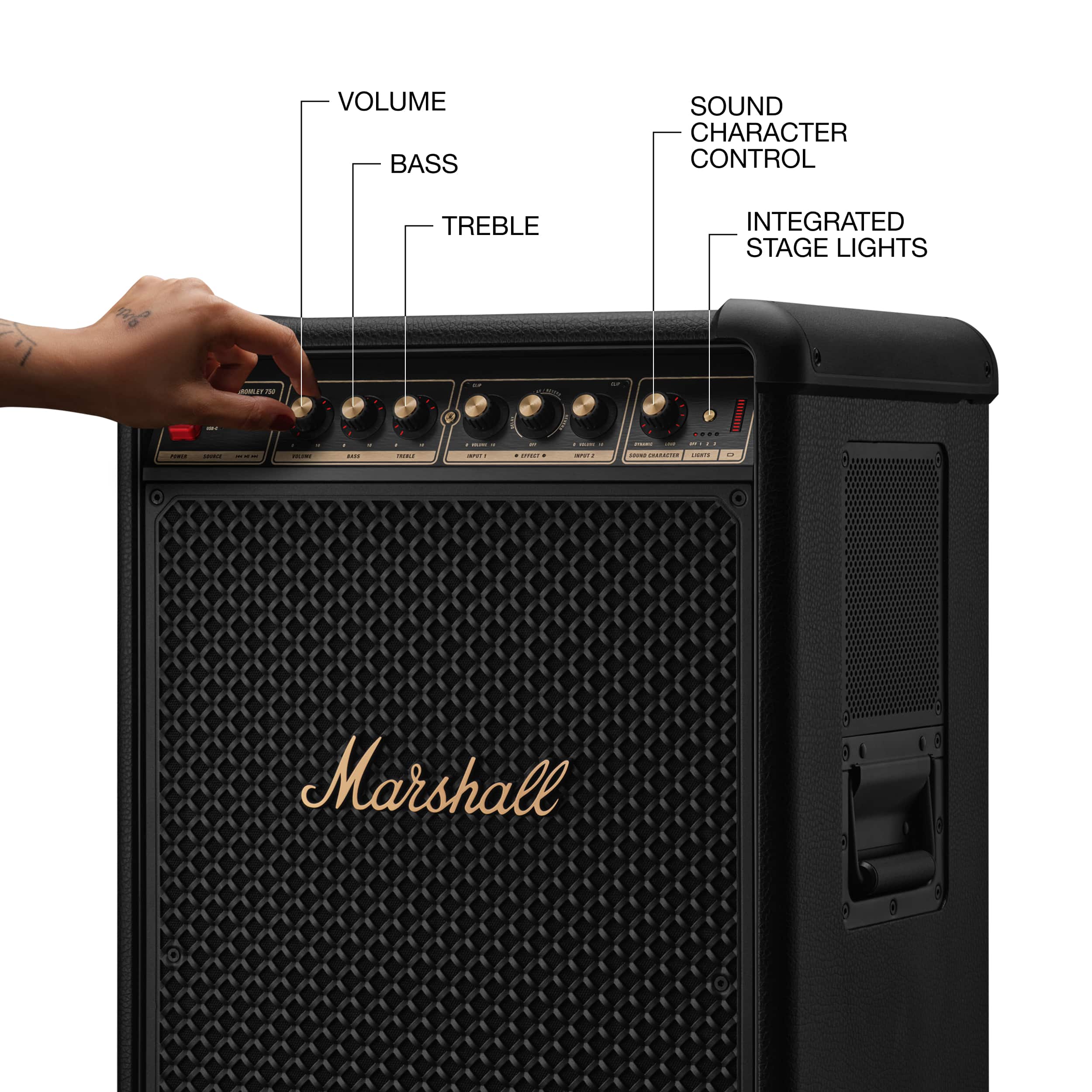
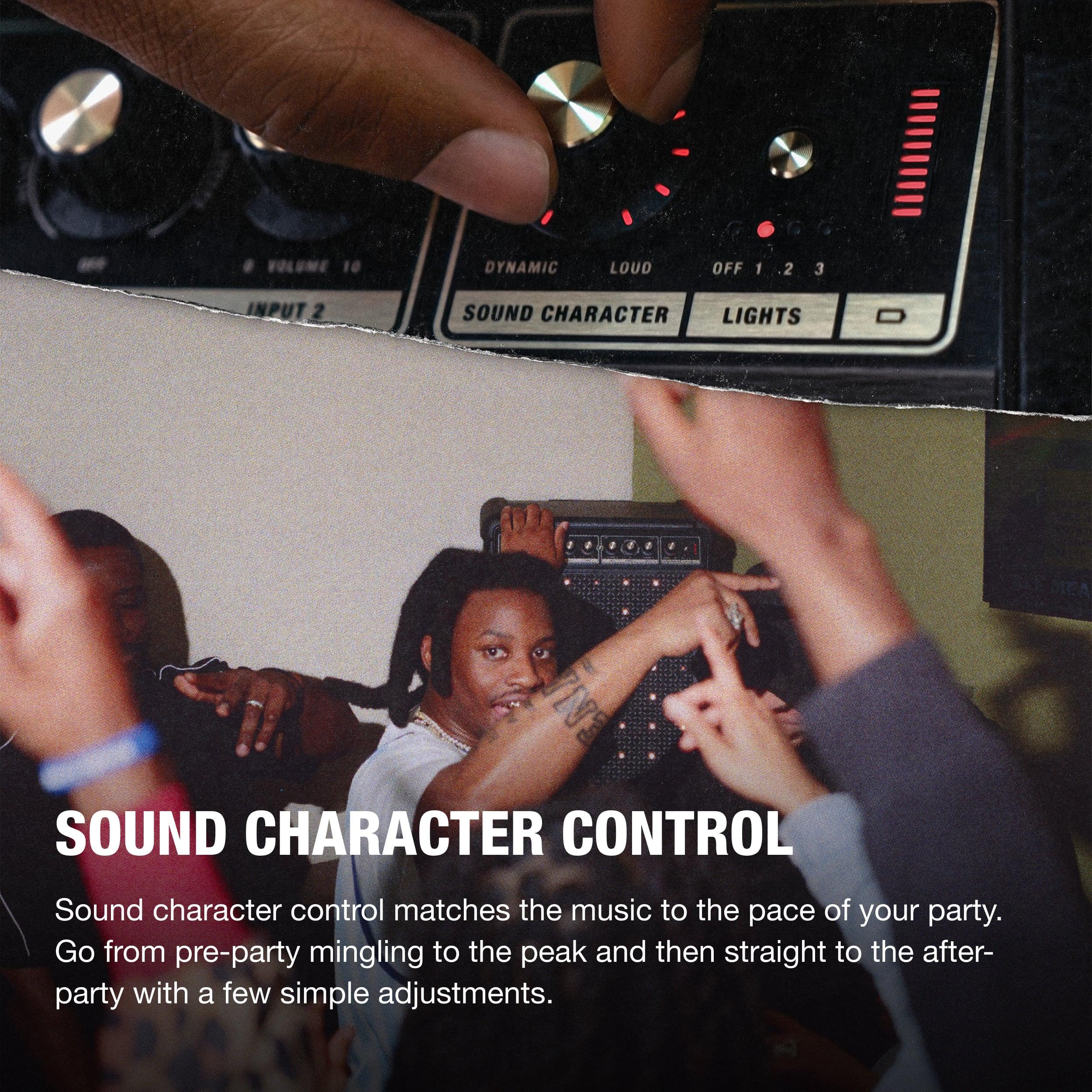
What's particularly clever about the Marshall's design is its "Sound Character" control, which lets you switch between "Dynamic" mode for indoor listening and "Loud" mode for outdoor projection. The Dynamic setting prioritizes clarity and detail, while Loud mode pushes the speaker harder for maximum outdoor coverage. This adaptability means the Bromley 750 can perform well in intimate indoor settings without sounding overly aggressive.
Here's where the two speakers really diverge in their approach. The JBL PartyBox 710 is unapologetically tuned for maximum impact. Its bass response dominates the sound signature, which works brilliantly for EDM, hip-hop, and other electronic genres that benefit from that physical low-end presence. The treble remains clear through dedicated tweeters, though some users report it can become harsh at maximum volume levels.
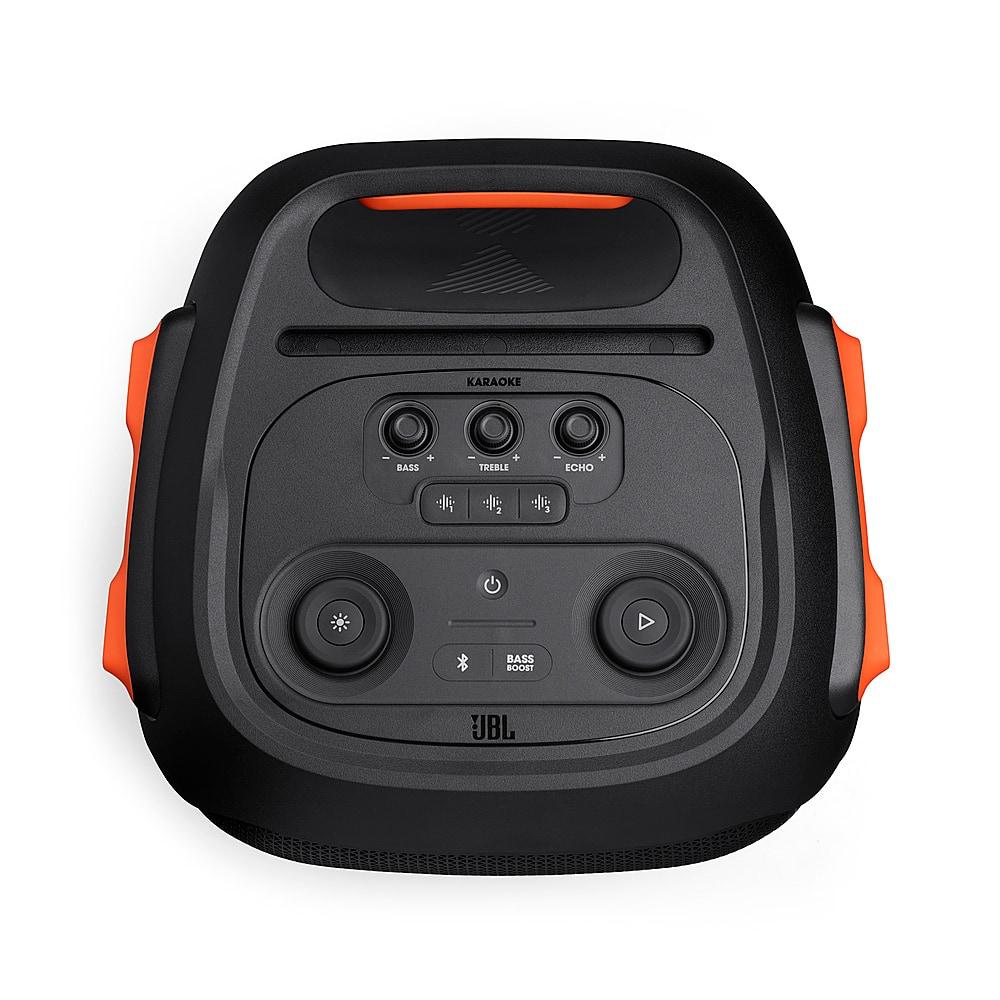
The JBL also includes a Bass Boost feature with "Deep" and "Punchy" modes that you can control via the PartyBox app. Deep mode extends the low-bass response for even more sub-bass rumble, while Punchy mode emphasizes mid-bass for tighter, more controlled low-end response. This level of bass customization is particularly useful when you're playing different genres throughout an event.
The Marshall Bromley 750 takes a more balanced approach that prioritizes overall sound quality. Its closed-box design (sealed enclosure without ports) provides tighter, more controlled bass that doesn't overwhelm the midrange frequencies where vocals and most instruments live. This design philosophy means vocals remain intelligible even at high volume levels—crucial for karaoke or when announcements need to be made.
The 360-degree sound dispersion is genuinely impressive and addresses a common party speaker problem: audio dead zones. Traditional front-firing speakers create areas where the sound is noticeably weaker, especially in large spaces or when people are standing behind the speaker. The Marshall's omnidirectional approach ensures more consistent sound coverage throughout the listening area.
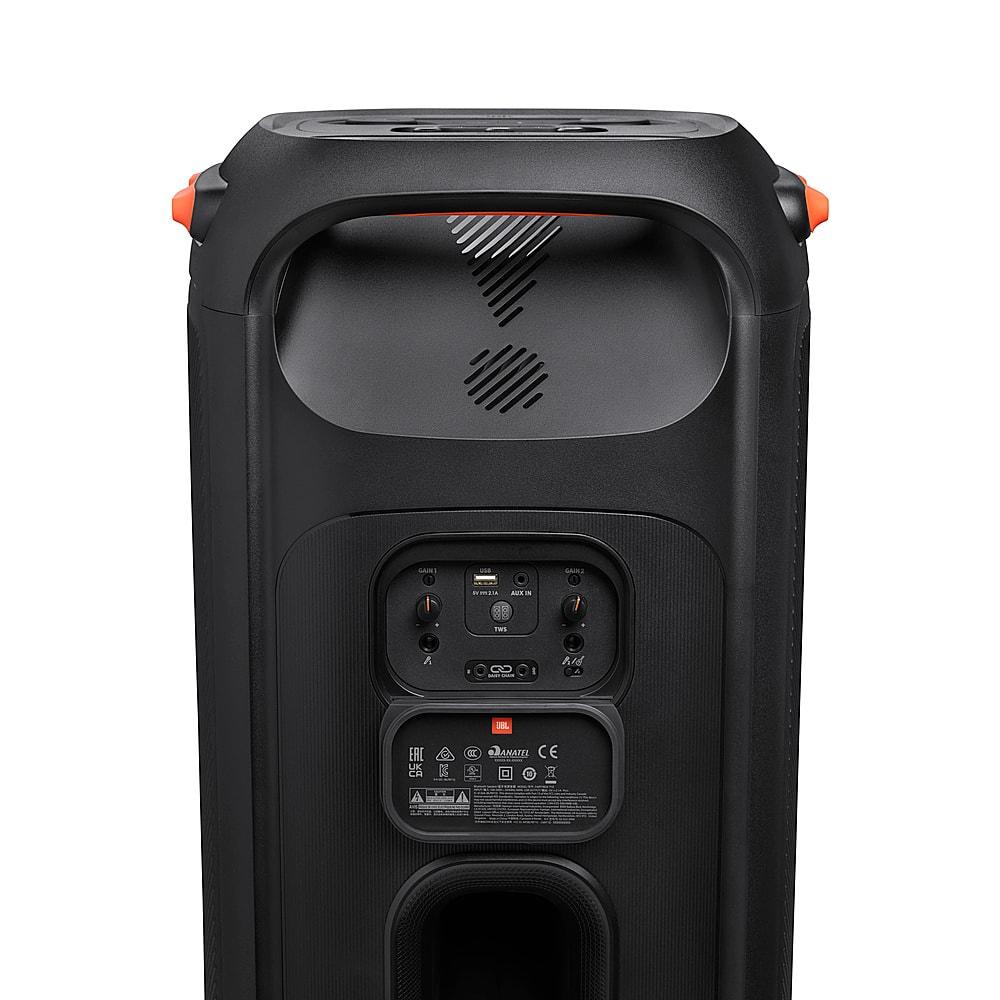
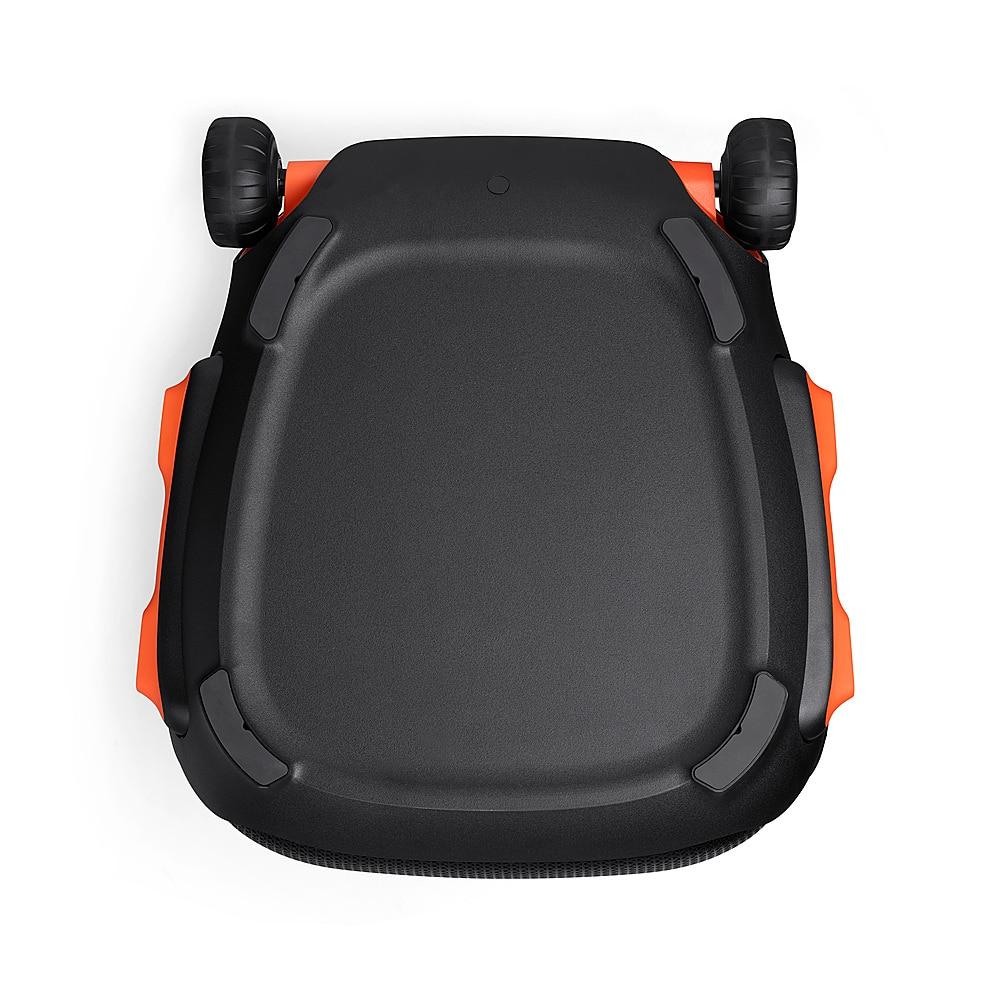
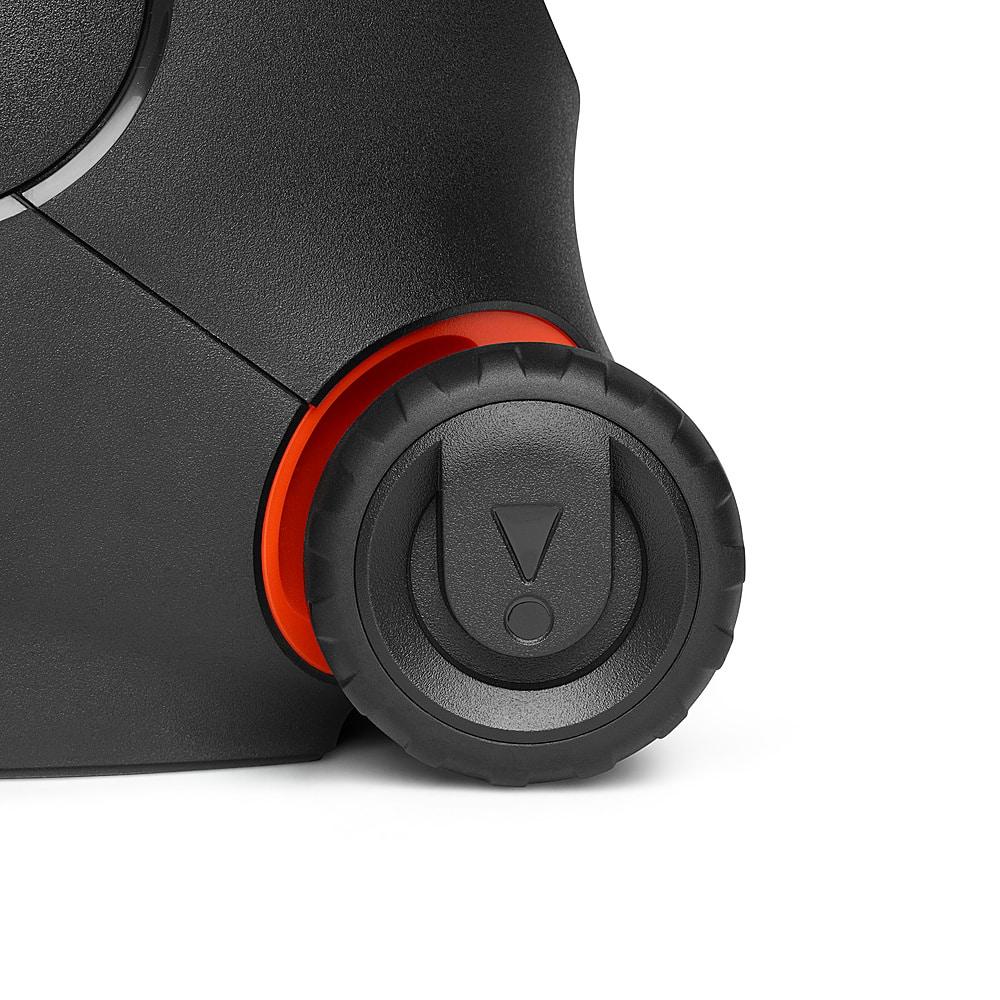
This is perhaps the most significant differentiator between these two speakers. The JBL PartyBox 710 requires constant AC power, which fundamentally limits where you can use it. While it includes wheels and a handle for moving between power sources, you're always tethered to an electrical outlet.
This limitation isn't necessarily a deal-breaker if you primarily host parties in locations with reliable power access—backyards, garages, covered patios, or indoor spaces. The lack of battery actually allows JBL to focus all their engineering on maximum power output without the weight and space constraints of a battery system.
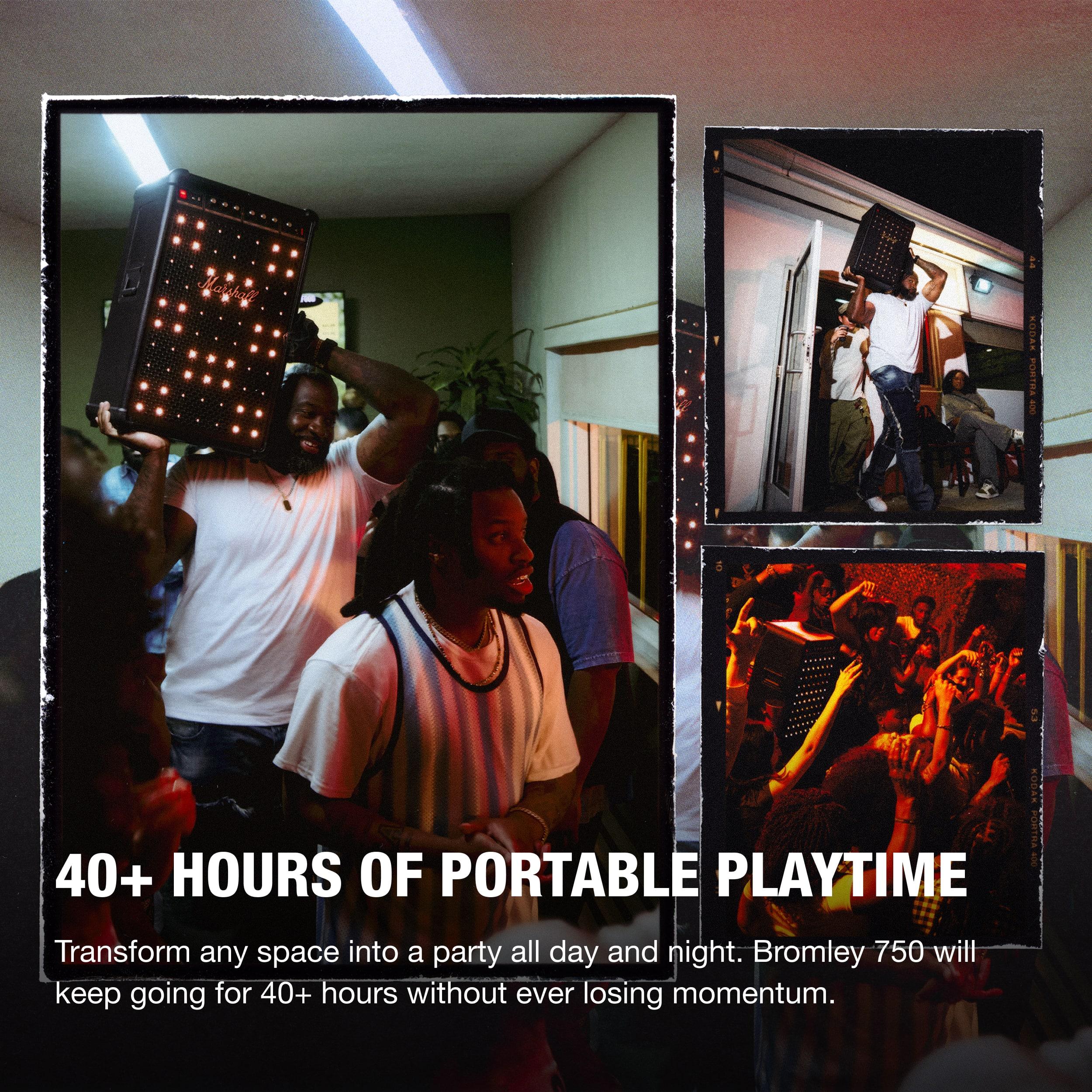
The Marshall Bromley 750 completely changes the game with its 40+ hour battery life. This isn't just incrementally better than competitors—it's transformative for how you can use the speaker. Beach parties, camping trips, outdoor festivals, or any location without convenient power access becomes viable.
Even more impressive, the battery is user-replaceable, which means you could theoretically have unlimited runtime by swapping in fresh batteries. The battery also functions as a power bank, providing USB-C charging for phones and other devices. A quick 20-minute charge provides about 5 hours of playback, which is incredibly convenient for impromptu gatherings.
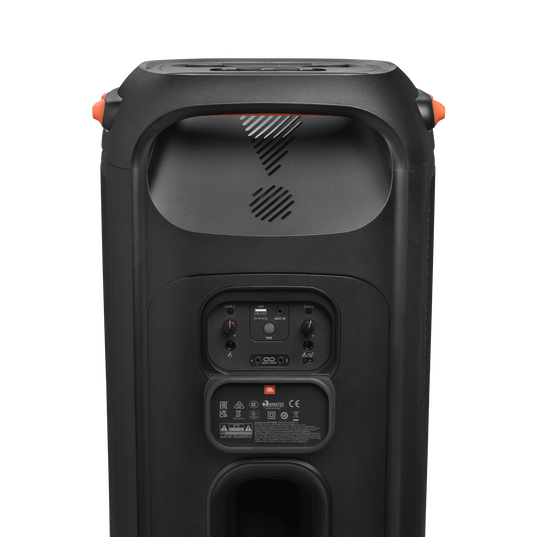
Both speakers offer substantial connectivity options, but they're aimed at different user types. The JBL PartyBox 710 includes basic microphone inputs with built-in echo and reverb effects, USB playback from thumb drives, and the ability to pair two PartyBox 710s together wirelessly for stereo operation. The Bluetooth 5.1 implementation allows connection to two devices simultaneously, making it easy to share DJ duties.
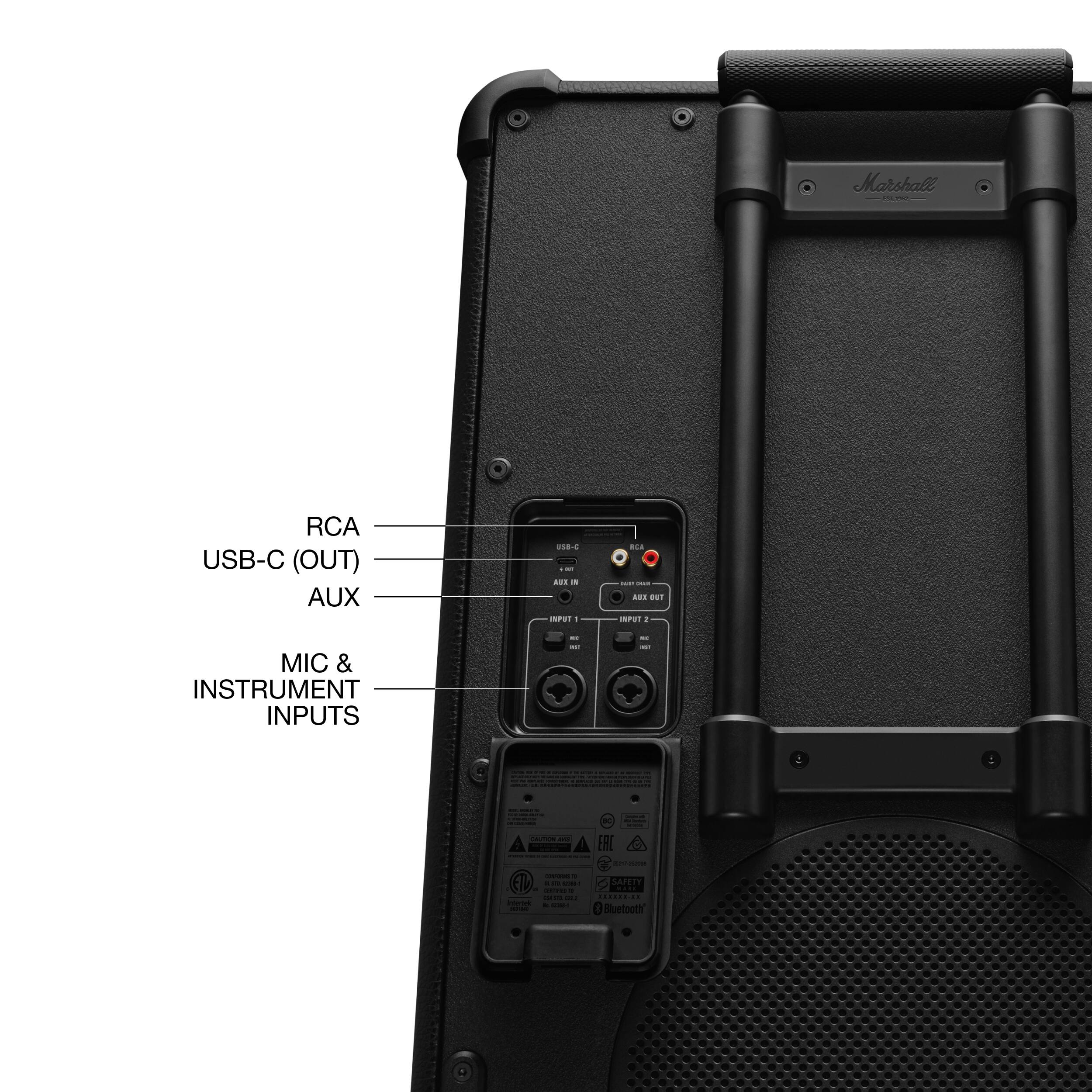
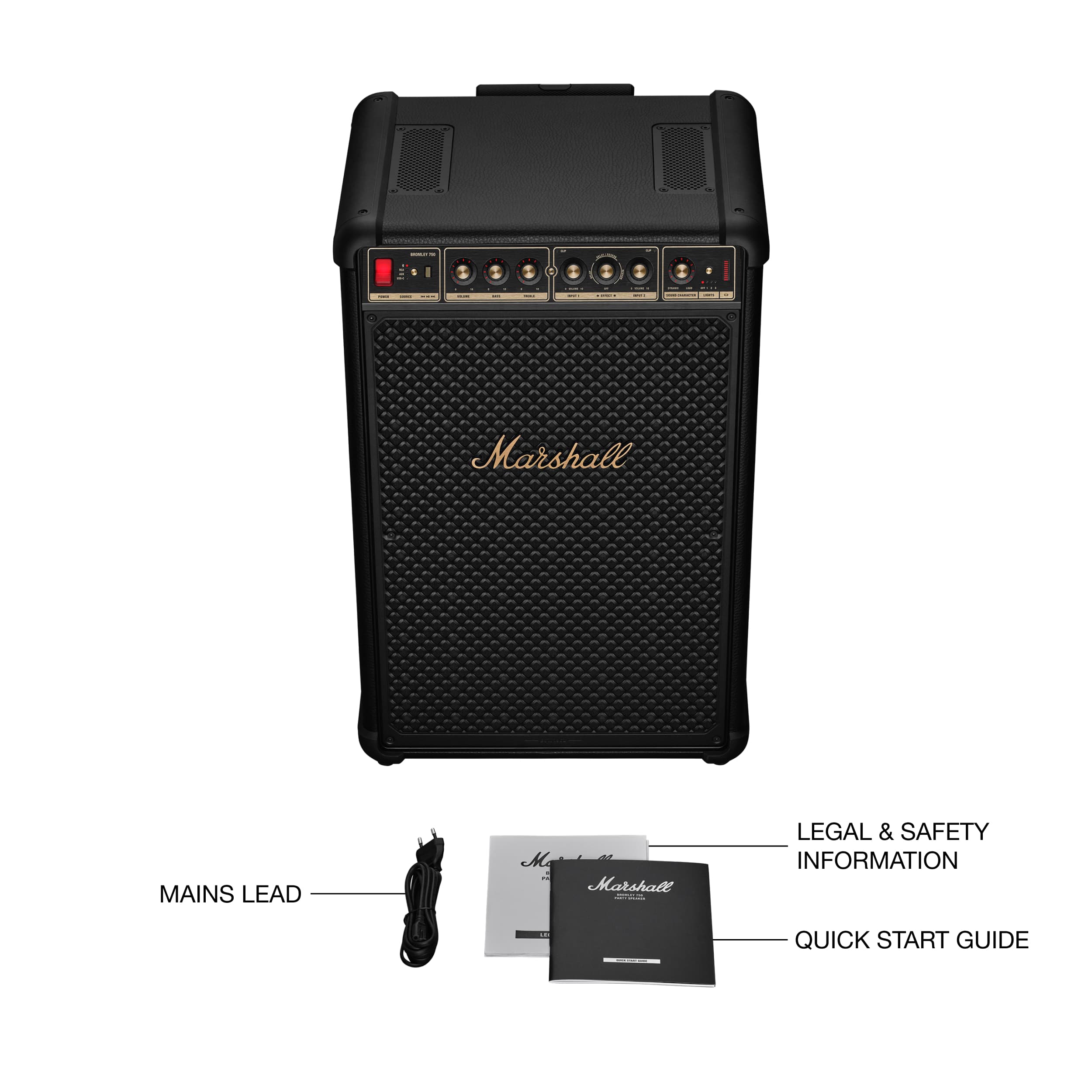
The Marshall Bromley 750 goes further into professional territory with combo XLR and 1/4-inch jack inputs that can handle both microphones and instruments. This means you can plug in a guitar or keyboard directly, making it suitable for small live performances or more sophisticated karaoke setups. The onboard reverb and delay effects processing adds professional polish to vocals and instruments.
The Marshall also includes RCA inputs for connecting DJ mixers or home audio components, plus auxiliary input and output jacks that allow daisy-chaining multiple speakers together. The Bluetooth 5.3 implementation with Auracast technology enables wireless audio sharing between multiple compatible speakers—a feature that's becoming more common but is still relatively rare.
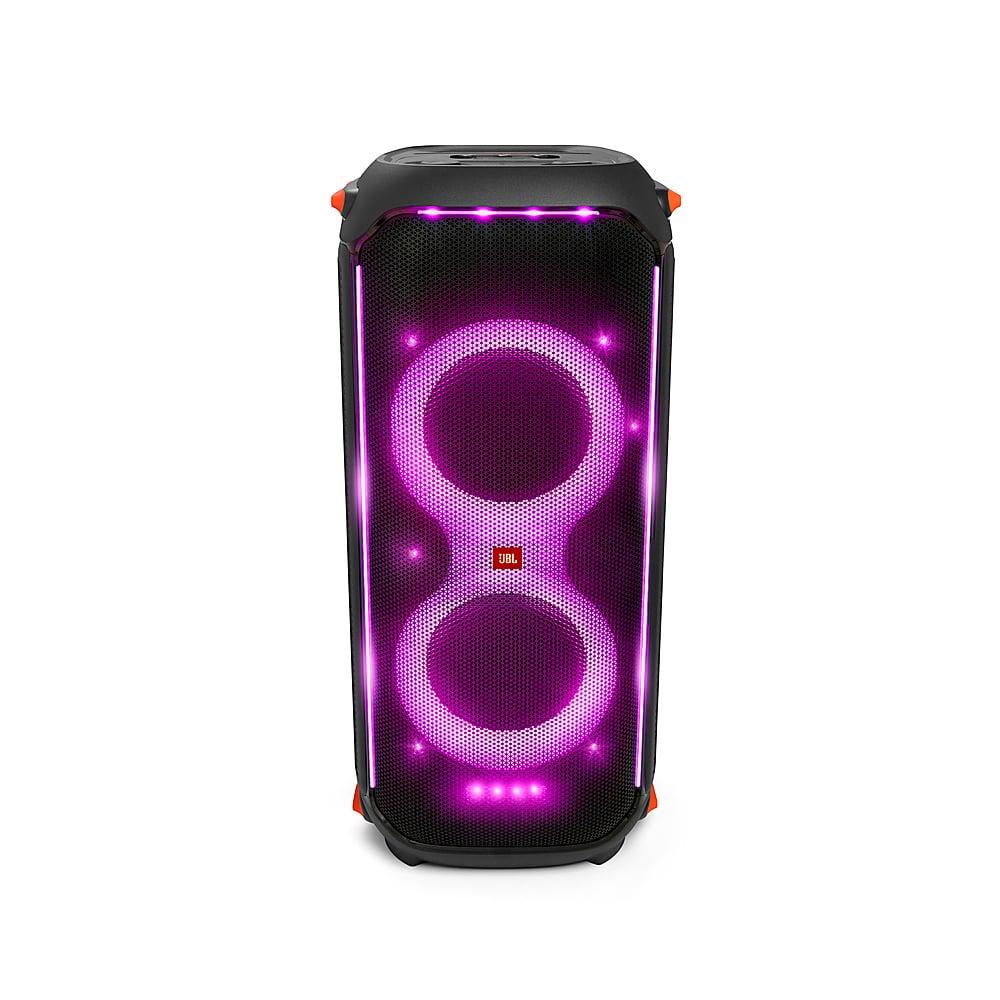
Party speakers have increasingly incorporated lighting systems, but the two approaches here couldn't be more different. The JBL PartyBox 710 goes all-out with RGB lighting that includes strobe effects, a "starry night" pattern, and dynamic club-style flashing synchronized to the music. You can control all of this through the PartyBox app, customizing colors, patterns, and intensity in real-time.
This elaborate light show definitely creates a club-like atmosphere and adds visual excitement to parties. The lights are integrated throughout the front grille and create an impressive display, especially in darker environments.
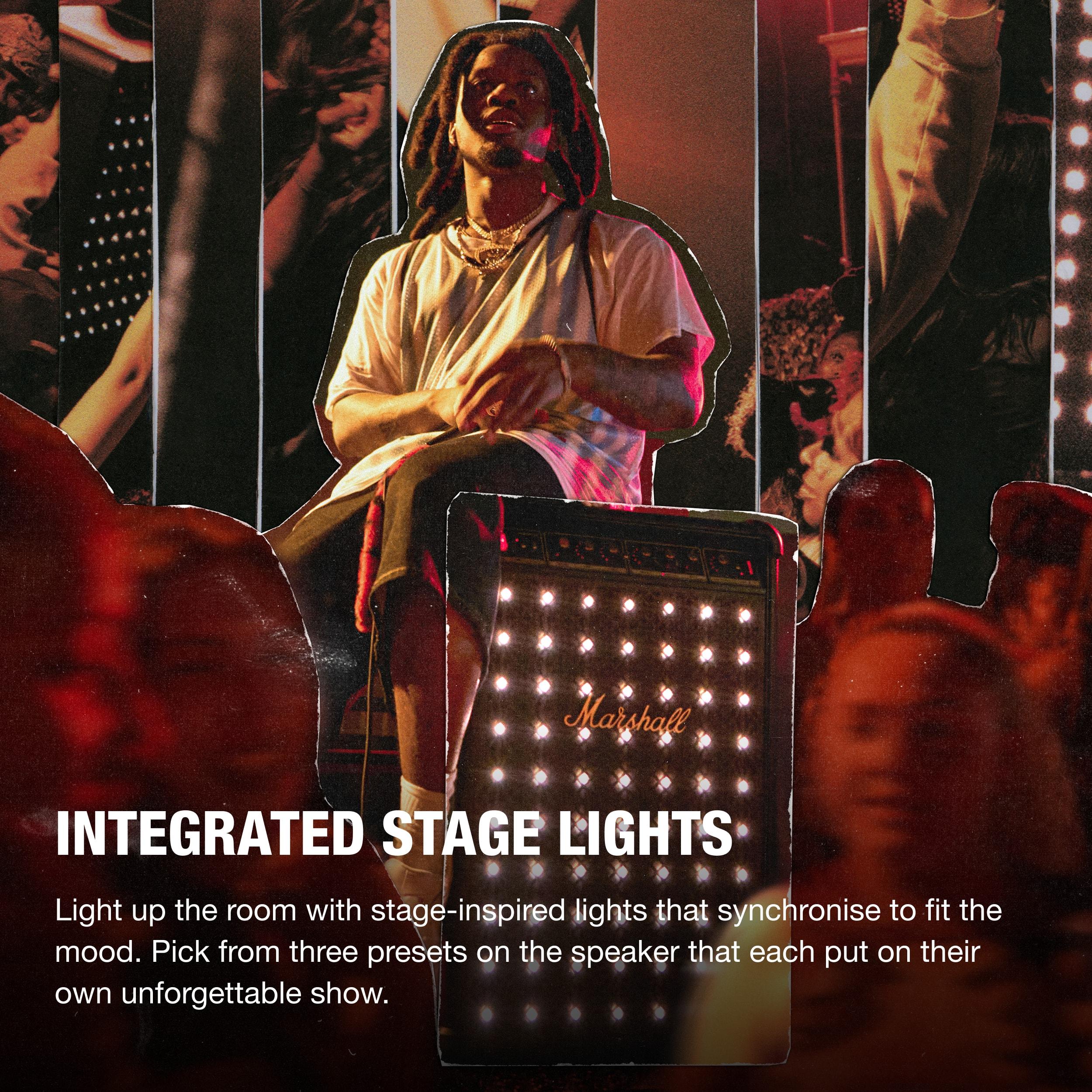
The Marshall Bromley 750 takes a completely different approach with subtle white LED lighting hidden behind the metal grille. The three lighting presets are tasteful and atmospheric rather than flashy—more like stage lighting than disco effects. When the lights are off, they're completely invisible, maintaining Marshall's classic amplifier aesthetic.
This restraint might seem like a disadvantage, but it actually makes the Marshall more versatile. The sophisticated lighting works well in adult social settings where over-the-top disco effects might feel juvenile or distracting.
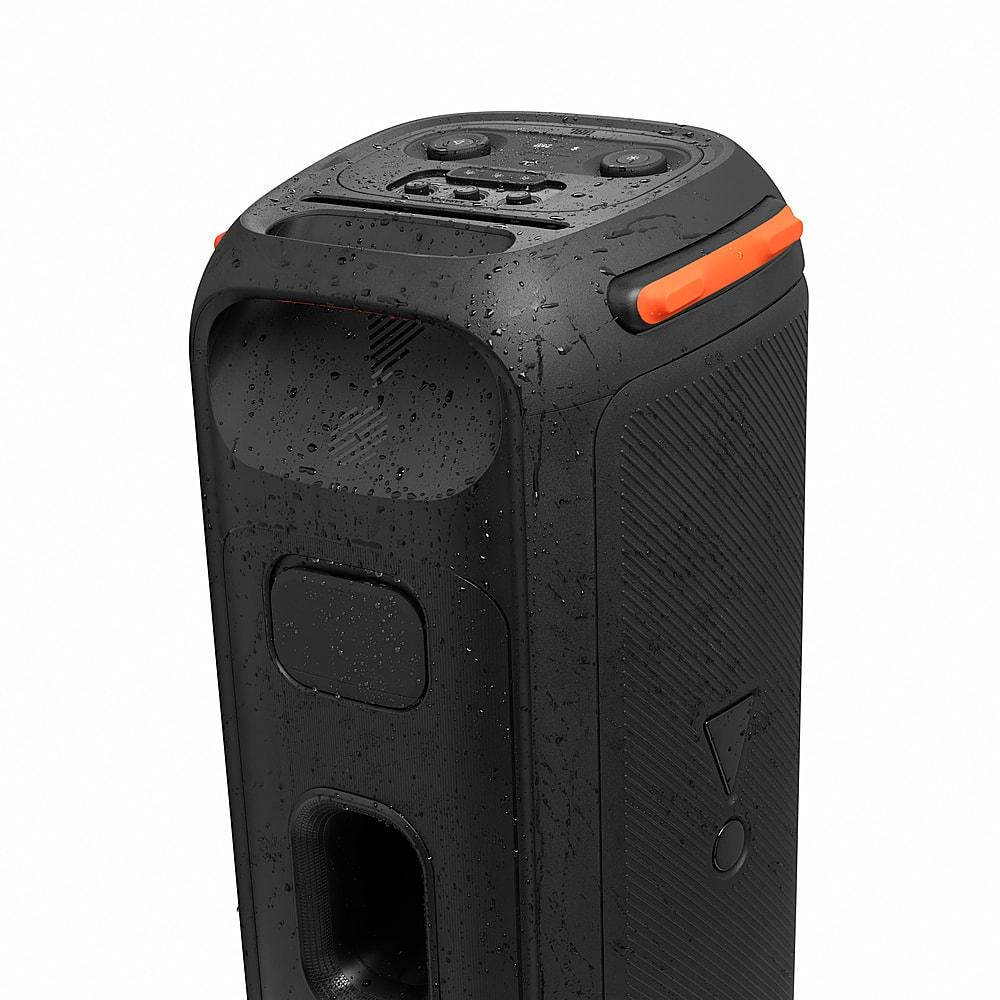
The construction quality difference is immediately apparent when you see these speakers side by side. The JBL PartyBox 710 uses functional plastic construction that prioritizes cost-effectiveness and weight management. It's built to withstand party environments and includes IPX4 splash protection, but the materials clearly reflect its more accessible price point.
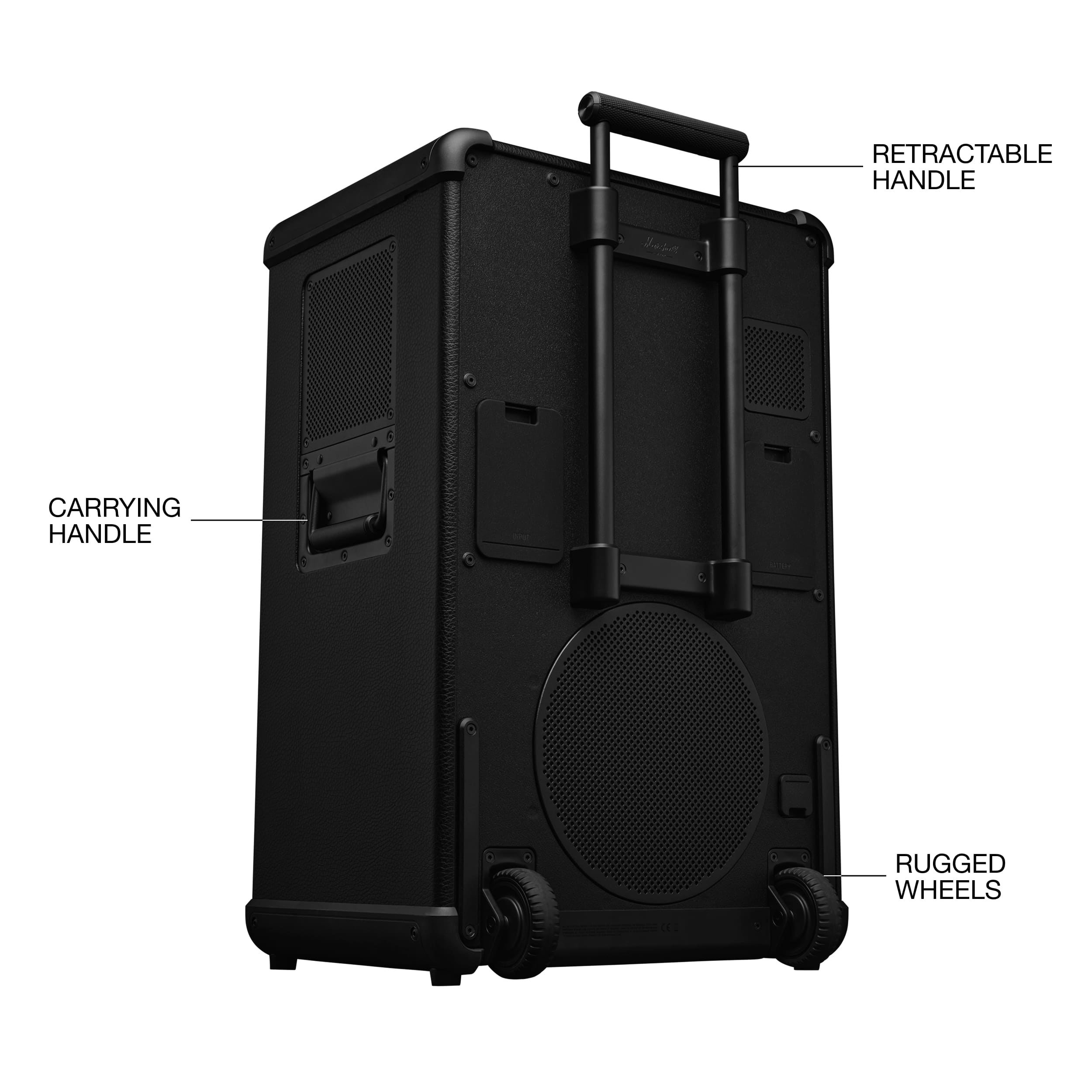
The Marshall Bromley 750 uses premium materials throughout: a metal grille, water-based PU leather covering, and brushed metal control surfaces that echo Marshall's iconic amplifier designs. The IP54 rating provides superior dust and water protection, and the speaker includes an ingenious drainage system that channels water away from the drivers.
This build quality difference isn't just aesthetic—it translates to long-term durability and the ability to withstand harsher outdoor conditions. The Marshall feels like a piece of professional equipment that will age gracefully, while the JBL feels more disposable despite being perfectly functional.
Since the JBL PartyBox 710 launched in 2022, we've seen significant improvements in battery technology, Bluetooth connectivity, and digital signal processing. The PartyBox 710 was impressive for its time but lacks some of the refinements we now expect, particularly the omission of battery power in an increasingly portable-focused market.
The Marshall Bromley 750, launching in 2024, benefits from these technological advances. The Bluetooth 5.3 with Auracast, advanced Class D amplification, and sophisticated digital processing represent the current state of the art in party speaker technology.
Neither speaker is primarily designed for home theater use, but they can serve double duty in certain scenarios. The JBL PartyBox 710 could work as a powerful center channel or subwoofer supplement for very large rooms, though its bass-heavy tuning would require significant EQ adjustment for accurate dialogue reproduction.
The Marshall Bromley 750 is actually more suitable for home theater applications thanks to its more balanced frequency response and 360-degree dispersion. The omnidirectional sound could work well for ambient surround effects, though you'd still want dedicated front speakers for precise dialogue and stereo imaging.
At the time of writing, the JBL PartyBox 710 represents excellent value for buyers prioritizing maximum volume output per dollar spent. If you primarily party in locations with power access and want earth-shaking bass for electronic music, the performance-per-dollar ratio is hard to beat.
The Marshall Bromley 750 commands a significant premium but justifies it through exceptional battery life, superior build quality, more sophisticated sound tuning, and professional connectivity options. For users who need true portability and value long-term durability, the higher initial cost pays dividends over time.
Choose the JBL PartyBox 710 if you're budget-conscious but want serious party performance, primarily host events with power access, love bass-heavy music genres, and appreciate elaborate lighting effects. It's perfect for backyard parties, garage gatherings, or any scenario where maximum volume and bass impact matter more than portability.
Choose the Marshall Bromley 750 if you need true wireless portability for outdoor adventures, value balanced sound quality across diverse music genres, need professional input capabilities, prefer premium aesthetics and build quality, or frequently host all-day events where 40+ hour battery life is transformative.
The fundamental question comes down to this: do you need battery power? If yes, the Marshall's 40+ hour runtime changes everything about how you can use a party speaker. If you always have power access and want maximum bass impact per dollar, the JBL delivers exceptional value in its intended role.
Both speakers excel at what they're designed to do—the choice depends on matching their strengths to your specific needs and party environments.
| JBL PartyBox 710 | Marshall Bromley 750 |
|---|---|
| Power Output - Determines maximum volume and bass impact | |
| 800W RMS (dual 8" woofers + tweeters) | 500W total (8 Class D amps, 8 drivers) |
| Battery Life - Critical for outdoor events without power access | |
| No battery (AC power required) | 40+ hours (user-replaceable battery) |
| Sound Distribution - Affects coverage and dead zones | |
| Front-firing stereo configuration | 360° True Stereophonic omnidirectional |
| Bass Response - Key for dance music and physical impact | |
| 35Hz-20kHz, bass-heavy tuning with boost modes | Controlled closed-box design, balanced response |
| Weight & Portability - Important for transport between venues | |
| 61 lbs with wheels/handle (tethered to power) | 53 lbs with retractable handle/wheels (fully portable) |
| Weather Resistance - Protection for outdoor use | |
| IPX4 splashproof rating | IP54 dust/water resistant with drainage system |
| Professional Inputs - Matters for live music and karaoke | |
| Basic mic inputs with echo/reverb | 2x XLR/combo jacks, RCA, onboard effects |
| Lighting Effects - Adds visual atmosphere to parties | |
| RGB strobes, starry night, club patterns | Subtle white LED grid with 3 tasteful presets |
| Build Quality - Affects durability and long-term value | |
| Functional plastic construction | Premium metal grille, PU leather, Marshall styling |
| Connectivity - Determines device compatibility and features | |
| Bluetooth 5.1, USB playback, TWS pairing | Bluetooth 5.3 Auracast, RCA, aux in/out daisy-chain |
| Release Year - Shows technology generation | |
| 2022 | 2024 |
The JBL PartyBox 710 is significantly louder with 800W RMS output compared to the Marshall Bromley 750's 500W. The JBL can easily fill large outdoor spaces up to a third of an acre, while the Marshall focuses on balanced sound quality with its 360-degree dispersion. If maximum volume is your priority, the JBL PartyBox 710 delivers more raw power.
The JBL PartyBox 710 produces more impactful bass with its dual 8-inch woofers and bass-heavy tuning, extending down to 35Hz. The Marshall Bromley 750 uses a controlled closed-box design that provides tighter, more accurate bass but less overwhelming low-end impact. For EDM and hip-hop, the JBL wins, but the Marshall Bromley 750 offers more balanced sound across all genres.
The Marshall Bromley 750 offers over 40 hours of battery life with a user-replaceable battery system. The JBL PartyBox 710 has no battery at all and requires constant AC power connection. For outdoor events without power access, the Marshall Bromley 750 is the clear winner with its exceptional wireless runtime.
Both speakers support karaoke, but the Marshall Bromley 750 is better equipped with professional XLR/combo jack inputs, onboard reverb and delay effects, and superior vocal clarity. The JBL PartyBox 710 has basic microphone inputs with echo effects but less professional connectivity. Musicians and serious karaoke enthusiasts should choose the Marshall Bromley 750.
The Marshall Bromley 750 is more truly portable despite similar weight (53 lbs vs 61 lbs) because it doesn't need power outlets. Its 40+ hour battery, IP54 weather rating, and retractable handle make it ideal for beach parties and camping. The JBL PartyBox 710 is limited to locations with AC power access, reducing its practical portability.
Both offer water protection but at different levels. The JBL PartyBox 710 has IPX4 splashproof rating suitable for poolside use. The Marshall Bromley 750 provides superior IP54 protection with an engineered drainage system that actively channels water away from drivers. The Marshall Bromley 750 is better equipped for harsh outdoor conditions.
The JBL PartyBox 710 features elaborate RGB lighting with strobes, starry night patterns, and customizable club-style effects controlled via app. The Marshall Bromley 750 uses subtle white LED lighting with three tasteful presets. For flashy party atmosphere, choose the JBL PartyBox 710; for sophisticated ambiance, the Marshall is more refined.
Yes, both support multi-speaker setups. The JBL PartyBox 710 offers True Wireless Stereo pairing with another PartyBox 710 for stereo sound. The Marshall Bromley 750 provides more flexibility with Bluetooth 5.3 Auracast technology for wireless sharing plus aux in/out ports for daisy-chaining multiple units together.
The JBL PartyBox 710 delivers excellent value for maximum volume per dollar, especially for bass-heavy music in powered environments. The Marshall Bromley 750 costs significantly more but justifies the premium with 40+ hour battery life, superior build quality, and professional features. Value depends on whether you need wireless portability or maximum power.
Neither is primarily designed for home theater, but the Marshall Bromley 750 works better due to its balanced frequency response and 360-degree sound dispersion. The JBL PartyBox 710's bass-heavy tuning would overwhelm dialogue without significant EQ adjustment. Both are better suited for music and party applications than critical home theater listening.
The Marshall Bromley 750 uses premium materials including metal grille, water-based PU leather, and brushed metal controls with Marshall's iconic amplifier styling. The JBL PartyBox 710 employs functional plastic construction optimized for cost and weight. The Marshall Bromley 750 feels more like professional equipment built for long-term use.
Choose the JBL PartyBox 710 if you prioritize maximum bass impact, have reliable power access, want elaborate lighting effects, and prefer better value for raw performance. Select the Marshall Bromley 750 if you need true wireless portability, value balanced sound quality, require professional inputs, or want premium build quality for long-term use.
We've done our best to create useful and informative comparisons to help you decide what product to buy. Our research uses advanced automated methods to create this comparison and perfection is not possible - please contact us for corrections or questions. These are the sites we've researched in the creation of this article: rtings.com - audioadvice.com - crutchfield.com - youtube.com - bestbuy.com - rtings.com - youtube.com - youtube.com - youtube.com - versus.com - worldwidestereo.com - rtings.com - jbl.com - youtube.com - expertvoice.com - jbl.com - jbl.com.tw - robot-advance.com - youtube.com - hu.harmanaudio.com - onward.ph - harmanaudio.in - youtube.com - youtube.com - manuals.plus - global.jbl.com - de.jbl.com - ro.harmanaudio.com - theluxereview.com - techradar.com - whathifi.com - routenote.com - techradar.com - marshall.com - newatlas.com - marshall.com - youtube.com - wallpaper.com - sweetwater.com - soundguys.com - t3.com - bestbuy.com - hiconsumption.com - architeg-prints.com

Privacy Policy
Terms and Conditions - Affiliate Policy
Home Security
© Copyright 2008-2026.
11816 Inwood Rd #1211, Dallas, TX 75244