

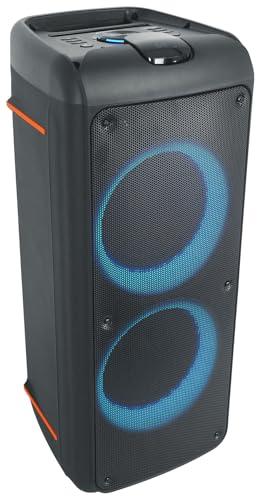
When you're planning your next party, the speaker you choose can make or break the entire experience. Today's party speakers have evolved far beyond simple Bluetooth connectivity—they're entertainment systems packed with light shows, karaoke features, and enough bass to make your neighbors take notice (or complain). Two speakers that represent very different approaches to party audio are the Rockville Rock Party 9 and the JBL PartyBox 710.
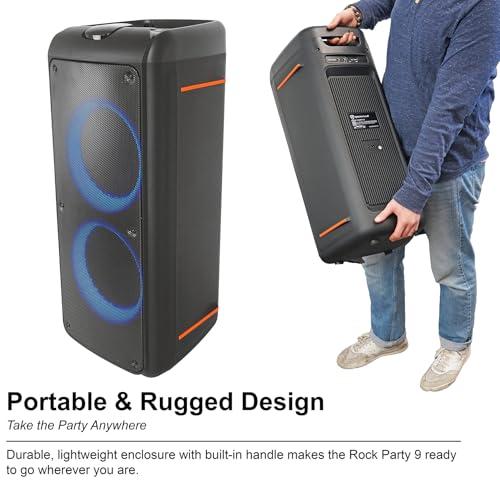
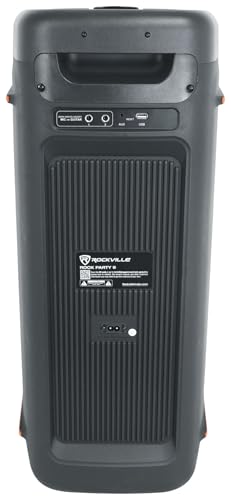
The Rockville Rock Party 9, released around 2023, embodies the "take anywhere" philosophy with its built-in battery and 19.64-pound frame. Meanwhile, the JBL PartyBox 710, which hit the market in 2022, follows the "maximum impact" approach—it's a 61-pound beast that needs to be plugged into the wall but delivers professional-level volume in return. Understanding which philosophy matches your party style is crucial to making the right choice.
Before diving into these specific models, it's important to understand what separates party speakers from regular Bluetooth speakers. Party speakers prioritize three key elements: maximum volume output, deep bass response, and entertainment features. Unlike high-fidelity speakers designed for critical listening, party speakers are engineered to energize crowds and fill large spaces with sound that you feel as much as hear.
Power output is measured in watts RMS (Root Mean Square), which indicates how much continuous power the speaker can handle. Peak watts—often much higher numbers—represent short bursts of power and are less meaningful for real-world performance. The JBL PartyBox 710 delivers 800 watts RMS compared to the Rockville Rock Party 9's 250 watts RMS, a difference that translates to significantly more volume and bass impact.
Frequency response tells you the range of sounds a speaker can reproduce, measured in Hertz (Hz). Lower numbers mean deeper bass—the JBL PartyBox 710 reaches down to 35Hz while the Rockville Rock Party 9 bottoms out at 50Hz. That 15Hz difference might seem small, but it represents the difference between bass you feel in your chest versus bass you simply hear.
The power difference between these speakers creates a performance gap that's immediately apparent when you turn up the volume. The JBL PartyBox 710 can reach approximately 109 decibels—loud enough to clearly hear music across a large backyard or fill a garage for a party of 100+ people. For context, 109 decibels is roughly equivalent to standing near a motorcycle or power saw.
The Rockville Rock Party 9, while still capable of impressive volume for its size, simply can't compete with this level of output. However, this isn't necessarily a weakness—it's a design choice. The Rockville prioritizes efficiency and portability over maximum volume, making it perfectly adequate for gatherings of 20-50 people or indoor house parties where ear-splitting volume isn't the goal.
What's particularly impressive about the JBL PartyBox 710 is its ability to maintain clarity even at maximum volume. Reviews consistently mention that while compression occurs at the highest settings (compression reduces dynamic range to prevent distortion), the speaker remains controlled and listenable. This is crucial for party environments where you want to push the volume without the sound becoming muddy or harsh.
The Rockville Rock Party 9 handles volume increases reasonably well but reviews note that the tweeters (small drivers that handle high frequencies) can become somewhat shrill at higher volumes. This is common in budget-friendly speakers where cost constraints limit the quality of driver materials and crossover design (the electronic circuits that divide frequencies between different drivers).
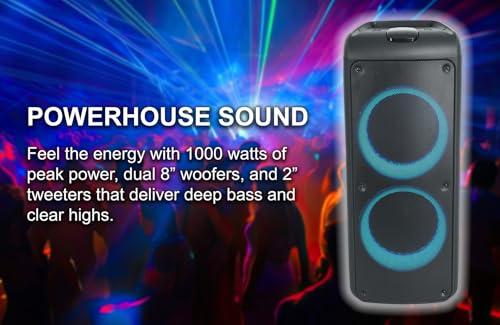
Bass performance often determines whether a party speaker succeeds or fails in its primary mission. Both speakers feature dual 8-inch woofers (the large drivers responsible for bass), but the similarities end there.
The JBL PartyBox 710 extends its bass response down to an impressive 26.7Hz in real-world testing—deep enough to reproduce the fundamental frequencies of kick drums and synthesized bass drops that define modern EDM and hip-hop. This low-frequency extension means you don't just hear the bass; you feel it physically. The speaker's bass boost feature offers "Deep" and "Punchy" modes, allowing you to tailor the sound signature to different music genres. Deep mode emphasizes sub-bass frequencies (below 60Hz), while Punchy mode focuses on mid-bass (60-150Hz) for more immediate impact.
The Rockville Rock Party 9 produces what reviews describe as "earth-shaking bass" within its capabilities, but its 50Hz lower limit means it misses some of the deepest frequencies. This translates to bass that sounds powerful but lacks the physical impact that makes people want to dance. The difference is most noticeable with modern electronic music, where sub-bass content is essential to the listening experience.
Both speakers use ported enclosures (speaker boxes with precisely tuned openings that enhance bass response), but the JBL PartyBox 710's larger internal volume and more sophisticated tuning give it a significant advantage in low-frequency reproduction.
While party speakers prioritize volume and bass over audiophile-quality sound, the overall audio signature still matters for music enjoyment. The JBL PartyBox 710 uses dual 2.75-inch tweeters compared to the Rockville Rock Party 9's dual 2-inch tweeters. The larger tweeters in the JBL, combined with better crossover design, produce cleaner high frequencies with less distortion at high volumes.
The midrange—where vocals and most instruments live—shows a clear difference between the speakers. The JBL PartyBox 710 maintains better vocal clarity and instrument separation, while the Rockville Rock Party 9 tends to sound more compressed in busy musical passages. This doesn't make the Rockville unsuitable for parties, but it does mean the JBL provides a more engaging listening experience across a wider variety of music.
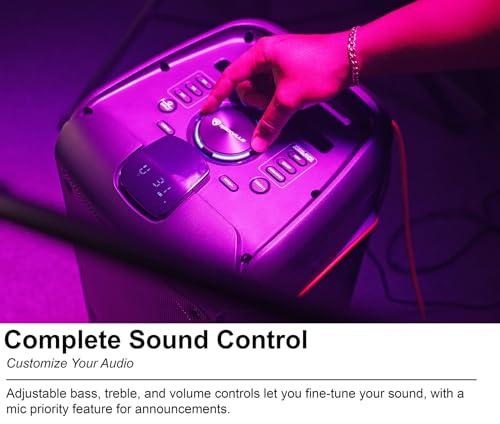
Both speakers include graphic equalizers (tone controls) through their respective mobile apps, allowing users to adjust bass, midrange, and treble to personal preference. However, the JBL PartyBox 710 offers more sophisticated EQ options and presets designed for different music genres.
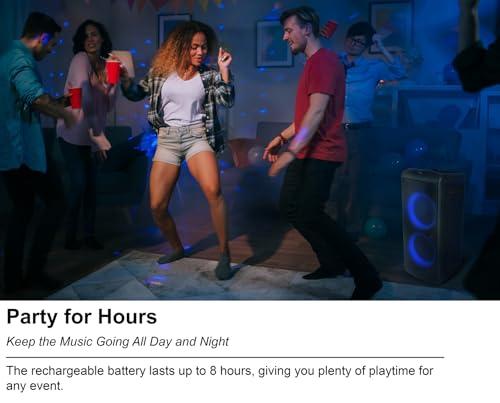
Here's where the fundamental difference between these speakers becomes most apparent. The Rockville Rock Party 9 includes a rechargeable lithium-ion battery that provides 6-8 hours of playback at moderate volume levels. This battery capability transforms the speaker from an audio device into a portable entertainment system, perfect for beach trips, camping adventures, or any situation where electrical outlets aren't available.
The battery performance varies significantly with volume level—expect 2-3 hours at maximum volume, 5-7 hours at moderate levels, and the full 6-8 hours when used as background music. This runtime is typical for battery-powered speakers of this size, as the power demands of large drivers and amplifiers quickly drain batteries at high volume levels.
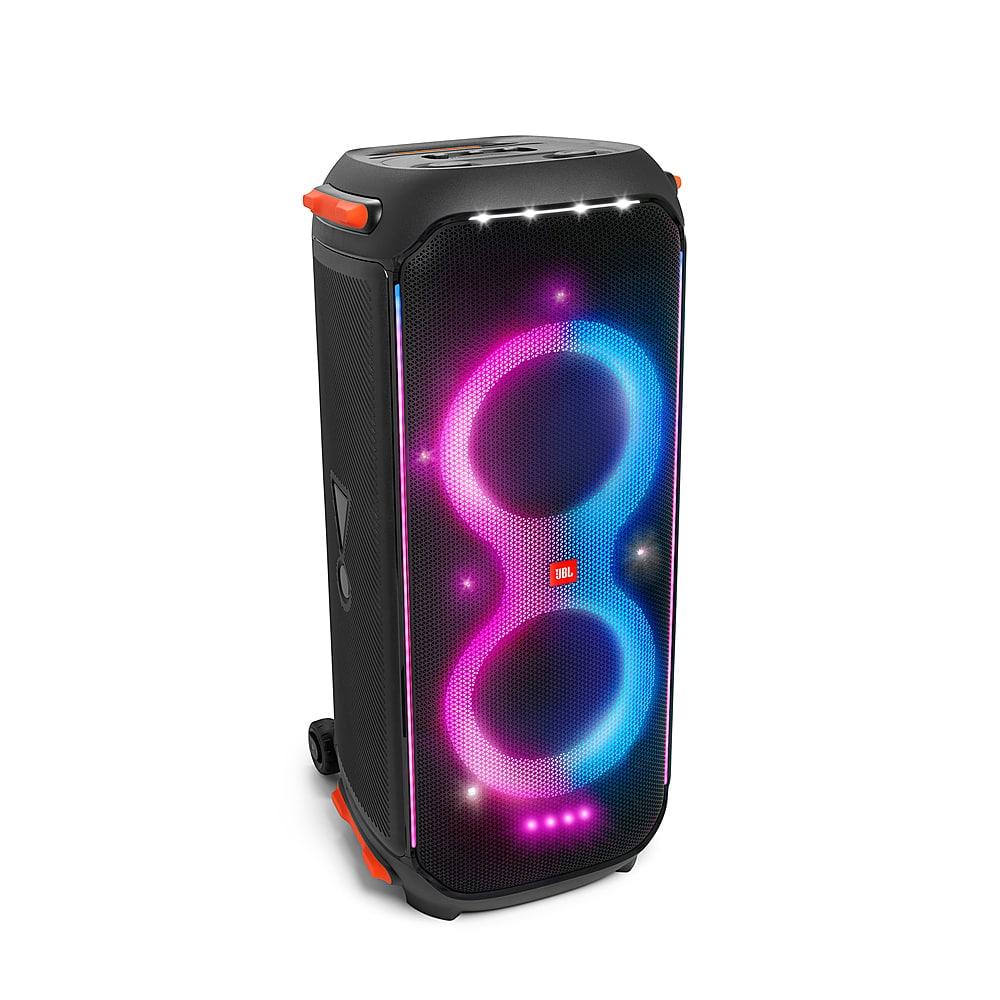
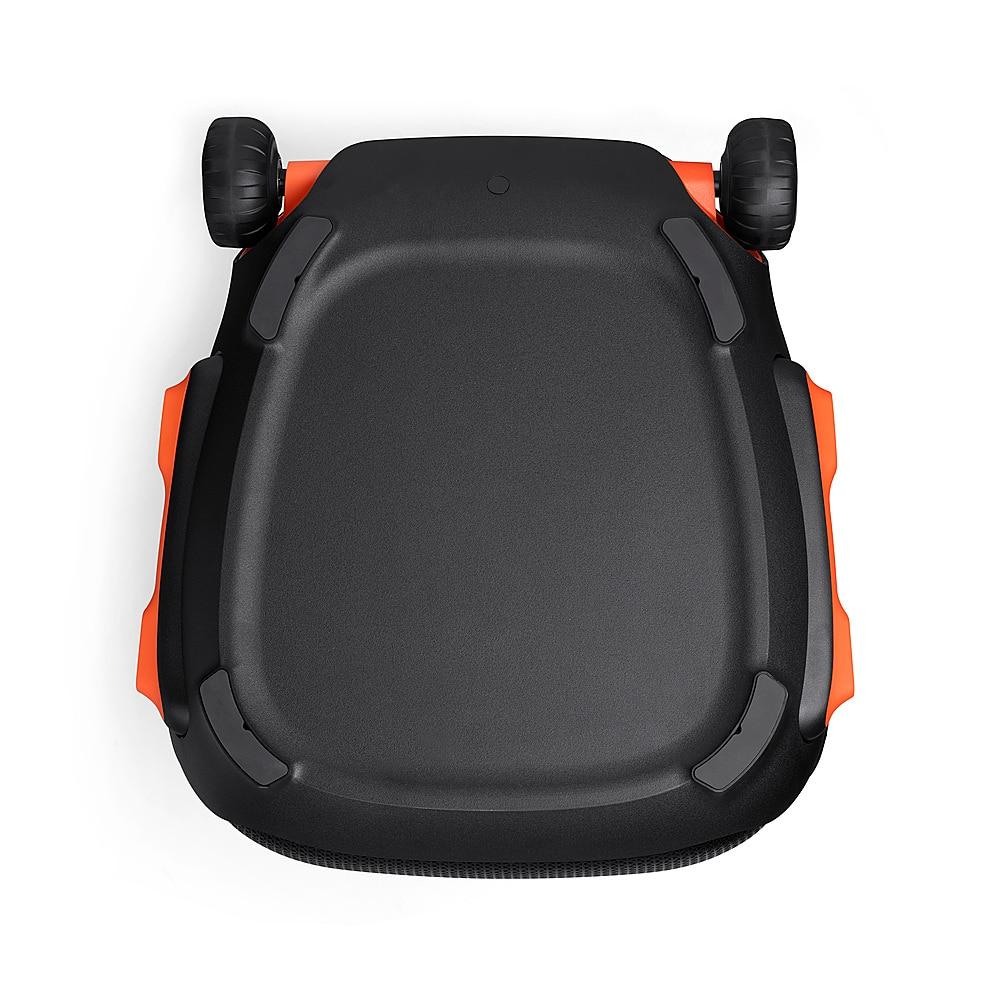
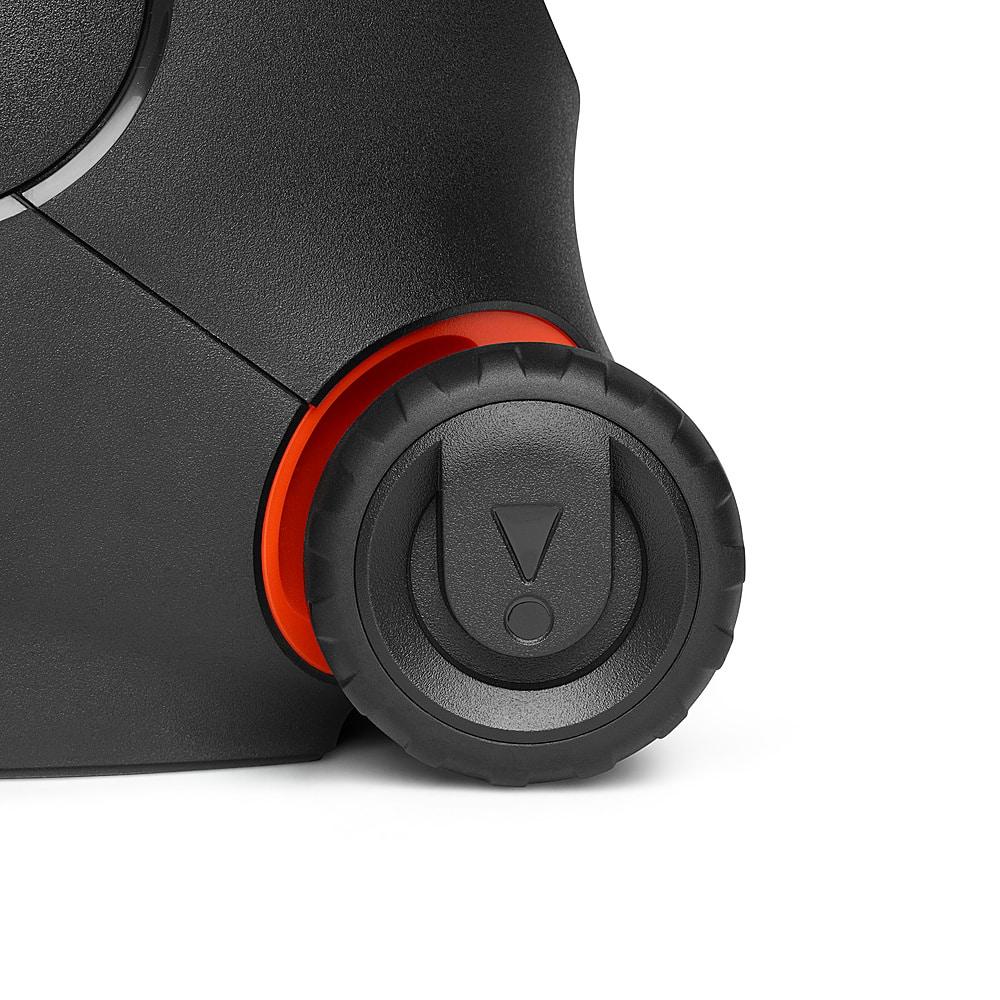
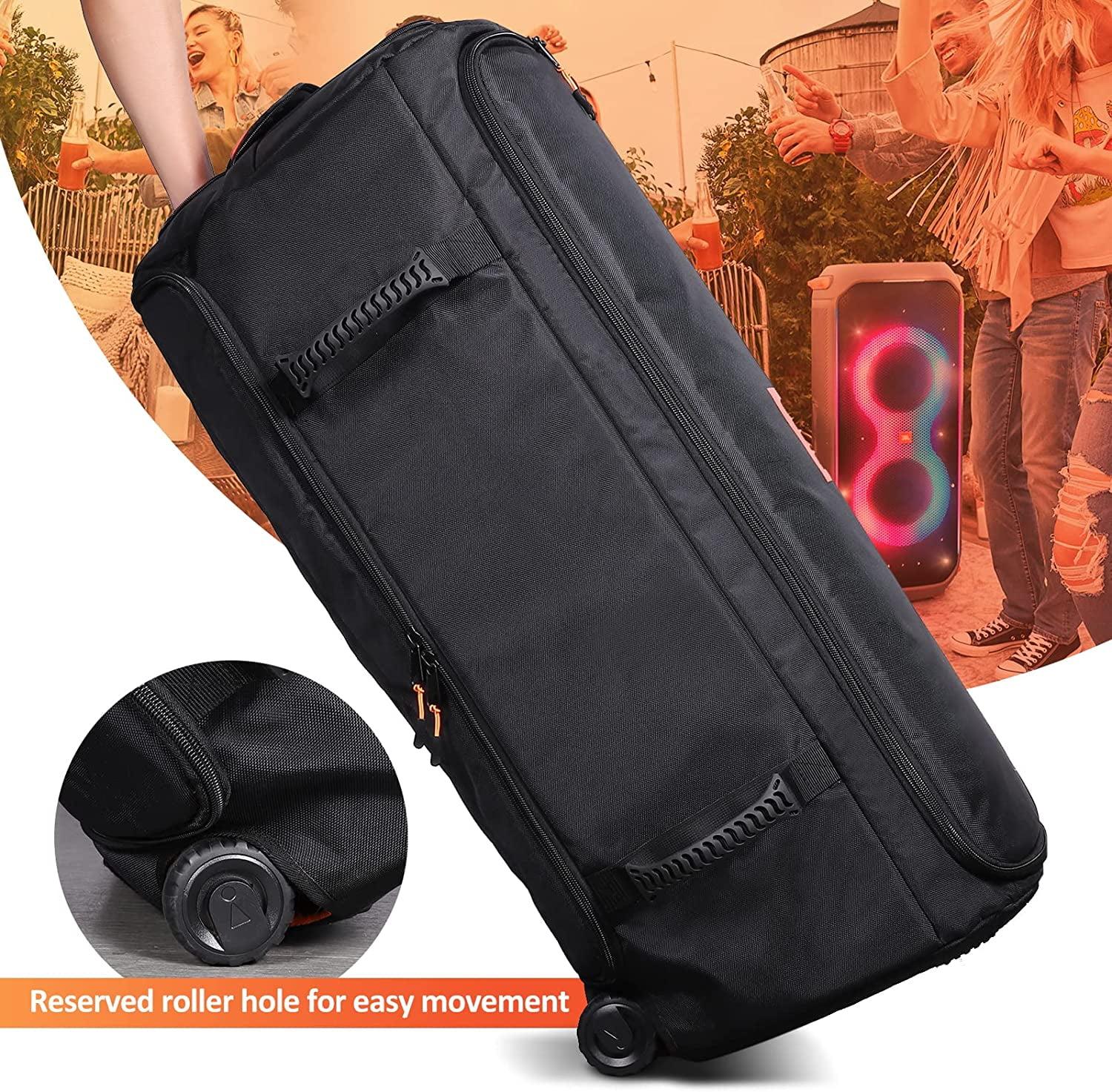
The JBL PartyBox 710 makes no attempt at battery operation, instead focusing all of its design energy on maximum performance when plugged into AC power. At 61.3 pounds, it's not something you'll casually carry to different rooms, but JBL addresses this with large, smooth-rolling wheels and a telescoping handle similar to rolling luggage. The speaker can be transported by one person across flat surfaces, but stairs or rough terrain require multiple people or significant effort.
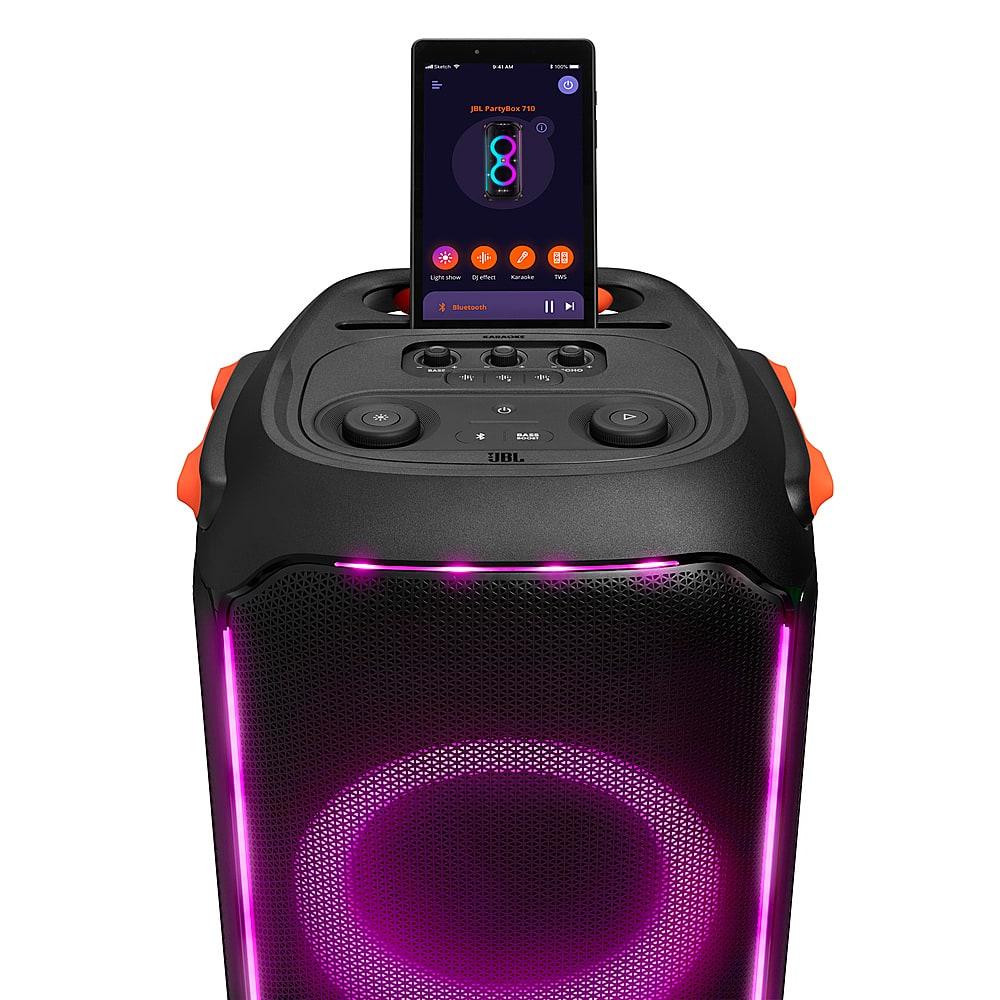
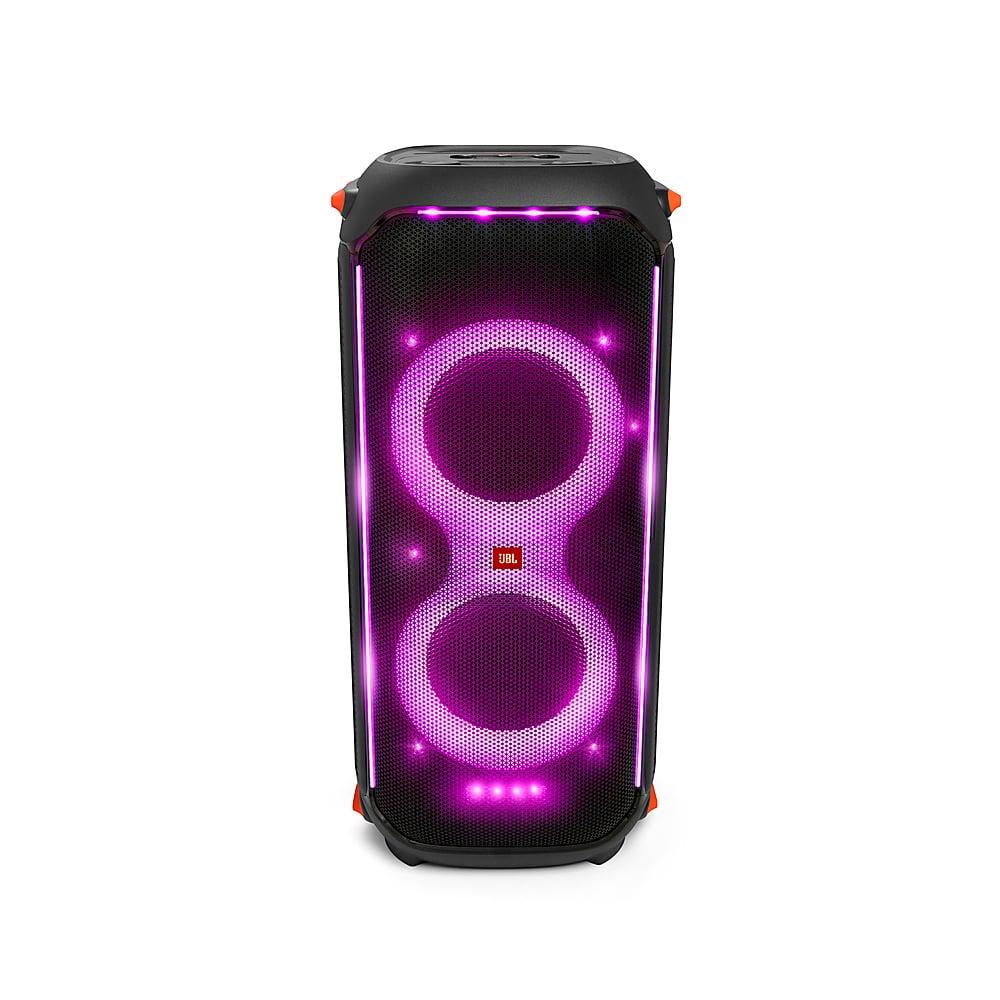
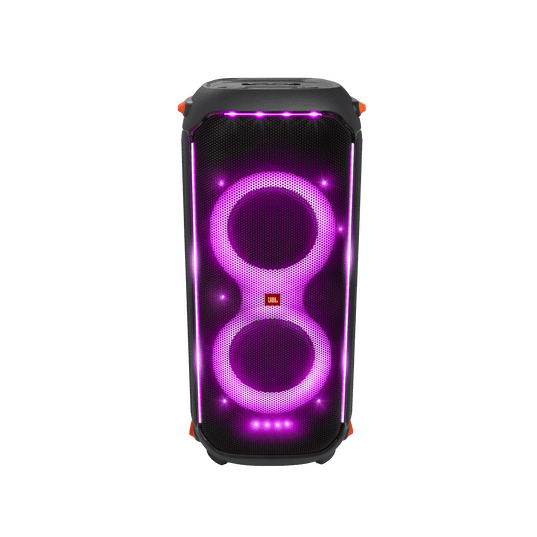
Modern party speakers double as entertainment systems, and both models embrace this role with varying levels of sophistication. The JBL PartyBox 710 features an elaborate RGB lighting system with customizable strobes, rotating patterns, and a unique "starry night" effect that projects moving dots of light. These lights synchronize with the music's beat and can be controlled through the PartyBox mobile app or physical controls on the speaker.
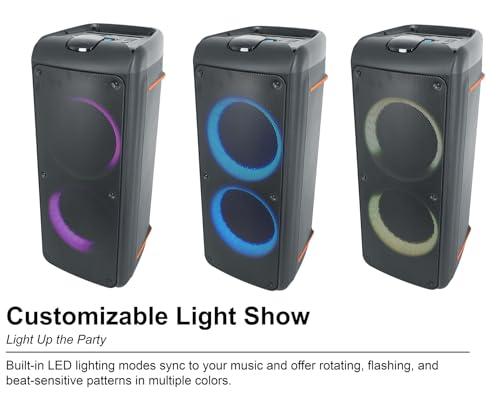
The Rockville Rock Party 9 includes LED lights around its woofers with rotating, flashing, and beat-syncing modes. While less sophisticated than the JBL's system, these lights still create an engaging visual experience and can be adjusted or turned off entirely for more subdued settings.
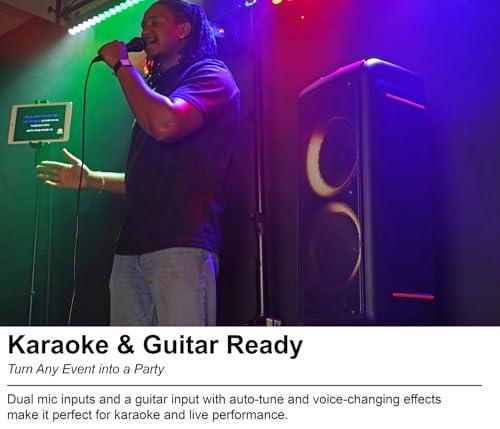
Both speakers excel in karaoke capabilities, but with different approaches. The Rockville Rock Party 9 includes auto-tune and voice-changing effects that can transform anyone into an instant pop star (or create hilarious entertainment, depending on your perspective). The dual microphone inputs allow for duets, while the mic priority function automatically lowers music volume when someone speaks into the microphone—essential for announcements or seamless transitions between songs.
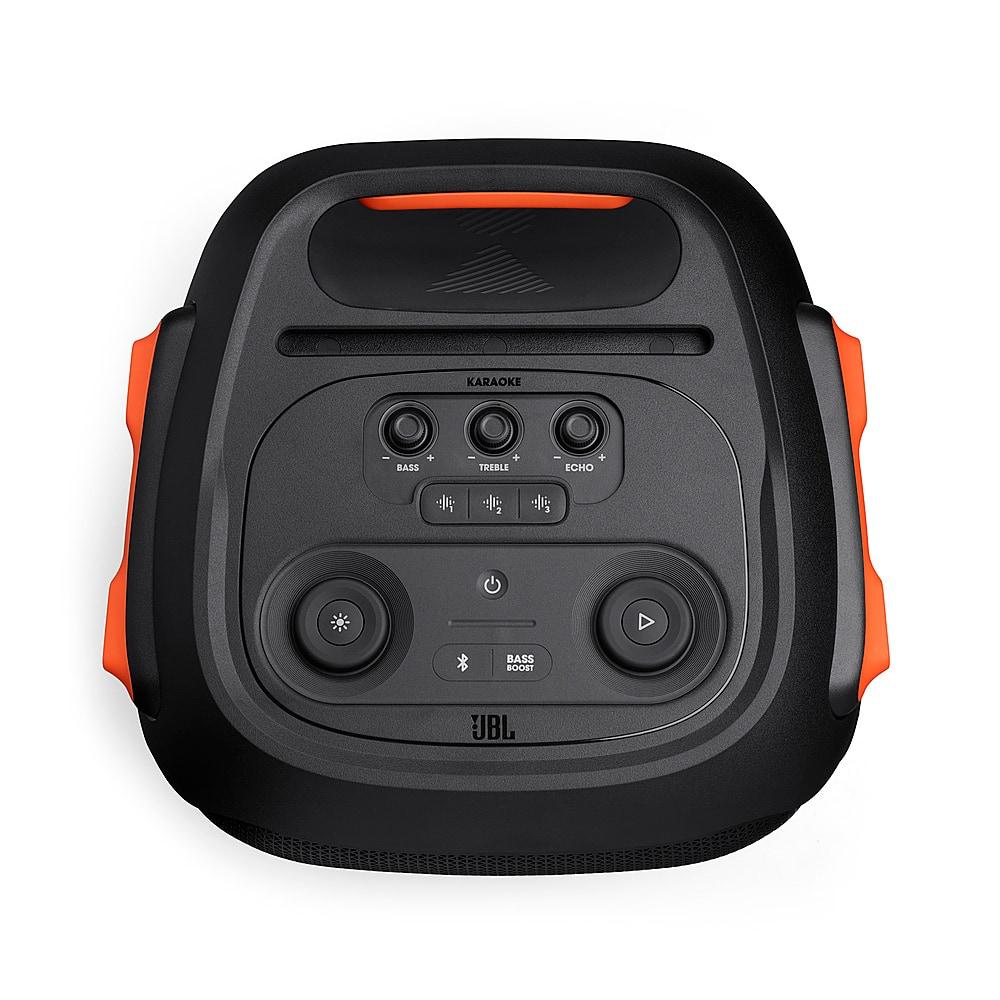
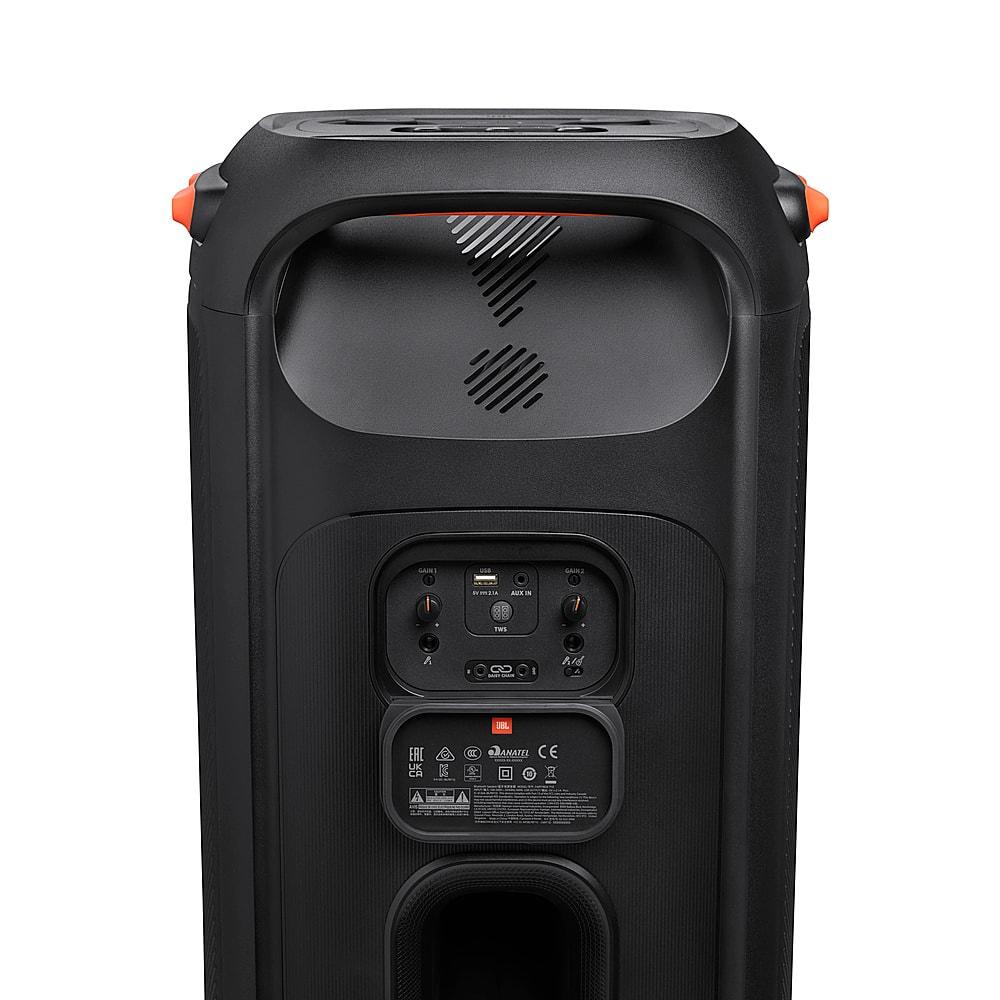
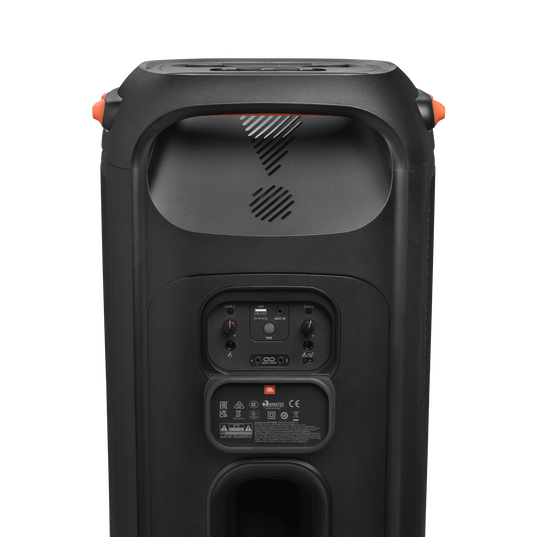
The JBL PartyBox 710 takes a more professional approach to karaoke with independent bass, treble, and echo controls for the microphone input. It also includes a dedicated guitar input with its own level control, enabling live musical performances alongside the pre-recorded music. The build quality of these inputs is notably higher than typical consumer speakers, reflecting JBL's professional audio heritage.
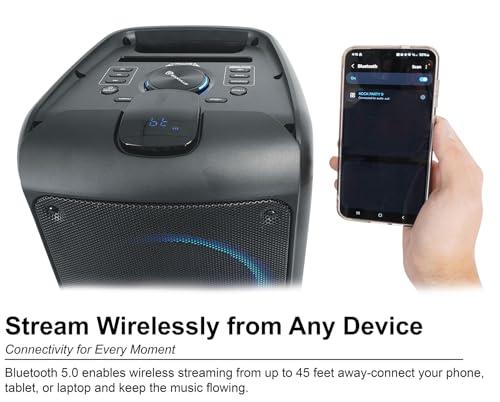
Both speakers embrace comprehensive connectivity options that reflect how people actually use audio devices in 2024. Bluetooth 5.0/5.1 provides stable wireless connections with approximately 45-foot range, sufficient for most party environments. The JBL PartyBox 710 can pair with two devices simultaneously, allowing seamless switching between different people's music without re-pairing.
USB inputs on both speakers serve dual purposes: playing music directly from flash drives (supporting up to 128GB on the Rockville) and charging smartphones or tablets. This charging capability is particularly valuable during long events where devices might otherwise die mid-party.
The JBL PartyBox 710 includes True Wireless Stereo (TWS) technology that enables pairing two identical speakers for true stereo sound with left and right channels. This creates a dramatically wider soundstage and is particularly impressive for larger venues. The Rockville Rock Party 9 offers wireless linking capabilities, though the specific implementation details are less clear from available information.
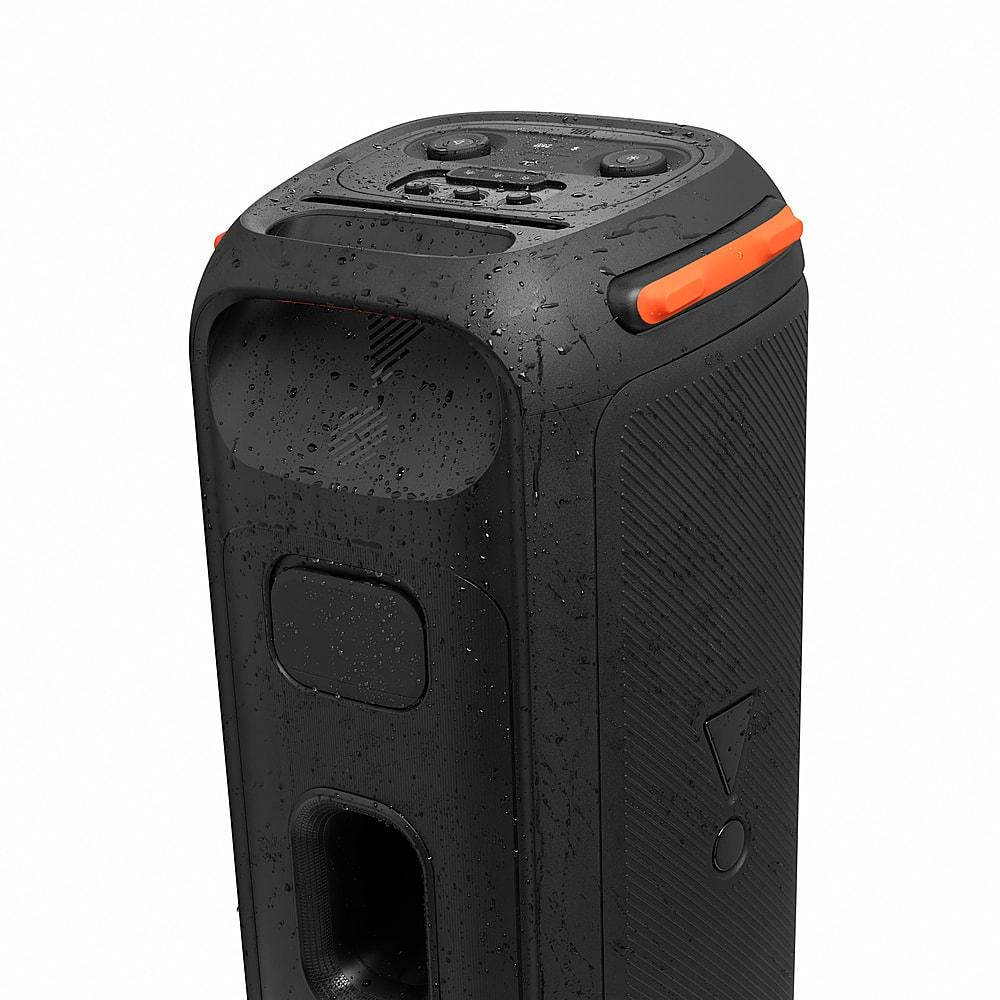
Parties often migrate outdoors, making weather resistance a practical concern. The JBL PartyBox 710 carries an IPX4 splashproof rating, meaning it can handle water splashes from any direction—perfect for poolside parties or unexpected light rain. However, IPX4 is not waterproof; the speaker shouldn't be submerged or exposed to heavy precipitation.
The Rockville Rock Party 9 doesn't specify a weather resistance rating, suggesting greater caution is needed in outdoor environments. Its polypropylene construction provides some durability, but without official ratings, it's best treated as primarily an indoor or covered outdoor speaker.
At the time of writing, these speakers occupy different price tiers that reflect their distinct approaches. The Rockville Rock Party 9 positions itself as a high-value option, delivering impressive features and performance at a budget-friendly price point. When you factor in the included battery operation, remote control, and comprehensive feature set, it represents excellent value for users who don't need maximum volume.
The JBL PartyBox 710 commands a premium price that reflects its substantially higher power output, professional build quality, and sophisticated features. The price difference can be significant, but it's justified by the performance gap—you're paying for triple the power output and noticeably better audio quality.
Consider the total cost of ownership: the Rockville Rock Party 9 is ready to use anywhere, while the JBL PartyBox 710 might require investment in heavy-duty extension cords for outdoor use. However, the JBL's AC power operation means no battery replacement costs over time.
Neither speaker is designed for home theater use, but they can serve in large spaces where traditional home theater speakers might be inadequate. The JBL PartyBox 710's higher audio quality and power make it more suitable for movie watching, though both speakers' sound signatures favor dynamic music over dialogue clarity.
The lack of surround sound processing and optimized frequency response for speech makes dedicated home theater speakers a better choice for serious movie watching. However, in garage home theaters or large basement entertainment areas, either speaker could provide adequate performance for casual viewing.
The choice between these speakers ultimately depends on your specific needs and priorities. Choose the Rockville Rock Party 9 if portability is non-negotiable—camping trips, beach parties, tailgating, or any event where power outlets aren't guaranteed. Its battery operation and lighter weight make it the obvious choice for truly mobile entertainment. The speaker provides excellent value for smaller to medium-sized gatherings and includes all the features needed for a great party experience.
The JBL PartyBox 710 is the clear choice when maximum impact is the priority. If you regularly host large parties, need volume that carries across significant distances, or want the deepest bass response possible, the additional investment pays dividends in performance. The professional build quality and sophisticated features make it suitable for semi-professional use, while the comprehensive connectivity options ensure it'll work with any audio source.
Consider your typical party size, available power sources, and budget constraints. The Rockville Rock Party 9 excels in versatility and value, while the JBL PartyBox 710 delivers uncompromising performance for those willing to sacrifice portability for maximum audio impact. Both speakers represent solid choices within their respective categories, but understanding these fundamental differences ensures you'll choose the right tool for your specific party needs.
| Rockville Rock Party 9 | JBL PartyBox 710 |
|---|---|
| Power Output (RMS) - Determines maximum volume and bass impact | |
| 250W RMS (adequate for 20-50 people) | 800W RMS (handles 100+ people easily) |
| Battery Operation - Critical for true portability | |
| Built-in Li-Ion battery: 6-8 hours moderate volume | AC power only (requires electrical outlet) |
| Weight - Affects real-world portability | |
| 19.64 lbs with carry handle (easily portable) | 61.3 lbs with wheels and telescoping handle |
| Bass Extension - How deep the low frequencies go | |
| 50Hz-20kHz (good bass, less physical impact) | 35Hz-20kHz (felt bass that "rattles windows") |
| Maximum Volume Output - Room-filling capability | |
| Moderate output for smaller gatherings | ~109 decibels (extremely loud, professional level) |
| Weather Resistance - Outdoor party reliability | |
| No specified rating (indoor/covered use recommended) | IPX4 splashproof (poolside and light rain safe) |
| LED Light Show - Visual entertainment factor | |
| Customizable modes around woofers (rotating/flashing) | Advanced RGB with strobes, starry night effects |
| Karaoke Features - Entertainment versatility | |
| Auto-tune, voice-changing, dual mic inputs with echo | Professional mic/guitar inputs with independent EQ |
| True Wireless Pairing - Multi-speaker capability | |
| Wireless linking supported | TWS button for instant stereo pairing with second PartyBox 710 |
| Mobile App Control - Customization options | |
| Basic light and sound control | Comprehensive EQ, lighting control, DJ effects |
| Value Proposition - Performance per dollar | |
| Excellent value with battery operation included | Premium price justified by 3x power and pro features |
The JBL PartyBox 710 is superior for outdoor parties due to its 800W RMS power output that can easily fill large outdoor spaces and reach 109 decibels. It also features IPX4 splashproof rating for poolside use. However, the Rockville Rock Party 9 offers true portability with its built-in battery, making it better for camping or beach parties where power outlets aren't available.
Only the Rockville Rock Party 9 operates on battery power, providing 6-8 hours of playback at moderate volume levels. The JBL PartyBox 710 requires AC power and must be plugged into an electrical outlet at all times, which limits its placement options but allows for unlimited runtime.
The JBL PartyBox 710 delivers significantly better bass with frequency response extending down to 35Hz compared to the Rockville Rock Party 9's 50Hz limit. The JBL's deeper bass extension creates more physical impact and is better suited for bass-heavy music genres like EDM and hip-hop.
The JBL PartyBox 710 reaches approximately 109 decibels and can easily cover large areas with 100+ people. The Rockville Rock Party 9 produces moderate volume levels suitable for gatherings of 20-50 people but cannot match the JBL's maximum output capability.
The Rockville Rock Party 9 is far more portable at 19.64 pounds with a carry handle and battery operation. The JBL PartyBox 710 weighs 61.3 pounds and includes wheels with a telescoping handle, but requires two people for stairs and needs access to power outlets.
Yes, both speakers offer karaoke capabilities. The Rockville Rock Party 9 includes auto-tune and voice-changing effects with dual microphone inputs. The JBL PartyBox 710 provides more professional karaoke features with independent bass, treble, and echo controls, plus a dedicated guitar input.
The Rockville Rock Party 9 typically offers better value with its lower price point, included battery operation, and comprehensive feature set. The JBL PartyBox 710 costs significantly more but delivers three times the power and professional-grade performance, justifying its premium pricing for larger events.
Both speakers support multi-speaker connectivity. The JBL PartyBox 710 features True Wireless Stereo (TWS) for instant pairing with another identical unit to create stereo sound. The Rockville Rock Party 9 supports wireless linking with other compatible units for expanded coverage.
The JBL PartyBox 710 offers more sophisticated lighting with RGB strobes, rotating patterns, and unique "starry night" effects controlled via mobile app. The Rockville Rock Party 9 provides customizable LED modes around the woofers with rotating, flashing, and beat-syncing options.
Both speakers work indoors, but the Rockville Rock Party 9 is better suited for home use due to its moderate volume levels and battery portability between rooms. The JBL PartyBox 710 may be too powerful for typical home environments and is better for larger spaces like garages or basements.
Both the Rockville Rock Party 9 and JBL PartyBox 710 feature Bluetooth 5.0+, USB inputs for music playback and device charging, AUX inputs, and microphone/guitar connections. The JBL can pair with two Bluetooth devices simultaneously for easier source switching.
The JBL PartyBox 710 handles all music genres better due to its extended bass response, higher power output, and superior audio quality. It excels particularly with electronic music, hip-hop, and rock. The Rockville Rock Party 9 performs adequately across genres but may lack impact with bass-heavy music compared to the more powerful JBL option.
We've done our best to create useful and informative comparisons to help you decide what product to buy. Our research uses advanced automated methods to create this comparison and perfection is not possible - please contact us for corrections or questions. These are the sites we've researched in the creation of this article: youtube.com - wiki.ezvid.com - youtube.com - youtube.com - walmart.com - soundcore.com - youtube.com - rtings.com - rockvilleaudio.com - youtube.com - youtube.com - youtube.com - review-rating.com - manuals.plus - support.rockvilleaudio.com - reverb.com - rockvilleaudio.com - privacy.we-conect.com - audiosavings.com - youtube.com - youtube.com - rtings.com - audioadvice.com - crutchfield.com - youtube.com - bestbuy.com - rtings.com - youtube.com - youtube.com - youtube.com - versus.com - worldwidestereo.com - jbl.com - youtube.com - expertvoice.com - jbl.com - jbl.com.tw - robot-advance.com - youtube.com - hu.harmanaudio.com - onward.ph - harmanaudio.in - youtube.com - youtube.com - manuals.plus - global.jbl.com - de.jbl.com - ro.harmanaudio.com

Privacy Policy
Terms and Conditions - Affiliate Policy
Home Security
© Copyright 2008-2026.
11816 Inwood Rd #1211, Dallas, TX 75244