

When you're planning your next backyard barbecue or basement dance party, the right speaker can make or break the atmosphere. We've spent considerable time researching two very different approaches to portable party audio: the JBL PartyBox 710 and the Samsung MX-ST40F. While both promise to pump up your gatherings, they take dramatically different paths to get there—and understanding these differences could save you from buyer's remorse.
Before diving into the specifics, let's establish what separates a true party speaker from your average Bluetooth speaker. Party speakers need to accomplish several challenging tasks simultaneously: they must produce enough volume to compete with crowd noise and fill large spaces, deliver bass that you can actually feel (not just hear), provide visual entertainment through synchronized lighting, and remain portable enough to move between venues.
The most critical performance metric is sound pressure level (SPL)—essentially how loud the speaker can get while maintaining clarity. Party speakers typically need to hit at least 100 decibels to be effective, with the best models reaching 110+ dB. For reference, normal conversation happens around 60 dB, while a rock concert hits about 115 dB.
Equally important is frequency response, particularly in the low end. Bass frequencies below 50Hz create that physical sensation that makes dance music compelling. Many party speakers claim deep bass but struggle to reproduce frequencies below 60Hz with any real impact. The difference between adequate and exceptional party speakers often comes down to how well they handle these lowest frequencies.
The JBL PartyBox 710, released in 2022, represents JBL's flagship approach to portable party audio. At the time of writing, it commands a premium price that puts it in the "serious investment" category. JBL has refined their party speaker technology significantly since their original PartyBox lineup, incorporating lessons learned from professional sound reinforcement to create something that bridges consumer and pro audio.
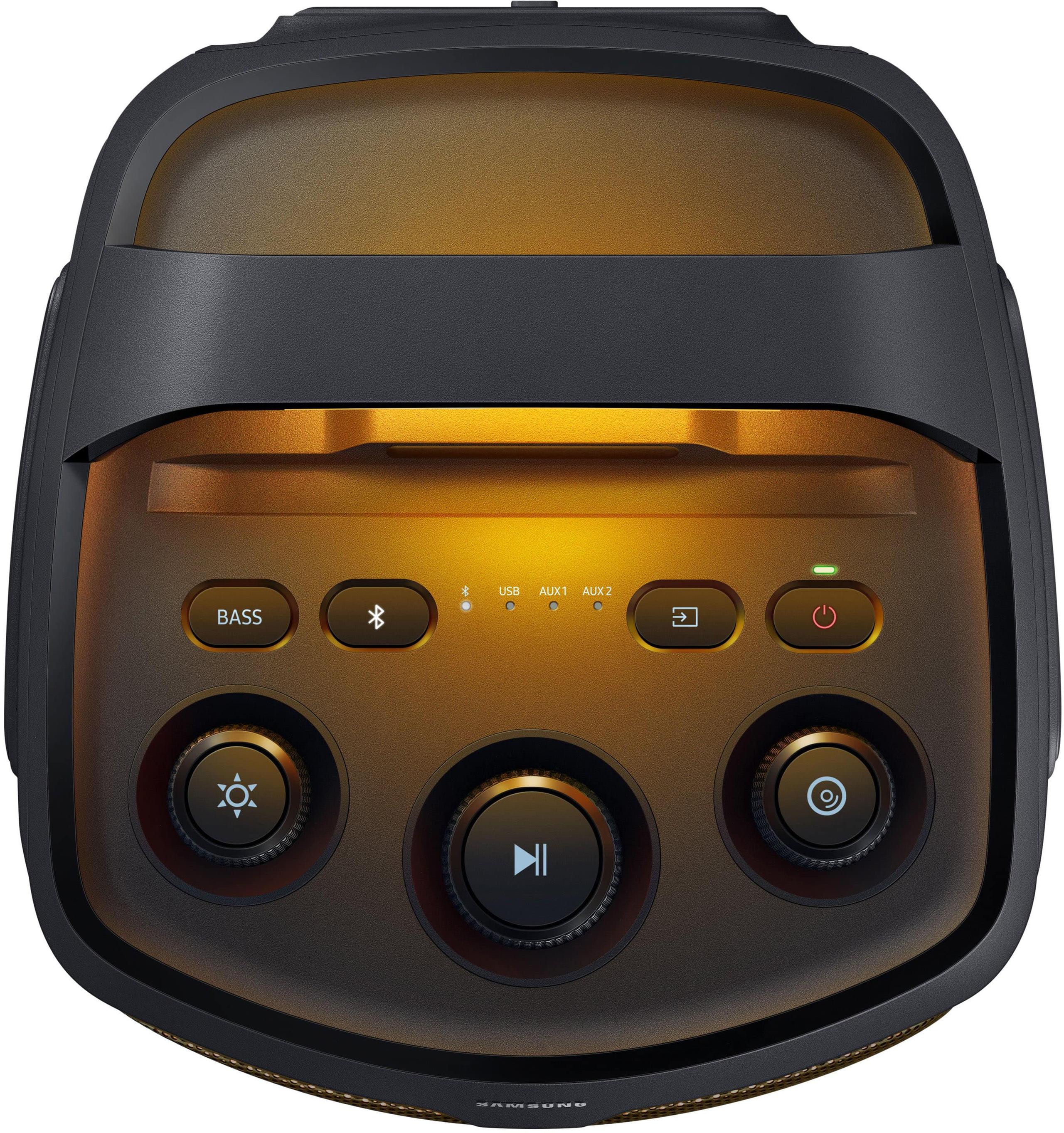
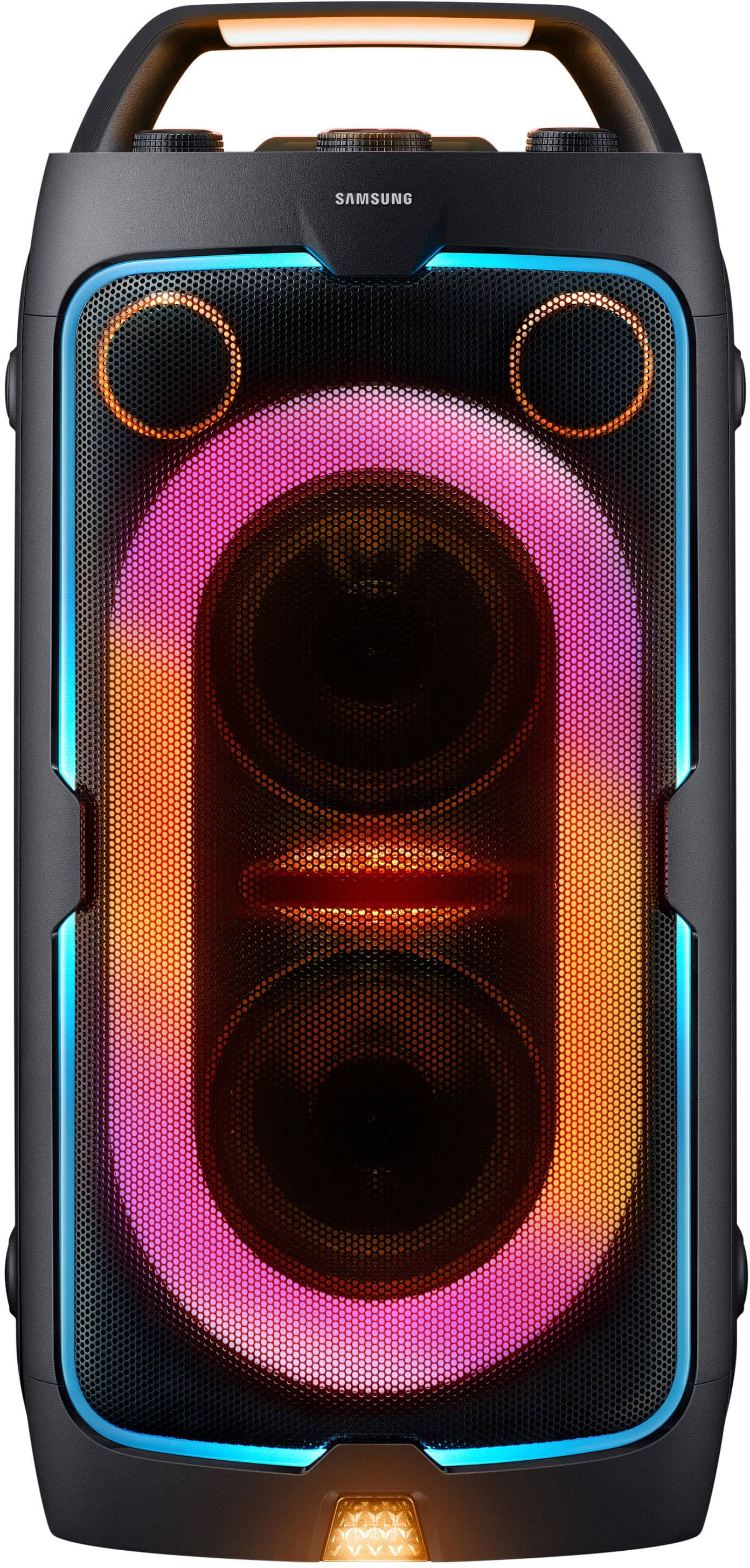
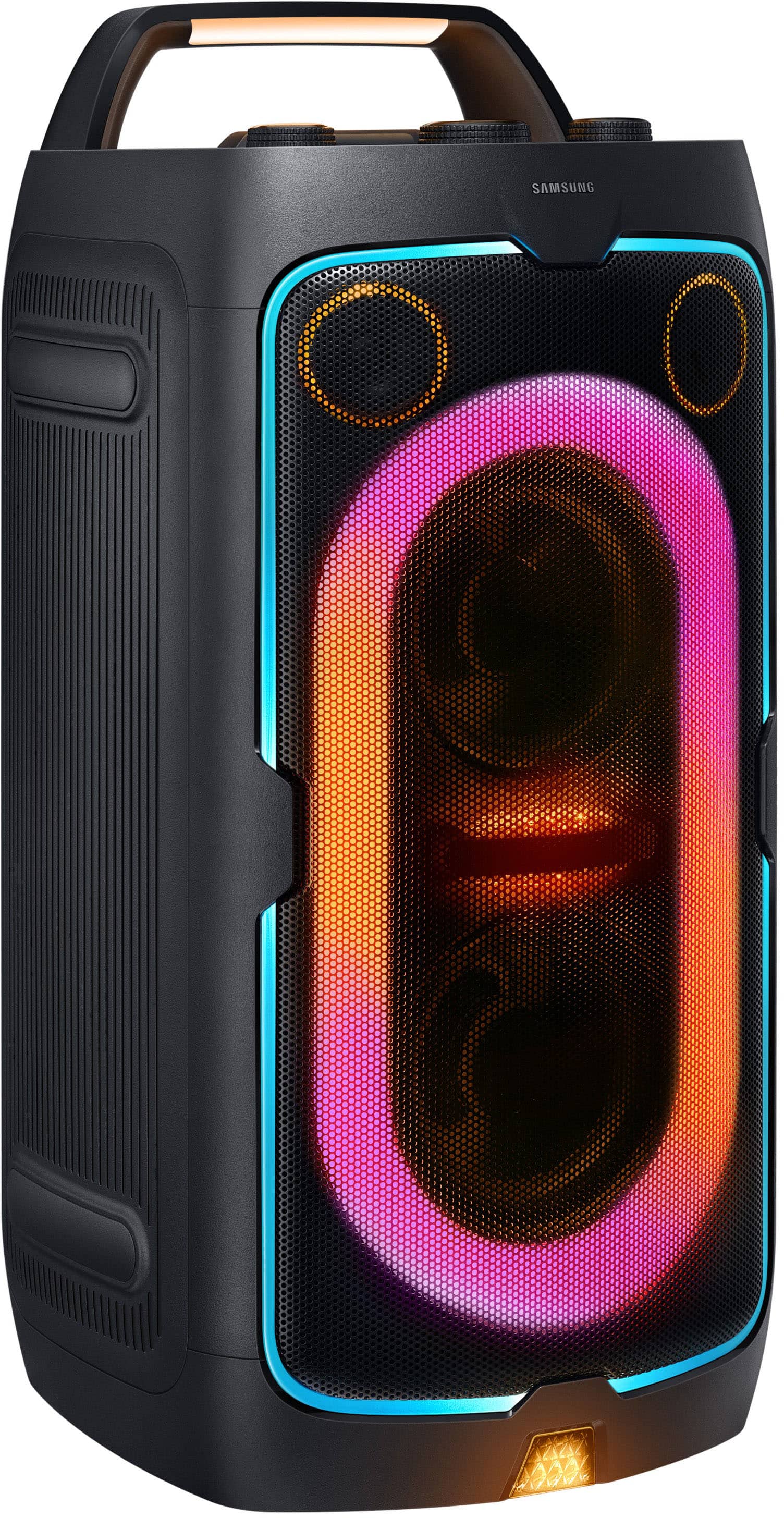
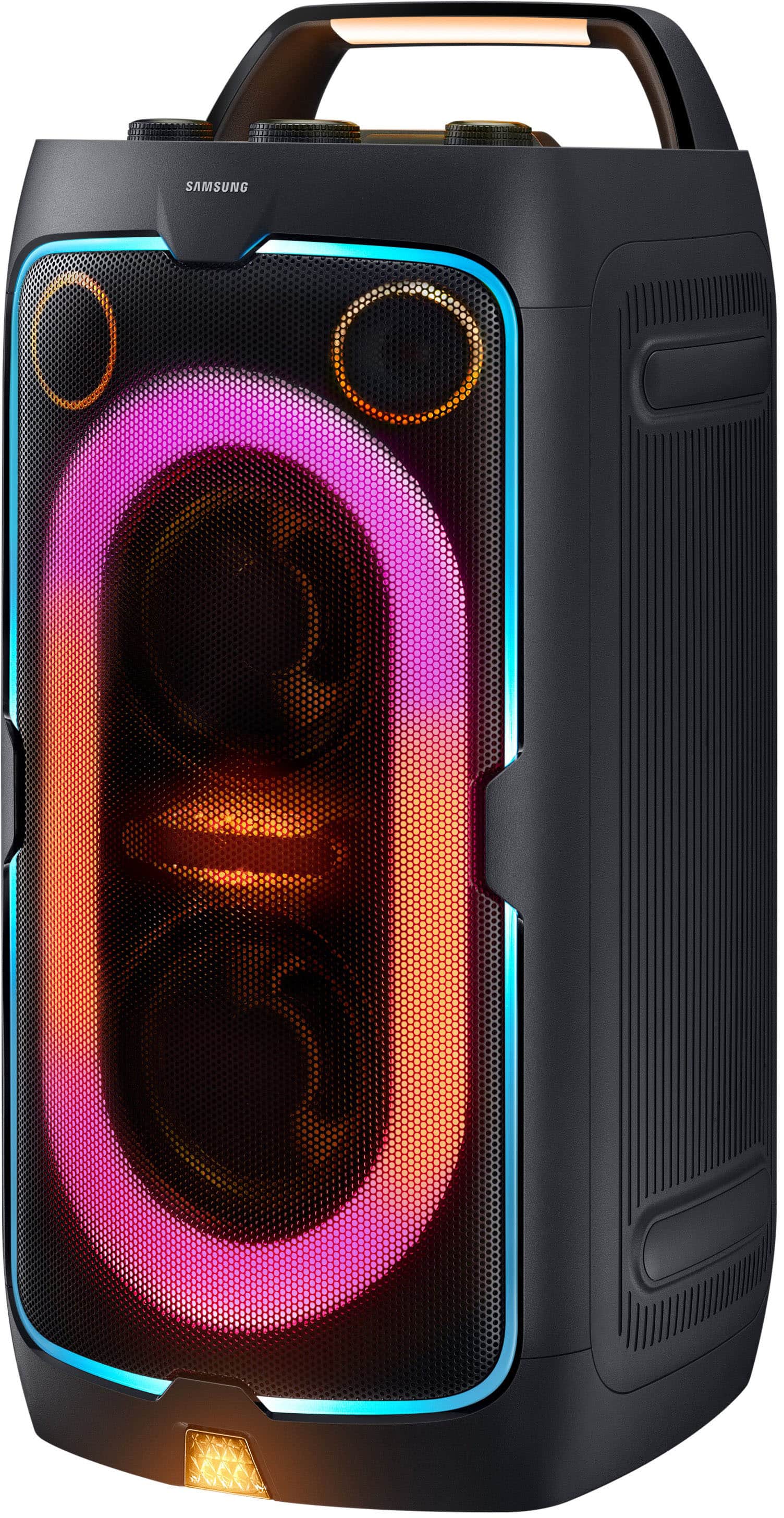
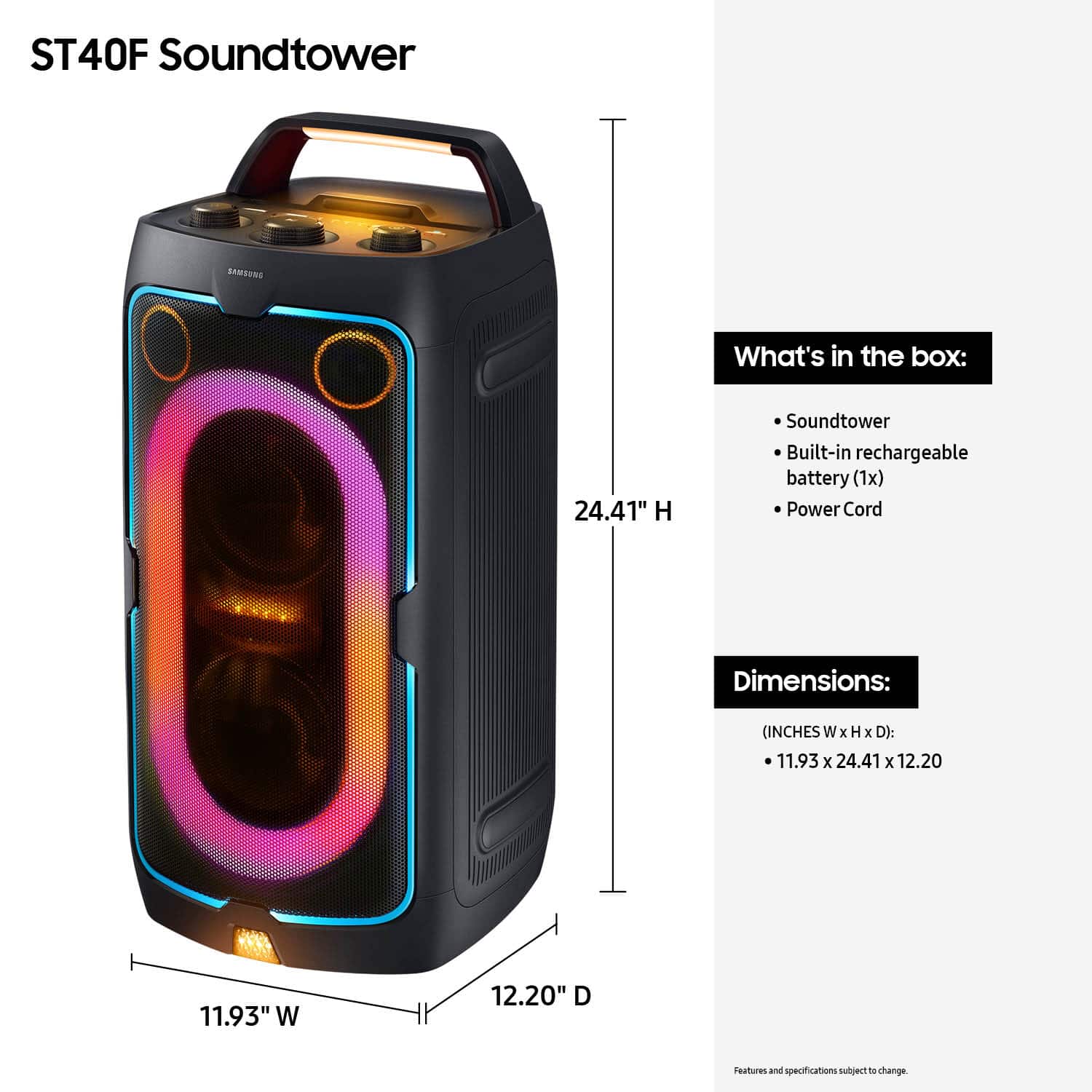
The Samsung MX-ST40F, launched in 2024, takes a completely different approach. Samsung leverages their consumer electronics expertise to pack modern features into a more budget-friendly package. It's part of Samsung's renewed push into the party speaker market, where they're applying smartphone-style rapid innovation to audio products.
The most obvious difference between these speakers lies in their power specifications. The JBL PartyBox 710 delivers a substantial 800W RMS (Root Mean Square—the continuous power output, not peak), while the Samsung MX-ST40F provides 160W in AC mode and drops to 80W when running on battery power.
This isn't just a numbers game. That power difference translates directly to how large a space each speaker can effectively fill. Based on our research into user experiences, the JBL can comfortably handle outdoor gatherings of 50-100 people, while the Samsung works best for groups of 15-30 people in most scenarios.
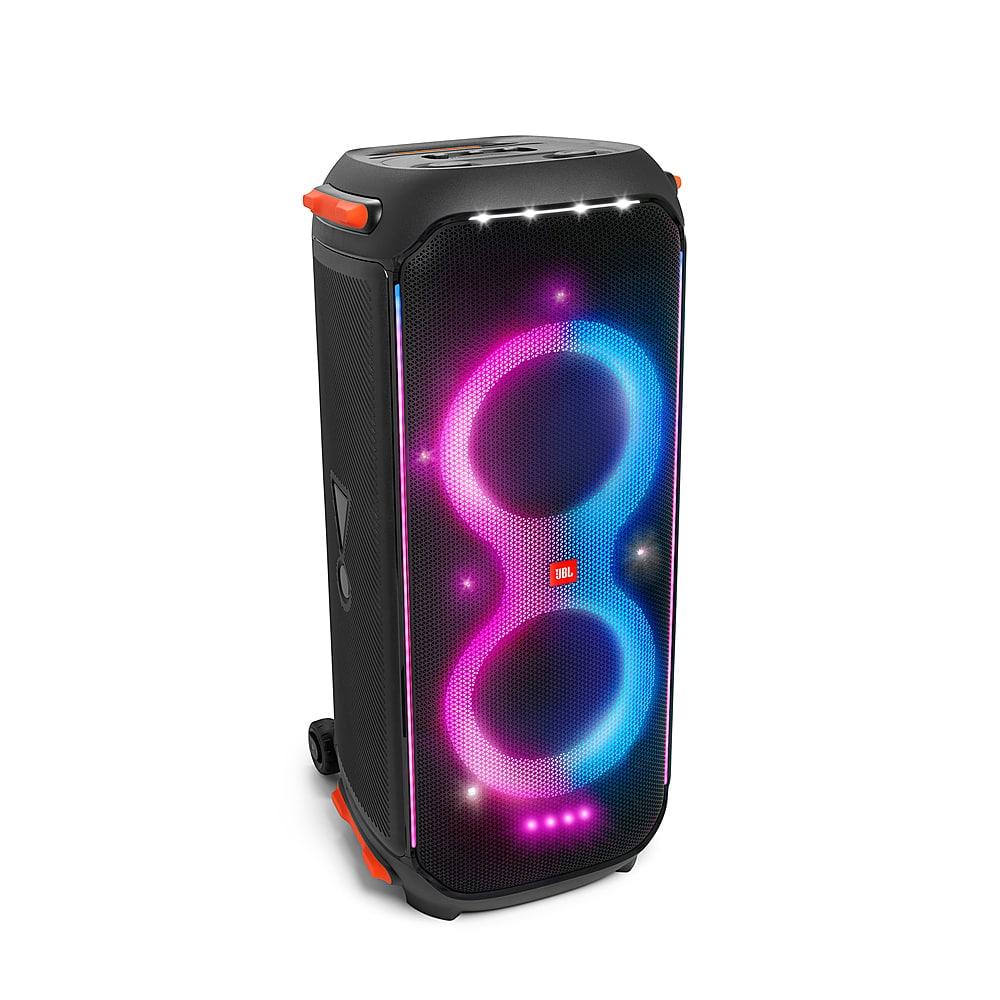
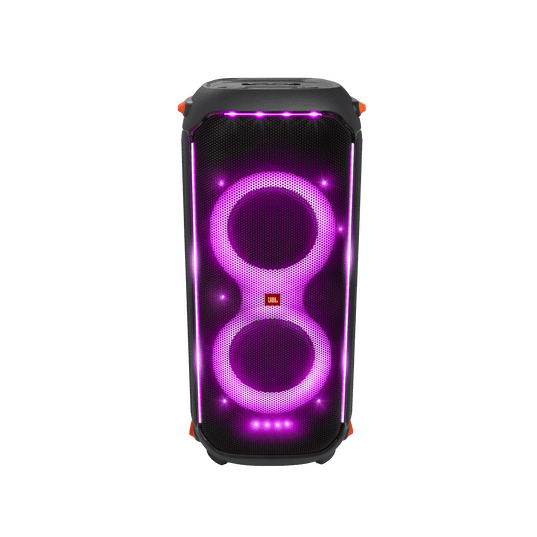
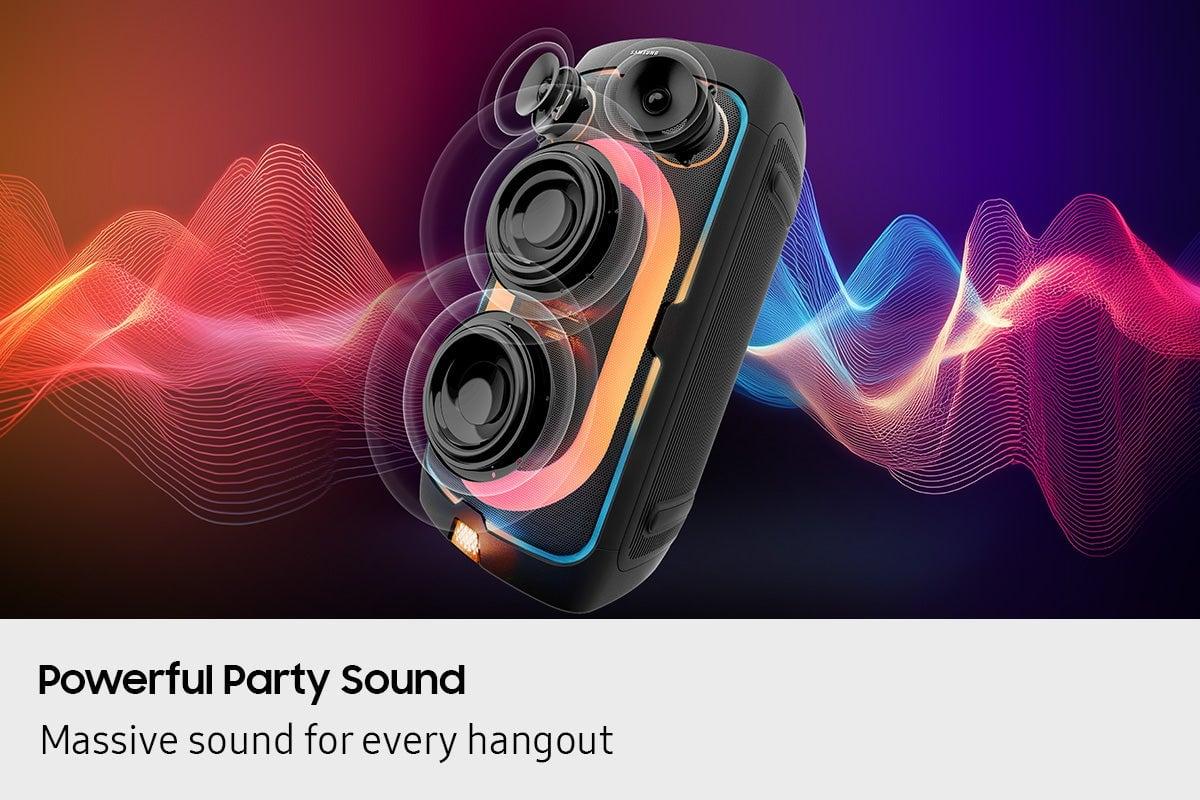
Perhaps the most significant performance difference comes down to driver size and bass reproduction. The JBL PartyBox 710 employs dual 8-inch woofers paired with dedicated 2.75-inch tweeters. Those 8-inch drivers are crucial—they move more air than smaller drivers, creating the physical bass sensation that defines great party audio.
The Samsung MX-ST40F uses smaller 5.25-inch drivers in a different configuration. While Samsung includes three bass modes (Deep, Punchy, and Gentle) to optimize performance for different music styles, the fundamental physics limitation remains. Smaller drivers simply cannot move the volume of air necessary to create truly deep, felt bass.
In practical terms, this means the JBL will make your chest thump during bass drops in electronic music, while the Samsung provides more subtle low-frequency reinforcement. For genres like hip-hop, EDM, and modern pop that rely heavily on sub-bass content, this difference is immediately noticeable.
Both speakers can achieve impressive maximum volumes—around 112-113 dB according to expert measurements. However, the JBL PartyBox 710 maintains its composure better at maximum volume. The larger drivers and more powerful amplification mean it doesn't work as hard to achieve high SPLs, resulting in less distortion when pushed to its limits.
The Samsung MX-ST40F can certainly get loud enough for most parties, but it shows more signs of strain at maximum output. This matters most when you're competing with outdoor ambient noise or trying to energize a large crowd—situations where you need both volume and clarity.
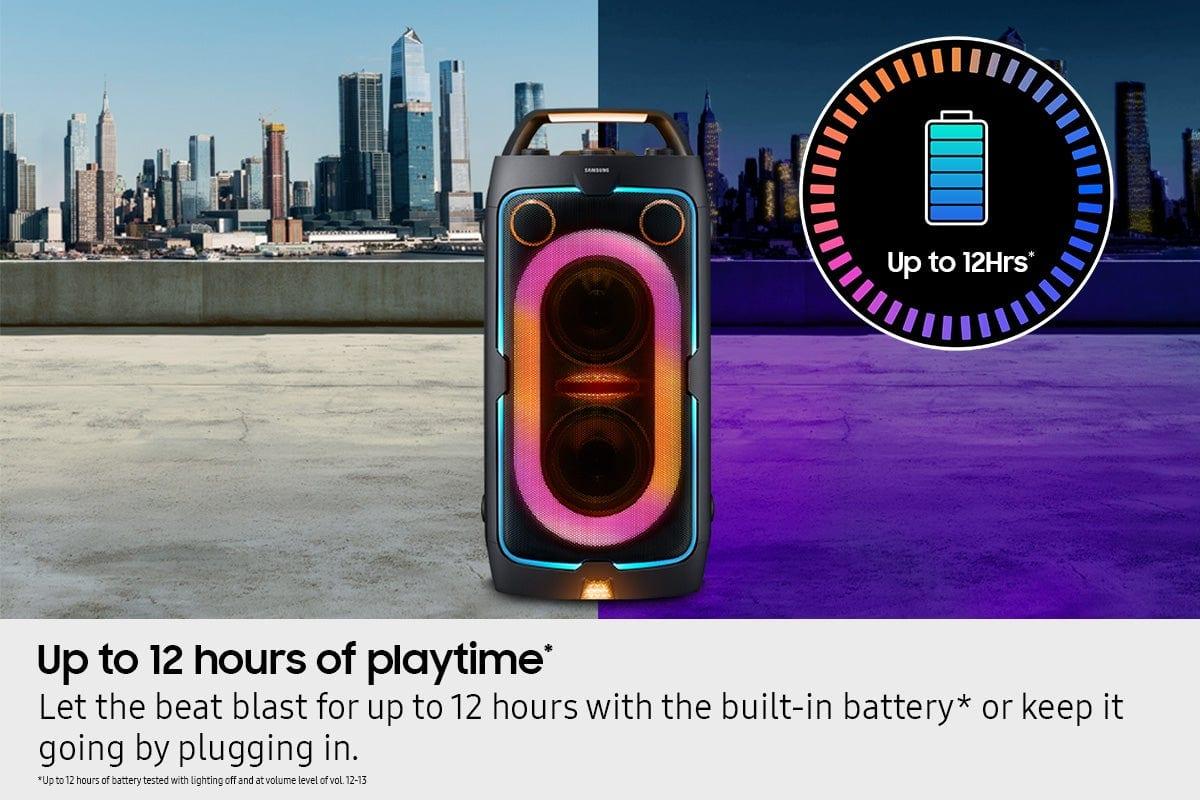
Here's where things get interesting. The Samsung MX-ST40F wins the pure portability contest hands down, thanks to its built-in battery that provides up to 12 hours of operation. This means you can take it literally anywhere—beach parties, camping trips, or any location without power access.
The JBL PartyBox 710 requires AC power, which initially seems like a major limitation. However, this design choice enables its superior performance. Without the weight, cost, and power consumption of a large battery, JBL could focus entirely on audio performance and build quality.
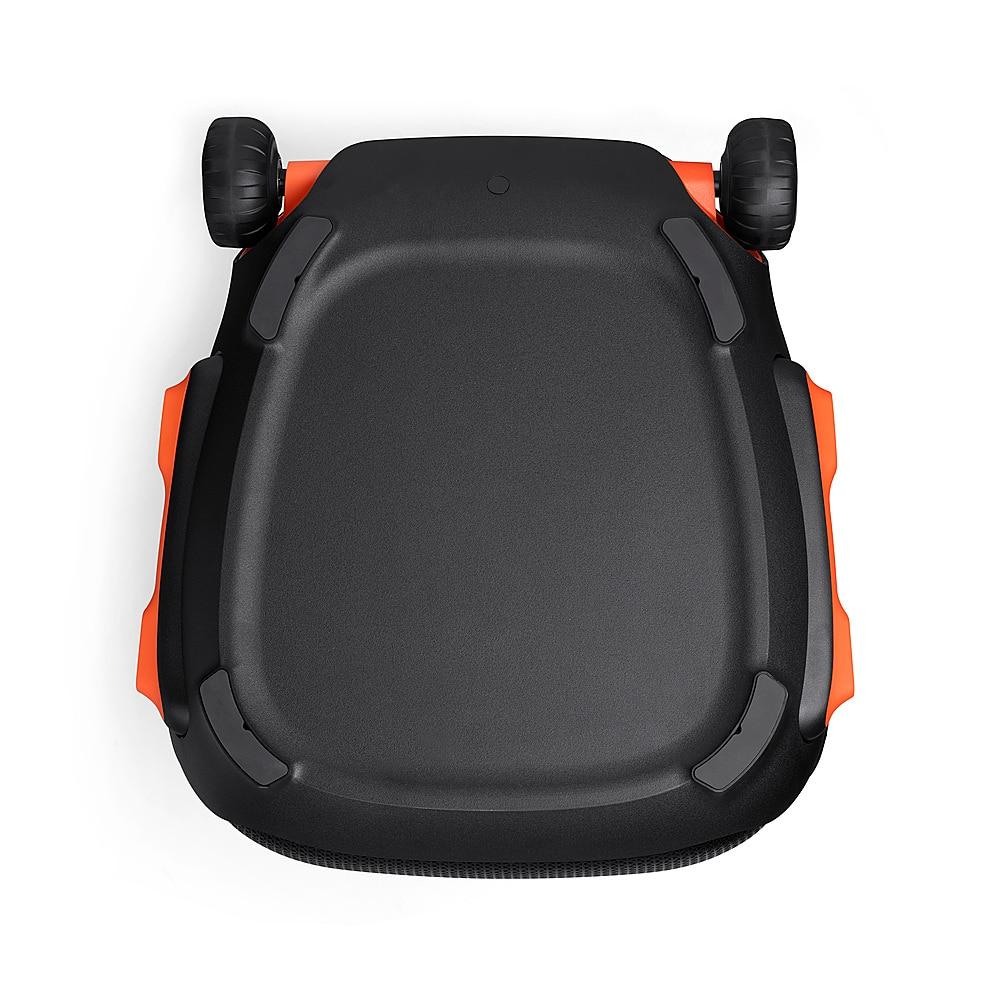
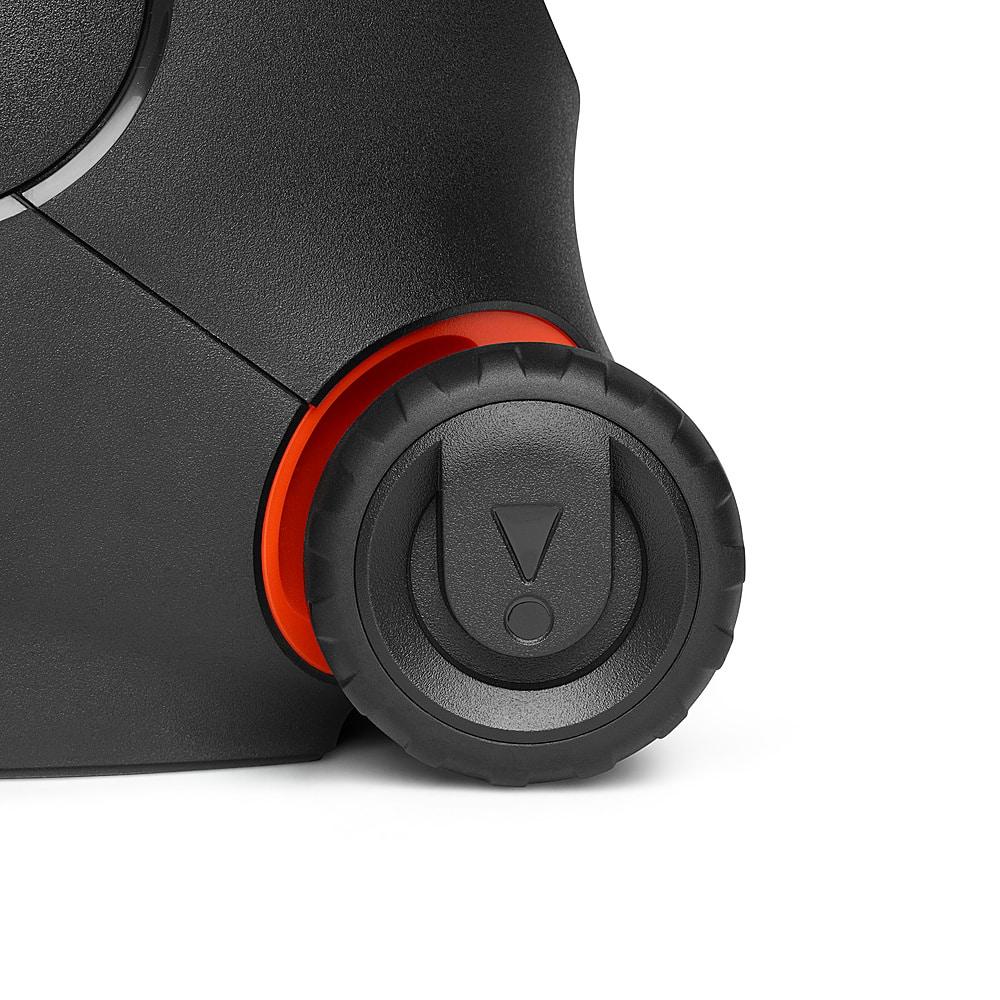
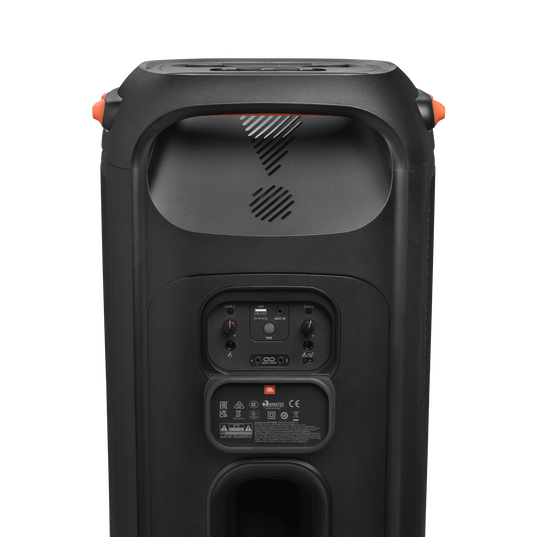
The JBL does include wheels and a telescoping handle, making it surprisingly mobile for a 61-pound speaker. The Samsung, while lighter at 28 pounds, lacks wheels and relies on a traditional handle design. In our assessment, the JBL is actually easier to transport over longer distances despite its weight.
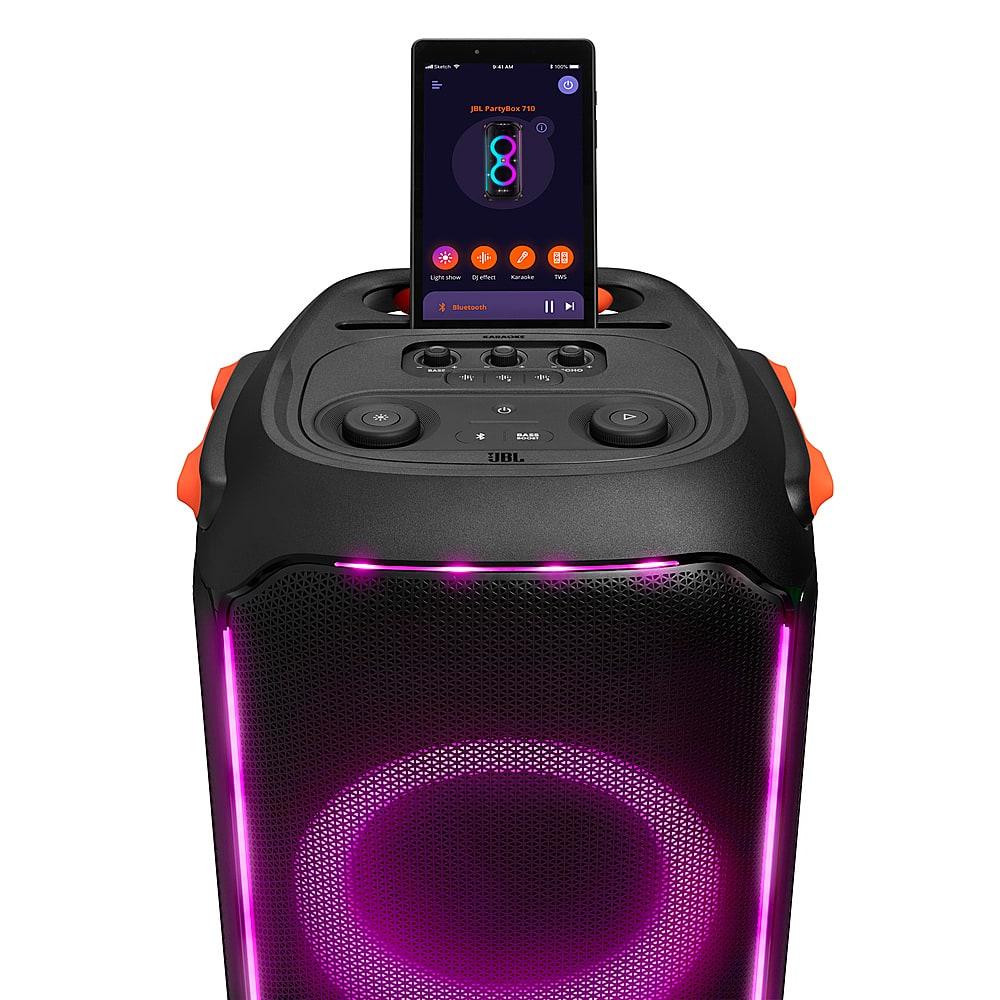
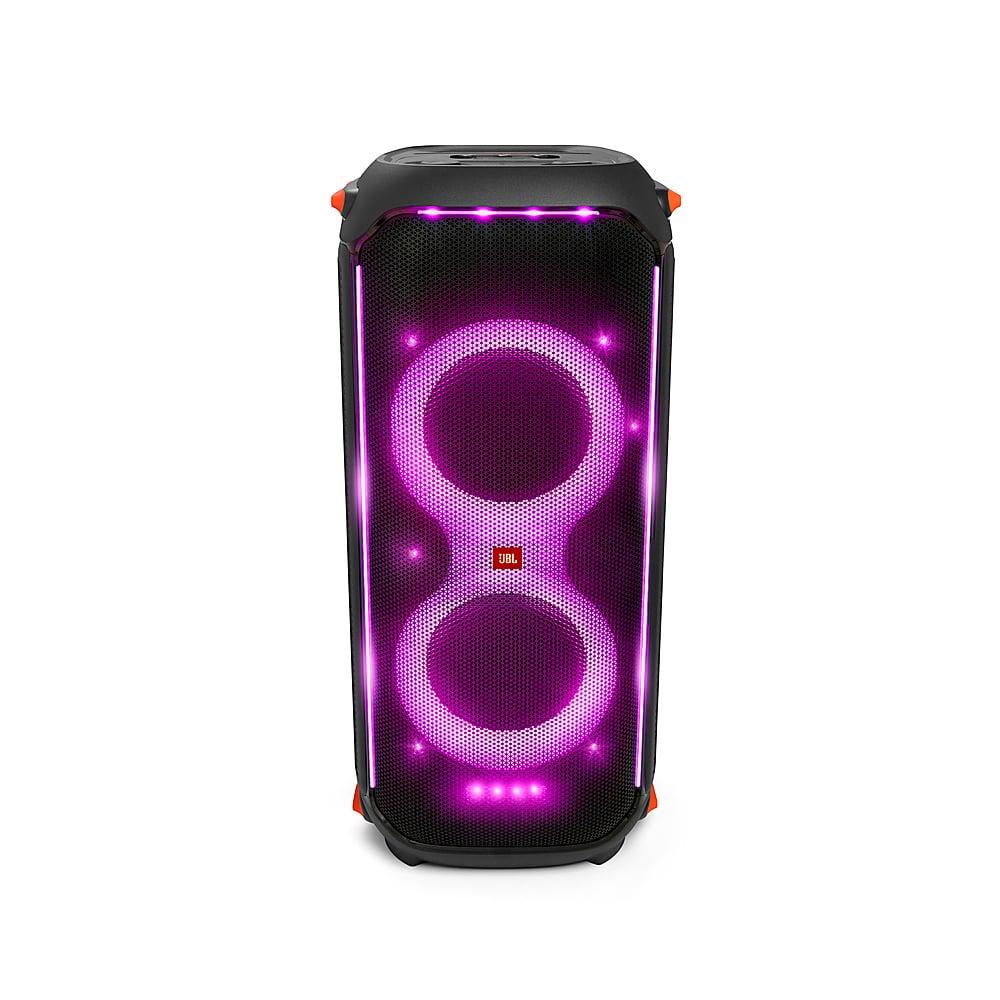
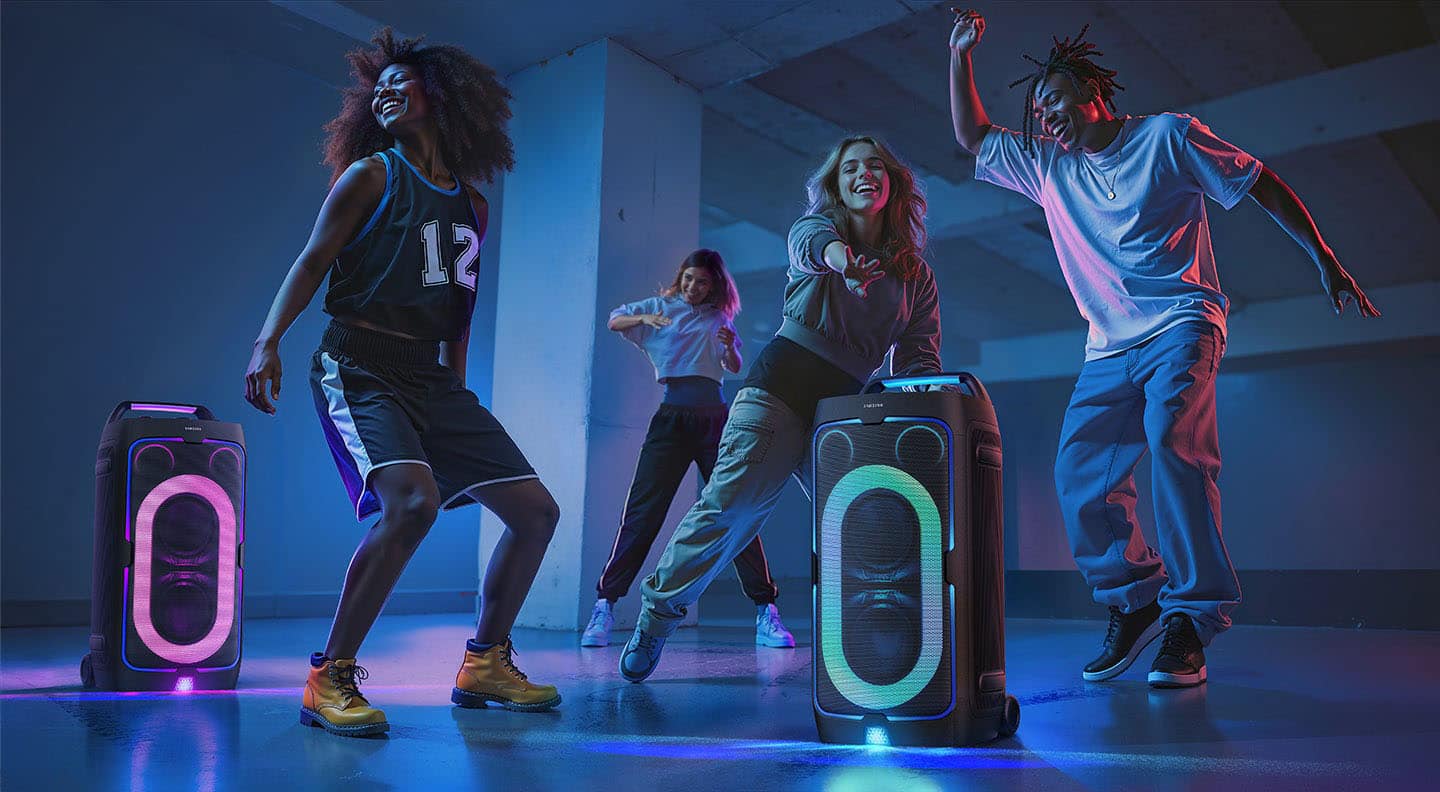
Both speakers recognize that modern party audio isn't just about sound—visual entertainment has become equally important. The JBL PartyBox 710 offers a sophisticated lighting system with multiple zones of LED arrays. The lights wrap around the woofers and extend down the speaker grilles, creating an immersive visual experience that responds dynamically to different music elements.
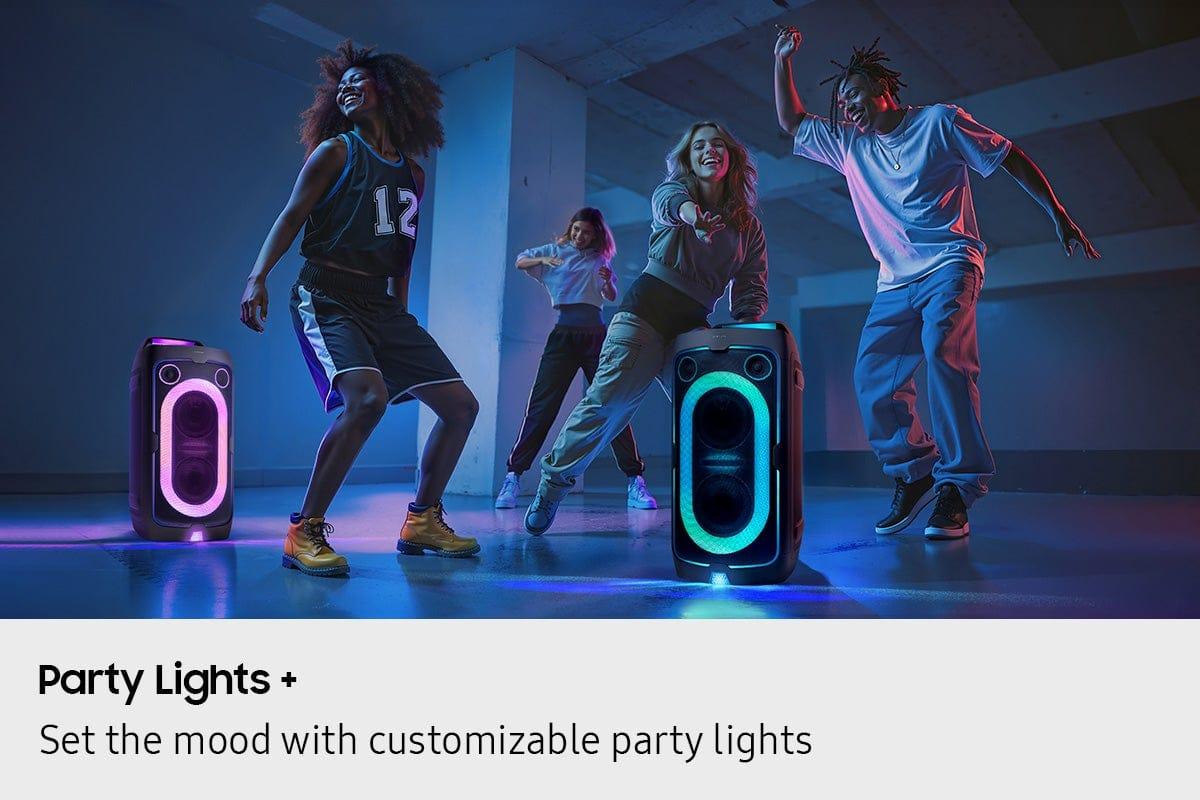
The Samsung MX-ST40F includes its "Party Lights+" system with six customizable patterns and five mood presets. While less elaborate than the JBL's implementation, Samsung's system offers more user control through their mobile app, including the ability to sync lights with music beat detection.
For most users, both lighting systems provide adequate party atmosphere enhancement. The JBL creates a more professional, club-like experience, while the Samsung offers more personalization options.
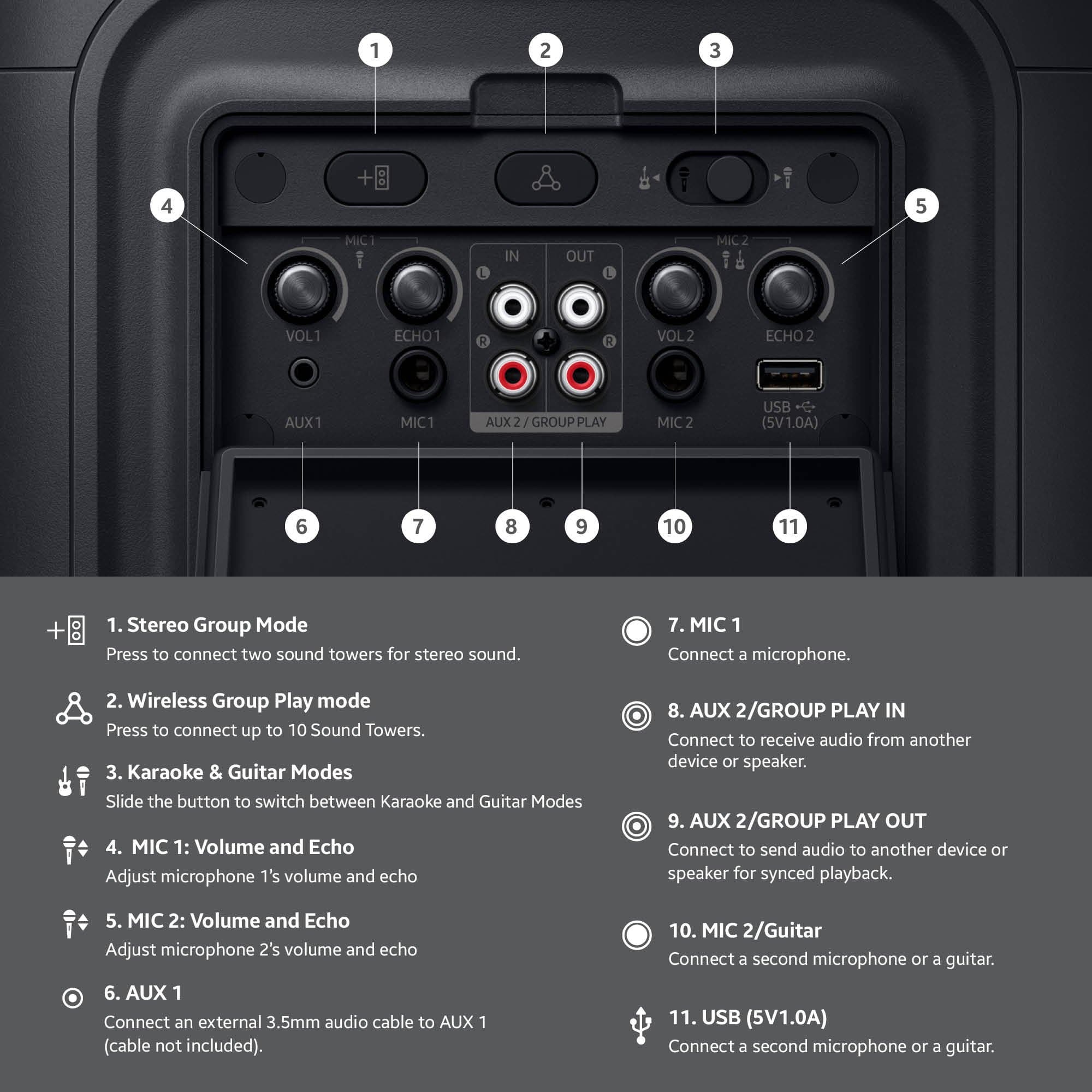
This is where the newer Samsung MX-ST40F shows its 2024 design advantages. Samsung includes "Auracast" technology, which allows wireless connection of up to 10 speakers for massive synchronized sound systems. The speaker also supports simultaneous connection to two Bluetooth devices, making DJ transitions seamless.
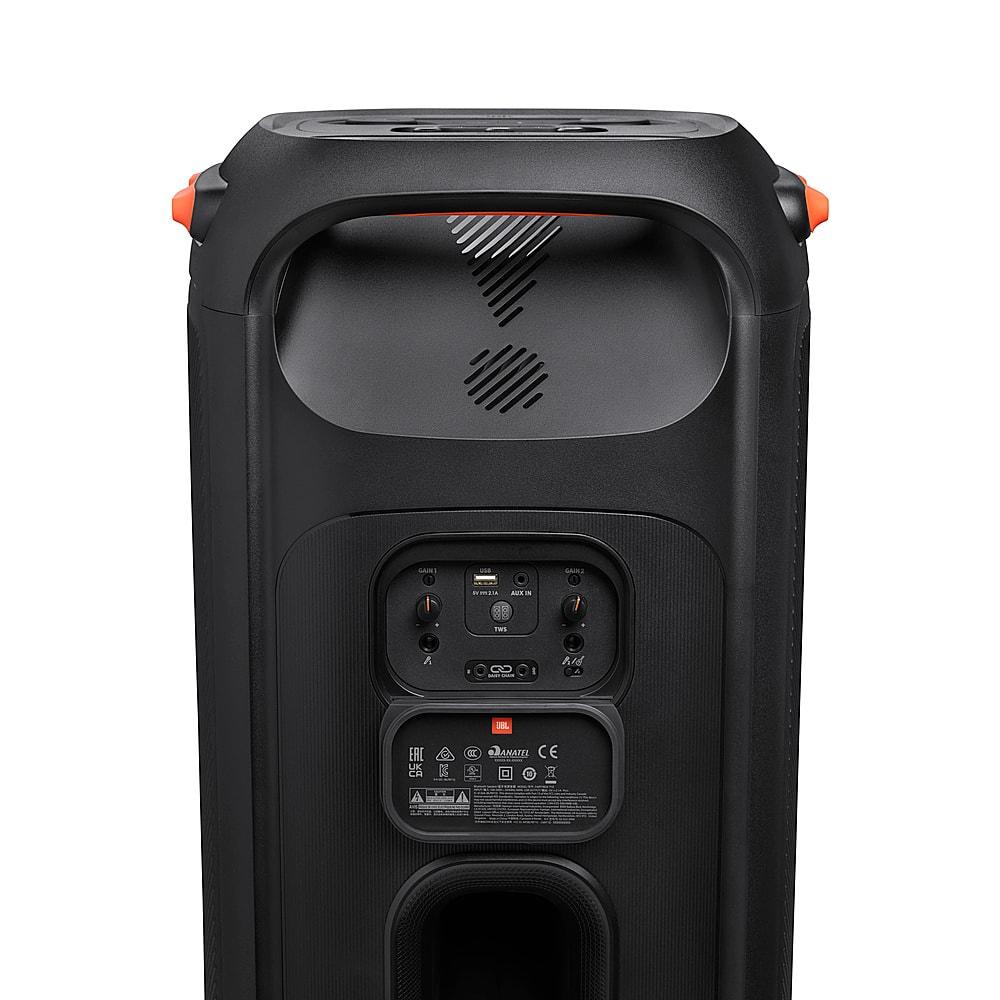
The JBL PartyBox 710 provides True Wireless Stereo (TWS) pairing between two identical units and traditional wired daisy-chaining. While less flashy than Samsung's approach, JBL's method proves more reliable in practice, according to user feedback we've analyzed.
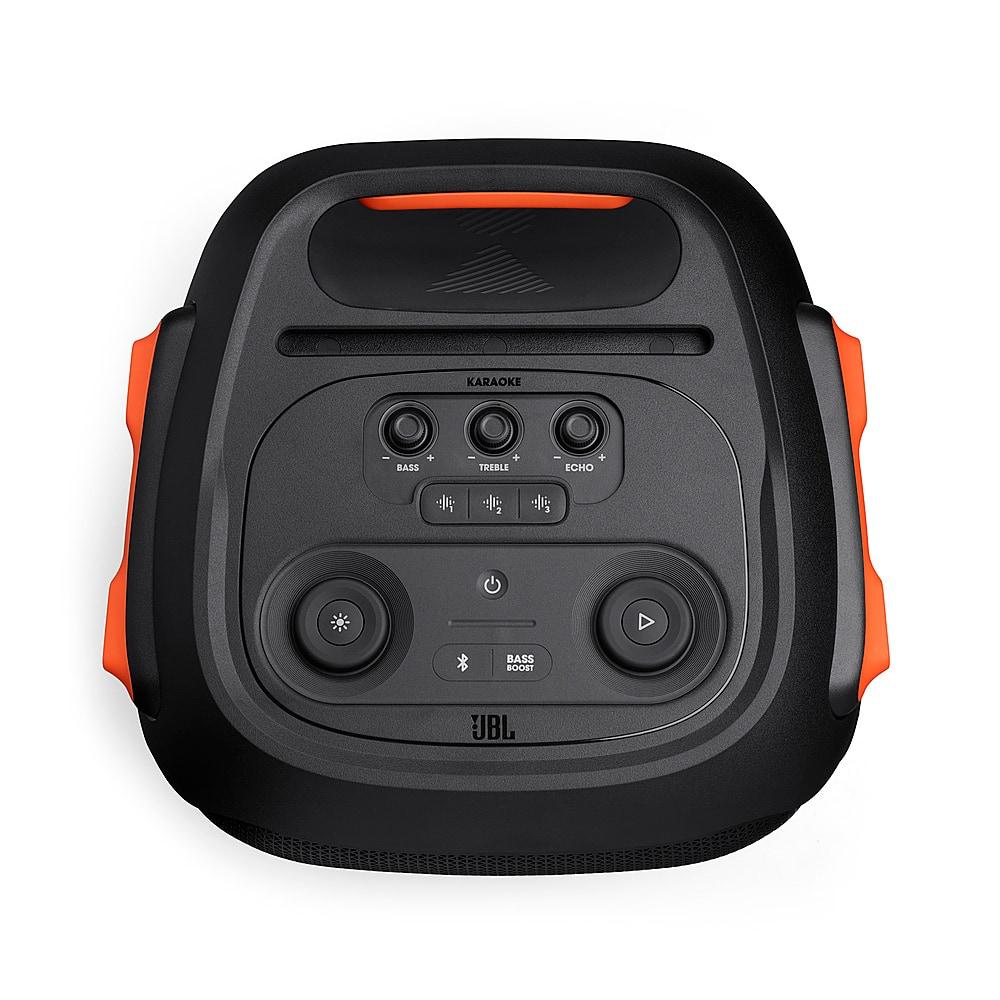
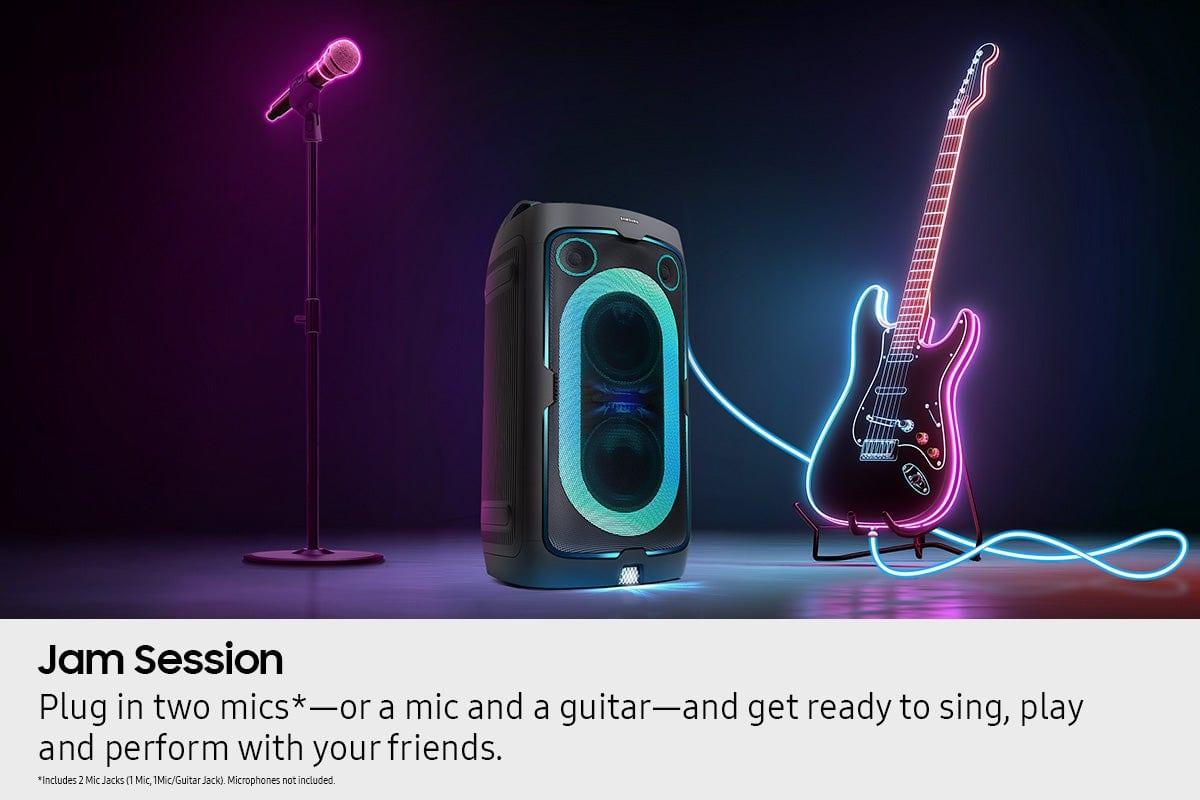
Both speakers include microphone and guitar inputs for karaoke and live performance, but they take different approaches. The JBL focuses on audio quality with independent EQ controls for vocals, while the Samsung emphasizes fun features like voice recording and effect sampling.
At the time of writing, the price difference between these speakers is substantial—the JBL PartyBox 710 costs roughly 2.5 times more than the Samsung MX-ST40F. This creates two very different value propositions.
The Samsung offers remarkable feature density for its price point. You get battery operation, modern connectivity, customizable lighting, and adequate sound quality for casual entertaining. It's particularly appealing for users who prioritize convenience and modern features over absolute audio performance.
The JBL justifies its premium pricing through superior audio performance, build quality, and long-term durability. For serious entertainers or audio enthusiasts, the performance difference is worth the investment. It's the kind of speaker you buy once and use for years.
While neither speaker is primarily designed for home theater use, both can serve this role with limitations. The JBL PartyBox 710 provides sufficient power and clarity for movie watching, though its forward-firing design means optimal placement is critical. The lack of surround sound processing and dialogue-specific tuning makes it less ideal than dedicated home theater speakers.
The Samsung MX-ST40F's omnidirectional tower design actually works better for some home theater scenarios, providing more even sound distribution throughout a room. However, its smaller drivers limit dynamic range for action movie soundtracks.
Both speakers suffer from party-oriented tuning that emphasizes bass and energy over the balanced response preferred for movie dialogue and subtle sound effects. They're best viewed as occasional home theater solutions rather than primary systems.
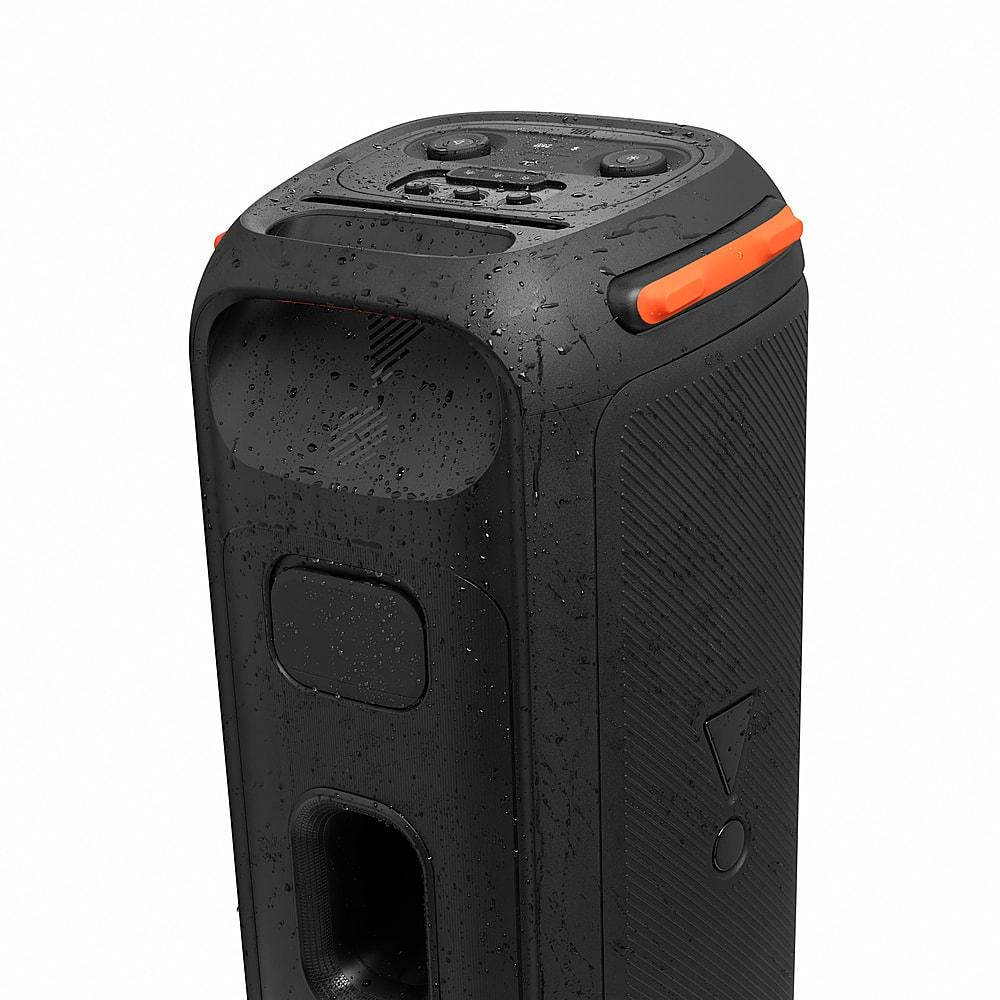
Both speakers feature IPX4 splashproof ratings, meaning they can handle rain, pool splashes, and accidental spills. However, they're not fully waterproof—don't submerge either one.
Build quality represents another area where the price difference shows. The JBL PartyBox 710 feels substantially more robust, with heavier construction and premium materials throughout. The Samsung MX-ST40F uses lighter materials that feel adequate but not exceptional.
For users planning heavy outdoor use or frequent transport, the JBL's superior build quality becomes a long-term value factor. The Samsung should handle typical party use without issues but may show wear more quickly with heavy use.
After extensive research and evaluation, clear usage scenarios emerge for each speaker:
Choose the JBL PartyBox 710 if:
Choose the Samsung MX-ST40F if:
These speakers represent fundamentally different approaches to party audio. The JBL PartyBox 710 is an uncompromising performance machine that happens to be portable, while the Samsung MX-ST40F is a portable speaker that happens to deliver impressive performance.
In our evaluation, the JBL creates genuinely memorable party experiences through its superior audio performance, particularly in bass reproduction and maximum clean volume. It's the speaker that makes guests ask "what speaker is that?" and creates the visceral excitement that defines great parties.
The Samsung offers excellent value and modern convenience, with features that many users will appreciate daily. It's perfectly capable of energizing smaller gatherings and offers the flexibility of battery operation that the JBL lacks.
Ultimately, your choice comes down to priorities: performance vs. convenience, premium audio vs. modern features, and investment vs. value shopping. Both speakers succeed in their intended roles—you just need to decide which role better matches your party aspirations.
| JBL PartyBox 710 | Samsung MX-ST40F |
|---|---|
| Power Output - Determines maximum volume and bass impact | |
| 800W RMS (consistent high-power performance) | 160W AC / 80W battery (adequate for smaller gatherings) |
| Driver Configuration - Affects sound quality and bass depth | |
| Dual 8" woofers + dual 2.75" tweeters (superior bass extension) | Dual 5.25" woofers + dual tweeters (more compact but less bass impact) |
| Power Source - Impacts portability vs performance trade-offs | |
| AC power only (requires outlet but maintains full power) | Built-in battery (12 hours runtime, truly portable) |
| Weight and Mobility - How easy it is to transport | |
| 61 lbs with wheels and telescoping handle (heavy but rollable) | 28 lbs with handles only (lighter but no wheels) |
| Maximum Volume - Critical for large spaces and outdoor use | |
| 112.6 dB (maintains clarity at maximum volume) | 113.3 dB (adequate but shows strain when pushed hard) |
| Frequency Response - Determines bass depth and overall sound quality | |
| 35Hz-20kHz (deep, physical bass you can feel) | Not specified (smaller drivers limit low-end extension) |
| Weather Resistance - Important for outdoor parties | |
| IPX4 splashproof (handles rain and pool splashes) | IPX4 splashproof (same protection level) |
| Lighting System - Enhances party atmosphere | |
| Multi-zone LED arrays with advanced synchronization | Party Lights+ with 6 patterns and app control |
| Connectivity Features - Affects versatility and modern convenience | |
| TWS pairing, mic/guitar inputs, USB charging | Auracast (10 speaker linking), dual Bluetooth, voice recording |
| Release Date and Technology Generation | |
| 2022 (mature JBL party speaker technology) | 2024 (latest Samsung audio innovations) |
| Build Quality - Impacts long-term durability | |
| Premium construction with robust materials | Lighter construction optimized for portability |
| Best Use Cases - Who should consider each option | |
| Large gatherings, audiophiles, power-accessible venues | Smaller parties, budget-conscious buyers, battery-dependent scenarios |
The JBL PartyBox 710 and Samsung MX-ST40F both reach similar maximum volumes around 112-113 dB, but the JBL PartyBox 710 maintains better sound quality at maximum volume due to its more powerful 800W amplification and larger drivers.
No, the JBL PartyBox 710 delivers significantly deeper and more impactful bass thanks to its dual 8-inch woofers compared to the Samsung MX-ST40F's smaller 5.25-inch drivers. The JBL reaches down to 35Hz for that physical bass sensation you can feel.
The Samsung MX-ST40F is more portable due to its built-in 12-hour battery and lighter 28-pound weight. The JBL PartyBox 710 requires AC power but includes wheels and a handle, making it easier to transport despite being heavier at 61 pounds.
Yes, both the JBL PartyBox 710 and Samsung MX-ST40F support karaoke with microphone inputs. The Samsung MX-ST40F offers more karaoke-specific features like voice recording and voice removal, while the JBL PartyBox 710 focuses on superior audio quality for vocals.
The JBL PartyBox 710 features more advanced multi-zone LED lighting that wraps around the woofers and down the grilles. The Samsung MX-ST40F offers Party Lights+ with six customizable patterns, providing more user control through its mobile app.
Neither speaker is specifically designed for home theater, but the JBL PartyBox 710 can work for casual movie watching due to its powerful output and clarity. Both lack proper surround sound processing and dialogue optimization that dedicated home theater speakers provide.
The Samsung MX-ST40F can connect to two Bluetooth devices simultaneously for seamless transitions. The JBL PartyBox 710 connects to one device at a time but offers more reliable connectivity overall based on user feedback.
The Samsung MX-ST40F provides excellent value with battery operation, modern features, and adequate sound quality at a lower price point. The JBL PartyBox 710 justifies its premium pricing through superior audio performance and build quality for serious audio enthusiasts.
Yes, both speakers support multi-speaker setups. The Samsung MX-ST40F uses Auracast technology to wirelessly connect up to 10 speakers, while the JBL PartyBox 710 offers True Wireless Stereo pairing between two identical units or wired daisy-chaining.
The JBL PartyBox 710 excels with electronic music due to its superior bass extension down to 35Hz and powerful 800W output. The larger 8-inch woofers create the physical bass impact that makes EDM and hip-hop truly engaging at parties.
Both the JBL PartyBox 710 and Samsung MX-ST40F feature IPX4 splashproof ratings, protecting against rain and pool splashes from any direction. Neither is fully waterproof, so avoid submerging them in water.
The JBL PartyBox 710 is superior for large outdoor gatherings with 30+ people due to its 800W power output and deeper bass that can compete with ambient noise. The Samsung MX-ST40F works better for smaller groups of 15-30 people in most outdoor scenarios.
We've done our best to create useful and informative comparisons to help you decide what product to buy. Our research uses advanced automated methods to create this comparison and perfection is not possible - please contact us for corrections or questions. These are the sites we've researched in the creation of this article: rtings.com - audioadvice.com - crutchfield.com - youtube.com - bestbuy.com - rtings.com - youtube.com - youtube.com - youtube.com - versus.com - worldwidestereo.com - rtings.com - jbl.com - youtube.com - expertvoice.com - jbl.com - jbl.com.tw - robot-advance.com - youtube.com - hu.harmanaudio.com - onward.ph - harmanaudio.in - youtube.com - youtube.com - manuals.plus - global.jbl.com - de.jbl.com - ro.harmanaudio.com - samsung.com - samsung.com - youtube.com - samsung.com - youtube.com - thefrogpadappliances.com - bestbuy.com - standardtvandappliance.com - samsung.com - youtube.com - youtube.com - youtube.com - news.samsung.com - videoandaudiocenter.com - arrowassociatedstores.com - shopjetson.com

Privacy Policy
Terms and Conditions - Affiliate Policy
Home Security
© Copyright 2008-2026.
11816 Inwood Rd #1211, Dallas, TX 75244