

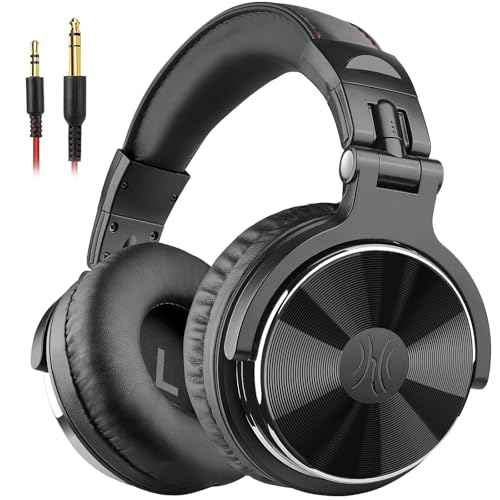





When OneOdio released both the Pro-10 wired studio headphones around 2020 and the A10 wireless ANC headphones in 2022-2023, they created two very different tools for two very different jobs. While both sit on your head and play music, that's about where the similarities end. Think of it like comparing a professional chef's knife to a Swiss Army knife—both cut things, but they're designed for completely different purposes.
The headphone world has split into distinct camps over the past decade. On one side, you have traditional wired headphones that prioritize pure audio quality and professional features. On the other, there's the newer breed of wireless headphones packed with smart features like active noise cancellation (ANC) and Bluetooth connectivity. The OneOdio Pro-10 represents the traditional approach, while the A10 embraces the modern wireless lifestyle.
This fundamental difference shapes everything about these headphones—from how they sound to how you use them daily. The Pro-10 asks you to plug in a cable but rewards you with larger drivers and more accurate sound. The A10 cuts the cord but adds digital processing that can color the audio. Neither approach is inherently better; it depends entirely on what you need.
At the time of writing, both headphones fall into the budget-friendly category, with the Pro-10 typically costing significantly less than the A10. However, you're not just paying more for wireless convenience—you're buying into an entirely different philosophy of how headphones should work.
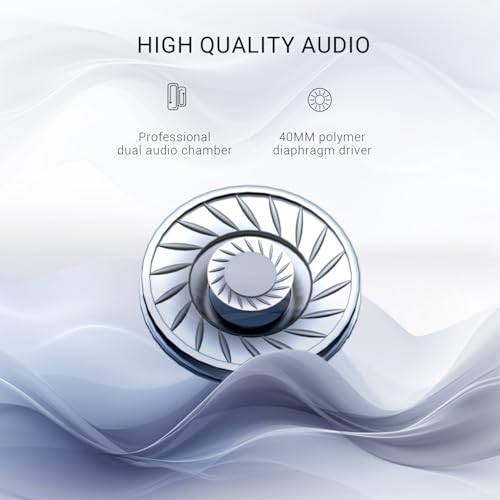
The most fundamental difference between these headphones starts with their drivers—the tiny speakers inside each ear cup that create the sound you hear. The Pro-10 packs larger 50mm neodymium drivers, while the A10 uses smaller 40mm dynamic drivers. In the audio world, larger drivers generally mean more powerful bass response and better overall dynamics, which is why studio monitors and high-end headphones often use bigger drivers.
Neodymium is a type of rare-earth magnet material that's particularly strong for its size. This allows headphone manufacturers to create more efficient drivers that can produce louder, cleaner sound with less power. The Pro-10's 50mm neodymium drivers can handle up to 1600mW of power—that's enough to get seriously loud without distorting, which is crucial for DJs who need to hear their music over club noise.
The A10's 40mm drivers are more typical for consumer wireless headphones. While smaller, they're optimized for efficiency since they need to run off battery power. The trade-off is usually less impactful bass and reduced overall dynamic range, though the difference isn't always dramatic in real-world listening.
Here's where things get technical, but it's worth understanding because these specifications directly affect how your headphones sound. Impedance, measured in ohms, tells you how much electrical resistance the headphones present to your audio source. The Pro-10 has a 32-ohm impedance, which is considered relatively low and easy to drive—meaning they'll get plenty loud from smartphones, laptops, or professional audio equipment.
Sensitivity measures how loud headphones get for a given amount of power, expressed in decibels per milliwatt (dB/mW). The Pro-10 boasts 110dB sensitivity, which is quite high. This means they'll get very loud very easily, making them suitable for use with everything from phones to professional mixing boards. High sensitivity also usually correlates with better detail retrieval at lower volumes.
The A10 doesn't publish these specifications, which is common for consumer wireless headphones since they have built-in amplification. The internal amplifier is designed to drive the 40mm drivers optimally, removing the guesswork for users.
Despite being marketed for DJs, the Pro-10 surprised many reviewers with its relatively balanced sound signature. Most "DJ headphones" are heavily bass-emphasized to help DJs feel the beat over loud ambient noise. The Pro-10 takes a more nuanced approach, delivering what many describe as a mild V-shaped response—slightly emphasized bass and treble with clear, present mids.
This tuning philosophy makes sense when you consider that DJs need to actually hear all elements of a track, not just thump along to the bass. The larger 50mm drivers provide controlled, impactful bass that doesn't overwhelm the midrange where vocals and most instruments live. Treble is present and detailed without being harsh, which is crucial for long mixing sessions.
For home theater use, the Pro-10 excels at dialogue clarity thanks to its forward midrange. Movie soundtracks benefit from the controlled bass response—you get the impact of explosions and music without losing the subtle details that make films engaging. The closed-back design also prevents sound leakage, so you won't disturb others during late-night viewing sessions.
The A10 takes the opposite approach, embracing a more pronounced V-shaped signature that emphasizes excitement over accuracy. This tuning style is popular in consumer headphones because it makes music sound immediately impressive—the bass hits harder, and the treble sparkles more. However, this comes at the cost of midrange clarity and overall balance.
The heavy bass emphasis can make the A10 sound muddy with complex music, and the recessed mids mean vocals often sound distant or veiled. This is common in budget wireless headphones, where manufacturers prioritize an "exciting" sound over accuracy. For casual listening to pop, hip-hop, or electronic music, many users actually prefer this tuning.
In a home theater context, the A10's sound signature becomes problematic. Dialog clarity suffers due to the recessed midrange, and the emphasized bass can become boomy and fatiguing during long movie sessions. However, the wireless convenience and ANC can make it worthwhile for personal viewing where you don't want to disturb others.
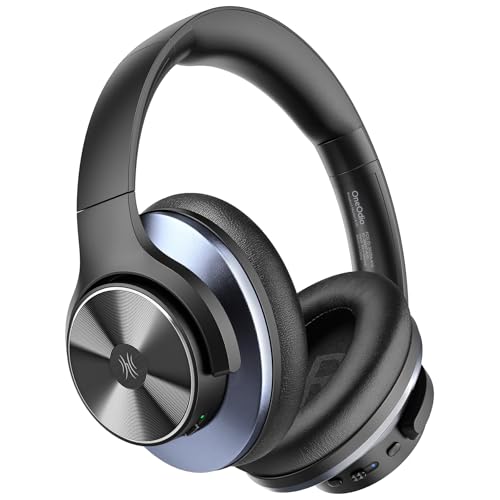
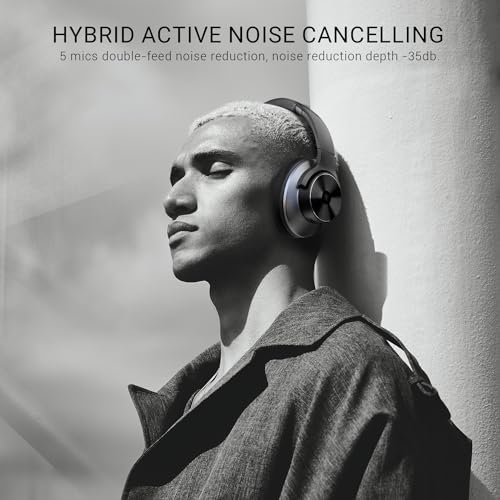
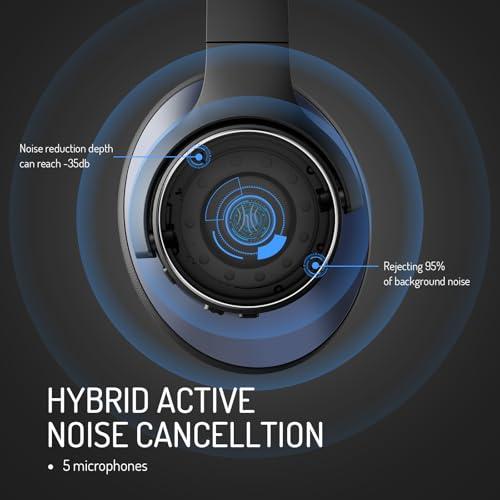
The A10 features what's called "hybrid" active noise cancellation, which uses both feedforward and feedback microphones to cancel noise. Here's how it works: feedforward microphones on the outside of the ear cups pick up ambient noise before it reaches your ears, while feedback microphones inside measure what noise actually makes it through. The headphones then generate "anti-noise"—sound waves that are exactly opposite to the incoming noise, effectively canceling it out.
The "hybrid" designation means the A10 uses both types of microphones simultaneously, which theoretically provides better noise cancellation across a wider frequency range. OneOdio claims up to 35dB of noise reduction, which is respectable for headphones in this price range, though not quite matching premium models from Sony or Bose.
In practice, the A10's ANC works best on low-frequency, consistent sounds like airplane engines, air conditioning, or traffic noise. It's less effective against sudden, high-frequency sounds like voices or keyboard clicks. The ANC also slightly colors the sound signature—a common side effect as the noise cancellation circuitry can interact with the audio signal.
The Pro-10, being a passive design, relies entirely on physical isolation to block outside noise. The closed-back design and over-ear fit provide decent isolation, though nothing like active cancellation. However, there's no electronic processing affecting the sound quality.
One clever feature of the A10 is its transparency mode, which uses the same microphones as the ANC system but in reverse—amplifying outside sounds instead of canceling them. This lets you hear announcements, have conversations, or stay aware of your surroundings without removing the headphones. It's particularly useful for commuting or office use.
The implementation is decent for the price point, though voices can sound slightly artificial and the feature doesn't let in quite as much ambient sound as premium alternatives. Still, it's a genuinely useful feature that adds versatility to the A10.
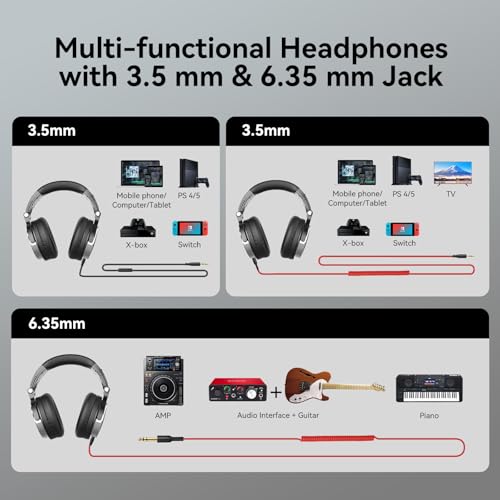
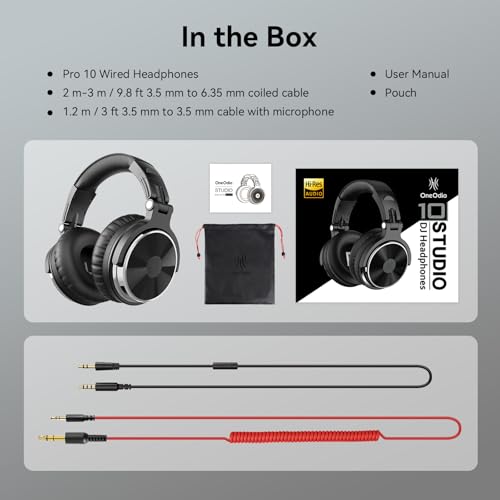
The Pro-10 shines in its connectivity options, featuring both 3.5mm and 6.35mm inputs on each ear cup. This dual-port system means you can plug directly into professional audio equipment like mixing boards, audio interfaces, or instruments without adapters. The 6.35mm jack is standard on most professional gear, while the 3.5mm works with consumer devices.
Even more interesting is the SharePort feature—you can daisy-chain multiple headphones by plugging another pair into the second port on the Pro-10. This is incredibly useful in studio situations where multiple people need to monitor the same audio source.
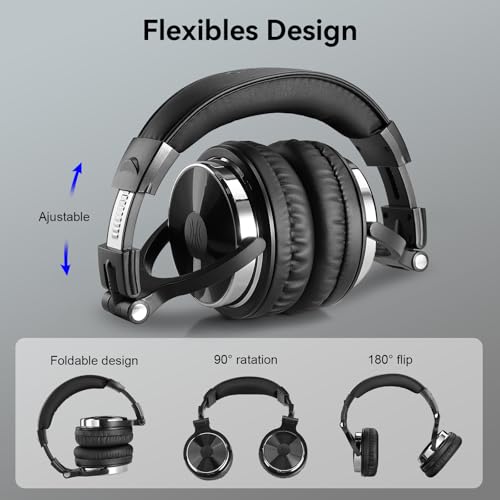
The 90-degree swiveling ear cups are another professional touch, allowing DJs to monitor with one ear while keeping the other free to hear the room or communicate with others. This might seem like a niche feature, but it's surprisingly useful even for home listening when you need to stay aware of your surroundings.
The A10 embraces modern wireless connectivity with Bluetooth 5.0, offering about 33 feet of range and support for multiple audio codecs. SBC is the basic Bluetooth audio codec that works with everything, while AAC provides better quality with Apple devices. Some versions also support aptX for improved quality with compatible Android devices and computers.
The multipoint connectivity feature lets the A10 stay connected to two devices simultaneously—say, your laptop and phone. This means you can listen to music from your computer while automatically taking calls from your phone without manual switching. It's one of those features you don't realize you need until you have it.
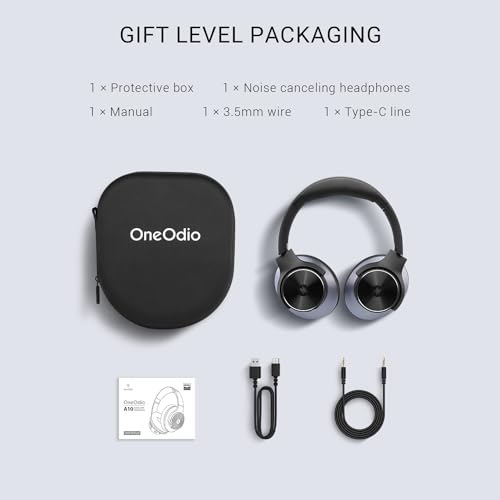
The A10 also maintains wired connectivity as a backup option, though you'll need to keep the headphones charged to use ANC or transparency mode in wired mode. This hybrid approach provides flexibility but adds complexity compared to the Pro-10's simple, always-ready operation.
One area where the A10 truly excels is battery life. OneOdio claims up to 62 hours with ANC only, 50 hours with Bluetooth only, and 40-45 hours with both ANC and Bluetooth active. These numbers are exceptional for any wireless headphones, let alone budget models. The quick-charge feature—5 minutes for 2 hours of playback—means you're rarely stuck with dead headphones.
This massive battery life transforms how you use the headphones. You can essentially forget about charging for weeks of regular use, making them ideal for travel or daily commuting. The 800mAh battery capacity is larger than many phones, explaining the impressive runtime.
The Pro-10 sidesteps battery concerns entirely by being purely passive. They're always ready to use, never need charging, and won't become obsolete when their battery eventually dies. This simplicity has real value—there's something refreshing about audio gear that just works without digital complexity.
For studio use or critical listening, the lack of digital processing means the Pro-10 provides a more direct connection between your source and your ears. No DSP, no compression artifacts from wireless transmission, no battery anxiety—just pure analog audio reproduction.
Both headphones prioritize comfort but take different approaches. The Pro-10 uses a lightweight design optimized for long studio sessions, though some users find the ear cup openings smaller than expected given the 50mm drivers. The build quality is solid for the price, with no reports of brittleness or early failures.
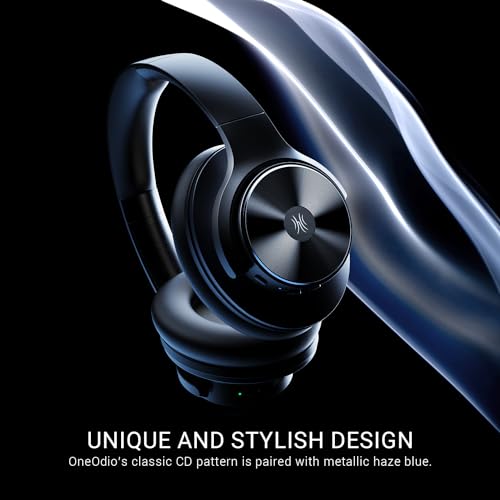
The A10 invests more heavily in comfort materials, using memory foam ear pads and protein leather that feels more premium. The 295-gram weight is reasonable for wireless ANC headphones, and the foldable design makes them travel-friendly. The comfort advantage goes to the A10 for most users, though ear shape and size preferences vary widely.
The Pro-10 makes the most sense if sound quality is your primary concern. The larger drivers, balanced tuning, and lack of digital processing provide better audio fidelity than the A10. They're perfect for critical listening, studio work, or home theater applications where dialogue clarity matters.
They're also ideal if you prefer the simplicity of wired operation or work with professional audio equipment that benefits from the dual-port connectivity. The SharePort feature adds unique functionality for collaborative listening or teaching situations.
The A10 wins if wireless convenience, active noise cancellation, or exceptional battery life top your priority list. Despite the compromised sound quality, the feature set justifies the higher price for users who value modern amenities over audiophile accuracy.
They're particularly compelling for commuters, frequent travelers, or office workers who benefit from ANC and multipoint connectivity. The transparency mode and long battery life make them excellent daily drivers for users who want one pair of headphones for all situations.
These headphones serve fundamentally different needs, and both succeed in their intended roles. The Pro-10 delivers exceptional audio value for users who can live with wires, while the A10 provides modern convenience with acceptable compromises. Your choice should align with whether you prioritize audio accuracy or lifestyle integration—both approaches have merit in today's diverse audio landscape.
| OneOdio Pro-10 Over Ear Wired Headphones | OneOdio A10 Hybrid Active Noise Cancelling Headphones |
|---|---|
| Driver Size - Larger drivers typically provide better bass response and dynamics | |
| 50mm neodymium drivers (excellent for powerful, controlled sound) | 40mm dynamic drivers (standard for wireless headphones) |
| Connectivity - Determines compatibility and convenience | |
| Wired only with dual 3.5mm/6.35mm ports (professional equipment compatible) | Bluetooth 5.0 + wired backup (modern convenience with fallback option) |
| Active Noise Cancellation - Essential for travel and noisy environments | |
| None (passive isolation only) | Hybrid ANC with up to -35dB reduction (effective for consistent low-frequency noise) |
| Battery Life - Critical for wireless headphones | |
| No battery required (always ready to use) | Up to 50 hours Bluetooth, 62 hours ANC only (exceptional endurance) |
| Sound Signature - Affects music enjoyment and accuracy | |
| Balanced with mild V-shape (suitable for monitoring and critical listening) | Heavy V-shaped emphasis (exciting but less accurate) |
| Weight and Portability - Important for comfort and travel | |
| Lightweight wired design | 295g with foldable design and carrying case |
| Professional Features - Valuable for studio work and DJing | |
| 90° swiveling earcups, SharePort daisy-chaining, dual cables included | Transparency mode, multipoint pairing, physical ANC controls |
| Impedance and Sensitivity - Affects how loud they get from different devices | |
| 32 Ohms, 110dB sensitivity (easy to drive from any source) | Built-in amplification (optimized for internal battery power) |
| Frequency Response - Shows audio range capability | |
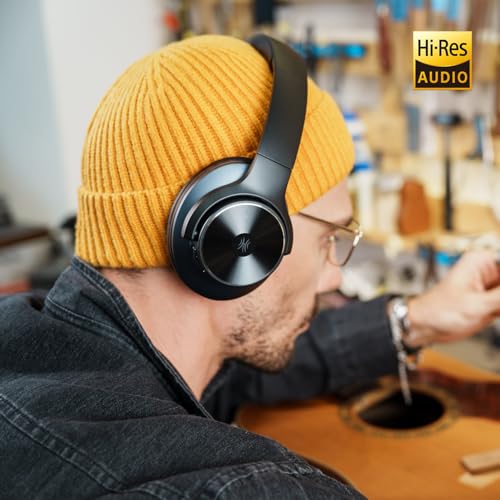
| 20Hz-20kHz (standard human hearing range) | 20Hz-40kHz with Hi-Res certification (wider range on paper) |
| Use Case Focus - Who each product serves best | |
| DJs, studio monitoring, audiophiles, home theater | Commuters, office workers, casual listeners, travelers |
The OneOdio Pro-10 delivers superior sound quality with its larger 50mm neodymium drivers and balanced audio signature. The Pro-10 provides more accurate sound reproduction, better bass control, and clearer midrange compared to the OneOdio A10, which has a heavily emphasized V-shaped sound that can sound muddy with complex music.
If you commute, travel frequently, or work in noisy environments, the OneOdio A10's active noise cancellation is valuable for blocking out consistent background noise like engines and air conditioning. However, if you primarily listen at home or in quiet spaces, the OneOdio Pro-10's passive isolation may be sufficient and won't affect sound quality.
The OneOdio Pro-10 excels for home theater with superior dialogue clarity thanks to its forward midrange and controlled bass response. The Pro-10's wired connection also eliminates any audio delay issues. While the OneOdio A10 offers wireless convenience, its recessed mids can make dialogue harder to understand during movies.
The OneOdio A10 offers exceptional battery life with up to 50 hours of Bluetooth playback and up to 62 hours with ANC only. Quick charging provides 2 hours of playback from just 5 minutes of charging. The OneOdio Pro-10 doesn't need batteries since it's wired, meaning it's always ready to use.
The OneOdio Pro-10 is designed for professional use with dual 3.5mm and 6.35mm ports that connect directly to mixing boards, audio interfaces, and instruments without adapters. The Pro-10 also features SharePort connectivity for daisy-chaining multiple headphones. The OneOdio A10 is primarily consumer-focused but includes a wired backup mode.
The OneOdio A10 generally offers better comfort with ultra-soft protein memory foam ear pads and superior padding. However, the OneOdio Pro-10 is lightweight and designed for extended studio sessions. Comfort preferences vary by individual ear shape and size, but the A10 has the edge for most users.
Both headphones work with smartphones and laptops. The OneOdio A10 connects wirelessly via Bluetooth and can pair with two devices simultaneously. The OneOdio Pro-10 requires a wired connection but includes cables for both consumer (3.5mm) and professional (6.35mm) devices, ensuring broad compatibility.
The OneOdio Pro-10 is specifically designed for DJs with 90-degree swiveling ear cups for single-ear monitoring, professional connectivity options, and a balanced sound signature that reveals all elements of a track. The Pro-10 also offers zero-latency wired connection essential for live mixing, while the OneOdio A10 has wireless delay issues.
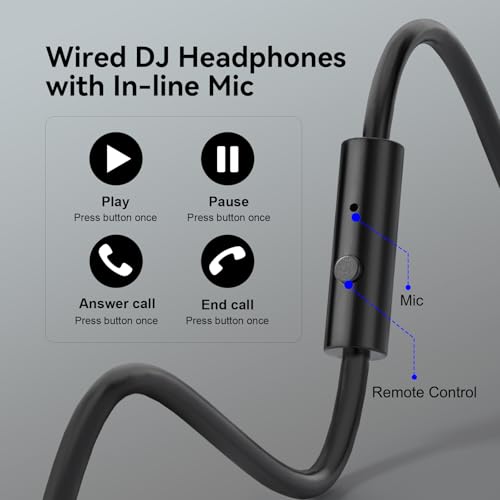
For gaming, the OneOdio Pro-10 provides better positional audio and clarity for competitive gaming, while its wired connection eliminates latency. The OneOdio A10 offers wireless convenience and has a built-in microphone for chat, but the emphasized bass can mask important game audio details that the Pro-10 reveals more clearly.
The OneOdio Pro-10 typically offers exceptional value with professional-grade 50mm drivers and studio features at a budget price. The OneOdio A10 costs more but includes modern features like ANC, wireless connectivity, and exceptional battery life. Value depends on whether you prioritize audio quality (Pro-10) or convenience features (A10).
The OneOdio Pro-10 never needs charging since it's entirely passive and wired. The OneOdio A10 can work in wired mode when the battery dies, but you'll lose ANC and transparency features. For users who want headphones that always work without battery anxiety, the Pro-10 is the reliable choice.
The OneOdio A10 is designed for travel with active noise cancellation, wireless connectivity, foldable design, and a carrying case. The long battery life means fewer charging stops during trips. The OneOdio Pro-10 lacks portability features and ANC, making the A10 the clear winner for travelers despite its higher price.
We've done our best to create useful and informative comparisons to help you decide what product to buy. Our research uses advanced automated methods to create this comparison and perfection is not possible - please contact us for corrections or questions. These are the sites we've researched in the creation of this article: audioreviews.org - youtube.com - attackmagazine.com - versus.com - head-fi.org - versus.com - youtube.com - oneodio.com - youtube.com - youtube.com - walmart.com - teqclub.com - head-fi.org - manuals.plus - terrycartermusicstore.com - oneodio.com - matzotech.com - oneodio.com - target.com - techbuzzireland.com - youtube.com - techbuzzireland.com - creativebloq.com - head-fi.org - homestudiobasics.com - versus.com - androidguys.com - thegadgetflow.com - mbreviews.com - the-gadgeteer.com - newegg.com - howtogeek.com - youtube.com - newegg.com - manuals.plus - majorhifi.com - soundphilereview.com - youtube.com - howtogeek.com - oneodio.com - youtube.com - youtube.com - youtube.com - walmart.com

Privacy Policy
Terms and Conditions - Affiliate Policy
Home Security
© Copyright 2008-2026.
11816 Inwood Rd #1211, Dallas, TX 75244