

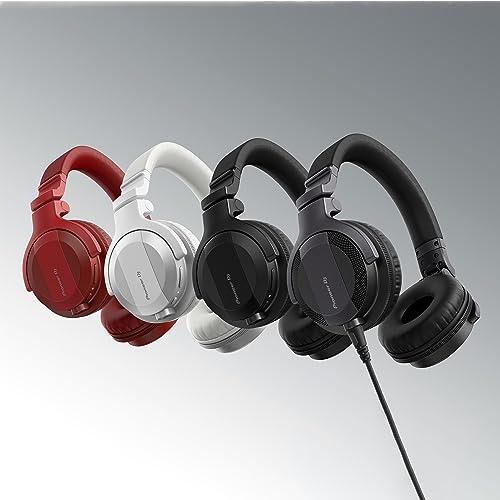



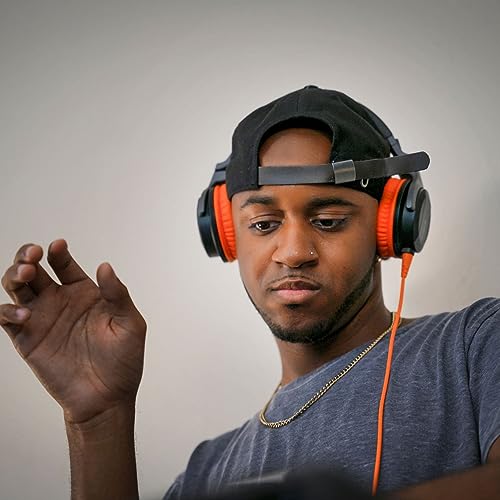




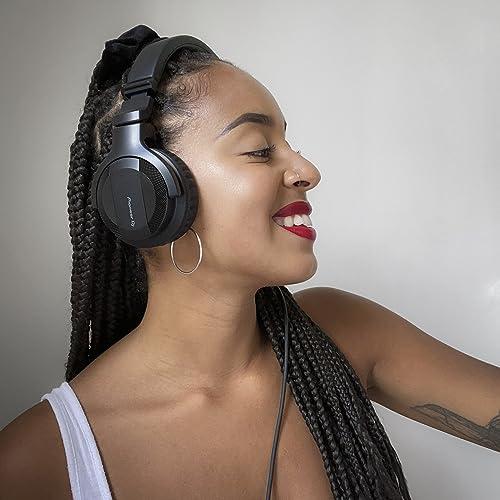
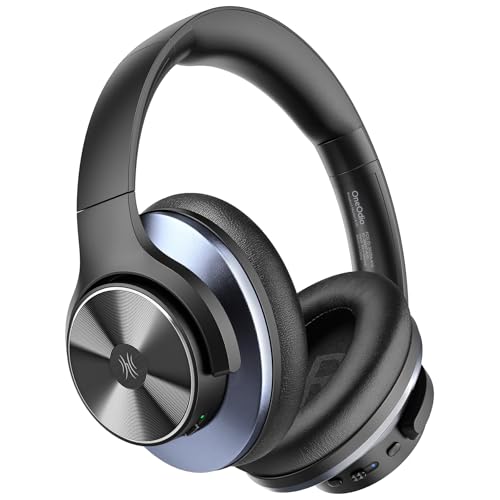
When you walk into a music store or browse online for headphones today, you'll quickly realize that not all headphones are created equal. Some are built for specific purposes, while others try to do everything reasonably well. Today, we're diving deep into two headphones that represent completely different philosophies: the specialized Pioneer DJ HDJ-CUE1 and the versatile OneOdio A10 with active noise cancellation.
Understanding these differences isn't just about specs on paper—it's about finding the right tool for how you actually use headphones. Whether you're spinning tracks in your bedroom, commuting on noisy trains, or just want great sound for movies at home, the choice between these approaches can make or break your audio experience.
The headphone market splits into distinct categories, each optimized for specific use cases. DJ headphones like the Pioneer HDJ-CUE1 are precision instruments designed for music mixing and performance. Think of them as the audio equivalent of a chef's knife—highly specialized, incredibly effective for their intended purpose, but maybe not the best choice for spreading peanut butter.
Released in 2020, the HDJ-CUE1 inherited technology from Pioneer's professional lineup during a time when bedroom DJing was exploding in popularity. This timing wasn't coincidental—Pioneer recognized that many people wanted professional DJ sound quality without the professional price tag.
Consumer ANC headphones like the OneOdio A10 take a completely different approach. They're designed to be your daily driver—the Swiss Army knife of audio that handles everything from Zoom calls to Netflix binges to blocking out airplane noise. The A10 emerged during the recent boom in wireless audio technology, when manufacturers started cramming impressive features into budget-friendly packages.
The fundamental difference comes down to specialization versus versatility. DJ headphones prioritize accuracy, durability, and specific features needed for mixing music. Consumer ANC headphones focus on convenience, comfort, and adapting to different environments throughout your day.
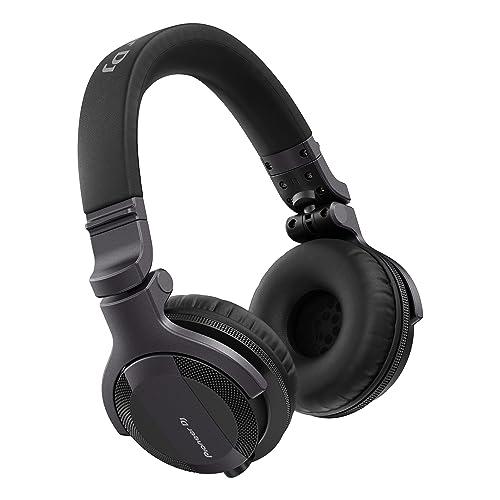
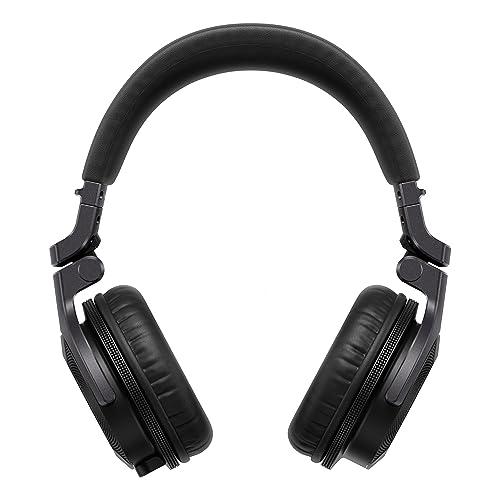
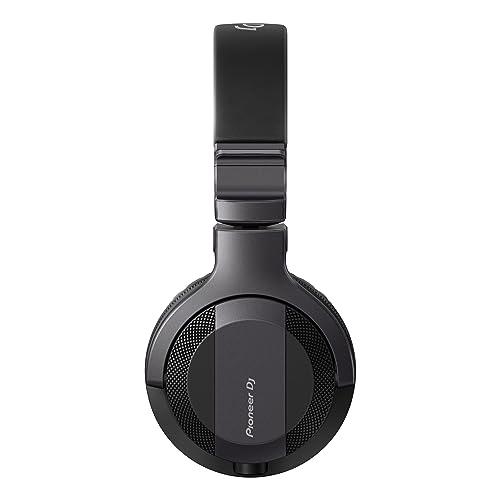
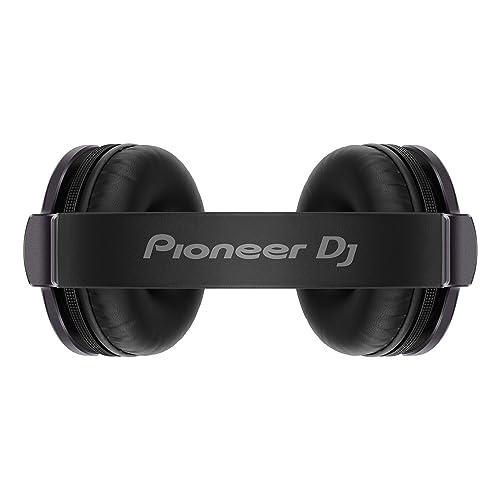
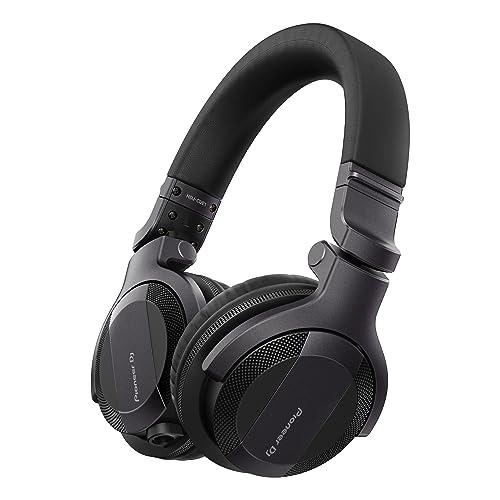
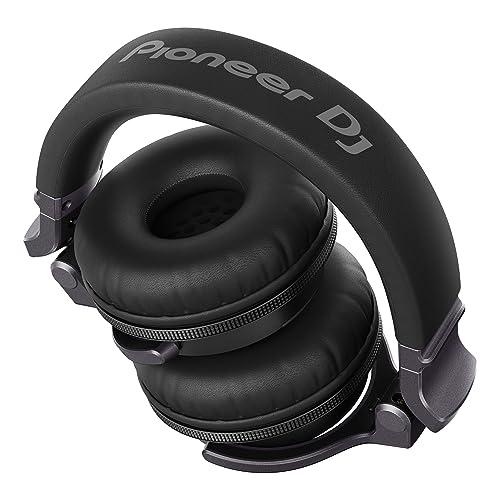
The Pioneer DJ HDJ-CUE1 embodies the "form follows function" principle that defines professional audio gear. Every design choice serves DJ-specific needs. The 90-degree swiveling ear cups aren't just for show—they let you monitor with one ear while keeping the other cup against your head or neck, a fundamental DJ technique called "cueing" where you preview the next track before mixing it in.
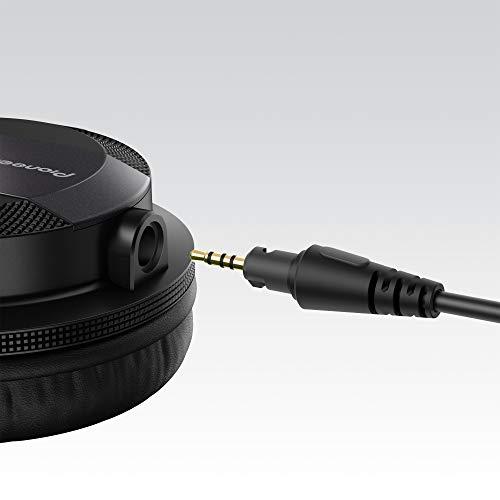
At just 215 grams, these headphones won't fatigue your neck during long mixing sessions. The coiled cable (which stretches from 1.2 meters to 1.8 meters) might look old-fashioned, but it prevents the tangling disasters that plague straight cables when you're moving around a DJ booth. The bayonet connector—basically a twist-lock system—ensures your headphones won't accidentally unplug mid-performance, which would be catastrophic during a live set.
What really sets the HDJ-CUE1 apart is its sound tuning. Pioneer engineers specifically emphasized bass frequencies and kick drums because these elements are crucial for beatmatching—the process of syncing two songs' tempos. When you're trying to match a 128 BPM house track with another song, you need to hear those kick drums clearly to align them perfectly.
The OneOdio A10 takes the opposite approach, prioritizing versatility and modern conveniences. At 308 grams, it's nearly 50% heavier than the Pioneer, but that extra weight comes from batteries, wireless circuitry, and the multiple microphones needed for active noise cancellation (ANC).
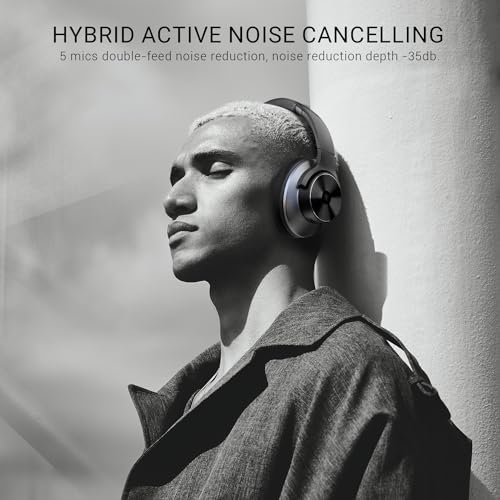
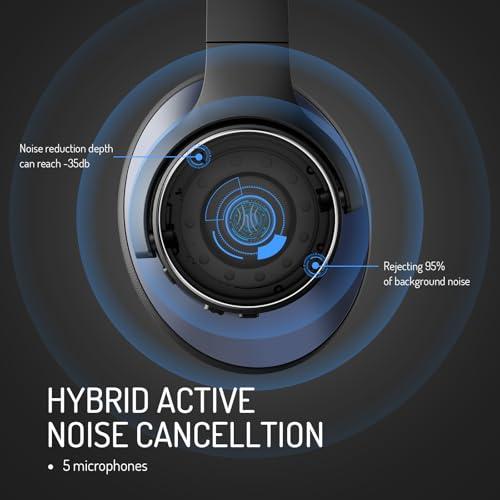
Active noise cancellation works by using microphones to detect ambient sound, then producing "anti-noise"—sound waves that are exactly opposite to the detected noise, effectively canceling it out. The A10's "hybrid" system uses both internal and external microphones for more comprehensive noise reduction, particularly effective against consistent low-frequency sounds like airplane engines or air conditioning units.
The OneOdio A10 also includes transparency mode, which does the opposite of ANC—it amplifies outside sounds so you can hear announcements or have conversations without removing your headphones. It's incredibly useful when you're at the airport and need to hear gate changes, or when a coworker stops by your desk.
The Pioneer HDJ-CUE1 uses the same 40mm dynamic drivers found in Pioneer's professional HDJ-X5 model, but with specialized tuning that emphasizes the frequency ranges DJs need most. The frequency response extends from 5Hz to 30,000Hz—that ultra-low 5Hz extension is remarkable and allows you to feel sub-bass frequencies that many headphones simply can't reproduce.
This tuning philosophy creates what's called a "bass-forward" sound signature. While some might worry this makes the headphones "boomy," the reality is more nuanced. The bass emphasis specifically targets kick drums and basslines while maintaining clarity in the midrange where vocals and lead instruments live. This allows DJs to hear both the rhythmic elements needed for mixing and the melodic content that defines each song.
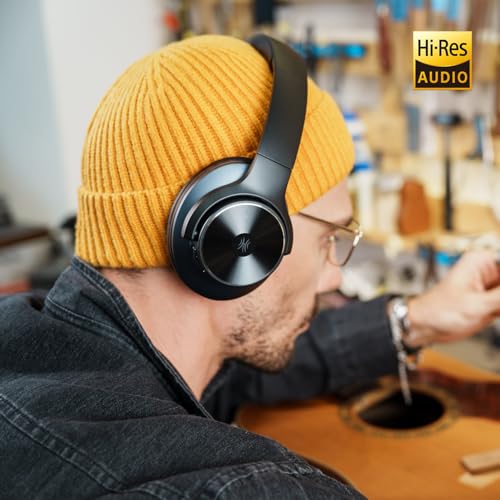
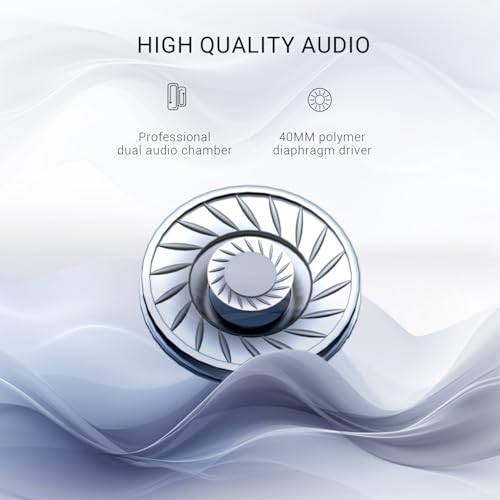
The OneOdio A10, meanwhile, pursues Hi-Res Audio certification, which requires reproducing frequencies beyond the standard CD range (20Hz-20kHz). However, this broader frequency response comes with trade-offs. The sound signature is described as "V-shaped"—boosted bass and treble with a slightly recessed midrange. This creates an exciting, energetic sound that makes music feel more dynamic, but it can sometimes mask subtle details in vocal recordings.
Here's where the ANC factor becomes crucial: when noise cancellation is active, it inevitably affects sound quality. The OneOdio A10 handles this better than many budget models, but there's still a slight alteration to the audio signature when ANC is engaged. The Pioneer, being purely passive, delivers consistent sound quality regardless of environment.
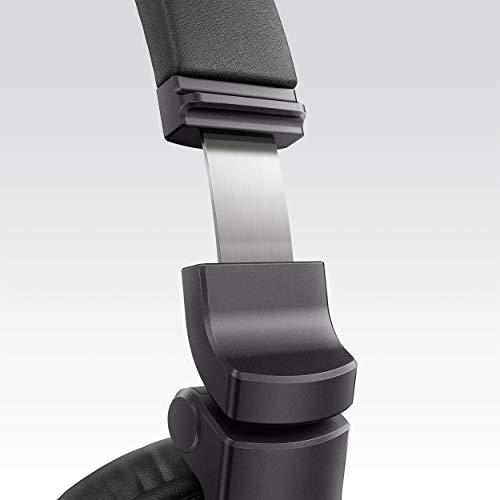
The Pioneer HDJ-CUE1 underwent rigorous durability testing that most consumer headphones never face. The metal sliders in the headband are designed to withstand the constant adjustments and occasional drops that come with DJ use. Every moving part—from the swivel mechanisms to the cable connections—passed stress tests that simulate years of professional use.
This durability focus extends to the cable system. The detachable design means you can replace a damaged cable without replacing the entire headphones. The coiled design might seem old-fashioned, but it's actually more durable than straight cables because it naturally absorbs tension and movement without creating stress points.
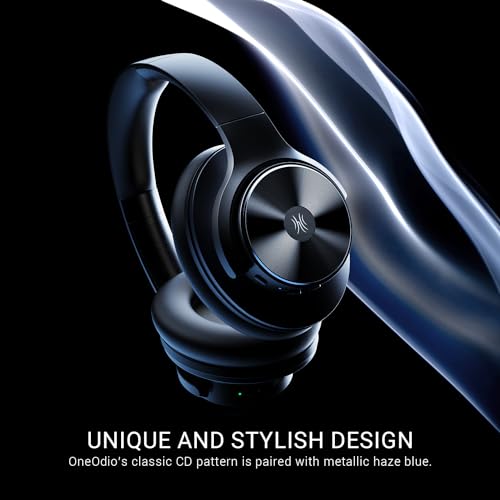
The OneOdio A10 prioritizes different aspects of build quality. The protein leather ear pads and memory foam cushioning create a comfortable seal that's essential for both passive noise isolation and ANC effectiveness. The foldable design makes them travel-friendly, though this adds mechanical complexity that could potentially fail over time.
This is where the philosophical differences become most apparent. The Pioneer HDJ-CUE1 embraces wired connectivity because latency (delay between audio source and your ears) is the enemy of good DJing. Even tiny delays can throw off your timing when beatmatching or scratching.
The standard HDJ-CUE1 is purely wired, though Pioneer also released Bluetooth variants. However, serious DJs typically avoid wireless connections because even the best Bluetooth codecs introduce some latency—usually 40-200 milliseconds, which is enough to disrupt precise timing.
The OneOdio A10 offers both wired and wireless modes, giving you flexibility for different situations. The Bluetooth 5.0 connection provides improved stability and range compared to older Bluetooth versions. The multipoint connection feature lets you connect to two devices simultaneously—your laptop for music and your phone for calls, for instance.
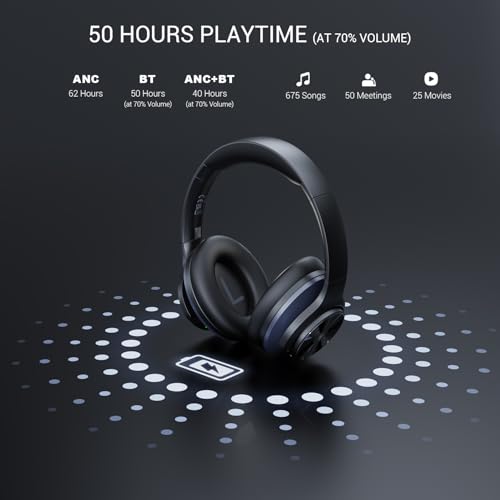
Battery life becomes crucial for wireless headphones, and the OneOdio A10 excels here with 50-62 hours of playback depending on which features you're using. ANC typically drains batteries faster, but the A10's efficiency means you can use ANC and Bluetooth together for 40+ hours—enough for several cross-country flights without charging.
For DJing applications, the Pioneer HDJ-CUE1 offers several advantages that the OneOdio A10 simply can't match. The swivel design enables "split monitoring"—listening to the next track in one ear while monitoring the current track through speakers. This technique is fundamental to smooth DJ transitions.
The sound tuning specifically helps with beatmatching—the process of adjusting one song's tempo to match another's. The emphasized kick drum frequencies make it easier to hear whether beats are aligned or slightly off. Professional DJs often describe this as feeling the "pocket" where beats lock together perfectly.
The lightweight design reduces fatigue during long sets. While 215 grams might not seem significantly lighter than 308 grams, that 90-gram difference becomes noticeable after wearing headphones for several hours. Your neck muscles will appreciate the difference during an all-night session.
For travel and office environments, the OneOdio A10 provides capabilities the Pioneer can't touch. The hybrid ANC system effectively reduces low-frequency noise—airplane engines, train rumble, office HVAC systems. This isn't just about comfort; reducing background noise actually reduces listening fatigue and allows you to enjoy music at lower volumes, protecting your hearing.
The transparency mode proves invaluable in real-world situations. Instead of constantly removing your headphones to hear announcements or respond to colleagues, you can quickly toggle to transparency mode. The feature uses the same microphones as ANC but amplifies rather than cancels ambient sound.
The exceptional battery life makes the OneOdio A10 ideal for long trips or extended work sessions. Unlike wired headphones, you never have to worry about cables getting tangled in airplane seats or snagging on office furniture.
For home theater use, both headphones offer distinct advantages. The Pioneer HDJ-CUE1 provides the most accurate sound reproduction, particularly for bass-heavy content like action movies or electronic music concerts. The extended low-frequency response (down to 5Hz) means you'll hear sub-bass effects that many headphones miss entirely.
However, the OneOdio A10 offers practical advantages for home theater use. The wireless connection eliminates cable management issues, particularly important if your seating is far from your TV or receiver. The long battery life means you won't face mid-movie battery death, and the comfortable padding supports extended viewing sessions.
The ANC capability can be beneficial in noisy home environments—blocking out air conditioning, neighbors, or family members in adjacent rooms. This creates a more immersive experience by eliminating distractions.
At the time of writing, both headphones occupy different value propositions within their respective categories. The Pioneer HDJ-CUE1 offers professional-grade sound quality and build quality at an entry-level DJ price point. Compared to Pioneer's higher-end models or competitors like Audio-Technica and Sennheiser, the HDJ-CUE1 provides remarkable value for aspiring DJs.
The OneOdio A10 competes in the crowded budget ANC market, where it stands out for its exceptional battery life and feature set. Compared to similarly priced competitors, the combination of effective ANC, wireless convenience, and marathon battery life creates compelling value for general consumers.
Both headphones benefit from timing their market entry well. The Pioneer launched when bedroom DJing was experiencing unprecedented growth, particularly during pandemic lockdowns when home entertainment surged. The OneOdio A10 emerged as remote work normalized and people needed better audio solutions for home offices and video calls.
Are interested in DJing or music production. Even if you're just starting out, the Pioneer will grow with your skills and provide the accuracy needed for serious mixing work. The sound tuning will help you develop better beatmatching abilities and understand how professional DJs achieve smooth transitions.
Prioritize audio accuracy over convenience features. If you're someone who notices subtle differences in sound quality and wants headphones that reveal details in your music rather than coloring it, the Pioneer's professional tuning philosophy will appeal to you.
Prefer lightweight, durable gear. For extended listening sessions or if you're sensitive to headphone weight, the Pioneer's 215-gram design provides comfort without sacrificing build quality.
Want zero-latency audio. Whether for gaming, music production, or DJ applications, the wired connection ensures perfect synchronization between audio and video sources.
Need noise cancellation for work or travel. If your typical listening environment includes airplane noise, office chatter, or traffic sounds, the OneOdio A10's ANC capability will significantly improve your audio experience and reduce listening fatigue.
Value wireless convenience and long battery life. For users who prioritize freedom from cables and want headphones that work for days without charging, the OneOdio A10 offers exceptional wireless performance.
Switch between multiple devices throughout the day. The multipoint Bluetooth connection allows seamless switching between phone calls, computer audio, and tablet entertainment without manual re-pairing.
Want versatile headphones for various activities. If you need one pair of headphones for work calls, music, movies, and travel, the OneOdio A10's feature set handles all these scenarios effectively.
These headphones represent two fundamentally different approaches to audio design, each excellent within their intended domains. The Pioneer DJ HDJ-CUE1 delivers professional-grade audio performance and build quality specifically optimized for DJ applications, while the OneOdio A10 provides modern consumer features like ANC and wireless connectivity at an impressive value point.
Your decision should align with your primary use case. If you're drawn to DJing, music production, or simply want the most accurate audio reproduction possible, the Pioneer offers specialized capabilities that the OneOdio can't match. If you need versatile headphones for modern life—commuting, working, traveling, and general entertainment—the OneOdio A10's combination of ANC, wireless convenience, and marathon battery life makes it the more practical choice.
Both headphones punch above their weight class in terms of value, but they're optimized for completely different lifestyles. The key is being honest about how you'll actually use them—not how you think you might use them someday.
| Pioneer DJ HDJ-CUE1 | OneOdio A10 |
|---|---|
| Primary Design Purpose - Determines optimal use cases and performance priorities | |
| DJ mixing and professional audio monitoring | Consumer listening with active noise cancellation |
| Weight - Critical for extended wear comfort during long sessions | |
| 215g (significantly lighter for all-day DJ sets) | 308g (heavier but well-cushioned for comfort) |
| Driver Size & Frequency Response - Affects audio quality and bass reproduction | |
| 40mm drivers, 5Hz-30,000Hz (exceptional low-end extension) | 40mm drivers, 20Hz-40kHz (Hi-Res Audio certified) |
| Active Noise Cancellation - Essential for travel and noisy environments | |
| None (purely passive isolation) | Hybrid ANC with up to 95% noise reduction |
| Connectivity - Impacts latency, convenience, and device compatibility | |
| Wired only with detachable coiled cable | Bluetooth 5.0 + wired, multipoint connection |
| Battery Life - Only relevant for wireless models | |
| N/A (wired operation) | 50-62 hours (exceptional for wireless ANC headphones) |
| Ear Cup Design - Affects monitoring flexibility and comfort | |
| 90-degree swiveling cups for DJ single-ear monitoring | Fixed position with ultra-soft protein leather padding |
| Sound Signature - Determines music genre suitability and mixing accuracy | |
| Bass-emphasized tuning optimized for kick drums and beatmatching | V-shaped signature with enhanced bass and bright treble |
| Durability Features - Important for heavy use and travel | |
| Metal-reinforced headband, professional stress testing | Consumer-grade build with foldable design for portability |
| Special Features - Additional capabilities that add value | |
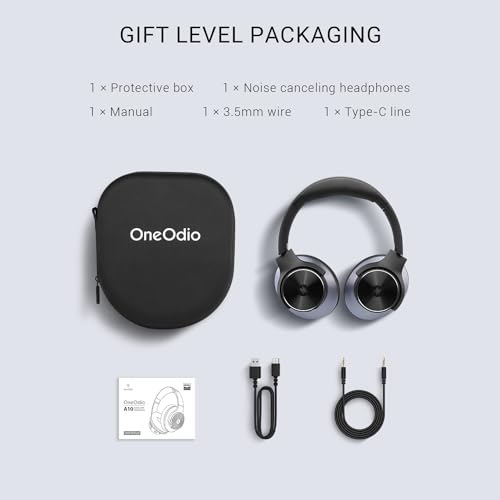
| Customizable colored cables/earpads, bayonet connector | Transparency mode, quick charge (5min = 2hrs), carrying case |
For beginners, the choice depends on your primary use. The Pioneer DJ HDJ-CUE1 is ideal if you're interested in learning to DJ or mix music, as it provides professional sound tuning that helps develop mixing skills. The OneOdio A10 is better for general beginners who want versatile headphones for music, calls, and travel, thanks to its noise cancellation and wireless convenience.
Yes, the Pioneer DJ HDJ-CUE1 works well for regular music listening, especially if you enjoy bass-heavy genres like electronic, hip-hop, or rock. The professional tuning emphasizes kick drums and basslines while maintaining clear mids and highs. However, they lack modern features like wireless connectivity and noise cancellation that many casual listeners prefer.
The OneOdio A10 can work for home theater use, offering wireless convenience and comfortable padding for long movie sessions. The active noise cancellation helps block household distractions. However, the Pioneer DJ HDJ-CUE1 provides more accurate sound reproduction for movies, especially action films with deep bass effects, due to its extended low-frequency response.
Both offer comfort for extended use, but in different ways. The Pioneer DJ HDJ-CUE1 is significantly lighter at 215g, reducing neck fatigue during long DJ sets. The OneOdio A10 is heavier but features ultra-soft protein leather padding and memory foam that many find more cushioned for casual listening sessions.
While the OneOdio A10 can technically be used for casual mixing, it's not ideal for serious DJ work. The wireless connection introduces latency that can disrupt beatmatching, and it lacks the swiveling ear cups needed for professional single-ear monitoring. The Pioneer DJ HDJ-CUE1 is specifically designed for DJ applications with zero-latency wired connection and proper cueing capabilities.
The OneOdio A10 has active noise cancellation that blocks up to 95% of ambient noise, making it excellent for travel and noisy environments. The Pioneer DJ HDJ-CUE1 relies only on passive noise isolation from its closed-back design, which is sufficient for studio use but won't block airplane or office noise like the OneOdio A10.
The Pioneer DJ HDJ-CUE1 is worth it if you prioritize audio accuracy, durability, and DJ-specific features over wireless convenience. The wired connection ensures zero latency, the professional build quality lasts longer, and the specialized sound tuning is superior for music production and mixing compared to general consumer headphones like the OneOdio A10.
The OneOdio A10 offers exceptional battery life with 50-62 hours of playback depending on usage. With both Bluetooth and noise cancellation active, you'll get around 40-45 hours, which is outstanding for wireless ANC headphones. The Pioneer DJ HDJ-CUE1 doesn't require batteries since it's wired, ensuring unlimited usage time.
The OneOdio A10 is significantly better for travel, offering active noise cancellation to block airplane engines, wireless convenience to avoid cable tangles, and a foldable design with carrying case. The Pioneer DJ HDJ-CUE1 is lighter and more durable, but lacks the noise cancellation and wireless features that make travel more comfortable.
Yes, both work with phones and computers, but differently. The Pioneer DJ HDJ-CUE1 connects via standard 3.5mm cable to any device with a headphone jack. The OneOdio A10 offers both wired and wireless connections, with multipoint Bluetooth allowing simultaneous connection to two devices, making it more convenient for switching between phone and computer.
The Pioneer DJ HDJ-CUE1 is built for professional durability with metal-reinforced construction, stress-tested moving parts, and replaceable cables designed for heavy DJ use. The OneOdio A10 has consumer-grade durability that's adequate for daily use but includes more complex electronics (batteries, ANC circuitry) that could potentially fail over time.
Yes, the Pioneer DJ HDJ-CUE1 is excellent for music production due to its accurate sound reproduction, extended frequency response (5Hz-30kHz), and professional build quality inherited from higher-end Pioneer models. The OneOdio A10 can work for casual production but isn't as accurate due to its V-shaped sound signature and potential latency issues in wireless mode.
We've done our best to create useful and informative comparisons to help you decide what product to buy. Our research uses advanced automated methods to create this comparison and perfection is not possible - please contact us for corrections or questions. These are the sites we've researched in the creation of this article: bestbuy.com - pioneerdjstore.com - rtings.com - idjnow.com - youtube.com - pioneerdj.com - soundguys.com - pioneerdj.com - digitaldjtips.com - pioneerdj.com - guitarcenter.com - empirepro.com - idjnow.com - emiaudio.com - pioneerdj.com - sfm.ca - sweetwater.com - pioneerdj.com - pioneerdj.com - pioneerdj.com - techbuzzireland.com - creativebloq.com - head-fi.org - homestudiobasics.com - versus.com - androidguys.com - thegadgetflow.com - oneodio.com - mbreviews.com - the-gadgeteer.com - newegg.com - howtogeek.com - youtube.com - newegg.com - manuals.plus - majorhifi.com - soundphilereview.com - youtube.com - howtogeek.com - oneodio.com - youtube.com - youtube.com - youtube.com - walmart.com

Privacy Policy
Terms and Conditions - Affiliate Policy
Home Security
© Copyright 2008-2026.
11816 Inwood Rd #1211, Dallas, TX 75244