






When shopping for affordable wireless headphones, you're faced with dozens of options that all look similar on paper. The OneOdio Fusion A70 and OneOdio A10 are both popular choices in the budget category, but they take completely different approaches to solving your audio needs. Understanding these differences can save you from buyer's remorse and help you pick the right pair for your specific situation.
Both headphones typically retail in the budget-friendly range at the time of writing, making them accessible alternatives to premium brands that cost three times as much. But here's the thing about budget headphones: the compromises manufacturers make reveal a lot about who they're really designing for.
The budget wireless headphone market has exploded over the past few years, especially since major smartphone manufacturers started removing headphone jacks around 2016-2017. This forced many casual listeners to explore wireless options, creating demand for affordable alternatives to premium brands.
When evaluating any headphones in this category, you need to understand the key trade-offs. Manufacturers working with limited budgets must choose where to spend their money: better sound quality, longer battery life, active noise cancellation, or premium materials. Very few budget headphones excel at everything, so the smart ones focus on doing a few things really well.
The most important performance characteristics to consider are sound quality, comfort, battery life, and any special features like noise cancellation. For sound quality specifically, you'll want to pay attention to frequency response (how well the headphones reproduce different pitches), soundstage (how wide and spacious music sounds), and imaging (how precisely you can locate different instruments or sounds).
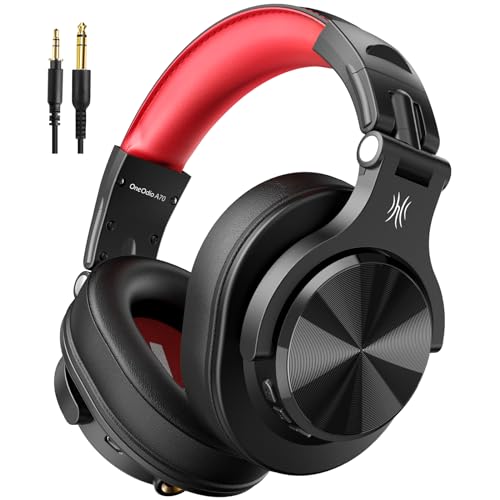
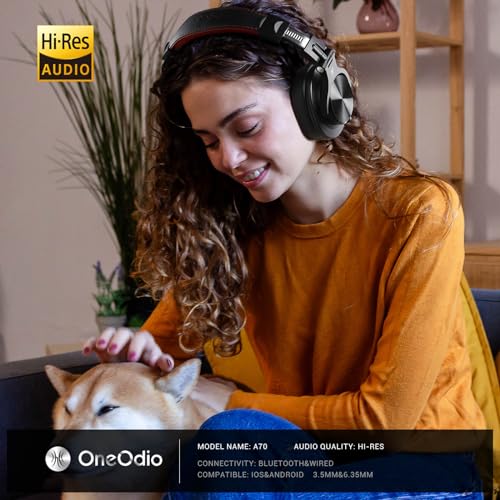
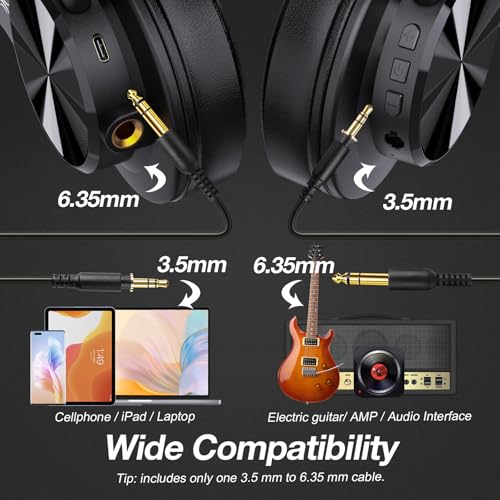
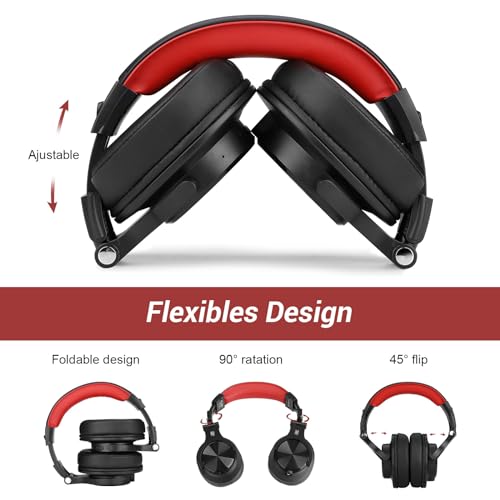
The OneOdio Fusion A70 launched around 2021 as a unique hybrid designed to bridge the gap between consumer and professional audio equipment. Its most distinctive feature is the dual connectivity system – you get both 3.5mm and 6.35mm jacks built right into the headphones. This eliminates the need for adapters when connecting to professional DJ mixers, audio interfaces, or studio equipment.
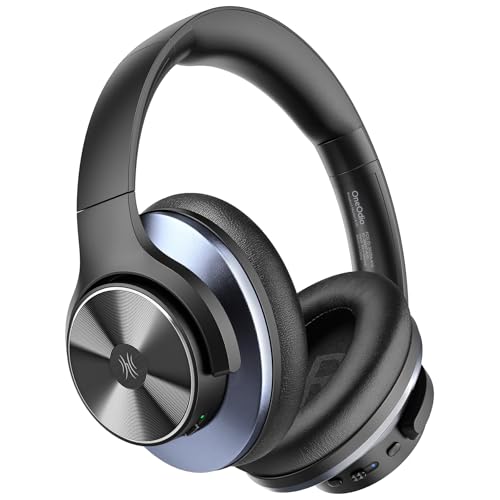
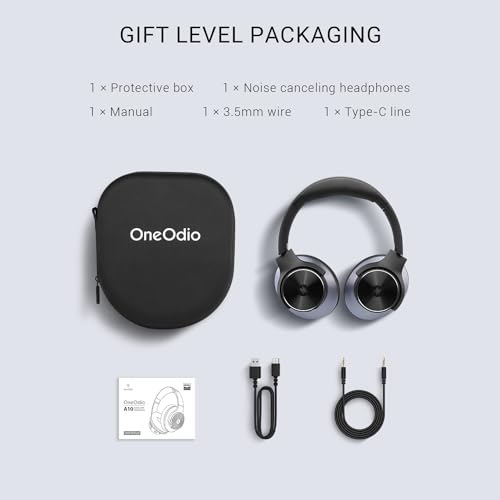
The OneOdio A10 arrived around the same time but took a completely different approach, focusing on active noise cancellation (ANC) – a technology that uses microphones to detect ambient noise and creates opposite sound waves to cancel it out. This was unusual for the budget segment, where ANC typically adds significant cost.
Since their release, both headphones have seen minor updates to improve build quality and connectivity, but their core designs remain unchanged. This consistency actually works in their favor, as both models have established reliable track records in the market.
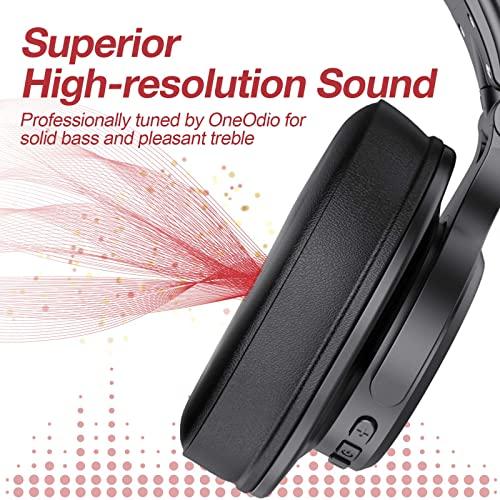
Here's where these headphones reveal their true personalities. The OneOdio Fusion A70 employs what audio engineers call a "V-shaped" sound signature – this means the bass frequencies (low sounds) and treble frequencies (high sounds) are emphasized, while the midrange frequencies (where most vocals and instruments live) are pulled back.
Think of it like adjusting a graphic equalizer where you boost the bass and treble sliders while leaving the middle ones lower. This creates a sound that's exciting and energetic, perfect for electronic music, hip-hop, or any genre where you want that thumping bass and sparkling highs. However, this tuning can make vocals sound distant and can fatigue your ears during long listening sessions.
The technical measurements tell an interesting story: the Fusion A70 delivers massive bass presence that extends well into sub-bass territory (the really deep stuff you feel more than hear), but this comes at the cost of midrange clarity. The soundstage – essentially how wide and spacious the music sounds – is quite narrow, and the imaging (your ability to pinpoint where specific sounds are coming from) is limited.
The OneOdio A10 also uses a V-shaped signature, but it's more restrained. The bass is still prominent, but it doesn't overwhelm the midrange as much. Several reviewers have noted that vocals come through clearer on the A10, and the overall presentation feels more balanced for everyday music listening.
However, both headphones share similar technical limitations that are common in their price range. Neither offers the wide, immersive soundstage you'd get from more expensive open-back headphones, and complex musical passages can sound congested when multiple instruments are playing simultaneously.
This is where the OneOdio A10 really differentiates itself. Active noise cancellation was once reserved for headphones costing several hundred dollars, but the A10 brings this technology to the budget segment.
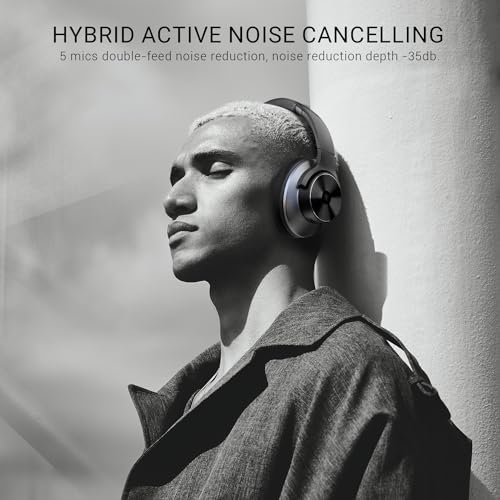
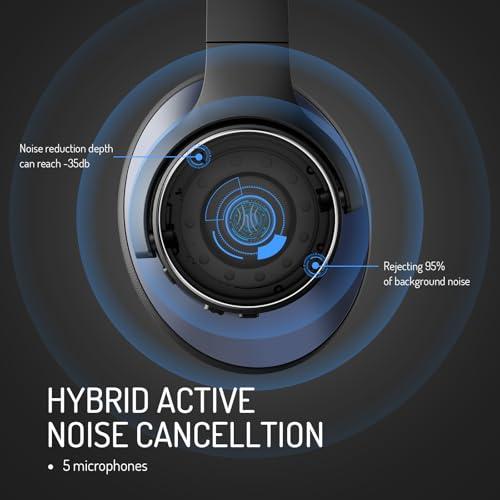
The A10 uses what's called "hybrid ANC," which means it has microphones both inside and outside the ear cups. The external microphones detect incoming noise, while the internal ones monitor what you're actually hearing. This dual-microphone system can reduce ambient noise by up to 35 decibels, which is genuinely impressive for this price point.
In practical terms, this means the whoosh of airplane engines, the rumble of train wheels, or the constant hum of office HVAC systems get significantly reduced. However, ANC is most effective against consistent, low-frequency sounds. Don't expect it to completely eliminate sudden noises like a crying baby or someone talking loudly nearby.
The Fusion A70 offers zero active noise cancellation and actually has poor passive isolation – meaning even its physical design doesn't block much external noise. Multiple reviewers have noted that even quiet ambient sounds like a kitchen fan can easily penetrate the ear cups. This makes the Fusion A70 unsuitable for noisy environments.
The A10 also includes a transparency mode, which uses those same microphones to amplify external sounds, particularly human voices. This lets you hear announcements or have conversations without removing your headphones – a feature that's become increasingly popular since the pandemic made quick conversations while wearing headphones more common.
Battery life represents one of the most dramatic differences between these models. The OneOdio Fusion A70 delivers what can only be described as extraordinary endurance. The manufacturer claims up to 72 hours of playback, and real-world testing consistently shows 50+ hours of continuous use.
This isn't just marketing fluff – the Fusion A70 packs a substantial 650mAh battery, which is larger than what you'll find in many competing headphones. For context, that's enough power to listen for an entire week of normal daily use, or several transcontinental flights back-to-back.
The A10 offers more modest but still impressive battery life. With both Bluetooth and ANC enabled, you'll get around 40-45 hours of playback. Turn off the noise cancellation, and that extends to about 50 hours. While not as extreme as the Fusion A70, this is still excellent performance that easily handles week-long trips without needing a charger.
Both headphones support fast charging, but the A10's implementation is more practical for daily use. A quick 5-minute charge provides about 2 hours of listening time, perfect for those "Oh no, my headphones are dead" moments before leaving the house.
Comfort becomes crucial when you're planning to wear headphones for hours at a time, and this is where the OneOdio A10 pulls ahead significantly. The A10 uses protein memory foam ear pads that adapt to your head shape over time, and the headband padding distributes weight evenly.
Multiple reviewers have noted they can wear the A10 for 4+ hours without discomfort, which is impressive for any headphones, let alone budget ones. The ear cups seal well around your ears without excessive clamping pressure, and the overall weight distribution feels balanced.
The Fusion A70, unfortunately, has comfort issues that become apparent after about an hour of wear. The ear pad design doesn't conform well to different head shapes, creating pressure points that can cause fatigue. The straight padding design particularly creates problems at the top of the head for many users.
Both headphones feature foldable designs for portability, but their build quality tells different stories. The Fusion A70 is primarily plastic construction with a metal inner headband – functional but not premium-feeling. The A10 incorporates more metal elements, particularly around the ear cups, giving it a more substantial feel despite being heavier on paper.
Here's where the OneOdio Fusion A70 shows its unique design philosophy. The dual-cable system is genuinely innovative – you get a 3.5mm jack on one side and a 6.35mm jack on the other, built directly into the headphones. This means you can plug into consumer devices (phones, laptops) with the smaller jack while simultaneously connecting to professional audio equipment with the larger jack.
The SharePort technology is another interesting feature that lets you daisy-chain a second pair of headphones when listening wirelessly. This is perfect for sharing music with a friend during travel or for collaborative listening in educational settings.
Both headphones support modern Bluetooth standards – the Fusion A70 uses Bluetooth 5.2, while the A10 uses 5.0. The practical difference is minimal for most users, but the newer standard in the Fusion A70 theoretically offers slightly better connection stability and range.
The A10 counters with multipoint connectivity, allowing you to connect to two devices simultaneously. This means you can have your laptop and phone connected at the same time, automatically switching audio sources as needed. It's incredibly convenient for remote work scenarios where you might get a call while listening to music from your computer.
For home theater use, both headphones face the same fundamental limitation: they're designed primarily for music listening rather than movie and TV consumption. However, their different characteristics make them better suited for different types of content.
The Fusion A70's powerful bass response can make action movies feel more impactful – explosions and car chases certainly have plenty of punch. However, the recessed midrange means dialogue can sound distant and unclear, especially in complex soundtracks where music and sound effects compete with voices.
The A10's more balanced midrange makes it better for dialogue-heavy content like dramas or documentaries. The active noise cancellation also helps create a more immersive experience by blocking out household distractions like air conditioning or family members moving around.
Neither headphone offers surround sound processing or specialized movie modes, so don't expect the spatial audio experience you'd get from dedicated home theater headphones. They're both stereo-only designs that will collapse surround sound mixes down to two channels.
The OneOdio Fusion A70 clearly targets users who might need professional connectivity options. The built-in 6.35mm jack means you can plug directly into DJ mixers, audio interfaces, keyboards, or guitar amps without adapters. This is genuinely useful for musicians, content creators, or anyone working with professional audio equipment.
However, it's important to understand that "professional connectivity" doesn't equal "professional sound quality." The Fusion A70's heavily colored sound signature makes it unsuitable for mixing or mastering audio where you need accurate, uncolored sound reproduction. It's better thought of as a versatile headphone that can connect to professional equipment rather than a true professional monitor.
The A10 doesn't pretend to be a professional tool, and that's perfectly fine. Its focus on noise cancellation and general usability makes it better suited for content consumption, casual gaming, and everyday tasks where you need to concentrate in noisy environments.
After extensive comparison, here's my honest assessment of when each headphone makes the most sense:
Choose the OneOdio Fusion A70 if you're a DJ, musician, or content creator who needs that professional connectivity. The dual-jack system is genuinely useful, and the extreme battery life means you'll rarely worry about charging. However, be prepared for comfort limitations and poor noise isolation. This headphone excels in quiet, controlled environments where its bass-heavy sound signature can shine.
The OneOdio A10 is the better choice for most people. The active noise cancellation alone makes it more versatile for daily life, whether you're commuting, working in a noisy office, or trying to focus at home. The superior comfort means you can actually wear them for hours without fatigue, and the more balanced sound signature works better across different types of content.
For students, the A10 wins hands down. The noise cancellation helps you focus in noisy dorms or libraries, and the comfort factor means you can wear them through long study sessions. The multipoint connectivity is perfect for taking calls while working on your laptop.
For travelers, it's also the A10, unless you prioritize maximum battery life above everything else. The noise cancellation makes flights and train rides more pleasant, and the transparency mode lets you hear important announcements without removing your headphones.
The Fusion A70 makes sense for a narrower group of users who specifically value its unique features: extreme battery life, professional connectivity, or the SharePort technology. If none of those features matter to you, the A10 offers a more well-rounded experience.
At the time of writing, both headphones represent solid value in the budget category, but they serve different masters. The Fusion A70 prioritizes specialized features and endurance, while the A10 focuses on daily usability and comfort. Understanding which approach better matches your needs will lead you to the right choice.
Remember, in the budget headphone category, perfection isn't the goal – it's about finding the right compromises for your specific needs. Both of these OneOdio models succeed at that, just for different types of users.
| OneOdio Fusion A70 | OneOdio A10 |
|---|---|
| Active Noise Cancellation - Essential for commuting and noisy environments | |
| None (poor passive isolation) | Hybrid ANC up to -35dB (excellent for budget category) |
| Battery Life - Critical for travel and extended use | |
| Up to 72 hours (industry-leading endurance) | 40-45 hours with ANC (still excellent, more realistic) |
| Sound Signature - Determines music enjoyment and fatigue | |
| Heavily V-shaped (massive bass, recessed mids) | V-shaped but more balanced (clearer vocals) |
| Comfort - Make or break for long listening sessions | |
| Poor after 1+ hours (pressure points, basic padding) | Excellent for 4+ hours (protein memory foam) |
| Professional Connectivity - Important for musicians/DJs | |
| Built-in 3.5mm + 6.35mm jacks (no adapters needed) | Standard 3.5mm only (consumer focused) |
| Bluetooth Version - Affects connection stability and range | |
| 5.2 (latest standard, better stability) | 5.0 (proven, widely compatible) |
| Special Features - Unique capabilities that justify the purchase | |
| SharePort daisy-chaining, dual-mode operation | Multipoint connection, transparency mode |
| Weight - Impacts comfort during extended wear | |
| 242g (lighter but less premium feel) | 295g (heavier but better weight distribution) |
| Codec Support - Determines wireless audio quality | |
| SBC, AAC (standard compatibility) | SBC, AAC, aptX (broader high-quality support) |
| Build Quality - Longevity and premium feel | |
| Mostly plastic (functional but basic) | Metal reinforced elements (more substantial) |
| Noise Isolation - Blocks external sounds without ANC | |
| Very poor (ambient sounds penetrate easily) | Good passive seal enhances ANC effectiveness |
| Target Use Case - Who should buy each model | |
| DJs, musicians, extreme battery life needs | Commuters, students, office workers, travelers |
The OneOdio A10 is significantly better for commuting thanks to its hybrid active noise cancellation that reduces ambient noise by up to 35dB. This effectively blocks out train rumble, bus engine noise, and airplane hum. The OneOdio Fusion A70 has very poor noise isolation and lacks any ANC technology, making it unsuitable for noisy public transportation environments.
The OneOdio Fusion A70 offers exceptional 72-hour battery life, making it ideal for extended travel or users who forget to charge regularly. The OneOdio A10 provides 40-45 hours with ANC enabled, which is still excellent but more realistic for daily use. Both offer fast charging, but the A10's 5-minute quick charge for 2 hours of playback is more practical.
The OneOdio A10 is significantly more comfortable with protein memory foam ear pads and better weight distribution, allowing 4+ hours of comfortable wear. The OneOdio Fusion A70 tends to cause discomfort after about an hour due to pressure points and basic padding design, making it less suitable for extended use.
Both headphones include built-in microphones, but the OneOdio A10 performs better for calls with dual microphones that provide clearer voice pickup and some background noise reduction. The OneOdio Fusion A70 has basic call functionality but may pick up more ambient noise due to its poor isolation.
The OneOdio Fusion A70 delivers more powerful, emphasized bass that's ideal for electronic music, hip-hop, and genres where you want maximum low-end impact. While the OneOdio A10 also has strong bass, it's more balanced and won't overwhelm other frequencies as much, making it better for mixed music libraries.
The OneOdio Fusion A70 excels here with built-in 3.5mm and 6.35mm jacks, allowing direct connection to DJ mixers, audio interfaces, and studio equipment without adapters. The OneOdio A10 only has standard 3.5mm connectivity and focuses on consumer use rather than professional applications.
The OneOdio A10 is superior for focus work thanks to its active noise cancellation that blocks out household distractions like HVAC systems, traffic, and family noise. It also offers transparency mode for hearing important sounds. The OneOdio Fusion A70 provides no noise blocking and may be distracting in busy environments.
The OneOdio A10 is better for dialogue-heavy content due to its more balanced midrange that makes voices clearer. Its noise cancellation also creates a more immersive viewing experience. The OneOdio Fusion A70 can make action scenes more impactful with its powerful bass, but dialogue may sound distant and unclear.
The OneOdio A10 provides multipoint connectivity, allowing simultaneous connection to two devices (like phone and laptop), plus transparency mode. The OneOdio Fusion A70 offers unique SharePort technology for daisy-chaining headphones and uses newer Bluetooth 5.2, but lacks multipoint functionality.
Neither headphone is specifically designed for gaming, but the OneOdio A10 is the better choice due to its more balanced sound signature for hearing game audio cues and its noise cancellation for blocking distractions. The OneOdio Fusion A70 may provide more impactful explosions but could mask important audio details.
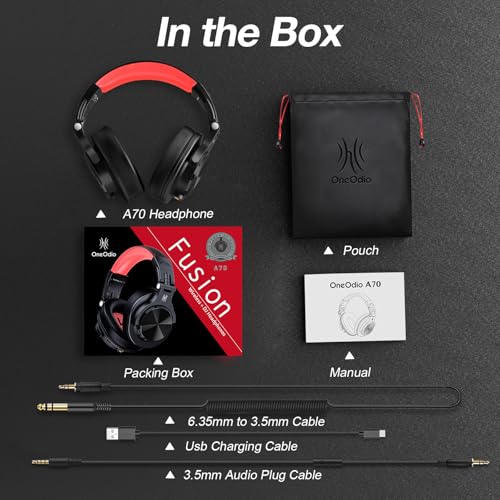
The OneOdio A10 features more premium construction with metal reinforced elements and better materials overall. The OneOdio Fusion A70 uses mostly plastic construction that feels more basic, though both headphones offer foldable designs for portability and come with carrying cases.
Choose the OneOdio Fusion A70 if you need extreme battery life, professional audio connectivity, or primarily listen in quiet environments where noise cancellation isn't needed. Select the OneOdio A10 if you commute regularly, work in noisy environments, value comfort for extended wear, or want the most well-rounded daily-use headphones. The A10 suits most users better due to its ANC and superior comfort.
We've done our best to create useful and informative comparisons to help you decide what product to buy. Our research uses advanced automated methods to create this comparison and perfection is not possible - please contact us for corrections or questions. These are the sites we've researched in the creation of this article: audiostance.com - attackmagazine.com - soundphilereview.com - versus.com - homestudiobasics.com - versus.com - audiofool.reviews - e-catalog.com - whatgear.net - e-catalog.com - thomannmusic.com - audioreviews.org - oneodio.com - wepc.com - seriousinsights.net - oneodio.com - oneodio.com - audioreputation.com - manuals.plus - newegg.com - musicbliss.com.my - walmart.com - techbuzzireland.com - creativebloq.com - head-fi.org - homestudiobasics.com - versus.com - androidguys.com - thegadgetflow.com - oneodio.com - mbreviews.com - the-gadgeteer.com - newegg.com - howtogeek.com - youtube.com - newegg.com - manuals.plus - majorhifi.com - soundphilereview.com - youtube.com - howtogeek.com - oneodio.com - youtube.com - youtube.com - youtube.com - walmart.com

Privacy Policy
Terms and Conditions - Affiliate Policy
Home Security
© Copyright 2008-2026.
11816 Inwood Rd #1211, Dallas, TX 75244