

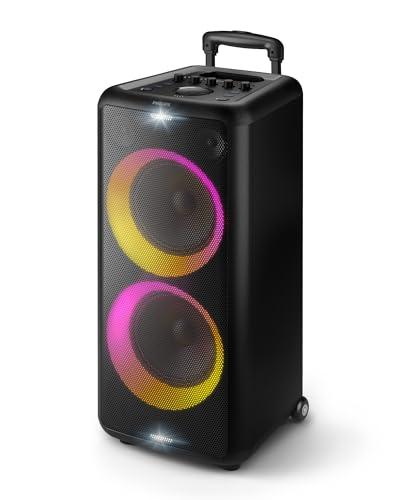
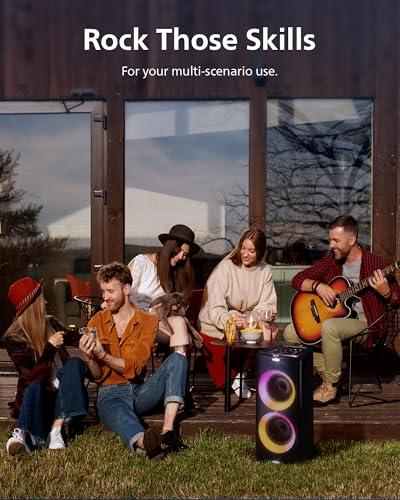
When it comes to cranking up the volume for your next backyard barbecue or living room dance party, not all speakers are created equal. Party speakers occupy a unique space in the audio world—they're the Swiss Army knives of portable sound systems, designed to handle everything from casual background music to full-blown karaoke competitions. Today, we're diving deep into two popular contenders: the Philips TAX5206 and the JBL PartyBox 110.
Both speakers launched around 2021-2022, representing the latest generation of party speakers that have evolved significantly since the basic boom boxes of the early 2010s. Modern party speakers now integrate sophisticated lighting systems, app-based controls, and professional-grade audio processing that would have been unthinkable in budget speakers just a few years ago.
Before we jump into the specifics, it's crucial to understand what separates party speakers from your typical home audio setup or portable Bluetooth speaker. These aren't just about playing music—they're entertainment systems designed to be the centerpiece of social gatherings.
The most critical performance metric is sound pressure level (SPL), which measures how loud a speaker can get while maintaining clarity. Most party speakers aim to hit at least 100 decibels, roughly equivalent to standing next to a motorcycle. This matters because outdoor environments and large rooms quickly absorb sound energy, requiring significantly more power than you'd need for casual listening.
Total Harmonic Distortion (THD) becomes particularly important at high volumes. This measures how much the speaker's output deviates from the original signal—essentially, how "clean" the sound remains when you push the volume dial to party levels. Both our speakers keep THD under 10%, which is respectable for this category.
Frequency response tells us which musical frequencies (measured in Hertz) the speaker can reproduce. Human hearing spans roughly 20Hz to 20,000Hz, but party speakers particularly emphasize the low end (bass frequencies below 100Hz) since that's what gets people moving and creates the physical sensation of "feeling" the music.
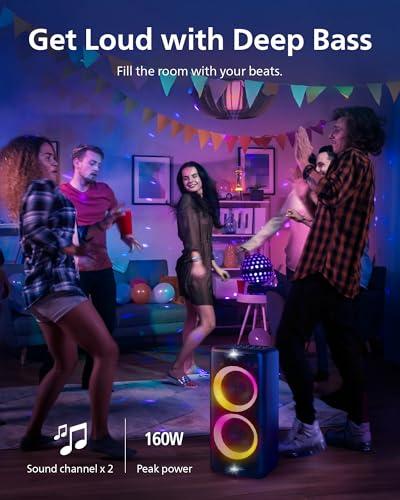
The Philips TAX5206 and JBL PartyBox 110 both claim 160W maximum power output, but the devil's in the details. The Philips provides clearer specifications with 80W RMS (Root Mean Square)—the more honest measurement that represents continuous, sustainable power rather than peak bursts.
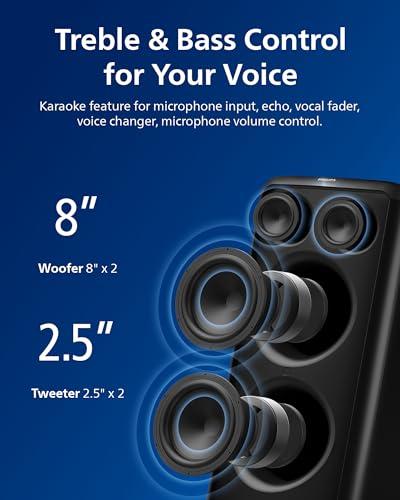
What's more telling is their driver configuration. The Philips TAX5206 employs two 8-inch woofers paired with two 2.5-inch tweeters, while the JBL PartyBox 110 uses smaller 5.25-inch woofers with 2.25-inch tweeters. This isn't just about size—larger woofers can move more air with less effort, potentially producing deeper bass with lower distortion.
Think of it like comparing bicycle wheels: a larger wheel covers more ground with each rotation and handles bumps more smoothly. Similarly, those 8-inch woofers in the Philips can reproduce low frequencies more effortlessly than the JBL's smaller drivers working harder to achieve similar results.
However, driver size isn't everything. JBL's decades of experience in professional audio shows in their tuning. Based on our research into user reviews and professional evaluations, the JBL PartyBox 110 consistently receives praise for its balanced sound signature, while some users find the Philips TAX5206 can sound slightly harsh at maximum volume—a common trade-off when prioritizing raw power output.
Both speakers recognize that bass performance makes or breaks a party speaker. The Philips TAX5206 takes a traditional approach with separate bass and treble controls—analog rotary knobs that provide tactile, immediate adjustment. This is particularly valuable during live events when you need to quickly adapt to different music genres or room acoustics.
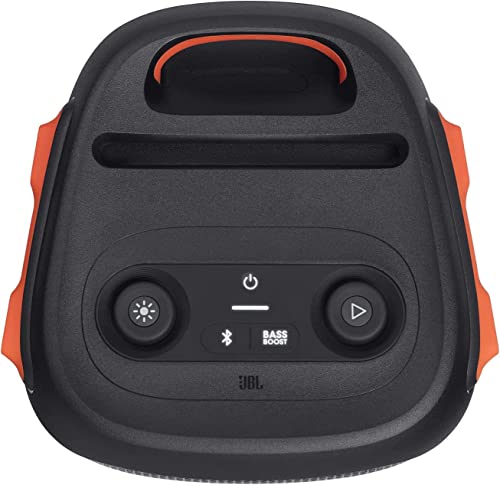
The JBL PartyBox 110 offers a more sophisticated Bass Boost system with two distinct levels plus an off position. User reports suggest the bass remains tight and controlled even with boost engaged, avoiding the muddy, overwhelming low-end that plagues lesser speakers. The multi-level approach allows fine-tuning for different content—level one for vocal-heavy music where you want bass presence without overwhelming the mids, level two for electronic music where you want that chest-thumping impact.
From a technical standpoint, the Philips TAX5206's larger woofers should theoretically provide better low-frequency extension—reaching deeper into those sub-bass frequencies below 50Hz that you feel more than hear. However, real-world performance depends heavily on the enclosure design and signal processing, areas where JBL's professional audio heritage shows.
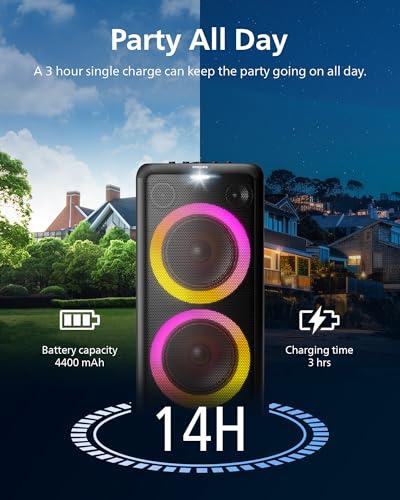
Nothing kills a party faster than a dead speaker, making battery performance crucial for portable use. The Philips TAX5206 claims 14 hours of playbook from its 4400 mAh, 7.4V lithium-ion battery, while the JBL PartyBox 110 promises 12 hours from its 36 Wh Li-ion polymer battery.
These numbers require context, though. Battery life varies dramatically based on volume level, bass boost settings, lighting effects, and ambient temperature. Real-world testing by users suggests both speakers deliver roughly 7-8 hours of typical party use—meaning higher volume levels with lighting and bass enhancement active.
The Philips TAX5206 includes a clever power bank feature, allowing you to charge phones and tablets from its internal battery. This 5V/1A output won't fast-charge modern devices, but it's incredibly handy when you're far from power outlets and someone's phone dies mid-playlist.
Both speakers charge in approximately 3-3.5 hours, which means you can top them off during dinner before the evening festivities begin.
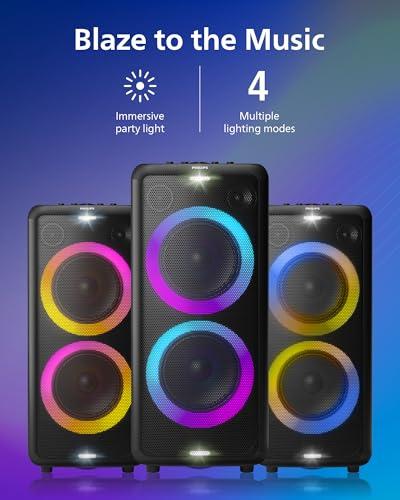
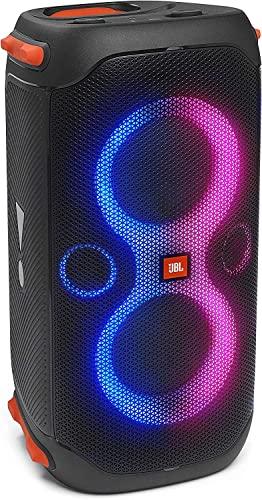
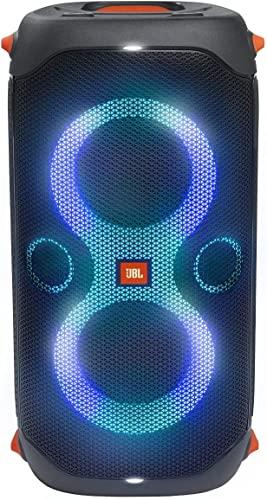
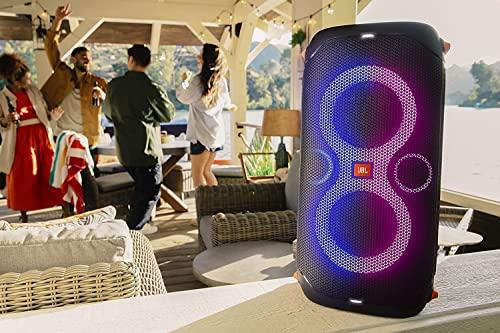
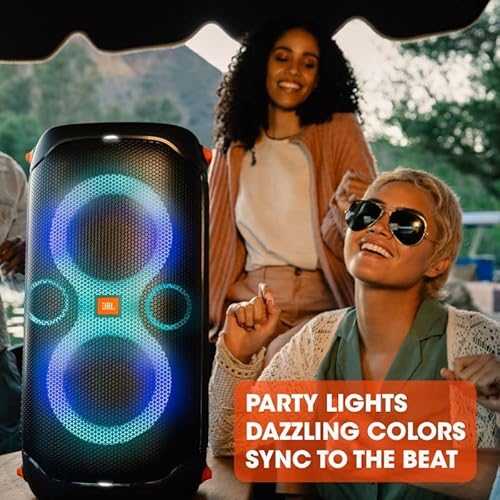
Modern party speakers have transformed into audiovisual experiences, and both our contenders deliver impressive light shows. The Philips TAX5206 features a ring of colored LEDs with four preset modes plus independent strobe functionality. The lighting synchronizes with music through audio signal analysis, creating pulses and color changes that match the beat.
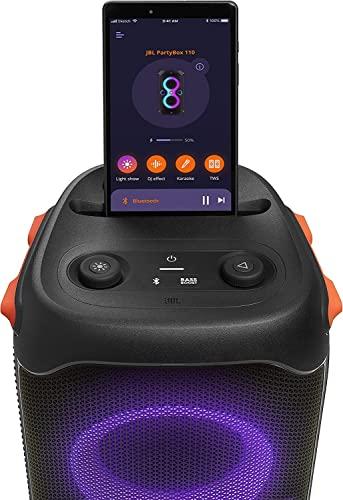
The JBL PartyBox 110 elevates this concept with more sophisticated LED rings and app-based customization. Rather than simple preset modes, you can fine-tune colors, patterns, and intensity through the JBL PartyBox app. The synchronization appears more refined, with smoother transitions and better beat-matching based on user feedback.
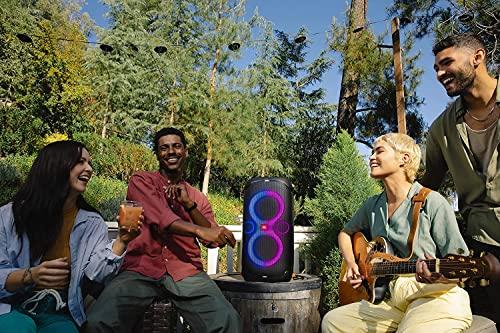
While lighting might seem like a gimmick, it genuinely enhances the party atmosphere, especially in dim environments. The visual stimulation adds energy and helps define the speaker as the focal point of the gathering.
Both speakers recognize that karaoke can make or break a party, but they take different approaches. The Philips TAX5206 goes all-in with dedicated karaoke features including echo control, vocal fader, and voice changer effects. The voice changer, in particular, adds entertainment value—imagine transforming someone's voice to sound like a robot or adding pitch shifts for comedic effect.
The vocal fader is particularly clever, allowing you to reduce the original vocalist's voice in songs while maintaining the instrumental backing. This works through phase cancellation—essentially inverting one stereo channel and mixing it with the other to eliminate center-panned vocals. It's not perfect (some vocals will leak through), but it's surprisingly effective for impromptu karaoke sessions.
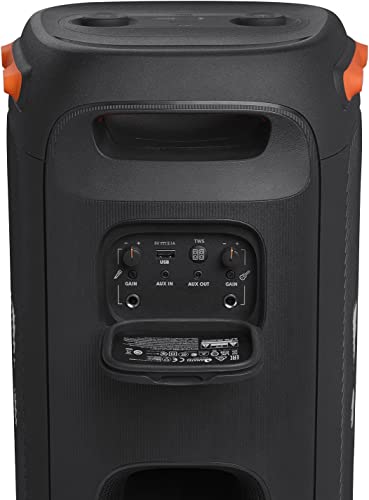
The JBL PartyBox 110 provides microphone and guitar inputs with individual gain controls but relies on app-based processing for advanced effects. This approach offers more flexibility for tech-savvy users but might be less intuitive for quick adjustments during live performance.
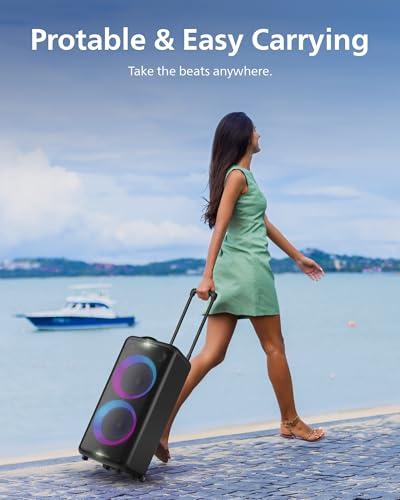
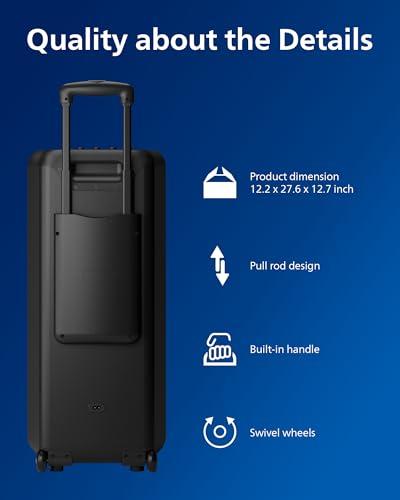
Here's where the Philips TAX5206 reveals its killer feature: a built-in trolley system with wheels and a telescoping handle. At over 23 pounds, these speakers aren't exactly lightweight, and the difference between dragging versus lifting becomes significant when moving from car to backyard to pool area.
The wheeled design transforms the user experience. Anyone who's hauled heavy audio equipment knows the relief of rolling rather than carrying, especially across uneven terrain or up stairs. The JBL PartyBox 110 relies on built-in handles, which work fine for short distances but become tiresome for longer transport.
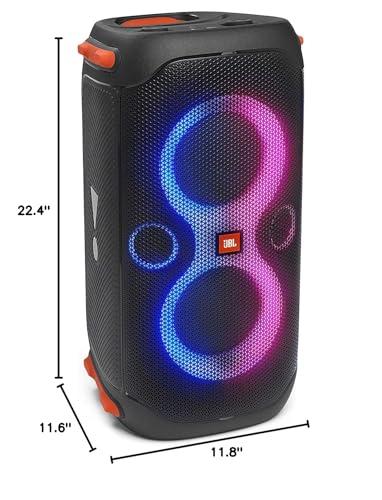
Both speakers measure roughly 2 feet tall, making them substantial but not overwhelming in most spaces. The Philips TAX5206 is slightly wider and taller, while the JBL PartyBox 110 maintains a more compact footprint.
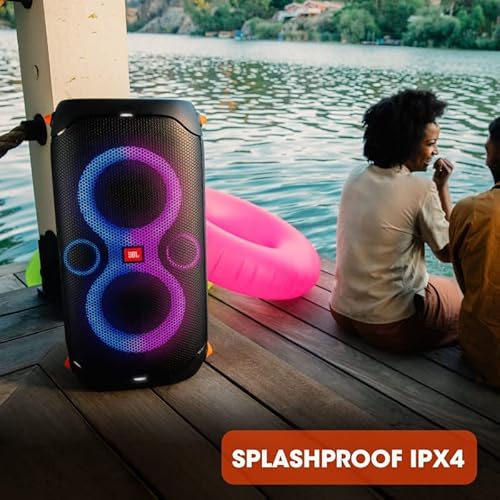
The JBL PartyBox 110 earns a significant advantage with its IPX4 splashproof rating. This certification means it can handle water splashes from any direction—crucial for poolside parties or outdoor events where drinks get spilled and weather becomes unpredictable.
IPX4 doesn't mean waterproof—you can't submerge it or leave it in heavy rain—but it provides peace of mind for typical party scenarios. The rating requires that all input ports have protective covers that seal properly, which JBL implements with rubber flaps over the connection ports.
The Philips TAX5206 lacks specific weather resistance ratings, suggesting it's designed primarily for indoor or covered outdoor use. This isn't necessarily a dealbreaker, but it limits venue options and requires more careful handling around moisture.
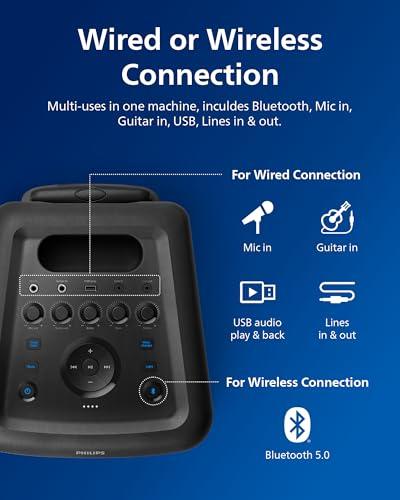
Both speakers embrace the reality that modern parties involve multiple audio sources and connection methods. The Philips TAX5206 provides Bluetooth 5.0 with a 10-meter range, USB playback supporting multiple formats (MP3, WAV, WMA, FLAC), and both 3.5mm line-in and line-out connections. The line-out is particularly valuable for daisy-chaining additional speakers or connecting to a larger sound system.
The JBL PartyBox 110 offers similar connectivity but adds True Wireless Stereo (TWS) capability—allowing two PartyBox 110 speakers to pair wirelessly for true stereo separation or increased volume coverage. This feature becomes incredibly valuable for larger events where a single speaker, regardless of power, can't adequately cover the space.
The JBL PartyBox app deserves special mention. Rather than just basic playback control, it provides comprehensive system management including EQ adjustments, lighting customization, and firmware updates. This level of software support has become increasingly important as speakers become more complex.
While primarily designed for parties, both speakers can serve double duty in home theater applications, though with important limitations. The Philips TAX5206's 3.5mm line-in makes it easy to connect to TV audio outputs, while the bass and treble controls help dial in the sound for movie content.
However, neither speaker is designed for the precise imaging and dialogue clarity that serious home theater demands. They're voiced for music playback and party environments, emphasizing impact over accuracy. The lack of dedicated center channel processing means dialogue might get lost in complex soundtracks.
That said, for casual movie watching or gaming where you want big, exciting sound without the complexity of a full surround system, either speaker can deliver impressive results. The JBL PartyBox 110's more balanced tuning gives it a slight edge for varied content.
At the time of writing, both speakers occupy similar price points in the mid-range party speaker category, typically retailing in the upper-hundreds to low-hundreds range depending on sales and availability. This puts them in direct competition not just with each other but with offerings from Sony, Soundcore, and other major manufacturers.
The Philips TAX5206 delivers exceptional feature density for the money. The combination of comprehensive karaoke features, power bank functionality, wheeled portability, and longer battery life creates compelling value, especially for users who plan to utilize multiple features regularly.
The JBL PartyBox 110 commands a slight premium for the JBL brand reputation, superior app integration, and weather resistance. The investment pays off in build quality, sound refinement, and long-term software support—JBL's track record suggests continued app updates and feature additions.
After extensive research into user experiences, professional reviews, and technical specifications, both speakers excel in different scenarios.
Choose the Philips TAX5206 if you:
Choose the JBL PartyBox 110 if you:
From a pure performance standpoint, the JBL PartyBox 110 edges ahead in sound quality and refinement, while the Philips TAX5206 wins on practical features and convenience. Your decision should align with how you actually plan to use the speaker—if portability and karaoke matter most, Philips delivers. If sound quality and weather resistance are priorities, JBL justifies its reputation.
Both represent solid choices in the competitive party speaker market, offering genuine value and capabilities that would have been impossible at these price points just a few years ago. The real winner is anyone looking to upgrade their party game with either of these capable performers.
| Philips TAX5206 | JBL PartyBox 110 |
|---|---|
| Power Output - Determines maximum volume and room-filling capability | |
| 160W Max / 80W RMS (honest continuous power rating) | 160W RMS (higher sustained output for consistent performance) |
| Driver Configuration - Affects bass depth and overall sound quality | |
| 2x 8" woofers + 2x 2.5" tweeters (larger drivers for deeper bass) | 2x 5.25" woofers + 2x 2.25" tweeters (compact but well-tuned) |
| Battery Life - Critical for all-day outdoor events | |
| 14 hours (longest in category, includes power bank feature) | 12 hours (solid performance, more realistic real-world usage) |
| Portability Design - Makes or breaks the user experience for transport | |
| Trolley system with wheels and handle (game-changer for heavy speakers) | Built-in handles only (requires lifting 23+ lbs) |
| Weather Resistance - Essential for poolside and outdoor parties | |
| No official rating (indoor/covered outdoor use only) | IPX4 splashproof (handles spills and light rain confidently) |
| Karaoke Features - Entertainment value beyond basic music playback | |
| Echo control, vocal fader, voice changer, dedicated 6.3mm inputs | Mic/guitar inputs with app-based effects (less comprehensive) |
| Lighting System - Visual impact and party atmosphere | |
| 4 preset modes with strobe, button-controlled | App-customizable RGB with beat sync (more sophisticated) |
| Connectivity Options - Flexibility for different audio sources | |
| Bluetooth 5.0, USB (MP3/WAV/WMA/FLAC), line-in/out, power bank | Bluetooth 5.1, USB, AUX in/out, TWS wireless speaker pairing |
| Sound Quality Reputation - Based on user and expert consensus | |
| Good power, can sound harsh at max volume | Consistently praised for balanced, refined audio tuning |
| App Control - Modern convenience and customization | |
| Physical controls only (immediate tactile adjustment) | Comprehensive JBL PartyBox app (EQ, lights, updates) |
| System Expansion - Growing your setup over time | |
| Daisy-chain via cable connections | True Wireless Stereo pairing for seamless multi-speaker setup |
| Build Quality & Brand Support - Long-term reliability | |
| Solid construction, limited brand ecosystem | JBL's professional audio heritage, established support network |
Both the Philips TAX5206 and JBL PartyBox 110 deliver 160W maximum power output, making them equally capable of filling large rooms with sound. However, the Philips TAX5206 uses larger 8-inch woofers compared to the JBL's 5.25-inch drivers, potentially providing more bass impact. User reviews suggest the JBL PartyBox 110 maintains better sound clarity at maximum volume levels.
The Philips TAX5206 offers superior battery performance with 14 hours of playback compared to the JBL PartyBox 110's 12-hour rating. Additionally, the Philips TAX5206 includes a built-in power bank feature to charge your devices, while the JBL PartyBox 110 focuses purely on audio playback.
Both speakers support karaoke, but the Philips TAX5206 excels with dedicated features including voice changer effects, vocal fader, and echo control. The JBL PartyBox 110 offers microphone inputs with app-based audio processing, providing more flexibility but fewer built-in karaoke effects than the Philips TAX5206.
The Philips TAX5206 wins decisively with its built-in trolley system featuring wheels and a telescoping handle, making it effortless to move despite weighing over 23 pounds. The JBL PartyBox 110 relies on carry handles, requiring you to lift and carry the full weight during transport.
The JBL PartyBox 110 is the better choice for poolside parties with its IPX4 splashproof rating, protecting against water splashes from any direction. The Philips TAX5206 lacks weather resistance certification, making it more suitable for indoor or covered outdoor use only.
Professional reviews consistently favor the JBL PartyBox 110 for overall sound quality, praising its balanced audio tuning and clear mids. While the Philips TAX5206 offers powerful output with larger drivers, some users report it can sound harsh at maximum volume levels compared to the more refined JBL PartyBox 110.
The JBL PartyBox 110 offers comprehensive app control through the JBL PartyBox app, allowing you to customize lighting effects, adjust EQ settings, and manage speaker pairing. The Philips TAX5206 uses physical rotary controls for all adjustments and doesn't include dedicated app functionality.
Yes, but through different methods. The JBL PartyBox 110 supports True Wireless Stereo (TWS) pairing, allowing two speakers to connect wirelessly for stereo sound. The Philips TAX5206 can daisy-chain to additional speakers using its 3.5mm line-out connection, requiring cables but supporting various speaker brands.
The JBL PartyBox 110 provides more sophisticated lighting with app-customizable RGB effects, multiple patterns, and refined beat synchronization. The Philips TAX5206 offers simpler lighting with four preset modes plus strobe effects, controlled by physical buttons rather than smartphone customization.
While primarily designed for parties, both can serve casual home theater needs. The JBL PartyBox 110's more balanced sound signature makes it slightly better for movie dialogue clarity. However, neither the Philips TAX5206 nor JBL PartyBox 110 is optimized for precise home theater audio compared to dedicated soundbars or surround systems.
The Philips TAX5206 offers more features per dollar, including longer battery life, power bank functionality, comprehensive karaoke effects, and wheeled portability. The JBL PartyBox 110 commands a premium for superior sound quality, weather resistance, and app integration, making it better for users prioritizing audio performance over feature quantity.
Both speakers offer similar connectivity options including Bluetooth, USB playback, and 3.5mm inputs. The Philips TAX5206 supports more audio file formats (MP3, WAV, WMA, FLAC) and includes a line-out for system expansion. The JBL PartyBox 110 features newer Bluetooth 5.1 technology and wireless speaker pairing capabilities not available on the Philips TAX5206.
We've done our best to create useful and informative comparisons to help you decide what product to buy. Our research uses advanced automated methods to create this comparison and perfection is not possible - please contact us for corrections or questions. These are the sites we've researched in the creation of this article: youtube.com - documents.philips.com - cutetechgadgets.com - odpbusiness.com - usa.philips.com - hitechers.com - youtube.com - documents.philips.com - youtube.com - walmart.com - walmart.com - device.report - flipkart.com - brightstarcomp.com - youtube.com - philips.co.in - documents.philips.com - fullspecs.net - documents.philips.com - rtings.com - youtube.com - bestbuy.com - gadgets360.com - popsci.com - youtube.com - audioadvice.com - popsci.com - youtube.com - versus.com - youtube.com - rtings.com - jbl.com - in.jbl.com - jbl.com.tw - bhphotovideo.com - in.jbl.com - jbl.com - youtube.com - hu.harmanaudio.com - jbl.com.au - global.jbl.com - support.jbl.com - youtube.com - kh.jbl.com - onward.ph - jbl.com.ph - support.jbl.com - youtube.com

Privacy Policy
Terms and Conditions - Affiliate Policy
Home Security
© Copyright 2008-2026.
11816 Inwood Rd #1211, Dallas, TX 75244