

When you're looking to bring the house down with massive sound, portable party speakers represent one of the most exciting audio categories available today. These aren't your typical Bluetooth speakers—they're purpose-built entertainment machines designed to pump out serious volume, shake the room with deep bass, and create an atmosphere that gets everyone moving.
The portable party speaker market has exploded over the past few years, with manufacturers pushing the boundaries of what's possible in a battery-powered package. Two standout contenders have emerged as top choices for different types of users: the JBL PartyBox 110 and the Sony SRS-XV900. Both launched in recent years as their respective companies' answers to growing demand for powerful, portable audio systems that don't compromise on features.
Understanding what separates these speakers requires diving into the technical details that actually matter when you're trying to fill a backyard, power through a beach party, or create the perfect soundtrack for your next gathering. Let's break down exactly what each speaker brings to the table and help you figure out which one deserves your hard-earned cash.
Before we dive into specifics, it's important to understand what makes portable party speakers different from regular Bluetooth speakers. These devices prioritize three key elements: raw power output, extended battery life, and entertainment features that enhance the party experience. They're designed to compete with ambient noise, fill large spaces, and keep the music going for hours without needing to plug into the wall.
The most important performance characteristics in this category include maximum volume output (measured in decibels), frequency response range (how deep the bass goes and how crisp the highs are), battery endurance under real-world conditions, and build quality that can handle being moved around and used outdoors. Entertainment features like synchronized lighting, microphone inputs for karaoke, and app connectivity have become increasingly important as manufacturers try to differentiate their products.
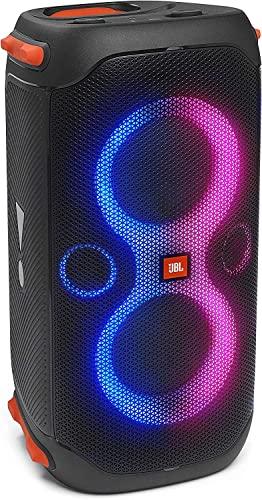
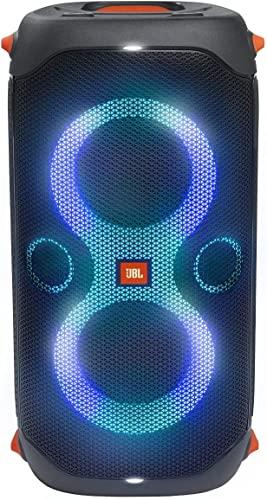
The JBL PartyBox 110 represents JBL's entry-level approach to the party speaker market, launching as part of their broader PartyBox lineup that includes much larger, more expensive models. JBL's strategy focuses on delivering maximum impact and party atmosphere in a relatively compact package that one person can reasonably carry and transport.
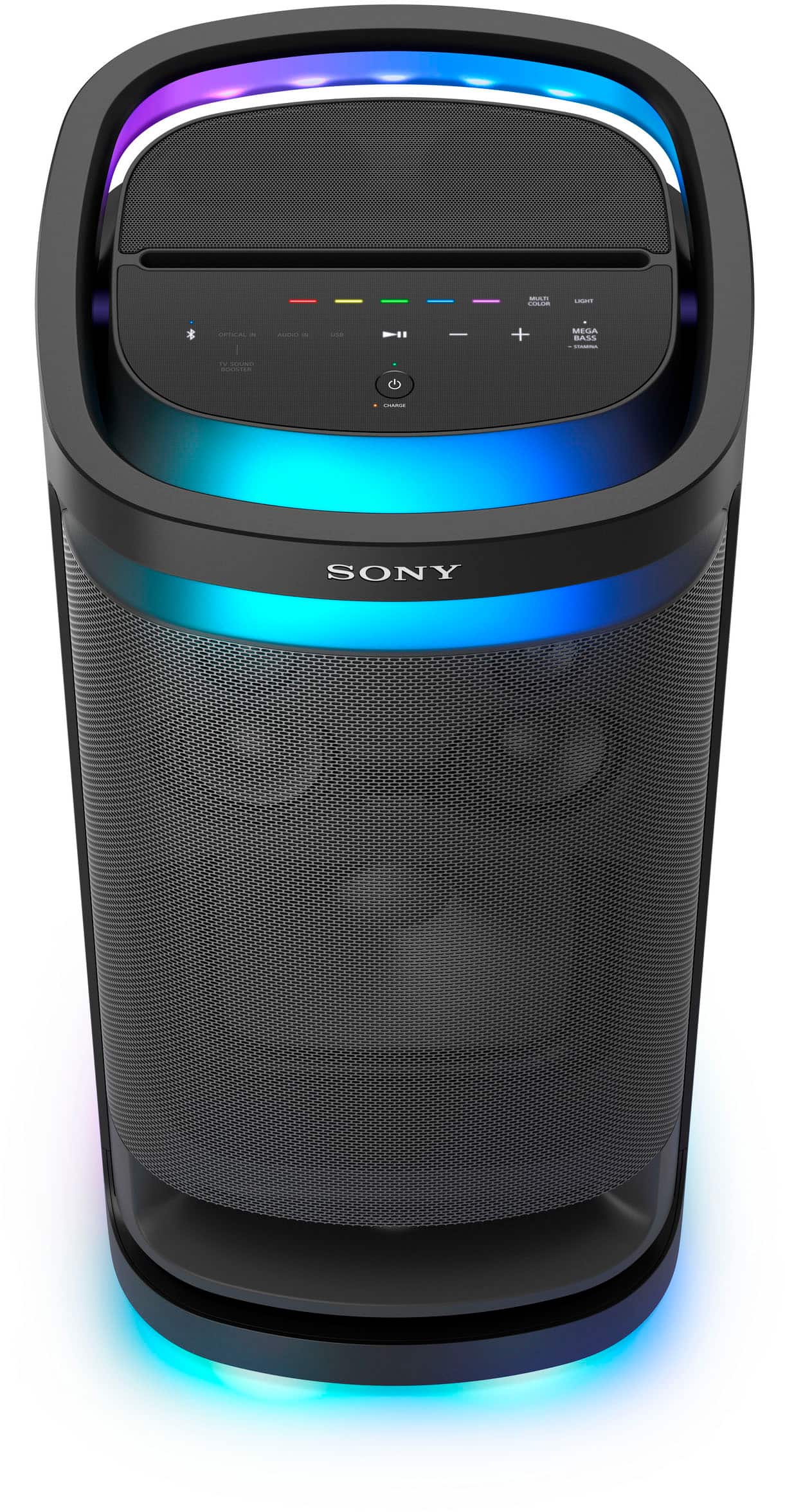
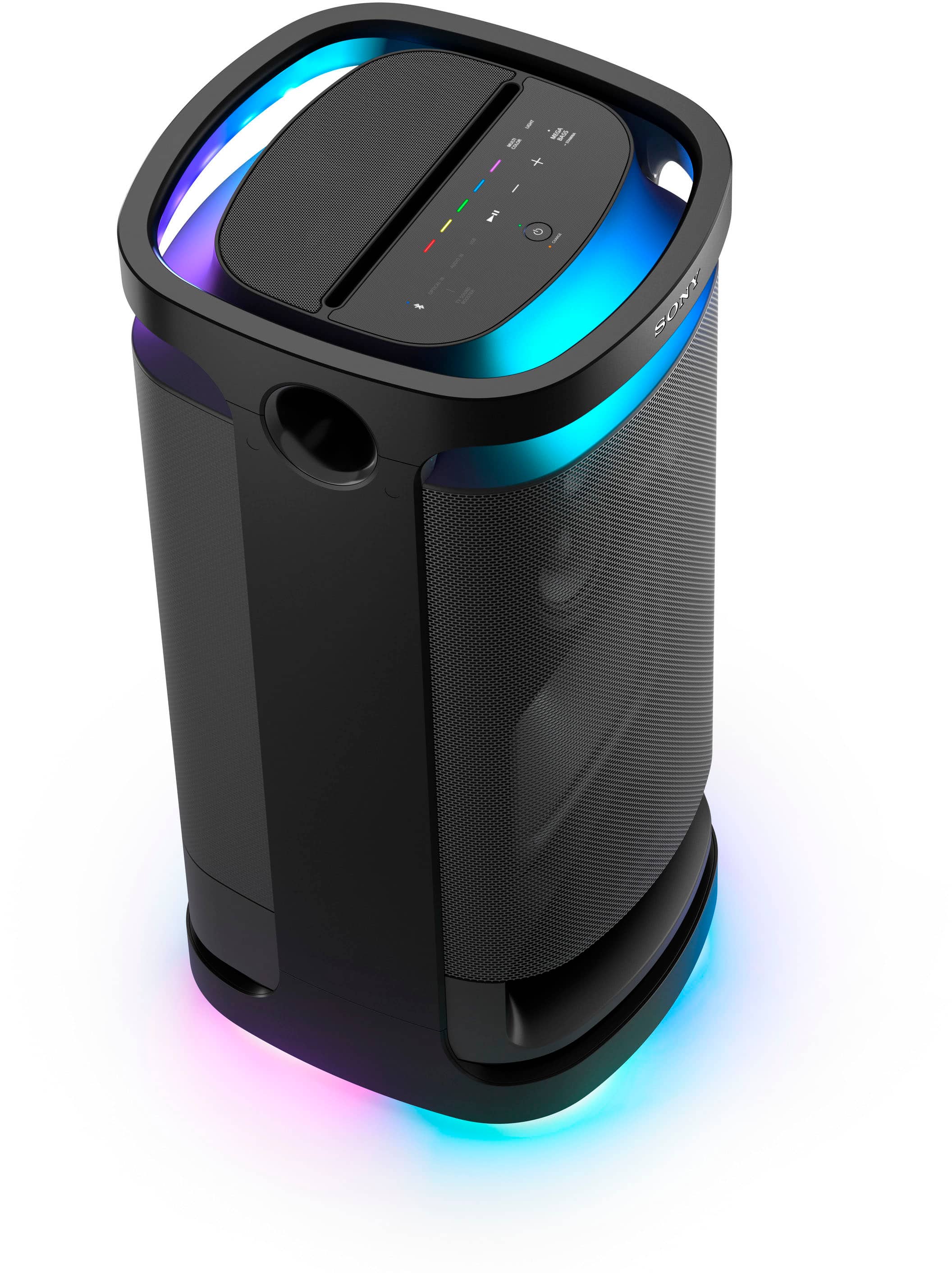
The Sony SRS-XV900 takes a different approach entirely. Released as part of Sony's premium portable speaker series, it emphasizes audio quality, extended battery life, and versatile connectivity options. Sony positioned this as a more sophisticated solution for users who want professional-grade sound reproduction along with their party features.
These different philosophies show up immediately in the technical specifications. The JBL PartyBox 110 uses a dual-woofer system with two 5.25-inch drivers handling the low frequencies, paired with two 2.25-inch tweeters for the highs. This configuration prioritizes impact and volume, allowing the speaker to push out 160W RMS (root mean square—essentially the continuous power it can sustain) with a frequency response from 45 Hz to 20 kHz.
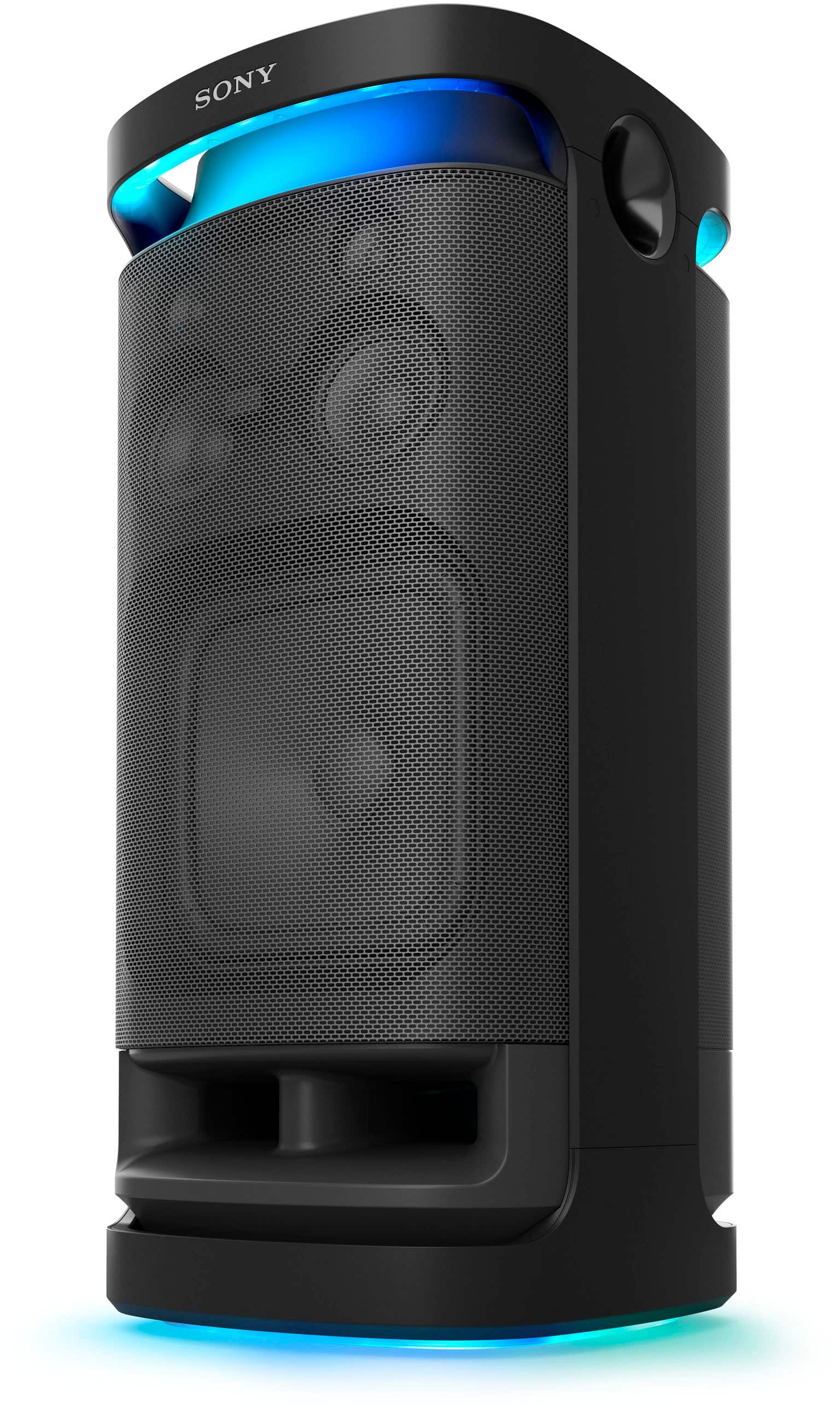
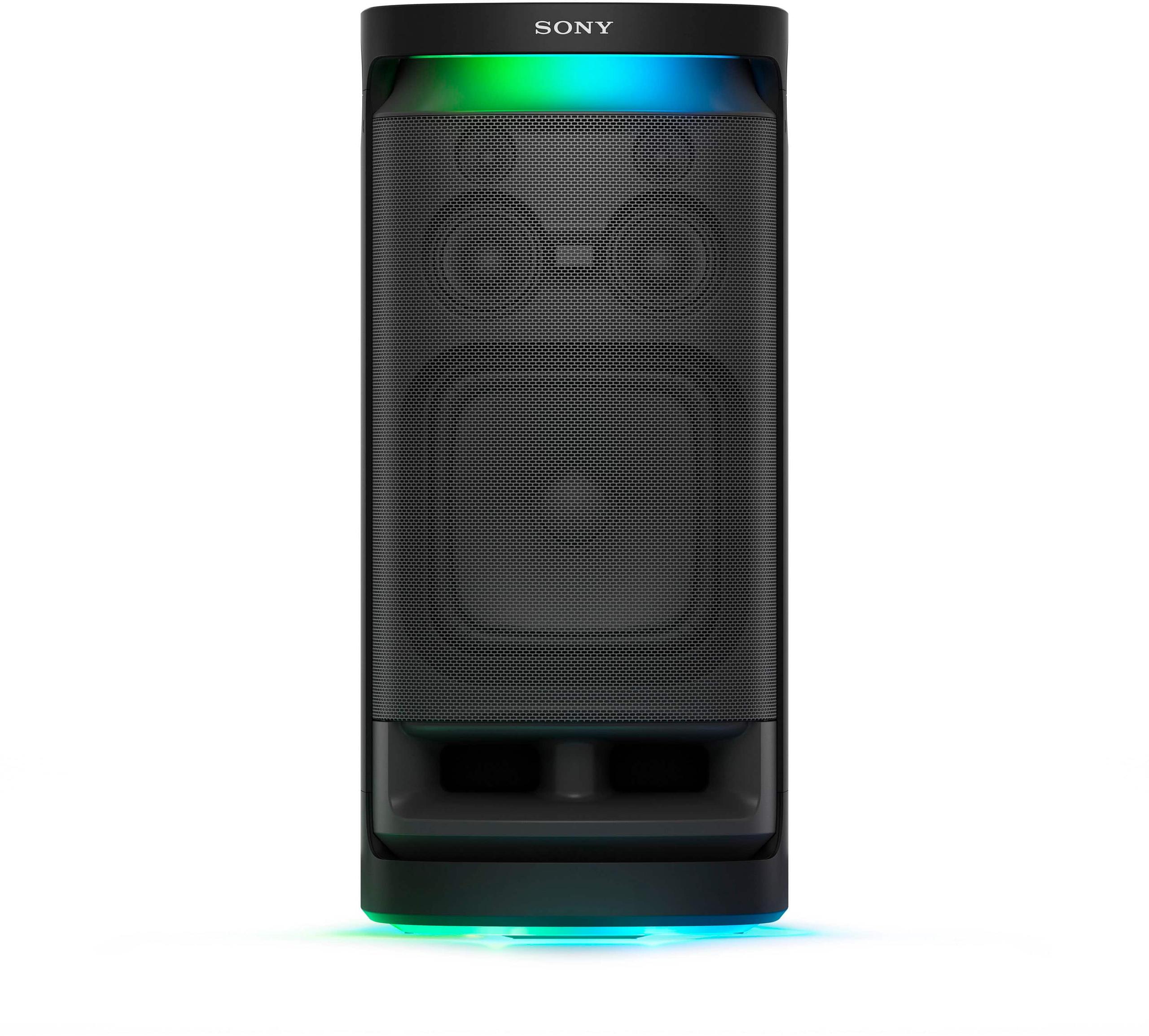
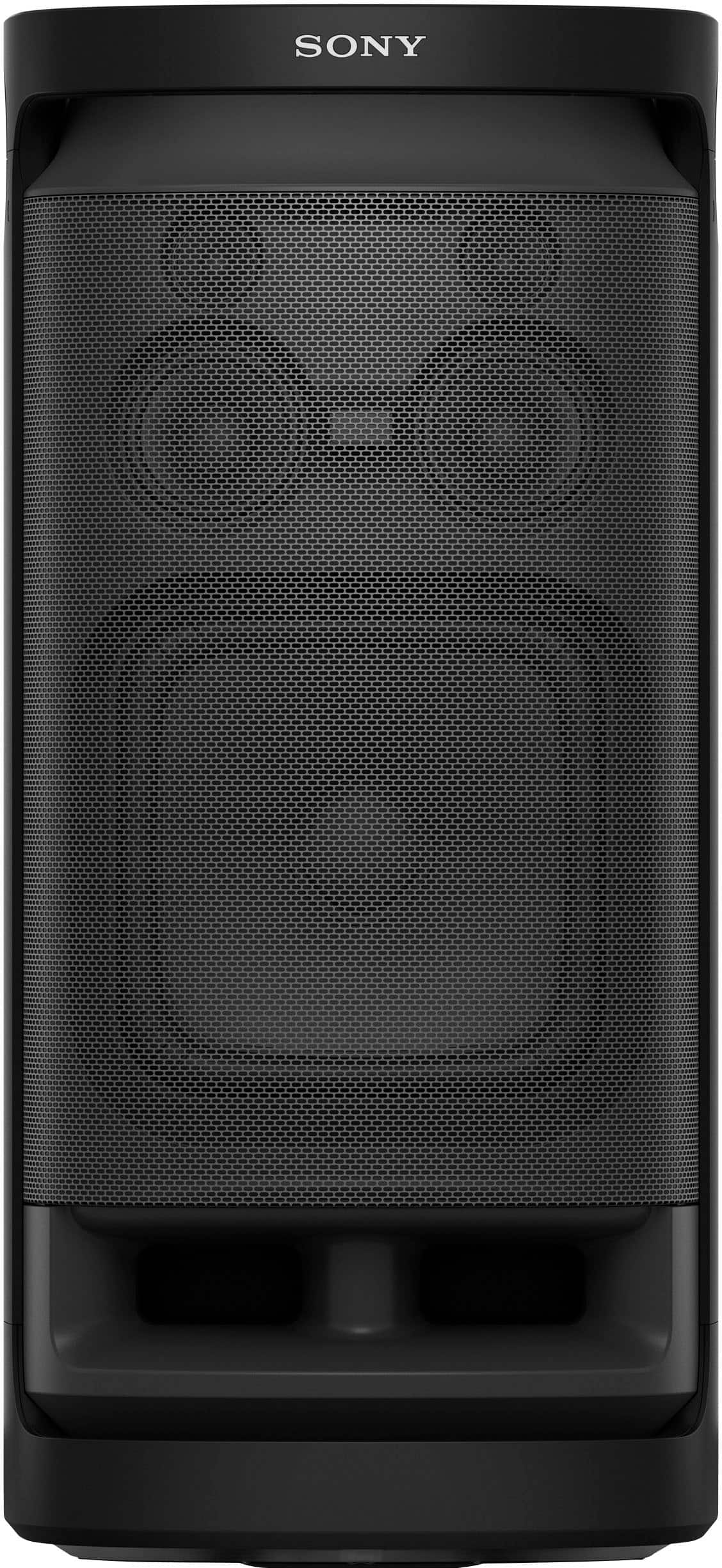
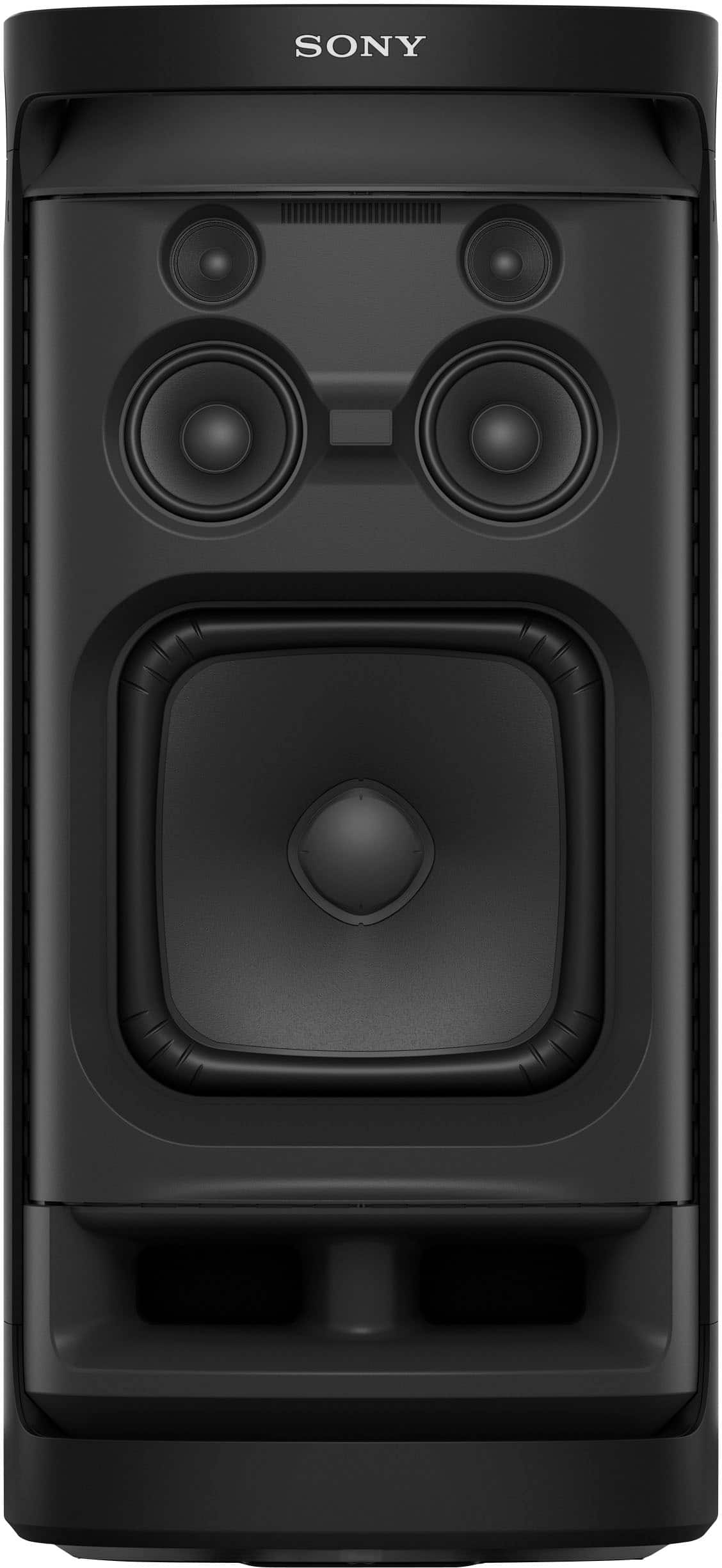
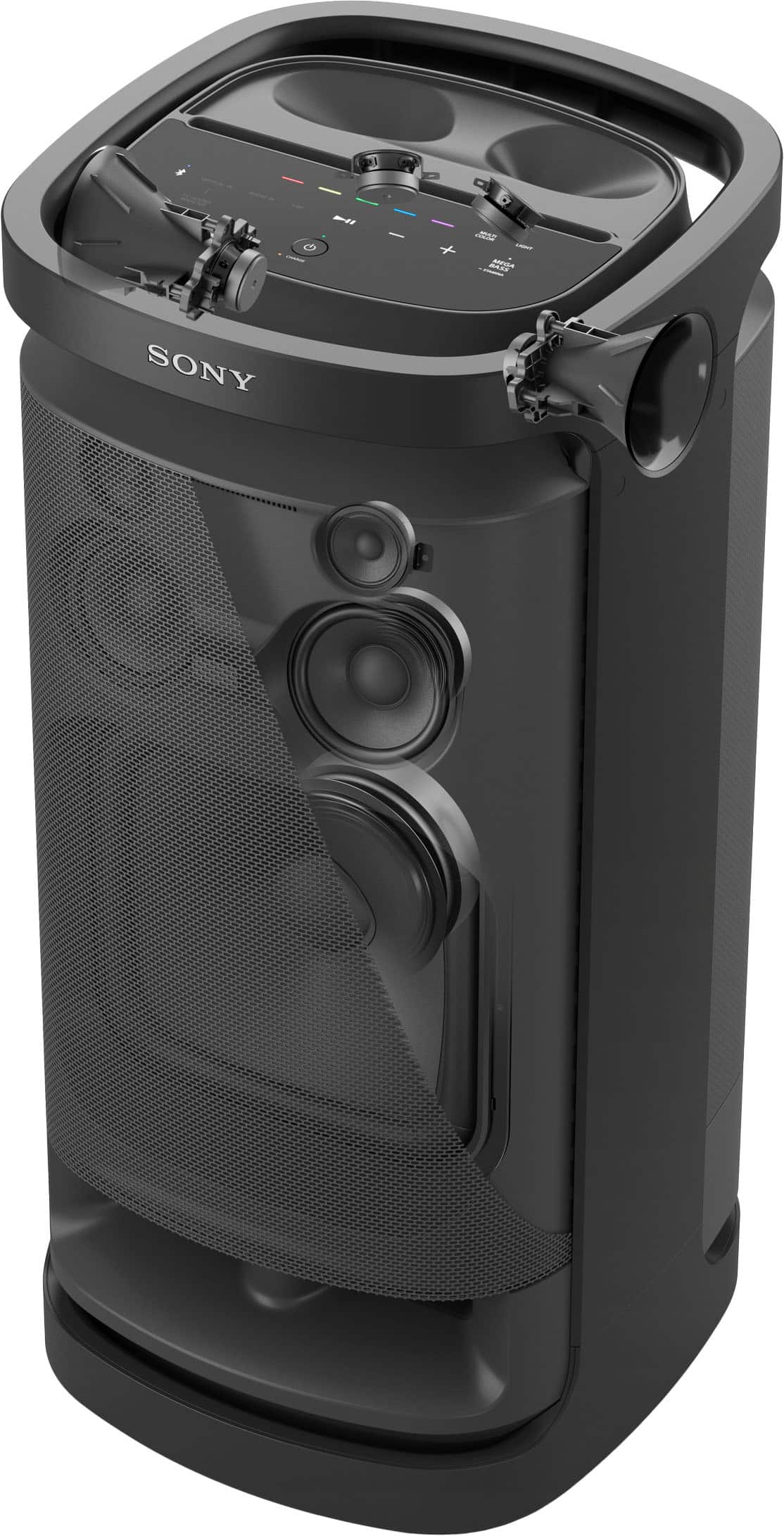
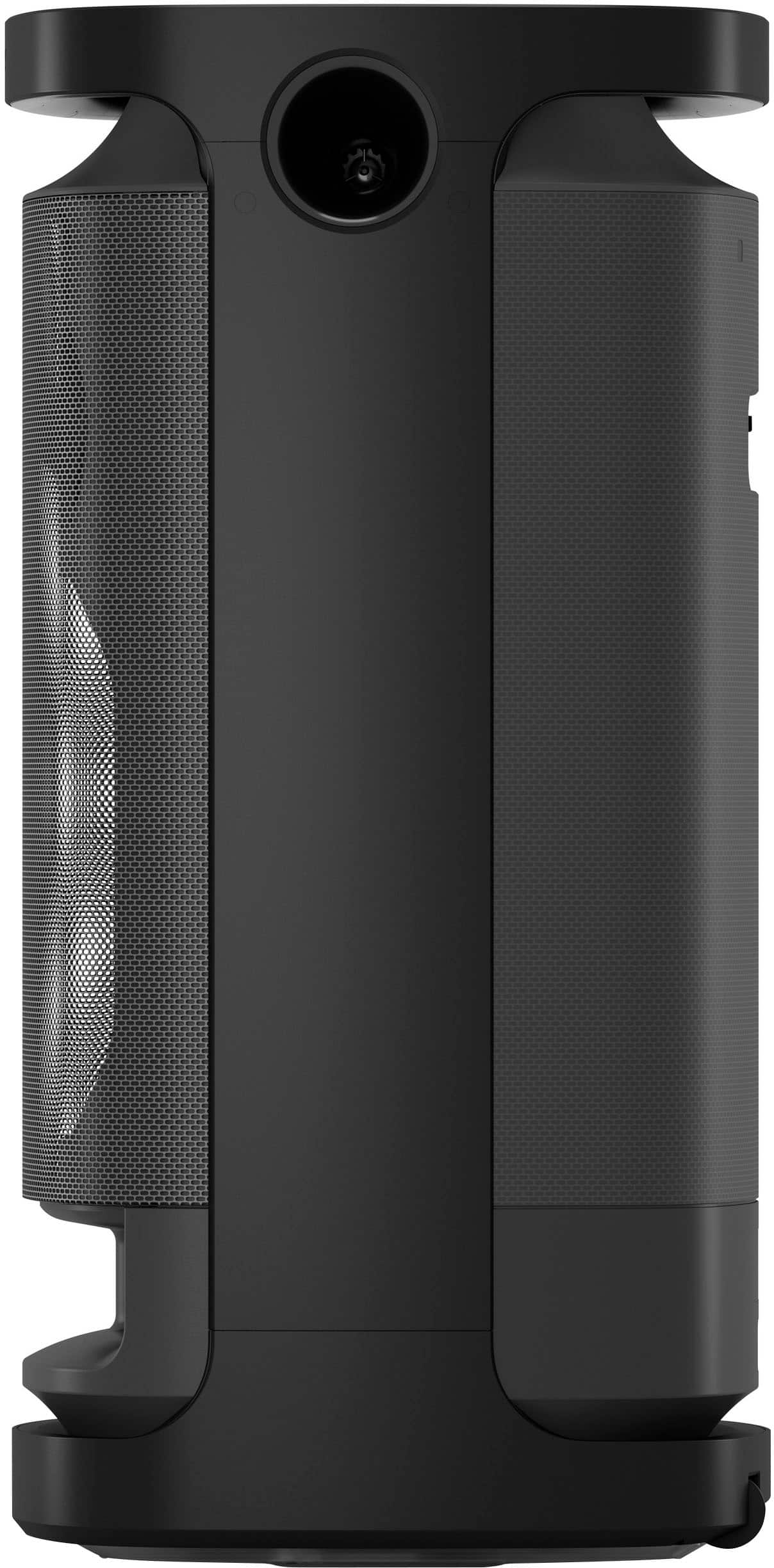
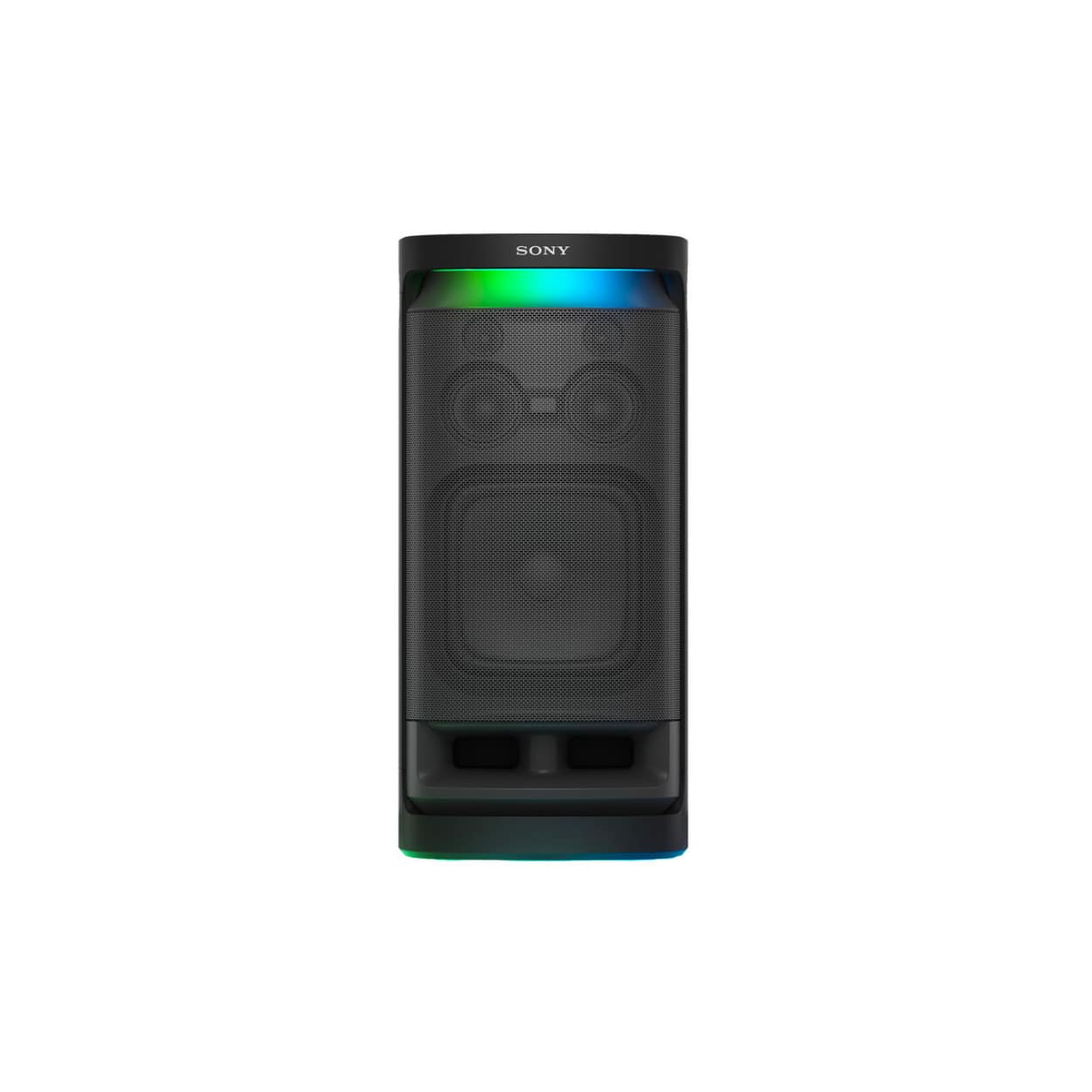
The Sony SRS-XV900 takes a more complex approach with its 4-way speaker system. It features a single large 12.6-inch X-Balanced woofer (Sony's rectangular driver design that increases surface area for better bass), two 4.72-inch midrange drivers dedicated to vocal clarity, and six tweeters positioned strategically around the speaker for 360-degree sound dispersion. This omnidirectional design means the speaker projects sound in all directions rather than just forward, creating a more immersive experience.
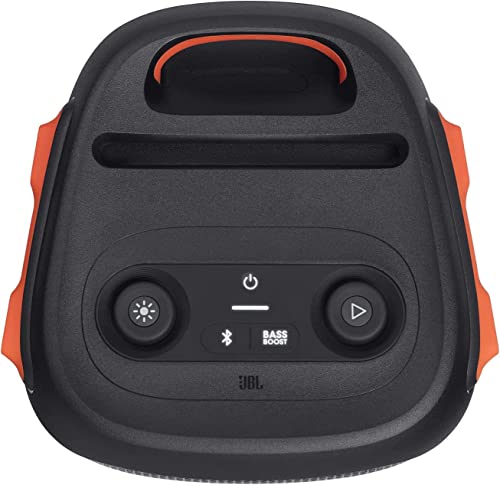
When it comes to actual sound performance, these speakers reveal their different design priorities immediately. The JBL PartyBox 110 is all about creating that visceral, chest-thumping experience that gets people excited. Its dual-woofer setup can produce serious bass impact, especially when you activate the Bass Boost feature that offers two levels of low-frequency enhancement.
Based on extensive user feedback and expert reviews, the JBL consistently delivers louder peak volumes than the Sony, making it better suited for competing with crowd noise or outdoor ambient sound. Users regularly report that they can't even use the speaker at half volume in apartment settings without worrying about noise complaints. The bass response is particularly impressive—reviewers describe it as wall-shaking and capable of delivering that physical sensation of low frequencies that makes dance music and hip-hop truly come alive.
However, this bass-forward approach comes with trade-offs. The JBL's sound signature can become boomy or overwhelming, particularly in smaller spaces. The emphasis on impact over refinement means that while it excels at creating party atmosphere, it's not ideal for listening to music where you want to hear subtle details or instrument separation.
The Sony SRS-XV900 tells a completely different story. Its larger, single woofer and dedicated midrange drivers create what reviewers consistently describe as more balanced, professional-grade sound quality. The frequency response extends down to 20 Hz (compared to the JBL's 45 Hz), meaning it can technically reproduce deeper bass frequencies. More importantly, the sound remains clean and distortion-free even at high volumes.
The six-tweeter array creates that omnidirectional sound field, which means everyone in the room gets a similar listening experience regardless of where they're standing relative to the speaker. This is particularly valuable for larger gatherings where people are spread around a space rather than all facing the speaker directly.
Where the Sony really shines is in instrument separation and vocal clarity. The dedicated midrange drivers ensure that vocals cut through the mix clearly, making it excellent for genres like rock, pop, and jazz where you want to hear the nuances of the performance. The bass, while not as immediately impactful as the JBL's, is tighter and more controlled, providing solid foundation without overwhelming other frequencies.
Battery performance represents one of the starkest differences between these speakers. The JBL PartyBox 110 promises up to 12 hours of playbook time, but real-world usage tells a different story. With the dynamic lighting active and Bass Boost engaged (which is how most people actually use the speaker), you're looking at closer to 6-7 hours of runtime. This is still respectable for most party scenarios, but it means you need to plan around charging breaks for all-day events.
The Sony SRS-XV900 absolutely dominates in this category with its claimed 25-hour battery life. Even accounting for the fact that manufacturer battery claims are typically measured under ideal conditions (moderate volume, lights off, bass boost disabled), the Sony consistently delivers double the real-world runtime of the JBL. This extended battery life fundamentally changes how you can use the speaker—it enables true all-day festivals, beach parties, or camping trips without anxiety about finding power.
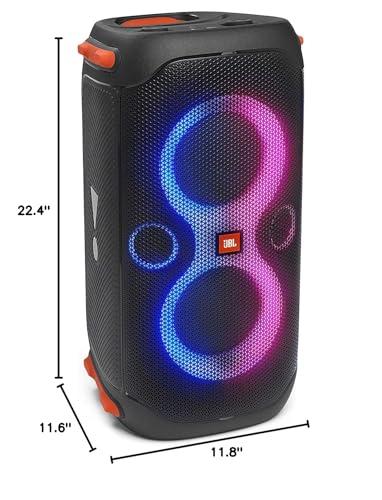
The trade-off is physical size and weight. The JBL PartyBox 110 weighs 23 pounds with built-in handles, making it manageable for one person to carry reasonable distances. The Sony, at 58 pounds, requires wheels and integrated handles for transport. While the wheels work well on smooth surfaces, the Sony definitely feels more like equipment you set up and leave in place rather than something you casually move around.
This weight difference affects more than just transport—it impacts where and how you can use each speaker. The JBL works great for spontaneous gatherings, beach trips, or situations where you need to carry the speaker any distance. The Sony is better suited for events where you can drive right up to the location or situations where the superior battery life justifies the setup effort.
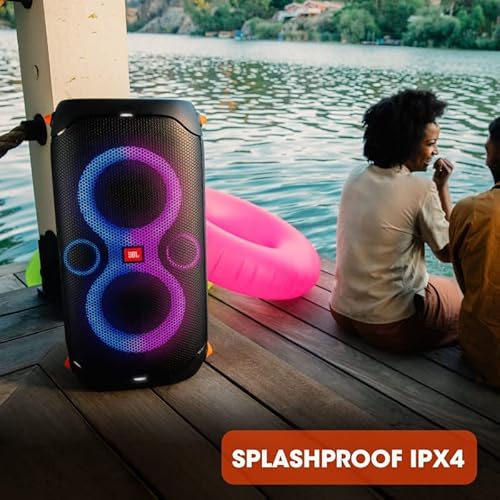
For outdoor use, weather resistance becomes crucial. The JBL PartyBox 110 features an IPX4 rating, which means it's protected against splashes from any direction. This rating makes it confident around pools, at beach parties, or during light rain. The certification requires the input flaps to be properly sealed, but once they are, you can party without constantly worrying about water damage.
The Sony SRS-XV900 claims water resistance but doesn't specify an IP rating, which creates uncertainty for outdoor use. Based on user experiences, it handles light splashes fine, but it's not something you'd want to use right next to a pool or in potentially wet conditions. This limitation is significant given the speaker's premium positioning and the fact that many party scenarios involve water.
Both speakers feature solid build quality, but they approach durability differently. The JBL feels designed to handle being knocked around—its compact form factor and lighter weight make it less likely to tip over or get damaged from movement. The Sony feels more premium and refined, but its size and weight make it more of a piece of equipment that needs to be treated with care.
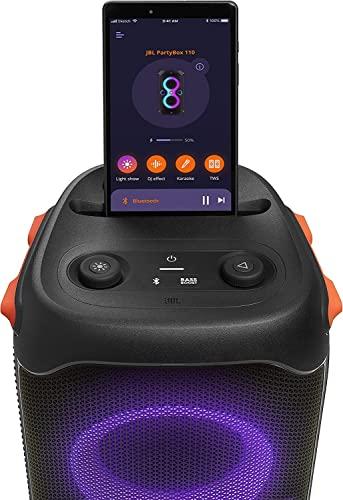
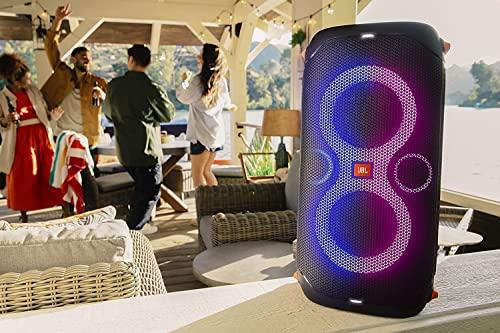
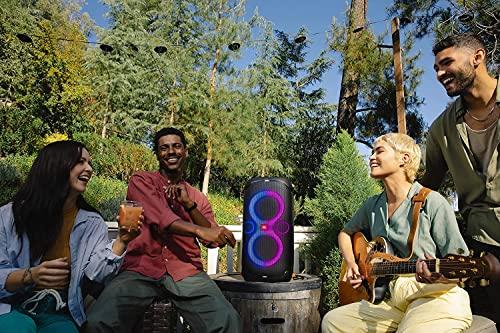
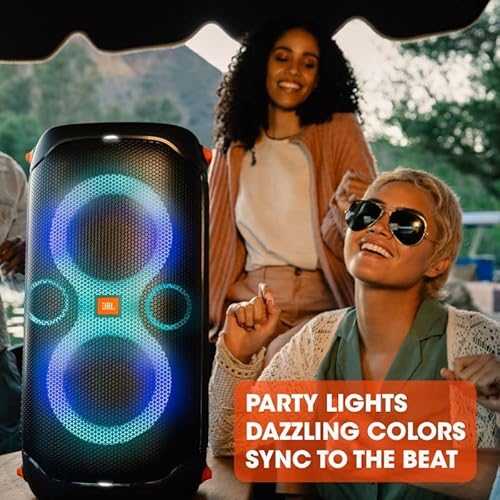
This is where these speakers really differentiate themselves in terms of party atmosphere. The JBL PartyBox 110 features dynamic RGB light rings that synchronize with the music's beat, creating an immersive visual experience that transforms any gathering. The lighting is genuinely impressive—multiple reviewers note that JBL has mastered this feature better than competitors. Through the PartyBox app, you can customize colors, patterns, and effects to match the mood of your event.
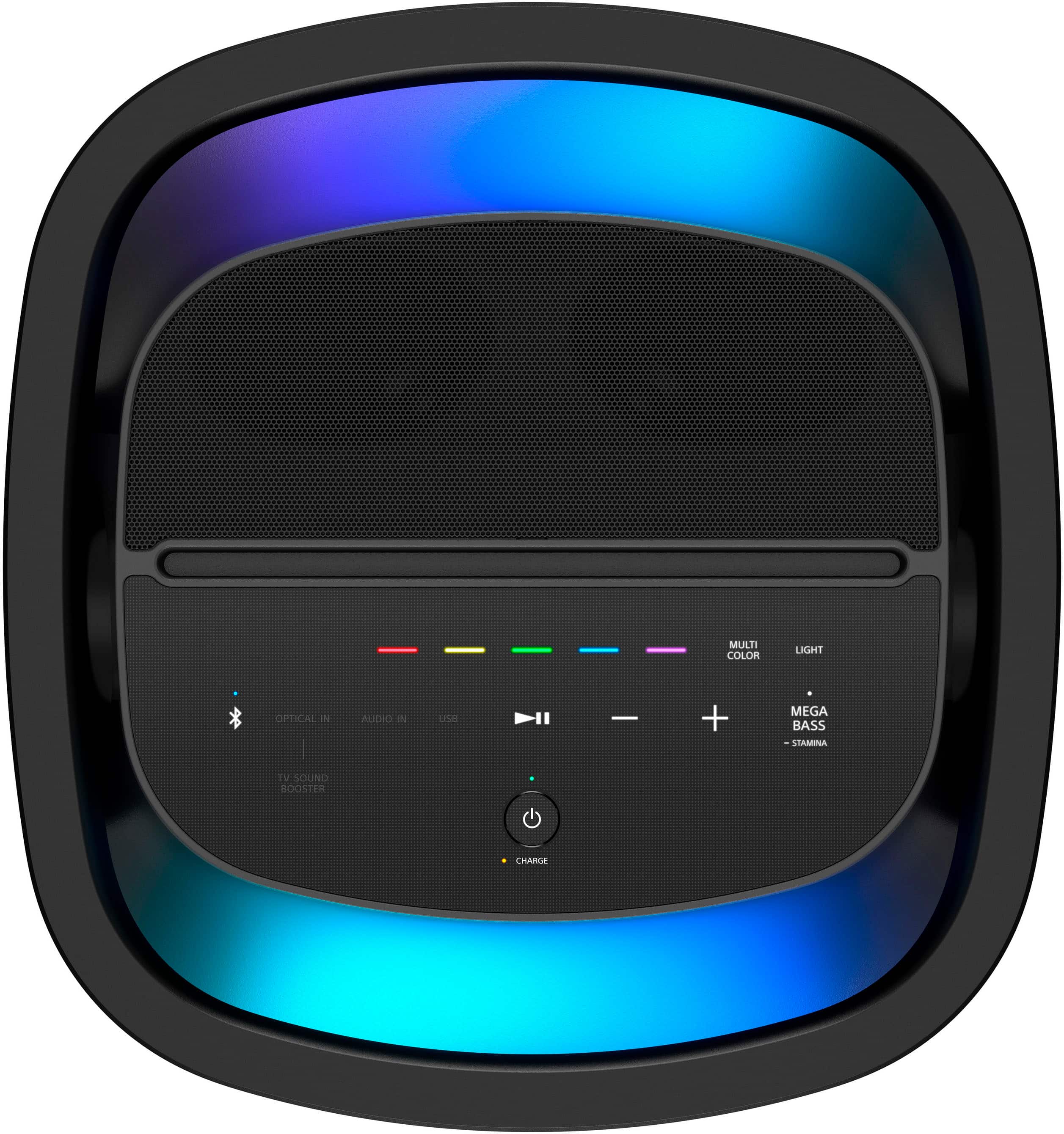
The Sony SRS-XV900 includes lighting, but it's much more subdued—LED rings at the top and bottom of the speaker that provide ambient enhancement rather than a dynamic light show. If lighting is important for creating party atmosphere, the JBL wins decisively.
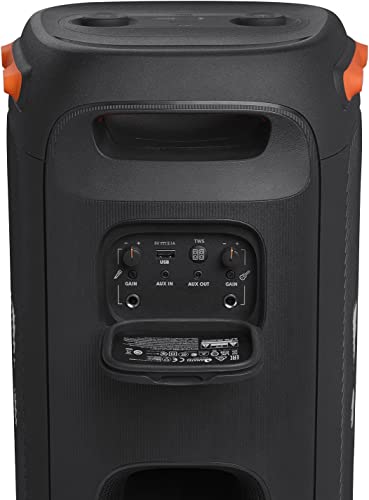
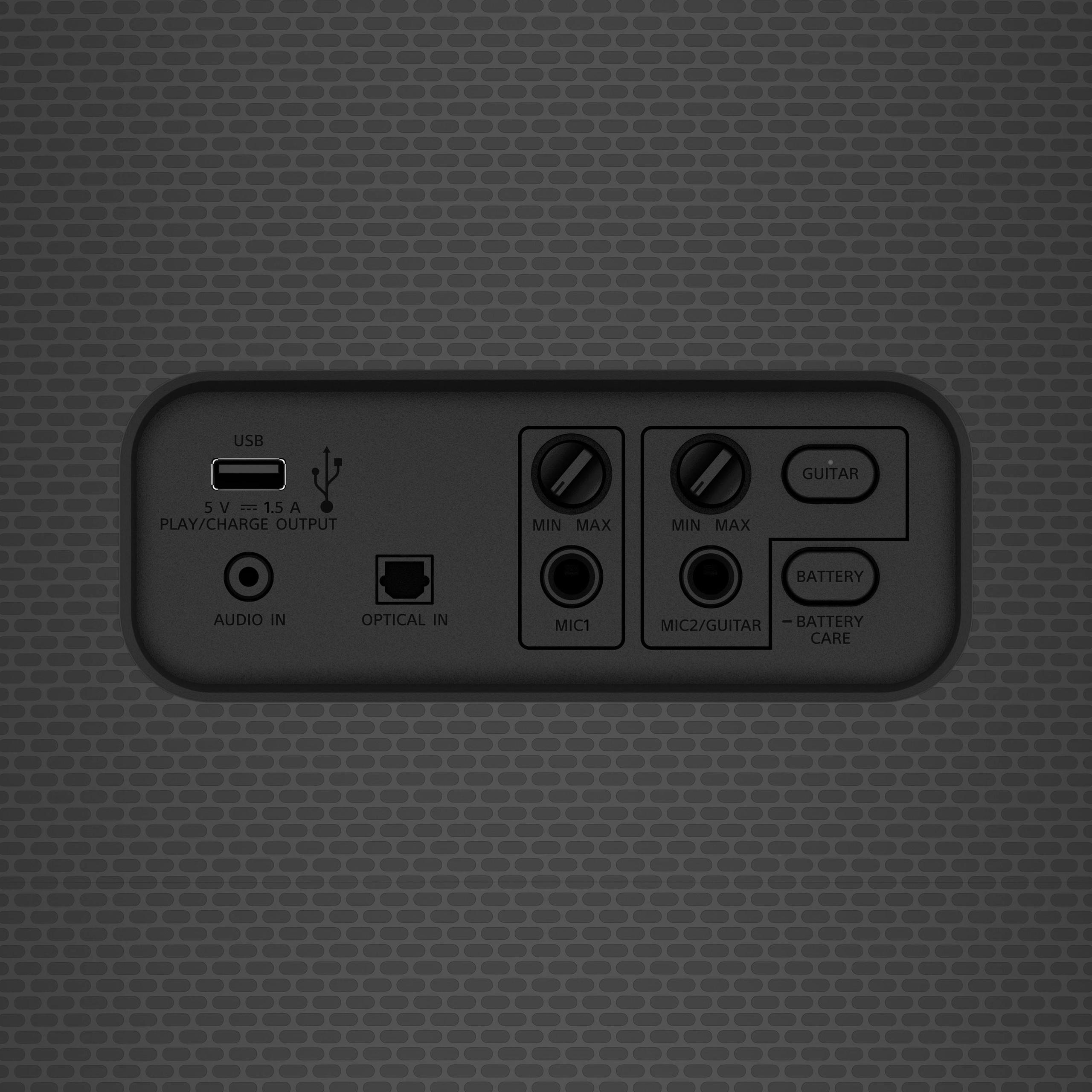
For karaoke and live performance, both speakers include 1/4-inch microphone and guitar inputs, but they handle them differently. The JBL has dedicated mic and guitar inputs with individual volume controls, though the secondary input (guitar) runs at lower gain than the primary microphone input. The Sony supports two full-volume microphones simultaneously, making it better for duets or situations where multiple people want to sing.
The Sony includes a unique feature that sets it apart: an optical digital input that enables TV sound boosting. This transforms the speaker into a powerful soundbar alternative, creating a 2-in-1 device that can enhance your home theater experience when it's not being used for parties. This versatility adds significant value, particularly for apartment dwellers who want one device that can serve multiple purposes.
App connectivity differs significantly between the two. The JBL PartyBox app focuses on lighting control, basic EQ adjustments, and True Wireless Stereo pairing (connecting two speakers for stereo sound). The Sony uses both Music Center and Fiestable apps, providing extensive customization options, sound effects, and the ability to connect up to 100 compatible Sony speakers for massive sound installations.
At the time of writing, these speakers occupy different price tiers, with the JBL PartyBox 110 positioned as the more affordable option and the Sony SRS-XV900 commanding a significant premium. This price difference reflects their different design priorities and target audiences.
The JBL delivers impressive value for users who want maximum party impact without breaking the bank. You get loud, bass-heavy sound, dynamic lighting, basic karaoke capability, and weather resistance in a portable package. For casual party hosts, college students, or anyone who prioritizes fun over audiophile-grade reproduction, the JBL represents excellent value.
The Sony justifies its premium pricing through superior battery life, professional sound quality, and versatile connectivity options. The ability to use it as both a party speaker and TV sound enhancement system adds value, particularly for people who want one high-quality device rather than multiple specialized ones. The extended battery life also provides better long-term value by reducing charging cycles and enabling longer usage sessions.
While both speakers work in home settings, the Sony SRS-XV900 excels as a home theater component thanks to its optical input and TV Sound Booster mode. This feature automatically optimizes the sound for dialogue and movie audio, providing a significant upgrade over built-in TV speakers. The 360-degree sound dispersion works well in living rooms, creating immersive audio without requiring precise positioning.
The JBL PartyBox 110 can certainly enhance TV audio through Bluetooth or auxiliary connection, but it lacks the dedicated TV optimization features. Its bass-forward sound signature can actually be problematic for movie dialogue, potentially making voices less clear. However, for gaming or action movies where you want maximum impact, the JBL's powerful bass response can create an exciting experience.
Both speakers represent current-generation technology with modern Bluetooth connectivity (5.1 for the JBL, 5.2 for the Sony) and contemporary battery technology. The Sony includes support for LDAC, Sony's high-quality Bluetooth codec that transmits three times more data than standard Bluetooth for better sound quality from compatible devices.
Since their releases, the portable speaker market has continued evolving toward larger batteries, better weather resistance, and more sophisticated app integration. Both speakers remain competitive in their respective segments, though newer models from various manufacturers have pushed the boundaries further in terms of battery life and features.
Based on extensive research into user experiences and expert reviews, clear usage patterns emerge for each speaker.
Choose the JBL PartyBox 110 if you're a casual party host who wants maximum excitement and energy. It's perfect for people who frequently move their speaker between locations, need weather resistance for outdoor use, or have budget constraints. The dynamic lighting and powerful bass make it ideal for creating that high-energy party atmosphere that gets everyone dancing. College students, young professionals with active social lives, and anyone who prioritizes fun over audio refinement will love this speaker.
The Sony SRS-XV900 makes sense for users who host longer events, care about sound quality, or want a versatile device that serves multiple purposes. It's ideal for professional applications like small venue performances, wedding receptions, or corporate events where audio quality matters. The extended battery life makes it perfect for all-day festivals, camping trips, or any situation where charging isn't convenient. If you want one premium device that can handle both party duties and home theater enhancement, the Sony justifies its higher price tag.
These speakers succeed in different ways, making the choice largely dependent on your specific needs and priorities. The JBL PartyBox 110 maximizes fun and excitement per dollar spent, delivering the kind of immediate impact that makes parties memorable. The Sony SRS-XV900 provides professional-grade performance and versatility that justifies its premium pricing for users who need superior battery life and sound quality.
For most casual users, the JBL offers the better value proposition—it's loud enough for any reasonable party scenario, features impressive lighting, and won't break the bank. However, if you frequently host all-day events, care deeply about audio quality, or want the flexibility of TV sound enhancement, the Sony proves its worth through superior endurance and refinement.
The decision ultimately comes down to whether you prioritize immediate impact and affordability or long-term performance and versatility. Both speakers excel in their intended roles, making either a solid choice depending on your specific party speaker needs.
| JBL PartyBox 110 | Sony SRS-XV900 |
|---|---|
| Power Output - Determines maximum volume and room-filling capability | |
| 160W RMS (loud enough for most parties) | ~100W consumption (refined but less peak volume) |
| Battery Life - Critical for outdoor events and all-day parties | |
| 12 hours rated (6-7 hours real-world with features active) | 25 hours rated (significantly longer real-world performance) |
| Weight & Portability - Affects how easily you can transport to events | |
| 23 lbs with handles (manageable for one person) | 58 lbs with wheels (requires planning but ultra-stable) |
| Water Resistance - Essential for poolside and outdoor use | |
| IPX4 splashproof (confident around water) | Water resistant (limited outdoor confidence) |
| Driver Configuration - Impacts sound quality and dispersion | |
| Dual 5.25" woofers + dual 2.25" tweeters | Single 12.6" woofer + dual midrange + 6 tweeters |
| Frequency Response - Shows bass depth and overall sound range | |
| 45 Hz - 20 kHz (punchy but limited low-end) | 20 Hz - 20 kHz (technically deeper bass extension) |
| Sound Character - Different approaches to party audio | |
| Bass-heavy, high-energy impact sound | Balanced, professional-grade audio quality |
| Lighting Features - Creates visual party atmosphere | |
| Dynamic RGB light rings with beat sync and app control | Subtle LED ambient lighting only |
| Microphone Inputs - For karaoke and live performance | |
| 1/4" mic + guitar inputs (guitar input at reduced gain) | Dual 1/4" inputs supporting two full-volume mics |
| Unique Features - Standout capabilities that differentiate each model | |
| PartyBox app, TWS pairing, weatherproof design | Sony's optical TV input, 360° sound, marathon battery |
| Best Use Cases - Who should choose which speaker | |
| Mobile parties, outdoor events, budget-conscious buyers | All-day events, home theater, professional applications |
The JBL PartyBox 110 is significantly louder, delivering 160W RMS output that can easily fill large rooms and outdoor spaces. The Sony SRS-XV900 produces around 100W and focuses more on balanced sound quality than peak volume. If maximum loudness is your priority, the JBL PartyBox 110 wins decisively.
The Sony SRS-XV900 offers up to 25 hours of battery life, more than double the JBL PartyBox 110's 12-hour rating. In real-world use with lights and bass boost active, expect about 6-7 hours from the JBL and 15-20 hours from the Sony. For all-day events, the Sony's extended battery life is a game-changer.
Both speakers deliver powerful bass but in different ways. The JBL PartyBox 110 produces more impactful, chest-thumping bass that's perfect for dance music and hip-hop. The Sony SRS-XV900 offers deeper frequency response (down to 20 Hz vs 45 Hz) with more controlled, balanced bass. Choose the JBL for party impact, the Sony for audio quality.
The JBL PartyBox 110 features IPX4 splashproof rating, making it safe around pools and light rain. The Sony SRS-XV900 claims water resistance but lacks an official IP rating, making it less suitable for wet environments. For poolside parties and beach use, the JBL is the safer choice.
The JBL PartyBox 110 weighs 23 pounds with built-in handles, making it manageable for one person to carry. The Sony SRS-XV900 weighs 58 pounds and requires wheels for transport. While both are "portable," the JBL is significantly easier to move between locations and better for spontaneous gatherings.
Both speakers support karaoke with 1/4-inch microphone inputs. The Sony SRS-XV900 can handle two full-volume microphones simultaneously, making it better for duets. The JBL PartyBox 110 has dedicated mic and guitar inputs but the secondary input runs at reduced volume. For serious karaoke sessions, the Sony offers more flexibility.
The Sony SRS-XV900 excels for home theater use with its optical digital input and TV Sound Booster mode, effectively functioning as a premium soundbar. The JBL PartyBox 110 can connect via Bluetooth or aux cable but lacks dedicated TV optimization. For dual-purpose use as both party speaker and home theater enhancement, choose the Sony.
The JBL PartyBox 110 features dynamic RGB light rings that sync with music beats, offering extensive customization through the PartyBox app. The Sony SRS-XV900 has subtle LED ambient lighting that's much less dramatic. If visual party atmosphere is important, the JBL's lighting system is far superior.
The Sony SRS-XV900 delivers superior overall sound quality with better instrument separation, clearer vocals, and more balanced frequency response. The JBL PartyBox 110 prioritizes impact over refinement, producing exciting but sometimes boomy sound. For audiophile-level listening, the Sony is the clear winner, while the JBL excels at creating party energy.
Both speakers support multi-speaker setups but differently. The JBL PartyBox 110 offers True Wireless Stereo (TWS) pairing to connect two units for stereo sound. The Sony SRS-XV900 supports Party Connect to link up to 100 compatible Sony speakers for massive installations. The Sony offers more expandability for large events.
The JBL PartyBox 110 is better suited for outdoor use thanks to its IPX4 water resistance, lighter weight for transport, and louder output to compete with ambient noise. The Sony SRS-XV900 offers longer battery life but lacks weather protection and is harder to move. For beach parties, camping, and poolside events, choose the JBL.
The JBL PartyBox 110 typically offers better value for casual users, providing loud sound, dynamic lighting, and weather resistance at a more accessible price point. The Sony SRS-XV900 justifies its premium pricing with double the battery life, superior sound quality, and TV connectivity. Choose the JBL for budget-conscious party hosting, the Sony for professional applications and extended use.
We've done our best to create useful and informative comparisons to help you decide what product to buy. Our research uses advanced automated methods to create this comparison and perfection is not possible - please contact us for corrections or questions. These are the sites we've researched in the creation of this article: rtings.com - youtube.com - bestbuy.com - gadgets360.com - popsci.com - youtube.com - audioadvice.com - popsci.com - youtube.com - versus.com - youtube.com - rtings.com - jbl.com - in.jbl.com - jbl.com.tw - bhphotovideo.com - in.jbl.com - jbl.com - youtube.com - hu.harmanaudio.com - jbl.com.au - global.jbl.com - support.jbl.com - youtube.com - kh.jbl.com - onward.ph - jbl.com.ph - support.jbl.com - youtube.com - bestbuy.com - youtube.com - crutchfield.com - versus.com - youtube.com - versus.com - youtube.com - comparisontabl.es - tech.hindustantimes.com - youtube.com - electronics.sony.com - youtube.com - crutchfield.com - centresdirect.co.uk - sony-asia.com - nikktech.com - sony.com - youtube.com - reliancedigital.in - sonyworld.ae - sony.com - shopjetson.com - bestbuy.com - versus.com

Privacy Policy
Terms and Conditions - Affiliate Policy
Home Security
© Copyright 2008-2026.
11816 Inwood Rd #1211, Dallas, TX 75244