

The world of portable party speakers has exploded over the past few years, transforming how we think about bringing music to outdoor gatherings, house parties, and mobile entertainment. These aren't your typical Bluetooth speakers – they're powerful, battery-powered sound systems designed to fill large spaces with room-shaking bass and eye-catching light shows.
At the heart of this category sits a fundamental question: do you want maximum power for your dollar, or are you willing to pay more for refined engineering and reliability? The Rockville Rock Party 9 and JBL PartyBox 110 represent two distinct approaches to this challenge, each targeting different user priorities and budgets.
The portable party speaker market has matured significantly since around 2018, when manufacturers began seriously competing on features like LED lighting synchronization, karaoke capabilities, and app control. What started as simple "loud Bluetooth speakers" has evolved into sophisticated entertainment systems that can rival traditional DJ setups for many applications.
Before diving into specifics, it's worth understanding what makes these speakers different from regular Bluetooth speakers. The key considerations center around power output (how loud they can get), frequency response (what range of sounds they reproduce), battery endurance (how long they'll run), and entertainment features (lighting, karaoke, app control).
Power output gets measured in watts, but companies often list both "peak" and "RMS" ratings. Peak power represents short bursts during loud musical passages, while RMS (Root Mean Square) indicates sustained power output – the more honest measurement for real-world performance. Frequency response tells you the range from deep bass (measured in Hz) to high treble (measured in kHz) that a speaker can reproduce. Human hearing typically spans 20Hz to 20kHz, so speakers covering this range can theoretically reproduce all audible sounds.
The rise of Class D amplifiers has revolutionized portable speakers since the mid-2010s. These digital amplifiers waste far less energy as heat compared to older analog designs, allowing manufacturers to pack more power into battery-powered units while extending runtime.
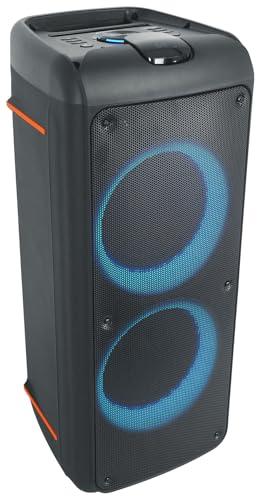
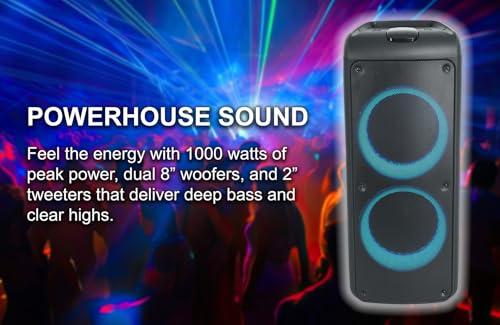
When it comes to sheer audio muscle, the Rockville Rock Party 9 takes an aggressive approach. With 1000 watts peak power and 250 watts RMS, it significantly outguns the JBL PartyBox 110's 160 watts RMS. But these numbers alone don't tell the whole story.
The Rockville achieves its power advantage through larger drivers – dual 8-inch woofers versus the JBL's dual 5.25-inch units. Driver size directly correlates with bass output capability, since larger cones can move more air. Think of it like the difference between a small fan and a large one – the bigger fan moves more air with each rotation.
However, our research into user experiences reveals that raw power doesn't always translate to better sound. The JBL PartyBox 110 demonstrates superior acoustic engineering, with users consistently noting cleaner sound at high volumes and better instrument separation (the ability to distinguish individual instruments in complex music). The JBL's heritage in professional audio equipment shows here – they've been making speakers for concert venues and recording studios since the 1940s.
Volume capabilities differ meaningfully between these speakers. The Rockville Rock Party 9 can absolutely blast music loud enough to fill large outdoor spaces, with multiple users reporting they can't use it at half volume in residential settings without disturbing neighbors. The JBL PartyBox 110 gets plenty loud for most applications but prioritizes maintaining audio quality as volume increases, rather than simply maximizing decibel output.
For perspective, every 3dB increase represents a doubling of perceived loudness. So while the Rockville might achieve 2-3dB higher maximum output, this represents a noticeable but not dramatic difference in real-world listening.
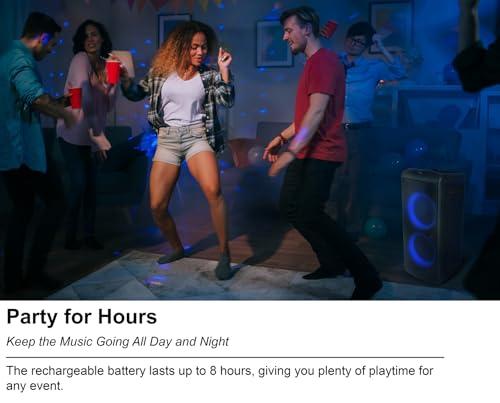
Battery performance creates perhaps the starkest difference between these speakers. The JBL PartyBox 110 delivers up to 12 hours of playback, while the Rockville Rock Party 9 manages 6-8 hours at moderate volumes, dropping to just 2-3 hours when pushed hard.
This difference stems from fundamental design philosophies. JBL optimized their Class D amplifier and power management systems for efficiency, while Rockville prioritized maximum output. The JBL's lithium-ion polymer battery technology, refined since around 2019, provides more consistent power delivery as the battery drains.
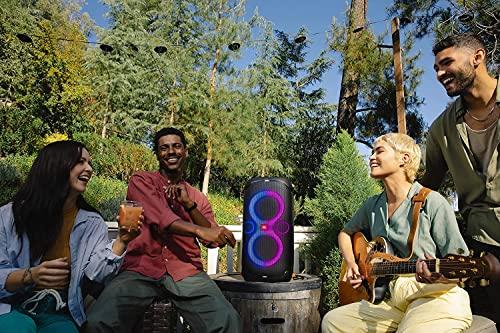
In practical terms, this battery gap significantly affects use cases. The JBL PartyBox 110 can handle all-day events like wedding receptions, outdoor festivals, or beach parties without needing a power outlet. The Rockville Rock Party 9 works better for shorter, high-energy events like backyard barbecues or pool parties where maximum impact matters more than endurance.
Both speakers support pass-through charging (using them while plugged in), but the JBL's superior battery means less dependency on finding power outlets during events.
The sound signature differences between these speakers reflect their target audiences. The Rockville Rock Party 9 employs a bass-forward tuning designed to create immediate impact. Its dual 8-inch woofers in a ported enclosure (a design with openings that enhance bass response) generate substantial low-end punch that users describe as "earth-shaking."
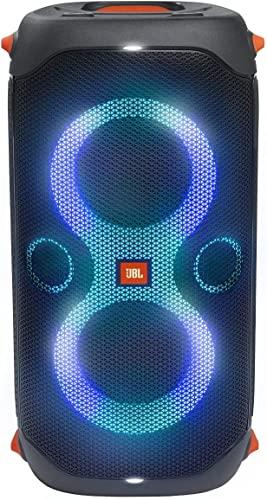
The JBL PartyBox 110 takes a more balanced approach, with its dual 5.25-inch woofers and dual 2.25-inch tweeters creating what audio engineers call a "flatter frequency response" – meaning it reproduces different frequency ranges more evenly. This results in clearer vocals, better instrument definition, and less audio compression (distortion that occurs when speakers are pushed beyond their limits).
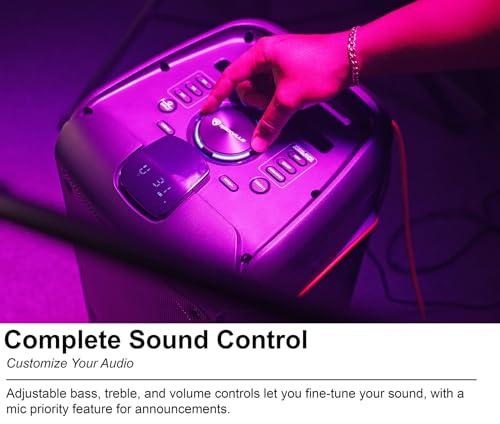
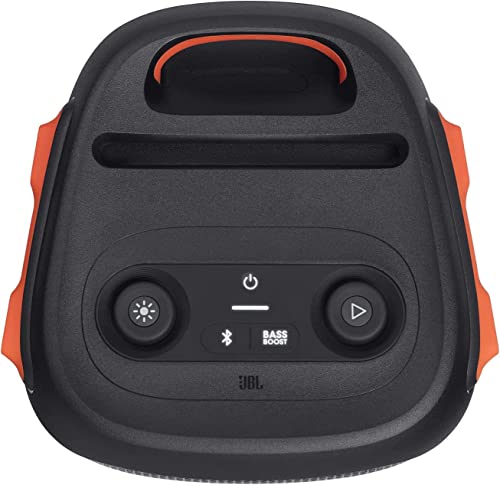
Bass boost features work differently on each speaker. The Rockville offers basic EQ adjustments, while the JBL provides two distinct bass boost levels that intelligently adjust multiple frequency ranges simultaneously. The JBL's approach prevents the muddiness that can occur when simply amplifying low frequencies.
For home theater applications, the JBL PartyBox 110 performs better due to its balanced sound signature and cleaner dialogue reproduction. While neither speaker replaces a dedicated surround sound system, the JBL can serve double-duty as both a party speaker and temporary home theater solution.
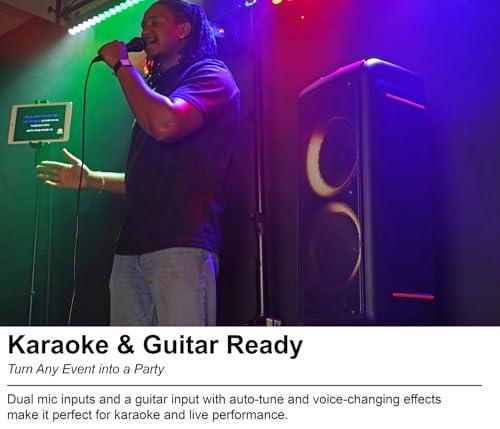
Both speakers excel at entertainment features, but with different strengths. The Rockville Rock Party 9 goes all-in on karaoke functionality, offering auto-tune, voice-changing effects, echo control, and dual microphone inputs. The mic priority function automatically reduces music volume when someone speaks into the microphone – a professional feature typically found on much more expensive PA systems.
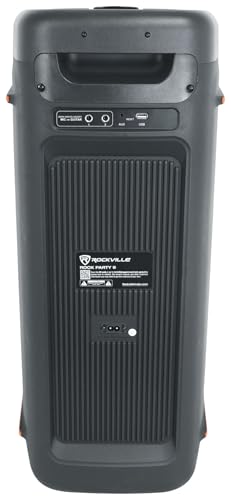
The guitar input with dedicated level control makes the Rockville particularly appealing for musicians. You can plug in an electric guitar directly and jam along with backing tracks, with the speaker's powerful amplification handling both vocals and instruments simultaneously.
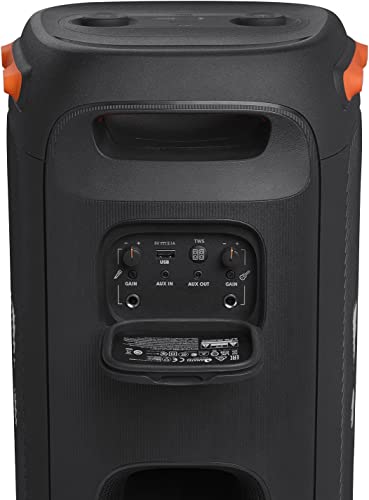
The JBL PartyBox 110 focuses more on smart connectivity and lighting sophistication. Its True Wireless Stereo (TWS) capability allows pairing two speakers wirelessly for genuine stereo separation – the left speaker handles left-channel audio while the right handles right-channel content. This creates a much wider soundstage (the perceived width and depth of audio) compared to single-speaker setups.
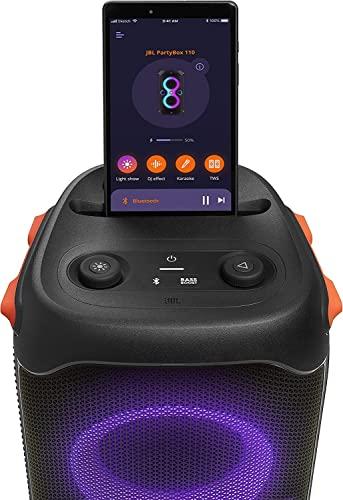
The JBL's PartyBox app offers comprehensive control over lighting patterns, colors, and synchronization modes. The app can even update the speaker's firmware, ensuring access to new features as JBL releases them.
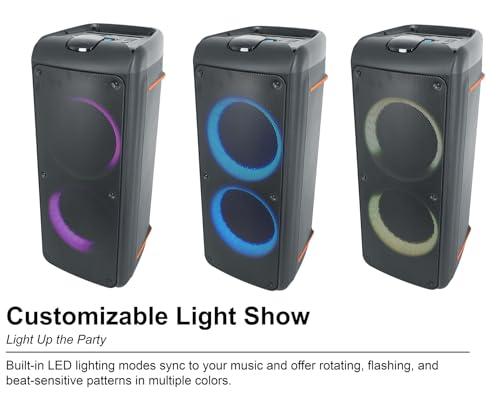
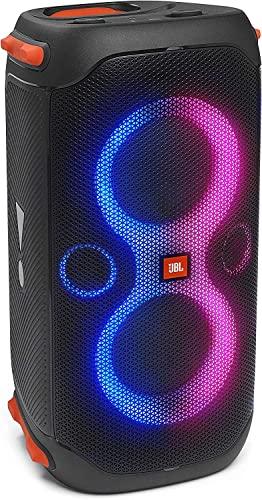
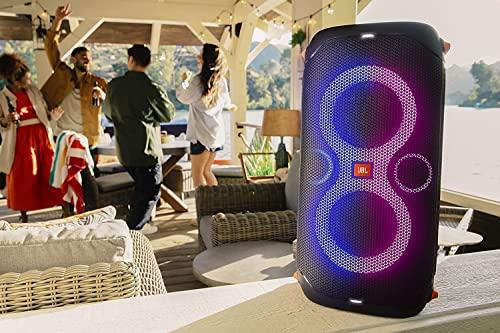
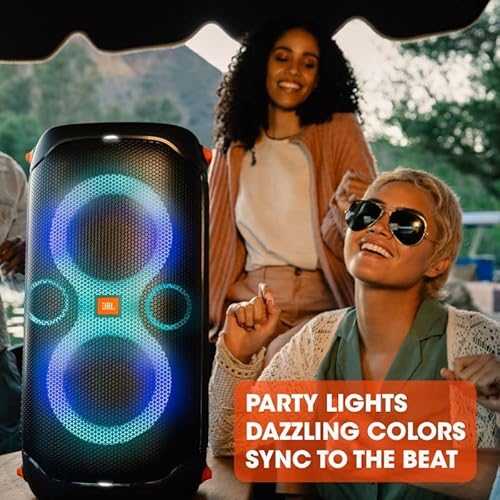
LED lighting implementation differs significantly. The Rockville provides customizable modes that can be adjusted via remote control, while the JBL's lights integrate more sophisticated beat-detection algorithms for tighter music synchronization.
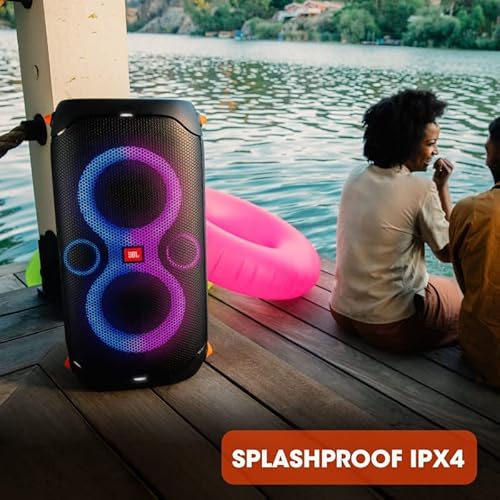
Construction quality reveals another philosophical divide. The JBL PartyBox 110 carries an IPX4 rating, meaning it can handle splashes from any direction without damage. This makes it poolside-safe and suitable for beach use, though not fully waterproof for submersion.
The Rockville Rock Party 9 lacks any official water resistance rating, using a polypropylene enclosure designed for durability rather than weather protection. While this material resists impacts and UV damage, moisture protection requires more careful handling.
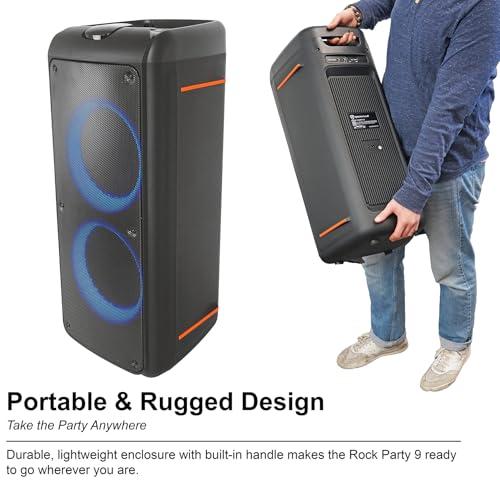
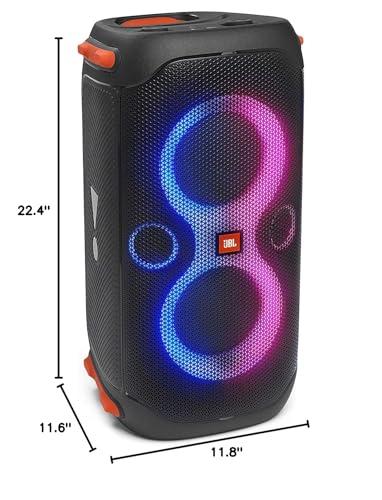
Weight differences matter for portability. The Rockville weighs about 19.6 pounds while the JBL tips the scales at 23 pounds. Both include carrying handles, but the 3.4-pound difference becomes noticeable during longer carries.
Build quality reputation also factors into long-term value. JBL's established presence in professional audio typically translates to better quality control and more reliable warranty service, while Rockville operates more as a value-focused brand with varying consistency reports from users.
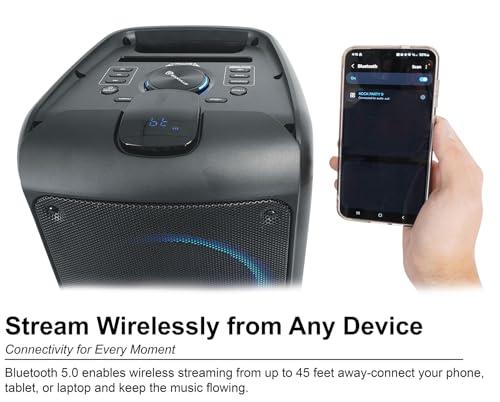
Both speakers handle modern connectivity well, supporting Bluetooth 5.0/5.1 with similar 45-foot ranges. The newer Bluetooth versions offer improved codec support (better audio compression algorithms) and more stable connections compared to earlier standards.
The Rockville Rock Party 9 includes a TF/MicroSD card slot, allowing direct music playback from memory cards – useful for DJs or situations where phone batteries need conservation. Both offer USB playback and can charge connected devices simultaneously.
Input priority systems work similarly on both speakers, automatically switching between sources as higher-priority inputs become active. Bluetooth typically takes precedence over wired connections.
At the time of writing, these speakers occupy different price segments, with the Rockville Rock Party 9 generally positioned as the more budget-friendly option while still delivering impressive specifications. The JBL PartyBox 110 commands a premium that reflects its brand reputation, longer battery life, and weather resistance.
The Rockville delivers exceptional watts-per-dollar value, making it attractive for users prioritizing maximum output and karaoke features on a tighter budget. The JBL's premium reflects what you're paying for: refined engineering, longer battery life, weather protection, and typically better long-term reliability.
Resale value considerations favor the JBL due to brand recognition and build quality reputation. However, both speakers should provide years of service with proper care.
The Rockville Rock Party 9 excels in scenarios demanding maximum impact: large outdoor gatherings, karaoke parties, amateur musician jam sessions, and events where raw power matters more than runtime. Its comprehensive karaoke features make it ideal for families who regularly host singing parties or small venues needing affordable entertainment systems.
The JBL PartyBox 110 suits users prioritizing reliability, battery endurance, and audio quality. It's better for all-day events, poolside parties, beach gatherings, and situations where weather protection matters. The TWS pairing capability makes it appealing for users who might eventually want stereo separation or need to fill very large spaces.
Choosing between these speakers ultimately depends on your primary use cases and budget priorities. The Rockville Rock Party 9 delivers remarkable power and karaoke features at an attractive price point, making it an excellent choice for users who want maximum bang for their buck and don't need all-day battery life.
The JBL PartyBox 110 justifies its premium through superior battery endurance, weather resistance, and refined audio engineering. It's the better long-term investment for frequent users who value reliability and versatility over pure power.
For most users, I'd lean toward the JBL unless budget constraints are paramount or karaoke features are essential. The 12-hour battery life alone provides enough additional utility to justify the price difference for regular use. However, if you're primarily hosting shorter, high-energy outdoor events where maximum volume impact is the goal, the Rockville delivers impressive performance at a compelling price point.
Both speakers represent solid values within their respective market segments, successfully targeting different user needs in the expanding portable party speaker category.
| Rockville Rock Party 9 | JBL PartyBox 110 |
|---|---|
| Peak Power Output - Higher numbers mean louder maximum volume | |
| 1000W peak / 250W RMS (extremely loud, great for large outdoor spaces) | 160W RMS (plenty loud for most parties, more efficient) |
| Driver Size - Larger drivers typically produce deeper bass | |
| Dual 8" woofers + dual 2" tweeters (bigger drivers for more bass impact) | Dual 5.25" woofers + dual 2.25" tweeters (smaller but more balanced) |
| Battery Life - Critical for events without power access | |
| 6-8 hours at moderate volume, 2-3 hours at max (shorter runtime) | Up to 12 hours (excellent for all-day events) |
| Water Resistance - Important for poolside or beach use | |
| None specified (keep away from water) | IPX4 splashproof (safe around pools and light rain) |
| Karaoke Features - Essential for sing-along entertainment | |
| Auto-tune, voice effects, dual mic inputs, guitar input (comprehensive karaoke system) | Basic mic input only (limited karaoke capabilities) |
| Bluetooth Version - Newer versions offer better connectivity | |
| Bluetooth 5.0, 45-foot range | Bluetooth 5.1, similar range (slightly newer standard) |
| App Control - Convenient remote management | |
| Remote control included, basic smartphone slot | JBL PartyBox app with full lighting/EQ control |
| Multi-Speaker Pairing - For larger venues or stereo sound | |
| Wireless linking supported (basic connection) | True Wireless Stereo pairing (genuine left/right separation) |
| Weight - Affects portability for transport | |
| 19.64 lbs (lighter, easier to carry) | 23 lbs (heavier but includes better build materials) |
| LED Lighting - Visual entertainment factor | |
| Customizable modes around woofers (good variety) | Beat-synced RGB with advanced app customization (more sophisticated) |
| Input Options - Flexibility for different audio sources | |
| USB, TF/MicroSD card, AUX, dual mic, guitar (most comprehensive) | USB, AUX, single mic (standard but missing guitar input) |
| Brand Reputation - Affects warranty support and resale value | |
| Value-focused brand, varies by model | Professional audio heritage since 1940s (premium reputation) |
The Rockville Rock Party 9 is significantly louder with 1000W peak power and dual 8-inch woofers compared to the JBL PartyBox 110's 160W RMS output. The Rockville can fill larger outdoor spaces and delivers more bass impact, making it better for events where maximum volume is the priority.
The JBL PartyBox 110 offers superior battery performance with up to 12 hours of playtime compared to the Rockville Rock Party 9's 6-8 hours at moderate volume (dropping to 2-3 hours at maximum volume). For all-day events, the JBL is the clear winner.
The Rockville Rock Party 9 excels at karaoke with auto-tune, voice-changing effects, dual microphone inputs, and echo controls. The JBL PartyBox 110 has basic microphone capability but lacks advanced karaoke features, making the Rockville the better choice for singing entertainment.
The JBL PartyBox 110 is better for poolside use thanks to its IPX4 splashproof rating that protects against water splashes. The Rockville Rock Party 9 has no water resistance rating and should be kept away from water, limiting its outdoor versatility.
Yes, both speakers feature LED lighting. The Rockville Rock Party 9 has customizable light modes around the woofers, while the JBL PartyBox 110 offers more advanced RGB lighting with beat-synchronization and comprehensive app control for greater customization.
The JBL PartyBox 110 delivers more balanced, refined sound quality with better instrument separation and cleaner audio at high volumes. While the Rockville Rock Party 9 produces more raw power and bass, the JBL's professional audio engineering results in superior overall sound reproduction.
Both speakers support multi-unit connectivity, but differently. The JBL PartyBox 110 offers True Wireless Stereo (TWS) pairing for genuine left/right stereo separation. The Rockville Rock Party 9 supports basic wireless linking for increased volume coverage.
The Rockville Rock Party 9 is slightly more portable at 19.64 pounds versus the JBL PartyBox 110's 23 pounds. Both include carrying handles, but the Rockville's lighter weight and smartphone slot make it easier to transport for mobile use.
Neither speaker is designed primarily for home theater, but the JBL PartyBox 110 works better for this purpose due to its balanced sound signature and clearer dialogue reproduction. The Rockville Rock Party 9's bass-heavy tuning makes it less suitable for movie watching.
The Rockville Rock Party 9 typically offers better value for budget-conscious buyers, delivering more power and karaoke features at a lower price point. The JBL PartyBox 110 costs more but provides longer battery life, water resistance, and premium build quality for frequent users.
Yes, both the Rockville Rock Party 9 and JBL PartyBox 110 support USB playback and can charge connected devices. The Rockville also includes a TF/MicroSD card slot for additional storage options, giving it more input flexibility.
The Rockville Rock Party 9 is superior for musicians with its dedicated guitar input, dual microphone inputs, and comprehensive audio controls. The JBL PartyBox 110 has basic microphone capability but lacks the performance-oriented features that make the Rockville better suited for live music applications.
We've done our best to create useful and informative comparisons to help you decide what product to buy. Our research uses advanced automated methods to create this comparison and perfection is not possible - please contact us for corrections or questions. These are the sites we've researched in the creation of this article: youtube.com - wiki.ezvid.com - youtube.com - youtube.com - walmart.com - soundcore.com - youtube.com - rtings.com - rockvilleaudio.com - youtube.com - youtube.com - youtube.com - review-rating.com - manuals.plus - support.rockvilleaudio.com - reverb.com - rockvilleaudio.com - privacy.we-conect.com - audiosavings.com - youtube.com - youtube.com - rtings.com - youtube.com - bestbuy.com - gadgets360.com - popsci.com - youtube.com - audioadvice.com - popsci.com - youtube.com - versus.com - youtube.com - jbl.com - in.jbl.com - jbl.com.tw - bhphotovideo.com - in.jbl.com - jbl.com - youtube.com - hu.harmanaudio.com - jbl.com.au - global.jbl.com - support.jbl.com - youtube.com - kh.jbl.com - onward.ph - jbl.com.ph - support.jbl.com - youtube.com

Privacy Policy
Terms and Conditions - Affiliate Policy
Home Security
© Copyright 2008-2026.
11816 Inwood Rd #1211, Dallas, TX 75244