

Party speakers have become essential for anyone who loves hosting gatherings, whether it's backyard barbecues, beach parties, or indoor celebrations. These aren't your typical Bluetooth speakers – they're powerhouse audio systems designed to fill large spaces with sound while surviving the chaos of real-world parties. The category has exploded in recent years, with manufacturers cramming more power, longer battery life, and flashy features into increasingly portable packages.
Two speakers that perfectly illustrate this category's evolution are the JBL PartyBox 110 and the Marshall Bromley 750. Released in 2021 and 2025 respectively, these speakers represent different philosophies in party audio – one prioritizing accessibility and fun, the other pushing toward professional-grade performance. Understanding their differences will help you choose the right speaker for your needs and budget.
Before diving into specifics, let's talk about what makes a great party speaker. Unlike home audio systems that focus on detailed sound reproduction, party speakers prioritize maximum volume output, extended battery life, and durability. They need to project sound across large outdoor spaces, compete with crowd noise, and keep playing all day without plugging in.
The most critical performance metric is Sound Pressure Level (SPL), measured in decibels (dB). This tells you how loud a speaker can actually get – and in the party speaker world, louder usually means better. Battery life becomes crucial since parties rarely happen near power outlets. Connectivity options matter too, because you'll want to plug in microphones for karaoke or connect multiple audio sources throughout an event.
The most dramatic difference between the JBL PartyBox 110 and Marshall Bromley 750 lies in raw power output. The JBL delivers 160 watts RMS (Root Mean Square – the continuous power a speaker can handle), while the Marshall pumps out a massive 500 watts. In real-world terms, this translates to the Marshall reaching 127-128 dB maximum SPL compared to the JBL's more modest output.
To put this in perspective, every 3 dB increase represents roughly double the perceived loudness. The Marshall's power advantage means it can easily fill outdoor spaces that would strain the JBL PartyBox 110. At a backyard party with 20-30 people, both speakers work well. But take them to a large outdoor gathering or try to project sound across a park, and the Marshall Bromley 750 pulls ahead decisively.
The driver configuration tells the technical story. The JBL PartyBox 110 uses four drivers: two 5.25-inch woofers handling bass and two 2.25-inch tweeters managing high frequencies. It's a straightforward, proven setup that delivers punchy sound with JBL's signature bass-heavy tuning. The Marshall Bromley 750 deploys eight drivers in a sophisticated arrangement: dual 10-inch woofers, dual 5.25-inch midrange drivers, and four tweeters distributed around the enclosure.
This driver count difference matters beyond just power. More drivers mean each one works less hard, reducing distortion at high volumes. The Marshall's closed-box design (sealed enclosure without ports) provides tighter, more controlled bass compared to many ported party speakers that can sound boomy or loose.
Based on our research into user experiences, the JBL PartyBox 110 starts showing compression and harshness when pushed to maximum volume – a common limitation in this price range. The Marshall Bromley 750 maintains clarity and detail even at ear-splitting levels, though few home users will ever need that much power.
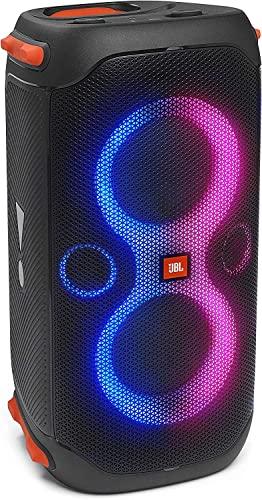
Here's where these speakers diverge philosophically. The JBL PartyBox 110 follows traditional party speaker design with forward-firing stereo sound. It creates a focused sound beam that works well when listeners face the speaker directly. The tuning emphasizes bass and treble in a V-shaped frequency response – great for hip-hop, electronic music, and pop tracks that benefit from punchy bass and crisp highs.
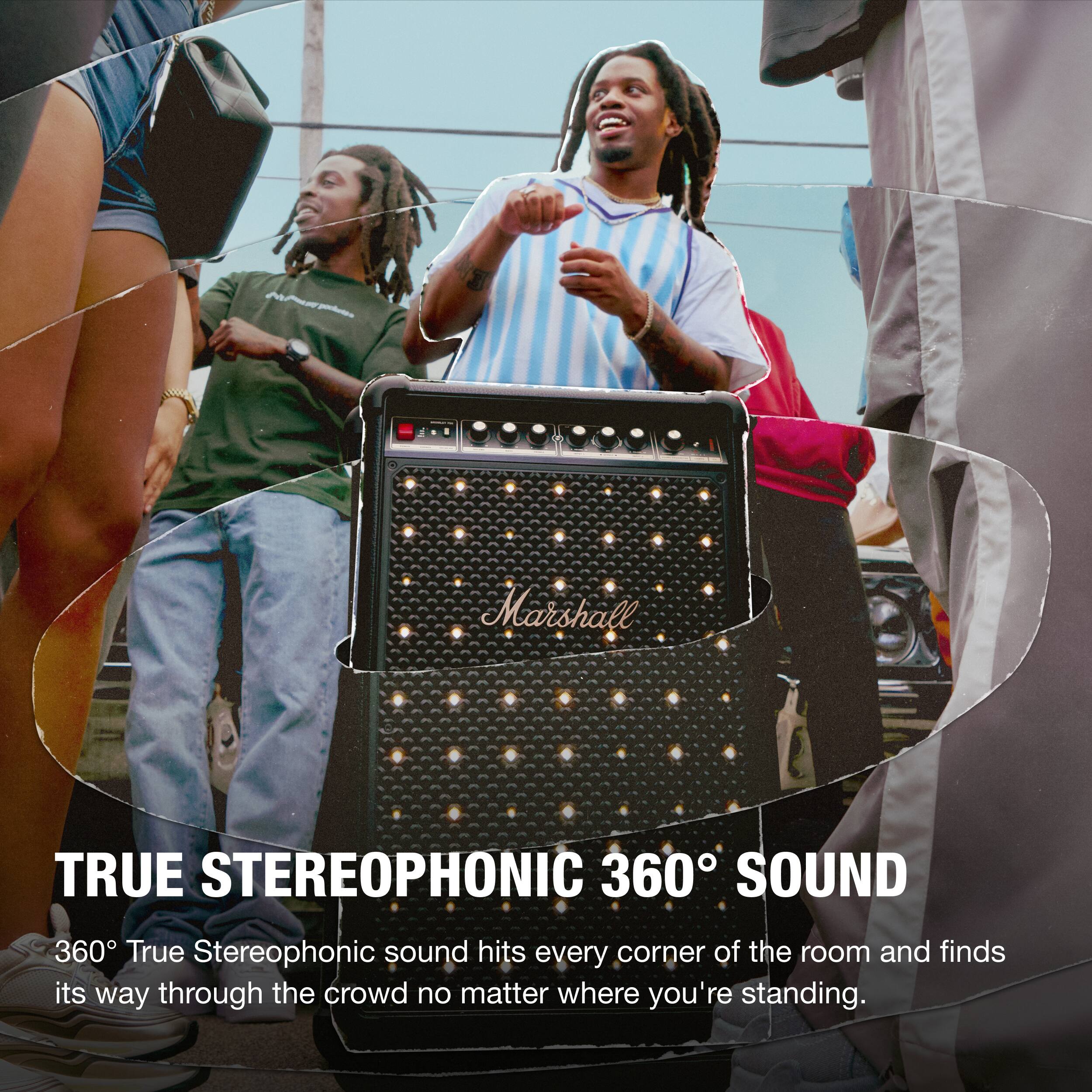
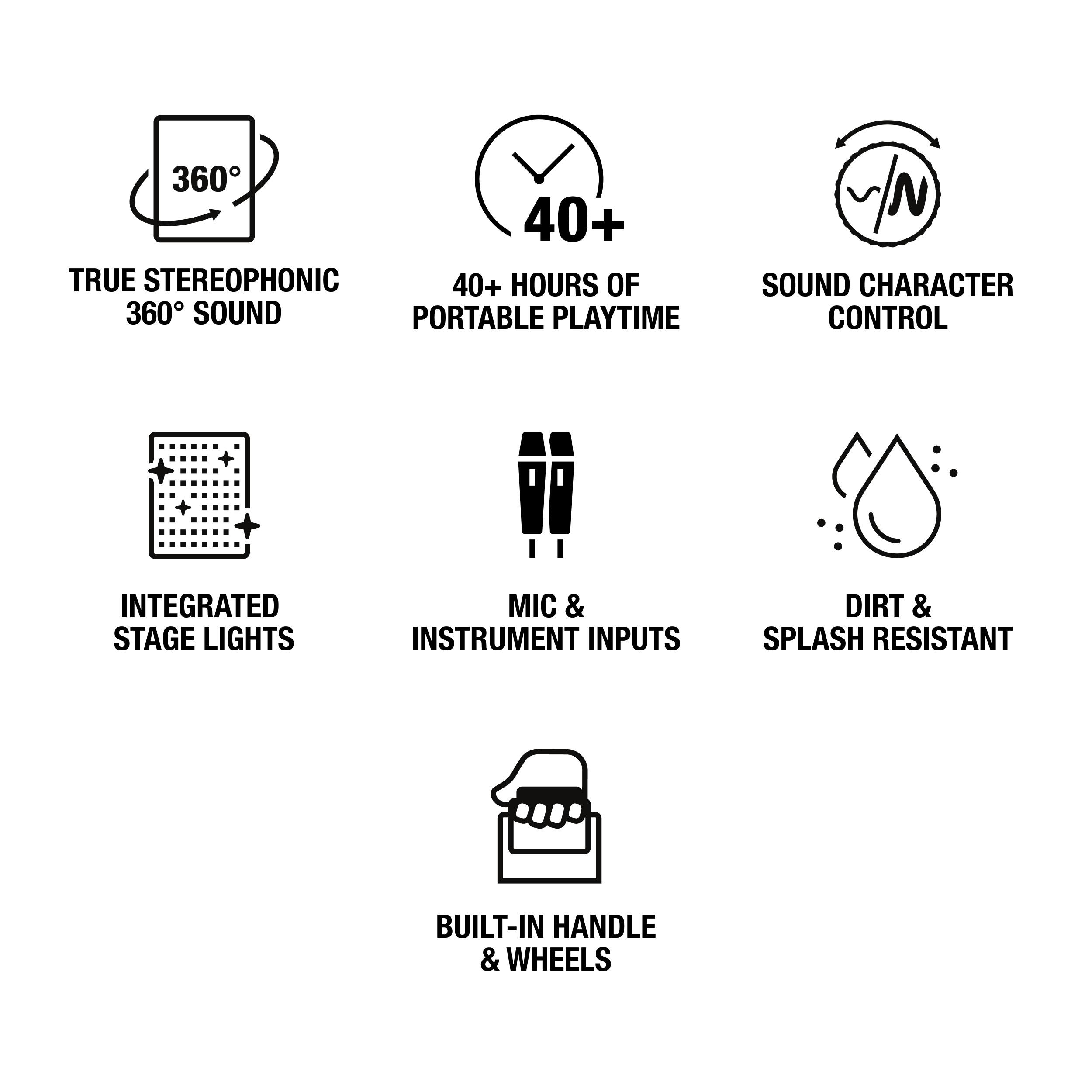
The Marshall Bromley 750 takes a radically different approach with 360-degree True Stereophonic sound. Instead of firing audio forward, it disperses sound in all directions using strategically placed drivers on multiple surfaces. This creates an enveloping soundscape where audio quality remains consistent whether you're standing in front, behind, or beside the speaker.
This 360-degree design suits parties perfectly because guests move around constantly. With the JBL PartyBox 110, people standing behind or to the sides get a noticeably different (and often inferior) listening experience. The Marshall Bromley 750 eliminates these dead zones, ensuring everyone hears full-range audio regardless of position.
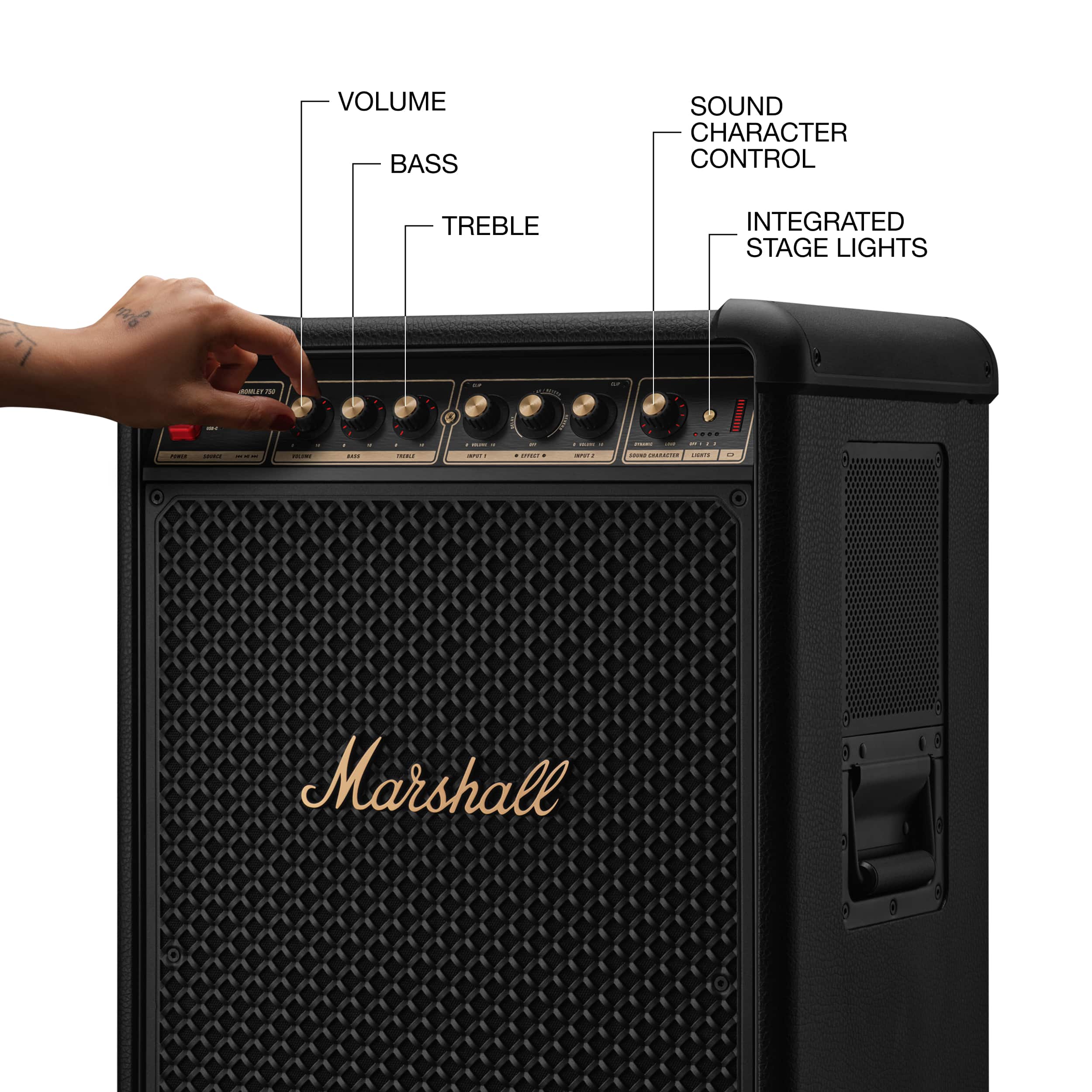
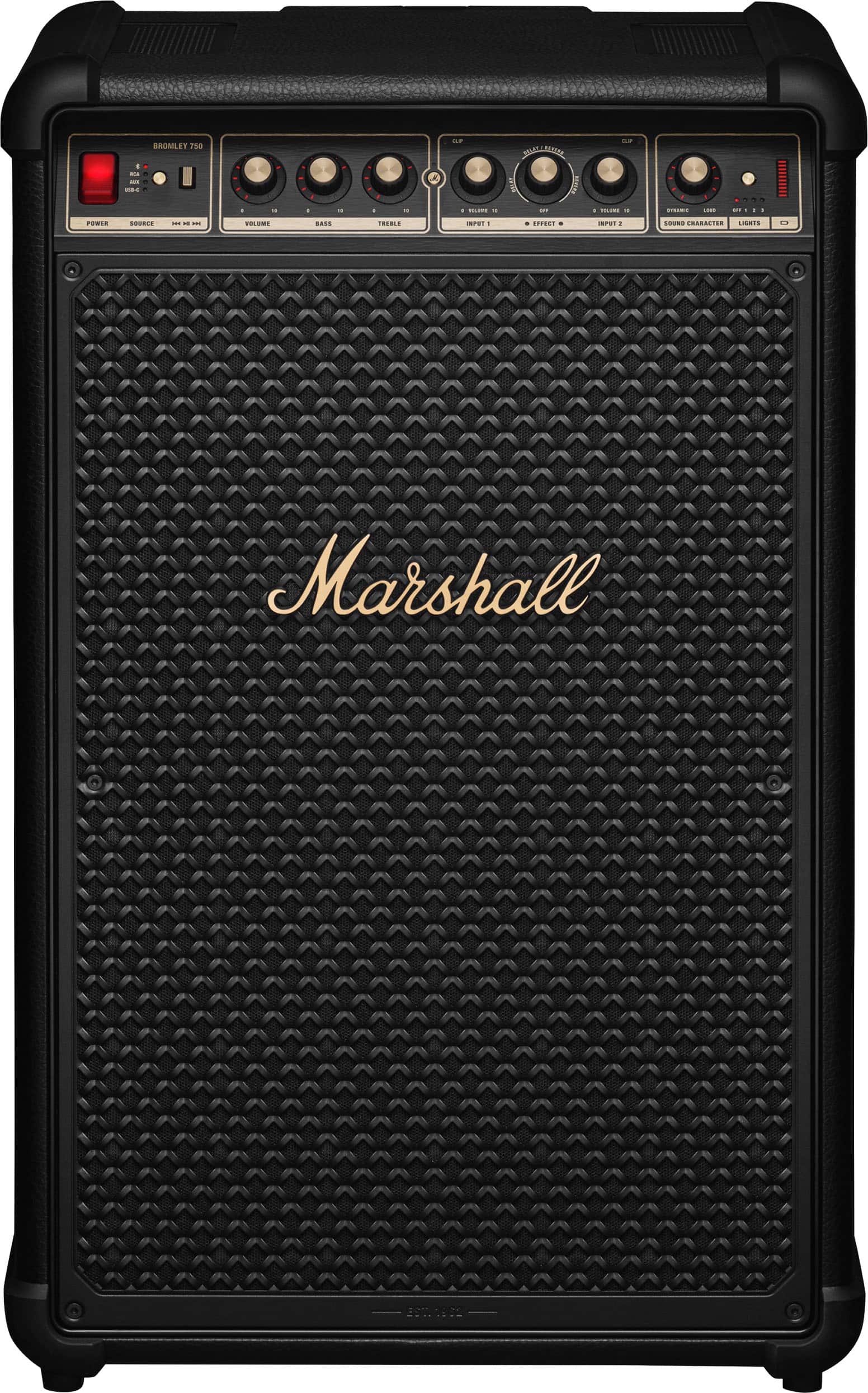
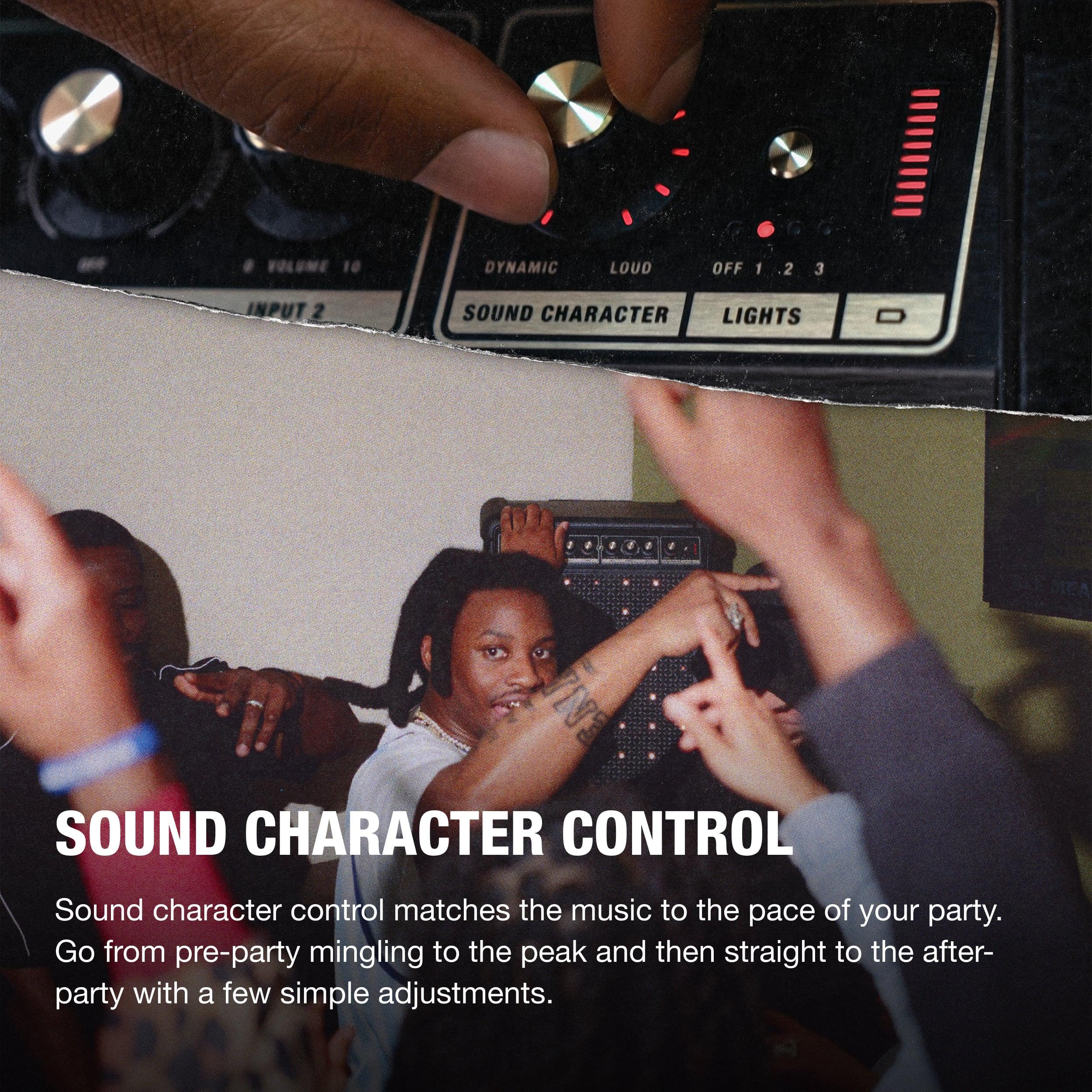
The Marshall also includes a unique Sound Character control that switches between "Dynamic" mode for indoor listening and "Loud" mode for outdoor use. Dynamic mode focuses on detail and clarity at moderate volumes, while Loud mode optimizes for maximum impact and projection. This flexibility lets one speaker adapt to different environments – something the JBL PartyBox 110 can't match.
For home theater use, both speakers have limitations. The JBL PartyBox 110's forward-firing design works better for movie watching, but lacks the dialogue clarity of dedicated center channels. The Marshall Bromley 750's 360-degree dispersion creates an immersive experience but doesn't provide the directional audio cues that enhance movie soundtracks.
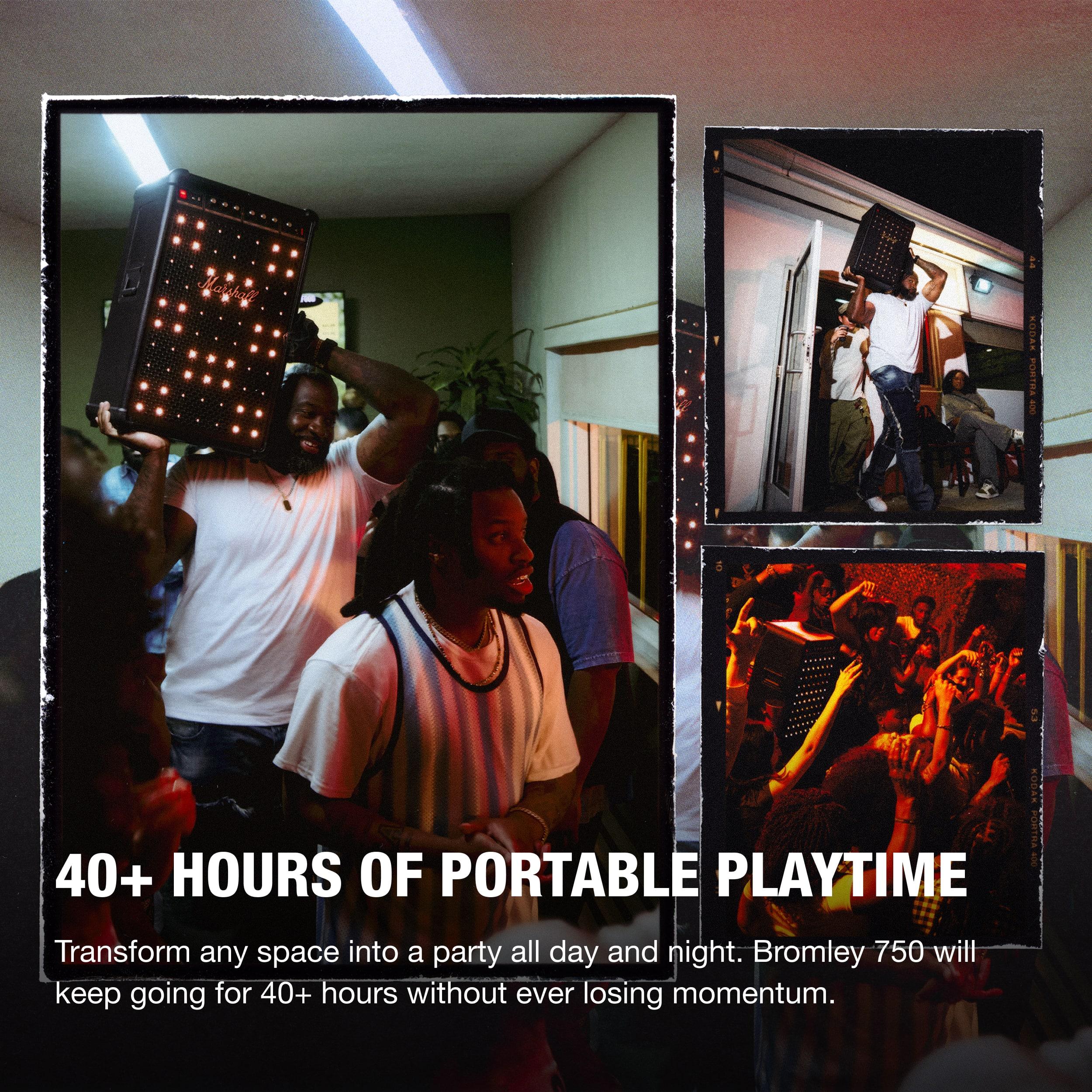
Battery performance creates another clear winner. The Marshall Bromley 750 delivers an exceptional 40+ hours of playback on a single charge – industry-leading performance that eliminates battery anxiety entirely. Even more impressive, the battery is user-replaceable, so you can swap in fresh batteries for theoretically unlimited runtime.
The JBL PartyBox 110 provides 12 hours of advertised playback, though real-world testing shows this drops to around 7 hours with LED lights active and bass boost engaged. This is still adequate for most parties, but requires planning and potentially mid-party charging breaks for longer events.
The Marshall's quick-charge capability (20 minutes = 5 hours playback) and power bank functionality (can charge your phone) add practical value. The JBL PartyBox 110 also offers USB device charging but at a more modest 5V/2.1A output.
For weekend camping trips, multi-day festivals, or commercial rental use, the Marshall's battery advantage is game-changing. For typical home parties and backyard gatherings, the JBL's battery proves sufficient if you remember to charge it beforehand.
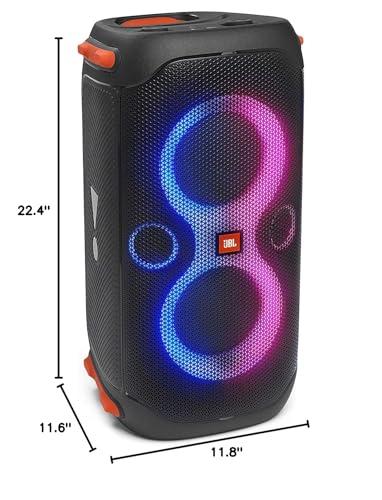
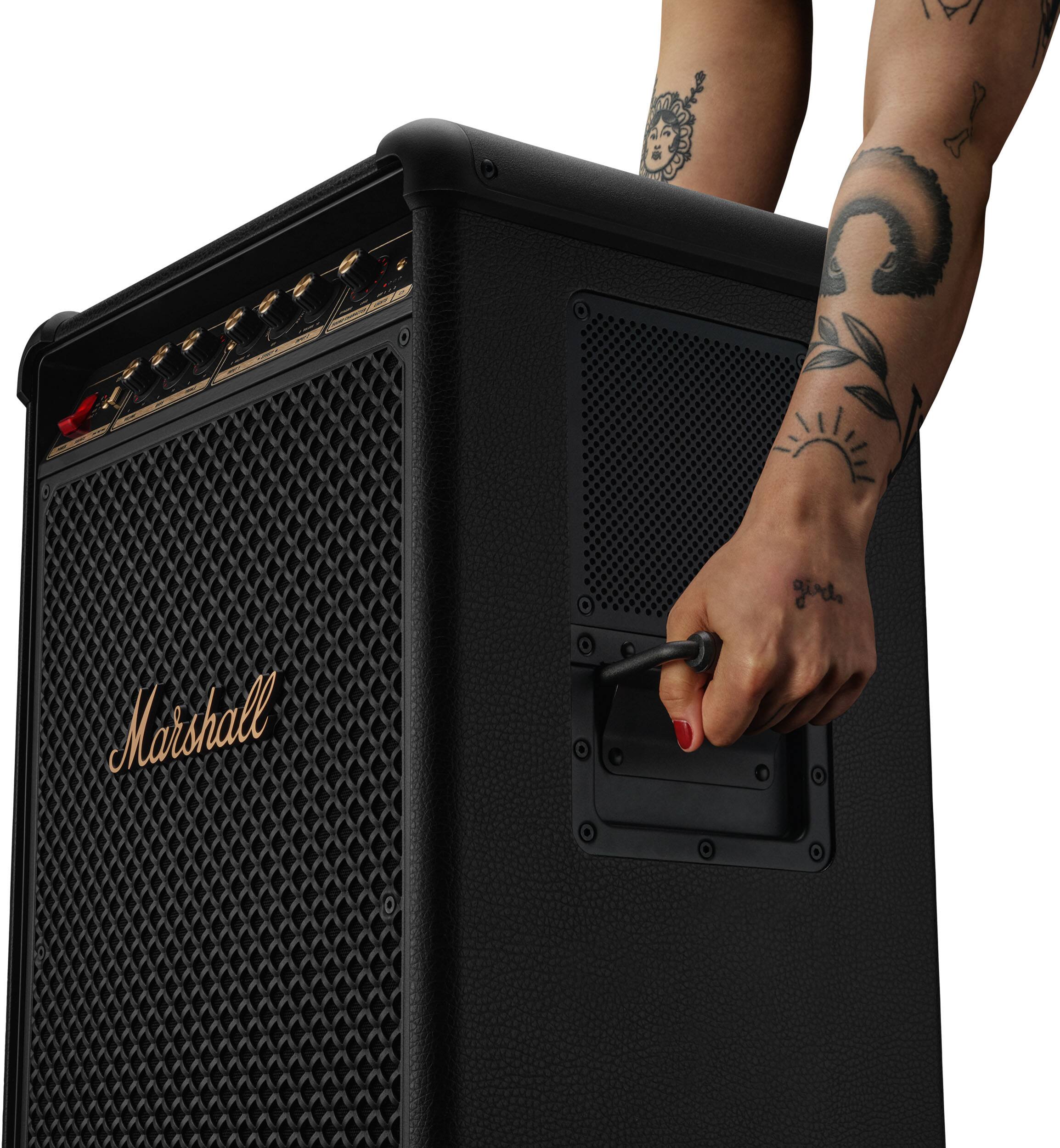
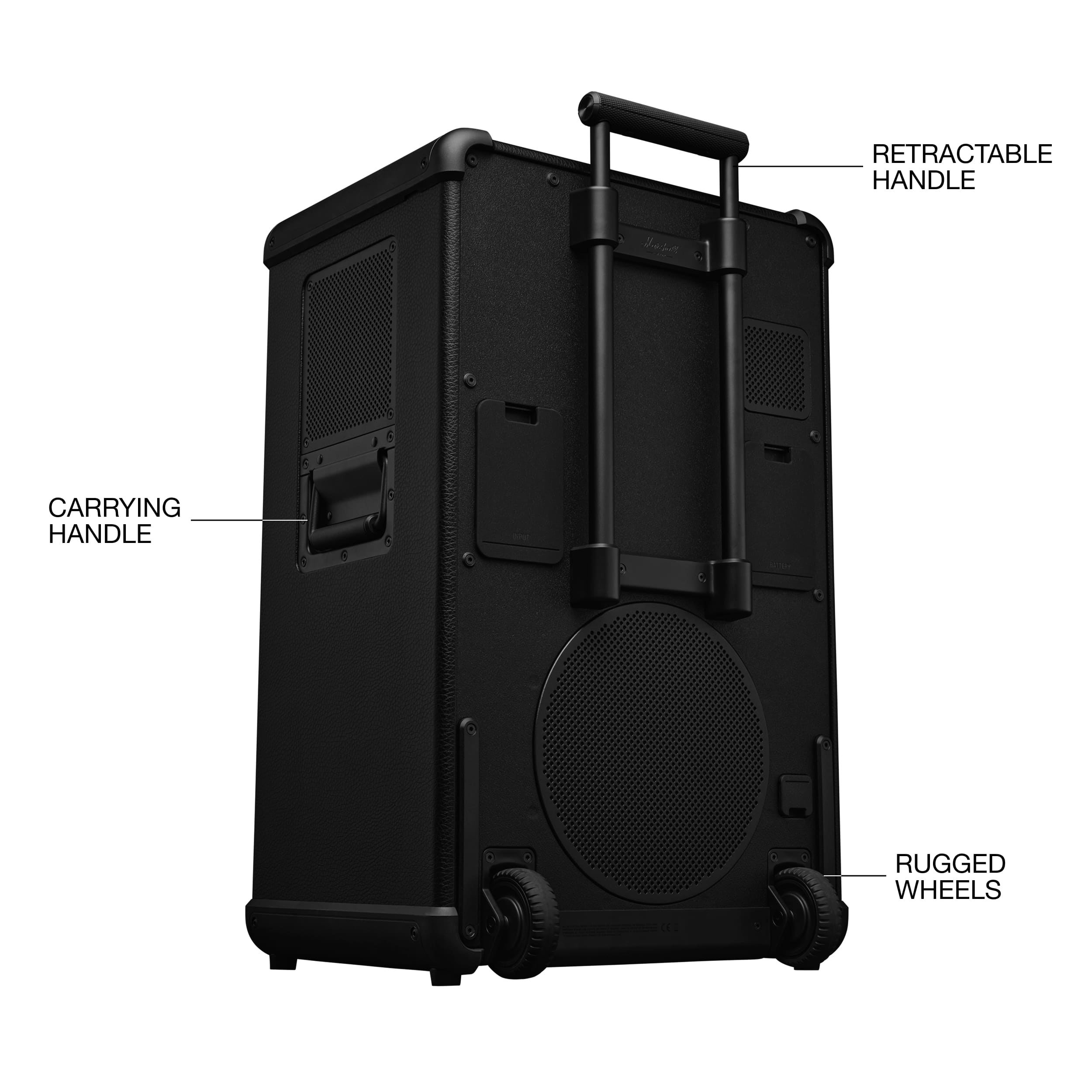
Here's where the JBL PartyBox 110 fights back. At 23 pounds with integrated handles, it's genuinely portable for most people. You can easily carry it from house to car to party location without assistance. Its compact footprint fits in apartment closets and car trunks without major planning.
The Marshall Bromley 750 weighs 53 pounds – more than double the JBL's weight. Marshall includes wheels and a telescoping handle to address this, essentially turning the speaker into rolling luggage. This works well for moving between venues but eliminates spontaneous portability.
The practical impact depends on your lifestyle. If you frequently take speakers to different locations, live in an apartment with stairs, or have limited vehicle space, the JBL PartyBox 110's lighter weight becomes crucial. If you primarily use the speaker in one location or have adequate transport capability, the Marshall's weight penalty becomes manageable.
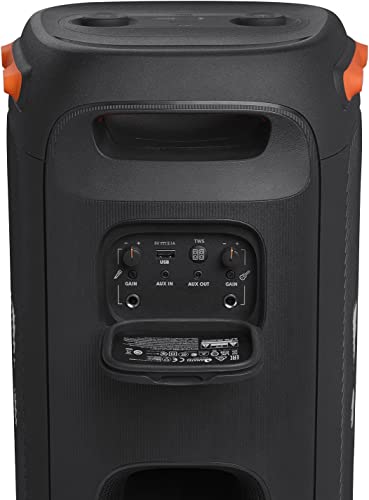
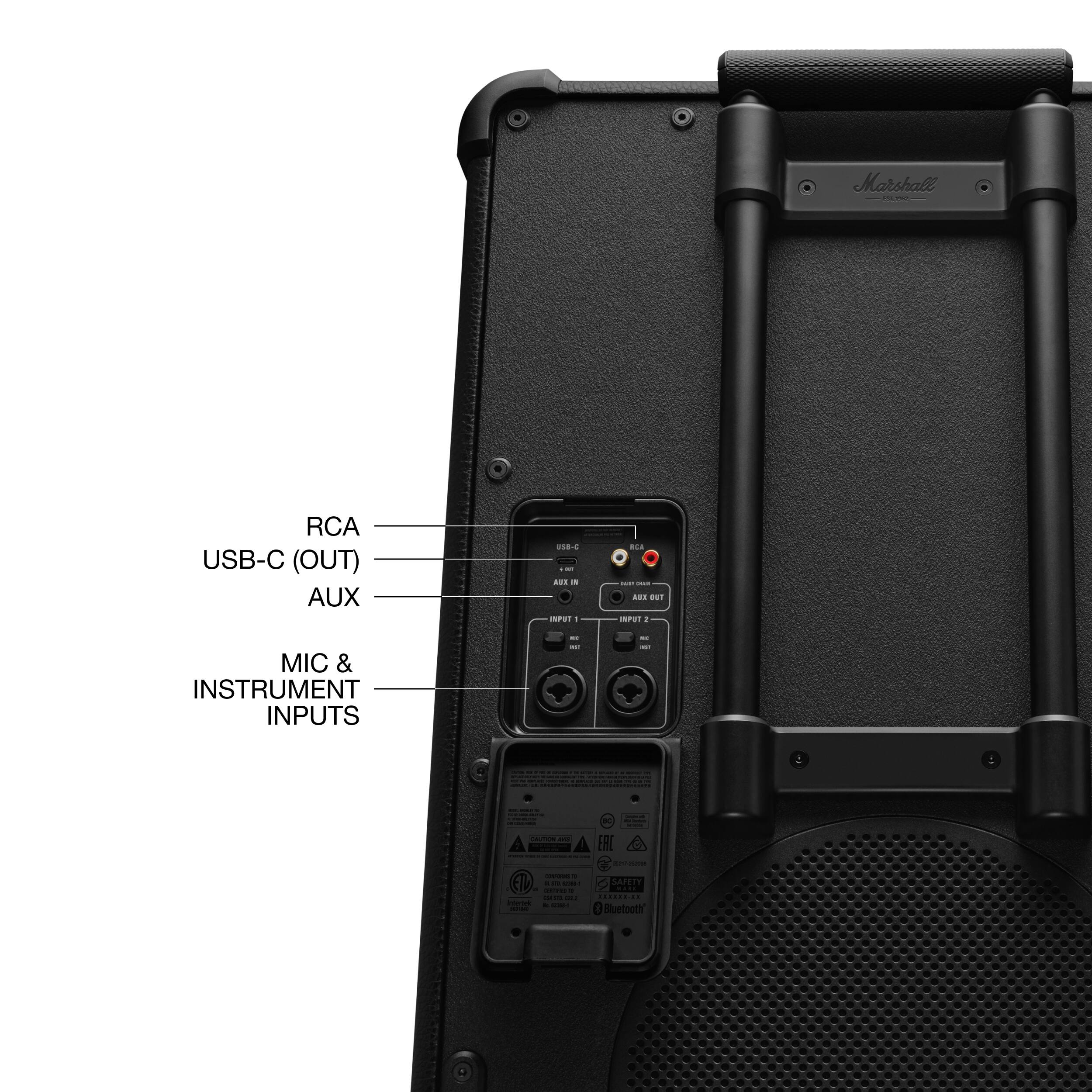
Both speakers cover essential connectivity, but the Marshall Bromley 750 goes much further into professional territory. The JBL PartyBox 110 includes quarter-inch inputs for microphones and guitars, 3.5mm auxiliary input/output, USB playback with FAT16/32 support for MP3/WMA/WAV files, and Bluetooth 5.1 connectivity.
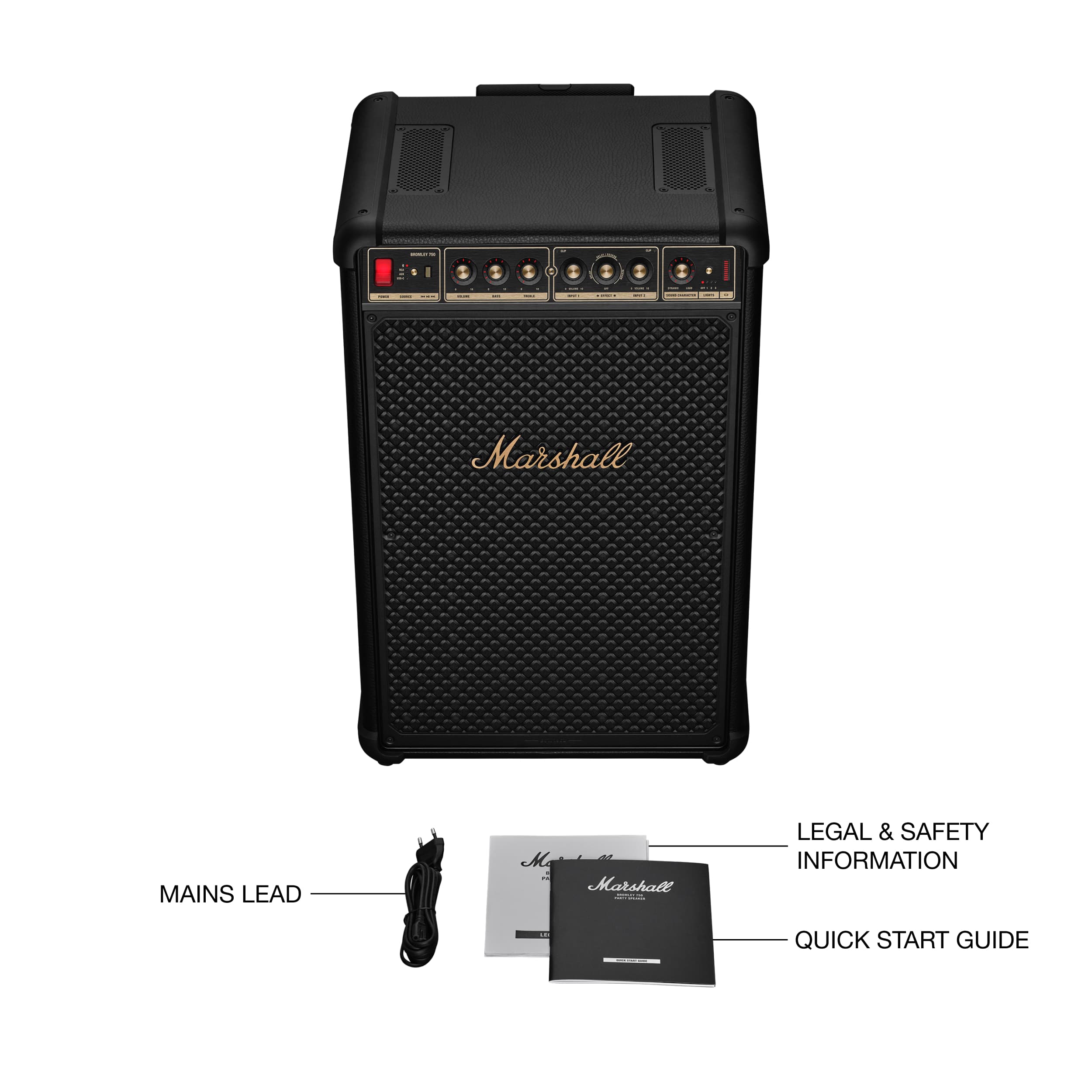
The Marshall adds XLR inputs (professional microphone standard), RCA inputs for DJ mixers and CD players, USB-C audio input, and Bluetooth 5.3 with Auracast technology for sharing audio with multiple compatible devices simultaneously. It also includes built-in effects processing with reverb and delay – features typically found in dedicated mixing equipment.
This connectivity difference matters if you plan to use microphones frequently, connect professional audio equipment, or need multiple simultaneous inputs. The Marshall can handle a DJ mixer, two microphones, and Bluetooth audio simultaneously with individual level controls. The JBL PartyBox 110 works fine for basic karaoke but lacks the flexibility for complex setups.
Both speakers support True Wireless Stereo (TWS) pairing, letting you connect two identical units wirelessly for expanded coverage. The Marshall's Auracast capability extends this to sharing audio with multiple different devices – useful for large installations or commercial applications.
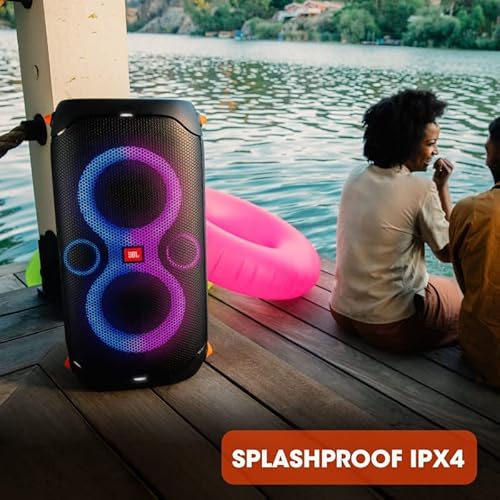
Construction quality reflects each speaker's market positioning. The JBL PartyBox 110 uses durable plastic construction focused on functional reliability at an accessible price point. It achieves IPX4 splashproof rating, protecting against light splashes when input covers are properly sealed.
The Marshall Bromley 750 employs premium materials throughout: brushed metal control panels, water-based polyurethane leather wrapping, stamped metal grilles, and reinforced corner bumpers. The closed-box wooden enclosure provides both acoustic and durability advantages. Its IP54 rating offers superior protection against dust and splashes from any direction, with built-in drainage systems protecting drivers from water accumulation.
User reports suggest both speakers handle normal party conditions well, but the Marshall's premium construction shows in long-term durability and weather resistance. For occasional indoor use, the JBL's build quality suffices. For frequent outdoor use, rental applications, or harsh conditions, the Marshall's construction advantages justify its premium positioning.
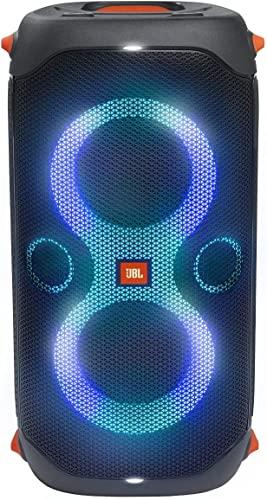
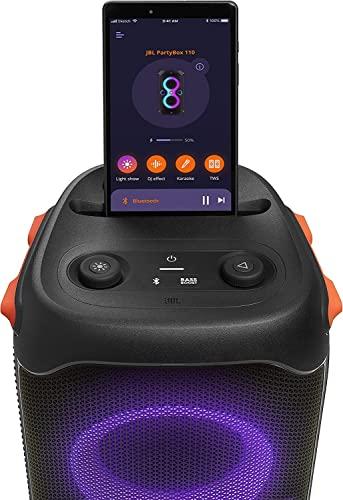
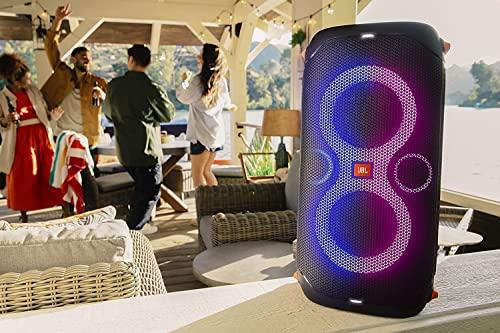
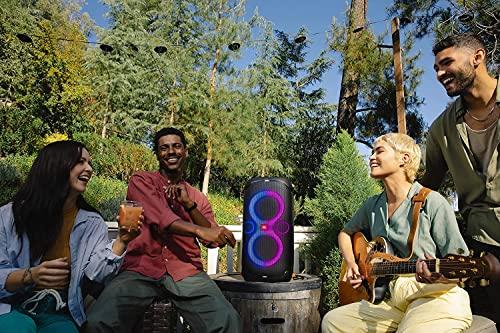
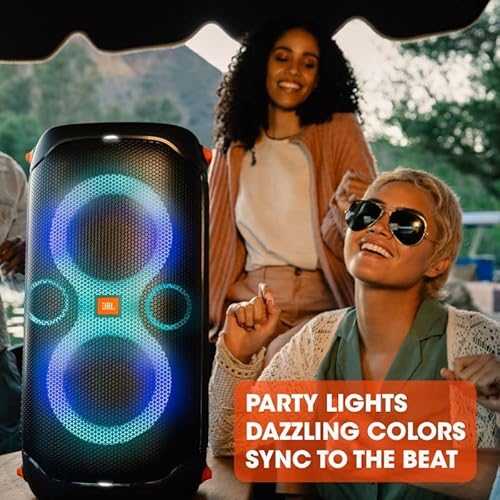
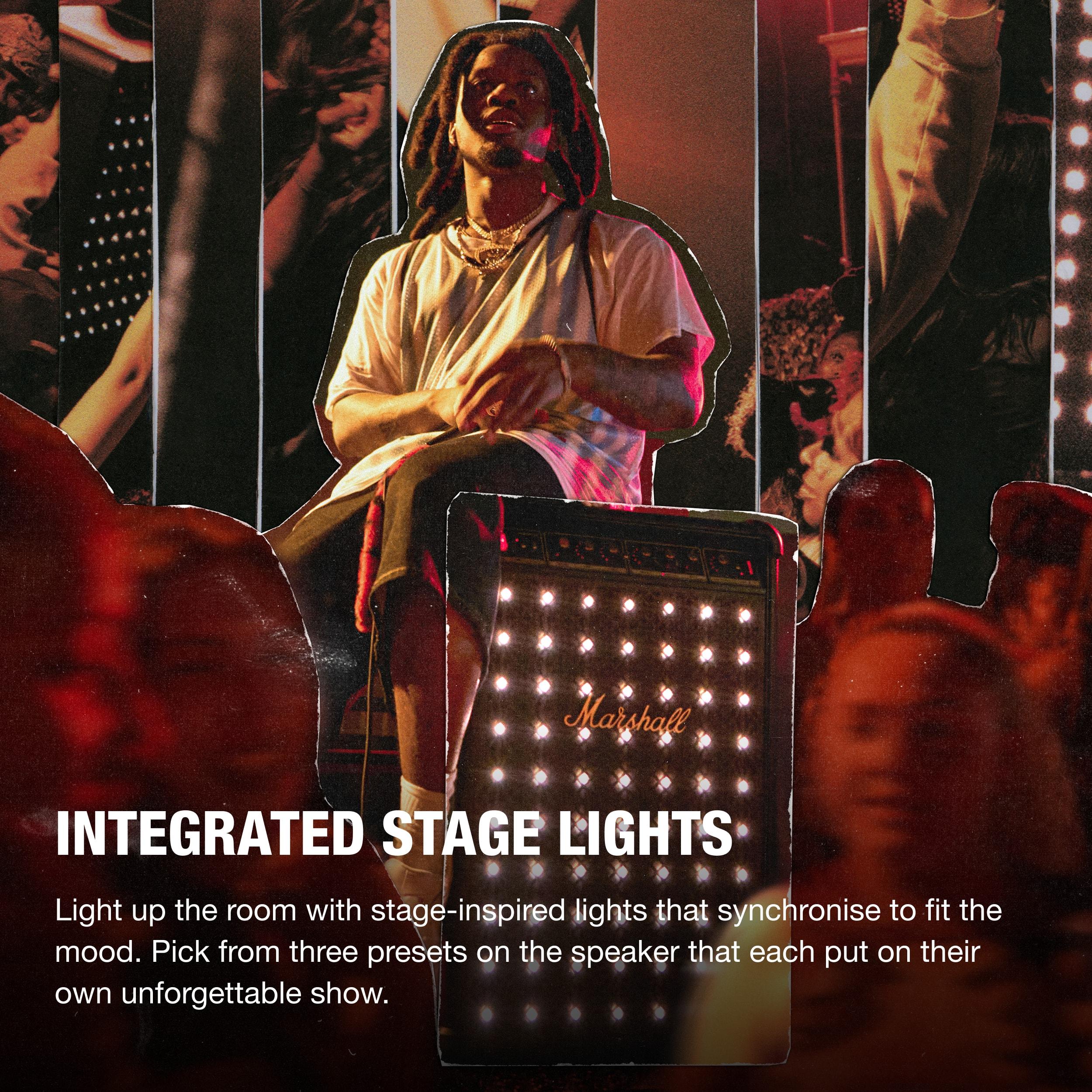
LED lighting represents another philosophical difference. The JBL PartyBox 110 features dynamic RGB LED rings with multiple colors, patterns, and music-synchronized effects controllable through the JBL PartyBox mobile app. The lighting is vibrant, colorful, and designed to create classic party atmosphere.
The Marshall Bromley 750 takes a more sophisticated approach with white LED arrays hidden behind the front grille. Rather than disco-style effects, it evokes professional stage lighting and marquee signage. Three presets include general illumination and music-responsive modes, but the aesthetic remains understated and classy.
This reflects broader design philosophies: JBL emphasizes fun and accessibility while Marshall pursues sophisticated performance. Neither approach is wrong, but they appeal to different audiences and occasions.
At the time of writing, the JBL PartyBox 110 sits in the mid-range party speaker category, offering solid performance and features at an accessible price point. It represents excellent value for occasional party use, delivering quality audio, adequate battery life, and comprehensive features without breaking the budget.
The Marshall Bromley 750 commands a significant premium – roughly three times the JBL's price – but delivers professional-grade performance, exceptional battery life, premium construction, and extensive connectivity. For users who can justify the investment, it provides superior long-term value through better durability and more versatile capabilities.
The value equation depends heavily on usage frequency and requirements. For occasional house parties and backyard gatherings, the JBL PartyBox 110 provides excellent performance per dollar. For frequent use, professional applications, or scenarios demanding maximum audio quality and flexibility, the Marshall Bromley 750 justifies its premium pricing.
Since the JBL PartyBox 110's 2021 release, party speaker technology has advanced significantly. The Marshall Bromley 750's 2025 launch showcases these improvements: more sophisticated driver arrangements, advanced wireless protocols like Auracast, dramatically improved battery technology, and smarter acoustic design.
The Marshall represents where party speakers are heading – toward professional-grade performance with audiophile-quality sound reproduction. The 360-degree dispersion technology addresses real-world party limitations that traditional forward-firing designs can't solve.
Battery technology improvements since 2021 are particularly notable. The Marshall's 40+ hour runtime with quick charging and replaceable batteries shows how much progress manufacturers have made in power management and battery chemistry.
Choose the JBL PartyBox 110 if you want reliable party audio without major investment. It excels for house parties, backyard gatherings, and casual entertaining where moderate volume levels suffice. The lighter weight makes it genuinely portable, and the colorful lighting effects create classic party atmosphere. For most home users hosting occasional gatherings, it provides everything needed at an accessible price.
Choose the Marshall Bromley 750 if you demand maximum performance and can justify the investment. It's ideal for large outdoor events, frequent entertaining, professional/commercial use, or situations requiring serious volume output. The 360-degree sound distribution, exceptional battery life, and professional connectivity make it suitable for complex applications the JBL can't handle.
Consider your typical use cases carefully. If you host parties monthly or more, the Marshall's superior performance and durability provide better long-term value despite higher upfront cost. If parties are occasional events, the JBL PartyBox 110 delivers excellent performance without the financial commitment.
The transport factor can't be ignored. If you frequently move speakers between locations or have physical limitations, the JBL's 23-pound weight versus the Marshall's 53-pound bulk becomes crucial. Similarly, if storage space is limited, the JBL's compact footprint may override performance considerations.
Both speakers succeed in their intended markets. The JBL PartyBox 110 democratizes party audio with solid performance at reasonable cost. The Marshall Bromley 750 pushes party speakers toward professional territory with uncompromising performance for users willing to invest in premium capability. Your choice depends on balancing performance requirements against budget constraints and practical considerations.
| JBL PartyBox 110 | Marshall Bromley 750 |
|---|---|
| Power Output - Determines maximum volume and room-filling capability | |
| 160W RMS (good for medium gatherings) | 500W with 127dB SPL (fills large outdoor spaces) |
| Battery Life - Critical for all-day events without power access | |
| 12 hours advertised, ~7 hours real-world with features active | 40+ hours with user-replaceable battery and quick charging |
| Weight and Portability - Affects ease of transport and storage | |
| 23 lbs with handles (easily portable by one person) | 53 lbs with wheels and telescoping handle (requires planning) |
| Sound Design - Impacts audio coverage and listening experience | |
| Traditional forward-firing stereo sound | 360° True Stereophonic omnidirectional dispersion |
| Driver Configuration - Affects sound quality and power handling | |
| 4 drivers: 2x 5.25" woofers, 2x 2.25" tweeters | 8 drivers: 2x 10" woofers, 2x 5.25" midrange, 4x tweeters |
| Connectivity Options - Determines versatility for different audio sources | |
| Bluetooth 5.1, USB playback, 3.5mm aux, 1/4" mic/guitar inputs | Bluetooth 5.3 with Auracast, XLR/6.35mm combo jacks, RCA, USB-C |
| Weather Resistance - Protection for outdoor party use | |
| IPX4 splashproof (light splashes only) | IP54 dust/splash resistant with drainage system |
| Lighting Effects - Entertainment value and party atmosphere | |
| Dynamic RGB LEDs with app control (colorful party vibe) | White stage-inspired LEDs with 3 presets (sophisticated ambiance) |
| Build Quality - Longevity and professional appearance | |
| Durable plastic construction (functional reliability) | Premium materials with metal grille, leather wrap, wooden enclosure |
| Professional Features - Suitability for musicians and events | |
| Basic mic/guitar inputs with gain control | XLR inputs, built-in effects processing, multiple simultaneous sources |
| Value Proposition - Performance per dollar at time of writing | |
| Excellent mid-range value for casual party use | Premium pricing justified by professional-grade performance |
The Marshall Bromley 750 is significantly better for large outdoor events. With 500 watts of power and 127dB maximum volume output, it can easily fill expansive outdoor spaces and compete with crowd noise. The JBL PartyBox 110 works well for medium-sized gatherings but may struggle to project sound across large areas or penetrate ambient noise at outdoor festivals.
The Marshall Bromley 750 offers exceptional 40+ hour battery life with user-replaceable batteries, while the JBL PartyBox 110 provides 12 hours advertised (around 7 hours real-world with lights and bass boost active). For all-day events or multi-day use, the Marshall eliminates battery anxiety entirely, whereas the JBL requires more planning for extended parties.
The JBL PartyBox 110 is much more portable at 23 pounds with built-in handles, making it easy for one person to carry. The Marshall Bromley 750 weighs 53 pounds and requires wheels and a telescoping handle for practical transport. If you frequently move speakers between locations or have limited storage space, the JBL wins on convenience.
The JBL PartyBox 110 delivers traditional forward-firing stereo sound with bass-heavy tuning that's great for party music. The Marshall Bromley 750 offers 360-degree True Stereophonic sound that disperses audio in all directions, creating consistent sound quality regardless of listener position. The Marshall also provides more balanced, audiophile-grade sound reproduction.
The Marshall Bromley 750 provides professional-grade connectivity with XLR inputs, built-in effects processing, and support for multiple simultaneous sources. The JBL PartyBox 110 includes basic 1/4-inch mic and guitar inputs with gain controls. For serious karaoke, live performances, or DJ setups, the Marshall offers significantly more flexibility and professional features.
The JBL PartyBox 110 features dynamic RGB LED rings with colorful patterns and music synchronization controllable via app, creating classic party atmosphere. The Marshall Bromley 750 uses white LED arrays behind the grille for sophisticated stage-inspired lighting with three presets. Choose JBL for vibrant party effects or Marshall for elegant ambiance.
The JBL PartyBox 110 offers excellent value for casual party use, providing solid performance and features at an accessible price point. The Marshall Bromley 750 commands a premium but delivers professional-grade performance, exceptional battery life, and premium construction. Value depends on usage frequency - JBL for occasional parties, Marshall for frequent use or professional applications.
Neither speaker is ideal for dedicated home theater use. The JBL PartyBox 110's forward-firing design works better for movie watching but lacks dialogue clarity. The Marshall Bromley 750's 360-degree sound creates immersive audio but doesn't provide directional cues that enhance movie soundtracks. Both are designed for party use rather than home theater applications.
The Marshall Bromley 750 offers superior weather protection with IP54 rating and built-in drainage systems, handling dust and splashes from any direction. The JBL PartyBox 110 provides IPX4 splashproof rating when covers are sealed, protecting against light splashes but requiring more caution around water. The Marshall is better suited for harsh outdoor conditions.
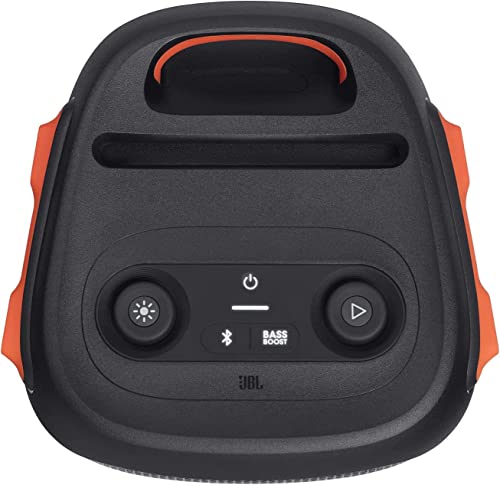
The Marshall Bromley 750 gets significantly louder with its 500-watt output and can reach 127dB maximum volume. It also provides more controlled, deeper bass through its dual 10-inch woofers and closed-box design. The JBL PartyBox 110 offers punchy bass with adjustable Bass Boost but reaches compression at maximum volume and has less overall power.
Both the JBL PartyBox 110 and Marshall Bromley 750 support True Wireless Stereo (TWS) pairing to connect two identical units wirelessly. The Marshall adds Auracast technology for sharing audio with multiple compatible devices simultaneously. Both also include auxiliary outputs for daisy-chaining additional speakers via cables.
The Marshall Bromley 750 is far superior for professional applications, offering XLR inputs, effects processing, exceptional battery life with replaceable batteries, premium build quality, and powerful output suitable for commercial venues. The JBL PartyBox 110 works for basic commercial use but lacks the connectivity, durability, and power needed for demanding professional applications.
We've done our best to create useful and informative comparisons to help you decide what product to buy. Our research uses advanced automated methods to create this comparison and perfection is not possible - please contact us for corrections or questions. These are the sites we've researched in the creation of this article: rtings.com - youtube.com - bestbuy.com - gadgets360.com - popsci.com - youtube.com - audioadvice.com - popsci.com - youtube.com - versus.com - youtube.com - rtings.com - jbl.com - in.jbl.com - jbl.com.tw - bhphotovideo.com - in.jbl.com - jbl.com - youtube.com - hu.harmanaudio.com - jbl.com.au - global.jbl.com - support.jbl.com - youtube.com - kh.jbl.com - onward.ph - jbl.com.ph - support.jbl.com - youtube.com - theluxereview.com - techradar.com - whathifi.com - routenote.com - techradar.com - marshall.com - newatlas.com - marshall.com - youtube.com - wallpaper.com - sweetwater.com - soundguys.com - t3.com - bestbuy.com - hiconsumption.com - architeg-prints.com

Privacy Policy
Terms and Conditions - Affiliate Policy
Home Security
© Copyright 2008-2026.
11816 Inwood Rd #1211, Dallas, TX 75244