

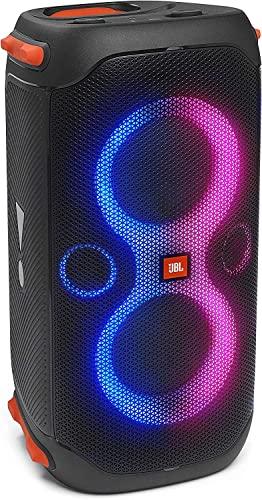
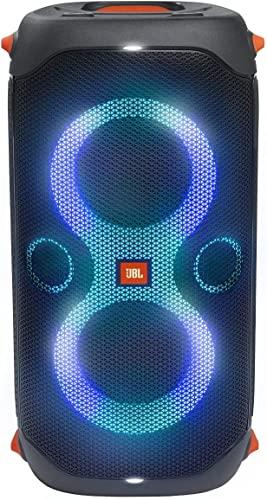

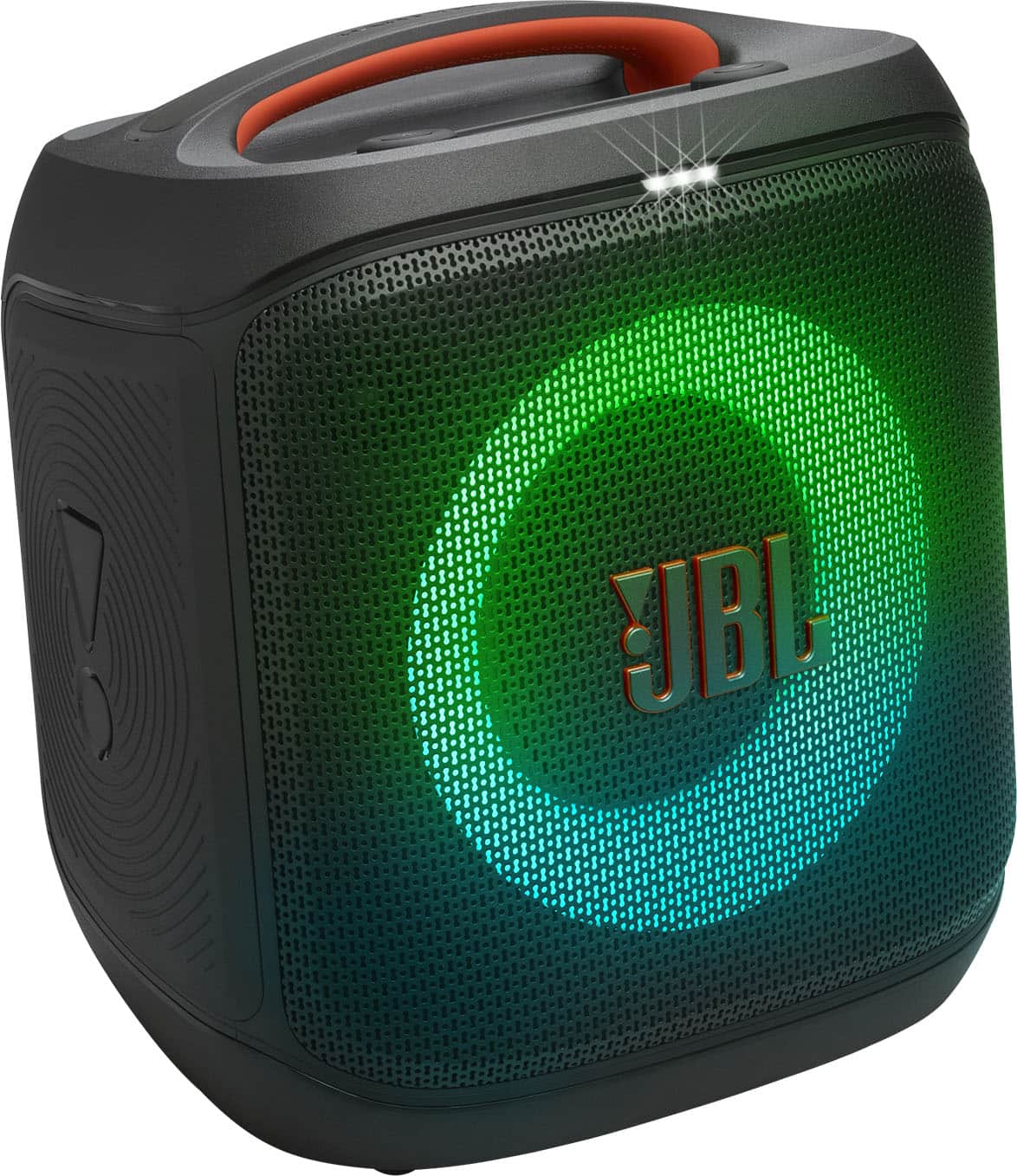
Picture this: you're planning the perfect party, and the music is going to make or break the vibe. You've narrowed it down to two JBL speakers that promise to turn your gathering into an unforgettable experience. But which one actually delivers? After diving deep into user reviews, expert opinions, and technical specifications, I've got some strong opinions about the JBL PartyBox 110 and the JBL PartyBox Encore Essential 2.
Party speakers aren't just bigger Bluetooth speakers – they're purpose-built entertainment machines. Think of them as the DJ booth, light show, and sound system rolled into one portable package. Unlike regular speakers that focus on accurate sound reproduction (what audiophiles call "flat frequency response"), party speakers deliberately pump up the bass and brighten the treble to create that energetic, club-like atmosphere that gets people moving.
The key considerations when choosing a party speaker go beyond just sound quality. You're looking at maximum volume output (measured in decibels or SPL), bass response that you can actually feel in your chest, battery life that won't quit mid-party, and visual entertainment through synchronized LED light shows. Many also include microphone inputs for karaoke – because nothing says party like someone butchering their favorite song.
The trade-offs are real though. These speakers prioritize excitement over accuracy, which means they might sound harsh during quiet listening sessions. They're also heavier and bulkier than regular Bluetooth speakers because bigger drivers and more battery capacity take up space.
Here's where the PartyBox 110 flexes its muscles. With 160 watts RMS (that's continuous power, not peak marketing numbers) compared to the Encore Essential 2's 100 watts, you're getting 60% more power from the larger speaker. But watts don't tell the whole story – it's about how that power translates to real-world performance.
The PartyBox 110 uses two 5.25-inch woofers and two 2.25-inch tweeters, while the Encore Essential 2 makes do with a single 5.25-inch woofer and two smaller 0.75-inch tweeters. Those dual woofers aren't just for show – they move more air, which means deeper bass and higher overall volume before the speaker starts compressing the sound (basically squashing the dynamics to prevent damage).
Based on user feedback and expert testing, the PartyBox 110 can fill larger spaces and compete with more background noise. Think backyard barbecues with 50+ people versus intimate gatherings of 20-30 friends. The difference becomes obvious when you're trying to energize a crowd – the extra headroom means cleaner sound at party volumes.
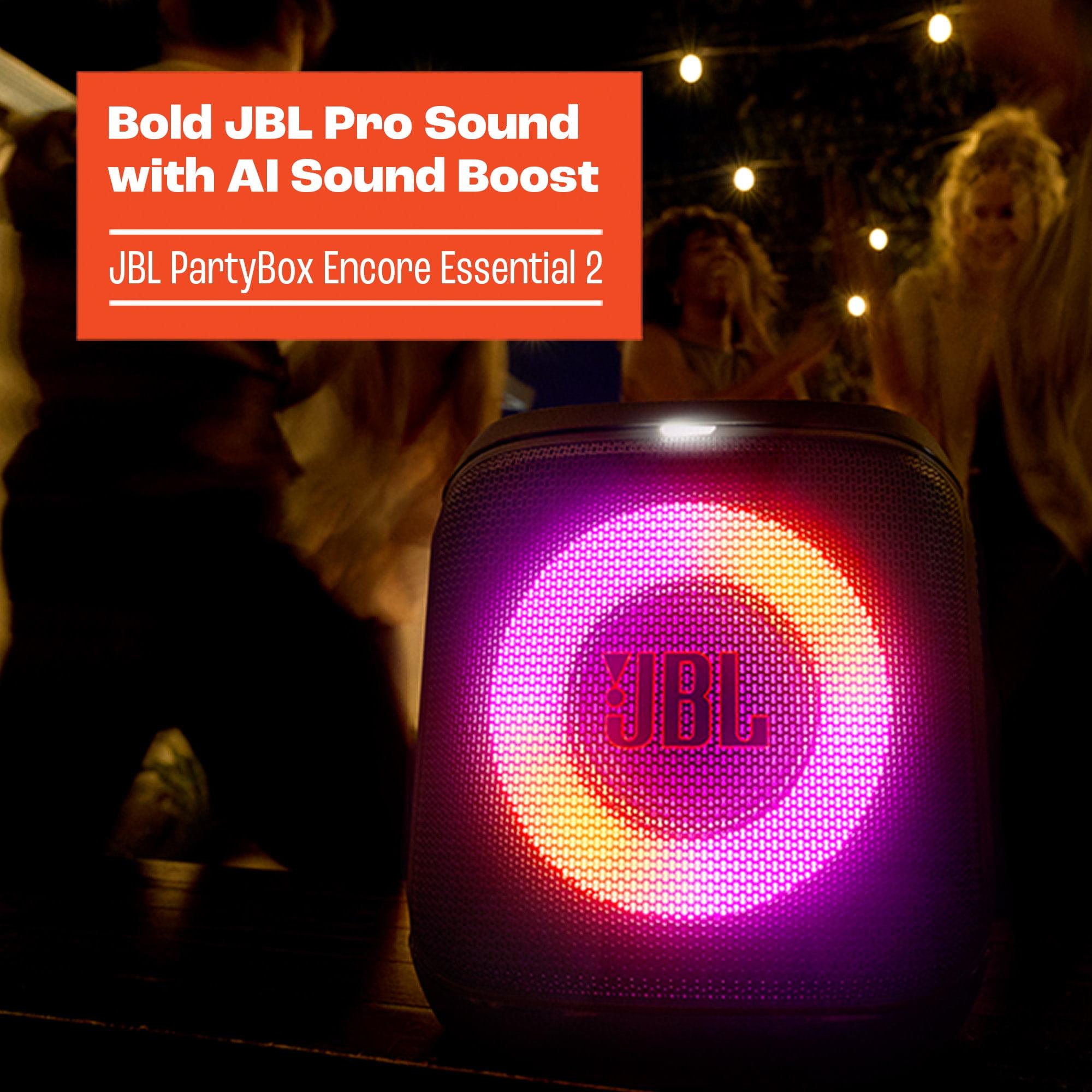
However, the Encore Essential 2 has a secret weapon: AI Sound Boost. This intelligent processing adjusts the frequency response in real-time to prevent distortion and maintain clarity even when pushed hard. It's like having an audio engineer constantly tweaking the EQ to keep everything sounding crisp. While it can't match the raw power of dual woofers, it makes the most of what it has.
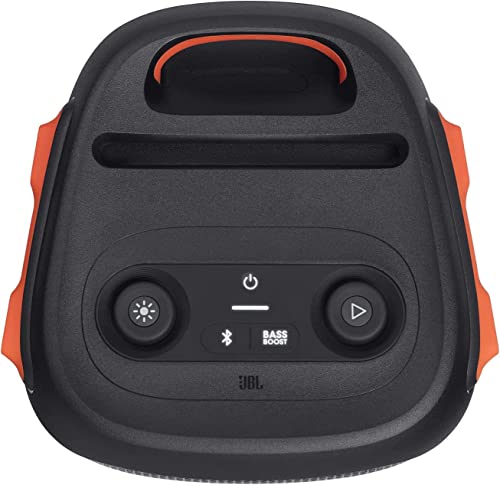
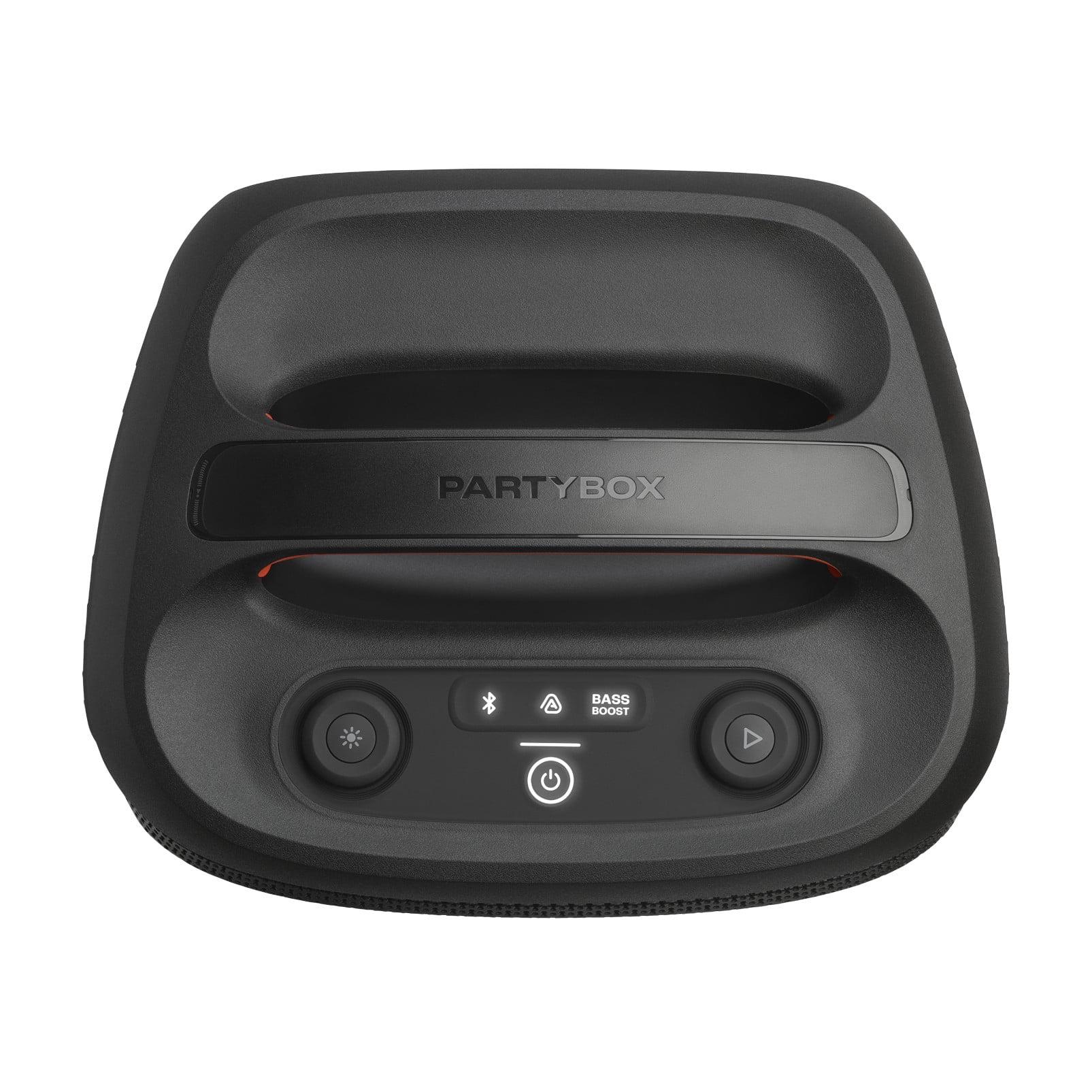
The PartyBox 110, released in 2021, follows JBL's traditional party speaker formula – big bass, bright treble, and an energetic midrange that makes vocals cut through the mix. It's tuned to sound exciting rather than accurate, with two levels of Bass Boost that can literally shake walls. This V-shaped frequency response (heavy on bass and treble, lighter on mids) works great for electronic music, hip-hop, and pop, but can sound harsh with acoustic music or at lower volumes.
The Encore Essential 2, launched in 2025, represents JBL's evolution in party speaker design. The sound signature is more balanced, with smoother midrange reproduction that makes vocals clearer and less fatiguing. The AI Sound Boost technology, absent in the 2021 model, dynamically optimizes the sound based on volume levels and content. This means better performance across different music genres and listening scenarios.
User consensus suggests the PartyBox 110 wins on raw excitement and bass impact, while the Encore Essential 2 offers more versatility and refinement. If your playlists lean heavily toward bass-heavy electronic music and you want maximum impact, the dual woofers deliver. If you're playing diverse music for mixed audiences, the newer speaker's balance might serve you better.
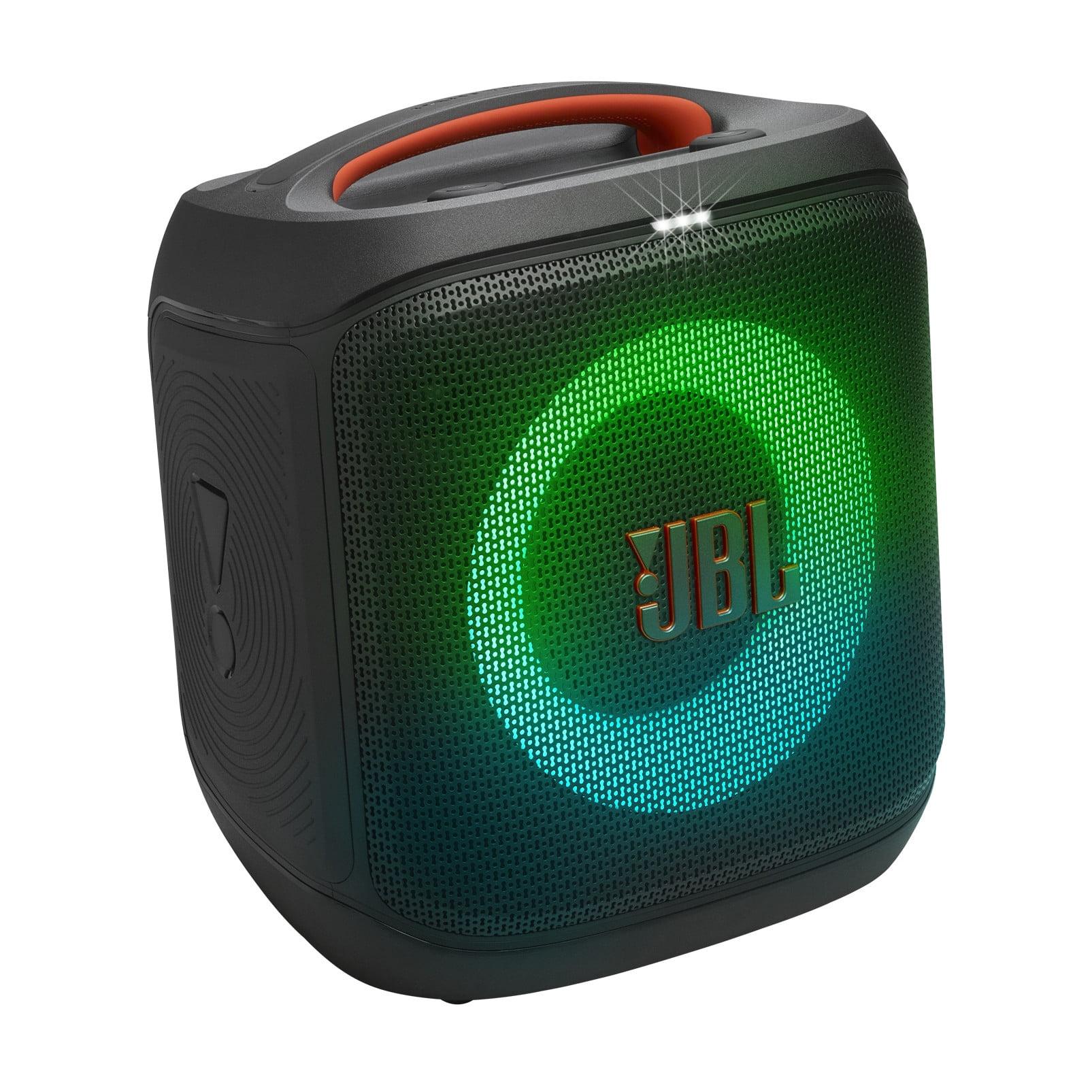
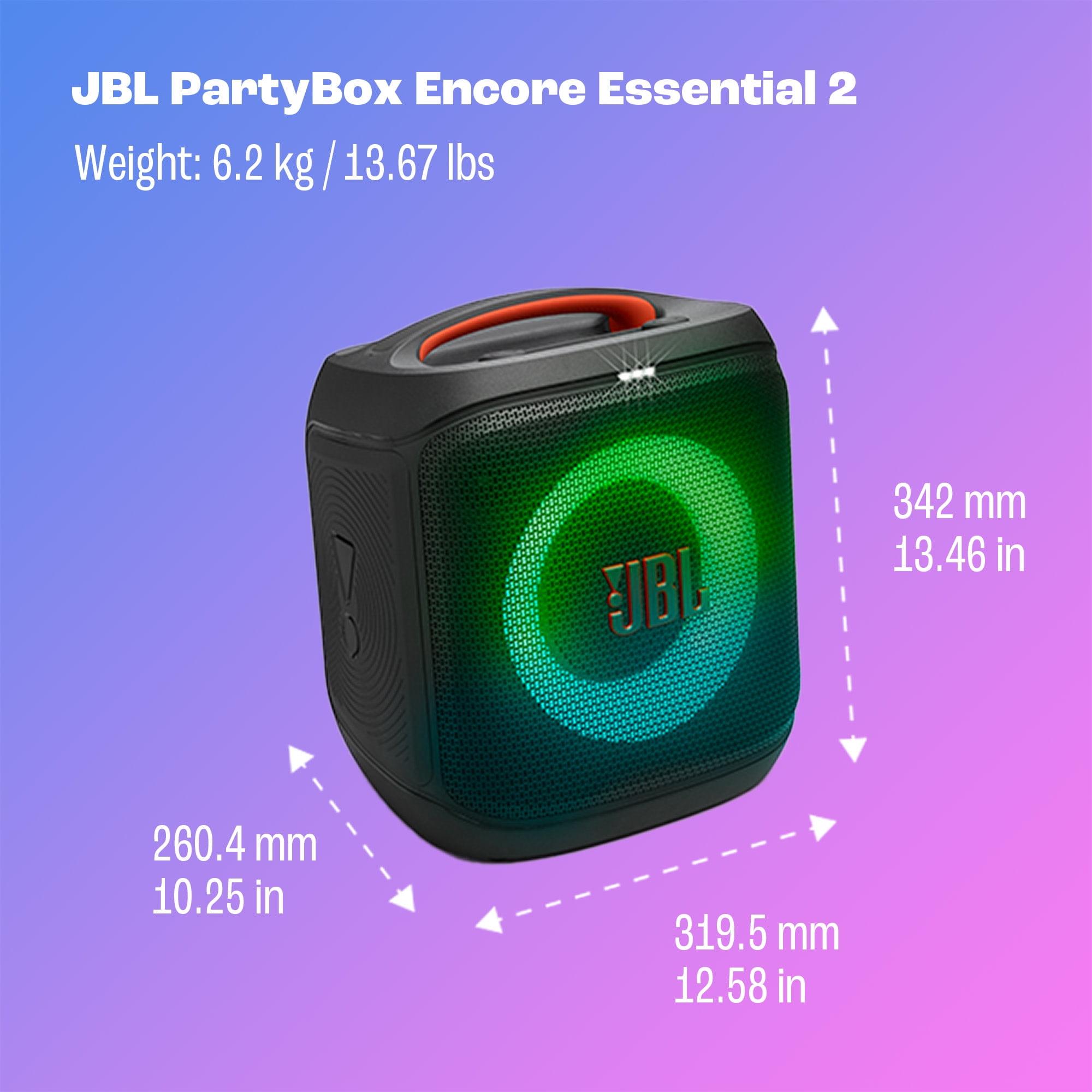
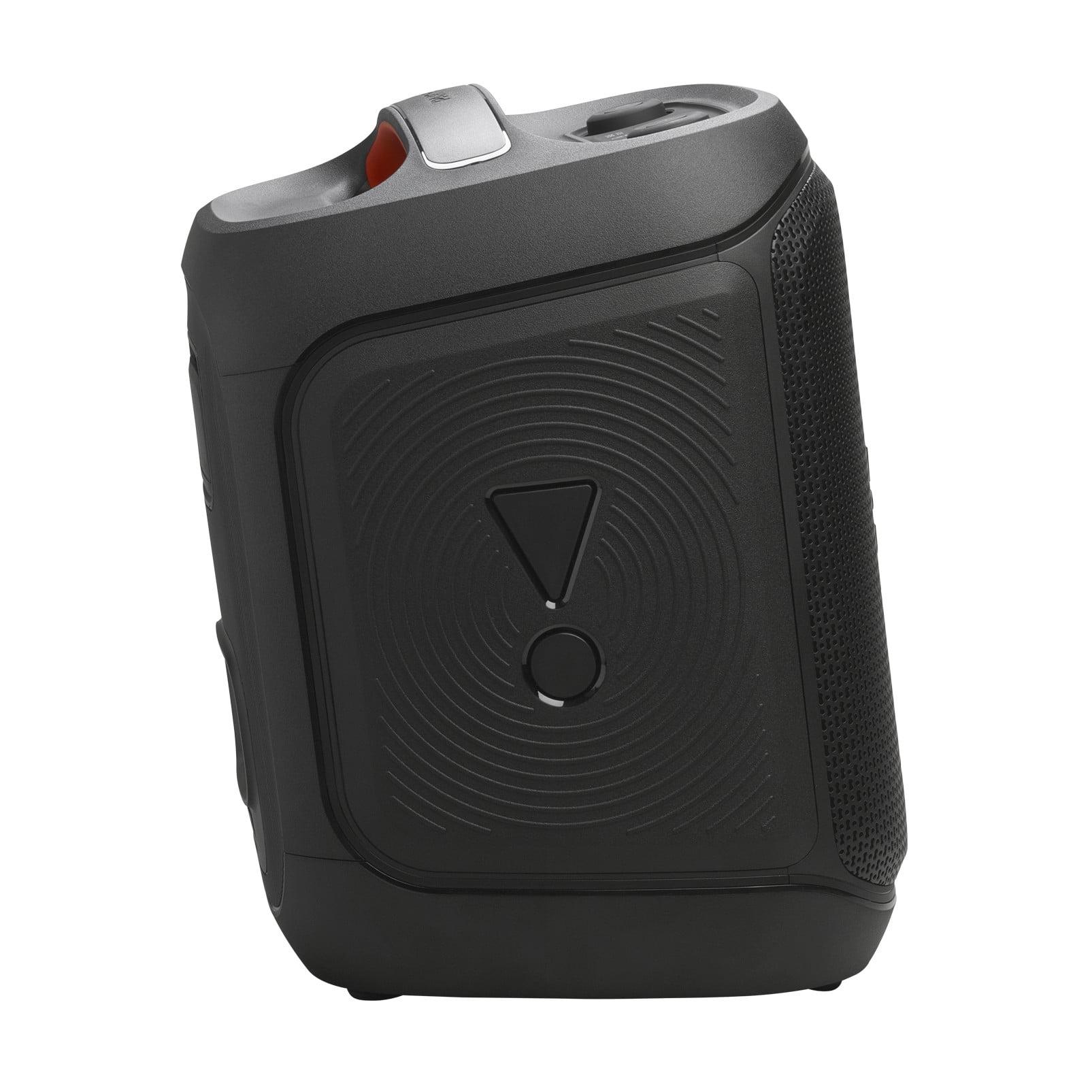
This is where personal priorities really matter. The Encore Essential 2 weighs just 13.67 pounds with a single carry handle, making it genuinely grab-and-go portable. I can't overstate how much that matters for spontaneous gatherings, beach trips, or moving between rooms during parties. It's the difference between "I'll bring the speaker" and "help me carry this thing."
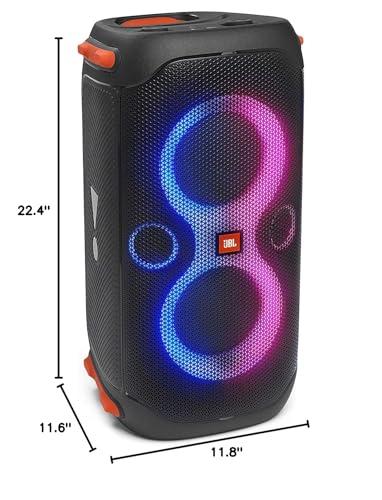
The PartyBox 110 tips the scales at 24 pounds with dual recessed handles – still technically portable, but requiring more planning and commitment. It's like the difference between a daypack and a full hiking backpack. Both work, but one encourages more frequent use.
The size difference is equally significant. The Encore Essential 2 fits easily in most car trunks and storage spaces, while the PartyBox 110's tower design demands more thoughtful placement. For apartment dwellers or frequent travelers, this practical difference often trumps raw performance considerations.
However, that extra weight in the PartyBox 110 serves a purpose – it houses more battery capacity, better heat dissipation during extended high-volume use, and simply feels more substantial when the bass hits. Sometimes mass equals class.
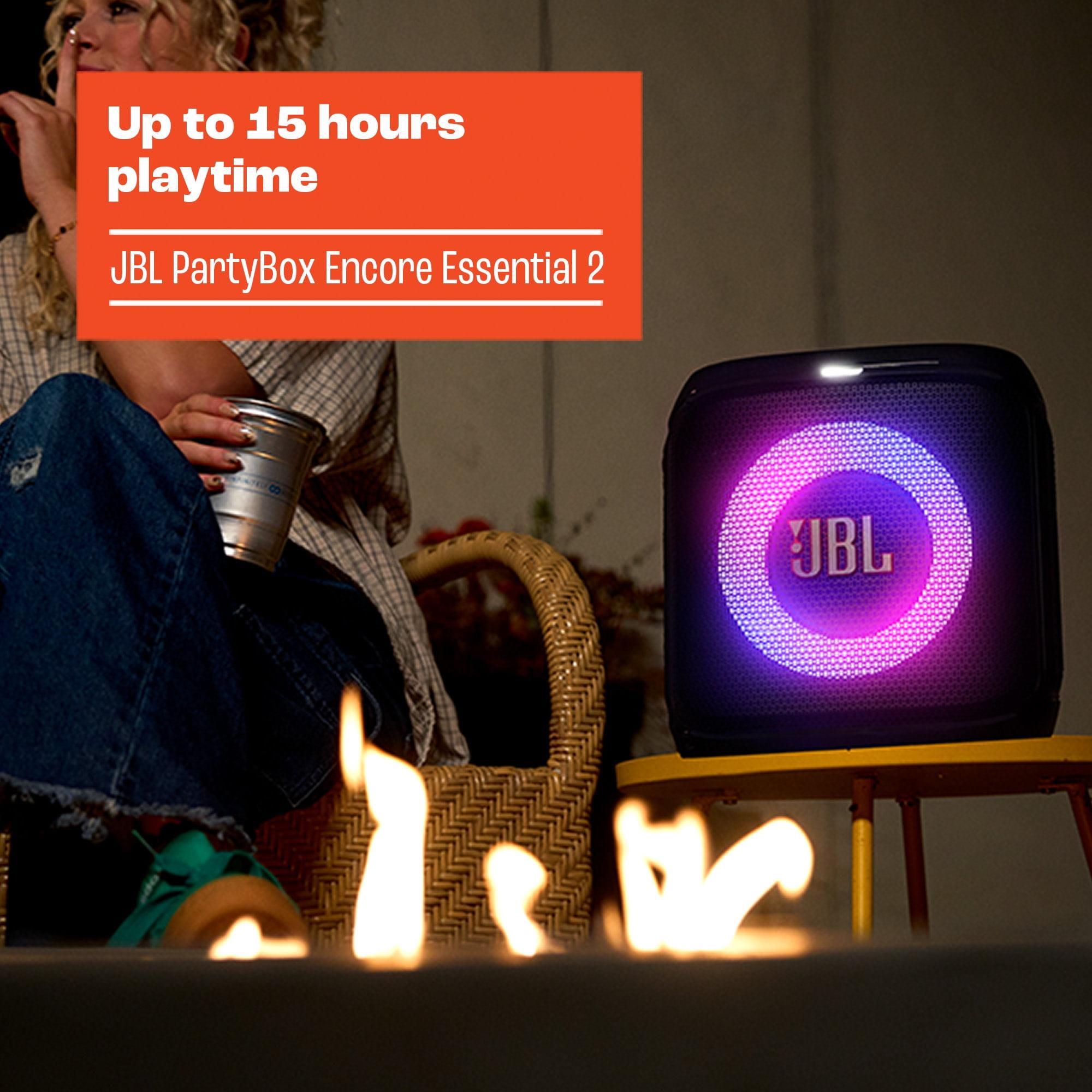
Here's where things get interesting. The Encore Essential 2 claims up to 15 hours of playback versus the PartyBox 110's 12-hour rating, but real-world performance tells a different story. These manufacturers test at modest volumes with features like lights and bass boost disabled – basically the most boring party scenario imaginable.
User reports suggest both speakers deliver roughly 6-8 hours of actual party performance with lights blazing, bass boost engaged, and volume at crowd-pleasing levels. The Encore Essential 2's ace in the hole is its replaceable battery. When the battery eventually degrades after 3-5 years of regular use, you can swap in a fresh one instead of replacing the entire speaker or paying for expensive repairs.
The PartyBox 110's fixed battery design is more limiting long-term, but it does provide more consistent power delivery throughout the discharge cycle. Both speakers can run continuously on AC power for unlimited runtime during home use.
The technology gap between these speakers, separated by four years, shows in their connectivity features. The PartyBox 110 uses Bluetooth 5.1 and JBL's established TWS (True Wireless Stereo) pairing, which works reliably but only connects with other identical PartyBox 110 units. It's like a closed ecosystem – great performance within its limits, but not very flexible.
The Encore Essential 2 leverages Bluetooth 5.4 and JBL's newer Auracast technology, which promises broader compatibility with future JBL speakers and easier multi-speaker setup. Auracast is essentially Bluetooth's next evolution, designed to replace older pairing methods with more stable, lower-latency connections. It's future-proofing in action.
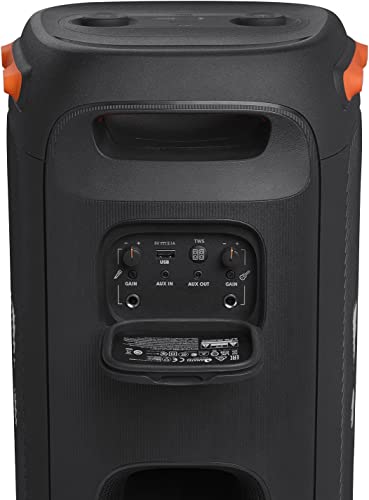
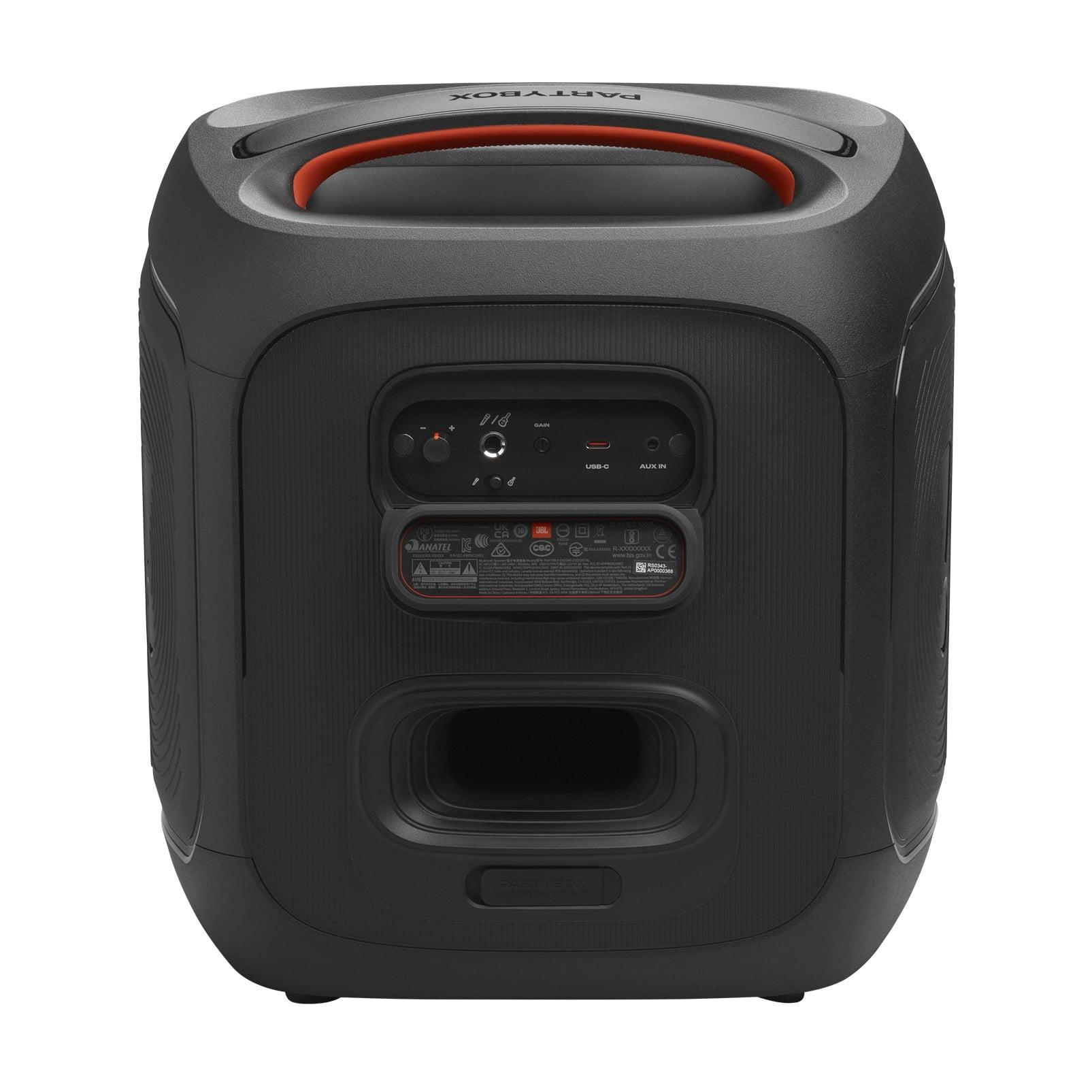
For inputs, the PartyBox 110 provides separate microphone and guitar inputs with independent controls – crucial for serious karaoke or acoustic performances. The AUX output jack enables unlimited daisy-chaining of additional speakers via cables, making it the clear choice for large venue applications.
The Encore Essential 2 consolidates these into a single combo input with karaoke EQ tuning built-in. It's simpler but less flexible, suitable for casual performances rather than semi-professional applications.
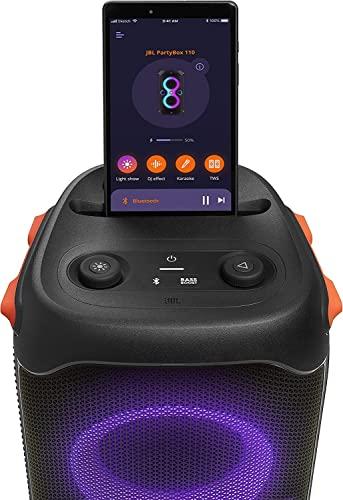
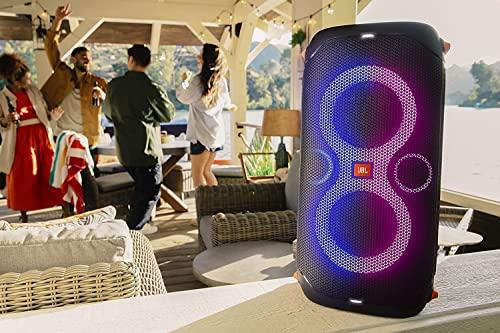
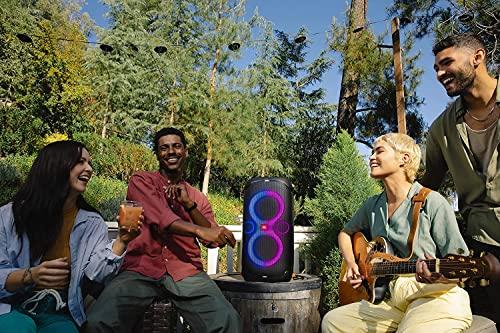
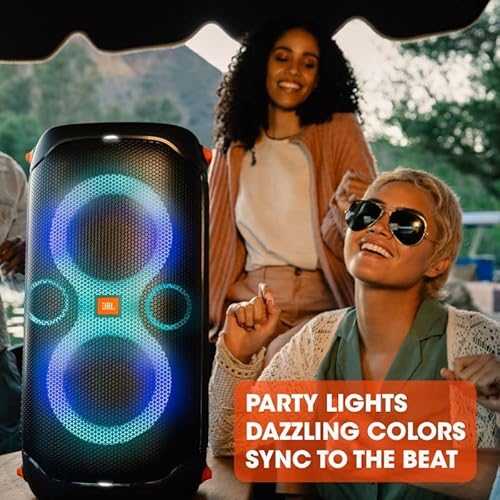
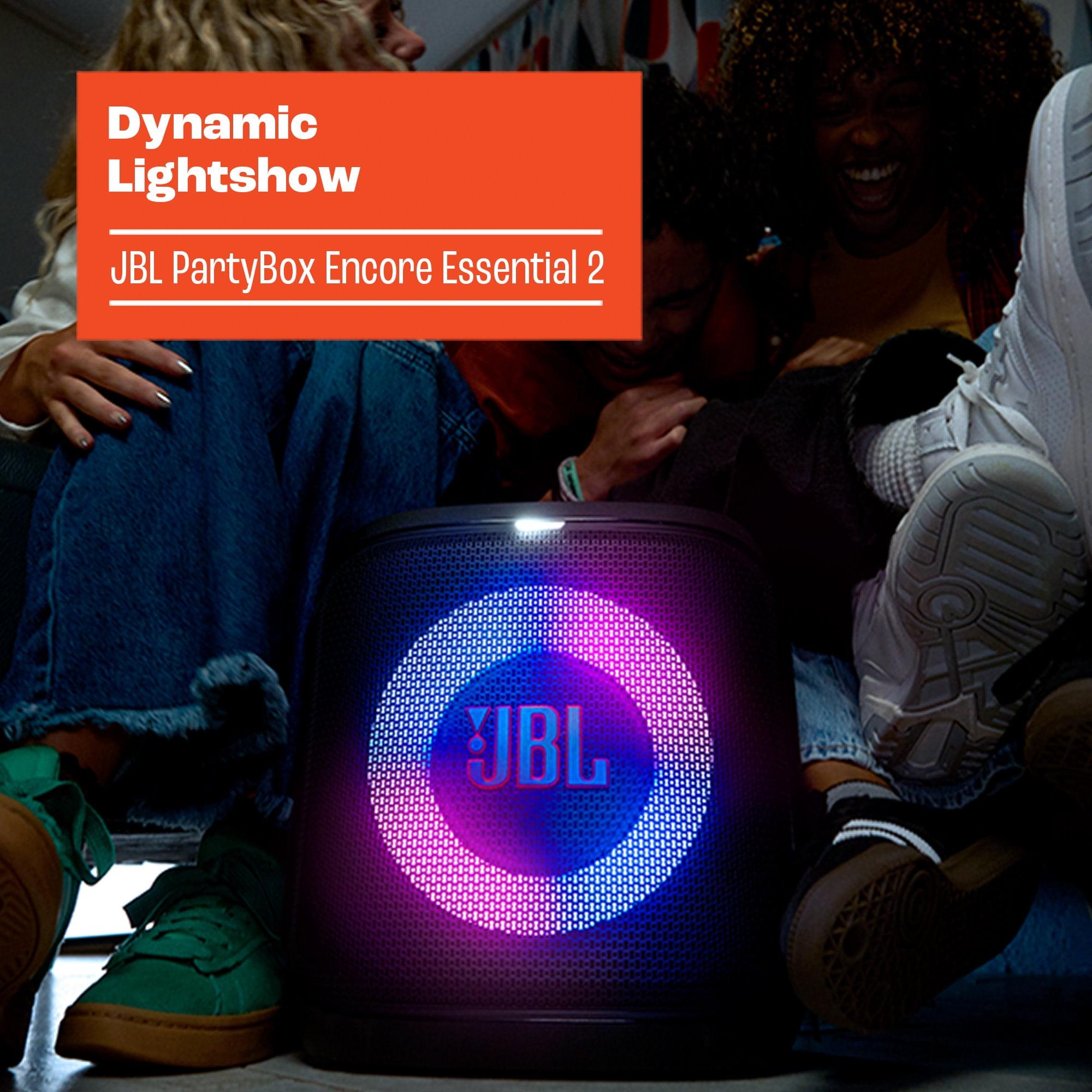
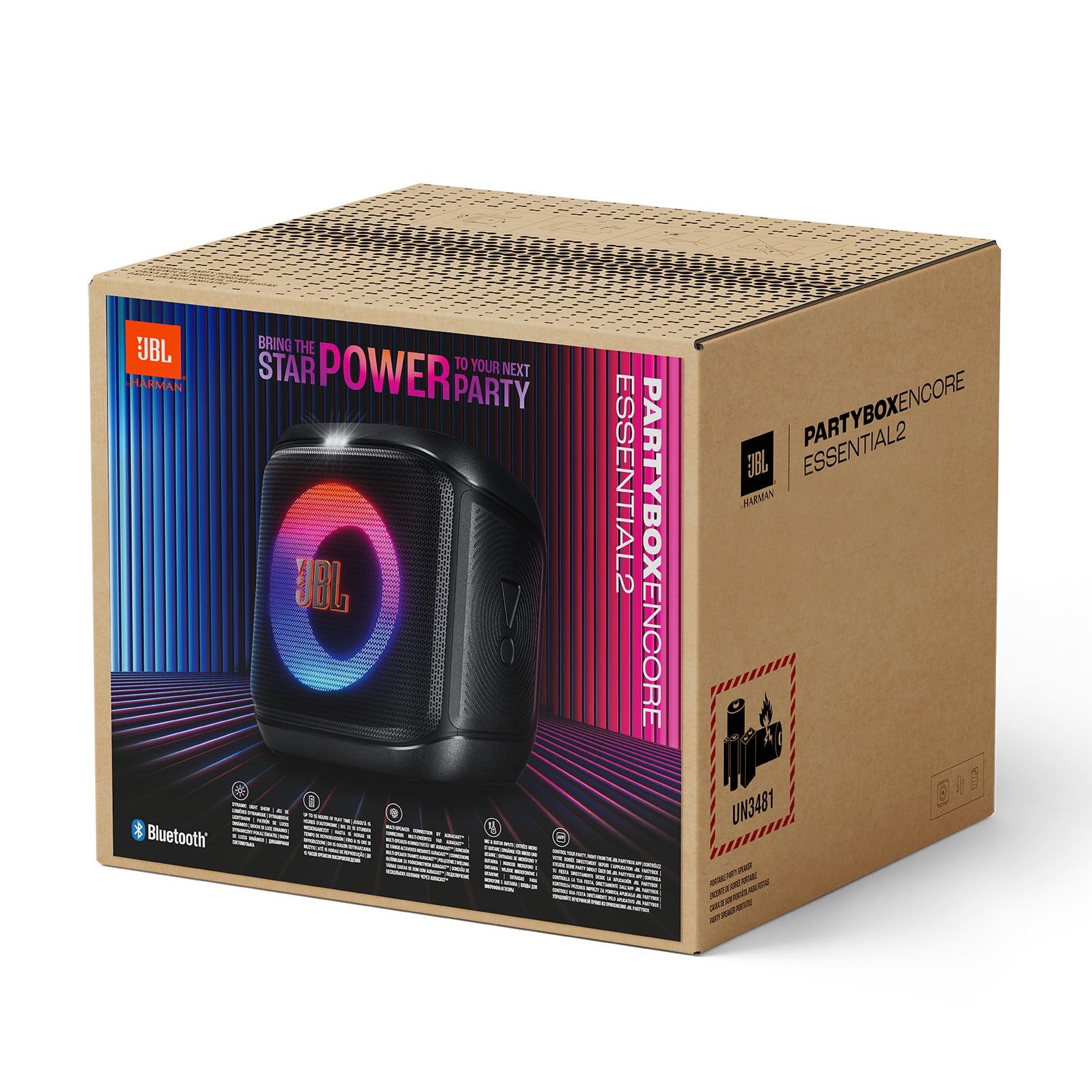
Both speakers transform any space with synchronized LED light shows, but they take different approaches. The PartyBox 110 emphasizes raw visual impact with larger LED arrays and more intense strobing effects. In a dark room, it's genuinely impressive – like having a mini club lighting system.
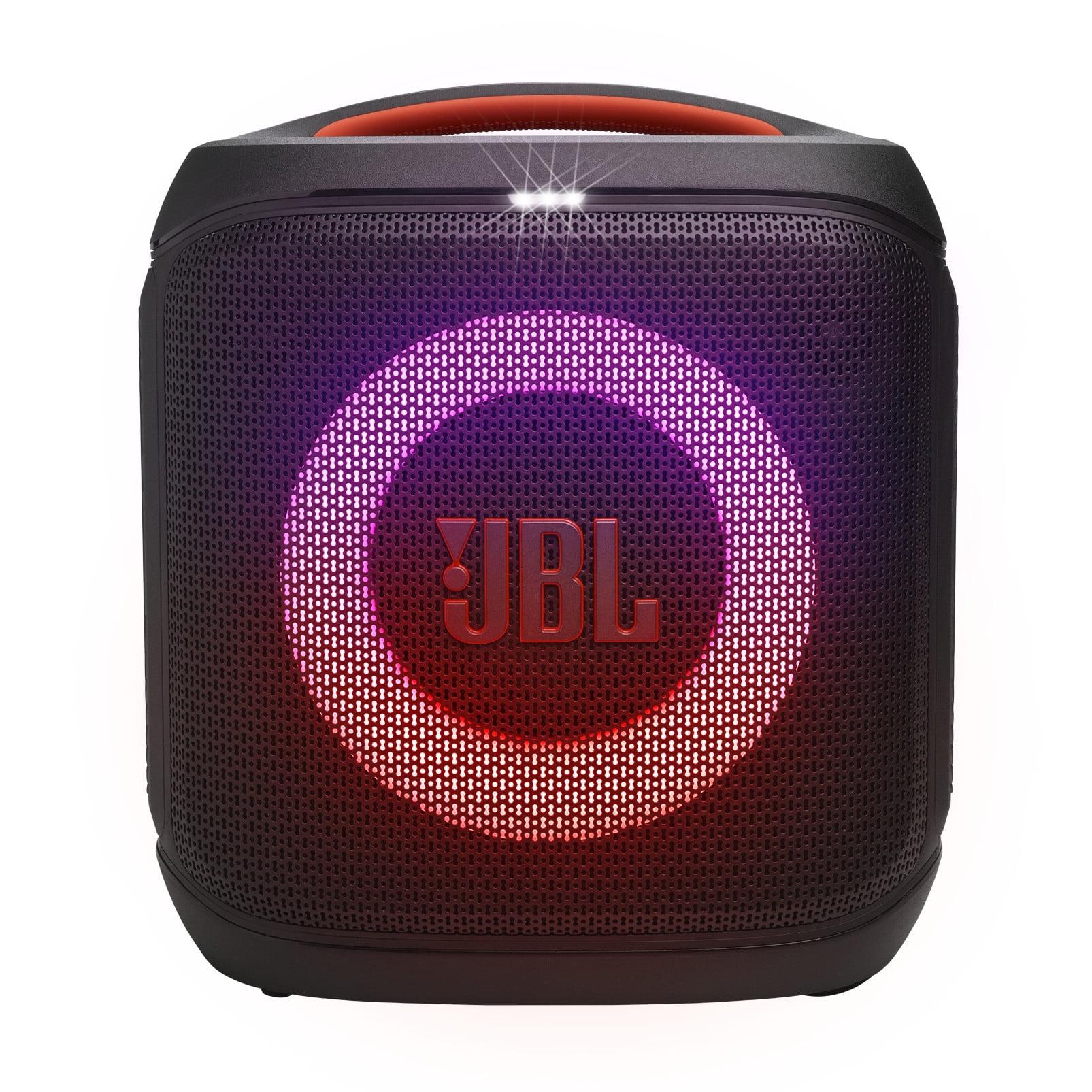
The Encore Essential 2 offers six distinct lighting modes with more nuanced effects and smoother transitions. The patterns feel more sophisticated despite the physically smaller implementation. Both respond to music beats and bass hits, but the newer speaker's algorithms seem more refined.
Through the JBL PartyBox app, you can customize colors, adjust patterns, and synchronize effects across multiple speakers. The app experience has improved significantly between the 2021 and 2025 releases, with more intuitive controls and expanded customization options on the newer model.
While these aren't designed as home theater speakers, many people use them for movie nights and gaming. The PartyBox 110's extra power and dual woofers provide more impactful explosions and deeper rumbles during action scenes. However, both speakers exhibit some latency (delay) when connected via Bluetooth, which can cause lip-sync issues during video playback.
For serious home theater use, you'd want to use the wired AUX input to eliminate latency, but then you lose the convenience of wireless connectivity. Neither speaker is optimized for dialogue clarity – they're tuned for music excitement rather than speech intelligibility.
If you're looking for a speaker that doubles as a home theater solution, consider the PartyBox 110 for its superior dynamic range and the ability to add a second unit for stereo separation. But honestly, dedicated home theater speakers would serve you better for that specific use case.
At the time of writing, the Encore Essential 2 commands a lower price point than the PartyBox 110 while offering newer technology and improved portability. The value equation favors the newer speaker for most users, especially considering the replaceable battery design extends its useful life.
However, the PartyBox 110 delivers significantly more acoustic performance per dollar if maximum volume and bass impact are your priorities. The professional-grade inputs and expandability options also add value for users who need those capabilities.
Long-term ownership costs favor the Encore Essential 2 due to battery replaceability and more efficient power management. The PartyBox 110's fixed battery will eventually require professional service, potentially adding substantial costs after several years of use.
After analyzing user feedback, expert opinions, and technical specifications, here's my take: the JBL PartyBox Encore Essential 2 represents the better choice for most people. Its combination of genuine portability, refined sound quality, modern connectivity, and superior long-term value makes it the smarter pick for typical party scenarios.
Choose the Encore Essential 2 if you frequently transport your speaker, host smaller to medium gatherings, prefer balanced sound quality, or want the most future-proof features. The AI Sound Boost technology and Auracast connectivity show JBL's technical progress, while the replaceable battery design demonstrates practical thinking about long-term ownership.
The PartyBox 110 still has its place for users who need maximum volume for large outdoor events, require professional input capabilities for live performance, or simply want the most impressive bass impact possible. If you're setting up a semi-permanent party solution or regularly entertaining crowds of 50+ people, the extra power justifies the added weight and cost.
Both speakers excel within their respective niches, but the Encore Essential 2 covers more real-world use cases effectively. Unless you specifically need the PartyBox 110's extra power or professional features, the newer, more portable option delivers better overall value and user experience.
The party speaker landscape has evolved significantly since 2021, and the Encore Essential 2 represents that evolution perfectly – more thoughtful design, better technology integration, and practical improvements that matter in daily use. Sometimes the newer, smaller fighter really is the better choice.
| JBL PartyBox 110 | JBL PartyBox Encore Essential 2 |
|---|---|
| Power Output - Determines maximum volume and bass impact for large gatherings | |
| 160W RMS (significantly louder, fills larger spaces) | 100W RMS (adequate for most parties, enhanced by AI Sound Boost) |
| Weight & Portability - Critical for frequent transport and spontaneous parties | |
| 24 lbs with dual handles (semi-portable, better for stationary setup) | 13.67 lbs with single handle (truly grab-and-go portable) |
| Driver Configuration - Affects sound quality and bass response | |
| 2x 5.25" woofers + 2x 2.25" tweeters (deeper bass, wider soundstage) | 1x 5.25" woofer + 2x 0.75" tweeters (more balanced, AI-optimized) |
| Battery Life - Real-world party performance with lights and bass boost active | |
| Up to 12 hours advertised (7-10 hours actual party use) | Up to 15 hours advertised (5-7 hours actual party use) |
| Battery Design - Long-term ownership and serviceability | |
| Fixed battery (requires professional service after 3-5 years) | User-replaceable battery (extend speaker lifespan indefinitely) |
| Bluetooth Version - Affects connection stability and multi-speaker capabilities | |
| Bluetooth 5.1 with TWS pairing (pairs only with other PartyBox 110 units) | Bluetooth 5.4 with Auracast (future-proof, broader speaker compatibility) |
| Audio Inputs - Professional performance and karaoke capabilities | |
| Separate mic/guitar inputs + AUX output (professional-grade, unlimited daisy-chaining) | Single combo input with karaoke EQ (casual performances only) |
| Sound Processing - Audio optimization and distortion prevention | |
| Traditional analog processing with 2-level Bass Boost | AI Sound Boost technology (dynamic optimization, cleaner high-volume performance) |
| Release Year - Technology generation and feature sophistication | |
| 2021 (established technology, proven reliability) | 2025 (latest features, refined algorithms, modern connectivity) |
| Lighting Effects - Visual entertainment and customization options | |
| Larger LED arrays with intense strobing (maximum visual impact) | 6 distinct modes with nuanced effects (more sophisticated patterns) |
| Charging Technology - Device compatibility and convenience features | |
| USB-A output for device charging (2.1A) | USB-C charging with 22W power bank capability (charges modern devices faster) |
The JBL PartyBox 110 is significantly louder with 160W RMS output power compared to the JBL PartyBox Encore Essential 2's 100W RMS. The PartyBox 110 can fill larger spaces and handle bigger crowds, making it better for outdoor events with 50+ people. However, the Encore Essential 2 uses AI Sound Boost technology to maintain cleaner sound at high volumes despite having less raw power.
The JBL PartyBox 110 delivers deeper, more impactful bass thanks to its dual 5.25-inch woofers compared to the single woofer in the Encore Essential 2. The PartyBox 110 also offers two levels of Bass Boost for extra low-end punch. While the Encore Essential 2 has impressive bass for its size, it cannot match the physical bass output of the larger speaker's dual-woofer configuration.
The JBL PartyBox Encore Essential 2 is much more portable at 13.67 pounds with a single carry handle, compared to the PartyBox 110's 24 pounds with dual handles. The Encore Essential 2 is genuinely grab-and-go portable for beach trips, parties, and frequent transport, while the PartyBox 110 is better suited for semi-permanent setups or events where you don't mind the extra weight.
The JBL PartyBox Encore Essential 2 offers up to 15 hours of advertised battery life compared to 12 hours for the PartyBox 110. However, real-world party use with lights and bass boost active delivers similar performance from both speakers - approximately 6-8 hours. The key advantage of the Encore Essential 2 is its user-replaceable battery, allowing you to extend the speaker's lifespan indefinitely.
Yes, both speakers support multi-speaker connectivity but use different technologies. The JBL PartyBox 110 uses TWS (True Wireless Stereo) pairing with other PartyBox 110 units and can daisy-chain unlimited speakers via its AUX output. The Encore Essential 2 uses newer Auracast technology for wireless pairing with broader JBL speaker compatibility, but lacks an AUX output for wired connections.
The JBL PartyBox 110 offers superior karaoke capabilities with separate microphone and guitar inputs, each with independent volume controls. This makes it ideal for serious karaoke sessions and live performances. The Encore Essential 2 has a single combo input with built-in karaoke EQ tuning, which works well for casual singing but offers less flexibility for professional use.
Neither speaker is specifically designed for home theater, but the JBL PartyBox 110 performs better for movie watching due to its higher power output and deeper bass response for action scenes. Both speakers have some Bluetooth latency that can cause lip-sync issues, so you'd want to use wired connections for video. However, dedicated home theater speakers would provide better dialogue clarity and overall movie experience.
The JBL PartyBox Encore Essential 2 generally offers more balanced sound quality with smoother midrange reproduction and AI Sound Boost technology that prevents distortion at high volumes. The PartyBox 110 has a more aggressive, party-focused sound signature with emphasized bass and treble that's exciting but can sound harsh during quiet listening. The Encore Essential 2 is more versatile across different music genres.
Both speakers feature impressive LED light shows that sync to music beats. The JBL PartyBox 110 has larger LED arrays with more intense strobing effects for maximum visual impact. The Encore Essential 2 offers six distinct lighting modes with more sophisticated patterns and smoother transitions. Both can be customized through the JBL PartyBox app, but the newer Encore Essential 2 has more refined lighting algorithms.
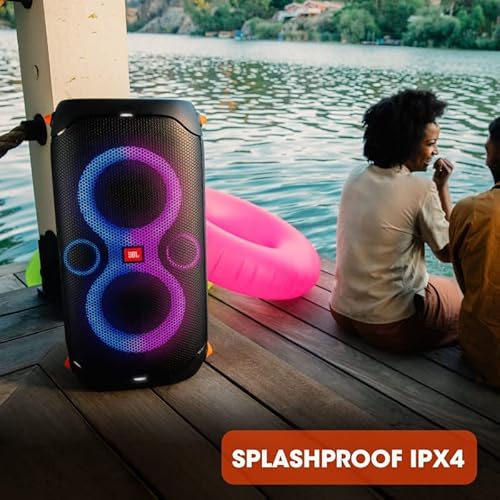
For large outdoor gatherings, the JBL PartyBox 110 is the better choice due to its higher power output and ability to compete with wind and ambient noise. Its dual woofers provide the bass impact needed for outdoor spaces. The Encore Essential 2 works well for smaller outdoor gatherings and is much easier to transport to different locations. Both have IPX4 splash-proof ratings for poolside use.
The JBL PartyBox 110 uses Bluetooth 5.1 with traditional TWS pairing and includes AUX input/output jacks for wired connections. The Encore Essential 2 features newer Bluetooth 5.4 with Auracast technology for better future compatibility, plus USB-C charging with power bank capability. The PartyBox 110 offers more professional connectivity options, while the Encore Essential 2 has more modern wireless features.
The JBL PartyBox Encore Essential 2 typically offers better overall value with its lower price point, modern features, superior portability, and replaceable battery design that extends long-term ownership. The PartyBox 110 provides better value per watt of power and includes professional-grade inputs, making it worthwhile if you need maximum volume and performance. Choose the Encore Essential 2 for versatility and the PartyBox 110 for raw power.
We've done our best to create useful and informative comparisons to help you decide what product to buy. Our research uses advanced automated methods to create this comparison and perfection is not possible - please contact us for corrections or questions. These are the sites we've researched in the creation of this article: rtings.com - youtube.com - bestbuy.com - gadgets360.com - popsci.com - youtube.com - audioadvice.com - popsci.com - youtube.com - versus.com - youtube.com - rtings.com - jbl.com - in.jbl.com - jbl.com.tw - bhphotovideo.com - in.jbl.com - jbl.com - youtube.com - hu.harmanaudio.com - jbl.com.au - global.jbl.com - support.jbl.com - youtube.com - kh.jbl.com - onward.ph - jbl.com.ph - support.jbl.com - youtube.com - rtings.com - rtings.com - global.jbl.com - armorsound.com - rtings.com - soundguys.com - youtube.com - versus.com - manuals.plus - jbl.com - youtube.com - bestbuy.com - crutchfield.com - youtube.com - bestbuy.com - youtube.com - comparisontabl.es - manuals.plus - ggelectronics.com - gzhls.at - jbl.com - th.jbl.com - manuals.plus - cdwg.com - th.jbl.com - creativeaudio.net - bestbuy.com - samsung.com - bestbuy.com - crutchfield.com - manuals.plus - guidefitter.com - static.pcrichard.com

Privacy Policy
Terms and Conditions - Affiliate Policy
Home Security
© Copyright 2008-2026.
11816 Inwood Rd #1211, Dallas, TX 75244