

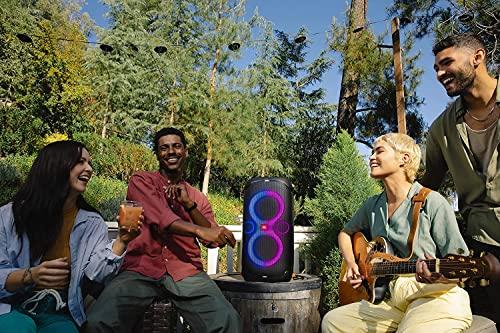
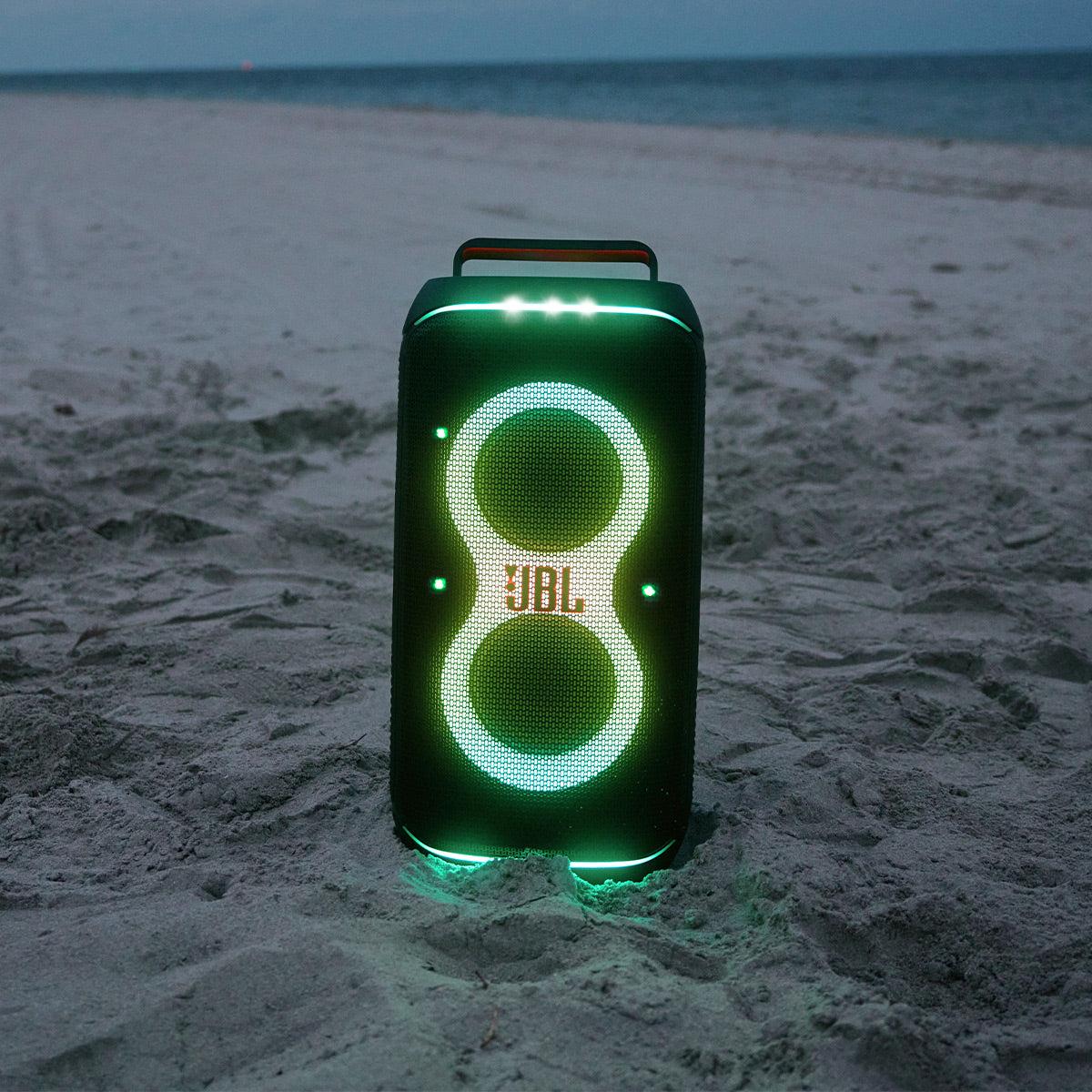
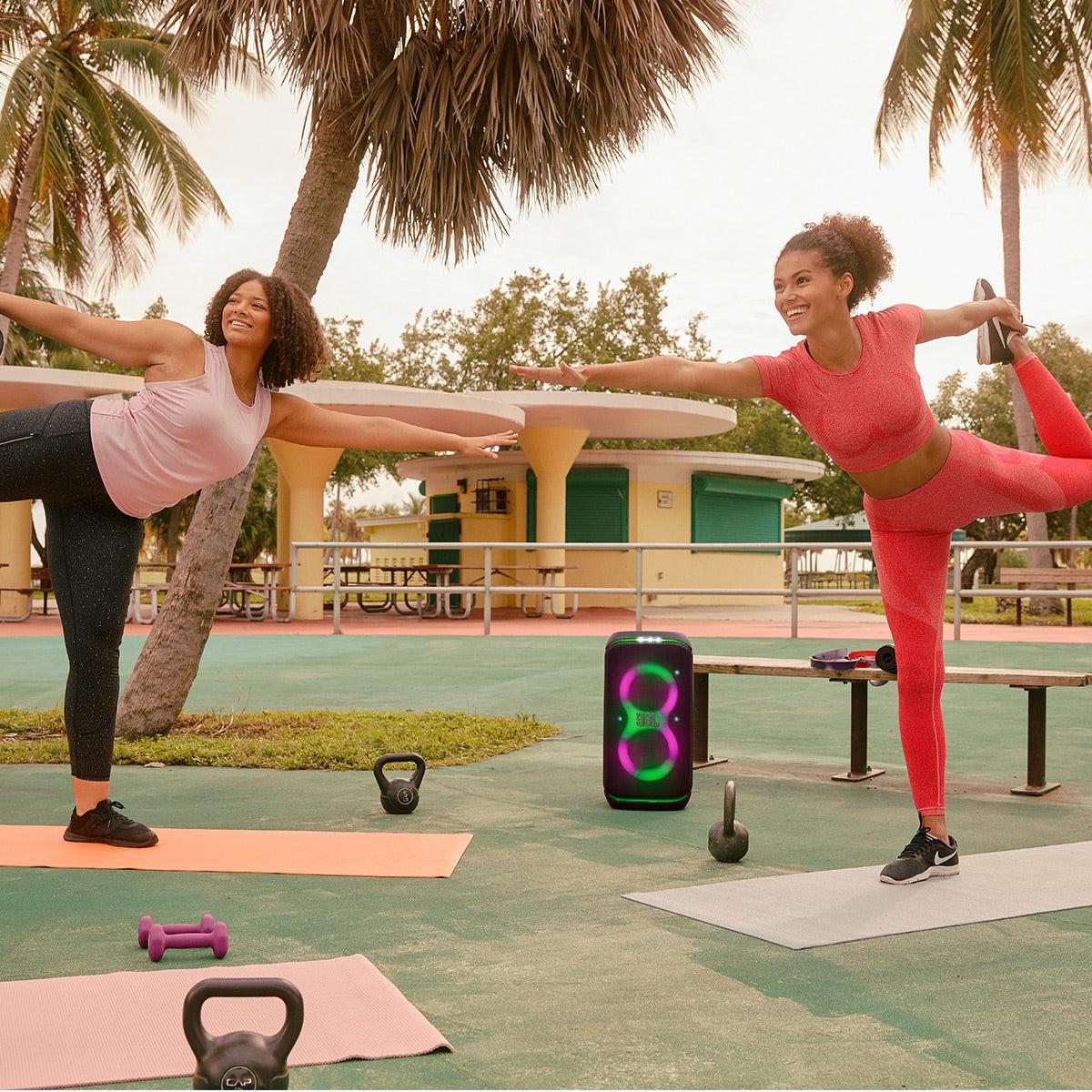
If you've ever tried to power a backyard party with a regular Bluetooth speaker, you know the struggle. Your music sounds thin, guests can't hear it over conversation, and forget about any real bass. That's where portable party speakers come in—they're purpose-built to fill large spaces with powerful, energetic sound while running off battery power for hours.
JBL dominates this category with their PartyBox lineup, and two models stand out for anyone wanting serious sound without breaking the bank: the PartyBox 110 and the newer PartyBox Club 120. At the time of writing, both carry similar price tags, making the choice between them particularly interesting.
Before diving into specifics, it's worth understanding what makes party speakers different from regular Bluetooth speakers. These aren't designed for critical listening in quiet rooms—they're engineered to cut through crowd noise, fill large outdoor spaces, and keep people moving. That means prioritizing maximum volume, deep bass response, and features that enhance the party atmosphere.
Key characteristics that matter most include power output (measured in watts), frequency response (how low and high the speakers can go), maximum volume levels (measured in decibels), battery life, and special features like lighting effects and microphone inputs for karaoke.
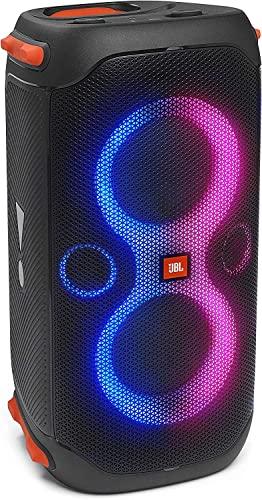
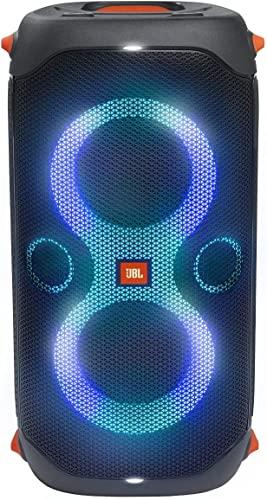
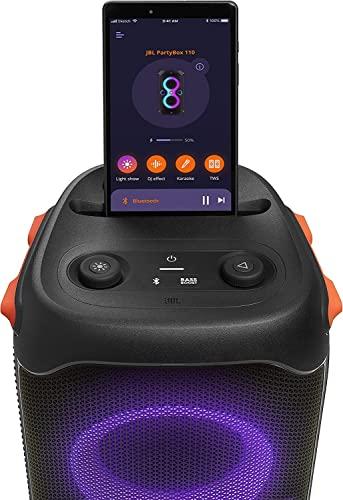
The PartyBox 110 launched in 2021 as JBL's entry into truly portable party speakers. It established the blueprint: 160 watts of power, 12-hour battery life, impressive light shows, and that signature JBL bass-heavy sound profile that makes dance music and hip-hop really thump.
Three years later, JBL released the PartyBox Club 120 in 2024. Rather than reinventing the wheel, they refined the formula with targeted improvements based on real-world feedback. The question is whether those improvements justify choosing the newer model.
Let's start with what matters most for any party speaker: how loud it gets and how clean it sounds when pushed hard.
Both speakers claim 160 watts RMS (Root Mean Square—basically the sustained power they can handle), but they achieve that power differently. The PartyBox 110 uses a single 5.25-inch woofer paired with two 2.25-inch tweeters. The PartyBox Club 120 ups the ante with dual 5.25-inch woofers alongside the same tweeter configuration.
This difference shows up immediately in real-world testing. The newer Club 120 hits approximately 103 decibels at maximum volume compared to the 110's 99 decibels. Four decibels might not sound like much, but it's actually significant—that's roughly a 50% increase in perceived loudness. For context, 103 dB is loud enough to fill a large backyard or compete with crowd noise at a decent-sized party.
More importantly, that dual-woofer design means each driver works less hard to produce the same volume. Less strain typically means clearer sound at high volumes and reduced distortion when you're really pushing things. If you've ever heard a speaker start to sound harsh or "broken" when cranked up, that's usually distortion from overworked drivers.
Here's where the differences get really interesting. The PartyBox 110 reaches down to 45 Hz in its frequency response, while the Club 120 digs deeper to 40 Hz. Those five extra hertz of low-end extension translate to more substantial bass presence—the kind that doesn't just sound good but actually creates that physical sensation you feel in your chest during the best dance tracks.
In practical terms, users consistently describe the 110's bass as having a slightly "hollow" quality compared to the Club 120's fuller, more impactful low end. This difference becomes most apparent with bass-heavy genres like EDM, hip-hop, and modern pop where the sub-bass frequencies (those super low notes you feel more than hear) add crucial energy to the music.
The Club 120 also introduces AI Sound Boost—JBL's real-time processing that analyzes your music and environment to optimize the sound. While the marketing sounds fancy, this feature essentially adjusts the frequency response based on what you're playing and where you're playing it. Playing outdoors? It compensates for the lack of wall reflections. In a small room? It dials back the bass to prevent overwhelming the space.
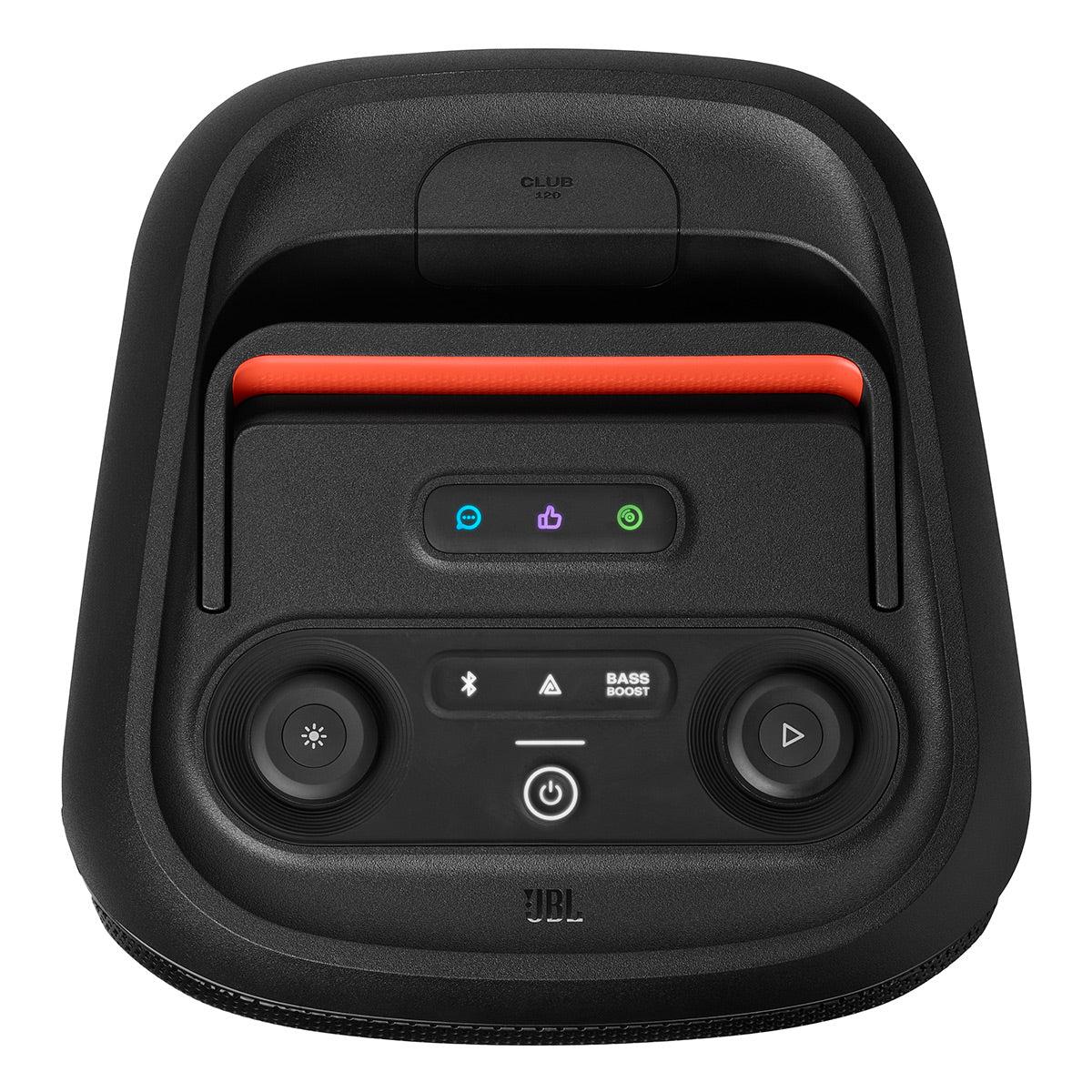
Both speakers include adjustable Bass Boost settings, but having that AI optimization running in the background means the Club 120 should theoretically sound better across more diverse music and environments without manual tweaking.
Battery performance tells two different stories. On paper, both speakers promise 12 hours of playback with 3.5-hour charge times. In reality, your mileage varies dramatically based on volume levels, lighting settings, and music content. Playing at moderate volumes with lights off? You'll likely hit those 12-hour targets. Cranked to maximum with full light show? Expect closer to 6-8 hours.
Here's where the Club 120 makes a brilliant design choice: removable batteries. This might seem like a small detail, but it's actually revolutionary for party speakers. When your battery dies during an event, you don't need to find an outlet and wait hours for charging. Pop in a fresh battery (sold separately) and you're instantly back in business.
Beyond event convenience, this design choice addresses the biggest long-term weakness of portable speakers: battery degradation. After 2-3 years of regular use, lithium batteries lose significant capacity. With the PartyBox 110, that means reduced runtime and eventually a dead speaker. With the Club 120, it means a $50-100 battery replacement instead of shopping for an entirely new speaker.
The Club 120 also adds fast charging: 10 minutes plugged in provides 80 minutes of playback. That's incredibly useful for those "oh no, I forgot to charge it" moments right before guests arrive.
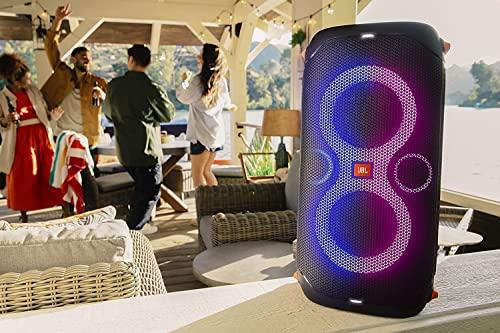
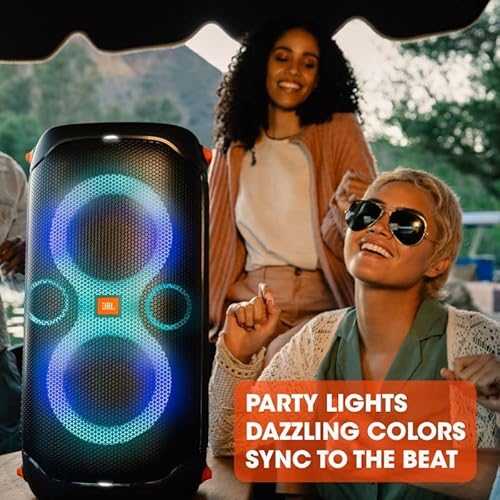
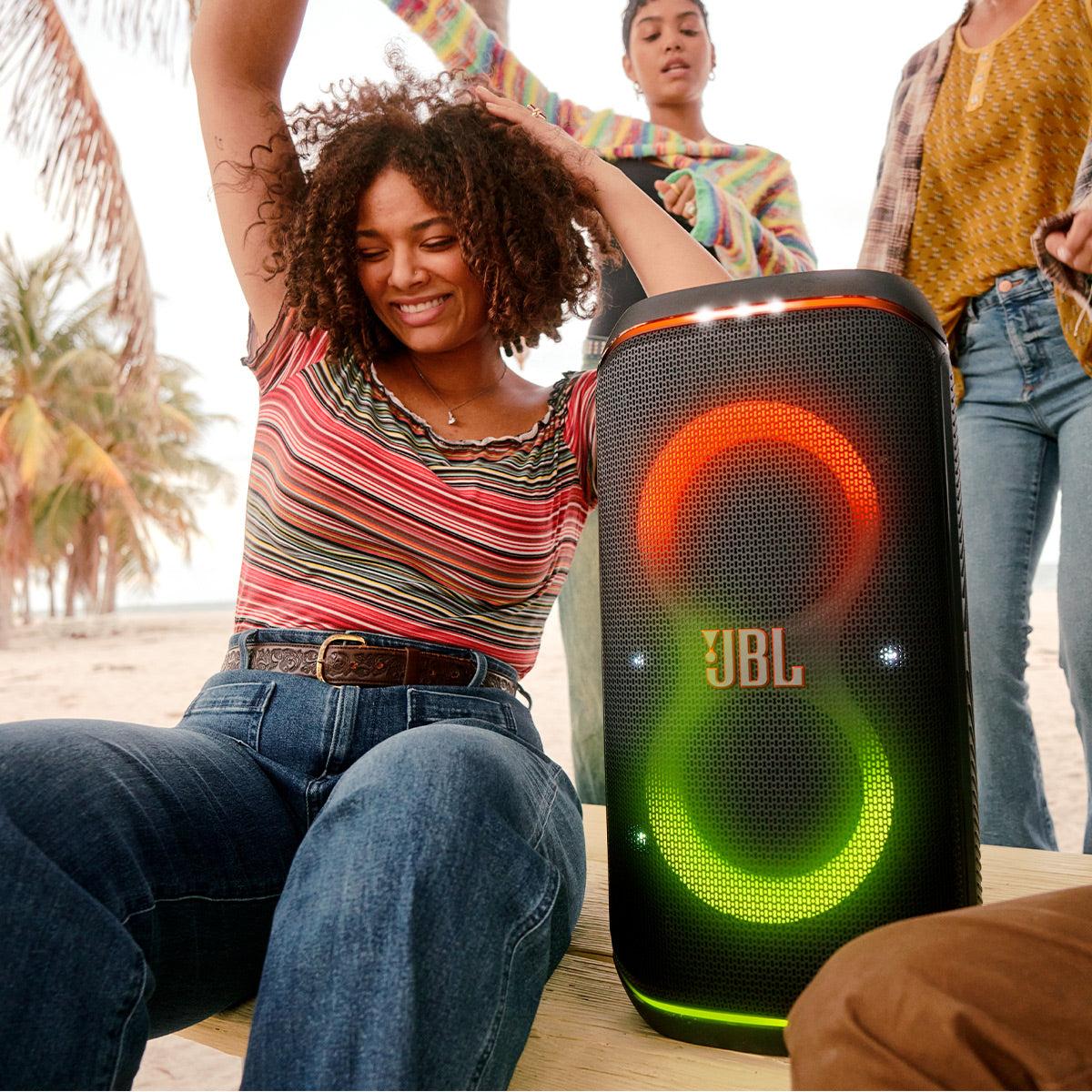
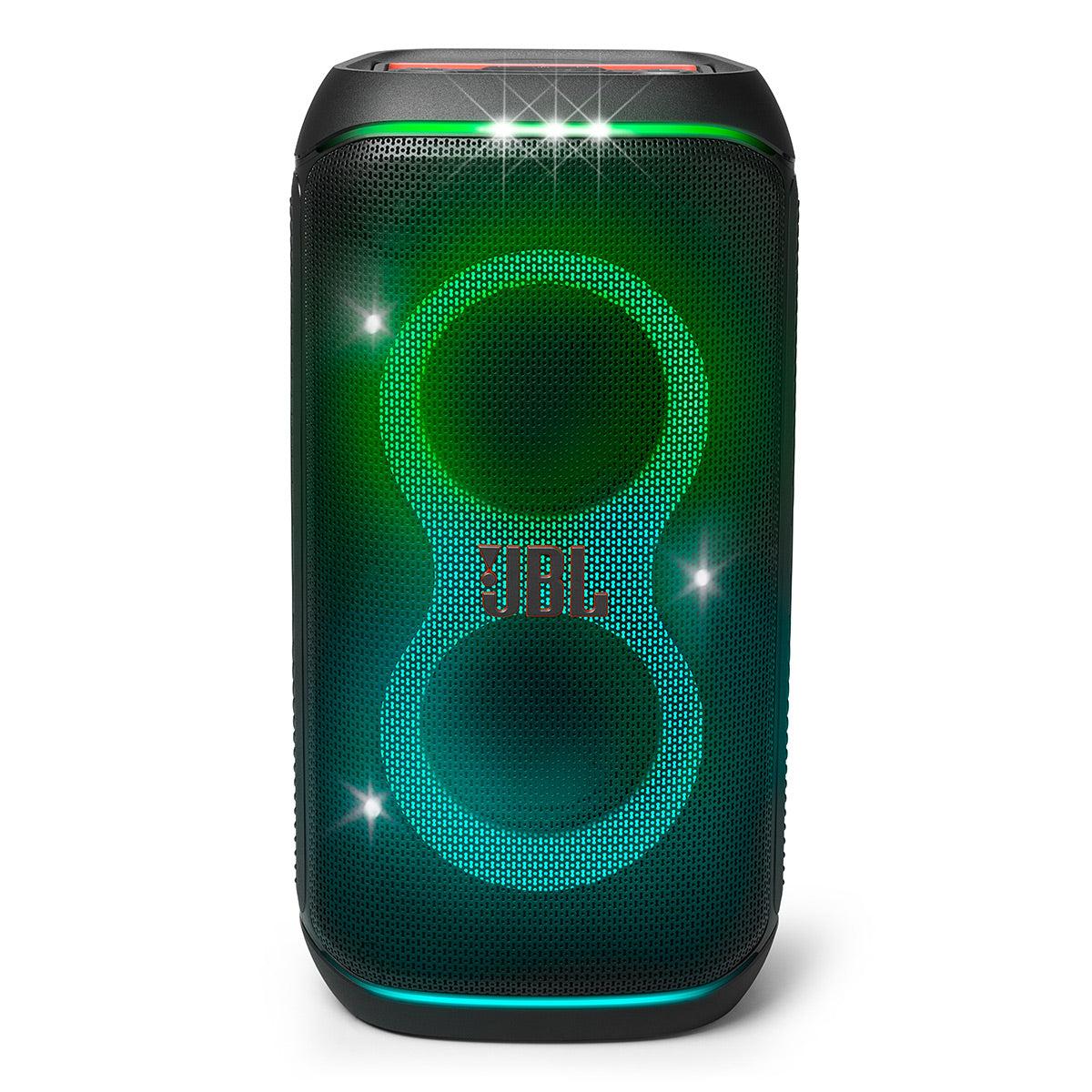
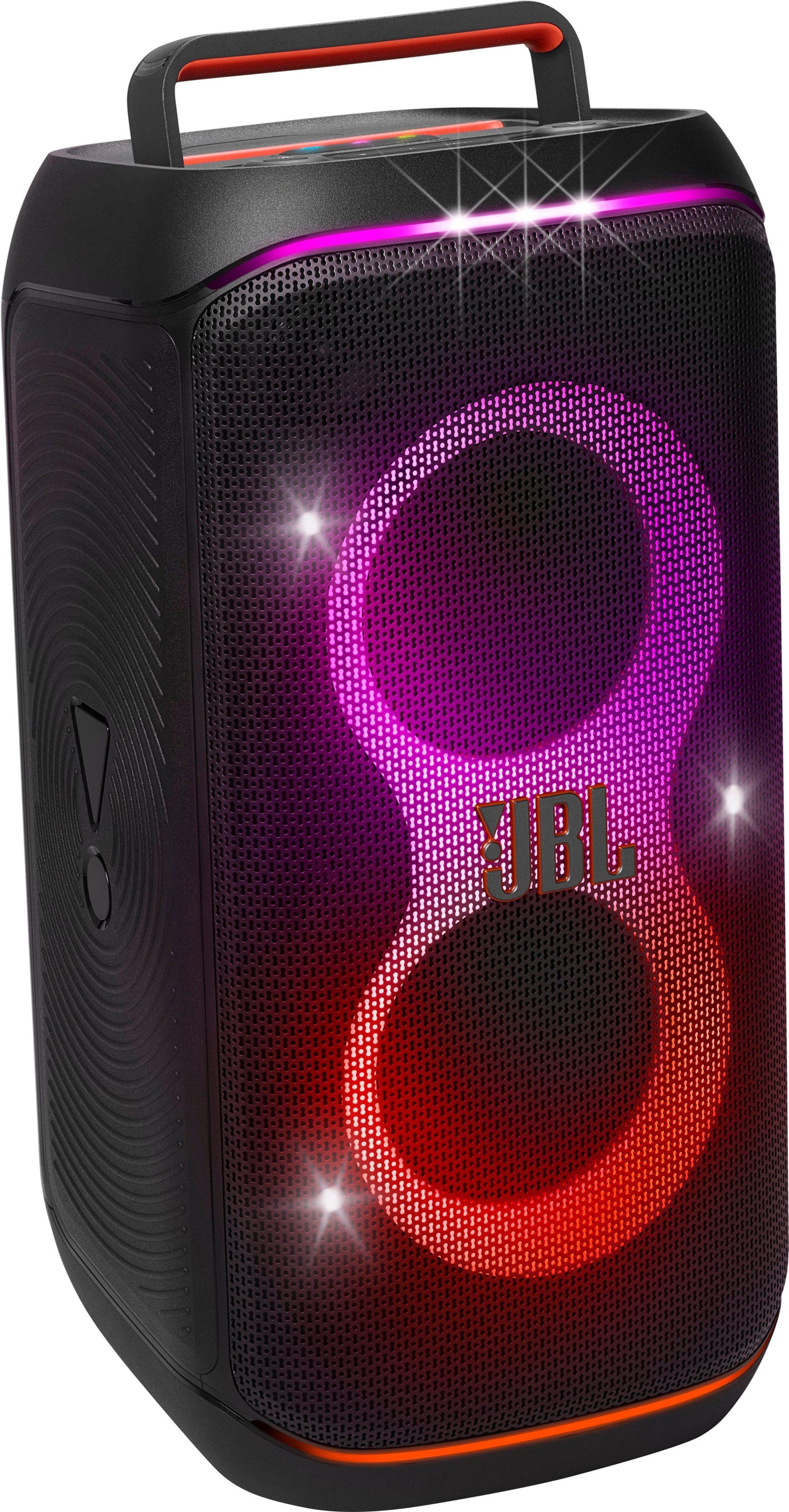
Both speakers feature JBL's signature light shows, but with different approaches. The PartyBox 110 uses four colored LED rings with two white strobe LEDs, creating dynamic patterns that pulse with the music. It's genuinely impressive and adds serious party atmosphere.
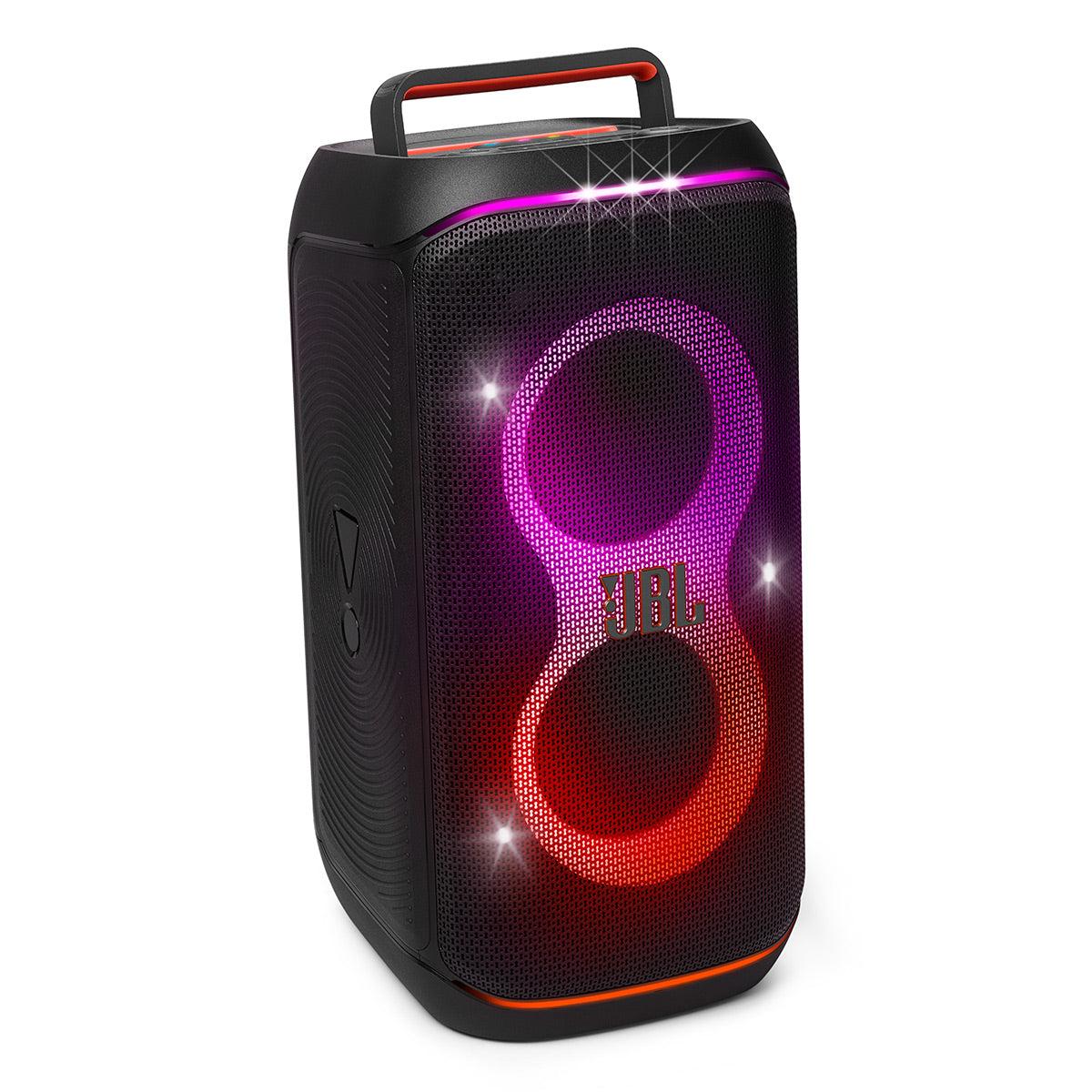
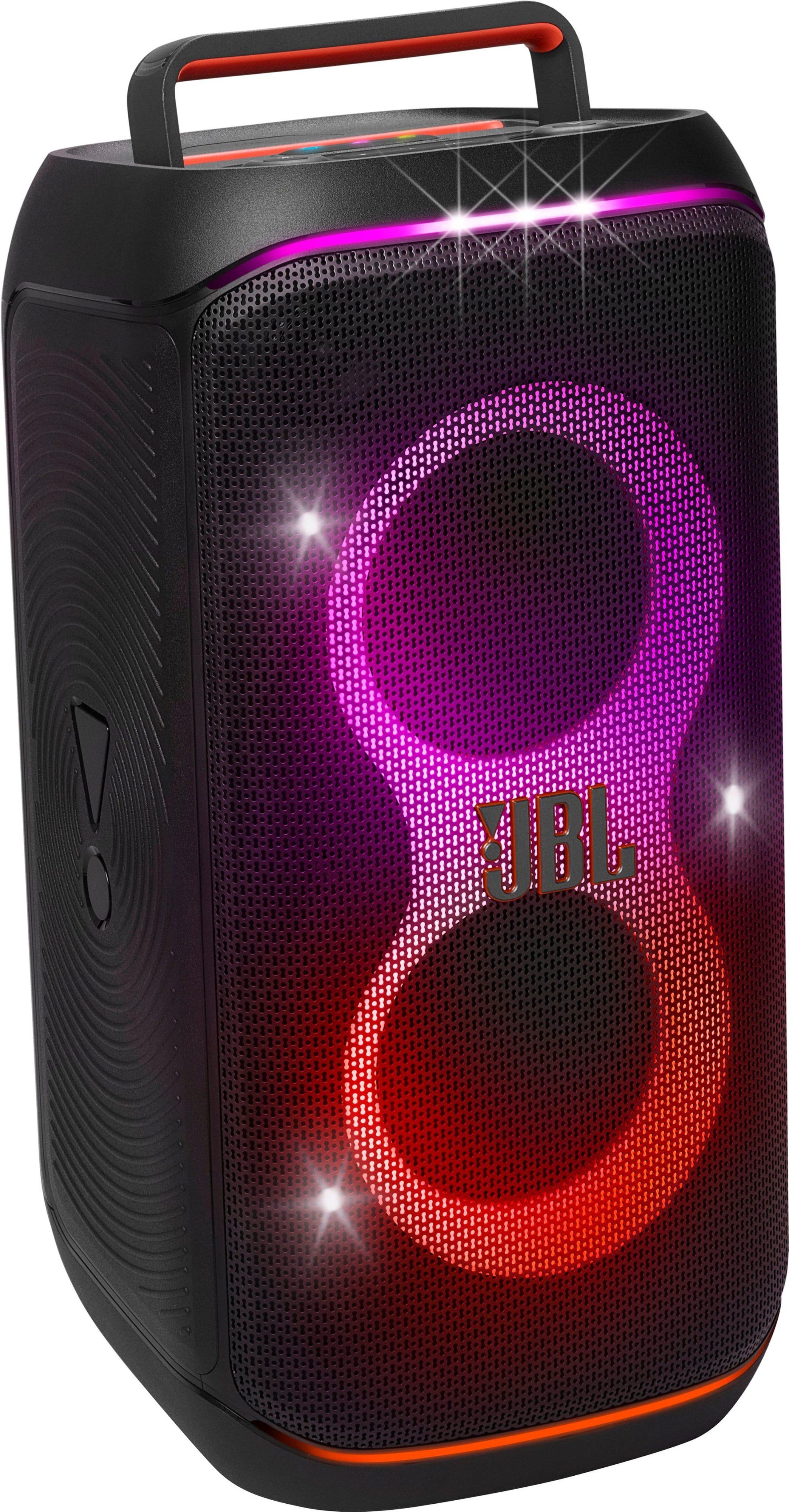
The Club 120 takes this further with two colored LED rings, two LED strips, and nine white strobe LEDs. The additional elements enable more sophisticated effects like light trails and "starry" patterns. Both sync to your music's beat, but the Club 120 offers more visual variety and impact.
Whether this matters depends on your priorities. If the speaker's primarily for outdoor daytime use, lighting becomes less relevant. For evening parties and indoor events, these visual effects genuinely enhance the experience and help justify the "party speaker" category.
Both speakers excel at connectivity options. Bluetooth performance is solid on both, though the Club 120 uses the newer 5.4 standard versus the 110's 5.1 implementation. In practical terms, this means slightly better range and more stable connections, especially in environments with lots of wireless interference.
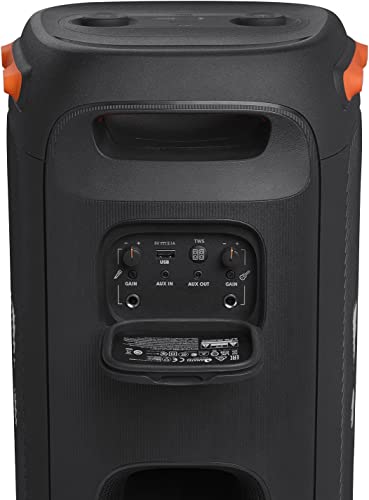
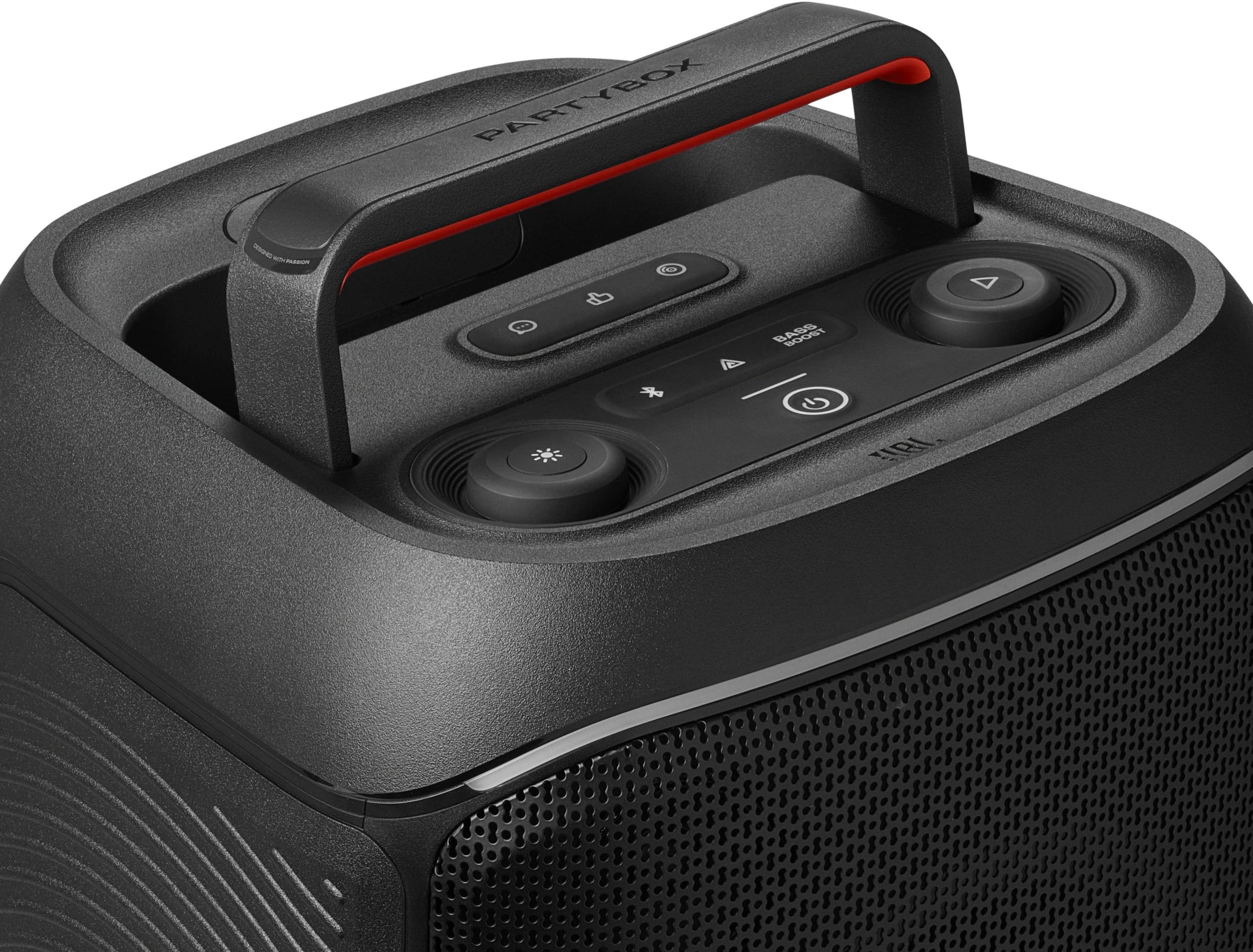
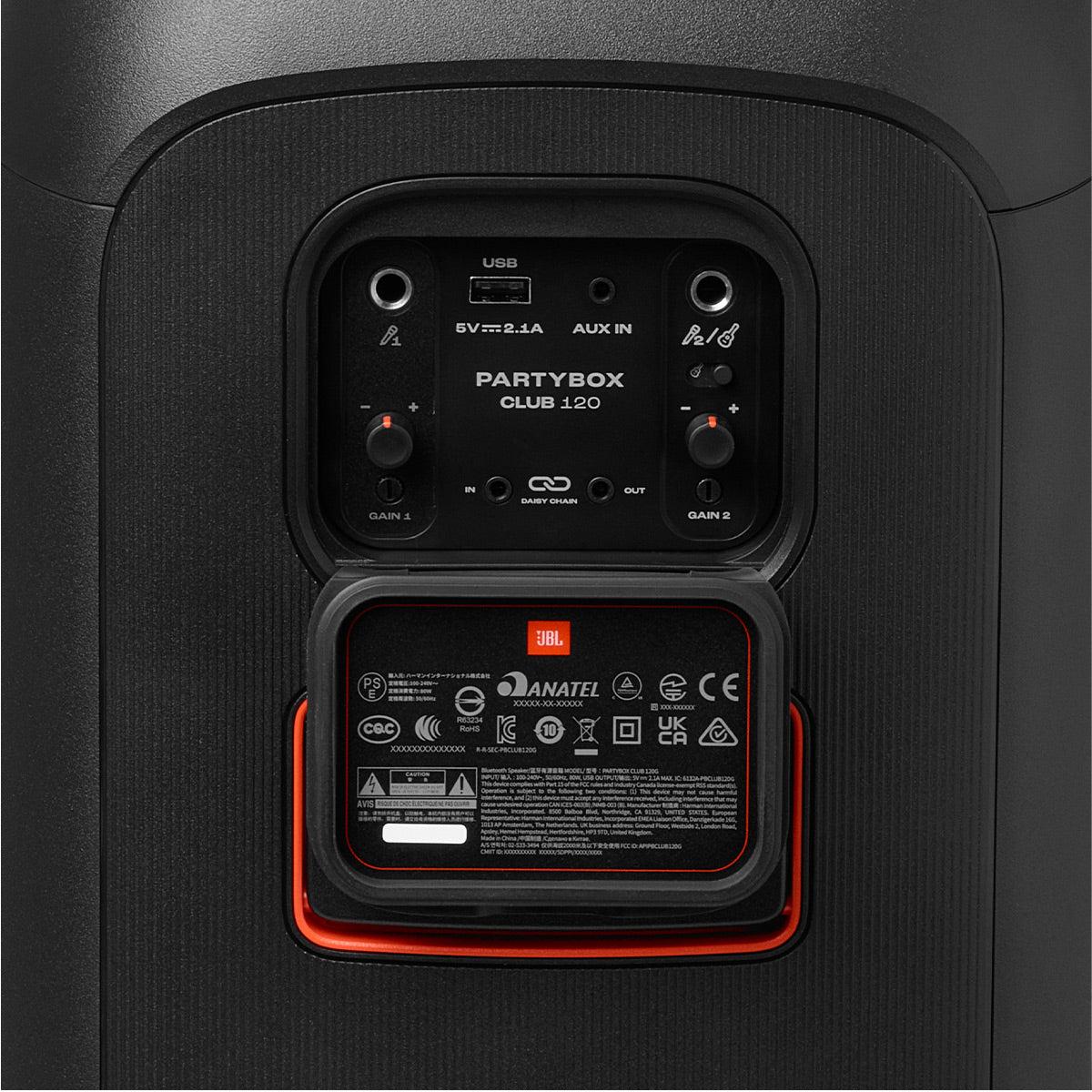
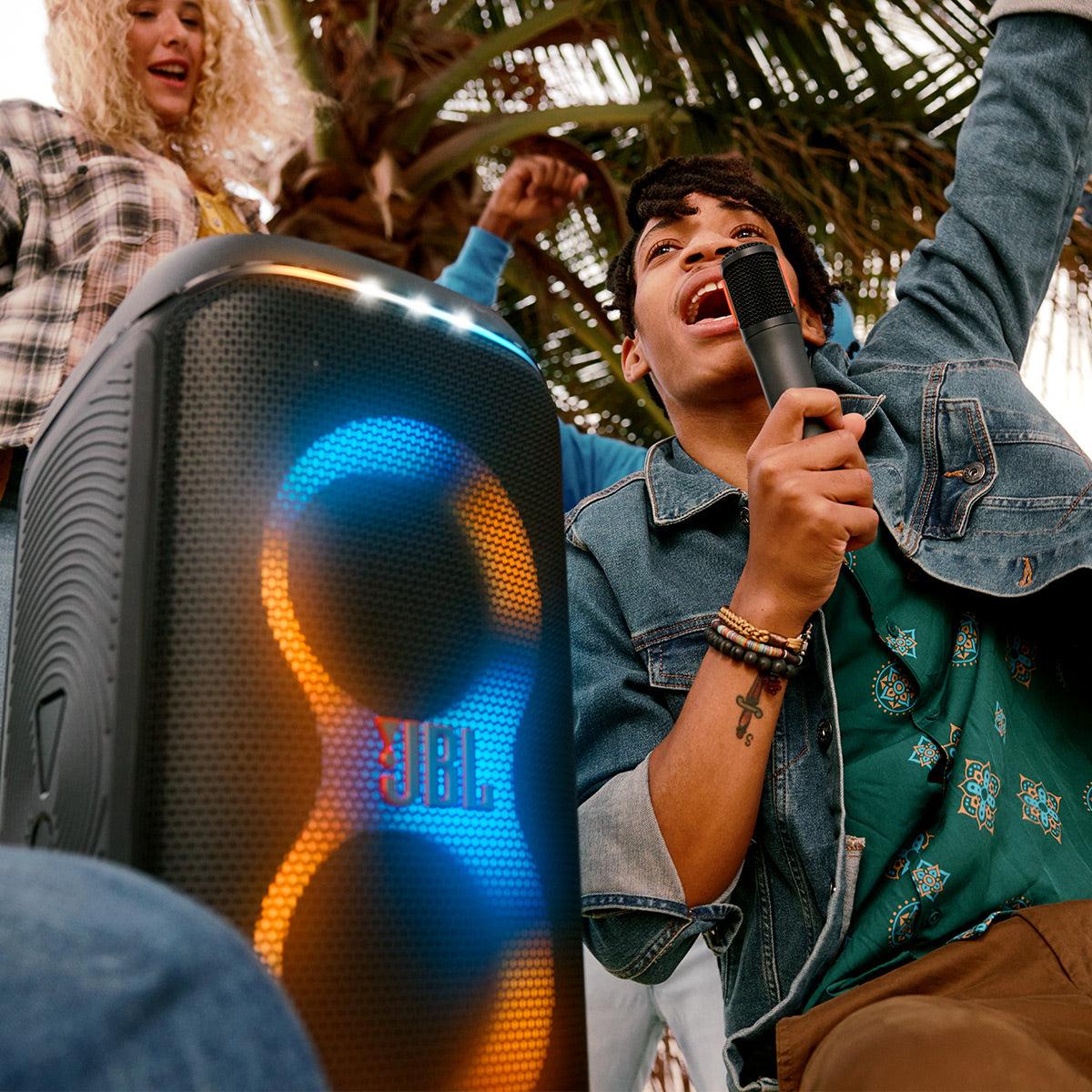
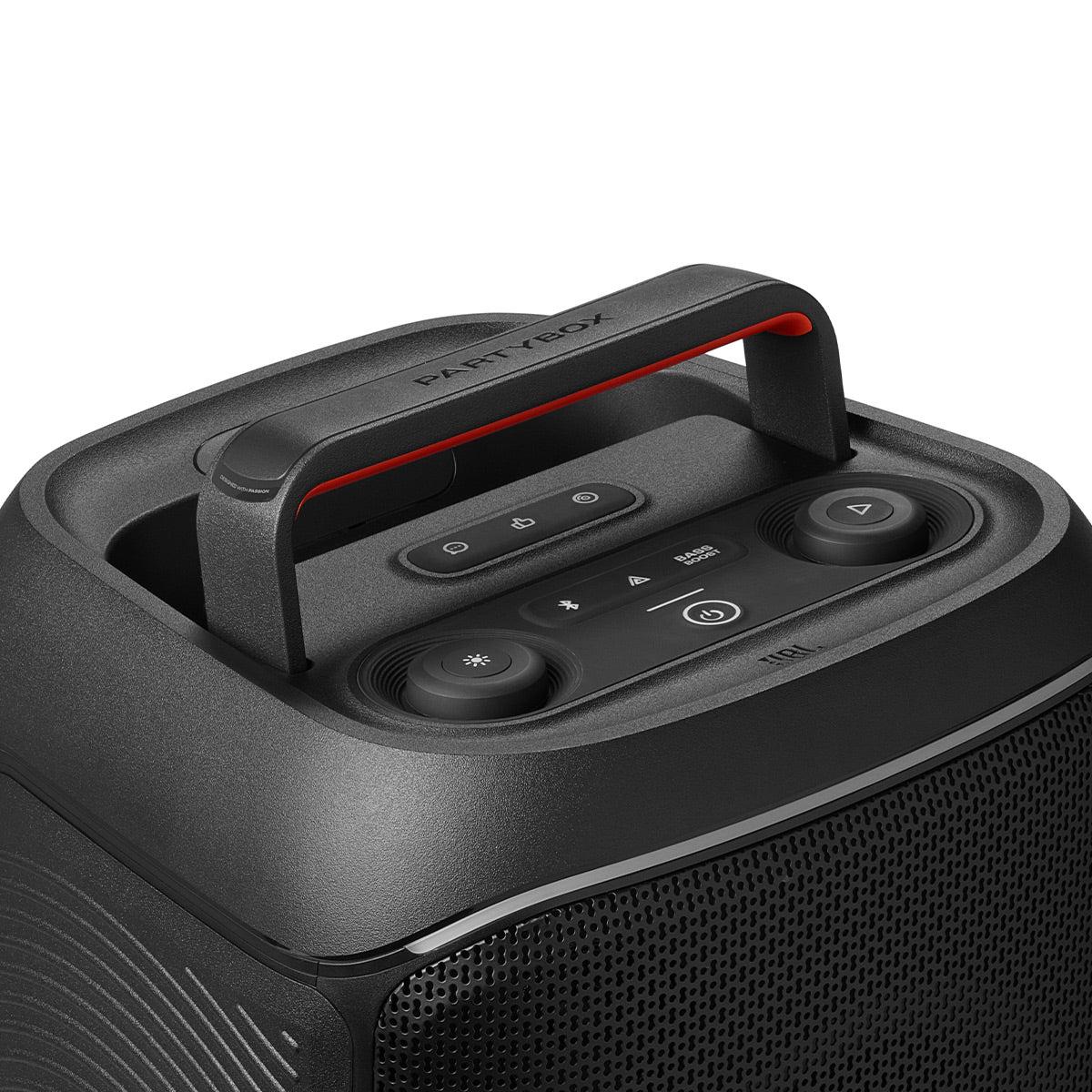
For live performance, both include microphone and guitar inputs with independent volume controls—perfect for karaoke nights or acoustic jam sessions. The Club 120 adds a DJ pad with assignable sound effects, letting you drop air horns, reverb, and other party enhancement sounds at the press of a button.
The real connectivity advancement comes with Auracast technology in the Club 120. This lets you wirelessly connect multiple compatible speakers for true multi-room audio or massive outdoor sound systems. The PartyBox 110 supports wireless pairing with another identical unit (True Wireless Stereo), but Auracast opens up connections with other JBL speakers and future devices.
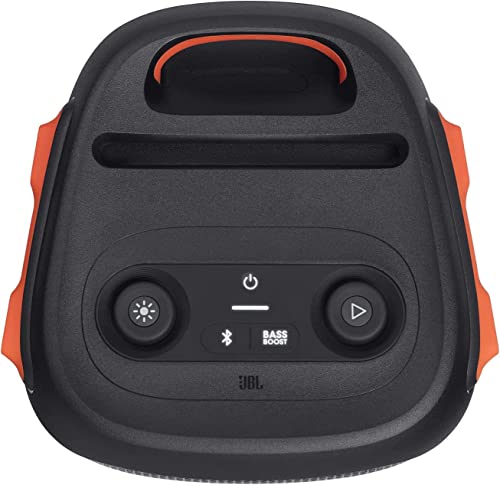
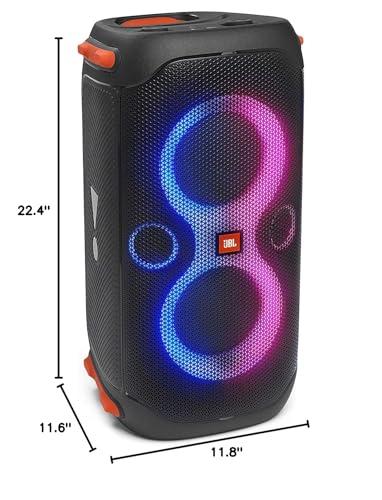
Despite similar power outputs, there are subtle but important physical differences. The PartyBox 110 weighs about 23 pounds and features two carrying handles—one on each side. The Club 120 is marginally heavier at 24 pounds but uses a single fold-up ergonomic handle on the back.
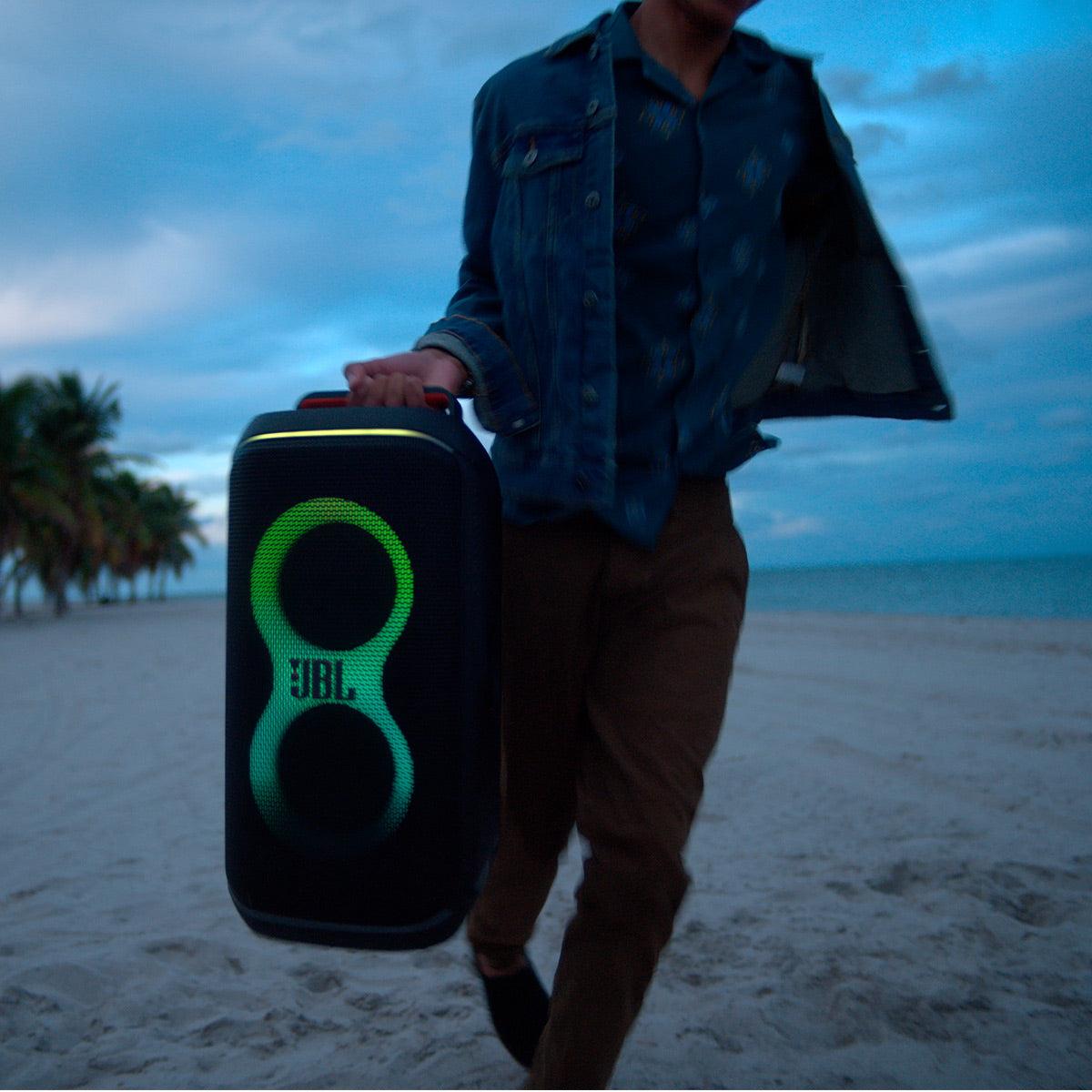
Handle preference comes down to personal preference and how you typically transport speakers. The dual handles on the 110 work well for two-person carries and feel more secure when loading into vehicles. The single ergonomic handle on the Club 120 provides better balance for solo transport and takes up less storage space when folded.
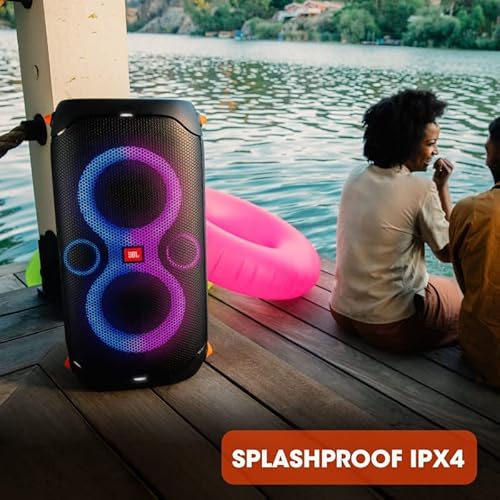
Both maintain IPX4 splash resistance, meaning they'll handle poolside splashes and light rain but aren't fully waterproof. This rating strikes a good balance between protection and cost—true waterproof speakers typically sacrifice sound quality or add significant expense.
While these are party speakers first, they can work surprisingly well for home theater use, especially in larger rooms where traditional soundbars struggle. Both provide significant bass presence that enhances action movies and music-heavy content.
However, there are limitations. The bass-heavy tuning that works great for parties can make dialogue less clear in movies. Both speakers also exhibit some latency (delay) when connected via Bluetooth, which creates lip-sync issues with video content. For serious home theater use, you'd want wired connections and possibly EQ adjustments through the mobile app.
The Club 120's AI Sound Boost might help here by automatically adjusting for room acoustics, but neither speaker will replace a dedicated home theater system for critical viewing.
At the time of writing, both speakers carry similar price points, making the Club 120 an almost obvious choice for most buyers. The meaningful improvements in volume, bass response, battery flexibility, and connectivity come at essentially no price premium.
However, the PartyBox 110 remains relevant in specific scenarios. If you can find it at a significant discount (20%+ off retail), the performance gap might not justify the price difference for casual users. The dual-handle design also suits some transport preferences better.
For frequent party hosts, event professionals, or anyone wanting maximum performance, the Club 120 is the clear winner. The swappable battery alone provides enormous value for anyone using their speaker regularly. The deeper bass, higher volume capability, and enhanced connectivity make it more future-proof as your needs grow.
The AI Sound Boost, while not revolutionary, does provide noticeable improvements across different environments and music types. If you're the type who tends to just hit play and party rather than tweaking settings, this automatic optimization adds real value.
Both speakers excel at their primary mission: delivering powerful, engaging sound for parties and gatherings. The PartyBox 110 established the formula and remains a solid choice, especially at the right price.
But the Club 120 represents a meaningful evolution that addresses real-world pain points. The swappable battery eliminates the biggest long-term weakness of portable speakers. The improved bass response and higher volume capability provide immediate benefits for most use cases. The enhanced connectivity future-proofs your investment.
Unless you find the PartyBox 110 at a substantial discount or strongly prefer its dual-handle design, the Club 120 offers better value and performance. It's one of those rare cases where the newer model improves on its predecessor in meaningful ways while maintaining the same basic price point.
For anyone serious about portable party audio, the Club 120 delivers the goods. It's loud enough for large gatherings, bassy enough for dance music, and flexible enough to handle everything from intimate dinner parties to full-scale outdoor events. Most importantly, it's built to last and adapt as your needs change—exactly what you want in a speaker you'll hopefully be using for years to come.
| JBL PartyBox 110 | JBL PartyBox Club 120 |
|---|---|
| Maximum Volume Output - Critical for filling large spaces and outdoor events | |
| 99.2 dBA (suitable for medium gatherings) | 103.1 dBA (4dB louder, significantly better crowd coverage) |
| Bass Extension - Determines how deep and impactful low frequencies sound | |
| 45 Hz frequency response (good bass presence) | 40 Hz frequency response (noticeably deeper, fuller bass) |
| Driver Configuration - Affects clarity and distortion at high volumes | |
| 1× 5.25" woofer + 2× 2.25" tweeters | 2× 5.25" woofers + 2× 2.25" tweeters (better power distribution) |
| Battery Design - Major factor for long-term value and event flexibility | |
| Fixed 36Wh battery (requires replacement when degraded) | Removable 34Wh battery (swappable for unlimited runtime) |
| Fast Charging - Convenience for last-minute power needs | |
| Standard 3.5-hour full charge only | 10 minutes = 80 minutes playtime + 3.5-hour full charge |
| Bluetooth Version - Affects connection stability and range | |
| Bluetooth 5.1 (reliable but older standard) | Bluetooth 5.4 (improved range and multi-device handling) |
| Multi-Speaker Connectivity - Important for scaling up sound systems | |
| True Wireless Stereo pairing with identical PartyBox 110 only | Auracast wireless connection with multiple JBL speakers + TWS |
| LED Lighting System - Visual impact for party atmosphere | |
| 4× colored LED rings + 2× white strobes | 2× LED rings + 2× LED strips + 9× white strobes (more effects) |
| Audio Enhancement Features - Sound optimization technology | |
| Bass Boost with manual adjustment | Bass Boost + AI Sound Boost (automatic room/music optimization) |
| Physical Design - Portability and transport convenience | |
| 23 lbs with dual side handles | 24 lbs with single fold-up ergonomic handle |
| DJ Features - Live performance and interactive capabilities | |
| Mic/guitar inputs with basic controls | Mic/guitar inputs + assignable DJ sound effects pad |
| Release Year - Technology generation and feature updates | |
| 2021 (established, proven design) | 2024 (latest improvements and connectivity standards) |
The JBL PartyBox Club 120 is significantly louder, reaching 103.1 dBA compared to the JBL PartyBox 110's 99.2 dBA maximum output. This 4-decibel difference represents about 50% more perceived loudness, making the Club 120 better for large outdoor events and crowded parties where you need to cut through ambient noise.
No, the JBL PartyBox Club 120 has noticeably deeper bass. It extends down to 40 Hz compared to the PartyBox 110's 45 Hz response, and uses dual 5.25-inch woofers versus the 110's single woofer. Users consistently report the Club 120 sounds fuller and less "hollow" in the low end, especially with bass-heavy music genres.
Both the JBL PartyBox 110 and Club 120 offer up to 12 hours of battery life with 3.5-hour charge times. However, the Club 120 adds fast charging (10 minutes for 80 minutes of playtime) and features a removable battery that can be swapped instantly for unlimited runtime during events.
Yes, both the JBL PartyBox 110 and Club 120 include microphone and guitar inputs with individual volume controls, making them excellent for karaoke and live acoustic performances. The Club 120 adds a DJ effects pad with assignable sound effects for enhanced live entertainment.
The JBL PartyBox Club 120 has a more advanced lighting system with LED rings, LED strips, and 9 white strobe LEDs compared to the PartyBox 110's 4 LED rings and 2 strobes. Both sync to music beats, but the Club 120 offers more sophisticated effects like light trails and starry patterns.
Both speakers are IPX4 splash-resistant, meaning they can handle poolside splashes and light rain but aren't fully waterproof. Neither the JBL PartyBox 110 nor Club 120 should be submerged in water, but they're well-suited for outdoor pool parties and beach gatherings.
The JBL PartyBox Club 120 offers superior connectivity with Auracast technology, allowing wireless connection to multiple JBL speakers for expanded sound systems. The PartyBox 110 supports True Wireless Stereo pairing with another identical 110 unit only.
The JBL PartyBox 110 weighs 23 pounds with dual side handles, while the Club 120 weighs 24 pounds with a single fold-up ergonomic handle. The weight difference is minimal, but handle preference varies - the 110 works better for two-person carries, while the Club 120 offers better balance for solo transport.
While both speakers can work for home theater due to their powerful bass and high volume capability, they're optimized for party use rather than critical movie watching. The bass-heavy tuning may make dialogue less clear, and Bluetooth latency can cause lip-sync issues. The Club 120's AI Sound Boost helps with room optimization but won't replace dedicated home theater systems.
The JBL PartyBox Club 120 delivers cleaner sound at high volumes due to its dual-woofer design reducing individual driver strain. It also includes AI Sound Boost for automatic sound optimization based on room acoustics and music content. Both maintain JBL's signature bass-heavy party sound profile, but the Club 120 offers better overall clarity and deeper bass response.
At similar price points, the JBL PartyBox Club 120 provides significantly better value with meaningful improvements in volume, bass response, battery flexibility, and connectivity features. The swappable battery alone adds substantial long-term value by eliminating the need for complete speaker replacement when battery capacity degrades.
Choose the JBL PartyBox Club 120 unless you find the PartyBox 110 at a substantial discount. The Club 120 offers measurable improvements in performance, features, and long-term durability while maintaining similar pricing. The only scenarios favoring the 110 are significant cost savings or strong preference for its dual-handle design.
We've done our best to create useful and informative comparisons to help you decide what product to buy. Our research uses advanced automated methods to create this comparison and perfection is not possible - please contact us for corrections or questions. These are the sites we've researched in the creation of this article: rtings.com - youtube.com - bestbuy.com - gadgets360.com - popsci.com - youtube.com - audioadvice.com - popsci.com - youtube.com - versus.com - youtube.com - rtings.com - jbl.com - in.jbl.com - jbl.com.tw - bhphotovideo.com - in.jbl.com - jbl.com - youtube.com - hu.harmanaudio.com - jbl.com.au - global.jbl.com - support.jbl.com - youtube.com - kh.jbl.com - onward.ph - jbl.com.ph - support.jbl.com - youtube.com - stereoguide.com - armorsound.com - rtings.com - rtings.com - bestbuy.com - youtube.com - soundguys.com - youtube.com - lbtechreviews.com - youtube.com - youtube.com - versus.com - jbl.com - rtings.com - versus.com - ro.harmanaudio.com - dell.com - jbl.com - jbl.com - projectorscreenstore.com

Privacy Policy
Terms and Conditions - Affiliate Policy
Home Security
© Copyright 2008-2026.
11816 Inwood Rd #1211, Dallas, TX 75244