

When shopping for a portable Bluetooth speaker, you're essentially choosing between two different philosophies. Do you want a speaker that can turn any gathering into a full-blown party, or are you looking for something that treats your music with the respect it deserves while still being truly portable? The JBL PartyBox 110 and Tivoli Audio SongBook MAX represent these two approaches perfectly, and understanding their fundamental differences will help you make the right choice for your needs.
The portable speaker market has evolved dramatically since these models launched. The JBL PartyBox 110 arrived in 2021 as part of JBL's party-focused lineup, while the Tivoli Audio SongBook MAX debuted in 2023, bringing audiophile sensibilities to the portable space. Both benefit from improvements in battery technology and Bluetooth connectivity that have happened over the past few years, but they apply these advances in completely different ways.
At its core, a Bluetooth speaker needs to do three things well: produce good sound, connect reliably to your devices, and last long enough to be useful. Everything else—light shows, radio tuners, multiple inputs—is gravy. But that gravy can make all the difference depending on how you plan to use your speaker.
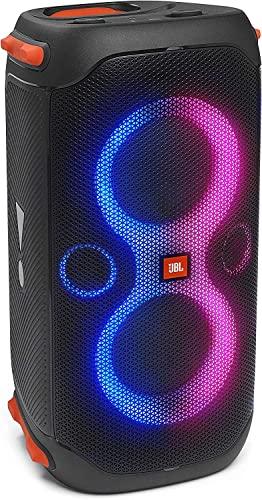
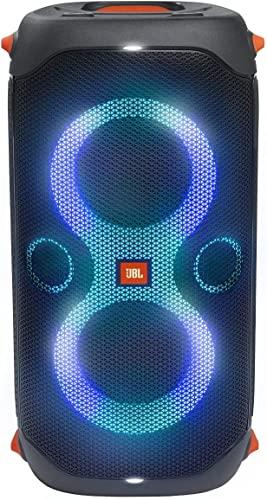
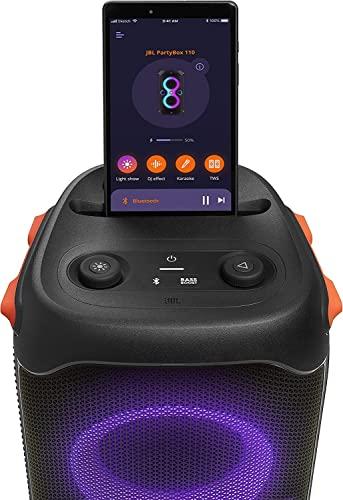
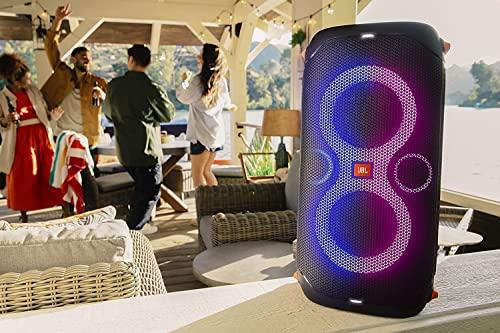
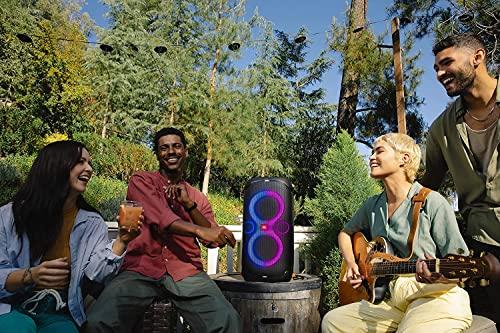
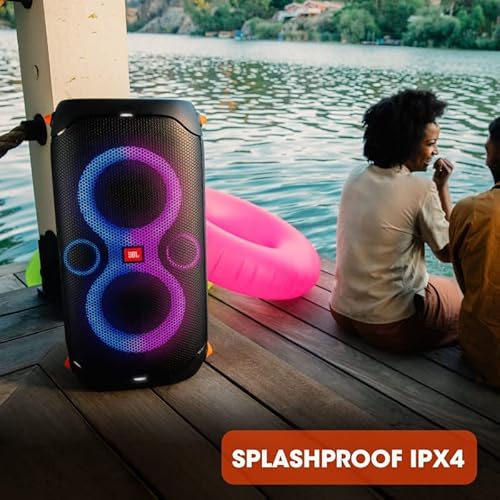
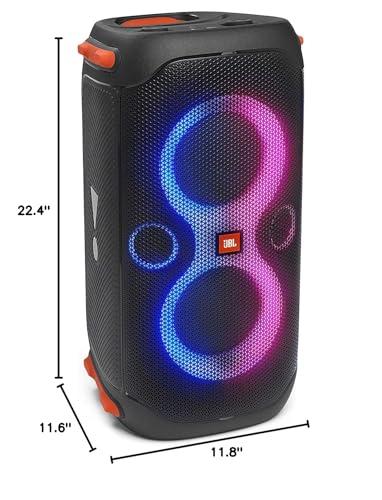
The JBL PartyBox 110 doesn't just play music—it puts on a show. This 23-pound tower is essentially a portable nightclub, complete with synchronized LED light rings that pulse and strobe in time with your music. When I think about this speaker, I picture it at the center of a backyard BBQ or poolside gathering, commanding attention both visually and sonically.
The speaker pumps out 160 watts through a dual-woofer setup (two 5.25-inch drivers) paired with dual 2.25-inch tweeters. This configuration is designed for one primary goal: getting loud enough to cut through party chatter and outdoor ambient noise. The frequency response spans 45Hz to 20kHz, which covers the full range of human hearing, though the real focus is on delivering that chest-thumping bass that makes people want to dance.
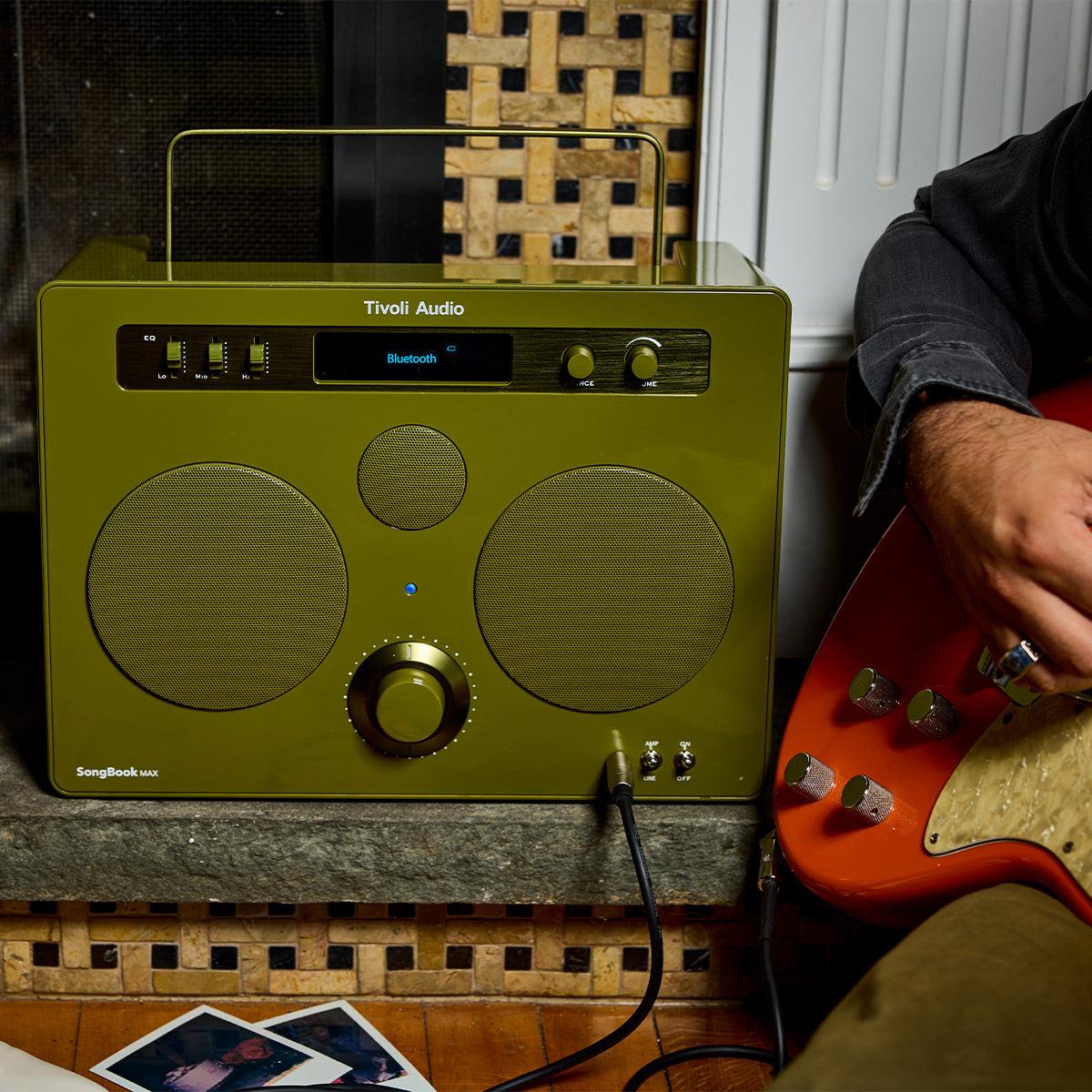
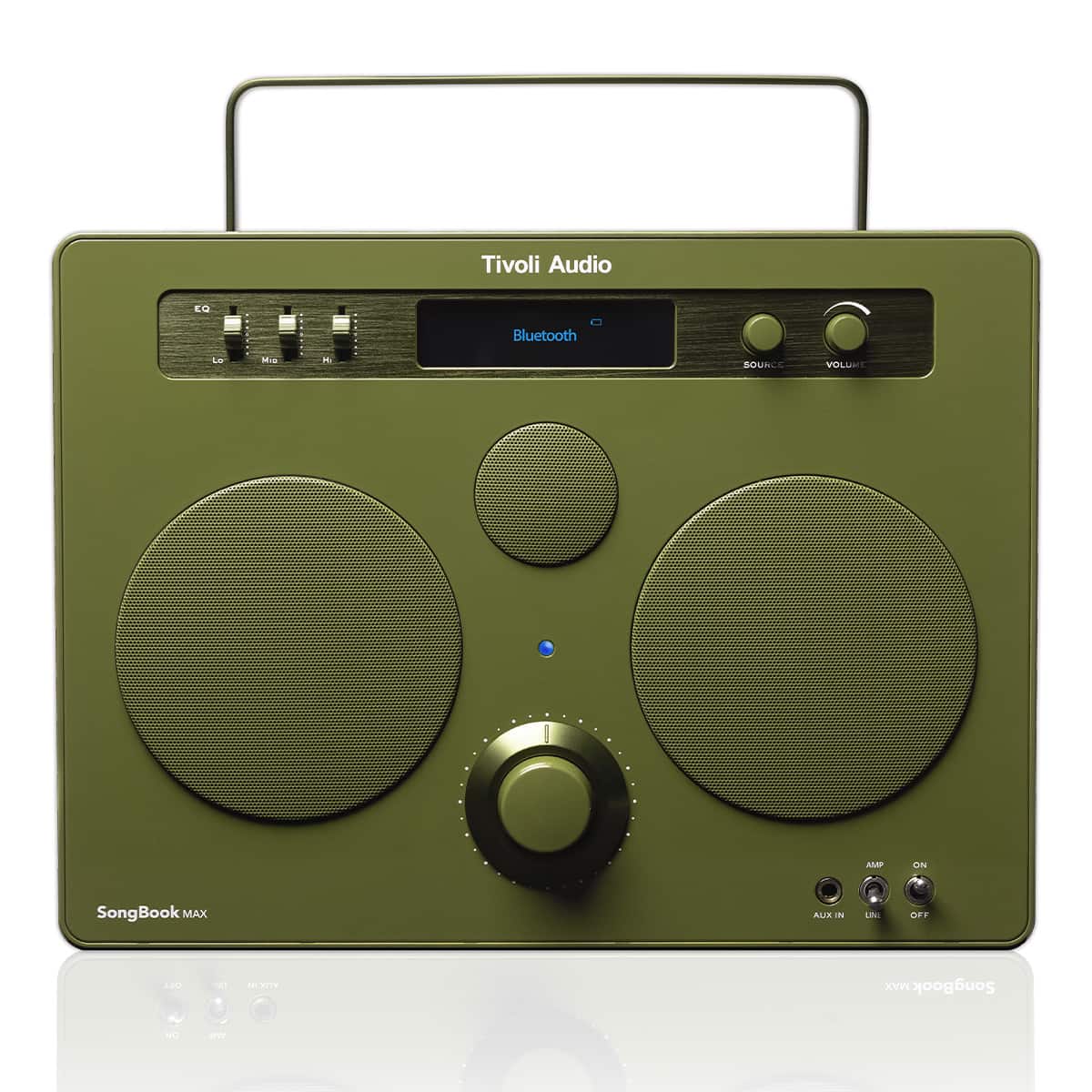
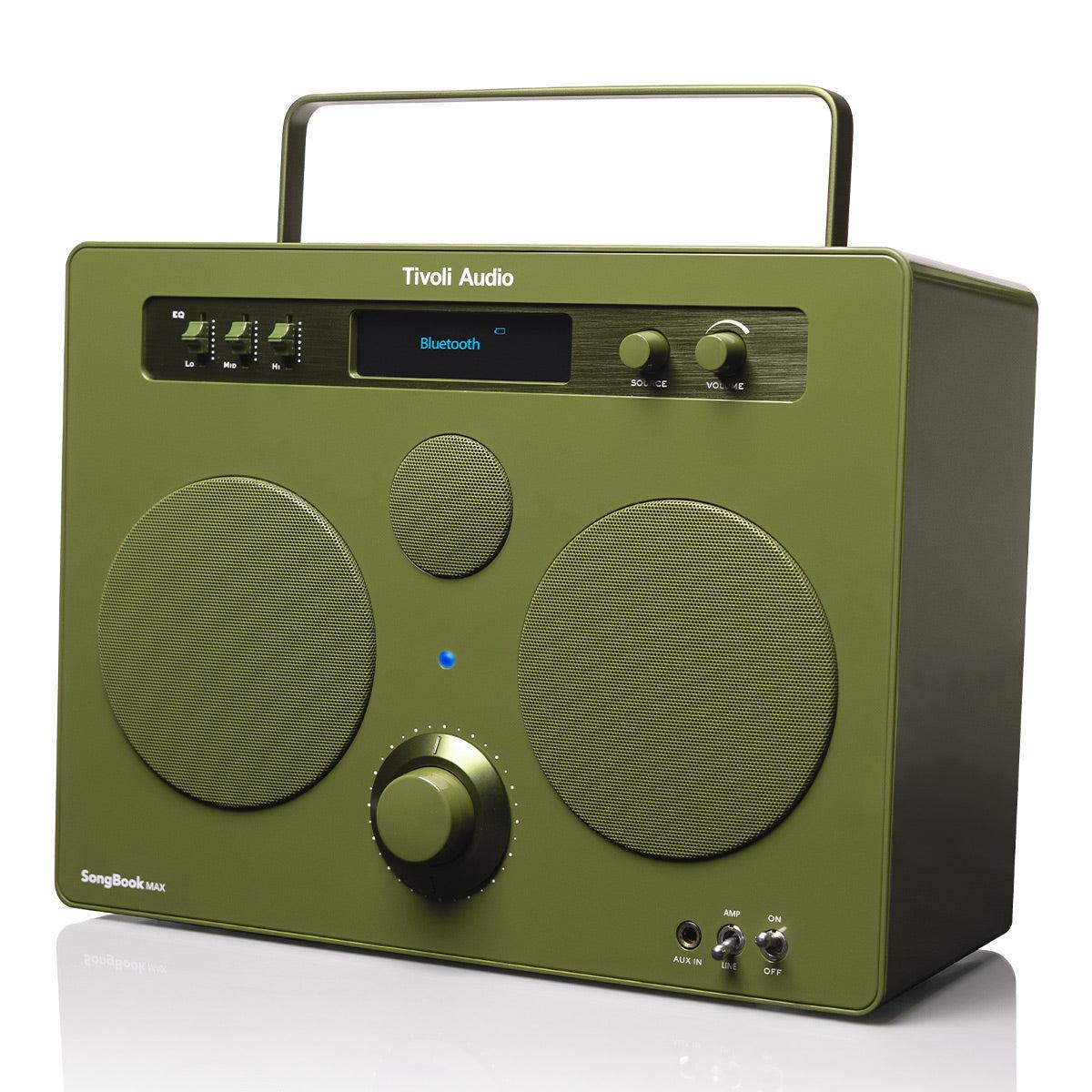
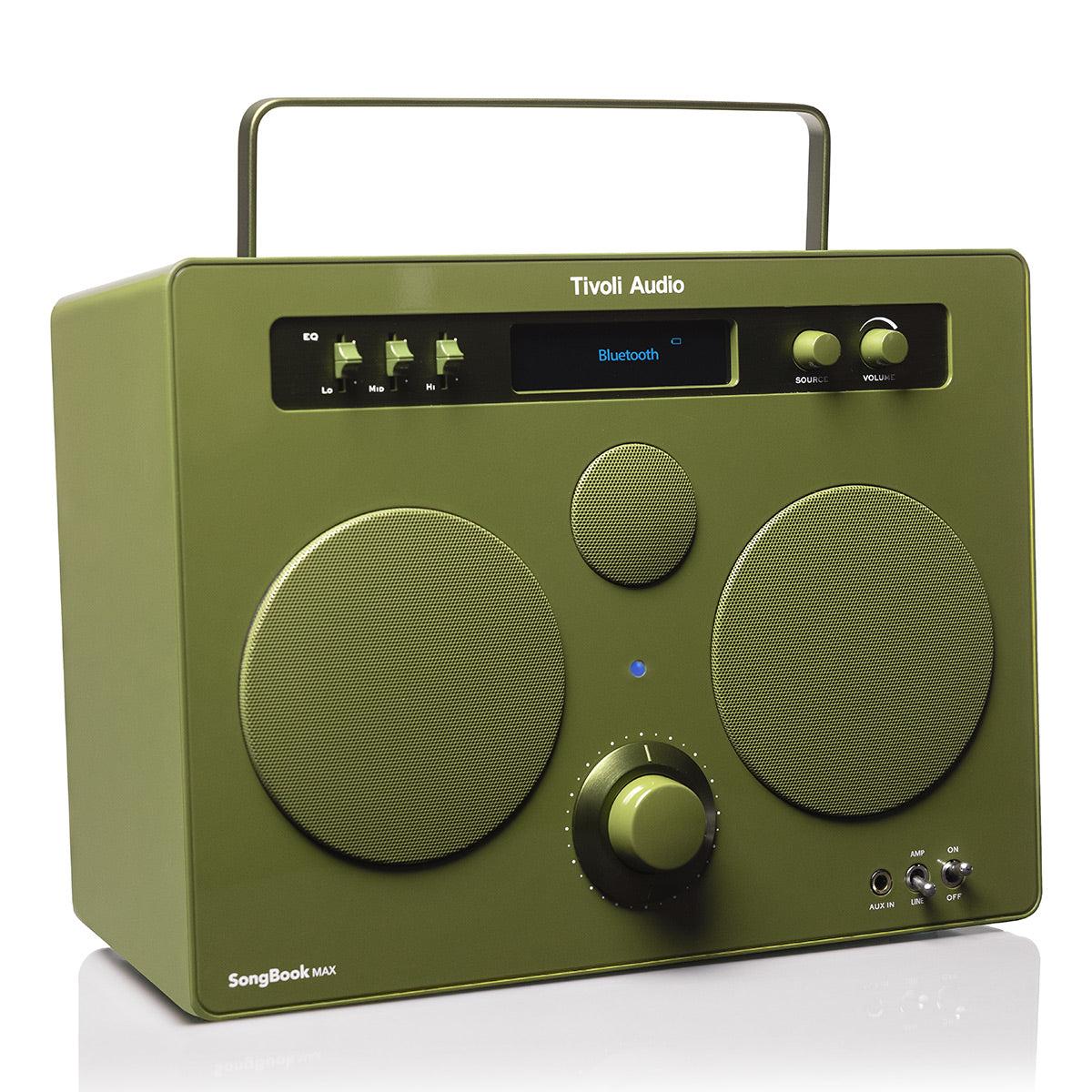
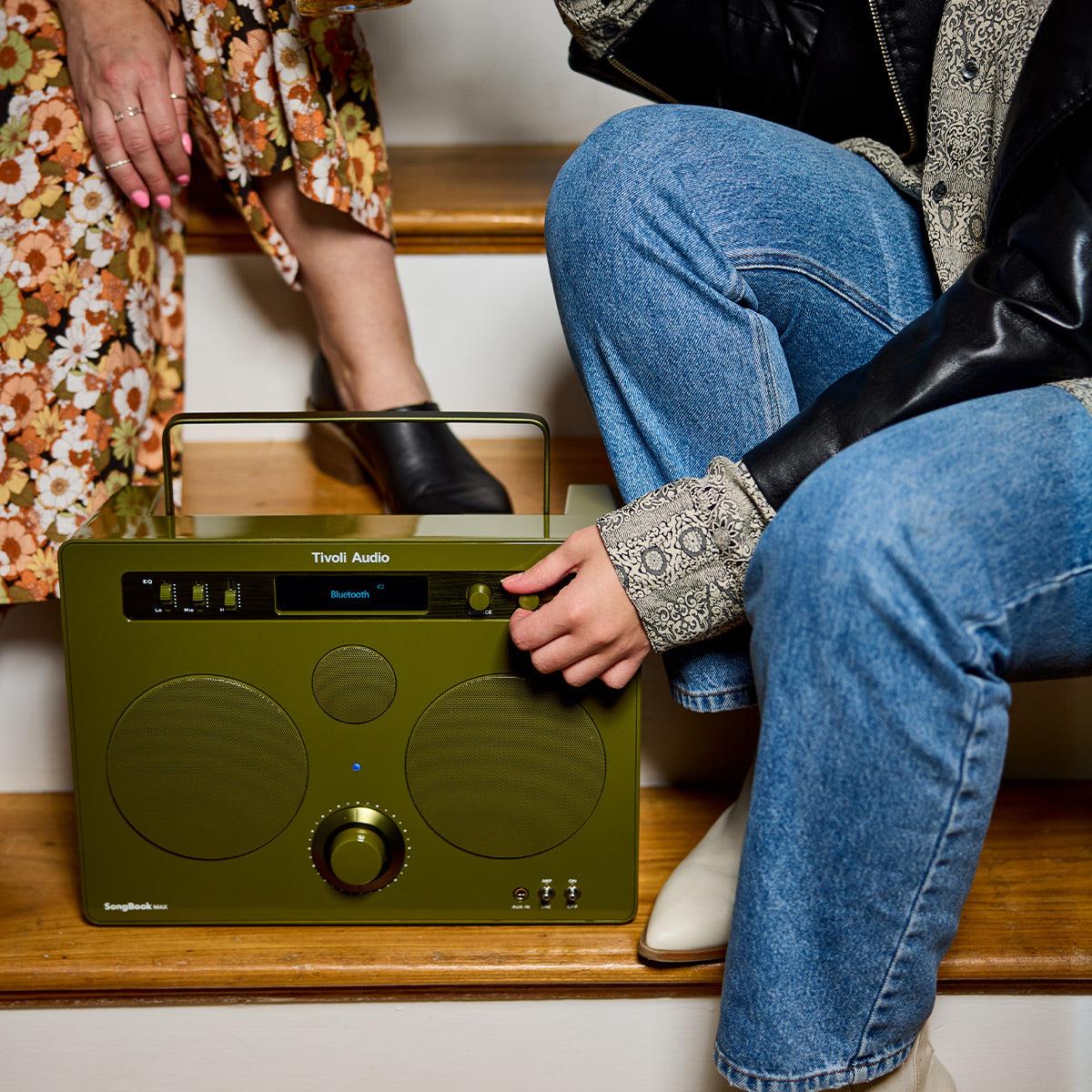
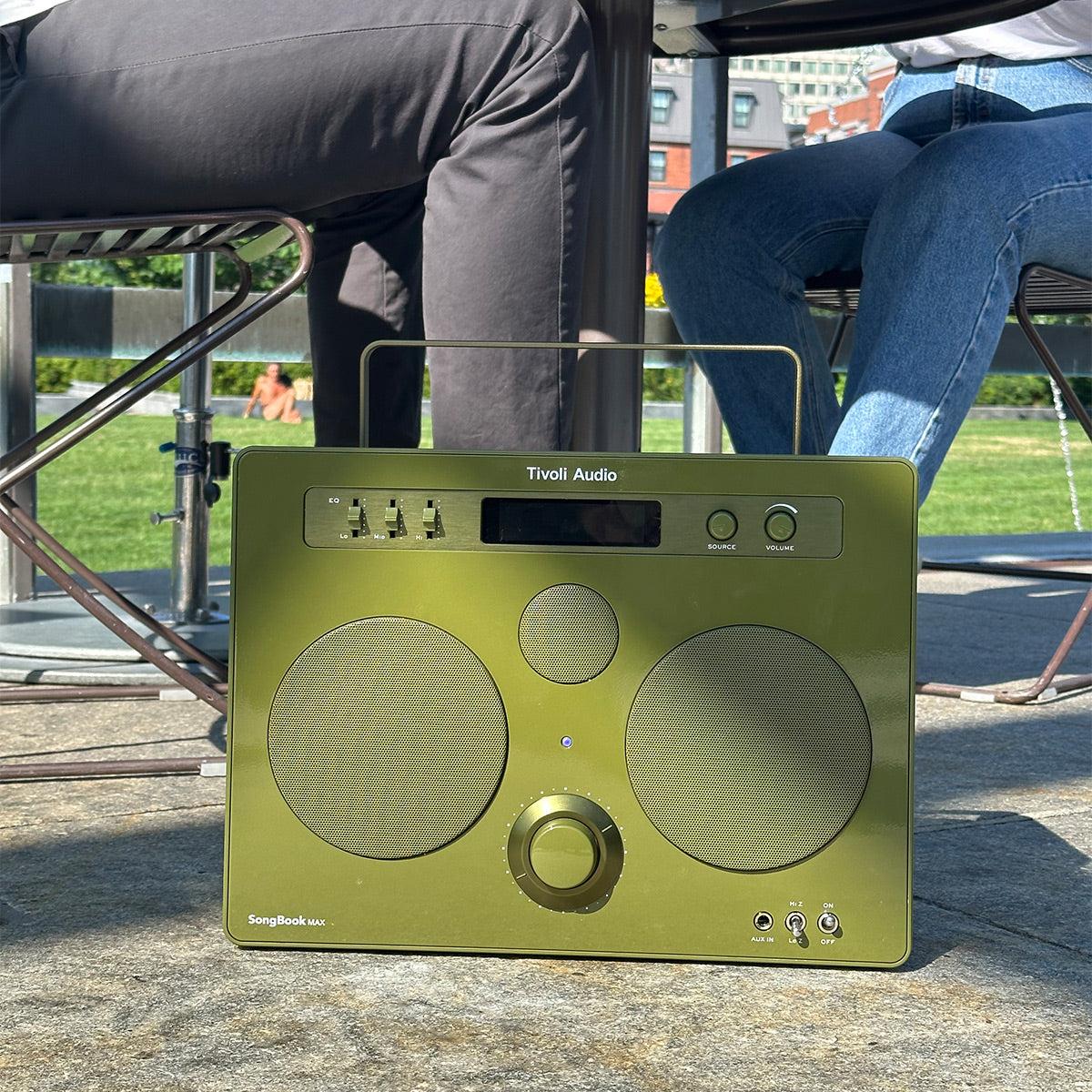
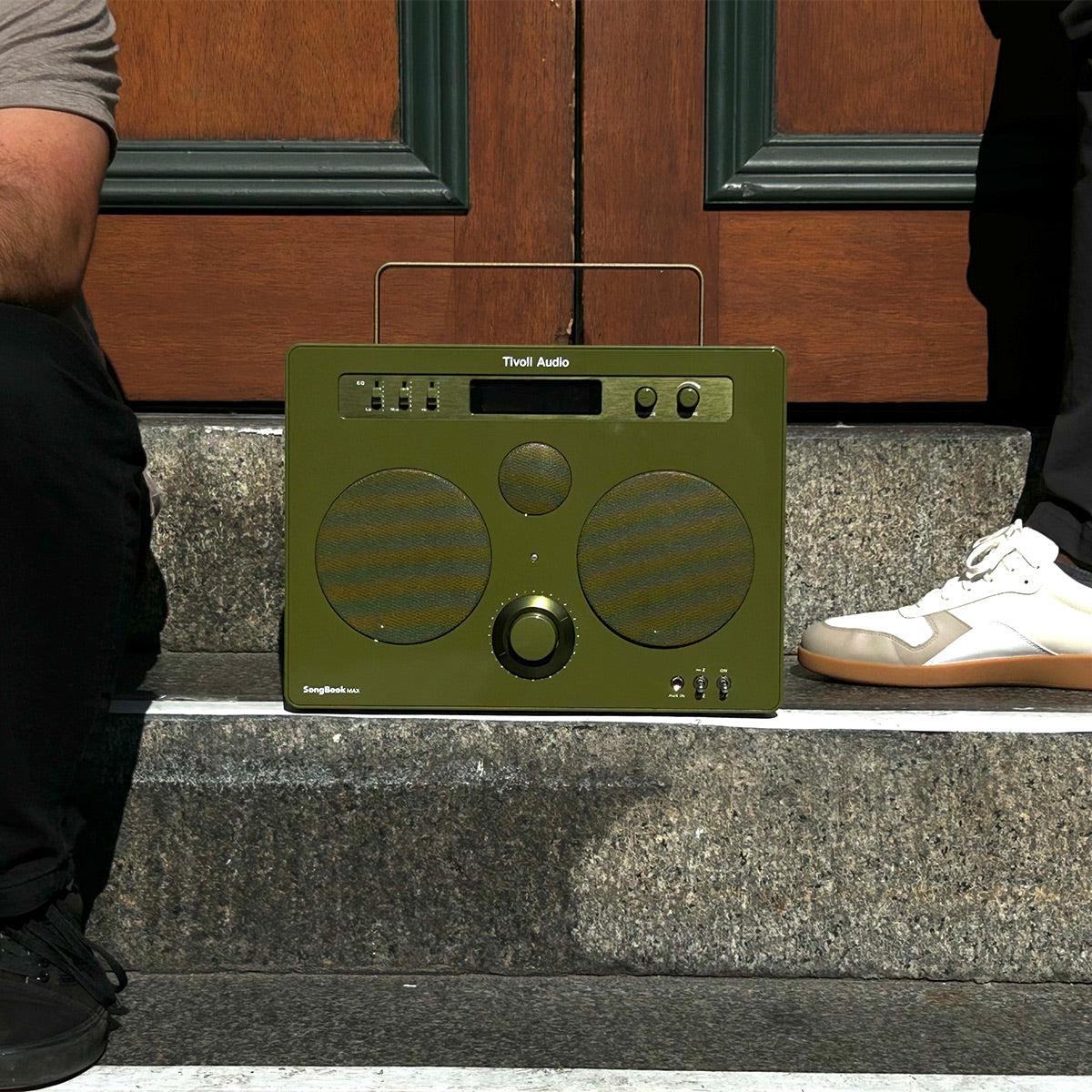
In contrast, the Tivoli Audio SongBook MAX approaches portable audio like a high-end home stereo that happens to have a battery. At 11.5 pounds, it's genuinely portable, but don't mistake its smaller size for weakness. This speaker uses a sophisticated 3-driver system: a 4-inch subwoofer, a 4-inch midrange driver, and a 0.75-inch tweeter, each handling specific frequency ranges for more precise sound reproduction.
The 50-watt output might seem modest compared to the JBL's 160 watts, but wattage isn't everything. The Tivoli can hit 100 decibels at one meter—that's loud enough for most situations while maintaining clarity and detail that the JBL simply can't match.
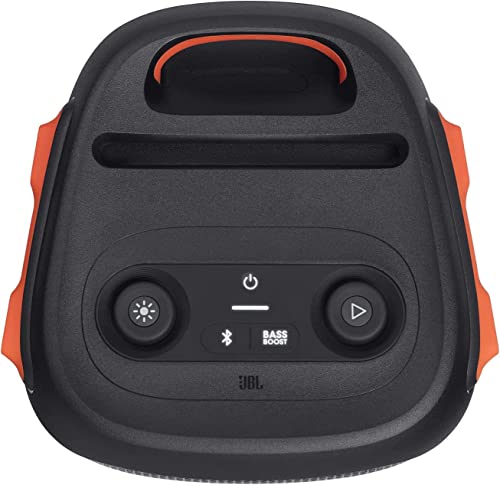
This is where the philosophical differences become most apparent. The JBL PartyBox 110 features a two-level Bass Boost system that can literally shake your house. When you activate "Deep Bass" mode, you're getting artificially enhanced low frequencies designed to create that physical sensation of powerful bass. It's the audio equivalent of adding hot sauce—sometimes you want that extra kick, even if it changes the original flavor.
The Tivoli Audio SongBook MAX, on the other hand, extends down to 40Hz naturally—actually deeper than the JBL's 45Hz—but focuses on accuracy rather than enhancement. The bass is tight, controlled, and true to the original recording. If you're listening to a jazz recording, you'll hear the upright bass exactly as the recording engineer intended. If you're pumping hip-hop, you'll get impressive low-end without the artificial boost.
Here's where the Tivoli really shines. Multiple professional reviews consistently praise its ability to reveal "granular vocal details" that other speakers miss. This isn't marketing speak—it's the result of having a dedicated 4-inch midrange driver that doesn't have to compete with bass or treble duties. Vocals sound natural and present, with subtle inflections and breathing that add emotional connection to your music.
The JBL, while clear, prioritizes energy over nuance. Vocals cut through the mix well—important for karaoke or party situations—but you won't hear the same level of detail. The midrange can sound slightly recessed when the Bass Boost is engaged, which makes sense given the speaker's party-first design priorities.
Both speakers handle treble differently based on their intended use. The JBL can sound harsh at maximum volumes, which is actually common with party speakers—they're designed to be attention-grabbing rather than relaxing. The Tivoli uses a smaller, more refined 0.75-inch tweeter that delivers smooth, extended highs without fatigue, making it suitable for long listening sessions.
When it comes to sheer volume, the JBL PartyBox 110 is the clear winner. Its 160 watts can fill large outdoor spaces and compete with ambient noise at parties. However, there's a catch: like most powerful speakers, it suffers from compression artifacts at maximum volume. This means the sound becomes less clear and dynamic when you push it hardest—exactly when you need it most at a party.
The Tivoli takes a different approach. Its 50 watts are carefully managed across three dedicated drivers, resulting in cleaner sound at all volume levels. While it won't shake the neighbors' windows, it delivers impressive volume for its size and maintains clarity throughout its entire range.
Both speakers claim impressive battery life, but real-world usage tells a different story. The JBL advertises 12 hours but drops to around 7 hours when you're actually using it as intended—with lights flashing, bass boost engaged, and volume at party levels. The Tivoli delivers closer to its promised 10 hours because it's not powering a light show.
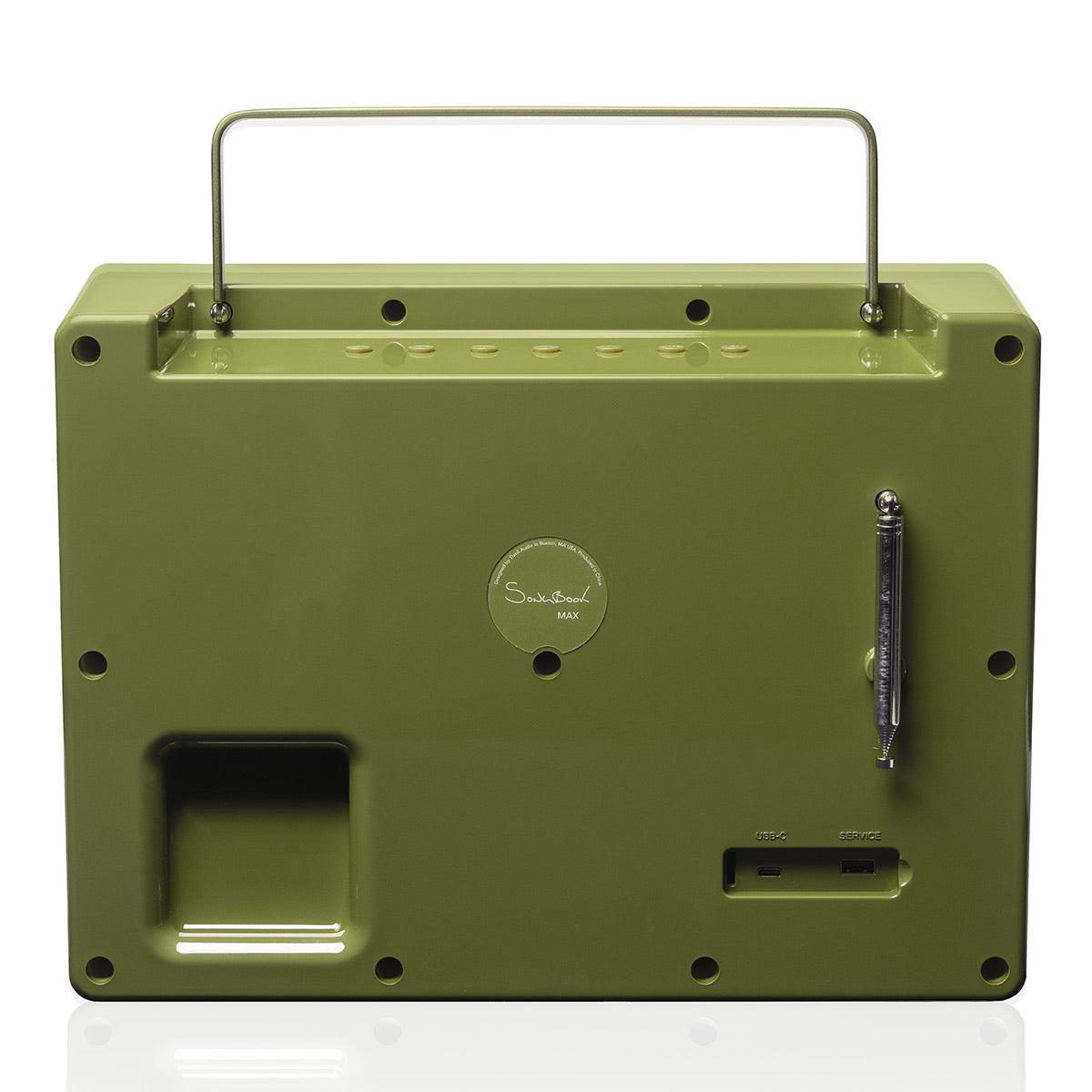
The charging story is more interesting. The JBL uses a proprietary AC cable (which feels dated in 2024), while the Tivoli embraces modern USB-C Power Delivery technology. This means you can charge the Tivoli with the same cable that charges your laptop, and it supports fast charging at multiple voltages (5V, 9V, and 15V).
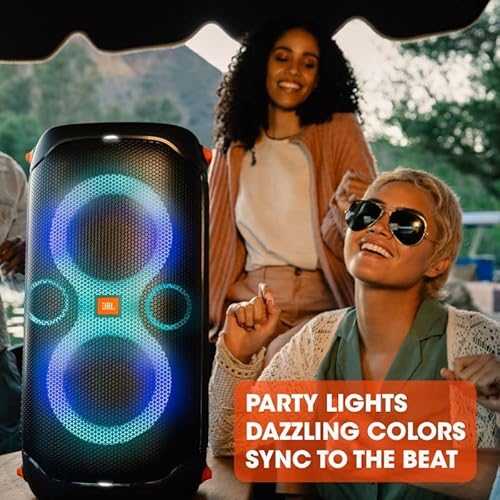
Let's be honest—the JBL PartyBox 110's LED light system is either completely essential or totally irrelevant to you. There's no middle ground. The lights sync to your music's beat, creating patterns and colors that transform the speaker into a visual centerpiece. You can customize everything through JBL's PartyBox app, choosing from preset modes or creating your own light show.
For pool parties, outdoor gatherings, or any situation where you want to create atmosphere, these lights are genuinely impressive. But they also drain the battery, add bulk to the speaker, and serve no purpose if you're focused purely on music listening.
This is where the Tivoli Audio SongBook MAX shows its versatility. The built-in FM radio (or DAB/DAB+ in European models) might seem old-fashioned, but it's incredibly practical. When your phone dies or you're in an area with poor cell coverage, having access to local radio stations, news, and emergency broadcasts is genuinely useful.
The radio features an analog tuning knob and five presets, controlled by physical buttons rather than a smartphone app. This analog approach extends to the speaker's standout feature: three physical EQ sliders for bass, midrange, and treble adjustment. Each slider provides ±6dB of adjustment, giving you immediate, tactile control over your sound without diving into an app.
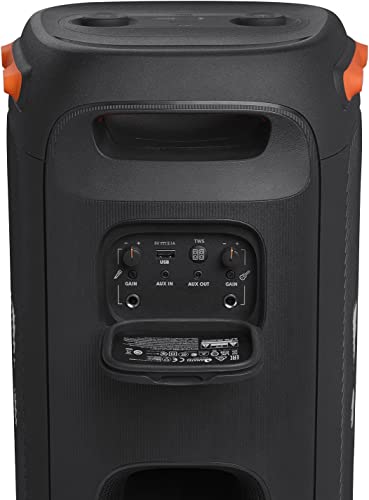
The JBL PartyBox 110 includes 1/4-inch inputs for microphones and guitars, complete with individual volume controls. This transforms the speaker into a portable PA system for karaoke nights or amateur performances. While the guitar amp simulation isn't particularly impressive, the microphone input works well for announcements or singing along.
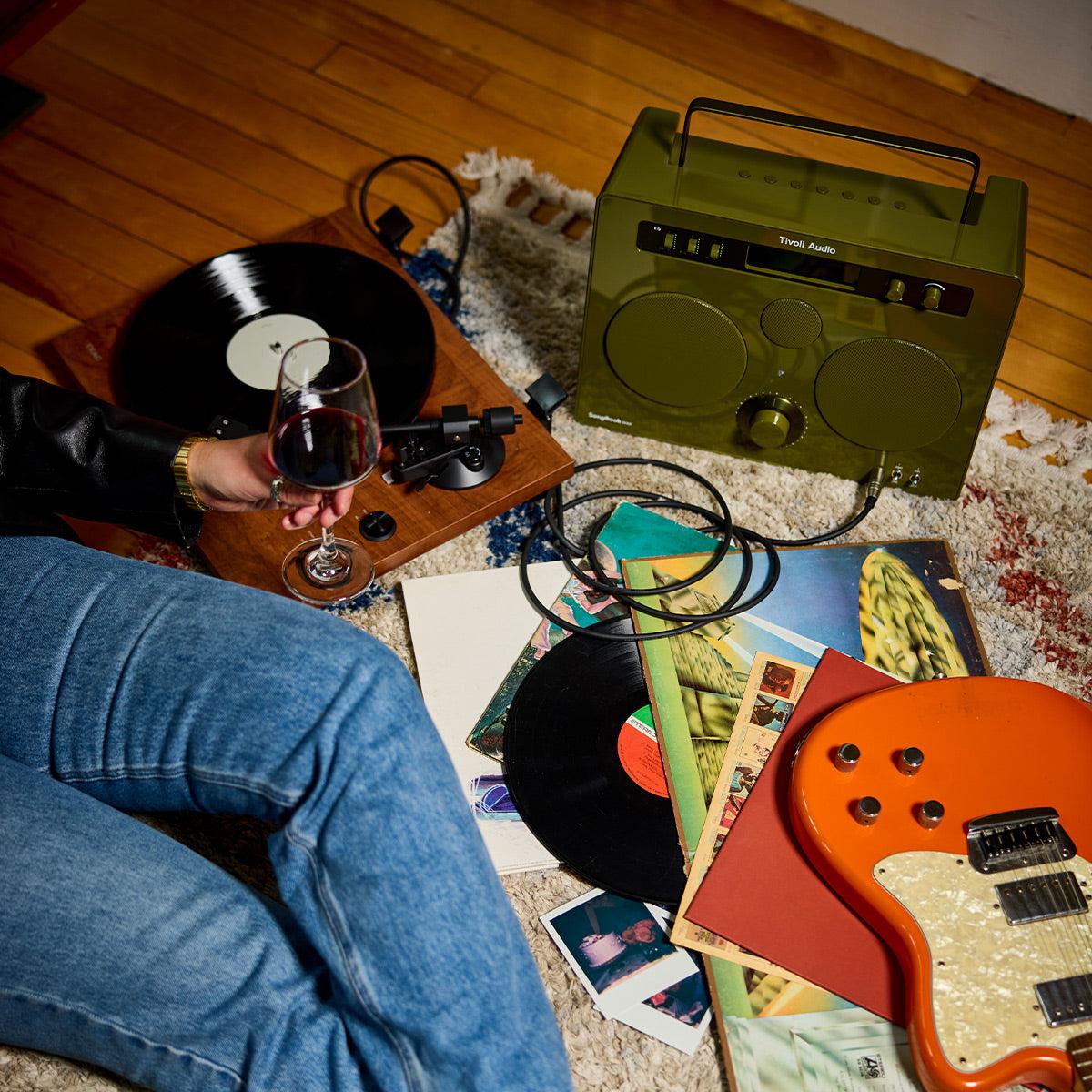
The Tivoli takes a more sophisticated approach with its built-in preamp and switchable input impedance. This means you can connect turntables (with or without their own preamps), keyboards, or other professional audio equipment. It's designed for musicians and audio enthusiasts who need high-quality input processing.
Neither speaker is primarily designed for home theater use, but they handle it differently. The JBL PartyBox 110 can certainly get loud enough for movie soundtracks, and its bass boost can add excitement to action scenes. However, its mono output and party-focused sound signature aren't ideal for nuanced dialogue or film scores.
The Tivoli Audio SongBook MAX offers better dialogue clarity and more accurate sound reproduction for movies, but its 50-watt output limits its effectiveness in large rooms. For smaller spaces or as a secondary speaker for late-night viewing (when you need lower volumes anyway), it's actually quite capable.
Both speakers support True Wireless Stereo pairing if you buy two units, which could create a proper stereo setup for home theater use, though at that point you'd be better served by dedicated home theater equipment.
The JBL PartyBox 110 is built like a tank—solid, heavy, and designed to withstand the rigors of party use. Its IPX4 rating means it can handle splashes and light rain, making it suitable for poolside use. The recessed handle and sturdy construction suggest it's built for occasional transport rather than daily portability.
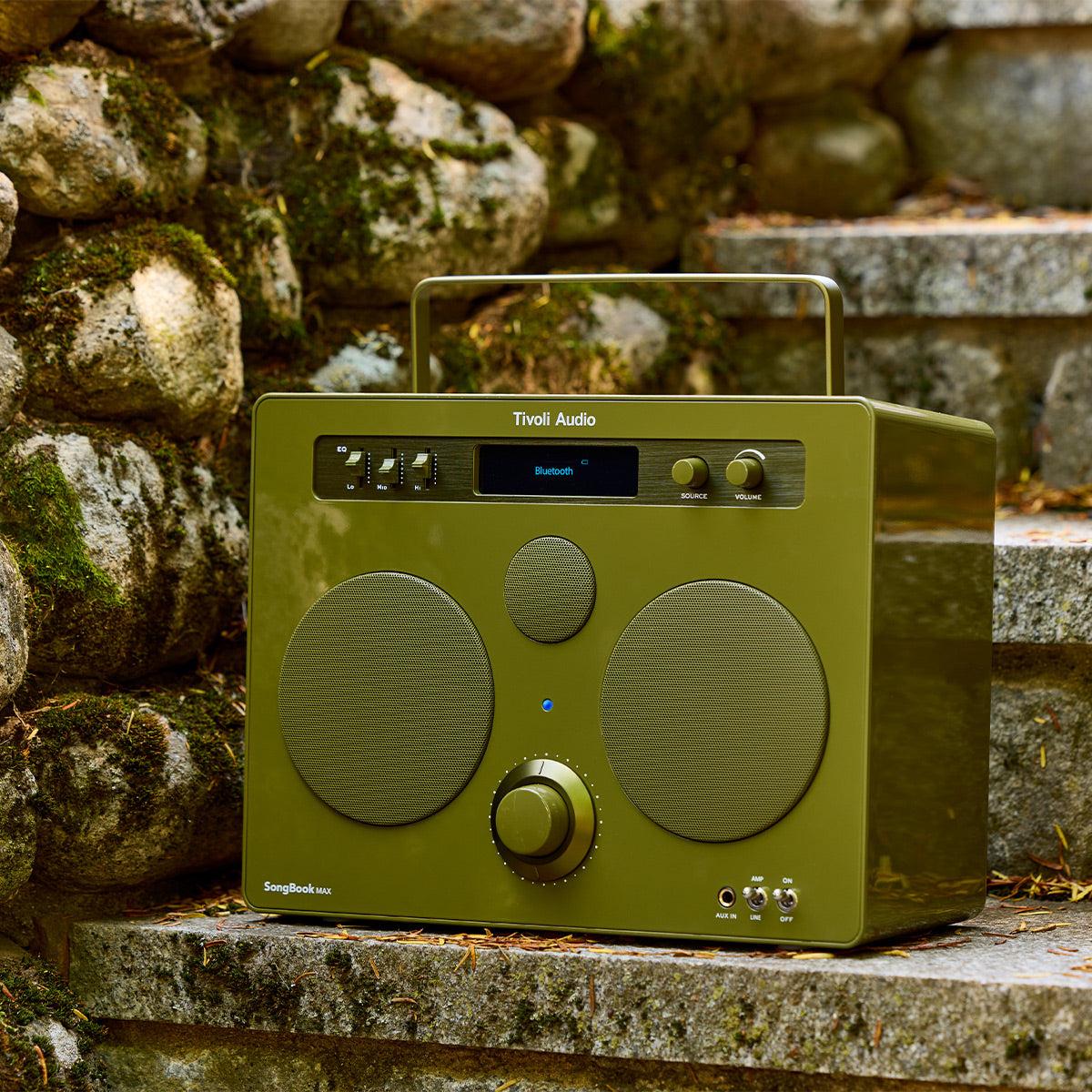
The Tivoli Audio SongBook MAX represents a different kind of durability—premium construction with attention to detail. Professional reviewers consistently praise its "exemplary" build quality, with heavy knobs, solid switches, and a finish that screams quality. It's equally rated IPX4 but feels more like a piece of audio equipment that happens to be portable rather than a rugged outdoor speaker.
At the time of writing, both speakers occupy different price segments, making direct value comparisons challenging. The JBL PartyBox 110 generally costs significantly less than the Tivoli Audio SongBook MAX, but they're solving different problems.
The JBL offers exceptional value if you need maximum volume, party features, and visual effects. You're essentially getting a speaker, light show, and basic PA system in one package. For regular entertainers or anyone who frequently hosts gatherings, the feature set justifies the investment.
The Tivoli commands a premium price for premium performance and build quality. You're paying for sophisticated audio engineering, versatile connectivity, and construction that should last decades. For audio enthusiasts or professionals who need reliable, high-quality portable sound, it represents solid value despite the higher initial cost.
You're the person who hosts gatherings. Your ideal Saturday involves friends, music, and probably some form of outdoor activity. You want a speaker that can anchor a party, provide entertainment value beyond just music, and handle the chaos that comes with group activities. The JBL excels when it's the center of attention, pumping out crowd-pleasing bass and putting on a light show that gets people excited.
You should also consider the JBL if you frequently use outdoor spaces where ambient noise is a factor. Its high output power cuts through conversation, wind, and other environmental sounds that would overwhelm smaller speakers. Just remember that its size and weight make it better suited for situations where you can drive to your destination rather than hiking.
You're a music lover first. You appreciate the subtleties in your favorite recordings and want a speaker that reveals details rather than overwhelming them. The Tivoli is perfect for anyone who values audio quality over volume, prefers physical controls over smartphone apps, and needs true portability for various listening situations.
Consider the Tivoli if you're a musician, audio professional, or serious listener who needs versatile connectivity options. Its built-in preamp and professional-grade inputs make it suitable for monitoring, casual recording sessions, or connecting high-end source equipment. The radio functionality adds practical value for news, weather, and discovering new music.
These speakers represent two valid but incompatible approaches to portable audio. The JBL PartyBox 110 is an entertainment system disguised as a speaker—perfect for creating memorable experiences with groups of people. The Tivoli Audio SongBook MAX is a serious audio tool that happens to be portable—ideal for personal listening and professional applications.
Neither speaker is objectively better than the other because they're designed for different users with different priorities. The key is understanding which philosophy matches your lifestyle and listening habits. If you're still unsure, consider how you most often listen to music: Is it background sound for social activities, or is it something you actively focus on and appreciate? Your answer will point you toward the right choice.
Both speakers benefit from the technological improvements of recent years—better Bluetooth connectivity, more efficient amplifiers, and improved battery technology. But they apply these advances in service of their respective philosophies, making the choice between them more about personal preference and intended use than pure technical superiority.
| JBL PartyBox 110 | Tivoli Audio SongBook MAX |
|---|---|
| Power Output - Determines maximum volume and room-filling capability | |
| 160W RMS (significantly louder for large gatherings) | 50W (sufficient for most listening situations with better efficiency) |
| Weight & Portability - Critical for actual mobility and transport | |
| 23 lbs / 10.84 kg (requires two-handed carry, best for stationary use) | 11.5 lbs / 5.2 kg (genuinely portable with integrated handle) |
| Driver Configuration - Affects sound quality and frequency response | |
| 2x 5.25" woofers + 2x 2.25" tweeters (optimized for volume and bass) | 4" subwoofer + 4" midrange + 0.75" tweeter (3-way system for accuracy) |
| Battery Life - Real-world usage expectations | |
| 12 hours rated / ~7 hours with lights and bass boost active | 10 hours (more consistent performance across usage scenarios) |
| Charging Method - Convenience and future-proofing | |
| Proprietary AC cable (less convenient, requires specific charger) | USB-C Power Delivery (universal charging, fast charging capable) |
| Bluetooth Version - Connection stability and range | |
| Bluetooth 5.1 (solid connectivity with multi-device pairing) | Bluetooth 5.3 (latest standard for improved efficiency) |
| Water Resistance - Protection for outdoor use | |
| IPX4 splashproof (handles poolside splashes and light rain) | IPX4 splashproof (same protection level for outdoor versatility) |
| Unique Party Features - Entertainment value beyond music | |
| LED light show + mic/guitar inputs + Bass Boost modes | None (focused purely on audio quality and radio functionality) |
| Audio Control Options - How you adjust sound to your preference | |
| App-based EQ and controls (requires smartphone for customization) | Physical EQ sliders (±6dB bass/mid/treble) + remote control |
| Radio Functionality - Access to broadcast content | |
| None (Bluetooth and USB playback only) | FM radio (DAB/DAB+ in Europe) with 5 presets and analog tuning |
| Professional Audio Inputs - Connectivity for instruments and equipment | |
| 1/4" mic and guitar inputs (basic karaoke and performance use) | 1/4" aux with built-in preamp (supports turntables and pro equipment) |
| Speaker Pairing - Expanding your system | |
| True Wireless Stereo (TWS) for dual-speaker setup | No wireless pairing (single speaker focus) |
| Build Quality Philosophy - Long-term durability approach | |
| Party-tough construction (designed for group use and transport abuse) | Audiophile-grade components (premium materials for extended lifespan) |
The JBL PartyBox 110 is specifically designed for parties with 160W of power, LED light shows that sync to music, and microphone inputs for karaoke. Its dual 5.25" woofers deliver the volume needed to fill large spaces and compete with crowd noise. The Tivoli Audio SongBook MAX focuses on sound quality over volume, making the JBL PartyBox 110 the clear choice for entertaining groups.
The Tivoli Audio SongBook MAX delivers superior sound quality with its 3-driver system (subwoofer, midrange, and tweeter) that provides detailed, accurate audio reproduction. Professional reviews consistently praise its ability to reveal vocal details and instrument separation. While the JBL PartyBox 110 sounds good, it's optimized for volume and bass impact rather than audiophile-level clarity that the Tivoli Audio SongBook MAX offers.
The JBL PartyBox 110 offers 12 hours of rated battery life, though real-world usage with lights and bass boost drops this to around 7 hours. The Tivoli Audio SongBook MAX provides 10 hours of battery life that remains more consistent since it's not powering LED lights. The Tivoli also features modern USB-C charging versus the JBL's proprietary AC cable.
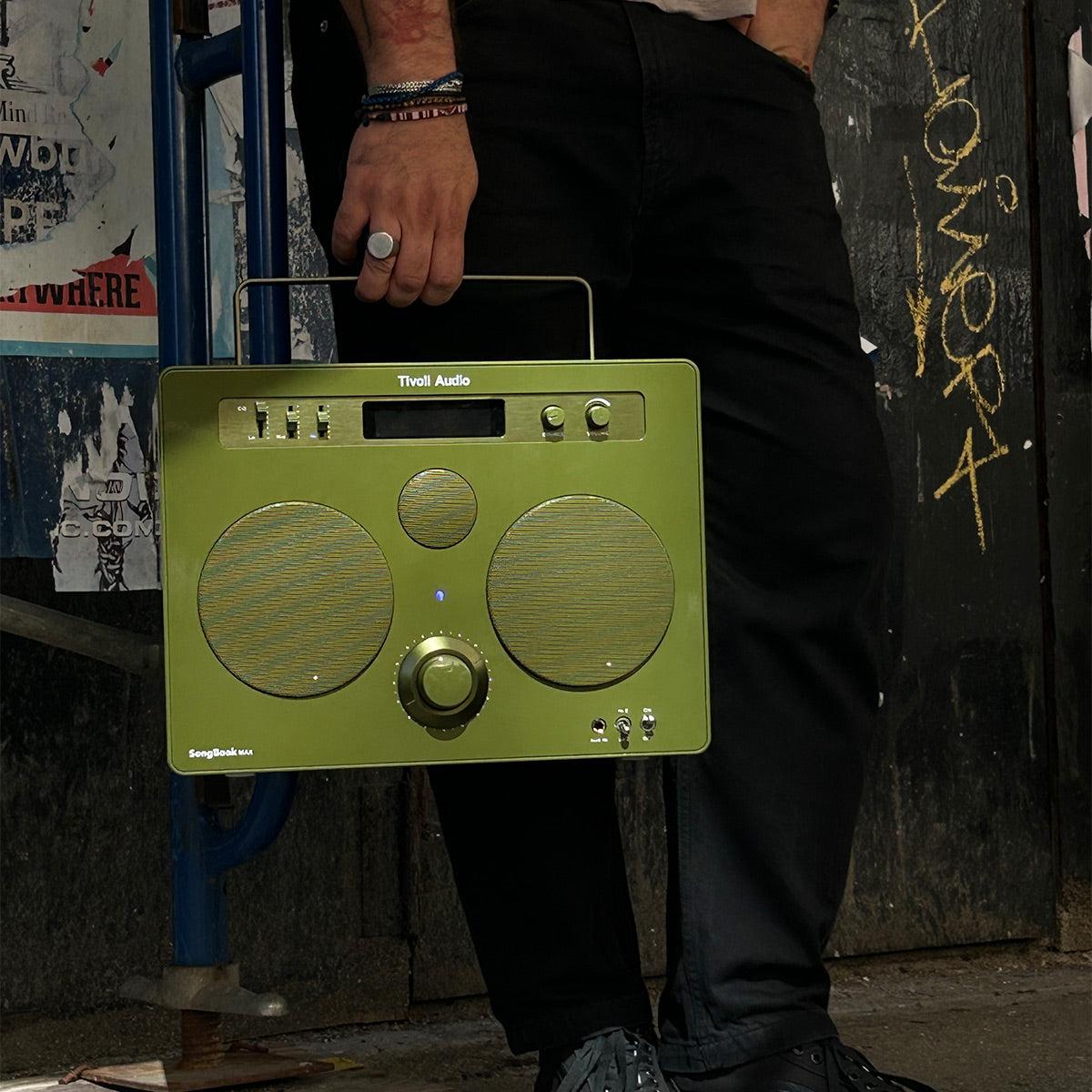
The Tivoli Audio SongBook MAX is significantly more portable at 11.5 pounds with an integrated carry handle, making it suitable for hiking, camping, or frequent transport. The JBL PartyBox 110 weighs 23 pounds and requires two-handed carrying, making it better suited for situations where you can drive to your destination. Both offer IPX4 water resistance for outdoor use.
Neither speaker is primarily designed for home theater, but the Tivoli Audio SongBook MAX handles dialogue and movie soundtracks better due to its balanced sound signature and dedicated midrange driver. The JBL PartyBox 110 can provide excitement for action movies but may overwhelm dialogue with its bass-heavy output. For serious home theater use, dedicated soundbars or surround systems work better than either portable speaker.
The Tivoli Audio SongBook MAX provides more versatile connectivity with its built-in preamp supporting turntables and professional equipment, plus FM radio functionality. The JBL PartyBox 110 focuses on performance features with dedicated microphone and guitar inputs for karaoke and live music. The JBL also supports True Wireless Stereo pairing with a second unit, while the Tivoli operates as a single speaker.
The JBL PartyBox 110 relies heavily on its PartyBox app for light customization, EQ adjustments, and accessing advanced features. The Tivoli Audio SongBook MAX operates independently with physical EQ sliders, radio controls, and a remote control, requiring no smartphone dependency. This makes the Tivoli more user-friendly for those who prefer direct hardware controls.
Value depends on your priorities. The JBL PartyBox 110 typically costs less and provides exceptional value for party entertainment with its light show, high volume output, and performance inputs. The Tivoli Audio SongBook MAX commands a premium for audiophile sound quality, premium build materials, and versatile connectivity. The JBL offers better entertainment value, while the Tivoli provides better audio value.
The JBL PartyBox 110 gets significantly louder with 160W of power, capable of filling large outdoor spaces and competing with party ambient noise. The Tivoli Audio SongBook MAX reaches 100 dB at one meter with its 50W output, which is plenty loud for most situations while maintaining better sound clarity. The JBL wins for maximum volume, but the Tivoli offers better volume efficiency.
Yes, both speakers support external audio devices. The JBL PartyBox 110 features dedicated 1/4" microphone and guitar inputs with individual volume controls, making it ideal for karaoke and basic live performance. The Tivoli Audio SongBook MAX offers a 1/4" auxiliary input with a built-in preamp that supports professional equipment like turntables, keyboards, and instruments with higher audio quality standards.
Both speakers offer excellent but different approaches to durability. The JBL PartyBox 110 features rugged construction designed to withstand party use and group handling. The Tivoli Audio SongBook MAX showcases premium audiophile build quality with heavy knobs, solid switches, and materials designed for decades of use. The JBL is party-tough, while the Tivoli is precision-built for longevity.
The JBL PartyBox 110 excels at outdoor events with its high power output, LED light show for evening gatherings, and IPX4 splash resistance for poolside use. Its volume cuts through outdoor ambient noise effectively. The Tivoli Audio SongBook MAX works well for smaller outdoor gatherings and offers superior portability for camping or beach trips, plus radio functionality when cell service is limited. Choose the JBL for large outdoor parties or the Tivoli for intimate outdoor listening.
We've done our best to create useful and informative comparisons to help you decide what product to buy. Our research uses advanced automated methods to create this comparison and perfection is not possible - please contact us for corrections or questions. These are the sites we've researched in the creation of this article: rtings.com - youtube.com - bestbuy.com - gadgets360.com - popsci.com - youtube.com - audioadvice.com - popsci.com - youtube.com - versus.com - youtube.com - rtings.com - jbl.com - in.jbl.com - jbl.com.tw - bhphotovideo.com - in.jbl.com - jbl.com - youtube.com - hu.harmanaudio.com - jbl.com.au - global.jbl.com - support.jbl.com - youtube.com - kh.jbl.com - onward.ph - jbl.com.ph - support.jbl.com - youtube.com - tivoliaudio.com - tivoliaudio.eu - whathifi.com - manofmany.com - tivoliaudio.com - versus.com - ecoustics.com - tivoliaudio.eu - versus.com - boomboxery.com - tivoliaudio.com - tivoliaudio.com - gearpatrol.com - bestbuy.com - crutchfield.com - techradar.com - youtube.com - target.com - gearpatrol.com - wallpaper.com - hawthornestereo.com - tivoliaudio.com

Privacy Policy
Terms and Conditions - Affiliate Policy
Home Security
© Copyright 2008-2026.
11816 Inwood Rd #1211, Dallas, TX 75244