

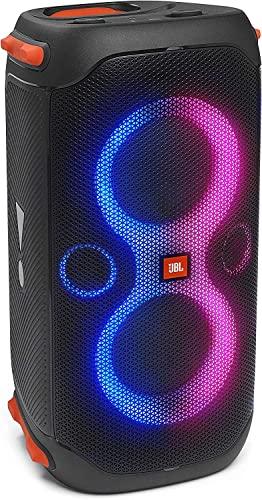
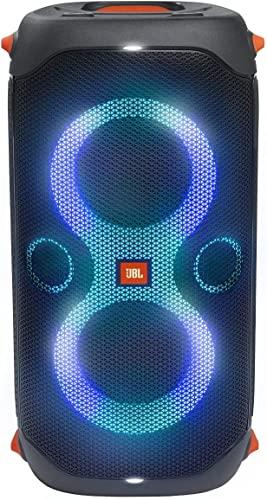
If you've ever been to a party where someone's tiny Bluetooth speaker couldn't fill the room, you understand why portable party speakers exist. These powerhouses bridge the gap between convenience and performance, delivering room-shaking sound without requiring a permanent installation. Both the JBL PartyBox 110 and Samsung MX-ST50F represent the current state of this market, but they take surprisingly different approaches to the same goal.
The portable party speaker category has evolved dramatically since these models launched. The JBL PartyBox 110 arrived in 2021 during a boom in outdoor entertainment, while the Samsung MX-ST50F launched in 2025 with more advanced lighting and connectivity features. This four-year gap shows in their feature sets—Samsung's speaker includes newer technologies like Auracast broadcasting and more sophisticated lighting controls that weren't available when JBL designed their model.
Party speakers aren't just bigger Bluetooth speakers. They're designed around specific priorities: getting loud enough to fill large spaces, adding visual entertainment through synchronized lighting, and providing inputs for microphones and instruments. The best ones balance powerful sound with portability, though compromises are inevitable.
Sound quality matters, but it's measured differently than with bookshelf speakers in your living room. Here, we care more about maximum volume without distortion, bass impact that you feel in your chest, and how well the sound disperses to reach everyone in a large space. Technical specs like frequency response curves matter less than real-world performance at party volumes.
The power output numbers—160W RMS for the JBL PartyBox 110 and 240W for the Samsung MX-ST50F—tell only part of the story. RMS (Root Mean Square) represents the continuous power output, which determines how loud a speaker can play without distorting. However, the efficiency of the drivers and how that power is distributed across frequency ranges affects the actual sound you hear.
Based on extensive review analysis and technical specifications, these speakers approach sound very differently. The JBL PartyBox 110 uses two 5.25-inch woofers paired with dual 2.25-inch tweeters in a configuration that prioritizes clarity and punch. This smaller woofer size might seem like a disadvantage, but JBL tunes them for efficiency and impact rather than pure low-end extension.
The result is a brighter, more aggressive sound signature that cuts through ambient noise effectively. When reviews describe the JBL PartyBox 110 as having "fuller sound with more detail," they're noting how well-separated the instruments sound and how clearly vocals sit in the mix, even at high volumes. The frequency response extends from 45Hz to 20kHz, which means it reproduces deep bass notes while maintaining crisp highs.
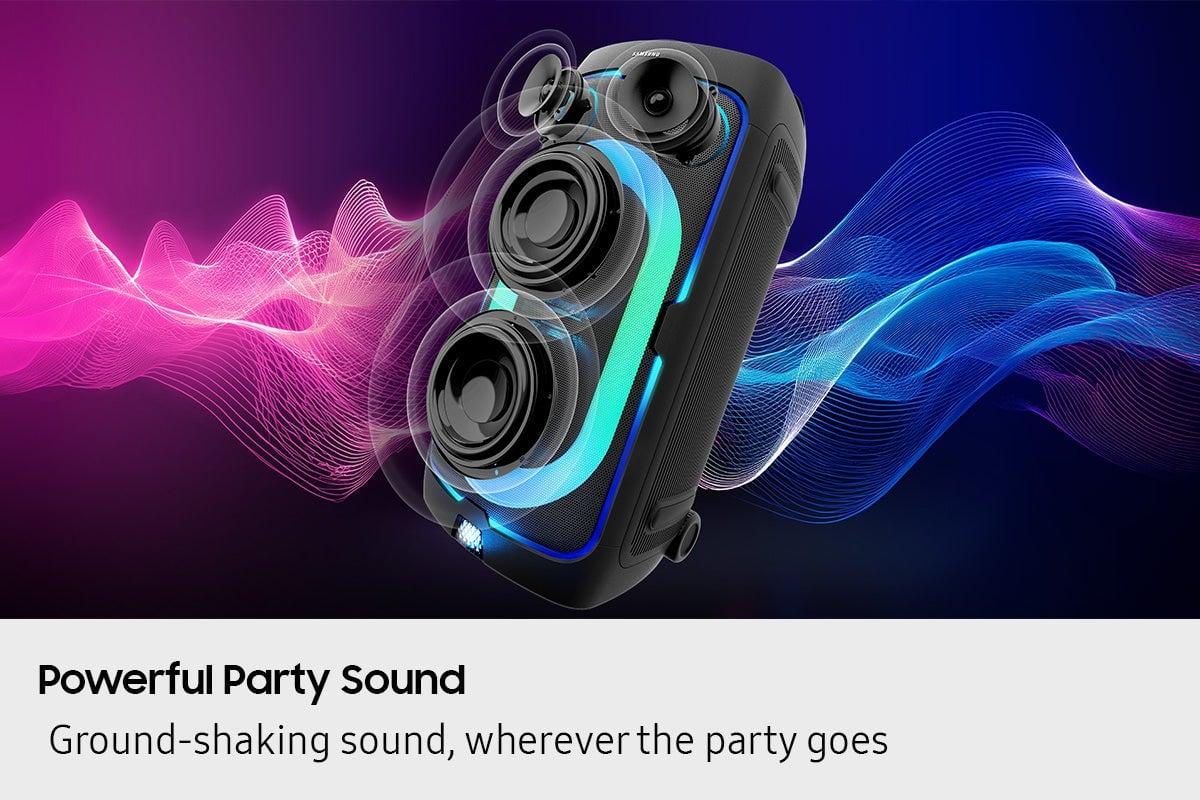
The Samsung MX-ST50F takes a different approach with larger 6.5-inch woofers and 25mm dome tweeters. Larger woofers typically move more air and produce deeper bass, but they can also sound less tight and controlled than smaller, faster-moving drivers. Samsung's Waveguide technology attempts to solve the dispersion challenges that come with larger drivers—this acoustic engineering technique shapes the sound output to distribute audio more evenly throughout a room.
What's particularly interesting is that despite the Samsung's higher 240W power rating, reviewers consistently note that the JBL PartyBox 110 sounds approximately 5% louder in real-world testing. This demonstrates how speaker efficiency and tuning can matter more than raw power numbers. The JBL's tuning emphasizes the midrange frequencies where human hearing is most sensitive, making it sound more impactful even with less total power.
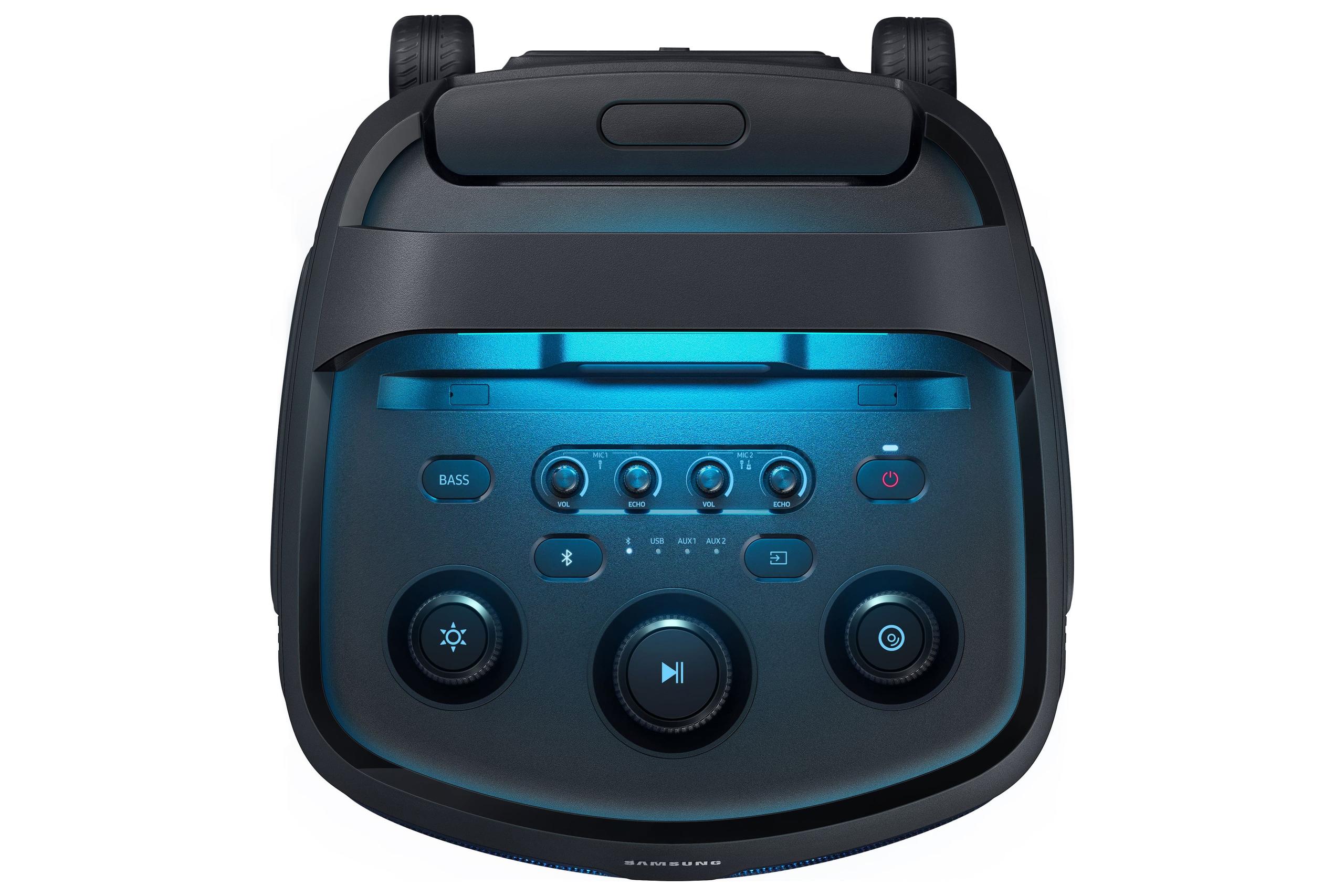
However, the Samsung MX-ST50F offers something the JBL cannot: extensive sound customization. Its four sound modes (Standard, Wide, Stadium, Outdoor) and three bass settings (Deep, Punchy, Gentle) let you adapt the speaker's character to different environments and music types. The Stadium mode, for example, adds reverb and spaciousness for a more arena-like sound, while Outdoor mode adjusts the frequency response to account for the acoustic challenges of open-air environments.
This is where the comparison gets complicated. The JBL PartyBox 110 maintains its full 160W output whether plugged into AC power or running on its internal battery. This consistency means you get the same listening experience regardless of your power situation—crucial for events where electrical access isn't guaranteed.
The Samsung MX-ST50F tells a different story. While it delivers an impressive 240W when connected to AC power, this drops dramatically to just 90W when running on battery power. That's a 62% reduction in power output, which translates to noticeably lower volume and reduced bass impact when untethered.
This isn't uncommon in large portable speakers—managing heat and battery consumption requires compromises—but it's more dramatic than most. For casual listening, 90W still provides plenty of volume, but for true party situations where you need maximum impact, you'll want the Samsung plugged in.
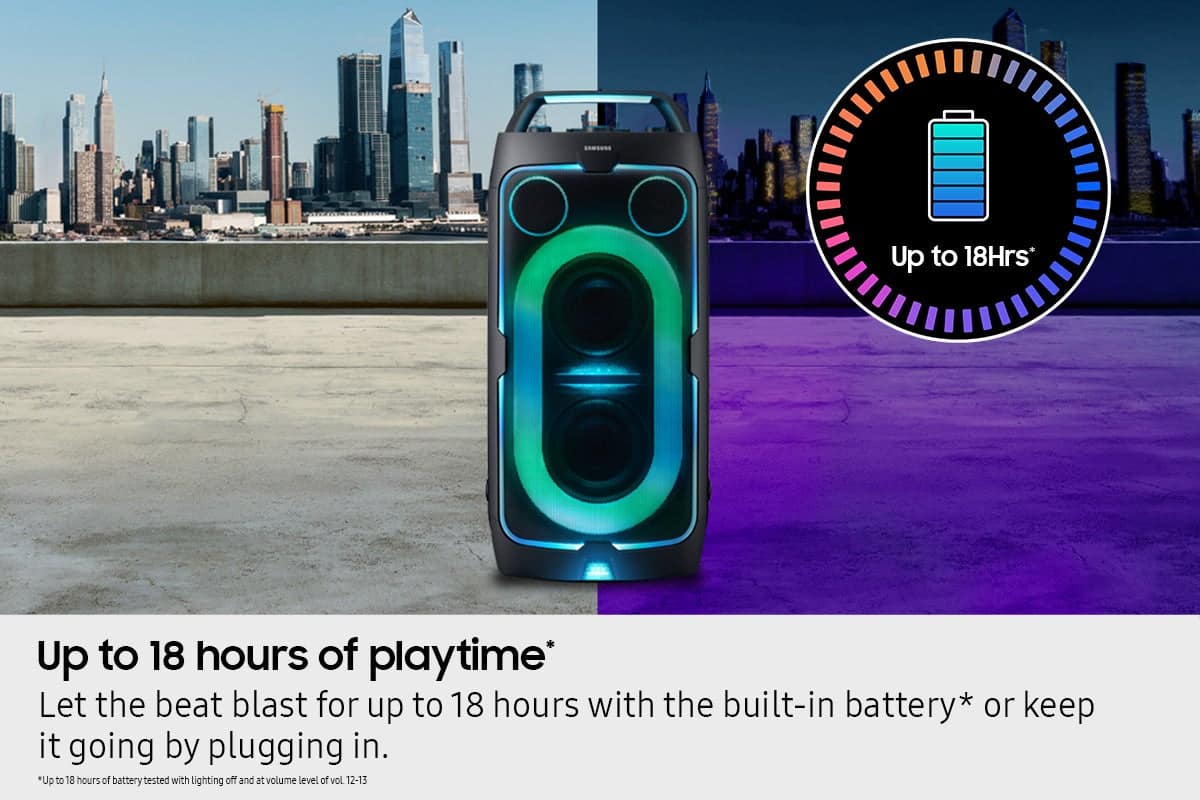
The trade-off comes in battery life. The Samsung MX-ST50F offers up to 18 hours of playback compared to the JBL's 12 hours. That 50% improvement in battery life makes a real difference for all-day events, camping trips, or situations where charging isn't convenient. The Samsung also features a replaceable battery system, meaning you could theoretically swap in a fresh battery for extended use—though replacement batteries aren't commonly available yet.
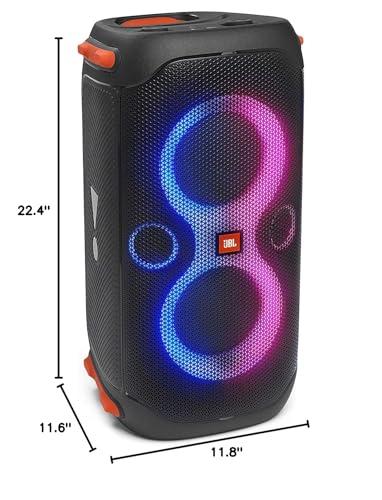
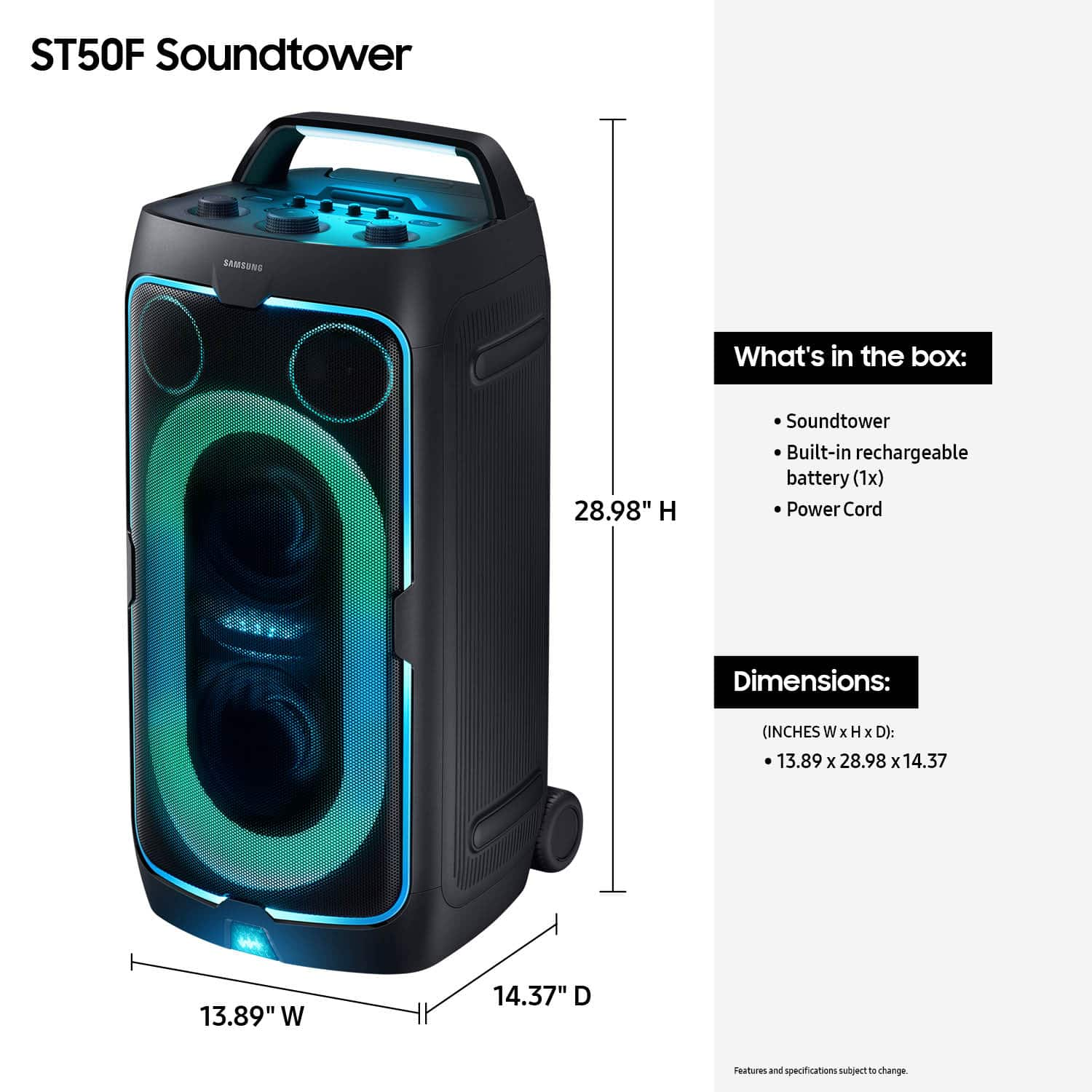
Weight-wise, these speakers are nearly identical—the JBL PartyBox 110 at 23 pounds versus the Samsung MX-ST50F at 26.5 pounds. But their transport solutions couldn't be more different.
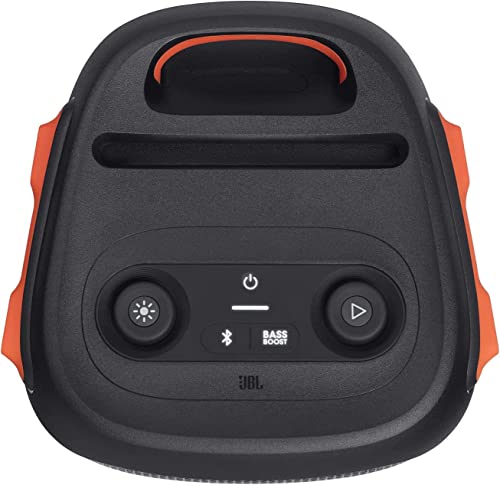
The JBL PartyBox 110 uses a traditional approach with a built-in carrying handle featuring an ergonomic grip. This makes it excellent for quick repositioning, carrying upstairs, or loading into vehicles. The handle's recessed design means it doesn't add bulk to the speaker's footprint.
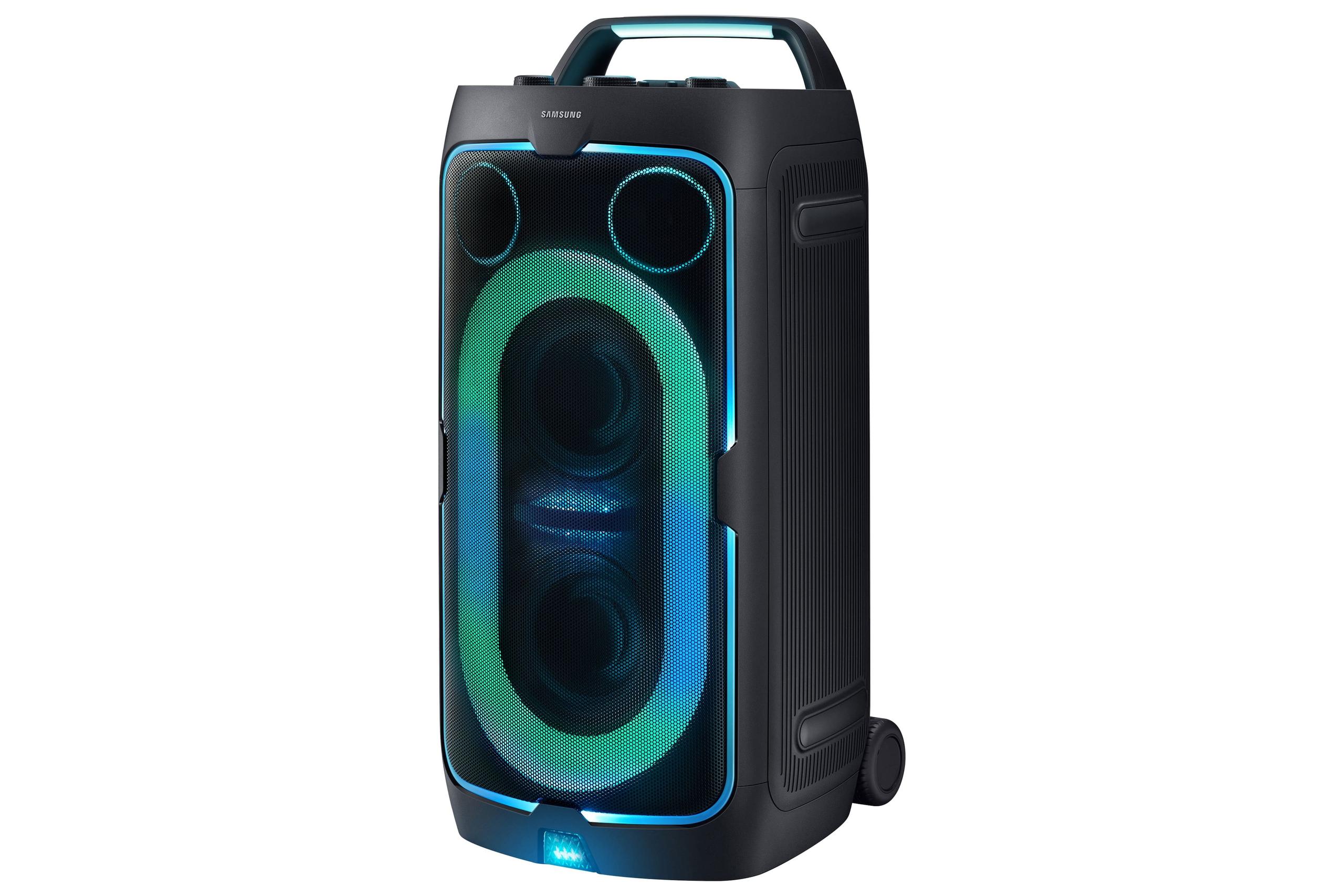
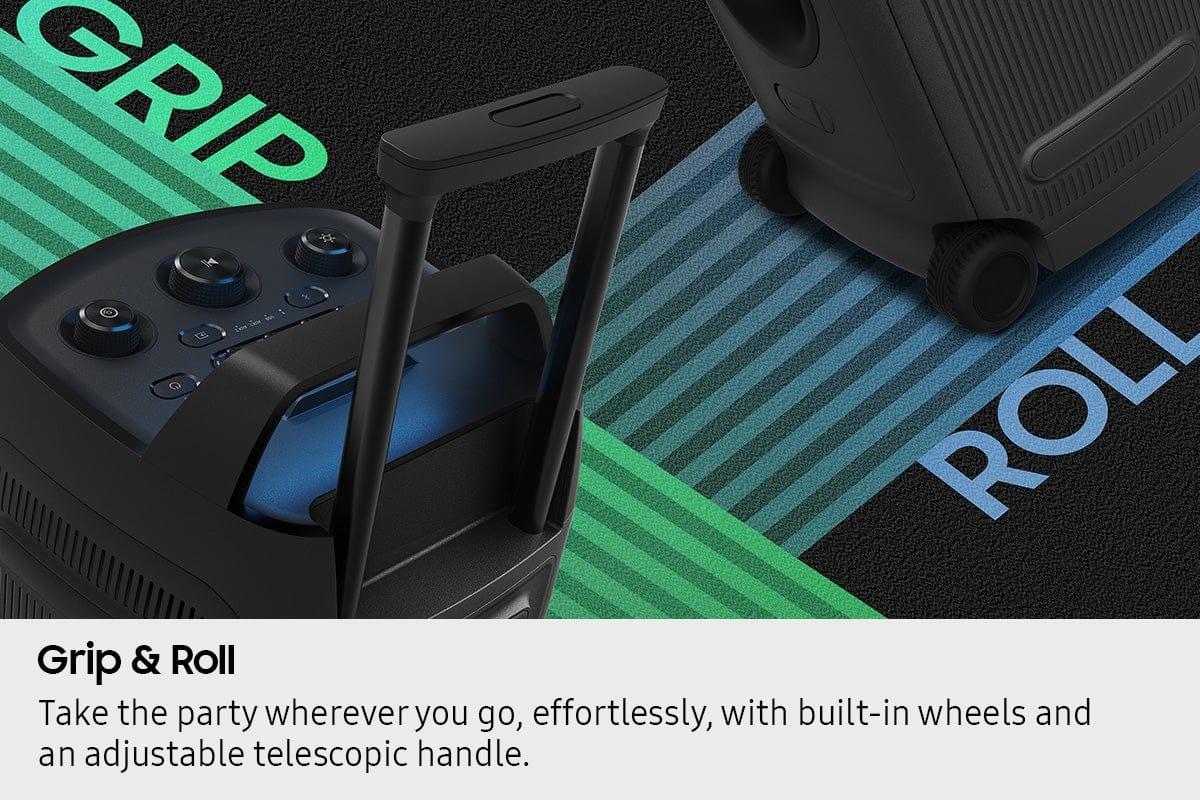
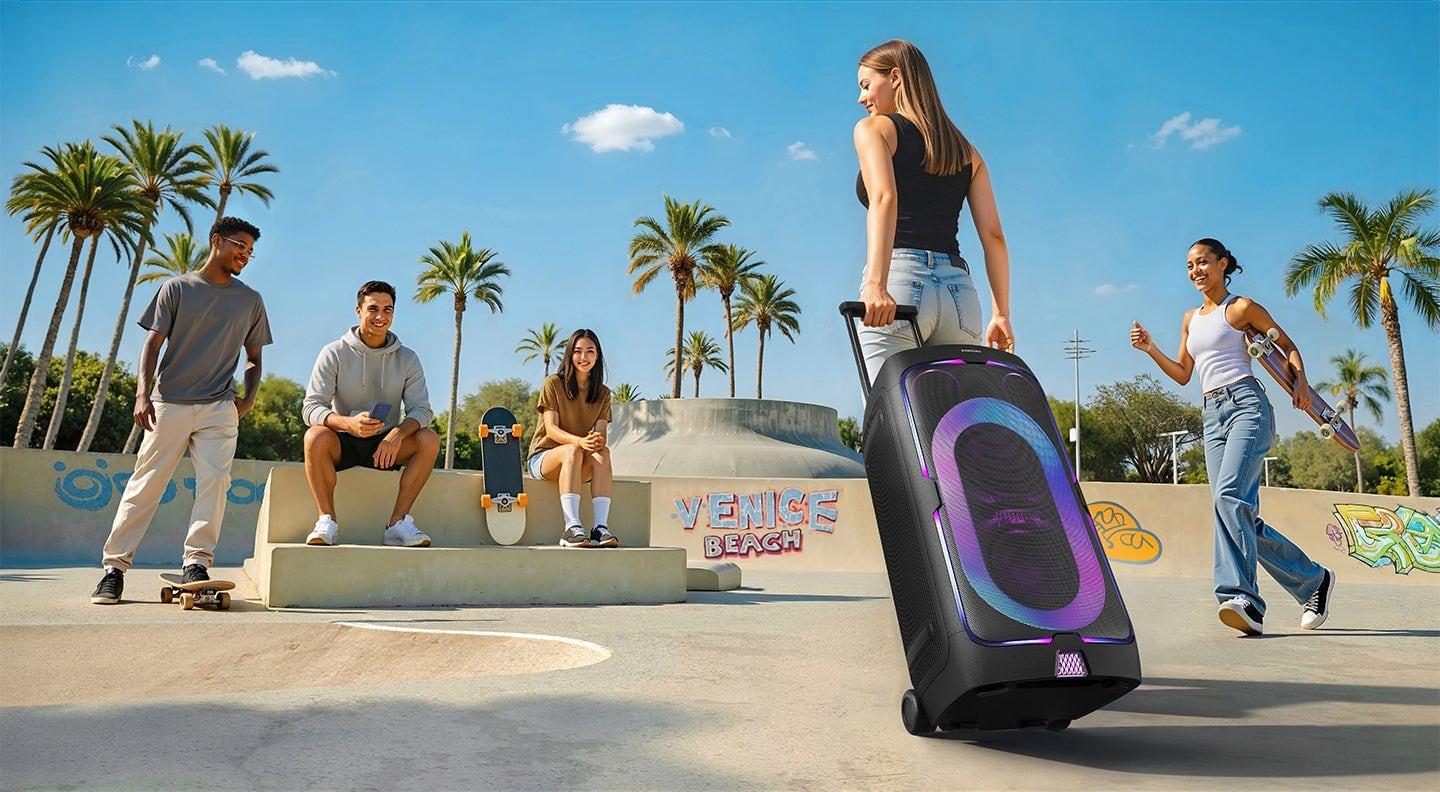
The Samsung MX-ST50F functions more like a piece of rolling luggage with built-in wheels and a telescopic handle that extends to five different levels. This system shines for longer distances—wheeling it across a parking lot or through an airport is far easier than carrying 26 pounds. However, it's less convenient for stairs, tight spaces, or situations where you need to quickly move the speaker.
Your choice here depends on your typical use cases. If you're primarily moving the speaker around your house, between rooms, or carrying it to nearby outdoor areas, the JBL's handle system is more practical. If you're transporting it longer distances or have mobility concerns, the Samsung's wheeled approach makes more sense.
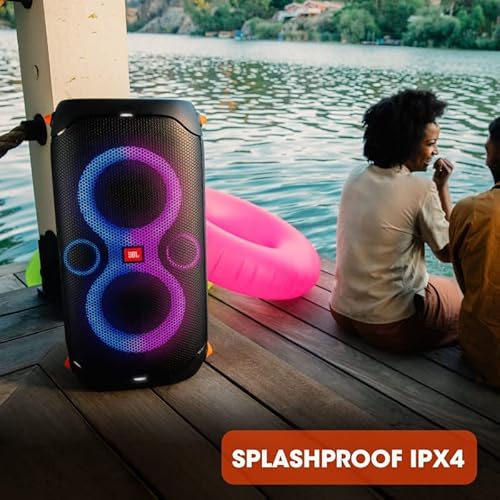
Both speakers meet IPX ratings for water resistance, but at different levels. The JBL PartyBox 110 carries an IPX4 rating, which protects against splashing water from any direction. This covers most poolside situations, light rain, and the occasional drink spill.
The Samsung MX-ST50F steps up to IPX5, which protects against water jets from a nozzle. This higher rating provides better peace of mind for outdoor events where weather might be unpredictable or where the speaker might face more direct water exposure.
Neither speaker is waterproof (which would require IPX7 or higher), so submersion is still a concern. But for typical party environments, both offer adequate protection. The Samsung's superior rating gives it an edge for beach parties, outdoor festivals, or other environments where water exposure is more likely.
This is where the four-year technology gap between these products becomes most apparent. Both speakers feature synchronized lighting systems, but they've evolved significantly between generations.
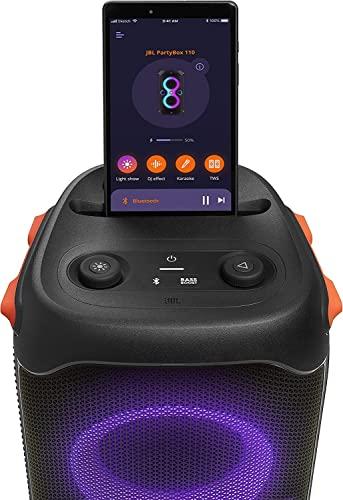
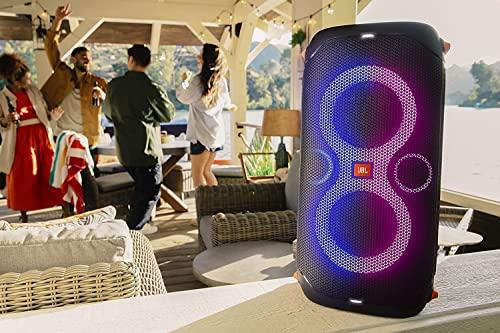
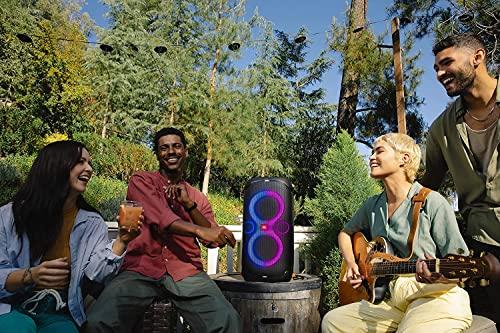
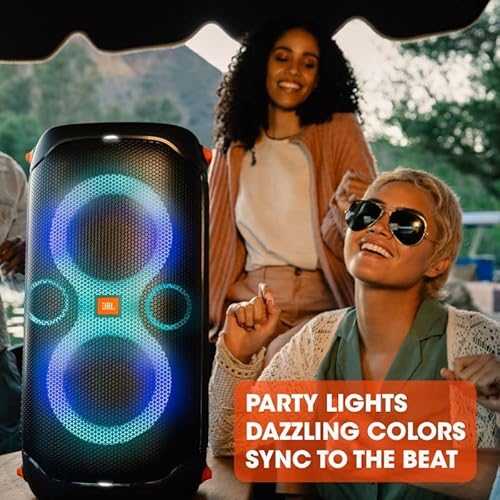
The JBL PartyBox 110 includes dynamic LED light rings that pulse and change color in sync with your music. The system offers six different lighting patterns controlled through JBL's PartyBox app, with effects that respond to bass hits and rhythm changes. While not as sophisticated as newer systems, the lighting is highly responsive and adds genuine visual excitement to parties.
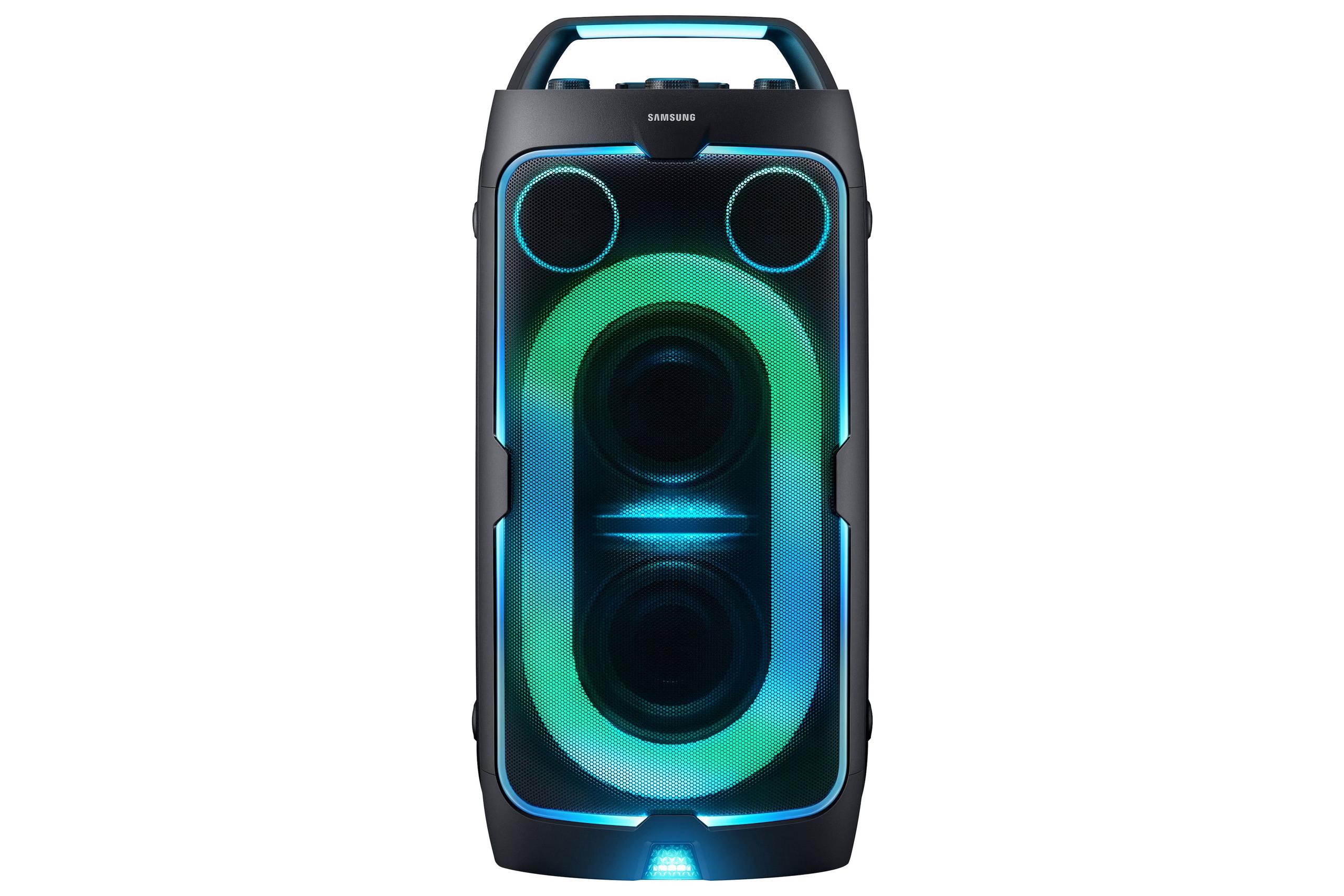
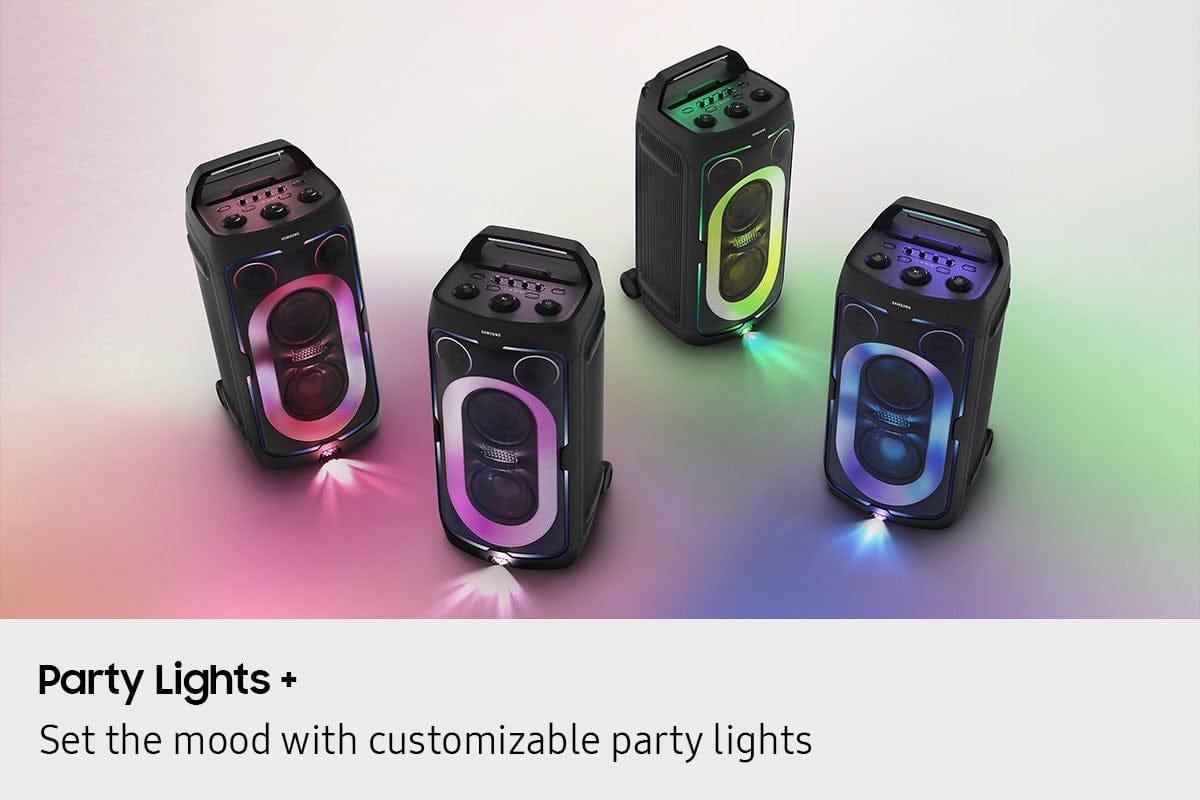
The Samsung MX-ST50F showcases what four years of development can achieve. Its "Party Lights+" system spans five different zones across the speaker—track, ring, line, crystal, and handle areas—creating a true 360-degree light show. With five mood presets and six dynamic patterns including Wave, Trail, Spark, Breeze, Flow, and Flare, the customization options are extensive. The Samsung Sound Tower app provides granular control over colors, patterns, and timing.
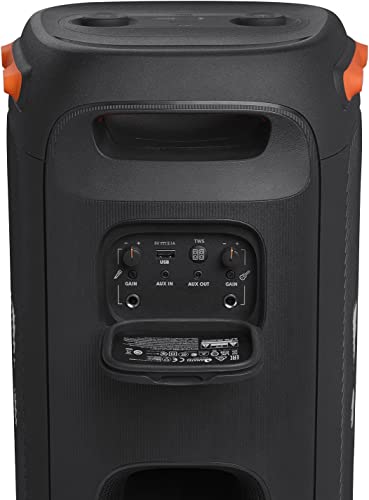
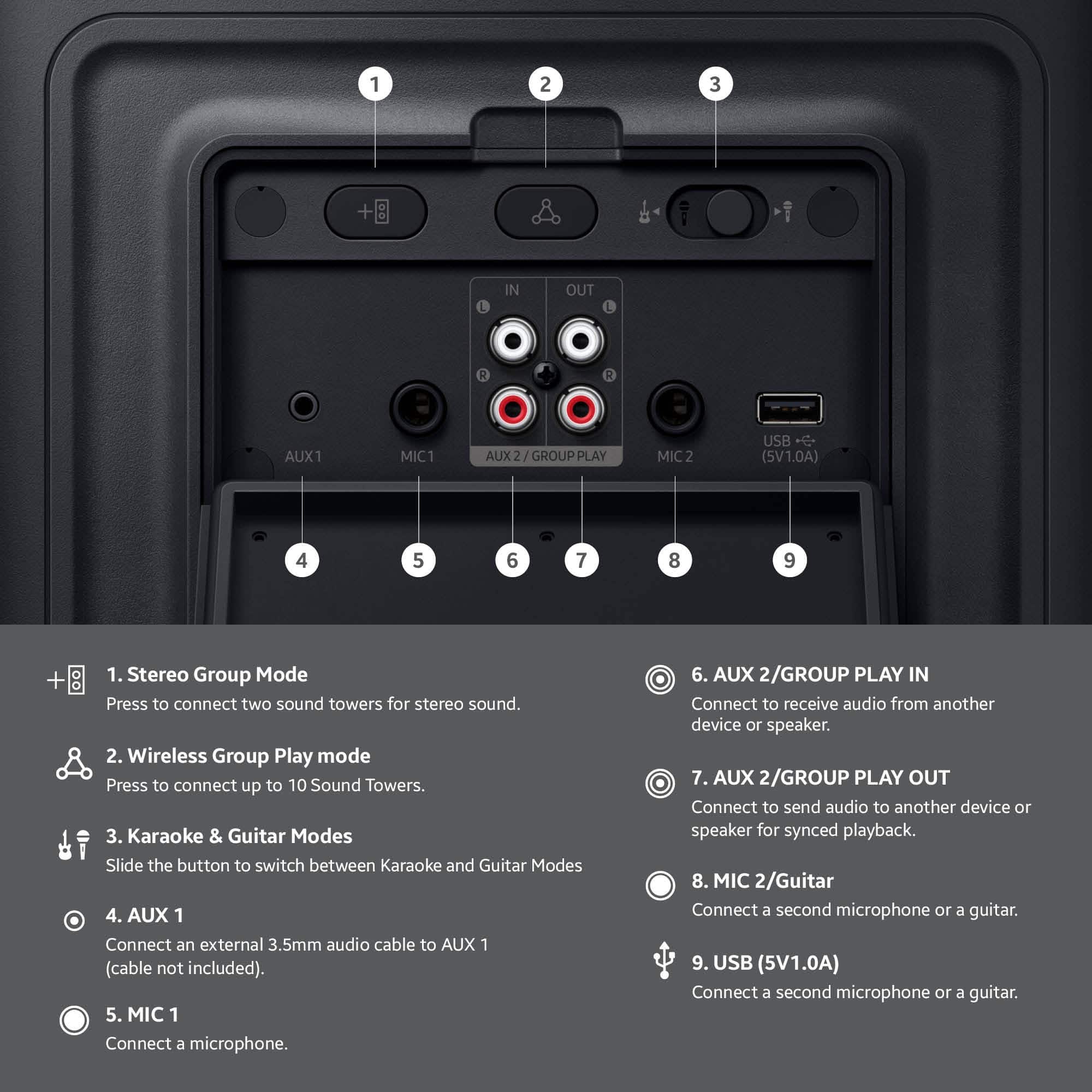
For karaoke and live performance, both speakers accommodate microphones, but with different philosophies. The JBL PartyBox 110 provides separate inputs for microphone and guitar, each with individual gain controls and a separate microphone volume adjustment. This separation gives you better control when mixing live performance with recorded music.
The Samsung MX-ST50F offers dual microphone inputs with one doubling as a guitar input, plus karaoke-specific features like voice recording and voice removal from tracks. The Samsung app also includes DJ effects, letting you add reverb, echo, and other processing to your performance.
Both speakers support standard Bluetooth connectivity, but they handle multi-device and multi-speaker scenarios differently. The JBL PartyBox 110 can pair with up to eight Bluetooth devices (though only one plays at a time) with automatic reconnection to the last used device. For expanding your system, JBL's True Wireless Stereo (TWS) lets you pair two PartyBox 110 units wirelessly for stereo sound or daisy-chain multiple speakers via audio cables.
The Samsung MX-ST50F takes connectivity further with simultaneous dual-device Bluetooth connection—two phones can stay connected, making it easy to switch DJs without re-pairing. More impressively, Samsung's Auracast technology allows up to 10 Sound Tower speakers to connect wirelessly, creating massive sound systems for large events.
At the time of writing, the JBL PartyBox 110 typically costs significantly less than the Samsung MX-ST50F—often 40-50% less depending on sales and availability. This price difference fundamentally changes how we evaluate these speakers.
The JBL represents excellent value for users who prioritize sound quality and don't need every latest feature. Its consistent performance across power sources, superior portability via the carrying handle, and strong sound quality make it ideal for house parties, backyard gatherings, and regular indoor/outdoor entertainment. If you're primarily using the speaker within your home and nearby outdoor areas, the JBL delivers most of what you need at a much more accessible price point.
The Samsung justifies its premium pricing through its feature set: longer battery life, advanced lighting systems, superior weather protection, and cutting-edge connectivity options. It's built for users who want the most comprehensive party speaker experience and are willing to pay for it. The rolling transport system suggests Samsung envisions this speaker being moved longer distances regularly—perfect for event organizers, DJs, or anyone who frequently hosts large outdoor gatherings.
While neither speaker is designed primarily for home theater use, both can function as powerful Bluetooth speakers for casual movie watching. The JBL PartyBox 110 provides better stereo imaging when paired with a second unit via TWS, and its brighter sound signature can help with dialogue clarity in movies.
However, both speakers' omnidirectional design—intended to fill large spaces evenly—works against the directional sound staging that makes movie soundtracks immersive. For serious home theater applications, dedicated soundbars or bookshelf speakers remain better choices.
The technology gap between these products highlights how quickly this market evolves. Samsung's Auracast support represents adoption of newer Bluetooth standards that enable more sophisticated multi-device connections. The advanced app controls and extensive sound customization options show where the market is heading.
However, the JBL PartyBox 110 benefits from proven, reliable technology. Its simpler approach means fewer potential failure points and more straightforward operation. Sometimes the latest features aren't worth the complexity they add.
For most buyers, the JBL PartyBox 110 offers the best balance of performance and value. Its superior sound quality, consistent power delivery, and practical portability handle the majority of party speaker use cases effectively. The lower price leaves budget for other party essentials or simply provides better value for your audio dollar.
Choose the Samsung MX-ST50F if you frequently host large outdoor events, need maximum battery life for all-day festivals or camping trips, want cutting-edge lighting features, or plan to build multi-speaker systems using Auracast technology. The wheeled transport system makes sense if you regularly move your speaker longer distances.
The Samsung also makes sense for users who prioritize having the latest features and don't mind paying a premium for extensive customization options. Its superior water resistance provides additional peace of mind for outdoor use, and the replaceable battery system offers long-term flexibility.
Ultimately, both speakers serve the party speaker mission well, but they target different priorities within that goal. The JBL focuses on delivering excellent core performance at an accessible price, while the Samsung pushes the envelope with advanced features for users willing to invest in the most comprehensive experience possible.
Your choice should align with how you actually plan to use the speaker, how much you value the latest features versus proven performance, and whether the Samsung's premium capabilities justify its higher cost for your specific needs.
| JBL PartyBox 110 | Samsung MX-ST50F |
|---|---|
| Power Output - Determines maximum volume and bass impact | |
| 160W RMS (consistent on battery and AC) | 240W AC / 90W battery (significant drop untethered) |
| Sound Quality - Core audio performance characteristics | |
| Brighter, more detailed sound with better clarity | Warmer, more neutral with extensive customization options |
| Battery Life - Critical for untethered outdoor events | |
| 12 hours playtime | 18 hours playtime (replaceable battery system) |
| Portability - How easy it is to move around | |
| Built-in ergonomic carrying handle (23 lbs) | Wheels + telescopic handle like luggage (26.5 lbs) |
| Water Resistance - Protection for outdoor use | |
| IPX4 splashproof (light rain, poolside safe) | IPX5 water jets (better protection, heavier rain) |
| Lighting System - Visual entertainment features | |
| 6 patterns, responsive LED light rings | Multi-zone 360° lights, 5 presets + 6 patterns |
| Microphone Inputs - For karaoke and live performance | |
| Separate mic + guitar inputs with individual controls | Dual mic inputs, karaoke features, voice recording |
| Multi-Speaker Connectivity - Expanding your sound system | |
| TWS pairing (2 speakers) + daisy chain options | Auracast technology (up to 10 speakers wirelessly) |
| App Control - Remote customization capabilities | |
| Basic lighting and sound controls via JBL PartyBox app | Advanced DJ effects, extensive sound modes via Samsung app |
| Price Value - Overall cost-to-performance ratio | |
| Excellent value with core features at lower cost | Premium pricing for advanced features and longer battery |
The JBL PartyBox 110 actually sounds about 5% louder in real-world use despite having lower power specs (160W vs 240W). However, the Samsung MX-ST50F only reaches its full 240W when plugged into AC power - on battery it drops to just 90W, making the JBL significantly louder when both are running untethered.
The JBL PartyBox 110 delivers brighter, more detailed sound with better instrument separation and vocal clarity. The Samsung MX-ST50F produces warmer, more neutral audio but offers extensive customization with 4 sound modes and 3 bass settings. For pure sound quality, most users prefer the JBL's tuning.
The Samsung MX-ST50F provides up to 18 hours of battery life and features a replaceable battery system. The JBL PartyBox 110 offers 12 hours of playtime. The Samsung's 50% longer battery life makes it better for all-day outdoor events, though actual runtime varies based on volume and lighting usage.
The JBL PartyBox 110 uses a built-in ergonomic carrying handle, making it better for stairs, quick repositioning, and loading into vehicles. The Samsung MX-ST50F has wheels and a telescopic handle like luggage, which is superior for rolling longer distances but less convenient for stairs or tight spaces.
Both speakers are splash-resistant but not fully waterproof. The JBL PartyBox 110 has IPX4 rating (splash protection), while the Samsung MX-ST50F offers superior IPX5 rating (water jet protection). Neither can be submerged, but both handle poolside use and light rain safely.
The Samsung MX-ST50F features a more advanced lighting system with 5 lighting zones creating 360-degree effects, 5 mood presets, and 6 dynamic patterns. The JBL PartyBox 110 has responsive LED light rings with 6 patterns that sync well to music beats. Samsung's lighting is more sophisticated and customizable.
Yes, both support microphones but differently. The JBL PartyBox 110 has separate microphone and guitar inputs with individual volume controls. The Samsung MX-ST50F offers dual microphone inputs with karaoke features like voice recording and voice removal from tracks.
The JBL PartyBox 110 typically costs significantly less while delivering excellent core performance, making it the better value for most buyers. The Samsung MX-ST50F justifies its premium price with longer battery life, advanced lighting, and cutting-edge features, but only if you'll use those extras.
The JBL PartyBox 110 supports True Wireless Stereo pairing between two units or daisy-chaining via cables. The Samsung MX-ST50F uses advanced Auracast technology to wirelessly connect up to 10 speakers simultaneously, making it better for large event setups.
Neither speaker is designed primarily for home theater, but both can work for casual movie watching via Bluetooth. The JBL PartyBox 110 offers better stereo imaging when paired with a second unit. However, their omnidirectional party-focused design works against the directional sound staging that movies need.
The Samsung MX-ST50F has superior IPX5 water resistance and robust build quality designed for frequent transport. The JBL PartyBox 110 offers solid IPX4 protection and proven reliability. Both handle outdoor use well, but Samsung provides better weather protection for unpredictable conditions.
Choose the JBL PartyBox 110 if you want excellent sound quality, consistent performance, easy portability, and better value. Pick the Samsung MX-ST50F if you need maximum battery life, advanced lighting features, superior water resistance, or plan to connect multiple speakers for large events.
We've done our best to create useful and informative comparisons to help you decide what product to buy. Our research uses advanced automated methods to create this comparison and perfection is not possible - please contact us for corrections or questions. These are the sites we've researched in the creation of this article: rtings.com - youtube.com - bestbuy.com - gadgets360.com - popsci.com - youtube.com - audioadvice.com - popsci.com - youtube.com - versus.com - youtube.com - rtings.com - jbl.com - in.jbl.com - jbl.com.tw - bhphotovideo.com - in.jbl.com - jbl.com - youtube.com - hu.harmanaudio.com - jbl.com.au - global.jbl.com - support.jbl.com - youtube.com - kh.jbl.com - onward.ph - jbl.com.ph - support.jbl.com - youtube.com - bestbuy.com - news.samsung.com - youtube.com - youtube.com - videoandaudiocenter.com - youtube.com - youtube.com - samsung.com - crutchfield.com - youtube.com - arrowassociatedstores.com - brandsmartusa.com - bestbuy.com - crutchfield.com - samsung.com - icecat.in - thefrogpadappliances.com - news.samsung.com

Privacy Policy
Terms and Conditions - Affiliate Policy
Home Security
© Copyright 2008-2026.
11816 Inwood Rd #1211, Dallas, TX 75244