

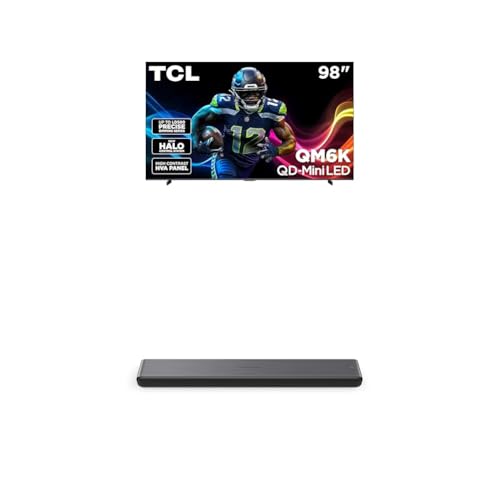
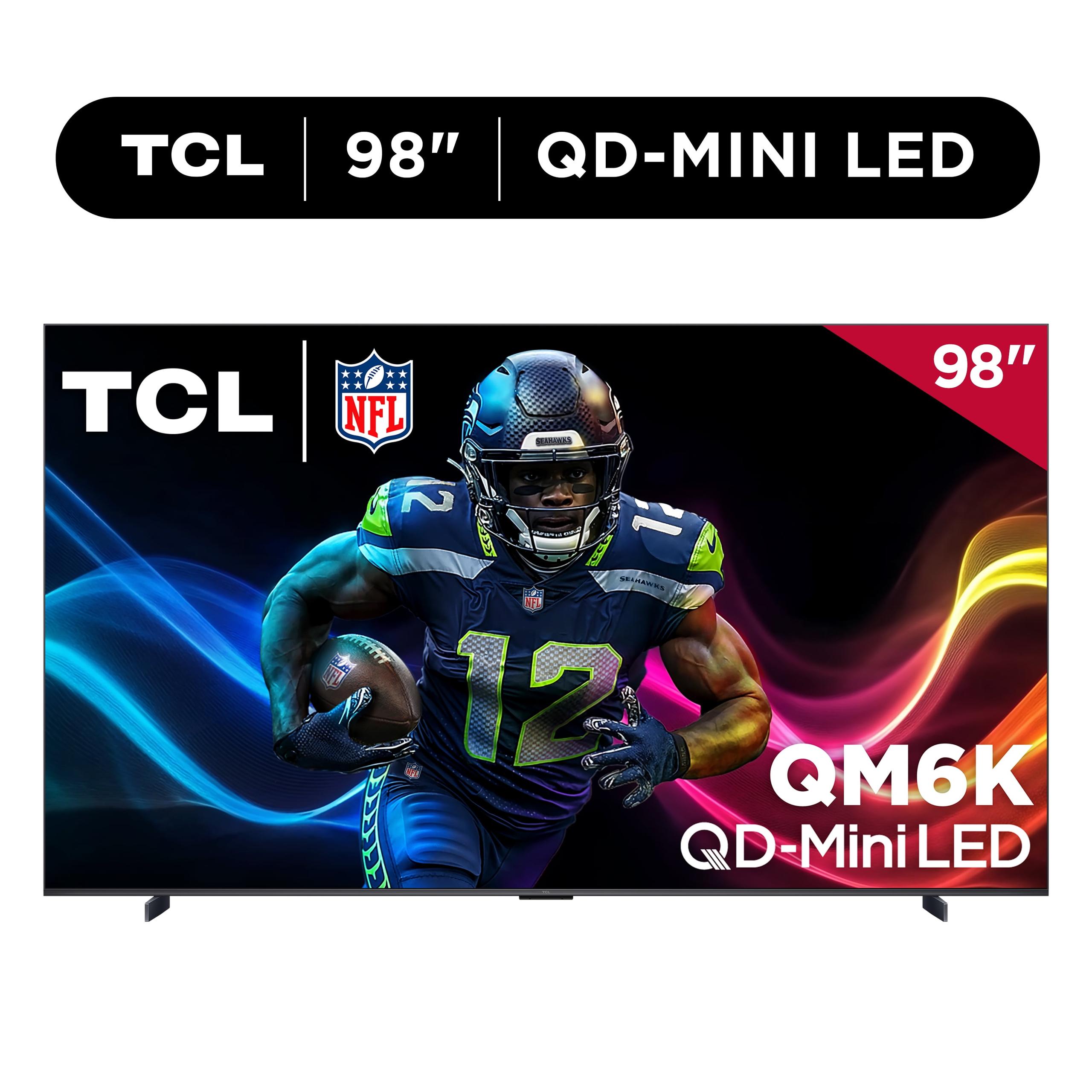

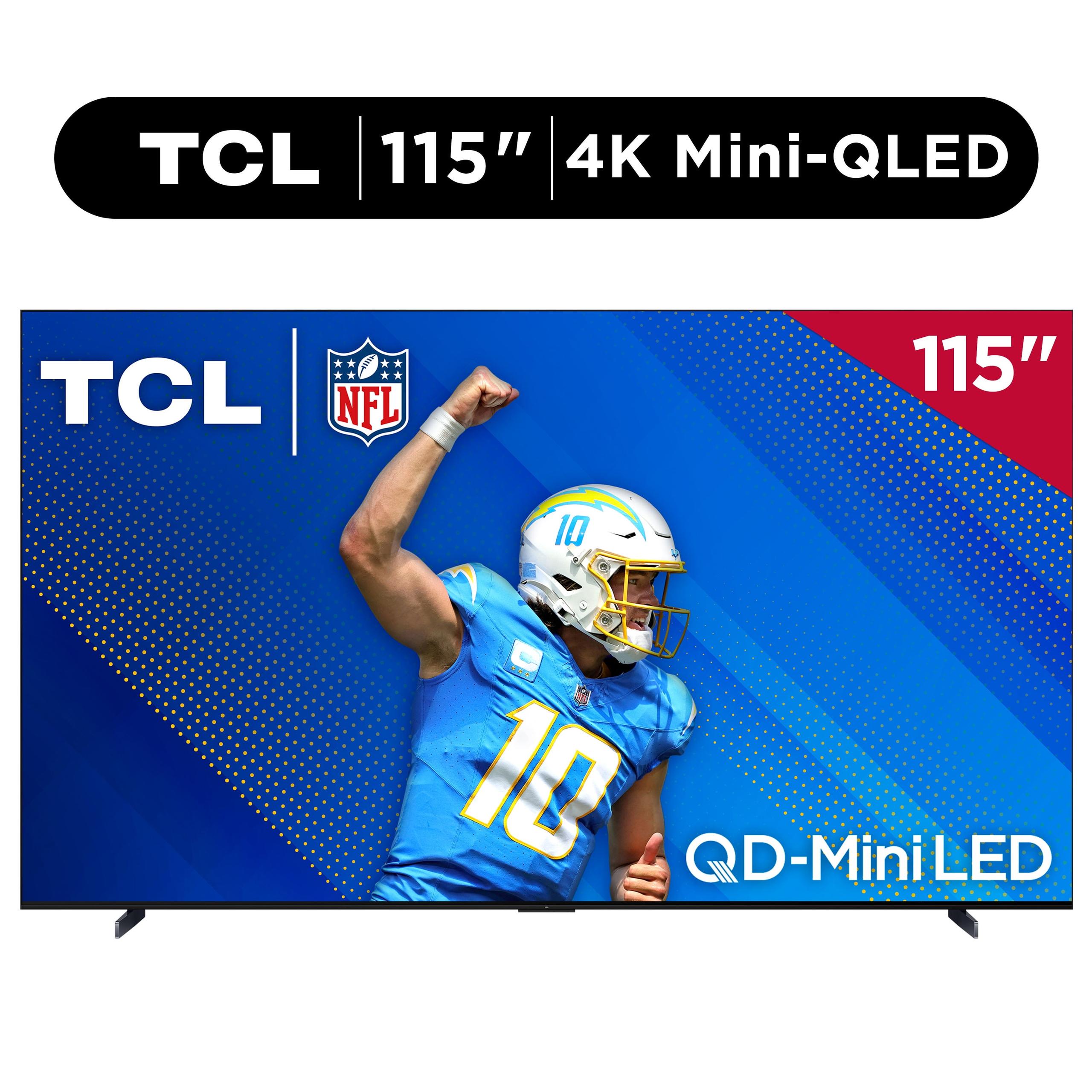


When you're shopping for a massive TV that'll transform your living room into a home theater, TCL offers two compelling but very different options. The TCL 98-Inch QM6K QLED TV at $1,999.99 represents incredible value in the large format space, while the TCL 115" QM8 Series 4K UHD Smart Google TV at $16,999.00 aims for the absolute premium experience. Both use advanced mini-LED technology, but they take surprisingly different approaches to get there.
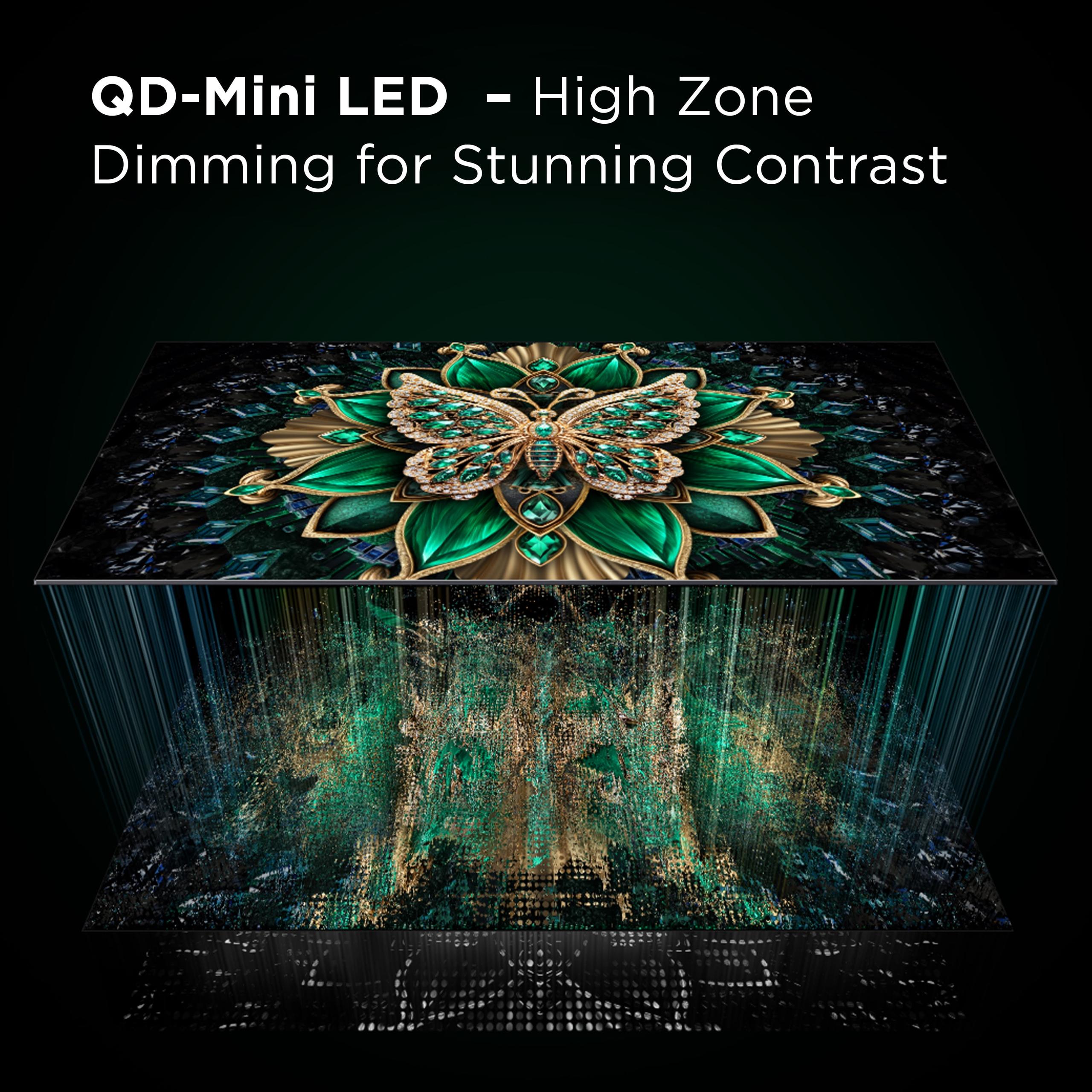
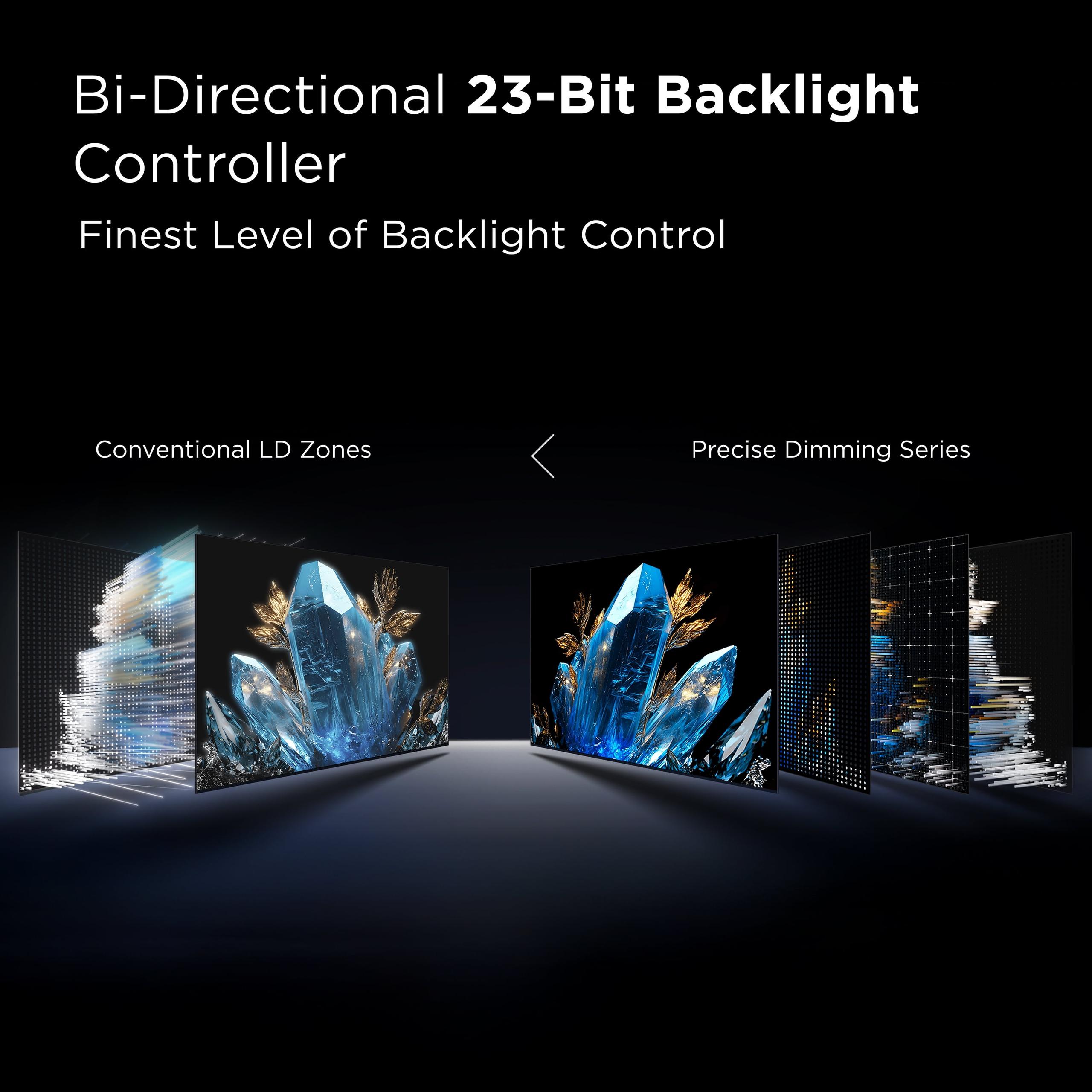
Before diving into the comparison, let's talk about what makes these TVs special. Mini-LED technology uses thousands of tiny LEDs behind the screen to create what's called "local dimming zones." Think of it like having individual dimmer switches for different parts of your TV screen – bright areas can be super bright while dark areas stay truly dark. This creates much better contrast than regular LED TVs, where the entire backlight had to compromise between bright and dark scenes.
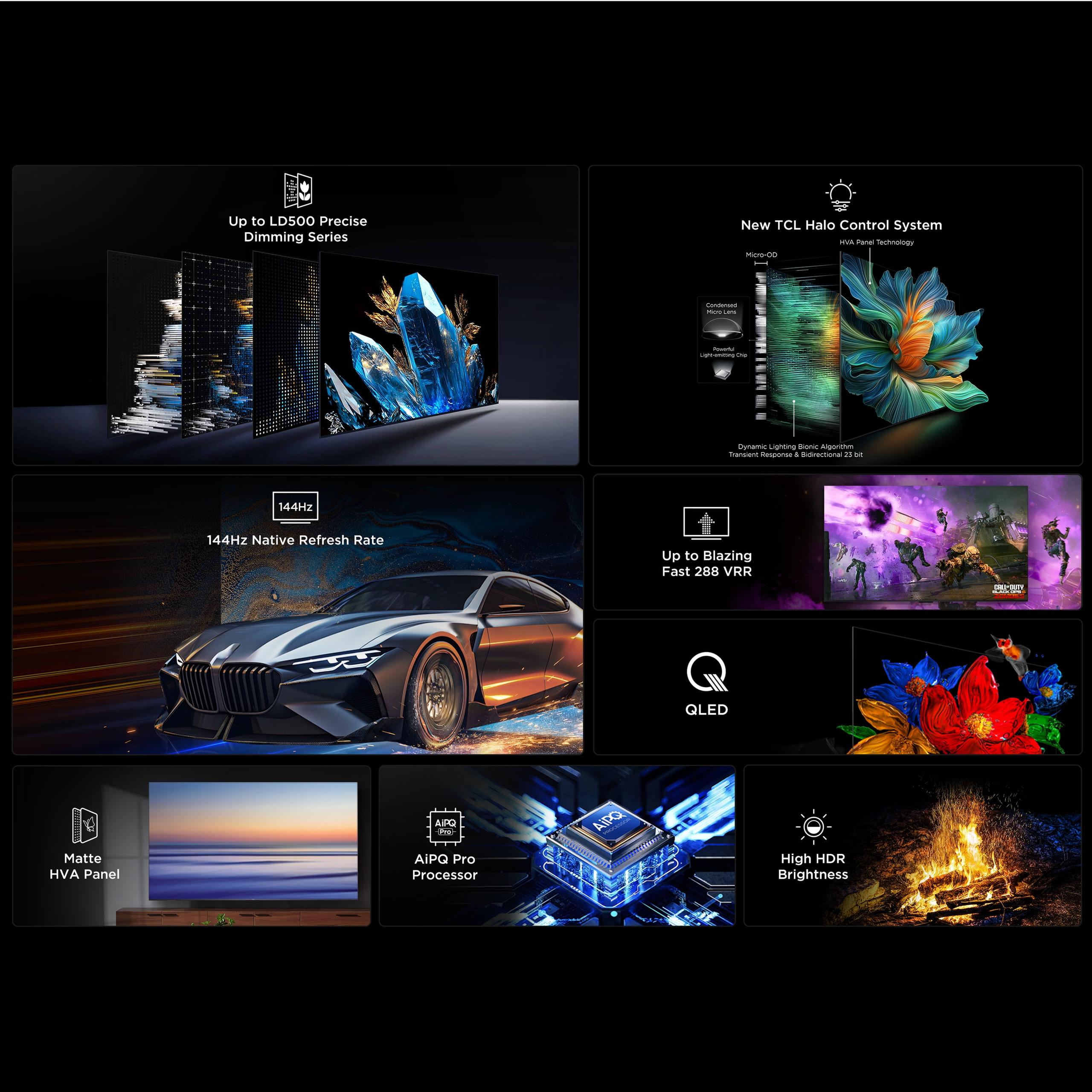
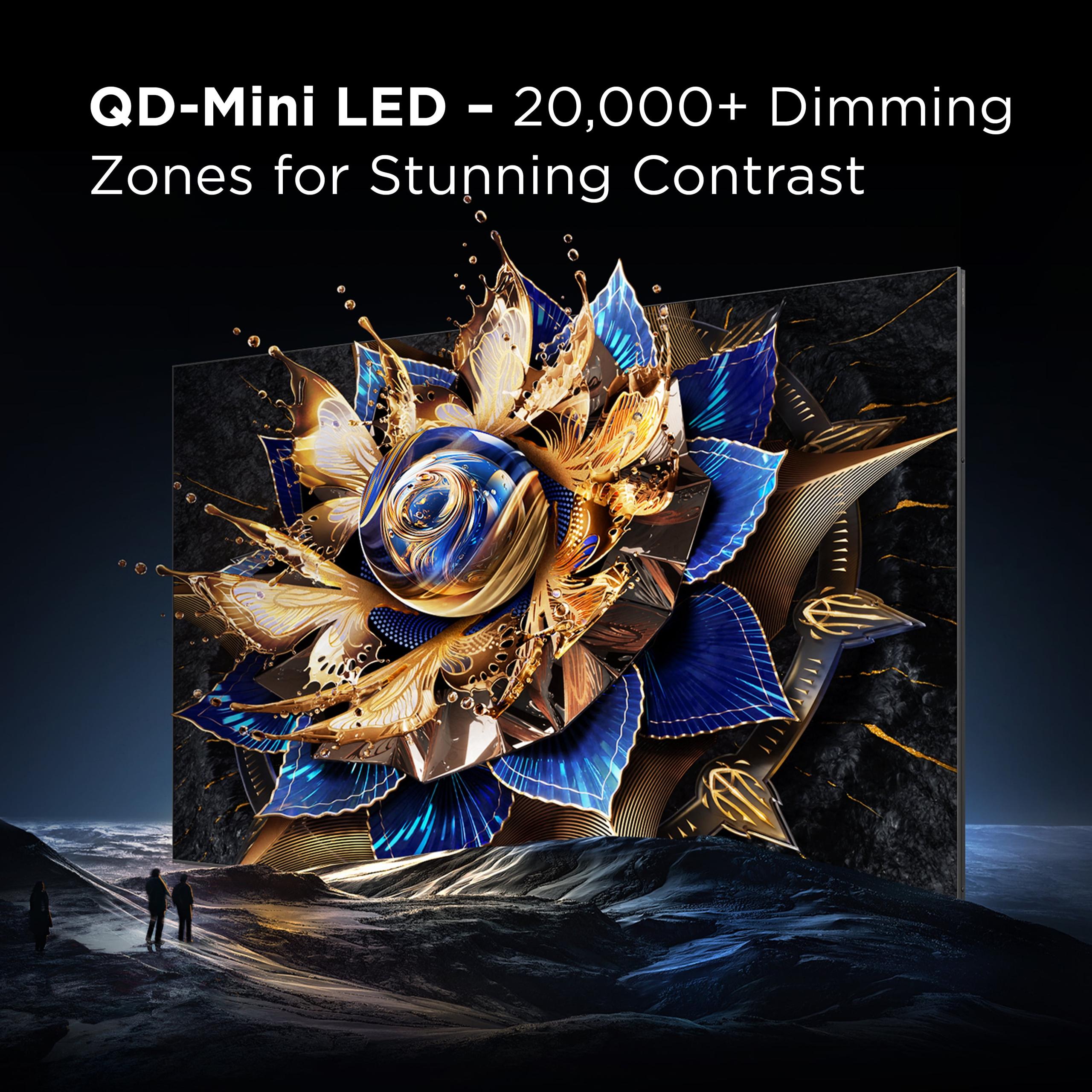
The QM6K uses 500 of these dimming zones, while the QM8 cranks that up to an impressive 20,000 zones. More zones generally mean better picture quality, but as we'll see, it's not the whole story.
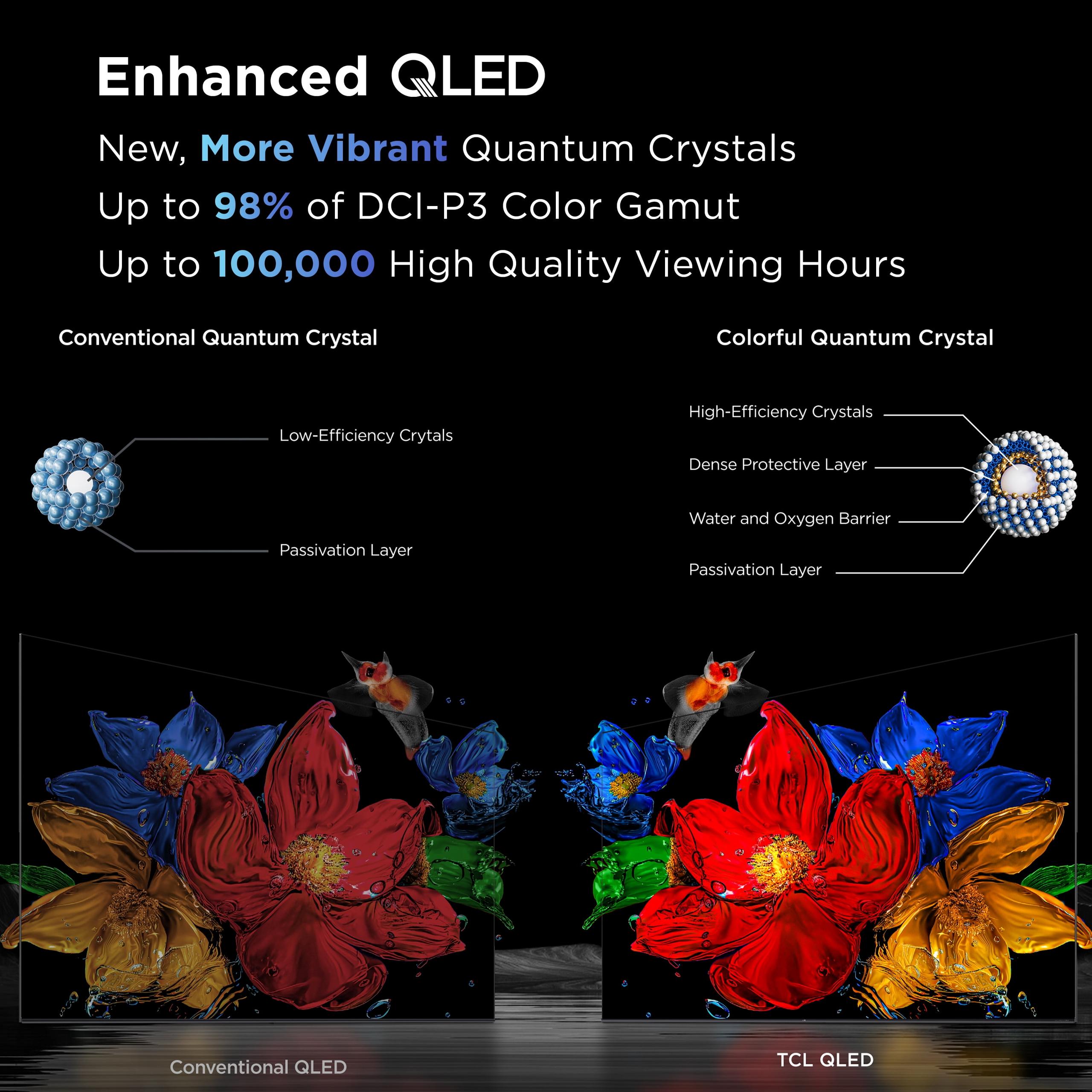
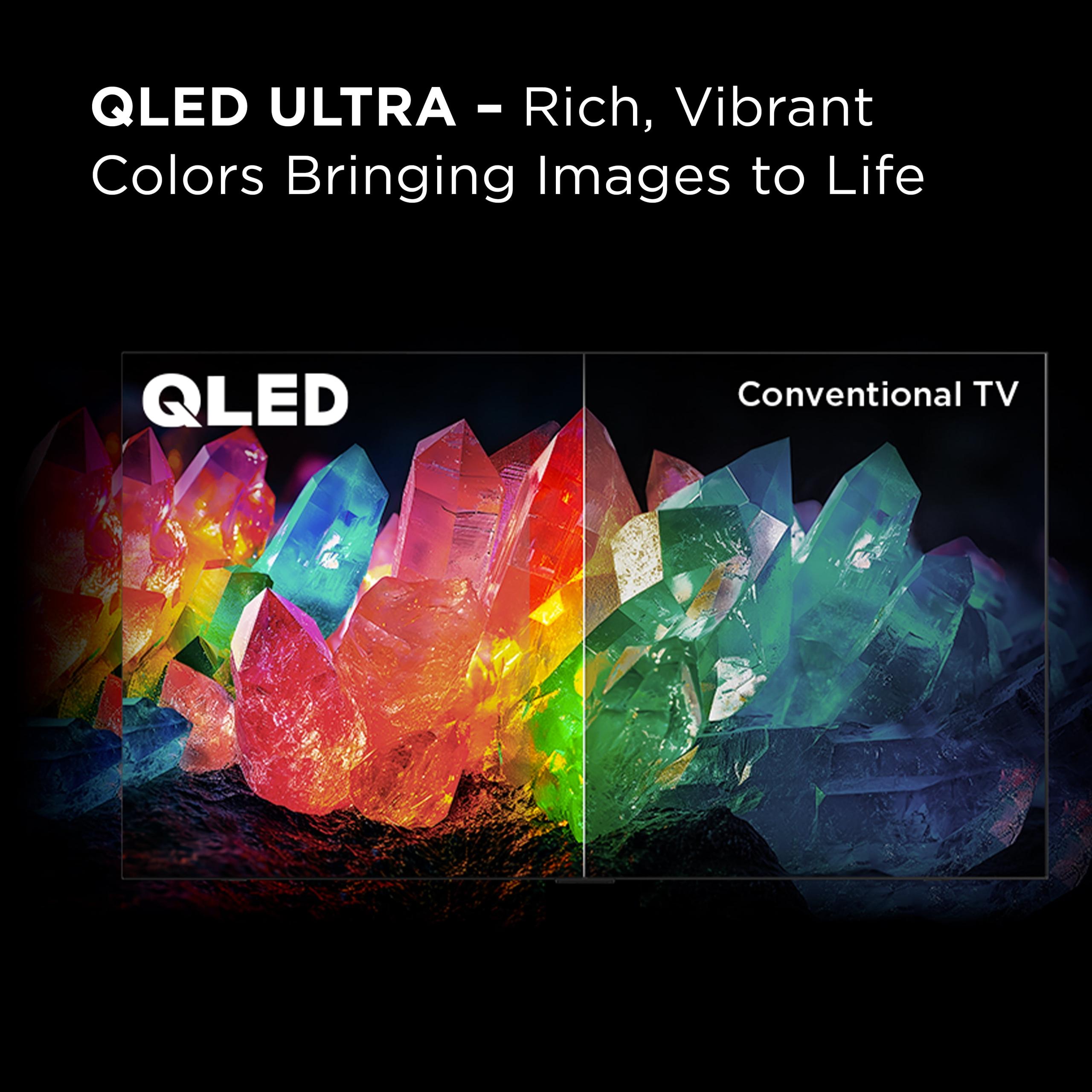
Both TVs also use quantum dot technology (that's what the "Q" stands for in QLED). Quantum dots are microscopic particles that help produce more accurate, vibrant colors when light hits them. It's like having a more sophisticated color filter that can create a wider range of colors than traditional LCD displays.
The TCL 98-Inch QM6K launched in 2025 as part of TCL's latest generation, representing the company's efforts to bring premium features to more affordable price points. At under $2,000 for a 98-inch display with modern gaming features, it's positioned as a value champion.
The TCL 115" QM8 arrived in 2023-2024 as TCL's flagship offering, originally priced at nearly $27,000 before dropping to its current $16,999 price point. This timing difference is important – the QM6K benefits from newer processing technology and manufacturing improvements that have occurred since the QM8's launch.
What's particularly interesting is how TCL has evolved their approach. The QM8 represents their "throw everything at the wall" premium strategy, while the QM6K shows they've learned to optimize specific features that matter most to users, especially gamers and people with bright living rooms.
Here's where these TVs show their biggest difference. The QM8's 20,000 local dimming zones create an almost OLED-like experience when it comes to contrast. When you're watching a movie with a night scene, individual stars can shine brightly while the space around them stays inky black. It's genuinely impressive – I've seen people mistake well-configured mini-LED displays for OLED panels in dark room demonstrations.
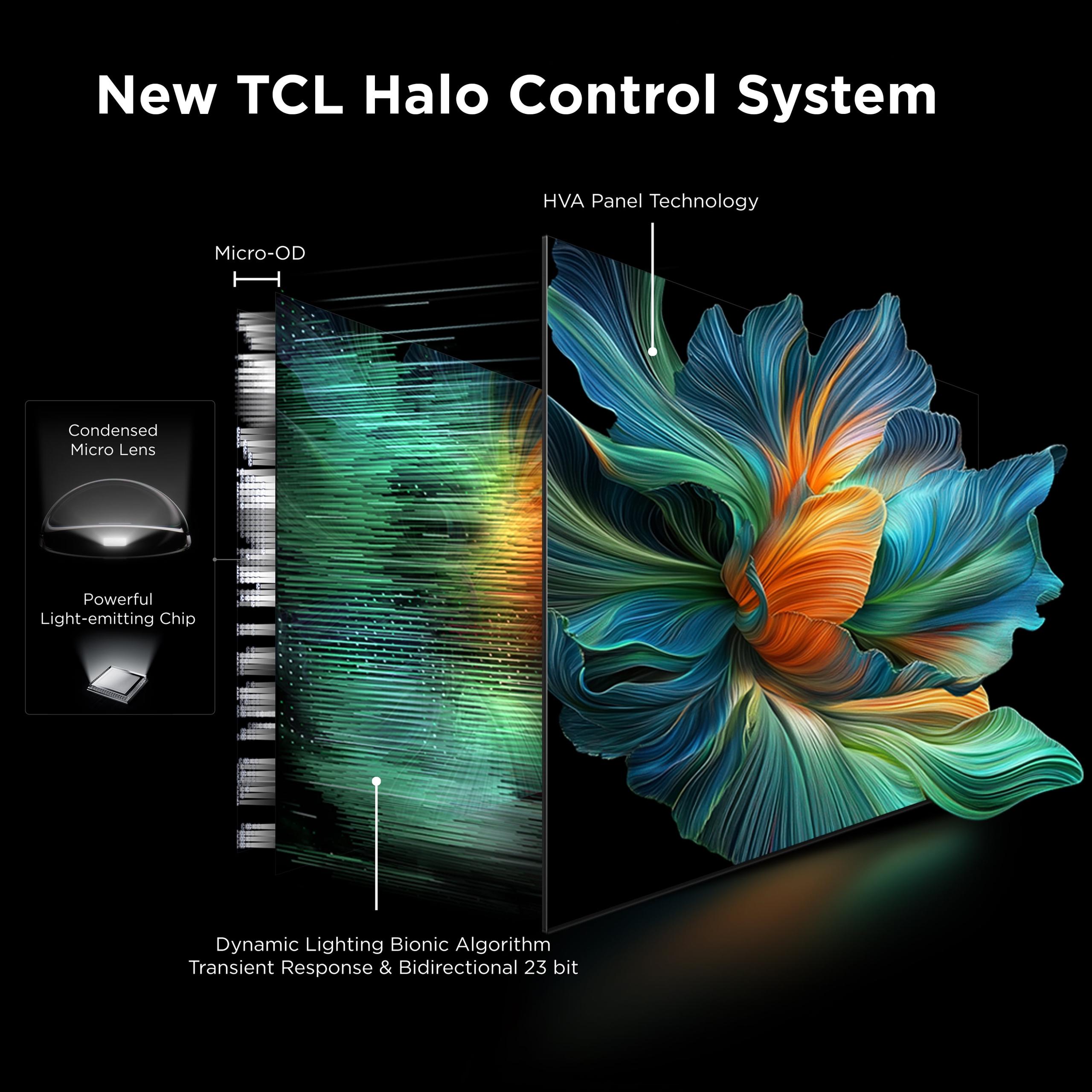
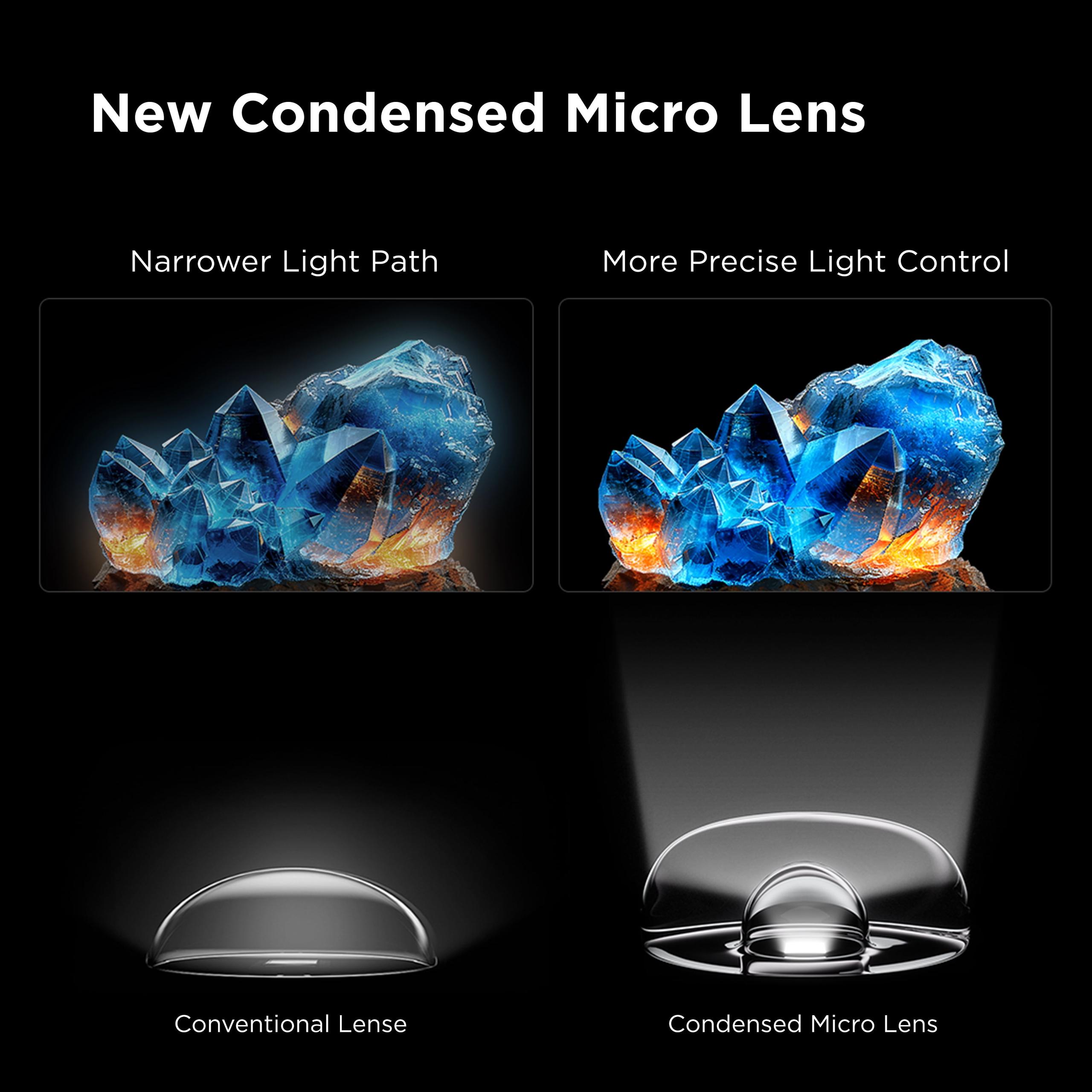
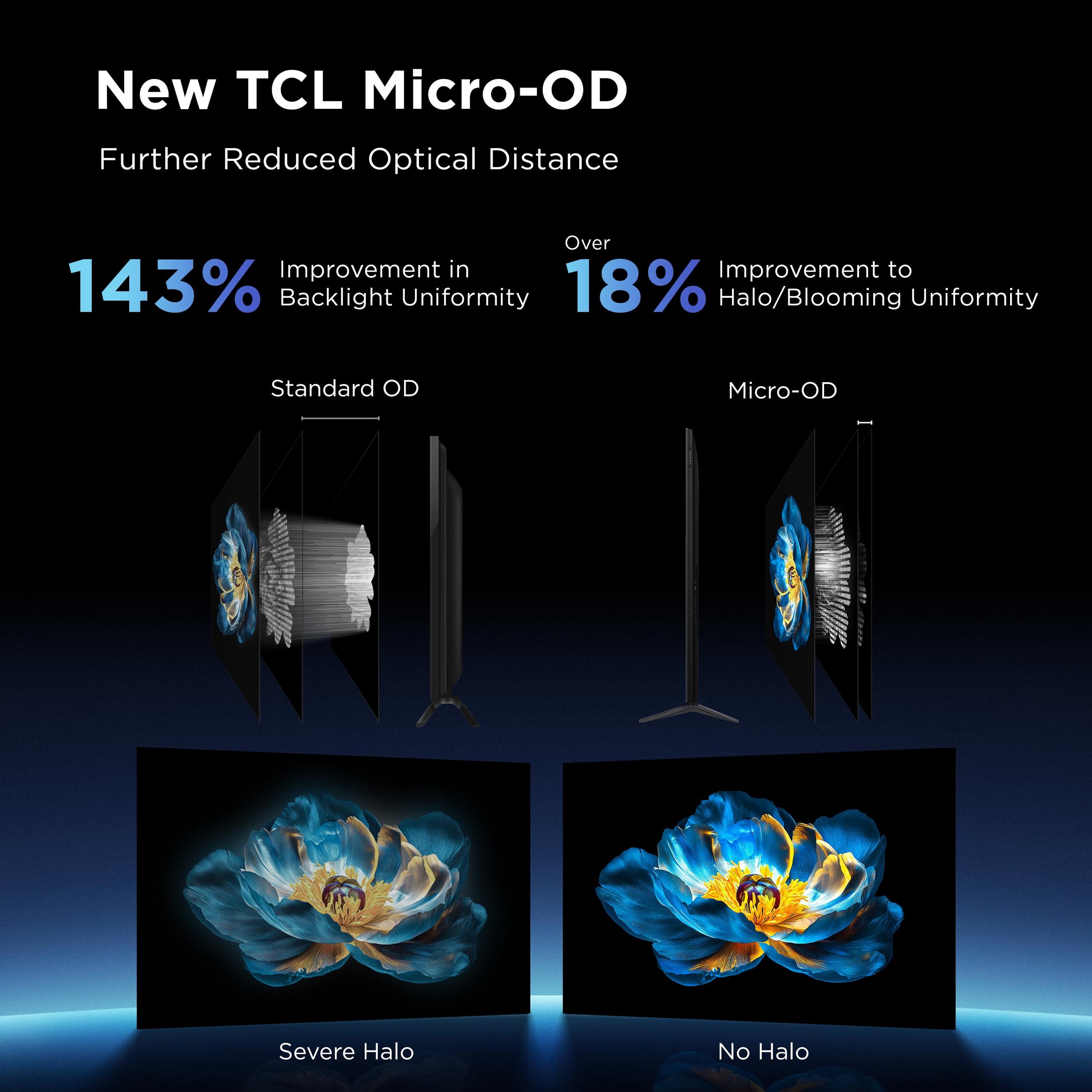
The QM6K, with its 500 zones, can't quite match that precision. You'll notice some "blooming" – that's when bright objects seem to have a subtle halo of light around them in dark scenes. TCL has worked hard to minimize this with their "Halo Control" technology, reportedly reducing blooming by 85-90% compared to their previous generation TVs. In practice, this means blooming is noticeable if you're looking for it, but it rarely distracts from normal viewing.
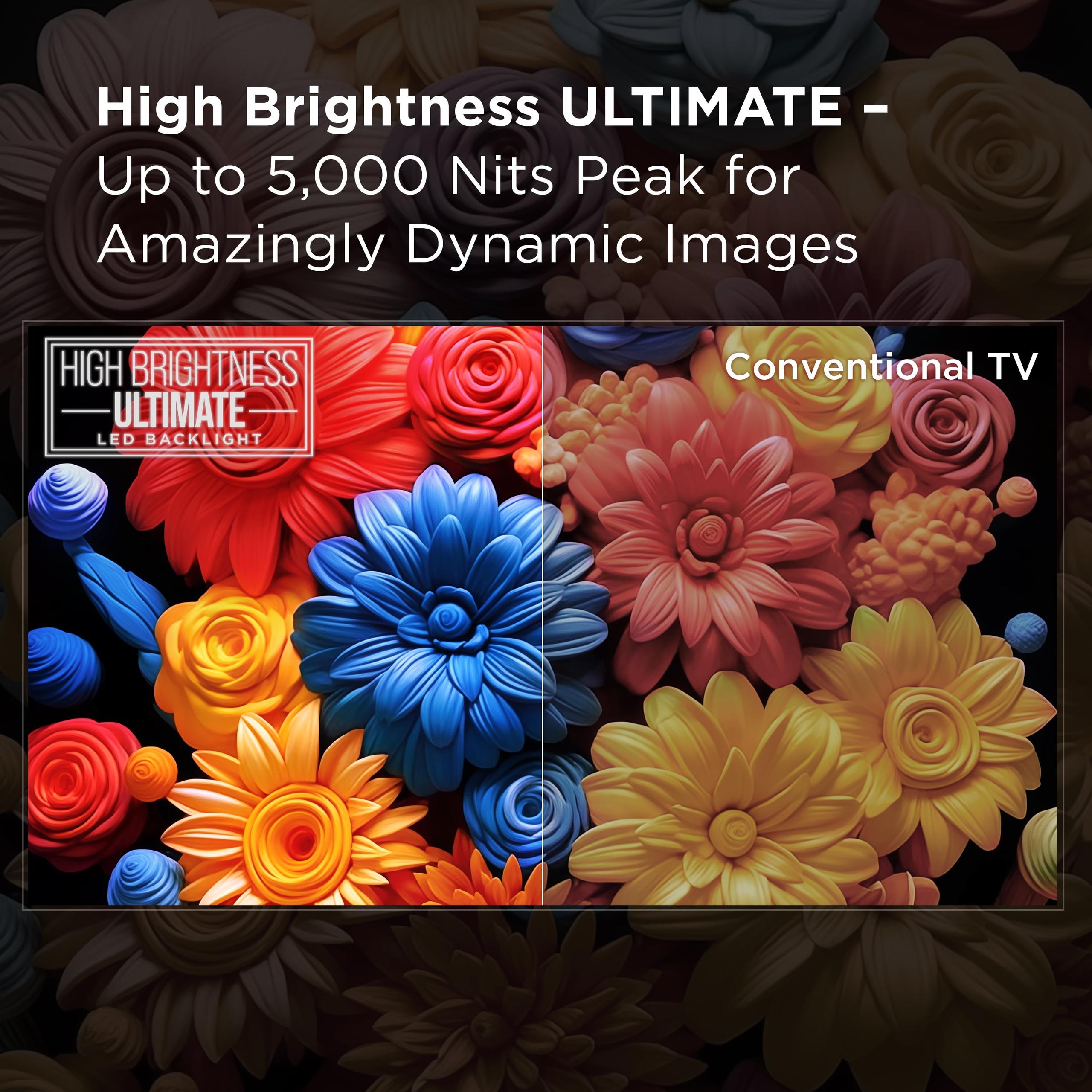
This is where the QM8 truly shines – literally. With peak brightness reaching 5,000 nits in small highlights, it can make HDR content look spectacular. When a character opens a door to bright sunlight, or lightning flashes across the screen, the impact is dramatic. Real sunlight peaks around 10,000 nits, so 5,000 nits gets you halfway to that realistic brightness level.
The QM6K tops out around 900 nits, which sounds like a huge difference, and for HDR content, it is. However, for regular TV shows and movies (SDR content), 900 nits is actually quite good. It's bright enough to look great in most room conditions, and the anti-glare coating helps it perform better than many brighter TVs in rooms with lots of windows.
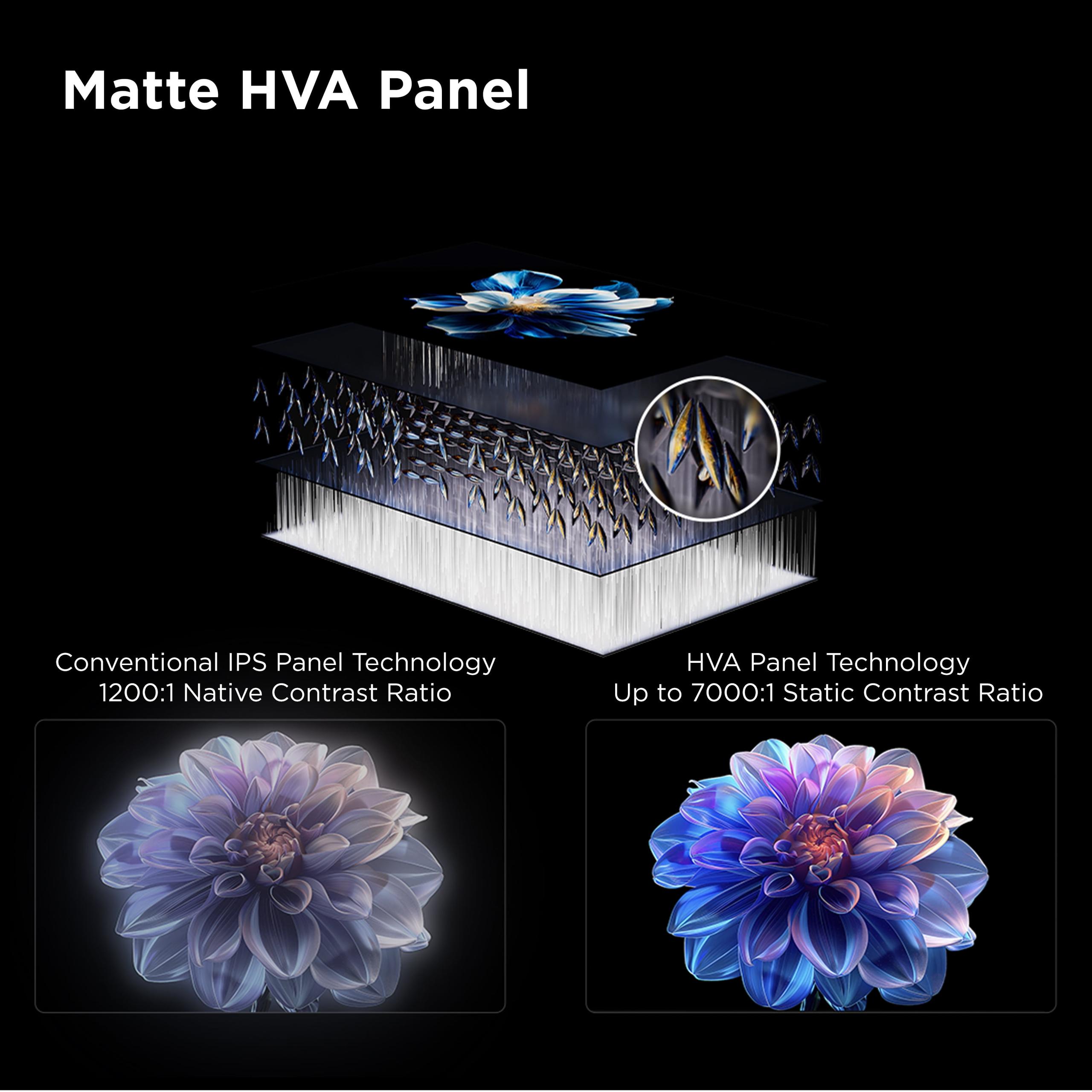
Speaking of bright rooms, this is where the QM6K has a secret weapon. Its Matte HVA panel includes an anti-glare coating that's genuinely effective. If you've ever tried to watch TV with afternoon sun streaming through your windows, you know how frustrating reflections can be. The QM6K's coating diffuses these reflections, making it much more usable in bright environments.
The QM8 uses a standard glossy screen that can look stunning in controlled lighting but becomes nearly unwatchable with significant ambient light. This difference alone might determine which TV works better in your specific room.
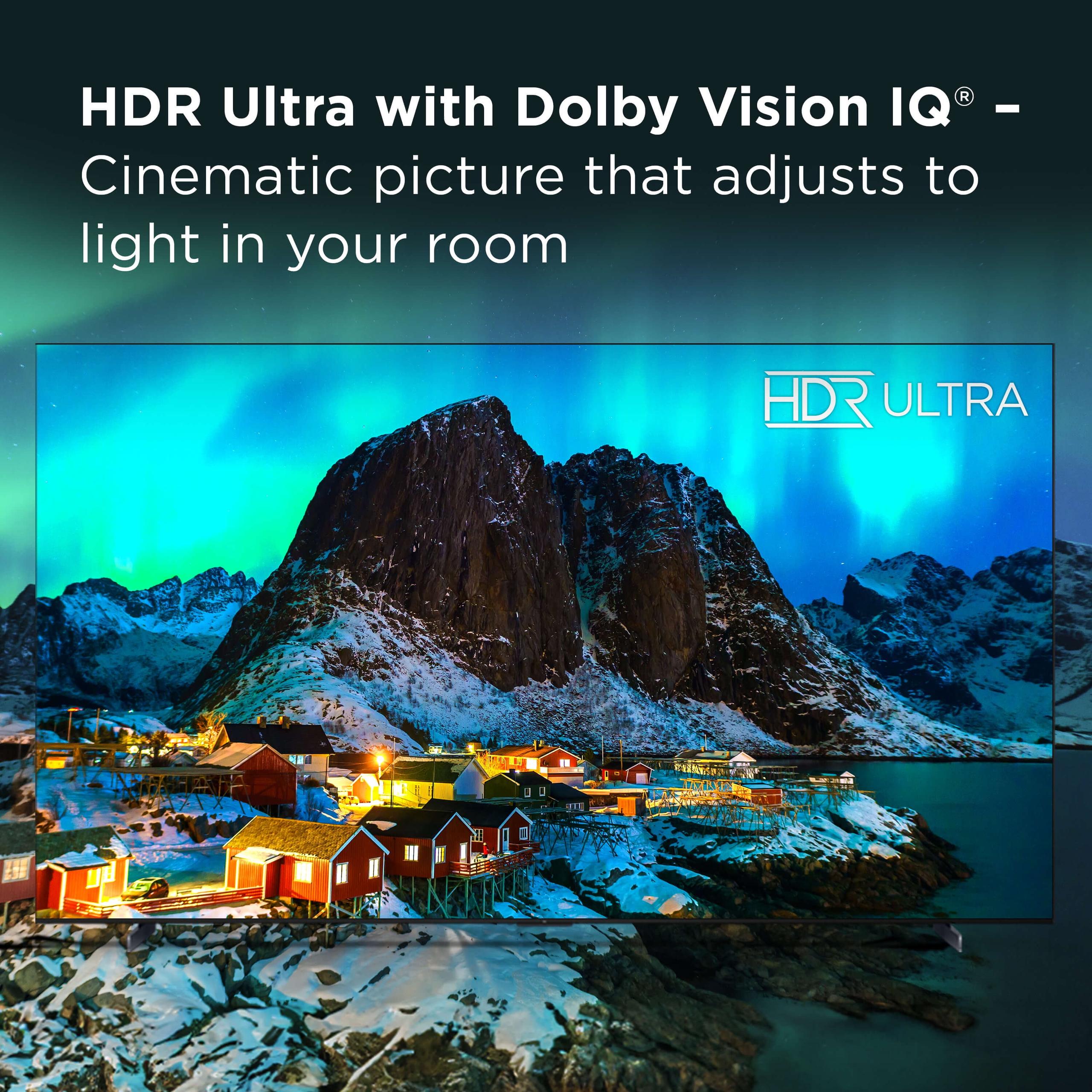
Both TVs excel at color reproduction, but in slightly different ways. The QM6K covers about 93% of the DCI-P3 color space (that's the standard used for digital movies), producing vibrant, accurate colors right out of the box. The QM8 covers nearly the complete DCI-P3 space and, thanks to its higher brightness, can display a larger "color volume" – basically, it can show those colors at more brightness levels.
In practical terms, both TVs will make your Netflix shows look great, but the QM8 has more headroom for truly spectacular HDR content when the source material supports it.
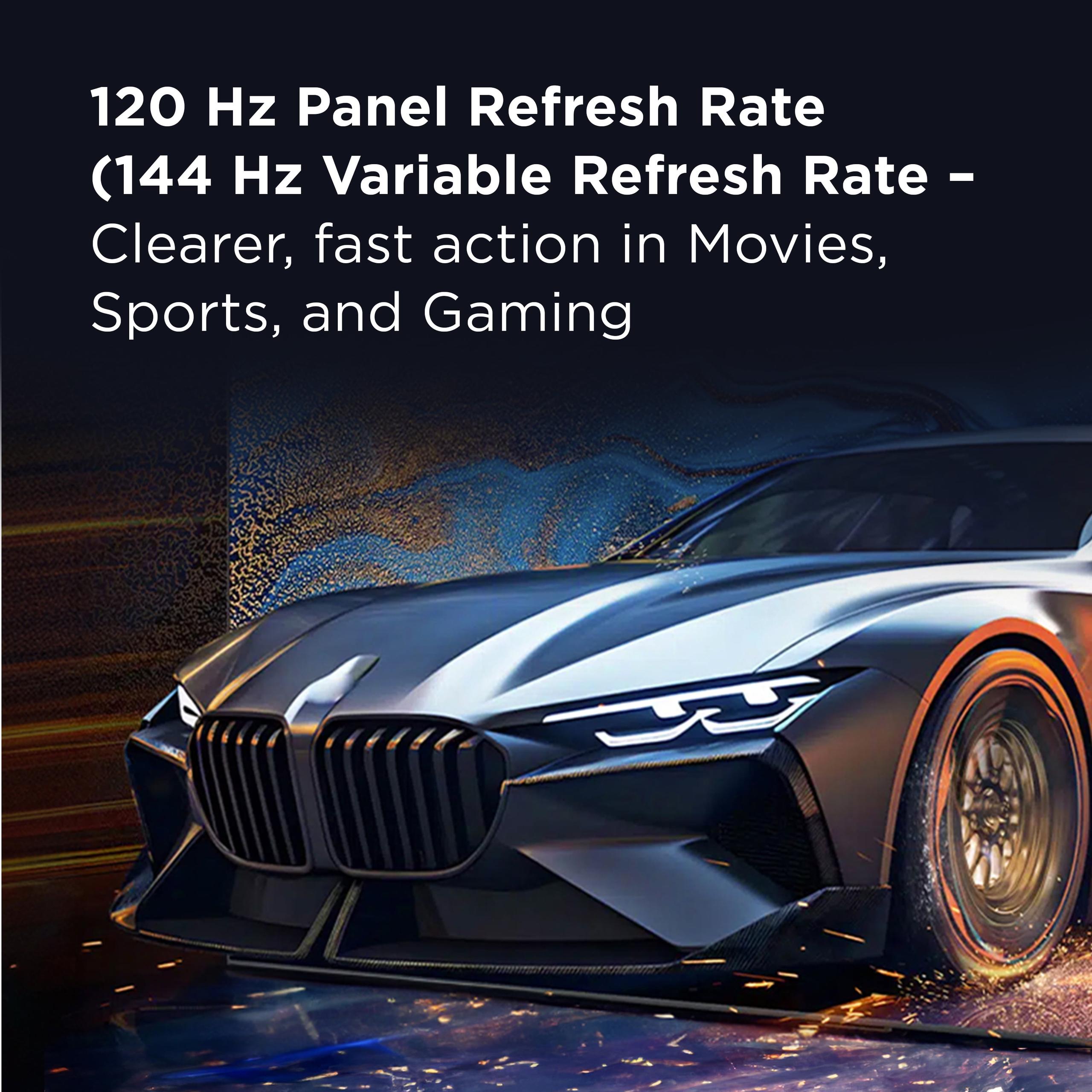
Modern gaming demands high refresh rates, and both TVs deliver, but the QM6K takes it further. It supports 4K gaming at 144Hz and can push 1080p content up to 288Hz with its Game Accelerator technology. For context, most TVs max out at 120Hz, and many gaming monitors top out at 144Hz, so the QM6K is genuinely cutting-edge.
The QM8 supports 4K at 120Hz with variable refresh rate up to 144Hz, which is still excellent but not quite as gaming-focused as the QM6K's implementation.
Input lag – the delay between pressing a button and seeing the result on screen – is crucial for competitive gaming. The QM6K achieves around 14ms of input lag, which is competitive with dedicated gaming monitors. The QM8 is slightly higher due to its more complex image processing, though still very playable.
Both TVs support Auto Game Mode (ALLM), which automatically switches to low-lag settings when it detects a gaming console. The QM6K also includes AMD FreeSync Premium Pro, which synchronizes the TV's refresh rate with your graphics card to eliminate screen tearing – a feature that serious PC gamers will appreciate.
The QM6K provides two HDMI 2.1 ports capable of handling those high refresh rates, plus two HDMI 2.0 ports for older devices. One port includes eARC (enhanced Audio Return Channel) for sending high-quality audio to a soundbar or receiver.
The QM8 offers four HDMI inputs with eARC support, giving you more flexibility for multiple gaming consoles, streaming devices, and audio equipment.
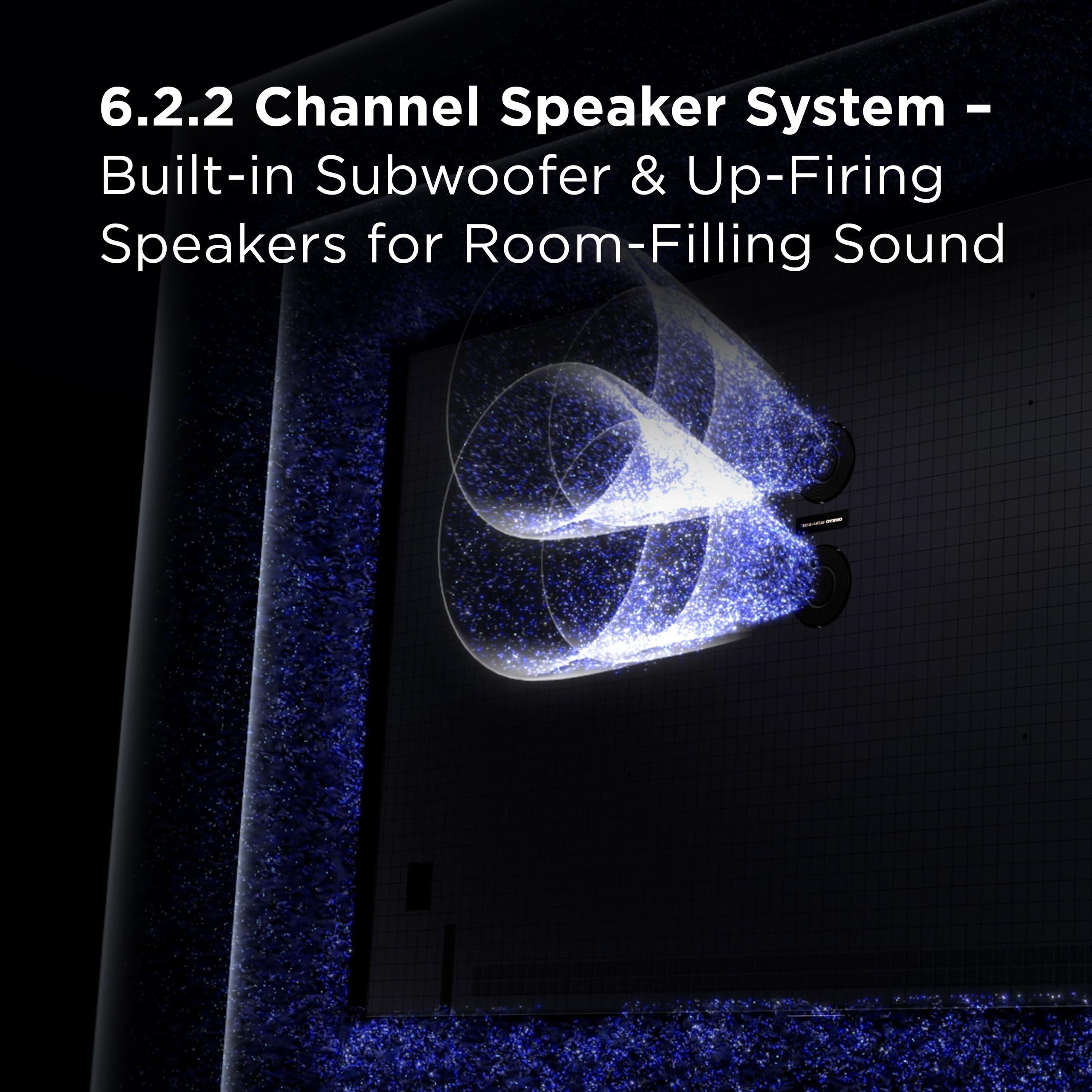
This might be the biggest practical difference between these TVs. The QM8 includes a sophisticated Onkyo 6.2.2 speaker system with 120 watts of total power. It has dedicated subwoofers, surround speakers, and even up-firing speakers for Dolby Atmos effects. While it won't match a dedicated home theater system, it's genuinely impressive for built-in TV audio.
The QM6K uses a basic 2.1 Onkyo system that, while decent, really needs a soundbar to shine. For a 98-inch TV, the built-in speakers feel inadequate for the scale of the display. Budget an extra $300-800 for a quality soundbar if you choose the QM6K.
Both TVs run Google TV, which I find to be one of the better smart TV platforms. It aggregates content from different streaming services, offers good voice control, and gets regular updates. The QM6K runs a newer version (Google TV 12) with some interface improvements and better performance.
For future-proofing, the QM6K includes Wi-Fi 6 and an ATSC 3.0 tuner for next-generation over-the-air broadcasts. These features ensure the TV will work well with future technologies and network standards.
If you're building a dedicated home theater, the room environment becomes crucial. The QM8 excels in controlled lighting environments where you can minimize ambient light. Its superior contrast and brightness create a more cinematic experience that justifies the premium price for serious movie enthusiasts.
However, if your "home theater" is really your living room with windows and ambient lighting, the QM6K's anti-glare coating might actually provide a better viewing experience despite its lower peak brightness.
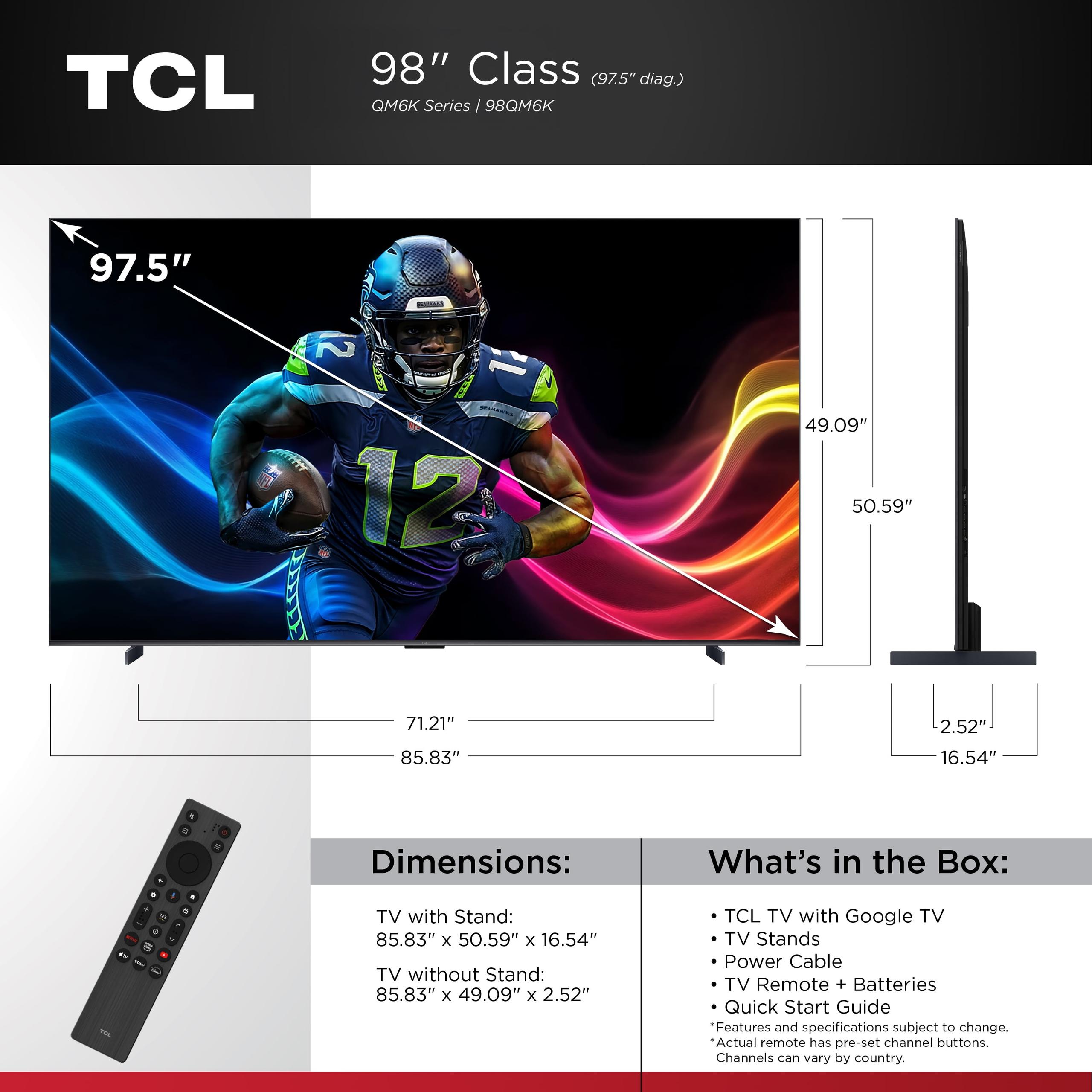
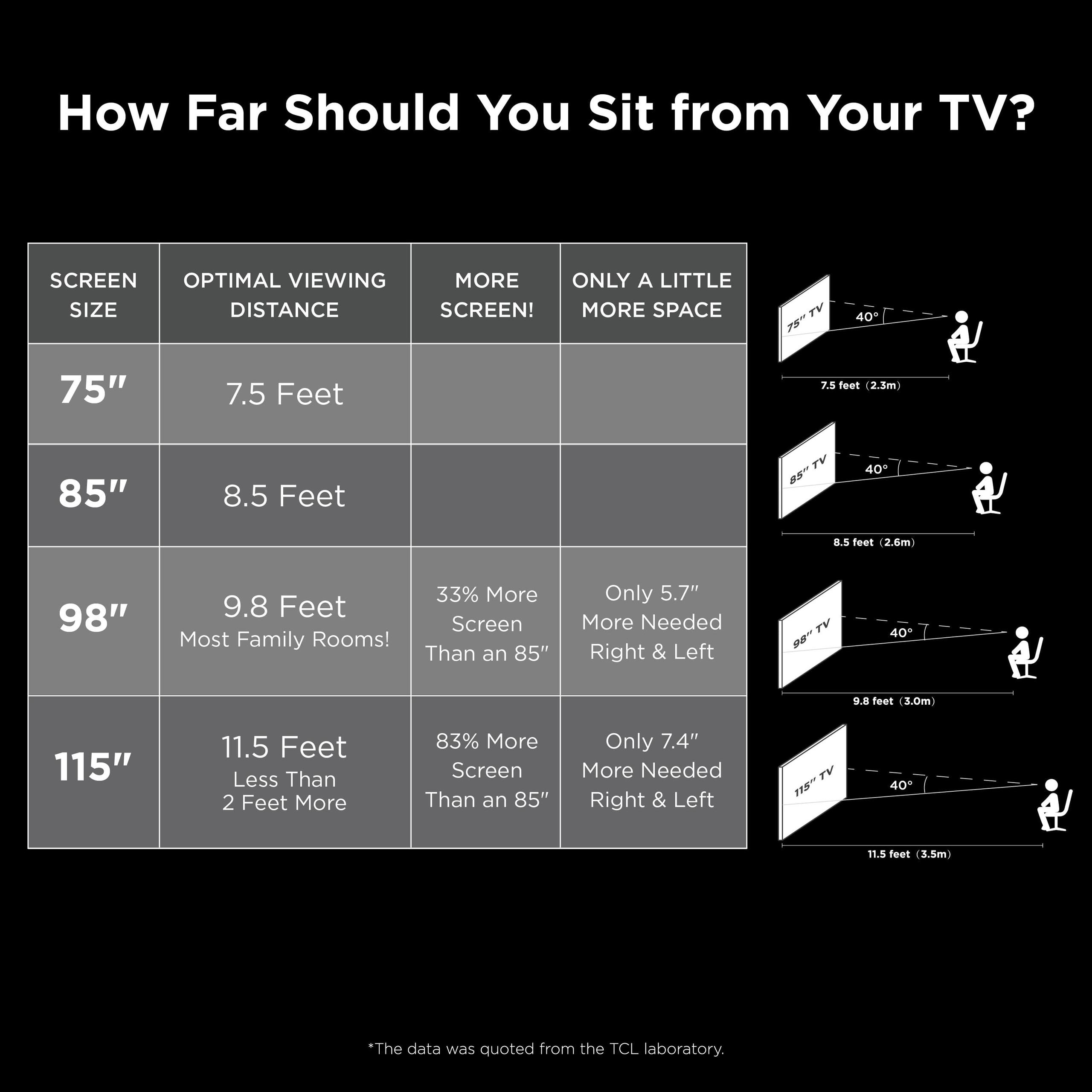
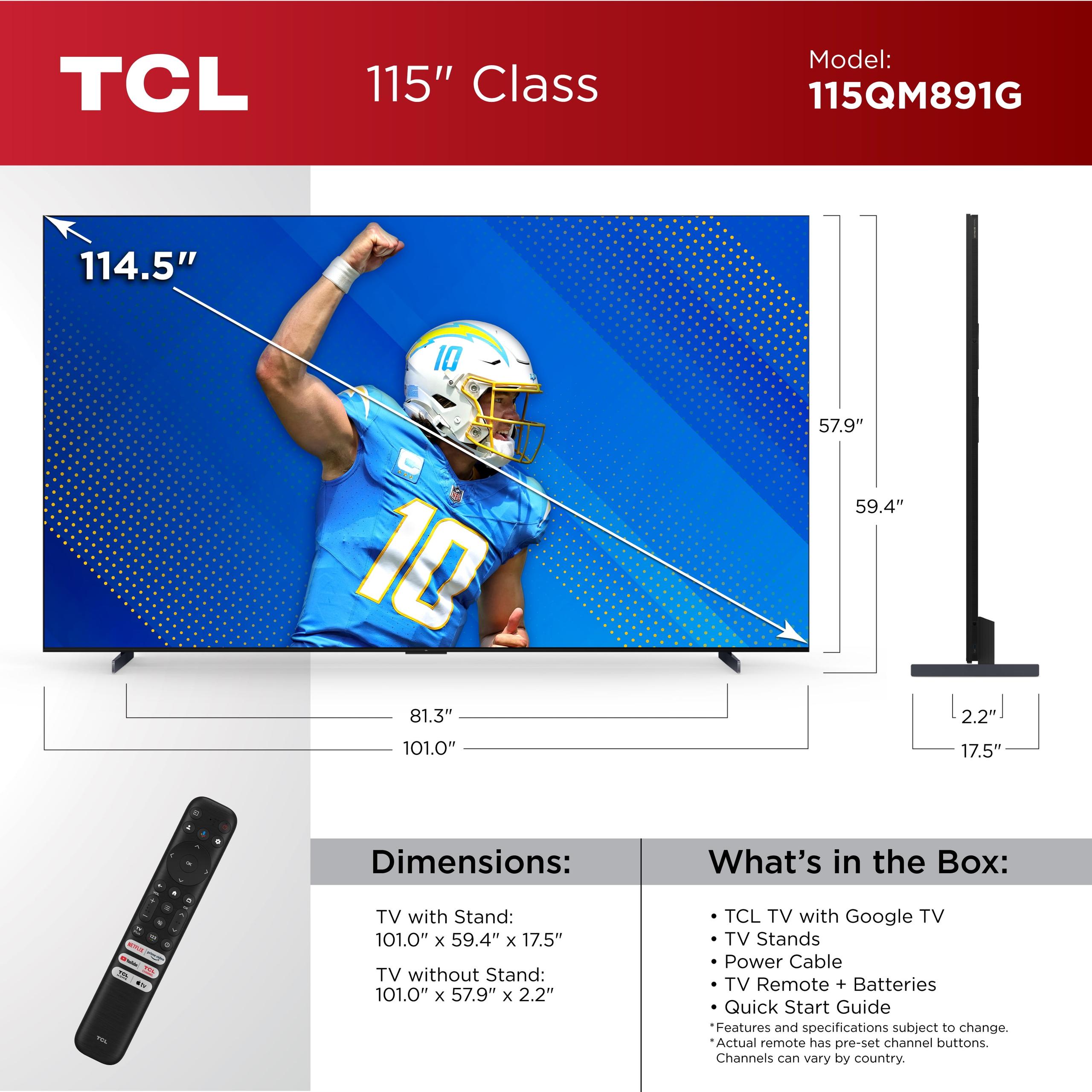
Size matters too. The QM8's 115-inch screen requires serious space – you'll want to sit at least 9-10 feet away for comfortable viewing. The QM6K's 98-inch size is more manageable in typical home environments while still providing that wall-filling experience.
At $1,999.99, the QM6K offers remarkable value. You're getting a massive, modern TV with excellent gaming features and good picture quality for less than many 75-inch premium TVs cost. Even adding a $500 soundbar keeps your total investment under $2,500.
The QM8's $16,999 price tag puts it in luxury territory. You're paying for those 20,000 dimming zones, 5,000-nit brightness, and premium audio system. It's genuinely impressive technology, but you need to really value that level of performance to justify the 8.5x price difference.
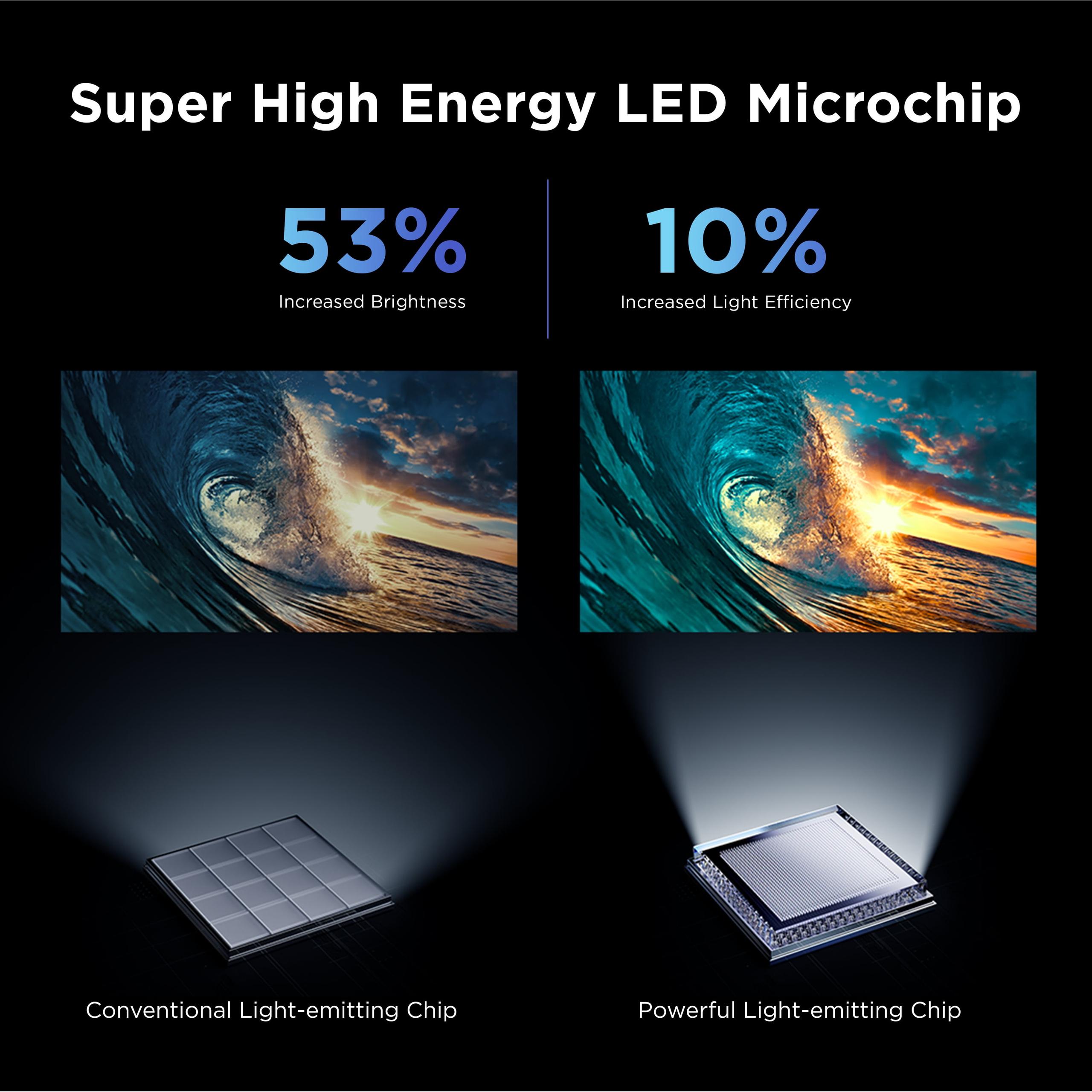
The QM6K introduces TCL's "Super High Energy LED Chip" technology, which provides 53% more brightness while using 10% less power than previous generations. This efficiency improvement helps explain how they achieve good brightness at a lower price point.
The QM8 uses "QD-Mini LED ULTIMATE" technology with advanced algorithms for controlling those 20,000 zones. The processing power required to manage that many dimming zones in real-time is substantial – it's like having a powerful computer dedicated just to optimizing your picture quality.
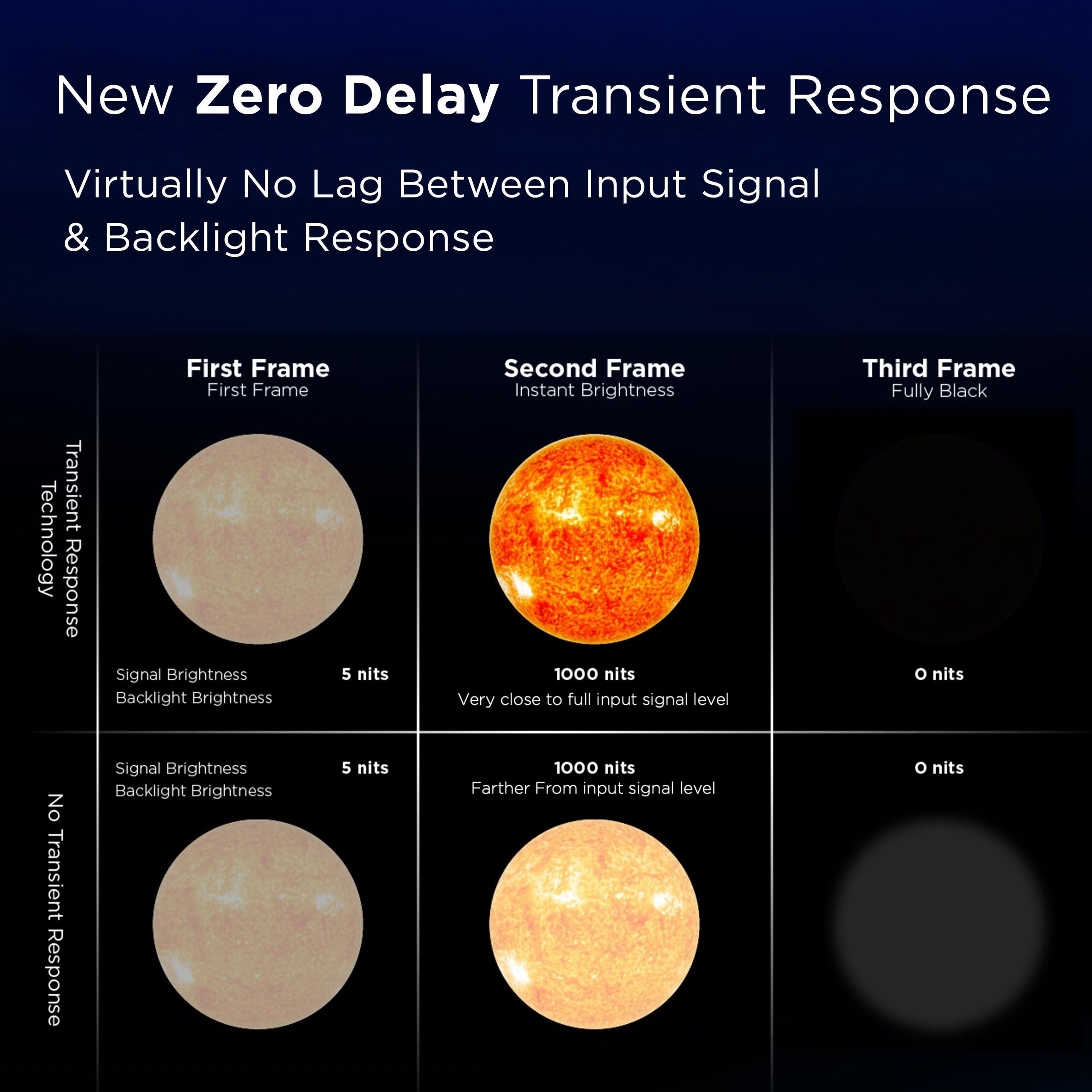
Both TVs include TCL's AIPQ processors, which use artificial intelligence to analyze each scene and optimize settings automatically. This means less time fiddling with picture settings and more time enjoying content.
Choose the TCL 98-Inch QM6K if you want maximum value from a large format TV, especially if gaming is important to you or if your room has significant ambient light. The anti-glare coating and gaming features make it incredibly practical, and the price leaves room in your budget for a good soundbar and other accessories.
Go with the TCL 115" QM8 if you're building a premium home theater in a controlled environment and want the absolute best picture quality TCL offers. The superior contrast, brightness, and built-in audio system justify the premium if you have the budget and the right room for it.
Honestly, both TVs represent impressive achievements in display technology, just aimed at different buyers. The QM6K proves that great picture quality doesn't require luxury pricing, while the QM8 shows what's possible when cost is less of a constraint. Your room, usage patterns, and budget will determine which approach works better for your situation.
The TV market moves fast, but both of these displays should serve you well for many years. The QM6K's gaming features and the QM8's display quality represent genuine advances over what was available just a few years ago, making either choice a solid investment in your home entertainment future.
| TCL 98-Inch QM6K QLED TV | TCL 115" QM8 Series 4K UHD Smart Google TV |
|---|---|
| Price - Major cost difference for similar core functionality | |
| $1,999.99 | $16,999.00 |
| Screen Size - Both deliver wall-filling experience but require different room sizes | |
| 98 inches (ideal for 8-12 foot viewing distance) | 115 inches (needs 10+ foot viewing distance) |
| Local Dimming Zones - Critical for contrast and preventing light blooming | |
| 500 zones (noticeable blooming but good value) | 20,000 zones (near-OLED contrast quality) |
| Peak Brightness - Determines HDR impact and room suitability | |
| ~900 nits (adequate HDR, excellent for bright rooms with anti-glare) | 5,000 nits (spectacular HDR highlights, requires controlled lighting) |
| Gaming Refresh Rate - Important for console and PC gaming | |
| 4K @ 144Hz, 1080p @ 288Hz with VRR | 4K @ 120Hz with 144Hz VRR |
| Input Lag - Critical for competitive gaming responsiveness | |
| ~14ms (excellent for gaming) | Slightly higher due to processing |
| Anti-Glare Technology - Crucial for rooms with windows or ambient light | |
| Matte HVA panel with effective anti-glare coating | Standard glossy panel (poor in bright rooms) |
| Built-in Audio - Determines if you need additional sound equipment | |
| Basic 2.1 Onkyo system (soundbar recommended) | Premium Onkyo 6.2.2 with subwoofers and Atmos |
| Release Year - Affects available technology and features | |
| 2025 (latest processing and efficiency improvements) | 2023-2024 (mature flagship technology) |
| HDMI Connectivity - Important for multiple gaming consoles and devices | |
| 2x HDMI 2.1 (144Hz), 2x HDMI 2.0, eARC support | 4x HDMI with eARC (more device flexibility) |
| Smart TV Platform - Affects user experience and app performance | |
| Google TV 12 (latest version with improved performance) | Google TV (slightly older version) |
| Best Use Case - Where each TV excels | |
| Gaming-focused, bright rooms, value seekers | Premium home theater, controlled lighting, luxury buyers |
The TCL 98-Inch QM6K QLED TV at $1,999.99 provides exceptional value, offering 98 inches of premium mini-LED technology at a fraction of the cost of comparable TVs. The TCL 115" QM8 Series at $16,999.00 is a luxury purchase with superior display quality but costs 8.5 times more. For most buyers, the QM6K delivers 80% of the performance at 12% of the price.
The biggest difference is contrast and brightness. The TCL 115" QM8 features 20,000 local dimming zones and 5,000 nits peak brightness, creating near-OLED contrast with spectacular HDR highlights. The TCL 98-Inch QM6K has 500 dimming zones and 900 nits brightness, which is still excellent but can't match the QM8's dramatic contrast in dark scenes.
The TCL 98-Inch QM6K QLED TV is specifically optimized for gaming with 4K @ 144Hz, 1080p @ 288Hz refresh rates, ~14ms input lag, and AMD FreeSync Premium Pro support. While the TCL 115" QM8 offers good gaming performance at 4K @ 120Hz, it lacks the gaming-focused optimizations that make the QM6K ideal for serious gamers.
The TCL 98-Inch QM6K excels in bright rooms thanks to its anti-glare Matte HVA panel that effectively reduces reflections. The TCL 115" QM8 Series uses a standard glossy screen that becomes difficult to watch with significant ambient light, making it better suited for controlled lighting environments or dedicated home theaters.
The TCL 115" QM8 includes a premium Onkyo 6.2.2 speaker system with 120W power, subwoofers, and Dolby Atmos that sounds impressive for built-in TV audio. The TCL 98-Inch QM6K QLED TV has basic 2.1 speakers that really benefit from adding a soundbar ($300-800) for the best experience with such a large screen.
For premium movie watching, the TCL 115" QM8 Series delivers superior performance with its 5,000 nits brightness and 20,000 dimming zones creating dramatic HDR highlights and deep blacks. The TCL 98-Inch QM6K provides good movie quality but with more modest HDR impact that won't match the cinematic experience of the QM8.
The TCL 98-Inch QM6K works well in rooms where you can sit 8-12 feet from the screen. The massive TCL 115" QM8 requires 10+ feet of viewing distance and substantial wall space. Consider your room size carefully - the QM8's size can be overwhelming in smaller spaces.
Both work for home theaters but in different ways. The TCL 115" QM8 Series is ideal for dedicated dark-room home theaters where its superior contrast and built-in premium audio shine. The TCL 98-Inch QM6K QLED TV works better for family room theaters with ambient light, though you'll want to add a soundbar for optimal audio.
The TCL 98-Inch QM6K runs the newer Google TV 12 with improved performance and includes Wi-Fi 6 plus ATSC 3.0 for future broadcast standards. The TCL 115" QM8 offers more HDMI ports (4 vs 4) but runs an older Google TV version. Both provide excellent smart TV experiences with similar app selection.
Both TVs represent TCL's premium construction, but the TCL 115" QM8 Series uses more advanced materials and components befitting its flagship status. The TCL 98-Inch QM6K QLED TV offers solid build quality optimized for its price point. Both should provide years of reliable service with proper care.
The TCL 98-Inch QM6K has advantages in future-proofing with its 2025 release date, newer processing technology, Wi-Fi 6, and advanced gaming features that align with current trends. The TCL 115" QM8, while older, uses premium display technology that will remain impressive for many years, though it may lack some newer connectivity standards.
Choose the TCL 98-Inch QM6K QLED TV if you want excellent large-screen performance, gaming features, and bright-room usability at an incredible value. Select the TCL 115" QM8 Series only if you have a dedicated home theater space, controlled lighting, and budget for a luxury display where the superior contrast and brightness justify the premium price.
We've done our best to create useful and informative comparisons to help you decide what product to buy. Our research uses advanced automated methods to create this comparison and perfection is not possible - please contact us for corrections or questions. These are the sites we've researched in the creation of this article: bestbuy.com - rtings.com - techradar.com - the-gadgeteer.com - youtube.com - youtube.com - ign.com - youtube.com - tomsguide.com - tcl.com - valueelectronics.com - bestbuy.com - bestbuy.com - rtings.com - circuitworldonline.com - youtube.com - tcl.com - bestbuy.com - tomsguide.com - tcl.com - flatpanelshd.com - displayspecifications.com - rtings.com - pcrichard.com - valueelectronics.com - cnet.com - youtube.com - rcwilley.com - greentoe.com - tcl.com - ezown.net - kingsgreatbuys.com - romomattressfurniture.com - abt.com

Privacy Policy
Terms and Conditions - Affiliate Policy
Home Security
© Copyright 2008-2026.
11816 Inwood Rd #1211, Dallas, TX 75244