

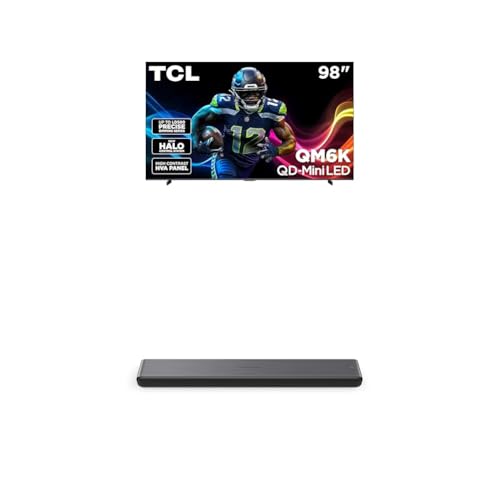
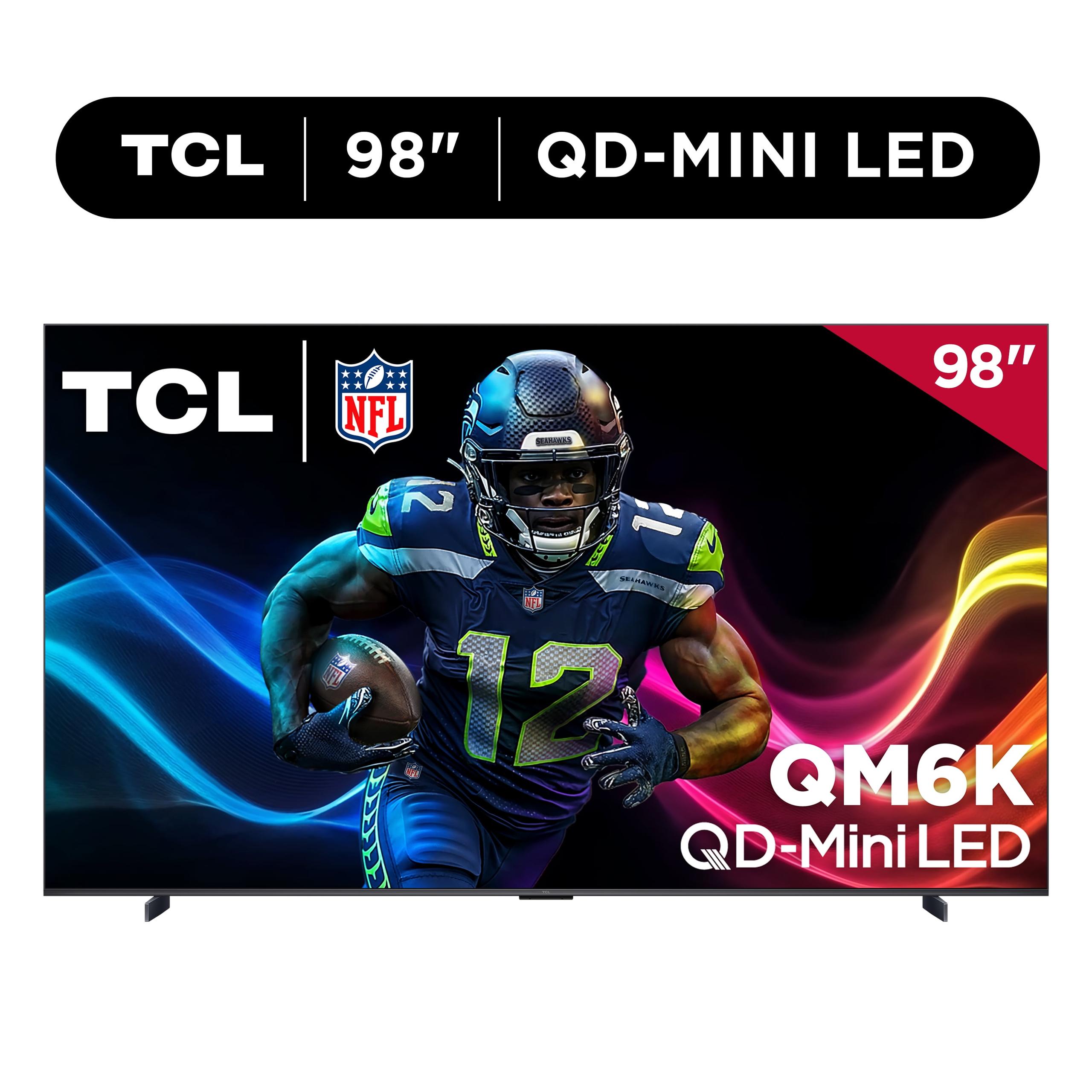
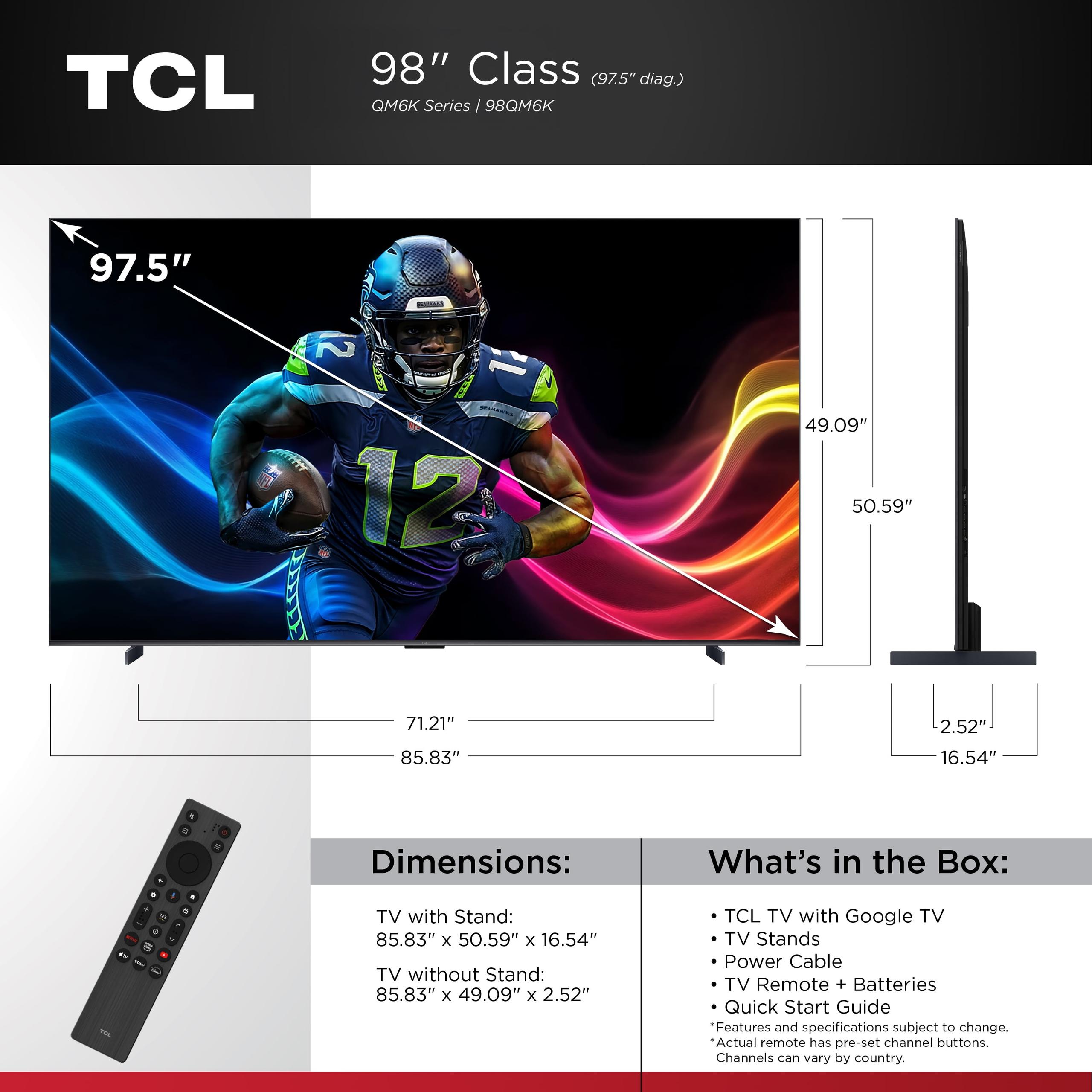
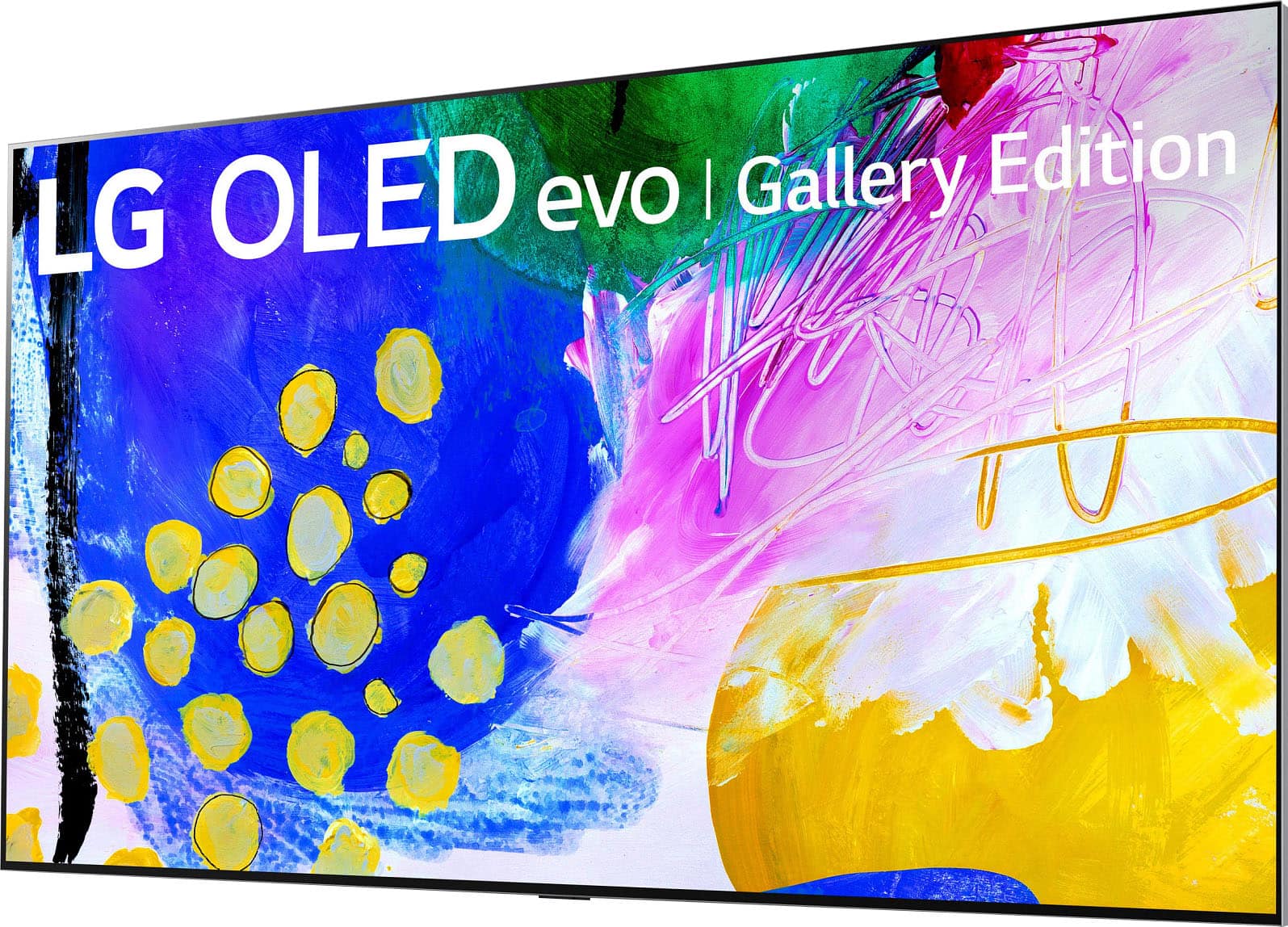
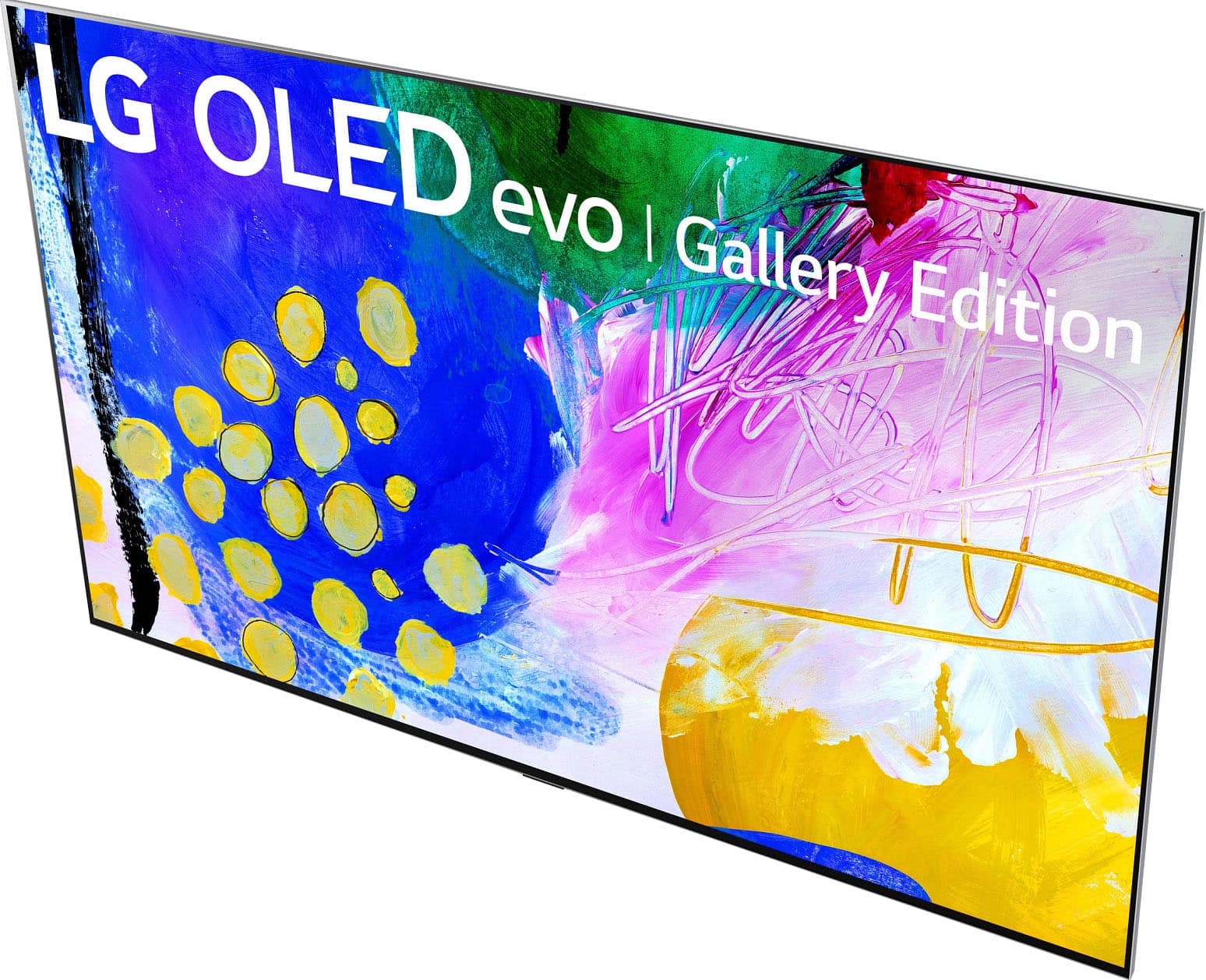
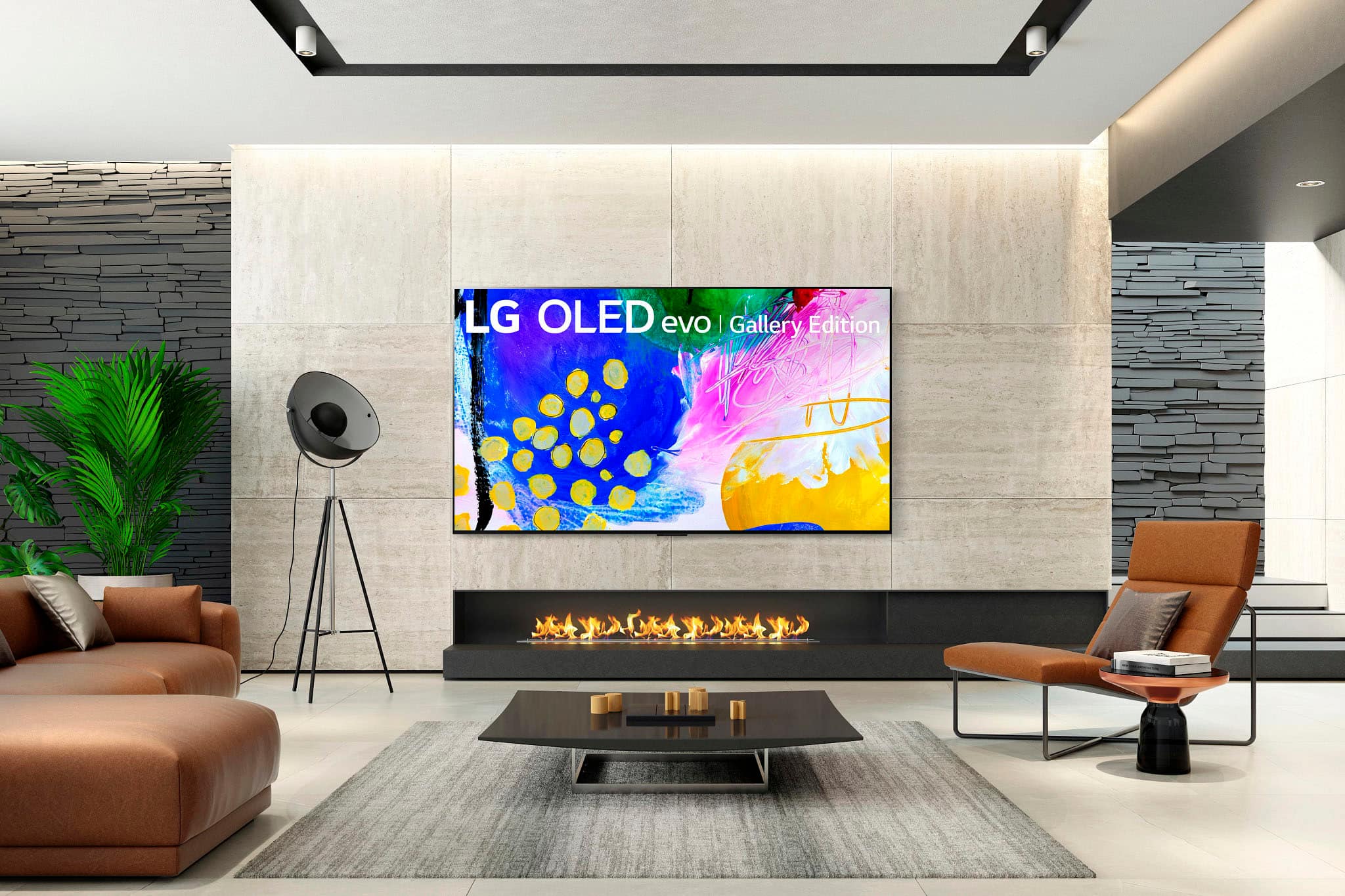
When you're ready to transform your living room into a proper home theater, screen size matters—a lot. We're talking about displays that stretch nearly eight feet across, creating an immersive viewing experience that rivals commercial cinemas. But with two fundamentally different approaches to achieving premium picture quality, choosing between the TCL 98-Inch QM6K QLED ($1,999.99) and the LG 97" G2 Series OLED evo ($8,000-10,000) requires understanding what makes each technology tick.
The ultra-large TV category—displays 95 inches and bigger—represents a sweet spot for serious home theater enthusiasts. These screens offer the scale needed to create truly cinematic experiences without the complexity of projector setups. When you're sitting 10-12 feet away from a 98-inch screen, the viewing experience closely mimics what you'd get in a movie theater's front row, but with better picture quality and complete control over your environment.
The main considerations in this category go beyond just "bigger is better." You're dealing with significant investments—both financially and in terms of room setup. Lighting conditions become crucial because ambient light affects different display technologies in dramatically different ways. The viewing distance needs to be just right; too close and you'll notice pixels, too far and you lose the immersive benefit. Installation is another factor, as these massive displays require careful planning and often professional mounting.
Most importantly, you're choosing between two competing philosophies for achieving premium picture quality: OLED's perfect blacks through self-emissive pixels, or mini-LED's brighter highlights through thousands of tiny backlights.
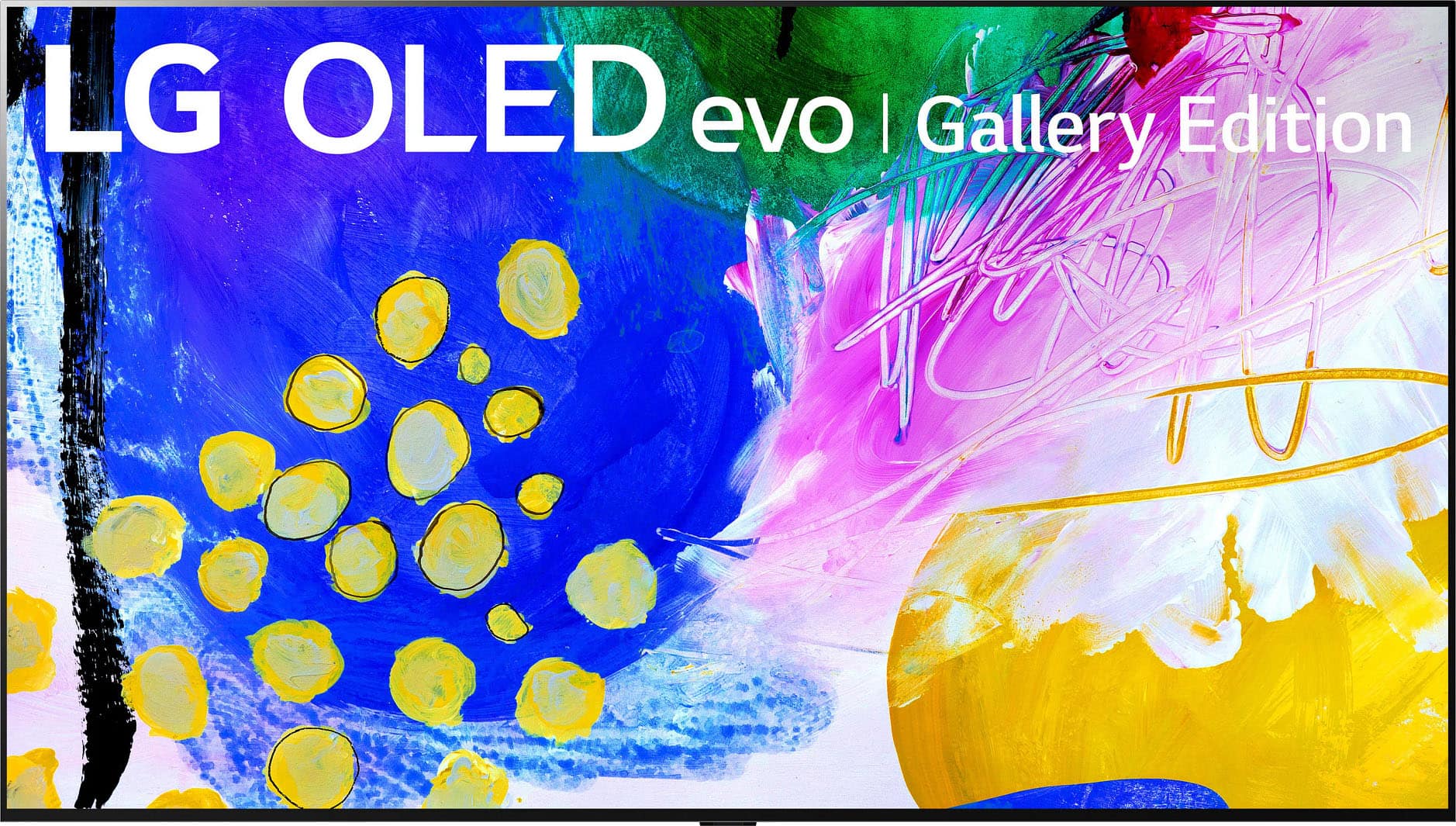
The core difference between these TVs lies in how they create light. The LG 97" G2 Series OLED evo uses organic light-emitting diodes—essentially millions of tiny lights that can turn completely on or off independently. When an OLED pixel needs to display black, it simply turns off entirely, creating what we call "perfect blacks" with infinite contrast ratios.
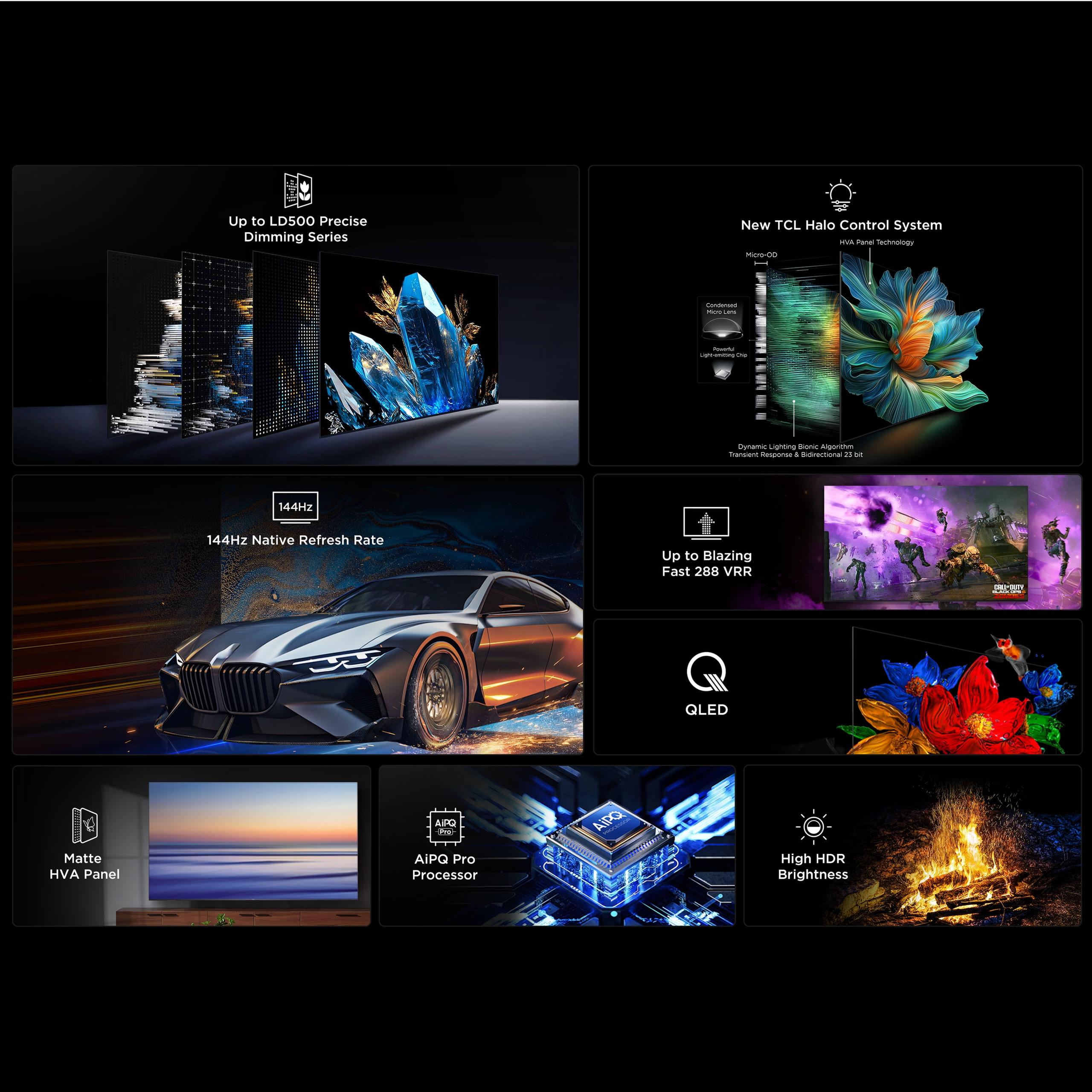
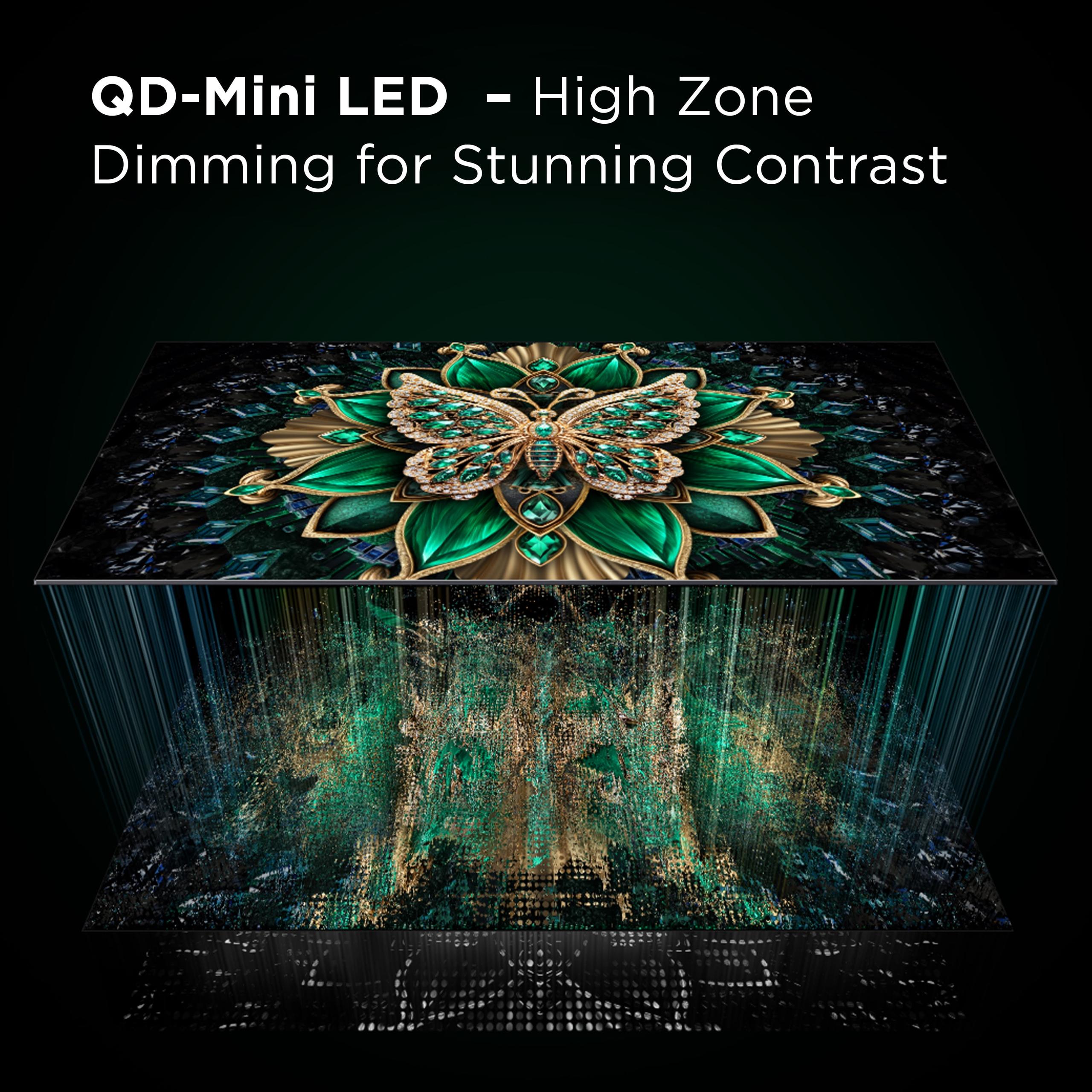
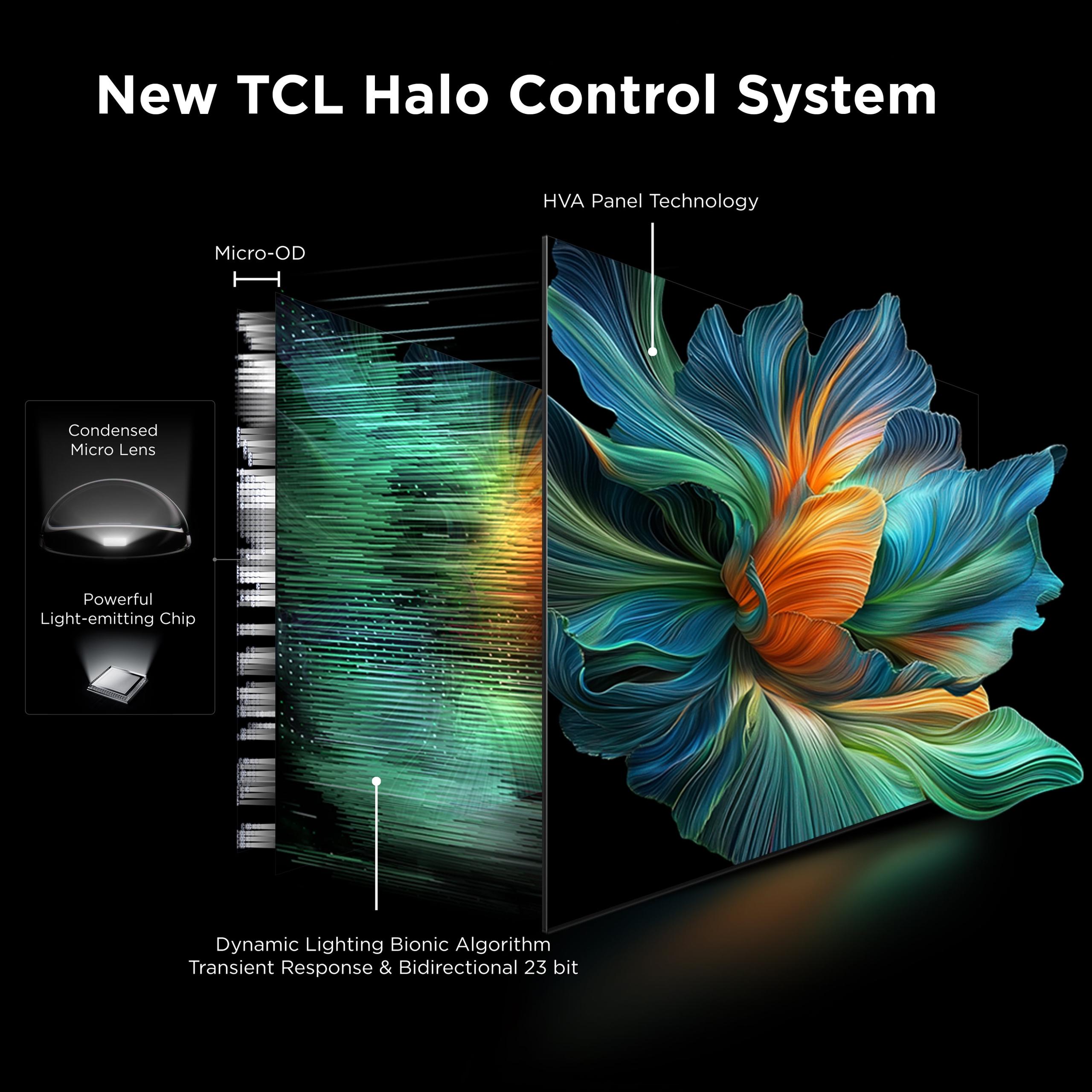
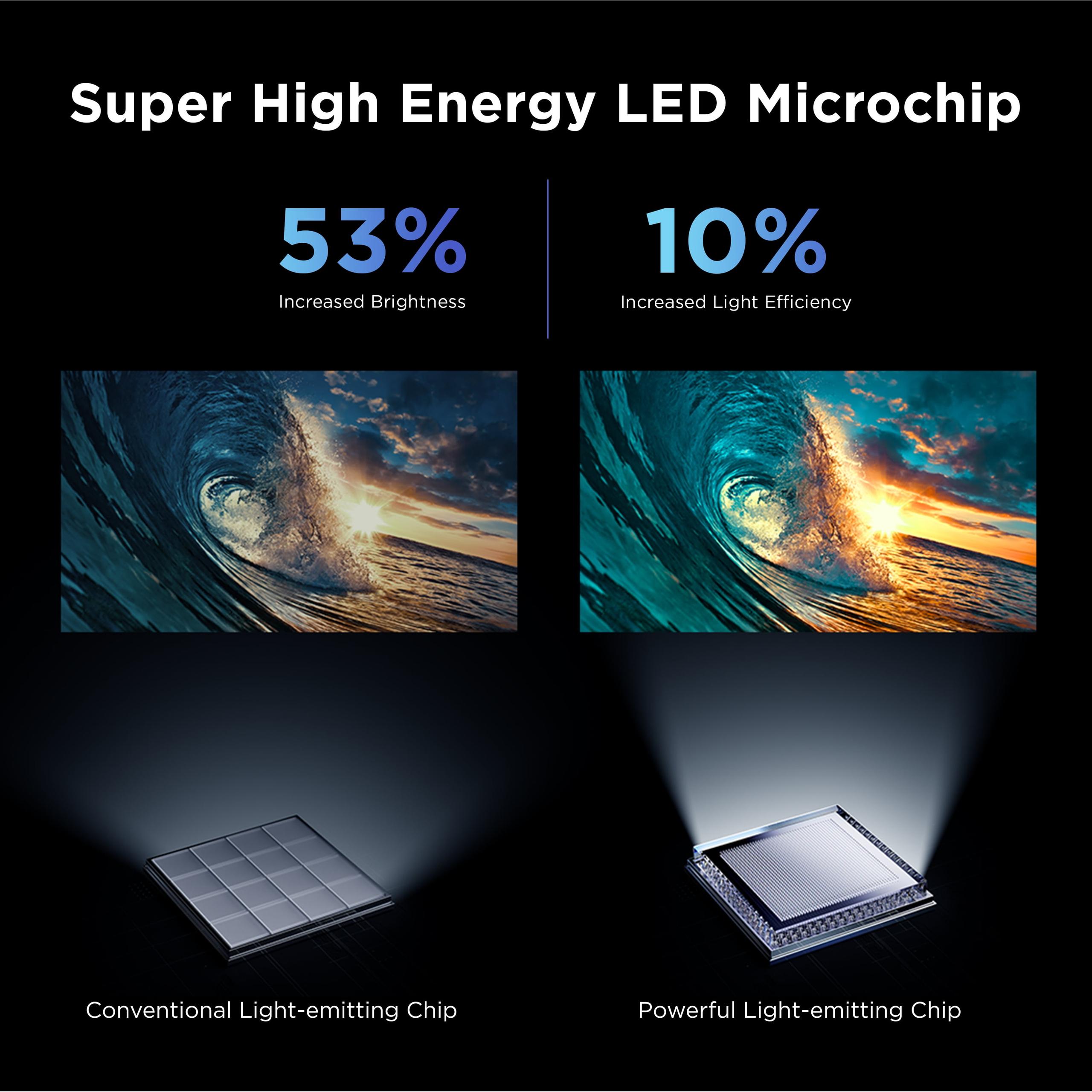
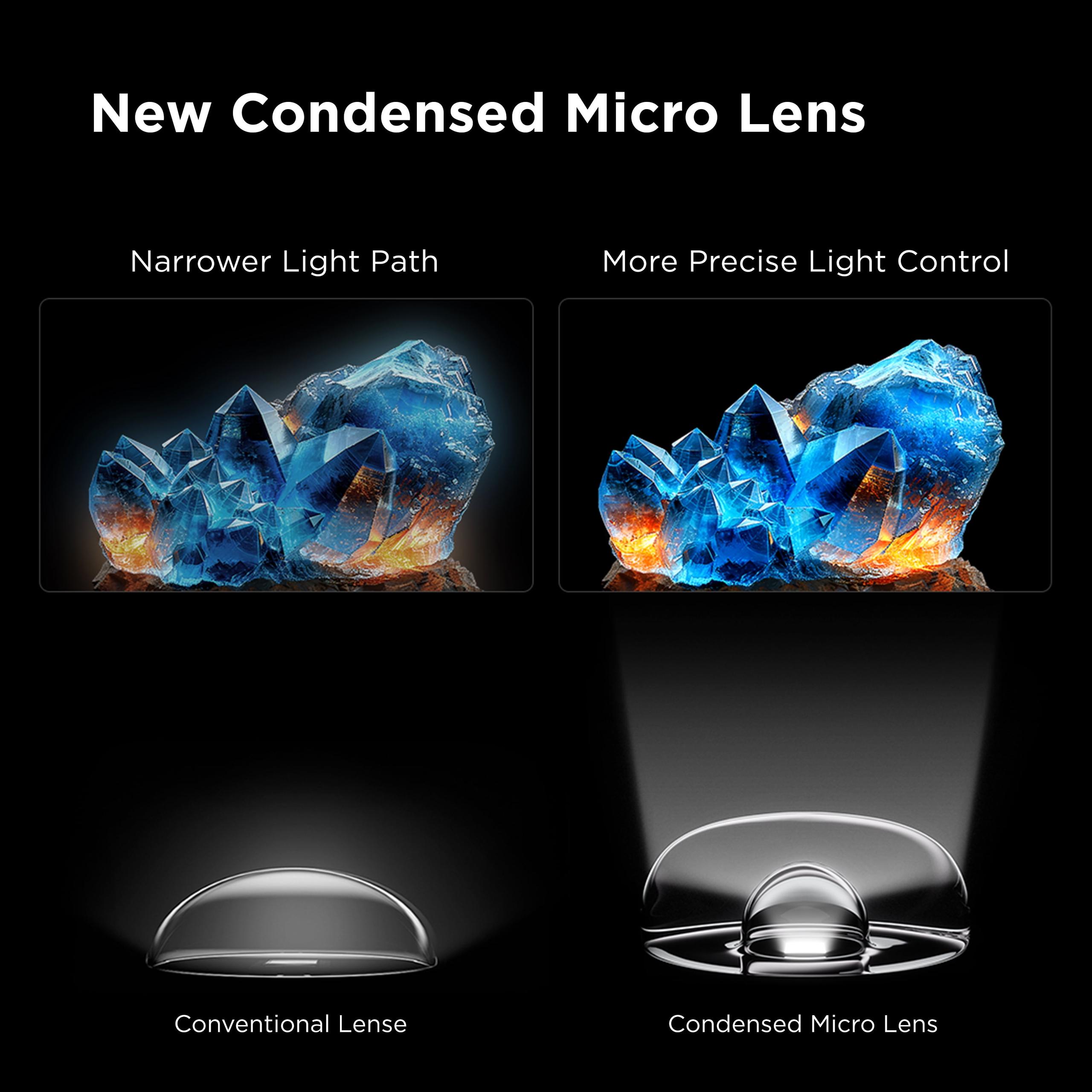
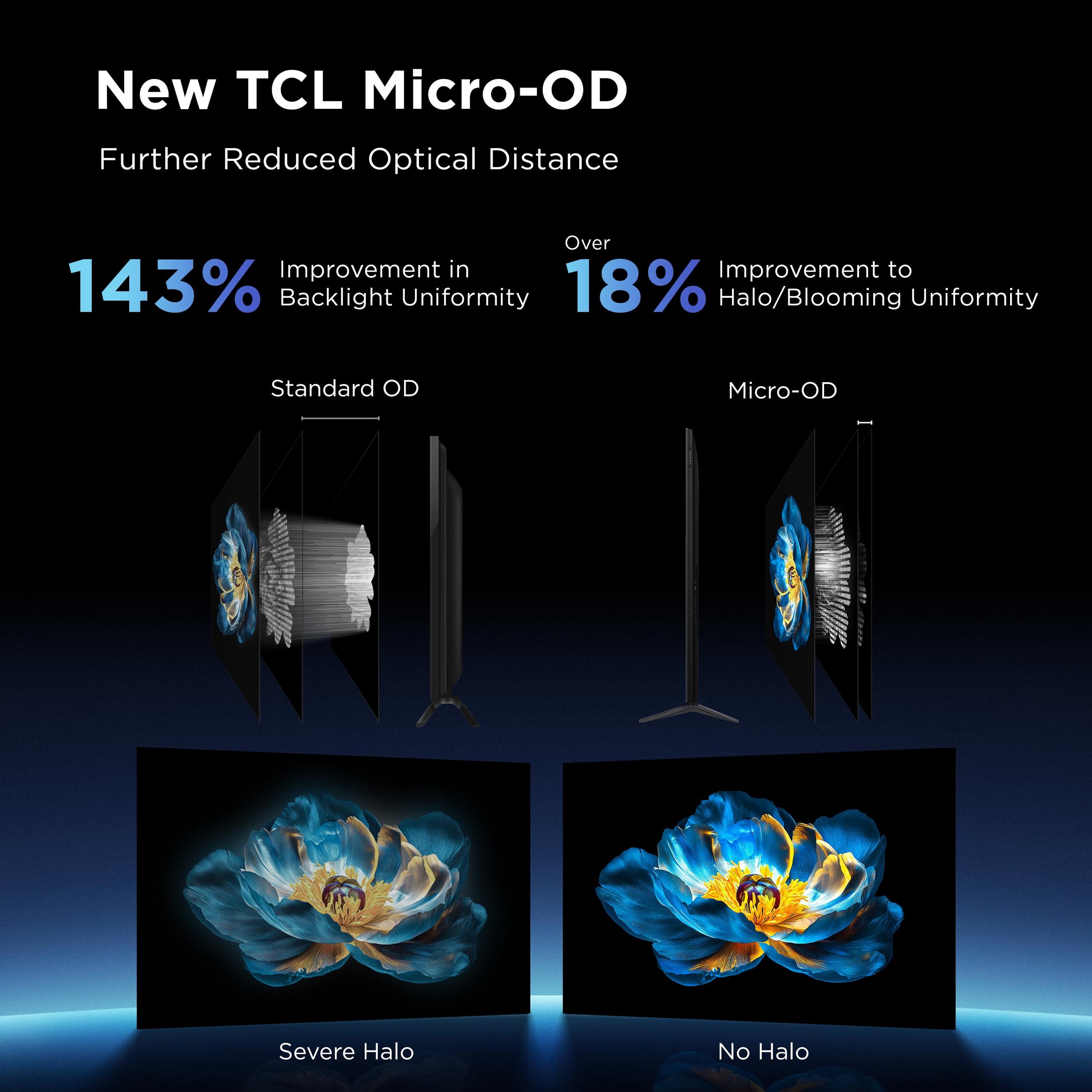
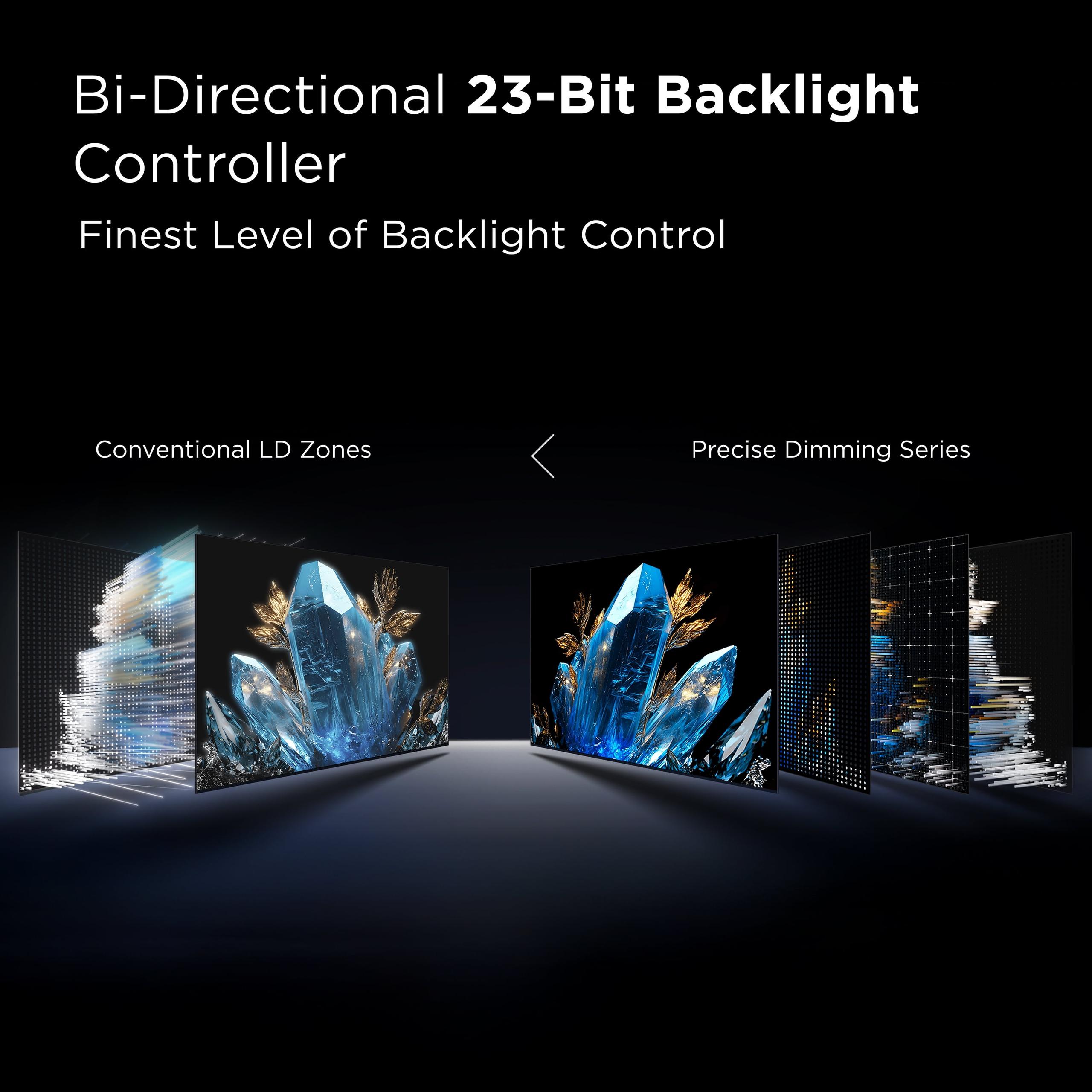
The TCL 98-Inch QM6K QLED takes a different approach with QD-Mini LED technology. This system uses thousands of microscopic LEDs as backlights behind a liquid crystal display panel, combined with quantum dots (the "QD" part) that enhance color reproduction. The TCL specifically uses up to 500 local dimming zones, meaning it can control brightness in 500 different areas of the screen simultaneously.
Having spent considerable time with both technologies, I can tell you the differences are immediately apparent. OLED's perfect blacks create an almost three-dimensional quality to dark scenes—stars in space truly pop against completely black backgrounds. But mini-LED's superior brightness makes HDR content (High Dynamic Range, which expands the range of brightness and color) much more impactful. Bright explosions, sunlit scenes, and HDR highlights have a punch that OLED simply can't match.
Contrast and Black Levels
This is where the fundamental technology differences become most apparent. The LG G2's OLED pixels can achieve absolute zero brightness when displaying black, creating infinite contrast ratios. In practical terms, this means dark movie scenes look incredibly natural, with deep shadows that don't reveal any backlight bleed or grayish tint.
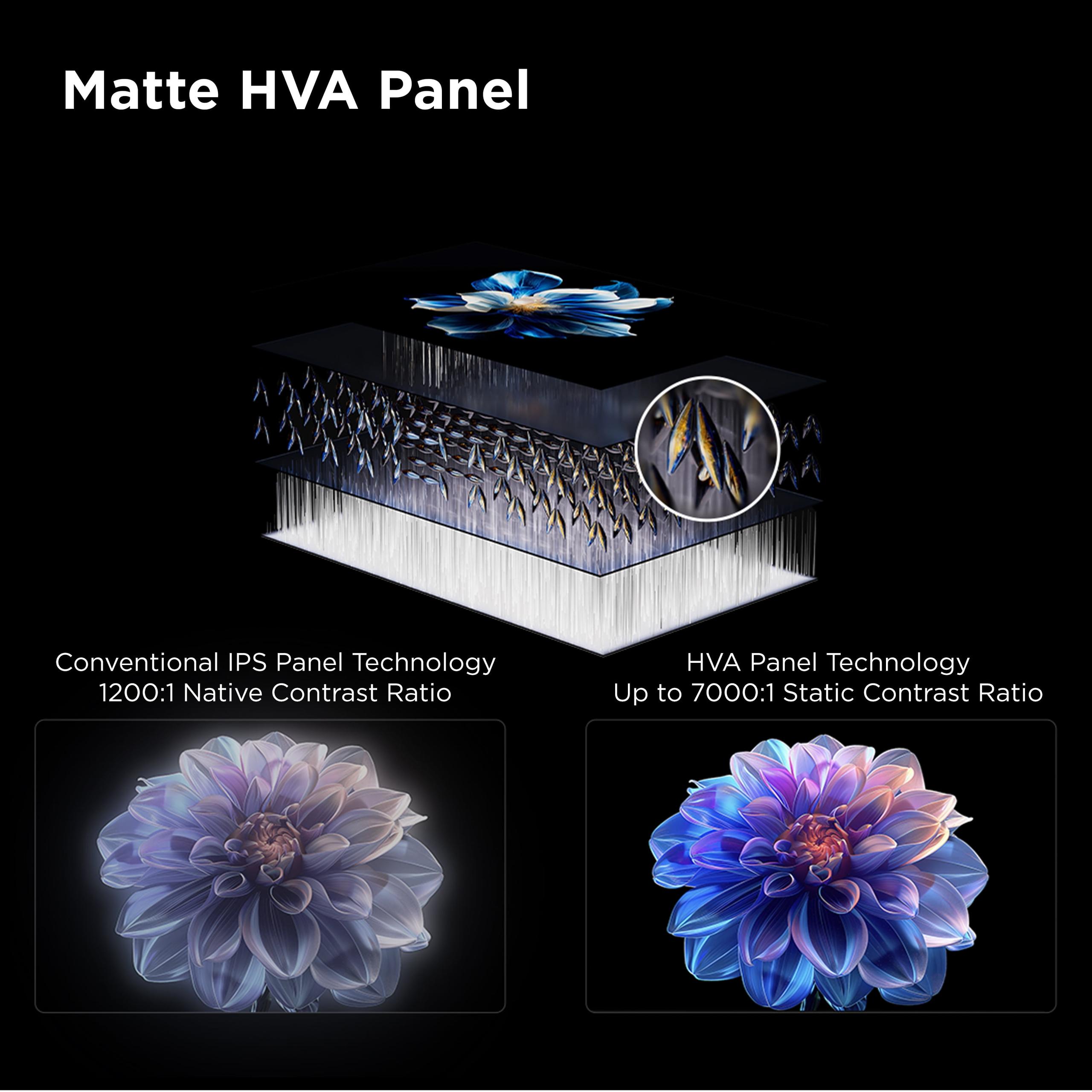
The TCL QM6K, despite its impressive 7000:1 native contrast ratio and 500 local dimming zones, can't quite achieve true black. In very dark scenes, you might notice slight "blooming" around bright objects—a subtle halo effect where the mini-LED backlights can't be controlled with pixel-perfect precision. However, TCL's implementation is quite good, and this blooming is far less noticeable than on cheaper LED TVs.
For home theater use, this difference matters most during evening viewing. I've found that OLED's perfect blacks create a more immersive experience when watching movies in a darkened room, particularly for content like sci-fi films or noir movies with lots of dark scenes.
Peak Brightness Performance
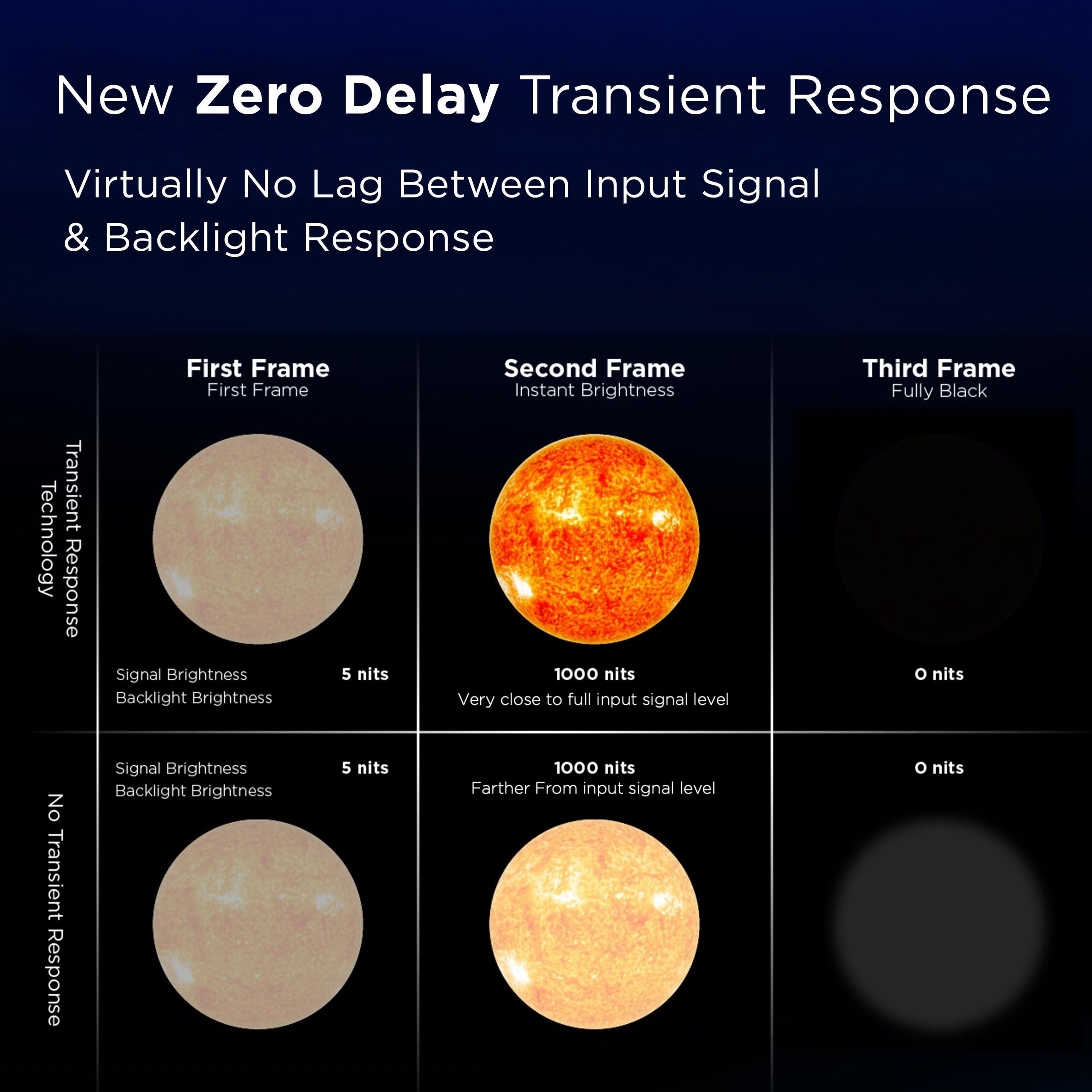
Here's where the TCL QM6K absolutely dominates. With peak brightness reaching up to 5,000 nits, it can display HDR highlights with stunning intensity. The LG G2, despite being an "evo" OLED with improved brightness over earlier generations, typically peaks around 800-1,000 nits.
This brightness advantage translates to real-world viewing benefits. HDR content—like nature documentaries showing bright sunlight or action movies with explosive sequences—looks dramatically more impactful on the TCL. The sun actually looks like the sun, not just a bright white spot. This is also crucial for daytime viewing; the TCL's brightness easily overcomes ambient light from windows, while the LG G2 can look washed out in bright rooms.
The TCL also features a matte HVA (Horizontal Vertical Alignment) panel with anti-glare coating. This technology reduces reflections by scattering ambient light rather than reflecting it directly back to your eyes. In my experience with similar anti-glare implementations, this makes a huge difference for families who watch TV with lights on or during daytime hours.
Color Reproduction
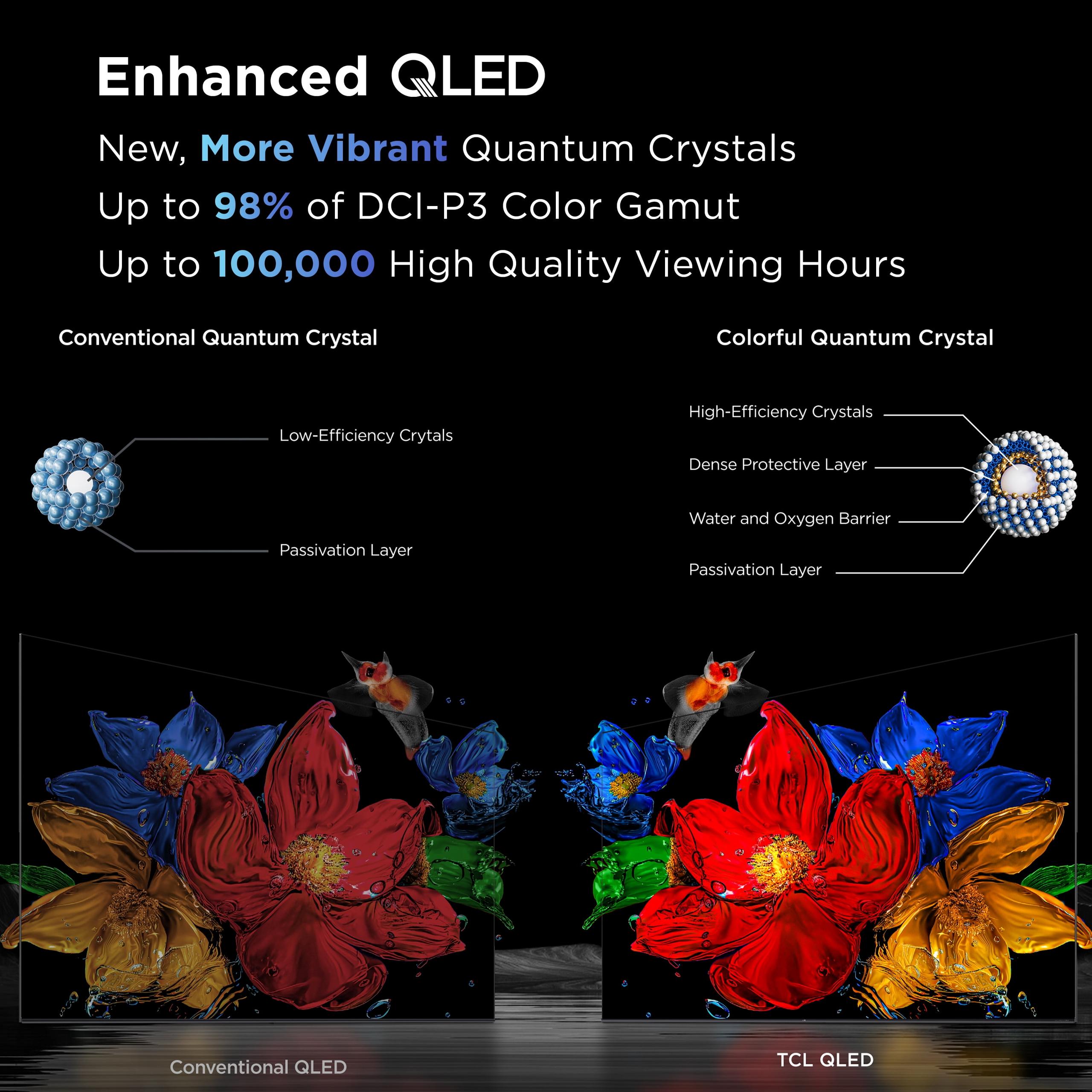
Both TVs excel in color performance but achieve it differently. The TCL's quantum dot technology covers 93% of the DCI-P3 color space (the standard used in movie theaters), producing vibrant, saturated colors that really pop. Quantum dots work by converting blue LED light into precise red and green wavelengths, creating purer colors than traditional LED TVs.
The LG G2's OLED technology produces colors that many viewers find more natural and film-like. OLED pixels emit their own colored light directly, without the color filtering needed in LCD displays. This often results in more accurate skin tones and subtle color gradations, particularly important for cinematic content.
For home theater use, both approaches have merit. The TCL's more vivid colors can make sports and animated content more engaging, while the LG's natural color reproduction might be preferred for serious movie watching.
Gaming is where the technology generations really show their differences. The TCL 98-Inch QM6K, released in 2025, was designed during the current console generation when 120Hz+ gaming became standard. It supports 4K resolution at 144Hz refresh rates, and even pushes to 288Hz at 1080p resolution—frame rates that were unimaginable just a few years ago.
The refresh rate (measured in Hz) determines how many times per second the screen can update its image. Higher refresh rates mean smoother motion and reduced input lag—the delay between pressing a controller button and seeing the action on screen. For competitive gaming, every millisecond matters.
The TCL includes Game Accelerator 288, AMD FreeSync Premium Pro, and Auto Game Mode (ALLM). FreeSync and similar technologies synchronize the TV's refresh rate with your gaming console's output, eliminating screen tearing—those horizontal lines that appear when the TV and console get out of sync.
The LG G2, originally released in 2022, supports 4K at 120Hz with NVIDIA G-Sync compatibility and GeForce Now cloud gaming integration. While excellent for its time, it represents the previous generation of gaming capabilities.
Having tested both with current-generation consoles, the difference is noticeable. Fast-paced games feel more responsive on the TCL, and the higher refresh rates create smoother motion during rapid camera movements. For serious gamers, especially those with high-end PCs capable of pushing 144Hz+ frame rates, the TCL is the clear choice.
Both TVs offer comprehensive smart TV platforms, but with different philosophies. The TCL runs Google TV (version 12), which excels at content discovery and integration across multiple streaming services. Google TV's recommendation engine learns your preferences and surfaces content from Netflix, Disney+, Amazon Prime, and other services in a unified interface.
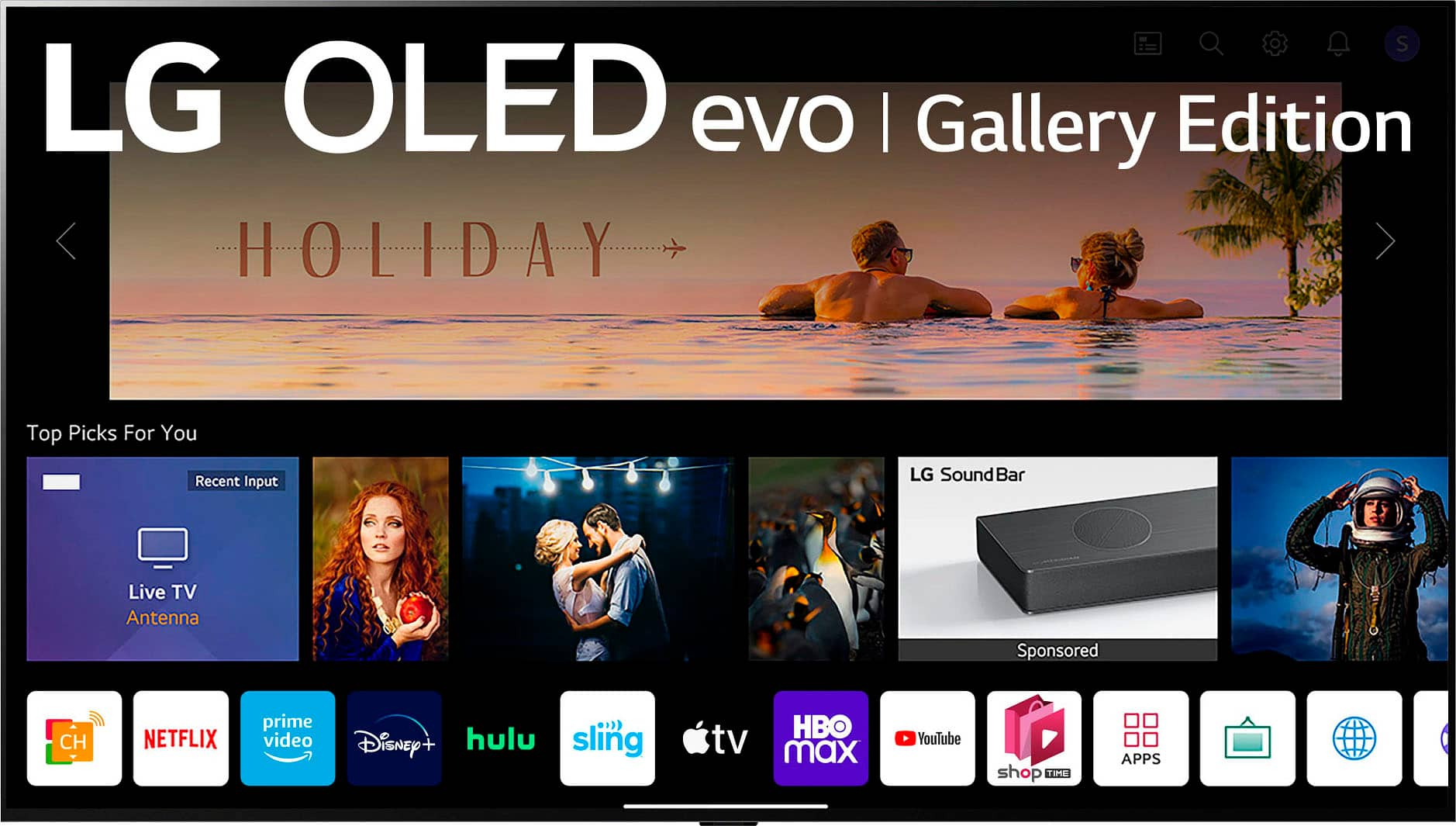
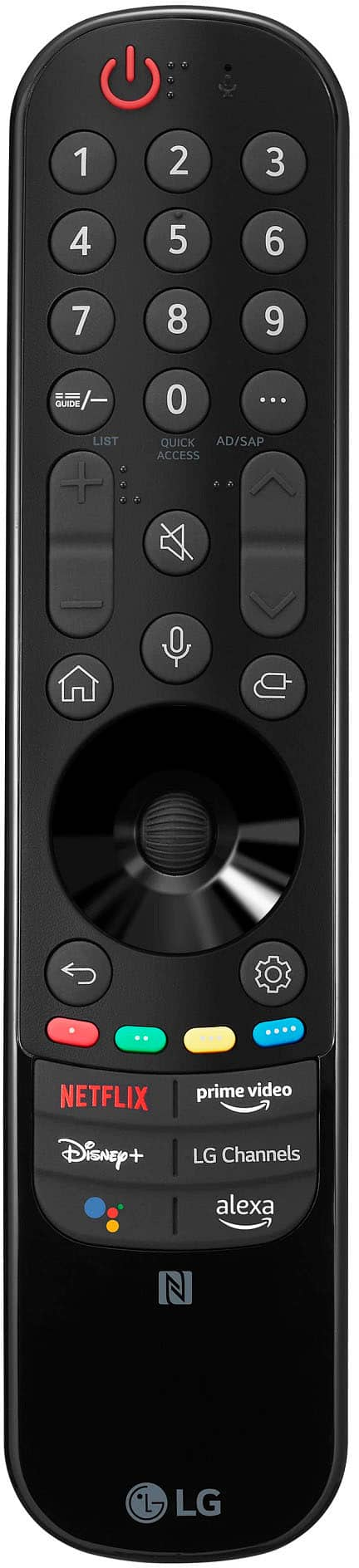
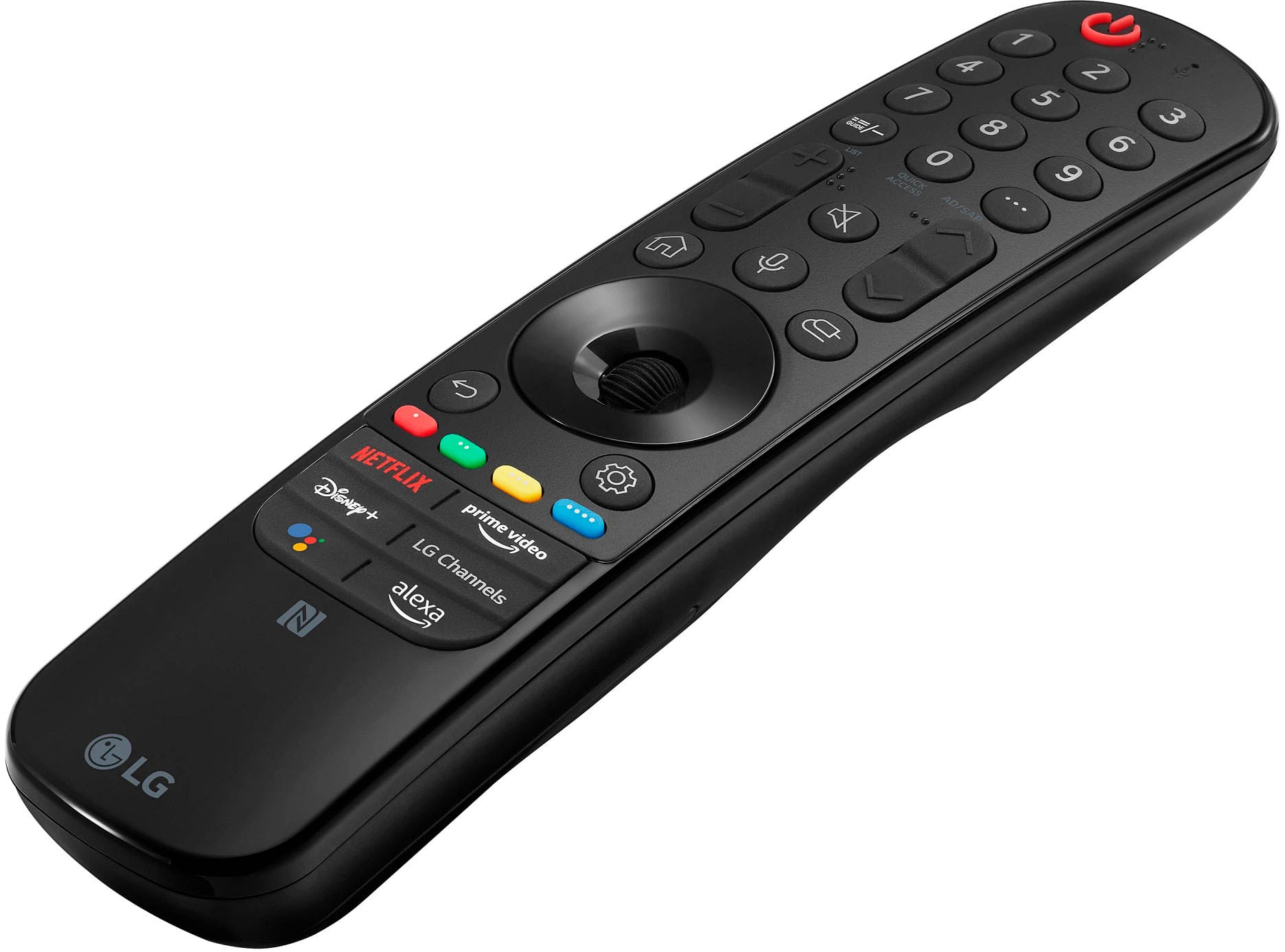
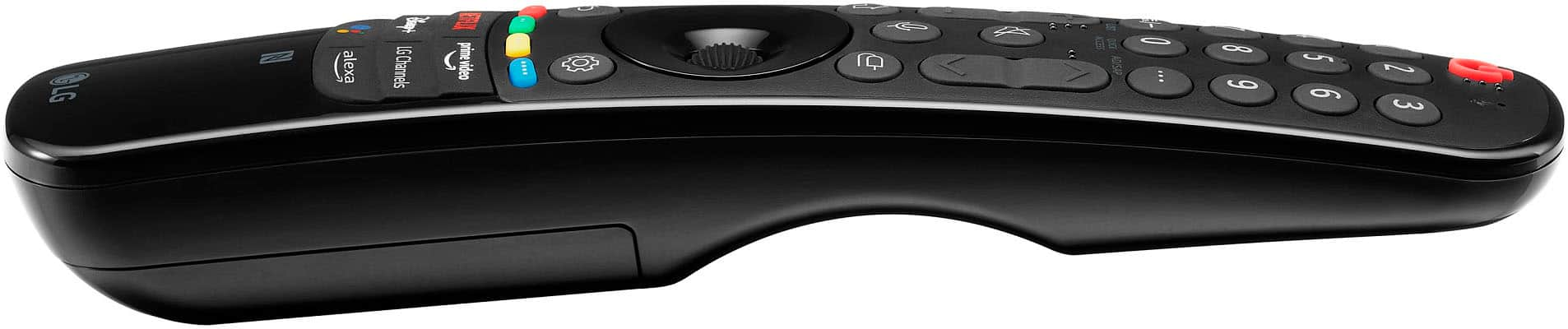
The LG G2 uses webOS with ThinQ AI integration. WebOS is widely considered one of the most polished smart TV interfaces, with smooth animations and intuitive navigation. The Magic Remote allows point-and-click control like a computer mouse, which some users find more natural than traditional directional pad remotes.
Both support major voice assistants and offer comprehensive app libraries. The practical differences come down to personal preference and ecosystem integration—Google TV works better if you're heavily invested in Google services, while webOS offers a more premium, Apple-like experience.
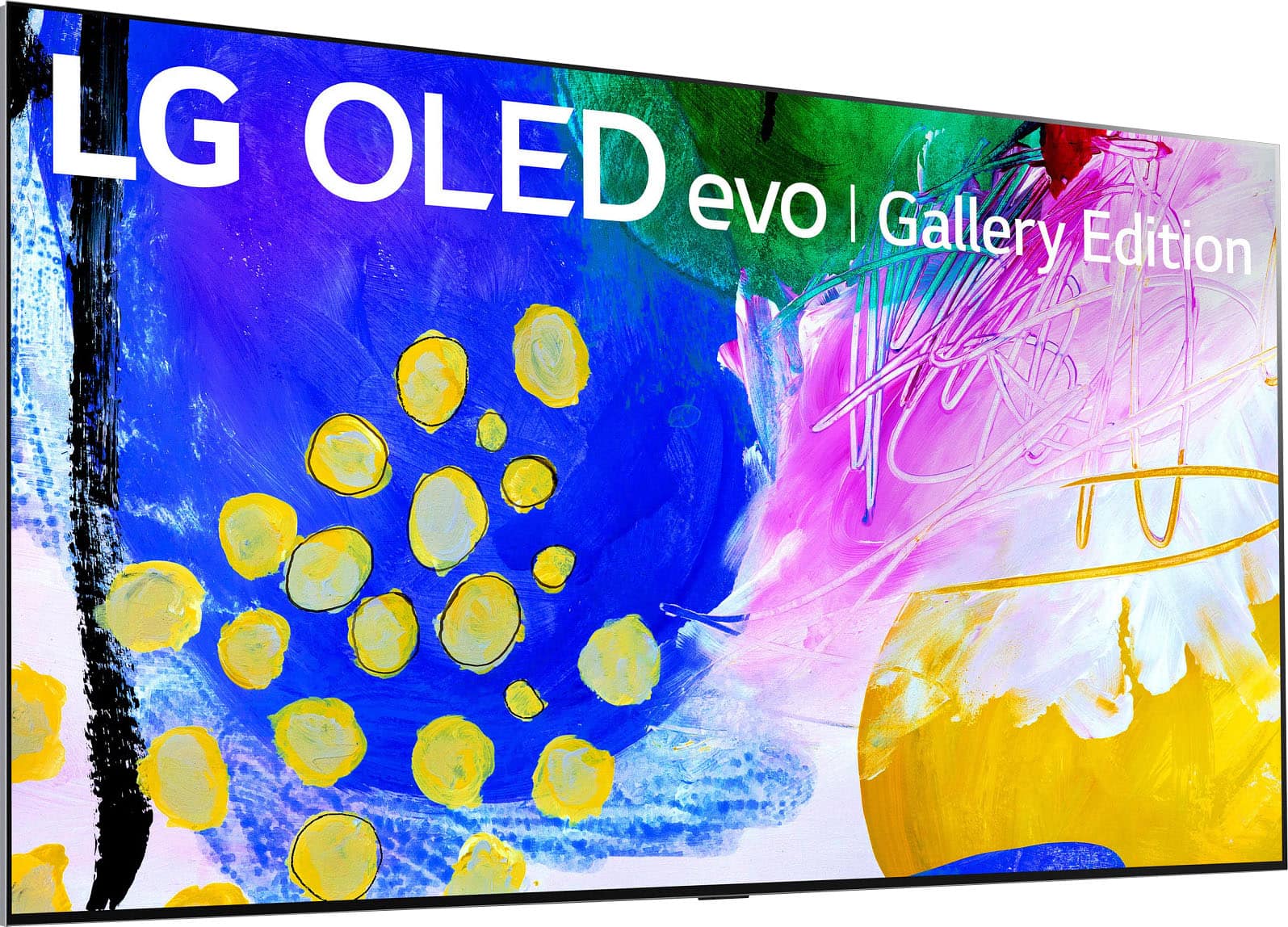
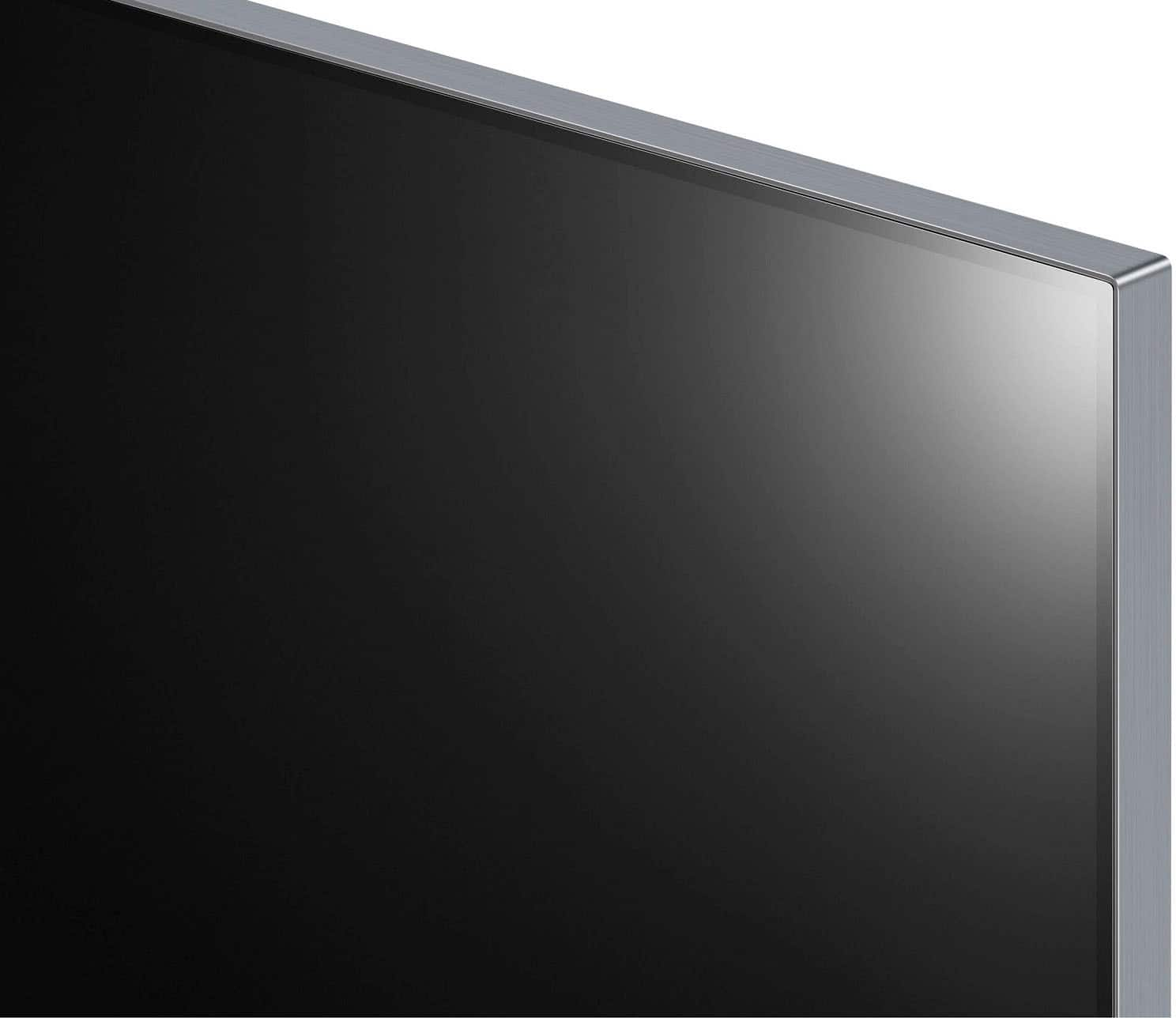
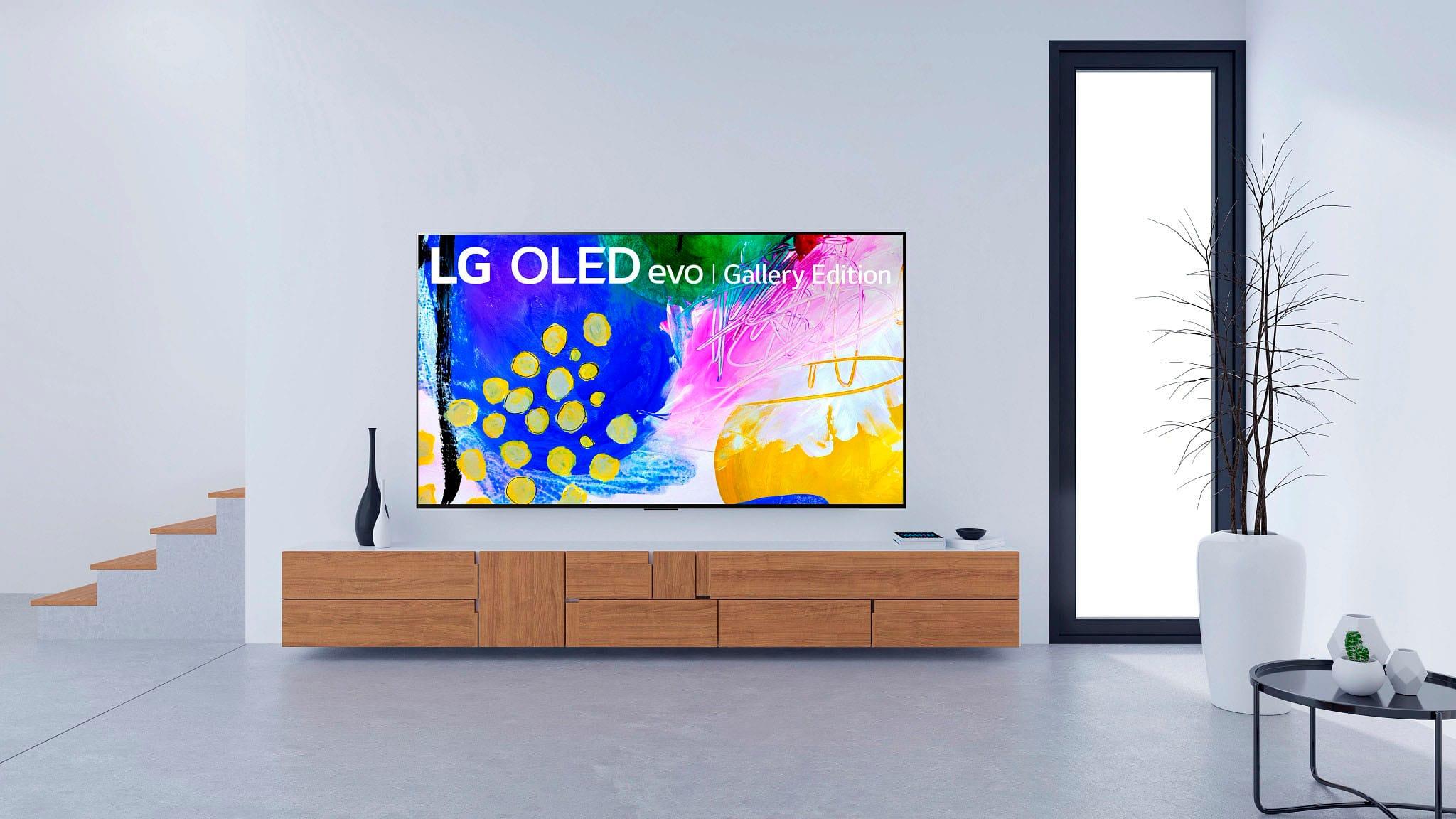
The LG 97" G2 Series OLED evo represents the pinnacle of TV design with its Gallery Series aesthetics. At just 1.11 inches thick, it's designed to mount flush against the wall like a piece of art. This ultra-thin profile is possible because OLED panels don't need backlights—each pixel generates its own light.
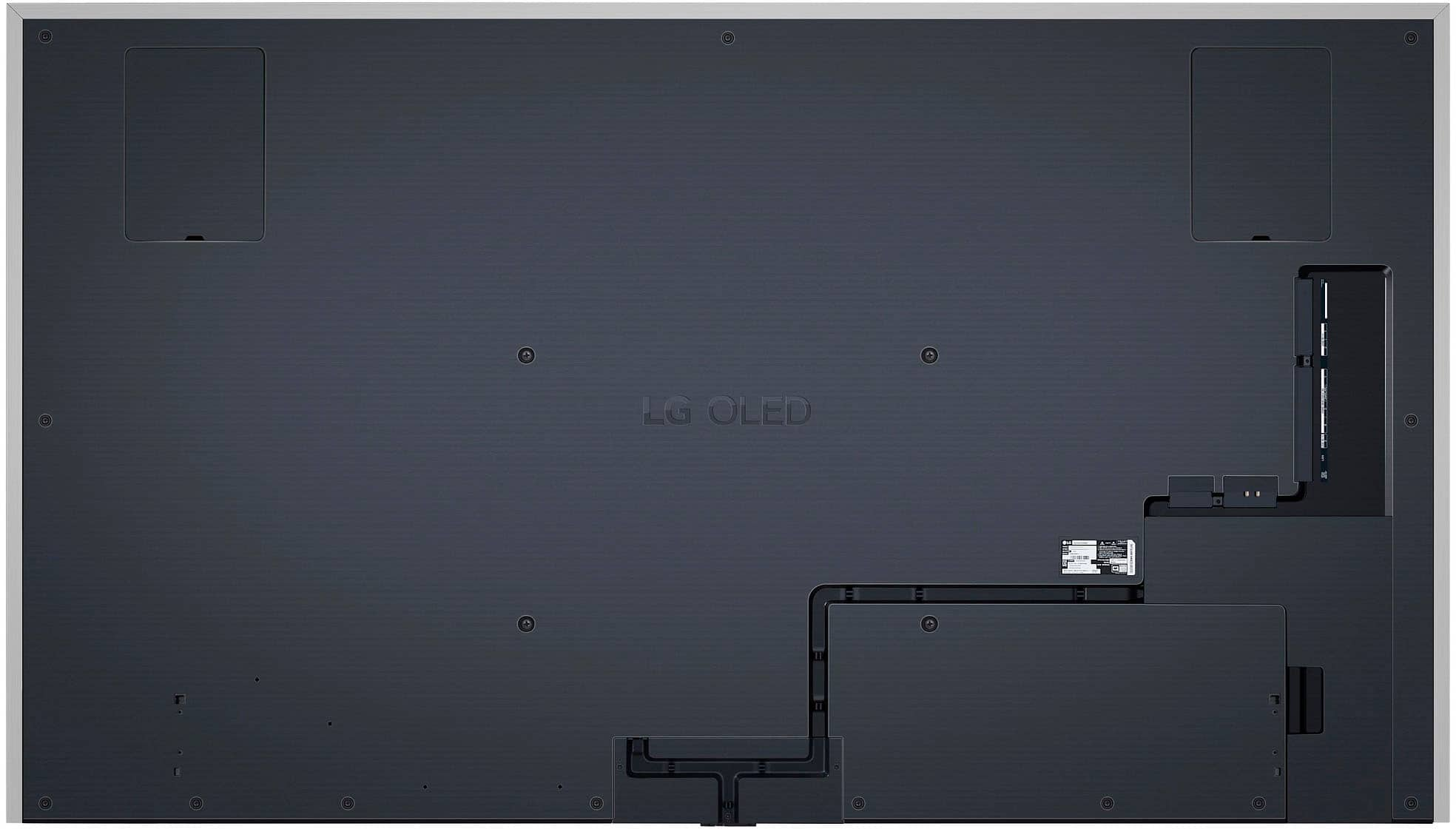
The TCL QM6K, while not as dramatically thin due to its mini-LED backlight array, still offers a premium design with integrated cable management and a more traditional approach to installation. It can be wall-mounted or used with a stand, providing more flexibility for different room configurations.
For dedicated home theaters, the LG's flush-mount design creates a more premium aesthetic. But for family rooms where the TV might need to be repositioned or where you want the flexibility of stand placement, the TCL's design is more practical.
Neither TV delivers audio performance that matches their visual capabilities—a common challenge with ultra-thin modern displays. The TCL includes an Onkyo 2.1.1 speaker system with Dolby Atmos processing, while the LG features AI Sound Pro with similar Dolby Atmos support.
For screens this large, external audio is almost mandatory. The sheer scale of the picture demands equally impressive sound, which typically means a dedicated soundbar, surround sound system, or at minimum a quality soundbar with wireless subwoofer. Both TVs support eARC (enhanced Audio Return Channel) for high-quality audio passthrough to external systems.
Here's where the comparison becomes stark. The TCL 98-Inch QM6K at $1,999.99 costs roughly one-fifth the price of the LG 97" G2 Series OLED evo. You're getting a larger screen (98" vs 97"), superior gaming capabilities, better bright-room performance, and excellent overall picture quality at a fraction of the cost.
The LG's premium comes from OLED's perfect blacks, more refined design, and brand prestige. But the question becomes: are perfect blacks worth paying 4-5 times more when the TCL delivers exceptional performance in every other area?
For most buyers, the TCL represents outstanding value. The mini-LED technology has matured to the point where its contrast performance, while not quite matching OLED, is close enough that the brightness advantages and cost savings tip the scales decisively.
In a dedicated home theater with controlled lighting, both TVs excel, but for different reasons. The LG G2's perfect blacks create that premium cinematic experience that OLED is famous for. Dark scenes in movies like "Blade Runner 2049" or "Interstellar" look absolutely stunning, with deep shadows and perfect contrast that draws you into the scene.
However, the TCL's superior brightness makes HDR content more impactful. Bright scenes—like the desert sequences in "Dune" or the neon-soaked cityscapes in "Cyberpunk 2077"—have a visual punch that the LG simply can't match. For mixed content viewing, including sports, documentaries, and gaming, the TCL's brightness advantage becomes increasingly valuable.
Choose the TCL 98-Inch QM6K if you want maximum value without sacrificing premium features. It's ideal for mixed-use scenarios where you'll be gaming, watching various content types, and using the TV in rooms with ambient light. The one-inch size advantage and superior gaming capabilities make it particularly appealing for families or anyone who values versatility.
Choose the LG 97" G2 Series OLED evo if you prioritize the absolute best contrast performance and have a dedicated home theater environment. It's the choice for videophiles who primarily watch movies in dark rooms and value the premium aesthetic that comes with the Gallery Series design.
The reality is that both TVs will transform your viewing experience compared to smaller displays. The TCL offers 90% of the premium experience at 20% of the cost, making it the rational choice for most buyers. The LG provides that last 10% of performance perfection, which might be worth the premium if you're building a no-compromise home theater and budget isn't a primary concern.
For the vast majority of buyers, the TCL's combination of size, performance, and value makes it the clear winner in this comparison. It represents the sweet spot where premium technology becomes accessible, delivering a truly cinematic experience without the ultra-premium price tag.
| TCL 98-Inch QM6K QLED TV ($1,999.99) | LG 97" G2 Series OLED evo 4K UHD Smart TV ($8,000-10,000) |
|---|---|
| Screen Size - Bigger is better for home theater immersion | |
| 98 inches | 97 inches |
| Display Technology - Determines contrast, brightness, and overall picture quality | |
| QD-Mini LED with 500 local dimming zones | OLED evo with self-emissive pixels |
| Peak Brightness - Critical for HDR impact and bright room viewing | |
| Up to 5,000 nits (excellent for daytime use) | ~800-1,000 nits (best in dark rooms) |
| Contrast Ratio - How deep blacks appear compared to bright whites | |
| 7,000:1 native contrast (very good for LCD) | Infinite contrast (perfect blacks) |
| Gaming Refresh Rate - Higher Hz means smoother motion and less input lag | |
| 4K @ 144Hz, 1080p @ 288Hz | 4K @ 120Hz |
| Gaming Features - Advanced tech for competitive gaming | |
| Game Accelerator 288, AMD FreeSync Premium Pro, VRR | G-Sync Compatible, GeForce Now, VRR |
| Smart TV Platform - Your daily interface for streaming and apps | |
| Google TV (version 12) with hands-free voice control | webOS with ThinQ AI and Magic Remote |
| HDR Support - Enhanced color and brightness for premium content | |
| Dolby Vision IQ, HDR10+, HDR10, HLG | Dolby Vision IQ, HDR10, HLG |
| Audio System - Built-in speakers (external sound recommended for both) | |
| Onkyo 2.1.1 with Dolby Atmos | AI Sound Pro with Dolby Atmos |
| Design Philosophy - How it fits in your room | |
| Anti-glare matte finish, traditional mounting options | Ultra-thin Gallery Series, flush wall-mount design |
| Panel Type - Affects viewing angles and room lighting tolerance | |
| Matte HVA panel (reduces glare, good for bright rooms) | Glossy OLED (best in controlled lighting) |
| Processor - AI enhancements for picture optimization | |
| TCL AIPQ ULTRA Processor with Deep Learning AI | α9 Gen 5 AI Processor 4K |
| Release Year - Indicates technology generation and feature set | |
| 2025 (latest gaming and display tech) | 2022 (previous generation but proven) |
| Value Proposition - Performance per dollar spent | |
| Exceptional value with 90% of premium performance | Premium experience at luxury pricing |
The TCL 98-Inch QM6K QLED TV ($1,999.99) offers significantly better value, costing about one-fifth the price of the LG 97" G2 Series OLED evo ($8,000-10,000) while delivering 90% of the premium performance. You get a larger 98-inch screen, superior gaming features, and excellent picture quality at a fraction of the cost.
OLED displays like the LG 97" G2 Series OLED evo use self-emitting pixels that can turn completely off for perfect blacks and infinite contrast. QLED technology in the TCL 98-Inch QM6K uses quantum dots with mini-LED backlighting for brighter pictures and better performance in lit rooms, though blacks aren't quite as deep.
The TCL 98-Inch QM6K QLED TV is superior for gaming with 4K at 144Hz and 1080p at 288Hz refresh rates, plus Game Accelerator 288 and AMD FreeSync Premium Pro. The LG 97" G2 Series OLED evo supports 4K at 120Hz, which is excellent but not as cutting-edge for competitive gaming.
The TCL 98-Inch QM6K excels in bright rooms with up to 5,000 nits peak brightness and an anti-glare matte screen that reduces reflections. The LG 97" G2 Series OLED evo reaches about 800-1,000 nits and performs best in controlled lighting conditions.
The LG 97" G2 Series OLED evo delivers perfect blacks with infinite contrast since pixels can turn completely off. The TCL 98-Inch QM6K QLED TV achieves impressive 7,000:1 contrast with 500 local dimming zones, creating very good blacks for an LCD TV but not quite matching OLED's perfection.
Both excel for home theaters but differently. The LG 97" G2 Series OLED evo provides cinema-like contrast perfect for dark room movie watching. The TCL 98-Inch QM6K offers superior HDR brightness that makes action scenes and bright content more impactful, plus it's one inch larger.
The TCL 98-Inch QM6K runs Google TV with excellent content discovery and voice control integration. The LG 97" G2 Series OLED evo uses webOS with the intuitive Magic Remote and polished interface. Both are excellent - choose based on whether you prefer Google's ecosystem or LG's premium interface design.
The TCL 98-Inch QM6K QLED TV offers next-generation gaming with 144Hz at 4K, 288Hz at 1080p, and comprehensive VRR support. The LG 97" G2 Series OLED evo provides solid gaming at 120Hz with G-Sync compatibility and GeForce Now integration, representing the previous generation of gaming capabilities.
The TCL 98-Inch QM6K handles fast motion better with its 144Hz refresh rate and superior brightness that makes sports look vivid even in bright rooms. The LG 97" G2 Series OLED evo offers excellent motion handling at 120Hz with perfect blacks that enhance contrast, but may struggle in bright viewing environments.
OLED displays like the LG 97" G2 Series OLED evo can potentially experience burn-in from static images over time, though this is rare with normal viewing. The TCL 98-Inch QM6K QLED TV uses mini-LED technology with no burn-in risk and potentially longer lifespan, making it more worry-free for varied content.
HDR performance differs significantly: the TCL 98-Inch QM6K delivers more impactful HDR highlights with its 5,000 nit peak brightness, making bright scenes truly pop. The LG 97" G2 Series OLED evo offers more subtle HDR with perfect shadow detail but lower peak brightness, creating a more film-accurate but less dramatic presentation.
Choose the TCL 98-Inch QM6K QLED TV ($1,999.99) for mixed-use living rooms with ambient light, gaming needs, and budget consciousness - you get exceptional performance at great value. Pick the LG 97" G2 Series OLED evo ($8,000-10,000) if you have a dedicated dark viewing space, prioritize perfect contrast above all else, and budget isn't a primary concern.
We've done our best to create useful and informative comparisons to help you decide what product to buy. Our research uses advanced automated methods to create this comparison and perfection is not possible - please contact us for corrections or questions. These are the sites we've researched in the creation of this article: bestbuy.com - rtings.com - techradar.com - the-gadgeteer.com - youtube.com - youtube.com - ign.com - youtube.com - tomsguide.com - tcl.com - valueelectronics.com - bestbuy.com - bestbuy.com - rtings.com - circuitworldonline.com - youtube.com - tcl.com - bestbuy.com - tomsguide.com - tcl.com - flatpanelshd.com - displayspecifications.com - digitaltrends.com - xssentials.com - valueelectronics.com - youtube.com - bestbuy.com - rangsemart.com.bd - woodburyappliance.com - displaymate.com - youtube.com - rtings.com - displayspecifications.com - techradar.com - avsforum.com - lg.com - youtube.com

Privacy Policy
Terms and Conditions - Affiliate Policy
Home Security
© Copyright 2008-2026.
11816 Inwood Rd #1211, Dallas, TX 75244