

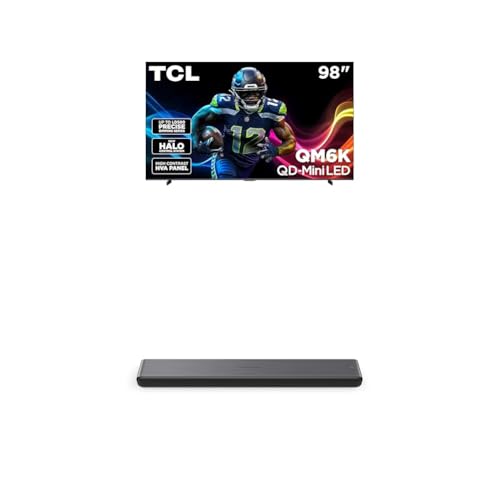
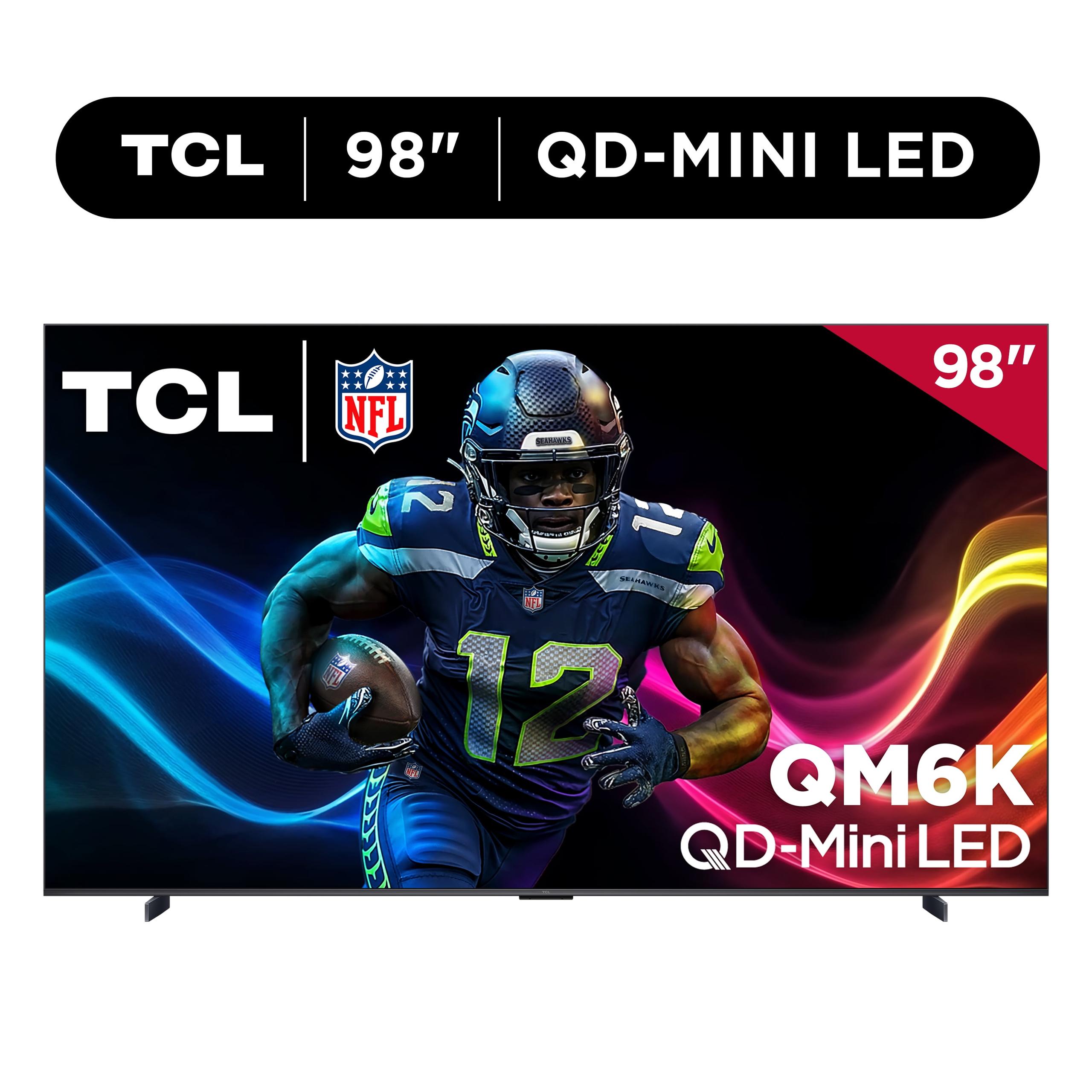
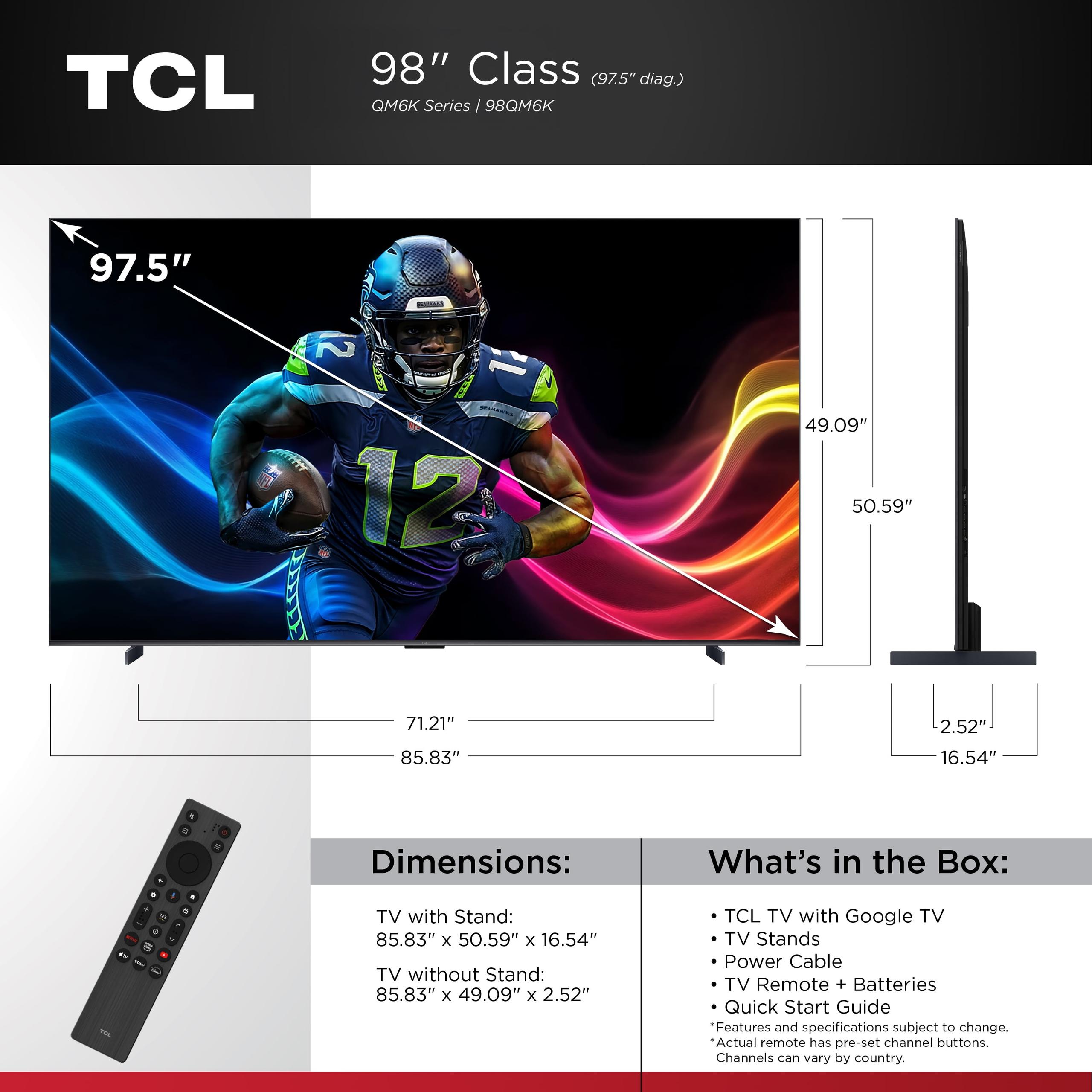
When you're shopping for a 98-inch TV, you're making a serious investment in your home entertainment setup. These massive displays transform any room into a personal theater, but choosing between the TCL 98-Inch QM6K QLED ($1,999.99) and the Sony BRAVIA XR X90L 98" ($4,059.45) means understanding two very different approaches to premium TV technology.
The TCL represents the new wave of affordable premium displays, packing cutting-edge Mini LED technology into a surprisingly accessible price point. Meanwhile, Sony's offering showcases the company's decades of expertise in color science and audio engineering, though it comes with a significantly higher price tag. Let's dive deep into what makes each tick and help you decide which one belongs in your living room.
The 98-inch TV market has exploded in recent years, and for good reason. These displays offer an immersive experience that was previously only possible with expensive projector setups. However, at this size, every aspect of performance becomes magnified – both the good and the bad.
Picture quality becomes absolutely critical because you're sitting relatively close to such a large screen. Any issues with uniformity, contrast, or color accuracy become immediately apparent. Gaming performance matters more than ever since these TVs are increasingly replacing dedicated gaming monitors for console players. Audio quality also takes on greater importance because the sheer size creates expectations for cinematic sound to match the visual experience.
The technology landscape has shifted dramatically since 2023. When Sony released the X90L, Mini LED was still emerging as a premium feature found mainly in flagship models. Fast forward to 2025, and TCL has managed to bring this advanced backlighting technology to a much more accessible price point with the QM6K. This represents a fundamental shift in what we can expect from mid-range TVs.
The most significant distinction between these TVs lies in their backlighting approach, and this difference affects nearly every aspect of picture quality.
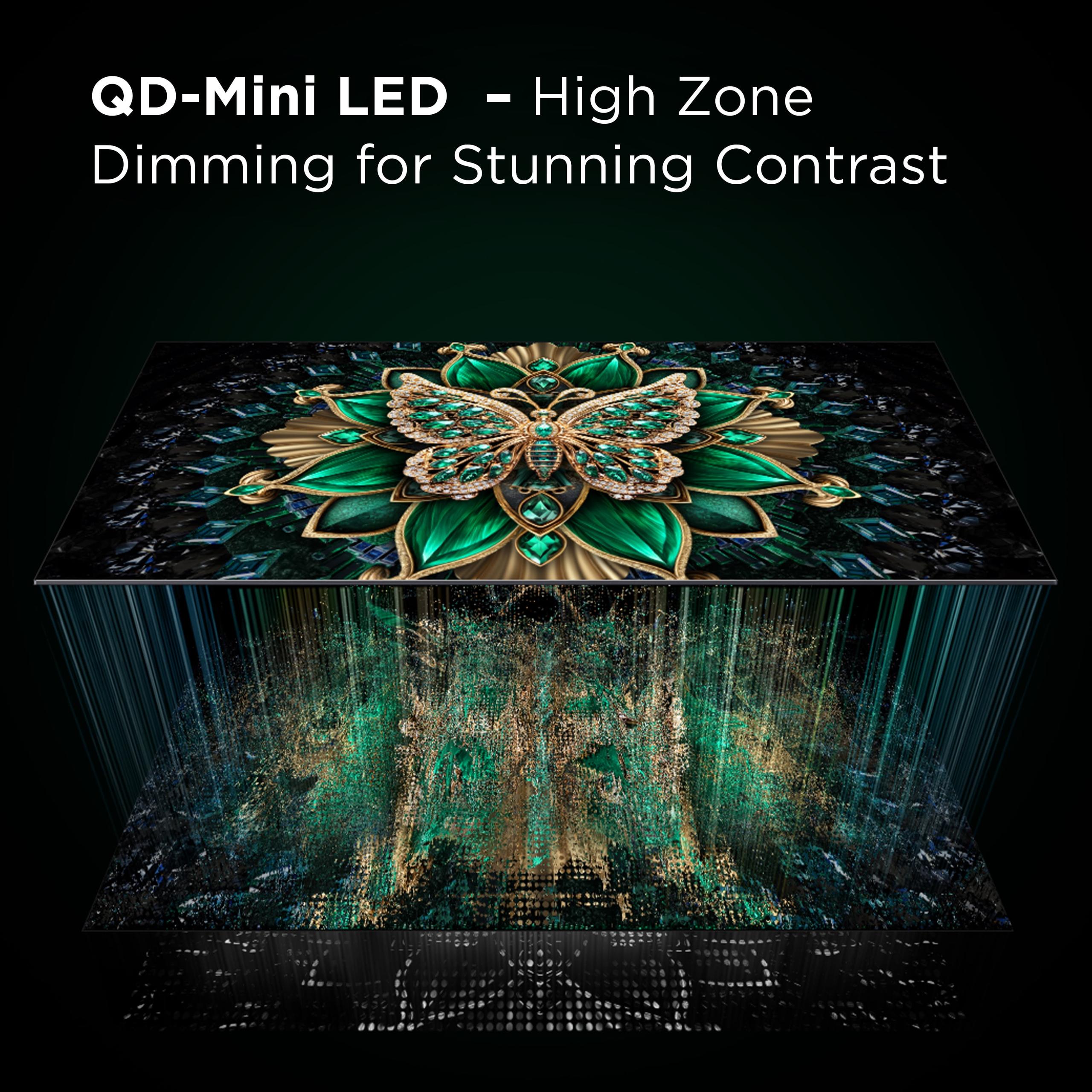
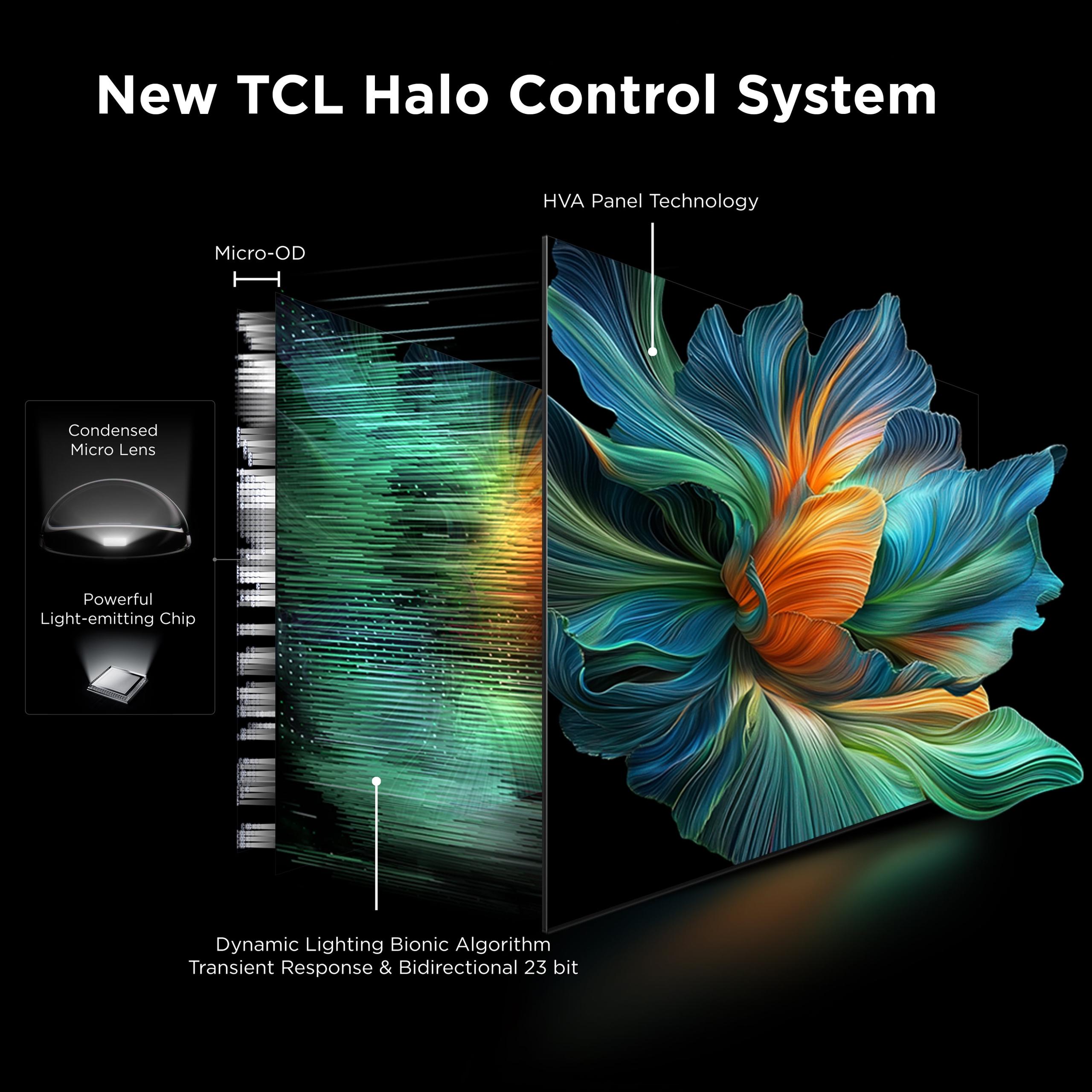
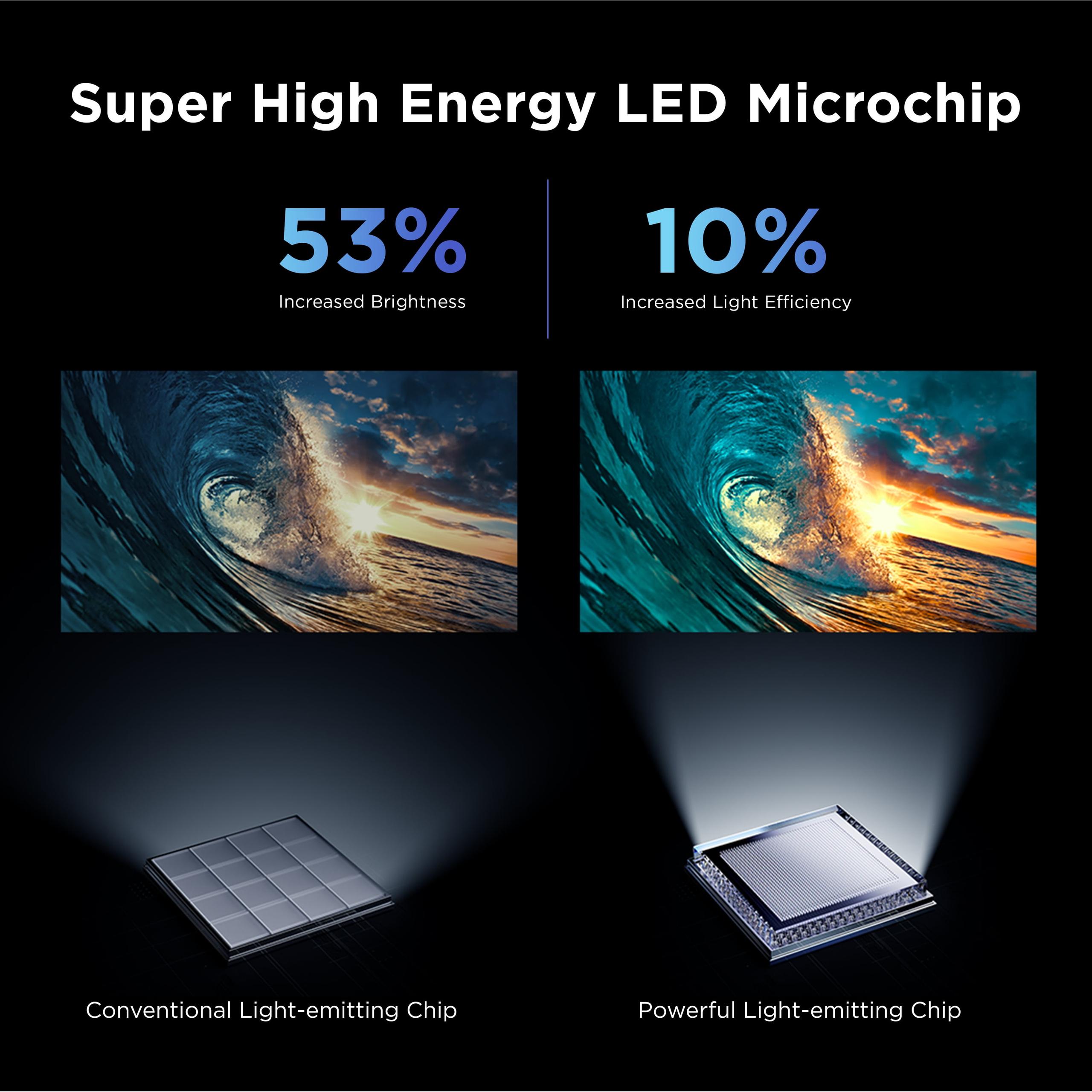
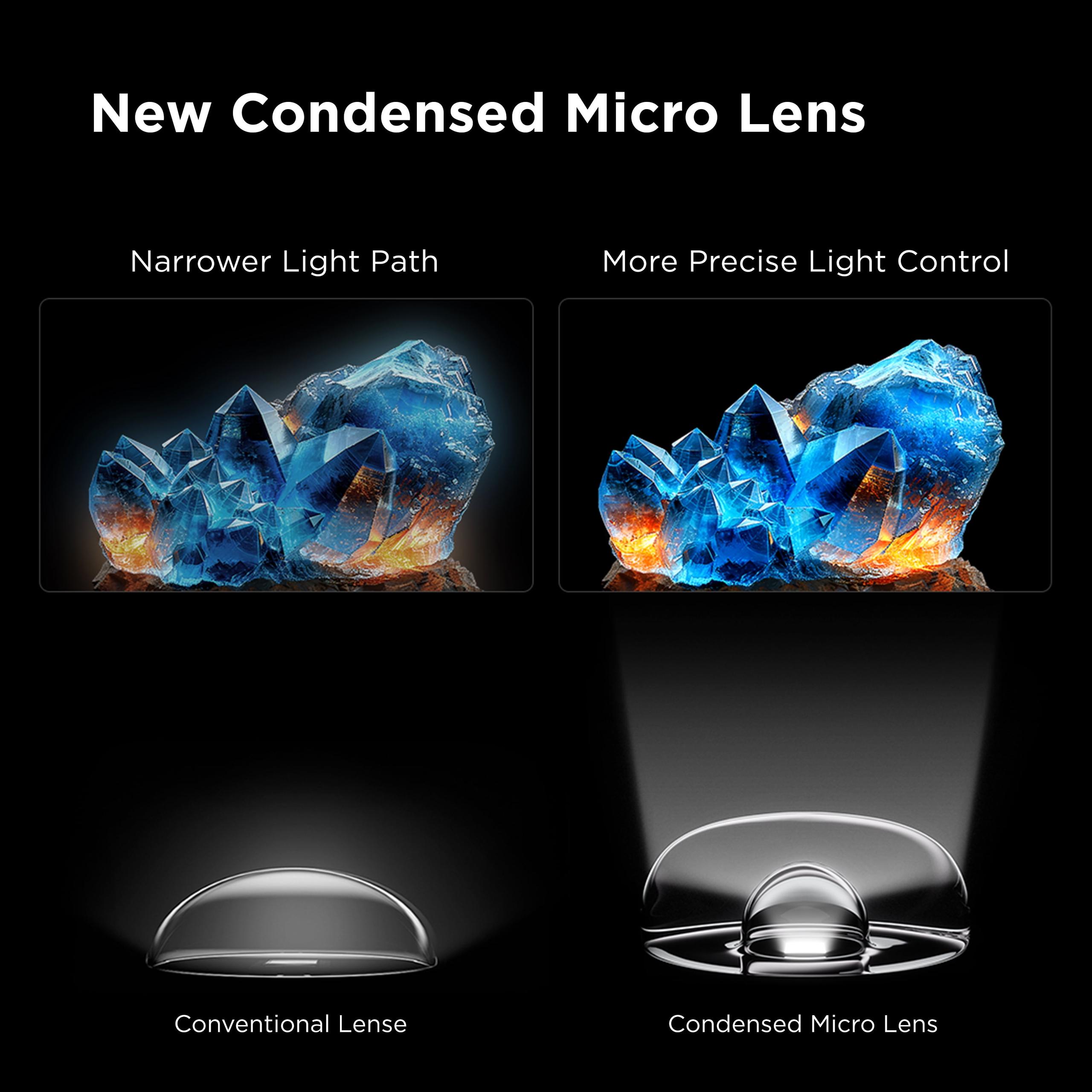
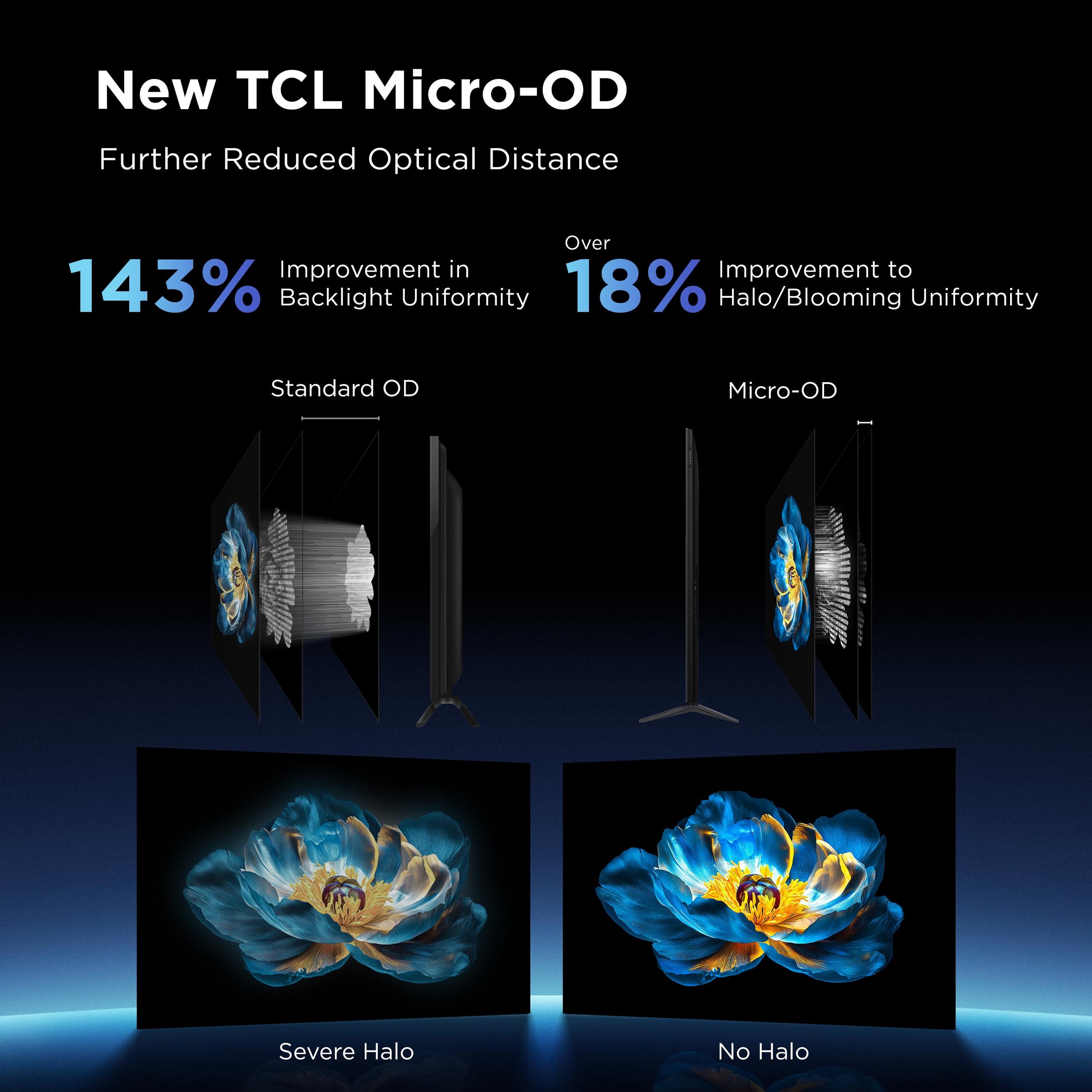
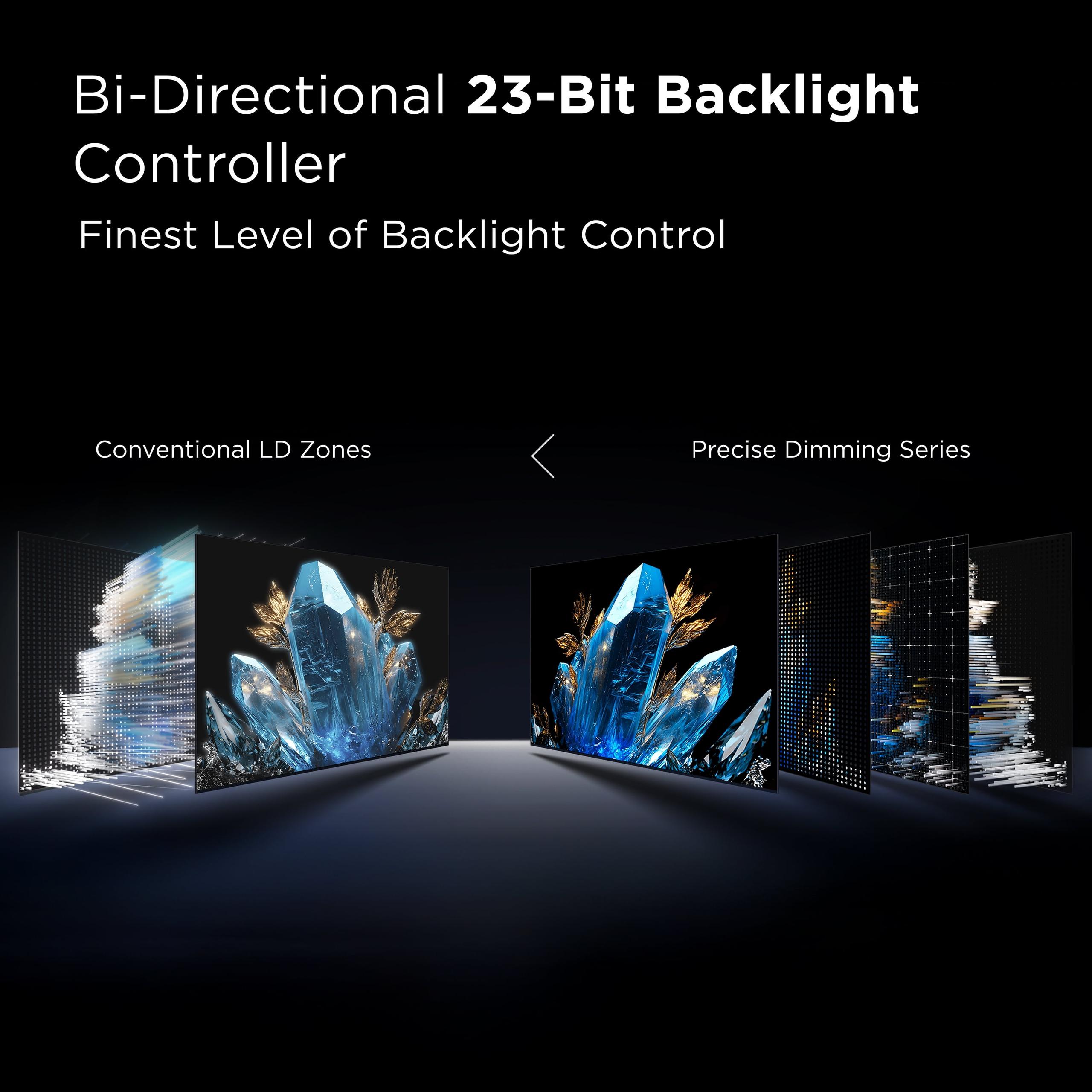
The TCL QM6K uses Mini LED backlighting with Quantum Dot color enhancement – a combination that was cutting-edge just a few years ago. Mini LED means the backlight consists of thousands of tiny LEDs instead of the dozens or hundreds found in traditional Full Array setups. Think of it like the difference between painting with a thick brush versus a fine-detail brush – you get much more precise control.
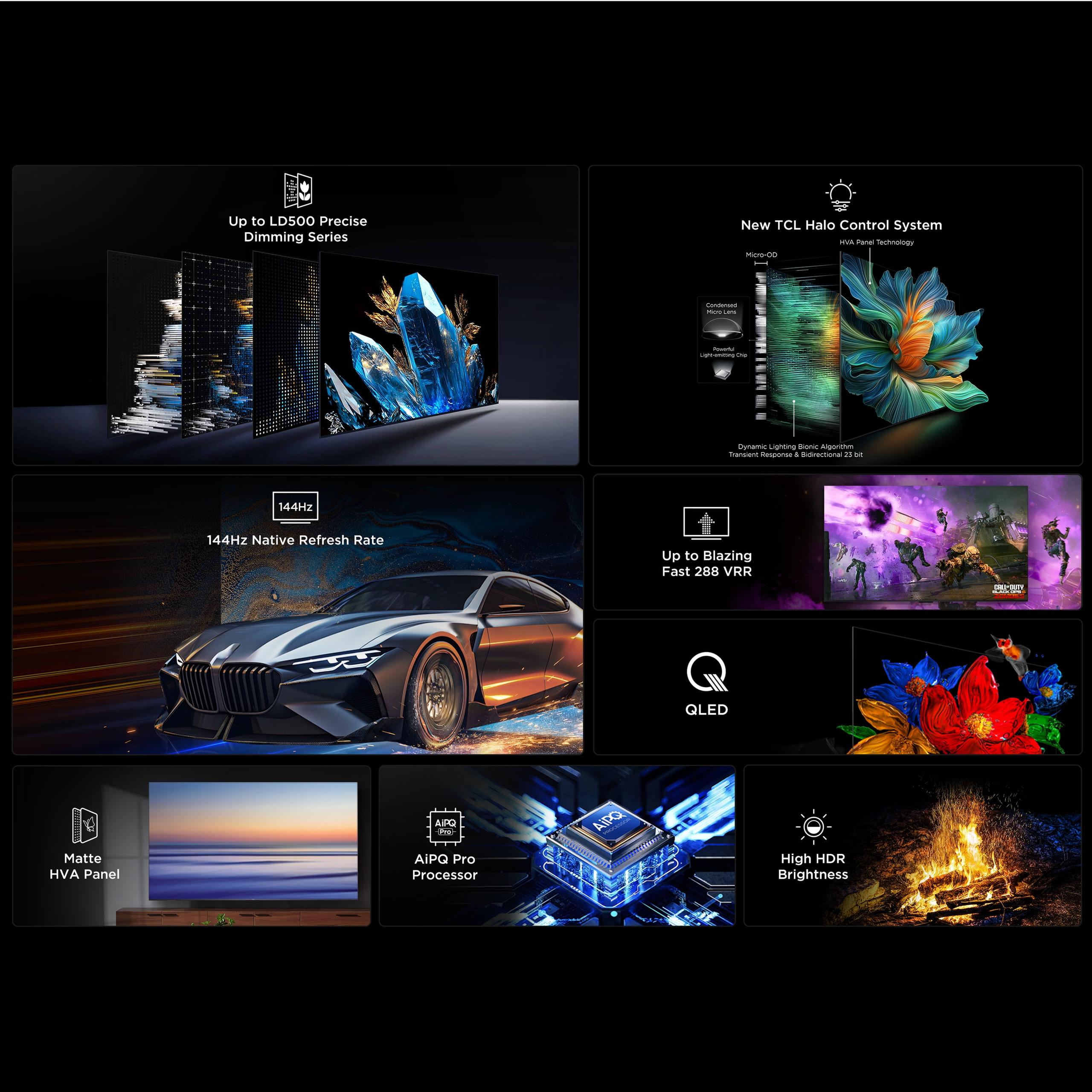
This precision shows up most dramatically in contrast performance. The QM6K achieves what TCL calls "LD500 Precise Dimming," meaning it can control brightness in up to 500 different zones across the screen. When you're watching a movie with bright explosions against a dark night sky, each zone can independently adjust its brightness. The result is deeper blacks right next to brilliant highlights, with minimal "blooming" – that annoying halo effect you sometimes see around bright objects on dark backgrounds.
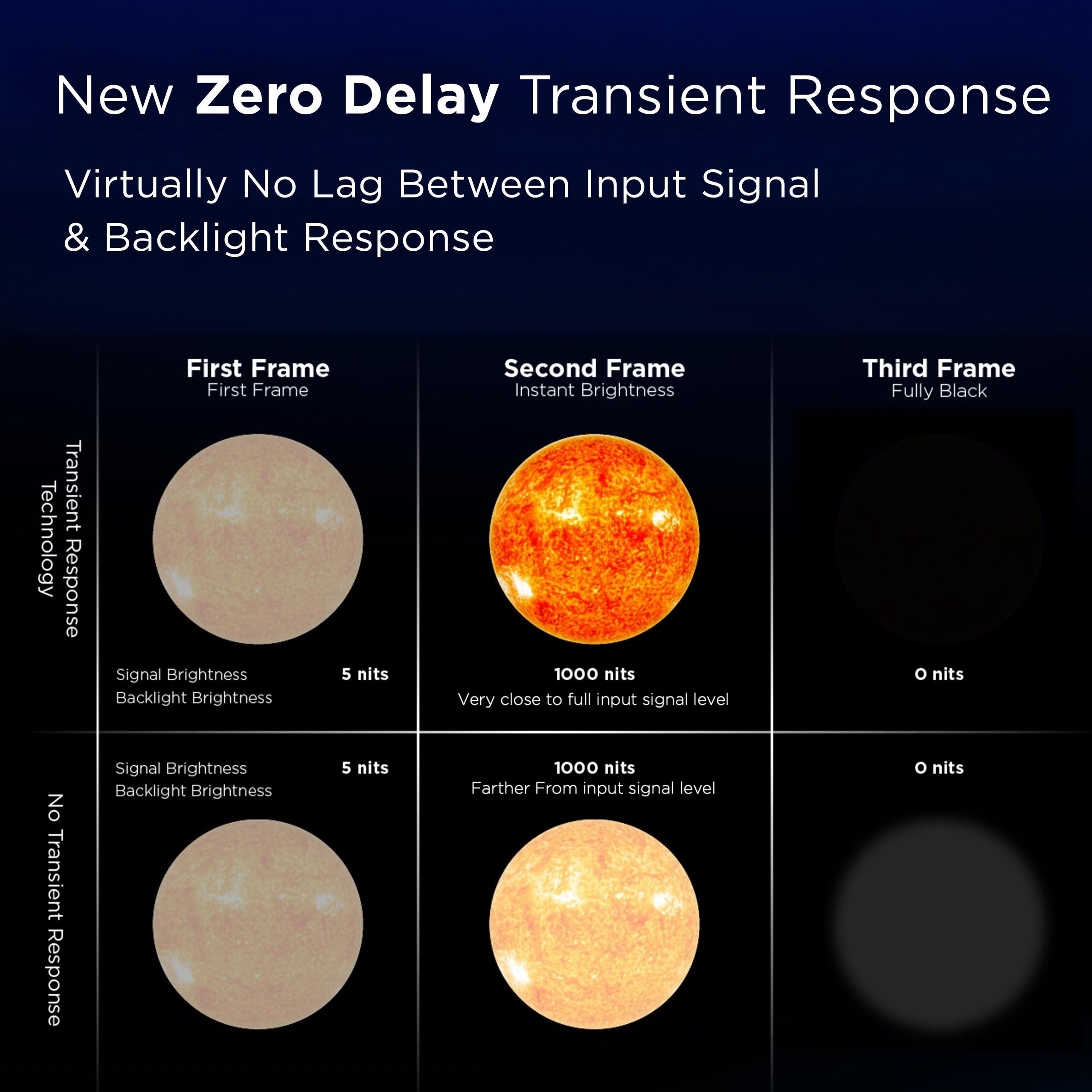
I've noticed this makes a huge difference when watching content with mixed lighting, like scenes that transition from bright outdoors to dim interiors. The Mini LED backlighting adapts almost instantly, maintaining detail in both the shadows and highlights that would be lost on traditional LED TVs.
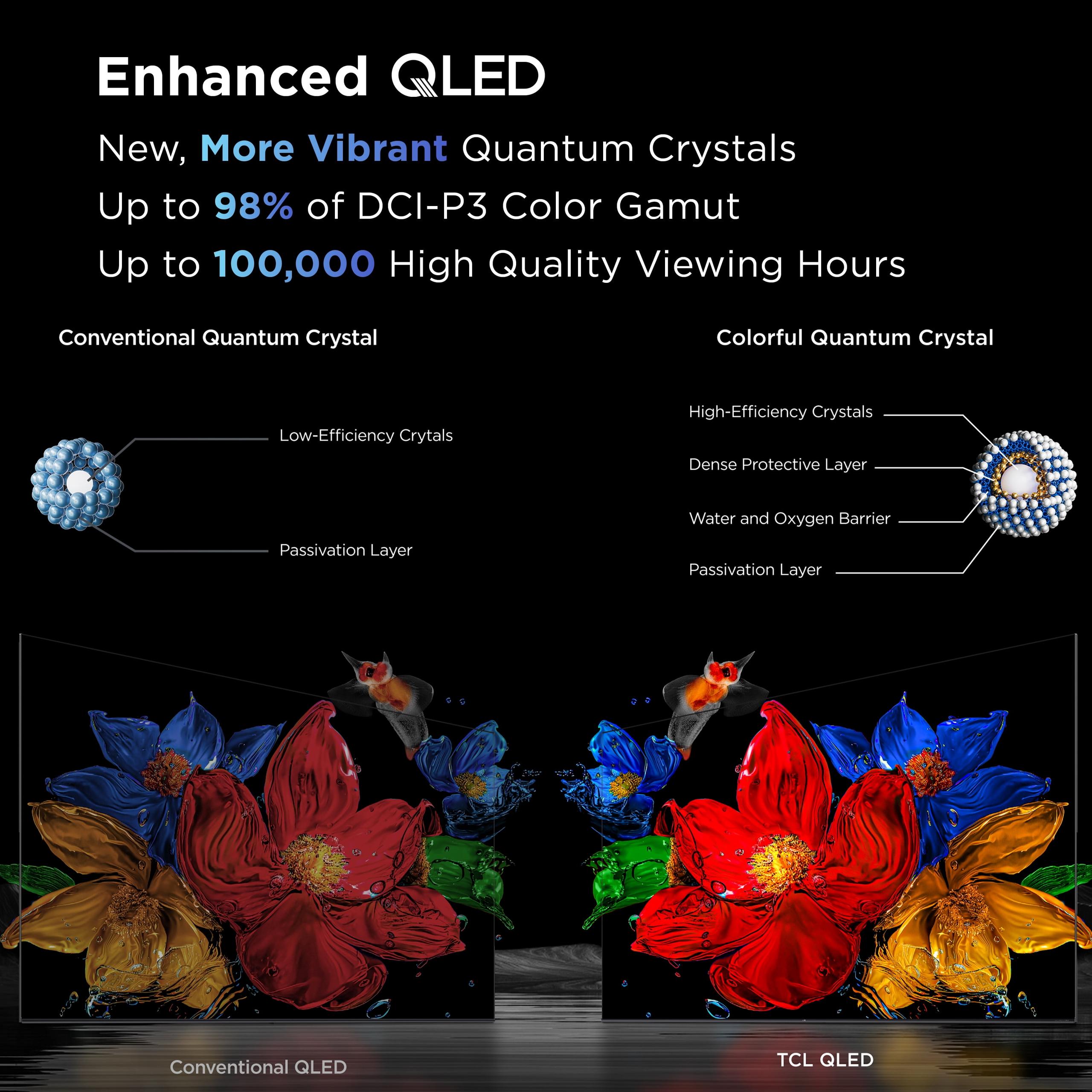
The Quantum Dot layer adds another performance boost by converting the LED backlight into purer, more saturated colors. The QM6K covers 93% of the DCI-P3 color space – the standard used by Hollywood for digital cinema. This means you're seeing colors much closer to what the director intended, with more vibrant reds, deeper blues, and more natural skin tones.
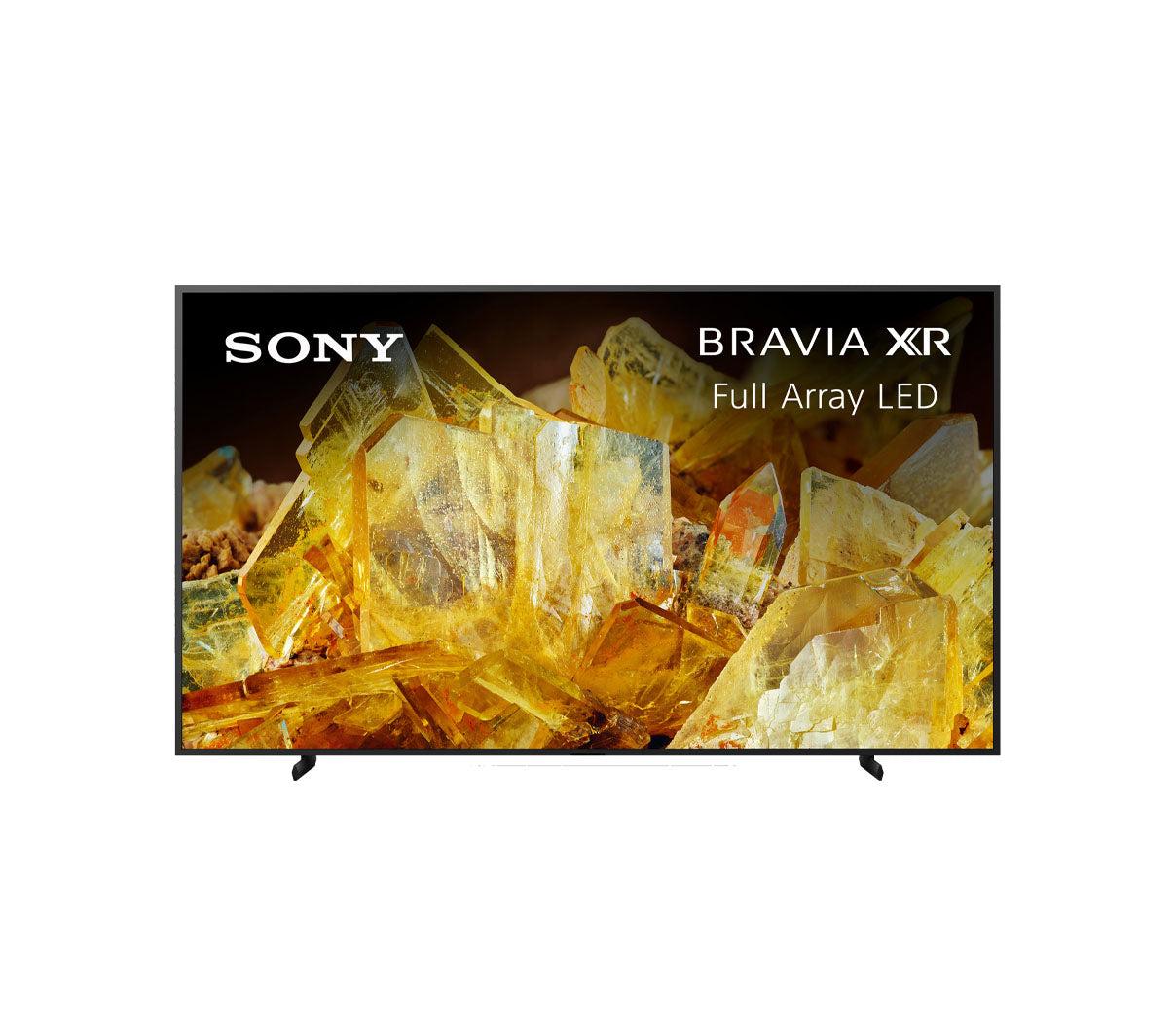
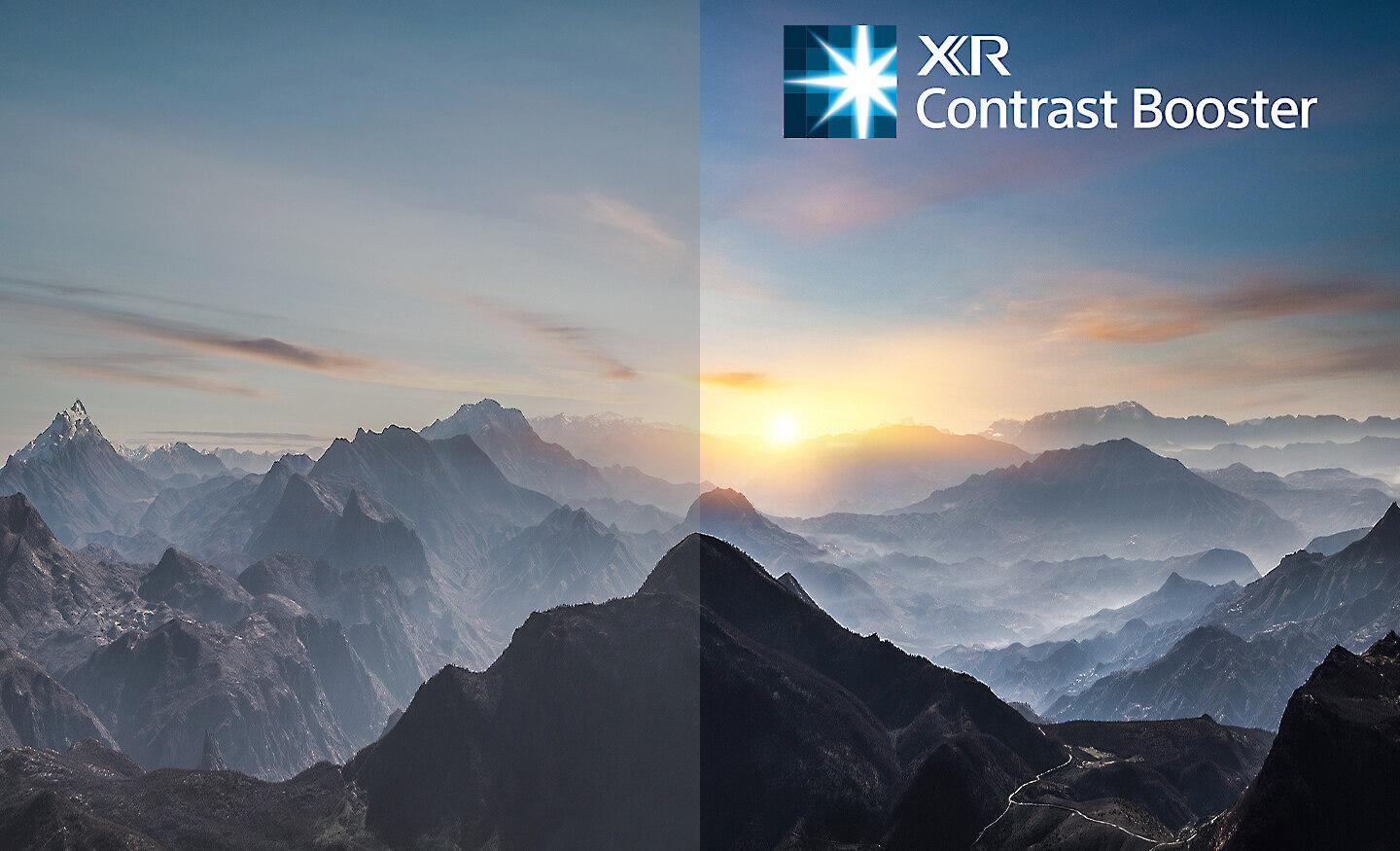
The Sony X90L takes a more traditional route with Full Array LED backlighting. While this technology is older, Sony has refined it considerably over the years. The X90L uses what Sony calls "XR Backlight Master Drive," which coordinates the LED zones with their Cognitive Processor XR to optimize contrast.
Sony's strength has always been in processing and color science rather than raw hardware specs. Their Cognitive Processor XR analyzes the image hundreds of times per second, making micro-adjustments to enhance the most important parts of each scene. If you're watching a person's face, for example, it prioritizes color accuracy and brightness for skin tones while slightly de-emphasizing less critical background elements.
The XR Triluminos Pro color system reproduces what Sony claims are billions of colors, focusing on natural gradation and smooth transitions rather than maximum saturation. This gives Sony TVs their characteristic "cinematic" look that many videophiles prefer, even if the colors aren't technically as wide-gamut as the TCL's Quantum Dot implementation.
However, the Full Array LED backlighting shows its limitations in direct comparison to Mini LED. The Sony has fewer, larger dimming zones, which means less precise control over brightness. You'll notice more blooming around bright objects, and the contrast ratio isn't quite as dramatic as what the TCL can achieve.
Gaming capabilities have become a crucial differentiator in premium TVs, especially as console gaming has moved toward higher frame rates and variable refresh rates.
The TCL QM6K was clearly designed with 2025 gaming standards in mind. It supports 4K resolution at 144Hz and can push 1080p content at an incredible 288Hz. To put this in perspective, most TVs still max out at 120Hz, and many older models only support 60Hz.
Why does this matter? Higher refresh rates mean smoother motion and reduced input lag – the delay between when you press a button and when you see the action on screen. For competitive gaming, this can be the difference between landing a shot and missing it. Even for single-player games, the smoother motion makes fast-paced action sequences more comfortable to watch and reduces eye strain during long gaming sessions.
The QM6K also supports both major variable refresh rate standards: HDMI Forum VRR (which works with PlayStation 5 and Xbox Series X) and AMD FreeSync Premium Pro (compatible with PC gaming). Variable refresh rate synchronizes the TV's refresh with your gaming device's frame rate, eliminating screen tearing and stuttering that can break immersion.
What's particularly impressive is that TCL managed to include two full-bandwidth HDMI 2.1 ports. This means you can connect both a PlayStation 5 and Xbox Series X simultaneously, both getting full 4K/144Hz support without having to swap cables.
The Sony X90L offers solid but less impressive gaming specs. It supports 4K at 120Hz, which covers current-generation consoles well but doesn't future-proof for upcoming gaming advances. The TV includes Auto Low Latency Mode (ALLM), which automatically switches to a low-lag game mode when it detects a gaming signal.
Sony's implementation of VRR is more basic, supporting only the HDMI Forum standard without AMD FreeSync compatibility. For console gaming, this works fine, but PC gamers might find the options more limiting.
Input lag on the Sony is noticeably higher outside of its dedicated Game Mode, which can be problematic if you're switching between gaming and other content frequently. The TCL maintains low lag across multiple picture modes, making it more versatile for mixed use.
High Dynamic Range (HDR) content has become the standard for premium streaming and gaming, making HDR performance a critical factor for any high-end TV.
The TCL QM6K achieves around 736 nits of peak brightness in a 50% window test – a measurement that simulates mixed bright and dark content. While this isn't flagship-level brightness (some premium TVs hit over 1,000 nits), it's adequate for most HDR content and significantly better than budget TVs.
More importantly, the Mini LED backlighting means this brightness can be precisely controlled. Bright highlights pop without washing out surrounding details, and the TV can maintain these peak brightness levels across multiple zones simultaneously.
The Sony X90L struggles more with HDR brightness, typically measuring lower peak output than the TCL. However, Sony's processing helps compensate by intelligently managing the available brightness. Their tone mapping – the process of converting HDR content to fit the TV's capabilities – is generally excellent, maintaining the creative intent even when the raw brightness isn't as high.
Both TVs support the major HDR formats: HDR10, HDR10+, Dolby Vision, and HLG (Hybrid Log-Gamma, used for broadcast HDR). The TCL's Quantum Dot technology gives it an edge in color volume – how well it can reproduce saturated colors at different brightness levels. This is particularly noticeable in content with vivid colors like animated movies or nature documentaries.
Sony's approach prioritizes natural color reproduction over maximum saturation. Their HDR processing tends to produce more film-like images that some viewers prefer, even if they're not technically as colorful as what the TCL can produce.
This is where the price difference between these TVs becomes most apparent, and where Sony justifies its premium positioning.
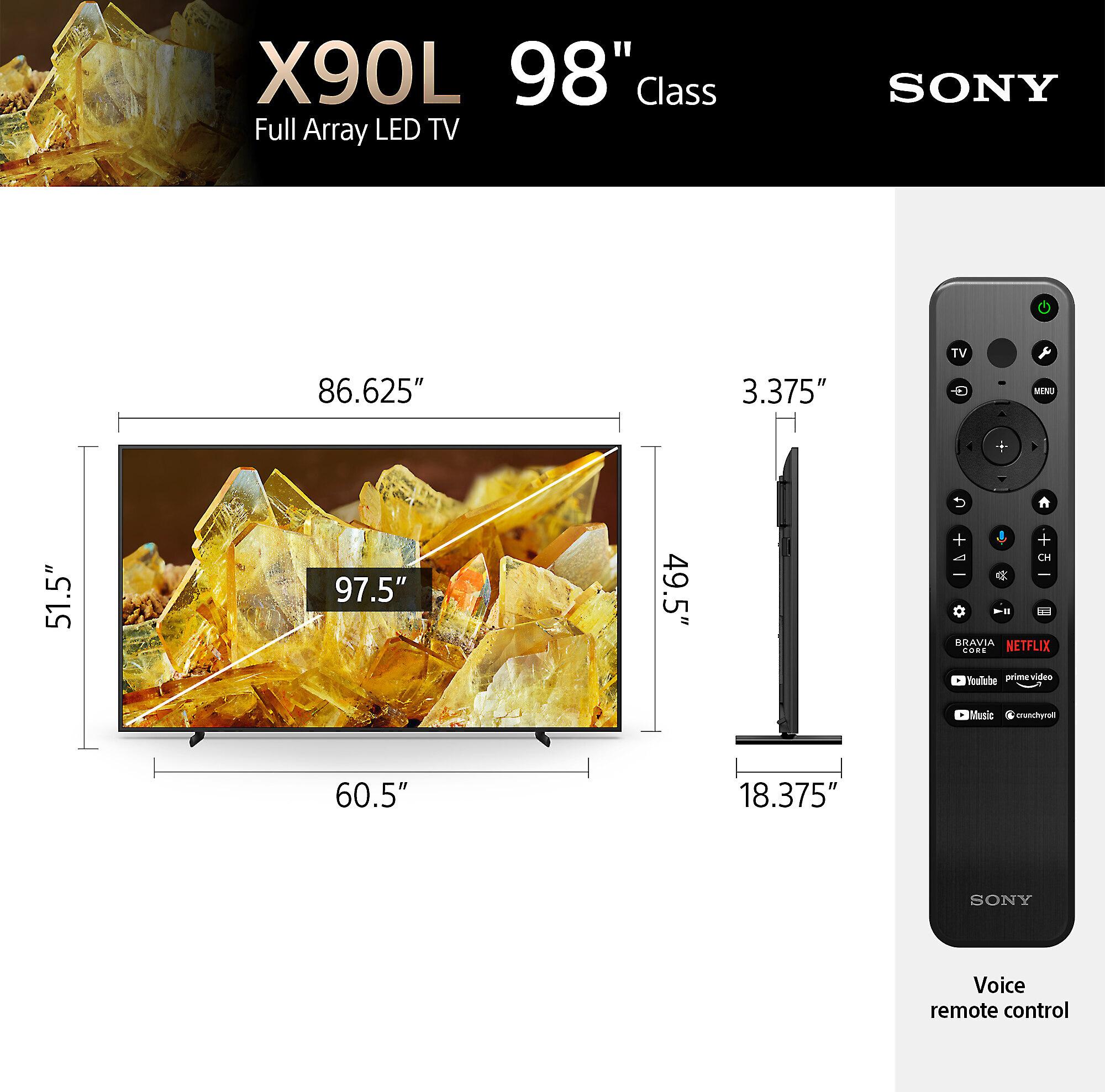
The Sony X90L features what Sony calls "Acoustic Surface Audio+" – a system that uses the screen itself as a speaker surface, supplemented by traditional drivers and tweeters positioned around the display. This creates a more immersive soundstage where dialogue appears to come directly from characters' mouths rather than from below the screen.
The system includes sound positioning tweeters that can direct audio to match the visual action. When a car drives across the screen, the sound follows it. During dialogue scenes, voices are anchored to the center of the screen where the actors appear. This level of audio sophistication is rare in built-in TV speakers and can significantly enhance the viewing experience without requiring external audio equipment.
For home theater use, this makes the Sony much more plug-and-play. Many users will find the built-in audio completely adequate for movies and TV shows, though audiophiles will still want to add a dedicated sound system for the ultimate experience.
The TCL QM6K includes an Onkyo-tuned 2.1.1 speaker system with a built-in subwoofer, which provides decent sound quality but lacks the sophistication of Sony's implementation. The audio is clear and adequately powerful for casual viewing, but it doesn't create the same immersive soundstage.
TCL partially addresses this limitation by including their S45H soundbar with some configurations, which adds Dolby Atmos support and improved bass response. However, this still doesn't match the seamless integration of Sony's built-in system.
For most buyers planning to add a soundbar or surround sound system anyway, the TCL's audio limitations become less significant. But if you prefer to rely on built-in speakers, Sony has a clear advantage.
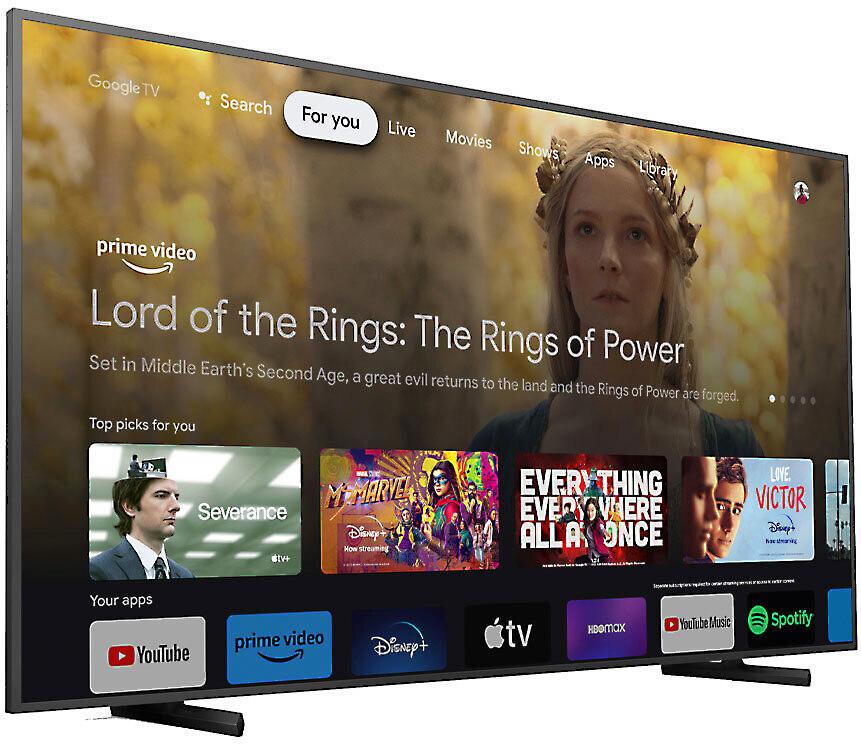
Both TVs run Google TV, but there are important differences in implementation and longevity.
The TCL QM6K ships with Google TV version 12, the latest release as of 2025. This newer version includes improved app performance, better content recommendations, and enhanced voice control features. More importantly, newer hardware typically receives software updates for a longer period.
The Sony X90L, being a 2023 model, ships with an older version of Google TV and may receive fewer future updates. While Sony has historically been good about supporting their TVs with software updates, the age difference matters for long-term usability.
Both TVs support major streaming services, voice control, and smart home integration. The user experience is largely similar, but the TCL's newer platform provides better future-proofing.
Here's where the decision becomes clear for most buyers. The TCL QM6K at $1,999.99 delivers genuinely premium display technology at half the price of the Sony X90L at $4,059.45.
For that $2,000 price difference, you're getting:
The Sony's advantages – primarily better built-in audio and Sony's processing expertise – are significant but harder to justify at twice the price. Unless audio quality is your primary concern or you're already invested in Sony's ecosystem, the TCL represents exceptional value.
For dedicated home theater setups, both TVs work well, but each has specific advantages.
The TCL QM6K excels in mixed lighting conditions thanks to its anti-glare screen, making it suitable for family rooms where you can't always control lighting. The superior contrast also enhances the cinematic experience, especially for action movies and dramatic content with varied lighting.
The Sony X90L shines in dedicated theater rooms where lighting can be controlled. The natural color reproduction and superior built-in audio create a more film-like experience that many cinema enthusiasts prefer.
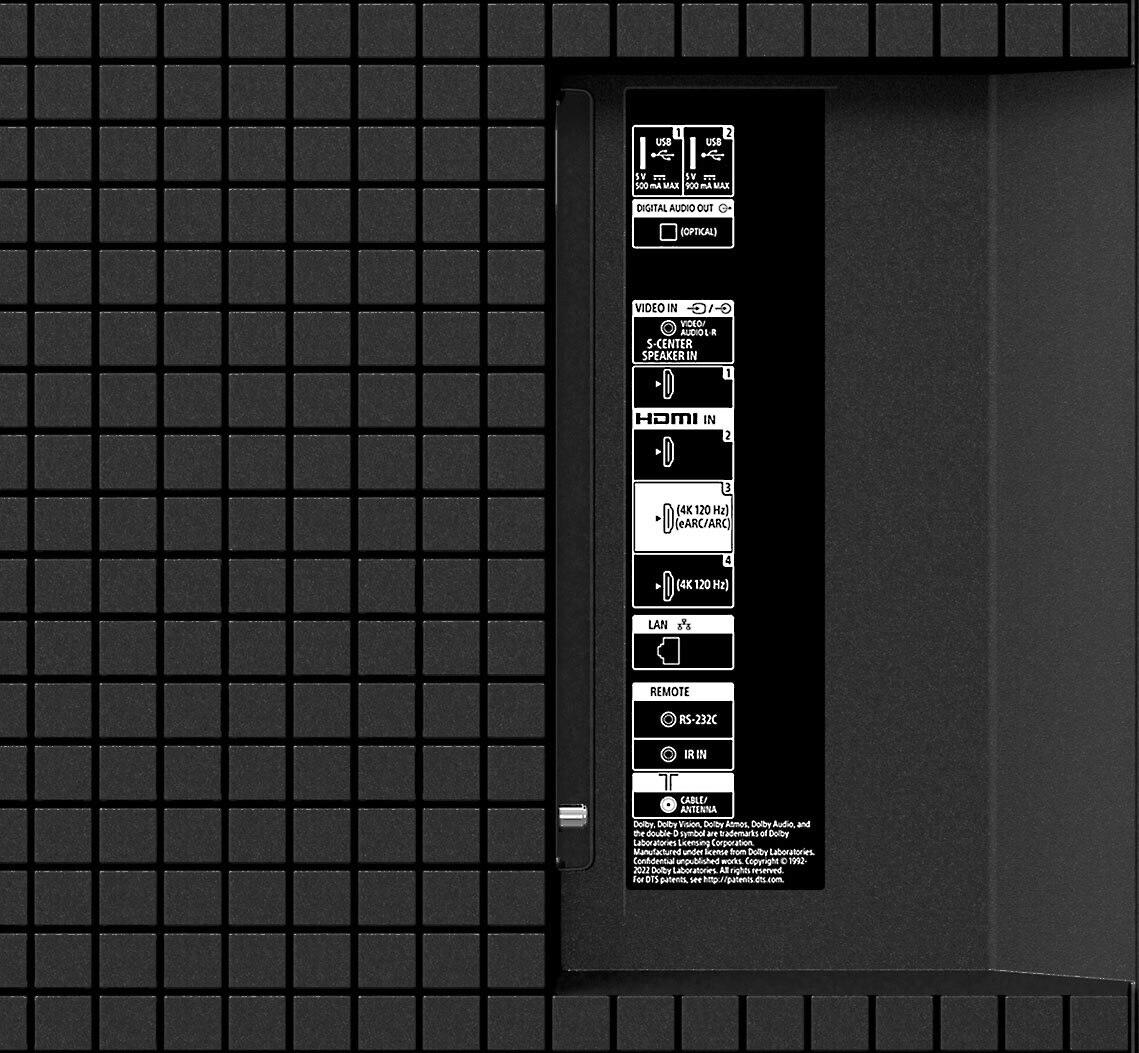
Both support the technical requirements for modern home theater: HDMI eARC for high-quality audio passthrough to soundbars or receivers, low input lag for gaming, and comprehensive HDR support for streaming and Blu-ray content.
If you're primarily interested in gaming performance and cutting-edge display technology, the TCL QM6K is the clear winner. The 144Hz support, Mini LED contrast, and aggressive pricing make it an exceptional value that's hard to argue against.
Choose the Sony X90L if audio quality is paramount and you prefer not to add external speakers immediately. Sony's built-in sound system is genuinely impressive and can eliminate the need for additional audio equipment in many setups.
For most buyers, especially those planning to add a soundbar anyway, the TCL represents the better overall package. You're getting flagship-level display technology at a mainstream price, with gaming capabilities that exceed what Sony offers at twice the cost.
The bottom line: In 2025, Mini LED technology has matured to the point where it's accessible at reasonable prices, and TCL has executed this transition exceptionally well. Unless Sony's specific advantages align perfectly with your priorities, the QM6K delivers substantially more value for your entertainment dollar.
| TCL 98-Inch QM6K QLED ($1,999.99) | Sony BRAVIA XR X90L 98" ($4,059.45) |
|---|---|
| Display Technology - The foundation of picture quality and contrast performance | |
| QD-Mini LED with thousands of dimming zones, Quantum Dot color enhancement | Full Array LED with fewer dimming zones, XR Triluminos Pro color |
| Gaming Performance - Critical for console and PC gaming | |
| 4K @ 144Hz, 1080p @ 288Hz, dual VRR support (HDMI Forum + AMD FreeSync), ultra-low input lag | 4K @ 120Hz, HDMI Forum VRR only, higher input lag outside Game Mode |
| Peak Brightness - Determines HDR impact and daytime viewing capability | |
| ~736 nits with precise Mini LED control, excellent for mixed lighting | Lower peak brightness but good tone mapping, better in controlled lighting |
| Contrast & Black Levels - Most noticeable difference in dark room viewing | |
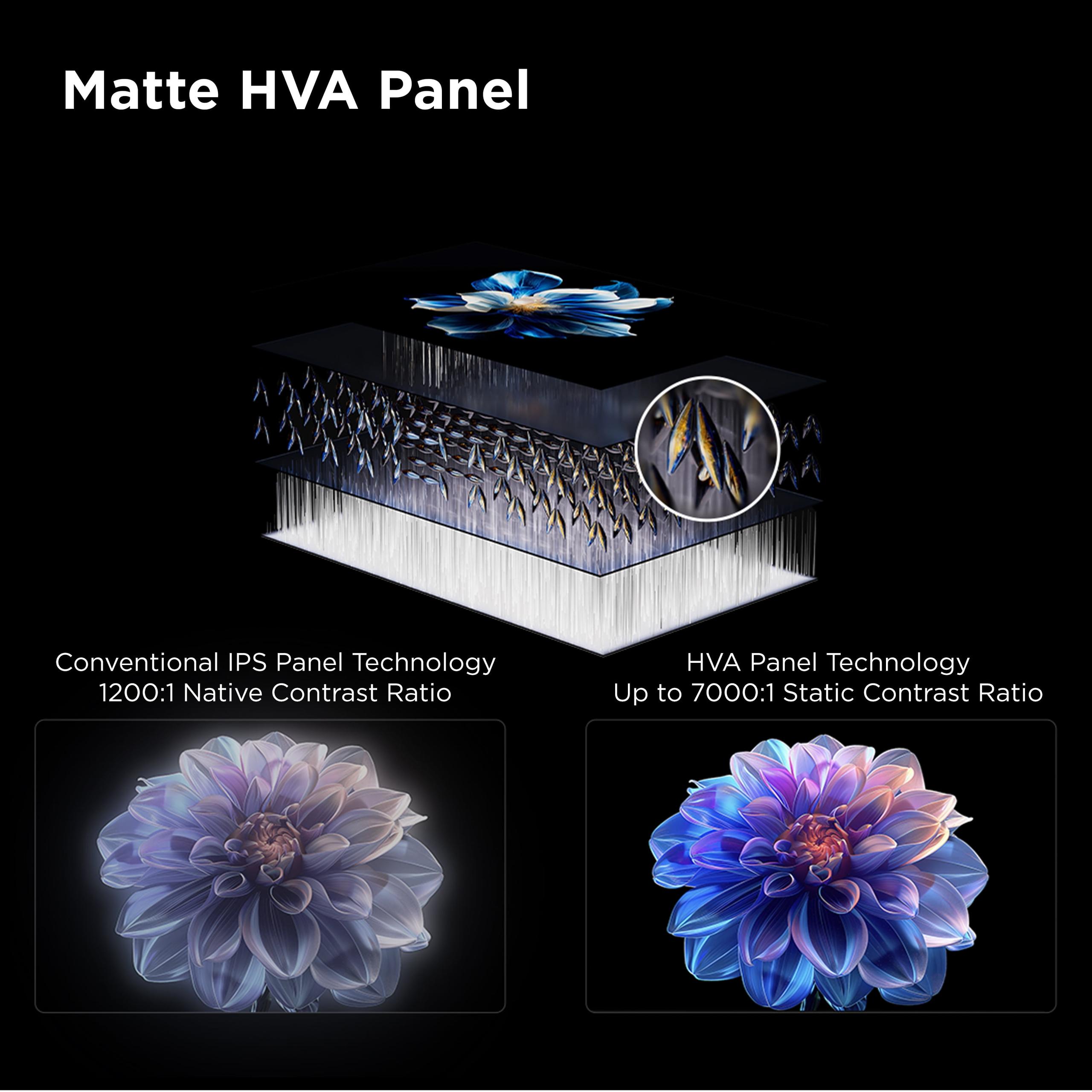
| Superior contrast (7,000:1) with minimal blooming thanks to Mini LED precision | Good contrast but more blooming around bright objects due to fewer dimming zones |
| Color Performance - Affects vibrancy and accuracy of all content | |
| 93% DCI-P3 coverage with Quantum Dot saturation, vibrant colors | Natural, film-like color reproduction with Sony's processing expertise |
| Audio Quality - Determines if you need external speakers immediately | |
| Onkyo 2.1.1 system with Dolby Atmos, adequate but benefits from soundbar | Acoustic Surface Audio+ with positioning tweeters, genuinely impressive built-in sound |
| Smart TV Platform - Affects app performance and future update support | |
| Google TV v12 (2025), longer update timeline, hands-free voice control | Google TV (older version), may receive fewer future updates |
| HDMI Connectivity - Important for multiple devices and future compatibility | |
| 2x HDMI 2.1 (full 4K/144Hz), 2x HDMI 2.0, one with eARC | 4x HDMI 2.1 with VRR and ALLM support, eARC for audio passthrough |
| Screen Treatment - Affects performance in bright rooms with windows | |
| Anti-glare matte screen reduces reflections, better for family rooms | Standard screen more prone to reflections, best in controlled lighting |
| Release Date & Technology Generation - Indicates how current the tech is | |
| 2025 model with latest Mini LED and processing advances | 2023 model with mature but older Full Array LED technology |
| Value Proposition - Price-to-performance ratio for the investment | |
| Flagship display tech at mainstream pricing, exceptional gaming value | Premium pricing for Sony processing and audio, harder to justify cost difference |
The TCL 98-Inch QM6K QLED ($1,999.99) is significantly better for gaming. It supports 4K at 144Hz and 1080p at 288Hz, compared to the Sony's 120Hz maximum. The TCL also has lower input lag, dual VRR support (both HDMI Forum and AMD FreeSync), and two full HDMI 2.1 ports for connecting multiple consoles simultaneously.
The TCL QM6K costs $1,999.99 while the Sony BRAVIA XR X90L ($4,059.45) is priced at $4,059.45. That's over $2,000 difference, with the Sony costing more than double the TCL's price.
The TCL QM6K has superior picture quality thanks to its Mini LED backlighting with thousands of dimming zones and Quantum Dot color technology. It delivers better contrast (7,000:1), deeper blacks, less blooming, and more vibrant colors covering 93% of the DCI-P3 color space compared to Sony's traditional Full Array LED system.
Both TVs work well for home theater use, but serve different needs. The TCL QM6K excels with superior contrast and gaming capabilities, making it ideal for mixed-use family theaters. The Sony X90L is better for dedicated theater rooms where lighting can be controlled, offering more natural, film-like color reproduction and excellent built-in audio.
The TCL QM6K ($1,999.99) offers exceptional value, delivering flagship-level Mini LED display technology, superior gaming performance, and modern smart TV features at half the price of the Sony X90L. Unless built-in audio quality is your top priority, the TCL provides significantly more performance per dollar.
The primary reason to choose the Sony X90L over the TCL QM6K is its superior built-in audio system with Acoustic Surface Audio+ technology. If you don't plan to add external speakers and prioritize excellent sound quality right out of the box, Sony's audio engineering justifies the premium price for some buyers.
We've done our best to create useful and informative comparisons to help you decide what product to buy. Our research uses advanced automated methods to create this comparison and perfection is not possible - please contact us for corrections or questions. These are the sites we've researched in the creation of this article: bestbuy.com - rtings.com - techradar.com - the-gadgeteer.com - youtube.com - youtube.com - ign.com - youtube.com - tomsguide.com - tcl.com - valueelectronics.com - bestbuy.com - bestbuy.com - rtings.com - circuitworldonline.com - youtube.com - tcl.com - bestbuy.com - tomsguide.com - tcl.com - flatpanelshd.com - displayspecifications.com - avsforum.com - valueelectronics.com - youtube.com - bestbuy.com - electronics.sony.com - stewartappliance.com - rcwilley.com - rtings.com - abt.com - pcrichard.com - videoandaudiocenter.com - avsforum.com

Privacy Policy
Terms and Conditions - Affiliate Policy
Home Security
© Copyright 2008-2026.
11816 Inwood Rd #1211, Dallas, TX 75244