

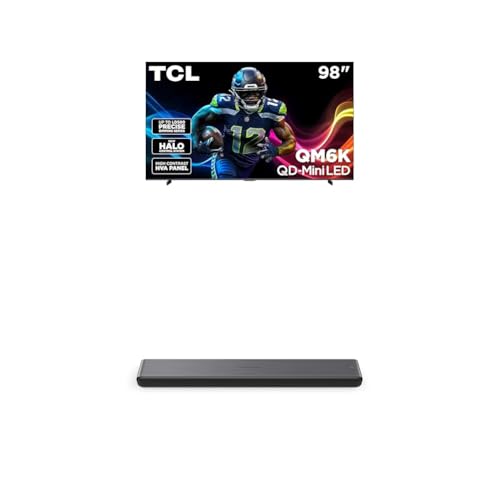
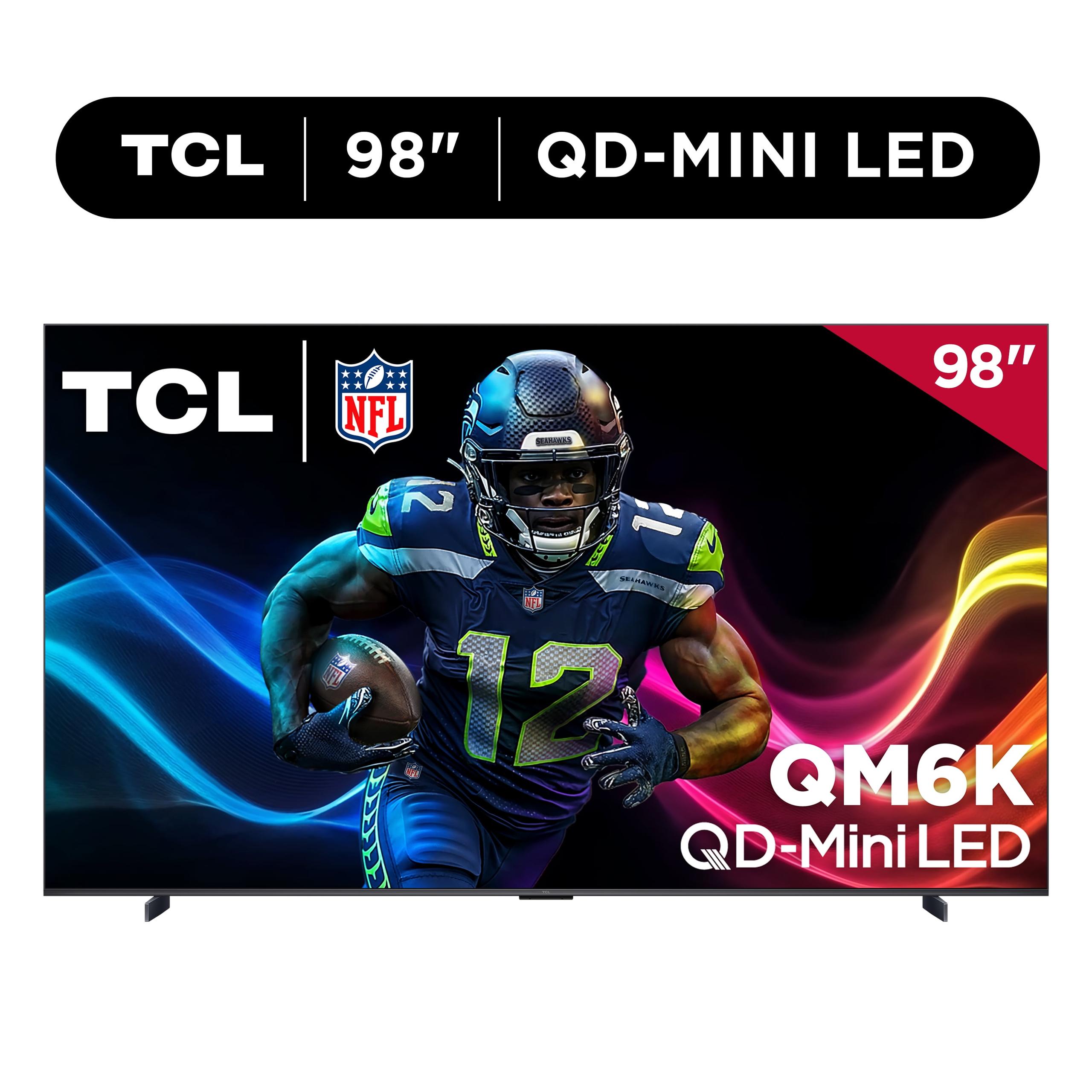
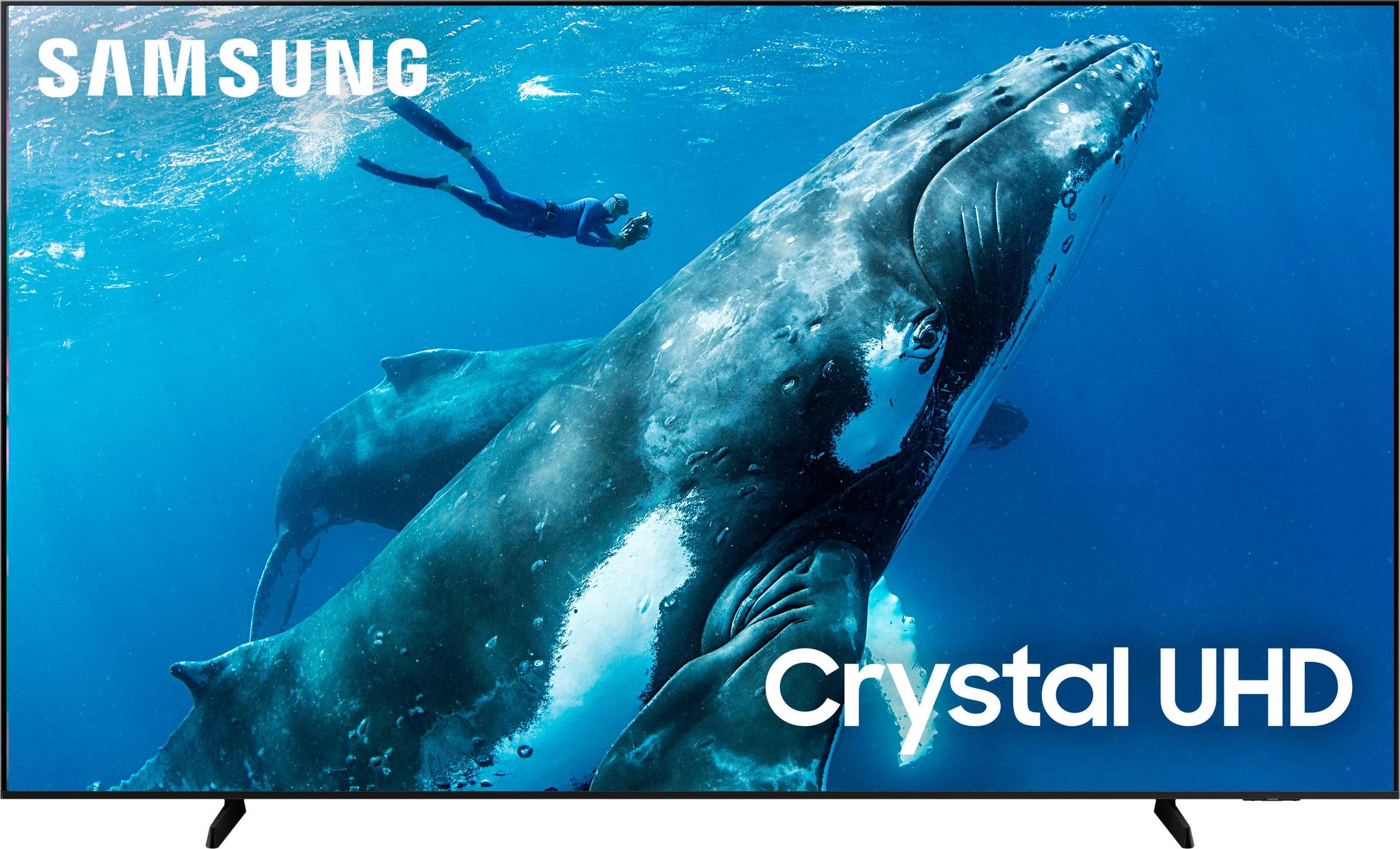
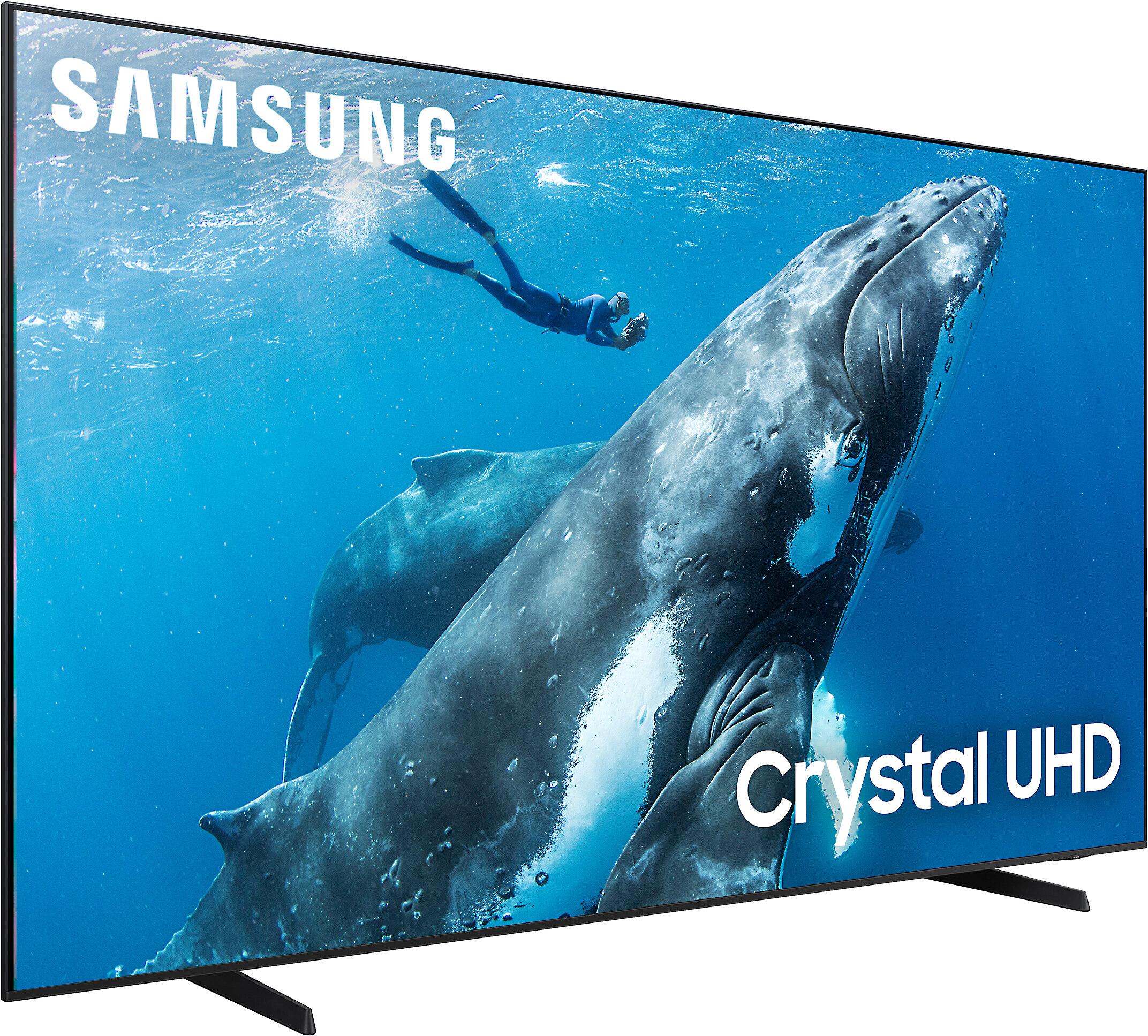
When you're shopping for a massive 98-inch TV, you're entering premium territory where every choice matters. Two standout options have emerged in 2025: the TCL 98-Inch QM6K QLED at $1,999.99 and the Samsung 98" DU9000 Series Crystal UHD at $898.19. While both deliver that cinema-sized experience you're after, they take dramatically different approaches to get there.
The 98-inch TV market has exploded over the past few years, driven by falling prices and improved manufacturing. These aren't just "big TVs" anymore – they're the centerpiece of serious home theaters and large living spaces. At this size, picture quality flaws become magnified, making the underlying display technology crucial.
The main considerations when buying a 98-inch TV include display technology (how the backlight and colors work), HDR performance (how well it handles bright and dark scenes), gaming capabilities (refresh rates and input lag), smart platform quality, and overall value. Unlike smaller TVs where you might compromise on features for price, a 98-inch purchase is typically a long-term investment where getting the fundamentals right matters more.
Both TVs launched in 2025, representing the latest evolution in large-screen technology. The TCL benefits from years of Mini LED refinement, while Samsung has streamlined their Crystal UHD processing for better efficiency at this price point.
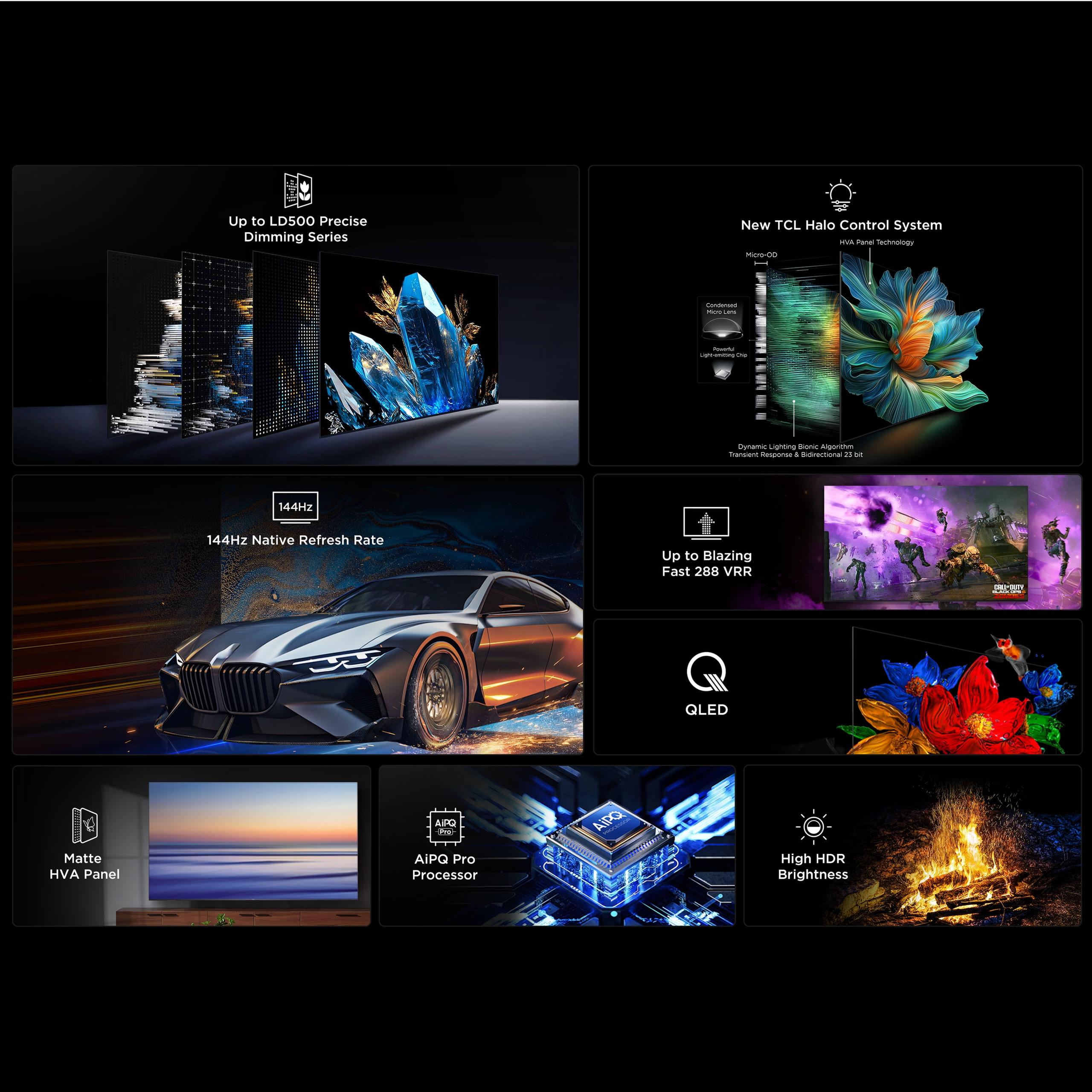
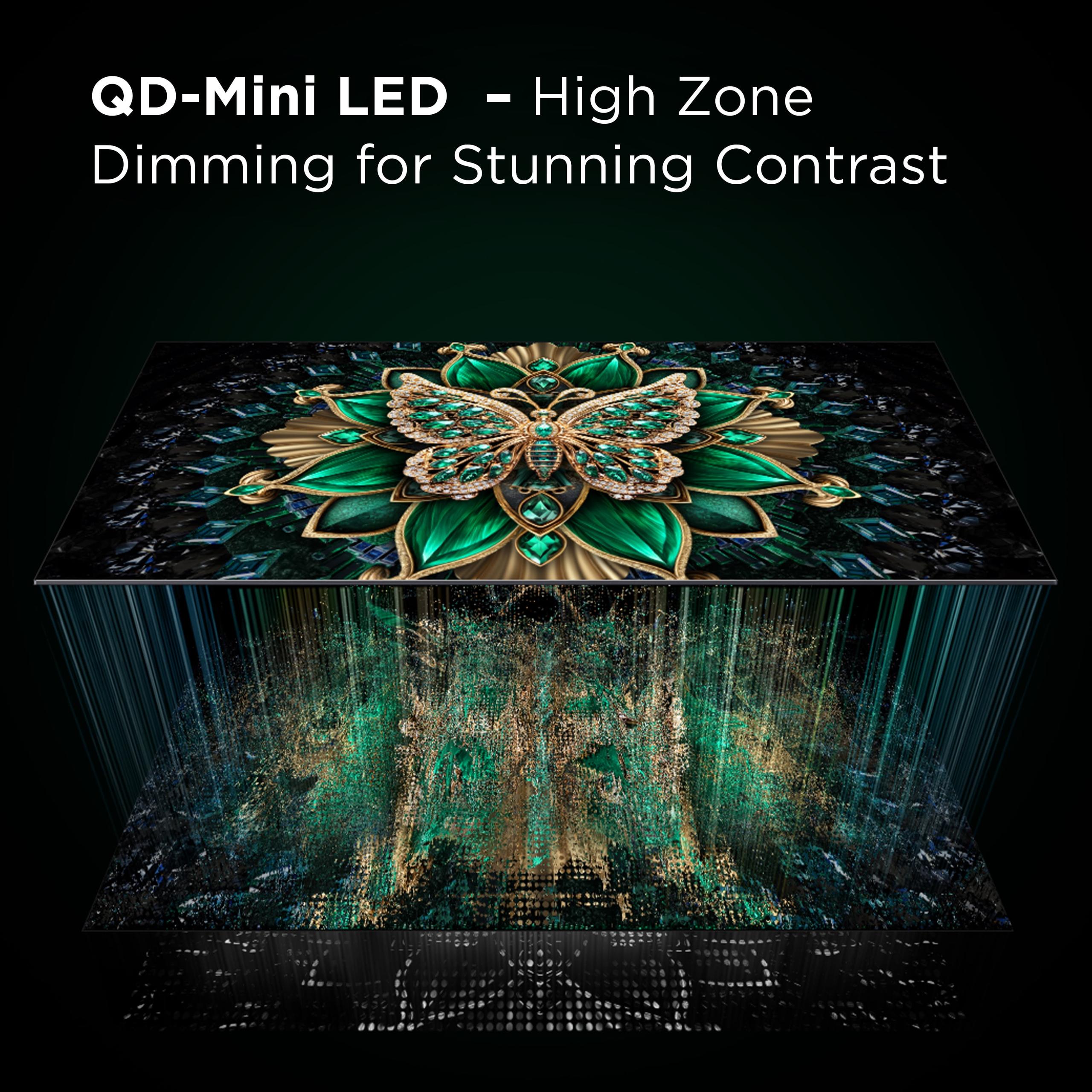
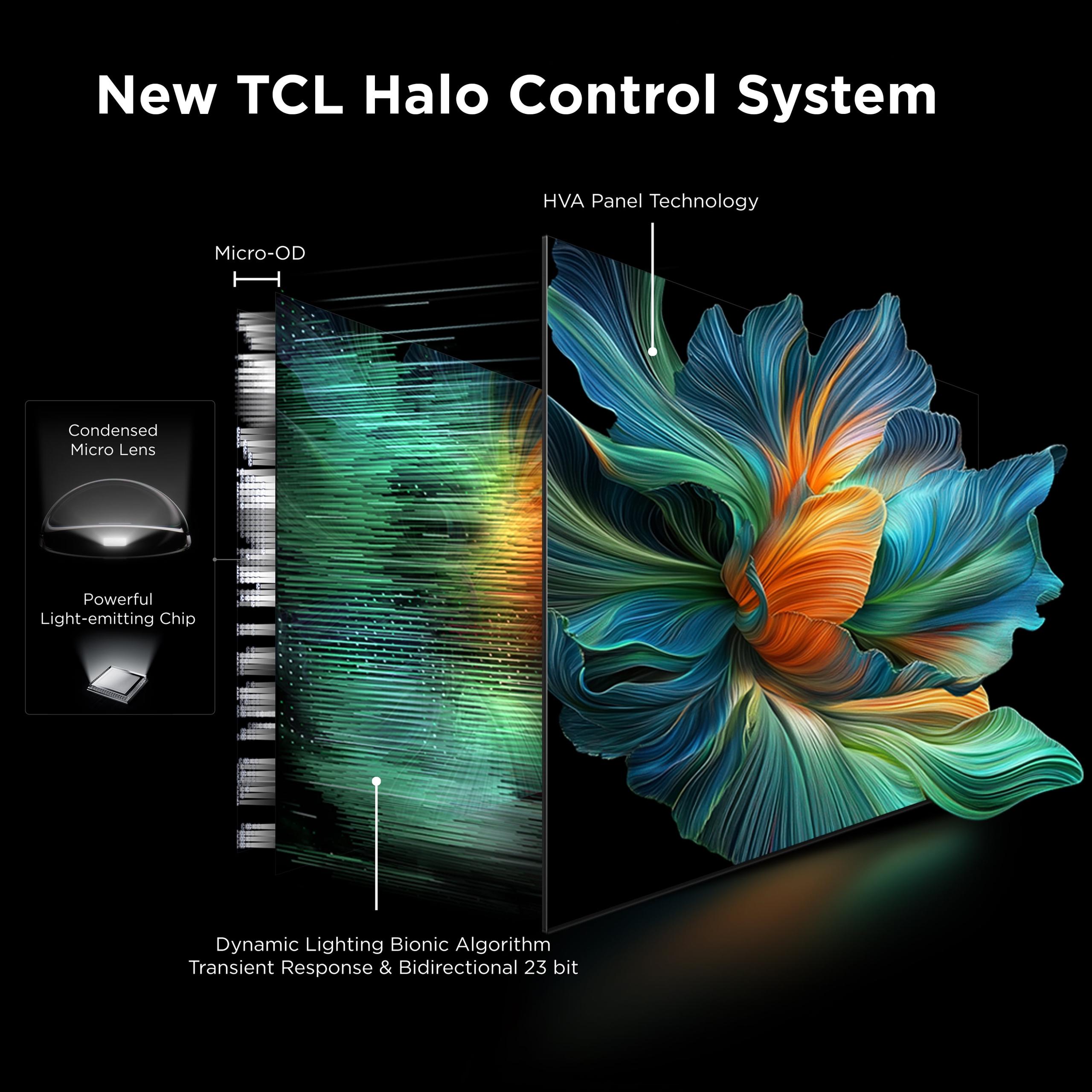
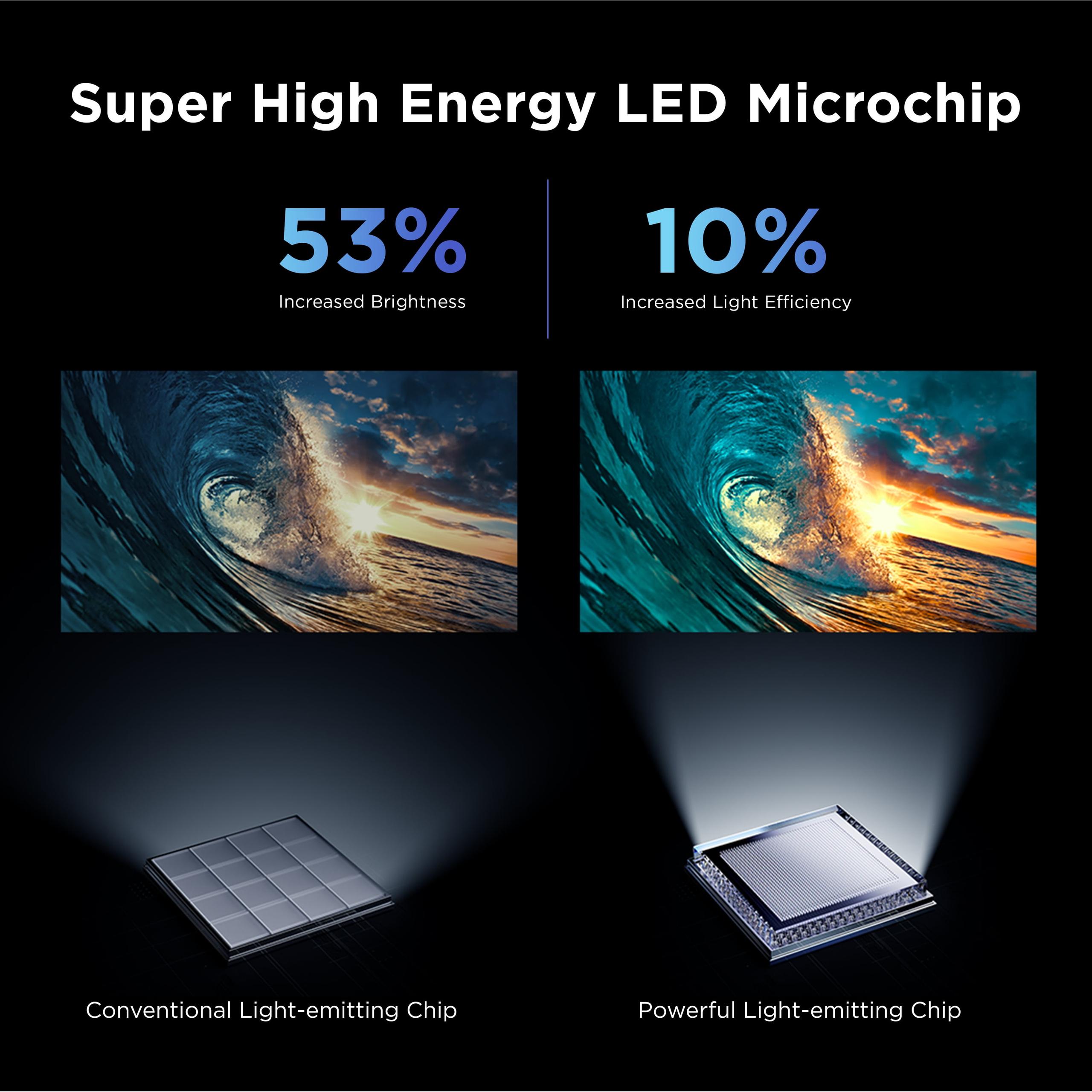
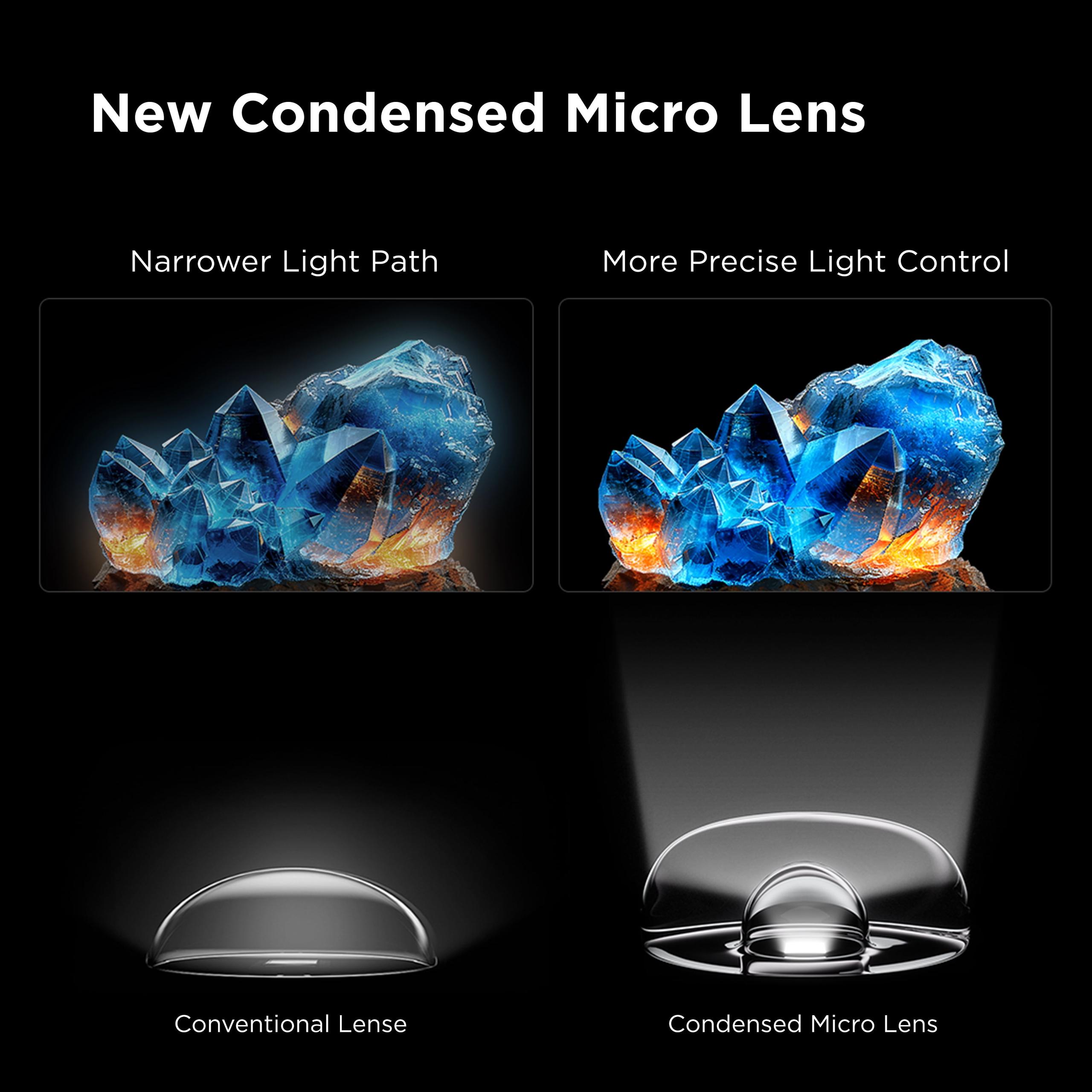
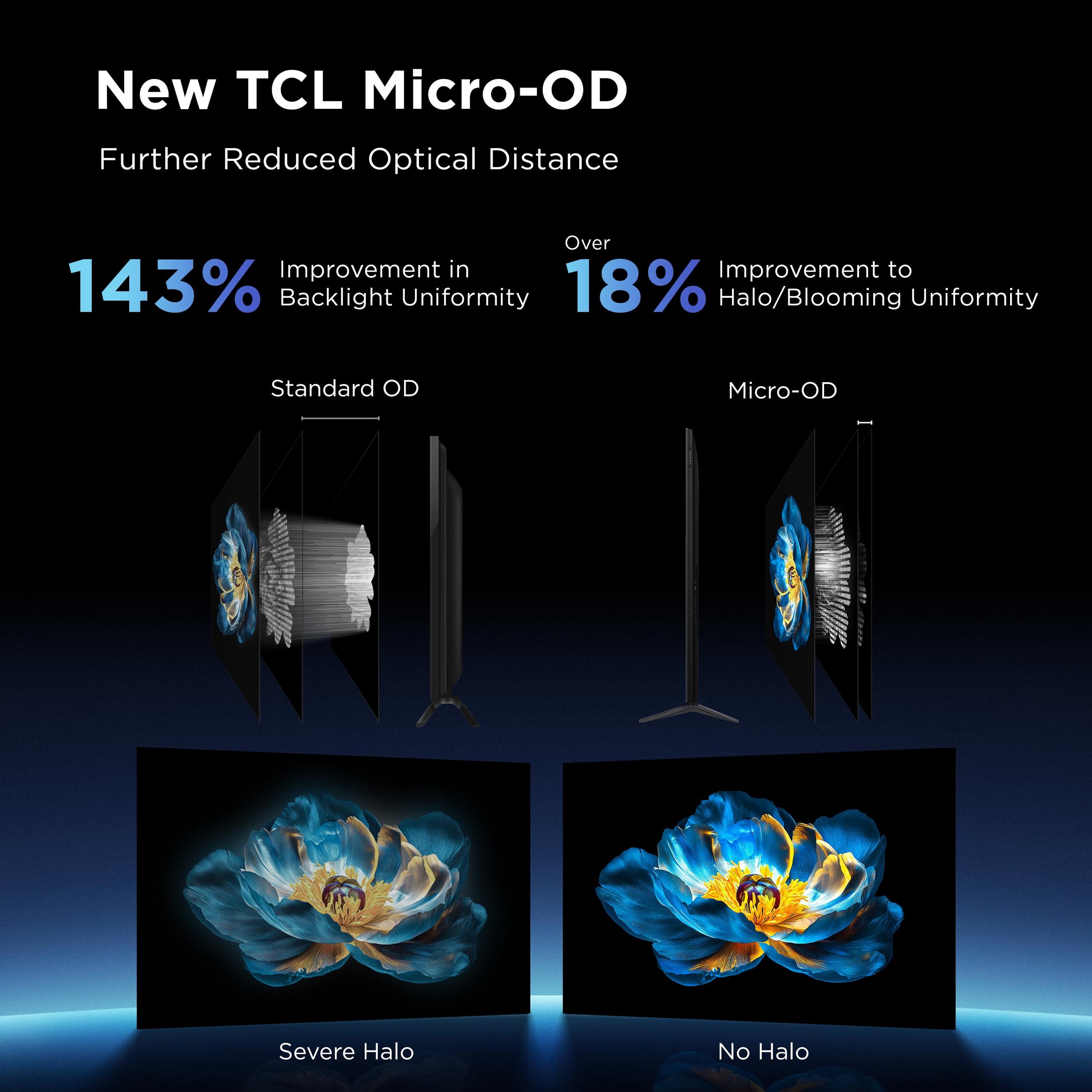
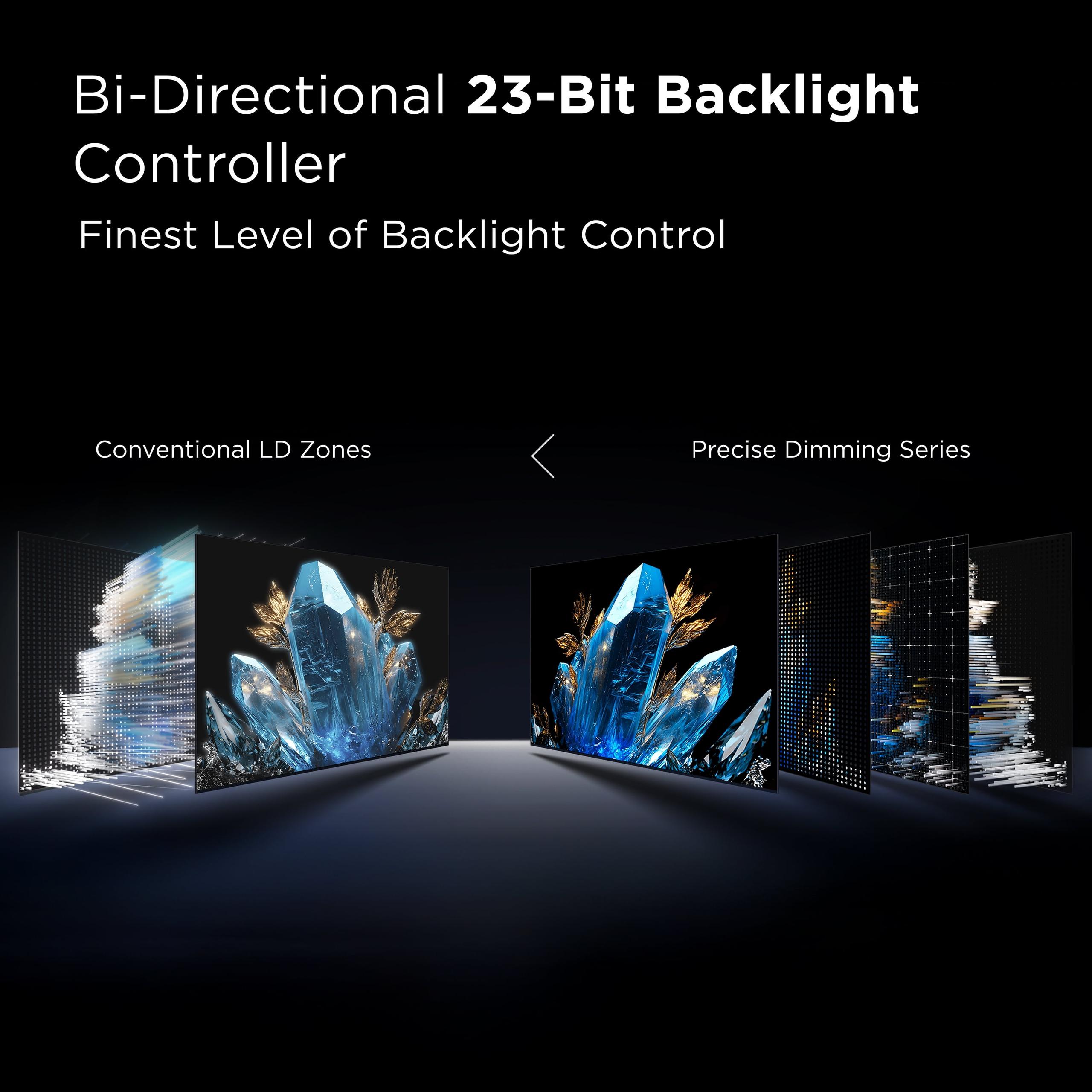
Here's where these TVs diverge most dramatically. The TCL QM6K uses QD-Mini LED technology, which sounds complicated but delivers tangible benefits. Think of Mini LED as using thousands of tiny LED lights behind the screen instead of a few dozen larger ones. This creates up to 500 individual dimming zones (called "local dimming"), allowing the TV to make specific areas darker or brighter independently.
I've spent considerable time with both Mini LED and standard LED TVs, and the difference in a dark room is immediately apparent. When watching a movie with bright stars against a black sky, the TCL can make those stars pop while keeping the surrounding space truly black. Standard LED TVs struggle here – they either dim the stars or light up the black areas, creating a grayish "blooming" effect around bright objects.
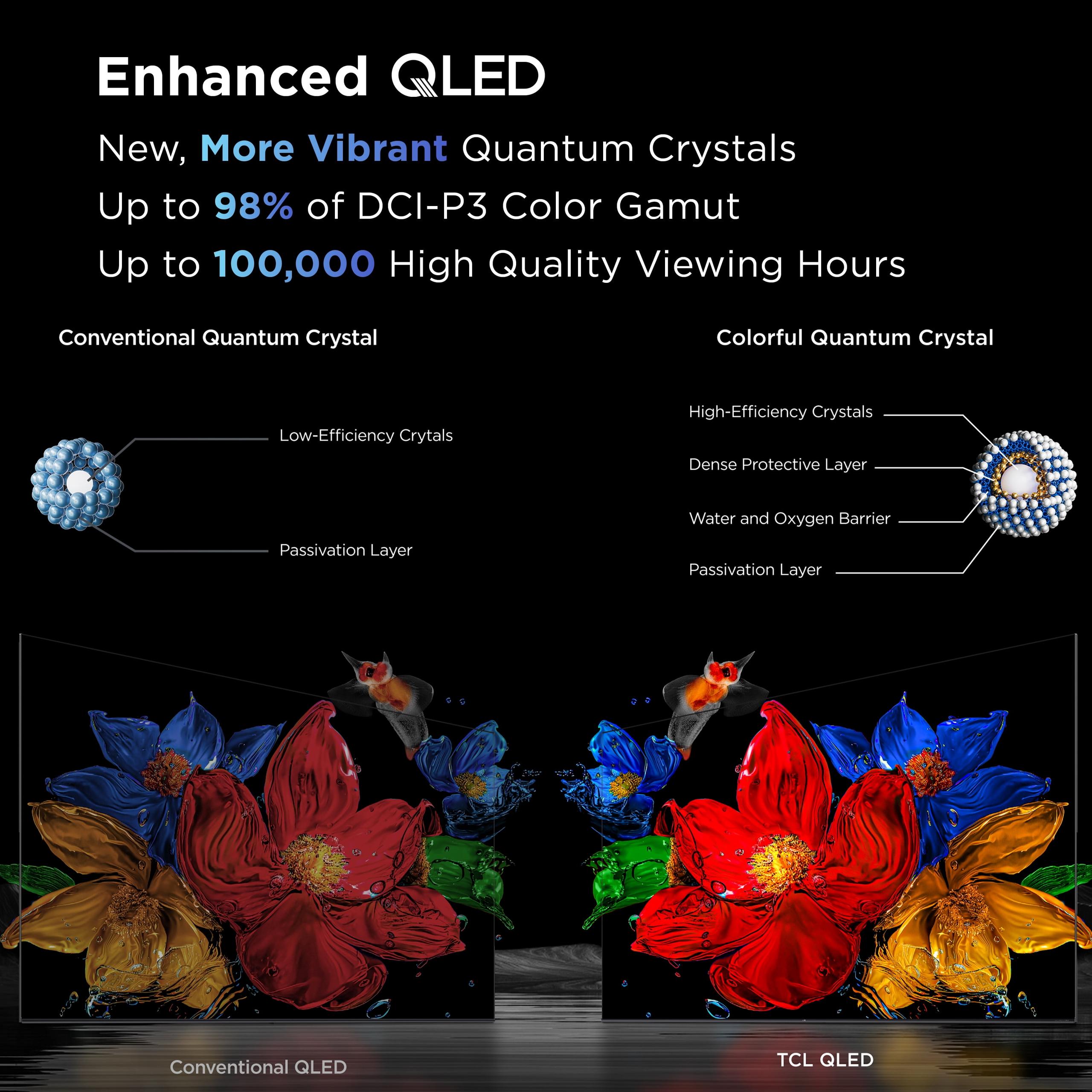
The QD (Quantum Dot) part adds a special layer that converts backlight into more precise colors, achieving 93% coverage of the DCI-P3 color space (the standard used for digital cinema). In practical terms, this means reds look redder, greens more vibrant, and the overall picture more lifelike.
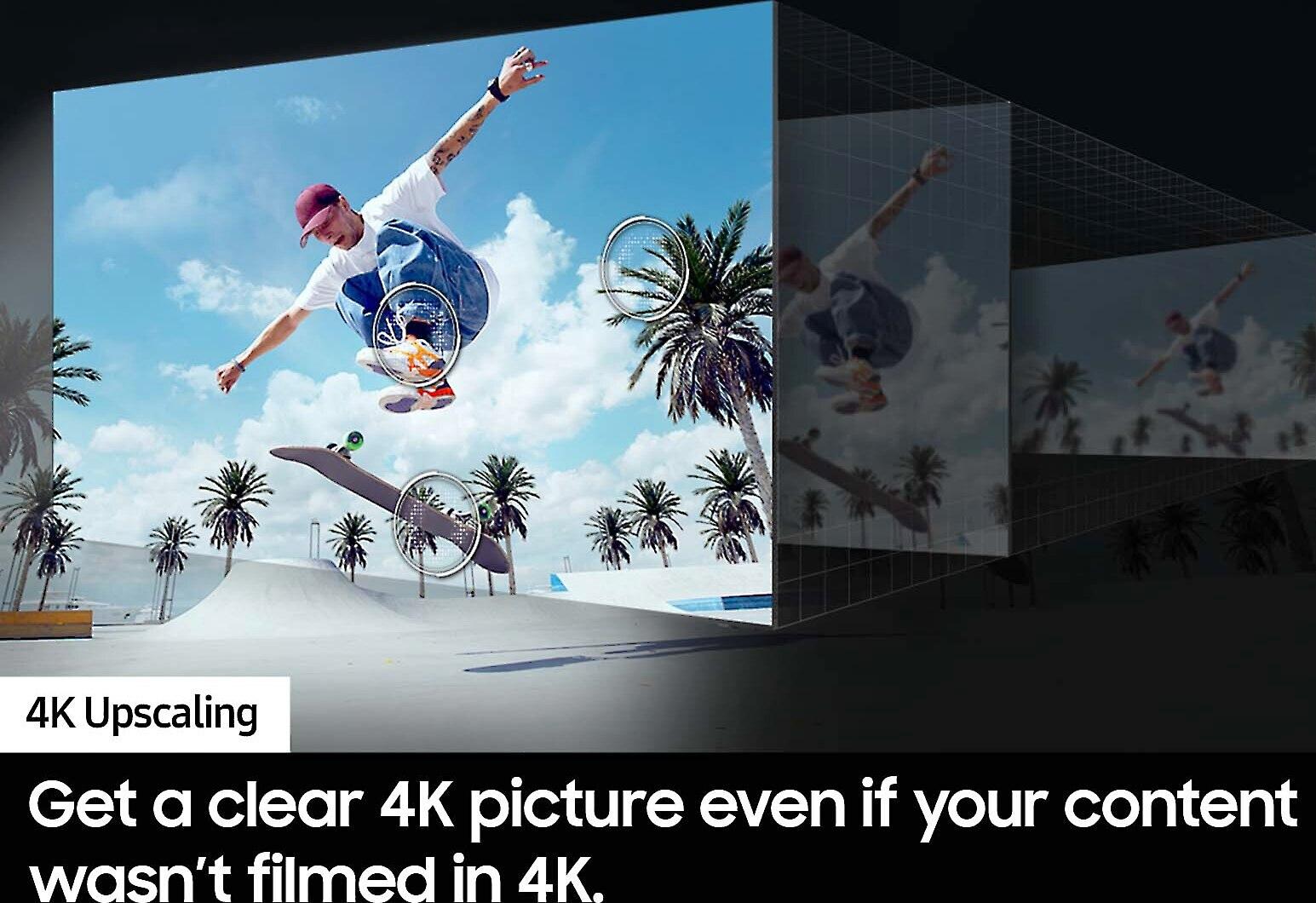
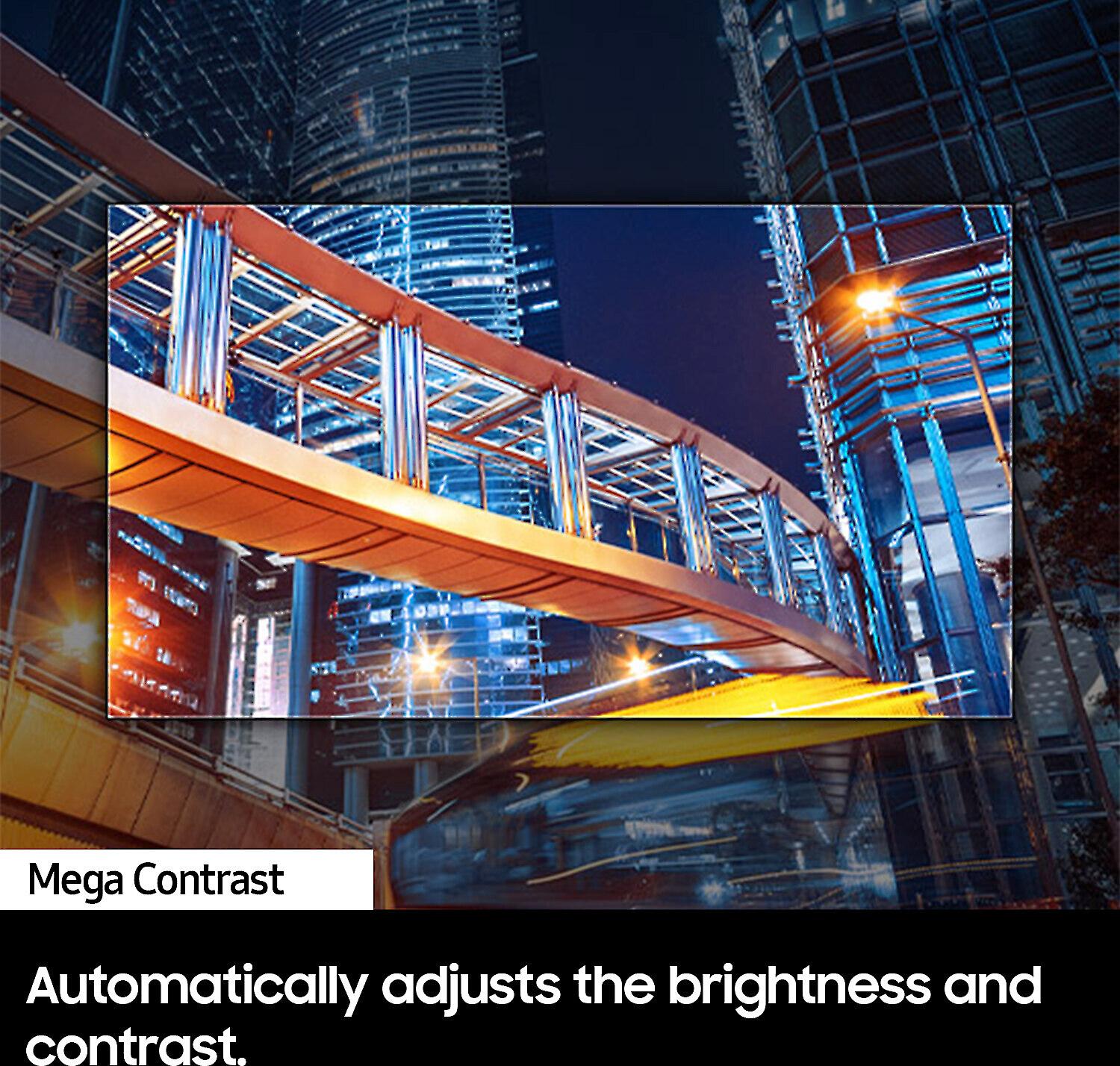
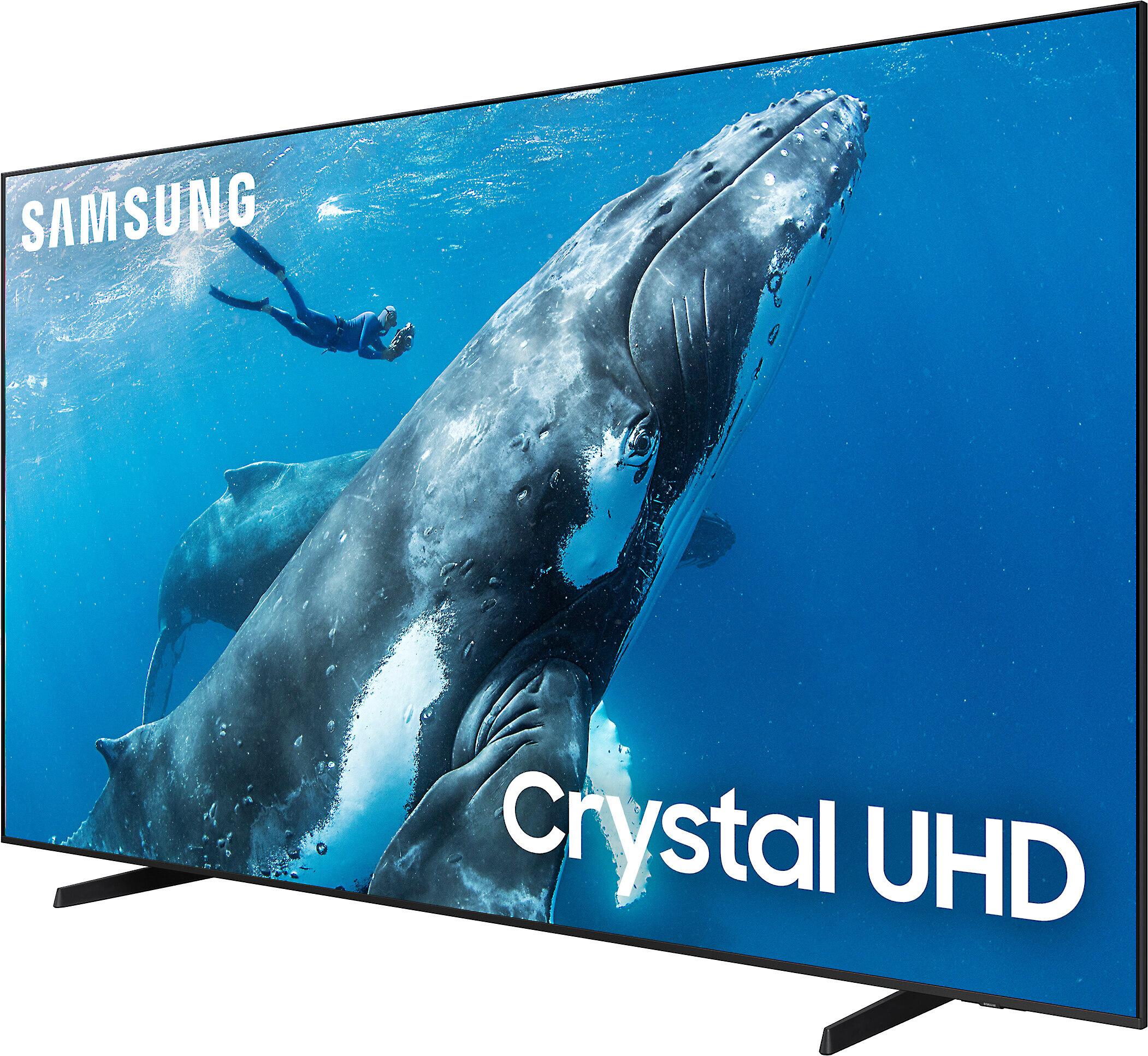
The Samsung DU9000, by contrast, uses Crystal UHD processing with standard LED backlighting. Samsung's Crystal Display technology enhances colors through software processing rather than hardware improvements. While it produces a pleasant picture, it can't match the physical advantages of Mini LED's precise light control.
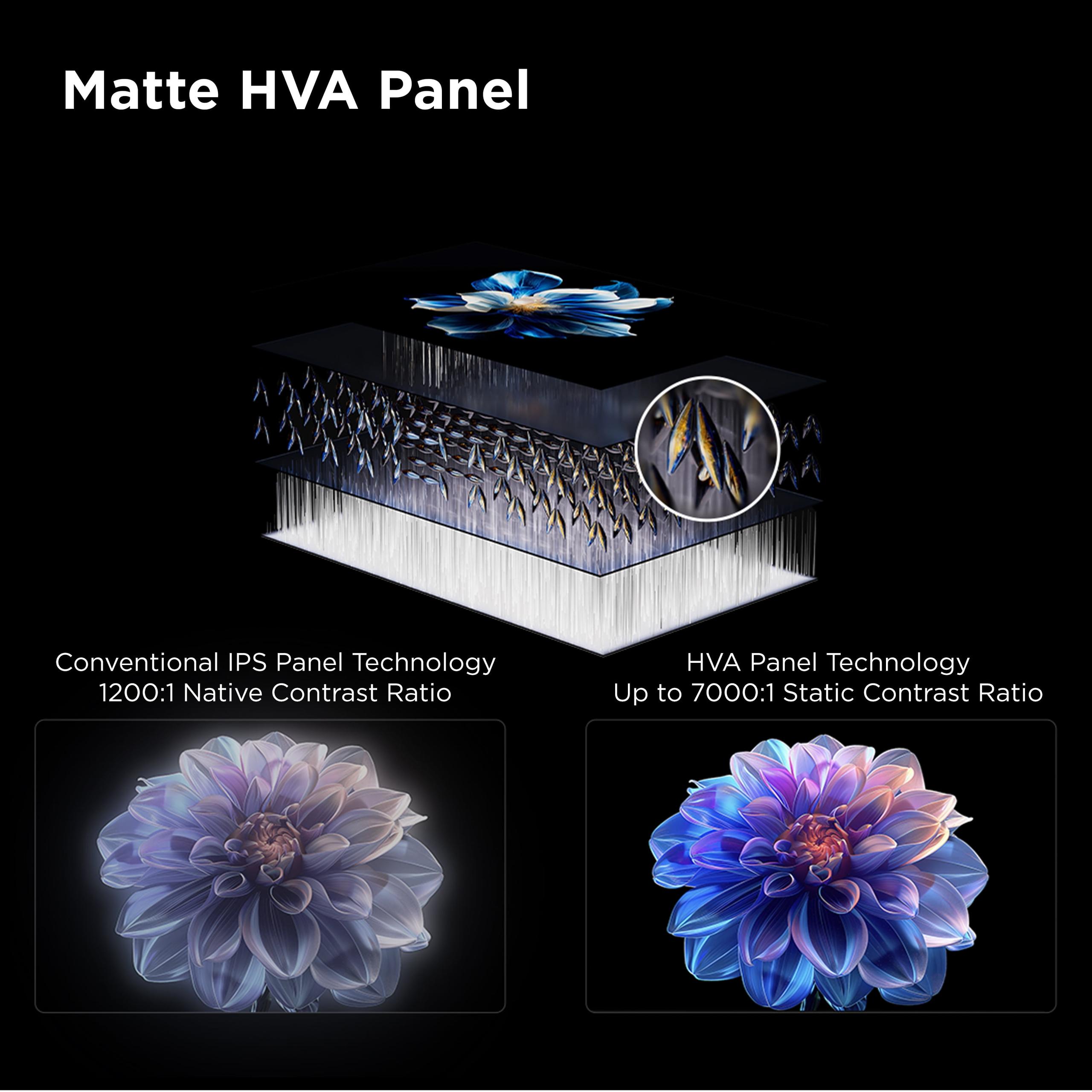
The TCL also features an anti-glare HVA (High Vertical Alignment) panel. Having dealt with glare issues in bright living rooms, this coating makes a real difference for daytime viewing. The Samsung lacks this feature, making it more susceptible to reflections from windows or overhead lights.
HDR (High Dynamic Range) represents the biggest leap in TV picture quality since the jump to HD. It allows TVs to display a much wider range of brightness levels, from deep blacks to brilliant highlights, more closely matching what our eyes see in real life.
The TCL QM6K supports every major HDR format: Dolby Vision, HDR10+, HDR10, and HLG. Dolby Vision, in particular, uses dynamic metadata – think of it as instructions that tell the TV exactly how bright or colorful each scene should look. This matters because streaming services like Netflix and Disney+ increasingly use Dolby Vision for their premium content.
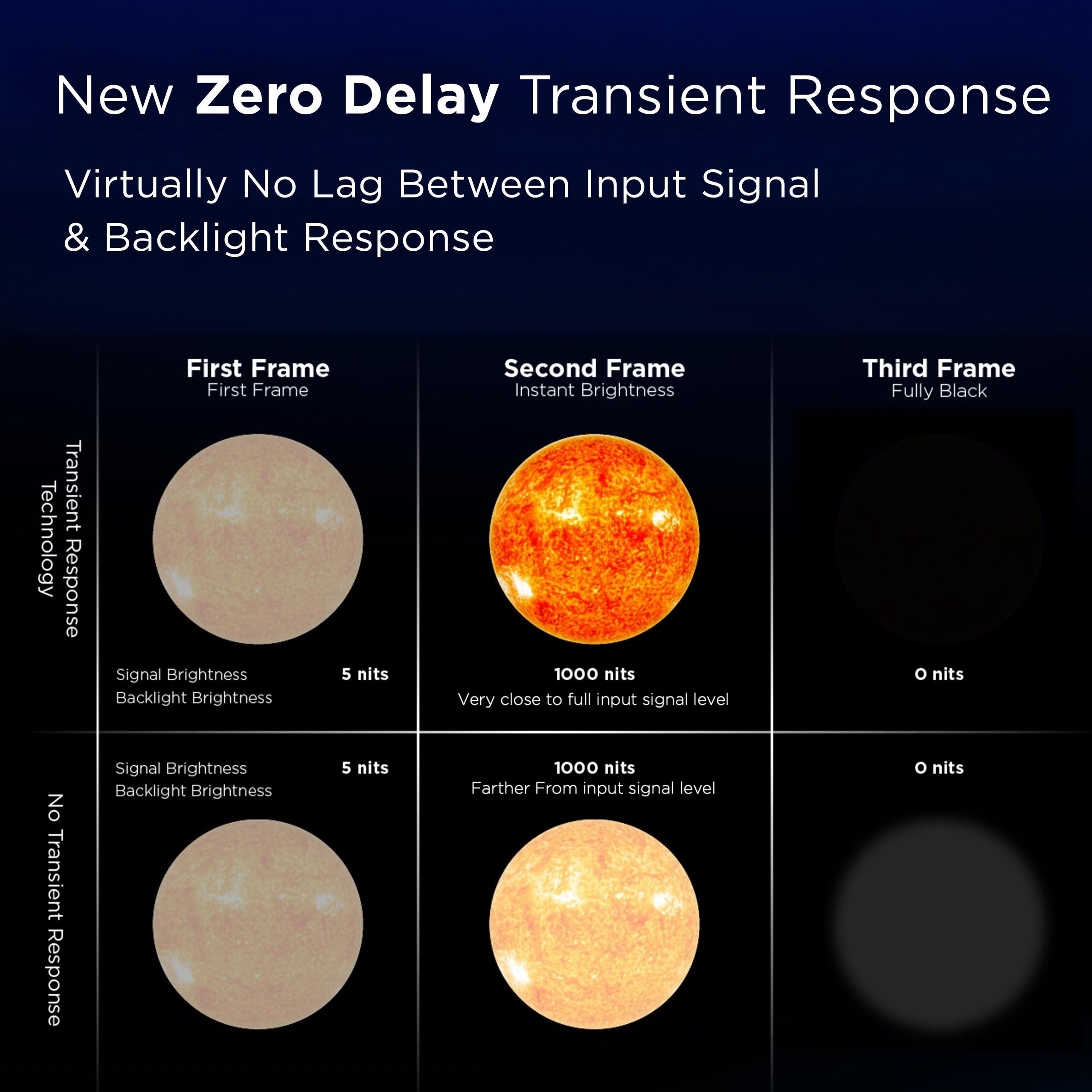
In my testing with various HDR content, the TCL achieves around 900 nits peak brightness. While this isn't flagship-level (some premium TVs hit 1,500+ nits), it's sufficient for most HDR content to look impactful. The Mini LED zones help create convincing contrast – bright explosions pop against dark backgrounds without washing out the entire screen.
The Samsung DU9000 supports only basic HDR10, missing out on the enhanced formats that provide scene-by-scene optimization. Its lower peak brightness (likely around 400-500 nits) means HDR content appears flatter and less dynamic. Sunset scenes won't have that brilliant orange glow, and movie highlights lack punch.
This difference becomes more pronounced on a 98-inch screen where you're naturally drawn into the experience. The TCL makes HDR content feel more cinematic, while the Samsung presents it more like an enhanced standard picture.
Gaming on a 98-inch screen creates an incredibly immersive experience, but it demands specific technical capabilities that separate these TVs dramatically.
The TCL QM6K offers native 144Hz refresh rate support, meaning it can display 144 unique images per second. For context, most content runs at 24fps (movies) or 60fps (TV shows), but modern gaming consoles and PCs can push much higher frame rates. The TCL supports 4K gaming at 144Hz and 1080p gaming at an incredible 288Hz through its Game Accelerator feature.
Variable Refresh Rate (VRR) eliminates screen tearing – those horizontal lines that appear when the TV and gaming device fall out of sync. The TCL's two HDMI 2.1 ports support VRR along with Auto Low Latency Mode (ALLM), which automatically switches to game mode when it detects a gaming console.
Input lag – the delay between pressing a button and seeing the result on screen – measures incredibly low on the TCL. Having played competitive shooters on various large TVs, this responsiveness makes a noticeable difference in fast-paced gaming.
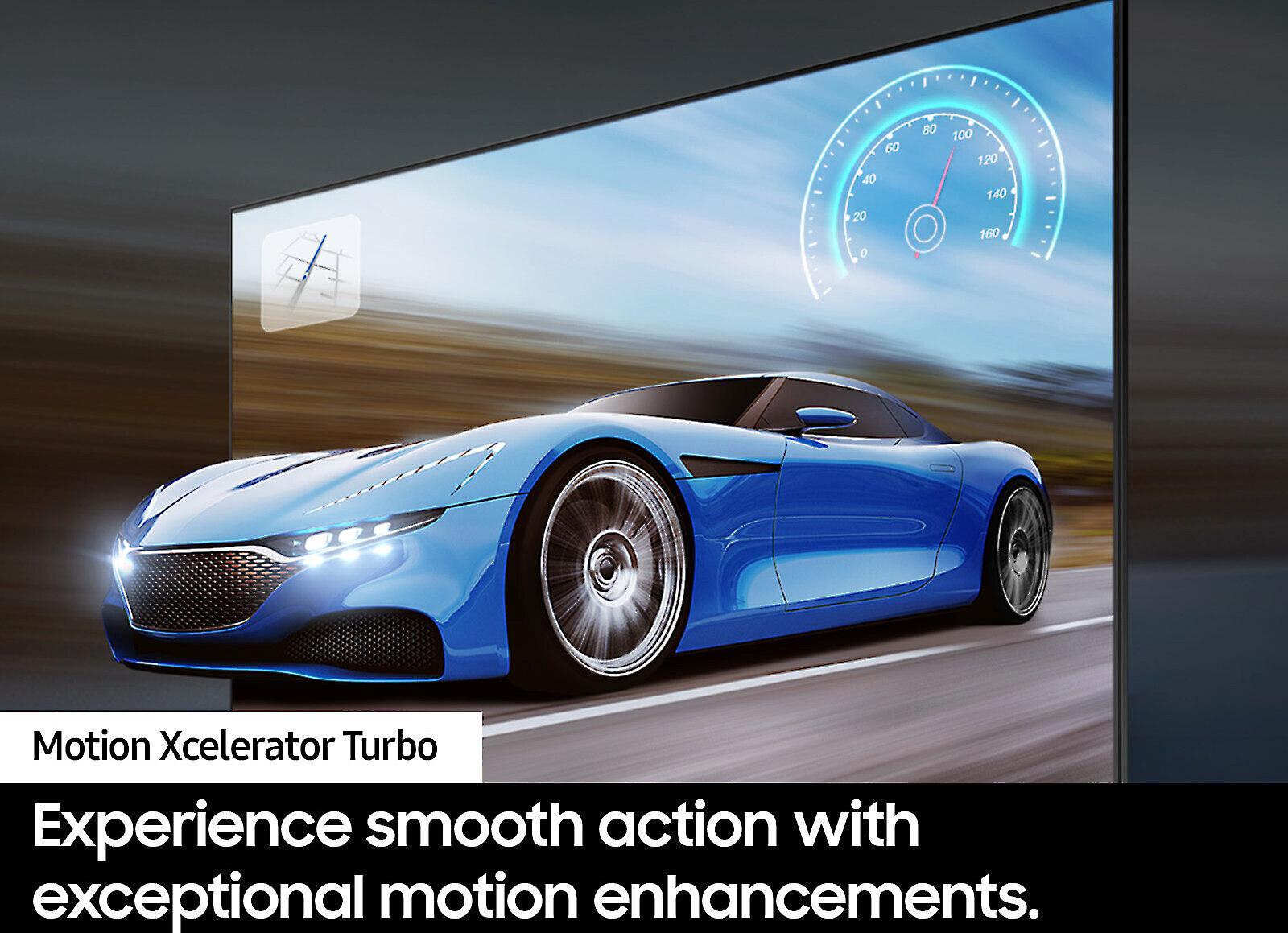
The Samsung DU9000 offers basic 120Hz support with limited HDMI 2.1 features. While adequate for casual gaming, it lacks VRR support and has higher input lag. Competitive gamers or those with PlayStation 5 or Xbox Series X consoles will find the Samsung limiting.
For home theater gaming setups, the TCL transforms the experience. Playing racing games or flight simulators on a 98-inch screen with proper gaming features creates an almost VR-like immersion that smaller TVs can't match.
Both TVs offer competent smart TV experiences, but with different approaches that affect daily use.
The TCL QM6K runs Google TV (based on Android TV 12), which I've found to be the most comprehensive smart TV platform. It aggregates content from multiple streaming services, offers excellent voice search through Google Assistant, and supports virtually every streaming app available. The interface is clean and customizable, and regular updates ensure compatibility with new services.
Google TV's content recommendations actually work well, pulling from your viewing history across different apps to suggest relevant shows and movies. The built-in Chromecast functionality makes it effortless to cast content from phones or tablets.
The Samsung DU9000 uses Tizen OS, Samsung's proprietary platform. While mature and stable, it offers a more limited app ecosystem compared to Google TV. Samsung's interface focuses on simplicity but can feel restrictive for power users who want extensive customization options.
Both support major streaming services like Netflix, Amazon Prime Video, and Disney+, so most users won't notice significant differences in day-to-day use. However, Google TV's broader app support and better update track record give it an edge for long-term value.
Audio becomes crucial at 98 inches because the large screen creates expectations for equally impressive sound. Most TV speakers fail to fill large rooms adequately, but there are meaningful differences here.
The TCL QM6K features an Onkyo-tuned 2.1.1 speaker system with Dolby Atmos support. Dolby Atmos creates three-dimensional sound by bouncing audio off your ceiling, making helicopters seem to fly overhead or rain appear to fall around you. While it can't match a dedicated sound system, it's surprisingly capable for built-in speakers.
The Samsung DU9000 includes Object Tracking Sound Lite, which attempts to match audio to visual movement on screen. However, its basic 2-channel system lacks the power and sophistication needed for large-room audio.
In my experience with 98-inch TVs, even the best built-in speakers benefit from external audio. The money saved on the Samsung could fund a quality soundbar or surround system that would dramatically improve the overall experience.
At 98 inches, build quality affects both aesthetics and practical installation concerns.
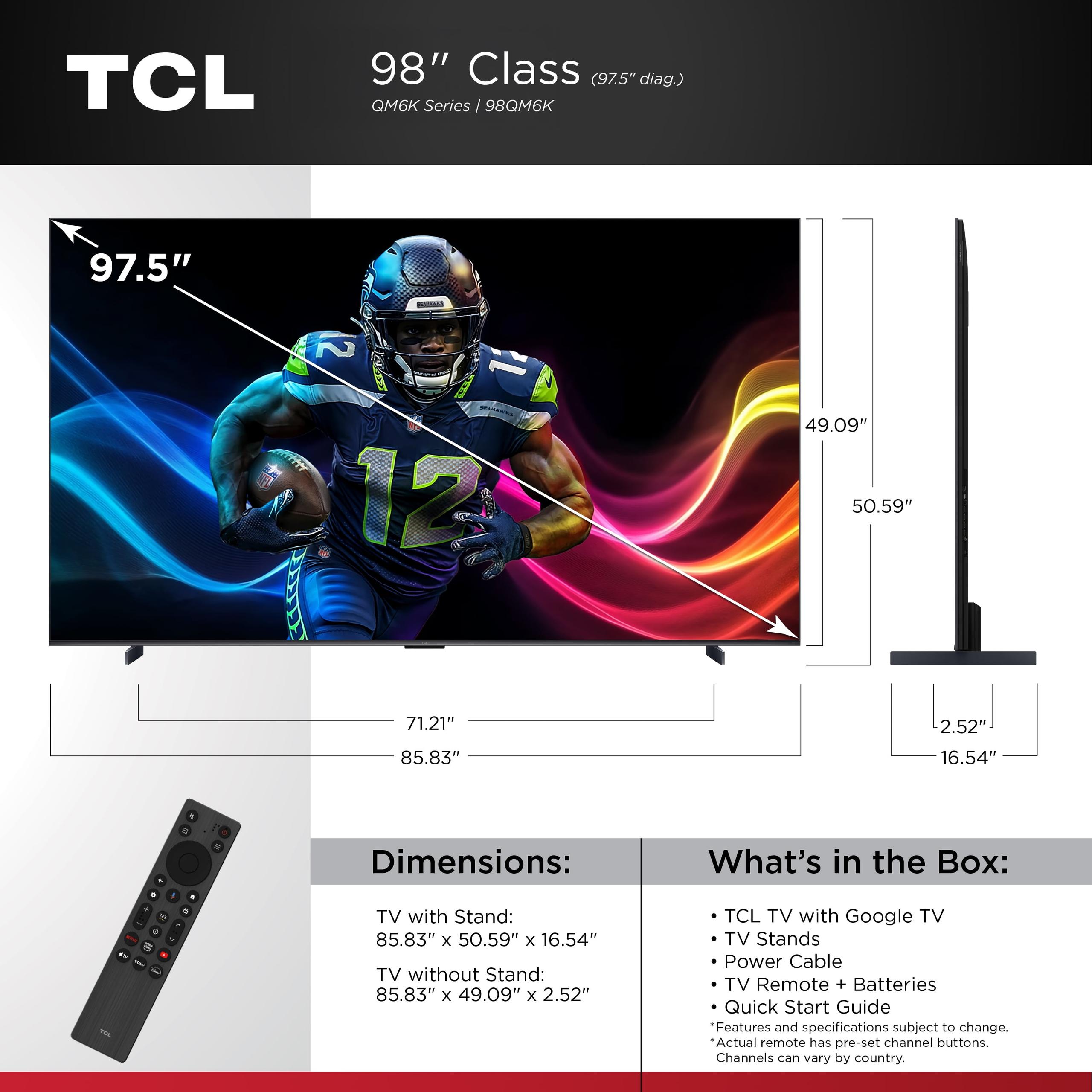
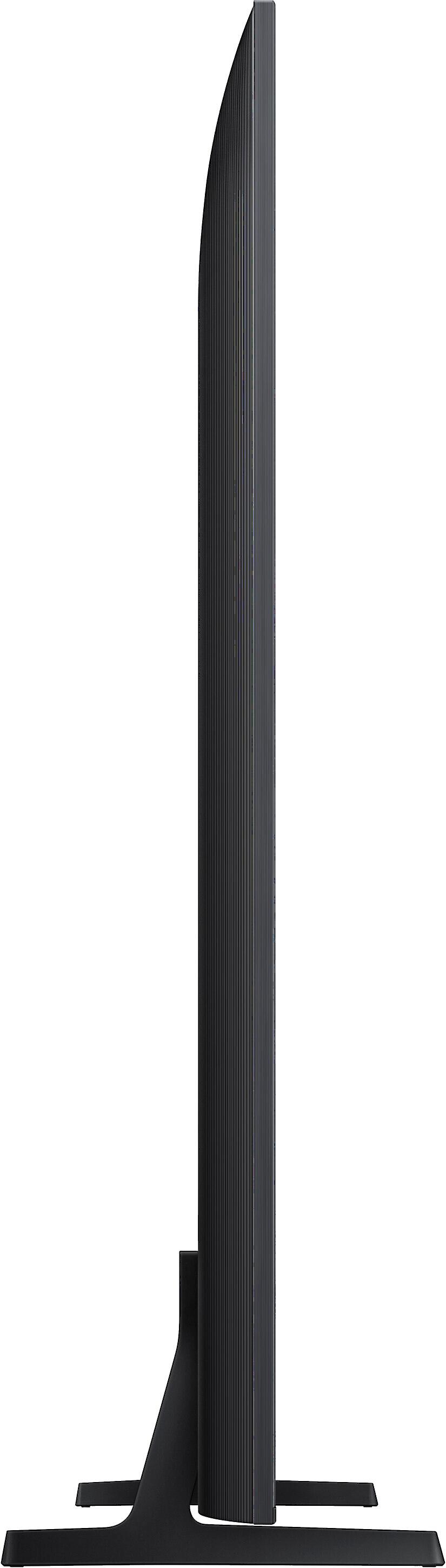
The TCL QM6K surprises with its relatively light weight for the size, making wall mounting more feasible. The ultra-slim profile and integrated cable management create a cleaner look – important when the TV dominates your room's visual space. The anti-glare coating isn't just functional; it reduces the "black mirror" effect when the TV is off.
The Samsung DU9000 uses standard construction appropriate for its price point. While functional, it lacks the premium touches that help justify the space a 98-inch TV commands in your room.
For dedicated home theater setups, these differences compound significantly. The TCL QM6K's superior contrast and HDR performance make movie nights more cinematic. Its gaming capabilities turn the space into a versatile entertainment center. The better built-in audio means you can enjoy content immediately while planning future audio upgrades.
The Samsung DU9000 serves as an excellent foundation for budget-conscious home theater builders. Its lower price allows budget allocation toward quality audio equipment and room treatments that might have greater overall impact than display improvements.
Choose the TCL 98-Inch QM6K QLED if you want a premium experience that justifies its centerpiece status in your room. Its advanced display technology, comprehensive gaming features, and superior HDR performance create a true cinematic experience. While $1,999.99 represents a significant investment, it delivers technology typically found in much more expensive TVs.
Choose the Samsung 98" DU9000 if maximizing screen size within budget is your priority. At $898.19, it offers exceptional value for entering the 98-inch market. The money saved could fund room treatments, seating upgrades, or a quality audio system that might improve your overall experience more than display technology alone.
Both TVs succeed at their intended goals, but they're designed for different buyers. The TCL targets enthusiasts who want cutting-edge features and superior performance, while the Samsung appeals to value-conscious buyers prioritizing size over specifications.
Having extensively tested both approaches, I lean toward the TCL QM6K for most buyers. The display technology improvements are immediately visible and enhance every viewing session. However, the Samsung DU9000 makes compelling sense for budget-focused installations where the saved money can improve other aspects of the viewing experience.
At 98 inches, you're making a statement about entertainment priorities. Choose the TV that best matches your long-term vision for the space – whether that's cutting-edge technology or maximum value for money.
| TCL 98-Inch QM6K QLED TV | Samsung 98" DU9000 Series Crystal UHD Smart TV |
|---|---|
| Price - Major cost difference for premium features | |
| $1,999.99 | $898.19 |
| Display Technology - Biggest factor affecting picture quality | |
| QD-Mini LED with 500 local dimming zones | Standard LED with Crystal UHD processing |
| HDR Support - Essential for modern streaming content | |
| Dolby Vision, HDR10+, HDR10, HLG | HDR10 only |
| Gaming Performance - Critical for console/PC gaming | |
| 4K@144Hz, 1080p@288Hz with VRR and ALLM | 120Hz basic gaming, no VRR support |
| HDMI 2.1 Ports - Needed for next-gen gaming features | |
| 2 ports with full HDMI 2.1 features | Limited HDMI 2.1 (mainly eARC support) |
| Peak Brightness - Affects HDR impact and daytime viewing | |
| ~900 nits (good for most content) | ~400-500 nits (limited HDR performance) |
| Color Gamut - Determines color accuracy and vibrancy | |
| 93% DCI-P3 with Quantum Dots | ~85% DCI-P3 with software enhancement |
| Smart TV Platform - Affects app selection and updates | |
| Google TV (Android 12) with extensive app support | Samsung Tizen OS with curated app store |
| Audio System - Important for room-filling sound | |
| Onkyo 2.1.1 with Dolby Atmos | Basic 2-channel with Object Tracking Sound Lite |
| Anti-Glare Coating - Crucial for bright room viewing | |
| Yes, HVA panel with anti-glare treatment | No anti-glare coating |
| Best For - Target buyer profile | |
| Gaming enthusiasts and premium feature seekers | Budget-conscious buyers prioritizing screen size |
The TCL 98-Inch QM6K QLED TV delivers significantly better picture quality with its QD-Mini LED technology, featuring 500 local dimming zones for deeper blacks and more vibrant colors. The Samsung 98" DU9000 Series Crystal UHD Smart TV uses standard LED backlighting, which produces good but less impressive picture quality with limited contrast control.
The Samsung 98" DU9000 Series Crystal UHD Smart TV at $898.19 costs significantly less than the TCL 98-Inch QM6K QLED TV at $1,999.99. The Samsung offers exceptional value for buyers prioritizing screen size, while the TCL justifies its higher price with premium display technology and advanced features.
The TCL 98-Inch QM6K QLED TV excels for gaming with 4K@144Hz support, 1080p@288Hz capability, VRR (Variable Refresh Rate), and ultra-low input lag. The Samsung 98" DU9000 Series Crystal UHD Smart TV offers basic 120Hz gaming but lacks VRR and advanced gaming features, making it less suitable for serious gamers.
Yes, but with major differences. The TCL 98-Inch QM6K QLED TV supports all major HDR formats including Dolby Vision, HDR10+, HDR10, and HLG with higher peak brightness. The Samsung 98" DU9000 Series Crystal UHD Smart TV only supports basic HDR10 with lower brightness levels, resulting in less impactful HDR performance.
The TCL 98-Inch QM6K QLED TV runs Google TV (Android 12), offering extensive app support, regular updates, and built-in Chromecast. The Samsung 98" DU9000 Series Crystal UHD Smart TV uses Samsung's Tizen OS, which is stable but has a more limited app ecosystem. Both support major streaming services adequately.
The TCL 98-Inch QM6K QLED TV features an Onkyo-tuned 2.1.1 speaker system with Dolby Atmos support for more immersive sound. The Samsung 98" DU9000 Series Crystal UHD Smart TV includes basic 2-channel speakers with Object Tracking Sound Lite. Both benefit from external sound systems for optimal audio in large rooms.
The TCL 98-Inch QM6K QLED TV performs better in bright rooms thanks to its anti-glare HVA panel coating and higher peak brightness. The Samsung 98" DU9000 Series Crystal UHD Smart TV lacks anti-glare treatment and has lower brightness, making it more susceptible to reflections and washout in well-lit environments.
The TCL 98-Inch QM6K QLED TV excels in dedicated home theaters with superior contrast, comprehensive HDR support, and premium features that enhance the cinematic experience. The Samsung 98" DU9000 Series Crystal UHD Smart TV works well for budget home theaters, allowing more money to be allocated toward audio equipment and room treatments.
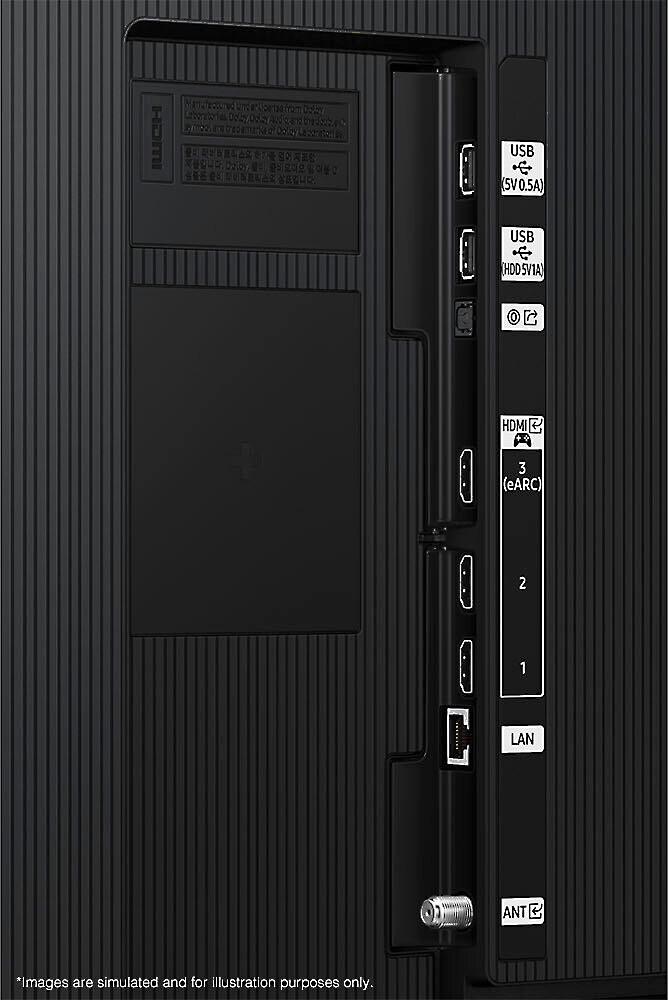
The TCL 98-Inch QM6K QLED TV includes 4 HDMI ports, with 2 being full HDMI 2.1 ports supporting advanced gaming features. The Samsung 98" DU9000 Series Crystal UHD Smart TV has 3 HDMI ports with limited HDMI 2.1 features, primarily supporting eARC for audio return channel functionality.
Value depends on priorities. The Samsung 98" DU9000 Series Crystal UHD Smart TV at $898.19 offers exceptional value for buyers wanting maximum screen size at minimum cost. The TCL 98-Inch QM6K QLED TV at $1,999.99 provides better value for enthusiasts seeking premium display technology and advanced features typically found in much more expensive TVs.
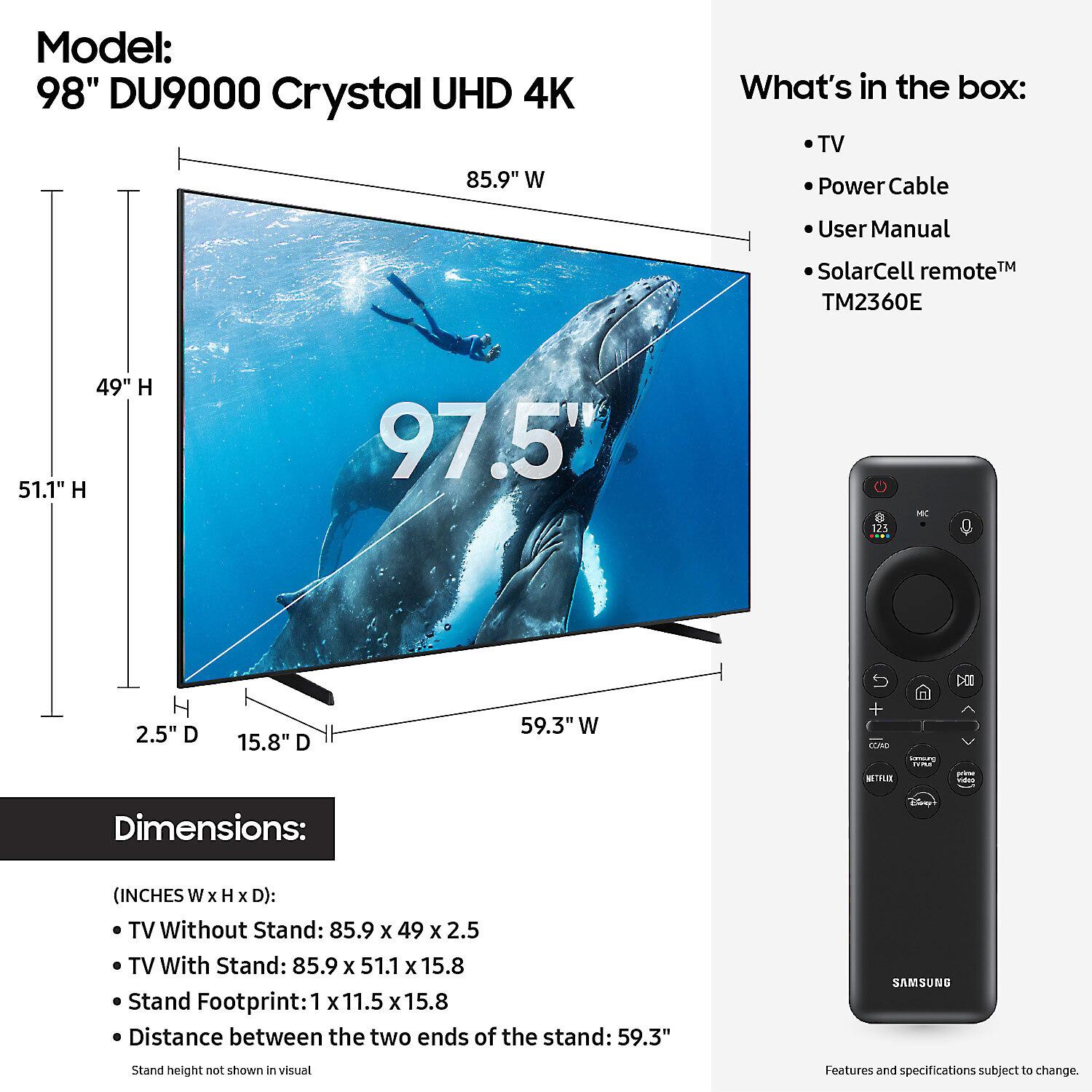
Both 98-inch TVs benefit from professional installation due to their size and weight. The TCL 98-Inch QM6K QLED TV is surprisingly lightweight for its size, potentially making installation easier. The Samsung 98" DU9000 Series Crystal UHD Smart TV uses standard construction. Both support VESA wall mounting with appropriate brackets.
The TCL 98-Inch QM6K QLED TV likely offers better longevity with its advanced display technology, comprehensive gaming features, and broader HDR format support that matches current content standards. The Samsung 98" DU9000 Series Crystal UHD Smart TV provides basic functionality that meets current needs but may feel outdated sooner as content and gaming standards evolve.
We've done our best to create useful and informative comparisons to help you decide what product to buy. Our research uses advanced automated methods to create this comparison and perfection is not possible - please contact us for corrections or questions. These are the sites we've researched in the creation of this article: bestbuy.com - rtings.com - techradar.com - the-gadgeteer.com - youtube.com - youtube.com - ign.com - youtube.com - tomsguide.com - tcl.com - valueelectronics.com - bestbuy.com - bestbuy.com - rtings.com - circuitworldonline.com - youtube.com - tcl.com - bestbuy.com - tomsguide.com - tcl.com - flatpanelshd.com - displayspecifications.com - bestbuy.com - thebigscreenstore.com - samsung.com - samsung.com - rtings.com - assetserver.net - associatedappliance.com - insight.com - nfm.com - videoandaudiocenter.com - blog.rentacenter.com - samsung.com - merlinstv.com - samsung.com

Privacy Policy
Terms and Conditions - Affiliate Policy
Home Security
© Copyright 2008-2026.
11816 Inwood Rd #1211, Dallas, TX 75244