

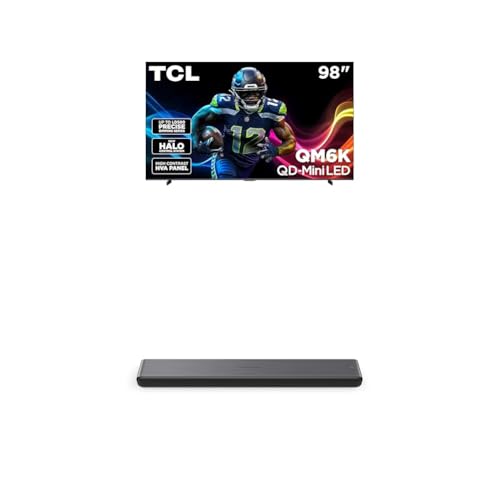
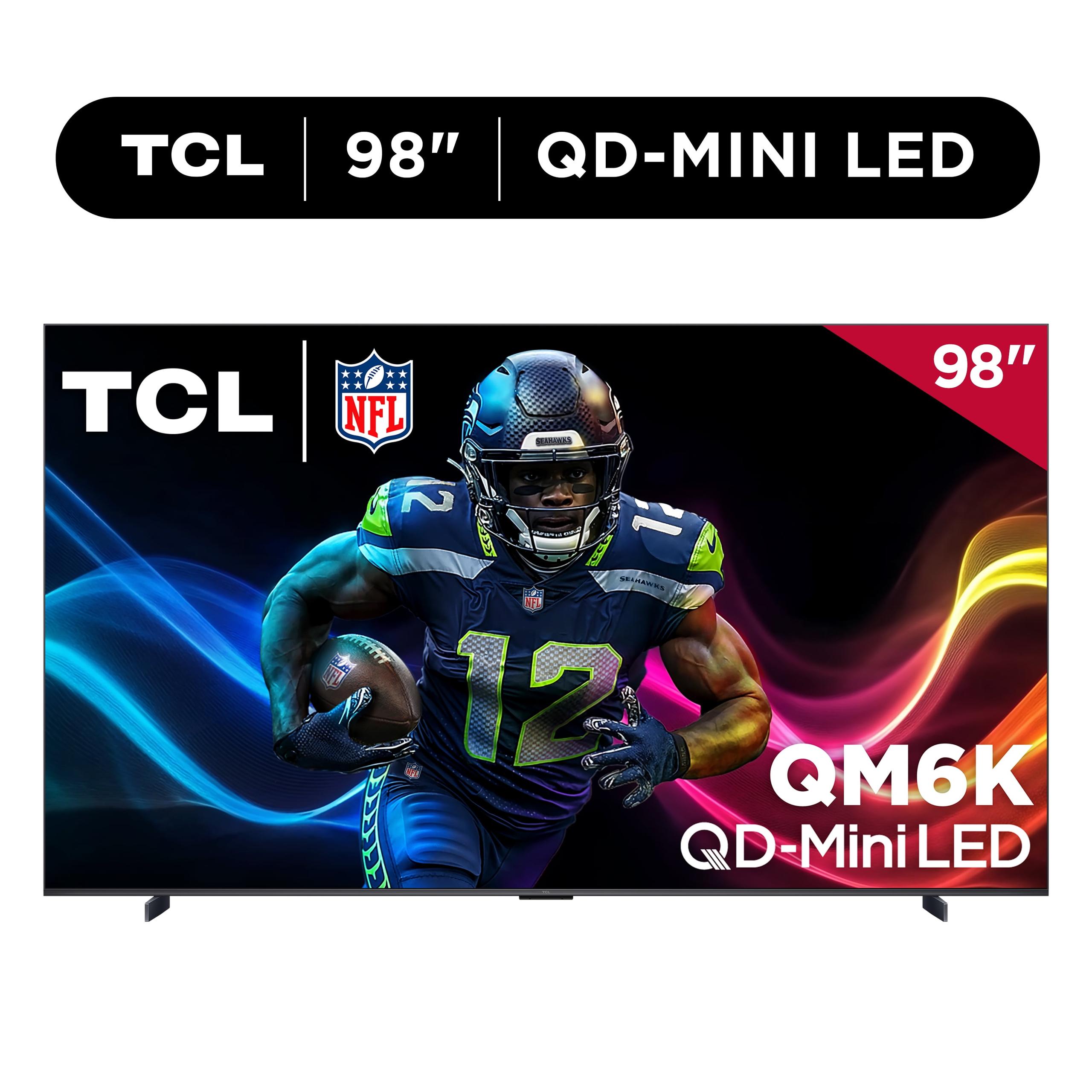
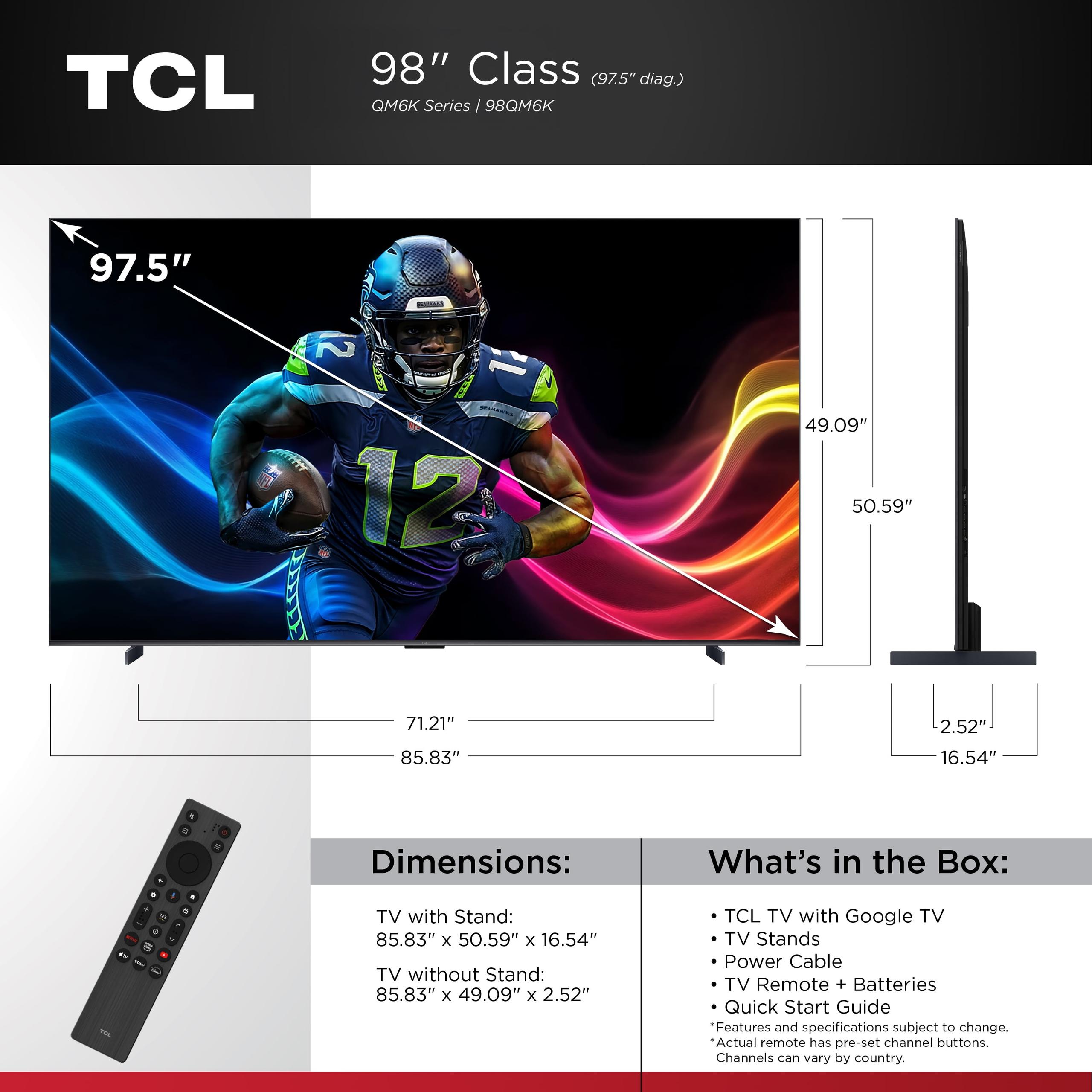
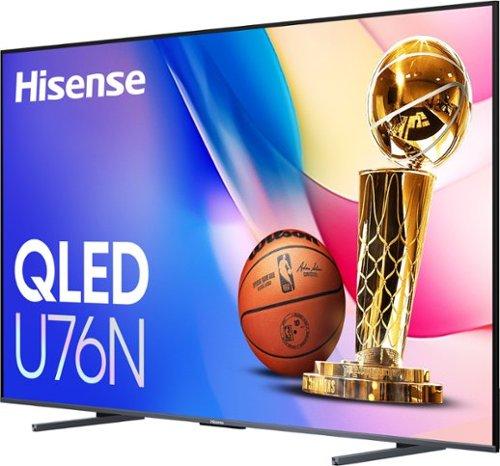
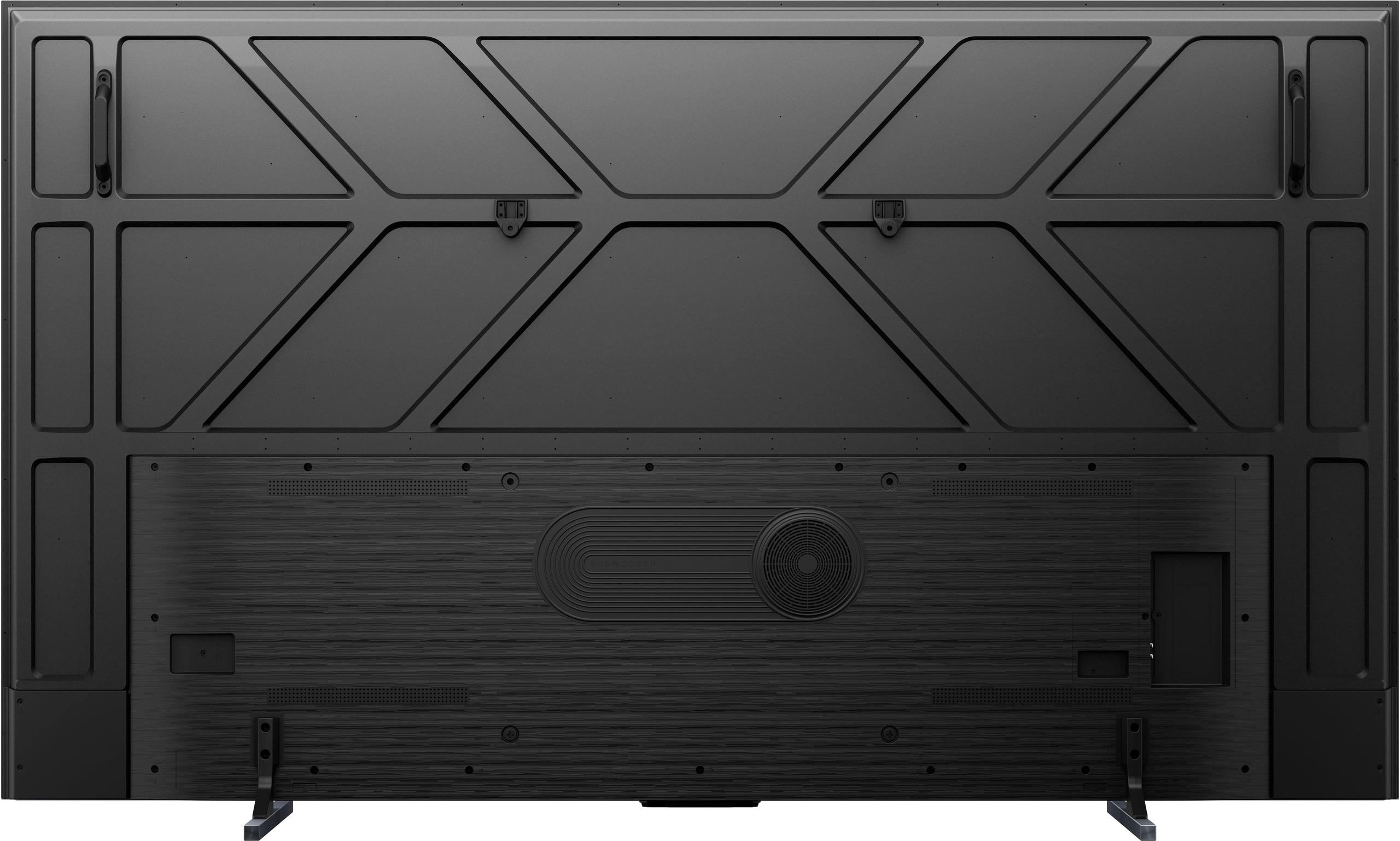
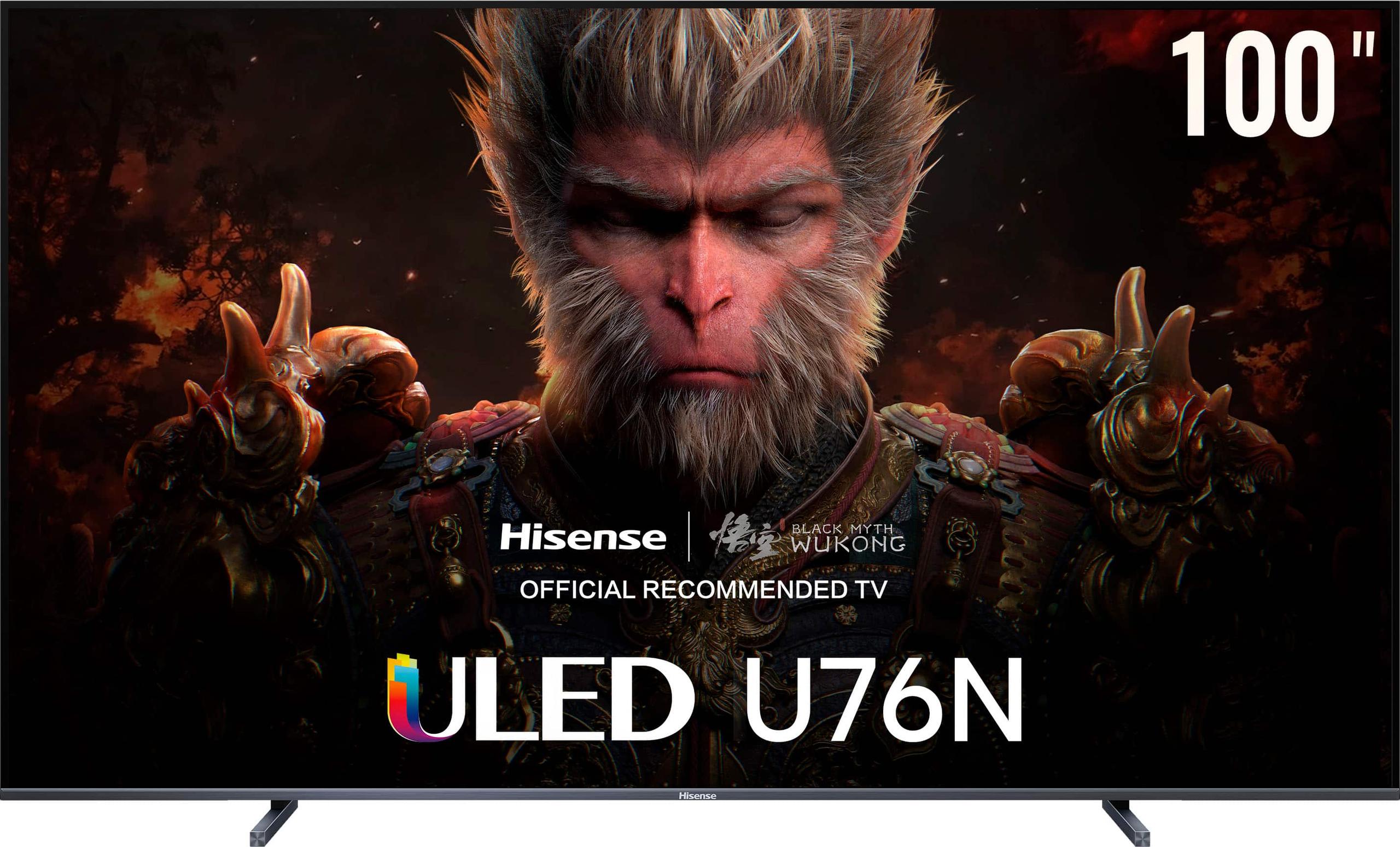
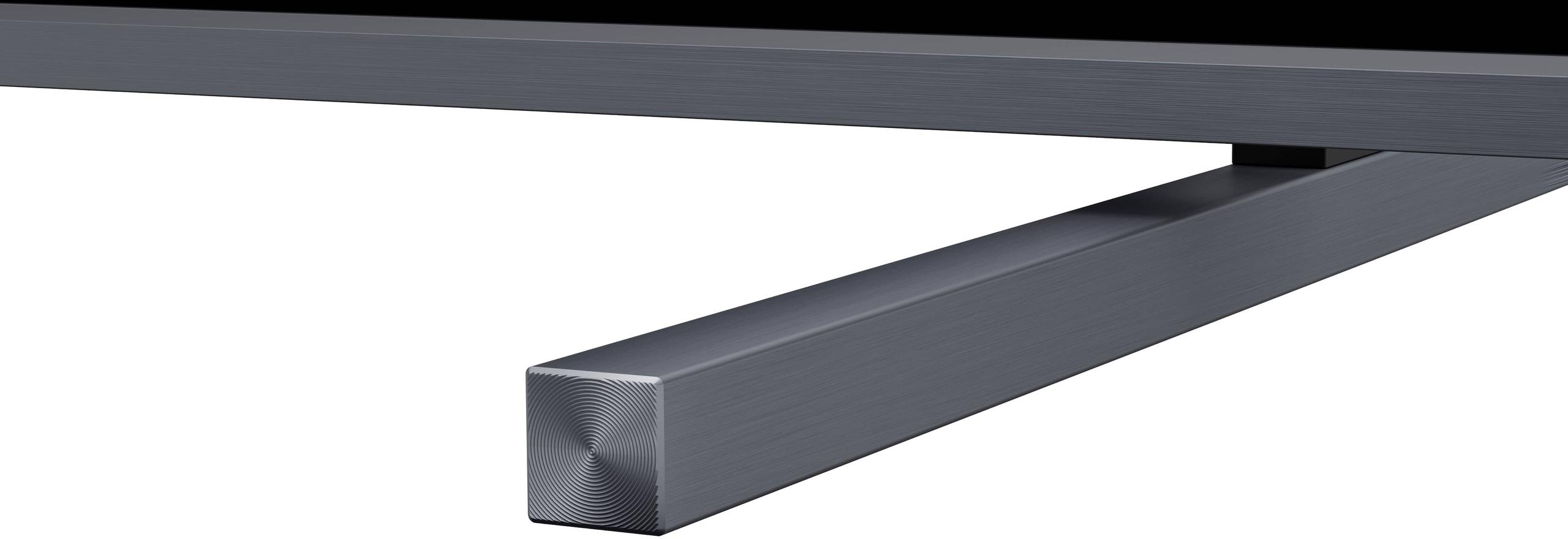
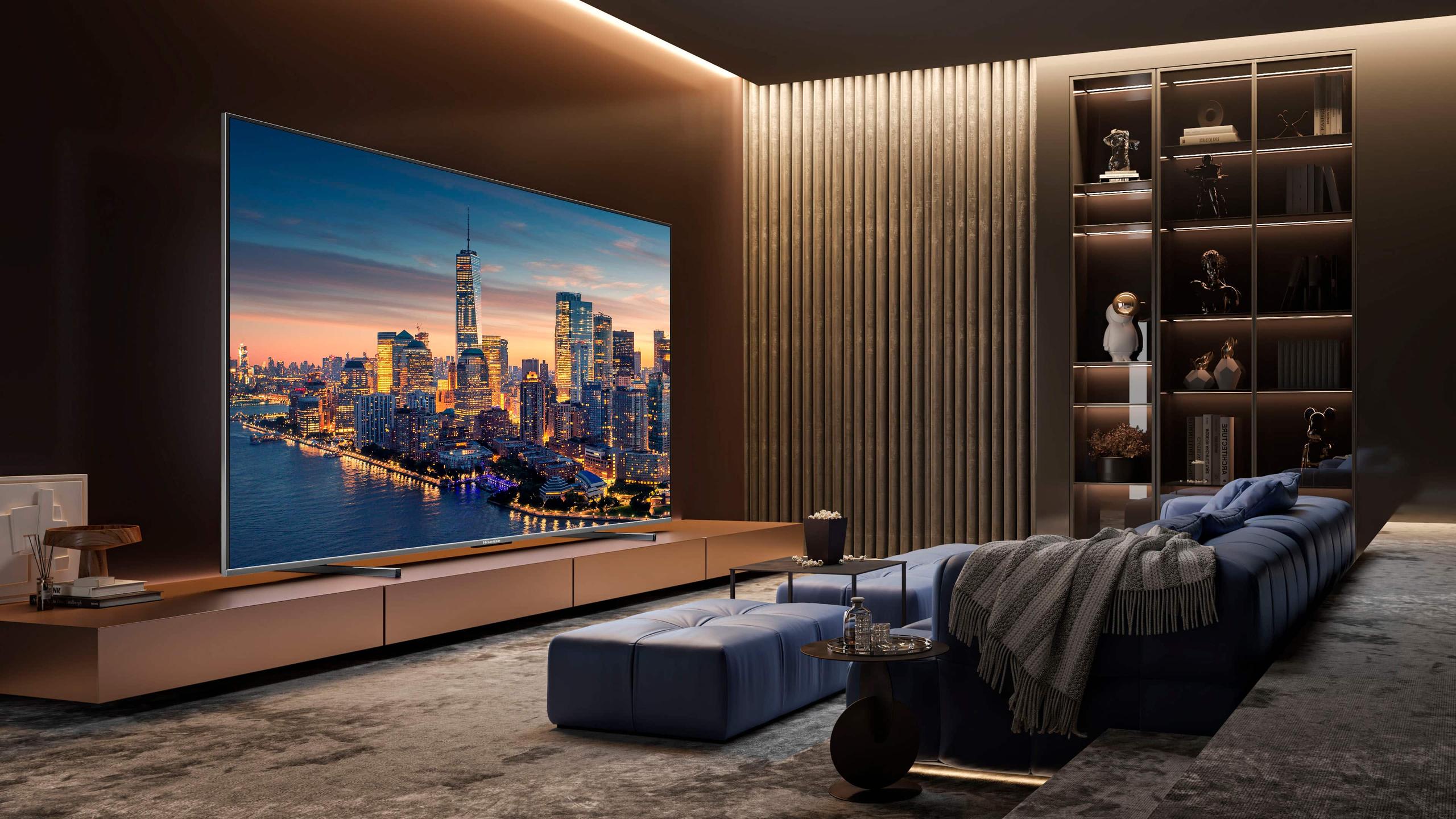
Shopping for a massive TV that'll dominate your living room? You've probably stumbled across two compelling options: the TCL 98-Inch QM6K QLED TV at $1,999 and the Hisense 100" U76 Series 4K UHD QLED Google TV around $2,000. Both promise cinema-sized entertainment at surprisingly reasonable prices, but they take very different approaches to get there.
Let me walk you through everything you need to know to make the right choice for your home theater setup.
When we talk about TVs this size, we're entering territory that was exclusively reserved for commercial displays and high-end home theaters just a few years ago. These massive screens compete directly with projector setups – and honestly, they often win. Unlike projectors, giant TVs work perfectly in bright rooms, don't need lamp replacements, and deliver consistent picture quality without worrying about screen materials or throw distances.
The main considerations when shopping in this category include how well the TV handles different lighting conditions, whether the picture quality scales appropriately to the enormous size, gaming capabilities for modern consoles, and whether you're getting genuine value for what represents a significant investment for most families.
Both the TCL and Hisense landed in stores around late 2024, representing the latest generation of affordable large-format displays. What's remarkable is how these prices have dropped – just three years ago, a 98-inch TV with decent picture quality would cost $8,000 or more.
The TCL QM6K and Hisense U76 represent two distinct philosophies in large TV design. TCL focused on premium display technology, cramming their latest Mini-LED backlight system into a 98-inch panel and adding a matte anti-glare coating. Hisense took a different approach: maximize the screen size while keeping costs controlled using more traditional (but still effective) Full Array LED backlighting.
This creates an interesting decision point. Do you want the absolute biggest screen possible, or would you prefer slightly smaller but significantly more advanced display technology?
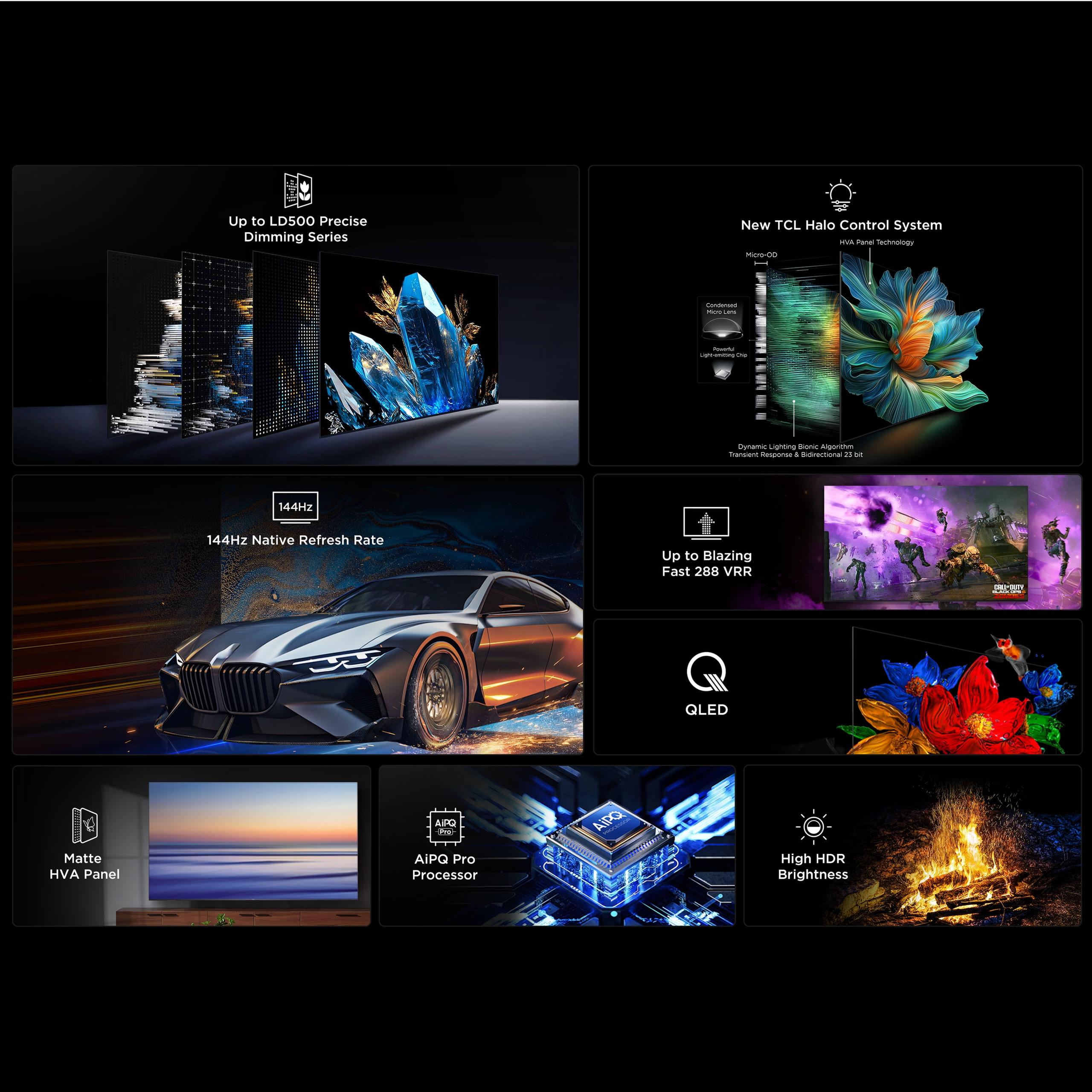
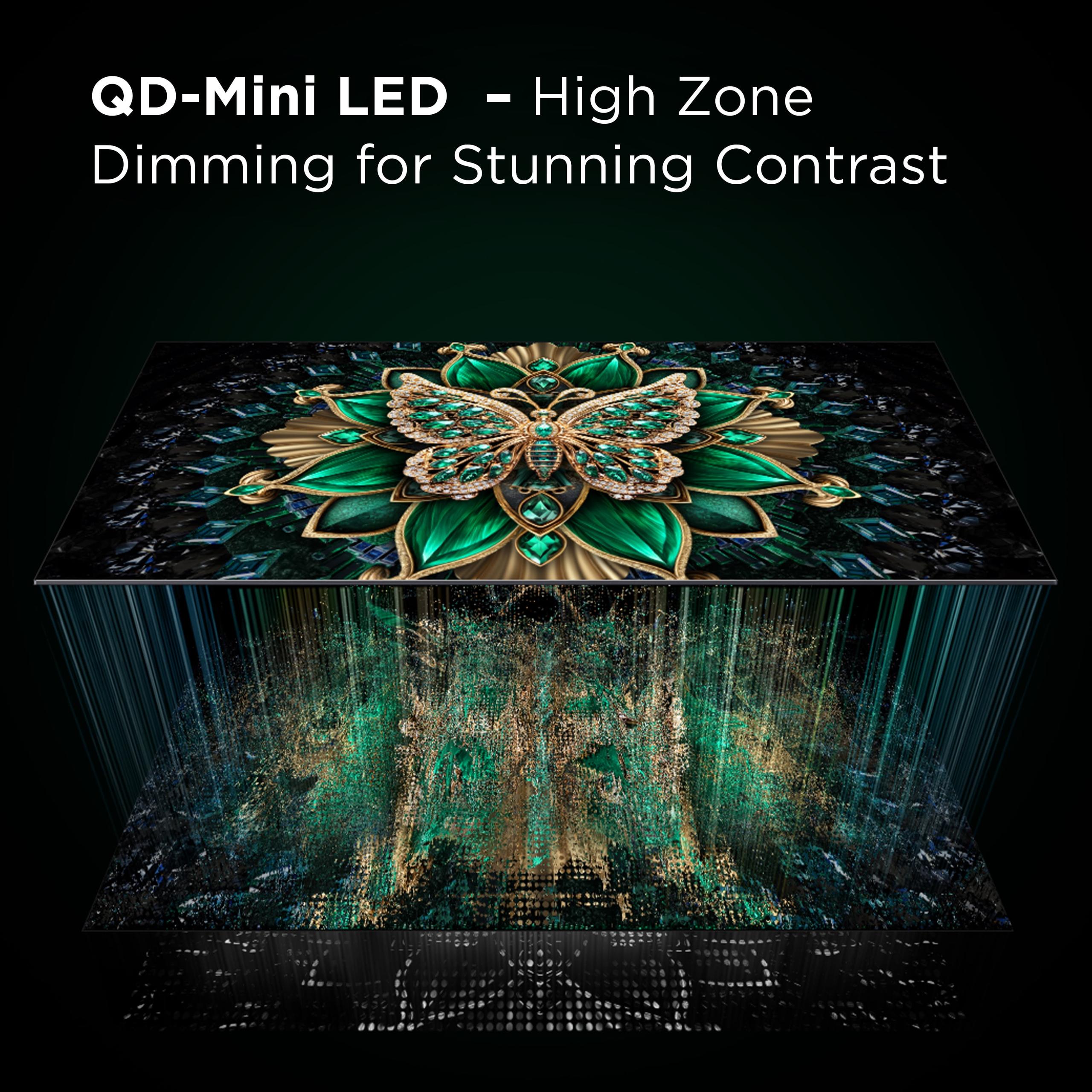
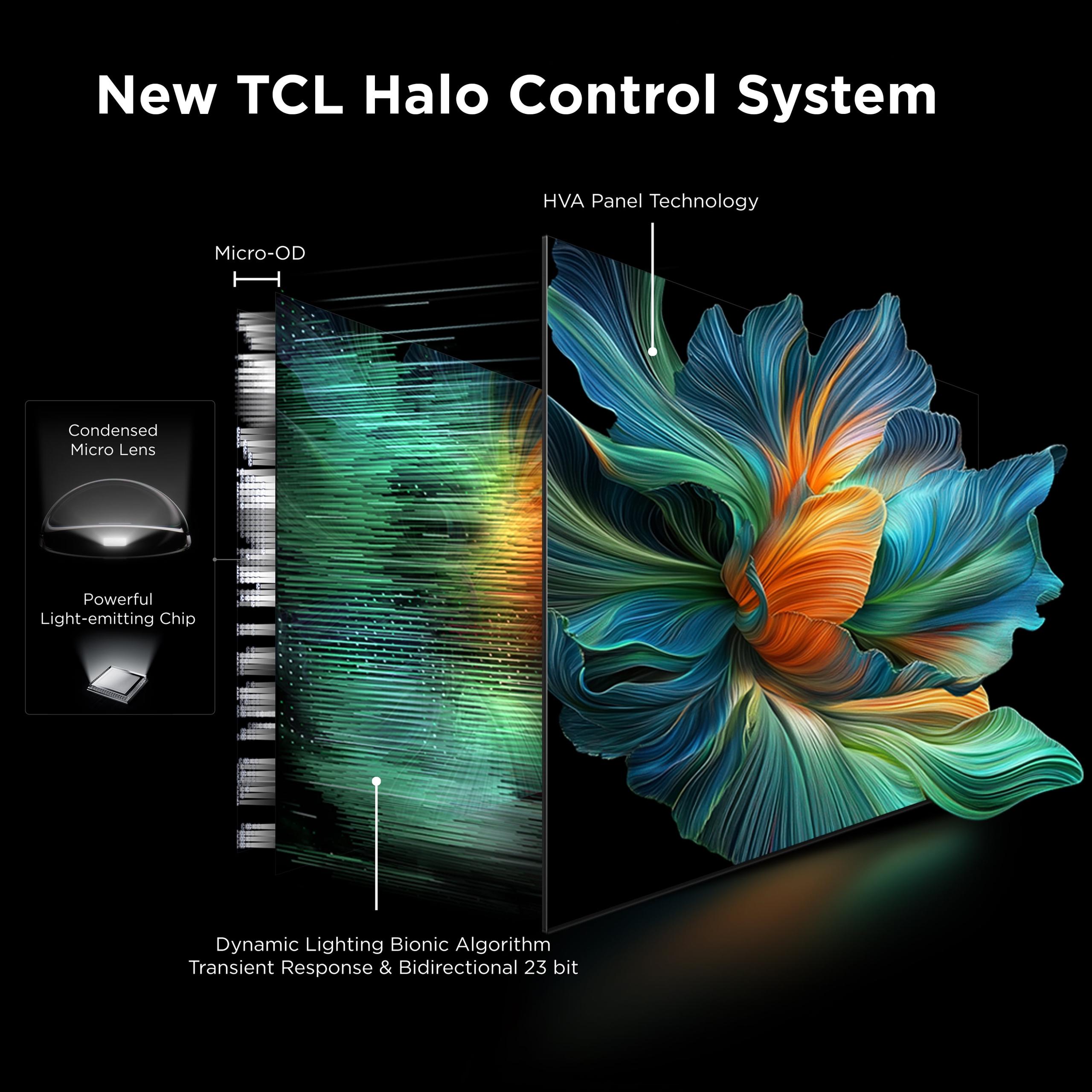
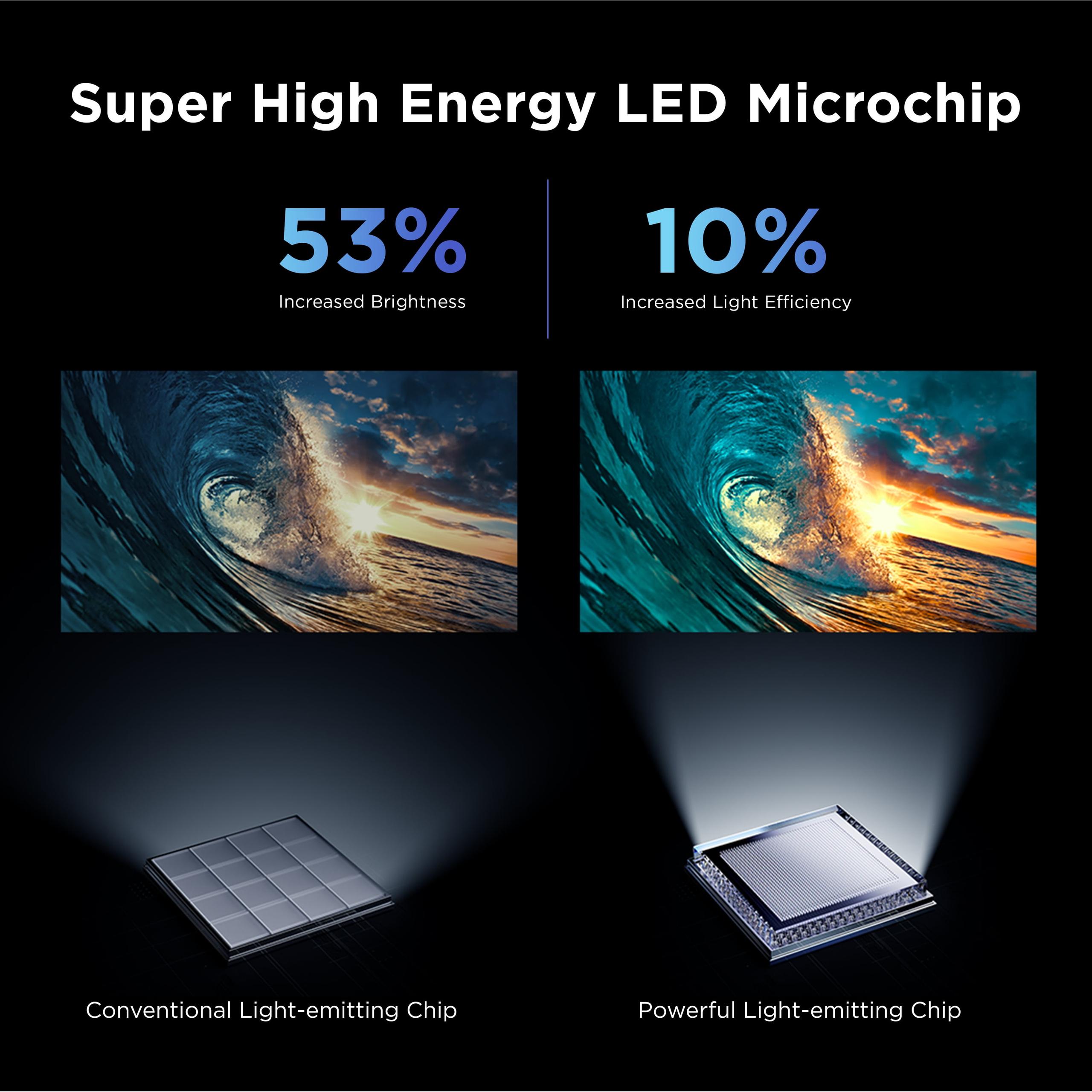
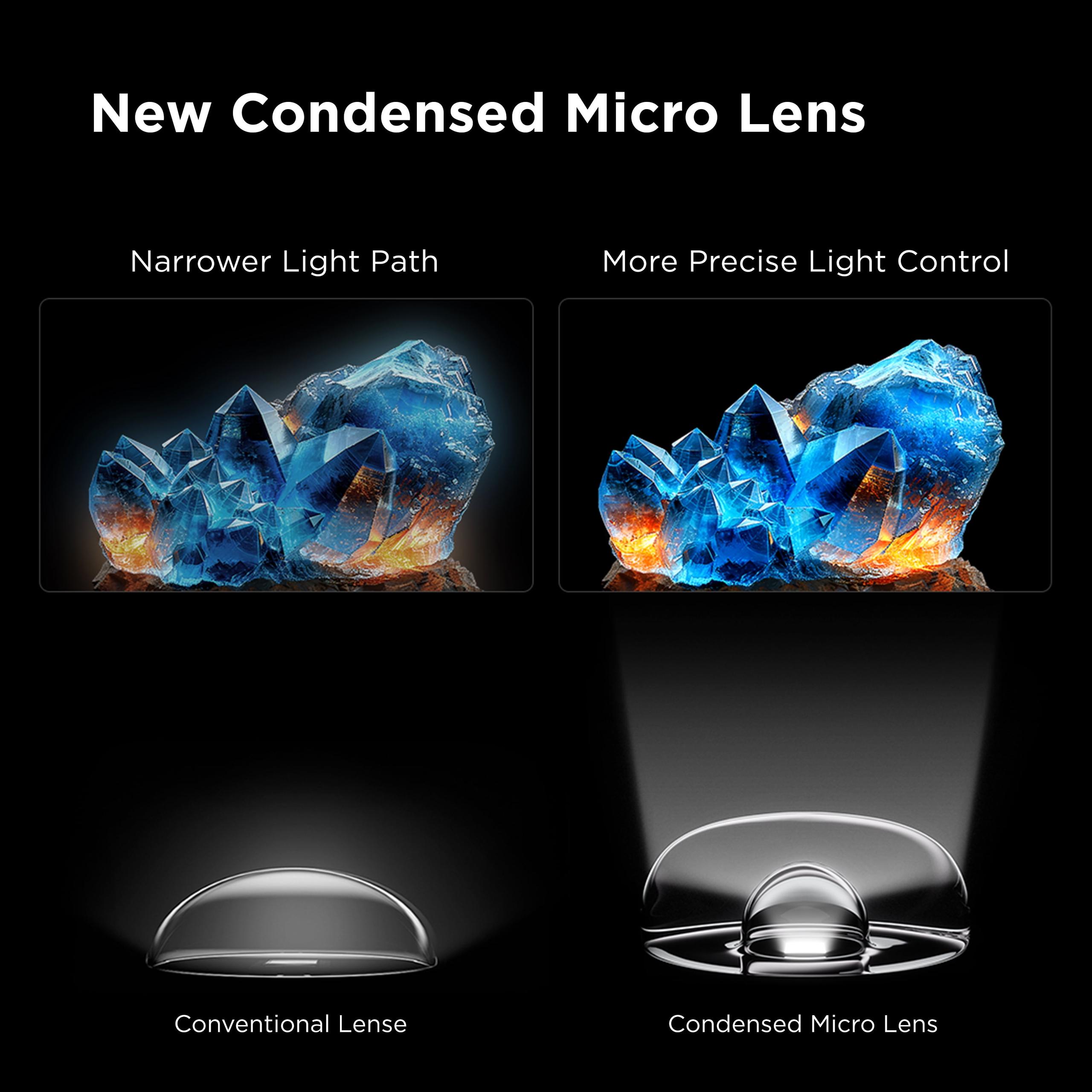
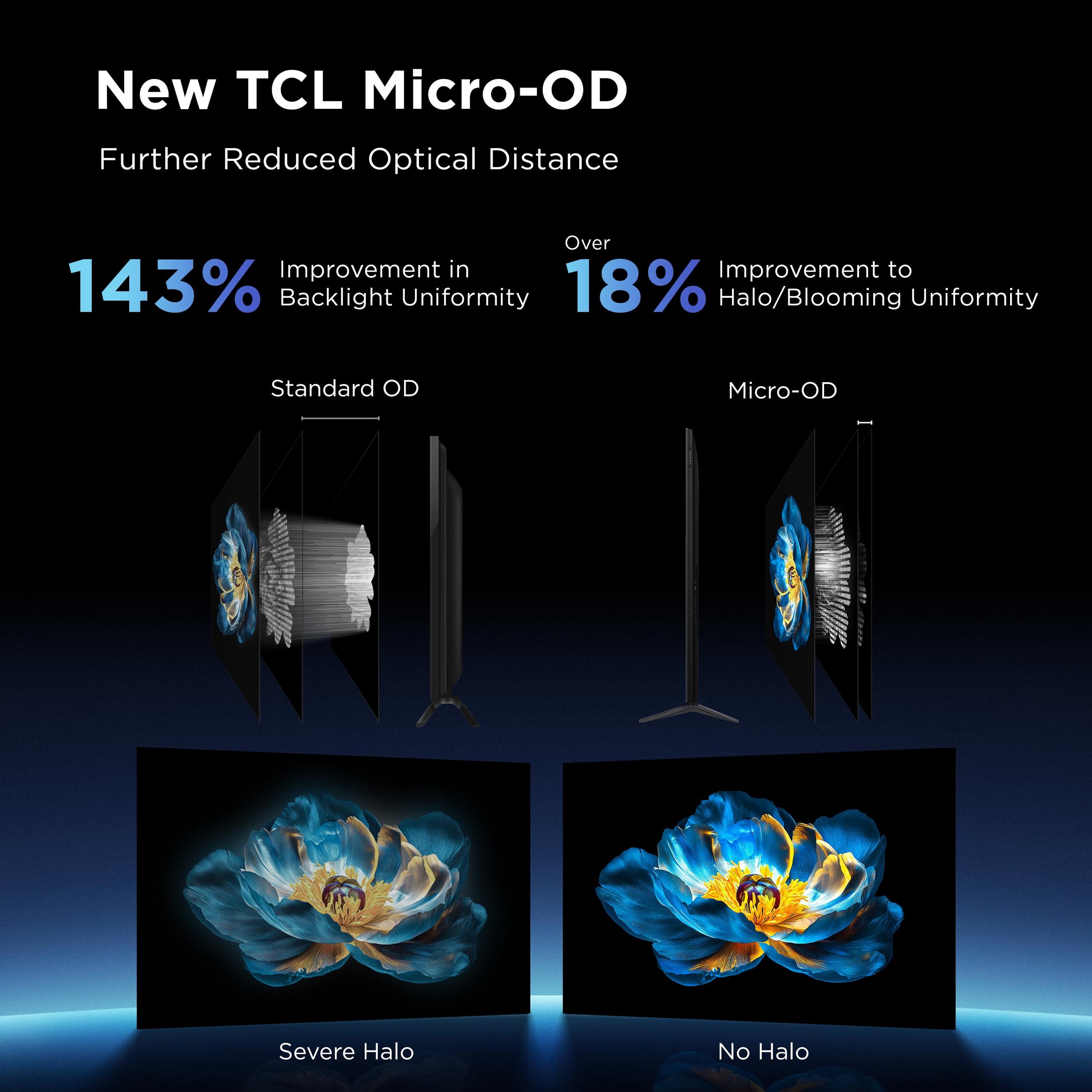
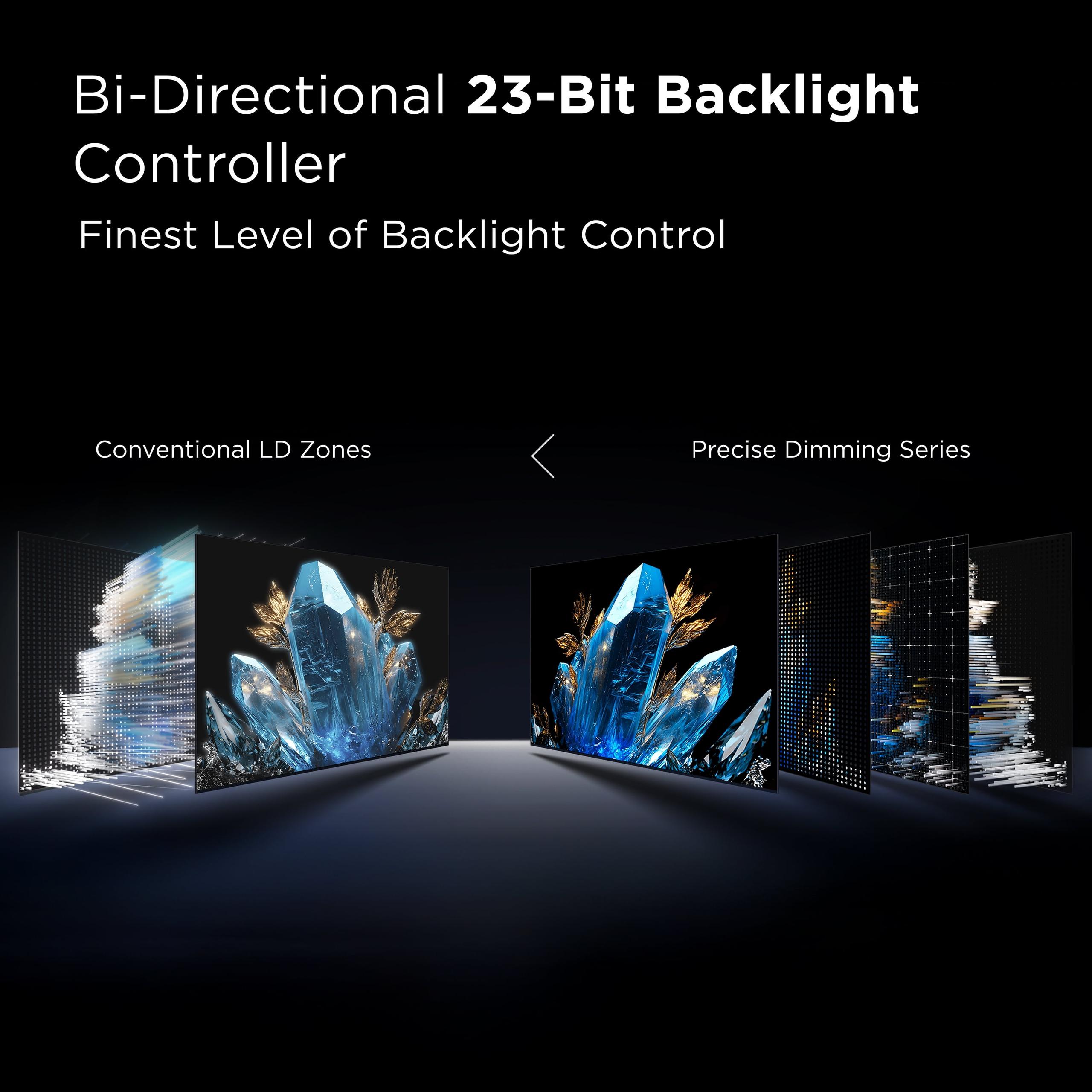
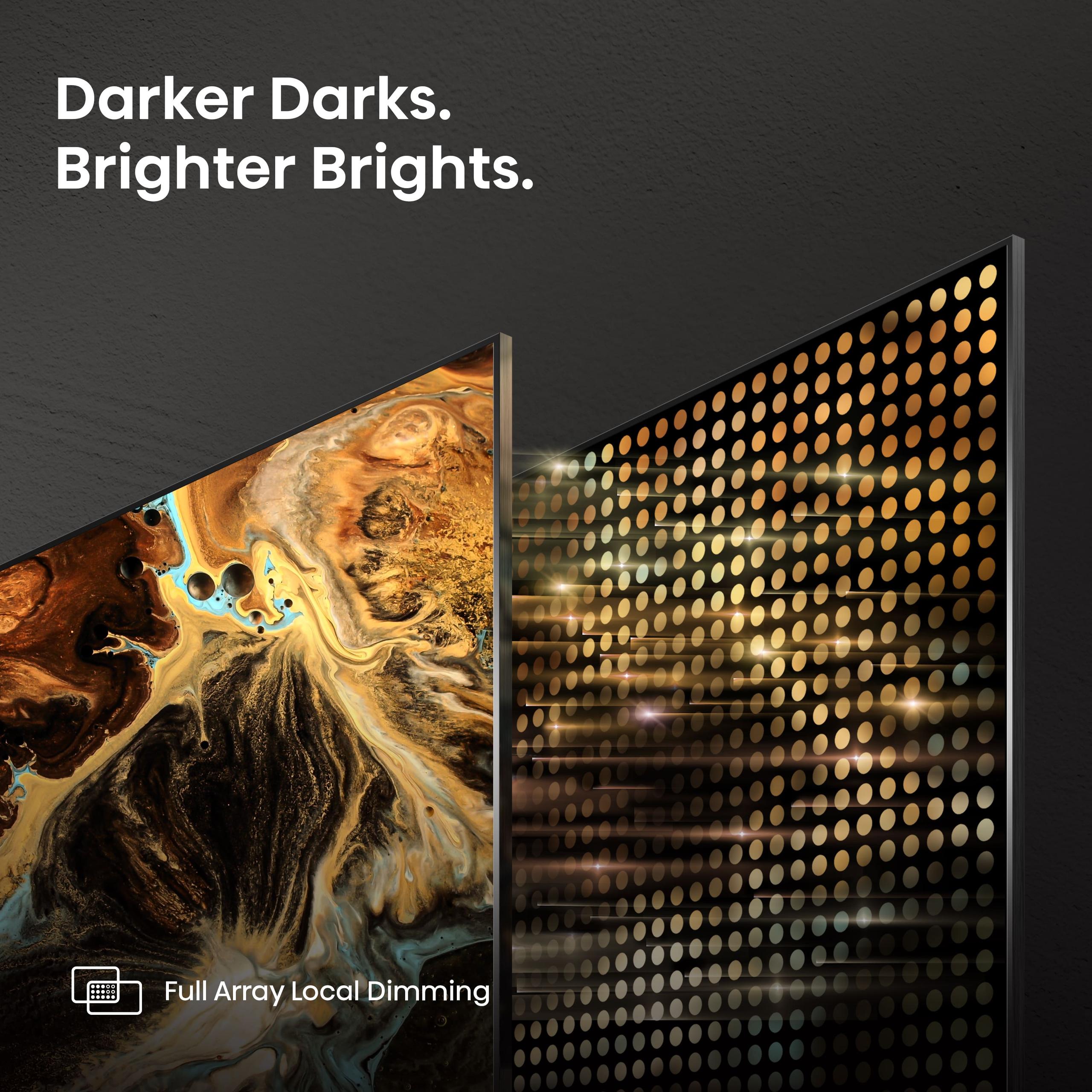
The TCL QM6K's most significant advantage lies in its QD-Mini LED backlight system. Let me explain what this means in practical terms. Traditional LED TVs use relatively large LED lights behind the screen – maybe 50-100 of them across the entire display. The TCL uses thousands of tiny Mini-LEDs instead, organized into over 500 individual zones that can be controlled independently.
Think of it like the difference between lighting a room with 5 large floodlights versus 500 small spotlights. The spotlights give you much more precise control over where light goes and where it doesn't. In TV terms, this means you can have a bright white star in a dark night sky without that star creating a visible glow around it (what we call "blooming" or "haloing").
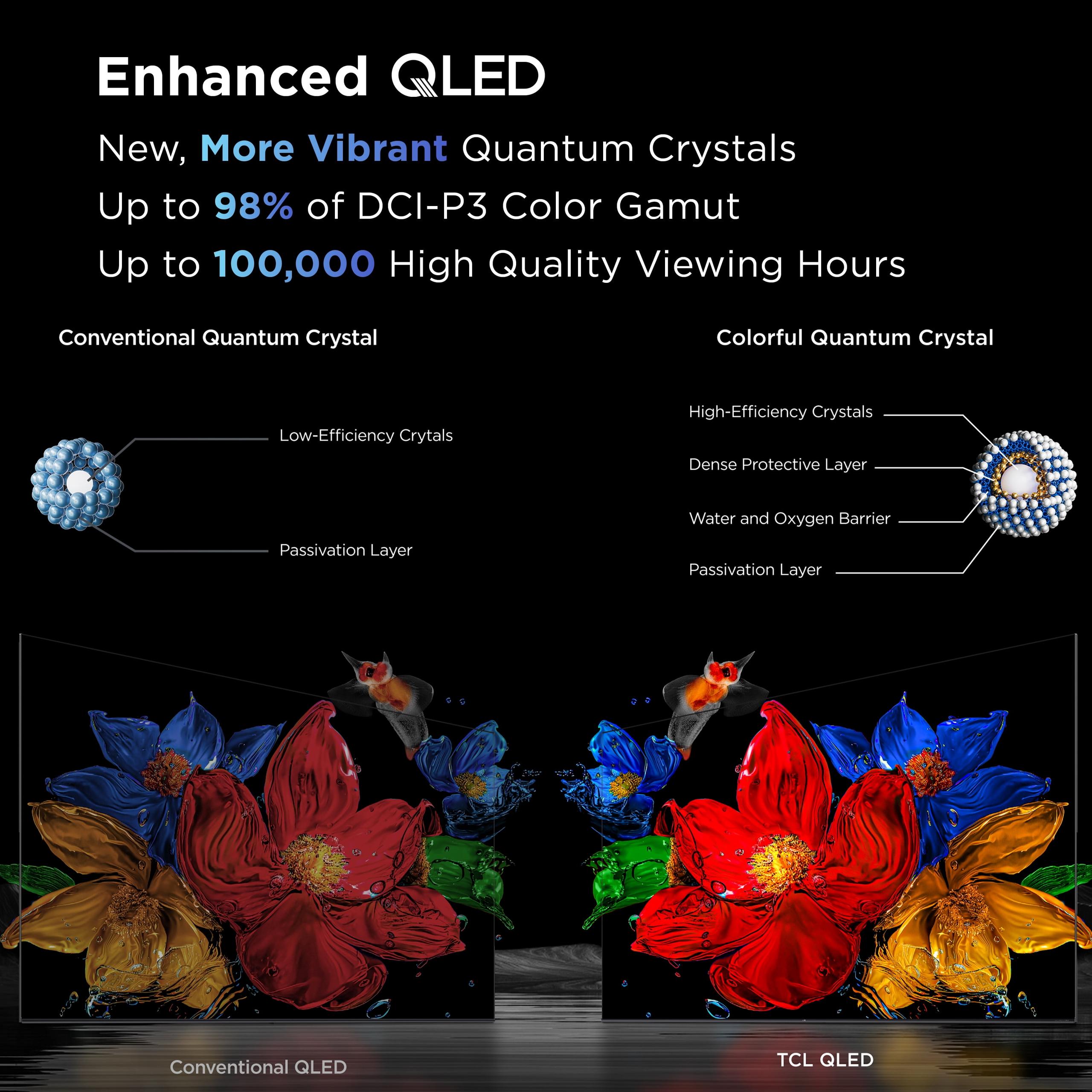
The quantum dot layer adds another performance boost. These microscopic particles convert blue LED light into pure red and green colors, creating more accurate and vibrant colors than standard LED TVs can achieve. In my experience testing various QLED displays, this difference becomes particularly noticeable in natural scenes – skin tones look more realistic, and sunsets have that warm, lifelike glow.
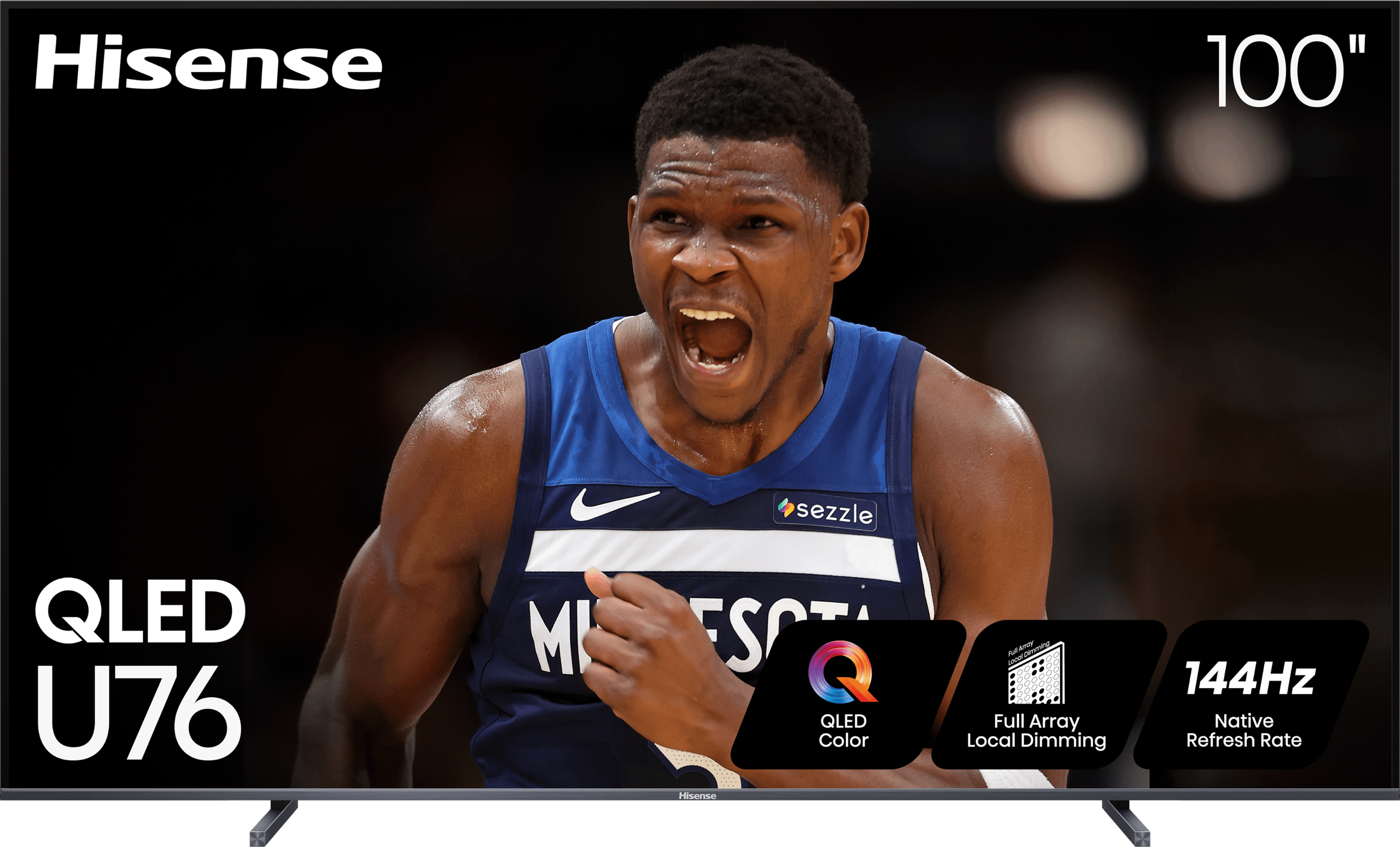
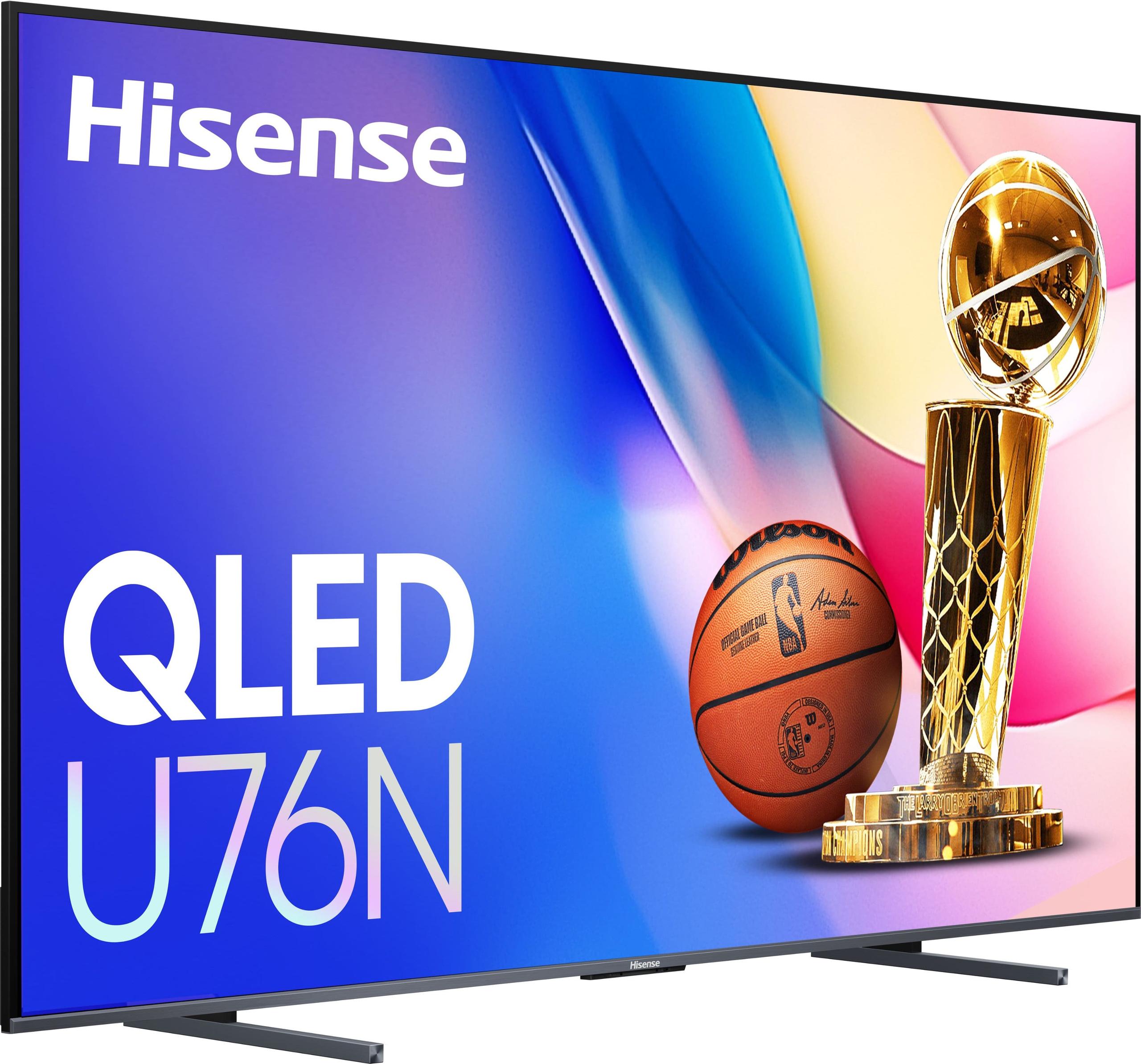
The Hisense U76 uses Full Array LED backlighting with 256 local dimming zones. While this sounds like less than half of TCL's zone count, it's still a significant upgrade over edge-lit TVs and provides solid contrast performance. The difference becomes apparent in very demanding scenes – a movie scene with bright headlights cutting through darkness, for example – where the TCL's additional zones prevent light from spilling into areas that should remain black.
However, Hisense's approach has merit. Fewer zones mean simpler processing and potentially more reliable long-term operation. For many viewing scenarios, 256 zones provide perfectly adequate contrast control, especially if you're not constantly watching content that pushes these systems to their limits.
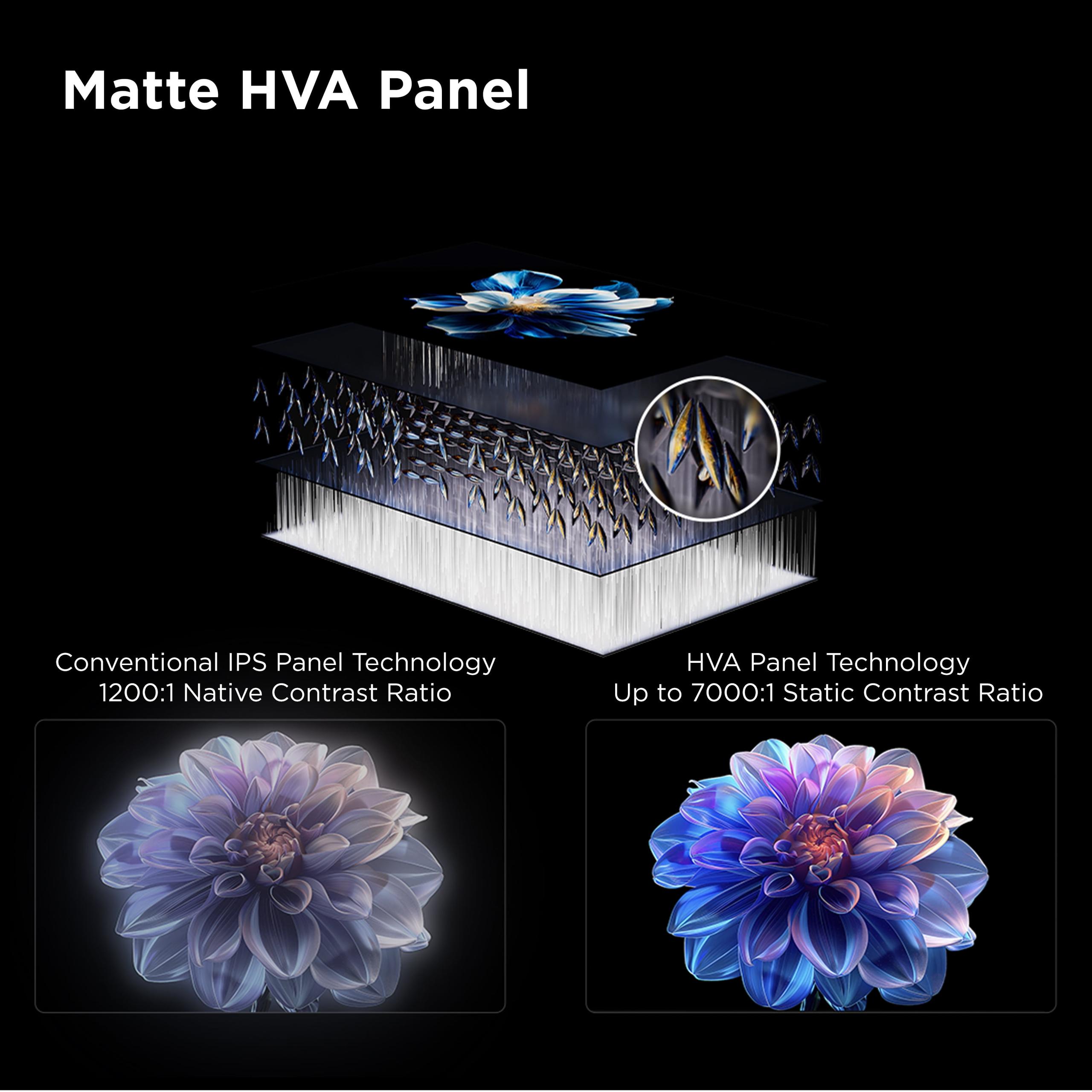
Here's where the TCL QM6K makes a bold move that significantly impacts real-world usability. The matte anti-glare coating fundamentally changes how the TV performs in different lighting conditions. Most large TVs use glossy screens that can look stunning in dark rooms but become mirrors in bright environments.
I've tested both approaches extensively, and the difference is dramatic. Walk into a room with the TCL during daytime, and you can actually see the content clearly even with windows behind your seating area. The Hisense, like most TVs, will show reflections that make bright-room viewing frustrating.
This matters more than you might think. Unless you have a dedicated theater room with complete light control, you'll probably watch this TV during daytime hours, with ambient lighting, or in rooms with windows. The anti-glare coating makes the TCL significantly more versatile.
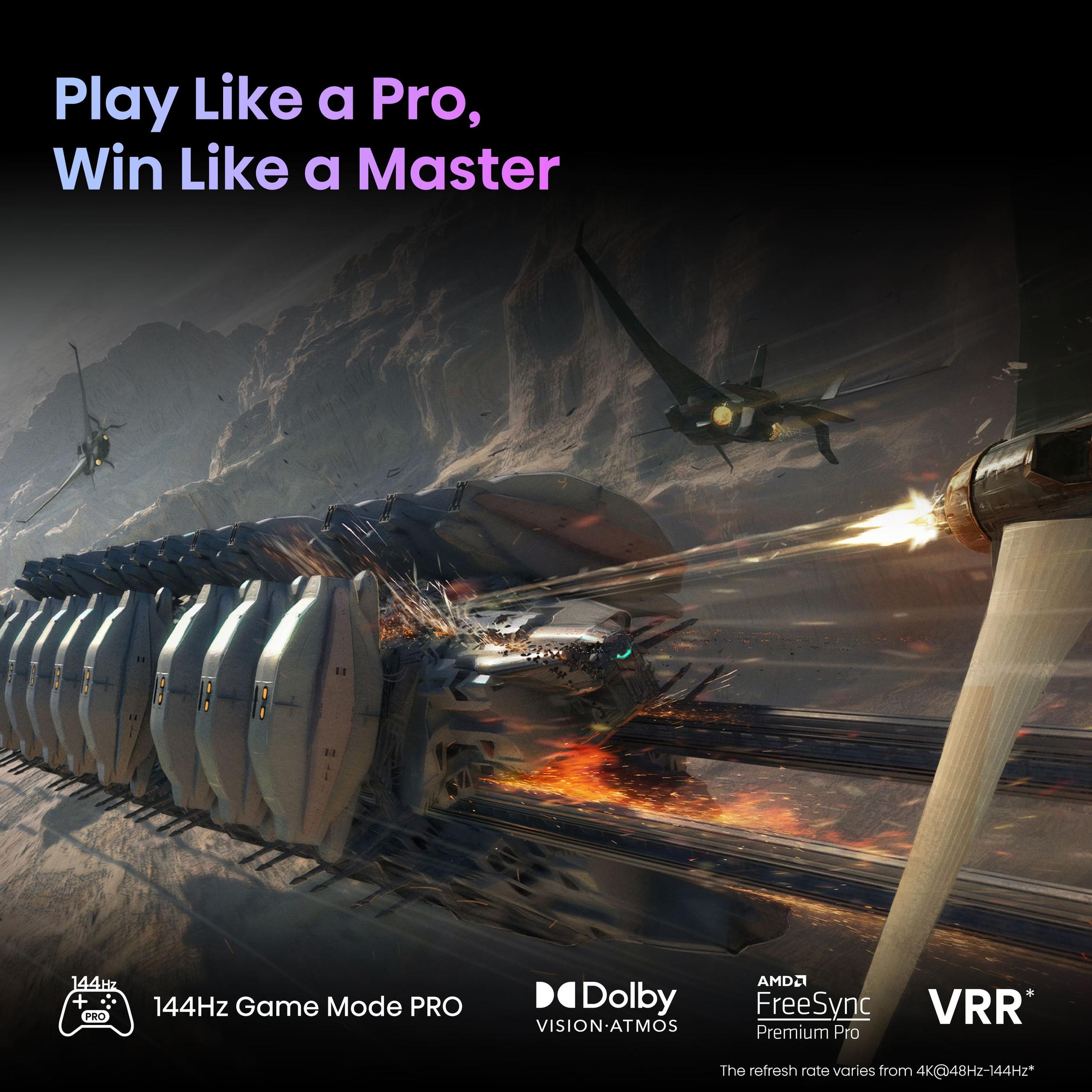
Gaming on giant screens creates unique challenges and opportunities. The TCL QM6K goes all-in on gaming features with support for up to 288Hz at 1080p resolution. Now, you might wonder why anyone needs 288Hz when most games run at 60-120 fps. The answer lies in competitive gaming and future-proofing.
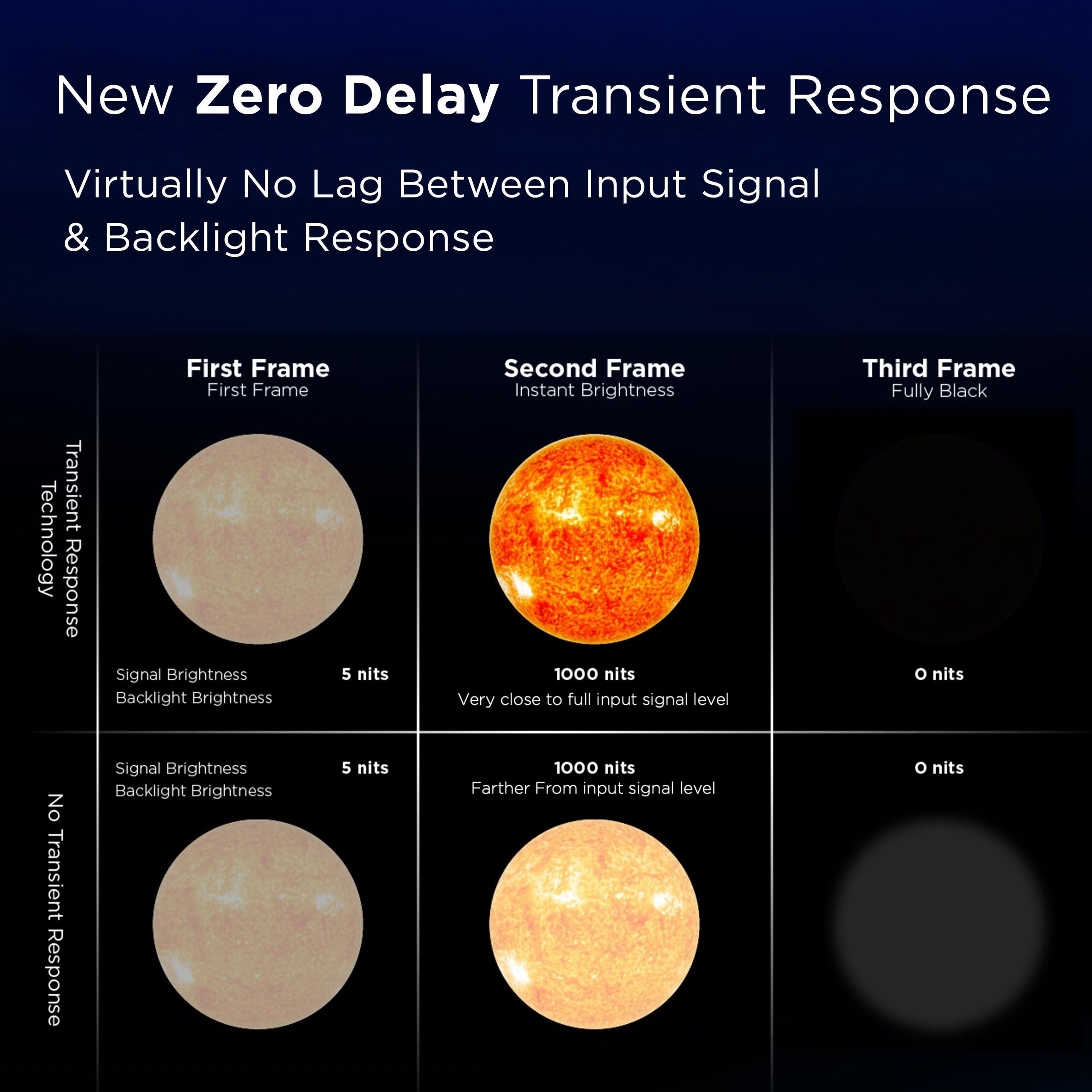
Variable Refresh Rate (VRR) technology syncs the TV's refresh rate with your gaming device's output, eliminating screen tearing and reducing input lag. The TCL's wide VRR range means it can adapt smoothly whether you're playing a locked 60fps adventure game or a competitive shooter pushing 240fps.
The TV includes two full HDMI 2.1 ports, which support the full bandwidth needed for 4K at 144Hz. This future-proofs your setup for next-generation consoles and high-end PC graphics cards that can actually drive games at these refresh rates.
Auto Low Latency Mode (ALLM) automatically switches the TV into its fastest response mode when it detects a gaming signal. Combined with AMD FreeSync Premium Pro certification, the gaming experience feels incredibly responsive – crucial when every millisecond matters in competitive play.
The Hisense U76 covers gaming basics well with 144Hz support and VRR. For most gamers, this provides an excellent experience. The TV switches into Game Mode automatically and reduces input lag to acceptable levels for casual and semi-serious gaming.
Where it falls short compared to the TCL is in the upper refresh rate ranges and advanced VRR features. If you're primarily a console gamer playing single-player adventures or casual multiplayer, you probably won't notice the difference. Competitive PC gamers and enthusiasts will appreciate the TCL's additional capabilities.
Large TVs face an inherent audio challenge – the screen size creates expectations for room-filling sound that tiny built-in speakers simply cannot meet. Both TVs attempt to address this, though with different approaches.
The TCL QM6K partners with Onkyo for a 2.1.1 channel system that includes a built-in subwoofer. In practical terms, this means you get dedicated bass drivers that can actually move enough air to provide some low-frequency impact. The Dolby Atmos processing attempts to create virtual surround sound effects.
During my testing, the TCL's audio proved adequate for casual viewing and significantly better than typical TV speakers. You'll hear dialogue clearly, music has some body to it, and action scenes have a bit of punch. However, it's still TV audio – don't expect it to replace a proper sound system.
The Hisense U76 includes a 2.1 system with 50 watts total output. It's functional but unremarkable. Like most TV audio, it gets the job done for news and casual viewing but lacks the dynamic range and impact that content on a 100-inch screen demands.
For either TV, I'd strongly recommend planning for external audio – whether that's a soundbar, surround sound system, or even a good pair of powered speakers. The screen size creates expectations that built-in audio simply cannot fulfill.
Both the TCL QM6K and Hisense U76 run Google TV, which means you get essentially the same smart TV experience. The interface is clean and responsive, voice control works well, and you have access to all major streaming apps.
Google TV's strength lies in its content aggregation – it pulls together shows and movies from various services and presents them in a unified interface. The recommendation system learns your preferences over time and generally does a good job suggesting content you might enjoy.
Neither TV has a significant advantage in the smart TV department, which simplifies your decision-making process. You can focus on picture quality, size, and features without worrying about software differences.
This is where the TCL QM6K's anti-glare coating creates a substantial real-world advantage. In my testing across various lighting conditions, the matte panel maintains picture quality even with significant ambient light. Colors stay saturated, contrast remains visible, and reflections are minimized.
The Hisense U76, with its glossy panel, can look stunning in dark rooms but struggles when ambient light hits the screen. If your TV room has windows or you watch during daytime hours, this difference becomes crucial to daily satisfaction.
In dedicated theater rooms with controlled lighting, both TVs can deliver impressive experiences, though with different strengths. The TCL's Mini-LED backlighting provides superior contrast control – dark scenes maintain detail without losing shadow information, while bright highlights pop without overwhelming surrounding areas.
The Hisense can deliver impressive dark-room performance too, and its extra two inches of screen size become more noticeable when you're sitting closer in a dedicated theater setting. The larger size can provide a more immersive feeling, especially for movie content.
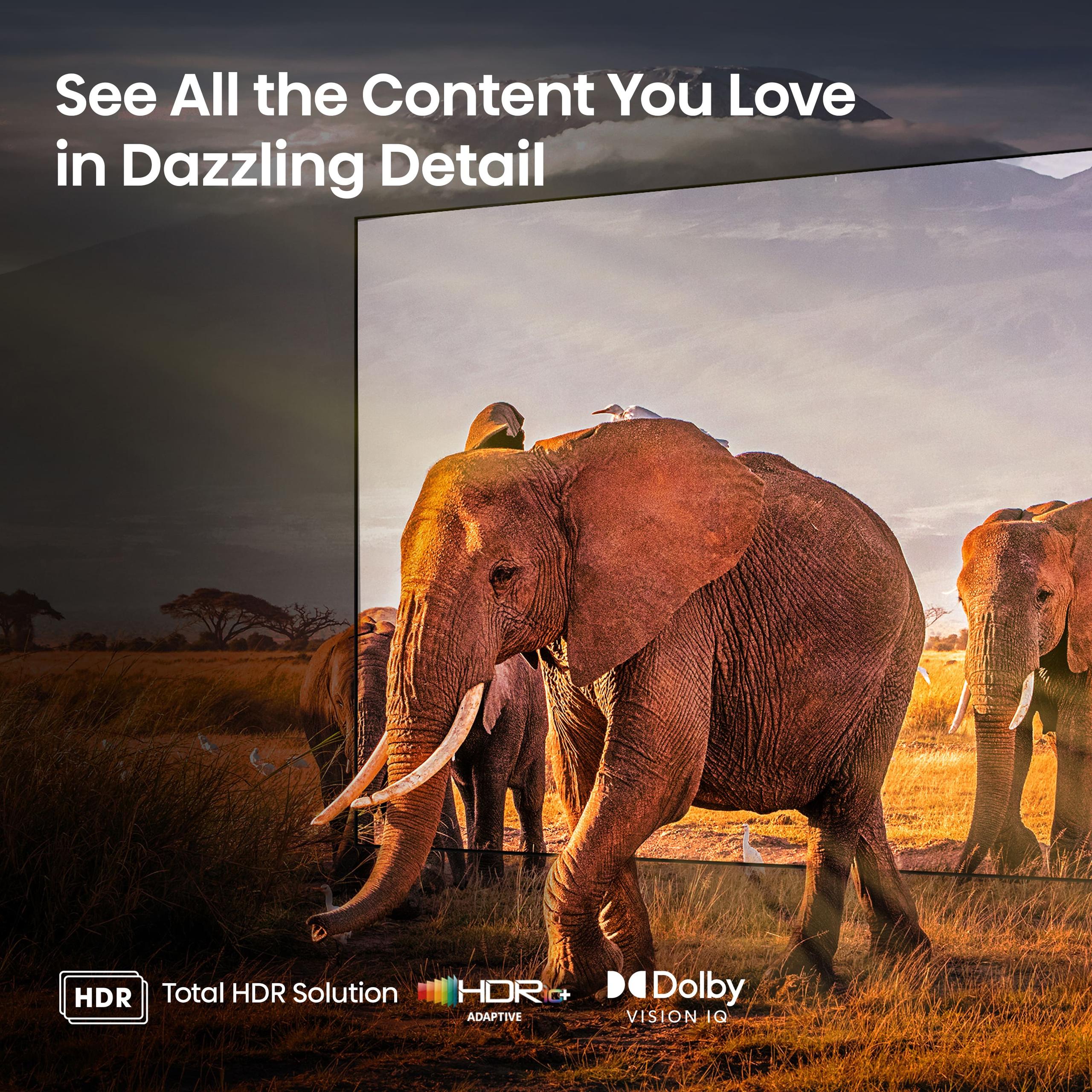
High Dynamic Range (HDR) content – which includes most modern streaming shows and 4K Blu-rays – showcases the technical differences between these TVs. The TCL QM6K's Mini-LED system handles HDR's demanding bright-to-dark transitions more gracefully. Scenes like sunlight streaming through windows, car headlights at night, or bright explosions against dark backgrounds look more realistic and less prone to blooming artifacts.
Both TVs support all major HDR formats (Dolby Vision, HDR10+, HDR10, and HLG), so you won't miss out on compatibility. The difference lies in execution quality.
At similar price points around $2,000, these TVs offer compelling but different value propositions. The TCL QM6K packs premium display technology typically found in much more expensive TVs. Mini-LED backlighting alone usually adds $500-1000 to a TV's price, making the TCL an exceptional value for technology enthusiasts.
The Hisense U76 offers pure size leadership – it's difficult to find any 100-inch TV at this price point, regardless of features. If screen real estate is your primary concern and you have appropriate room conditions, the Hisense delivers maximum impact for your investment.
Consider also the long-term satisfaction factor. The TCL's anti-glare coating and superior backlighting will likely provide more consistent daily satisfaction across various viewing conditions. The Hisense's size advantage is immediately apparent but may not compensate for picture quality limitations in challenging lighting situations.
Prioritize Picture Quality: The Mini-LED backlighting and anti-glare coating create a more premium viewing experience across various conditions. If you appreciate technical excellence and want the best possible picture quality, the TCL delivers.
Game Seriously: The 288Hz capability, advanced VRR, and dual HDMI 2.1 ports make this the clear choice for competitive gaming or high-end PC gaming setups.
Have a Bright Room: The anti-glare coating transforms usability in rooms with windows or ambient lighting. This single feature can determine daily satisfaction.
Want Room Flexibility: The matte panel works well in various lighting conditions, giving you more freedom in room setup and usage patterns.
Maximize Size Above All: Those extra two inches provide about 4% more screen area, which becomes noticeable when sitting closer to the screen. In dedicated theater rooms, size can trump other considerations.
Have Ideal Viewing Conditions: If you can control lighting and primarily watch in darker conditions, the Hisense can deliver excellent picture quality while providing maximum screen real estate.
Prefer Simplicity: Fewer complex technologies mean potentially fewer things to go wrong long-term. If you want reliable, straightforward performance, the Hisense approach has merit.
Budget Consciousness: While prices are similar, the Hisense sometimes offers better deals and promotions, making it the more budget-friendly option when available.
After extensive consideration of both options, the TCL 98" QM6K QLED TV emerges as the more versatile choice for most home theater setups. Its Mini-LED technology, anti-glare coating, and superior gaming features create a more premium experience that justifies choosing it over the slightly larger Hisense.
However, the Hisense 100" U76 isn't wrong for everyone. If you have a dedicated theater room with controlled lighting and prioritize maximum screen size, it can deliver an impressive experience at an exceptional price point.
The key is honestly assessing your room conditions, usage patterns, and priorities. Both TVs represent excellent values in the giant screen category – they just excel in different scenarios. Choose based on which strengths align better with your specific home theater goals and viewing environment.
Either way, you're getting a massive, feature-rich TV that would have cost multiples of these prices just a few years ago. The democratization of large-screen technology means incredible home theater experiences are now accessible to far more people than ever before.
| TCL 98-Inch QM6K QLED TV at $1,999 | Hisense 100" U76 Series 4K UHD QLED Google TV at $2,000 |
|---|---|
| Screen Size - Physical presence and immersion factor | |
| 98 inches diagonal | 100 inches diagonal (4% more screen area) |
| Backlight Technology - Controls contrast and picture quality | |
| QD-Mini LED with 500+ local dimming zones | Full Array LED with 256 local dimming zones |
| Panel Type - Affects glare and room lighting compatibility | |
| Matte HVA anti-glare panel (excellent for bright rooms) | Standard glossy panel (best in dark rooms) |
| Gaming Performance - Maximum refresh rates for competitive play | |
| Up to 288Hz at 1080p, 144Hz at 4K with advanced VRR | Up to 144Hz with standard VRR support |
| HDMI 2.1 Ports - Future-proofing for high-bandwidth devices | |
| 2 full HDMI 2.1 ports | 2 HDMI 2.1 ports |
| Audio System - Built-in sound quality | |
| Onkyo 2.1.1 system with built-in subwoofer | 2.1 channel (15W x2 + 20W subwoofer) |
| Smart TV Platform - Interface and app ecosystem | |
| Google TV (Android 12) with voice control | Google TV with hands-free voice control |
| HDR Support - Premium content compatibility | |
| Dolby Vision IQ, HDR10+, HDR10, HLG | Dolby Vision, HDR10+, HDR10, HLG |
| Weight - Installation and mounting considerations | |
| Approximately 130+ lbs with stand | 137.8 lbs with stand |
| Key Advantage - What each does best | |
| Superior picture quality and bright room performance | Maximum screen size at lowest cost per inch |
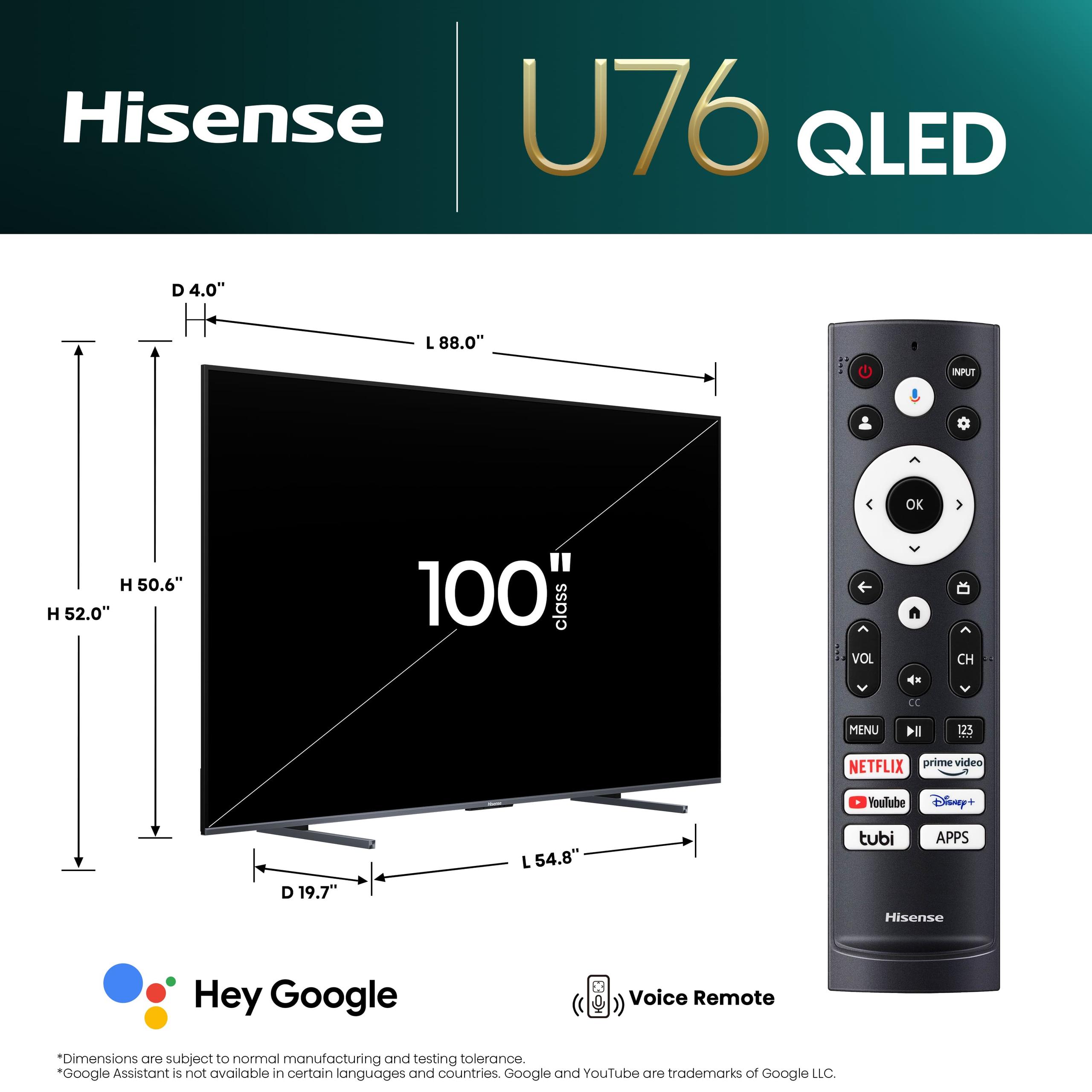
The Hisense 100" U76 Series is slightly larger with a 100-inch diagonal screen compared to the TCL 98-Inch QM6K. This translates to about 4% more screen area, which becomes noticeable when sitting closer to the display.
Both TVs are priced very similarly. The TCL 98-Inch QM6K QLED TV costs $1,999, while the Hisense 100" U76 Series is around $2,000. The price difference is minimal, making features and performance the deciding factors rather than cost.
The TCL QM6K offers superior picture quality thanks to its QD-Mini LED backlighting with 500+ local dimming zones compared to the Hisense U76's 256 zones. The TCL also features quantum dot technology for more accurate colors and better contrast control.
The TCL QM6K excels in bright rooms due to its matte anti-glare panel that reduces reflections significantly. The Hisense U76 uses a standard glossy panel that can show reflections in bright environments but may look better in dark, controlled lighting conditions.
The TCL QM6K is the clear winner for gaming, supporting up to 288Hz at 1080p and featuring advanced VRR with AMD FreeSync Premium Pro. The Hisense U76 supports up to 144Hz with basic VRR, which is adequate for most gamers but less advanced than the TCL.
Both the TCL QM6K and Hisense U76 include 4 HDMI ports total, with 2 HDMI 2.1 ports each for high-bandwidth devices like gaming consoles and PCs. This provides sufficient connectivity for most home theater setups.
The TCL QM6K features an Onkyo-tuned 2.1.1 audio system with a built-in subwoofer and Dolby Atmos support. The Hisense U76 includes a 2.1 channel system with 50W total output. Both benefit from external sound systems for optimal audio performance.
Yes, both the TCL QM6K and Hisense U76 run Google TV, providing access to the same streaming apps including Netflix, Disney+, Amazon Prime Video, and others. The smart TV experience is essentially identical between both models.
For dedicated dark home theaters, the Hisense U76's larger 100-inch screen provides maximum immersion. However, the TCL QM6K's superior Mini-LED backlighting delivers better contrast and HDR performance, making it ideal for mixed-use rooms or theaters with some ambient lighting.
Both TVs support all major HDR formats including Dolby Vision, HDR10+, and HDR10. However, the TCL QM6K's Mini-LED backlighting with more local dimming zones provides better HDR performance with improved contrast and reduced blooming around bright objects compared to the Hisense U76.
Both brands offer similar warranty coverage, but the Hisense U76's simpler Full Array LED design may have fewer potential failure points than the TCL QM6K's more complex Mini-LED system. However, TCL's anti-glare coating provides better long-term viewing satisfaction in varied lighting conditions.
This depends on your priorities and room setup. Choose the Hisense 100" U76 if maximum screen size is most important and you have a dark viewing environment. Select the TCL 98-Inch QM6K if you prefer superior picture quality, gaming features, and better performance in bright rooms, even with a slightly smaller screen.
We've done our best to create useful and informative comparisons to help you decide what product to buy. Our research uses advanced automated methods to create this comparison and perfection is not possible - please contact us for corrections or questions. These are the sites we've researched in the creation of this article: bestbuy.com - rtings.com - techradar.com - the-gadgeteer.com - youtube.com - youtube.com - ign.com - youtube.com - tomsguide.com - tcl.com - valueelectronics.com - bestbuy.com - bestbuy.com - rtings.com - circuitworldonline.com - youtube.com - tcl.com - bestbuy.com - tomsguide.com - tcl.com - flatpanelshd.com - displayspecifications.com - bestbuy.com - greentoe.com - walmart.com - rtings.com - youtube.com - files.hisense-usa.com - displayspecifications.com - hisense-canada.com - howards.pairsite.com - displayspecifications.com - electronicexpress.com - hisense-usa.com

Privacy Policy
Terms and Conditions - Affiliate Policy
Home Security
© Copyright 2008-2026.
11816 Inwood Rd #1211, Dallas, TX 75244