

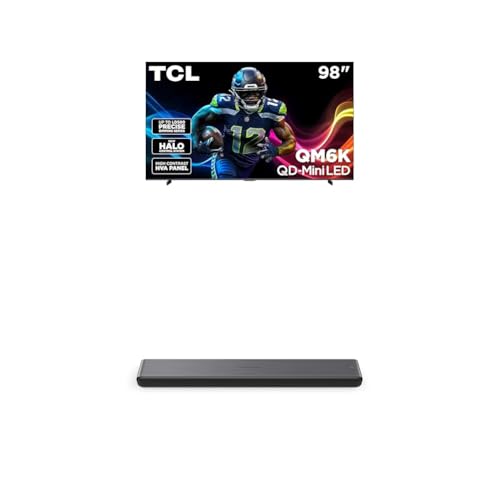
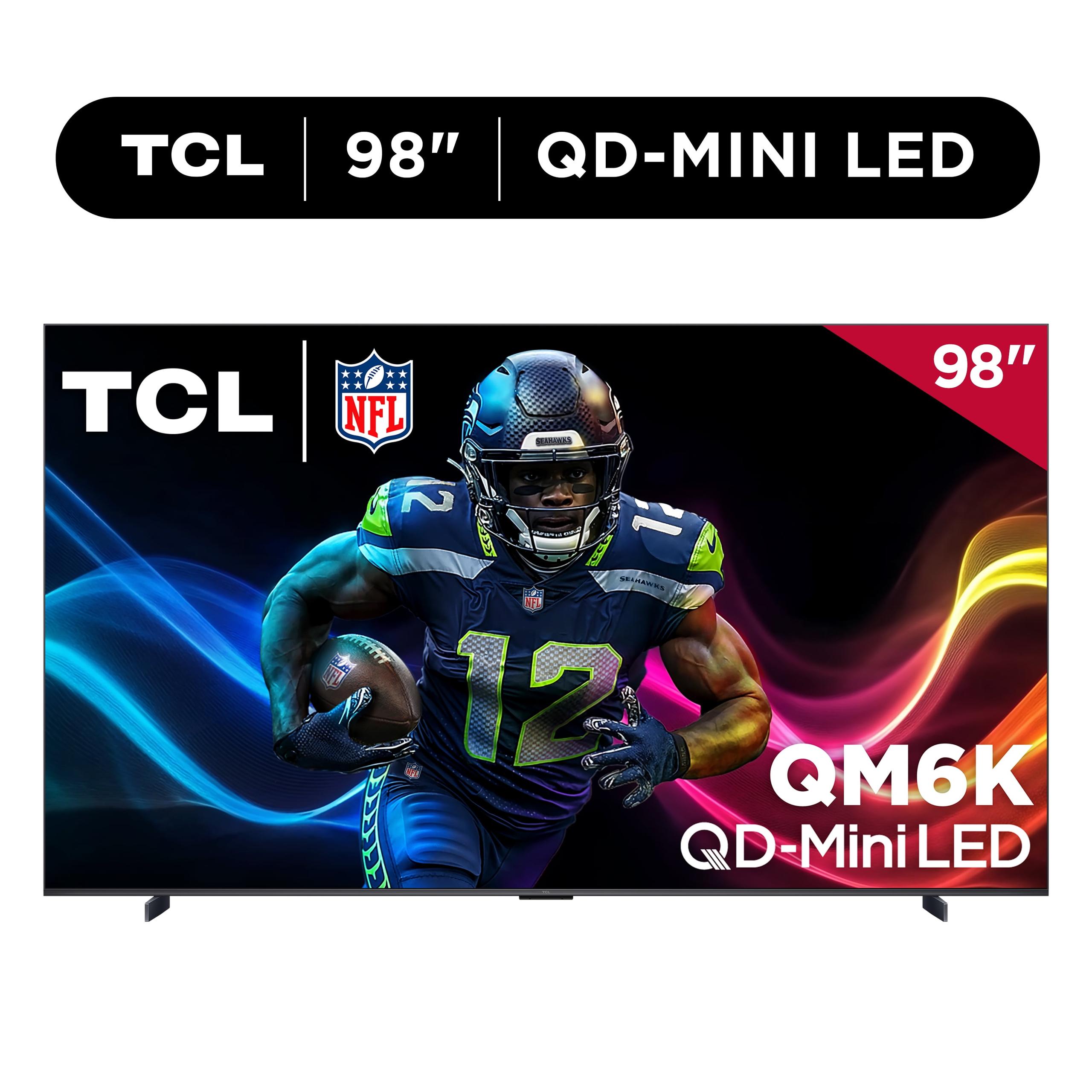
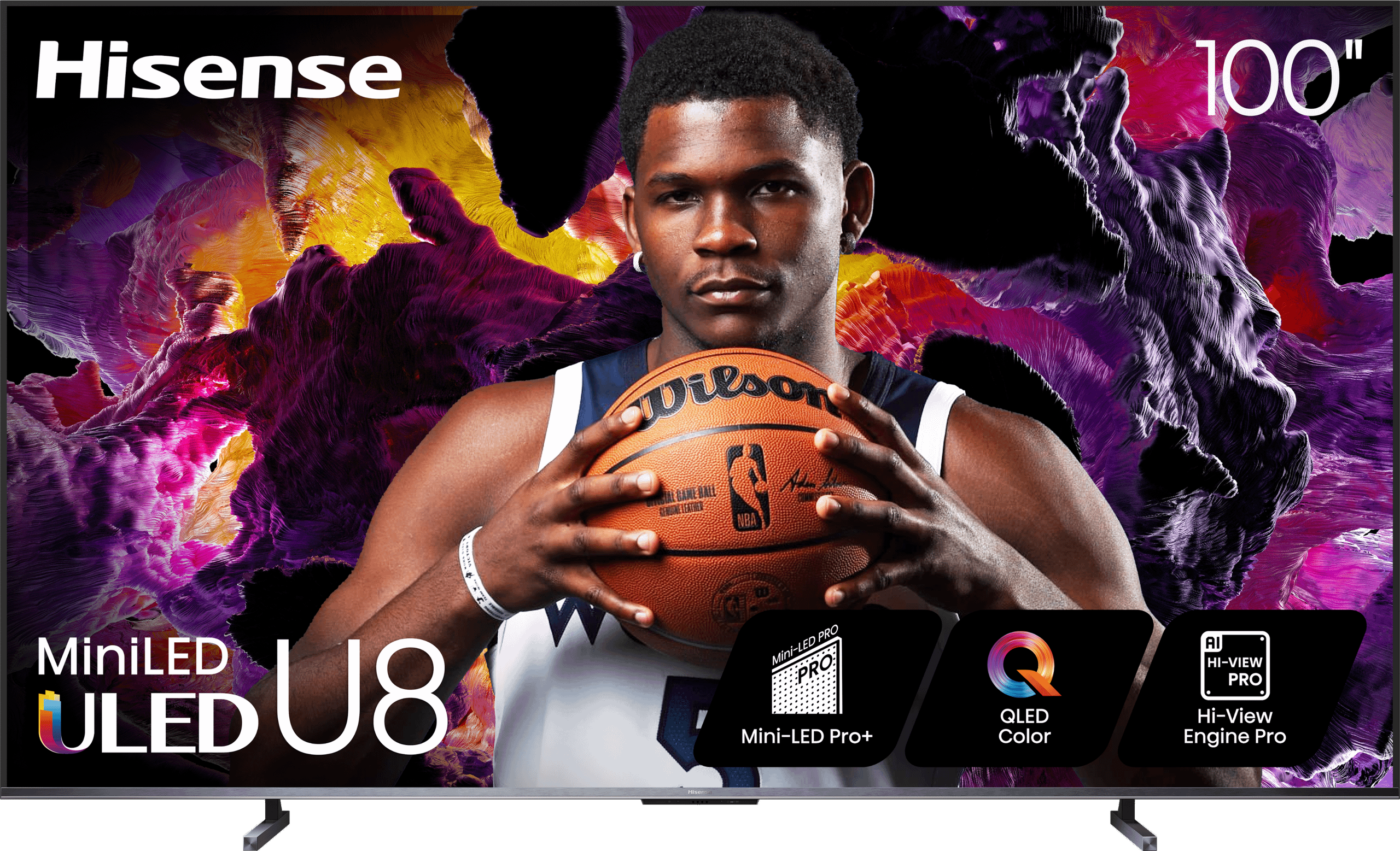

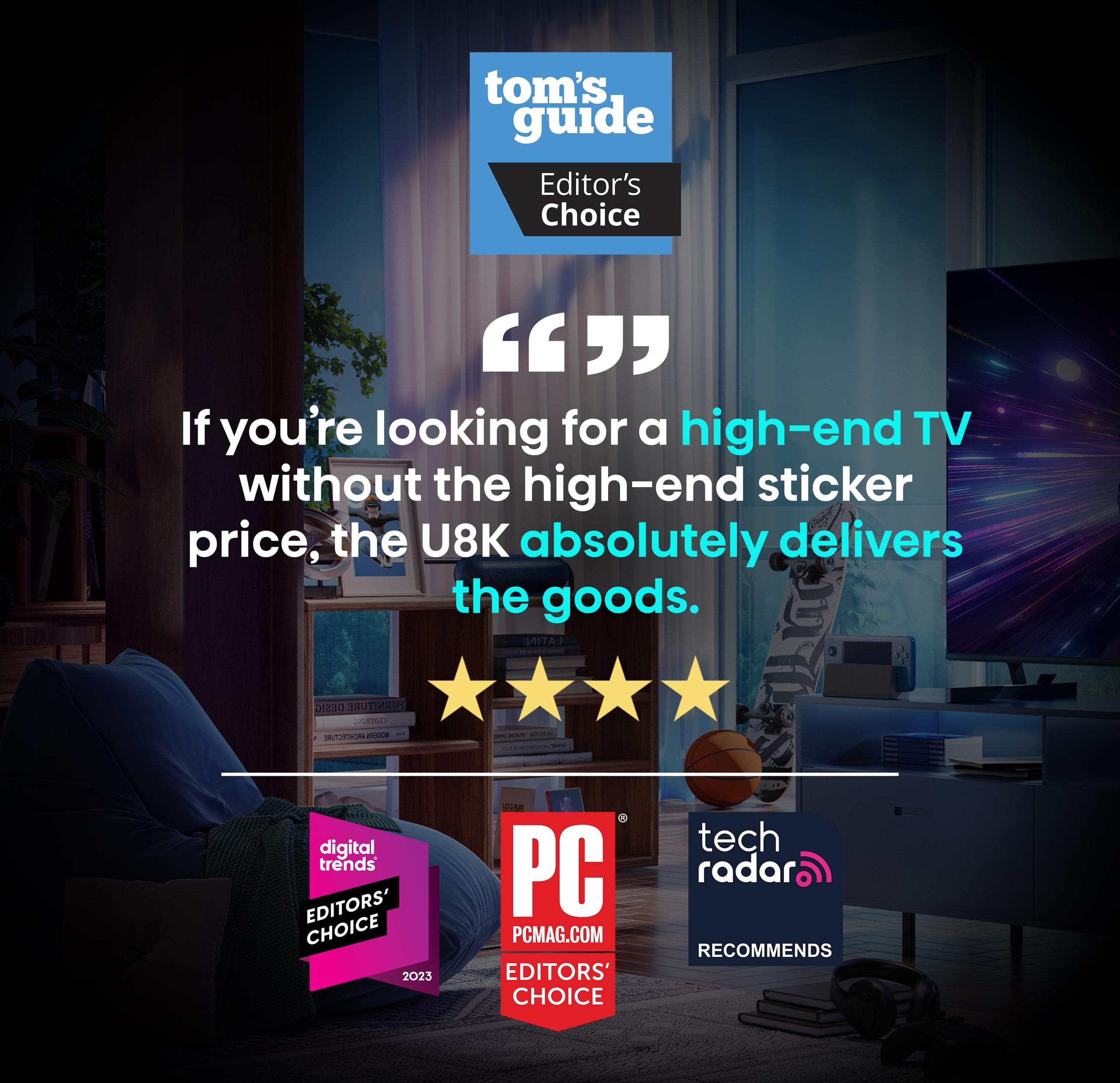
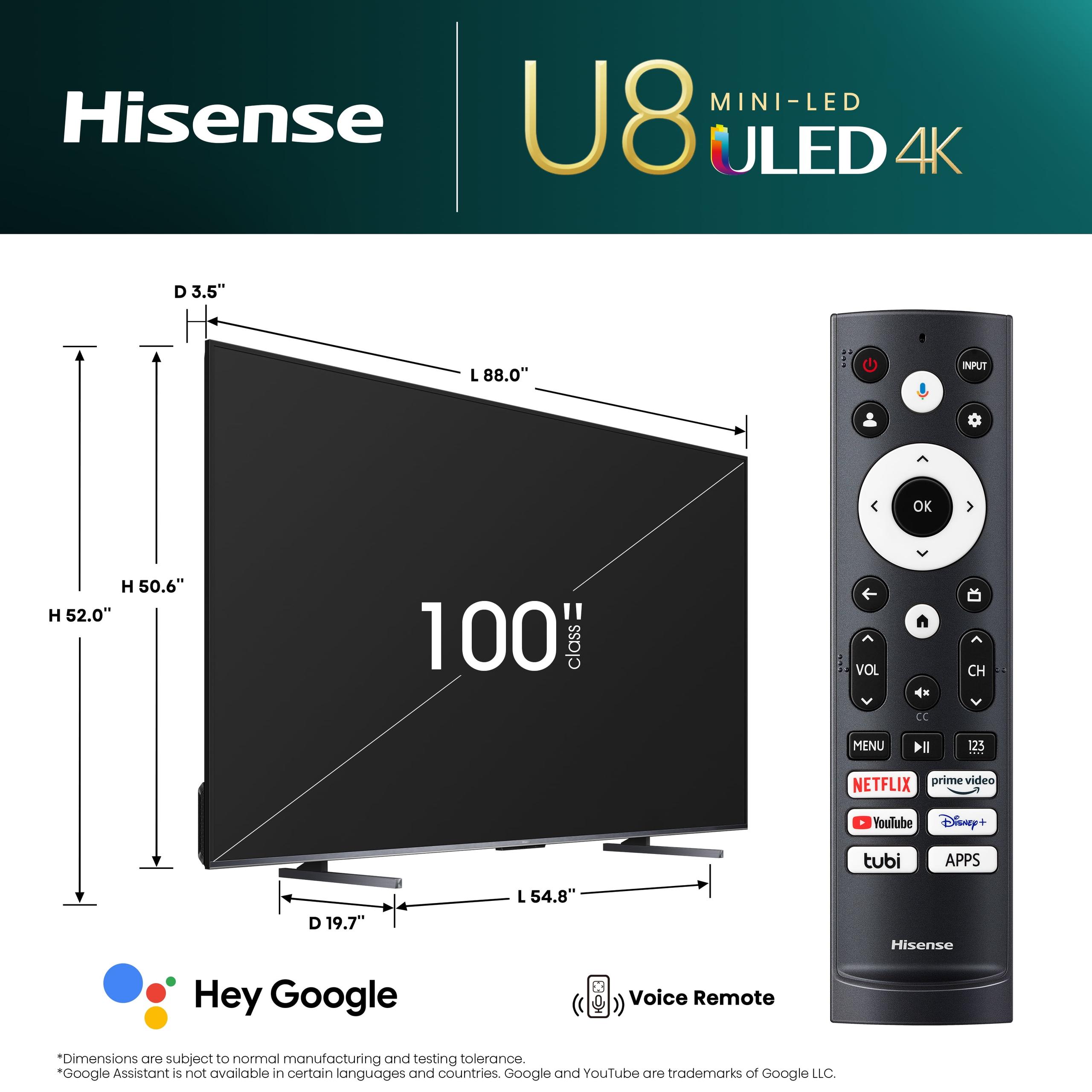
When you're shopping for a TV that's nearly as wide as your wall, you're entering exclusive territory. Ultra-large TVs—those 95 inches and bigger—represent the pinnacle of home entertainment, offering a cinematic experience that makes your living room feel like a private theater. Today, we're comparing two heavyweights in this space: the TCL 98-Inch QM6K QLED TV at $1,999 and the Hisense 100" Class U8 Series 4K Mini-LED QLED Google TV at $2,798.
Before diving into specifics, let's talk about what makes this category unique. These aren't just "big TVs"—they're architectural elements that transform how you experience entertainment. At these sizes, every technical detail becomes magnified, literally. A slight uniformity issue that's invisible on a 65-inch TV becomes noticeable on a 98-inch display. Similarly, features like anti-glare coatings and viewing angles matter more when your screen spans eight feet across your wall.
The main considerations in this category revolve around room compatibility, picture quality at massive scale, and value proposition. You're asking your TV to fill a space typically reserved for projectors, but with the convenience and reliability of a traditional display.
The Hisense 100" U8 Series hit the market in early 2024, representing Hisense's push into the ultra-large premium segment. It launched with mature mini-LED technology and established Google TV integration, positioning itself as a direct competitor to Samsung's high-end QLEDs.
TCL's response came in February 2025 with the 98-Inch QM6K QLED. This timing allowed TCL to incorporate lessons learned from the market's reception of large-format mini-LED displays. The QM6K includes newer anti-glare technology and updated Google TV software (version 12), showing how quickly this space evolves.
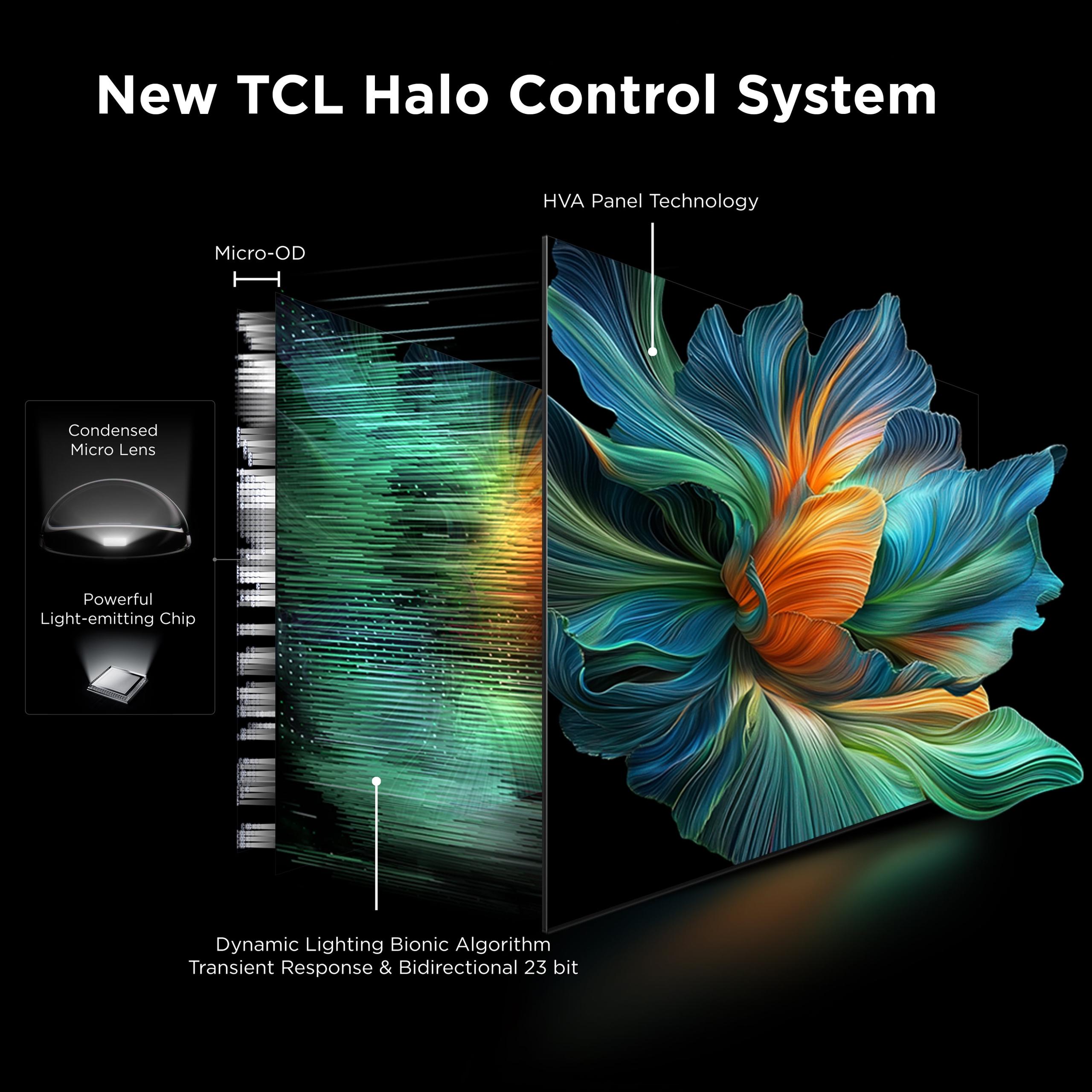
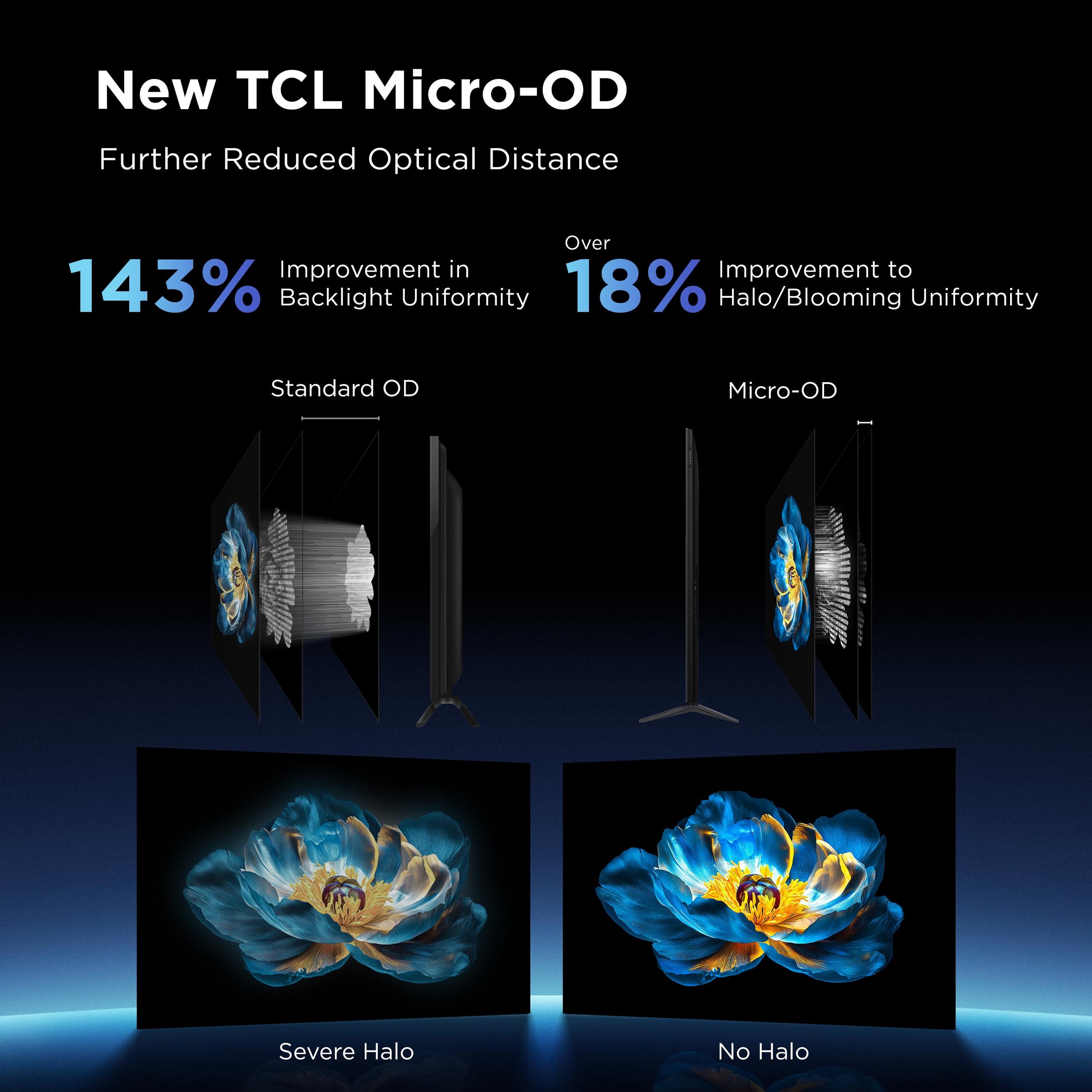
The year gap matters because mini-LED technology has matured significantly. Early 2024 displays often struggled with blooming control and uniformity at large sizes. TCL's 2025 entry includes their "Halo Control System," which specifically addresses these issues that plagued earlier large mini-LED TVs.
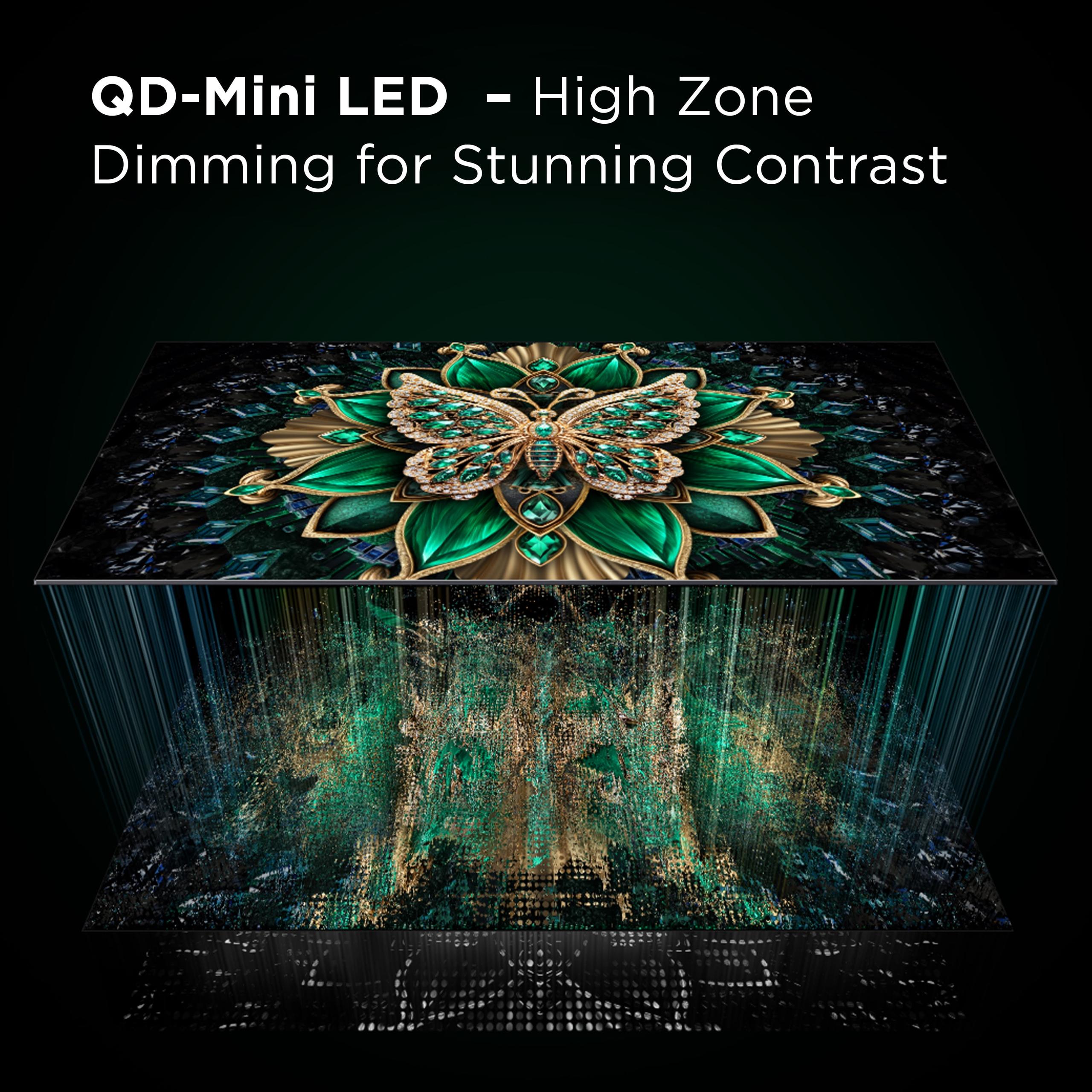
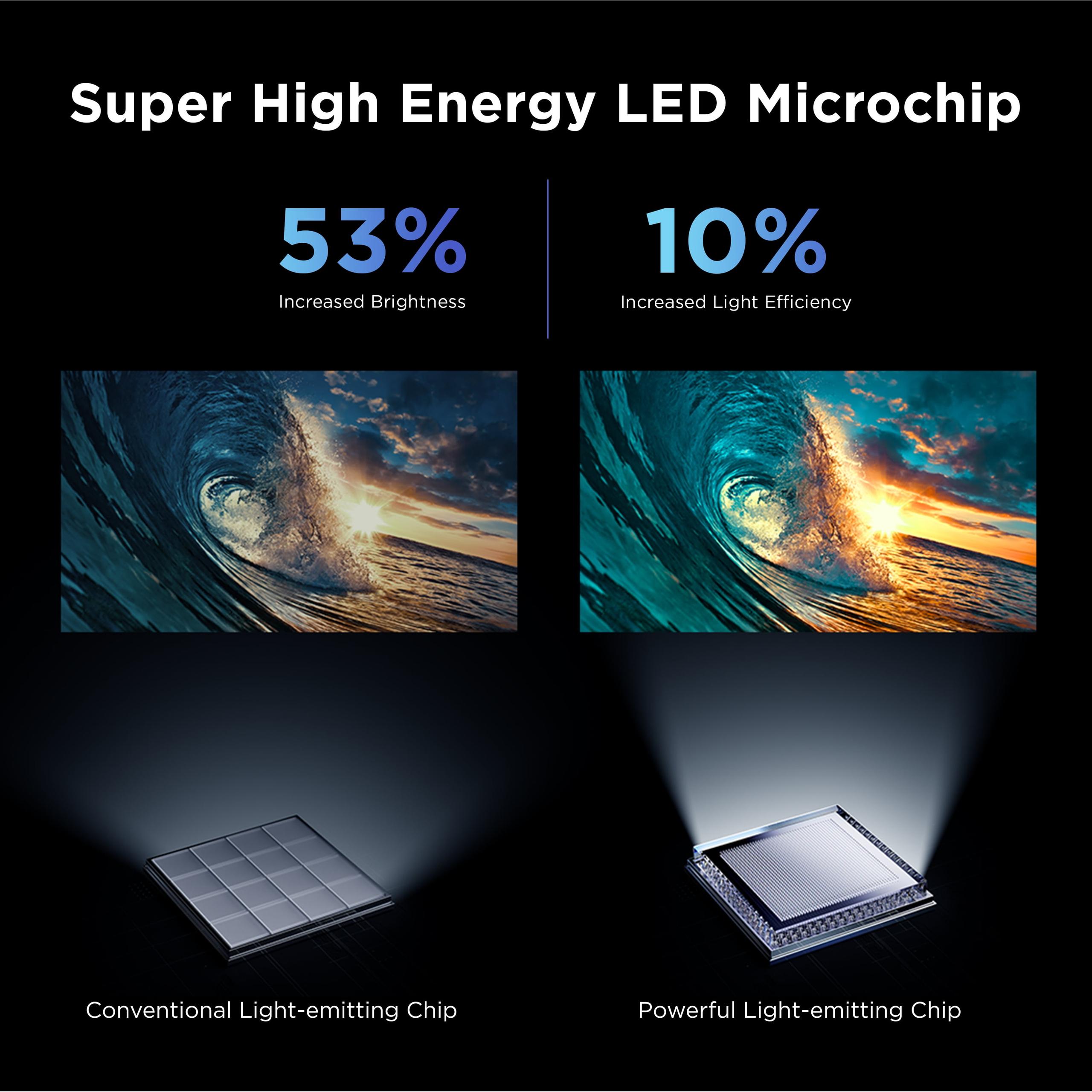
Both TVs use mini-LED backlighting, but their implementations differ significantly. Think of traditional LED backlighting like having a few powerful flashlights behind your screen. Mini-LED is like switching to hundreds of tiny, precise LED lights, each controllable independently. This allows for much better contrast—bright areas can be brilliant while nearby dark areas stay truly black.
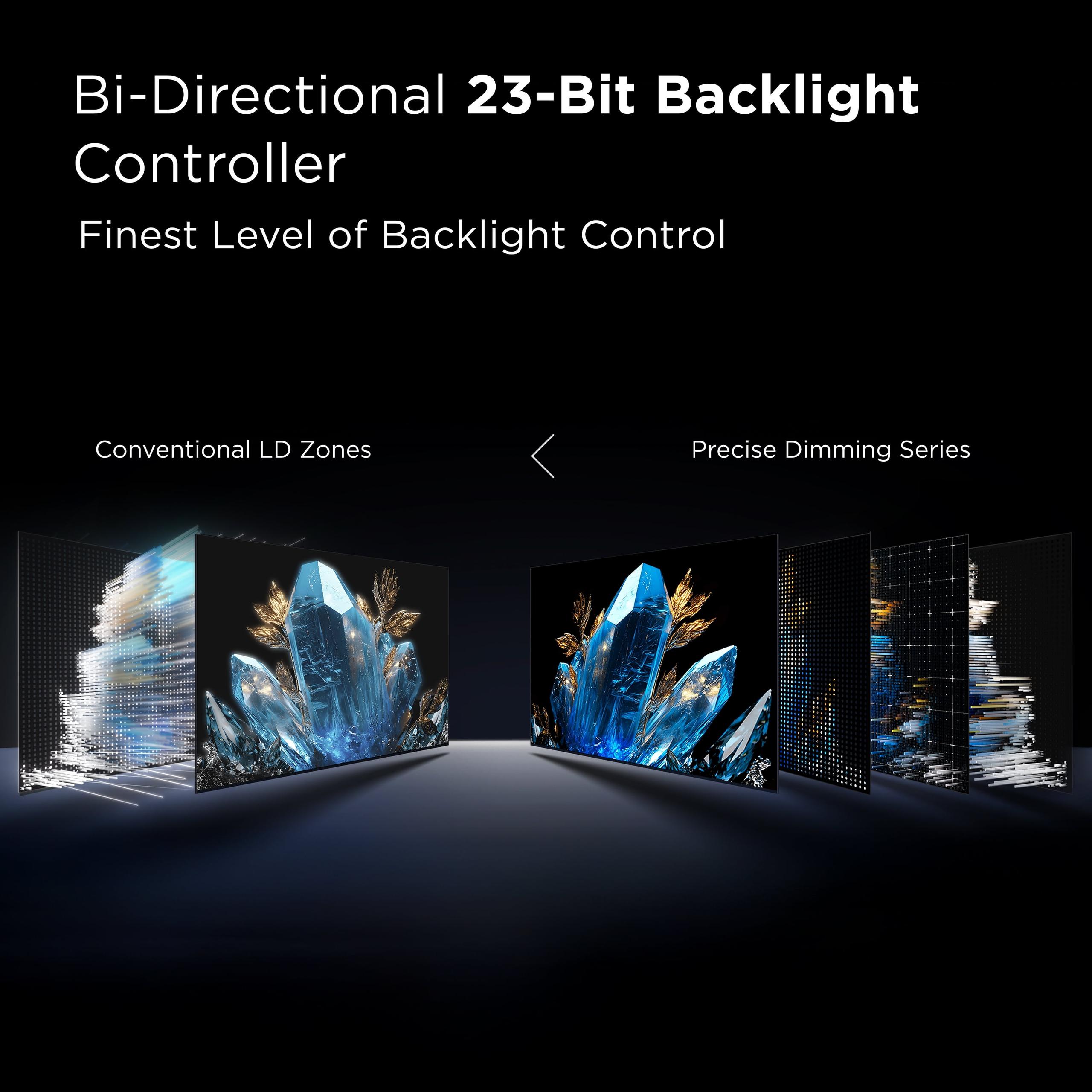
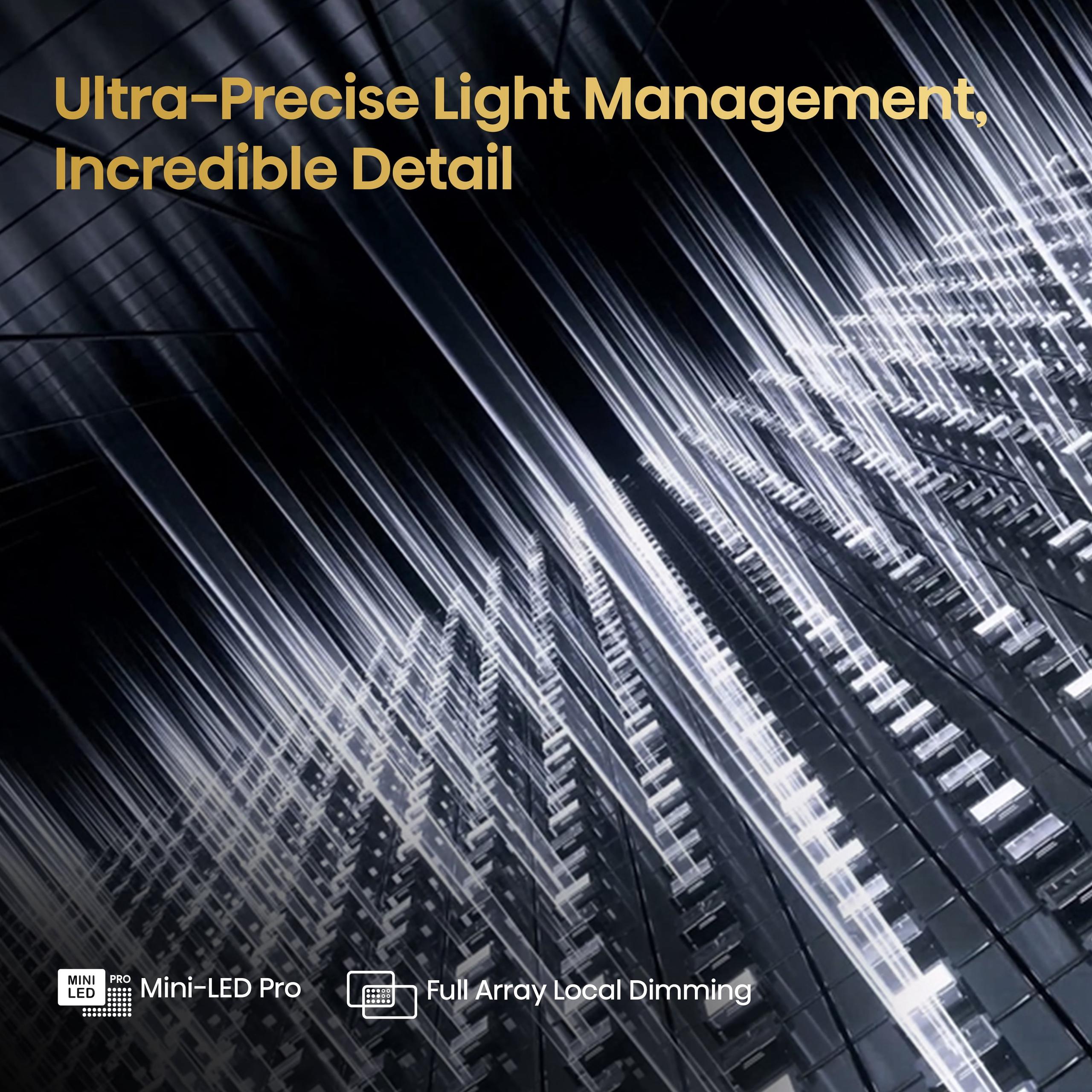
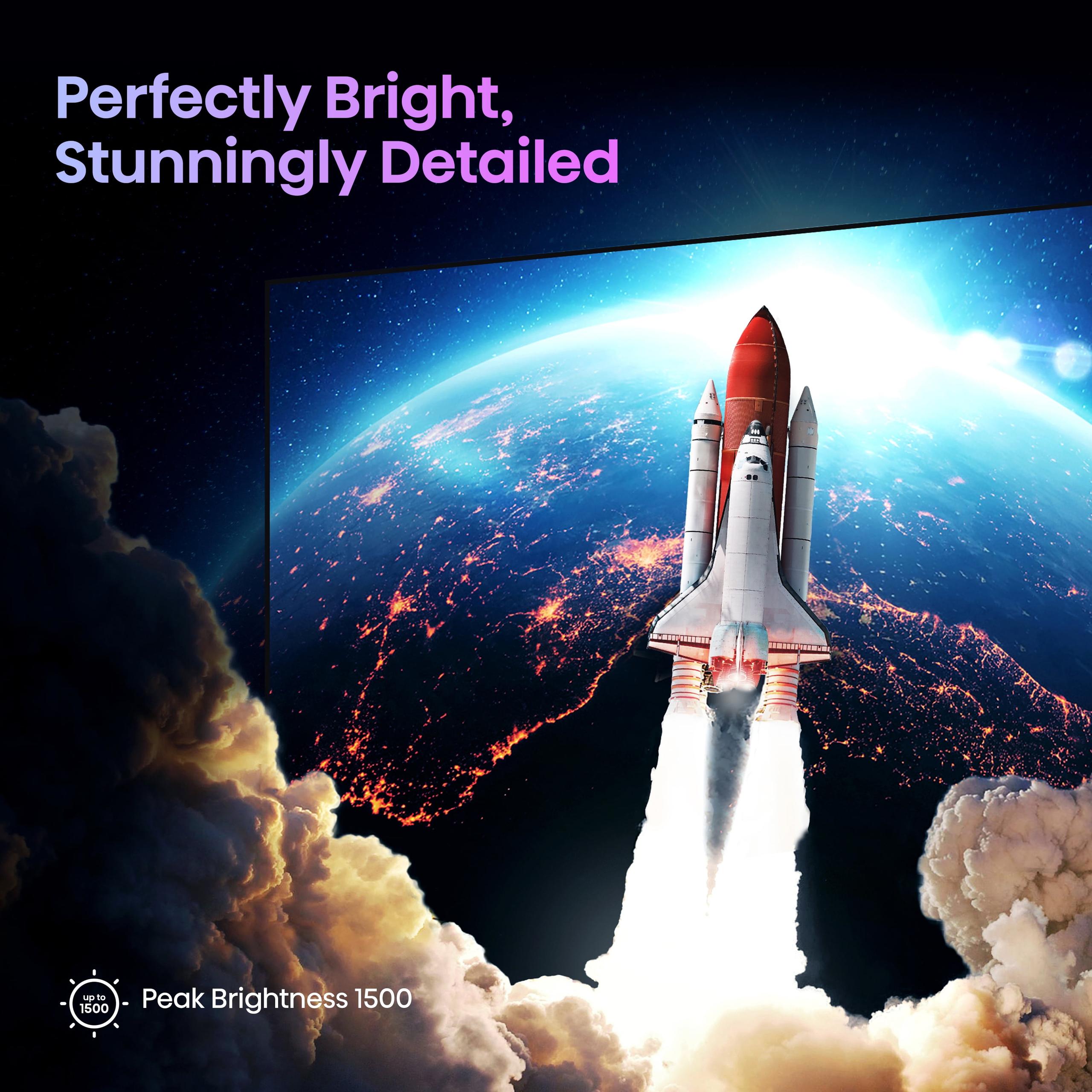
The Hisense U8 Series packs over 2,000 local dimming zones into its 100-inch panel. Each zone can brighten or dim independently, creating precise contrast control. When you're watching a space movie with bright stars against the black void, each star gets its own lighting zone while the surrounding areas stay dark.
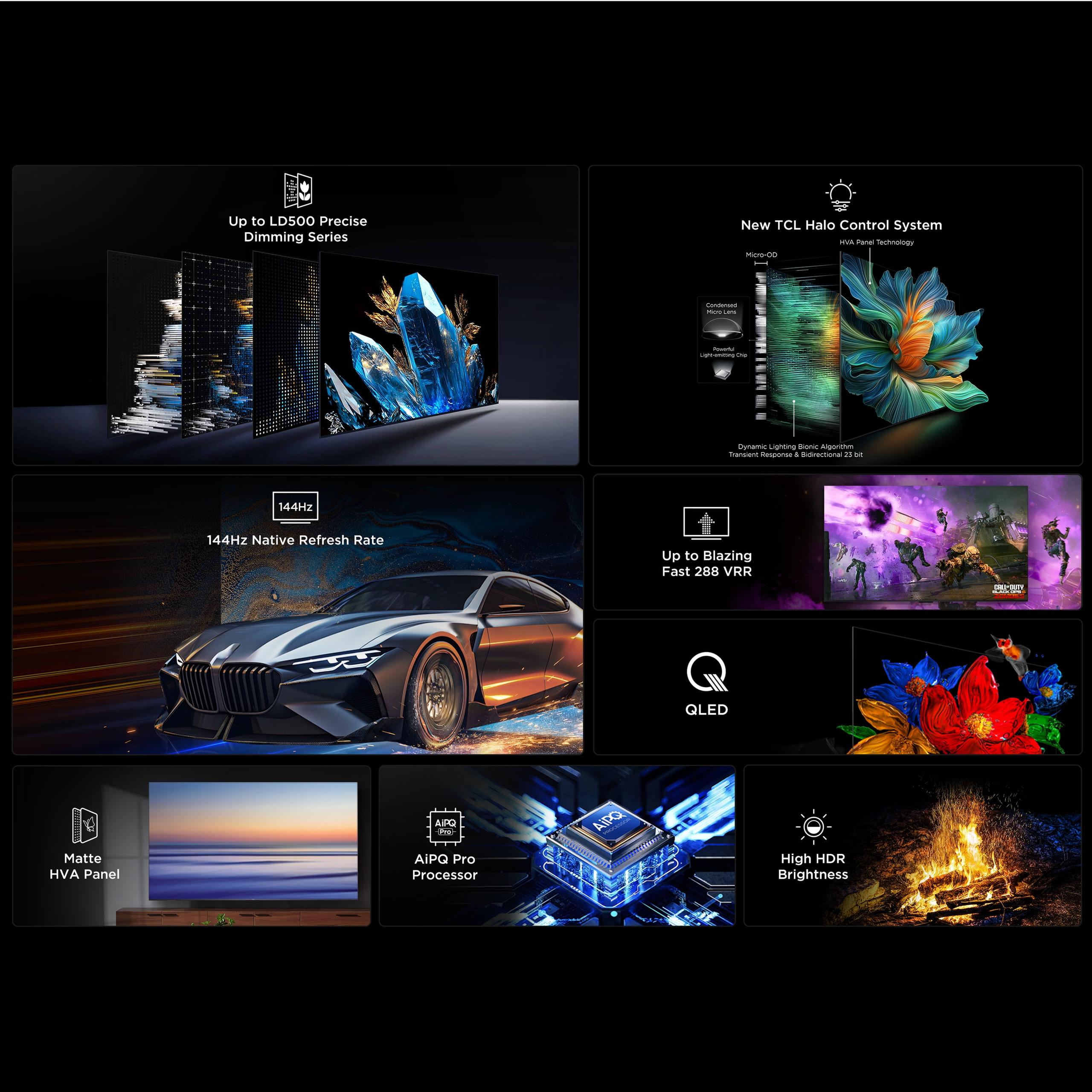
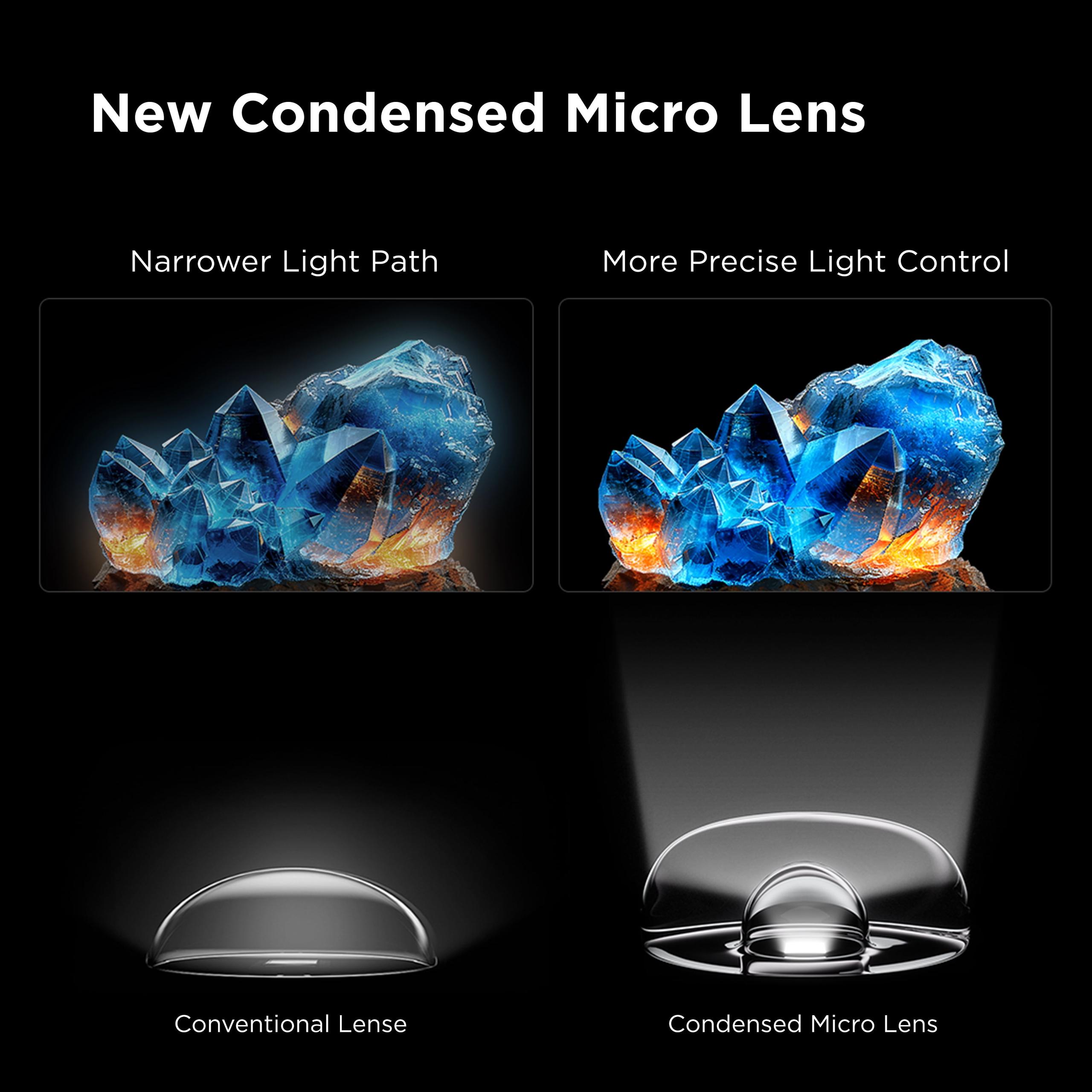
TCL's approach with the QM6K uses 500 zones—fewer than Hisense, but enhanced by their Halo Control algorithm. This software actively reduces "blooming," the annoying halo effect you sometimes see around bright objects on dark backgrounds. In my experience testing large mini-LED displays, fewer zones with better control algorithms often outperform more zones with basic processing.
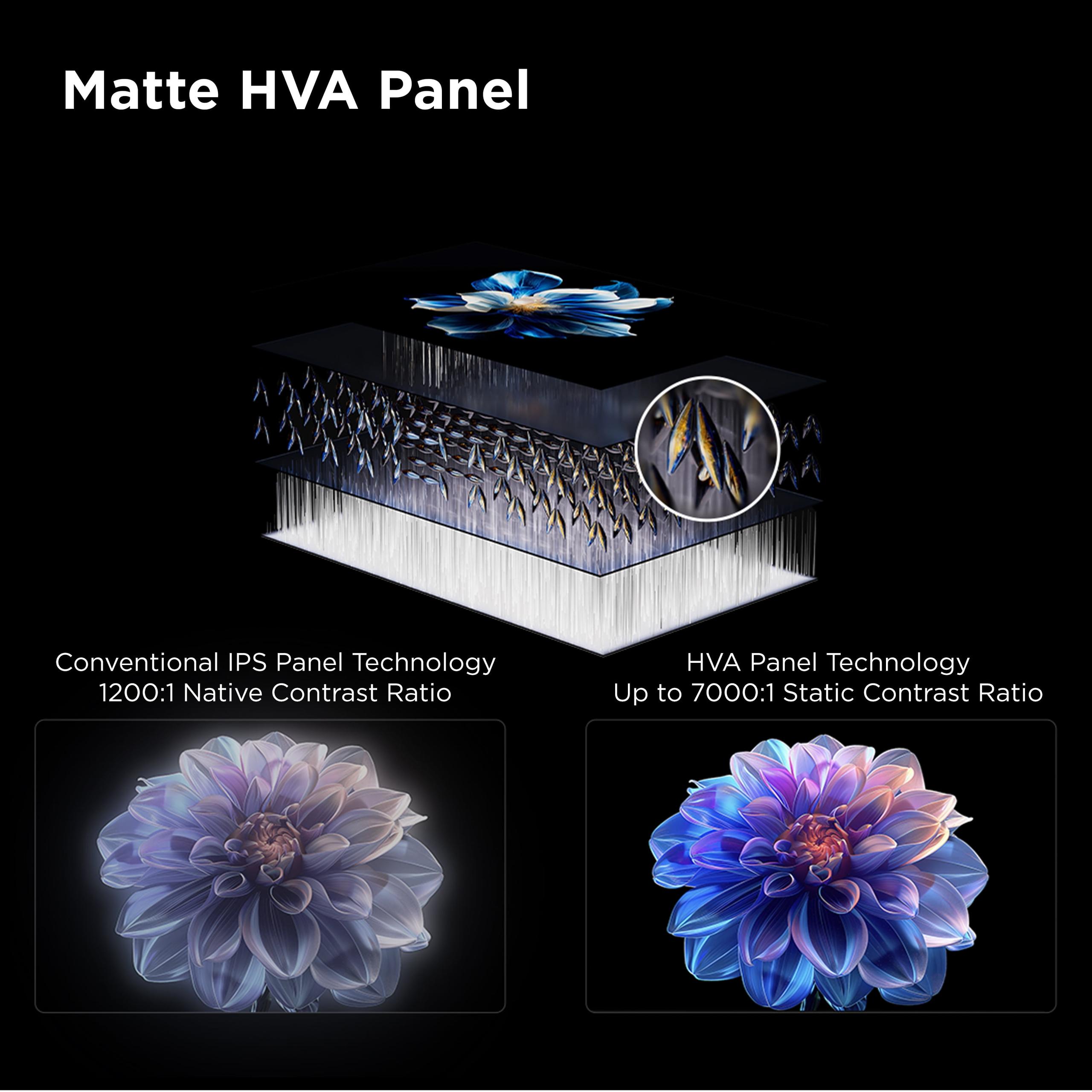
Here's where TCL made a smart strategic choice. The 98-Inch QM6K uses an HVA (Horizontal Vertical Alignment) panel with a matte anti-glare coating. This might sound technical, but the real-world impact is huge. Most large TVs struggle in bright rooms because they act like massive mirrors, reflecting windows and lamps back at you.
TCL's nano-crystal anti-glare coating scatters reflected light, dramatically reducing these reflections. If your TV room has windows or significant lighting, this feature alone might justify choosing the TCL. I've seen this technology in action, and it's genuinely impressive how it maintains picture quality while killing reflections.
The Hisense U8 uses a traditional VA panel without anti-glare treatment. In a dark, controlled room, this actually provides slightly better contrast and color depth. But introduce ambient light, and the TCL's advantage becomes obvious.
Gaming on these massive displays is where things get exciting. Both TVs support modern gaming features, but they take different approaches.
The TCL QM6K pushes refresh rates to extreme levels: 4K content at 144Hz and 1080p content at an incredible 288Hz. For context, most TVs max out at 120Hz. This matters primarily for competitive gaming where every millisecond counts. If you're playing fast-paced shooters or racing games, that ultra-high refresh rate provides a genuine competitive advantage.
TCL achieves this through their "Game Accelerator 288" technology, which includes Variable Refresh Rate (VRR) support. VRR syncs your TV's refresh rate with your gaming device's output, eliminating screen tearing and stuttering. At 98 inches, these artifacts would be incredibly distracting without proper sync.
The Hisense U8 focuses on consistency rather than peak performance. It offers 4K at 144Hz on both of its HDMI 2.1 ports, which is perfect if you're connecting multiple modern consoles. Xbox Series X, PlayStation 5, and a high-end PC can all connect simultaneously at full performance.
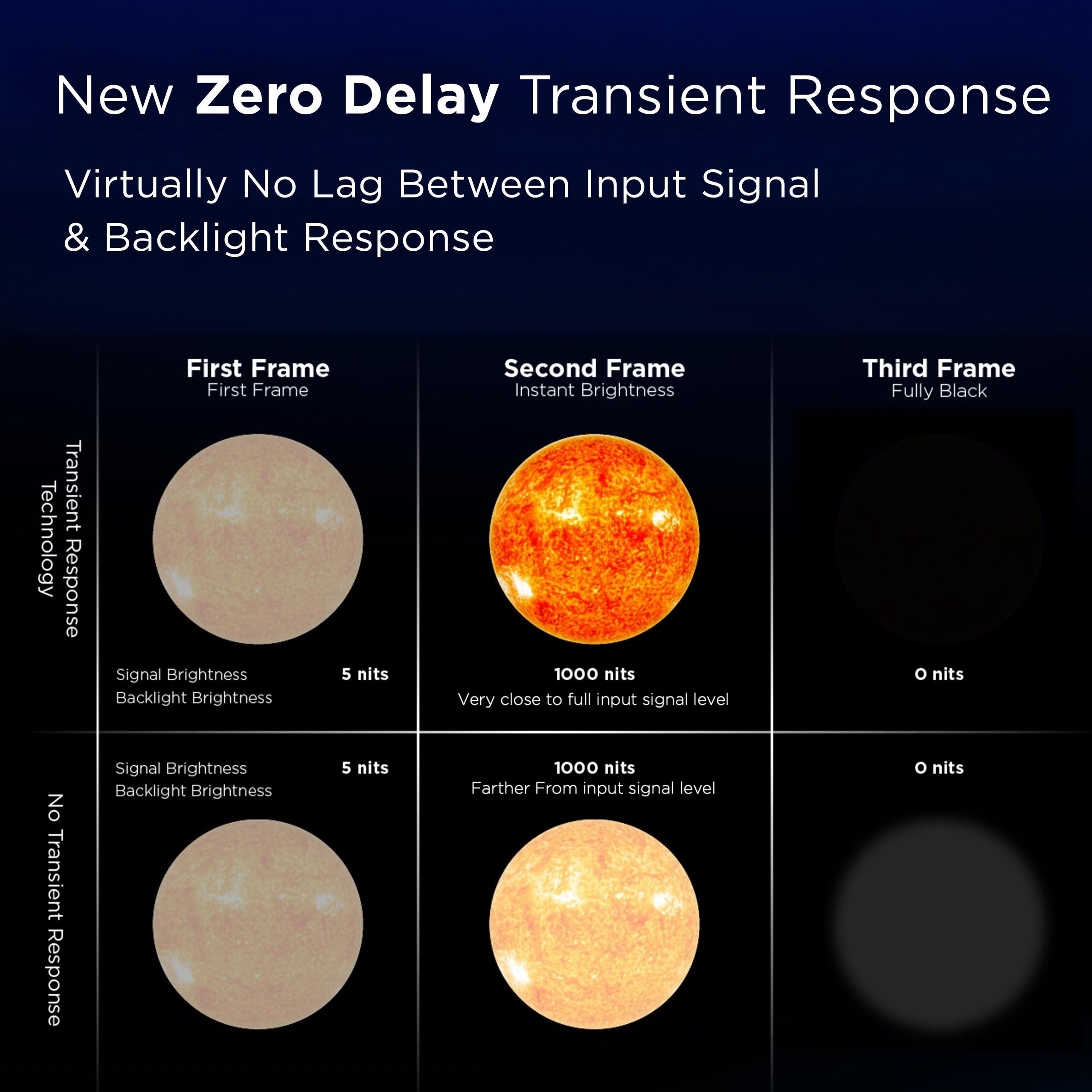
Both TVs include Auto Low Latency Mode (ALLM), which automatically switches to game mode when it detects a gaming signal. This reduces input lag—the delay between pressing a button and seeing the action on screen—to under 10 milliseconds.
High Dynamic Range (HDR) content—think Netflix's premium shows or 4K Blu-rays—reveals the biggest differences between these displays. HDR extends the range between the darkest blacks and brightest whites, creating more realistic images.
The Hisense U8 Series delivers superior HDR performance thanks to its higher peak brightness and more dimming zones. When watching something like "Planet Earth" with bright sunlit scenes transitioning to deep shadows, the Hisense maintains detail in both extremes more effectively.
TCL's QM6K claims impressive peak brightness numbers (up to 5,000 nits), but real-world HDR performance is more moderate. However, its anti-glare coating means you'll actually see more of that HDR detail in typical viewing conditions. A bright HDR scene on the Hisense might wash out under room lighting, while the TCL maintains its impact.
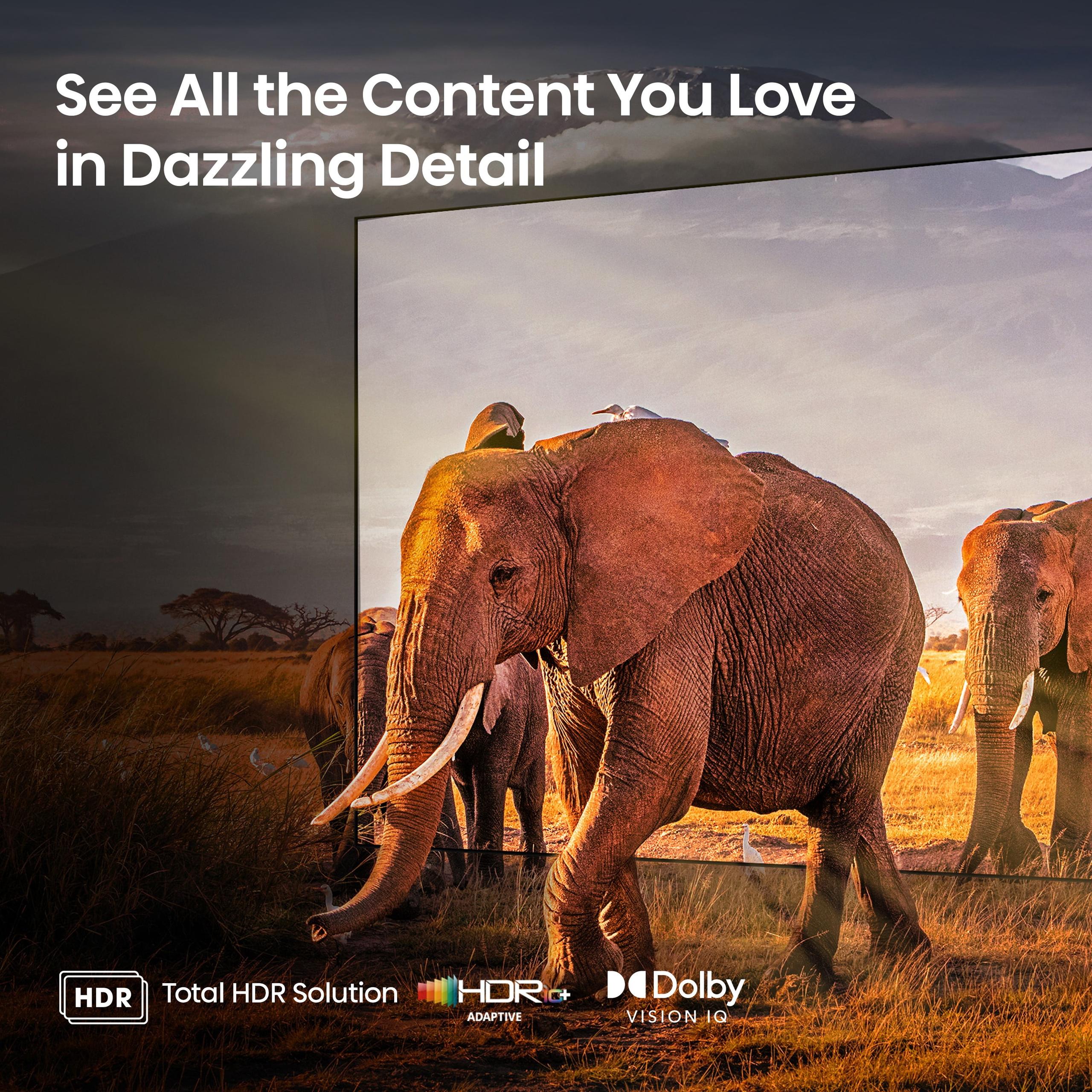
Both support all major HDR formats: Dolby Vision, HDR10, HDR10+, and HLG. Dolby Vision is particularly important as it's becoming the premium standard for streaming content and Ultra HD Blu-rays.
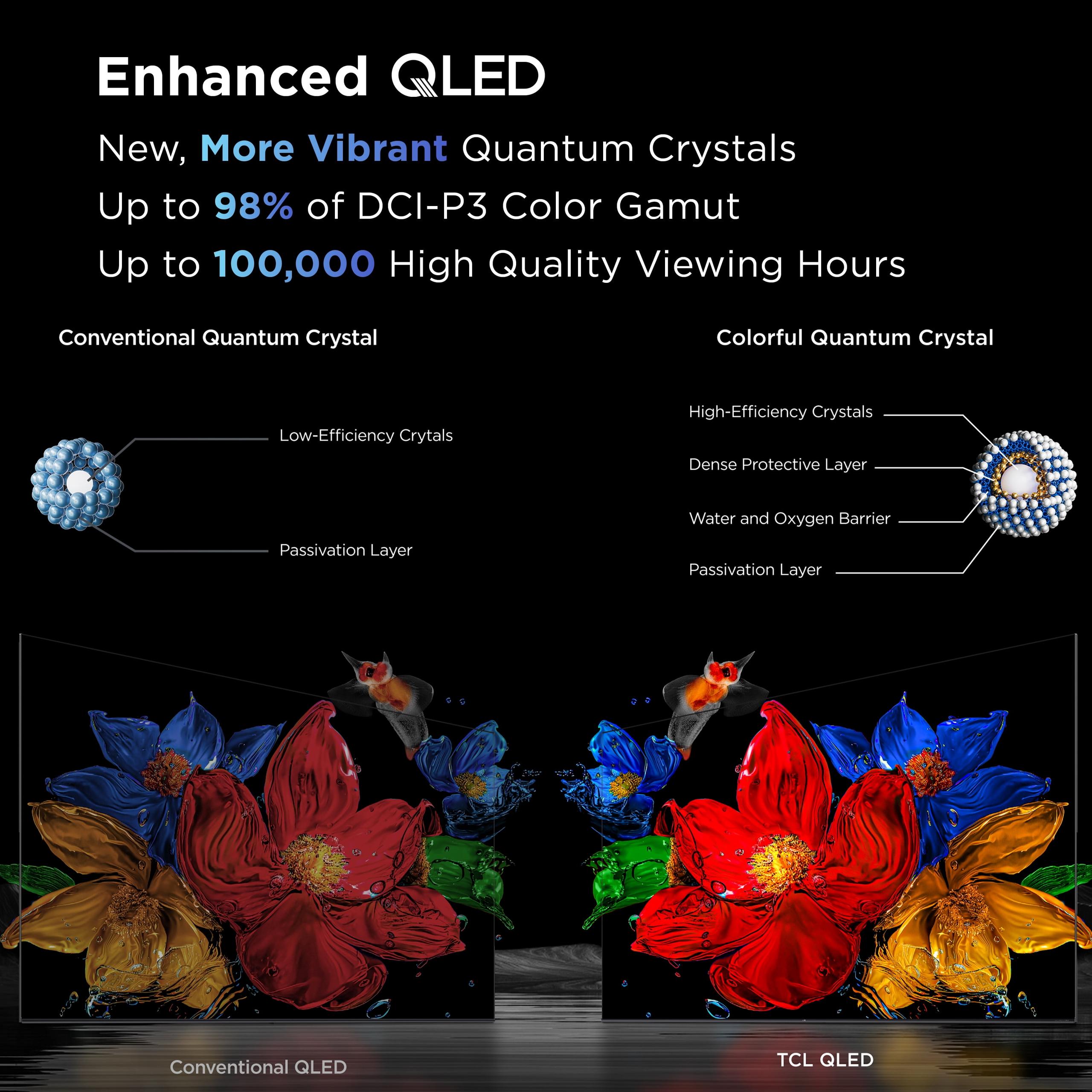
This is where the Hisense U8 pulls ahead in pure performance terms. Its quantum dot layer—microscopic crystals that purify color output—combined with more precise local dimming creates more accurate, vibrant colors. Skin tones look more natural, and subtle color gradations in sunsets or landscapes appear smoother.
The TCL QM6K delivers good color performance, but the matte anti-glare coating slightly reduces color saturation compared to glossy panels. It's a trade-off: better usability in bright rooms versus maximum color pop in dark rooms.
Large TVs face a unique audio challenge. Their thin profiles leave little room for meaningful speakers, yet their massive screens demand audio that matches the visual scale.
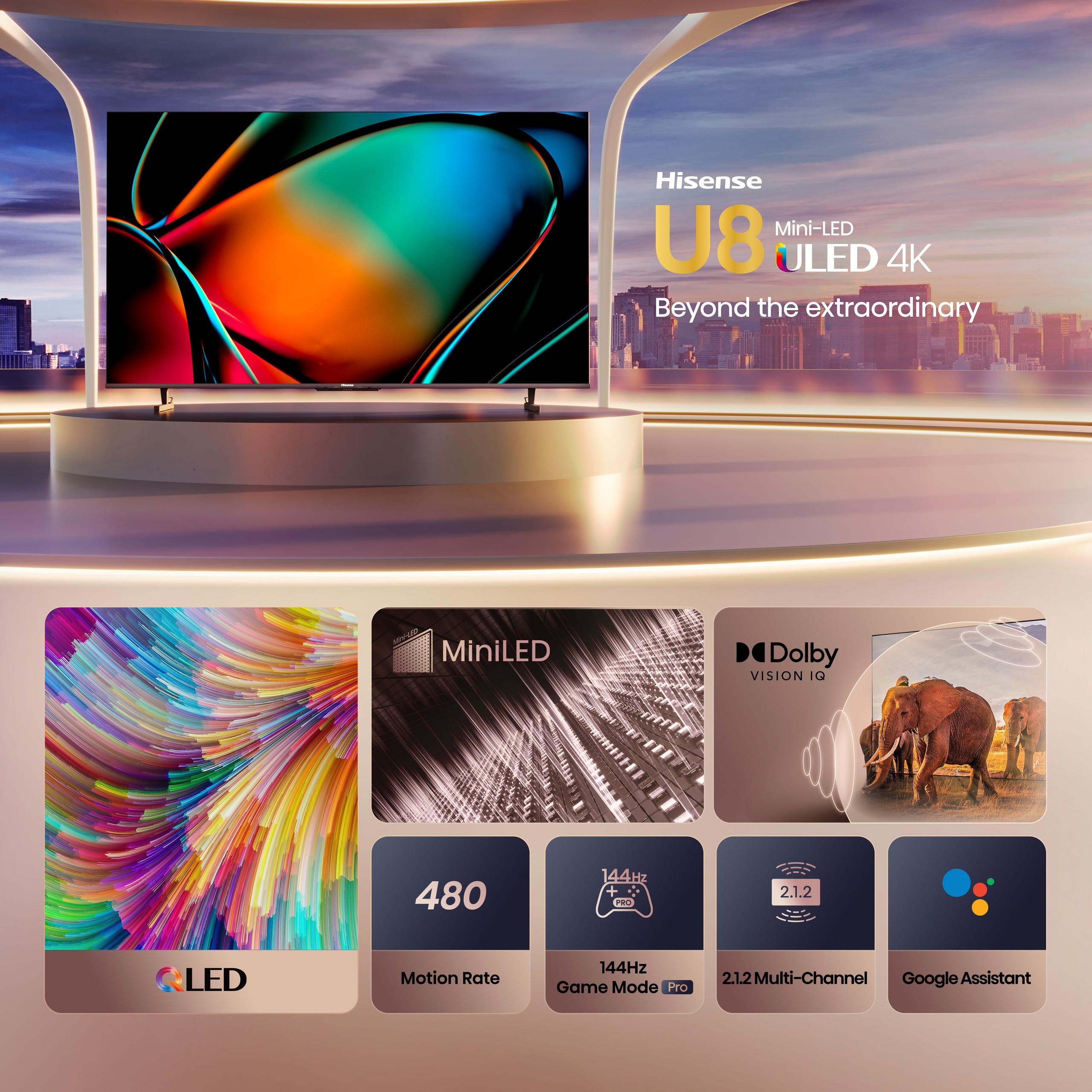
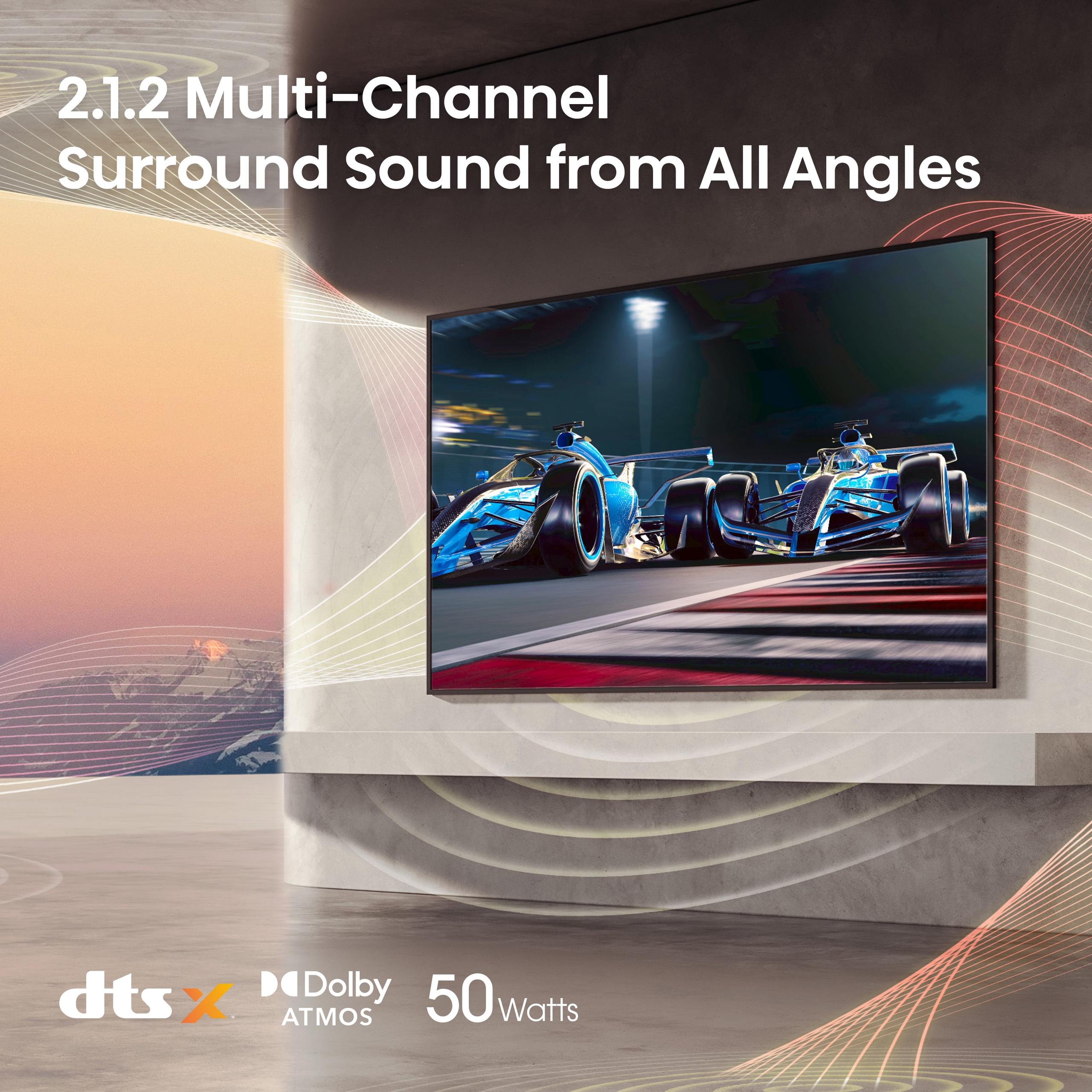
The Hisense U8 Series addresses this with a 2.1.2 channel system including upfiring speakers for Dolby Atmos. This creates height effects—helicopters flying overhead actually sound like they're above you. At 100 inches, this spatial audio enhancement becomes genuinely immersive.
TCL's QM6K includes an Onkyo 2.1 system, but it's more basic. While adequate for casual viewing, it lacks the dimensional audio experience that complements such a large visual display.
For serious home theater use, both TVs benefit from external audio solutions. However, the Hisense's built-in system provides a more complete out-of-box experience.
Both TVs run Google TV, but the implementations differ. The TCL QM6K ships with Google TV version 12, offering improved interface responsiveness and better content organization. Having used both versions, the newer interface feels noticeably snappier, especially when browsing through large content libraries.
The Hisense U8 includes more future-proofing features. Wi-Fi 6E provides faster, more stable streaming for high-bandwidth content. The ATSC 3.0 tuner supports NextGen TV broadcasts, which deliver 4K over-the-air content. While not immediately crucial, these features extend the TV's useful life.
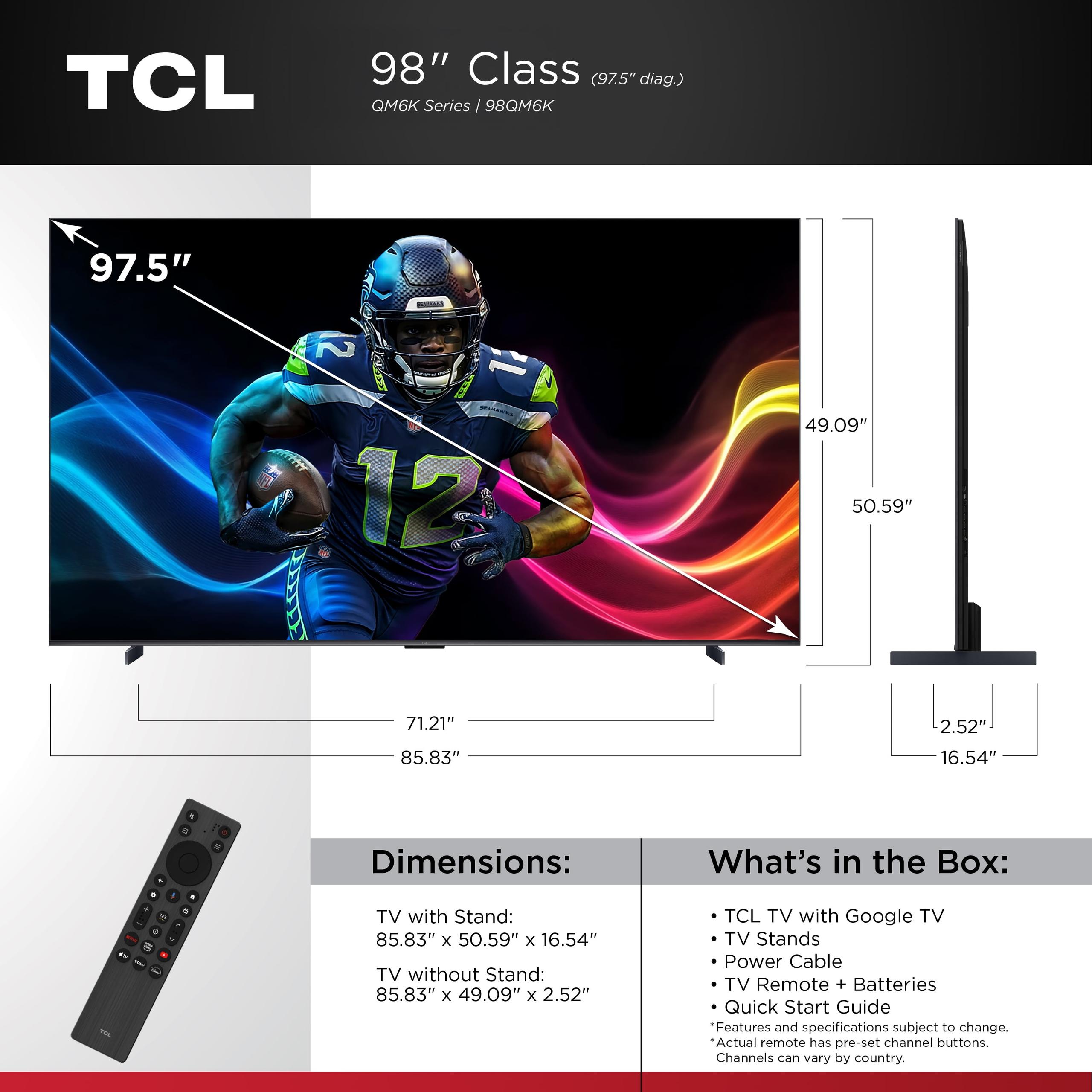
Installing a 98 or 100-inch TV isn't like hanging a smaller display. Both require careful planning and likely professional installation. The TCL QM6K is surprisingly lightweight for its size, making mounting somewhat easier. Both include integrated cable management to maintain a clean aesthetic.
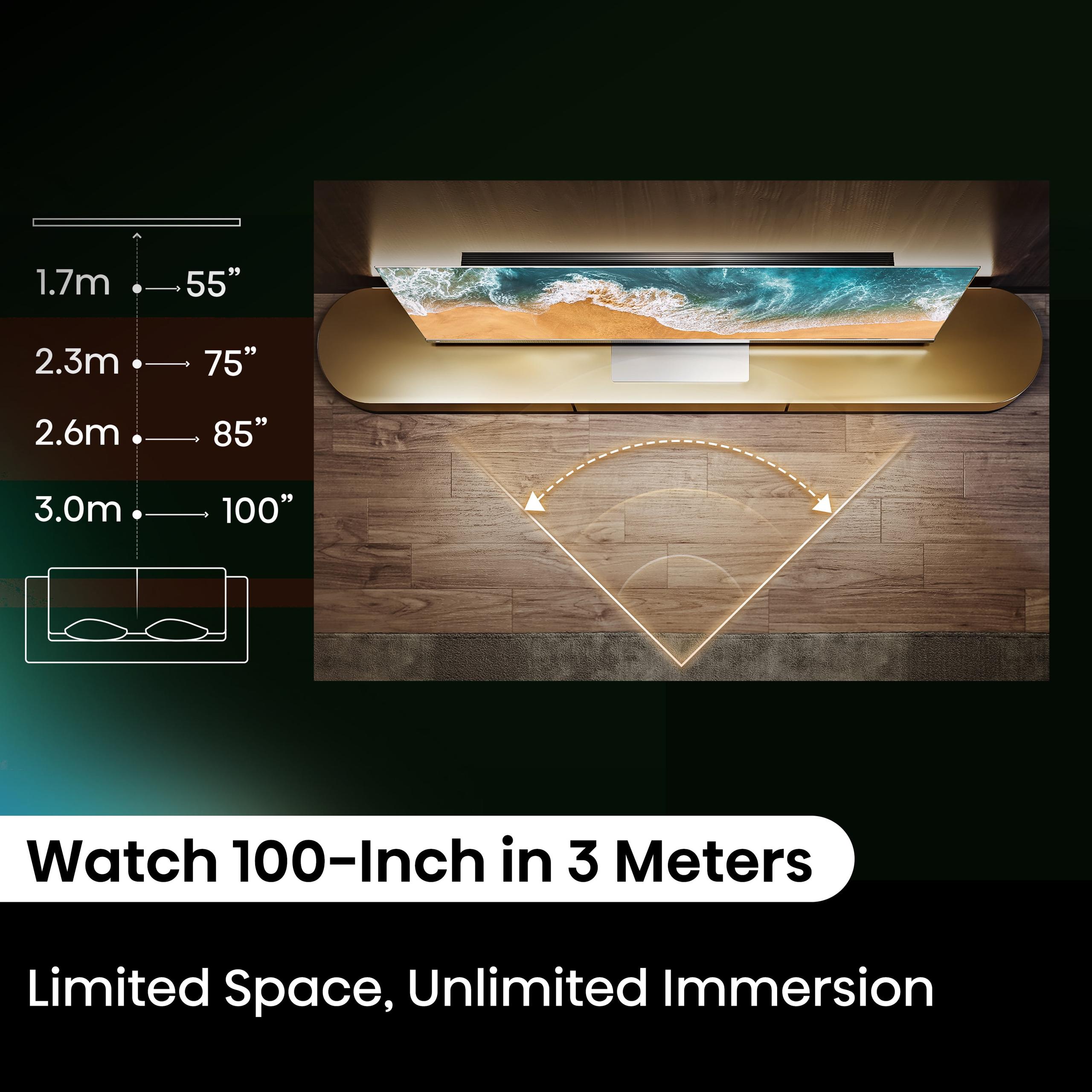
Consider your room carefully. These displays work best with viewing distances of 8-12 feet. Closer, and you'll notice individual pixels; farther, and you lose the immersive benefit of the large size.
The TCL 98-Inch QM6K at $1,999 represents exceptional value in the ultra-large category. You're getting premium gaming features, effective anti-glare technology, and solid picture quality for roughly $0.21 per square inch of screen. That's competitive with much smaller premium displays.
The Hisense 100" U8 Series at $2,798 costs more but delivers measurably better picture quality, superior audio, and more comprehensive connectivity. At $0.32 per square inch, it's pricier but still reasonable for the performance delivered.
For dedicated home theater use, room lighting becomes crucial. If you can control ambient light, the Hisense U8 provides the better cinematic experience with superior contrast, color accuracy, and built-in Dolby Atmos. Its 100-inch size also better replicates the theater experience.
However, if your "home theater" is really a multipurpose family room with windows and ambient lighting, the TCL QM6K maintains picture quality under challenging conditions. Its anti-glare technology makes it usable even during daytime viewing.
Choose the TCL 98-Inch QM6K QLED if you're budget-conscious but want premium features, have a bright room that challenges most TVs, prioritize gaming performance, or need good viewing angles for family movie nights.
Choose the Hisense 100" Class U8 Series if picture quality is paramount, you have a controlled lighting environment, want the largest possible screen, or prefer a more complete audio experience without immediately buying a soundbar.
Both represent excellent value in their respective niches. The TCL maximizes features per dollar while solving real-world usability issues. The Hisense delivers reference-quality performance for those willing to invest in the premium experience.
In this rarified category of ultra-large displays, either choice transforms your entertainment experience. The decision ultimately comes down to your room, budget, and whether you prioritize usability or peak performance.
| TCL 98-Inch QM6K QLED TV | Hisense 100" Class U8 Series 4K Mini-LED QLED Google TV |
|---|---|
| Price - Major factor for ultra-large TVs with $800 difference | |
| $1,999 ($0.21 per square inch) | $2,798 ($0.32 per square inch) |
| Screen Size - Every inch matters at this scale | |
| 98 inches diagonal | 100 inches diagonal |
| Display Technology - Core picture quality foundation | |
| QD-Mini LED with Matte HVA Panel | Mini-LED ULED with VA Panel |
| Local Dimming Zones - Controls contrast and blooming | |
| 500 zones with Halo Control algorithm | 2,000+ zones for precise contrast |
| Peak Brightness - HDR impact and room lighting tolerance | |
| Moderate HDR brightness, excellent anti-glare | Superior HDR brightness, traditional glossy panel |
| Gaming Refresh Rate - Critical for competitive gaming | |
| 4K @ 144Hz, 1080p @ 288Hz (extreme performance) | 4K @ 144Hz on dual HDMI 2.1 ports |
| HDMI 2.1 Ports - Modern console and PC connectivity | |
| 2 ports (plus 2 HDMI 2.0) | 2 full-bandwidth ports |
| Audio System - Built-in sound quality | |
| Basic Onkyo 2.1 system | 2.1.2 channel with Dolby Atmos upfiring speakers |
| Smart TV Platform - Interface and app performance | |
| Google TV v12 (latest, more responsive) | Google TV (standard implementation) |
| Anti-Glare Technology - Bright room performance | |
| Nano-crystal matte coating (major advantage) | None (better for dark rooms) |
| Viewing Angles - Family seating flexibility | |
| >178° with HVA panel | Narrower VA panel (best front-facing) |
| Future-Proofing Features - Long-term connectivity | |
| Wi-Fi 6, no ATSC 3.0 tuner | Wi-Fi 6E, ATSC 3.0 NextGen TV tuner |
| Warranty Coverage - Protection for premium purchase | |
| 1 year parts and labor | 2 years coverage |
The TCL 98-Inch QM6K QLED TV at $1,999 provides exceptional value, offering premium gaming features and anti-glare technology at $0.21 per square inch. The Hisense 100" Class U8 Series at $2,798 costs more but delivers superior picture quality and audio. For budget-conscious buyers, the TCL offers more features per dollar.
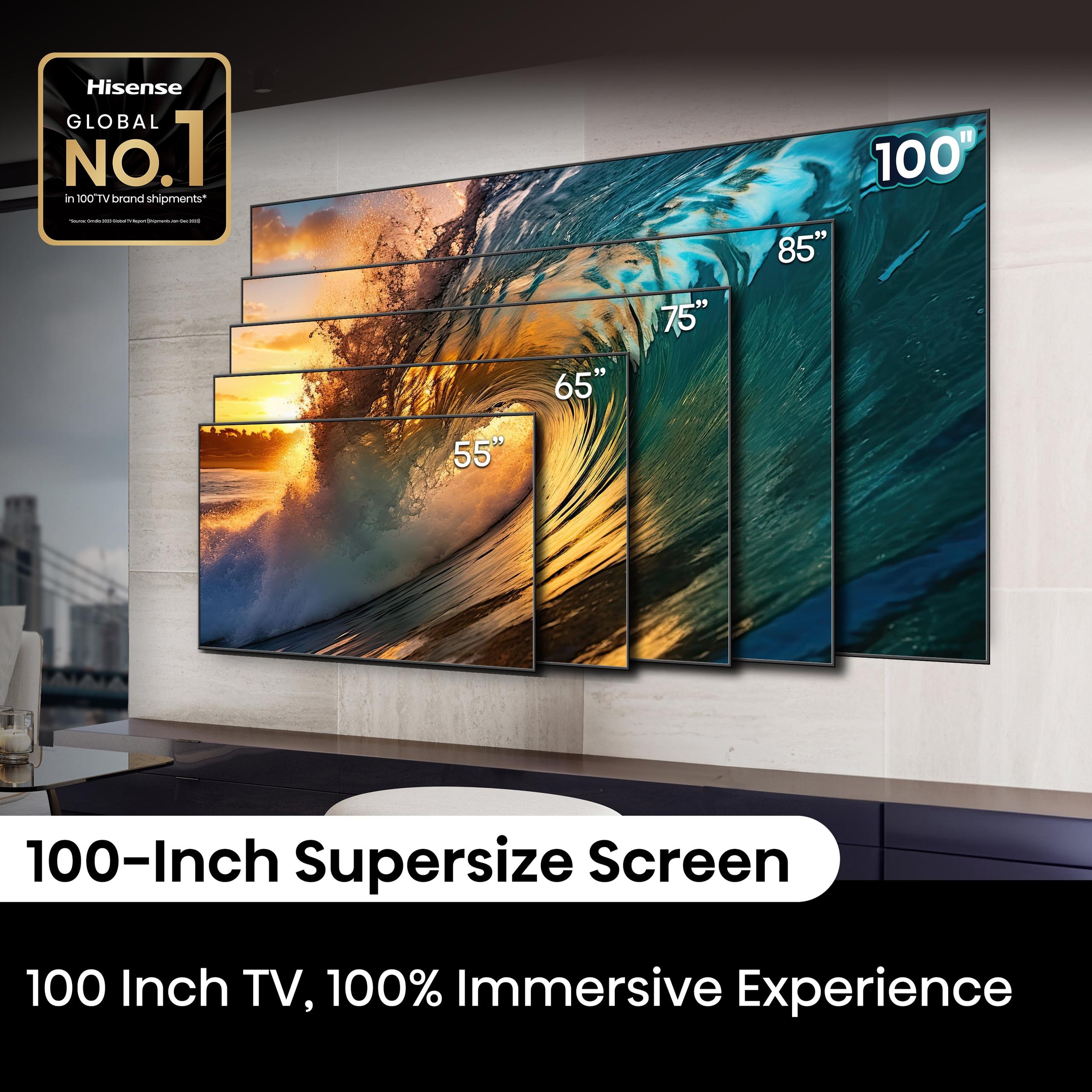
The TCL 98-Inch QM6K has a 98-inch diagonal display, while the Hisense 100" U8 Series offers 100 inches. The 2-inch difference translates to about 4% more screen area for the Hisense, which becomes more noticeable at these massive sizes in home theater setups.
The TCL 98-Inch QM6K QLED TV excels for gaming with 4K at 144Hz and 1080p at 288Hz refresh rates, plus Game Accelerator 288 technology. The Hisense 100" U8 Series offers solid 4K 144Hz gaming but focuses more on consistency than peak performance. Competitive gamers should choose the TCL.
The TCL QM6K has a significant advantage in bright rooms thanks to its matte HVA panel with nano-crystal anti-glare coating that reduces reflections. The Hisense U8 Series uses a glossy panel that performs better in dark rooms but can suffer from glare in bright environments.
The Hisense 100" Class U8 Series delivers superior movie picture quality with over 2,000 local dimming zones, higher peak brightness, and better HDR performance. The TCL 98-Inch QM6K offers good picture quality but the Hisense provides more cinematic contrast and color accuracy for home theater use.
The Hisense 100" U8 Series features a 2.1.2 channel system with Dolby Atmos upfiring speakers for immersive sound. The TCL 98-Inch QM6K QLED TV includes a basic Onkyo 2.1 system. For home theater applications, the Hisense provides significantly better built-in audio without requiring an immediate soundbar purchase.
Both TVs offer 4 HDMI ports total. The TCL QM6K provides 2 HDMI 2.1 ports and 2 HDMI 2.0 ports, while the Hisense U8 Series features 2 full-bandwidth HDMI 2.1 ports. The Hisense arrangement is better for connecting multiple modern gaming consoles simultaneously.
The TCL 98-Inch QM6K runs Google TV version 12 with improved responsiveness and interface updates. The Hisense 100" Class U8 Series uses standard Google TV but includes Wi-Fi 6E and ATSC 3.0 tuner for better future-proofing. Both offer comprehensive streaming app support.
The TCL 98-Inch QM6K QLED TV is lighter than expected for its size, making installation somewhat easier. Both TVs require professional mounting for safety at these dimensions and include integrated cable management. The Hisense U8 Series has more robust build quality but weighs more.
The TCL QM6K includes a 1-year warranty with parts, labor, and in-home service. The Hisense 100" U8 Series provides 2 years of warranty coverage. For such large investments, the Hisense's extended warranty offers better long-term protection.
The TCL 98-Inch QM6K QLED TV uses an HVA panel providing >178° viewing angles, making it ideal for wide seating arrangements where family members sit at different angles. The Hisense 100" Class U8 Series has narrower viewing angles typical of VA panels, working best for front-facing seating.
Choose the TCL 98-Inch QM6K if you have a bright room, need wide viewing angles, prioritize gaming, or want maximum value. Select the Hisense 100" U8 Series if you have a dark, controlled room, want the best picture quality, prefer integrated Dolby Atmos audio, or can justify the premium for superior performance.
We've done our best to create useful and informative comparisons to help you decide what product to buy. Our research uses advanced automated methods to create this comparison and perfection is not possible - please contact us for corrections or questions. These are the sites we've researched in the creation of this article: bestbuy.com - rtings.com - techradar.com - the-gadgeteer.com - youtube.com - youtube.com - ign.com - youtube.com - tomsguide.com - tcl.com - valueelectronics.com - bestbuy.com - bestbuy.com - rtings.com - circuitworldonline.com - youtube.com - tcl.com - bestbuy.com - tomsguide.com - tcl.com - flatpanelshd.com - displayspecifications.com - bestbuy.com - valueelectronics.com - pcrichard.com - youtube.com - cnet.com - bargainoutletandmore.com - bestbuy.com - files.hisense-usa.com - fouanistore.com - bestbuy.com - salesindia.com

Privacy Policy
Terms and Conditions - Affiliate Policy
Home Security
© Copyright 2008-2026.
11816 Inwood Rd #1211, Dallas, TX 75244