

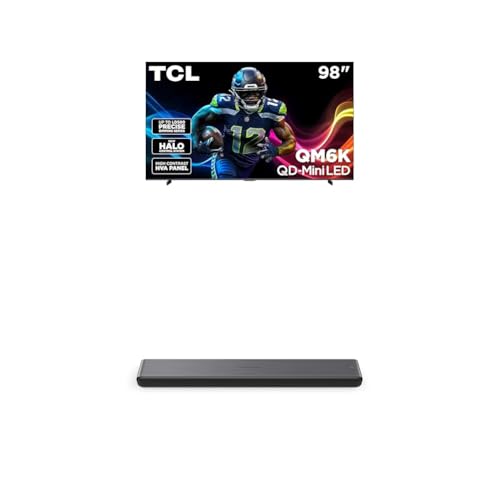
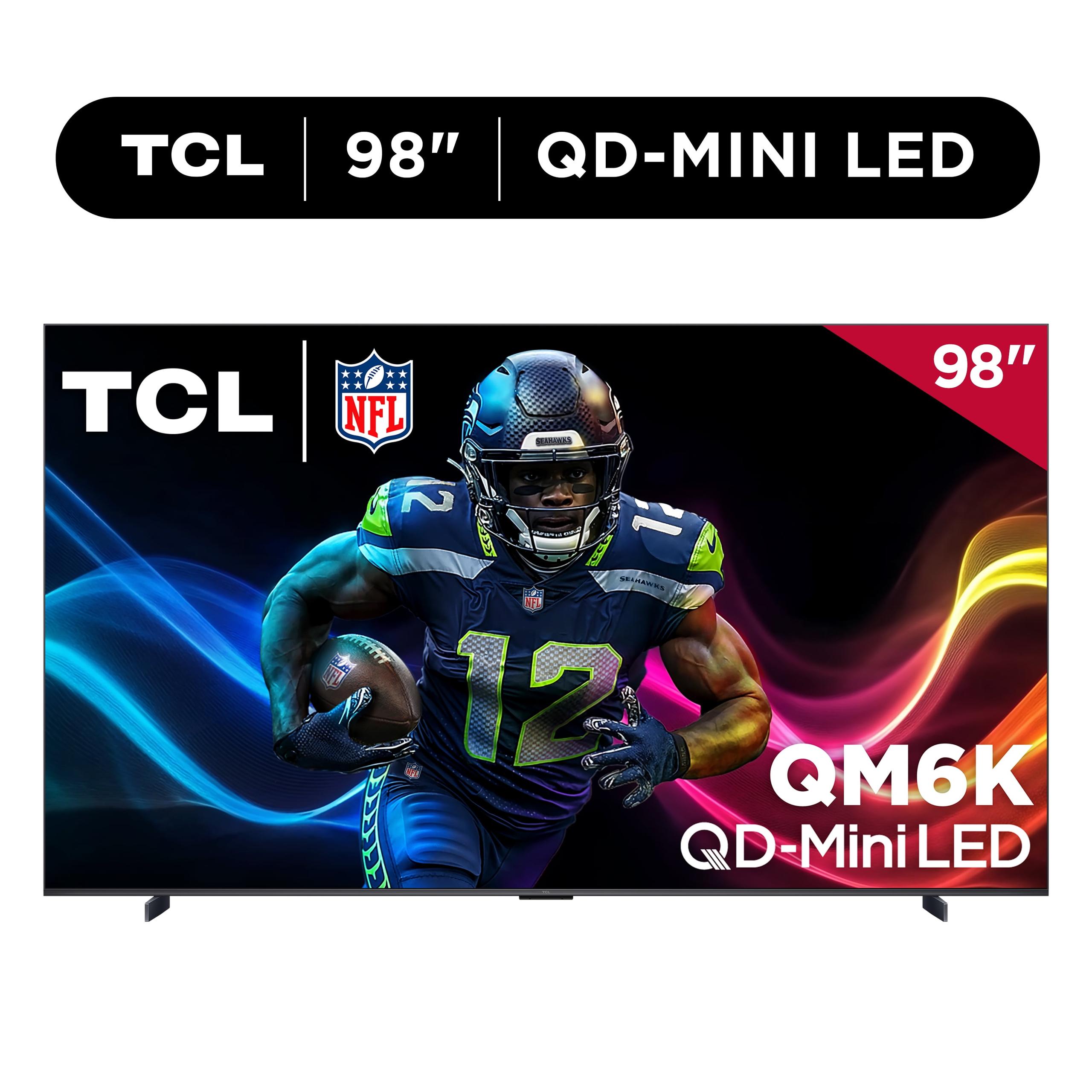
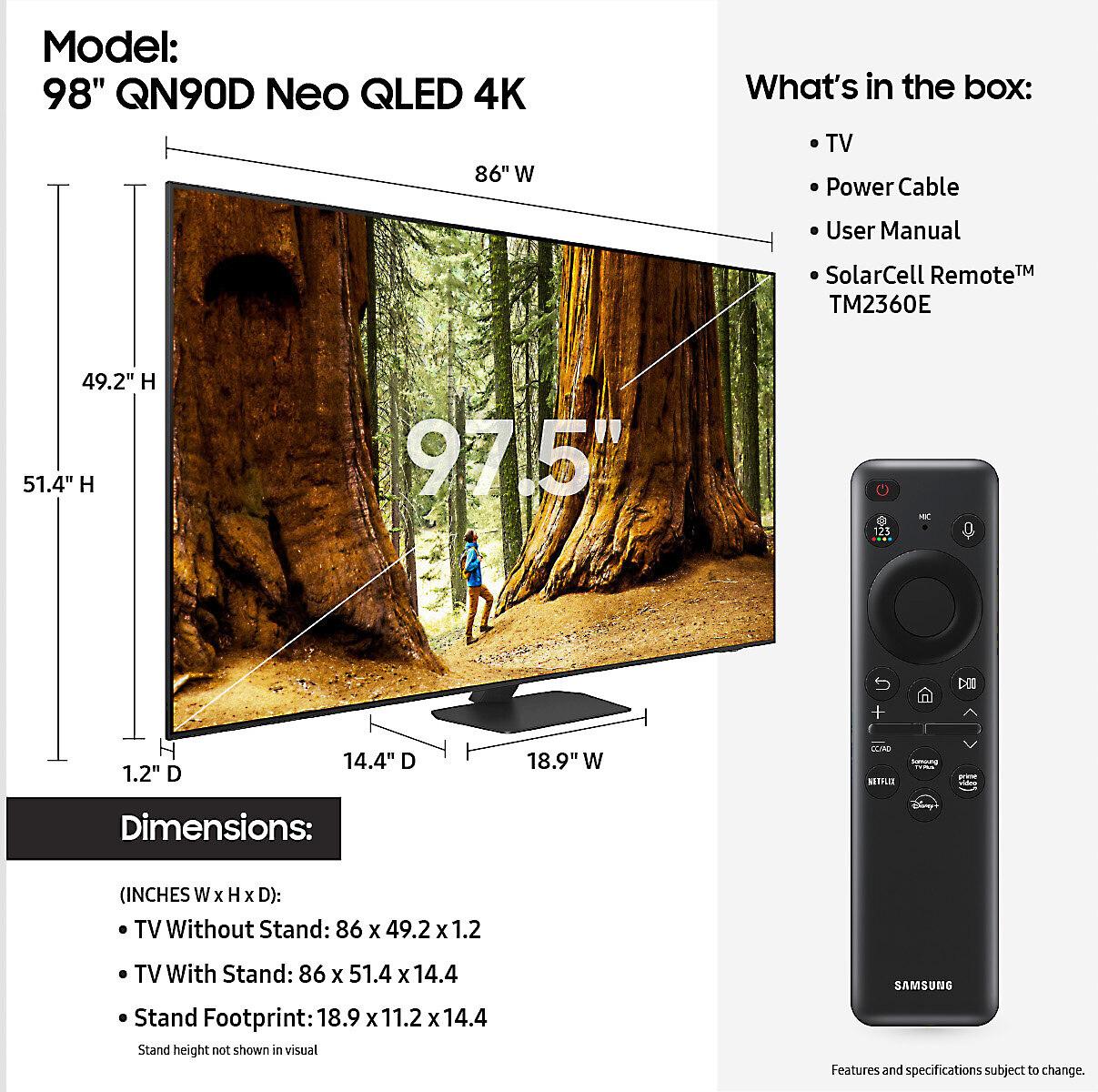
When you're shopping for a 98-inch TV, you're not just buying a television—you're creating a home theater centerpiece that will dominate your living space for years to come. The sheer scale of these displays means every pixel matters, every feature gets magnified, and frankly, every dollar spent needs to count. Today we're comparing two very different approaches to the massive screen market: the TCL 98-Inch QM6K QLED TV at $1,999.99 and the Samsung 98" QN90D Series Neo QLED 4K Smart TV at $9,148.97.
The price difference alone tells a story—Samsung's asking for nearly five times what TCL charges. But is it worth it? Let's dig into what makes these TVs tick and help you figure out which massive screen deserves a spot in your home.
Before we dive into specifics, let's talk about what you're getting into with a 98-inch TV. These aren't just bigger versions of your old 55-inch set—they represent a fundamentally different viewing experience. At this size, you're sitting close enough that individual pixels start to matter. Picture quality flaws that might be invisible on smaller screens become obvious. That's why both manufacturers use advanced technologies like Mini LED backlighting, which uses thousands of tiny LEDs instead of traditional edge lighting to create better contrast and brighter highlights.
The 98-inch market has exploded recently because manufacturing costs have finally dropped enough to make these sizes somewhat accessible. Five years ago, a 98-inch TV would easily cost $20,000 or more. Now we're seeing options under $2,000, which is genuinely remarkable.
The TCL QM6K launched in 2025 as part of TCL's aggressive push into premium territory. TCL has spent the last few years proving they can compete with the big names, and this model represents their most ambitious effort yet. At $1,999.99, it's targeting buyers who want flagship features without flagship pricing.
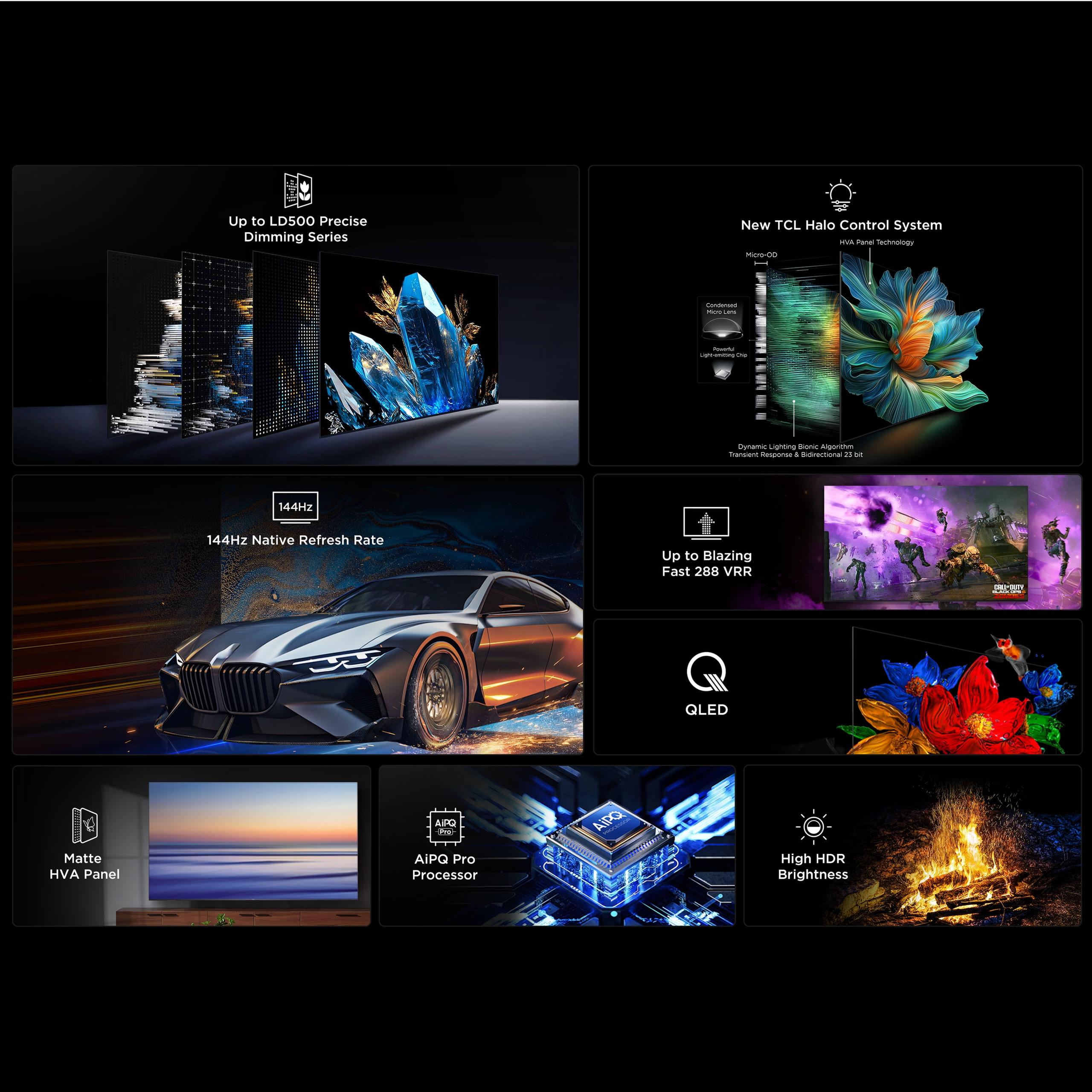
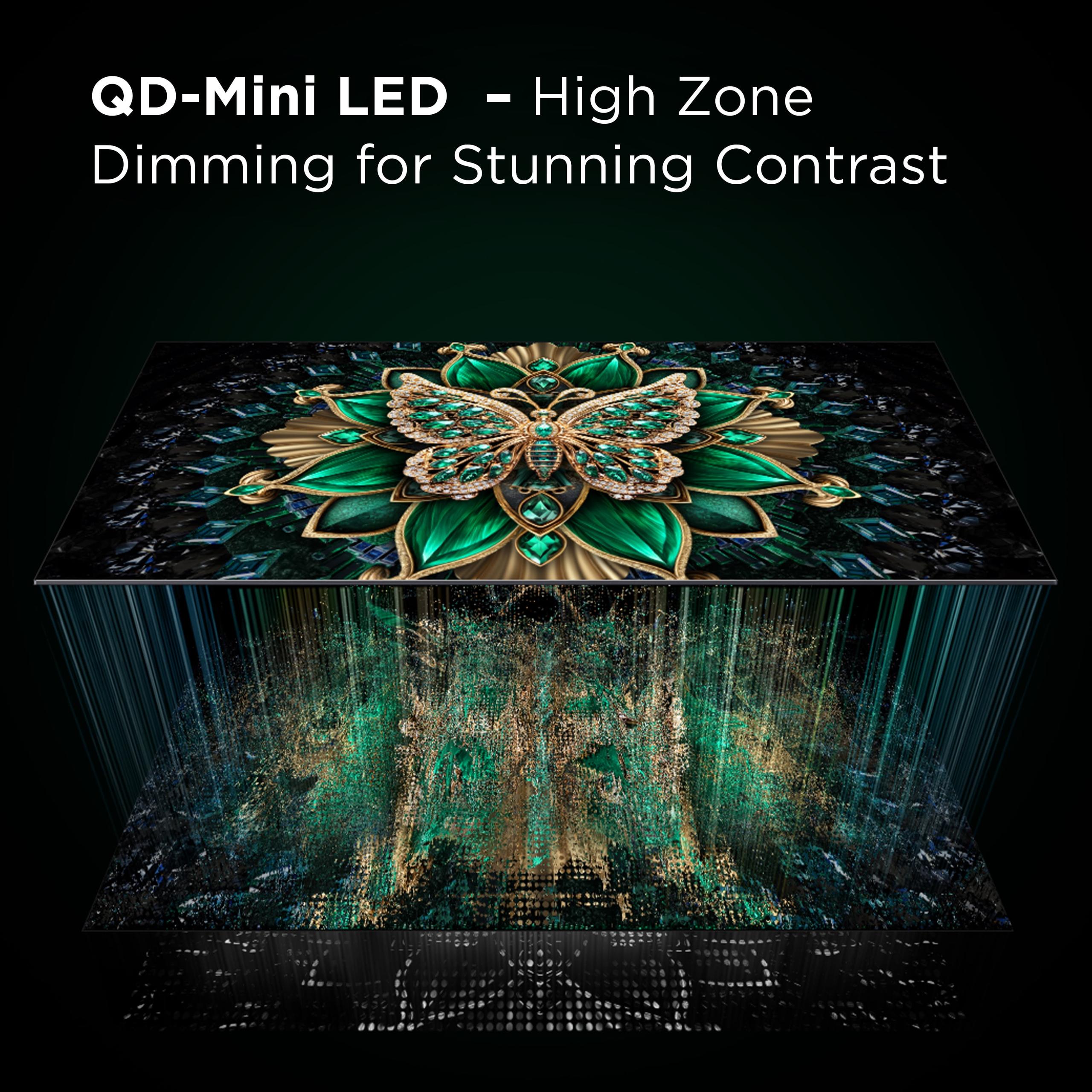
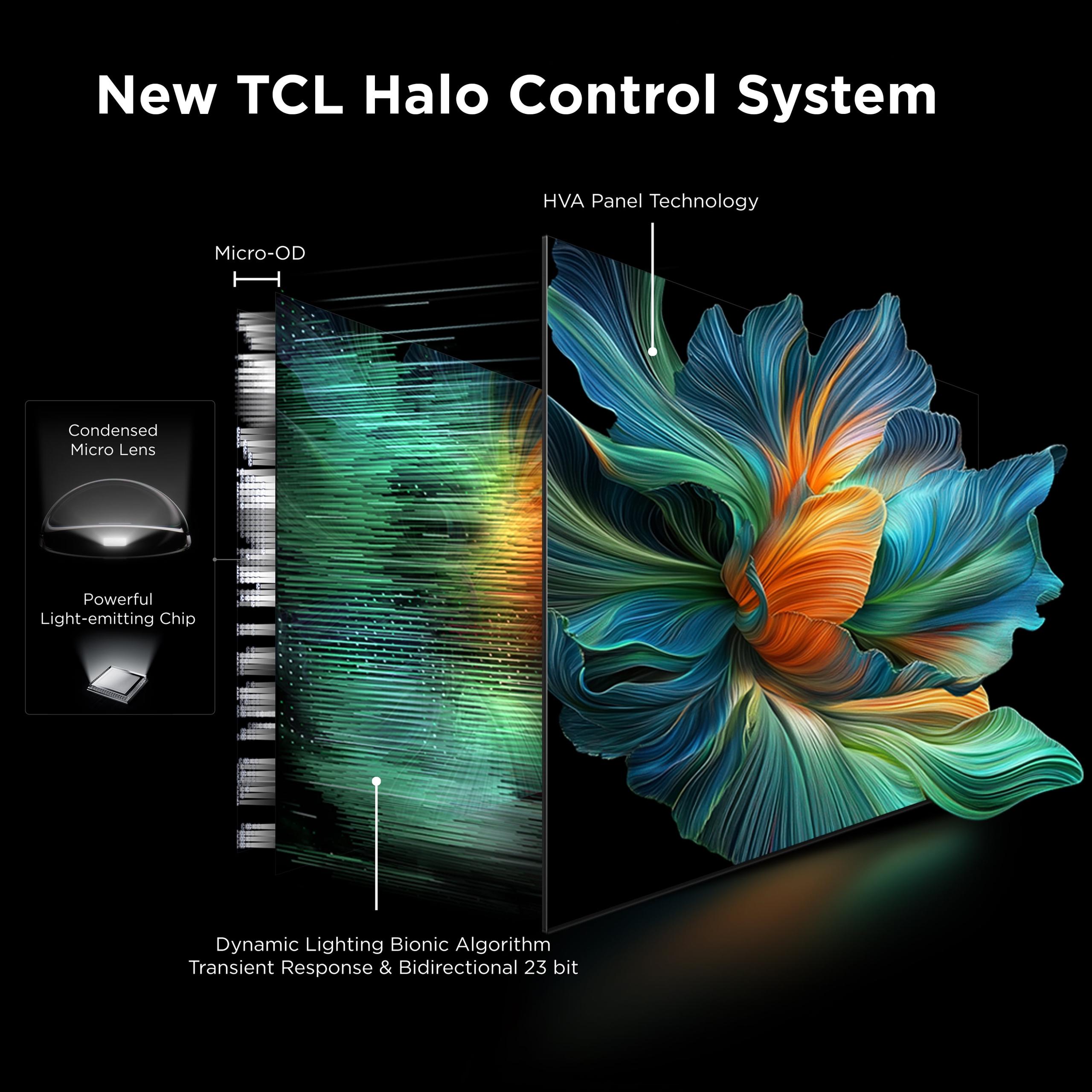
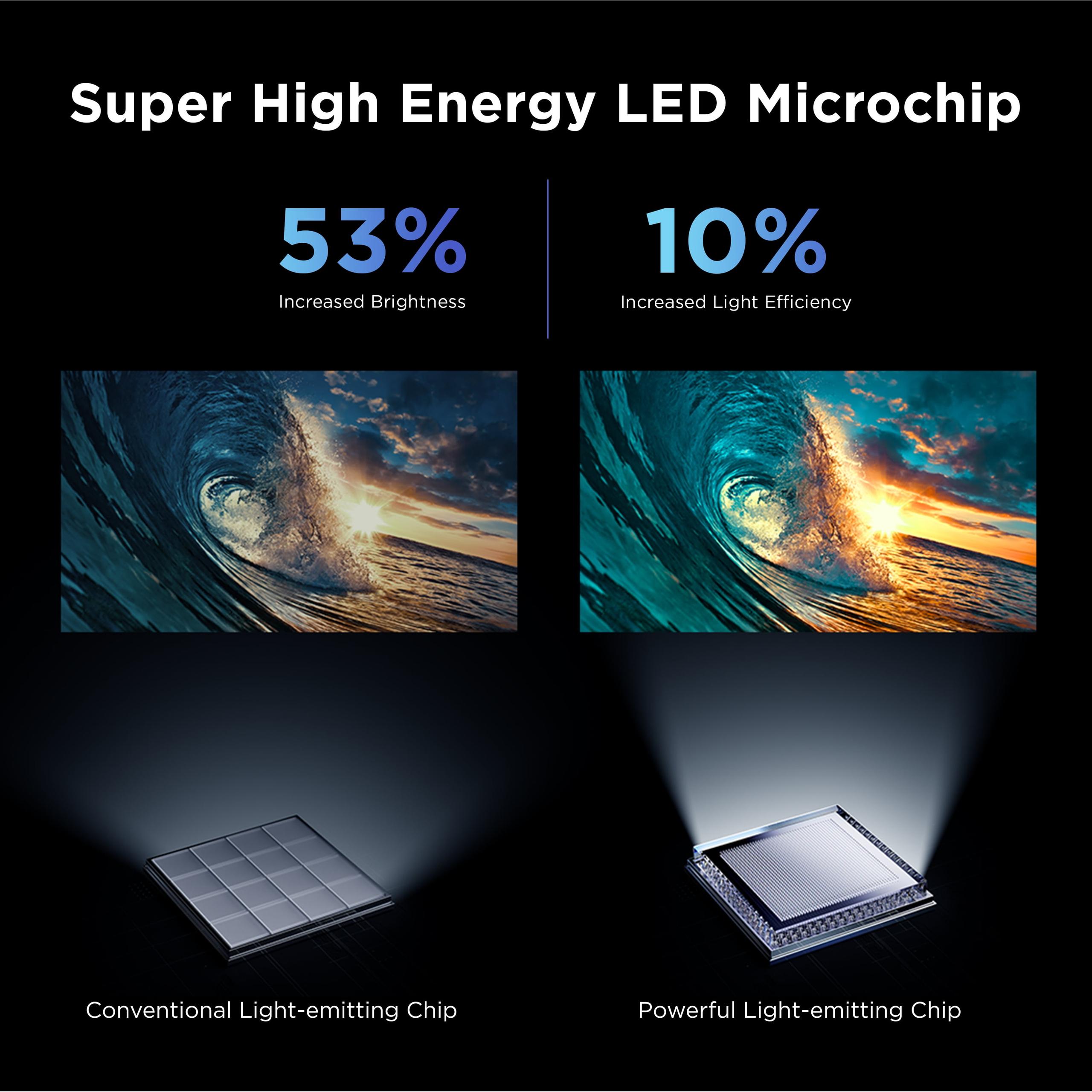
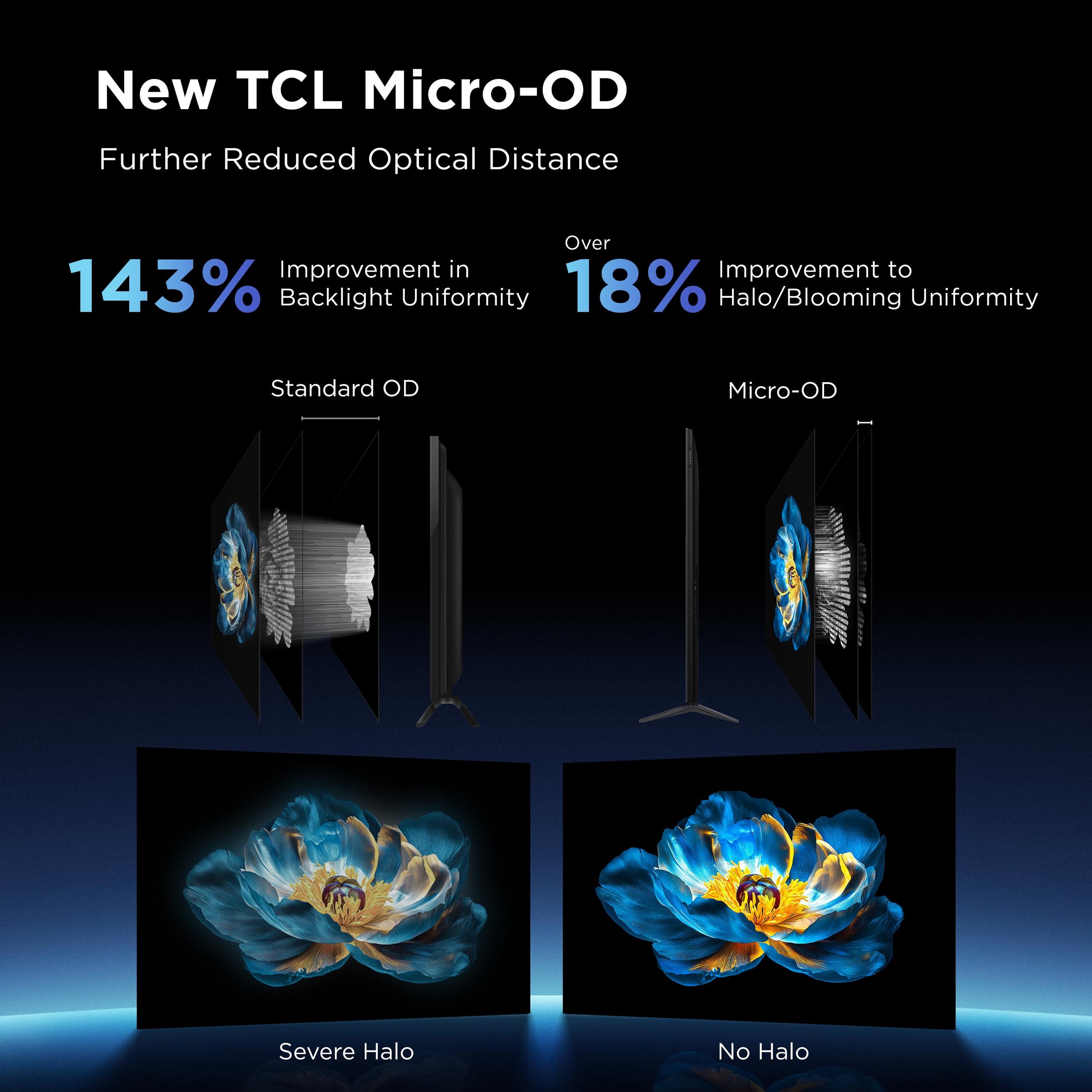
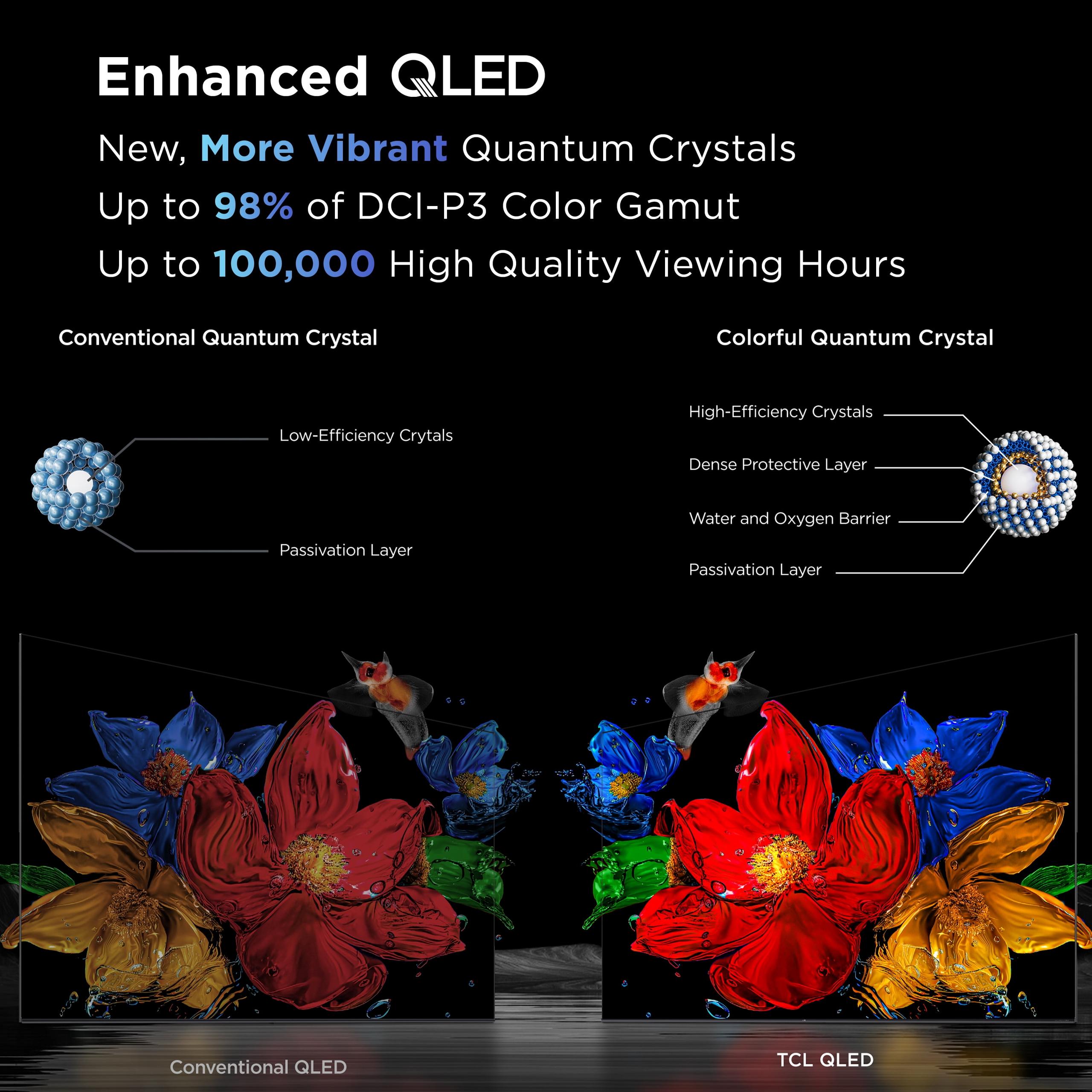
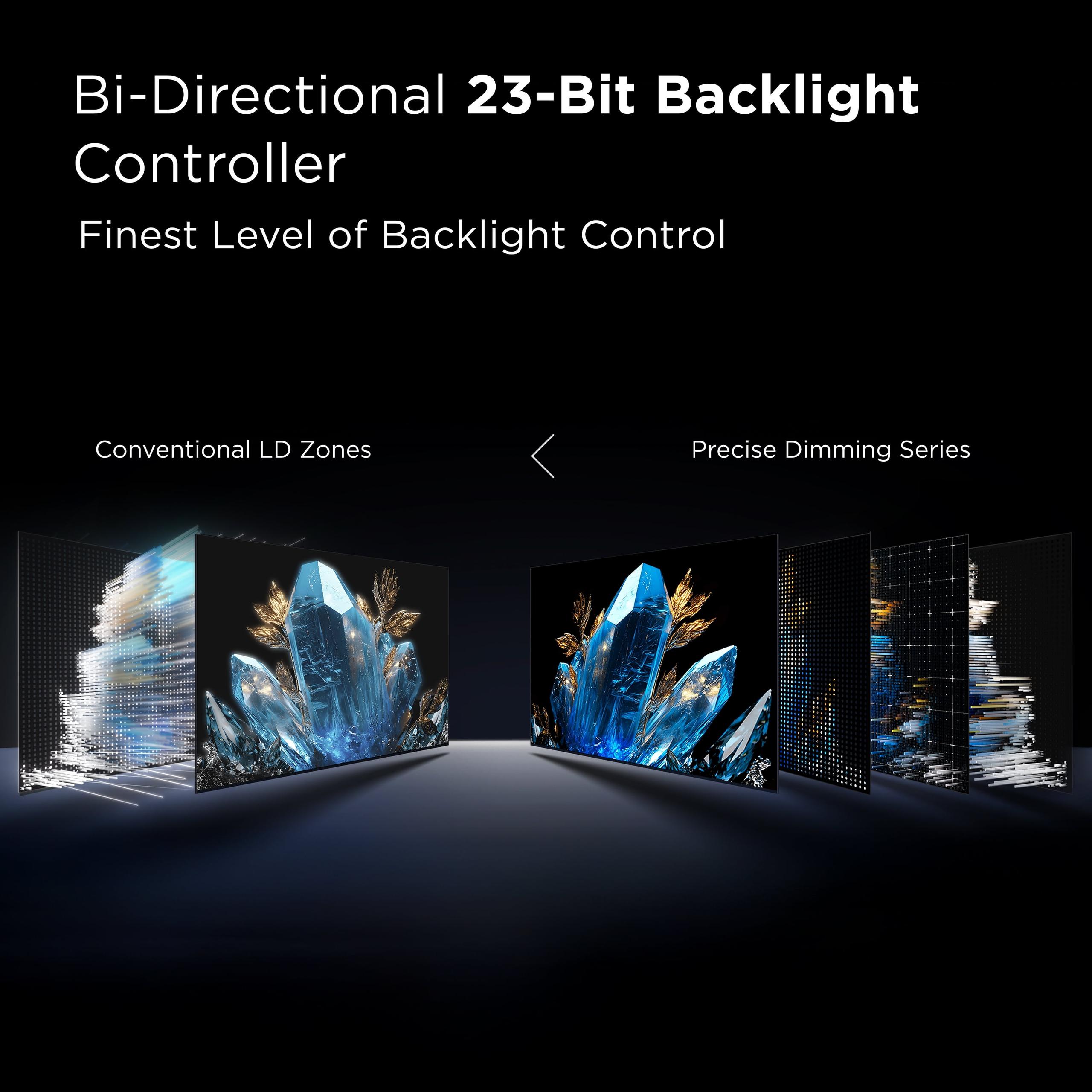
TCL uses what they call QD-Mini LED technology, which combines quantum dots (tiny crystals that emit pure colors when hit with light) with mini LEDs for backlighting. The "QD" part ensures you get vibrant, accurate colors, while the mini LEDs provide up to 500 local dimming zones. Think of local dimming zones as independent brightness controls—more zones mean the TV can make dark parts of the screen truly black while keeping bright parts brilliant, without one affecting the other.
Samsung's QN90D represents their established Neo QLED lineup, which has been refined over several generations. At $9,148.97, it's clearly targeting the premium market where picture quality trumps price concerns. Samsung has been perfecting their Neo QLED technology since 2021, and this model benefits from years of iteration and improvement.
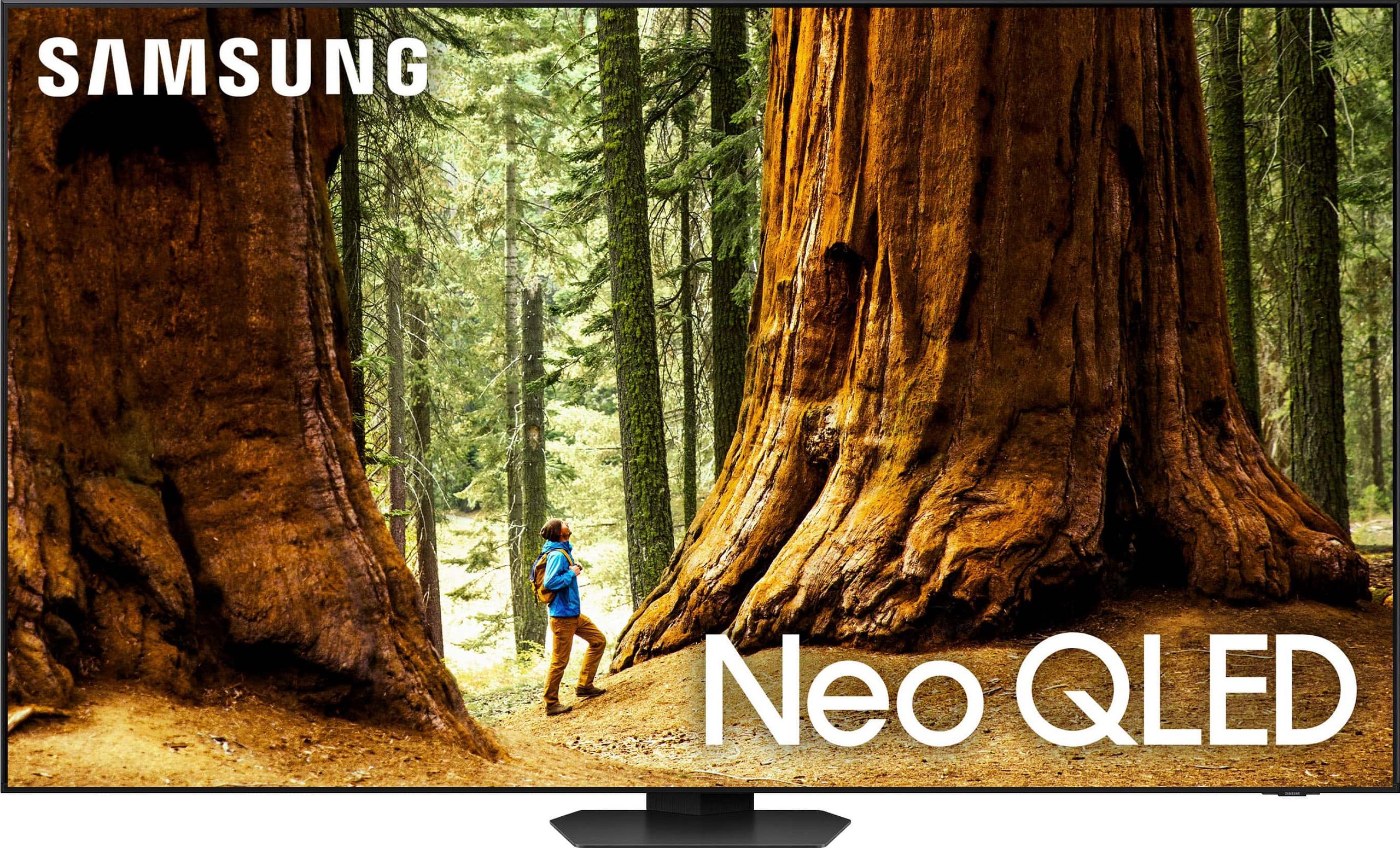
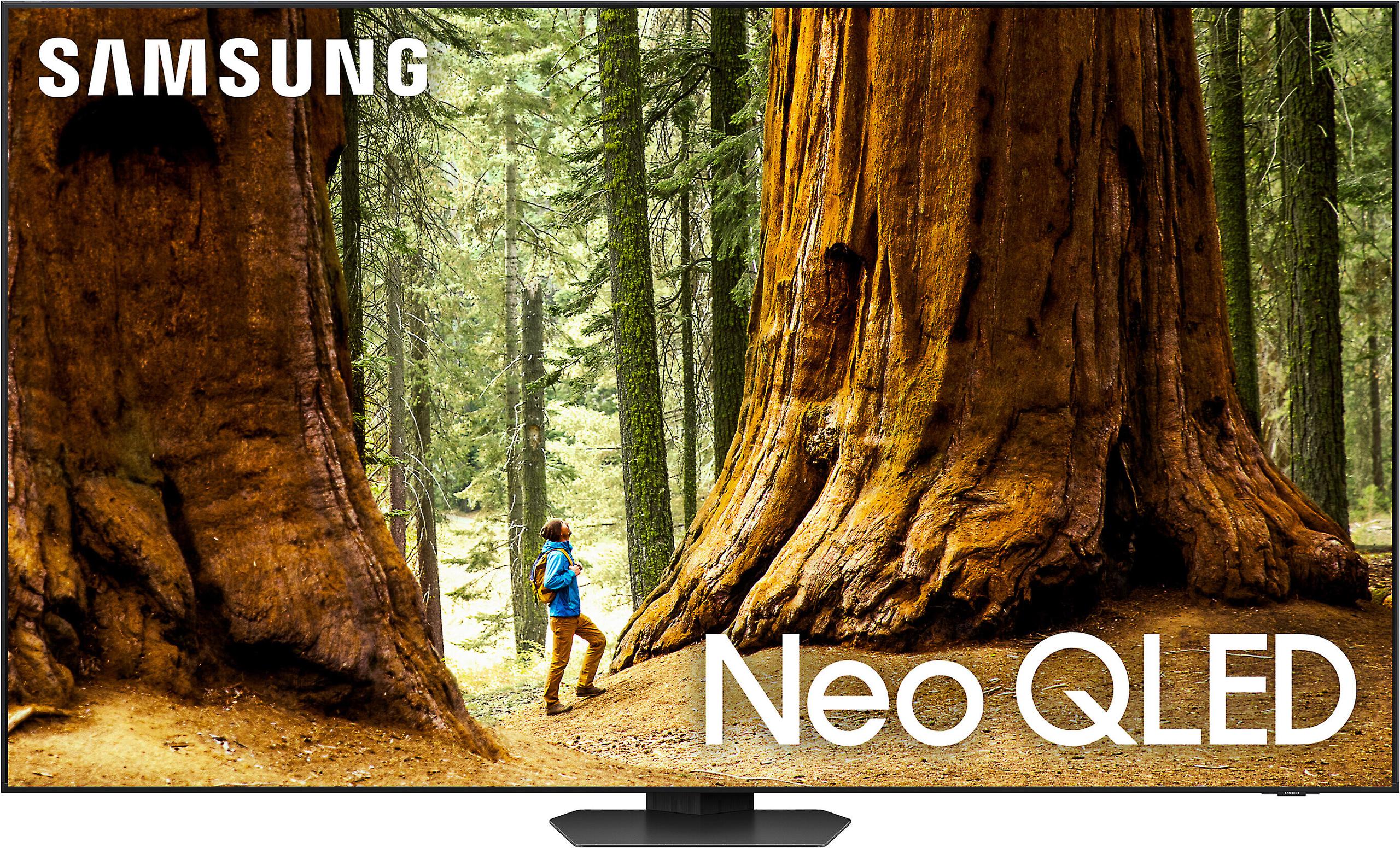
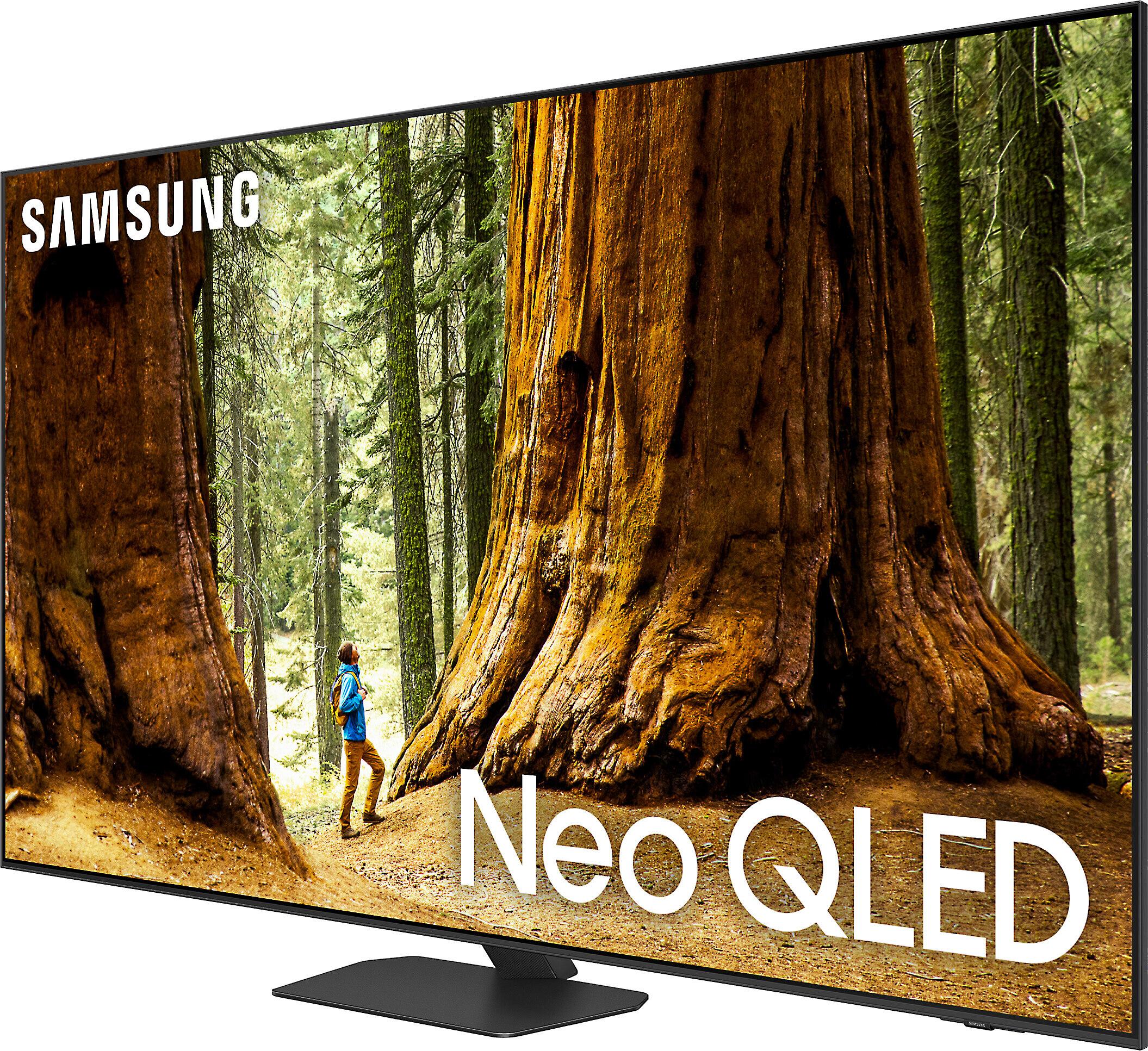
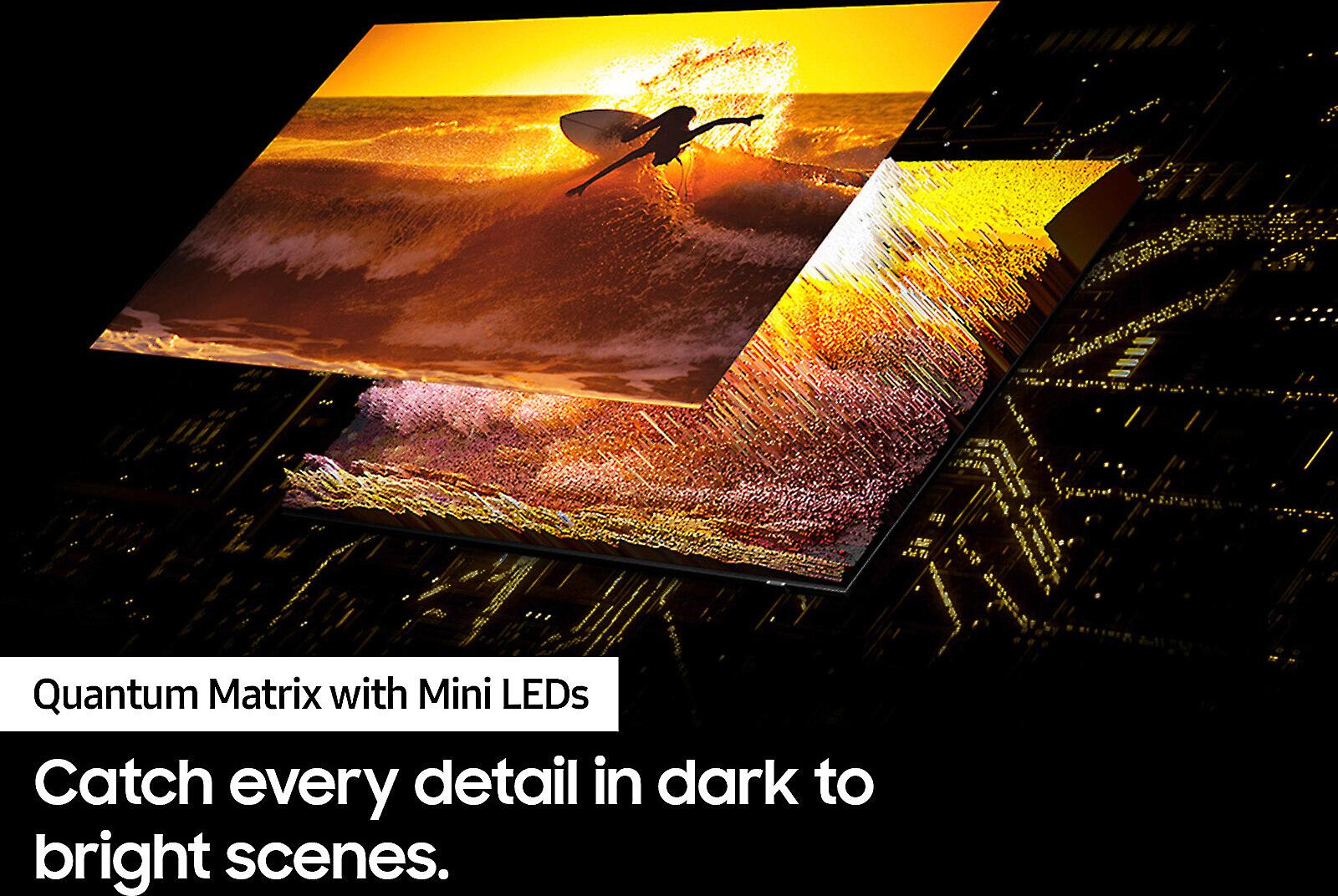
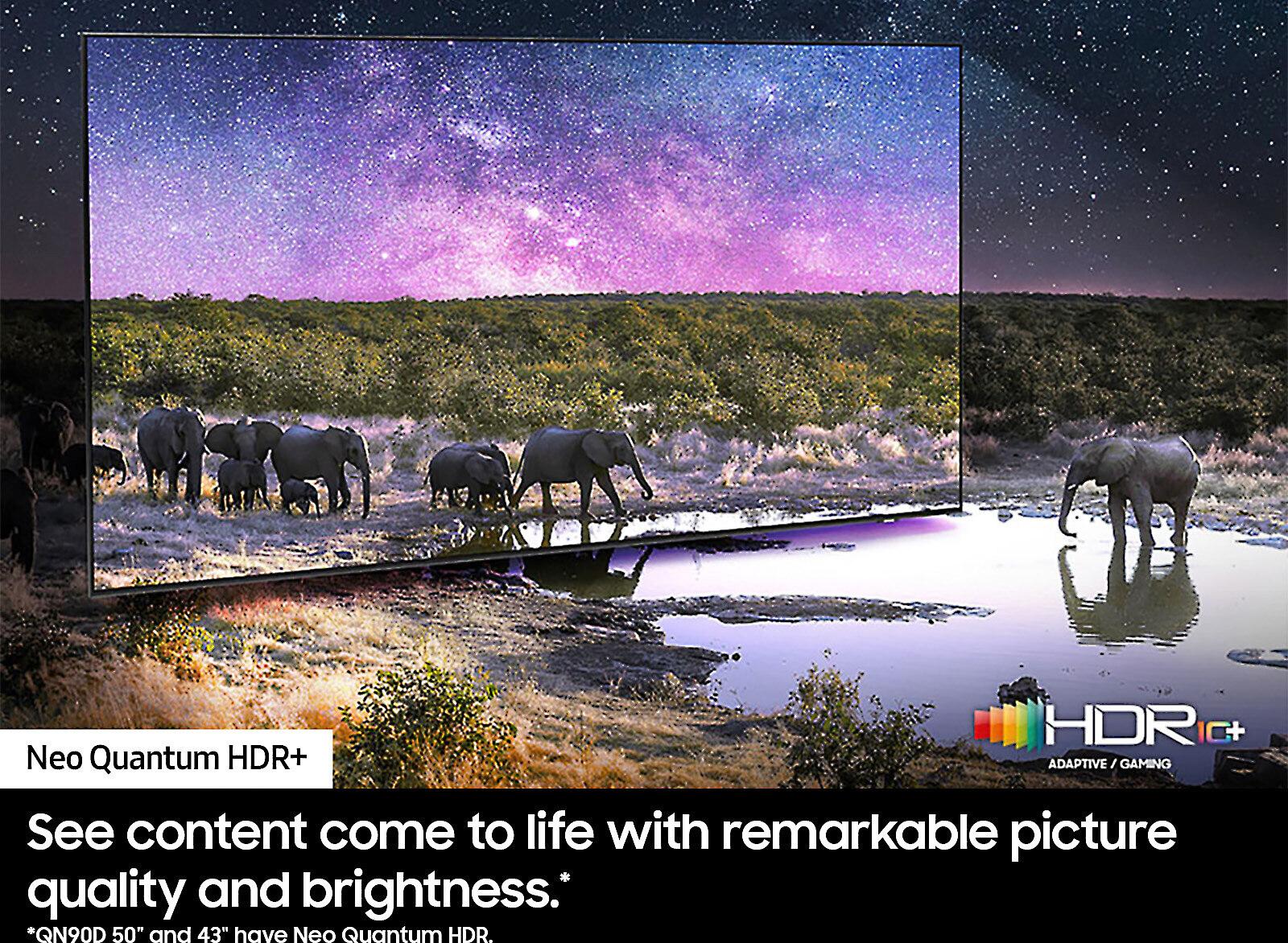
The "Neo" in Neo QLED refers to Samsung's use of even smaller mini LEDs—about 1/40th the size of traditional LEDs. This allows for more precise light control and better contrast. Samsung pairs this with their Quantum Matrix Technology, which gives them incredibly fine control over brightness across the screen.
Here's where the price difference starts to show its impact. HDR (High Dynamic Range) content is designed to show a much wider range of brightness levels than standard video—think of the difference between a dimly lit cave and bright sunlight in the same movie scene.
The TCL QM6K delivers solid HDR performance with peak brightness around 900 nits (a nit is a unit of brightness measurement—bright sunlight is about 100,000 nits for reference). This is perfectly adequate for most content and viewing conditions. You'll see good detail in shadows and highlights, though the most extreme HDR content might not have quite the punch you'd get from more expensive sets.
Samsung's QN90D, however, pushes significantly higher peak brightness levels. While Samsung doesn't publish exact specifications, Neo QLED TVs typically exceed 1,500 nits, and some can hit 2,000+ nits. In practical terms, this means HDR highlights like explosions, bright skies, or reflections off water will have more visual impact. It's the difference between "looks good" and "wow, that's bright!"
Both TVs use local dimming to control how dark the black areas of the screen can get, but they approach it differently. The TCL uses up to 500 dimming zones, which is quite good for the price point. Samsung's zone count isn't publicly specified, but their smaller mini LEDs typically allow for many more zones—potentially over 1,000.
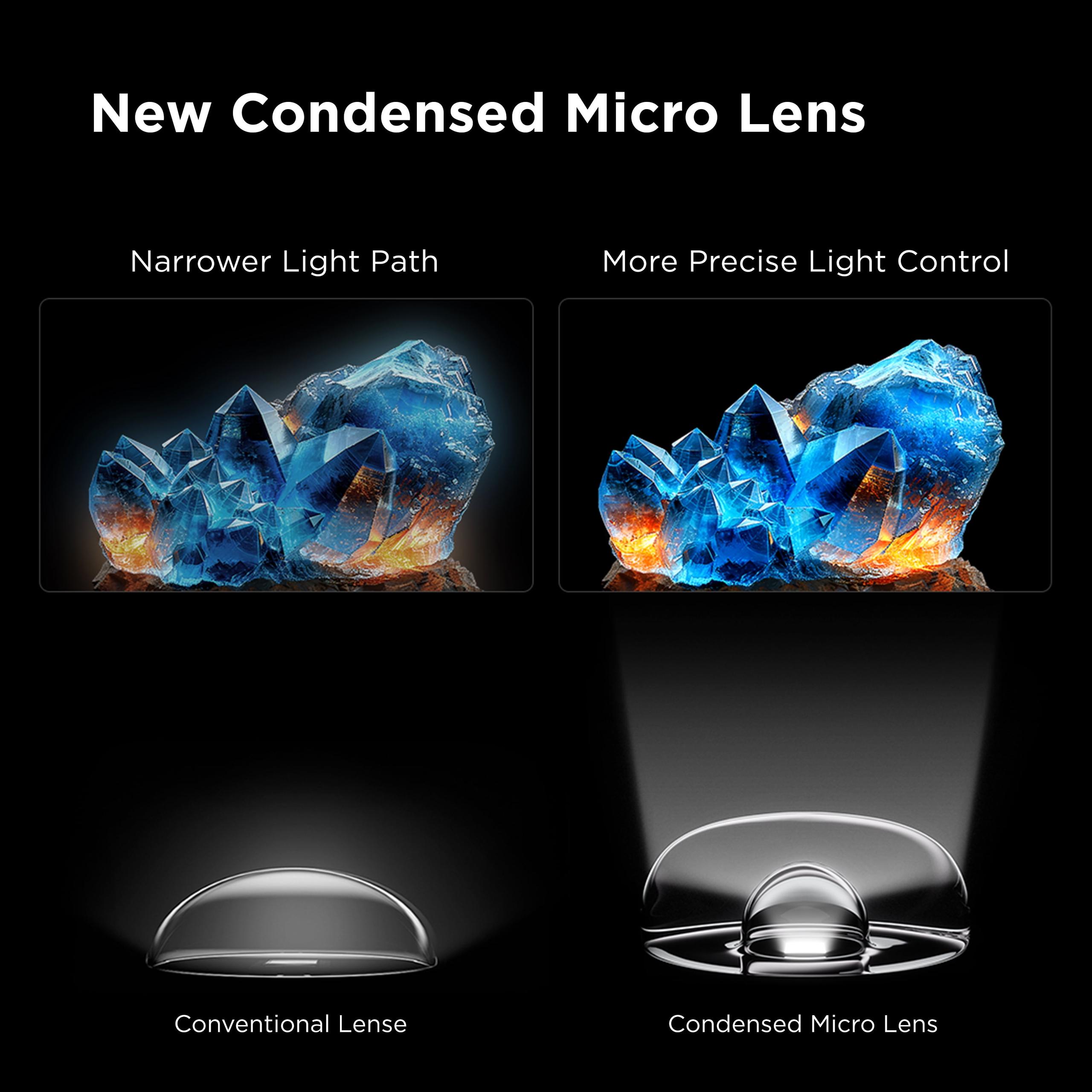
More dimming zones matter because they reduce "blooming"—that annoying halo effect you sometimes see around bright objects against dark backgrounds. TCL claims their Halo Control technology reduces blooming by 85-90% compared to previous models, which is impressive. But Samsung's advantage in zone count and processing power gives them an edge in the most challenging scenes.
I've noticed that blooming is particularly obvious on large screens when you're watching movies with subtitles. White text against dark backgrounds can create visible halos that remind you you're watching a TV instead of looking through a window. Better local dimming minimizes this distraction.
Both TVs support the major HDR formats, including Dolby Vision and HDR10+, which automatically adjust brightness and color for each scene. The TCL covers 93% of the DCI-P3 color space, which is the standard used for digital movie projection. That's actually excellent and means you're seeing colors very close to what filmmakers intended.
Samsung's Quantum Matrix Technology, combined with their longer experience in quantum dot manufacturing, typically delivers slightly better color volume—meaning they can produce bright colors more accurately. The difference is subtle in most content, but if you're watching nature documentaries or animated movies with vivid colors, Samsung's processing might give you that extra pop.
Gaming has become a crucial consideration for large TVs, especially with PlayStation 5 and Xbox Series X pushing 4K gaming at higher frame rates. This is where the TCL QM6K really shines and shows why it's a 2025 model built for modern gaming needs.
The TCL supports a native 144Hz refresh rate, which means it can display 144 unique frames per second. For comparison, most movies run at 24 frames per second, while sports broadcasts typically use 60. Higher refresh rates make fast motion appear smoother and reduce blur during quick camera pans or action sequences.
More importantly for gamers, the TCL can handle 4K resolution at 144Hz and even 1080p at an incredible 288Hz through its Game Accelerator 288 feature. This matters because competitive gamers often prefer higher frame rates over resolution—the smoother motion gives them an advantage in fast-paced games.
Samsung's QN90D tops out at 120Hz, which is still excellent and more than adequate for current consoles. The difference between 120Hz and 144Hz is noticeable but not dramatic for most users. However, for PC gamers with high-end graphics cards, that extra headroom could matter.
Input lag—the delay between pressing a button and seeing the result on screen—is crucial for responsive gaming. Both TVs offer gaming-specific modes that minimize this delay, typically reducing it to under 20 milliseconds, which is excellent.
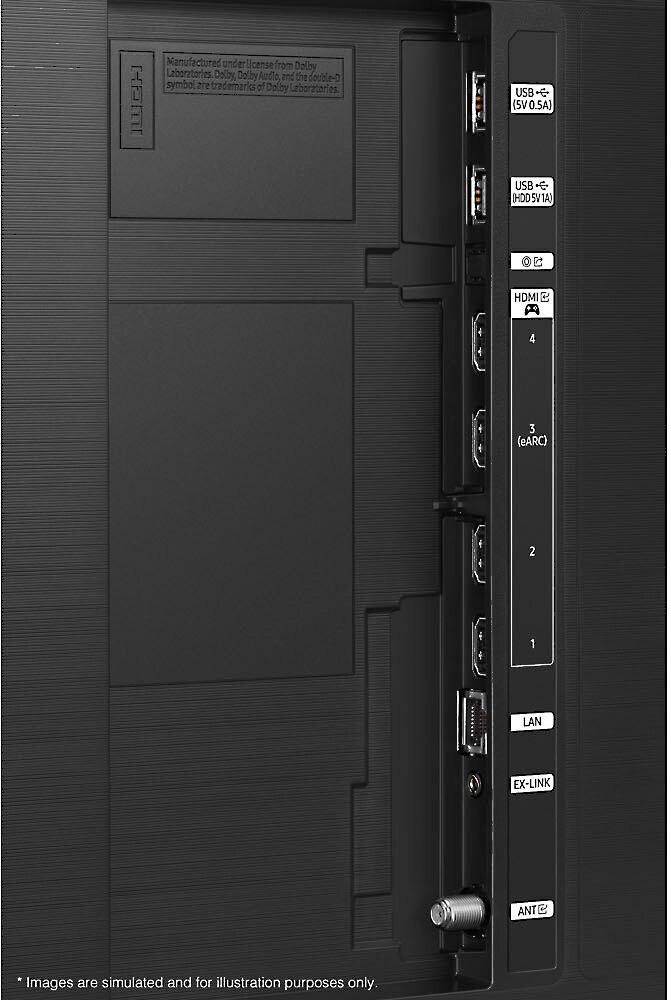
The TCL includes two HDMI 2.1 ports that support all the latest gaming features like Variable Refresh Rate (VRR), which synchronizes the TV's refresh rate with your console's frame rate to eliminate screen tearing. Samsung also supports these features, plus they add their Gaming Hub, which provides easy access to cloud gaming services.
The TCL QM6K runs Google TV, which is essentially Android TV with a more user-friendly interface. If you're already invested in Google's ecosystem—using Gmail, Google Photos, YouTube Premium—this integration feels seamless. The interface is clean, the voice search works well, and you get access to the full Google Play Store for apps.
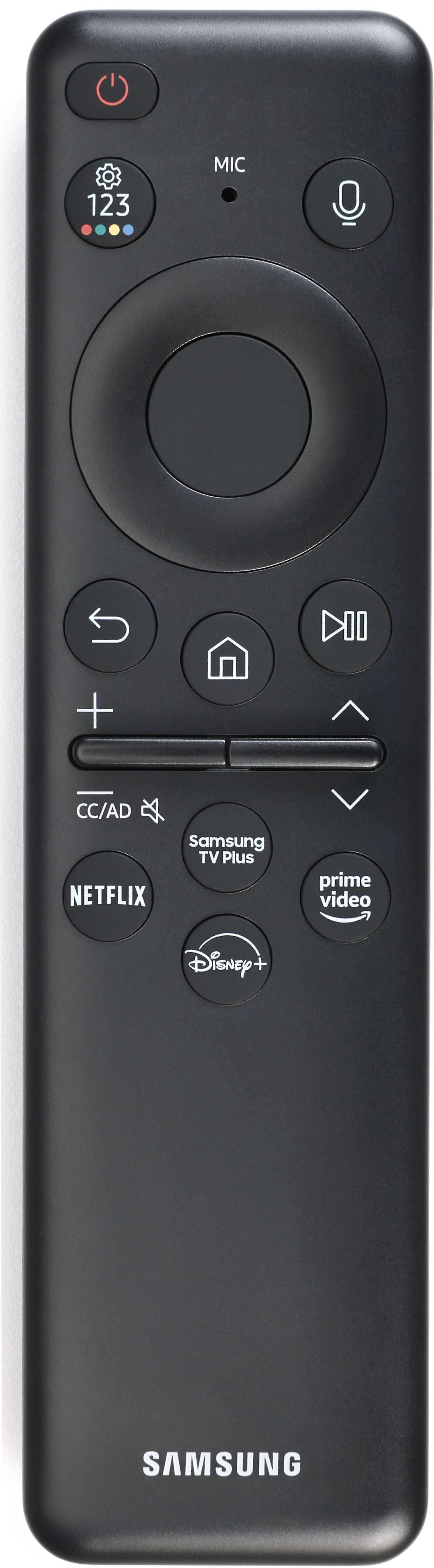
Samsung's QN90D uses Tizen, their proprietary operating system. Tizen has been refined over many years and offers a polished experience with smooth animations and logical menu structures. It integrates particularly well if you have other Samsung devices like phones or soundbars.
Both platforms support all the major streaming services, but I find Google TV's recommendation engine more helpful. It pulls content from across different apps to suggest things you might want to watch, rather than forcing you to navigate to each app separately.
Google TV benefits from Google's extensive resources and regular updates. New features and security patches arrive frequently. Tizen is also well-supported, but Samsung controls the update schedule entirely, which can sometimes mean slower adoption of new streaming service features.
At 98 inches, your TV is essentially a piece of furniture, so the built-in audio becomes more important than it might be on smaller sets. The TCL QM6K includes an Onkyo 2.1.1 speaker system with Dolby Atmos support. The included soundbar adds some nice bass extension, though it's still not going to match a dedicated home theater setup.
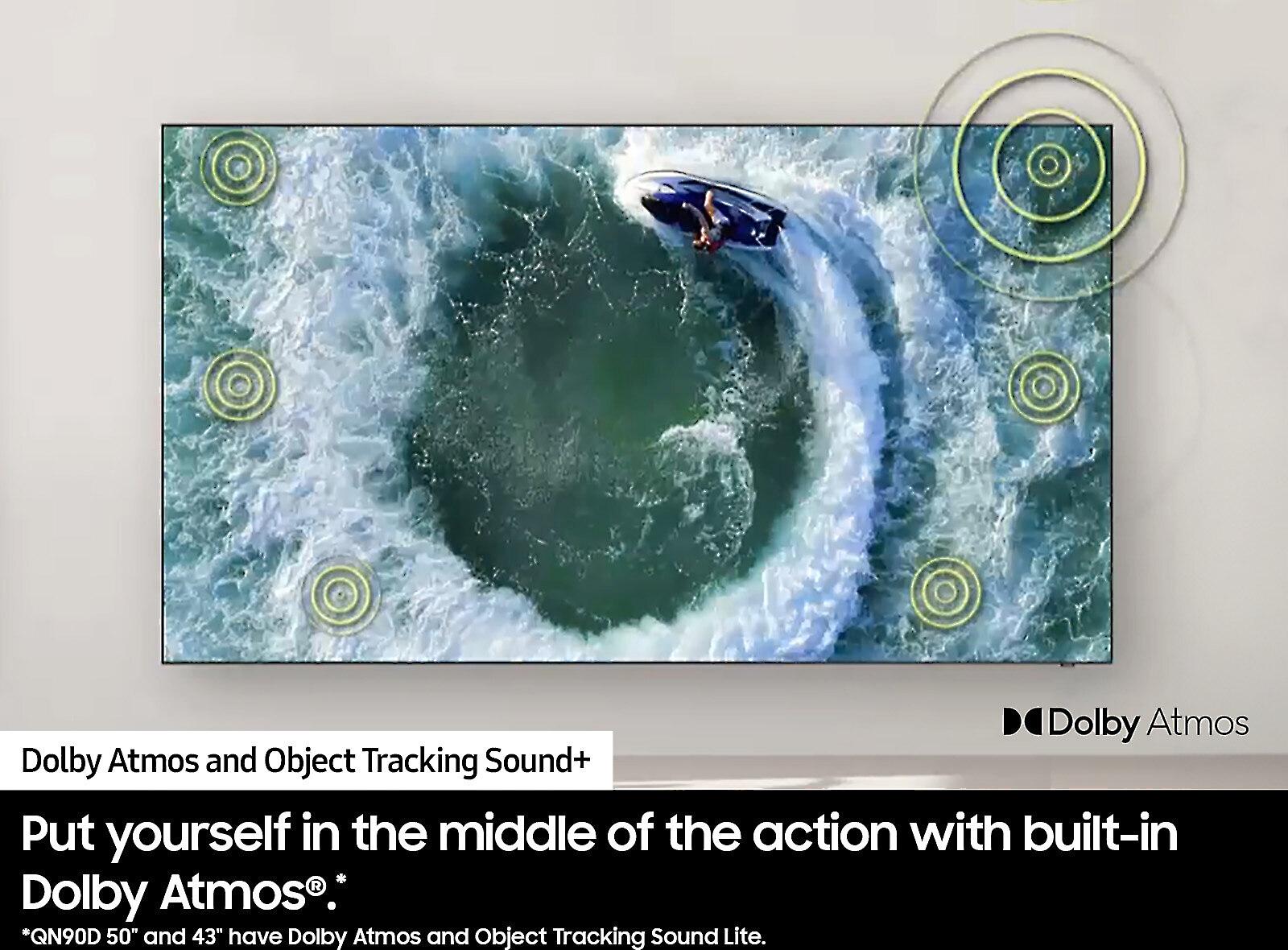
Samsung's QN90D features Object Tracking Sound+, which uses multiple speakers around the TV to create the impression that sound is coming from specific areas of the screen. When a car drives across the screen, the audio follows it. It's genuinely impressive technology, though again, serious home theater enthusiasts will want dedicated speakers.
For both TVs, I'd strongly recommend budgeting for a proper soundbar or surround sound system. At this screen size, the viewing experience deserves audio that matches the visual scale.
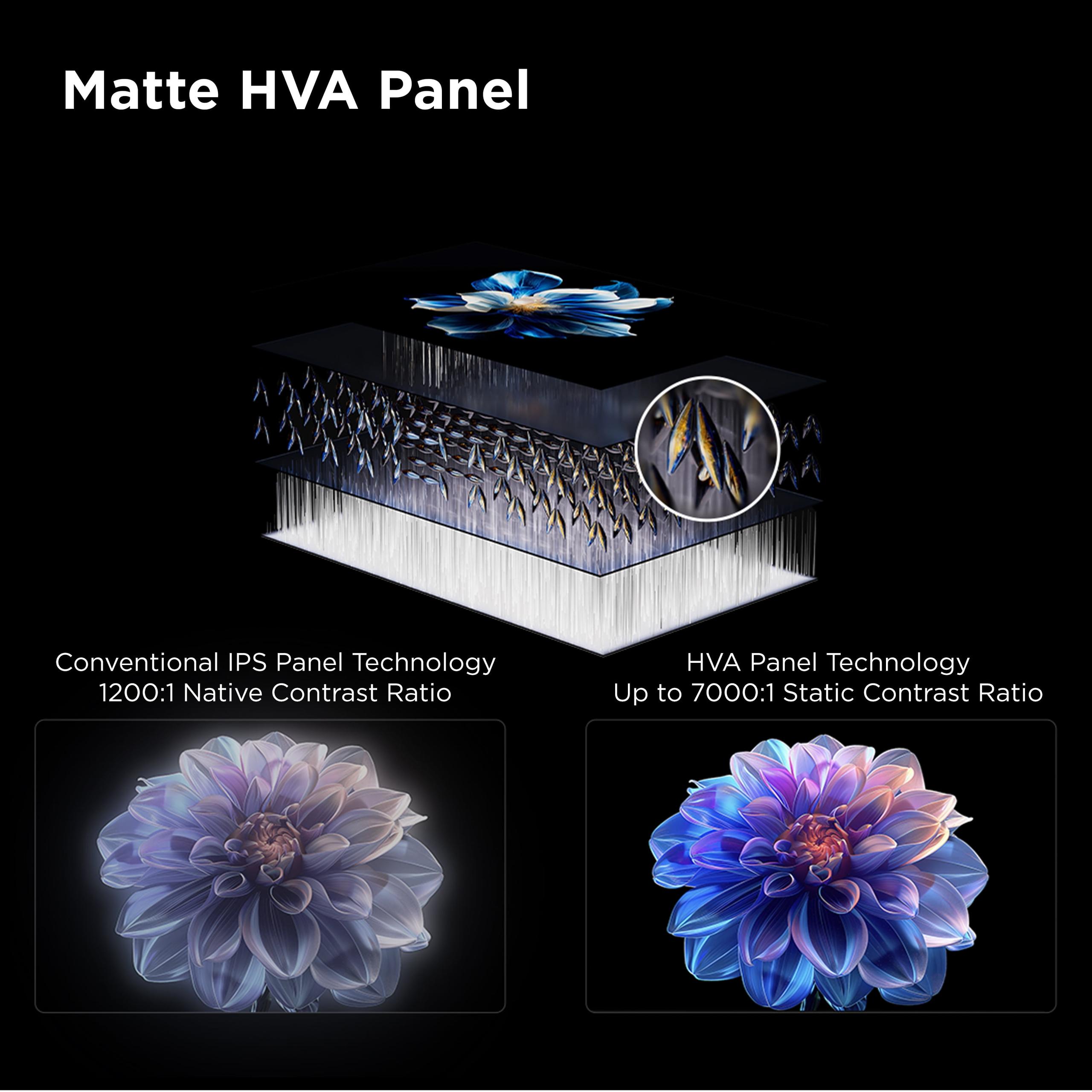
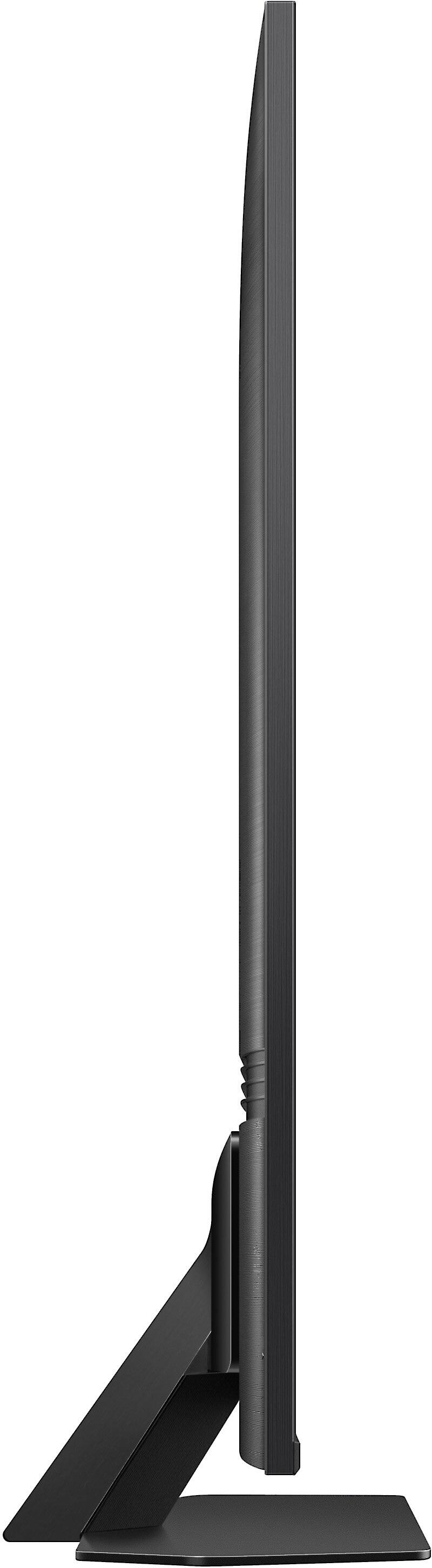
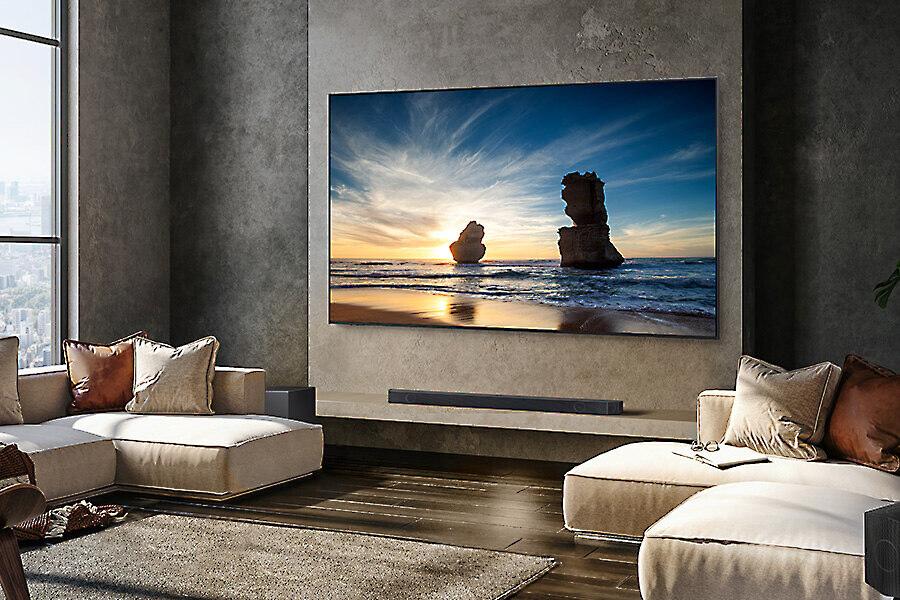
A 98-inch TV is a commitment. Both models are surprisingly slim considering their size, but they'll still dominate any room. The TCL QM6K features a matte screen finish that helps reduce reflections, which is particularly valuable in bright rooms or with lots of windows.
Samsung's QN90D includes their Ultra Viewing Angle technology, which maintains color accuracy and contrast even when viewed from the side. At 98 inches, you're more likely to have viewers sitting at various angles, so this feature adds real value.
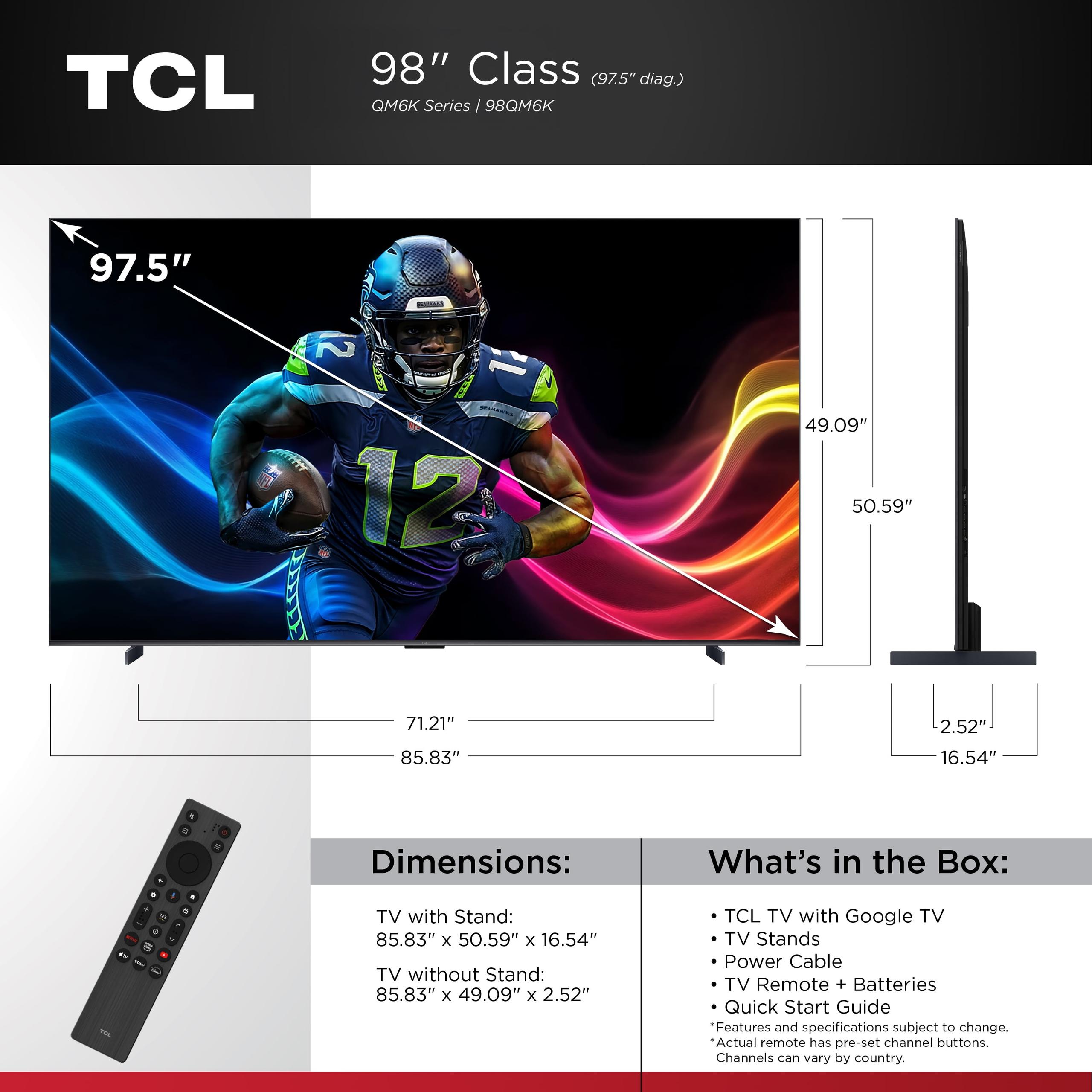
Both TVs are surprisingly light for their size—the TCL weighs less than many people expect, making wall mounting more feasible. However, at 98 inches, professional installation is highly recommended. The screens are fragile, expensive to replace, and require precise mounting to ensure safety.
The elephant in the room is that price difference. Is Samsung's QN90D really worth $7,149 more than the TCL QM6K? The answer depends entirely on your priorities and viewing habits.
If you primarily watch streaming content, play games, and want the biggest screen possible for your money, the TCL delivers exceptional value. The picture quality is genuinely good, the gaming features are industry-leading, and the smart platform works well.
But if you're building a dedicated home theater, regularly watch 4K Blu-rays, or simply want the best possible picture quality regardless of cost, Samsung's superior HDR performance, more advanced processing, and refined user experience might justify the premium.
TCL offers a one-year warranty and has been improving their customer service, but Samsung's longer track record and typically longer support lifecycle could matter for a purchase this significant. Both companies regularly push software updates, but Samsung's longer presence in the premium market gives them an edge in long-term reliability expectations.
Choose the TCL 98-Inch QM6K QLED TV if you want to join the 98-inch club without breaking the bank. It's perfect for gamers who need high refresh rates, families who want a massive screen for movie nights, or anyone who believes that size trumps absolute picture perfection. The gaming features alone make it a compelling choice for households with PlayStation 5 or Xbox Series X consoles.
Go with Samsung's QN90D if picture quality is your absolute priority and budget is secondary. It's the choice for serious movie enthusiasts, those with bright rooms who need superior anti-glare performance, or buyers who want the most polished overall experience. The superior HDR performance really does make a difference with high-quality content.
Both TVs represent impressive achievements in different ways. TCL has democratized large-screen premium technology, while Samsung continues pushing the boundaries of what's possible regardless of cost. Your choice ultimately comes down to whether you prioritize accessibility and gaming performance or absolute picture quality and premium refinement.
Whatever you choose, you're getting a viewing experience that would have been impossible at these prices just a few years ago. The fact that we can even have this conversation—comparing $2,000 and $9,000 TVs as reasonable alternatives—shows just how far display technology has come.
| TCL 98-Inch QM6K QLED TV | Samsung 98" QN90D Series Neo QLED 4K Smart TV |
|---|---|
| Price - The biggest deciding factor for most buyers | |
| $1,999.99 (exceptional value for 98-inch Mini LED) | $9,148.97 (premium pricing reflects flagship positioning) |
| Display Technology - Determines picture quality and contrast | |
| QD-Mini LED with up to 500 local dimming zones | Neo QLED with Quantum Matrix Technology (smaller LEDs, more zones) |
| Peak Brightness - Critical for HDR impact and bright room viewing | |
| ~900 nits (good for most content, adequate HDR) | 1,500+ nits (dramatic HDR highlights, superior bright room performance) |
| Refresh Rate - Matters for gaming and smooth motion | |
| Native 144Hz (4K@144Hz, 1080p@288Hz gaming support) | 120Hz (excellent for consoles, sufficient for most content) |
| Gaming Features - Important for next-gen console owners | |
| Game Accelerator 288, 2x HDMI 2.1, AMD FreeSync Premium Pro | Gaming Hub, AI Auto Game Mode, FreeSync Premium Pro |
| Smart TV Platform - Affects daily usability and app selection | |
| Google TV (Android-based, extensive app support, voice control) | Tizen OS (polished interface, Samsung ecosystem integration) |
| Audio System - Built-in sound quality before adding external speakers | |
| Onkyo 2.1.1 with Dolby Atmos (adequate, soundbar recommended) | Object Tracking Sound+ with Dolby Atmos (superior built-in audio) |
| Anti-Glare Technology - Reduces reflections in bright rooms | |
| Matte HVA panel with standard anti-glare | Ultra Viewing Angle with advanced anti-reflection coating |
| Color Accuracy - How close colors match filmmaker intentions | |
| 93% DCI-P3 coverage (excellent color reproduction) | Quantum Matrix enhanced colors (superior color volume and processing) |
| Blooming Control - Reduces halos around bright objects | |
| Halo Control technology (85-90% reduction vs previous models) | Advanced mini LED control (superior due to more dimming zones) |
| Warranty and Support - Peace of mind for expensive purchase | |
| 1-year TCL warranty (newer brand, improving support) | Standard Samsung warranty (established support network, longer track record) |
The TCL 98-Inch QM6K QLED TV at $1,999.99 offers exceptional value, delivering premium Mini LED technology at an unprecedented price point. The Samsung 98" QN90D Series Neo QLED 4K Smart TV at $9,148.97 provides superior picture quality but costs nearly five times more. For most buyers, the TCL represents the better value proposition unless absolute picture perfection is the priority.
The TCL QM6K uses QD-Mini LED technology, combining quantum dots for color accuracy with mini LEDs for improved contrast and up to 500 local dimming zones. Samsung's QN90D uses Neo QLED with even smaller mini LEDs (1/40th the size of traditional LEDs) and more precise Quantum Matrix control, resulting in better blooming control and contrast performance.
The TCL 98-Inch QM6K QLED TV excels for gaming with its native 144Hz refresh rate, supporting 4K at 144Hz and 1080p at 288Hz. It includes Game Accelerator 288 and two HDMI 2.1 ports. The Samsung QN90D offers excellent 120Hz gaming with Gaming Hub integration but lacks the higher refresh rates that competitive PC gamers prefer.
The TCL QM6K runs Google TV, offering seamless integration with Google services, extensive app support, and regular updates. Samsung's QN90D uses Tizen OS, which provides a more polished interface and better integration with Samsung ecosystem devices. Both support all major streaming services, but Google TV offers superior content recommendations across apps.
The Samsung 98" QN90D Series Neo QLED 4K Smart TV delivers superior HDR performance with peak brightness exceeding 1,500 nits compared to the TCL QM6K's ~900 nits. This translates to more impactful highlights, better detail in bright scenes, and a more cinematic HDR experience, especially important for premium content and 4K Blu-rays.
The TCL QM6K features an Onkyo 2.1.1 speaker system with Dolby Atmos support, which is adequate but benefits from an external soundbar. Samsung's QN90D includes Object Tracking Sound+ technology that creates directional audio effects, providing superior built-in sound quality, though both TVs benefit from dedicated audio systems at this screen size.
The Samsung QN90D performs better in bright rooms due to its higher peak brightness (1,500+ nits vs ~900 nits) and advanced anti-reflection coating with Ultra Viewing Angle technology. The TCL QM6K includes a matte HVA panel that helps reduce glare but isn't as effective as Samsung's solution for challenging lighting conditions.
The TCL 98-Inch QM6K QLED TV offers 144Hz native refresh rate, providing smoother motion for sports and gaming content. Samsung's QN90D uses 120Hz, which is still excellent for most content including movies and console gaming. The difference is most noticeable for PC gaming and fast-paced sports viewing.
Samsung's QN90D benefits from the company's longer track record in premium TVs and established customer support network. The TCL QM6K comes with a 1-year warranty and TCL's improving but newer support infrastructure. Samsung typically provides longer software update cycles and has more service centers nationwide.
Both TVs feature slim profiles despite their 98-inch size. The TCL QM6K offers surprisingly lightweight construction with integrated cable management and a matte finish. Samsung's QN90D provides more premium build materials, Ultra Viewing Angle technology for consistent picture quality at different viewing positions, and generally more refined industrial design.
For dedicated home theaters, the Samsung 98" QN90D Series Neo QLED 4K Smart TV offers superior picture quality with better HDR performance, more precise local dimming, and enhanced color accuracy that benefits premium content viewing. However, the TCL QM6K provides excellent performance at a fraction of the cost, allowing more budget for audio equipment and room treatments.
The TCL QM6K excels with gaming content, sports, and streaming services, offering great overall performance for everyday viewing. The Samsung QN90D shows its superiority with premium content like 4K Blu-rays, HDR movies, and high-quality streaming, where its advanced processing and higher brightness create more dramatic visual impact. Both handle standard HD and 4K content well, but Samsung's upscaling is more refined.
We've done our best to create useful and informative comparisons to help you decide what product to buy. Our research uses advanced automated methods to create this comparison and perfection is not possible - please contact us for corrections or questions. These are the sites we've researched in the creation of this article: bestbuy.com - rtings.com - techradar.com - the-gadgeteer.com - youtube.com - youtube.com - ign.com - youtube.com - tomsguide.com - tcl.com - valueelectronics.com - bestbuy.com - bestbuy.com - rtings.com - circuitworldonline.com - youtube.com - tcl.com - bestbuy.com - tomsguide.com - tcl.com - flatpanelshd.com - displayspecifications.com - rtings.com - rtings.com - youtube.com - youtube.com - fullcompass.com - digitalhomecreations.com - jeffsappliance.com - bestbuy.com - displayspecifications.com - samsung.com - samsung.com - image-us.samsung.com - youtube.com

Privacy Policy
Terms and Conditions - Affiliate Policy
Home Security
© Copyright 2008-2026.
11816 Inwood Rd #1211, Dallas, TX 75244