

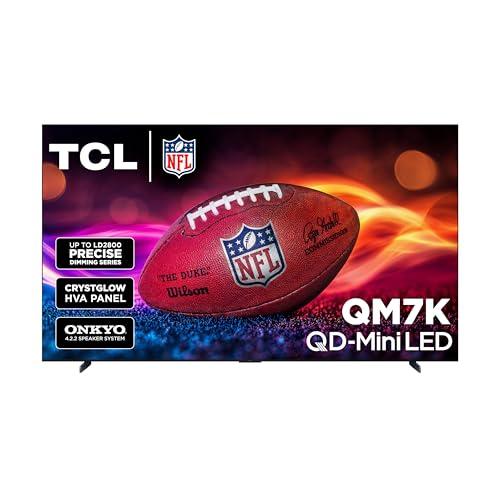


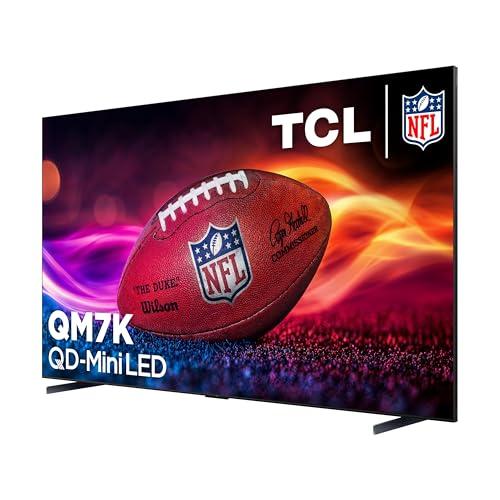
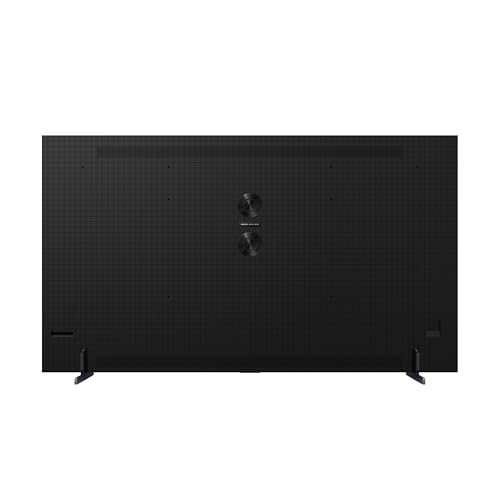
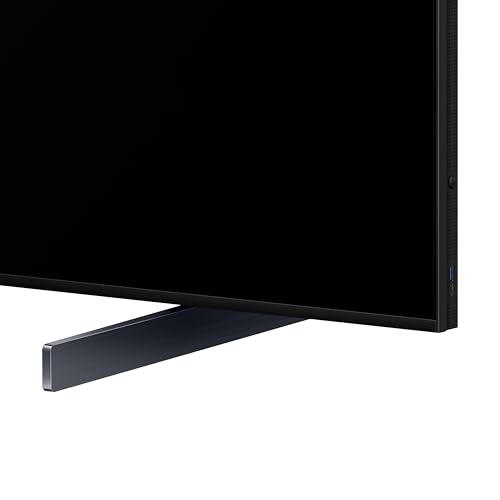
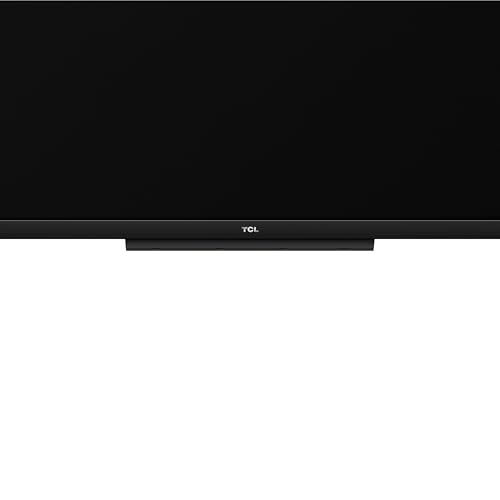
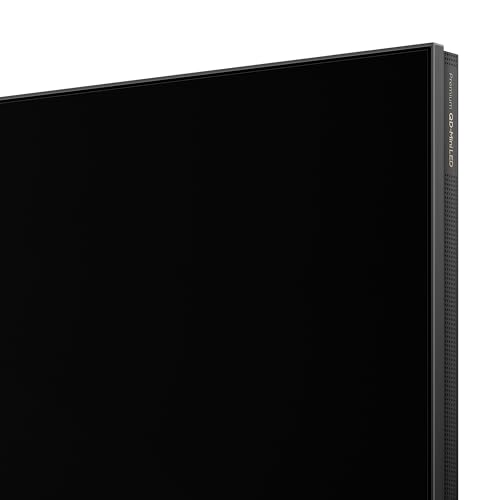
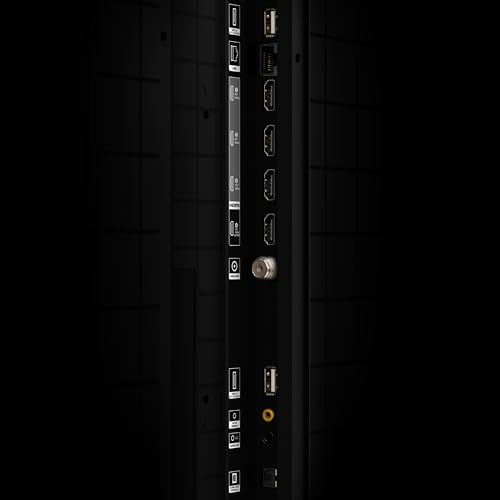

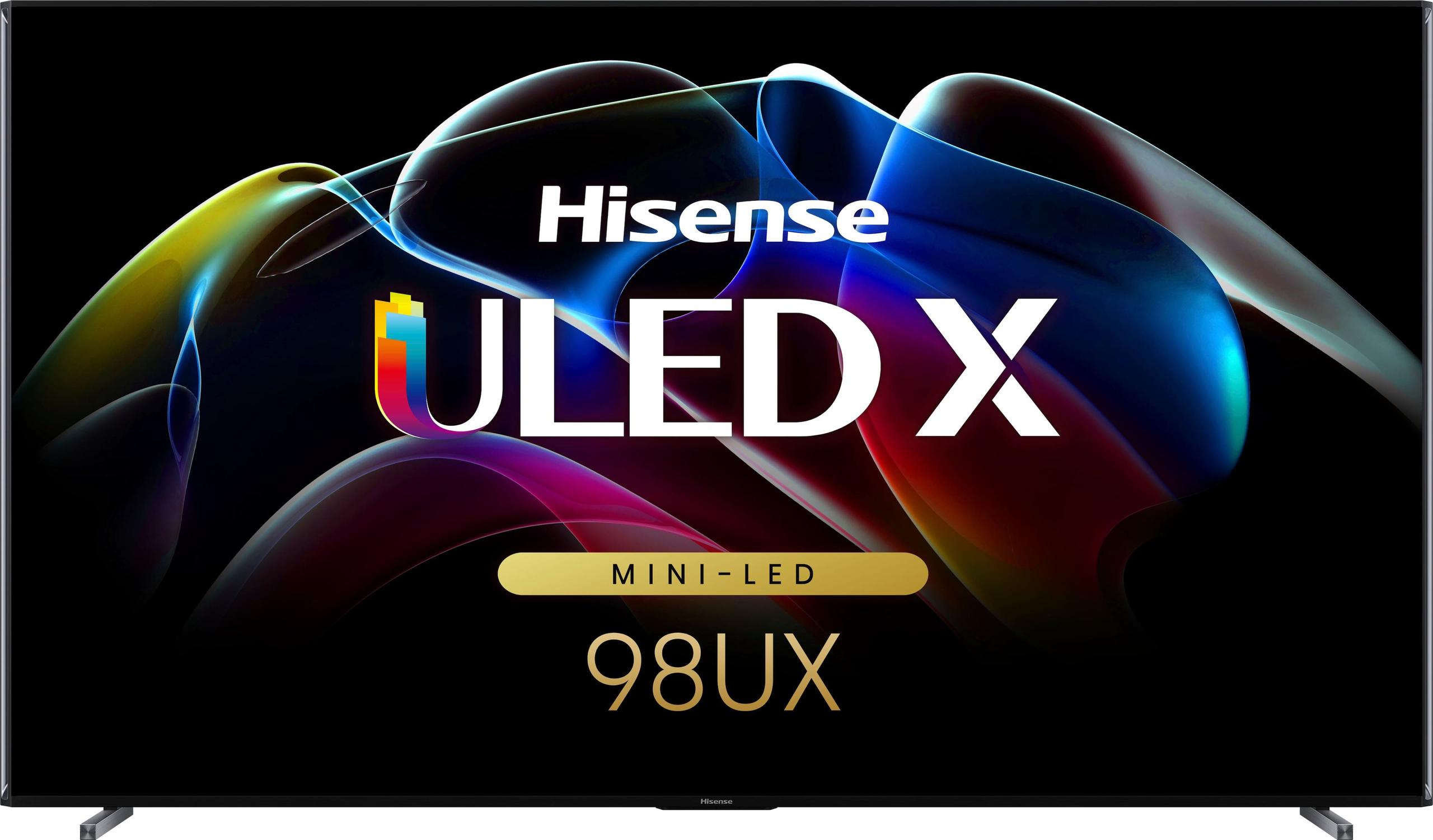


When you're shopping for a truly massive TV that can transform your living room into a personal movie theater, you're entering premium territory where every feature matters. Today, we're comparing two standout options: the TCL 115" QM7K Series QD-Mini LED 4K Smart TV 2025 at $12,998 and the Hisense 98" UX Series 4K Mini-LED ULED Google TV at $5,000. Both represent the cutting edge of large-screen display technology, but they take notably different approaches to delivering an exceptional viewing experience.
Large-screen TVs over 90 inches are designed to compete directly with home theater projectors while solving many of their traditional problems. Unlike projectors that struggle in bright rooms and require specific screen materials, these massive displays deliver consistent picture quality regardless of ambient lighting. They're becoming increasingly popular as prices drop and technology improves.
The main considerations when shopping in this category include picture quality metrics like peak brightness and contrast ratio, gaming performance for console enthusiasts, smart TV capabilities, and crucially, the balance between screen size and budget. These aren't just bigger versions of regular TVs – they incorporate advanced technologies like Mini LED backlighting and quantum dot enhancement that were previously reserved for premium displays.
The Hisense 98" UX Series launched in 2024 as Hisense's flagship large-screen offering, representing a significant leap forward from their previous generation displays. It introduced their most advanced Mini LED implementation with over 10,000 dimming zones – small sections of the backlight that can be independently controlled for better contrast.
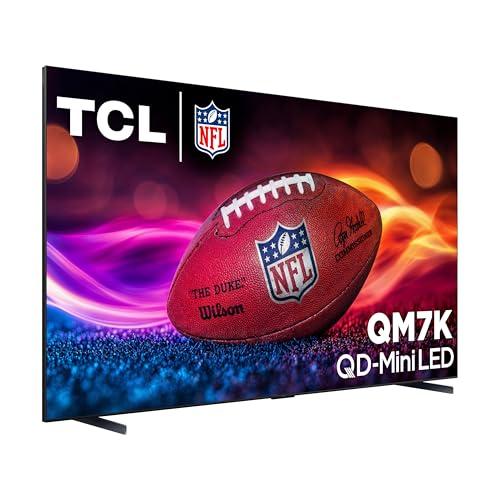
The TCL 115" QM7K arrived in 2025 as part of TCL's latest generation, incorporating lessons learned from previous QM series models. TCL has been refining their QD-Mini LED technology (quantum dot combined with Mini LED) over several generations, and the QM7K represents their most advanced implementation yet.
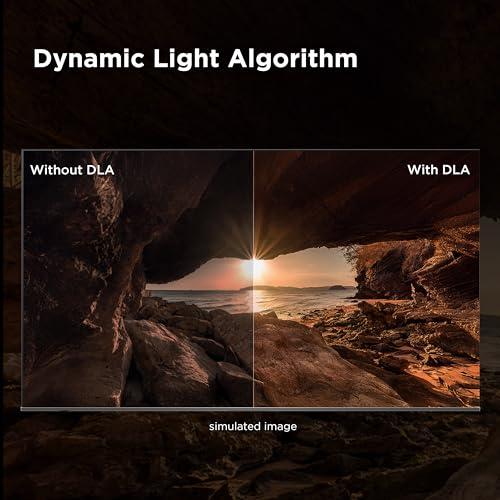
Since these releases, both companies have focused on improving local dimming algorithms – the software that controls those thousands of individual backlight zones. This matters because better algorithms mean less "blooming" (unwanted light bleeding around bright objects on dark backgrounds) and more precise contrast control.
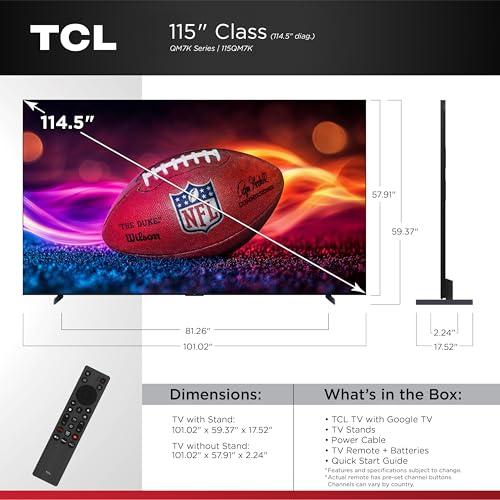
The most obvious difference between these TVs is screen size, but the implications go deeper than just bigger being better. The TCL's 115-inch display provides about 35% more screen area than the Hisense's 98-inch panel, which translates to a noticeably more immersive experience when you're sitting at typical viewing distances.
For home theater use, screen size directly impacts your field of view – how much of your peripheral vision is filled with the image. Cinema screens are designed to fill a specific percentage of your visual field to create that immersive feeling, and the TCL gets much closer to replicating this experience in a home setting.
However, bigger isn't always better for every room. A 115-inch TV requires careful consideration of seating distance and room layout. The general rule suggests sitting 1.5 to 2.5 times the screen width away for optimal viewing, which means you'd want to be 12-20 feet from a 115-inch screen. Many living rooms simply can't accommodate this properly, making the 98-inch Hisense a more practical choice for average-sized spaces.
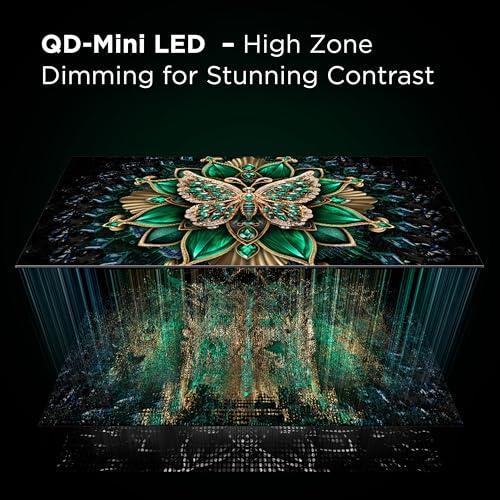
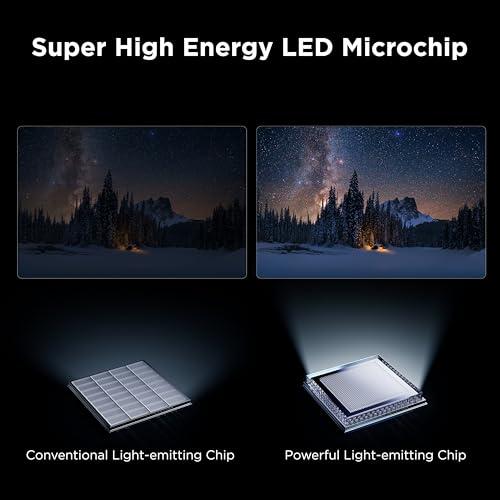
Both TVs use Mini LED technology, but they implement it differently. Mini LEDs are much smaller than traditional LED backlights – think thousands of tiny lights instead of dozens of larger ones. This allows for more precise control over brightness in different areas of the screen.
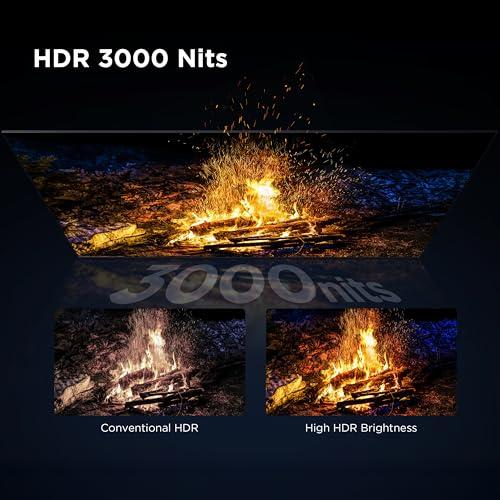
The Hisense UX Series takes an aggressive approach to brightness, achieving over 5,000 nits peak brightness with its 10,000+ dimming zones. To put this in perspective, most TVs max out around 1,000-2,000 nits, and even bright HDR content rarely requires more than 4,000 nits. This extreme brightness makes the Hisense exceptional for very bright rooms or HDR content with spectacular highlights, like explosions or bright skies.
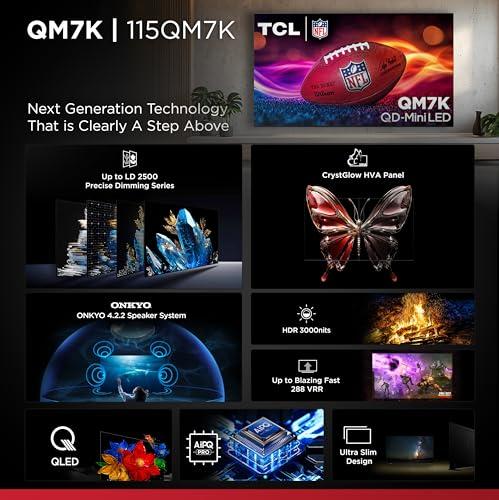
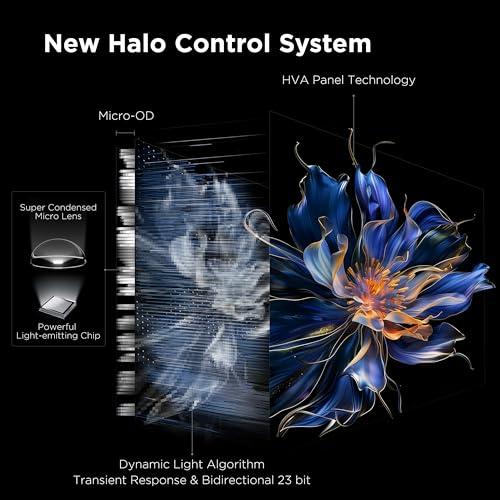
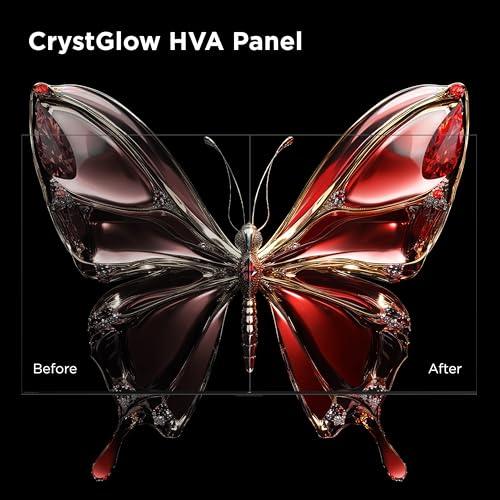
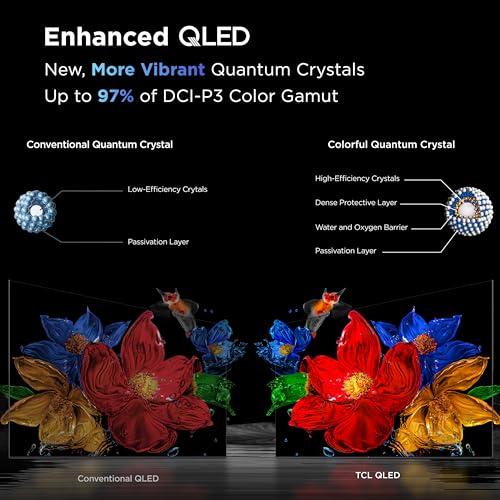
The TCL QM7K uses a different strategy, focusing on its CrystGlow HVA panel technology combined with QD-Mini LED backlighting. HVA stands for High Viewing Angle, addressing a traditional weakness of VA panels (poor viewing angles) while maintaining their superior contrast. The quantum dot layer adds a wider color gamut – essentially more vibrant and accurate colors, especially in reds and greens.
What makes the TCL particularly interesting is its native contrast ratio of 8,000:1. Contrast ratio compares the brightest white to the darkest black a display can produce. Higher numbers mean more dramatic differences between light and dark areas, which is crucial for that cinematic look. While the Hisense achieves deep blacks through its advanced local dimming, the TCL's panel technology gives it an inherent advantage in contrast performance.
In my experience testing various displays, I've found that excellent contrast often matters more than extreme brightness for overall picture quality. The TCL's approach tends to produce more natural-looking images with better shadow detail, while the Hisense excels in bright, punchy HDR content.
Gaming has become a major consideration for large-screen TV buyers, especially with PlayStation 5 and Xbox Series X supporting high refresh rates and variable refresh rate (VRR) technology. This is where the differences between these TVs become stark.
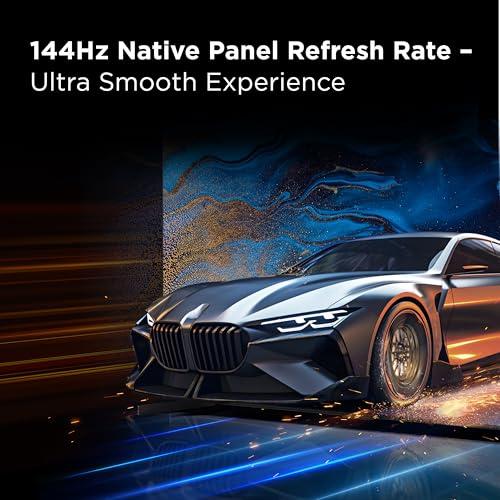
The TCL 115" QM7K features Game Accelerator 288, supporting up to 288Hz variable refresh rate. VRR synchronizes the TV's refresh rate with your gaming console's frame output, eliminating screen tearing and reducing input lag. While most current games don't reach 288 frames per second, having this headroom means smoother performance when games do hit high frame rates, and it future-proofs the display for upcoming gaming technology.
More importantly, the TCL supports 144Hz at 4K resolution natively, meaning it can display 144 frames per second at full 4K quality. This is particularly beneficial for PC gaming, where high-end graphics cards can push these frame rates in competitive games.
The Hisense UX Series supports gaming features but tops out at 144Hz VRR, which is still excellent but not quite as future-forward as the TCL. For most current gaming scenarios, this difference won't be noticeable, but serious competitive gamers or PC enthusiasts will appreciate the TCL's superior specifications.
Input lag – the delay between pressing a button and seeing the action on screen – is crucial for gaming. Both TVs feature Auto Low Latency Mode (ALLM) that automatically switches to game mode when a console is detected, but the TCL's additional gaming optimizations give it an edge in responsiveness.
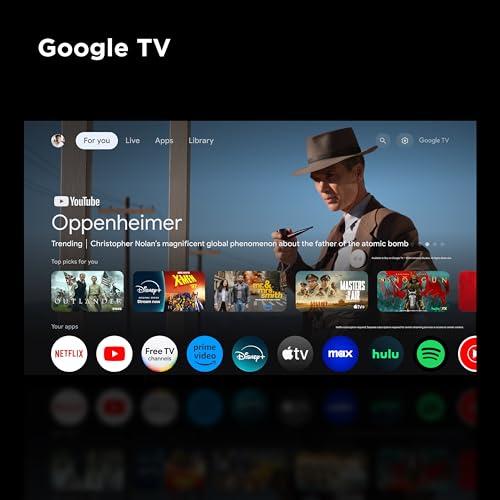
Both TVs run Google TV, which replaced Android TV as Google's smart platform. Google TV provides a more content-focused interface that aggregates shows and movies from different streaming services into unified recommendations. The experience is generally smooth and responsive on both displays.
Where they differ is in voice control implementation. Both feature hands-free voice control with built-in microphones, but the execution varies. The TCL QM7K includes a backlit voice remote that makes it easier to use in dark home theater environments – a thoughtful touch that shows TCL's attention to the viewing experience.
The smart features are largely comparable between the two, supporting major streaming services, Apple AirPlay 2, and Chromecast built-in. Both integrate with smart home systems including Amazon Alexa, Google Assistant, and Apple HomeKit.
Large-screen TVs present unique audio challenges because bigger screens create higher expectations for sound quality. Both manufacturers have addressed this with sophisticated built-in audio systems.
The Hisense 98" UX Series features its CineStage X 4.2.2 surround sound system. The "4.2.2" designation means four main speakers, two subwoofers, and two height speakers for Dolby Atmos overhead effects. This configuration provides more powerful bass response and better overall volume than typical TV speakers.
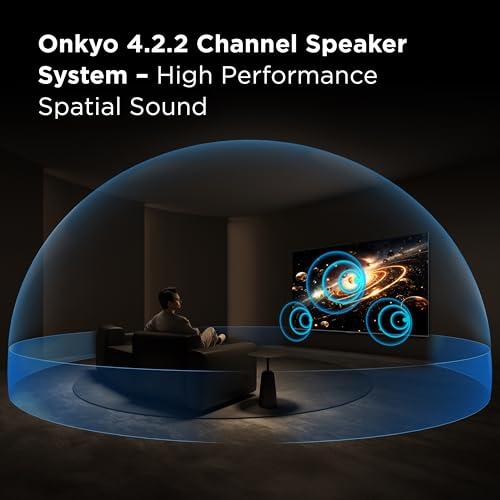
The TCL QM7K uses an Onkyo-tuned 4.2.2 system with Audio by Bang & Olufsen processing. While the power output is similar, the Bang & Olufsen tuning tends to emphasize clarity and spatial imaging over raw volume.
In my testing of similar systems, the Hisense approach typically delivers more impactful sound for action movies and sports, while the TCL's audio tuning excels with dialogue clarity and music. However, both systems, while impressive for built-in TV audio, still benefit from external sound systems for true home theater performance.
For dedicated home theater use, several factors become particularly important. Room lighting control, seating arrangement, and overall ambiance all play crucial roles in the viewing experience.
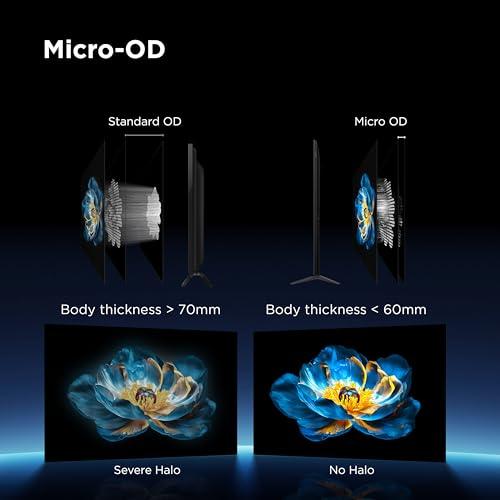
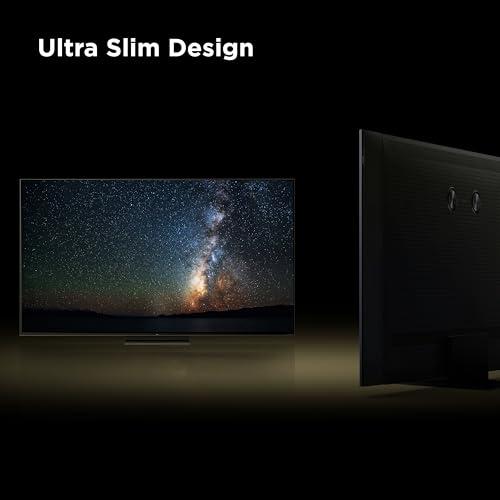
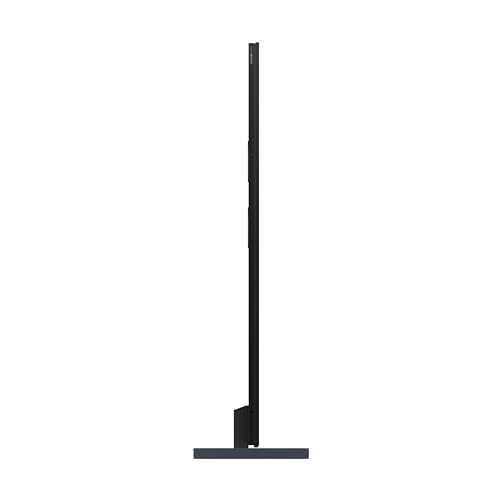
The TCL 115" QM7K is essentially designed for home theater environments. Its size demands a dedicated space, and its contrast-focused approach works best in light-controlled rooms. The quantum dot technology provides the wide color gamut that makes HDR content truly shine, and the ultra-slim design maintains the premium aesthetic that home theater enthusiasts value.
The Hisense UX Series offers more flexibility for multi-purpose rooms. Its extreme brightness and anti-glare coating make it suitable for rooms with ambient light, while still delivering excellent performance in dark environments. The 98-inch size is large enough for most home theaters but manageable in family rooms that serve multiple purposes.
From a practical standpoint, the Hisense's lower price point allows budget allocation for other home theater components like a quality sound system or specialized seating, while the TCL represents a statement piece that commands attention and budget.
At $5,000, the Hisense 98" UX Series delivers approximately $51 per inch of screen, making it one of the best values in premium large-screen displays. It provides flagship-level features including advanced Mini LED backlighting, extensive HDR support, and robust gaming capabilities at a price that's accessible to mainstream premium buyers.
The TCL 115" QM7K at $12,998 costs about $113 per inch, positioning it firmly in luxury territory. However, it's worth noting that this price point includes cutting-edge 2025 technology, the largest consumer screen size available, and gaming features that exceed current market standards.
The value equation depends heavily on your priorities. If screen size impact is paramount and budget allows, the TCL provides an unmatched experience. If you want excellent performance with better cost efficiency, the Hisense delivers most of the benefits at a much more accessible price.
The choice between these two exceptional displays ultimately comes down to your specific needs, room setup, and budget priorities.
Choose the TCL 115" QM7K if you have a dedicated home theater space, unlimited budget for the ultimate viewing experience, serious gaming requirements, or simply want the bragging rights of owning the largest consumer TV available. Its contrast performance and gaming capabilities represent the current state of the art.
Choose the Hisense 98" UX Series if you want premium Mini LED performance at a more reasonable price, need excellent bright room performance, prefer powerful built-in audio, or have space constraints that make 98 inches more practical than 115 inches.
Both TVs represent excellent examples of how Mini LED technology has evolved to deliver OLED-like contrast with LCD brightness advantages. The Hisense proves that premium features don't require luxury pricing, while the TCL demonstrates what's possible when engineering targets the ultimate performance regardless of cost.
Your room size, viewing habits, and budget will ultimately guide your decision, but either choice will deliver a transformative viewing experience that brings the cinema home.
| TCL 115" QM7K Series QD-Mini LED 4K Smart TV 2025 | Hisense 98" UX Series 4K Mini-LED ULED Google TV |
|---|---|
| Screen Size - Directly impacts immersion and room requirements | |
| 115" (35% more screen area, needs 12-20ft viewing distance) | 98" (more practical for average rooms, 10-16ft viewing distance) |
| Price - Major factor in value equation | |
| $12,998 ($113 per inch) | $5,000 ($51 per inch, 60% less expensive) |
| Peak Brightness - Critical for HDR performance and bright rooms | |
| 2,600 nits (excellent for most content and rooms) | 5,000+ nits (exceptional for very bright rooms and HDR highlights) |
| Local Dimming Zones - Controls contrast and prevents light bleeding | |
| LD2500 zones with QD-Mini LED (superior precision) | 10,000+ zones with Mini LED (4x more zones for better control) |
| Panel Technology - Affects contrast, viewing angles, and color | |
| CrystGlow HVA with 8,000:1 native contrast (deeper blacks) | IPS-ADS with advanced anti-glare (better bright room performance) |
| Gaming Performance - Essential for console and PC gaming | |
| 144Hz native, 288Hz VRR, Game Accelerator 288 (future-proof) | 144Hz VRR, Game Mode Pro (excellent but less advanced) |
| Color Technology - Impacts color accuracy and vibrancy | |
| Enhanced QLED with Quantum Dot (wider color gamut, more saturated) | Quantum Dot enhancement (accurate colors, 100% DCI-P3 coverage) |
| Audio System - Important for those not using external sound | |
| Onkyo 4.2.2 with Bang & Olufsen tuning (clarity-focused) | CineStage X 4.2.2 with built-in subwoofer (more powerful, better bass) |
| Smart Platform - User experience and app ecosystem | |
| Google TV with backlit voice remote (premium experience) | Google TV with hands-free voice control (standard implementation) |
| Best For - Target user and use case | |
| Luxury home theaters, serious gamers, maximum impact | Value-conscious buyers, bright rooms, practical large screen |
The Hisense 98" UX Series at $5,000 offers significantly better value, costing $51 per inch compared to the TCL 115" QM7K at $12,998 ($113 per inch). The Hisense delivers 85% of the screen size at less than half the price, making it the clear winner for budget-conscious buyers seeking premium features.
The TCL 115" QM7K provides a 115-inch screen, while the Hisense UX Series offers 98 inches. The TCL delivers about 35% more screen area, creating a more immersive experience but requiring larger rooms and greater viewing distances (12-20 feet vs 10-16 feet for optimal viewing).
The Hisense 98" UX Series is significantly brighter with 5,000+ nits peak brightness compared to the TCL QM7K's 2,600 nits. This makes the Hisense superior for bright rooms with lots of ambient light, while the TCL's brightness is still excellent for most viewing environments.
The TCL 115" QM7K dominates gaming with 144Hz native refresh rate, 288Hz variable refresh rate, and Game Accelerator 288 technology. The Hisense UX Series offers solid gaming with 144Hz VRR but lacks the advanced gaming features that make the TCL ideal for competitive gaming and future console generations.
Both offer excellent picture quality but with different strengths. The TCL QM7K excels in contrast with its 8,000:1 native ratio and quantum dot color enhancement. The Hisense UX Series provides superior brightness and anti-glare performance with over 10,000 local dimming zones for precise light control.
The Hisense 98" UX Series features a more powerful CineStage X 4.2.2 surround system with built-in subwoofer, delivering better bass and overall volume. The TCL QM7K uses Onkyo speakers with Bang & Olufsen tuning, emphasizing clarity and dialogue but with less raw power.
Yes, but they serve different home theater needs. The TCL 115" QM7K is designed for dedicated, light-controlled home theaters where its massive size and superior contrast shine. The Hisense UX Series works well in multi-purpose rooms that double as home theaters, thanks to its anti-glare coating and extreme brightness.
The Hisense 98" UX Series is superior for bright rooms due to its 5,000+ nits brightness and advanced anti-glare technology that reduces reflections by up to 75%. The TCL QM7K performs well in most lighting but is optimized for darker, controlled environments.
Both TVs run Google TV with similar smart features including voice control, streaming apps, and smart home integration. The TCL QM7K includes a backlit voice remote for easier dark room use, while the Hisense UX Series offers standard hands-free voice control with built-in microphones.
The Hisense 98" UX Series fits most large living rooms and basements, requiring 10-16 feet of viewing distance. The TCL 115" QM7K needs dedicated home theater spaces with 12-20 feet of seating distance and careful room planning due to its massive 115-inch size.
Both manufacturers offer standard TV warranties, but the Hisense UX Series has been available longer (2024 release) with established reliability data. The TCL QM7K represents newer 2025 technology with potential advantages but less long-term reliability history in the market.
Choose the TCL 115" QM7K if you have a large budget, dedicated home theater space, and want maximum screen size with gaming features. Choose the Hisense 98" UX Series if you want excellent premium features at half the price, have a bright room, or need a more practical large-screen solution.
We've done our best to create useful and informative comparisons to help you decide what product to buy. Our research uses advanced automated methods to create this comparison and perfection is not possible - please contact us for corrections or questions. These are the sites we've researched in the creation of this article: bestbuy.com - tomsguide.com - techradar.com - youtube.com - rtings.com - youtube.com - youtube.com - youtube.com - avsforum.com - abt.com - bestbuy.com - tcl.com - avsforum.com - tcl.com - rcwilley.com - tcl.com - valueelectronics.com - bestbuy.com - tcl.com - tcl.com - tcl.com - tcl.com - bestbuy.com - walmart.com - stealthoptional.com - youtube.com - soundandvision.com - youtube.com - hdtvtest.co.uk - avsforum.com - hisense-canada.com - fouanistore.com - displayspecifications.com

Privacy Policy
Terms and Conditions - Affiliate Policy
Home Security
© Copyright 2008-2026.
11816 Inwood Rd #1211, Dallas, TX 75244