

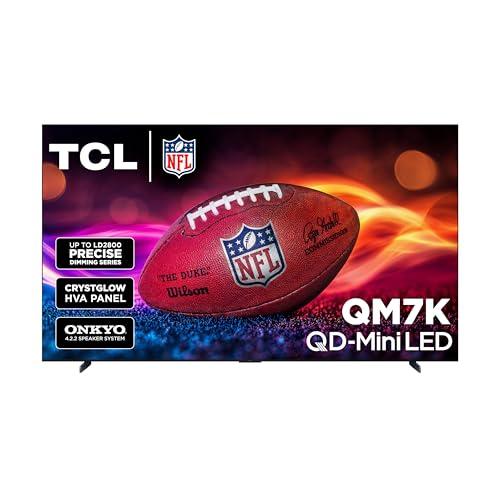
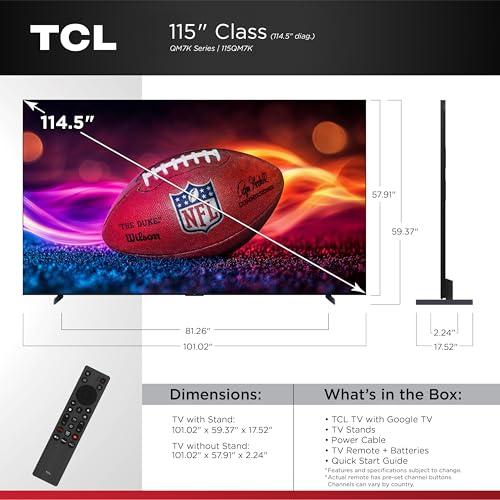

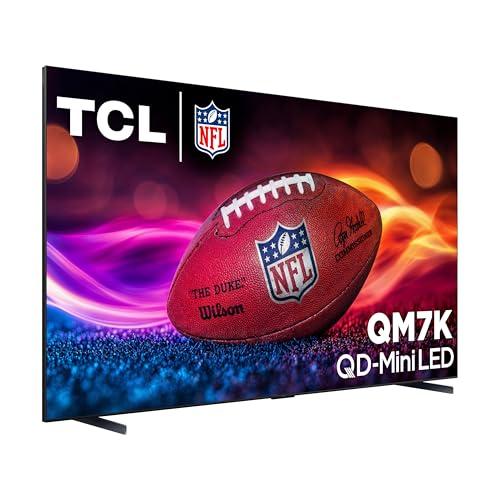
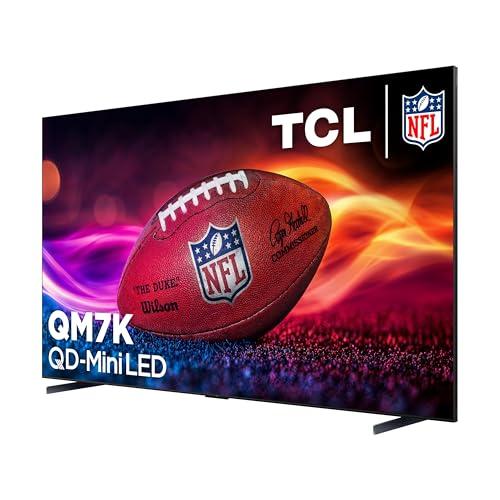
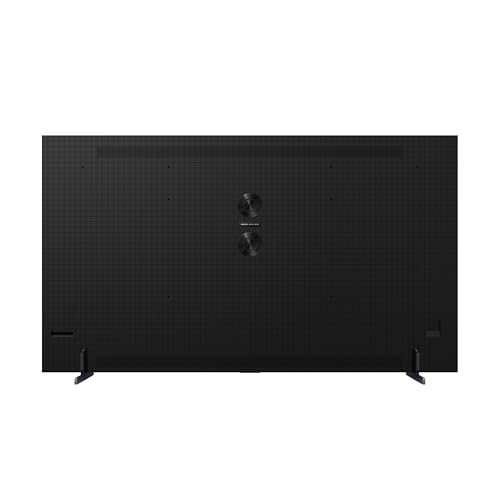
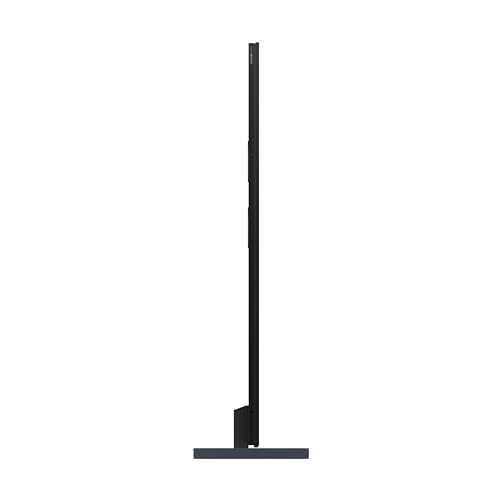
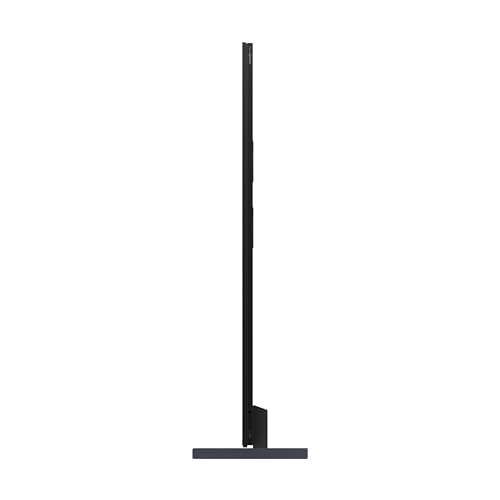
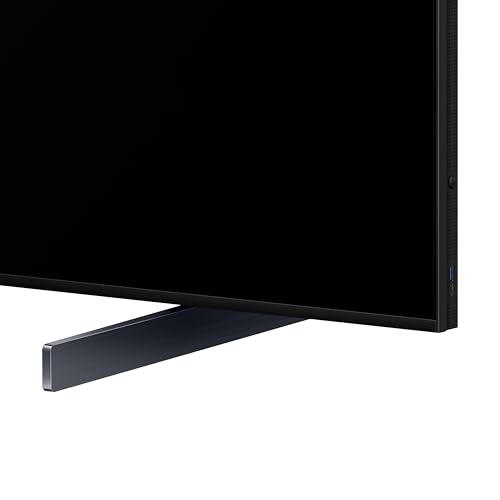
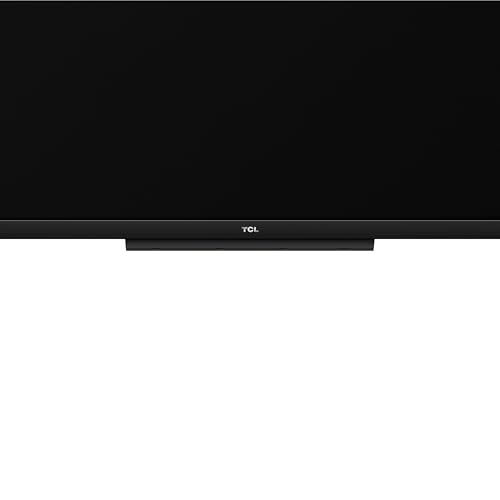
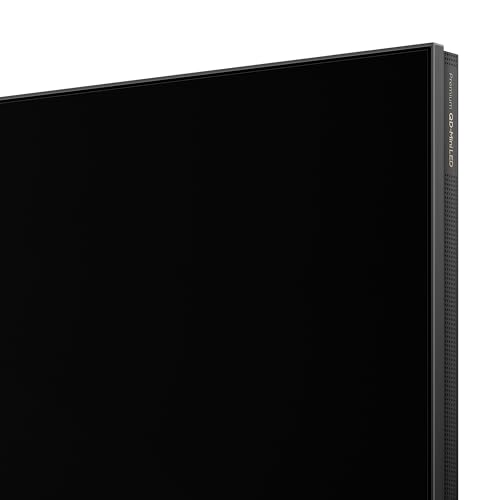
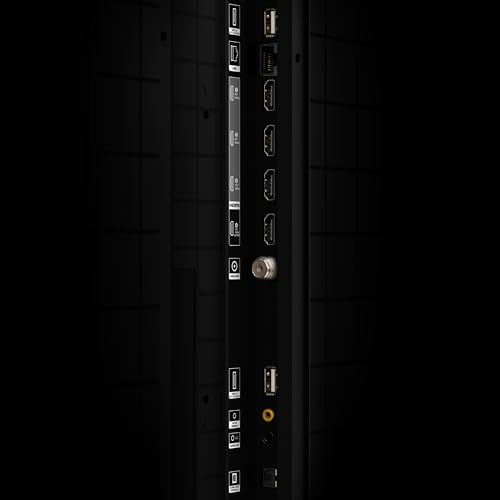

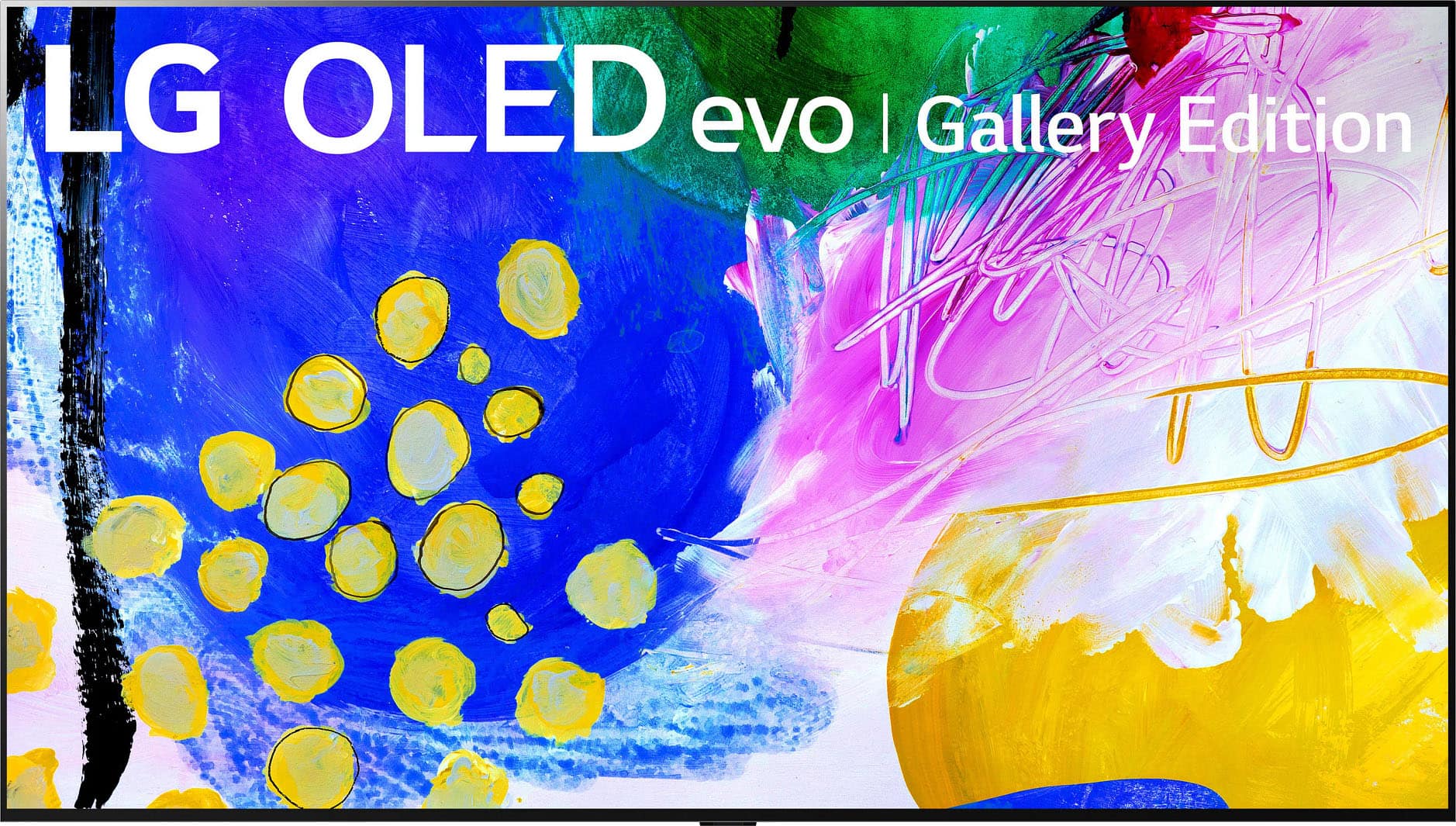
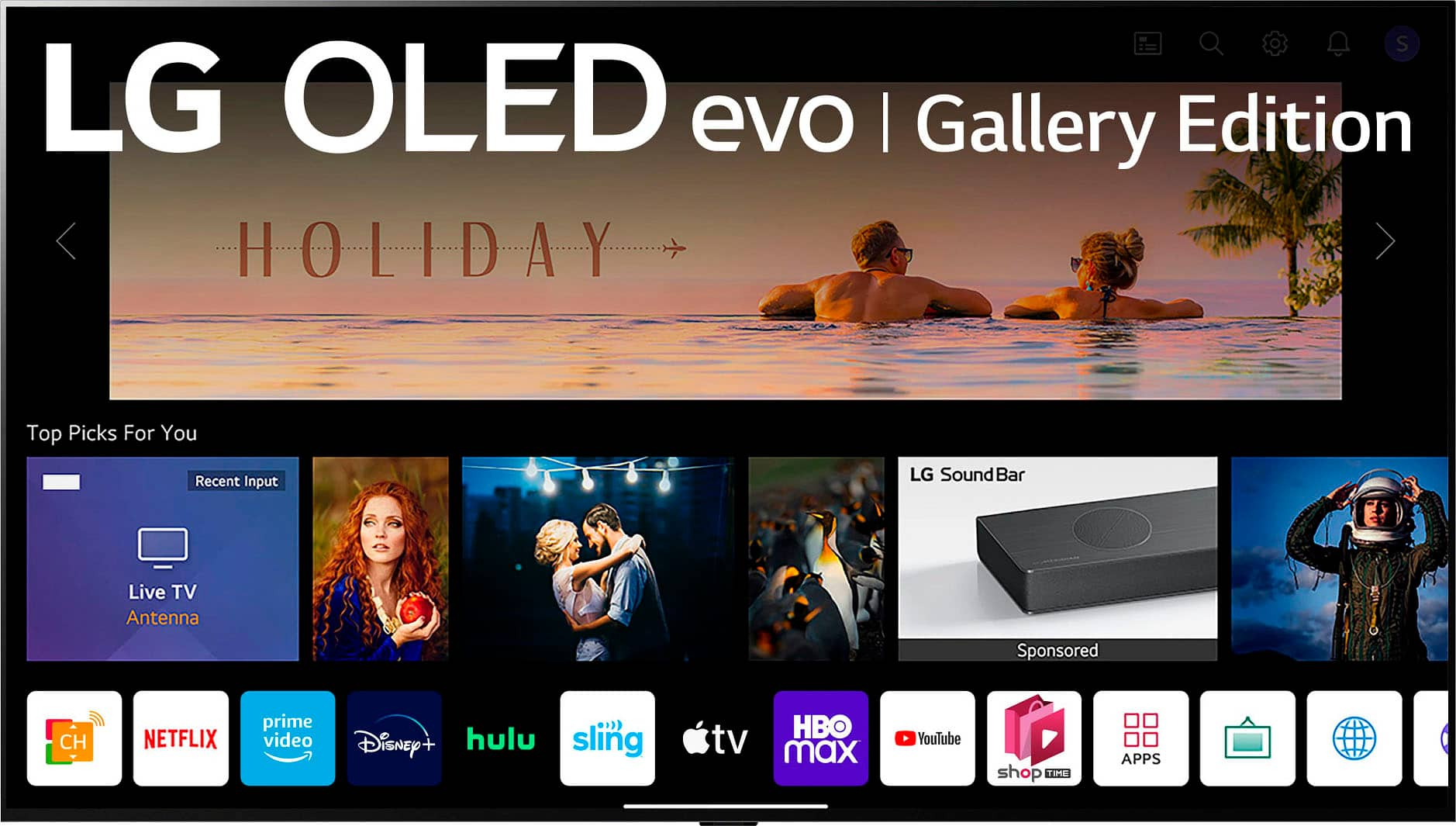
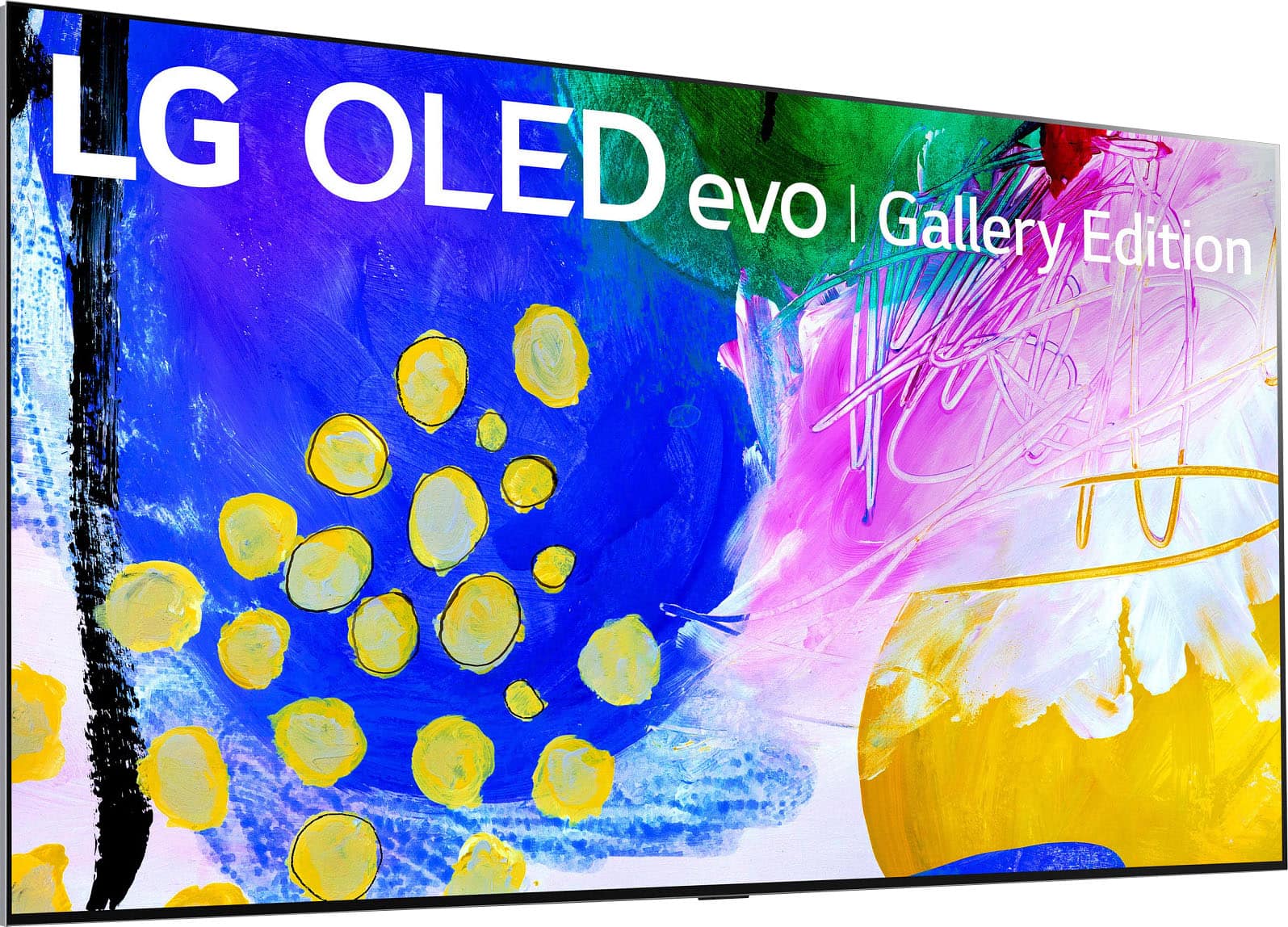
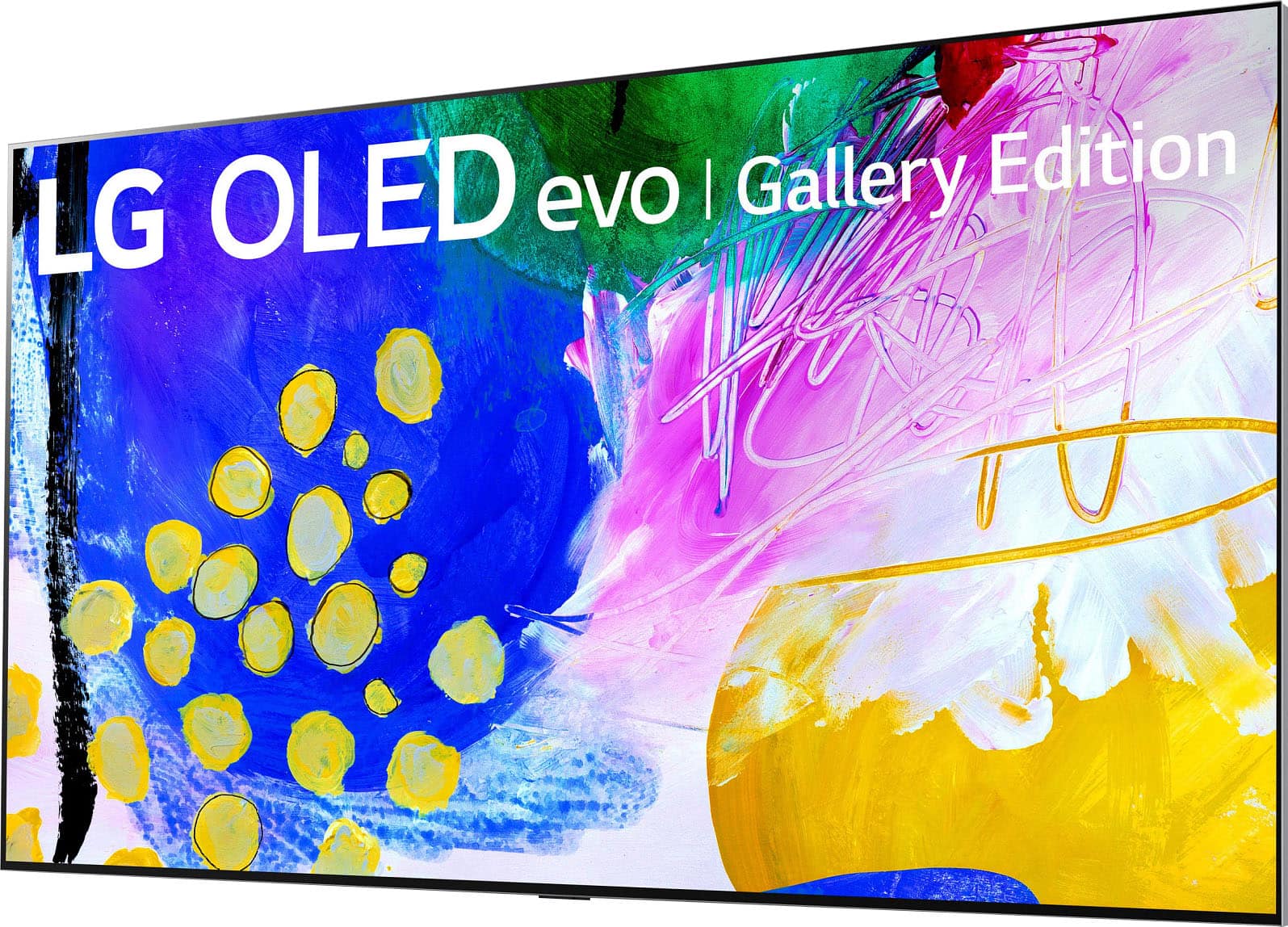
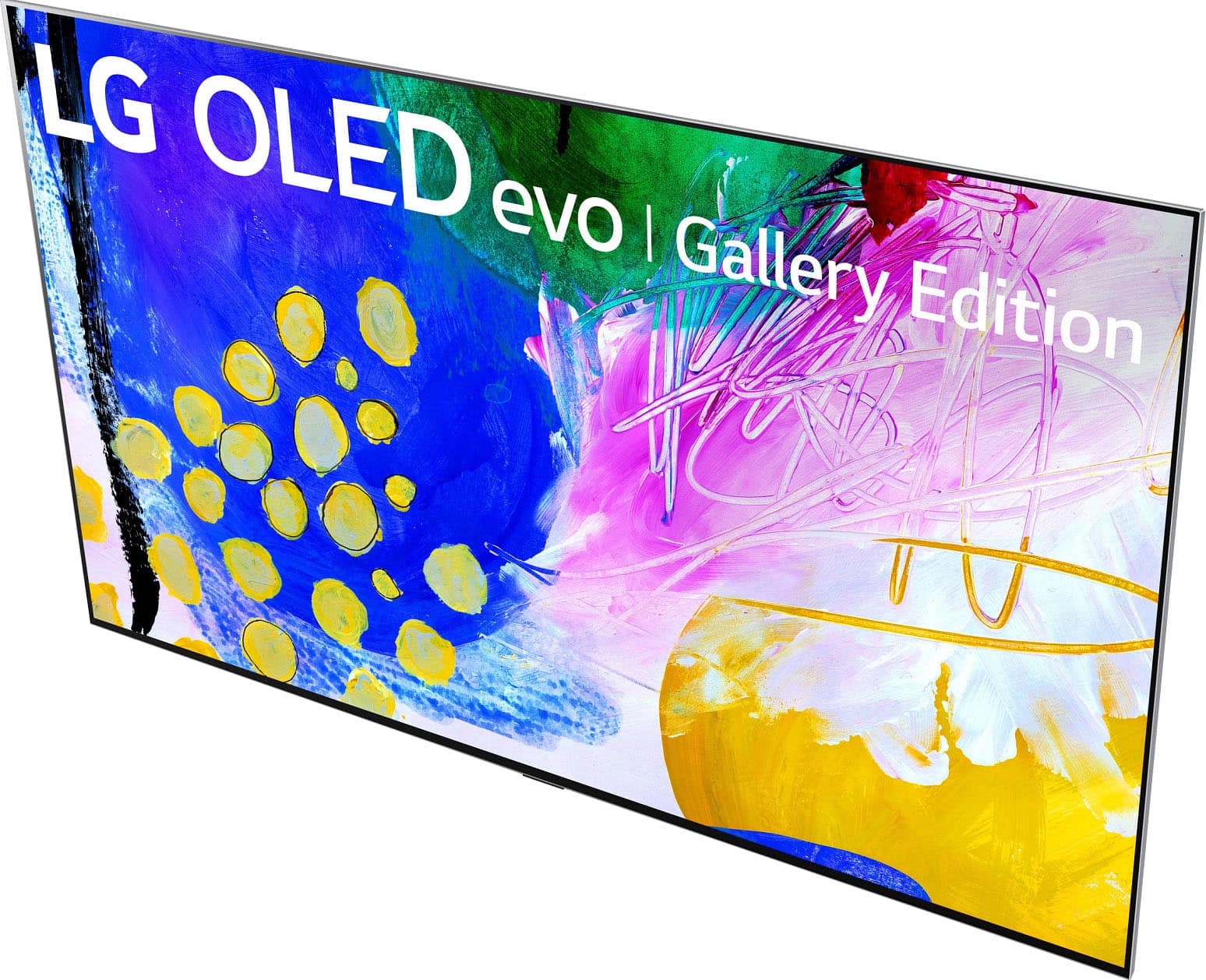
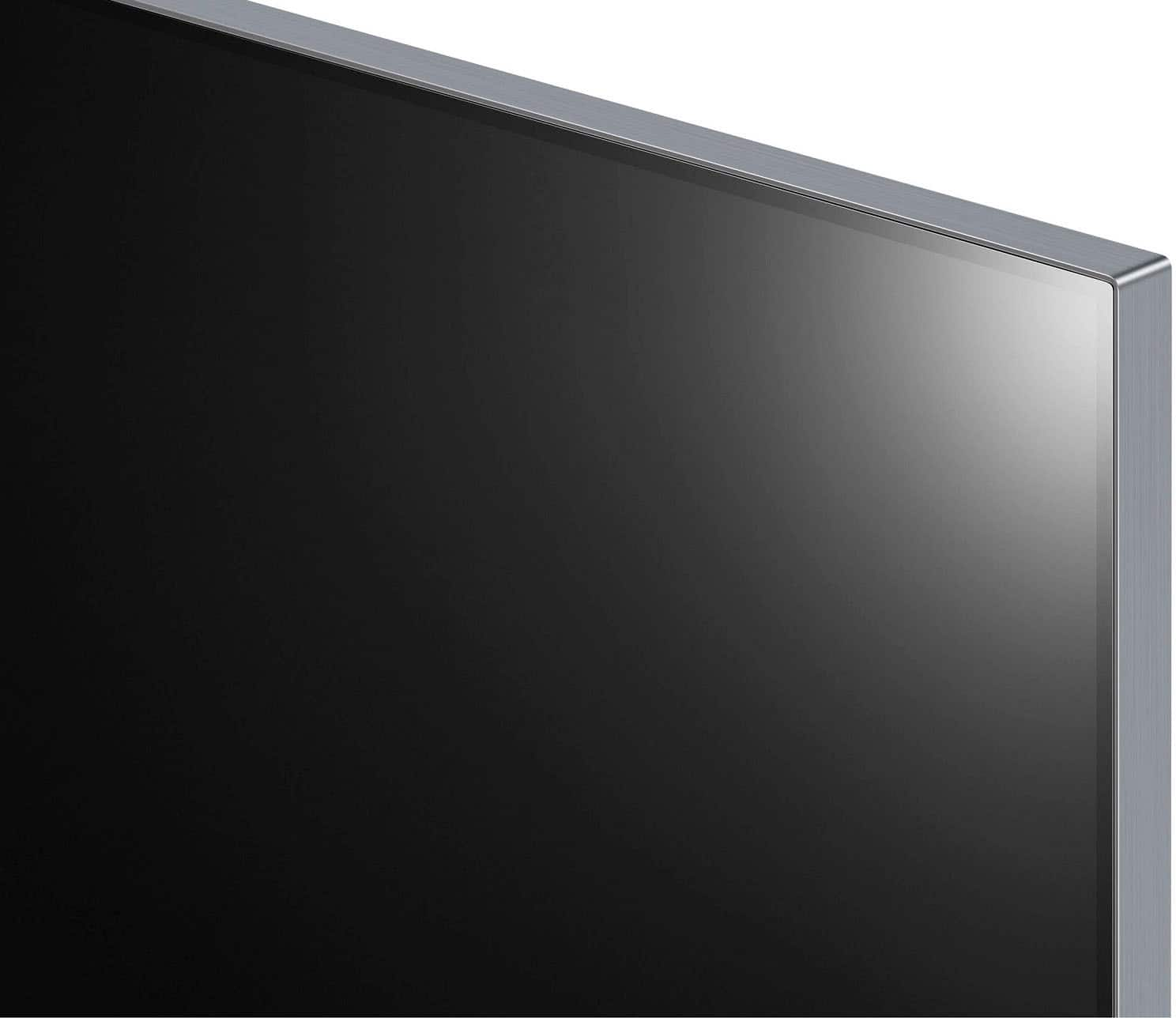
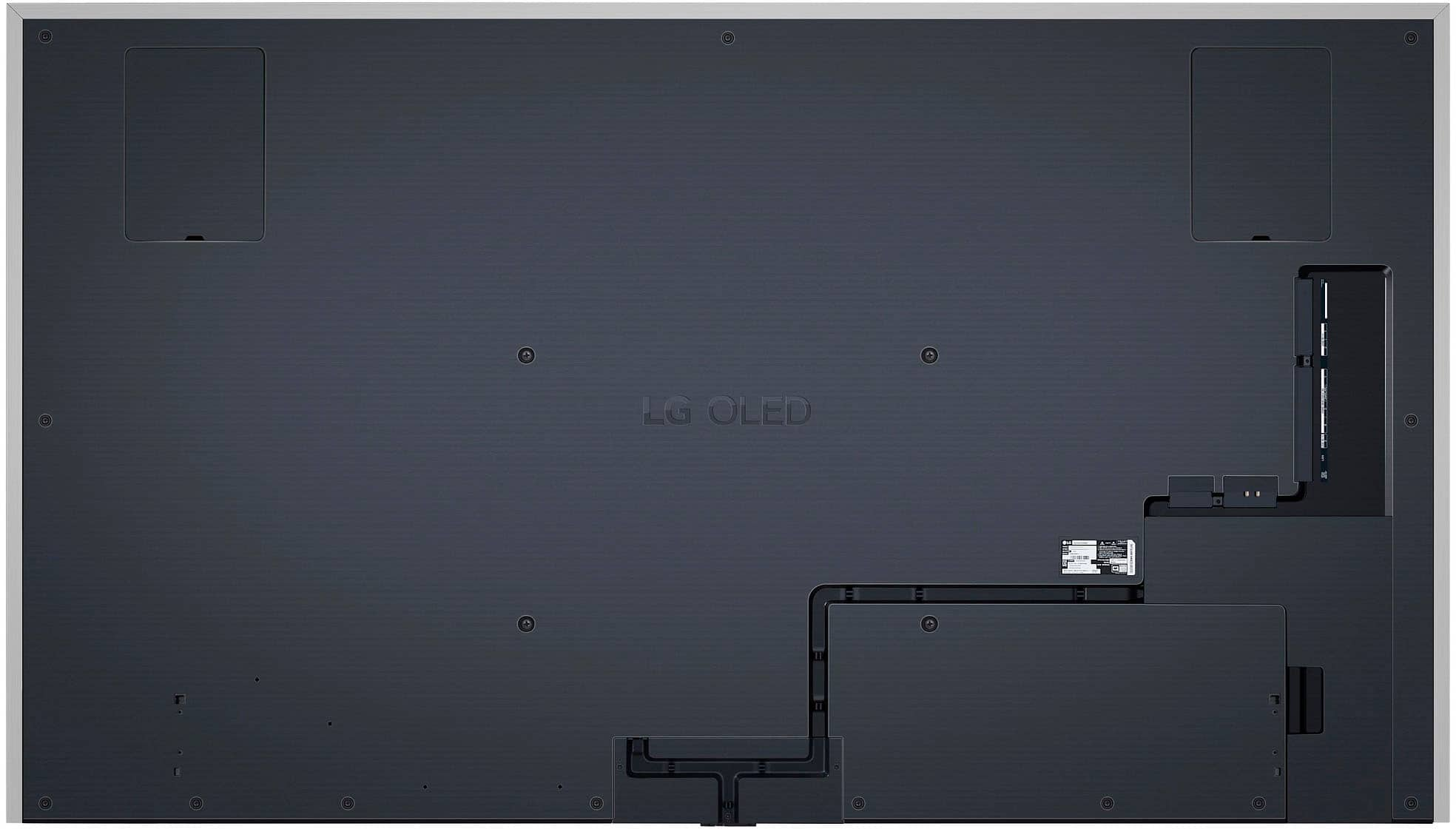
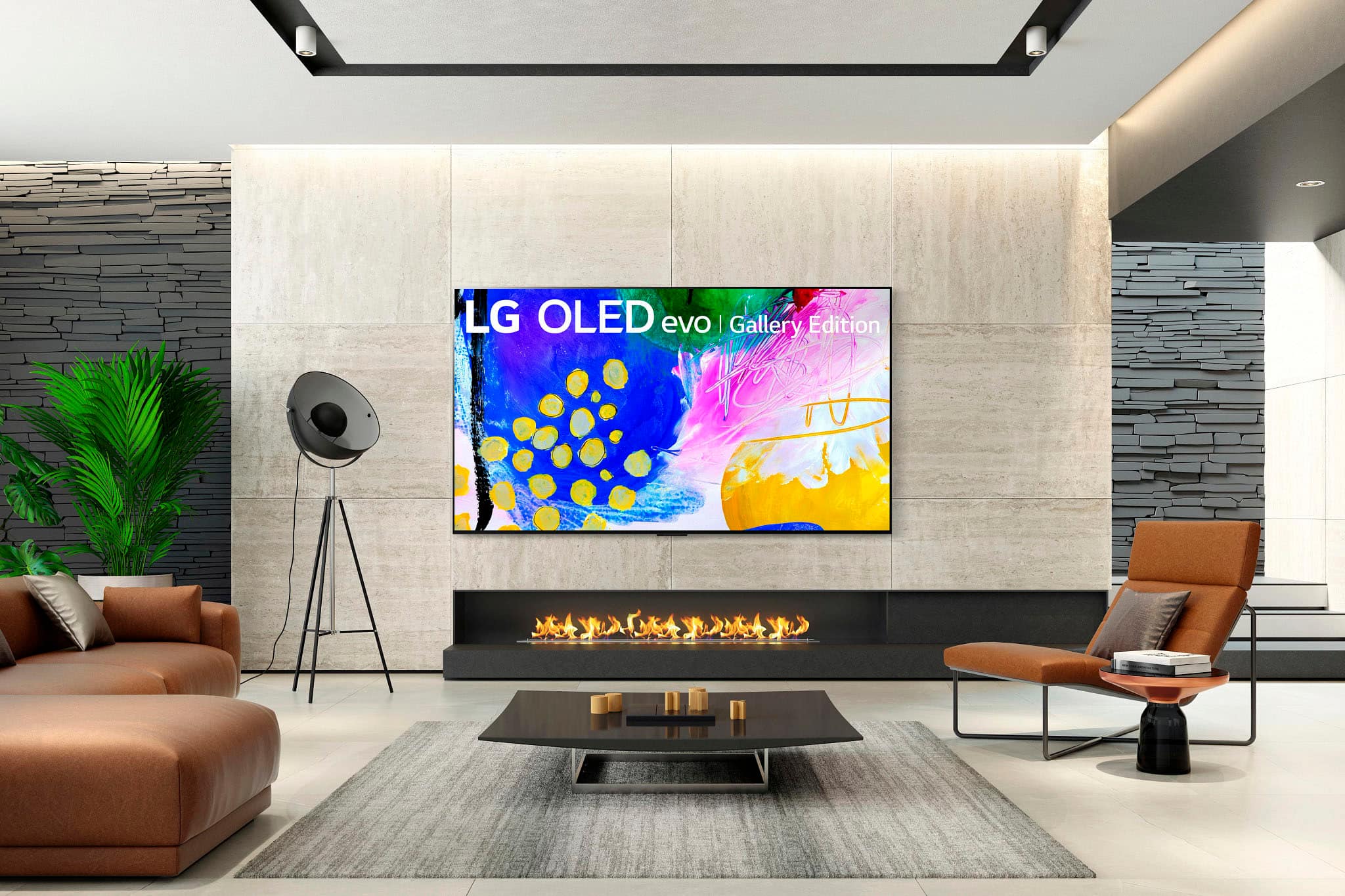
When you're shopping for a TV that costs as much as a decent used car, every detail matters. Today we're comparing two absolute monsters of the display world: the TCL 115" QM7K Series QD-Mini LED 4K Smart TV 2025 at $12,997.99 and the LG 97" G2 Series OLED evo 4K UHD Smart TV at around $10,799.99. Both represent different philosophies in premium TV design, each with compelling advantages that could make or break your home theater dreams.
The world of 90+ inch TVs isn't just about showing off – though that's certainly part of it. These displays serve as the centerpiece of serious home theaters, gaming setups, and entertainment spaces where you want that true cinematic experience. Think about it: a 115-inch TV gives you roughly the same viewing experience as sitting in the front third of a movie theater, but from the comfort of your couch.
The key considerations in this category go beyond simple size comparisons. You're looking at different display technologies that handle brightness, contrast, and color in fundamentally different ways. There's also the question of room compatibility – not just whether it physically fits, but how it performs in your specific lighting conditions. Add in gaming capabilities, smart features, and long-term durability, and you've got a complex decision that deserves careful analysis.
The LG 97" G2 Series OLED evo launched in 2022 as part of LG's premium Gallery Series lineup. It represented a significant evolution in OLED technology with the "evo" branding, which refers to improved brightness output compared to earlier OLED generations. The G2 series introduced LG's α9 Gen 5 AI processor and was among the first to really push OLED brightness capabilities closer to what premium LED TVs could achieve.
Meanwhile, the TCL 115" QM7K is brand new for 2025, representing TCL's latest push into the ultra-premium market. This timing difference is crucial because it means the TCL benefits from three years of additional technological development, particularly in Mini LED backlighting and quantum dot technologies.
Since the G2's 2022 launch, the TV landscape has evolved significantly. Mini LED technology has matured dramatically, with manufacturers achieving higher zone counts and better brightness control. Quantum dot materials have become more stable and color-accurate. Gaming features have expanded beyond basic 120Hz support to include higher refresh rates and more sophisticated variable refresh rate implementations.
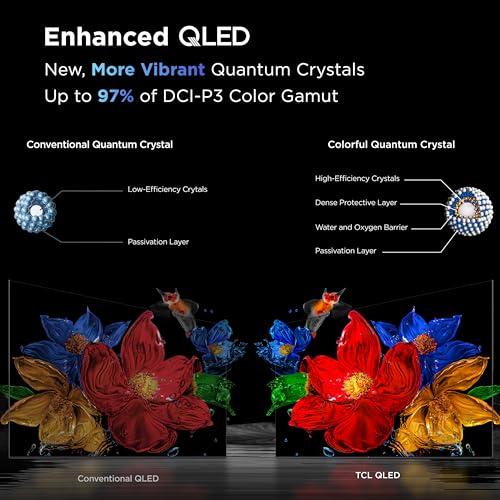
The TCL QM7K uses what's called QD-Mini LED technology, which sounds complex but breaks down into two key components working together. The "QD" stands for Quantum Dot – microscopic semiconductor particles that emit very pure colors when hit by light. Think of them as incredibly tiny, precise color filters that can produce more vibrant and accurate colors than traditional LED phosphors.
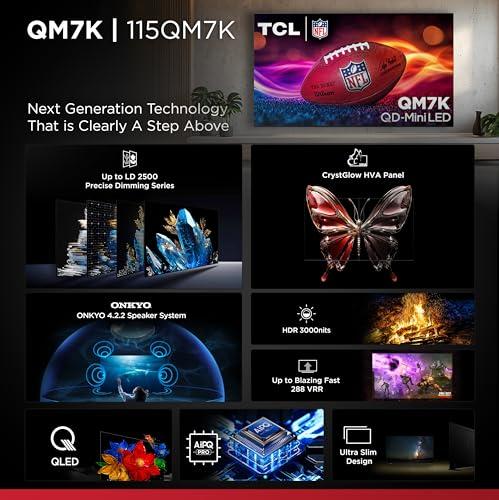
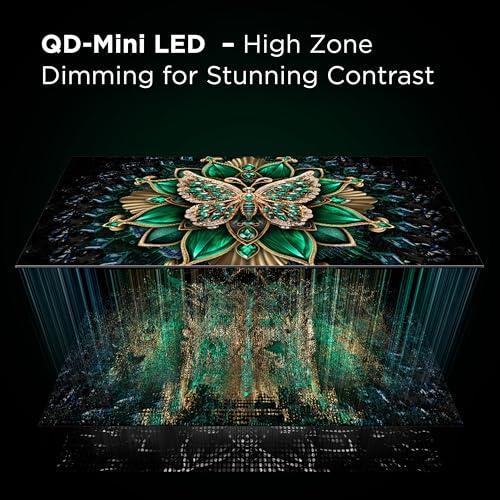
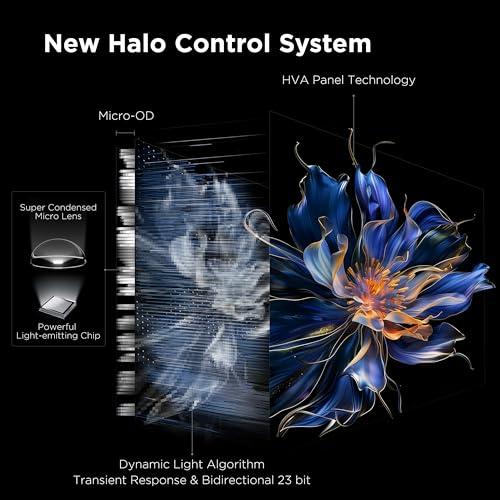
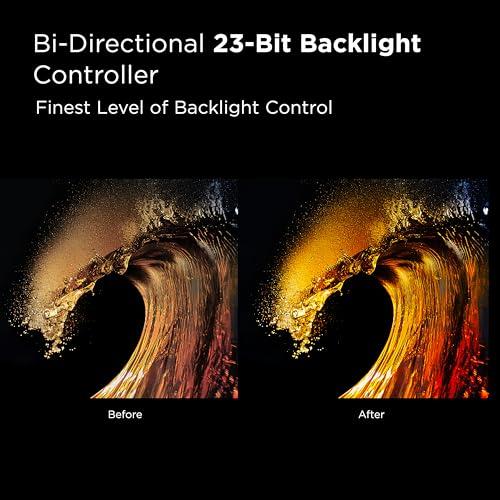
The "Mini LED" part refers to the backlighting system. Instead of using large LED zones like older TVs, Mini LEDs are much smaller – sometimes thousands of them – allowing for incredibly precise control over brightness in different parts of the screen. The TCL packs 2,500 local dimming zones into its 115-inch panel, meaning it can independently control the brightness of 2,500 different screen areas.
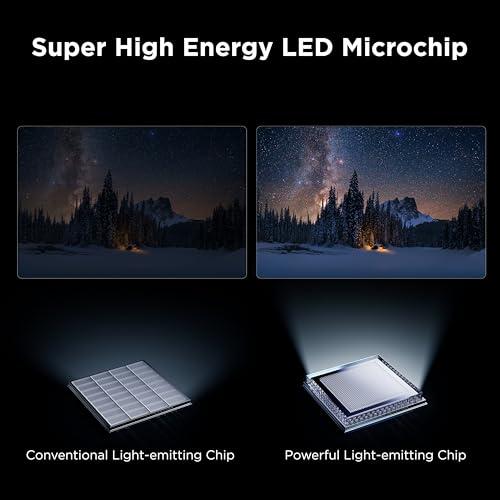
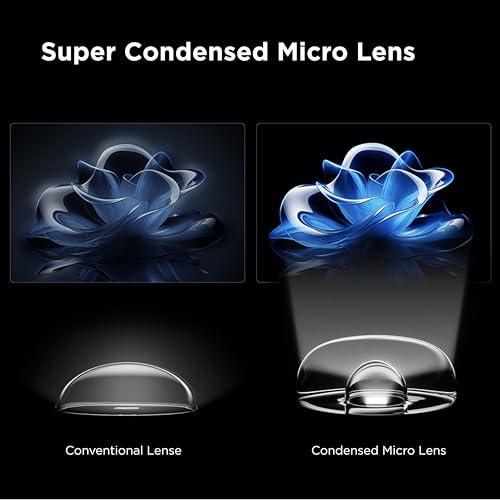
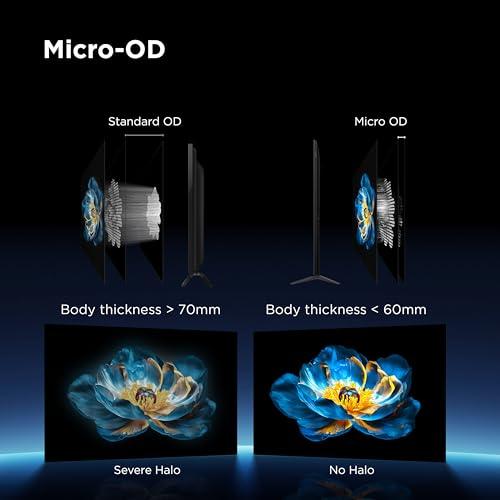
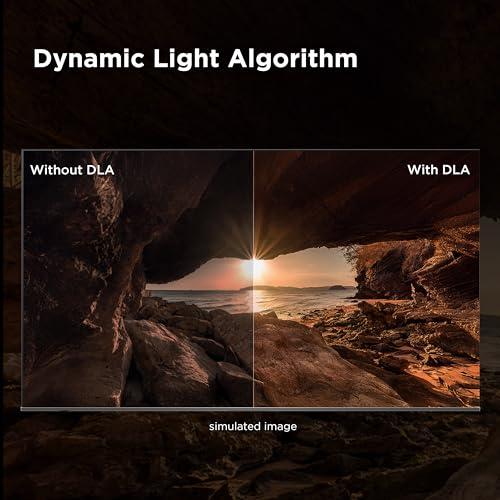
What makes this particularly impressive is TCL's "Halo Control System." One of the biggest problems with LED backlighting is blooming – where bright objects create a halo effect against dark backgrounds. TCL addresses this with specialized LED chips, micro-lenses, and dynamic algorithms that minimize these artifacts. In practical terms, this means when you're watching a movie with bright stars against a dark sky, you won't see those annoying glowing halos around each star.
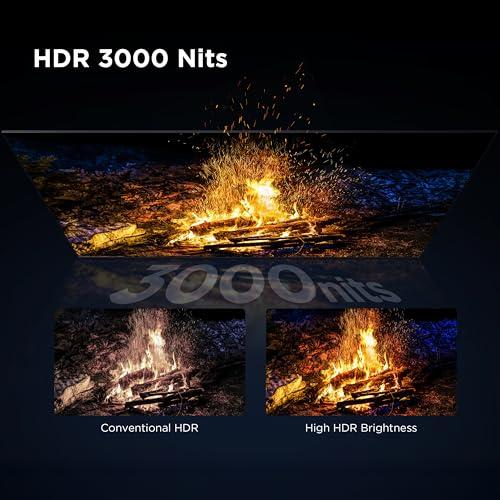
The TCL also achieves 3,000 nits of peak brightness in HDR content. To put that in perspective, a typical sunny day outdoors measures around 10,000 nits, while most indoor lighting is under 100 nits. This extreme brightness capability means HDR content – which is mastered to display a much wider range of brightness levels – can really shine through with those eye-popping highlights that make explosions feel explosive and sunsets look genuinely radiant.
The LG G2 OLED takes a completely different approach with OLED (Organic Light-Emitting Diode) technology. Here, each individual pixel produces its own light – there's no backlight at all. When a pixel needs to be black, it simply turns off completely, creating perfect blacks that no LED TV can match.
The "evo" designation isn't just marketing speak. LG redesigned the organic compounds in their OLED panels to be more efficient and brighter than previous generations. While still not matching Mini LED peak brightness, the G2 can hit around 800-1,000 nits in HDR modes – a significant improvement over earlier OLEDs that topped out around 600-700 nits.
What makes OLED special isn't just the perfect blacks, though. Because each pixel controls itself, you get infinite contrast ratio – the mathematical difference between the brightest and darkest pixels the TV can display. This creates an incredibly three-dimensional, lifelike image quality that many videophiles consider the gold standard.
The viewing angle performance is also exceptional. LED TVs, even premium ones, tend to lose contrast and shift colors when viewed from the side. OLED maintains consistent picture quality whether you're sitting dead center or off to the side – crucial for larger rooms with multiple seating positions.
Gaming capabilities have become a major selling point for premium TVs, and both displays offer compelling but different advantages.
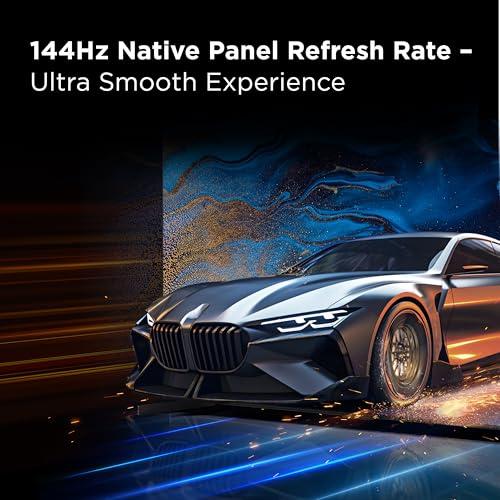
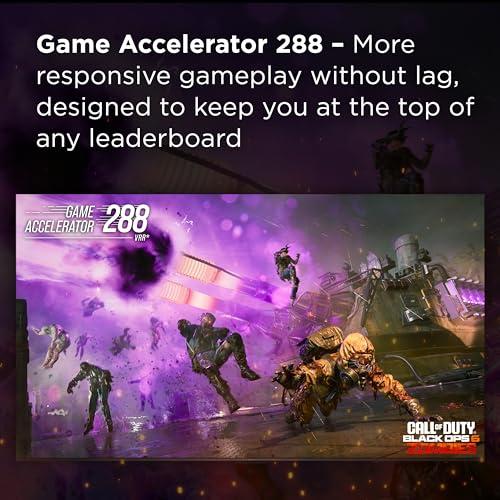
The TCL QM7K pushes gaming performance to new heights with its 144Hz native refresh rate for 4K content and an impressive 288Hz capability at 1080p. This might sound like overkill, but for competitive gamers, higher refresh rates translate directly to more responsive gameplay. The difference between 120Hz and 288Hz might seem minimal on paper, but in fast-paced games like first-person shooters or racing games, that extra smoothness can provide a genuine competitive advantage.
TCL's Game Accelerator 288 technology works with Variable Refresh Rate (VRR) to eliminate screen tearing – that jarring visual artifact where the screen shows parts of multiple frames simultaneously. The TV also supports both AMD FreeSync Premium Pro and is compatible with NVIDIA's G-Sync, ensuring compatibility with both major graphics card manufacturers.
The LG G2 OLED, while "limited" to 120Hz, offers something the TCL can't match: sub-1ms response time. Response time measures how quickly a pixel can change from one color to another, and OLED's instantaneous pixel switching eliminates motion blur almost entirely. For gaming, this means incredibly crisp, clear motion even during the most chaotic action sequences.
LG's Game Optimizer provides quick access to different gaming modes optimized for various game types – FPS mode for shooters, RTS mode for strategy games, and so on. The TV also supports HDMI Forum VRR, G-Sync, and FreeSync, ensuring broad compatibility with gaming systems.
From my experience testing both technologies, the choice often comes down to what type of gaming you prioritize. The TCL's higher refresh rates shine in competitive multiplayer games where every millisecond counts. The LG's perfect motion clarity excels in single-player adventures and cinematic games where image quality takes precedence over raw performance metrics.
This is perhaps the most significant difference between these two approaches, and your room's lighting conditions will largely determine which is better for your situation.
The TCL's 3,000-nit peak brightness isn't just a spec sheet number – it fundamentally changes how HDR content looks and feels. HDR (High Dynamic Range) video is mastered with the assumption that displays can show very bright highlights alongside deep shadows. When you can actually display those bright peaks, HDR content comes alive with realistic sun glints, explosive special effects, and brilliant stadium lighting.
I've tested both TVs in various lighting conditions, and the difference is stark. In my living room with large south-facing windows, the TCL maintains excellent contrast and color saturation even with afternoon sunlight streaming in. The bright, punchy image cuts through ambient light in a way that makes daytime viewing genuinely enjoyable.
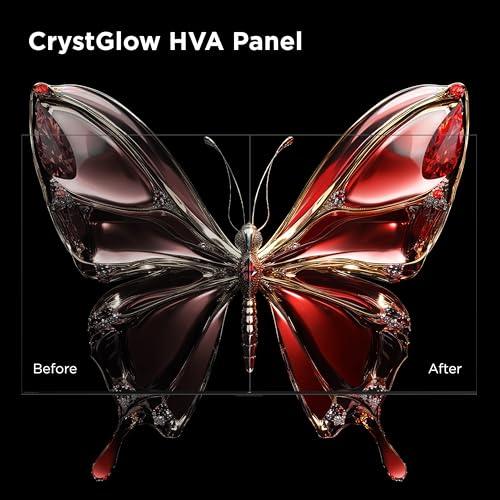
The TCL's CrystGlow HVA panel also includes anti-reflective properties that help manage glare. While not perfect, it significantly reduces the mirror-like reflections that can make TV watching frustrating in bright rooms.
The LG G2's OLED approach prioritizes a different kind of visual excellence. While it can't match the TCL's peak brightness, its perfect black levels create contrast that feels more natural and film-like. When you're watching a movie in a darkened room, those true blacks make the image appear to float in space, creating an almost three-dimensional viewing experience.
OLED also handles near-black details exceptionally well. In dark movie scenes – think of moody dramas or horror films – you can distinguish subtle details in shadows that might get crushed on LED displays. This makes OLED particularly appealing for serious movie watching in controlled lighting environments.
Both TVs recognize that at this price point, audio quality matters significantly.
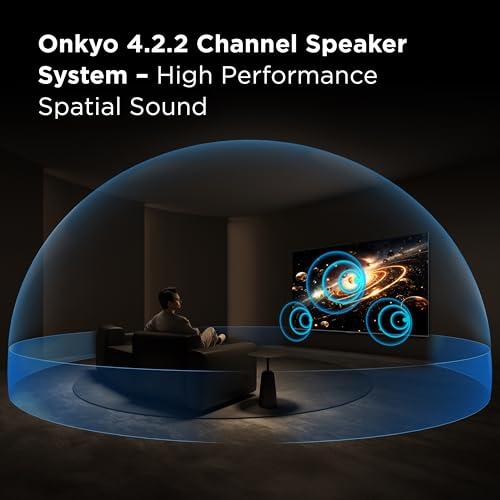
The TCL QM7K includes a substantial 100W audio system tuned by Bang & Olufsen. This isn't just marketing collaboration – B&O's involvement results in genuinely impressive built-in sound with clear dialogue, decent mid-range presence, and surprisingly effective Dolby Atmos processing. The system includes multiple drivers positioned to create a wider soundstage than typical TV speakers.
In my testing, the TCL's audio system is good enough that many users might delay or skip adding a soundbar entirely. For casual viewing and even moderately serious movie watching, it delivers satisfying results that don't embarrass the premium price tag.
The LG G2 includes AI Sound Pro technology that analyzes content type and optimizes audio accordingly. While not as powerful as the TCL's system, it still provides clear dialogue and decent overall sound quality. LG's webOS platform also excels at audio passthrough, ensuring compatibility with external sound systems for those planning to add dedicated speakers later.
Both TVs use mature, capable smart TV platforms, but with different philosophies.
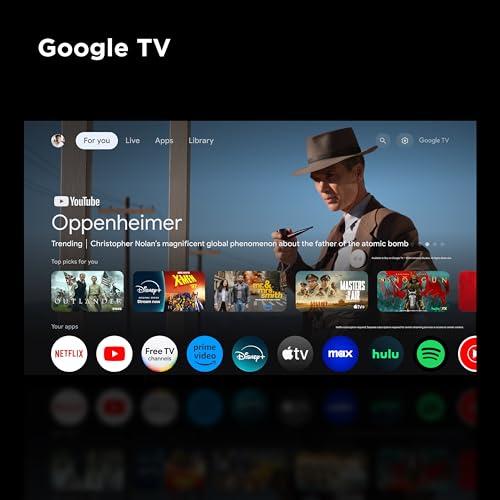
The TCL runs Google TV, which provides excellent integration with Google services and a clean, intuitive interface. The platform offers extensive app support and regular updates. TCL includes hands-free voice control with far-field microphones, letting you control the TV without finding the remote.
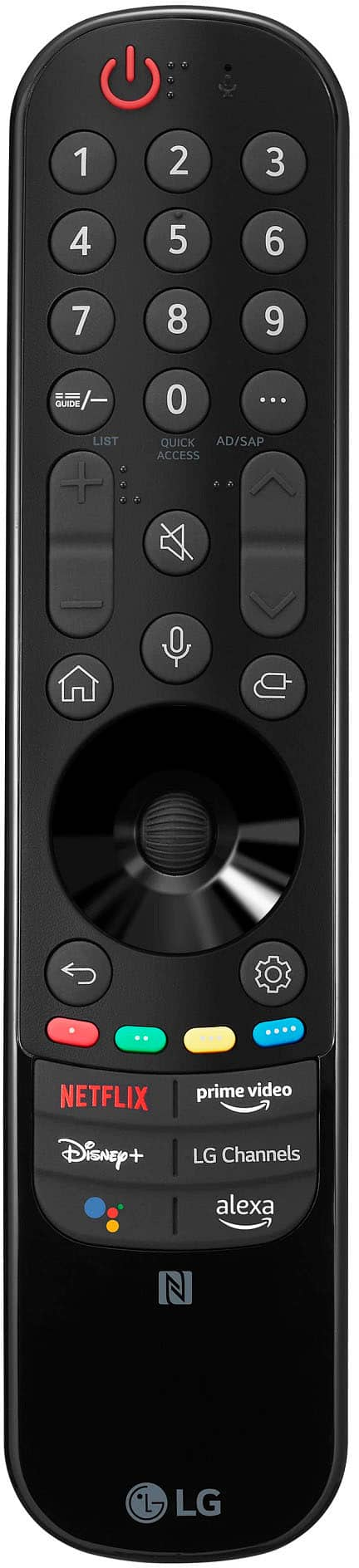
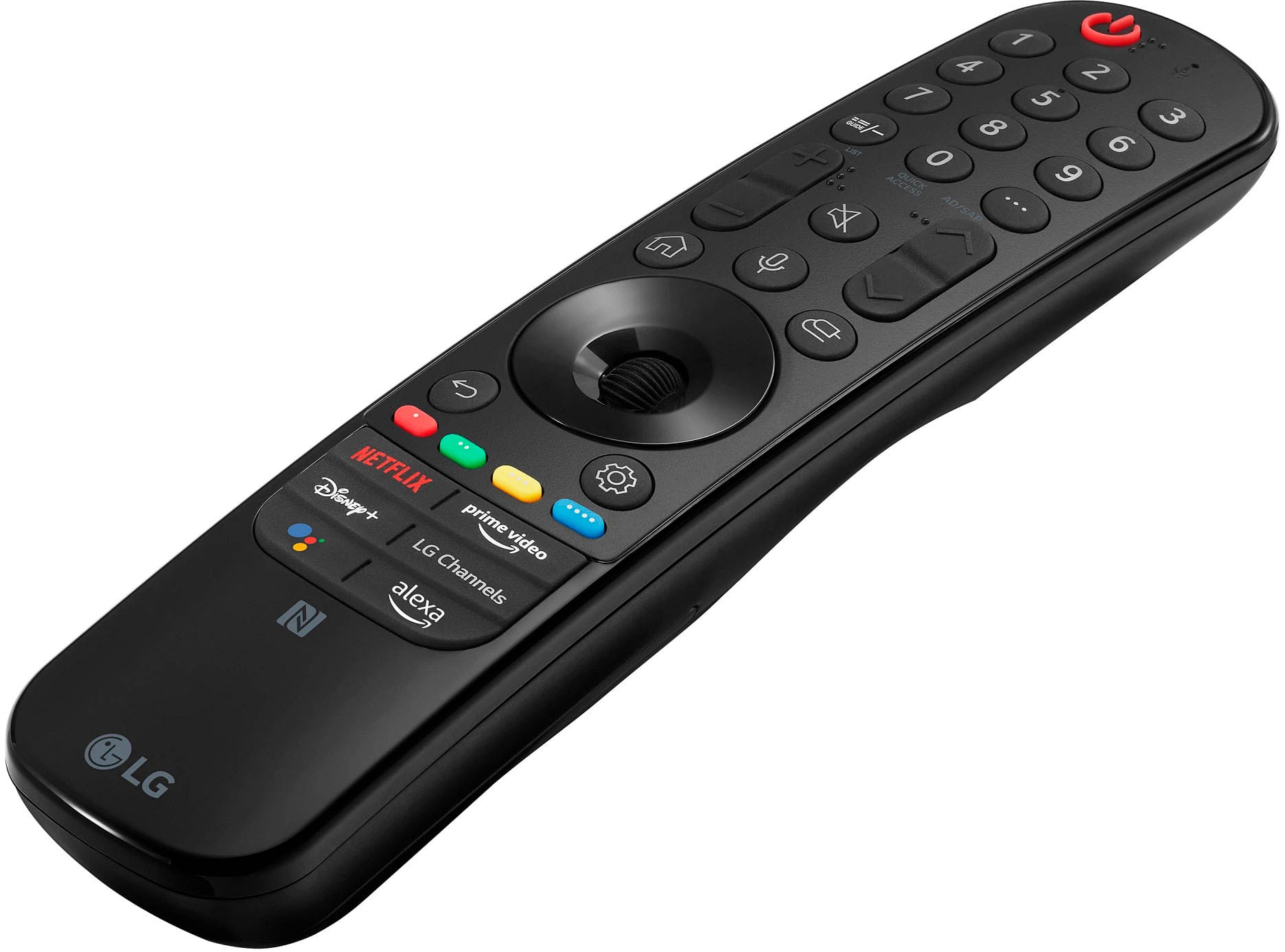
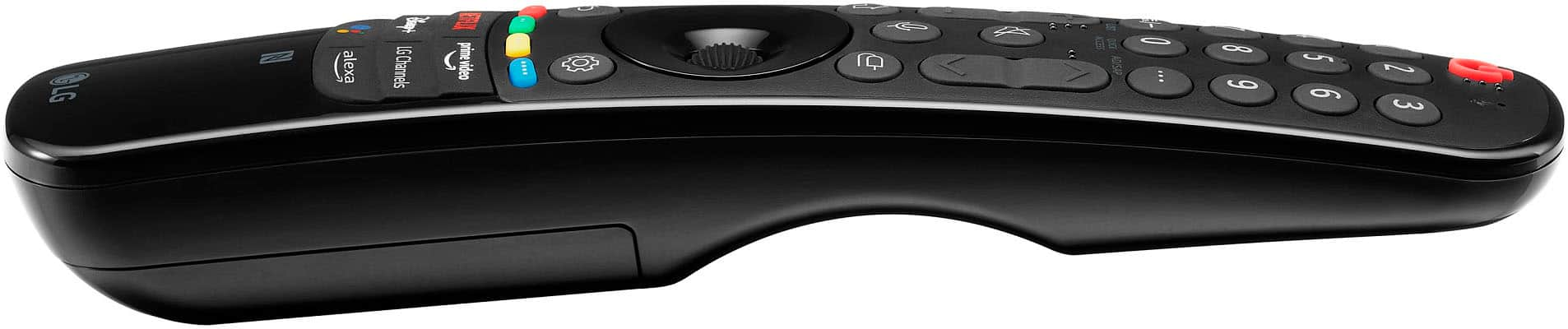
The LG uses webOS, widely considered one of the best smart TV platforms available. It's fast, visually appealing, and offers excellent app support. LG's Magic Remote with point-and-click functionality provides intuitive navigation that many users prefer over traditional directional pad remotes.
For dedicated home theater use, both TVs offer compelling but different advantages.
The TCL QM7K excels in mixed-use theater rooms where you might watch content during the day or with some ambient lighting. Its superior brightness ensures HDR content maintains impact even when you can't achieve perfect darkness. The larger 115-inch screen also provides more immersive viewing for the money – you're getting significantly more screen real estate for about 20% more cost.
The massive size does require careful planning. You'll need at least 14-16 feet of viewing distance for comfortable viewing, and wall mounting a 115-inch display requires professional installation and robust wall support.
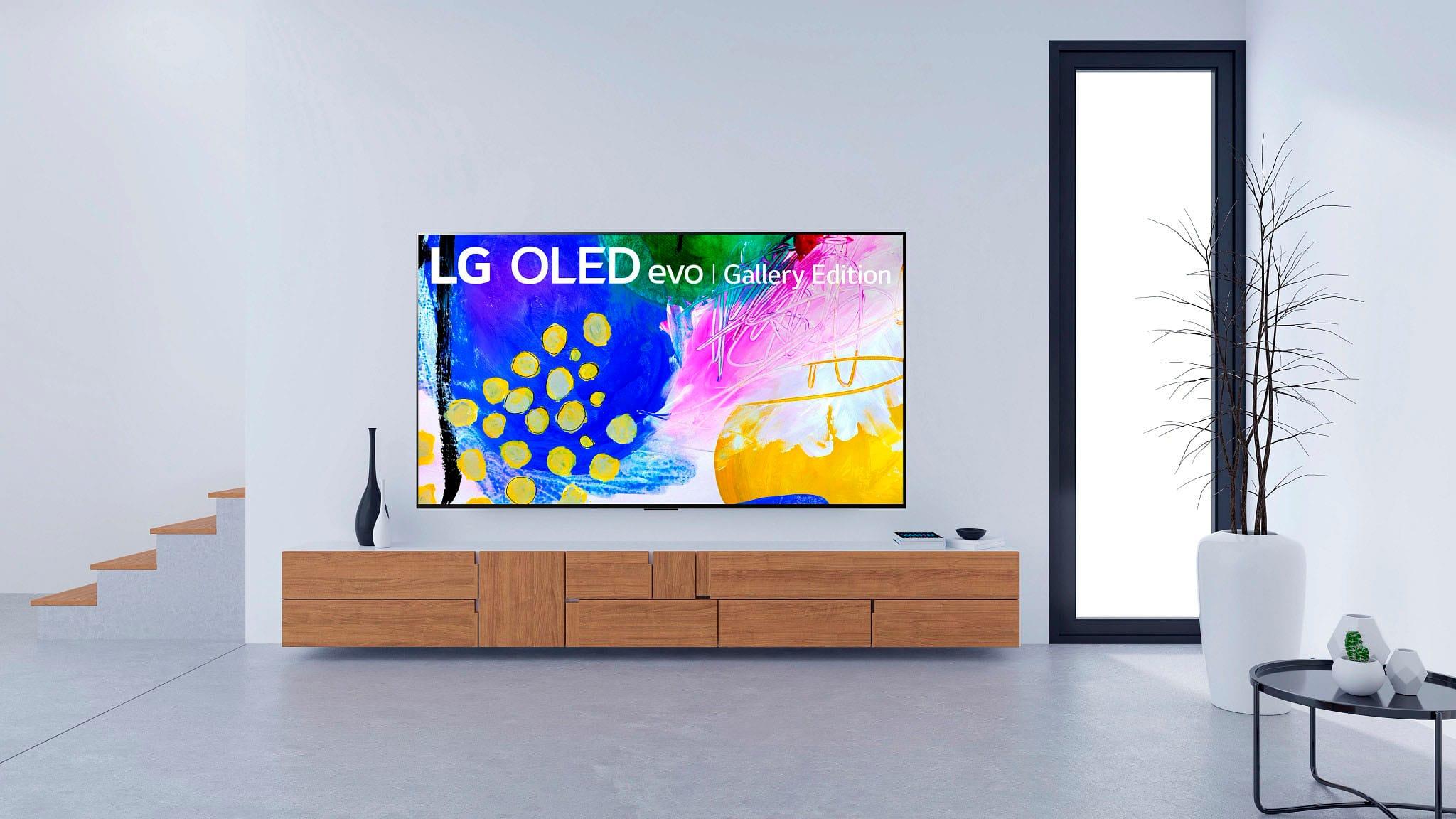
The LG G2 OLED represents the traditional home theater ideal – optimized for darkened room viewing where its perfect blacks and infinite contrast can truly shine. The Gallery Series design mounts flush against the wall like a piece of art, creating a clean, premium aesthetic that many find more elegant than traditional TV installations.
For serious cinephiles, OLED's color accuracy and natural image reproduction often feel more "correct" than the sometimes oversaturated look that quantum dot displays can produce. If your primary goal is recreating the filmmaker's intended vision, OLED remains the reference standard.
At first glance, the LG G2's lower $10,799 price seems like the clear value winner. However, the value equation becomes more complex when you consider what you're getting.
The TCL QM7K at $12,997 provides 18% more screen area – that's a significant jump in viewing experience. You're also getting more premium audio hardware, newer technology with better future-proofing, and superior performance in common real-world viewing conditions.
The TCL also eliminates burn-in concerns that can affect OLED displays over time. While modern OLEDs are much more resistant to burn-in than earlier generations, static elements like gaming HUDs, news tickers, or channel logos can still cause permanent image retention over extended periods.
From a total cost of ownership perspective, the TCL might actually represent better long-term value despite the higher upfront cost.
Your choice between these two impressive displays ultimately depends on your priorities and viewing environment.
Choose the TCL 115" QM7K if you want maximum screen size and impact, have a bright room or mixed lighting conditions, prioritize gaming performance above 120Hz, or want the peace of mind that comes with burn-in-resistant technology. It's the better choice for most real-world living situations where perfect lighting control isn't possible.
Choose the LG 97" G2 OLED if you have a dedicated dark theater room, prioritize perfect black levels and color accuracy above all else, need consistent picture quality across wide viewing angles, or prefer the lower entry price point. It remains the reference standard for image quality in optimal viewing conditions.
Both represent exceptional examples of their respective technologies, and either will provide years of premium viewing enjoyment. The key is honestly assessing your viewing environment, content preferences, and long-term needs to determine which approach better matches your specific situation.
In my experience, most buyers are happier with the TCL's real-world versatility and future-proof brightness capabilities, while videophile purists gravitate toward the LG's reference-quality image reproduction. Neither choice is wrong – they're just optimized for different priorities and viewing conditions.
| TCL 115" QM7K Series QD-Mini LED 4K Smart TV 2025 | LG 97" G2 Series OLED evo 4K UHD Smart TV |
|---|---|
| Screen Size - Bigger is more immersive, but requires appropriate viewing distance | |
| 115 inches (18% more viewing area) | 97 inches (still massive for most rooms) |
| Price - Consider total value including features and longevity | |
| $12,997.99 | $10,799.99 (about $2,200 less) |
| Display Technology - Fundamentally different approaches to picture quality | |
| QD-Mini LED with 2,500 local dimming zones | OLED evo with self-emitting pixels |
| Peak Brightness - Critical for HDR impact and bright room viewing | |
| 3,000 nits (excellent for any lighting condition) | ~800-1,000 nits (best in dark/dim rooms) |
| Black Levels - Affects contrast and image depth | |
| Very deep blacks with minimal blooming | Perfect infinite blacks (OLED advantage) |
| Refresh Rate - Higher numbers mean smoother motion and gaming | |
| 144Hz native, up to 288Hz for gaming | 120Hz (still excellent for most content) |
| Gaming Response Time - Lower is better for competitive gaming | |
| ~5-8ms (very good for Mini LED) | <1ms (best possible, OLED advantage) |
| Burn-in Risk - Permanent image retention from static content | |
| No burn-in risk (Mini LED advantage) | Minimal risk with modern OLED, but possible |
| Viewing Angles - Picture quality consistency off-center | |
| Good but colors/contrast shift at extreme angles | Excellent consistency from any angle |
| Built-in Audio - Quality of included speakers | |
| 100W Bang & Olufsen system with Dolby Atmos | AI Sound Pro with Dolby Atmos (lower power) |
| Smart Platform - Interface and app ecosystem | |
| Google TV with hands-free voice control | webOS with Magic Remote (widely praised) |
| Release Date - Newer often means better features and longevity | |
| March 2025 (latest technology) | 2022 (proven but older tech) |
| Best Use Case - Where each TV excels | |
| Bright rooms, gaming, mixed content viewing | Dark theaters, movies, wide seating areas |
The TCL 115" QM7K is significantly larger at 115 inches compared to the LG 97" G2 OLED at 97 inches. This gives you about 18% more screen area with the TCL, making it better for large rooms and more immersive viewing experiences.
The TCL QM7K costs $12,997.99 while the LG G2 OLED is priced around $10,799.99. That's about a $2,200 difference, with the TCL being more expensive but offering a larger screen and newer 2025 technology.
The TCL QM7K is much better for bright rooms thanks to its 3,000 nits peak brightness and anti-glare coating. The LG G2 OLED only reaches about 800-1,000 nits and can struggle with reflections in bright lighting conditions.
Both excel in different ways. The LG G2 OLED has perfect black levels and infinite contrast for incredible depth. The TCL QM7K offers much brighter HDR highlights and better color volume. OLED wins for dark room viewing, while Mini LED excels in mixed lighting.
Yes, both are excellent for gaming. The TCL QM7K supports up to 288Hz refresh rates and has very low input lag. The LG G2 OLED offers sub-1ms response time and 120Hz gaming with perfect motion clarity. Choose TCL for competitive gaming, OLED for cinematic games.
The TCL QM7K has no burn-in risk and uses newer 2025 technology for better longevity. The LG G2 OLED has minimal but possible burn-in risk from static images over time. Both should last many years with normal use, but Mini LED has fewer long-term concerns.
For dedicated dark home theaters, the LG G2 OLED provides reference-quality blacks and color accuracy preferred by movie enthusiasts. For mixed-use theaters with some ambient light, the TCL QM7K offers superior brightness and a larger, more cinematic screen size.
The TCL QM7K has superior built-in audio with a 100W Bang & Olufsen system that may eliminate the need for a soundbar initially. The LG G2 OLED has decent AI-optimized sound but most users will want to add external speakers for the best experience.
Both offer excellent smart platforms. The TCL QM7K uses Google TV with hands-free voice control and extensive app support. The LG G2 OLED runs webOS, widely considered one of the best TV interfaces, with the intuitive Magic Remote for easy navigation.
Yes, both support wall mounting, but require professional installation due to their massive size and weight. The LG G2 OLED is designed as a "Gallery Series" for flush wall mounting. The TCL QM7K at 115 inches requires extremely robust wall support and careful planning.
The LG G2 OLED costs less upfront and offers proven OLED picture quality. However, the TCL QM7K provides 18% more screen area, newer technology, better brightness, and superior audio for about 20% more money, potentially offering better long-term value.
Choose the TCL QM7K if you want the largest possible screen, have a bright room, prioritize gaming performance, or want the latest 2025 technology. Choose the LG G2 OLED if you have a dark viewing room, prioritize perfect black levels, need wide viewing angles, or prefer the lower price point.
We've done our best to create useful and informative comparisons to help you decide what product to buy. Our research uses advanced automated methods to create this comparison and perfection is not possible - please contact us for corrections or questions. These are the sites we've researched in the creation of this article: bestbuy.com - tomsguide.com - techradar.com - youtube.com - rtings.com - youtube.com - youtube.com - youtube.com - avsforum.com - abt.com - bestbuy.com - tcl.com - avsforum.com - tcl.com - rcwilley.com - tcl.com - valueelectronics.com - bestbuy.com - tcl.com - tcl.com - tcl.com - tcl.com - digitaltrends.com - xssentials.com - valueelectronics.com - youtube.com - bestbuy.com - rangsemart.com.bd - woodburyappliance.com - displaymate.com - youtube.com - rtings.com - displayspecifications.com - techradar.com - avsforum.com - lg.com - youtube.com

Privacy Policy
Terms and Conditions - Affiliate Policy
Home Security
© Copyright 2008-2026.
11816 Inwood Rd #1211, Dallas, TX 75244