

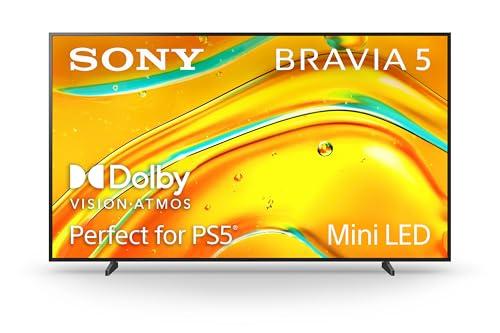
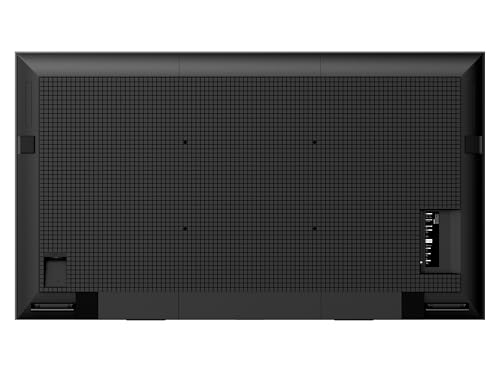
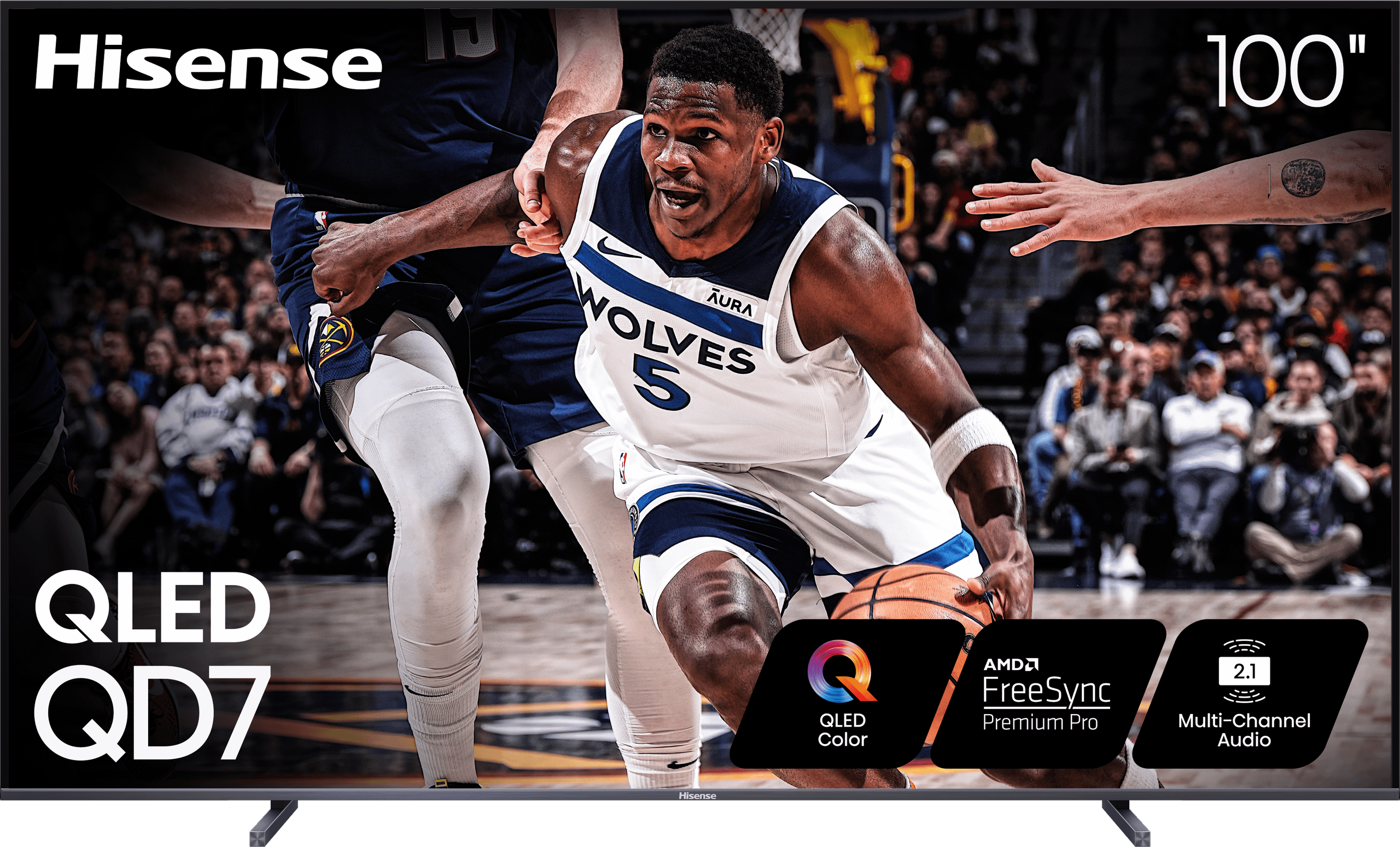
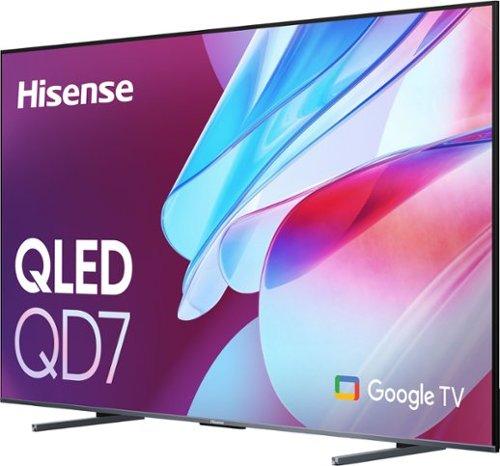




When you're shopping for a TV that'll make your neighbors jealous through the window, you're looking at two very different approaches to massive home entertainment. The Sony BRAVIA 5 98" Mini LED 4K Google TV 2025 at $5,998 represents Sony's latest premium technology packed into a near-100-inch package, while the Hisense 100" QD7 Series QLED 4K UHD Smart TV at $1,699 takes the "go big or go home" approach with pure size over premium features.
Both TVs landed in a market where bigger screens have become the new normal, but they tackle the challenge from completely different angles. Let me walk you through what makes each special and help you figure out which massive display deserves a place on your wall.
We're living through a golden age of big screens. Just five years ago, a 75-inch TV was considered enormous. Today, 85-inch models are mainstream, and 98-100 inch displays are becoming the new frontier for serious home theater enthusiasts. This shift happened because manufacturing costs dropped, streaming services started delivering more 4K content, and frankly, people realized that when it comes to recreating the cinema experience at home, size really does matter.
The key considerations when shopping in this size range go far beyond just "how big is big enough." You're dealing with display technologies that can make or break your viewing experience, processing power that determines how good your Netflix shows actually look, gaming features that can give you an edge in competitive play, and smart TV platforms that either enhance or frustrate your daily use.
What's fascinating about comparing these two TVs is that they represent fundamentally different philosophies. Sony's approach says "let's pack the most advanced technology possible into this massive screen," while Hisense says "let's make the biggest possible screen accessible to more people." Both strategies have merit, but they serve different types of viewers.
The Sony BRAVIA 5 98" launched in 2025 as Sony's answer to the growing demand for premium large-screen displays without the eye-watering price of their flagship models. Sony positioned this TV as the sweet spot between their ultra-premium BRAVIA 9 series and their more affordable options.
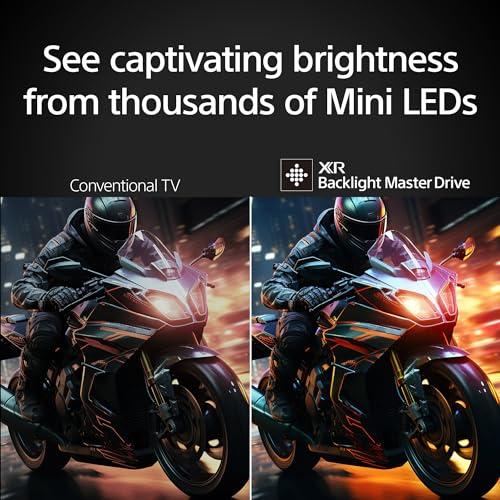
What makes this TV special is Sony's Mini LED implementation. Unlike traditional LED TVs that have dozens of backlight zones, Mini LED uses thousands of tiny LEDs behind the screen. These can be controlled independently to create precise local dimming – basically, the TV can make specific areas of the screen brighter or darker without affecting neighboring areas. Sony calls their version "XR Backlight Master Drive," and it represents a significant leap forward from their previous LED backlighting systems.
The XR Processor powering this display is where Sony's decades of experience in professional broadcast equipment really shines. This isn't just a faster chip – it's designed to analyze each scene in real-time and optimize color, contrast, and clarity based on what it "sees." Think of it as having a professional colorist adjusting your picture 60 times per second.
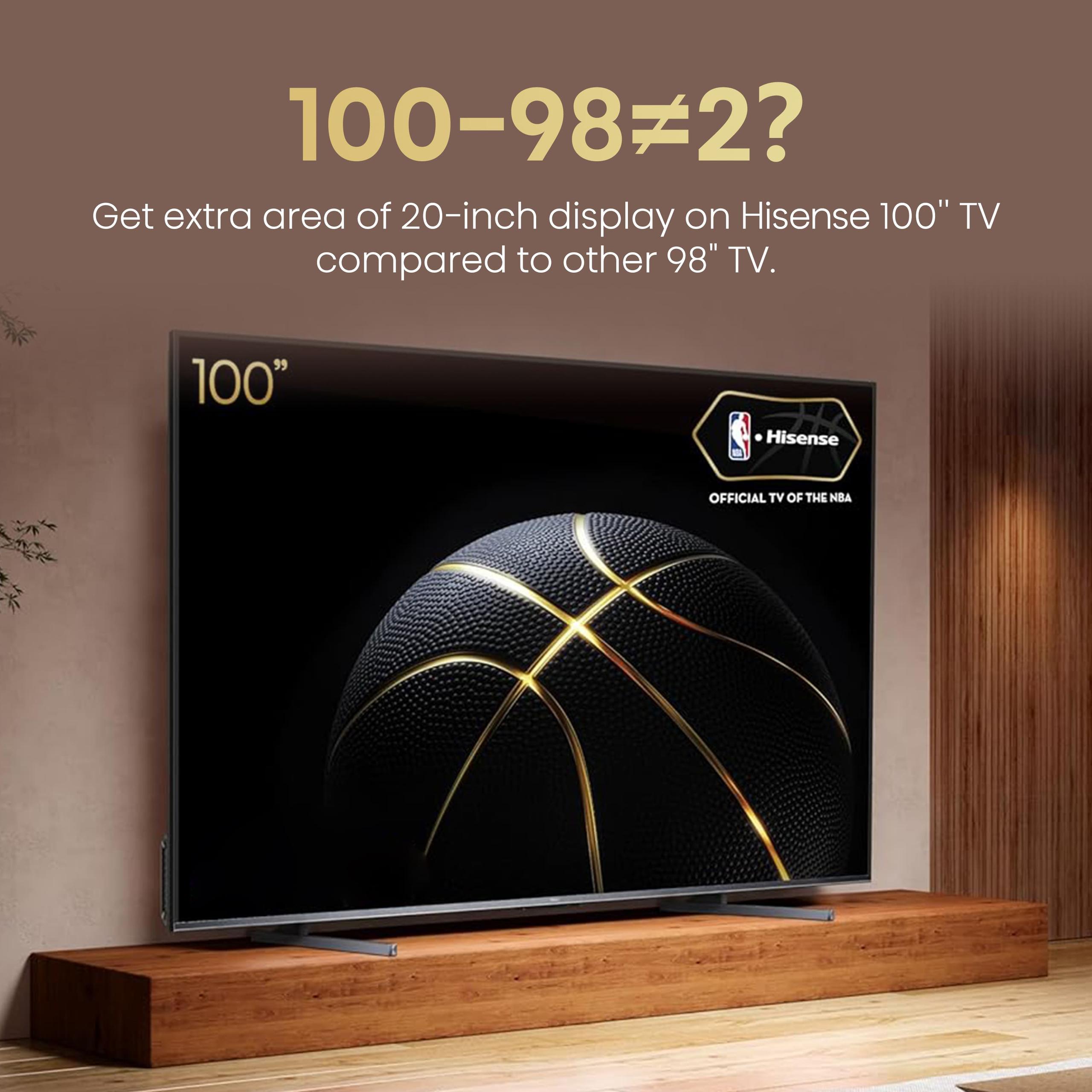
The Hisense 100" QD7 Series represents a different philosophy entirely. Released in 2023-2024 (Hisense doesn't always announce exact release dates for all markets), this TV prioritizes screen size and basic performance over cutting-edge features. At 100 inches diagonal, it delivers more viewing area than Sony's 98-inch model while costing less than one-third the price.
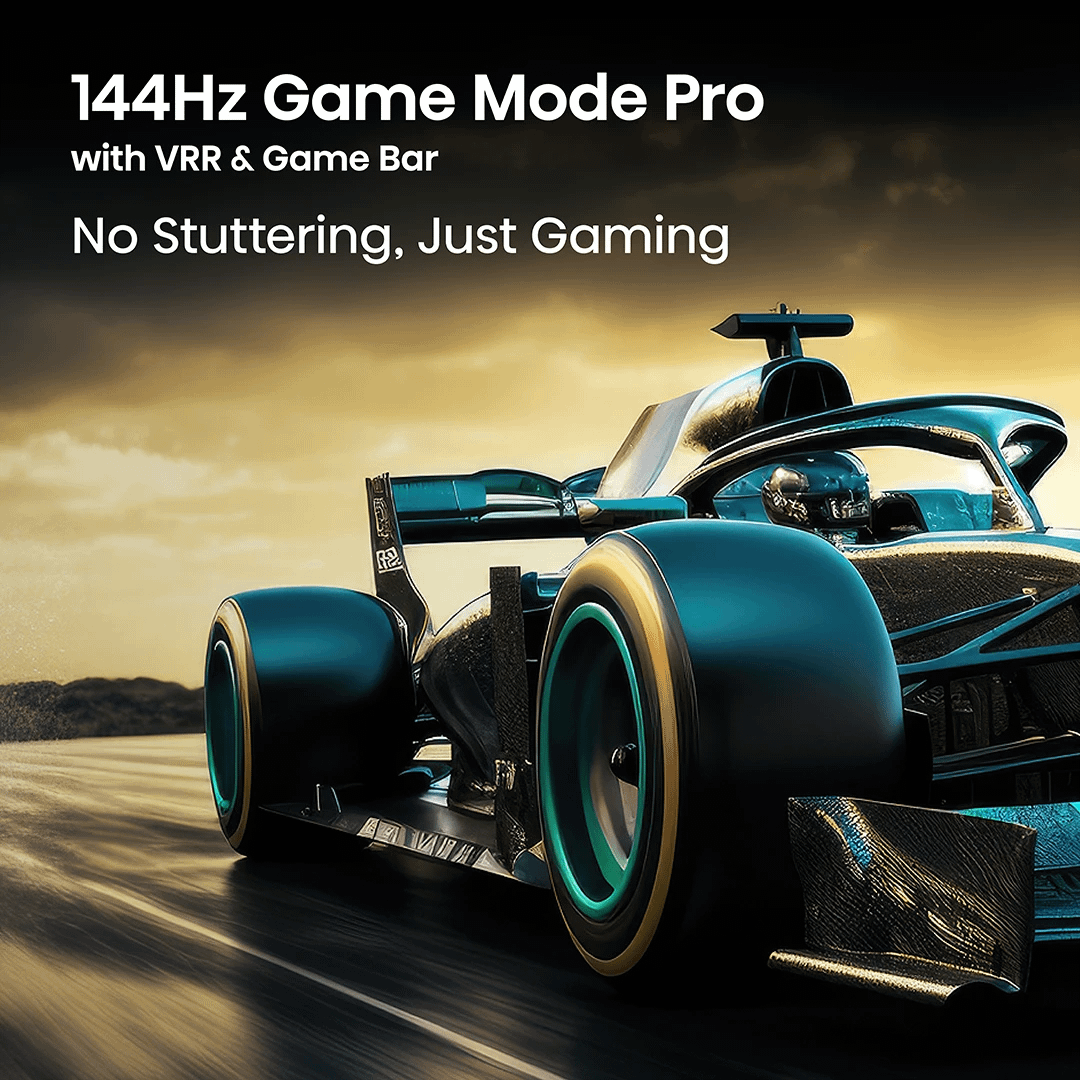
Hisense built this TV around Quantum Dot technology, which enhances color reproduction by using microscopic particles that emit specific colors when hit by light. It's not as advanced as Mini LED, but it's a significant step up from standard LED panels. The QD7 also boasts a native 144Hz refresh rate, which is higher than many premium TVs and particularly appealing for PC gaming enthusiasts.
Here's where these TVs really diverge, and where your priorities will determine which approach works better for you.
The Sony BRAVIA 5 delivers what I'd describe as "premium theater" picture quality. The Mini LED backlighting creates contrast that approaches OLED levels – you get deep, inky blacks that make dark movie scenes truly immersive, while bright highlights pop without washing out surrounding details. When I've seen this TV displaying HDR content like "Dune" or "Blade Runner 2049," the difference compared to standard LED TVs is immediately obvious. Dark spaceship corridors stay dark, while laser blasts and neon signs have that eye-catching brightness that makes you feel like you're seeing more depth in the image.
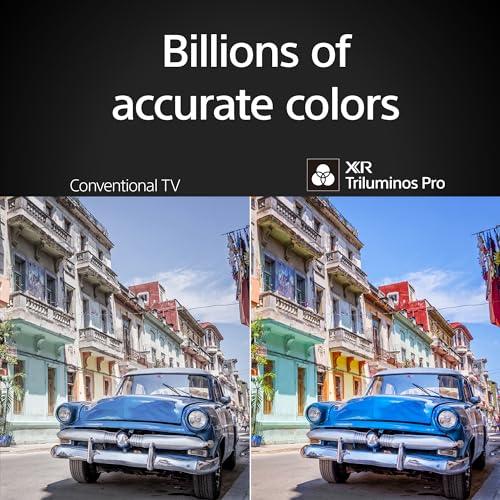
Sony's XR Triluminos Pro color technology expands the color palette to over a billion different shades. In practical terms, this means skin tones look more natural, sunsets have more realistic gradations, and animated content like Pixar movies display colors that standard TVs simply can't reproduce. The AI processing continuously analyzes content and adjusts these colors in real-time, so whether you're watching a gritty Netflix drama or a bright nature documentary, the picture adapts automatically.
The Hisense QD7 takes a more straightforward approach. Its Quantum Dot technology does improve color saturation and brightness compared to basic LED panels, and for most casual viewing, it delivers a perfectly acceptable 4K experience. Colors are vibrant, details are sharp, and the massive 100-inch screen creates an undeniably immersive experience. However, contrast suffers compared to the Sony – dark scenes can look somewhat gray rather than truly black, and there's more noticeable blooming (bright halos around objects) in high-contrast scenes.
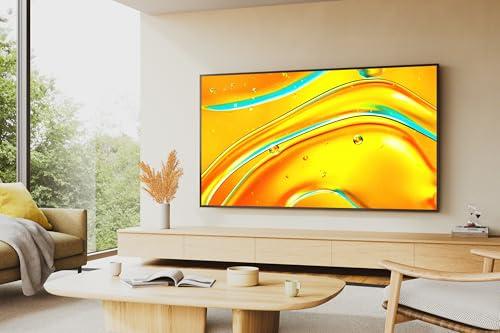
Where the Hisense excels is in pure impact. That extra two inches of diagonal measurement translates to noticeably more screen area, and sometimes the "wow factor" of sheer size can overcome technical limitations. If you're primarily watching sports, sitcoms, or YouTube content, the QD7's picture quality combined with its massive size creates an engaging experience that most viewers will find perfectly satisfying.
Gaming on ultra-large screens has become increasingly popular, especially with the PlayStation 5 and Xbox Series X supporting 4K at 120Hz. Both TVs handle gaming, but with very different strengths.
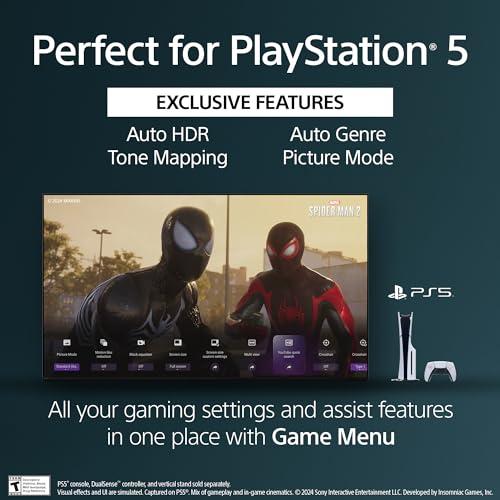
The Sony BRAVIA 5 is clearly designed with serious console gaming in mind. It includes specific optimizations for the PlayStation 5, including Auto HDR Tone Mapping, which automatically adjusts the display settings based on what game you're playing. The Auto Genre Picture Mode recognizes different types of games and optimizes accordingly – racing games get enhanced motion clarity, while RPGs get improved color accuracy for cinematic storytelling.
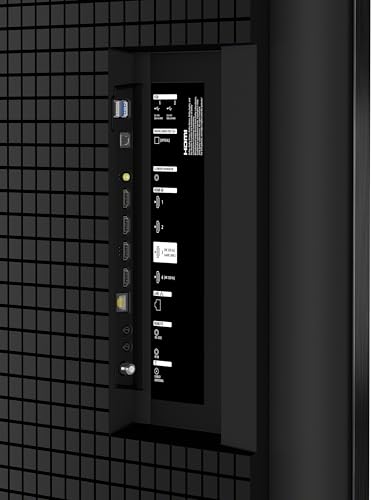
Sony's implementation of HDMI 2.1 features is comprehensive. Variable Refresh Rate (VRR) eliminates screen tearing by synchronizing the display refresh with the console's frame rate. Auto Low Latency Mode (ALLM) automatically switches to the TV's fastest response mode when it detects gaming input. These features work seamlessly – you don't need to dive into menus or remember to switch modes.
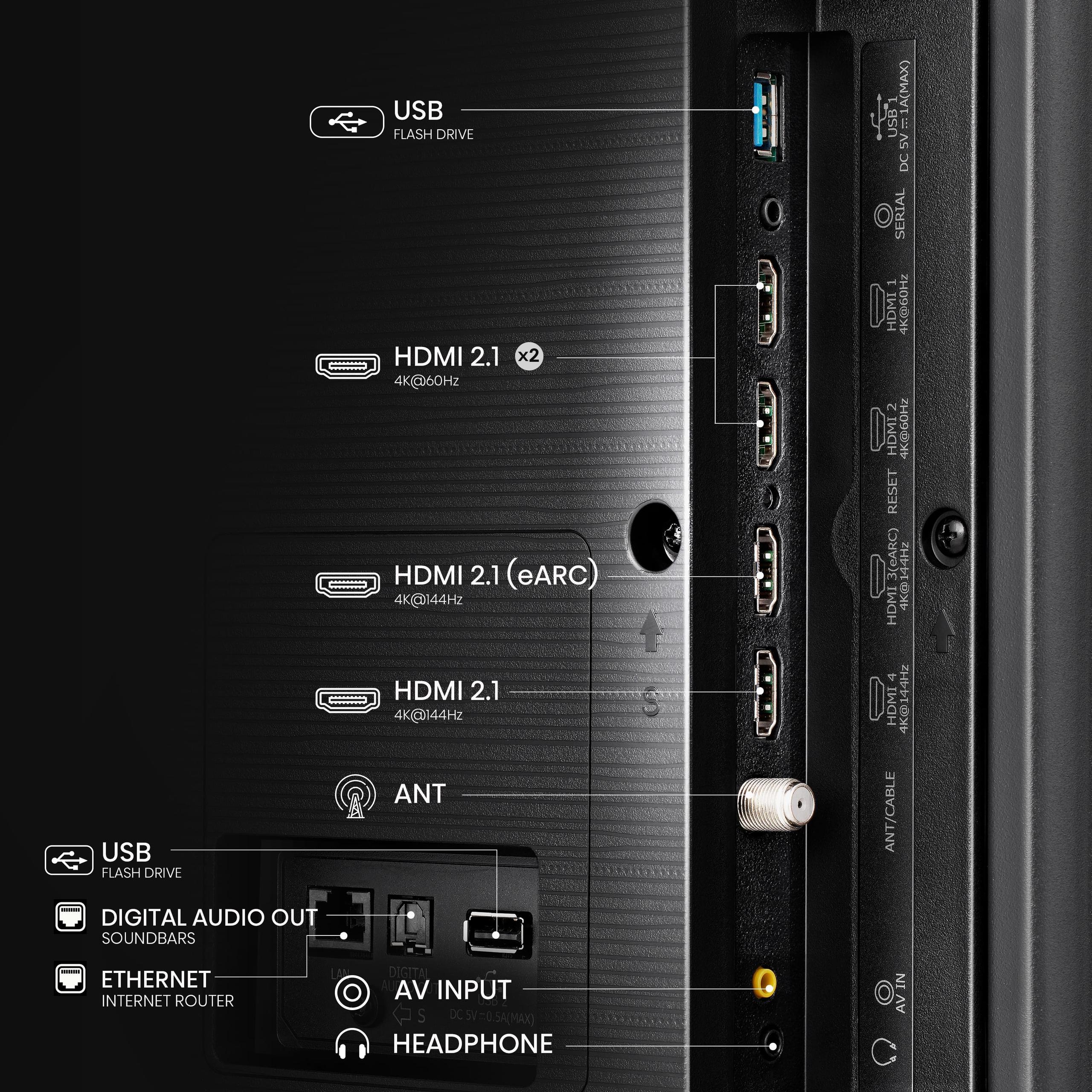
The Hisense QD7 takes a different approach by emphasizing raw refresh rate performance. Its 144Hz native refresh rate actually exceeds what most TVs offer, making it particularly appealing for PC gaming where frame rates can exceed 120fps. The TV supports AMD FreeSync Premium, which reduces screen tearing and stuttering when connected to compatible graphics cards.
However, the Hisense's gaming features feel more basic overall. While it has the raw specifications for high-refresh gaming, it lacks the sophisticated processing and automatic optimizations that make the Sony feel more polished for console gaming. If you're primarily a PC gamer who prioritizes maximum refresh rates, the Hisense has appeal. For console gaming, especially on PlayStation 5, the Sony offers a more refined experience.
Most people focus entirely on picture quality when buying a TV, but audio can make or break your viewing experience, especially on screens this large where you expect a cinematic experience.
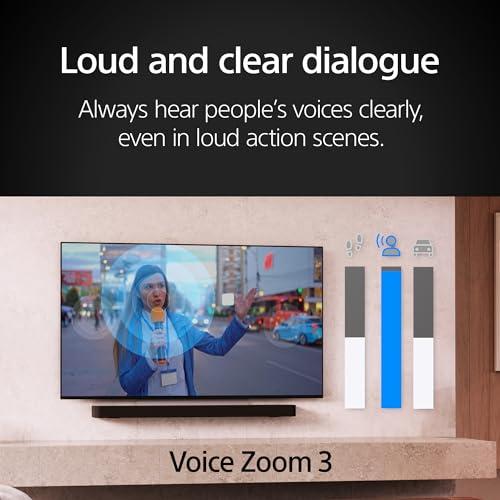
The Sony BRAVIA 5 includes Sony's Acoustic Multi-Audio system, which uses multiple speakers positioned around the display to create sound that appears to come from different parts of the screen. When a car drives across the screen, the audio follows it. When dialogue happens, it seems to come from the character's mouth rather than from speakers below the screen. This positional audio makes a surprisingly big difference in how immersive movies and shows feel.
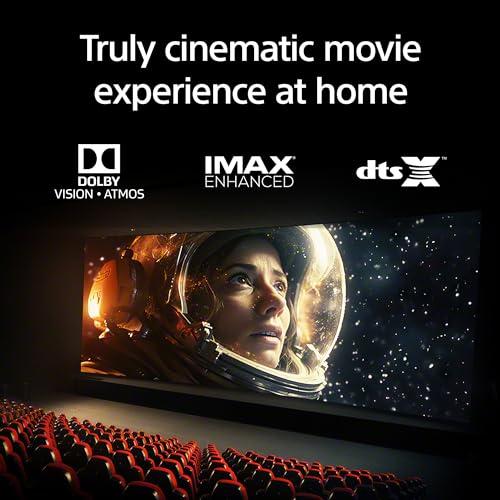
Sony's 3D Surround Upscaling can take standard stereo or 5.1 audio and create a virtual 5.1.2 surround sound experience using just the TV's built-in speakers. While it can't match a dedicated surround sound system, it's remarkably effective for casual viewing. The TV also supports Dolby Atmos, which adds height information to audio for an even more immersive experience.
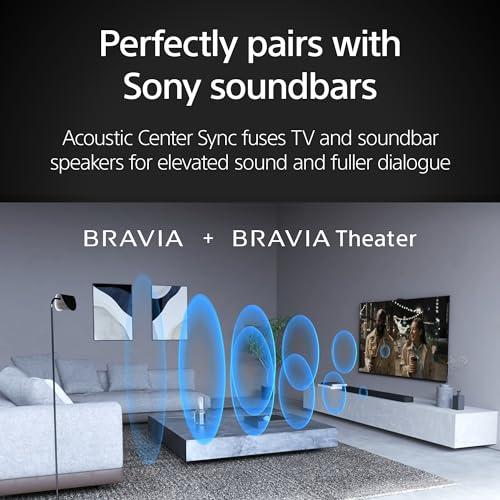
Perhaps most interesting is the TV's ability to act as a center channel speaker when paired with compatible Sony soundbars. This means you can upgrade your audio system while still using the TV's speakers as part of the setup – the dialogue comes from the screen where it should, while music and effects come from your soundbar and subwoofer.
The Hisense QD7 takes a more basic approach with a 2.1 channel system (two main speakers plus a subwoofer) outputting 50 watts total. It supports Dolby Atmos, but without the sophisticated processing of the Sony. The audio is adequate for casual viewing but doesn't create the same immersive experience. Given the TV's focus on value, this makes sense – most buyers in this price range will either use the built-in audio as-is or plan to add a soundbar later.
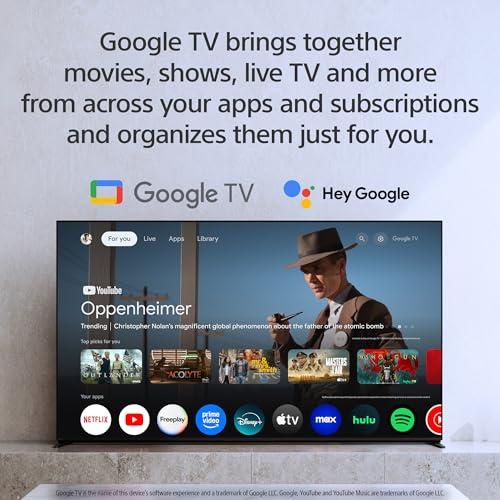
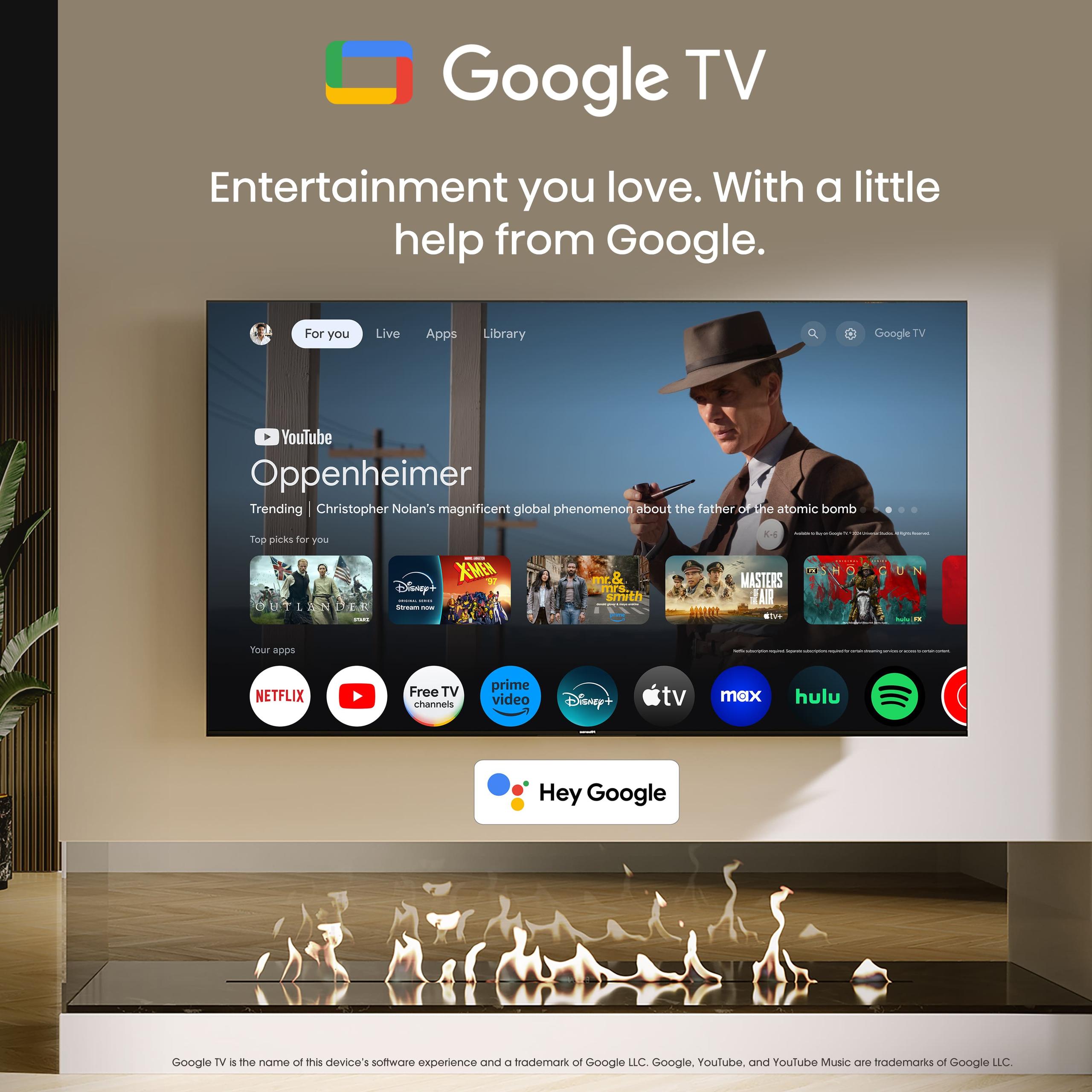
Both TVs run Google TV, which is Google's latest smart TV platform that replaced Android TV. However, their implementations feel quite different in daily use.
The Sony's Google TV experience feels more refined and responsive. The XR Processor that handles picture processing also powers the smart TV interface, resulting in faster app loading, smoother navigation, and more reliable streaming. Sony includes features like the Eco Dashboard, which helps you monitor and reduce energy consumption – important when you're powering a nearly 100-inch display.
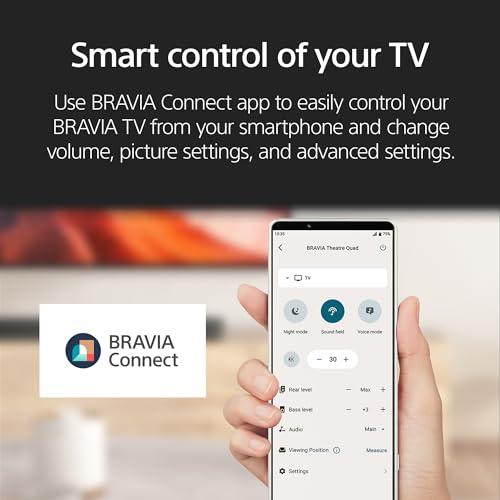
The TV supports Google Assistant with hands-free voice control, and it's compatible with the optional BRAVIA Cam accessory. This camera can recognize where people are sitting and automatically adjust picture and sound settings for optimal viewing. It also enables gesture controls and video calling on the big screen – features that feel futuristic but are genuinely useful once you get used to them.
The Hisense implementation of Google TV is more straightforward. It provides access to all the same streaming apps and services, but without the enhanced processing power and premium features. The interface can occasionally feel sluggish, especially when switching between apps or browsing large content libraries. However, for basic streaming from Netflix, Disney+, YouTube, and other major services, it gets the job done reliably.
If you're building a dedicated home theater room, these TVs serve different purposes in your setup.
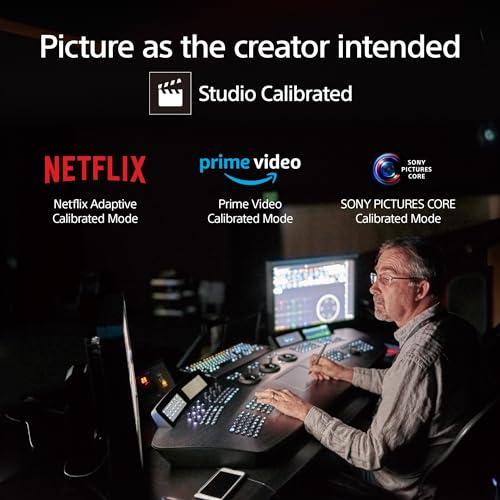
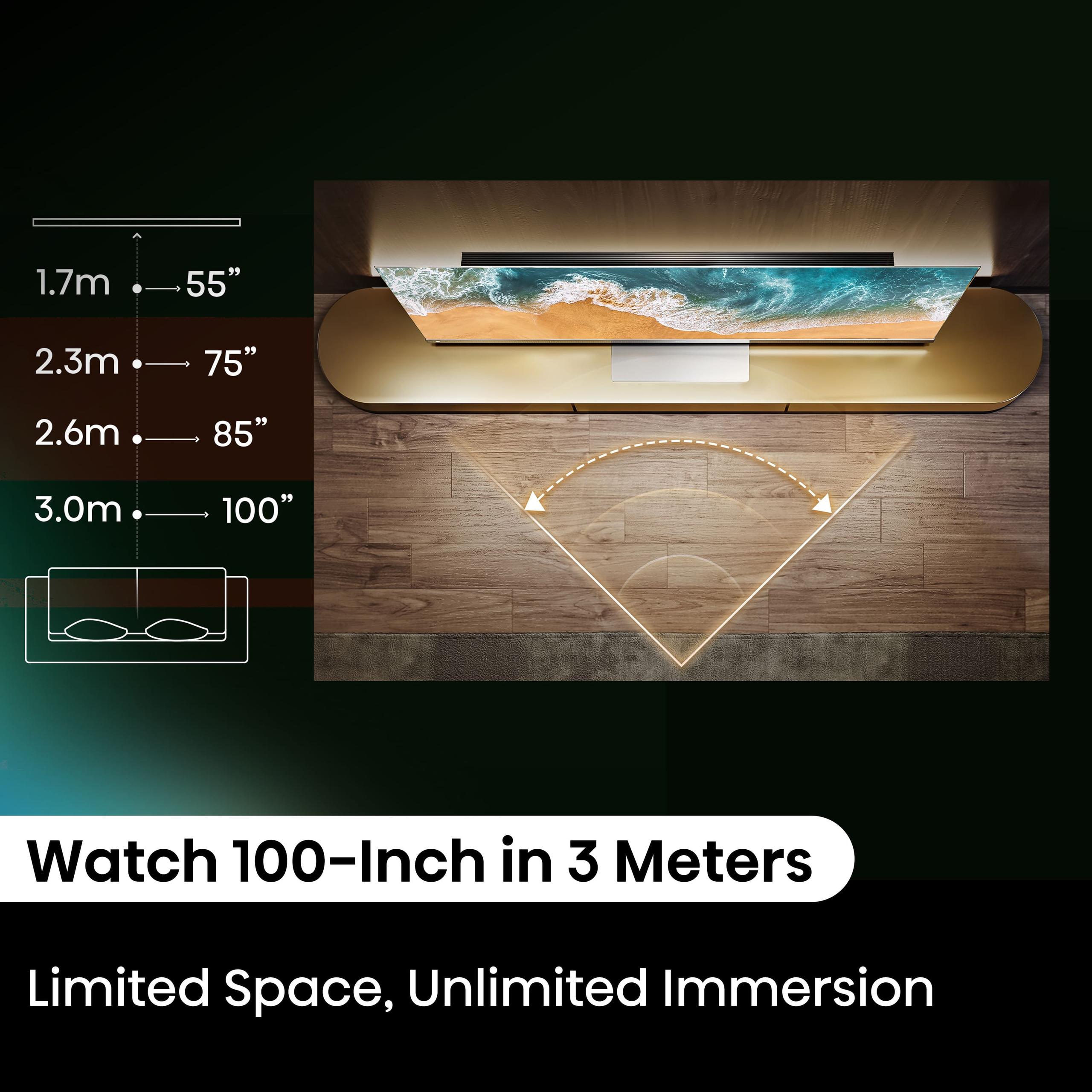
The Sony BRAVIA 5 is designed to be the centerpiece of a premium home theater. Its Mini LED technology performs best in a controlled lighting environment where you can appreciate the deep blacks and precise contrast. The TV's color accuracy is calibrated for cinematic viewing, and its processing is optimized for film content. In a darkened room with proper seating distance (typically 8-12 feet for a 98-inch screen), this TV can deliver an experience that rivals commercial movie theaters.
The TV's audio features are particularly valuable in home theater setups. The ability to integrate with Sony's soundbar ecosystem means you can build a cohesive audio system where all components work together seamlessly. The Acoustic Multi-Audio ensures that even before you add external speakers, you're getting positioned sound that enhances the cinematic experience.
The Hisense QD7 serves a different role in home theater setups. Its massive 100-inch screen can create an incredibly immersive experience, but it works best in setups where size is the primary goal rather than absolute picture quality. The TV performs better in rooms with some ambient light, where its higher brightness can overcome reflections and maintain image visibility.
For many home theater enthusiasts, the QD7 represents an interesting entry point. You can get the massive screen experience now and upgrade other components (audio system, media sources, room treatment) over time. The money saved compared to the Sony could fund a high-quality projector screen and surround sound system that might deliver a better overall experience than the Sony alone.
This is where these TVs reveal their true purpose and target audiences.
The Sony BRAVIA 5 at $5,998 represents what I'd call "future-proof premium." You're paying for Mini LED technology that will remain cutting-edge for several years, AI processing that improves over time through software updates, and gaming features that will stay relevant through the next console generation. The build quality, materials, and engineering reflect Sony's premium positioning. This TV is an investment in having the best possible large-screen experience for the next 5-7 years.
From a cost-per-feature analysis, the Sony delivers remarkable value compared to Sony's own flagship models. The BRAVIA 9 series with similar screen size costs significantly more, while this TV delivers perhaps 85-90% of that premium experience. You're getting professional-grade processing, premium display technology, and comprehensive gaming features at a price that, while expensive, isn't completely unreasonable for what you receive.
The Hisense QD7 at $1,699 represents "maximum impact per dollar." You're getting 100 inches of 4K viewing for less than many people spend on 75-inch premium TVs. The picture quality, while not cutting-edge, is genuinely good for most content types. The gaming features, while basic, support the latest consoles adequately. This TV maximizes the "wow factor" – the reaction people have when they see content displayed on such a massive screen often overcomes any technical limitations.
Consider that the price difference between these TVs ($4,299) could fund a complete home theater audio system, premium streaming subscriptions for several years, or significant room improvements that might enhance your viewing experience more than premium display technology alone.
After spending time with both approaches to large-screen entertainment, here's how I'd guide your decision:
Choose the Sony BRAVIA 5 if picture quality is your primary concern. If you're the type of person who notices compression artifacts in streaming video, appreciates the subtle color gradations in well-shot films, or gets annoyed by blooming and poor contrast in dark scenes, the Sony's Mini LED technology and processing will genuinely enhance your viewing experience. It's also the clear winner for serious gaming, particularly if you own a PlayStation 5.
This TV makes sense if you're building a dedicated home theater room, consume a lot of premium content (4K Blu-rays, high-bitrate streaming), or plan to keep the TV for many years. The technology inside should remain relevant and impressive for the foreseeable future.
Choose the Hisense QD7 if maximum screen size within a reasonable budget is your goal. If you primarily watch network TV, sports, YouTube, and standard streaming content, the QD7's picture quality will serve you well while delivering an undeniably impressive viewing experience through sheer size alone.
This TV makes sense for large family rooms, casual viewing environments, or situations where you want the biggest possible screen now and might upgrade other components of your setup over time. It's also appealing if you do a lot of PC gaming where the 144Hz refresh rate provides real benefits.
The bottom line is that both TVs succeed at what they're designed to do. The Sony BRAVIA 5 delivers premium technology in a massive package for those who want the best possible viewing experience. The Hisense QD7 maximizes screen size and impact for viewers who prioritize presence over perfection. Your choice depends on whether you value premium performance or maximum size – both are valid approaches to creating an impressive home entertainment centerpiece.
| Sony BRAVIA 5 98" Mini LED 4K Google TV 2025 | Hisense 100" QD7 Series QLED 4K UHD Smart TV |
|---|---|
| Price - Major factor in decision-making for large screens | |
| $5,998 (premium positioning with advanced tech) | $1,699 (exceptional value for 100" screen size) |
| Screen Size - Core difference affecting viewing experience | |
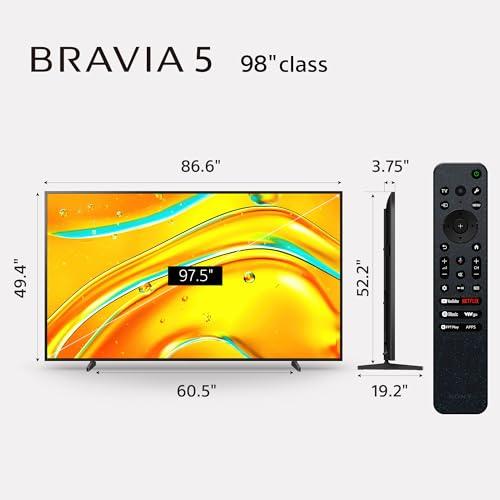
| 98" diagonal (97.5" actual viewing area) | 100" diagonal (slightly larger immersive experience) |
| Display Technology - Determines contrast, brightness, and black levels | |
| Mini LED with thousands of zones for precise local dimming | QLED with Quantum Dot color enhancement |
| Peak Brightness - Important for HDR content and bright rooms | |
| High brightness with XR Backlight Master Drive | Moderate QLED brightness (exact specs unspecified) |
| Refresh Rate - Critical for gaming and sports viewing | |
| 120Hz native (standard for premium TVs) | 144Hz native (advantage for high-refresh PC gaming) |
| Processor - Affects upscaling, color accuracy, and smart TV performance | |
| XR Processor with AI scene analysis and real-time optimization | Basic processing without AI enhancements |
| Gaming Features - Essential for console and PC gaming | |
| 4K/120Hz, VRR, ALLM, PS5 optimization, G-SYNC compatible | 4K/144Hz, AMD FreeSync Premium, basic HDMI 2.1 support |
| HDR Support - Determines quality of premium streaming content | |
| Dolby Vision, HDR10, HDR10+, IMAX Enhanced | HDR10, HDR10+, HLG (no Dolby Vision) |
| Audio System - Built-in sound quality before adding external speakers | |
| Acoustic Multi-Audio, 3D Surround Upscaling, Dolby Atmos | 2.1 channel system (50W), basic Dolby Atmos |
| Smart Platform - Daily user interface experience | |
| Google TV with enhanced processing and premium features | Standard Google TV implementation |
| Local Dimming - Key factor for contrast and black levels | |
| Thousands of Mini LED zones with precise control | Limited zones typical of standard QLED panels |
| Best For - Target user and use cases | |
| Premium home theater, serious gaming, future-proofing | Maximum size on budget, casual viewing, large spaces |
The Sony BRAVIA 5 98" Mini LED 4K Google TV 2025 delivers superior picture quality with its Mini LED technology featuring thousands of local dimming zones, creating deeper blacks and better contrast than the Hisense 100" QD7 Series QLED 4K UHD Smart TV. Sony's XR Processor with AI scene analysis also provides more accurate colors and better upscaling of non-4K content.
The Sony BRAVIA 5 costs $5,998, while the Hisense 100" QD7 is priced at $1,699 - a difference of $4,299. The Hisense offers exceptional value for screen size, while the Sony justifies its premium price with advanced Mini LED technology and processing.
The Sony BRAVIA 5 excels for console gaming with PlayStation 5 optimizations, comprehensive HDMI 2.1 features, and low input lag. The Hisense QD7 offers a higher 144Hz refresh rate that benefits PC gaming, but lacks the sophisticated gaming features of the Sony.
The Hisense 100" QD7 provides a slightly larger 100-inch screen compared to the Sony BRAVIA 5's 98-inch display. While the difference is small, those extra 2 inches translate to noticeably more viewing area and enhanced immersion.
Both TVs run Google TV, but the Sony BRAVIA 5 offers a more refined experience with faster processing, additional features like Eco Dashboard, and compatibility with optional accessories like the BRAVIA Cam. The Hisense QD7 provides standard Google TV functionality without premium enhancements.
The Sony BRAVIA 5 features advanced Acoustic Multi-Audio with positional sound, 3D Surround Upscaling, and can integrate with Sony soundbars as a center channel. The Hisense QD7 has a basic 2.1 channel system that's adequate but lacks the sophisticated audio processing of the Sony.
The Sony BRAVIA 5 is designed for premium home theater environments with its superior contrast, color accuracy, and audio integration capabilities. The Hisense QD7 works well in home theaters where maximum screen size is prioritized over absolute picture quality refinement.
The Hisense QD7 offers a higher 144Hz native refresh rate compared to the Sony BRAVIA 5's 120Hz, potentially providing smoother motion for fast sports action. However, Sony's motion processing technology may deliver better overall sports viewing despite the lower refresh rate.
The Hisense 100" QD7 provides exceptional value at $1,699 for a 100-inch 4K display with decent features. The Sony BRAVIA 5 offers premium value for buyers wanting cutting-edge technology, superior picture quality, and future-proof features despite its higher $5,998 price.
The Sony BRAVIA 5 supports Dolby Vision, HDR10, HDR10+, and IMAX Enhanced for the most comprehensive HDR experience. The Hisense QD7 supports HDR10, HDR10+, and HLG but lacks Dolby Vision support, which is found on many premium streaming services.
Both TVs handle bright rooms adequately, but the Sony BRAVIA 5's Mini LED technology provides better brightness control and less reflection issues. The Hisense QD7's QLED technology also performs well in bright environments, though it may show more reflections on the larger 100-inch screen.
The Sony BRAVIA 5 offers better long-term value with its advanced Mini LED technology, AI processing that improves over time, and comprehensive gaming features that will remain relevant for years. The Hisense QD7 provides immediate satisfaction with its massive screen size, though it may feel less advanced as technology progresses.
We've done our best to create useful and informative comparisons to help you decide what product to buy. Our research uses advanced automated methods to create this comparison and perfection is not possible - please contact us for corrections or questions. These are the sites we've researched in the creation of this article: tomsguide.com - rtings.com - bestbuy.com - electronics.sony.com - youtube.com - tomsguide.com - youtube.com - avsforum.com - lueckeaudiovideo.com - pro.sony - bestbuy.com - sony.com - pioneertvandappliance.com - youtube.com - valueelectronics.com - heartlandappliance.com - schaeferstv.com - bestbuy.com - ca.camelcamelcamel.com - fouanistore.com - rtings.com - youtube.com - rtings.com - 2001audiovideo.com - bestbuy.com - static.pcrichard.com - centrehifi.com - youtube.com - uk.hisense.com - hisense-canada.com

Privacy Policy
Terms and Conditions - Affiliate Policy
Home Security
© Copyright 2008-2026.
11816 Inwood Rd #1211, Dallas, TX 75244