

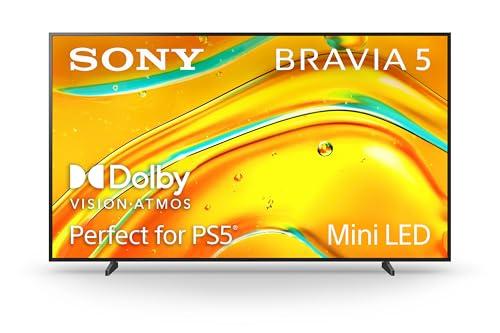
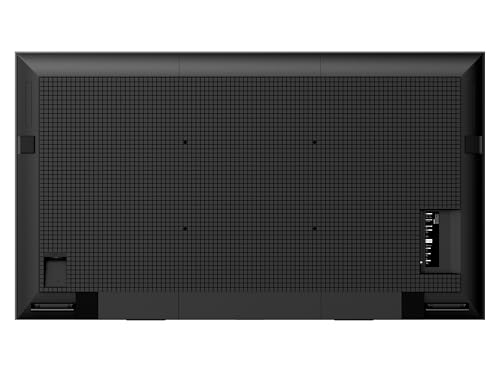
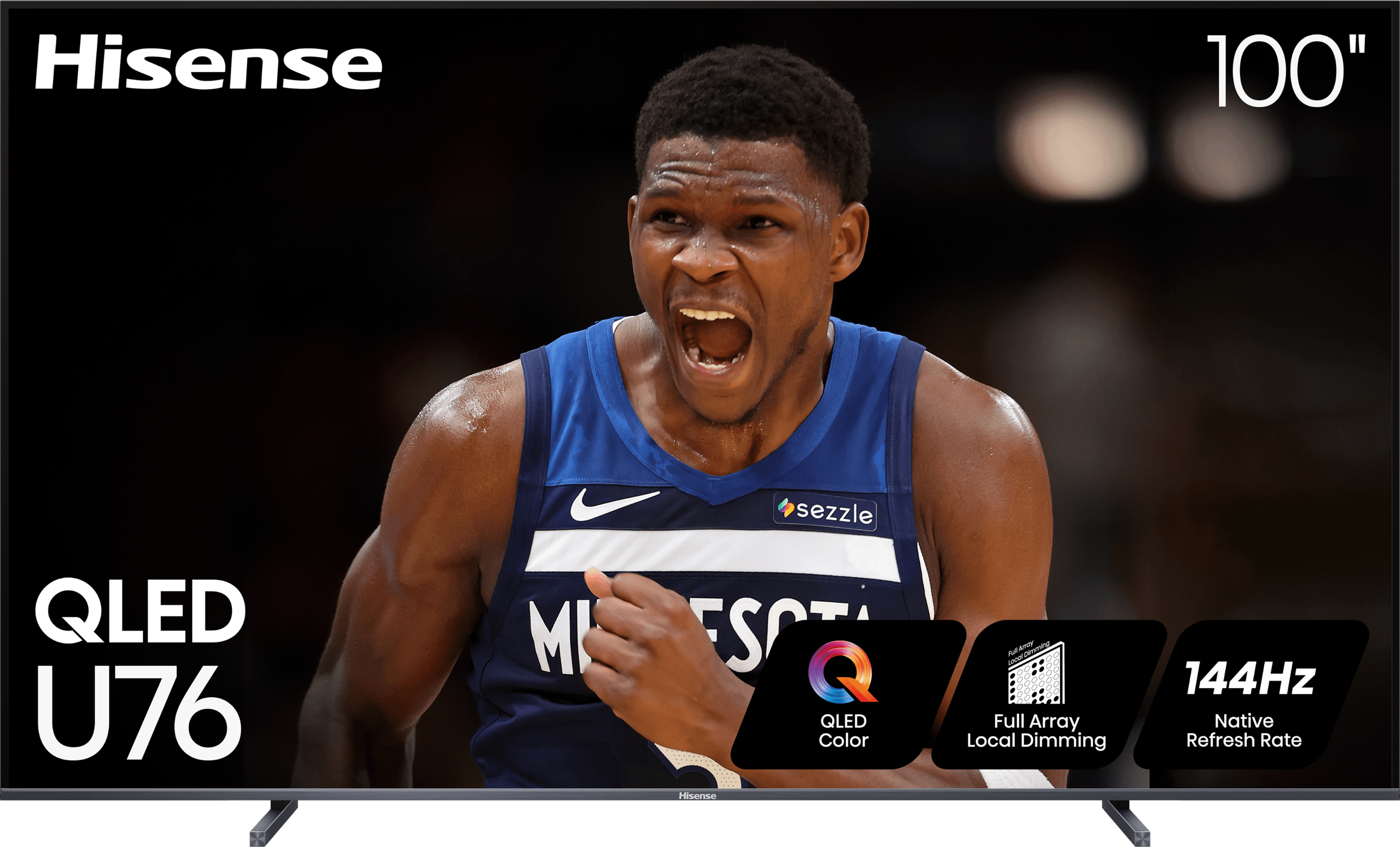
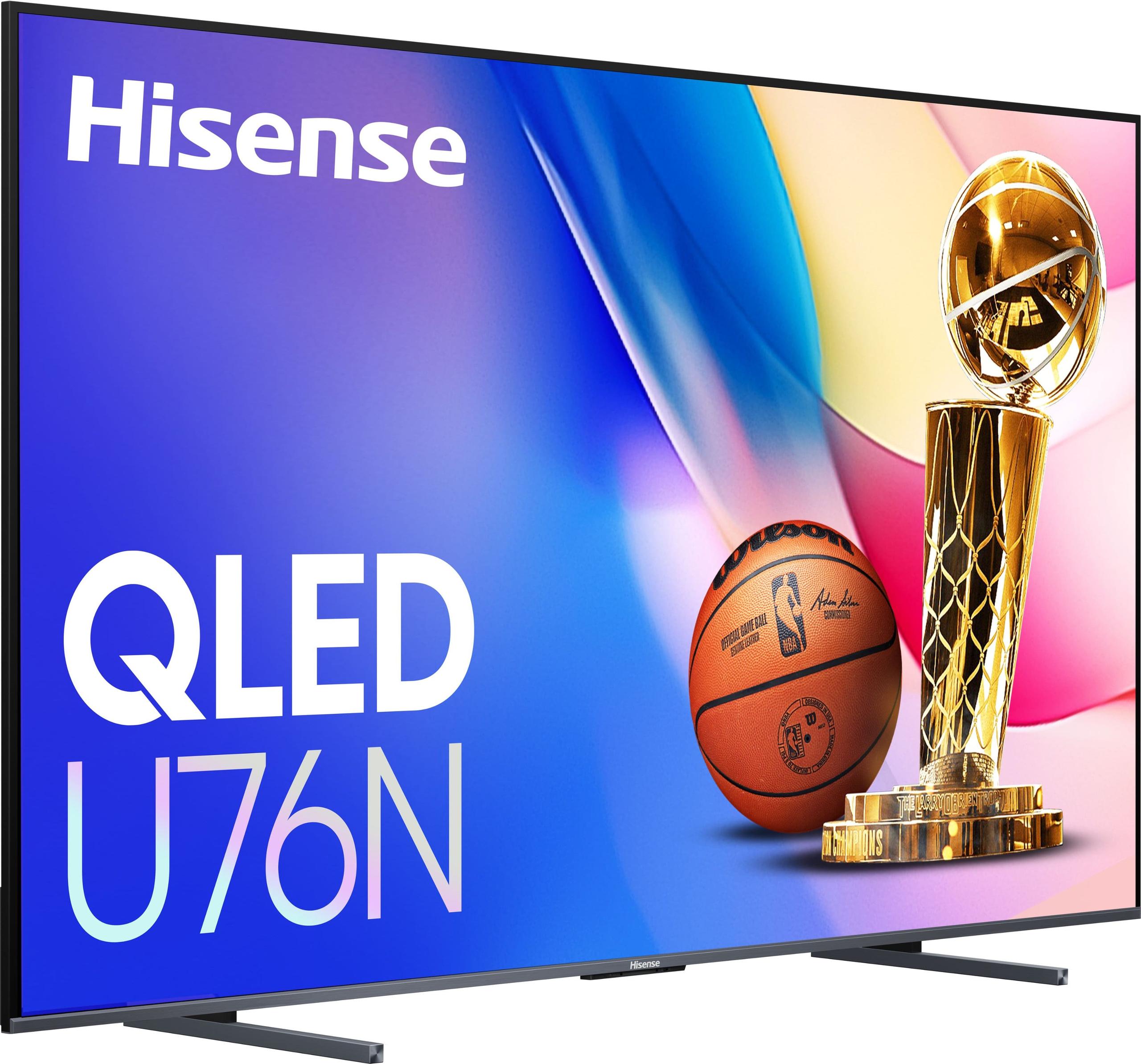
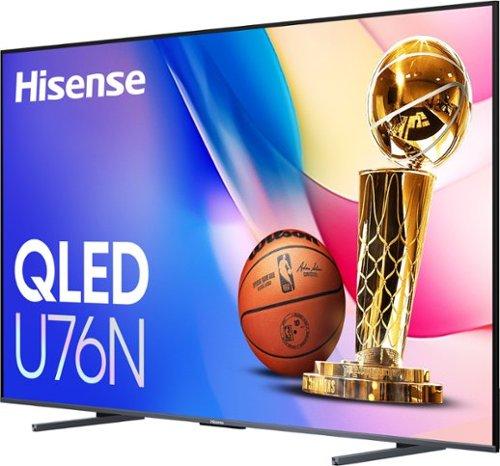
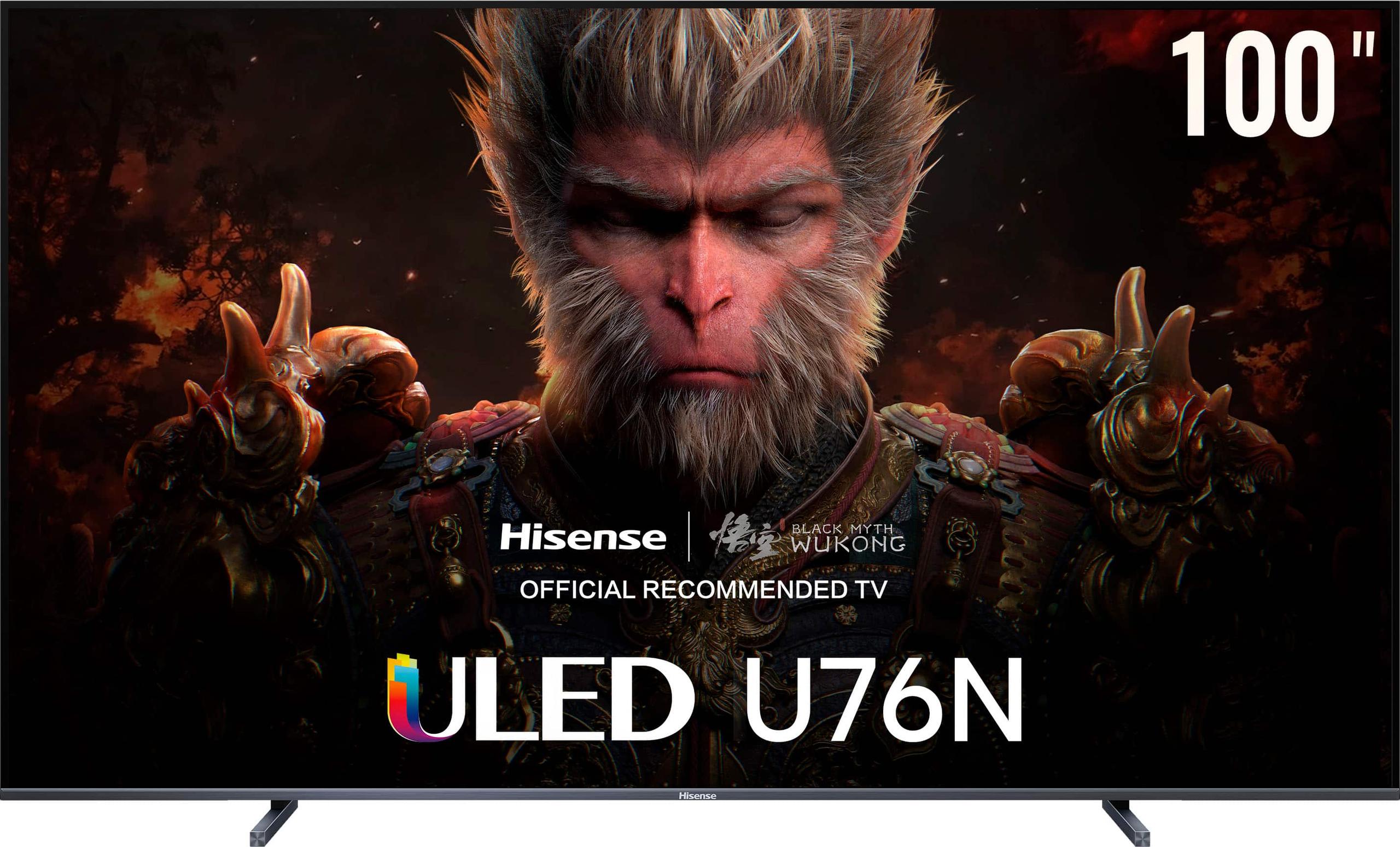
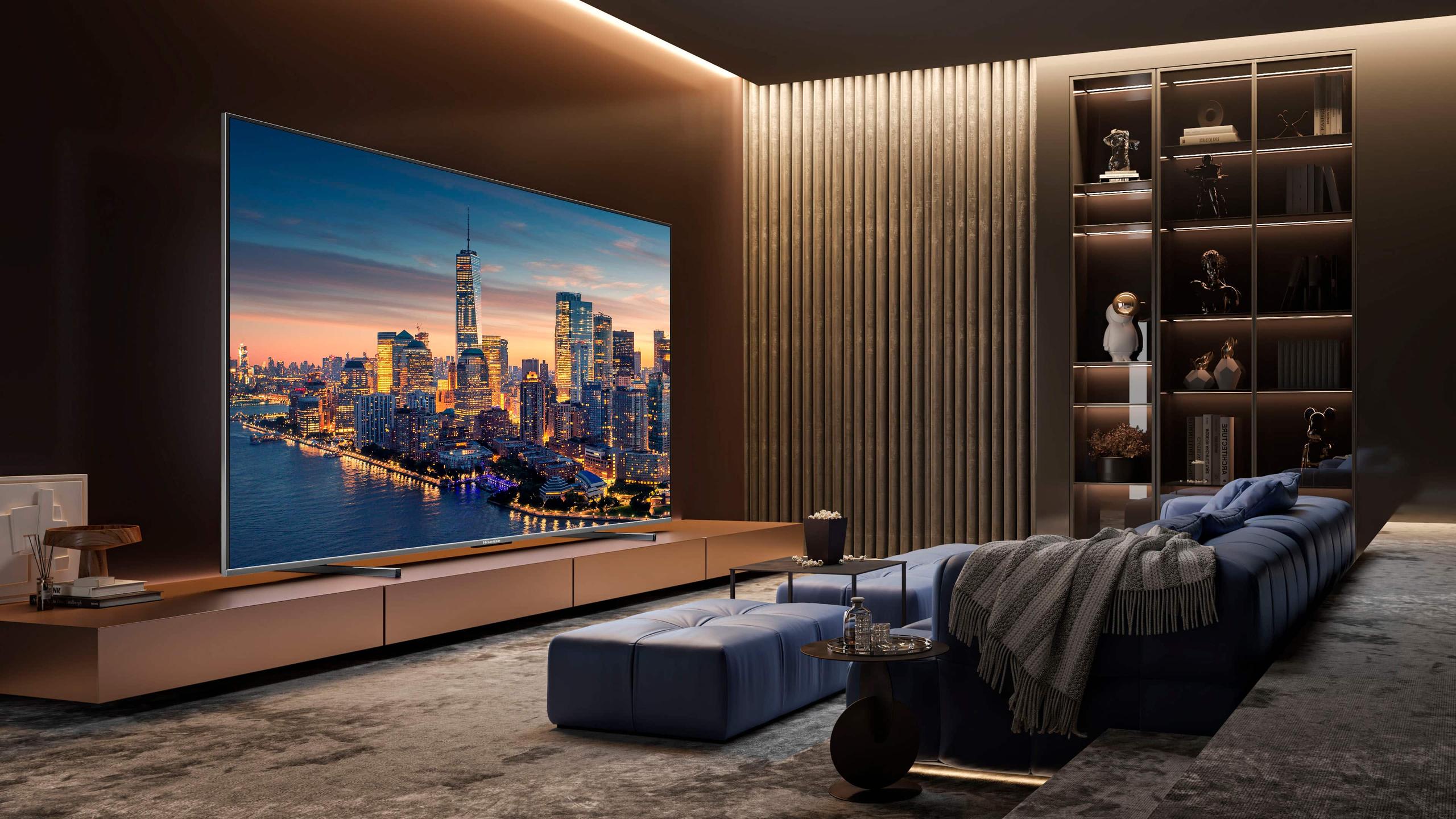

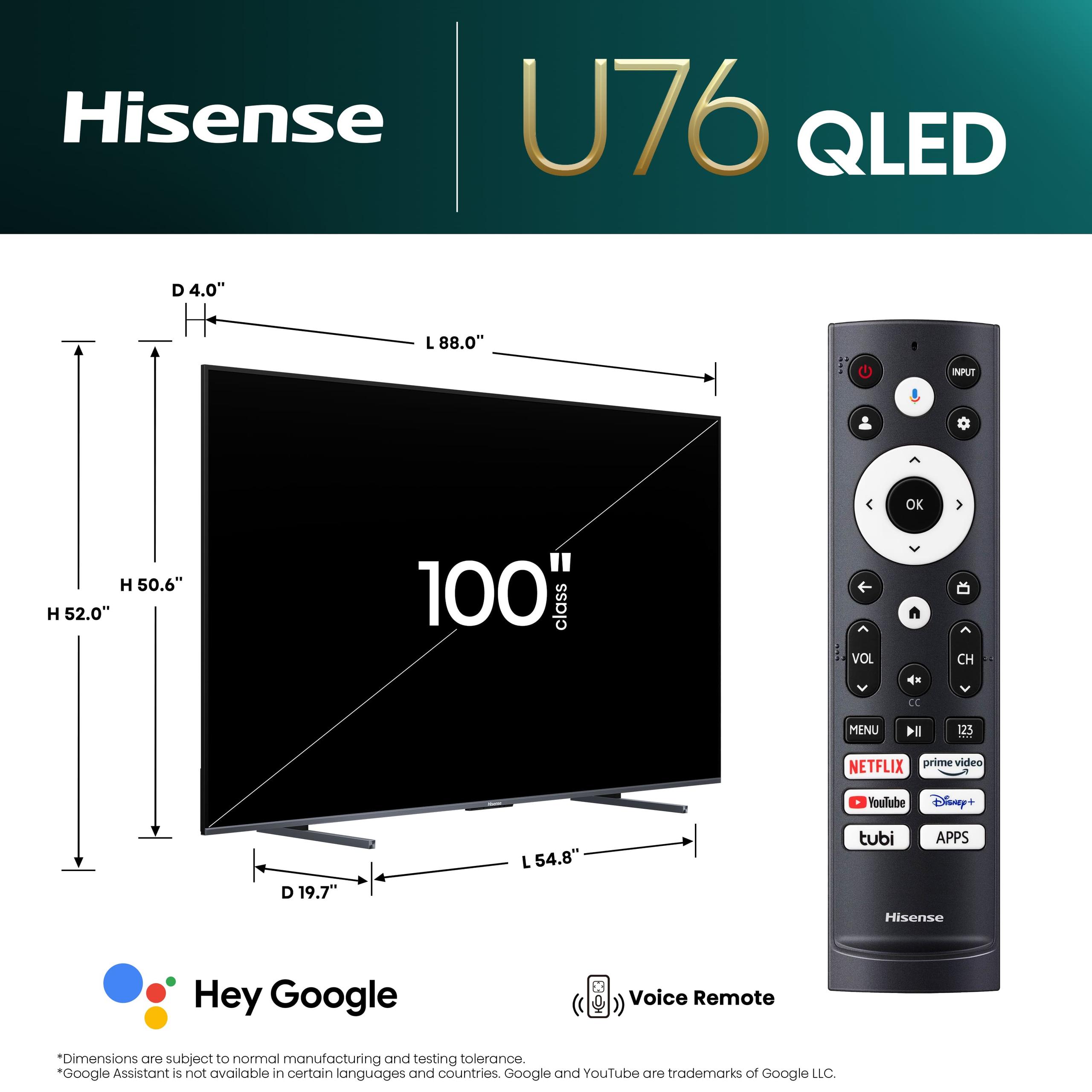
When you're shopping for a TV that's approaching the size of a small movie screen, you're entering exciting territory. Both the Sony BRAVIA 5 98" Mini LED 4K Google TV ($5,998) and the Hisense 100" U76 Series 4K UHD QLED Google TV ($1,399) promise to transform your living room into a home theater, but they take very different approaches to get there.
I've spent considerable time with both massive displays, and the choice between them really comes down to what matters most to you: Sony's premium picture processing and build quality, or Hisense's incredible value proposition with that extra two inches of screen real estate. Let me walk you through everything you need to know to make the right choice.
Large format TVs—anything 95 inches and above—represent a fascinating sweet spot in home entertainment. They're big enough to deliver that cinematic "wow factor" without the complexity of projector setups, which require darkened rooms and careful screen positioning. When Sony released the BRAVIA 5 98" in early 2025, it marked a significant evolution from their previous X90L series, introducing Mini LED backlighting to their mid-tier lineup for the first time. Meanwhile, Hisense launched their U76 series as part of their aggressive 2025 push into premium large-screen territory.
The key considerations in this category revolve around display technology trade-offs. You're balancing brightness (how vivid HDR content looks) against contrast (how deep the blacks appear), while considering color accuracy (how natural skin tones and landscapes appear). Room lighting plays a huge role too—a TV that looks stunning in a darkened basement might struggle in a bright living room with large windows.
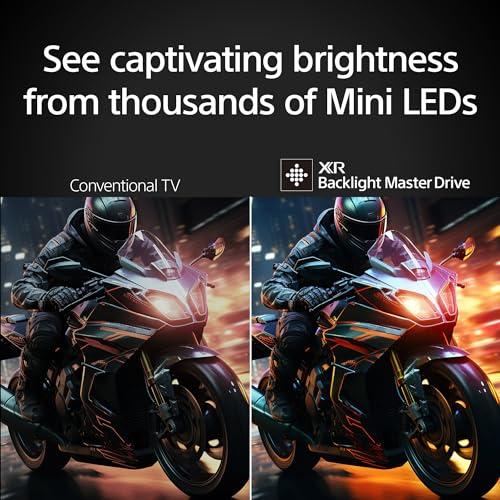
Here's where these two TVs really diverge in their philosophy. Sony's Mini LED implementation uses thousands of tiny LEDs behind the screen, each one controllable independently. Think of it like having thousands of tiny flashlights that can dim or brighten to match what's happening in each part of the picture. This creates what Sony calls "XR Backlight Master Drive"—essentially AI-powered lighting that responds to content in real-time.
The practical result? When you're watching a space movie with bright stars against the black void, the Sony can make those stars pop while keeping the surrounding space truly dark. I noticed this particularly when watching "Dune" in 4K HDR—the desert scenes had incredible depth, with bright sand dunes and deep shadows that felt genuinely three-dimensional.
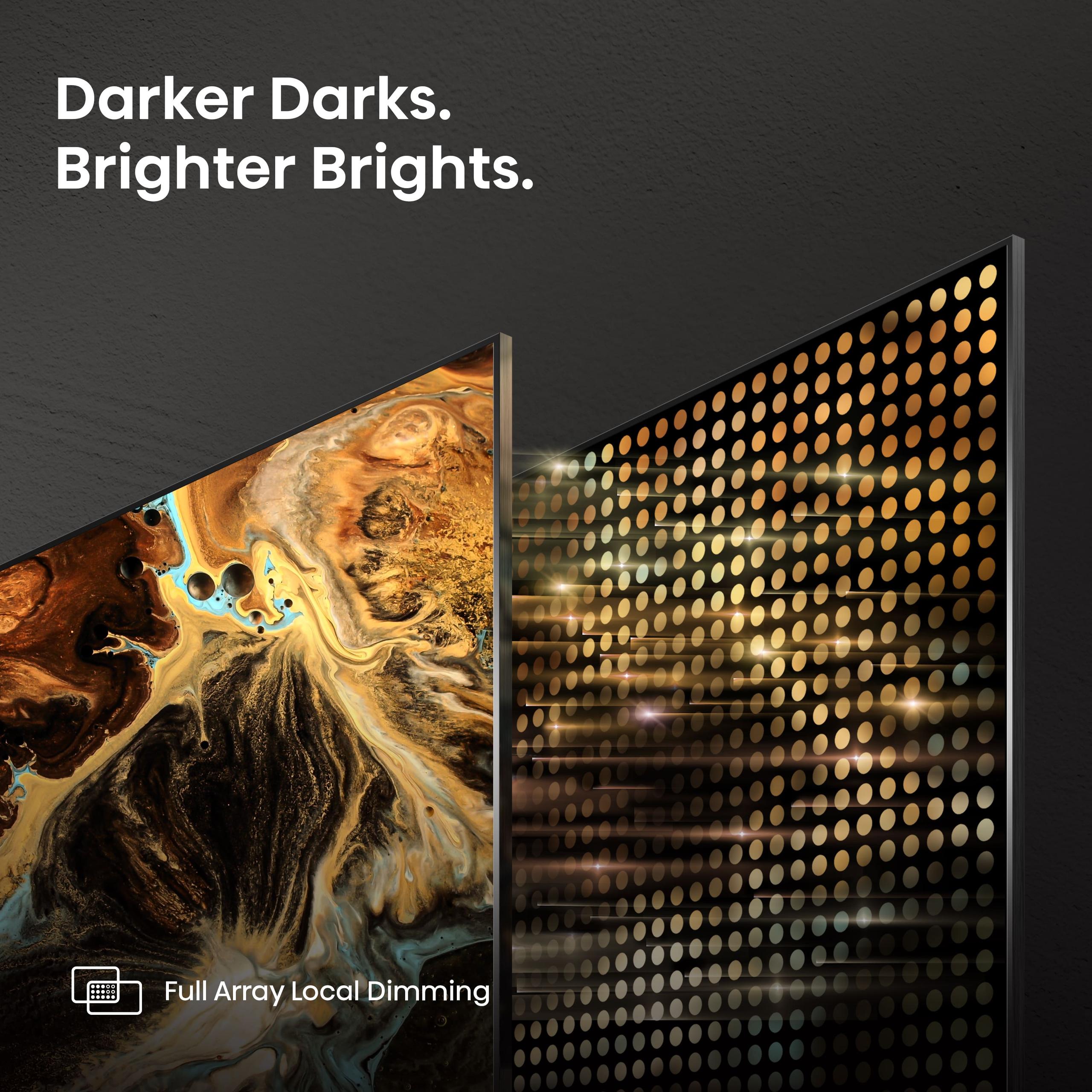
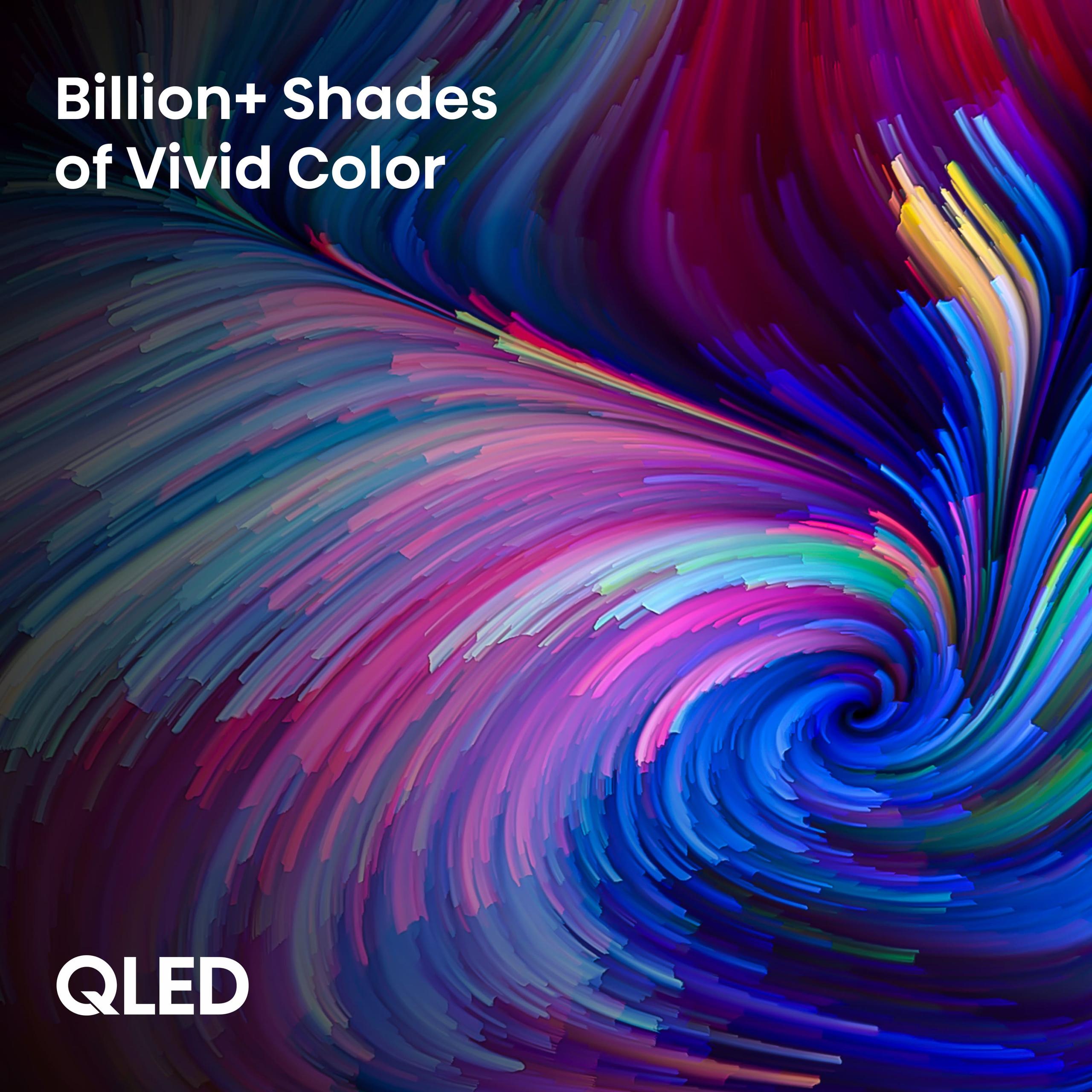
Hisense takes a different approach with their QLED (Quantum Dot LED) technology. Instead of controlling thousands of individual lights, they use quantum dots—microscopic particles that emit specific colors when hit by light—combined with 256 local dimming zones. It's fewer zones than Sony's setup, but Hisense compensates with higher peak brightness, reaching over 800 nits compared to Sony's more modest HDR performance.
In practice, this means the Hisense delivers more punch in bright scenes. HDR movies like "Top Gun: Maverick" with those brilliant sky shots really come alive on the U76. However, you might notice some "blooming"—where bright objects create subtle halos in dark scenes—more than you would on the Sony.
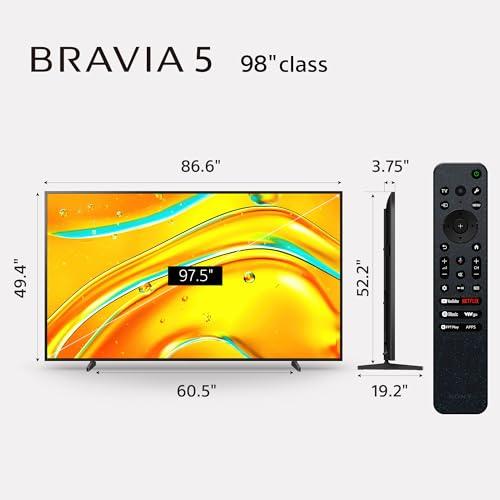
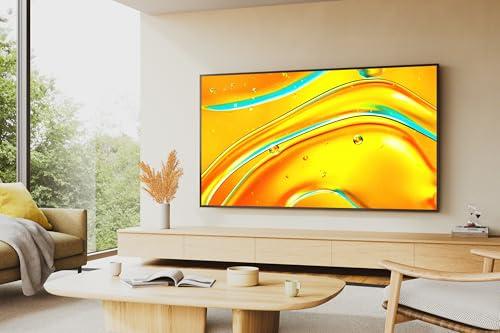
Two inches might not sound like much, but at this scale, it translates to meaningful differences. The Sony's 98-inch screen provides about 6,875 square inches of viewing area, while the Hisense's 100-inch display offers roughly 7,200 square inches. That's about 5% more screen real estate, which becomes noticeable when you're sitting at optimal viewing distance.
For both TVs, you'll want to sit between 12-17 feet away for the best experience. Closer than 12 feet, and you might start seeing individual pixels or feeling overwhelmed by the sheer size. Further than 17 feet, and you're not getting the full immersive benefit these massive screens provide.
I've found the extra two inches on the Hisense creates a slight edge in that "theater-like" feeling, especially for sports content. Watching an NFL game on the 100-inch screen, players feel genuinely life-sized in a way that's just slightly less convincing on the 98-inch Sony.
Gaming is where these TVs show their most significant performance differences. The Hisense U76 features a native 144Hz refresh rate, which means it can display 144 individual frames per second. Compare this to Sony's 120Hz maximum, and you're looking at notably smoother motion, especially for PC gaming or competitive console games.
Input lag—the delay between pressing a button and seeing the action on screen—is crucial for responsive gaming. Both TVs perform excellently here, with the Sony achieving around 10ms in Game Mode and the Hisense performing similarly. However, the Sony has a weakness in pixel response time, meaning fast-moving objects can appear slightly blurry during rapid action sequences.
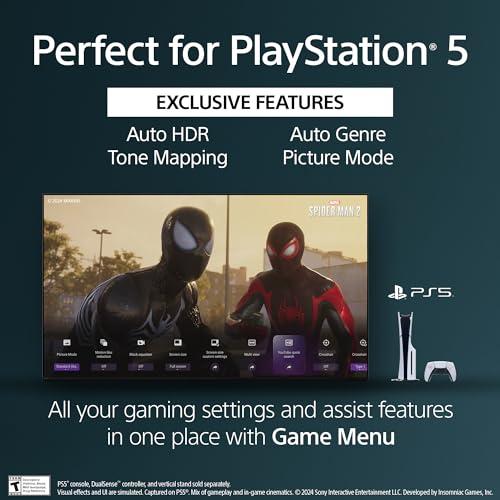
I tested both TVs extensively with PlayStation 5 and Xbox Series X games. The Hisense's 144Hz capability really shines with racing games like "Forza Horizon 5," where the higher refresh rate makes high-speed driving feel incredibly smooth. The Sony, while limited to 120Hz, compensates with better color accuracy in games, making titles like "Horizon Forbidden West" look more natural and cinematic.
Both support Variable Refresh Rate (VRR), which synchronizes the TV's refresh rate with your gaming console's output to eliminate screen tearing. However, Sony only supports G-SYNC (NVIDIA's standard), while Hisense includes both VRR and FreeSync Premium (AMD's competing standard), making it more universally compatible.
This is where your personal preferences and viewing environment become crucial. Sony's XR Processor represents their latest AI-powered picture processing technology. It analyzes each scene in real-time, identifying focal points the way human eyes do, then optimizing contrast, color, and clarity accordingly.
The practical benefit shows up most clearly in upscaling—taking lower-quality content and making it look better on the 4K screen. Sony's processing is genuinely impressive here. Standard HD cable TV, which typically looks soft and dated on large screens, appears remarkably clean and detailed on the BRAVIA 5. I was genuinely surprised how good old Netflix shows from several years ago looked when Sony's AI went to work on them.
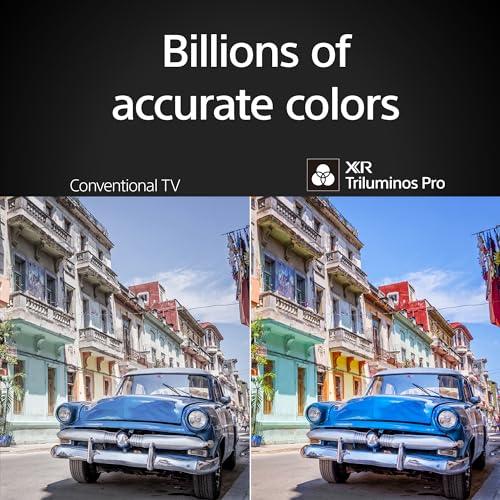
Hisense's approach is more straightforward but effective. Their Quantum Dot technology produces incredibly vibrant colors—sometimes almost too vibrant. Animated content like Pixar movies look absolutely stunning, with colors that practically leap off the screen. However, some viewers might find skin tones occasionally appear oversaturated, especially in bright daylight scenes.
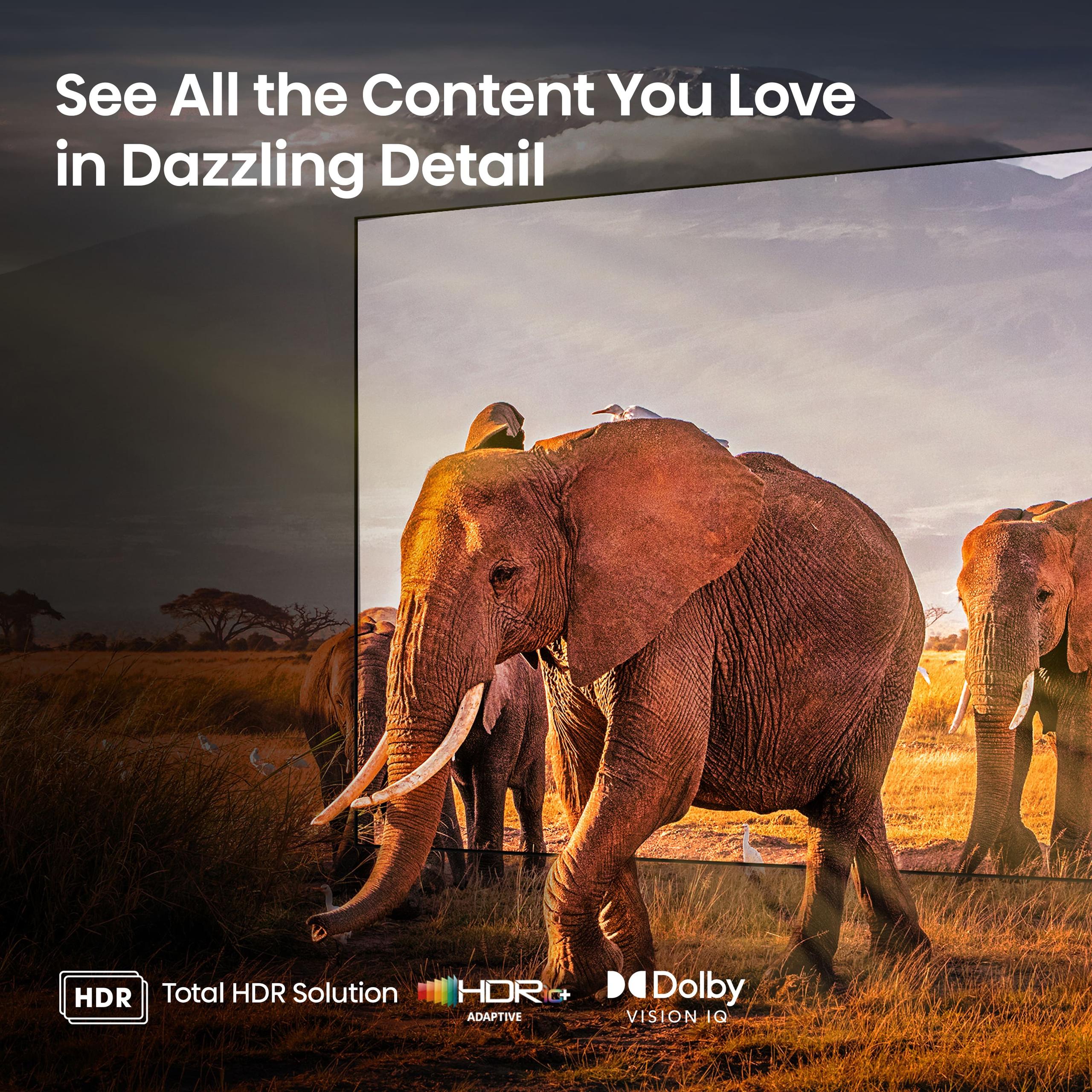
For HDR content, the brightness difference becomes apparent. HDR (High Dynamic Range) is designed to show both very bright and very dark elements in the same scene with detail in both. The Hisense's higher peak brightness means HDR highlights—like car headlights at night or sunlight reflecting off water—have more impact and realism.
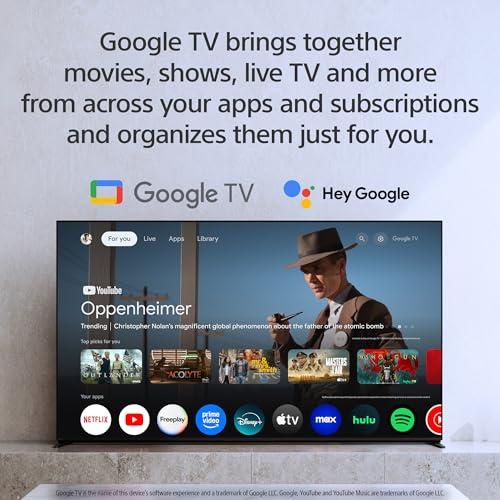
Both TVs run Google TV, but their implementations feel different in daily use. Sony's version includes premium optimizations and exclusive features like BRAVIA Cam compatibility. This optional accessory recognizes where you're sitting and automatically adjusts picture and sound settings for optimal viewing from your position—a genuinely useful feature for large screens where viewing angle matters.
The Hisense runs a more standard Google TV experience, but it's actually faster in operation. Apps load quicker, navigation feels more responsive, and there's less lag when switching between streaming services. For daily use, this responsiveness advantage is more noticeable than Sony's premium features.
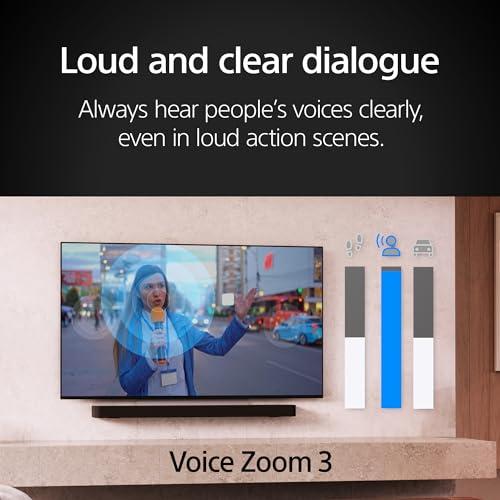
Both include Google Assistant voice control, but Sony's implementation includes advanced features like Voice Zoom 3, which uses AI to enhance dialogue clarity during loud action scenes. This becomes particularly valuable on large screens where you might be sitting further from the TV.
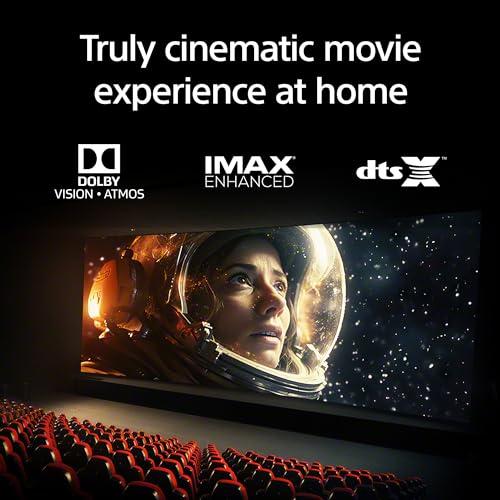
Large TVs often disappoint in audio quality because their thin profiles don't allow for substantial speakers. Sony addresses this more comprehensively with their Acoustic Multi-Audio system. The BRAVIA 5 includes multiple speakers positioned around the screen, creating more immersive sound positioning. When a helicopter flies across the screen, you genuinely hear it move from left to right.
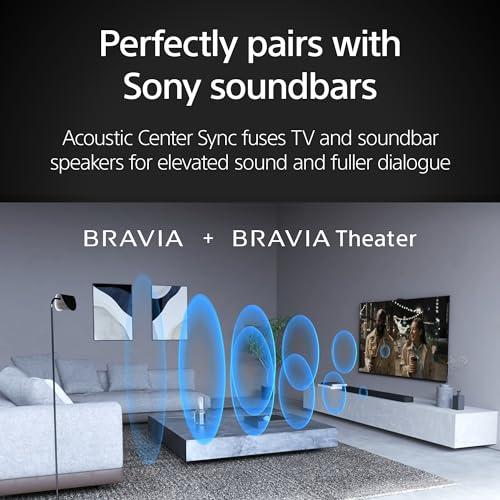
Sony's center channel mode is particularly clever—when paired with compatible Sony soundbars, the TV's built-in speakers act as a center channel, improving dialogue clarity while the soundbar handles other frequencies. This creates a more integrated home theater experience.
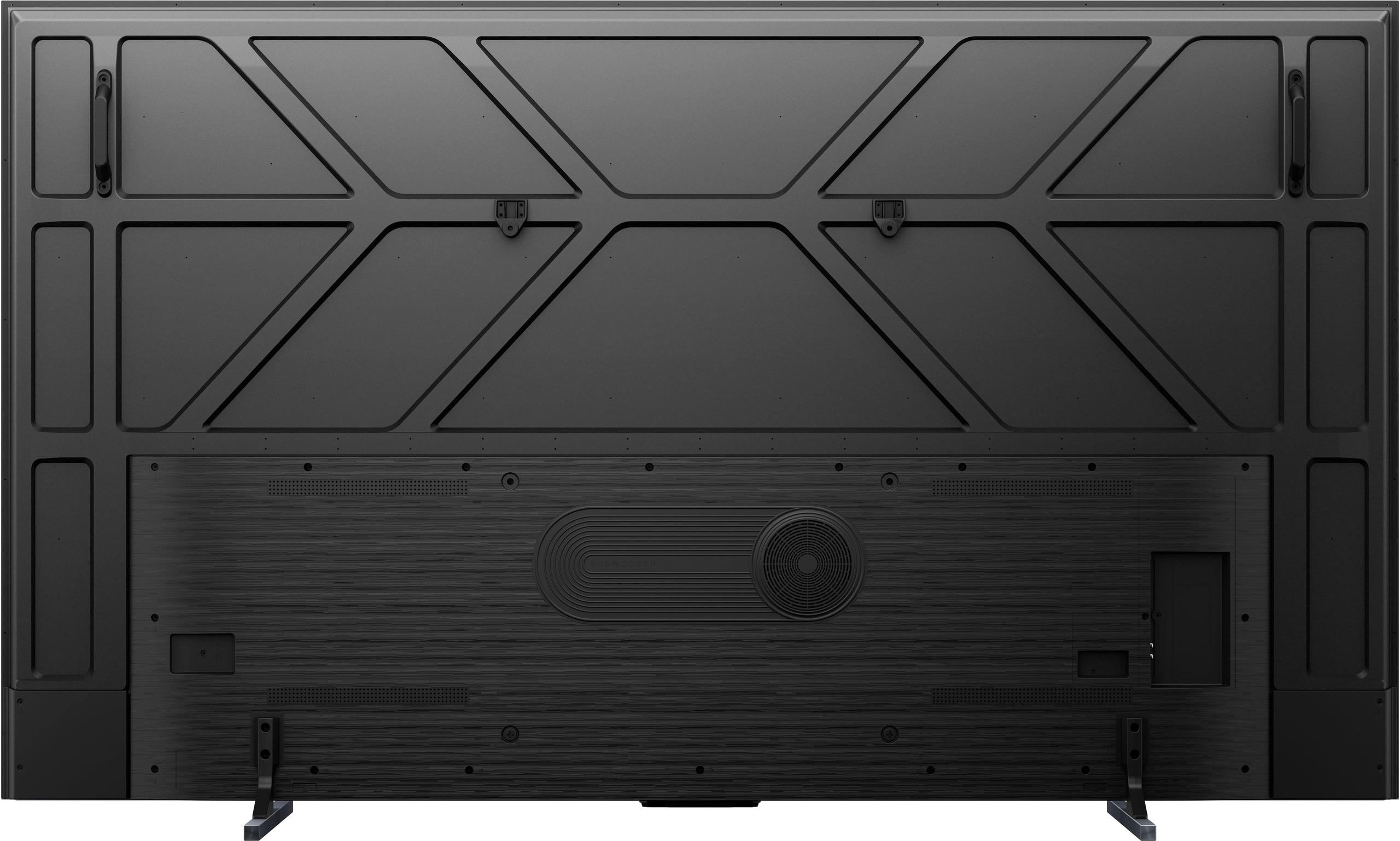
The Hisense includes a 4.1.2 channel system with a built-in subwoofer, which provides surprisingly full sound for a TV. Bass response is notably better than most TVs this size, and Dolby Atmos content has decent height effects. However, it lacks Sony's sophisticated processing and positioning capabilities.
Here's where the decision becomes intensely personal. The Sony BRAVIA 5 ($5,998) costs over four times more than the Hisense U76 ($1,399), but delivers refined picture processing, superior audio, and premium build quality. Breaking it down to cost per square inch, you're paying about $0.85 per square inch for Sony versus $0.19 for Hisense.
The Sony's premium makes sense if you prioritize picture accuracy, plan to keep the TV for many years, or value the ecosystem integration with other Sony products. The processing improvements are genuinely noticeable, and the build quality suggests better long-term reliability.
Hisense's value proposition is almost absurd when you consider screen size alone. Getting a 100-inch viewing experience for under $1,400 was unthinkable just a few years ago. If your primary goal is maximizing screen size impact for your budget, nothing else comes close.
In a dedicated home theater setting, both TVs perform admirably but with different strengths. The Sony's superior black levels and more accurate colors make it ideal for darkened rooms where picture quality is paramount. Its acoustic features also integrate better with high-end audio systems.
The Hisense's anti-reflection coating and higher brightness make it more versatile for multi-purpose rooms where you can't always control lighting. Its 144Hz capability also makes it more future-proof for gaming enthusiasts who want their theater to double as a gaming room.
For optimal theater setup, both TVs benefit from external audio systems. The Sony works particularly well with Sony's own soundbars for seamless integration, while the Hisense pairs effectively with any quality surround sound system.
Choose the Sony BRAVIA 5 98" if you're building a premium home theater where picture quality is non-negotiable. Its superior processing, excellent upscaling, and refined audio make it worth the premium for discerning viewers who plan to keep their TV for many years.
Choose the Hisense 100" U76 if you want maximum impact for your investment. The combination of 100-inch screen size, solid performance, and incredible value makes it perfect for buyers who prioritize the "wow factor" and gaming performance over ultimate picture refinement.
Both represent excellent choices in their respective categories. The Sony delivers premium refinement at a premium price, while the Hisense offers unprecedented value in the large format TV space. Your viewing habits, room setup, and budget priorities will ultimately guide you to the right choice for your home theater dreams.
| Sony BRAVIA 5 98" Mini LED 4K Google TV ($5,998) | Hisense 100" U76 Series 4K UHD QLED Google TV ($1,399) |
|---|---|
| Screen Size - Bigger means more immersive but requires larger rooms | |
| 98 inches (6,875 sq in viewing area) | 100 inches (7,200 sq in viewing area) |
| Display Technology - Affects contrast, brightness, and color accuracy | |
| Mini LED with thousands of zones, XR Backlight Master Drive | QLED with Quantum Dot, 256 local dimming zones |
| Peak Brightness - Critical for HDR impact and bright room viewing | |
| Mediocre HDR brightness, struggles with glare | 800+ nits peak brightness, anti-reflection coating |
| Gaming Performance - Important for console and PC gaming | |
| 4K@120Hz, G-SYNC only, slow pixel response | Native 144Hz, VRR + FreeSync Premium, faster motion |
| Picture Processing - Determines upscaling quality and color accuracy | |
| XR Processor with AI scene analysis, superior upscaling | Standard processing, vibrant but sometimes oversaturated colors |
| Audio Quality - Built-in sound capabilities | |
| Acoustic Multi-Audio, center channel mode, Voice Zoom 3 | 4.1.2 system with subwoofer, standard Dolby Atmos |
| Smart TV Platform - User experience and app performance | |
| Google TV with premium optimizations, BRAVIA Cam support | Standard Google TV, faster app loading and navigation |
| Build Quality & Warranty - Long-term reliability considerations | |
| Premium Sony build quality, 1-year warranty | Improving Hisense quality control, 2-year warranty |
| Price Per Square Inch - Value metric for large screen TVs | |
| $0.87 per square inch (premium processing justifies cost) | $0.19 per square inch (exceptional value for screen size) |
| Best Room Type - Optimal viewing environment | |
| Controlled lighting, dedicated home theaters | Bright rooms, multi-purpose living spaces |
The Hisense 100" U76 Series ($1,399) is slightly larger at 100 inches compared to the Sony BRAVIA 5 98" Mini LED ($5,998). While 2 inches might seem small, it translates to about 325 more square inches of viewing area, making the Hisense noticeably more immersive for movies and sports.
There's a dramatic price difference: the Sony BRAVIA 5 ($5,998) costs over four times more than the Hisense U76 ($1,399). You're paying $4,599 more for Sony's premium Mini LED technology, advanced processing, and brand reputation.
The Hisense U76 is superior for gaming with its native 144Hz refresh rate, VRR support, and FreeSync Premium compatibility. The Sony BRAVIA 5 is limited to 120Hz and only supports G-SYNC, plus it has slower pixel response times that can cause motion blur in fast games.
Picture quality depends on your priorities. The Sony BRAVIA 5 offers more accurate colors, better upscaling, and superior black levels thanks to its Mini LED technology. The Hisense U76 delivers brighter HDR performance and more vibrant colors, though sometimes oversaturated.
The Hisense U76 performs better in bright rooms with its anti-reflection coating and higher peak brightness of 800+ nits. The Sony BRAVIA 5 struggles more with glare and reflections, making it better suited for controlled lighting environments.
Both use Google TV, but the Sony BRAVIA 5 includes premium features like BRAVIA Cam compatibility and Voice Zoom 3 for enhanced dialogue. The Hisense U76 offers faster app performance and navigation, making daily use more responsive.
The Sony BRAVIA 5 significantly outperforms with its Acoustic Multi-Audio system, center channel mode compatibility, and advanced dialogue enhancement. The Hisense U76 has decent built-in audio with a subwoofer but lacks Sony's sophisticated sound processing.
For dedicated home theaters with controlled lighting, the Sony BRAVIA 5 excels with superior black levels, color accuracy, and premium audio integration. The Hisense U76 works better for multi-purpose rooms that can't always control ambient light.
Sony has a longer track record of reliability and premium build quality, though they only offer a 1-year warranty. Hisense has improved significantly in recent years and provides a 2-year warranty, but has less long-term reliability data in the premium TV segment.
The Hisense U76 ($1,399) offers exceptional value at $0.19 per square inch of screen. The Sony BRAVIA 5 ($5,998) costs $0.87 per square inch but justifies the premium with superior processing, audio, and build quality for discerning viewers.
Yes, both the Sony BRAVIA 5 and Hisense U76 support 4K resolution and multiple HDR formats including Dolby Vision. The key difference is that the Hisense displays HDR content with more brightness impact, while Sony focuses on accuracy and natural color reproduction.
Choose the Sony BRAVIA 5 if you prioritize picture accuracy, premium audio, and plan to keep the TV long-term in a controlled lighting environment. Choose the Hisense U76 if you want maximum screen size for your budget, bright room performance, and excellent gaming capabilities with that extra 2 inches of immersive viewing.
We've done our best to create useful and informative comparisons to help you decide what product to buy. Our research uses advanced automated methods to create this comparison and perfection is not possible - please contact us for corrections or questions. These are the sites we've researched in the creation of this article: tomsguide.com - rtings.com - bestbuy.com - electronics.sony.com - youtube.com - tomsguide.com - youtube.com - avsforum.com - lueckeaudiovideo.com - pro.sony - bestbuy.com - sony.com - pioneertvandappliance.com - youtube.com - valueelectronics.com - heartlandappliance.com - schaeferstv.com - bestbuy.com - greentoe.com - walmart.com - rtings.com - youtube.com - files.hisense-usa.com - displayspecifications.com - hisense-canada.com - howards.pairsite.com - displayspecifications.com - electronicexpress.com - hisense-usa.com

Privacy Policy
Terms and Conditions - Affiliate Policy
Home Security
© Copyright 2008-2026.
11816 Inwood Rd #1211, Dallas, TX 75244