



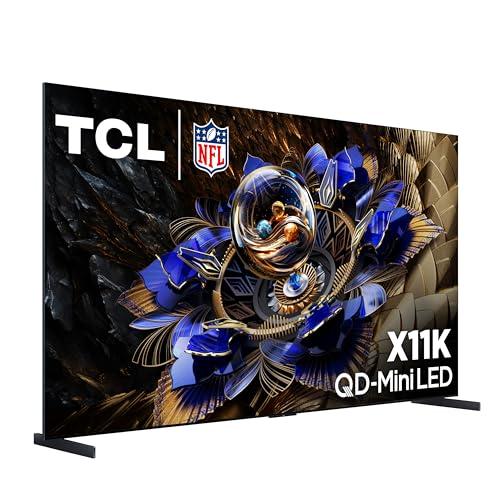
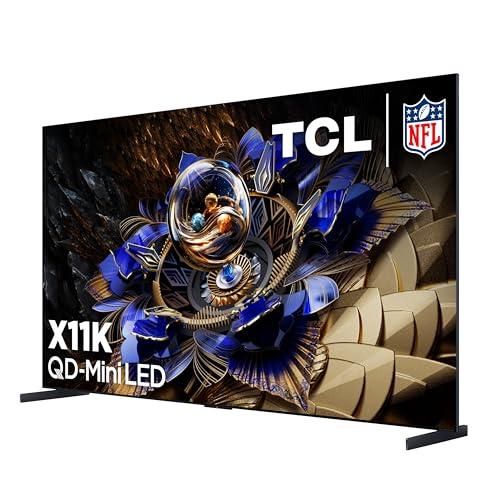
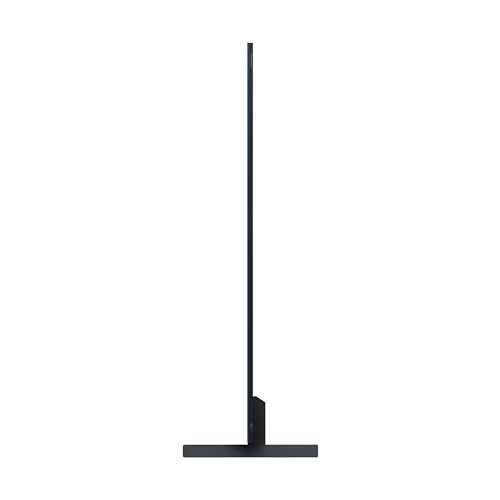
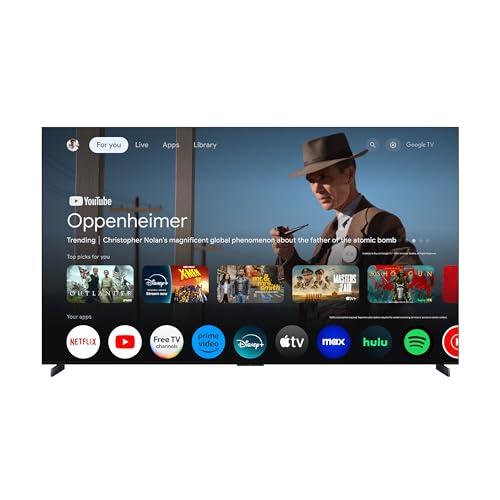






When you're shopping for a 98-inch TV, you're not just buying a screen – you're investing in a home theater centerpiece that will dominate your living space for years to come. The size alone transforms how you experience movies, sports, and gaming, creating an immersive environment that makes your couch feel like the front row of a cinema.
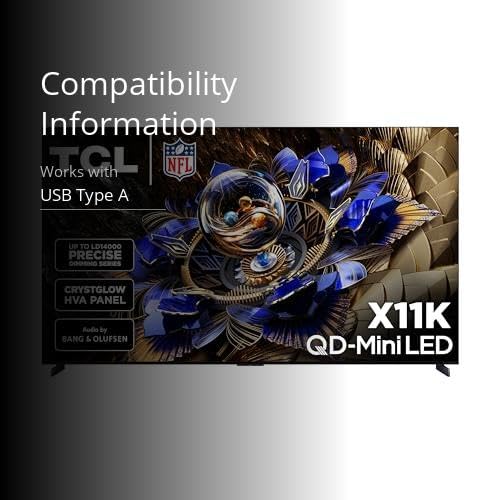
TCL has positioned two compelling options in this premium category: the flagship X11K and the value-focused QM7. Released in 2025 and 2024 respectively, these TVs represent different philosophies on how to deliver massive-screen entertainment. The question isn't just which one performs better – it's which approach makes more sense for your specific needs and budget.
The 98-inch TV segment sits at an interesting crossroads in the display world. These aren't just bigger versions of smaller TVs – they're engineered differently to handle the unique challenges of illuminating such massive panels while maintaining picture quality. At this size, even minor imperfections become magnified, making display technology choices critical.
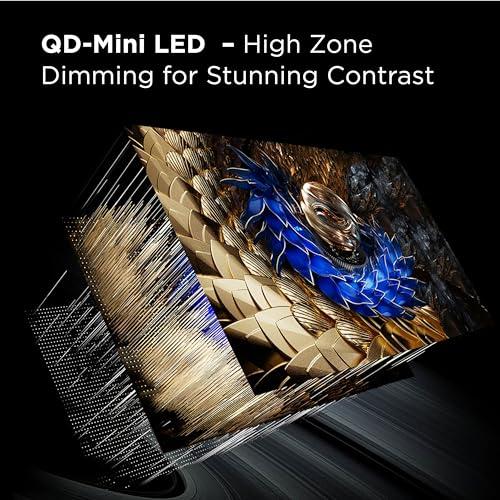
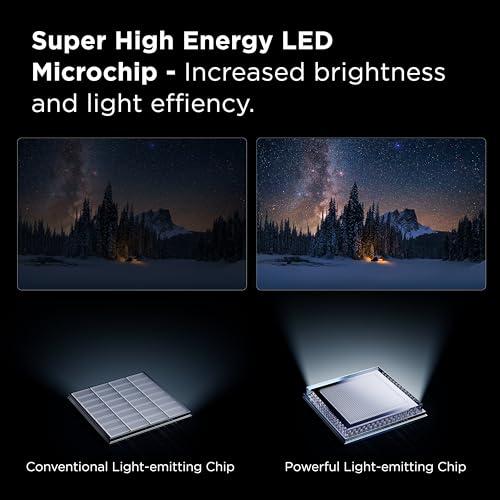
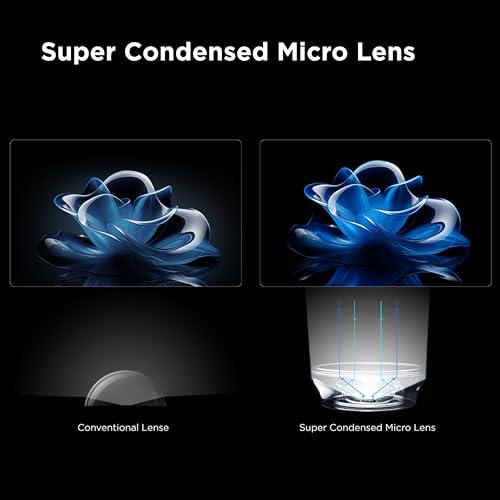
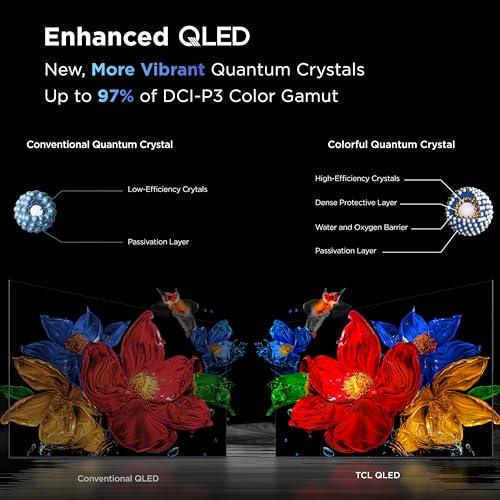
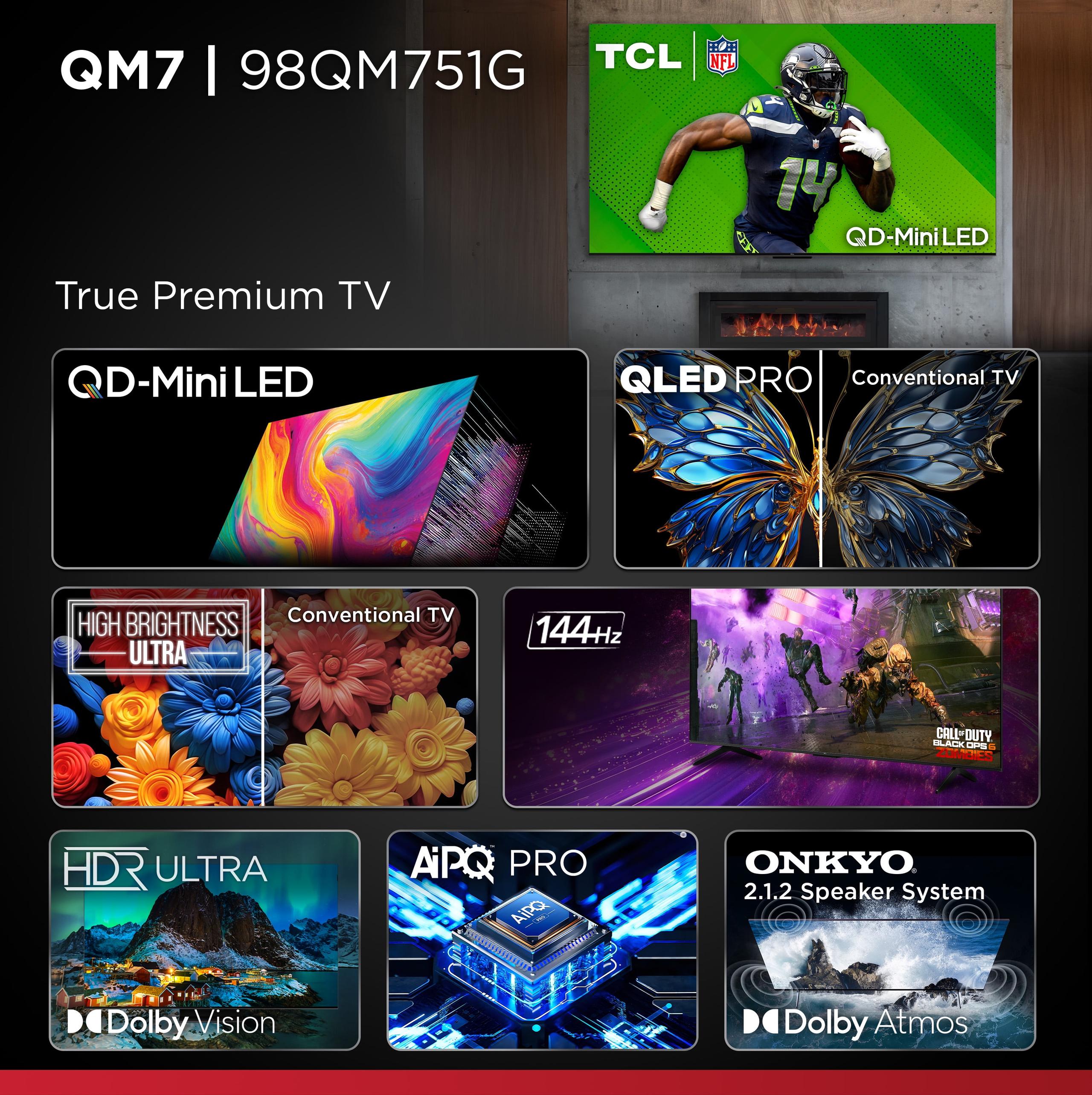
Both the X11K and QM7 use QD-Mini LED technology, which combines quantum dot color enhancement with mini LED backlighting. This isn't marketing speak – it's a fundamental improvement over traditional LED TVs. Mini LEDs are much smaller than standard LEDs, allowing manufacturers to pack thousands of them behind the screen for precise lighting control. Quantum dots then enhance the color output, creating wider color ranges and more accurate reproduction.
The key considerations at this price and size level include local dimming precision (how well the TV can control bright and dark areas simultaneously), peak brightness capabilities (crucial for HDR content), audio performance (since these TVs often serve as complete entertainment systems), and gaming features (increasingly important as consoles push higher refresh rates).
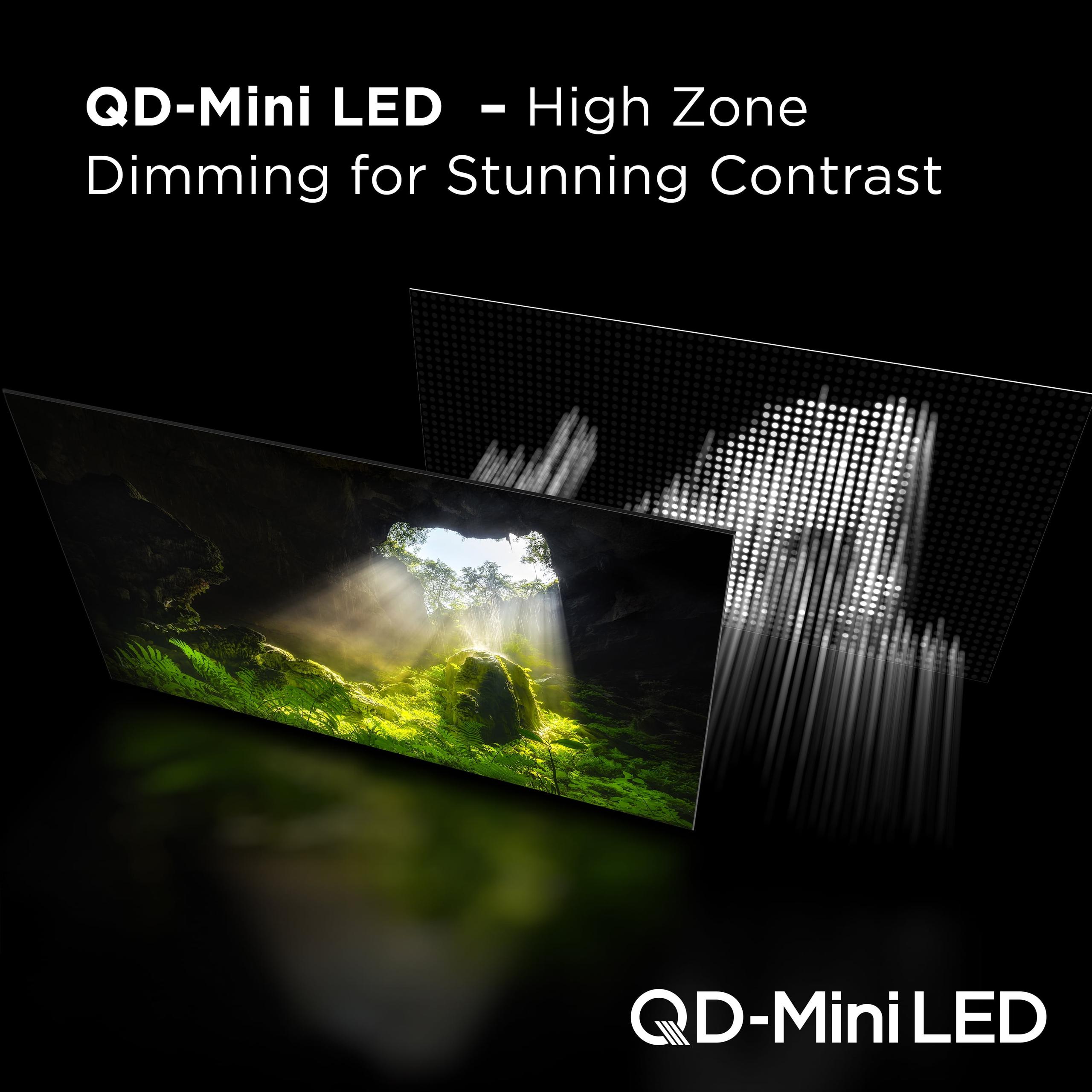
Local dimming is perhaps the most critical factor separating good large TVs from exceptional ones. Think of it as thousands of tiny dimmers behind your screen, each controlling the brightness of a specific area. When done well, it creates the deep blacks and bright whites that make HDR content truly spectacular.
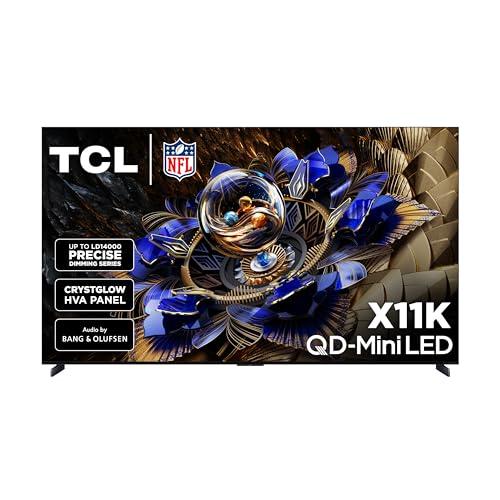
The X11K features up to 14,000 local dimming zones, while the QM7 offers 1,500+ zones. This isn't just a numbers game – it represents a fundamental difference in how precisely each TV can control contrast. The X11K's zone advantage is roughly 9-to-1, meaning it can create much finer gradations between light and dark areas within the same scene.
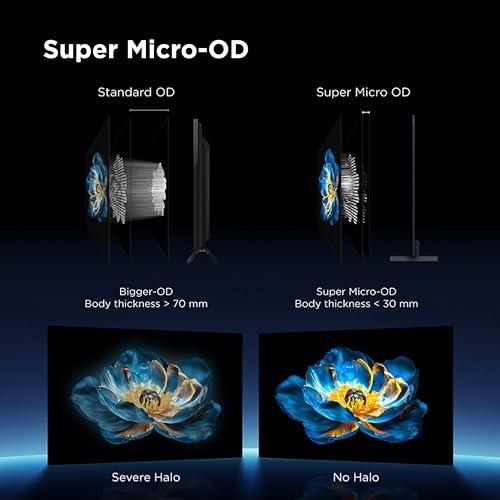
In practical terms, imagine watching a movie with a character holding a torch in a dark cave. The QM7 might create a subtle halo effect around the torch where the backlight bleeds into the surrounding darkness. The X11K, with its additional zones, can maintain that torch brightness while keeping the cave walls truly dark. This difference becomes more pronounced on a 98-inch screen where every detail is magnified.
However, the QM7's 1,500 zones still deliver excellent performance for most content. The law of diminishing returns applies here – going from 100 zones to 1,500 is more noticeable than going from 1,500 to 14,000, though the improvement is still meaningful for critical viewing.
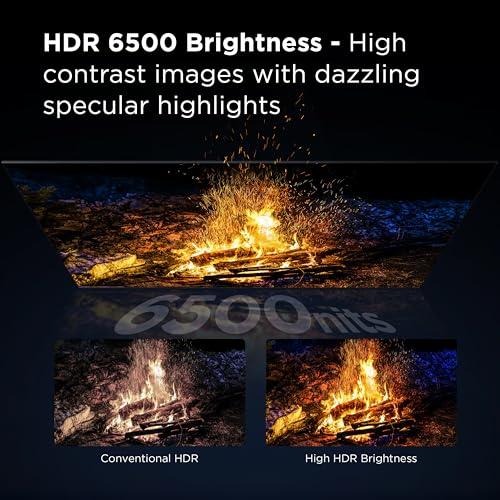
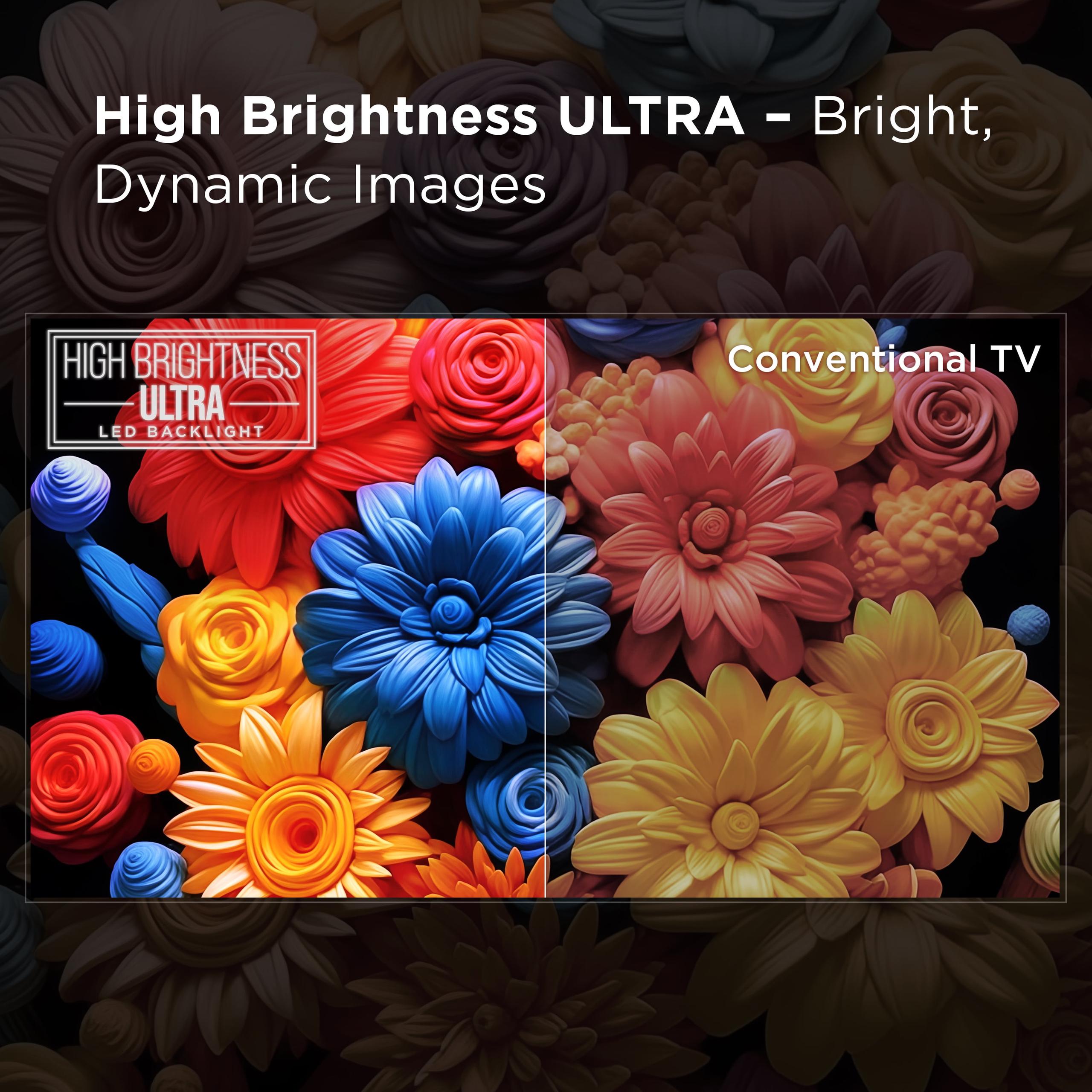
Peak brightness determines how well your TV performs in various lighting conditions and how impactful HDR highlights appear. The X11K reaches up to 6,500 nits, while the QM7 peaks at 2,400 nits. To put this in perspective, a typical LED TV might reach 400-800 nits, and even premium OLED TVs usually top out around 1,000 nits.
The X11K's extreme brightness serves two purposes: it can overcome significant ambient light, making it suitable for bright living rooms with large windows, and it can create more impactful HDR highlights. When a movie shows the sun reflecting off water or an explosion lighting up a scene, that extra brightness translates to a more realistic and immersive experience.
The QM7's 2,400 nits is still exceptional by industry standards and more than adequate for most viewing environments. Unless you're dealing with particularly bright rooms or want the absolute maximum HDR impact, the difference may not justify the price premium for many users.
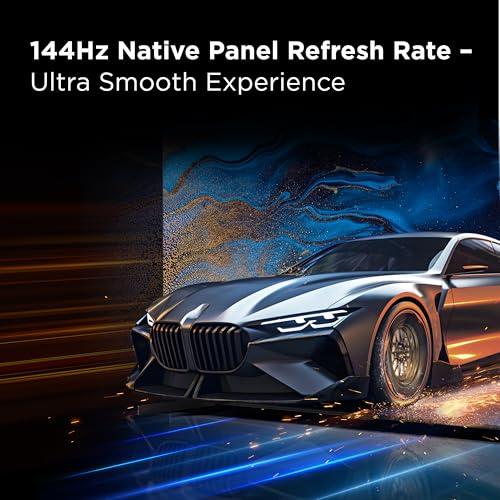
Both TVs support high refresh rates, but with different native capabilities. The X11K runs at 144Hz natively, while the QM7 operates at 120Hz but supports variable refresh rates up to 144Hz. For most content – movies, TV shows, even sports – this difference is negligible since most content is filmed at 24, 30, or 60 frames per second.
The distinction becomes relevant for PC gaming and future content. As gaming moves toward higher frame rates and streaming services experiment with higher refresh content, the X11K's native 144Hz provides a slight advantage in smoothness and motion clarity.
Large TVs often serve as complete entertainment systems, making built-in audio quality crucial. This is where the two models diverge significantly in philosophy and execution.
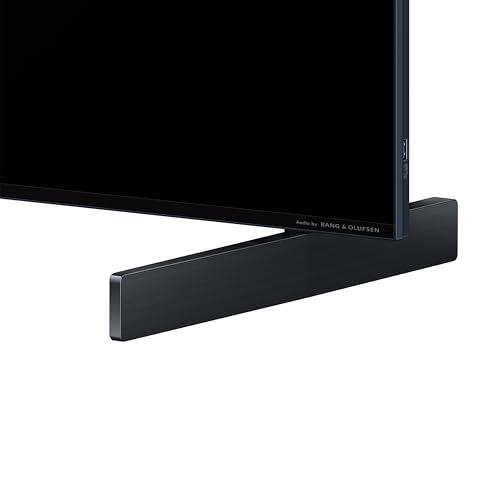
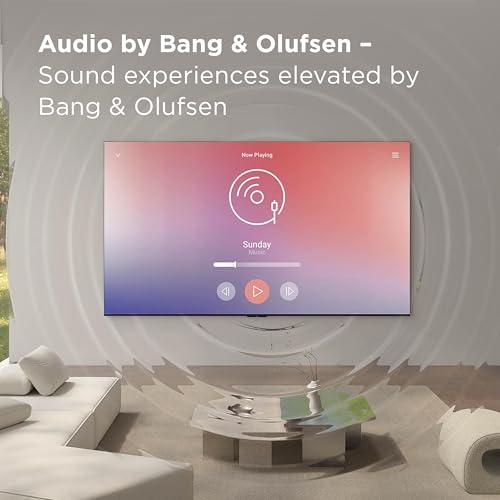
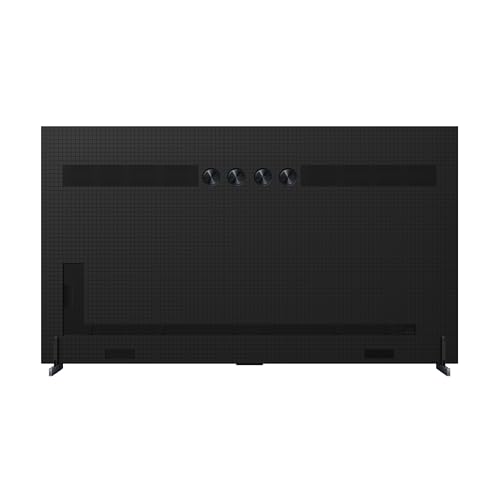
The X11K features a Bang & Olufsen-tuned 2.1.1 channel system with 120 watts of total power and Dolby Atmos support. Bang & Olufsen's involvement isn't just branding – they've engineered the speaker positioning, tuning, and processing to create spatial sound that complements the massive screen. The 2.1.1 configuration includes dedicated height channels for Dolby Atmos content, creating a more three-dimensional soundscape.
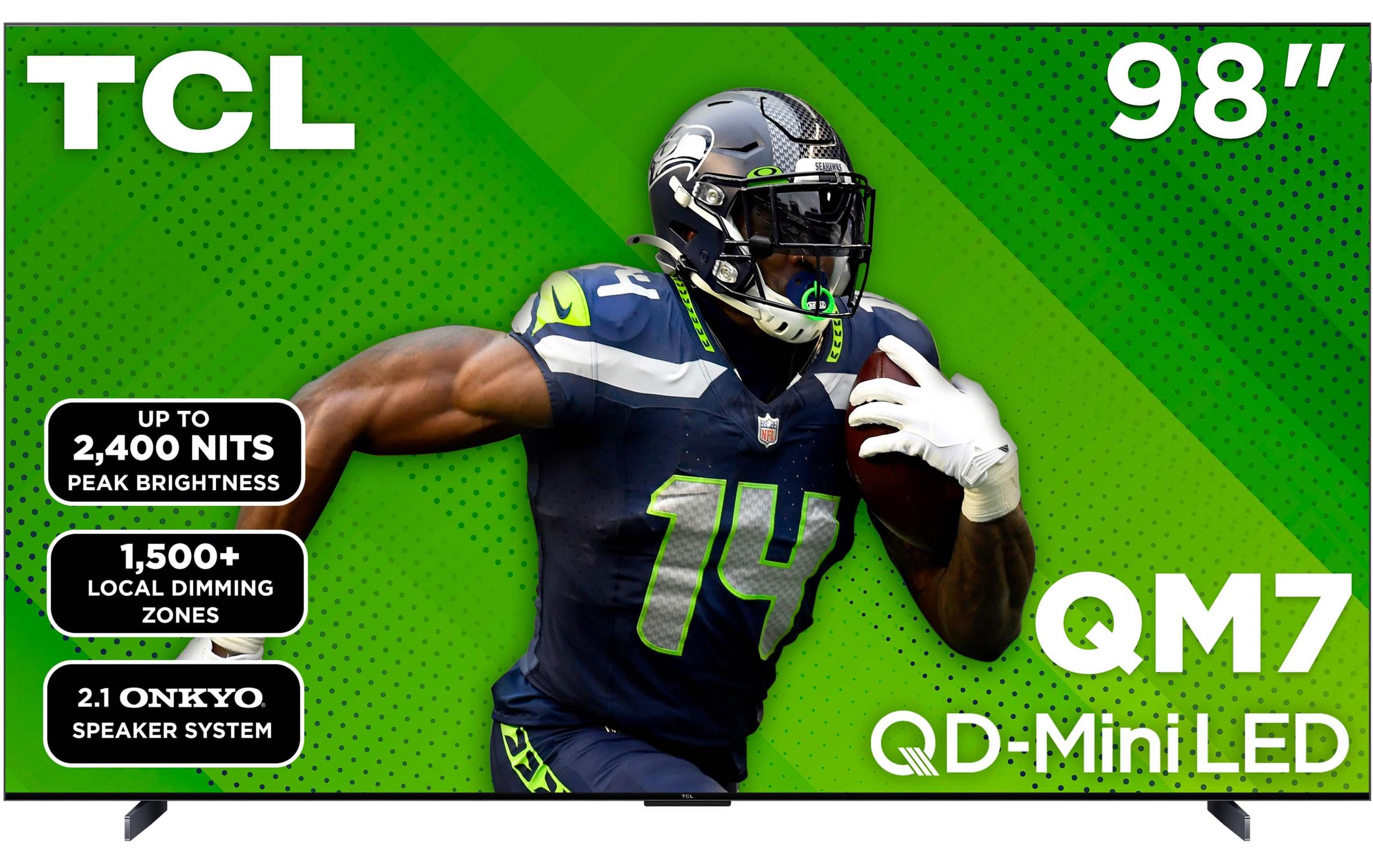
The QM7 uses an ONKYO 2.1 system with 40 watts total power and DTS Virtual:X processing. While ONKYO is a respected audio brand, the power difference is substantial – 120 watts versus 40 watts. In a large room with a 98-inch TV, this translates to the X11K filling the space with rich, detailed sound, while the QM7 might require external speakers for optimal performance.
Based on user feedback and expert reviews, the X11K's audio system can genuinely replace a mid-range soundbar for many users. The QM7's audio is competent but more likely to leave buyers planning speaker upgrades down the line.
Surprisingly, the less expensive QM7 actually outperforms the X11K in gaming-specific features. The QM7 includes Game Accelerator 240 technology, supporting variable refresh rates up to 240Hz – significantly higher than the X11K's capabilities.
This matters because modern gaming consoles and high-end PCs can push frame rates well beyond 120 Hz in competitive games. The QM7 also features Motion Rate 480 processing with MEMC (Motion Estimation, Motion Compensation) frame insertion, which creates smoother motion in fast-paced content by generating intermediate frames.
Both TVs support Auto Low Latency Mode (ALLM) and AMD FreeSync Premium Pro, ensuring minimal input lag when gaming. However, the QM7's superior variable refresh rate capabilities make it the clear choice for serious gamers, despite its lower overall price point.
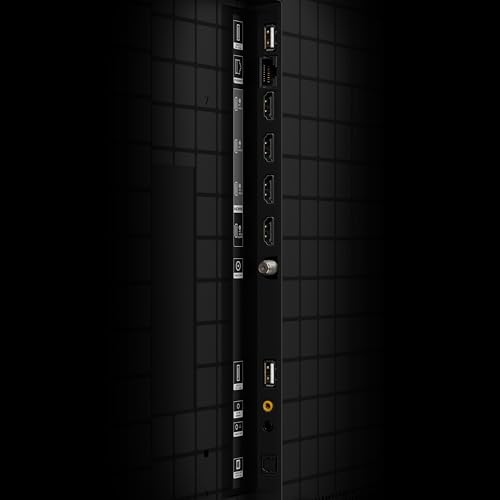
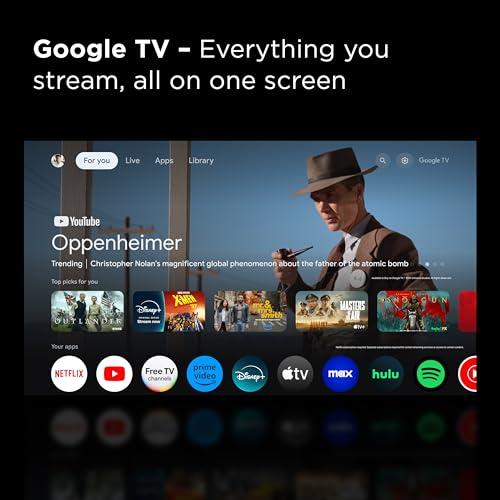
Both TVs run Google TV, providing access to all major streaming services and a user-friendly interface. The meaningful difference lies in connectivity standards. The X11K includes Wi-Fi 6 support, while the QM7 uses Wi-Fi 5.
Wi-Fi 6 offers several advantages: higher bandwidth for 4K and 8K streaming, lower latency for gaming and video calls, and better performance in homes with many connected devices. As streaming services continue pushing higher quality content and smart home devices proliferate, Wi-Fi 6 provides meaningful future-proofing.
At the time of writing, the X11K commands approximately 2.5 times the price of the QM7. This premium buys specific performance advantages: dramatically better local dimming precision, significantly higher peak brightness, superior built-in audio, and future-proofing features like Wi-Fi 6.
The QM7 delivers roughly 80% of the visual performance at about 40% of the cost, making it an exceptional value proposition. For many users, the QM7's 1,500 dimming zones and 2,400-nit brightness provide a premium experience that's difficult to fault.
The decision often comes down to specific use cases and budget flexibility. If you're planning to add a soundbar regardless of TV audio quality, the X11K's audio advantage becomes less relevant. If your room has controlled lighting, the extreme brightness difference matters less.
In a dedicated home theater environment with controlled lighting, both TVs excel, but their strengths align differently with typical setups. The X11K's superior local dimming creates more precise shadow detail and better overall contrast, which becomes more noticeable in dark viewing environments where subtle details matter most.
The X11K's built-in audio also simplifies home theater setup. Many home theater enthusiasts eventually invest in dedicated speakers, but the X11K can serve as a complete system while you're building out other components. The QM7 almost certainly requires external audio in a proper home theater setting.
For gaming-focused home theaters, the QM7's 240Hz VRR support makes it more versatile for current and future gaming systems. This is particularly relevant as the PlayStation 5 Pro and Xbox Series X push frame rates higher in competitive titles.
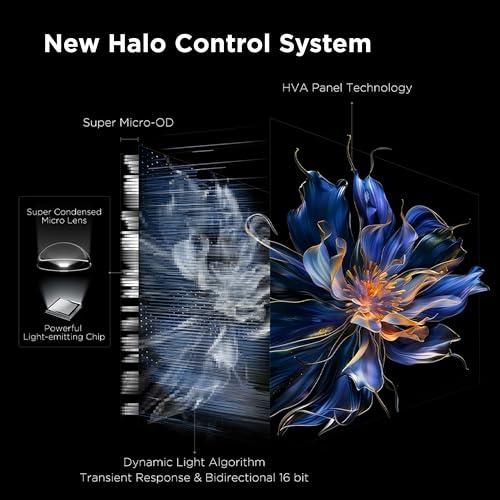
Since the QM7 launched in 2024 and the X11K in 2025, they represent different generations of TCL's technology development. The X11K incorporates TCL's latest Halo Control System, which includes advanced optical components and algorithms designed to minimize blooming and improve uniformity across the massive panel.
The mini LED technology itself has evolved rapidly over the past few years. Early mini LED TVs often struggled with zone transitions and uniformity issues. Both of these TVs benefit from more mature manufacturing processes and improved control algorithms, making them significantly better than first-generation mini LED displays from just a few years ago.
Choose the X11K if:
Choose the QM7 if:
Both TVs represent excellent choices, but for different reasons. The QM7 offers exceptional value and actually superior gaming performance, making it the smarter choice for most buyers. Its 1,500 dimming zones and 2,400-nit brightness deliver a genuinely premium experience that's difficult to criticize.
The X11K justifies its premium for buyers who prioritize absolute picture quality and integrated audio performance. Its 14,000 dimming zones create a level of precision that, while not revolutionary over the QM7, represents a meaningful step up for critical viewing.
From a practical standpoint, the QM7 delivers about 80% of the X11K's performance at roughly 40% of the cost. That's an exceptional value proposition that's hard to argue against. The X11K represents diminishing returns territory – excellent if budget isn't a primary concern, but harder to recommend for value-conscious buyers.
For most people investing in a 98-inch TV, the QM7 provides the better balance of performance, features, and value. The X11K serves buyers who want the absolute best and are willing to pay substantially more for incremental improvements in specific areas.
| TCL 98" X11K 4K QD-Mini LED Google TV | TCL 98" QM7 Series 4K UHD Smart TV |
|---|---|
| Local Dimming Zones - Critical for HDR contrast and preventing light blooming | |
| Up to 14,000 zones (exceptional precision for subtle contrast gradations) | Up to 1,500+ zones (excellent performance, diminishing returns beyond this) |
| Peak Brightness - Determines HDR impact and bright room performance | |
| Up to 6,500 nits (handles any ambient light, maximum HDR highlights) | Up to 2,400 nits (excellent for most rooms, still premium-tier brightness) |
| Panel Refresh Rate - Affects motion smoothness and gaming performance | |
| 144Hz native (slightly smoother at maximum settings) | 120Hz native with 144Hz VRR (adequate for all current content) |
| Gaming Features - Important for console and PC gaming | |
| 144Hz VRR, ALLM, AMD FreeSync Premium Pro | Game Accelerator 240 (240Hz VRR), Motion Rate 480, ALLM, AMD FreeSync Premium Pro |
| Audio System - Reduces need for external speakers | |
| Bang & Olufsen 2.1.1 system, 120W, Dolby Atmos (replaces mid-range soundbar) | ONKYO 2.1 system, 40W, DTS Virtual:X (competent but likely needs external audio) |
| Smart Platform & Connectivity - Future-proofing for streaming and smart home | |
| Google TV with Wi-Fi 6 (better bandwidth and lower latency) | Google TV with Wi-Fi 5 (adequate for current streaming needs) |
| Display Technology - Foundation for picture quality | |
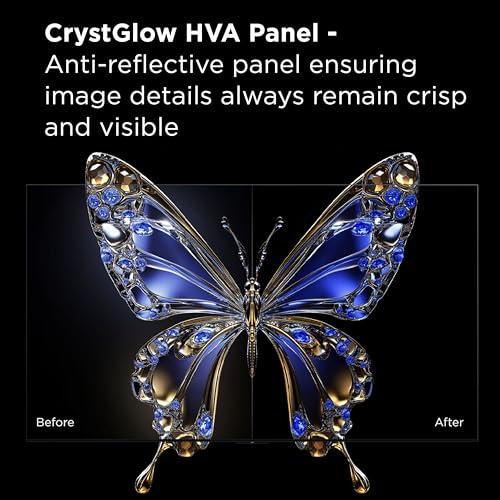
| QD-Mini LED with CrystGlow HVA Panel, Quantum Dot enhancement | QD-Mini LED with Quantum Dot enhancement, FullView 360 bezel-less design |
| HDR Format Support - Compatibility with premium content | |
| Dolby Vision IQ, HDR10+, HDR10, HLG | HDR ULTRA with Dolby Vision IQ, HDR10+, HDR10, HLG |
| Weight - Installation and mounting considerations | |
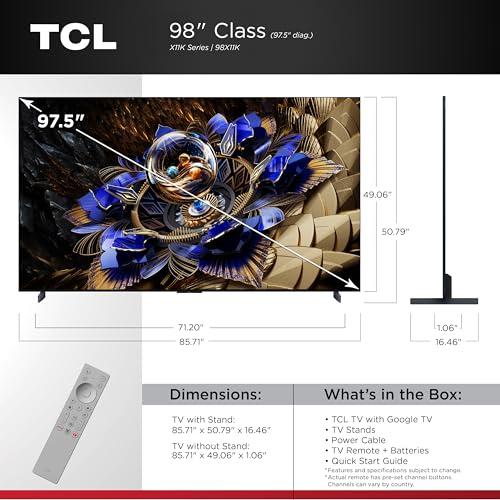
| 155 lbs with stand (heavier due to premium components) | 134.5 lbs with stand (easier handling and installation) |
| Release Year - Technology generation and feature maturity | |
| 2025 (latest flagship technology and refinements) | 2024 (mature, proven technology at lower cost) |
The TCL 98" X11K delivers superior picture quality with 14,000 local dimming zones compared to the QM7's 1,500+ zones. This allows the X11K to create more precise contrast control and reduce light blooming around bright objects. The X11K also reaches 6,500 nits peak brightness versus the QM7's 2,400 nits, providing more impactful HDR highlights and better performance in bright rooms.
The TCL QM7 actually outperforms the X11K for gaming despite its lower price. The QM7 features Game Accelerator 240 with support for up to 240Hz variable refresh rate, while the X11K maxes out at 144Hz VRR. The QM7 also includes Motion Rate 480 processing, making it superior for competitive gaming and fast-action content.
The X11K features a premium Bang & Olufsen 2.1.1 audio system with 120W total power and Dolby Atmos support, delivering room-filling sound that can replace a mid-range soundbar. The QM7 uses an ONKYO 2.1 system with only 40W power output, which is competent but will likely require external speakers for optimal performance in large rooms.
The QM7 provides exceptional value, delivering approximately 80% of the X11K's visual performance at a significantly lower cost. While the X11K offers premium features like more dimming zones and better audio, the QM7 represents better performance per dollar for most buyers seeking a premium 98-inch experience.
Both TVs excel in home theater environments, but with different strengths. The X11K provides superior contrast precision and built-in audio that can serve as a complete system initially. The QM7 offers excellent picture quality and better gaming performance, though it typically requires external audio for optimal home theater sound. Both support all major HDR formats including Dolby Vision.
The X11K significantly outperforms the QM7 in bright room conditions due to its 6,500 nits peak brightness compared to 2,400 nits. This extreme brightness allows the X11K to overcome ambient light from large windows and maintain vibrant HDR performance throughout the day. The QM7 still performs well in moderately lit rooms but may struggle in very bright environments.
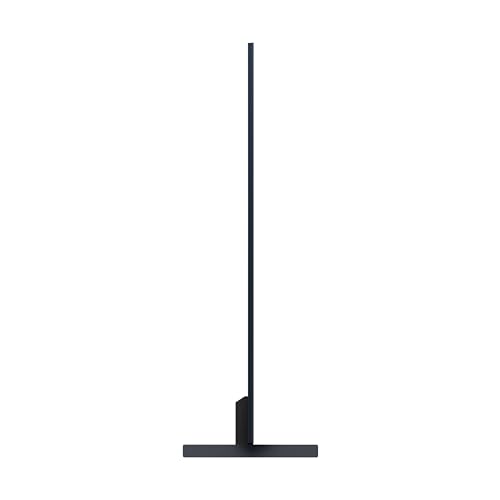
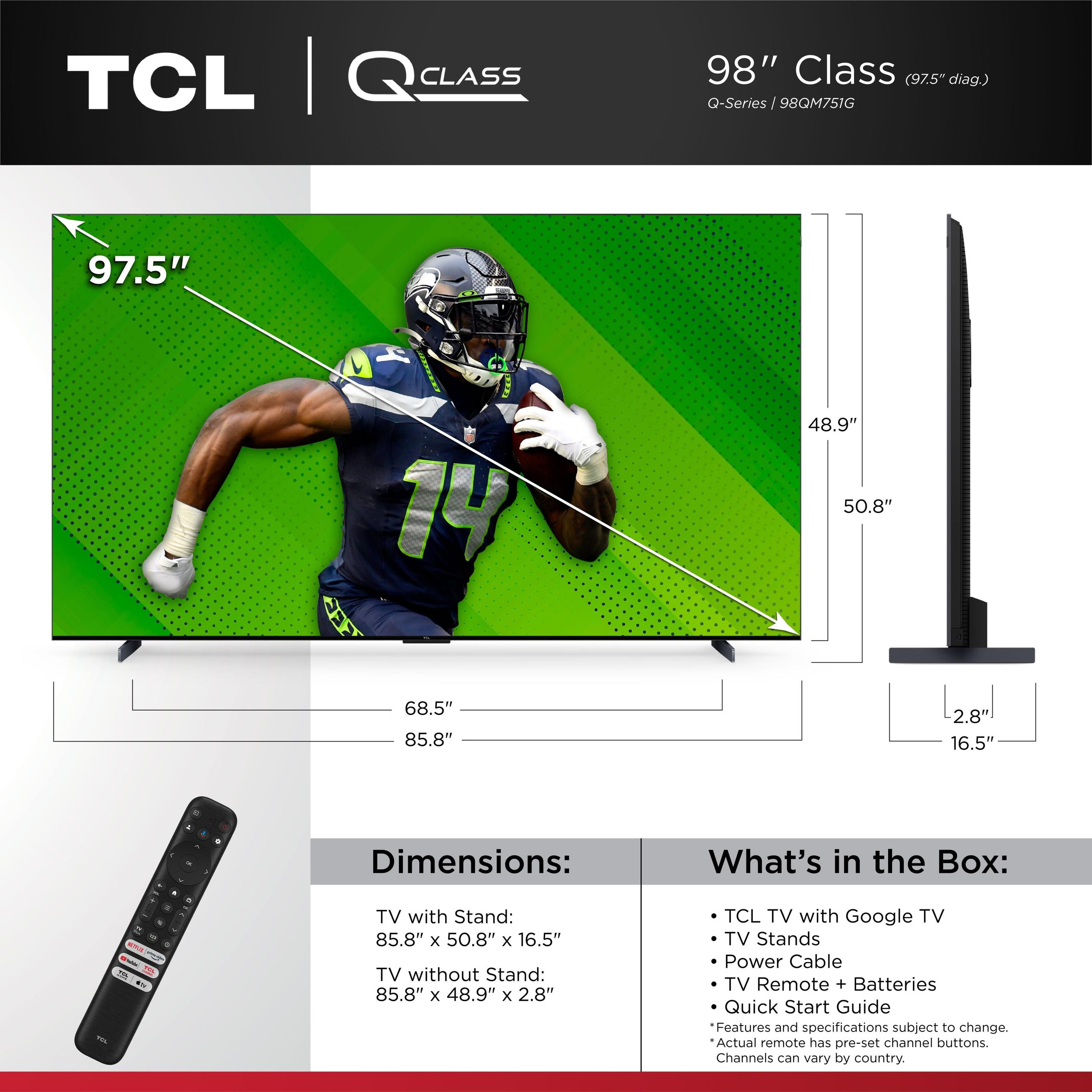
The QM7 features a FullView 360 metal bezel-less design for a more modern aesthetic, while the X11K focuses on premium internal components rather than design flourishes. The X11K weighs more (155 lbs vs 134.5 lbs) due to its additional dimming zones and premium audio system, making the QM7 easier to handle during installation.
Both TVs handle motion well, but with different approaches. The X11K uses its 144Hz native refresh rate for smooth motion rendering, while the QM7 employs Motion Rate 480 with MEMC frame insertion to create additional smoothness in fast-paced content. For sports and action movies, both perform excellently, though the QM7 has a slight edge in motion processing.
Both the X11K and QM7 support all major HDR formats including Dolby Vision IQ, HDR10+, HDR10, and HLG. The difference lies in implementation: the X11K's superior brightness and local dimming provide more impactful HDR performance, while the QM7 still delivers excellent HDR quality that satisfies most viewers' needs.
The X11K offers better future-proofing with Wi-Fi 6 connectivity, higher native refresh rates, and more advanced processing capabilities. Released in 2025, it incorporates TCL's latest display technologies. However, the QM7 from 2024 still provides excellent longevity with its high refresh rate gaming features and comprehensive HDR support that will remain relevant for years.
Choose the X11K if picture quality is your top priority, you want premium built-in audio, or you have a very bright viewing room. Select the QM7 if you want excellent performance at better value, prioritize gaming features, or plan to add external speakers anyway. The QM7 satisfies most buyers' needs while offering superior gaming capabilities at a more accessible price point.
We've done our best to create useful and informative comparisons to help you decide what product to buy. Our research uses advanced automated methods to create this comparison and perfection is not possible - please contact us for corrections or questions. These are the sites we've researched in the creation of this article: ecoustics.com - pcrichard.com - tcl.com - valueelectronics.com - bestbuy.com - tcl.com - whathifi.com - tcl.com - youtube.com - displayspecifications.com - whathifi.com - youtube.com - notebookcheck.net - tcl.com - tcl.com - displayspecifications.com - tcl.com - tcl.com - pcguide.com - en.homecinesolutions.fr - youtube.com - tcl.com - bestbuy.com - youtube.com - business.walmart.com - avsforum.com - tcl.com - circuitworldonline.com - tcl.com - bestbuy.com - rtings.com - bestbuy.com - displayspecifications.com - tcl.com

Privacy Policy
Terms and Conditions - Affiliate Policy
Home Security
© Copyright 2008-2026.
11816 Inwood Rd #1211, Dallas, TX 75244