


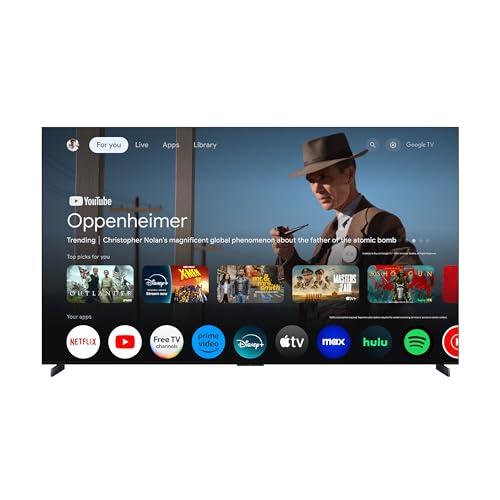
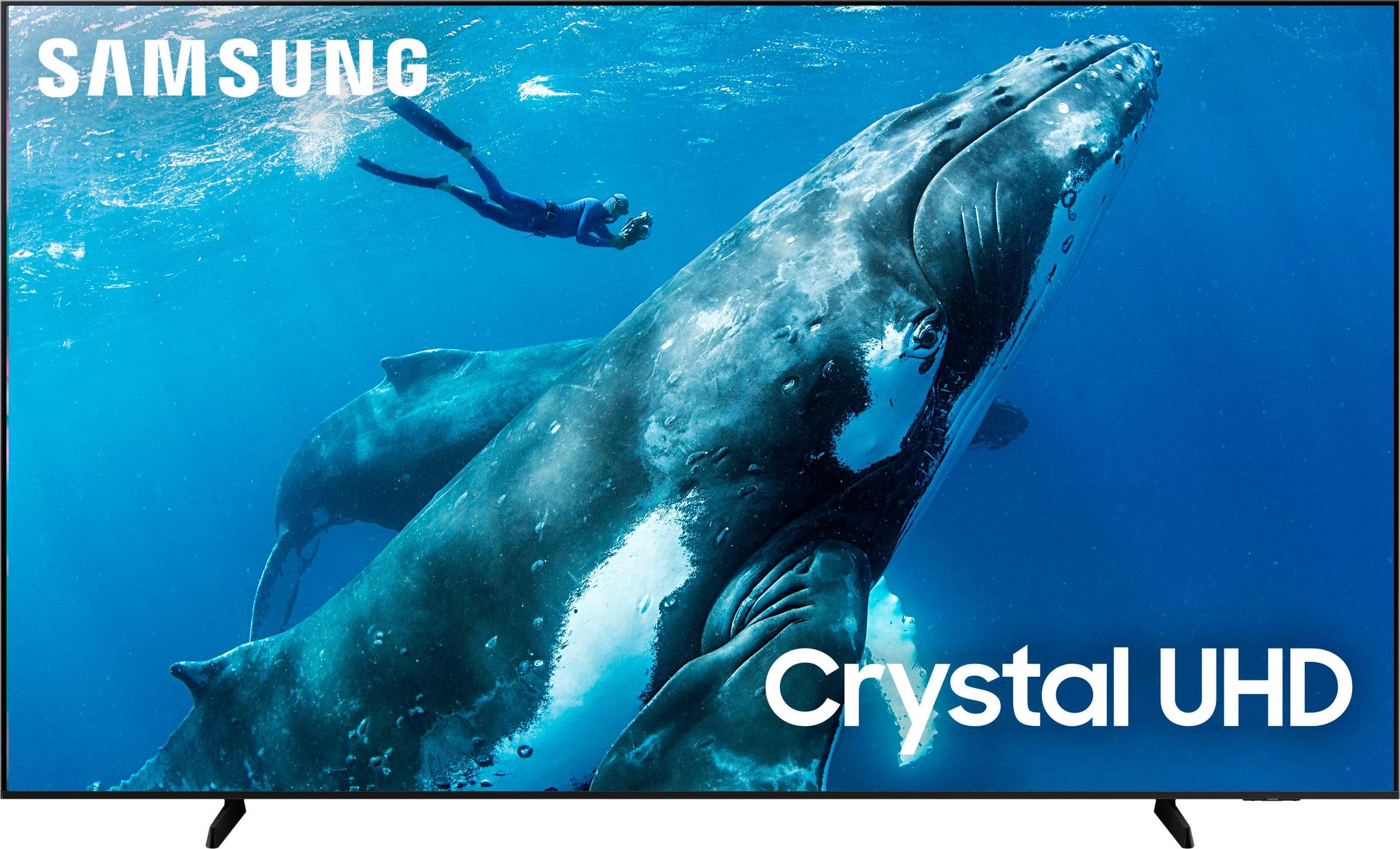
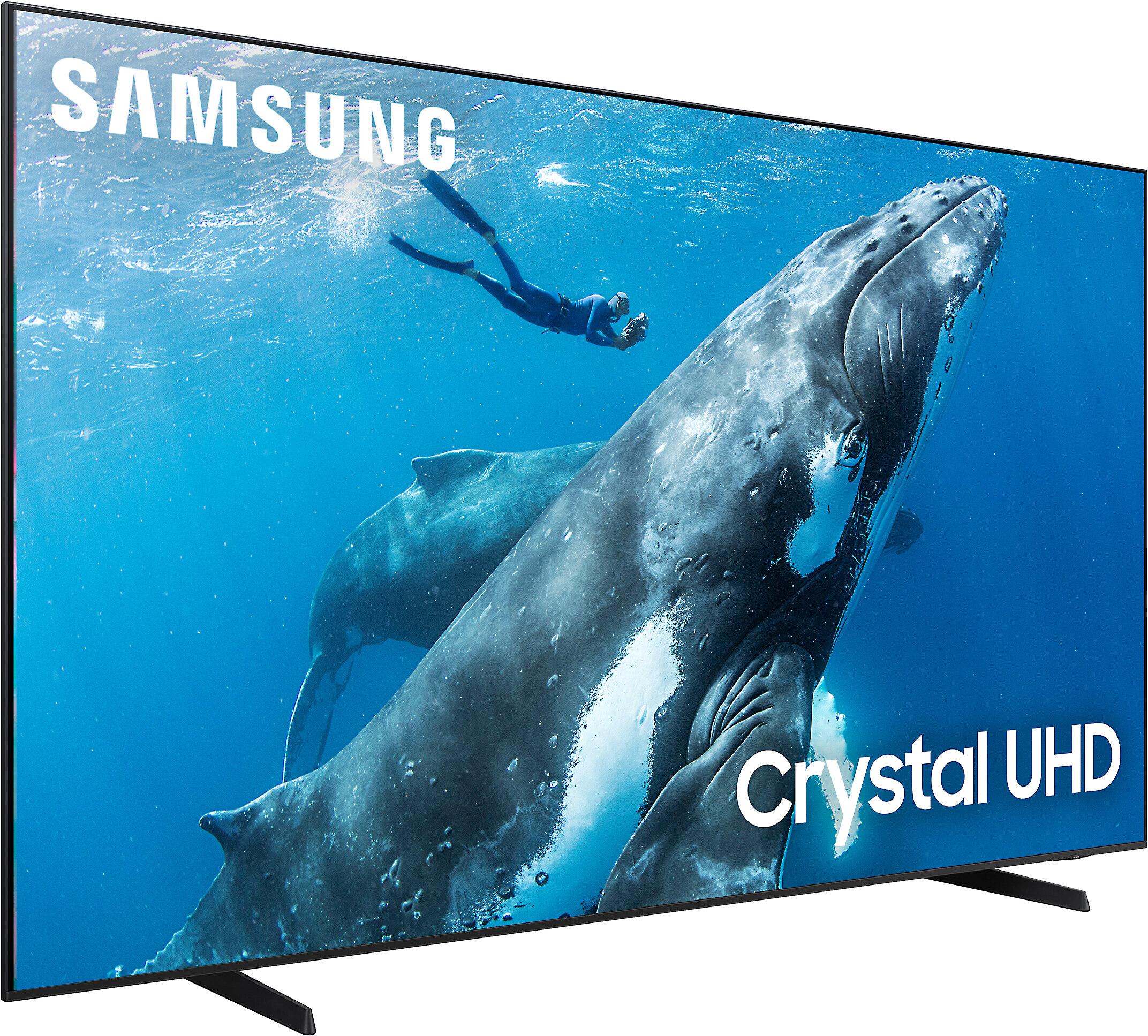
When you're shopping for a 98-inch TV, you're not just buying a screen—you're creating the centerpiece of your home entertainment system. At this massive size, these displays become more like furniture than electronics, dominating whatever room they occupy. The decision between premium features and budget-friendly options becomes particularly important because you'll likely live with your choice for many years.
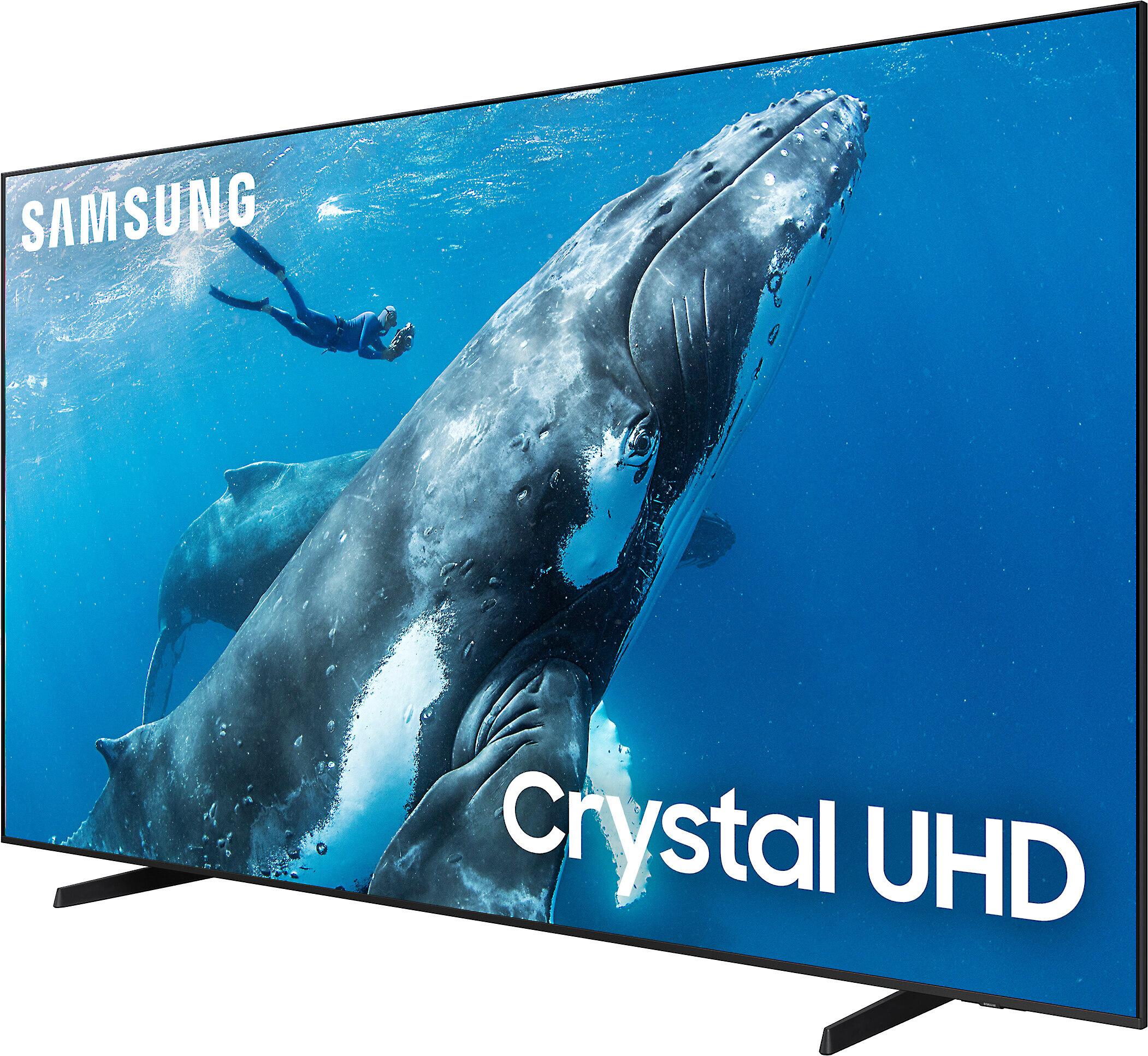
The television landscape in this super-sized category has two distinct approaches. Premium models like the TCL 98" X11K pack cutting-edge display technology that rivals commercial cinema equipment. Value-focused options like the Samsung 98" DU9000 prioritize delivering maximum screen real estate at accessible prices. Understanding which approach fits your needs requires diving deep into what these technologies actually do for your viewing experience.
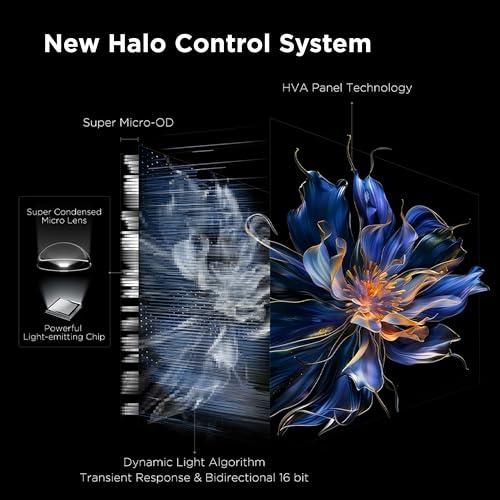
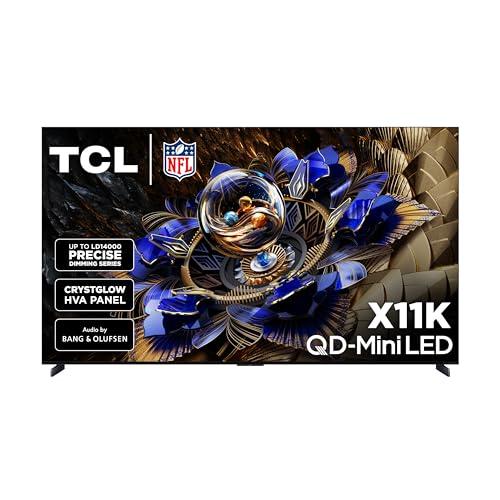
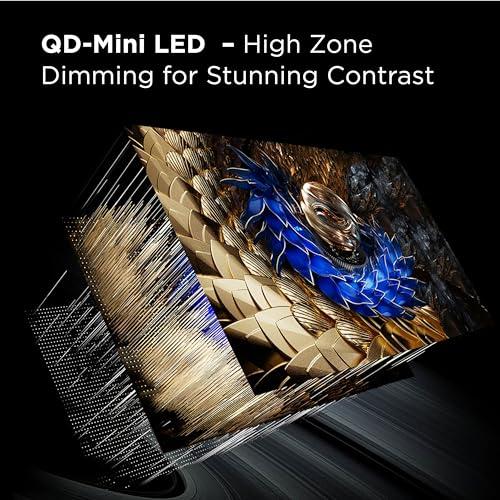
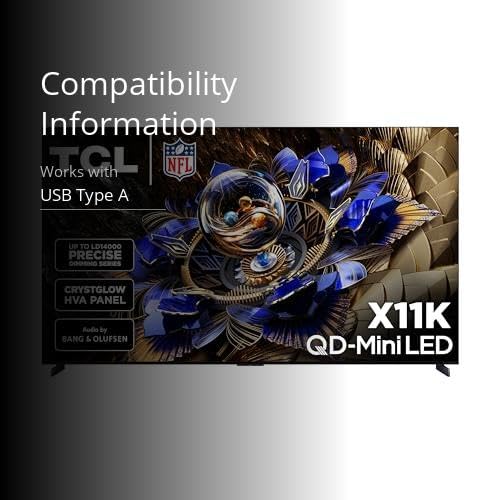
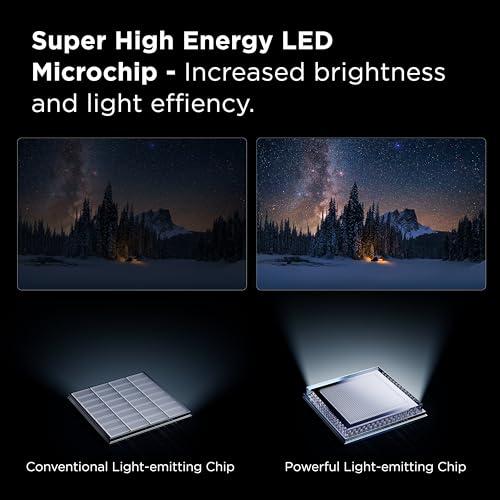
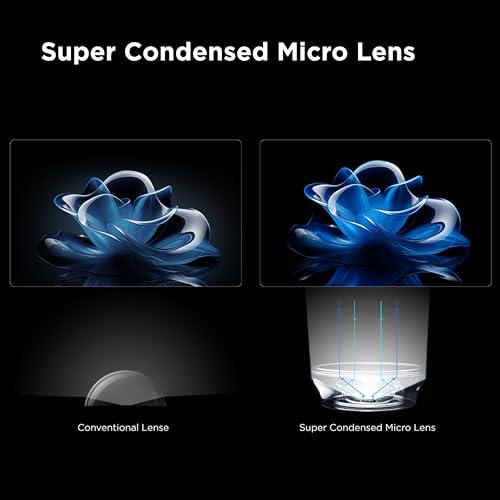
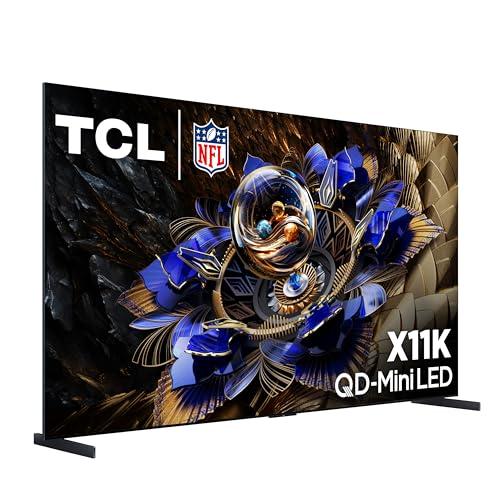
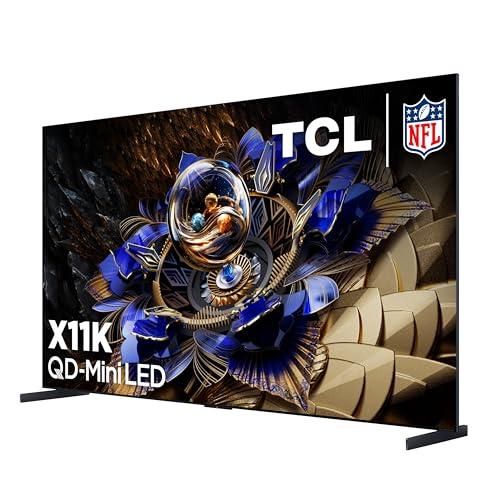
The most significant difference between these televisions lies in their fundamental display technology. The TCL X11K, released in 2025, represents the latest evolution in Mini LED backlighting combined with Quantum Dot color enhancement. Mini LED technology uses thousands of tiny LED lights behind the screen—up to 14,000 in the X11K's case—to create incredibly precise brightness control. Think of it like having thousands of tiny dimmer switches that can brighten or darken specific areas of the screen independently.
This local dimming capability matters enormously for picture quality. When you're watching a movie scene with bright explosions against a dark sky, traditional LED TVs struggle to show both accurately. They either wash out the dark areas to make the bright parts visible, or dim the bright parts to preserve the blacks. The X11K's thousands of dimming zones can keep the explosion brilliant while maintaining deep blacks in the surrounding darkness.
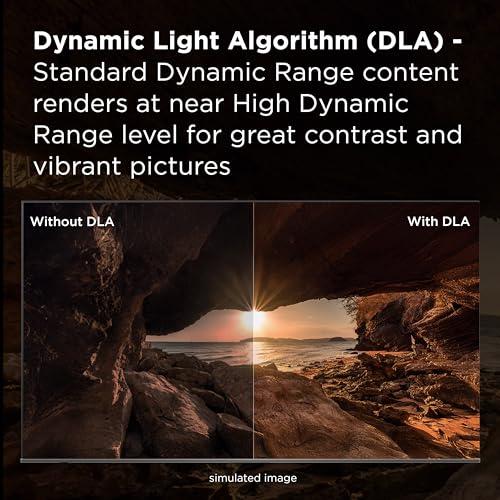
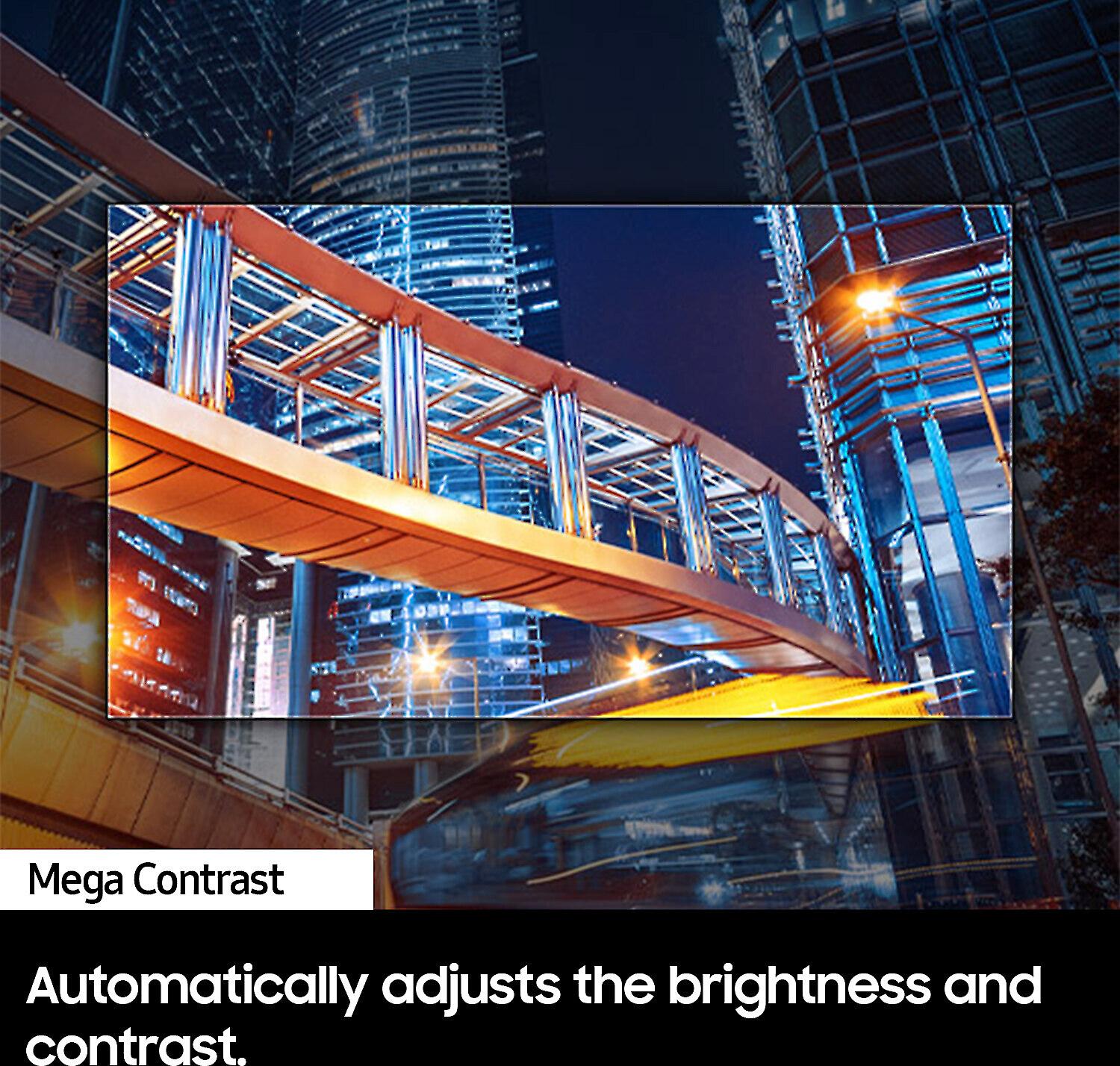
The Samsung DU9000, launched in 2024, takes a different approach. It uses conventional LED backlighting with Samsung's Mega Contrast technology, which enhances contrast through software processing rather than hardware control. While this produces decent results, especially considering the price point, it fundamentally cannot match the precision of Mini LED systems.
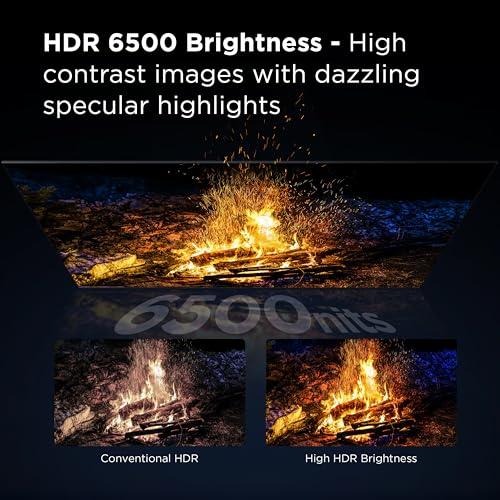
Peak brightness measurements tell an important story about real-world performance. The TCL X11K achieves up to 6,500 nits of brightness, which might sound like marketing hyperbole until you understand what it enables. HDR (High Dynamic Range) content is mastered with the assumption that displays can reproduce these extreme brightness levels. A sunset scene in a nature documentary might require 4,000 nits to look realistic, while a car headlight at night might need even more.
Most TVs, including the Samsung DU9000, simply cannot reproduce these brightness levels accurately. They compress the entire brightness range down to what their displays can handle, which flattens the visual impact. The difference becomes obvious when watching HDR content—the TCL makes highlights genuinely pop off the screen, while the Samsung provides a more muted, though still pleasant, experience.
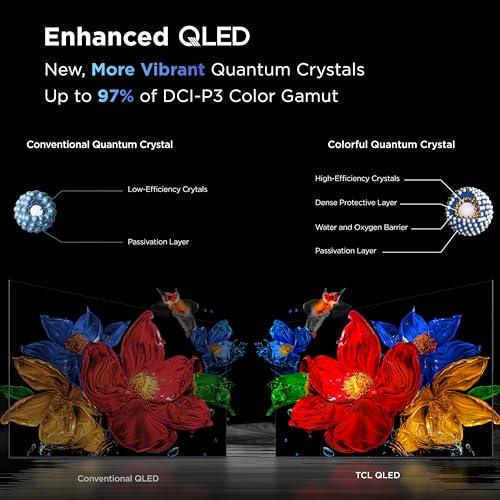
Color reproduction follows similar principles. The X11K's Quantum Dot technology can display 97% of the DCI-P3 color space, which is the standard used for digital cinema. This means colors appear more saturated and lifelike, particularly reds and greens that often look dull on conventional displays. The Samsung's PurColor technology improves upon basic LED color reproduction but doesn't reach the same performance levels.
Based on professional reviews and user feedback we've analyzed, the picture quality difference becomes most apparent in challenging content. Dark movie scenes reveal the X11K's superior black levels and shadow detail, while bright outdoor scenes showcase its exceptional peak brightness. The Samsung performs admirably with typical TV content but shows its limitations with premium HDR material.
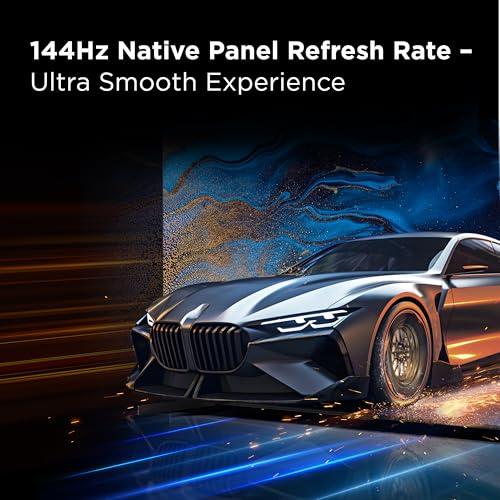
Gaming performance has become increasingly important as both PlayStation 5 and Xbox Series X consoles support 120fps gaming, with some titles pushing even higher frame rates on PC. The TCL X11K delivers a true 144Hz refresh rate, meaning it can display 144 unique frames every second. This creates incredibly smooth motion that's particularly noticeable in fast-paced games like racing simulators or first-person shooters.
Variable Refresh Rate (VRR) technology synchronizes the TV's refresh rate with the gaming device's output, eliminating screen tearing and stuttering. The X11K supports VRR up to 144Hz and includes AMD FreeSync Premium Pro certification, ensuring compatibility with both consoles and PC graphics cards. Auto Low Latency Mode (ALLM) automatically switches the TV to its lowest-lag mode when it detects gaming input.
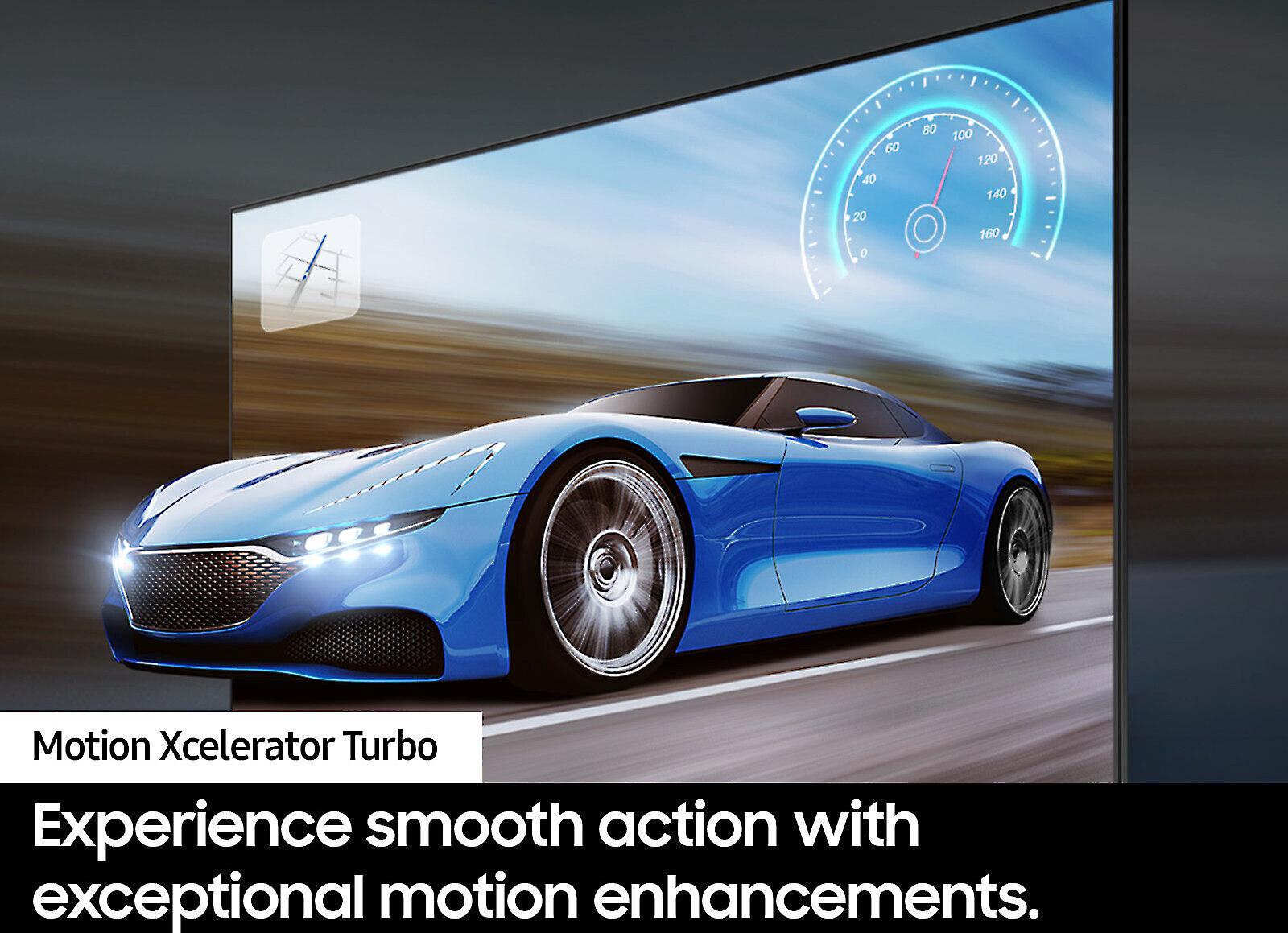
The Samsung DU9000 offers more basic gaming features. Its Motion Xcelerator 120Hz isn't true 120Hz refresh—it's motion interpolation technology that creates intermediate frames to smooth motion. While this can improve the appearance of movies and TV shows, it doesn't provide the responsive gaming experience that native high refresh rates deliver. The Samsung does include ALLM but lacks VRR support entirely.
For casual gamers who primarily play single-player adventures or strategy games, these differences might not matter significantly. However, competitive gamers or anyone who appreciates ultra-smooth motion will find the X11K's gaming features transformative. The difference becomes particularly apparent in racing games, where the higher refresh rate makes tracking opponents and hitting racing lines noticeably easier.
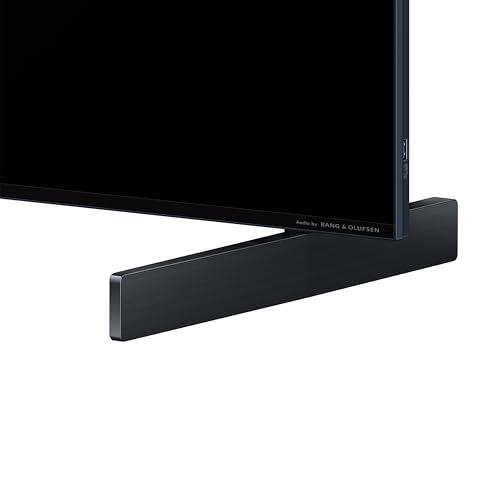
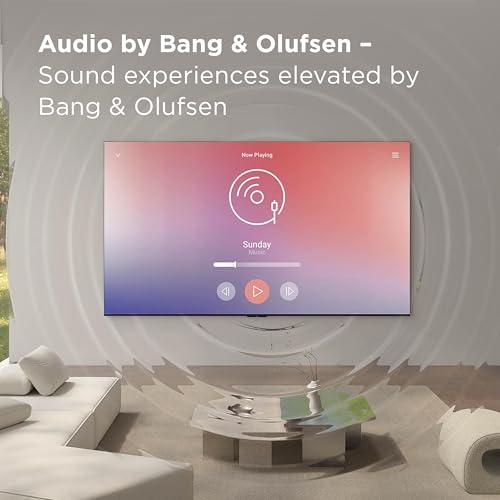
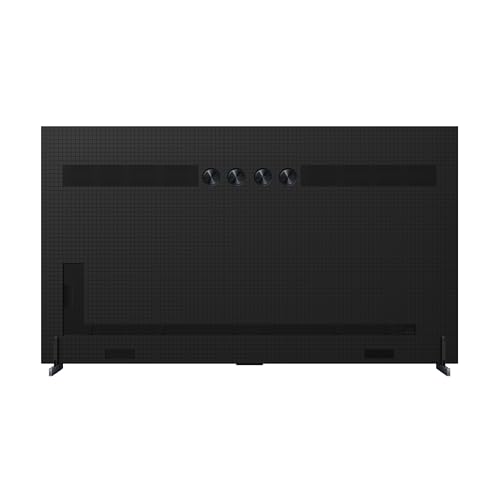
Many buyers focus entirely on picture quality and overlook audio, but at 98 inches, these TVs often serve as complete entertainment centers. The TCL X11K features a Bang & Olufsen-designed 2.1.1 channel system with 120 watts of power. This includes dedicated upward-firing speakers for Dolby Atmos content, creating the illusion of sound coming from above and around you.
The audio processing includes DTS Virtual:X technology, which uses psychoacoustic principles to create a three-dimensional soundstage from the TV's built-in speakers. While it cannot match a dedicated surround sound system, it provides a significantly more immersive experience than typical TV speakers. Dialogue remains clear even during complex action scenes, and the dedicated subwoofer adds meaningful bass extension.
The Samsung DU9000 includes a basic 2-channel system with 20 watts of power and Object Tracking Sound Lite technology. OTS Lite attempts to make sound appear to come from the location of objects on screen, which works reasonably well for dialogue but lacks the power and range needed for movie soundtracks. Most users will want to add a soundbar or surround system relatively quickly.
From our research into user experiences, the audio difference proves more significant than many buyers expect. The TCL's audio system handles everyday viewing without additional equipment, while the Samsung really benefits from external audio upgrades.
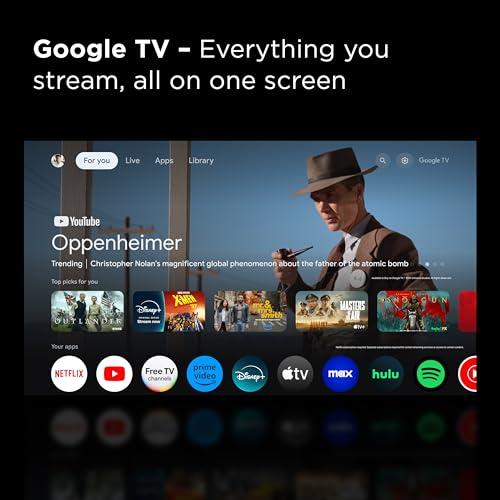
The choice between Google TV and Samsung's Tizen OS often comes down to your existing device ecosystem. The TCL X11K runs Google TV, which integrates seamlessly with Android phones, Chromebooks, and Google services. Chromecast functionality is built-in, making it effortless to share content from mobile devices. Voice control works through Google Assistant, and the interface learns your viewing preferences to suggest relevant content.
Samsung's Tizen platform on the DU9000 offers excellent integration with Samsung smartphones and SmartThings-compatible smart home devices. Samsung TV Plus provides free streaming content, and the interface feels polished and responsive. However, Tizen sometimes lags behind Android TV in receiving new app updates, and the voice assistant functionality isn't quite as sophisticated as Google's implementation.
Both platforms support all major streaming services, though the TCL's Wi-Fi 6 connectivity provides faster and more stable streaming, particularly important for 4K HDR content that requires substantial bandwidth.
In a dedicated home theater environment, the TCL X11K shines brightest. Its exceptional brightness capability means it performs well even with some ambient light, while the precise local dimming creates true cinema-quality contrast in darkened rooms. The built-in audio system can genuinely serve as the primary sound source for many installations, though serious enthusiasts will still prefer dedicated speakers.
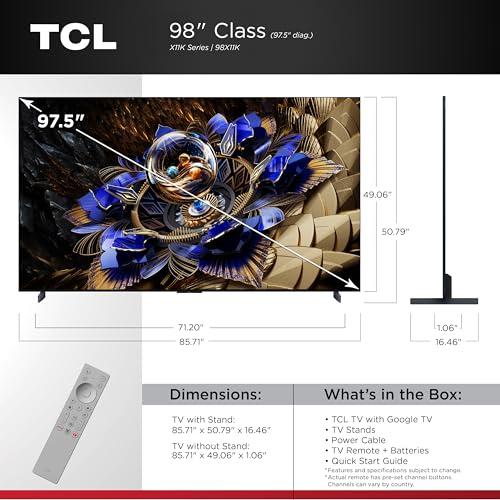
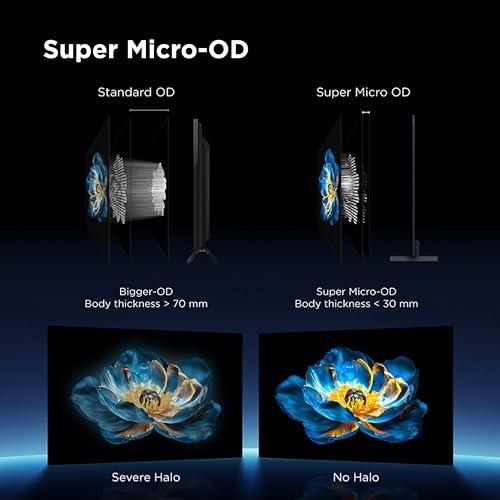
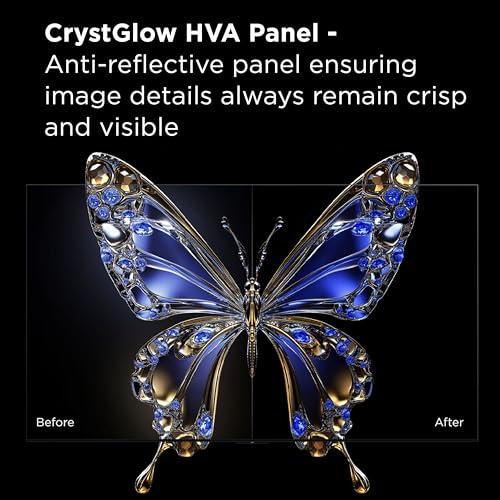
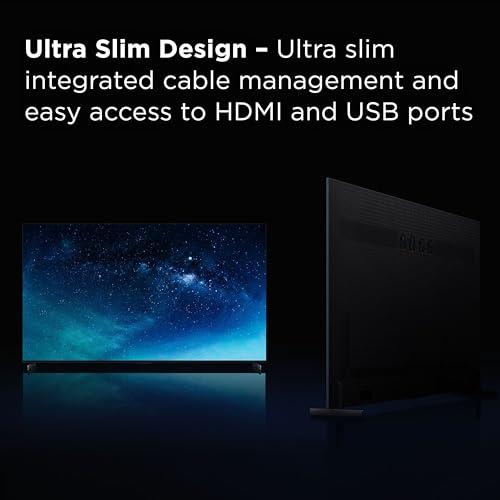
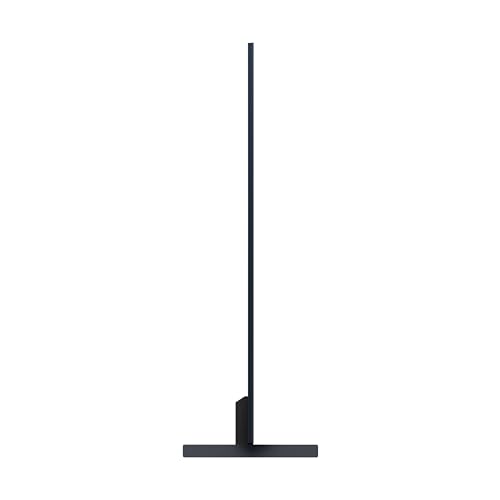
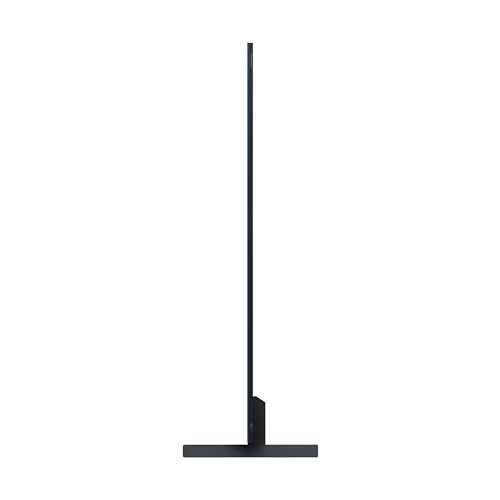
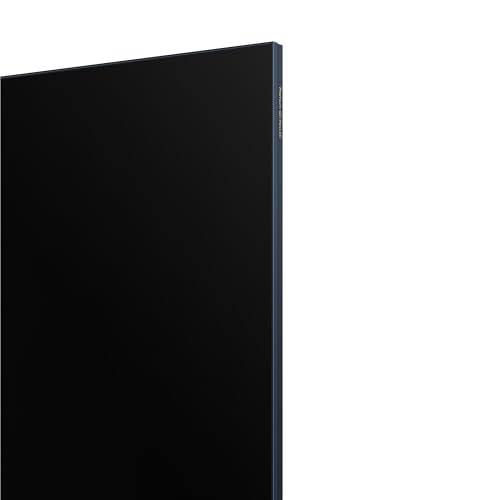
The TV's ultra-thin profile and integrated cable management make it suitable for wall mounting, creating a clean, modern aesthetic. The anti-reflective coating helps minimize distractions from room lighting, though at 98 inches, controlling room lighting remains important regardless of the display technology.
The Samsung DU9000 works well in more casual home theater setups where maximum screen size takes priority over ultimate picture quality. Its lower brightness output makes it better suited to darker viewing environments, but it still produces an impressive cinematic experience given its positioning in Samsung's lineup.
At the time of writing, the TCL X11K commands a significant premium over the Samsung DU9000, reflecting its advanced display technology and premium audio system. The question becomes whether these improvements justify the additional cost for your specific use case.
The TCL makes the most sense for buyers who prioritize cutting-edge performance and plan to use the TV as their primary entertainment hub. Home theater enthusiasts, serious gamers, and anyone who regularly watches premium HDR content will appreciate the technological advantages. The superior audio system also appeals to users who prefer not to immediately invest in additional sound equipment.
The Samsung appeals to buyers who want maximum screen impact at a more accessible price point. If your primary viewing consists of streaming services, broadcast television, and casual gaming, the DU9000 delivers a satisfying big-screen experience without the premium features you might not fully utilize.
The display technology improvements in recent years have been remarkable. Mini LED backlighting, which seemed experimental just a few years ago, has matured into a reliable technology that delivers genuine performance benefits. The TCL X11K represents the current state of the art, with refinements that minimize the blooming and uniformity issues that plagued earlier Mini LED implementations.
Gaming features have evolved rapidly alongside new console generations. The X11K's 144Hz capability and comprehensive VRR support position it well for future gaming developments, while the Samsung's more limited gaming features might feel outdated sooner.
Both TVs will handle current streaming and broadcast content excellently, but the TCL's superior HDR capabilities become more valuable as content creators increasingly master material for high-brightness displays.
Choose the TCL X11K if you're building a serious home theater setup, game regularly on modern consoles or PC, or simply want the best possible picture quality from a 98-inch display. The premium features justify the additional investment for users who will genuinely benefit from the advanced technology.
The Samsung DU9000 makes sense for buyers who prioritize value and maximum screen size over cutting-edge features. If you're coming from a much smaller TV and want the wow factor of 98 inches without premium pricing, the Samsung delivers impressive results for its market position.
Consider your viewing habits honestly. If you primarily watch streaming services in a well-lit room, the Samsung might meet your needs perfectly. If you're passionate about movies, gaming, or HDR content, the TCL's technological advantages will provide lasting satisfaction.
Both televisions represent the current state of large-screen TV technology, but they target different segments of the market. Your choice should align with both your budget and your performance expectations, keeping in mind that at this size, whichever TV you choose will likely serve as your primary display for many years to come.
| TCL 98" X11K | Samsung 98" DU9000 |
|---|---|
| Display Technology - Determines contrast quality and HDR performance | |
| QD-Mini LED with 14,000 local dimming zones | Standard LED with Mega Contrast enhancement |
| Peak Brightness - Critical for HDR content and bright room viewing | |
| 6,500 nits (exceptional HDR impact) | Not specified (likely under 1,000 nits) |
| Native Refresh Rate - Essential for smooth gaming and sports | |
| 144Hz true native refresh | 60Hz native (120Hz motion interpolation) |
| Gaming Features - Important for console and PC gamers | |
| 144Hz VRR, ALLM, AMD FreeSync Premium Pro | ALLM only, no VRR support |
| Audio System - Affects whether you need external speakers | |
| Bang & Olufsen 2.1.1 channel, 120W with Dolby Atmos | 2-channel, 20W with Object Tracking Sound Lite |
| HDR Format Support - Determines compatibility with premium content | |
| Dolby Vision IQ, HDR10+, HDR10, HLG | HDR10+, HDR10, HLG (no Dolby Vision) |
| Smart Platform - Affects app availability and ecosystem integration | |
| Google TV with Chromecast built-in | Samsung Tizen with SmartThings integration |
| Connectivity - Important for future-proofing and streaming quality | |
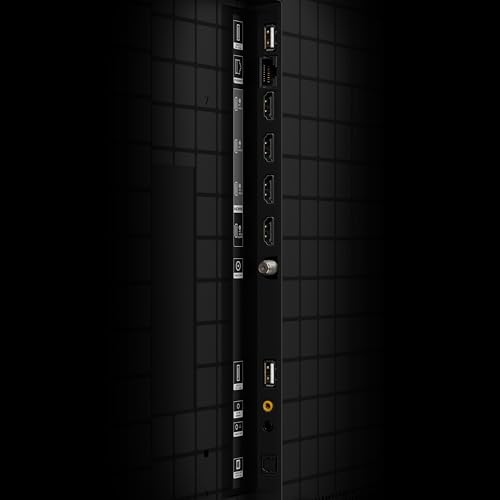
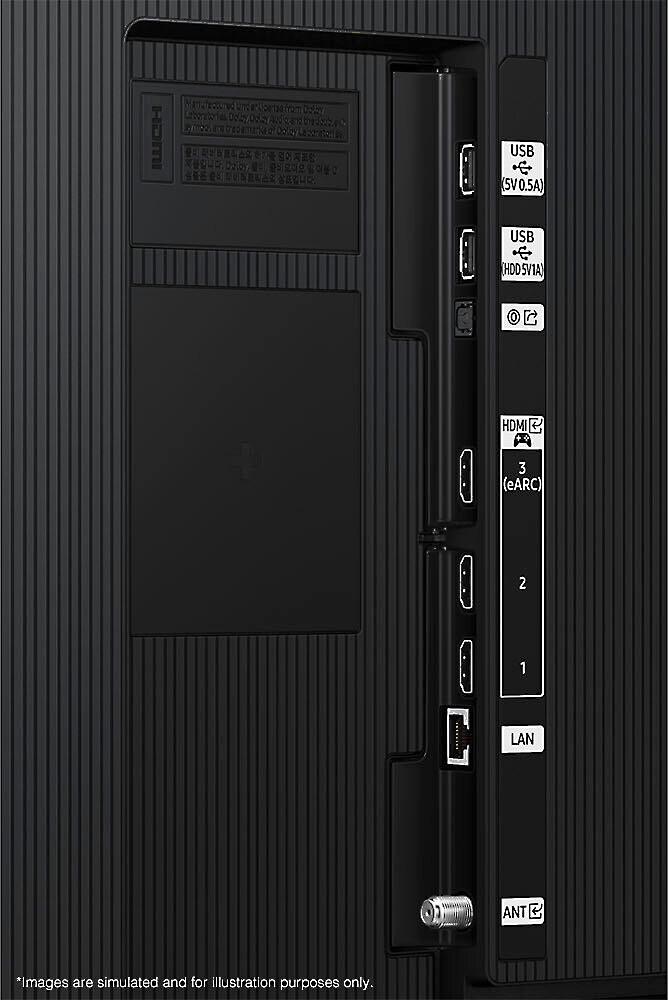
| Wi-Fi 6, 4 HDMI ports | Wi-Fi 5, 3 HDMI ports |
| Design Profile - Matters for wall mounting and aesthetics | |
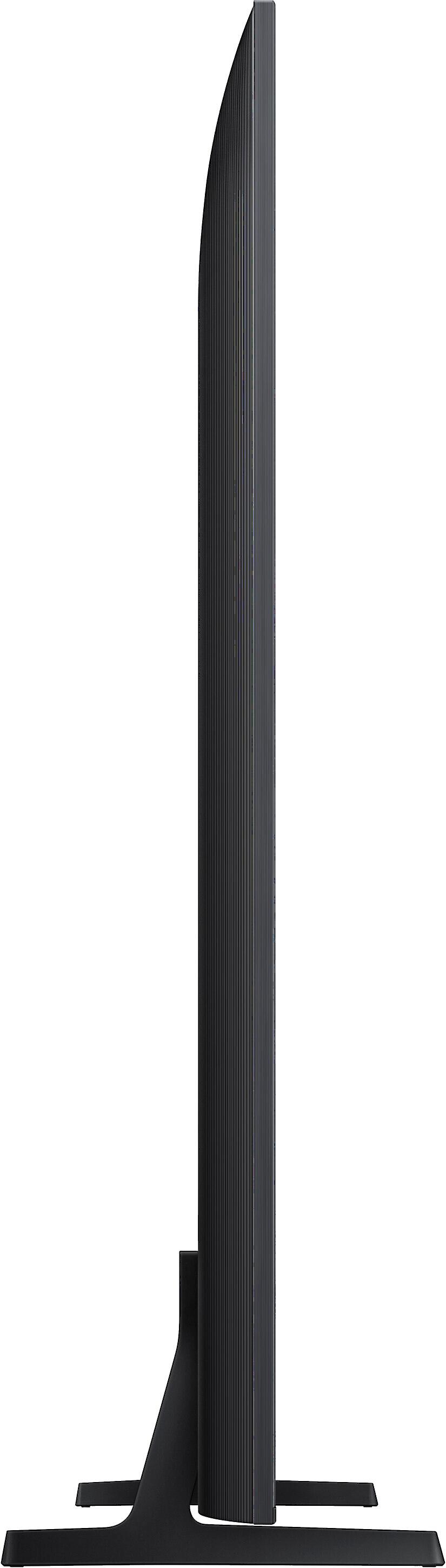
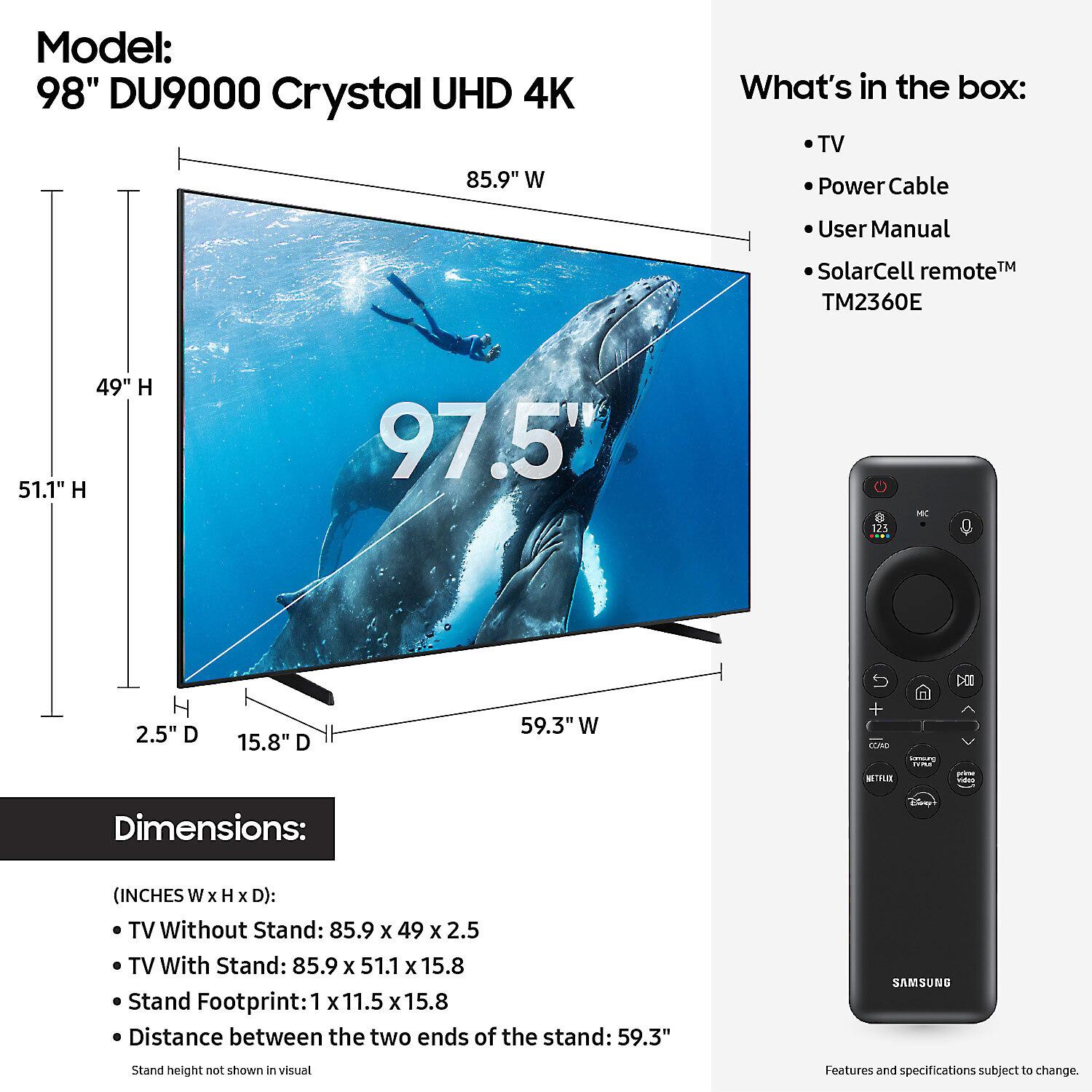
| Ultra-slim 1.1" depth with cable management | Standard thickness, graphite finish |
| Release Year - Indicates technology generation | |
| 2025 (latest Mini LED refinements) | 2024 (established LED technology) |
| Target Market - Who each TV is designed for | |
| Home theater enthusiasts and serious gamers | Budget-conscious buyers wanting maximum size |
The TCL 98" X11K delivers superior picture quality with its QD-Mini LED technology featuring 14,000 local dimming zones and 6,500 nits peak brightness. This creates exceptional contrast with deep blacks and brilliant highlights. The Samsung 98" DU9000 uses standard LED backlighting which produces good picture quality for the price but cannot match the precision brightness control of Mini LED technology.
The TCL X11K justifies its premium pricing for home theater enthusiasts, serious gamers, and HDR content lovers who will benefit from its advanced Mini LED display, 144Hz gaming capabilities, and premium Bang & Olufsen audio system. The Samsung DU9000 offers better value for budget-conscious buyers who prioritize maximum screen size over cutting-edge features.
The TCL X11K significantly outperforms the Samsung DU9000 for gaming with its true 144Hz refresh rate, Variable Refresh Rate (VRR) support up to 144Hz, and AMD FreeSync Premium Pro certification. The Samsung only offers basic gaming features with ALLM but lacks VRR support and true high refresh rate capabilities.
The TCL X11K runs Google TV with Chromecast built-in, offering excellent integration with Android devices and Google services. The Samsung DU9000 uses Samsung's Tizen OS with SmartThings integration, providing seamless connectivity with Samsung ecosystem devices. Both support major streaming apps, though the TCL includes Wi-Fi 6 for faster streaming.
The TCL X11K features a premium Bang & Olufsen 2.1.1 channel system with 120W output and Dolby Atmos support, delivering immersive spatial audio without external speakers. The Samsung DU9000 includes a basic 2-channel system with 20W output that will likely require a soundbar upgrade for optimal audio performance.
The TCL X11K excels in home theater environments with its exceptional brightness for ambient light situations and precise local dimming for dark room contrast. Its premium audio system can serve as the primary sound source. The Samsung DU9000 works well for casual home theater setups where maximum screen size takes priority over ultimate picture quality.
The TCL X11K supports Dolby Vision IQ, HDR10+, HDR10, and HLG formats, providing the broadest compatibility with premium HDR content. The Samsung DU9000 supports HDR10+, HDR10, and HLG but lacks Dolby Vision support, which is increasingly common on streaming platforms and 4K Blu-rays.
The TCL X11K offers a true native 144Hz refresh rate for ultra-smooth motion and gaming performance. The Samsung DU9000 has a 60Hz native refresh rate with Motion Xcelerator 120Hz motion interpolation, which enhances motion appearance but doesn't provide the same responsive gaming experience as native high refresh rates.
The TCL X11K performs significantly better in bright rooms with its 6,500 nits peak brightness and anti-reflective coating that minimizes glare and maintains image quality under ambient lighting. The Samsung DU9000 has lower brightness output making it better suited for darker viewing environments.
Both the TCL X11K and Samsung DU9000 support all major streaming services including Netflix, Disney+, Amazon Prime Video, and YouTube. The TCL's Google TV platform typically receives app updates faster, while Samsung's Tizen offers Samsung TV Plus for free streaming content and excellent Samsung device integration.
The TCL X11K offers better future-proofing with its 144Hz VRR gaming capabilities, Wi-Fi 6 connectivity, and advanced HDR processing that will handle upcoming content standards. The Samsung DU9000 covers current needs well but may feel limited sooner due to its basic gaming features and Wi-Fi 5 connectivity.
Choose the TCL X11K for cutting-edge display technology, serious gaming performance, premium built-in audio, and the best possible 98-inch picture quality. Choose the Samsung DU9000 for maximum screen size at an accessible price point, reliable Samsung brand quality, and solid performance for everyday TV viewing and casual use.
We've done our best to create useful and informative comparisons to help you decide what product to buy. Our research uses advanced automated methods to create this comparison and perfection is not possible - please contact us for corrections or questions. These are the sites we've researched in the creation of this article: ecoustics.com - pcrichard.com - tcl.com - valueelectronics.com - bestbuy.com - tcl.com - whathifi.com - tcl.com - youtube.com - displayspecifications.com - whathifi.com - youtube.com - notebookcheck.net - tcl.com - tcl.com - displayspecifications.com - tcl.com - tcl.com - pcguide.com - en.homecinesolutions.fr - youtube.com - tcl.com - bestbuy.com - thebigscreenstore.com - samsung.com - samsung.com - rtings.com - assetserver.net - associatedappliance.com - insight.com - nfm.com - videoandaudiocenter.com - blog.rentacenter.com - samsung.com - merlinstv.com - samsung.com

Privacy Policy
Terms and Conditions - Affiliate Policy
Home Security
© Copyright 2008-2026.
11816 Inwood Rd #1211, Dallas, TX 75244