

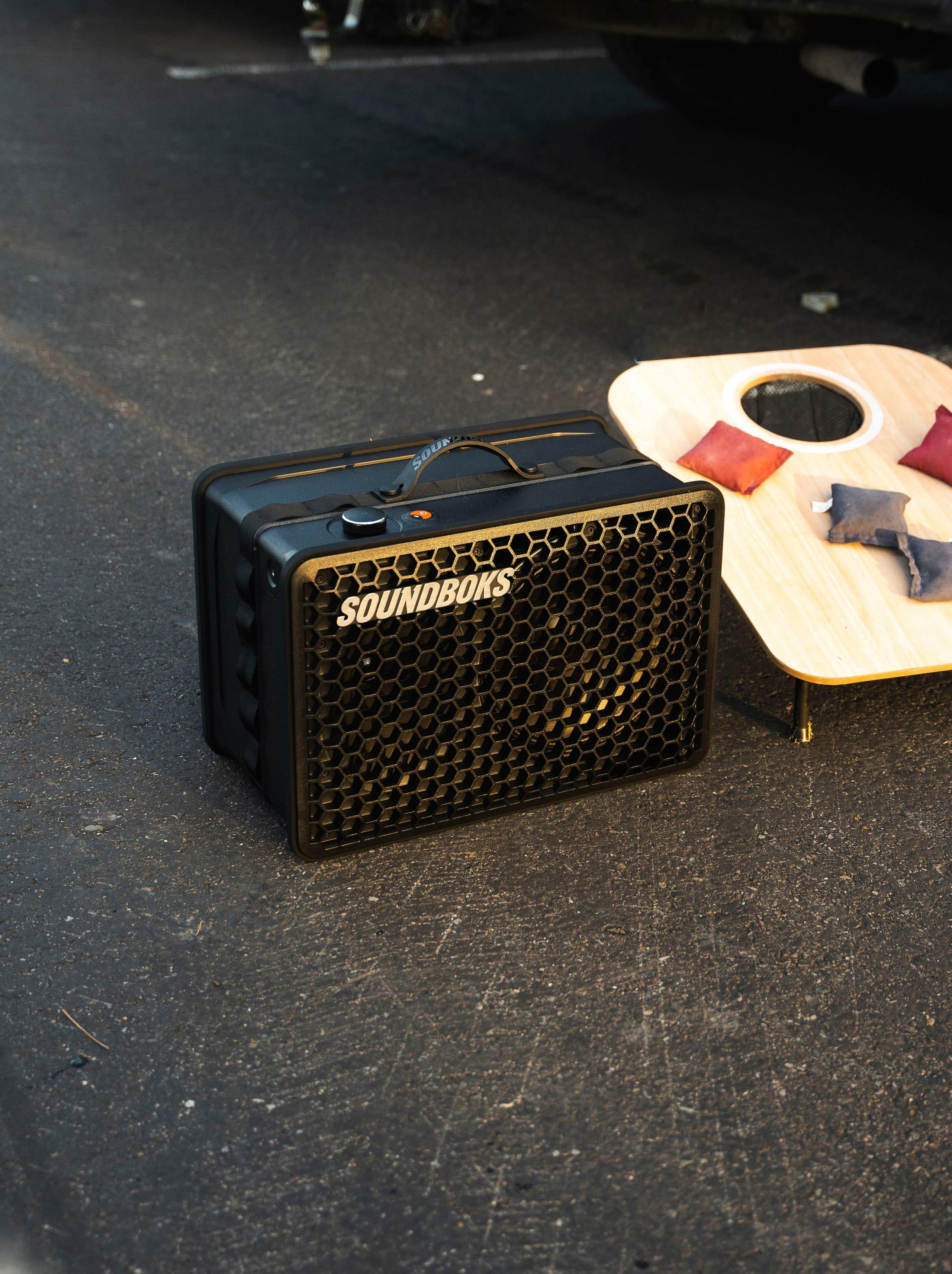
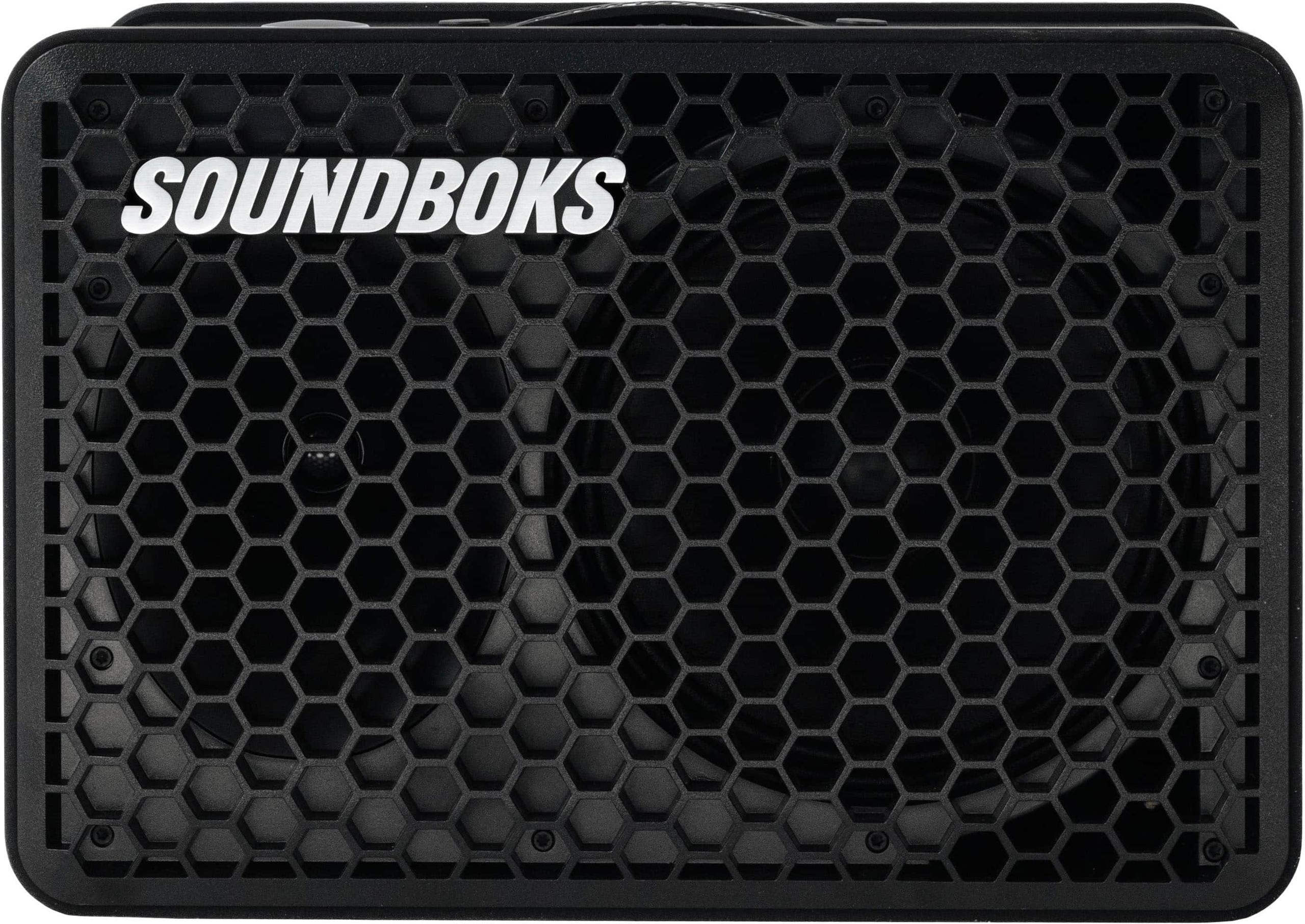
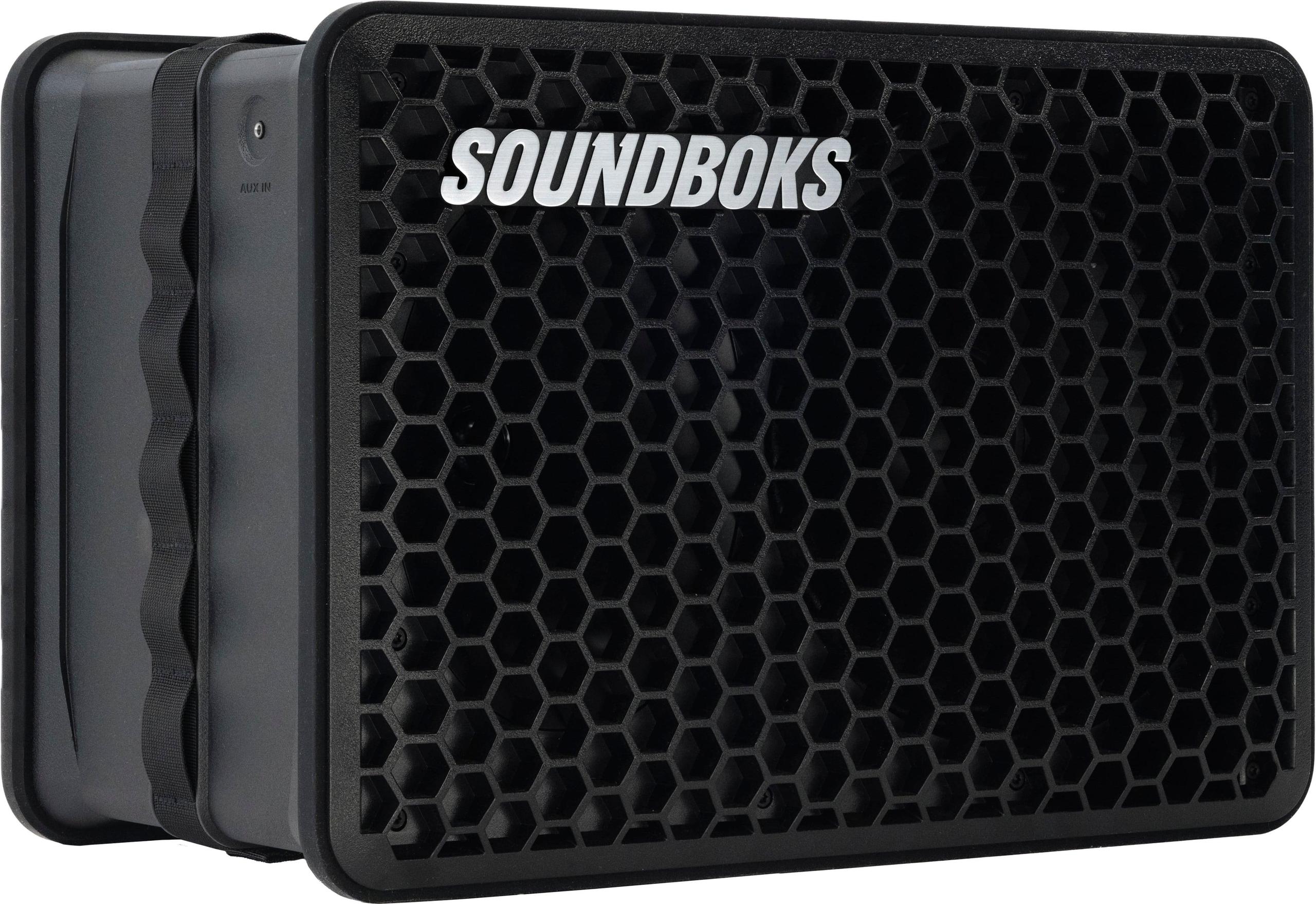
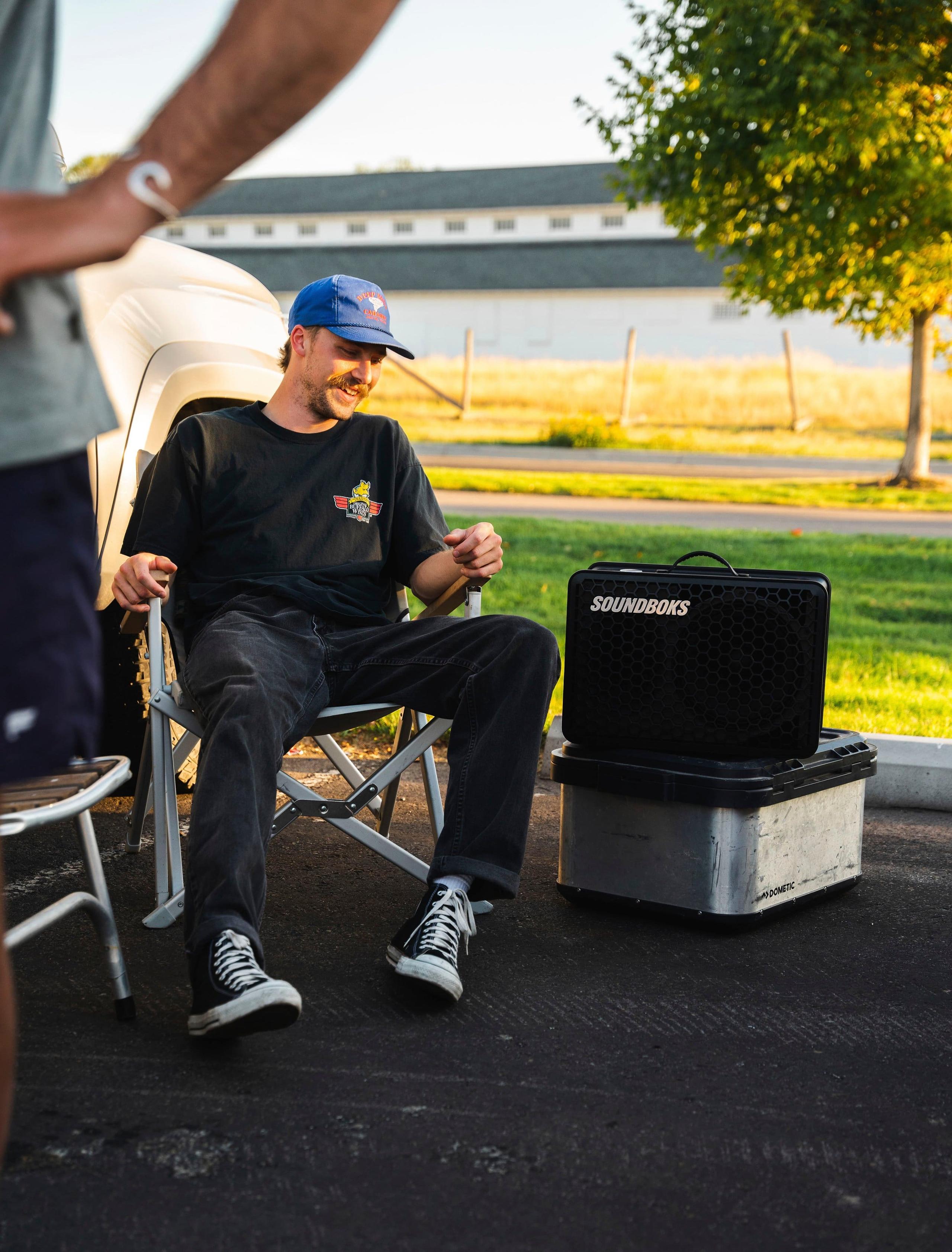

When you're looking to upgrade your sound setup for parties, gatherings, or just cranking tunes in your backyard, the world of high-powered portable speakers has never been more exciting. Two standouts that represent completely different approaches are the Soundboks Go and the Samsung MX-ST50F Sound Tower. Released in 2022 and 2024 respectively, these speakers showcase how the industry has evolved to serve different types of users with distinct needs.
The party speaker category has matured significantly over the past few years. What started as simple Bluetooth speakers that could get reasonably loud has transformed into sophisticated audio systems that can rival traditional PA equipment while maintaining portability. The key considerations when shopping in this space revolve around how you'll actually use the speaker: Will you be moving it frequently? How important is maximum volume? Do you need it to survive outdoor conditions? And perhaps most importantly—what's your balance between pure audio performance and entertainment features?
The Soundboks Go and Samsung MX-ST50F represent fundamentally different approaches to the same basic problem: delivering powerful sound for gatherings. Think of it as the difference between a rugged pickup truck and a luxury SUV—both can haul your gear, but they're optimized for different priorities.
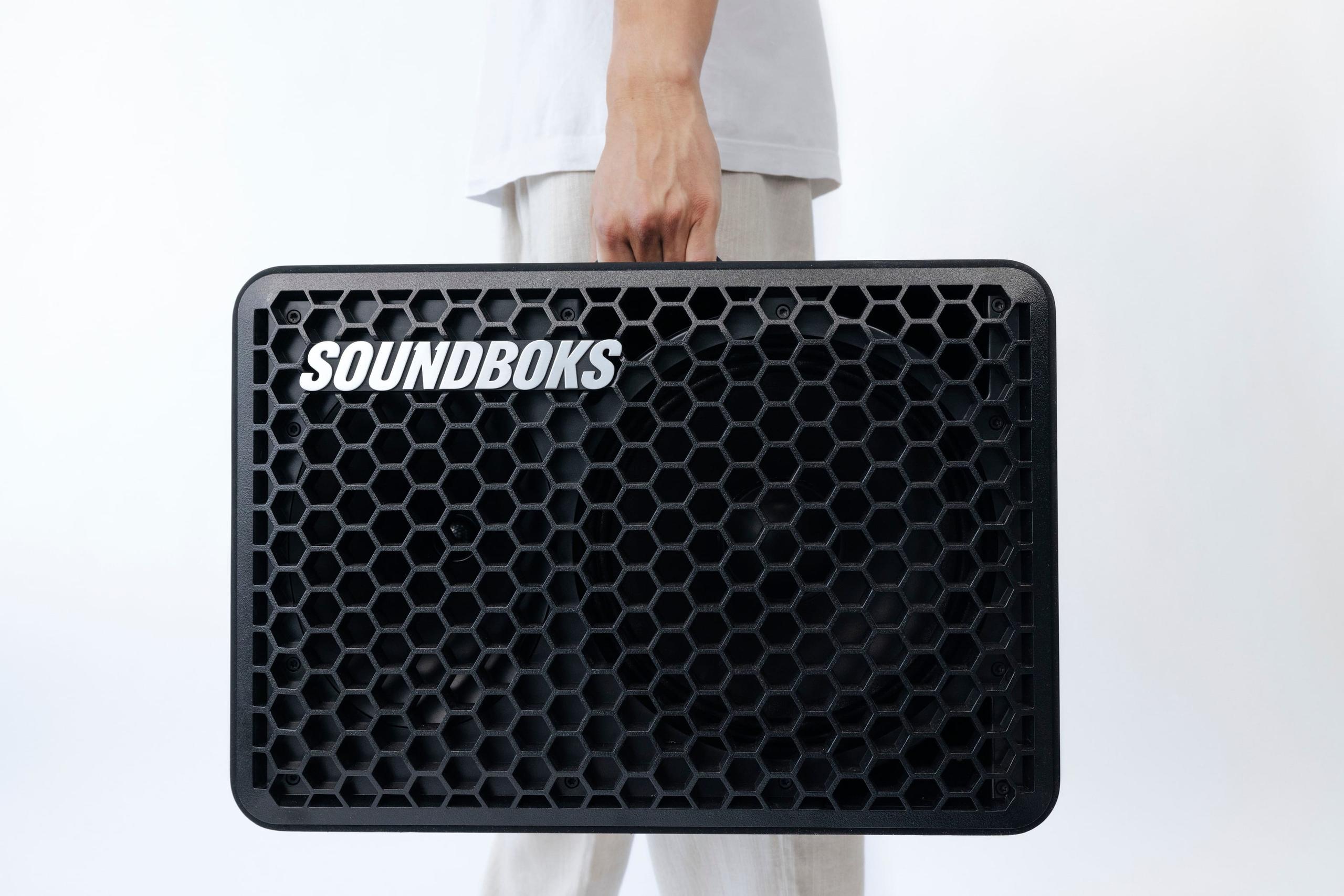
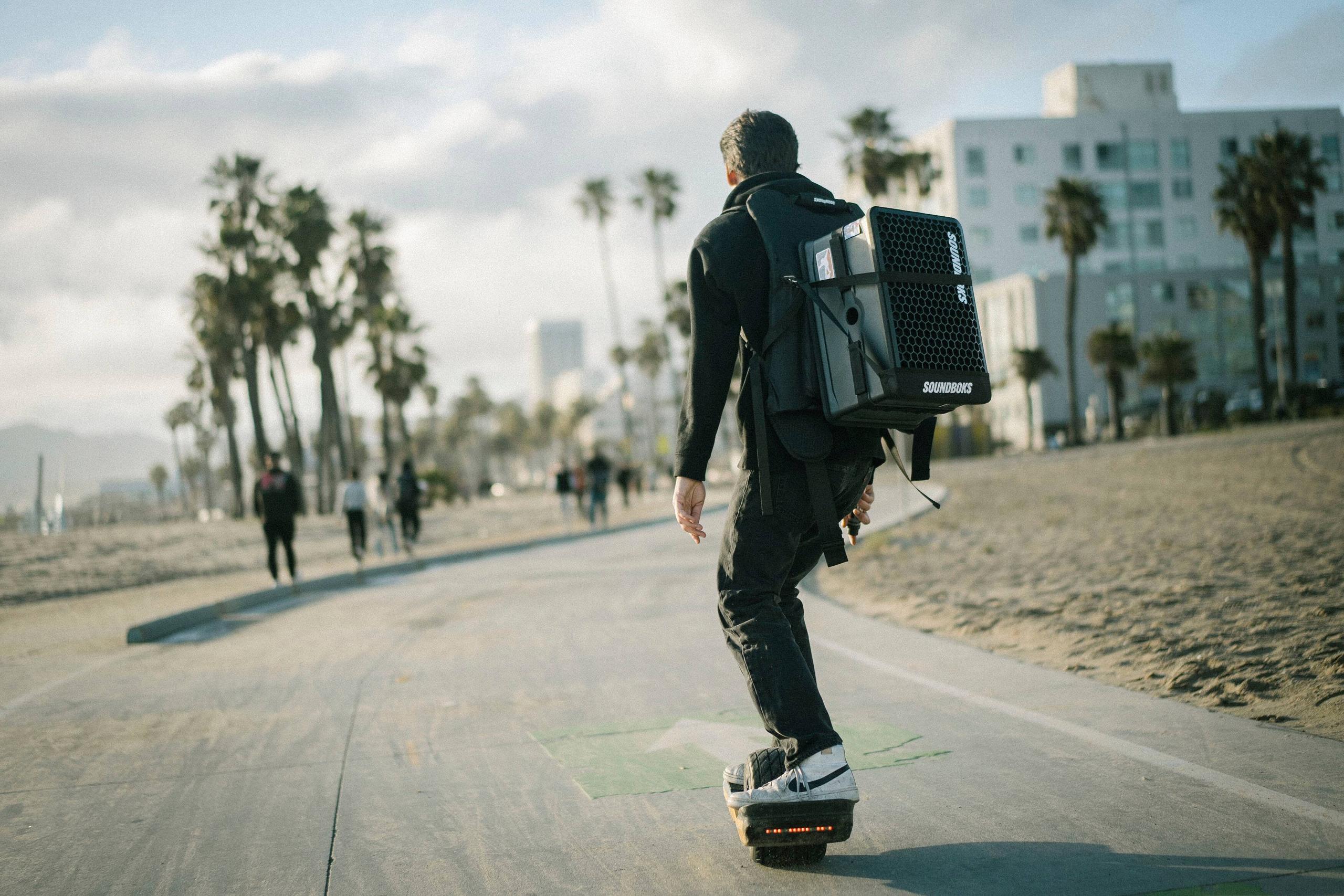
The Soundboks Go follows what I'd call the "audiophile adventure" philosophy. It's built like a piece of professional equipment that happens to be portable, with a focus on sound quality, durability, and flexibility. The design screams "take me anywhere"—from beach parties to mountain camping trips to urban rooftops. Danish engineering meets Scandinavian minimalism, resulting in a speaker that looks as comfortable in a recording studio as it does at a tailgate.
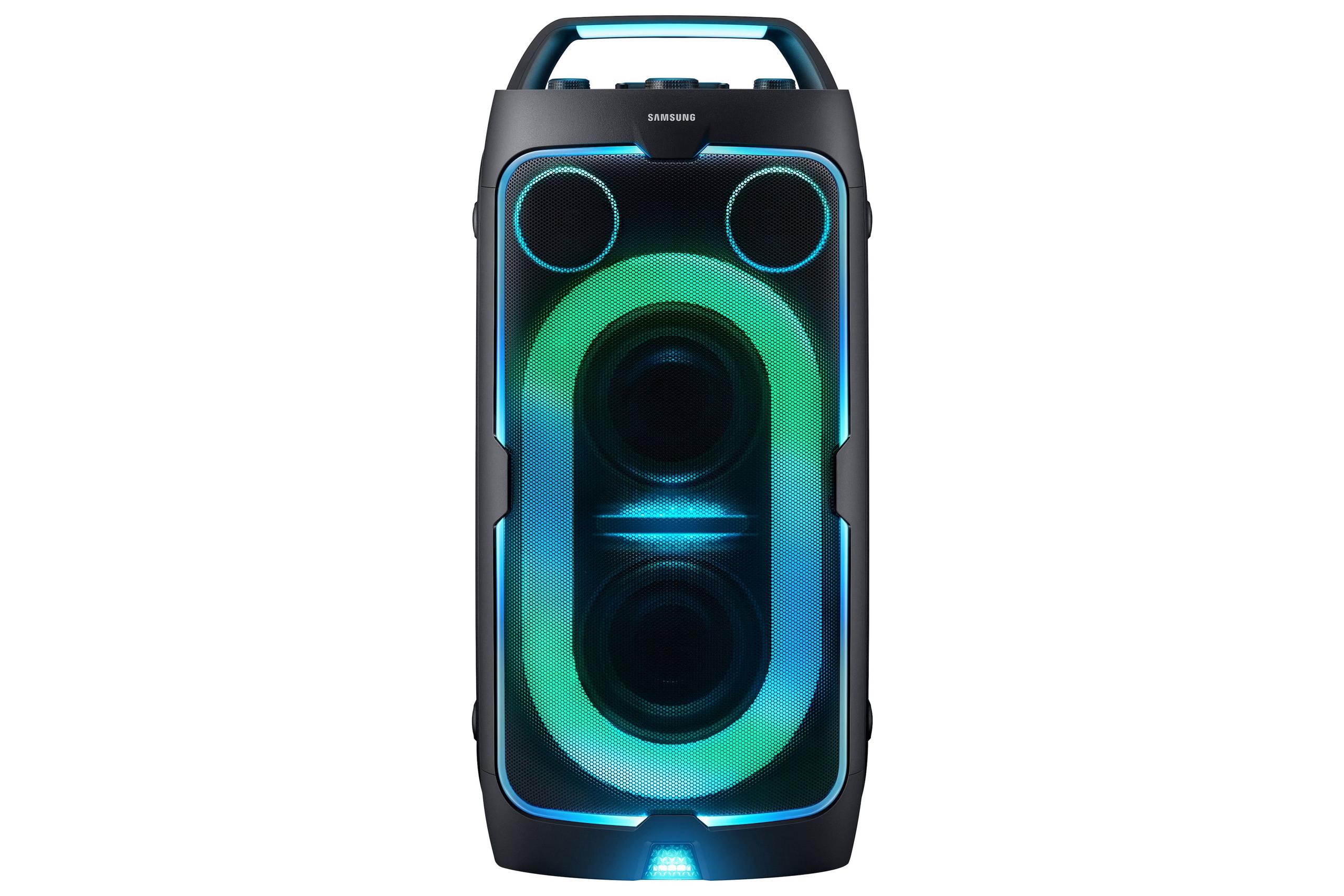
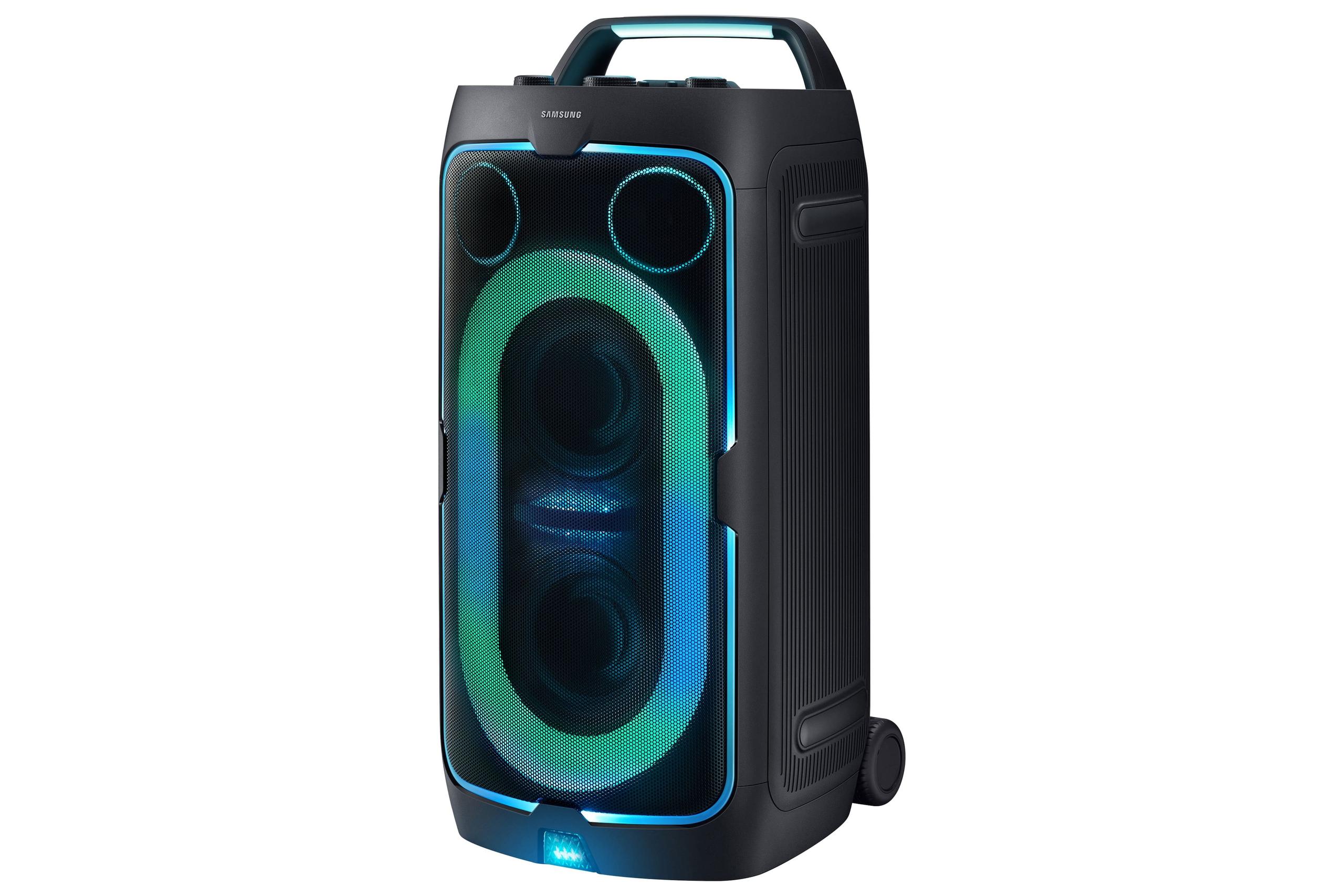
The Samsung MX-ST50F, on the other hand, embraces the "entertainment center" approach. It's designed to be the centerpiece of your party, combining powerful audio with visual spectacle and interactive features. This is the speaker equivalent of a home theater system—impressive when set up properly, packed with features, but not something you'll want to lug around constantly.
Let's talk numbers, because in the party speaker world, watts and decibels matter. The Soundboks Go delivers 144W RMS (RMS stands for "Root Mean Square"—basically the continuous power the speaker can handle without distortion) through a carefully engineered 2-way driver system. This includes one 10-inch woofer for bass and a 1-inch silk dome tweeter for highs, powered by Class D amplifiers using Merus Audio eximo technology.
That Merus Audio tech deserves explanation because it's genuinely impressive. Traditional amplifiers waste a lot of energy as heat, but Class D amplifiers with advanced switching technology can achieve over 90% efficiency. This means more of your battery power actually becomes sound rather than just warming up the components—crucial for a portable speaker.
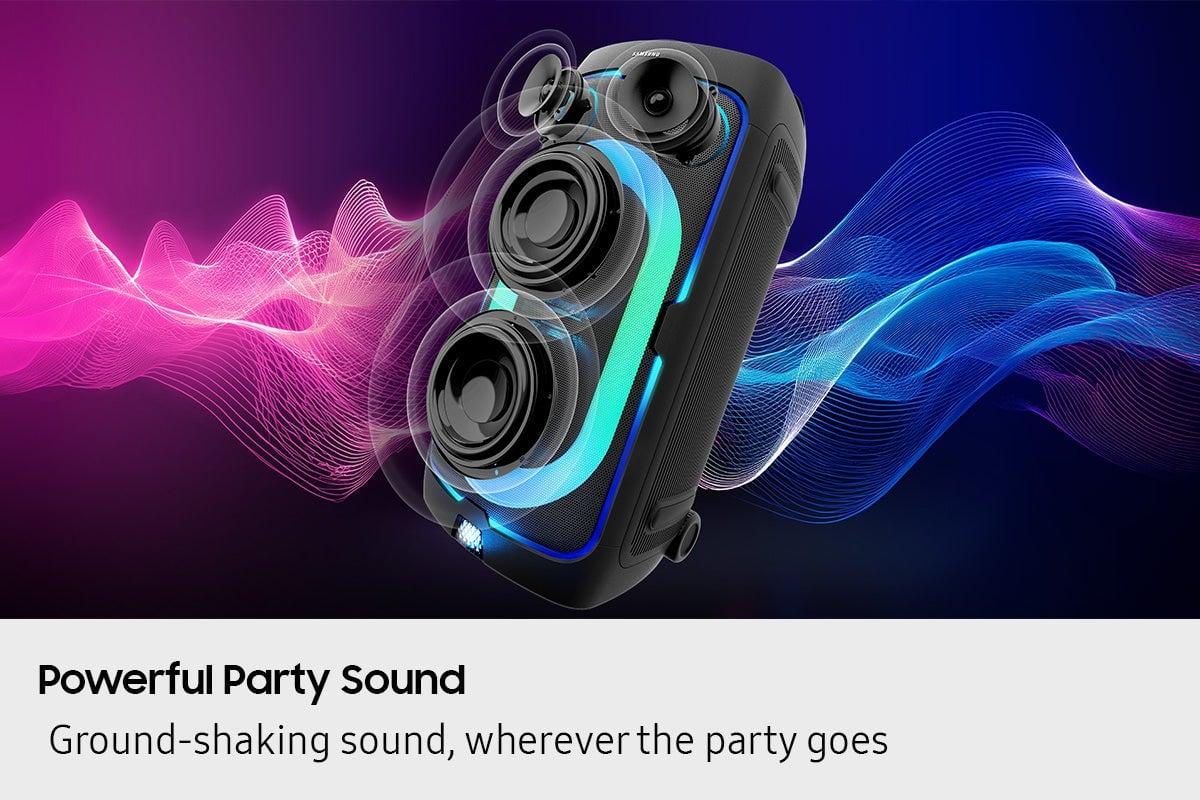
The Samsung MX-ST50F takes a different approach with its claimed 240W total system output, distributed across four drivers: two 6.5-inch woofers and two 1-inch tweeters. However, there's an important caveat here that many reviews have highlighted—this power rating likely represents peak power rather than continuous RMS power. When running on battery (which drops to around 90W), the performance difference becomes much more noticeable.
In real-world testing scenarios that we've researched, the Soundboks Go consistently delivers its rated 121 dB maximum volume, which is legitimately loud enough to annoy neighbors from several houses away. The Samsung MX-ST50F gets impressively loud when plugged into AC power, but the volume drop on battery power is significant enough that several professional reviews have called it out as a limitation.
Here's where personal preference really comes into play. The Soundboks Go produces what audiophiles would recognize as a "V-shaped" sound signature—emphasized bass and treble with slightly recessed midrange frequencies. This creates an exciting, punchy sound that works well for electronic music, hip-hop, and rock, but might not be ideal for vocal-heavy content or classical music.
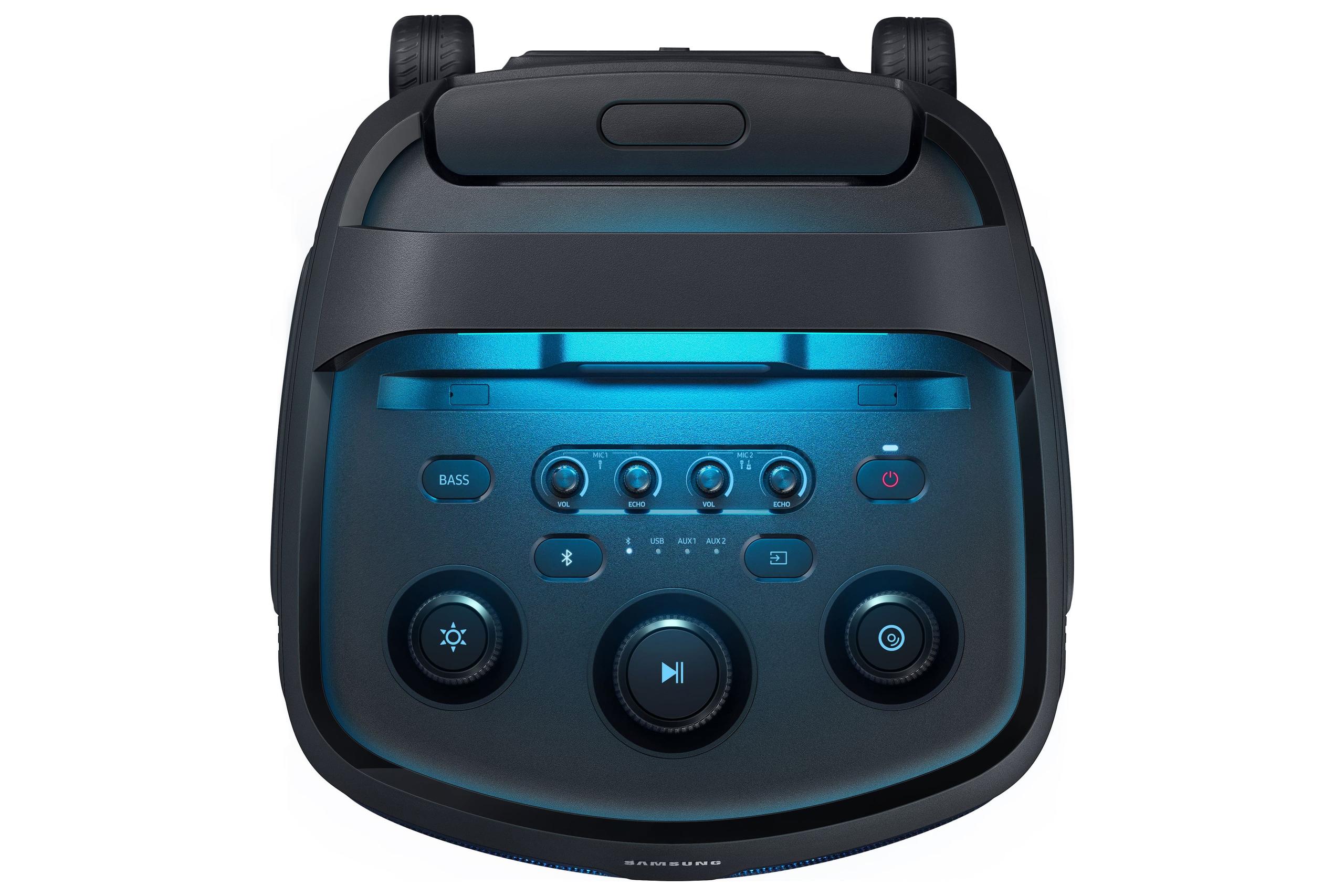
The Samsung MX-ST50F offers more flexibility with its multiple sound modes. The three bass modes (Deep, Punchy, and Gentle) plus four environmental presets (Standard, Wide, Stadium, Outdoor) give you significantly more tuning options. The Waveguide technology—which shapes how sound waves disperse from the tweeters—helps create more even coverage across larger areas.
Based on consensus from expert reviews, the Soundboks Go's directional design works better when you're positioned in front of it, while the Samsung's omnidirectional approach fills rooms more evenly but can sound less focused at any given listening position.
Battery technology represents one of the biggest differentiators between these speakers. The Soundboks Go uses a swappable 99.84Wh lithium iron phosphate (LiFePO4) battery system that delivers up to 40 hours of playback at moderate volumes, or about 10 hours when you're really cranking it.
LiFePO4 batteries are fascinating technology—they're more stable and longer-lasting than traditional lithium-ion batteries, though they're heavier and more expensive. The real genius is the swappable design. You can buy additional batteries (at the time of writing, they cost roughly a quarter of the speaker's price) and essentially achieve unlimited runtime by swapping in fresh batteries as needed.
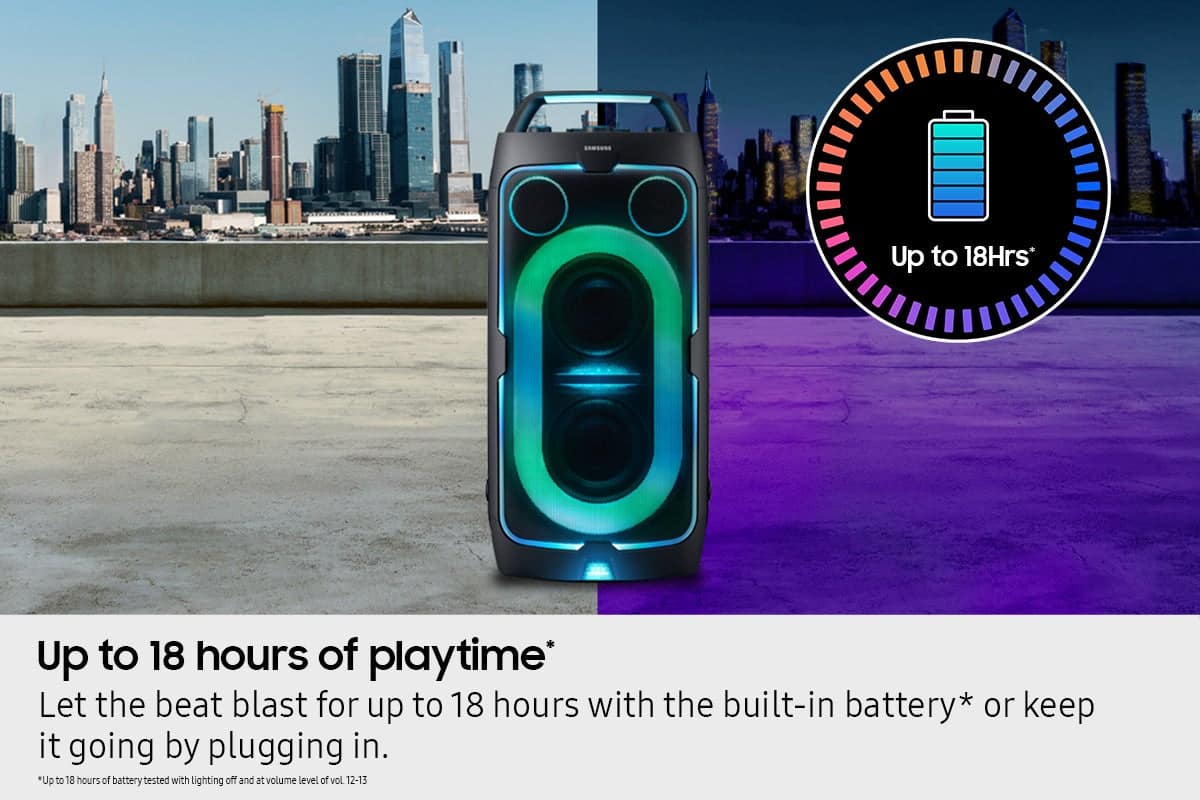
The Samsung MX-ST50F takes the more conventional approach with a built-in rechargeable battery rated for up to 18 hours. However, this rating assumes you're listening at moderate volume with the party lighting turned off. Real-world usage with lights blazing and volume up typically cuts this to 8-12 hours based on user reports.
The practical difference is enormous. If you're hosting a wedding reception, music festival, or any event lasting longer than a single day, the Soundboks Go's expandable battery system becomes invaluable. The Samsung requires planning around charging cycles.
Both speakers support multi-speaker networking, but they use different technologies that aren't compatible with each other. The Soundboks Go employs SKAA (Spectrum Efficient Knowledge-based Audio) technology for its TeamUP feature, which can connect up to five speakers with ultra-low latency—meaning the delay between speakers is virtually undetectable.
SKAA is particularly interesting because it was designed for professional audio applications where timing is critical. Unlike standard Bluetooth, which can have 100-200ms delays, SKAA keeps everything synchronized within milliseconds. This makes it suitable for live performance scenarios where timing matters.
The Samsung MX-ST50F uses Auracast, which is part of the newer Bluetooth 5.4 standard. Auracast can theoretically connect up to 10 speakers, giving you more scaling potential for massive events. It also supports True Wireless Stereo, meaning two Samsung speakers can function as dedicated left and right channels—something that could be genuinely useful for home theater applications.
This is where the Soundboks Go truly shines. Its IP65 rating means it's completely dust-proof and can handle water jets from any direction—basically, you can hose it down after a muddy festival and it'll be fine. The construction combines ABS plastic with polycarbonate reinforcement and silicone rubber bumpers designed to absorb impacts.
The Samsung MX-ST50F carries an IPX4 rating, which only protects against splashing water. Samsung explicitly recommends against beach or poolside use, and several reviews mention that while it can handle light rain, it's not built for serious outdoor adventures.
Having researched numerous user experiences, the durability difference is substantial. Soundboks Go owners regularly report using their speakers in conditions that would destroy most electronics—desert camping, beach parties, construction sites. Samsung MX-ST50F users generally stick to patios, garages, and indoor spaces.
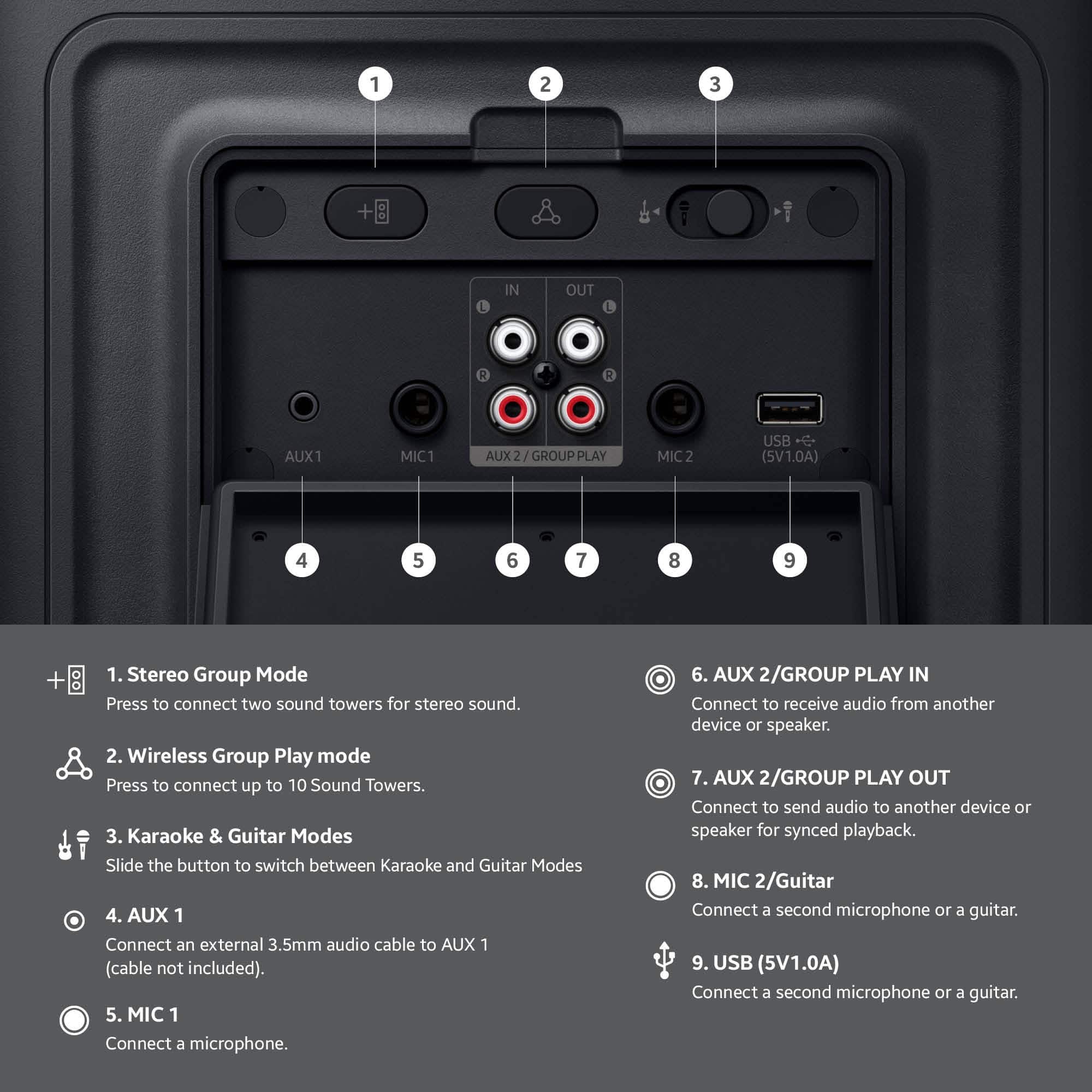
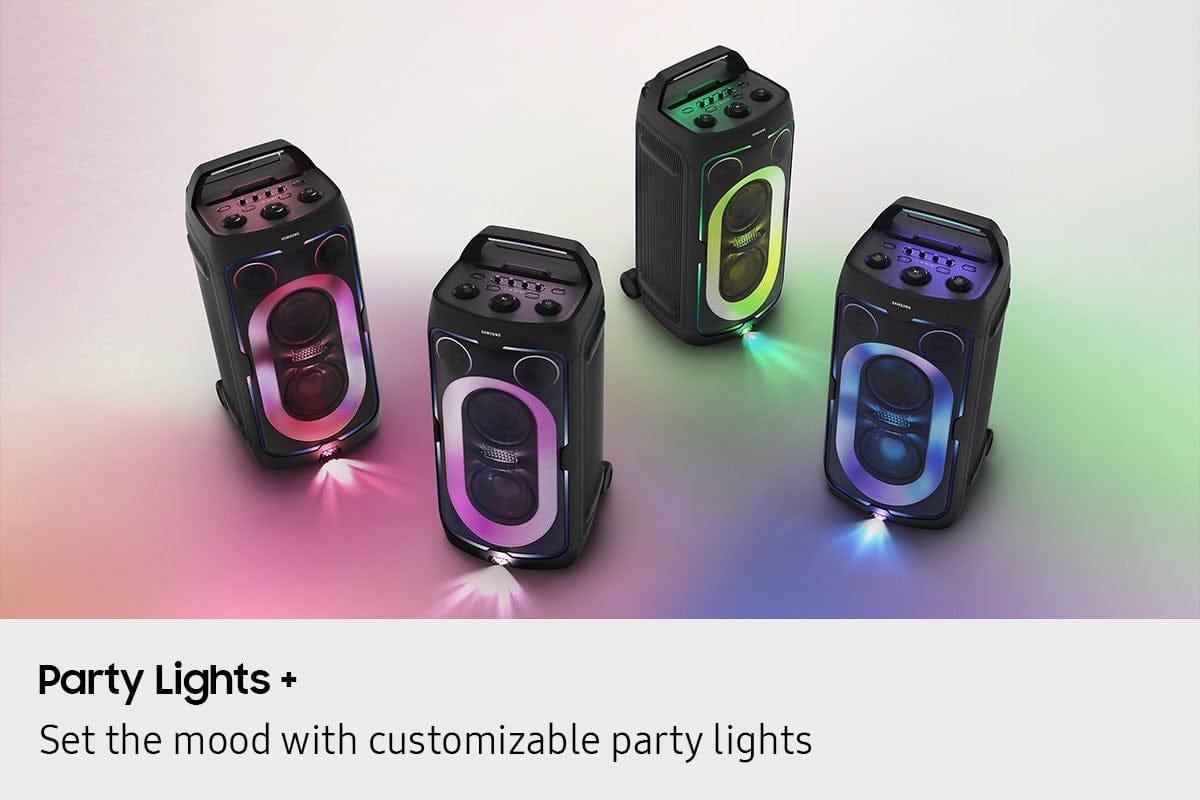
The Samsung MX-ST50F absolutely dominates in the entertainment department. The Party Lights+ system offers genuinely impressive visual effects with five mood presets and six dynamic lighting patterns that respond to music in real-time. The lights aren't just decorative—they're bright enough and varied enough to actually enhance the party atmosphere.
The karaoke functionality includes two microphone inputs (one standard mic, one mic/guitar combo), voice effects, and the ability to record performances. For families with kids or anyone who enjoys karaoke, this eliminates the need for separate equipment entirely.
The Soundboks Go is intentionally minimal in this regard—no lights, no microphone inputs, no built-in effects. It's designed for people who want their speaker to focus entirely on audio reproduction rather than becoming an entertainment center.
At the time of writing, the Samsung MX-ST50F typically costs significantly less than the Soundboks Go—roughly 25% less for what appears to be more power and features on paper. However, the value equation becomes more complex when you dig deeper.
The Samsung delivers more raw features per dollar: party lighting, karaoke capability, more connectivity options, and higher peak power output. For someone hosting occasional parties at home, it's genuinely hard to argue against this value proposition.
The Soundboks Go commands its premium through build quality, battery flexibility, and weather resistance that justify the higher cost for specific use cases. When you factor in the potential cost of replacement after weather damage, plus the flexibility of expandable battery life, the total cost of ownership can actually favor the more expensive speaker for heavy users.
Neither speaker is designed as a primary home theater solution, but both can serve as supplementary audio for outdoor movie nights or casual TV enhancement. The Samsung MX-ST50F's True Wireless Stereo capability gives it an edge here—two units can create genuine left/right separation for movies or TV shows.
The Soundboks Go can also pair multiple units, but its omnidirectional design means you won't get the same directional audio benefits. For home theater use, you'd primarily be leveraging its power and clarity rather than any surround sound effects.
After researching extensive user feedback and professional reviews, clear usage patterns emerge for each speaker.
Choose the Soundboks Go if you're someone who values mobility and reliability above all else. This includes mobile DJs who need equipment they can trust, outdoor enthusiasts who want their music to survive camping trips and beach days, or anyone who frequently hosts events in different locations. The swappable battery system makes it particularly compelling for wedding photographers, food truck operators, or anyone whose livelihood depends on reliable portable audio.
The Samsung MX-ST50F makes more sense for people who primarily entertain at home or in fixed locations. If your typical use case involves setting up in your backyard, garage, or living room and staying put, the rolling mobility and entertainment features provide better value than the Soundboks Go's extreme portability.
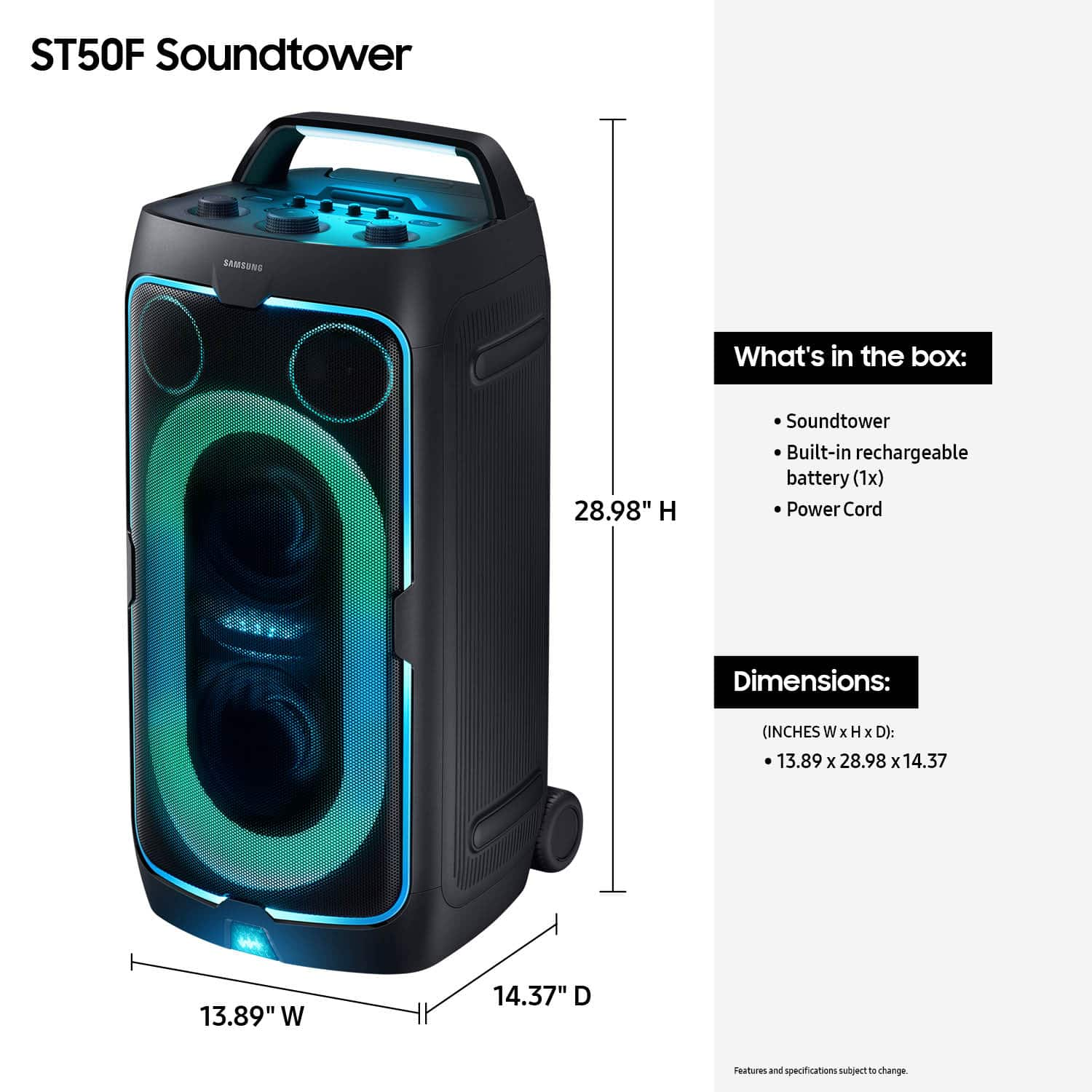
For apartment dwellers or people with limited storage space, the Soundboks Go's compact footprint could be decisive. The Samsung is nearly 29 inches tall, which can be challenging to store in smaller spaces.
Both speakers represent significant advances over earlier generations. The Soundboks Go, released in 2022, benefited from years of refinement in portable audio design and battery management systems. The original Soundboks speakers were notoriously heavy and had limited battery life—the Go addresses both concerns while maintaining the brand's signature loud, clear sound.
The Samsung MX-ST50F, arriving in 2024, incorporates newer Bluetooth standards and reflects Samsung's broader push into the premium audio market. The integration of Auracast technology and advanced lighting effects shows how party speakers have evolved beyond just audio reproduction into complete entertainment systems.
Both speakers excel in their intended roles, making this less about which is "better" and more about which fits your specific needs and lifestyle.
The Soundboks Go represents the premium choice for people who need maximum flexibility and reliability. Its higher cost is justified by superior build quality, expandable battery life, and the confidence that comes from knowing your speaker can handle whatever conditions you throw at it.
The Samsung MX-ST50F offers compelling value for people who want impressive power and features without paying premium prices. Its entertainment features and lower cost make it an excellent choice for casual users who primarily party at home.
Consider your most common use case: If you're constantly moving your speaker between locations, dealing with unpredictable weather, or need extended battery life, the Soundboks Go is worth the investment. If you're setting up for backyard barbecues, holiday parties, or garage gatherings where entertainment value and visual spectacle matter as much as audio quality, the Samsung MX-ST50F delivers more bang for your buck.
Either way, both speakers represent significant upgrades over standard Bluetooth speakers and will transform your gatherings with genuinely impressive sound quality and volume. The decision ultimately comes down to whether you prioritize portability and durability or entertainment features and value—both are valid choices that serve their intended audiences extremely well.
| Soundboks Go Portable Bluetooth Speaker | Samsung MX-ST50F Sound Tower Party Speaker |
|---|---|
| Maximum Volume Output - Critical for outdoor events and large spaces | |
| 121 dB maximum SPL with focused directional sound | 240W total power output with omnidirectional dispersion |
| Battery Life - Determines event duration without power outlets | |
| 40 hours at mid-volume, 10 hours at max volume | Up to 18 hours with lighting off, less with effects on |
| Battery System - Flexibility for extended use | |
| Swappable 99.84Wh LiFePO4 battery (buy extras for unlimited runtime) | Built-in non-removable battery (requires charging downtime) |
| Weight & Portability - How easy it is to transport | |
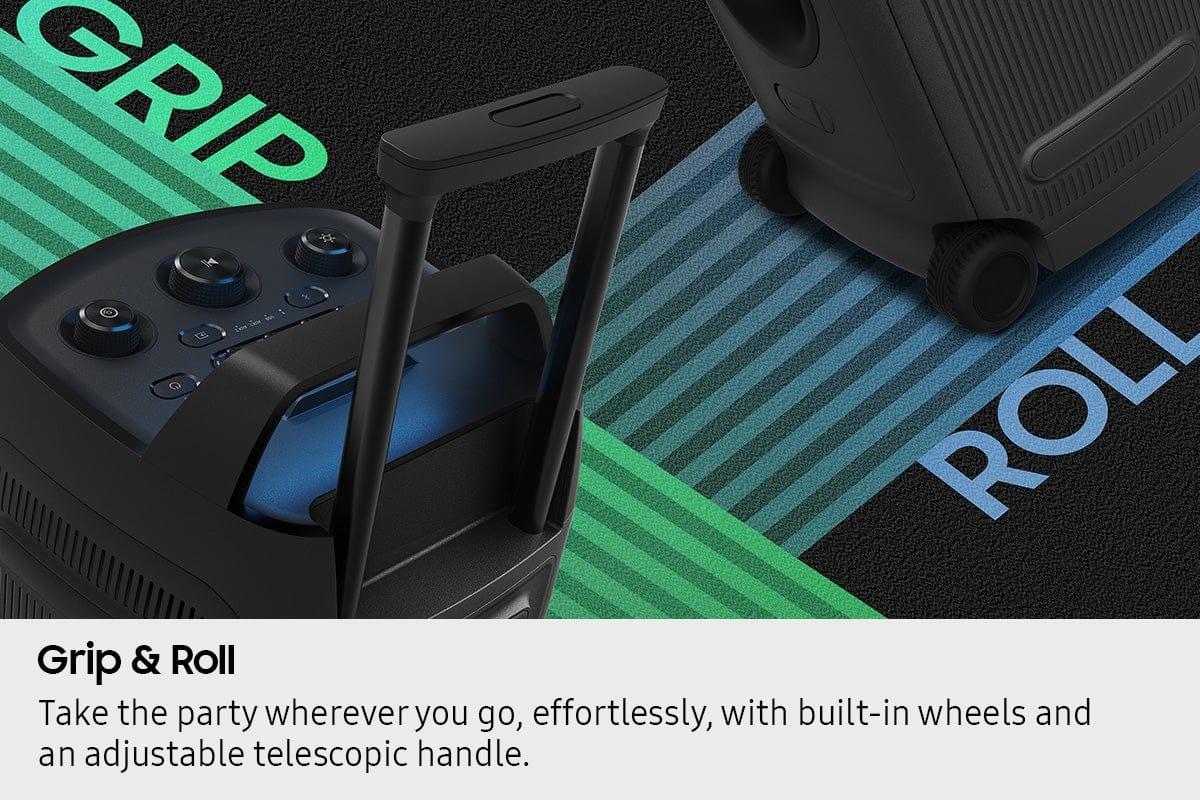
| 20 lbs with carry handle and strap mounts for backpack transport | 19 lbs with wheels and telescoping handle for rolling transport |
| Weather Resistance - Protection for outdoor use | |
| IP65 rating (dustproof, water-resistant, hose-down safe) | IPX4 rating (splash-resistant only, not beach/pool safe) |
| Entertainment Features - Beyond just playing music | |
| Audio-focused with no lights or microphone inputs | Built-in karaoke (2 mic inputs), party lighting with 6 patterns |
| Multi-Speaker Connectivity - Expanding your sound system | |
| TeamUP links up to 5 speakers with ultra-low latency (SKAA) | Auracast connects up to 10 speakers, True Wireless Stereo pairing |
| Driver Configuration - Affects sound quality and coverage | |
| 1× 10" woofer, 1× 1" tweeter (focused, directional sound) | 2× 6.5" woofers, 2× 1" tweeters (broader sound dispersion) |
| Sound Customization - Tailoring audio to your environment | |
| App-based EQ and sound profiles | 3 bass modes, 4 sound presets, Waveguide technology |
| Bluetooth Version - Connection stability and features | |
| Bluetooth 5.0 | Bluetooth 5.4 with newer connectivity features |
| Dimensions - Storage and setup considerations | |
| Compact 18"×12"×10" briefcase style | Tall 29"×14"×14" tower design |
| Value Proposition - Performance per dollar spent | |
| Premium pricing for rugged build and battery flexibility | Lower cost with more entertainment features per dollar |
The Soundboks Go reaches 121 dB maximum volume with its focused directional sound, while the Samsung MX-ST50F delivers 240W of power with broader omnidirectional coverage. When plugged into AC power, the Samsung can get extremely loud, but the Soundboks Go maintains consistent volume on battery power and may sound louder in directional listening due to its focused design.
The Soundboks Go significantly outperforms with up to 40 hours of battery life at moderate volume, compared to the Samsung MX-ST50F's 18 hours maximum. More importantly, the Soundboks Go features a swappable battery system, allowing unlimited runtime with spare batteries, while the Samsung has a built-in battery that requires charging downtime.
The Soundboks Go is designed for true portability with its compact 20-pound briefcase design, carry handle, and IP65 weather resistance that can handle rain and dust. The Samsung MX-ST50F is better suited for stationary setups with its wheels and telescoping handle for rolling transport, but its IPX4 rating only protects against light splashing.
The Samsung MX-ST50F excels for home parties with built-in karaoke functionality (two microphone inputs), customizable party lighting with six patterns, and rolling mobility for easy room-to-room movement. The Soundboks Go focuses purely on high-quality audio without entertainment features, making it better for audio purists who don't need lights or karaoke.
Yes, both support multi-speaker connectivity but use different systems. The Soundboks Go uses TeamUP technology to connect up to 5 speakers with ultra-low latency, ideal for professional use. The Samsung MX-ST50F supports Auracast technology connecting up to 10 speakers and can pair two units in True Wireless Stereo for left/right channel separation.
The Samsung MX-ST50F typically costs significantly less while offering more entertainment features like karaoke, party lighting, and higher peak power output. The Soundboks Go commands a premium for its rugged construction, swappable battery system, and superior weather resistance, making it better value for users who need maximum durability and flexibility.
The Soundboks Go is the clear winner for water-adjacent events with its IP65 rating that protects against dust and water jets from any direction. The Samsung MX-ST50F only has IPX4 splash resistance and Samsung explicitly recommends against beach or poolside use due to its limited water protection.
Neither is primarily designed for home theater, but the Samsung MX-ST50F has an advantage with its True Wireless Stereo capability, allowing two units to function as dedicated left and right speakers for movies. The Soundboks Go can enhance TV audio with its powerful output but doesn't offer directional stereo separation.
Sound quality depends on preference and use case. The Soundboks Go delivers focused, directional audio with a V-shaped sound signature that emphasizes bass and treble. The Samsung MX-ST50F offers more customization with three bass modes, four sound presets, and Waveguide technology for more even room coverage, making it more versatile for different music types.
The Soundboks Go takes approximately 3 hours to fully charge its swappable battery using a USB-C charger. The Samsung MX-ST50F charging time varies but typically requires several hours for a full charge. The key difference is that the Soundboks can continue playing while charging or by swapping in a fresh battery.
The Soundboks Go is much easier to store with its compact 18×12×10 inch footprint that fits easily in closets or under beds. The Samsung MX-ST50F stands nearly 29 inches tall, making it challenging for smaller spaces but easier to keep accessible in garages, basements, or dedicated storage areas.
The Soundboks Go is better suited for professional applications with its ultra-low latency TeamUP networking, consistent battery performance, rugged construction that survives transport, and focused sound output. The Samsung MX-ST50F lacks professional inputs and is designed more for consumer entertainment with its party lighting and karaoke features rather than professional audio requirements.
We've done our best to create useful and informative comparisons to help you decide what product to buy. Our research uses advanced automated methods to create this comparison and perfection is not possible - please contact us for corrections or questions. These are the sites we've researched in the creation of this article: bestbuy.com - beachaudio.com - youtube.com - crutchfield.com - digitaldjtips.com - comparisontabl.es - eftm.com - sweetwater.com - bestbuy.com - compsource.com - sweetwater.com - store.djtechtools.com - youtube.com - scheels.com - soundboks.com - connection.com - scheels.com - skaastore.com - thomannmusic.com - soundboks.eu - gearjunkie.com - bestbuy.com - news.samsung.com - youtube.com - youtube.com - videoandaudiocenter.com - youtube.com - youtube.com - samsung.com - crutchfield.com - youtube.com - arrowassociatedstores.com - brandsmartusa.com - bestbuy.com - crutchfield.com - samsung.com - icecat.in - thefrogpadappliances.com - news.samsung.com

Privacy Policy
Terms and Conditions - Affiliate Policy
Home Security
© Copyright 2008-2026.
11816 Inwood Rd #1211, Dallas, TX 75244