

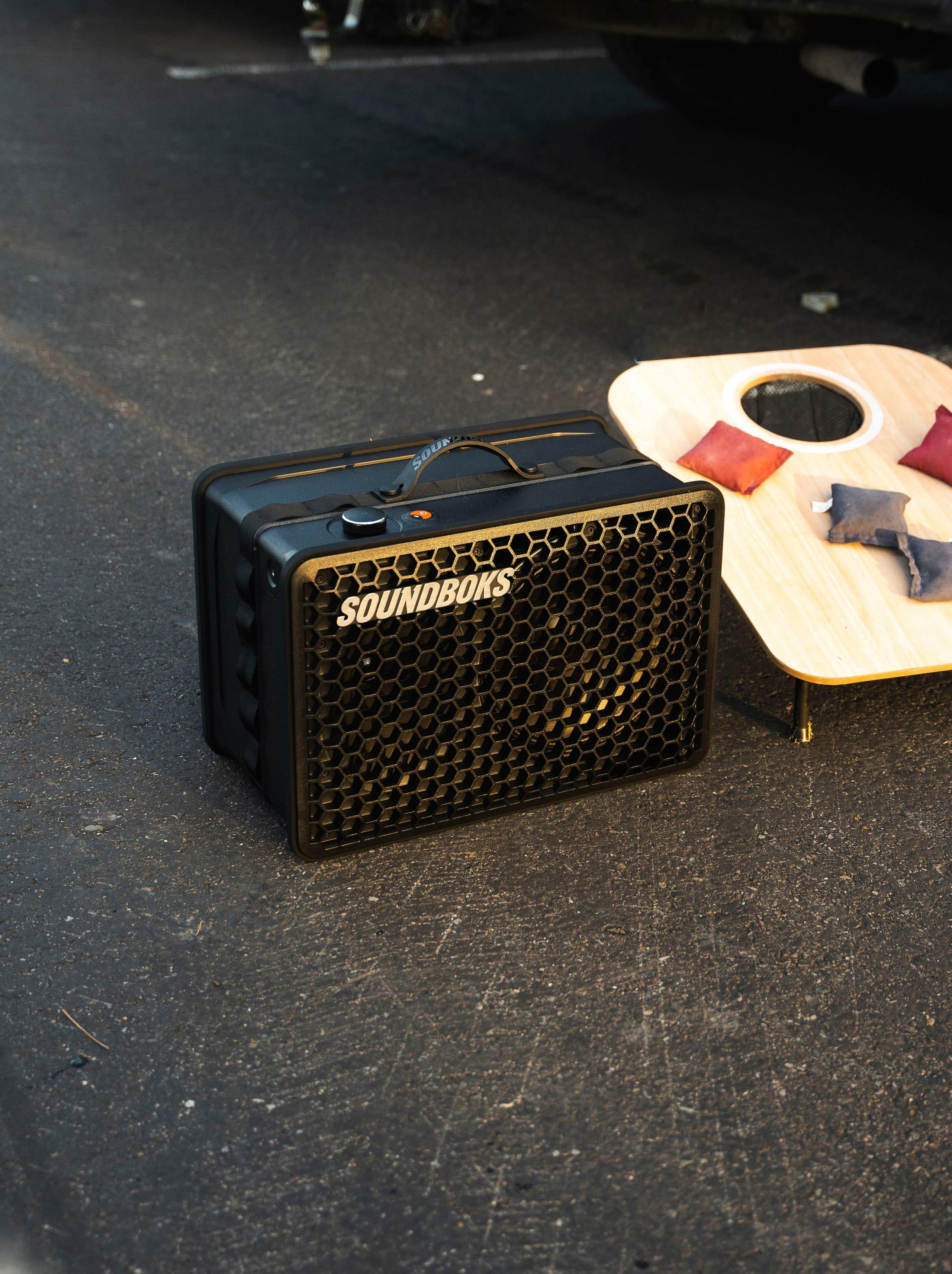
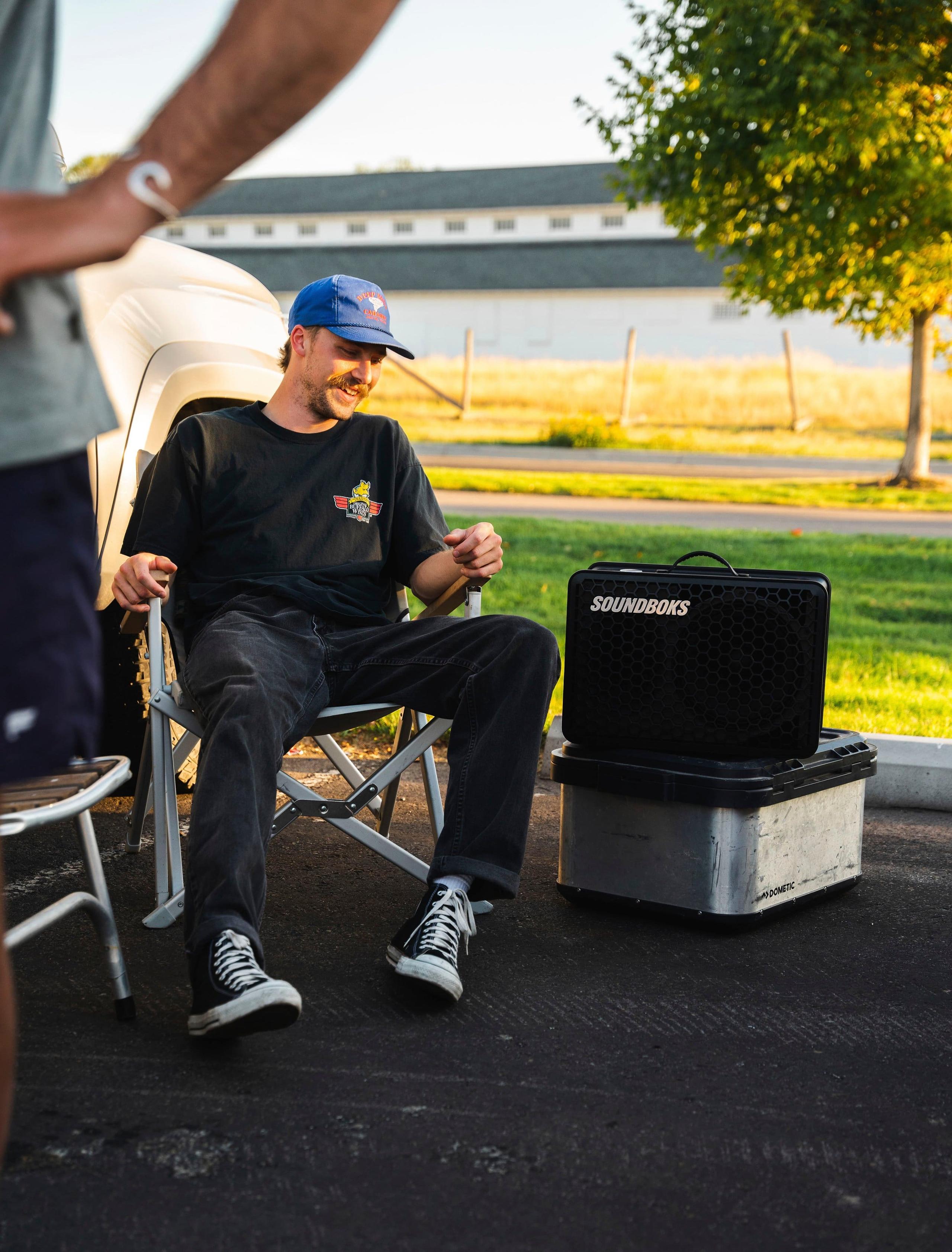

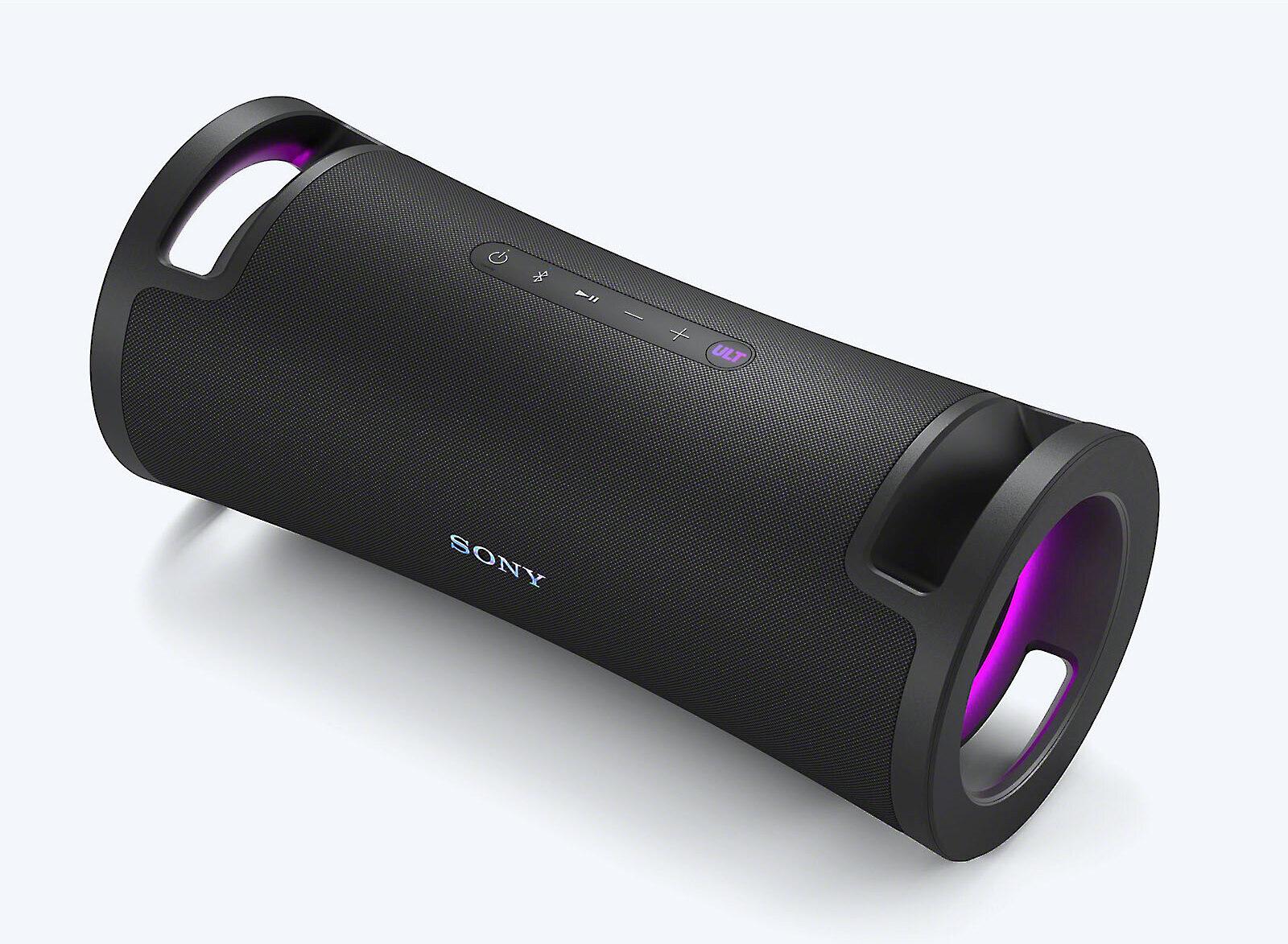
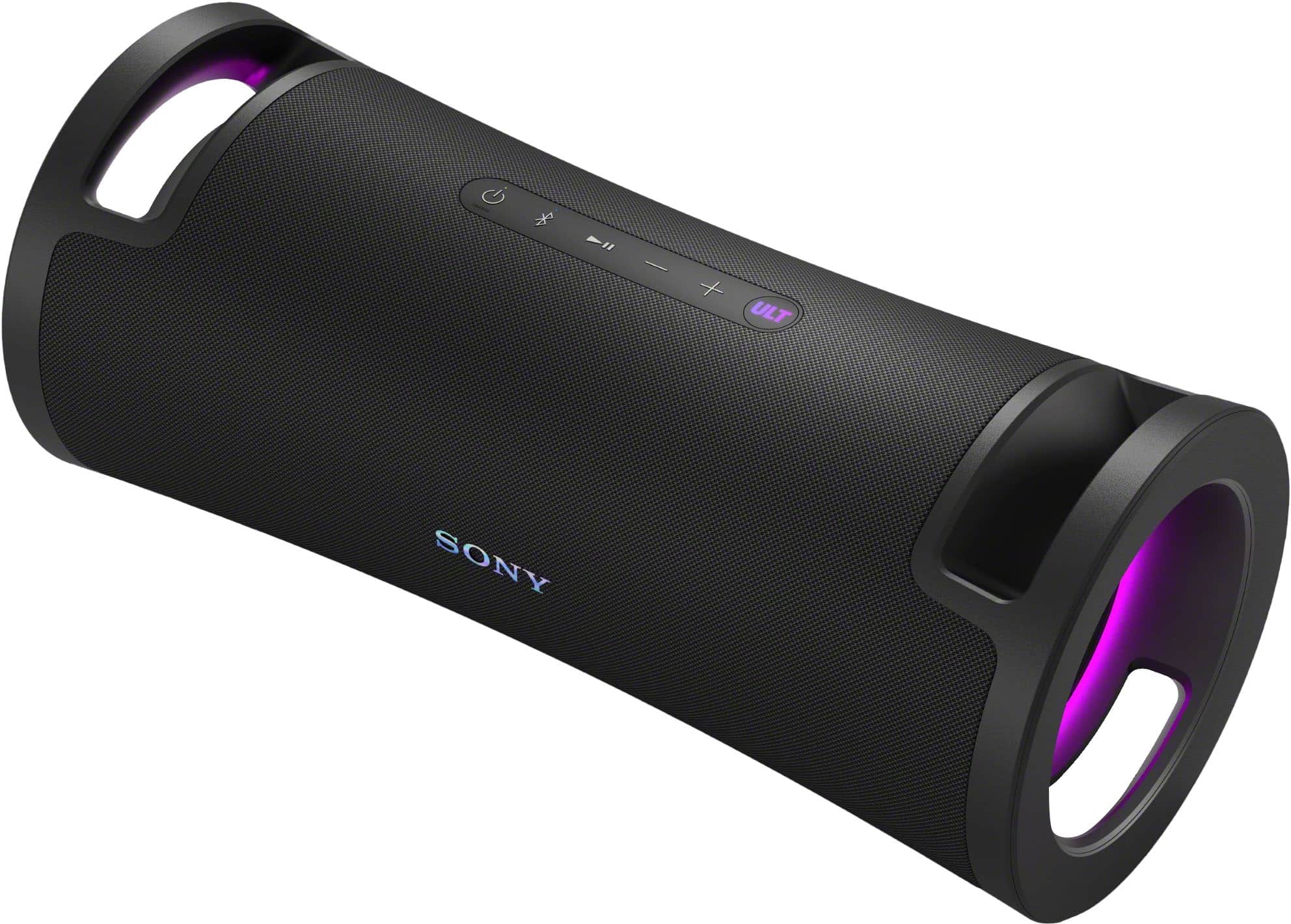
When you need a speaker that can fill a backyard, survive a pool party, and keep the music pumping all day long, you're looking at a very different category than your typical Bluetooth speaker. High-output portable speakers like the SOUNDBOKS Go and Sony ULT FIELD 7 represent the serious end of portable audio—speakers that prioritize raw power and endurance over desk-friendly portability.
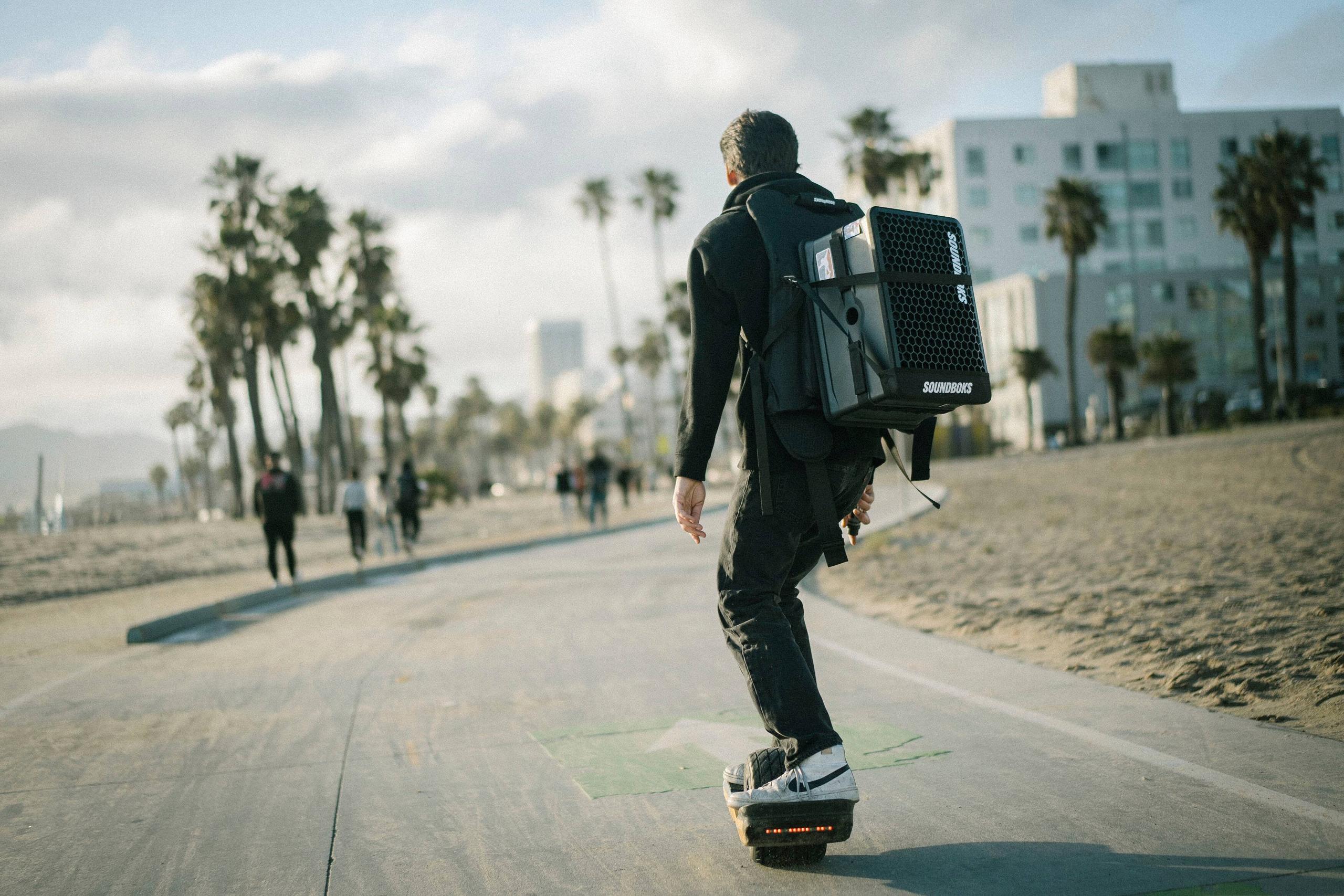
These aren't speakers you'll casually toss in a backpack. They're designed for outdoor gatherings, tailgate parties, construction sites, and anywhere else you need serious volume without access to wall power. Think of them as the pickup trucks of the speaker world: built for work, capable of handling tough conditions, and ready to haul more than you'd expect.
The jump from regular portable speakers to high-output models involves several key technical advances. First is amplification power—while a typical Bluetooth speaker might use 10-20 watts, these speakers employ Class D amplifiers pushing 100+ watts. Class D amplifiers are particularly important here because they convert electrical power to sound more efficiently than older amplifier designs, meaning less energy becomes waste heat and more becomes actual sound output.
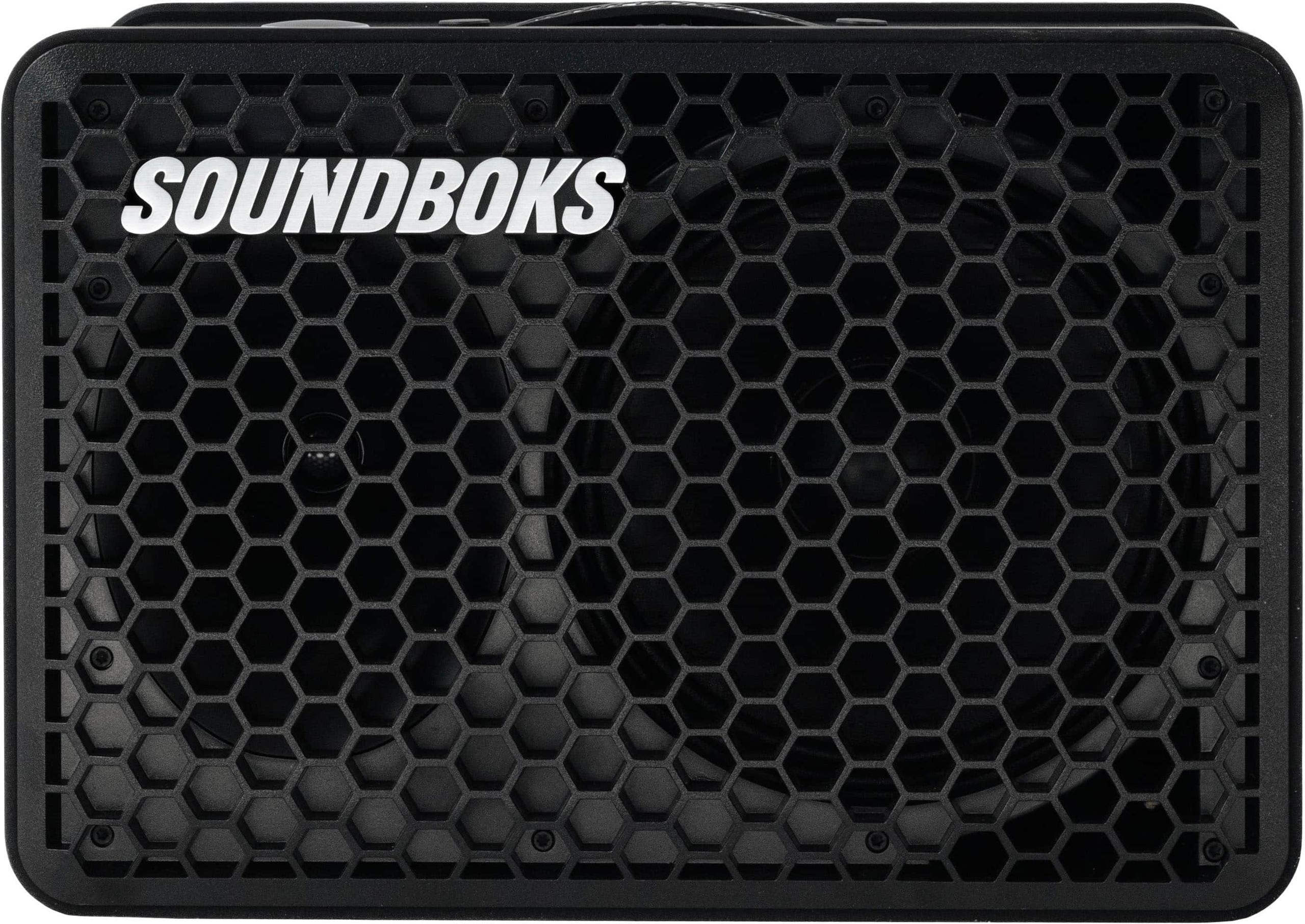
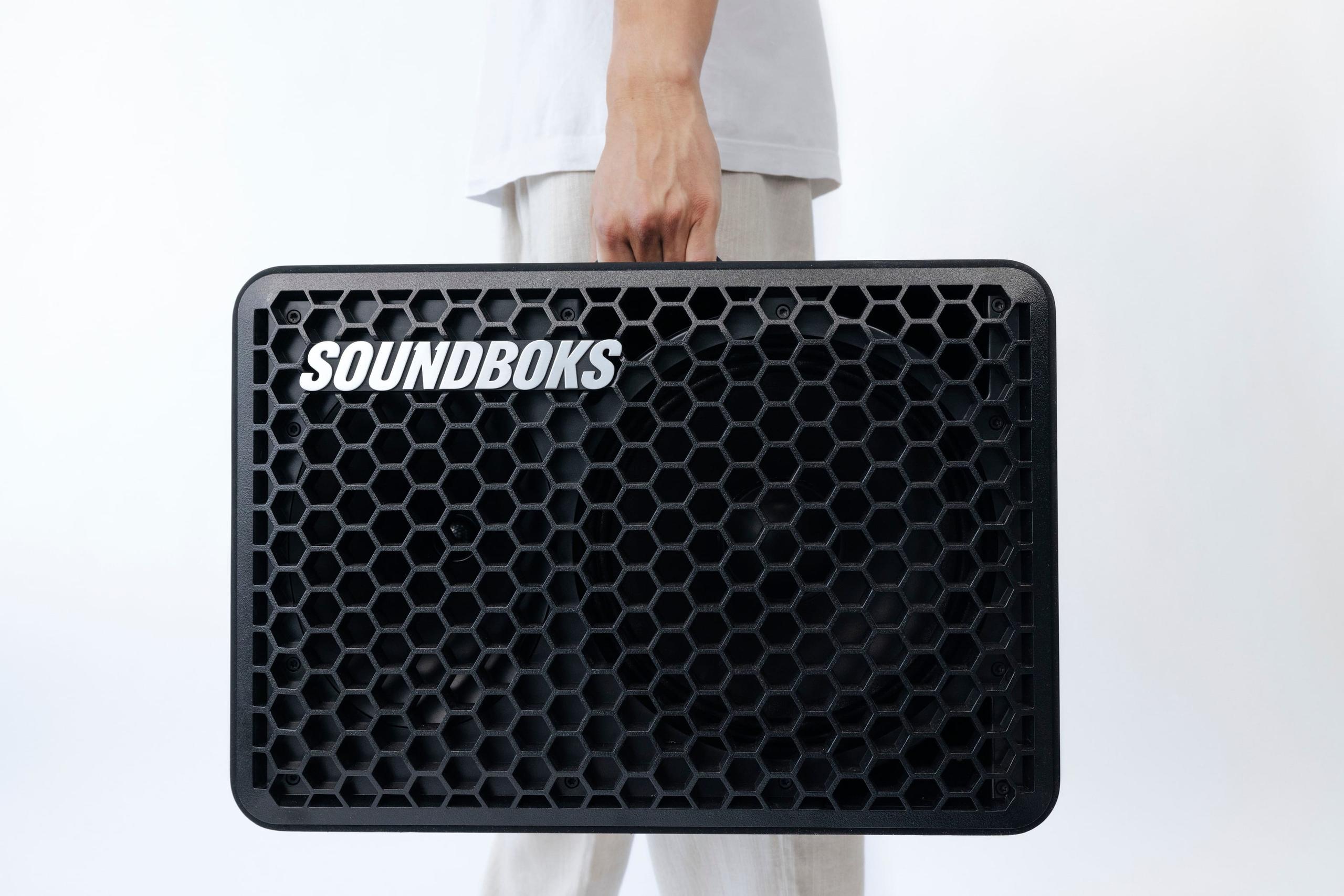
Driver size makes an enormous difference too. The SOUNDBOKS Go uses a 10-inch woofer (the large speaker that handles bass frequencies), while most portable speakers max out around 3-4 inches. Larger drivers can move more air, which directly translates to louder, deeper bass. It's physics—you simply can't get the same low-frequency impact from a tiny driver, no matter how much power you feed it.
Battery technology represents another major advancement. Both speakers use lithium-based batteries with capacities measured in watt-hours rather than the milliamp-hours you'll see on phone chargers. The SOUNDBOKS Go packs a 99.84Wh battery, while the Sony ULT FIELD 7 uses a similarly sized power source. For context, that's roughly equivalent to the battery in a small laptop.
Sound pressure level, measured in decibels (dB), tells the real story about speaker capability. Normal conversation happens around 60 dB, while a lawnmower runs about 90 dB. The SOUNDBOKS Go peaks at 121 dB—that's approaching the threshold where hearing protection becomes necessary. To put this in perspective, that's louder than a chainsaw and comparable to standing near a jet engine at takeoff.
The Sony ULT FIELD 7 doesn't publish exact dB ratings, but professional reviewers consistently describe it as "very loud" while noting it doesn't quite match the SOUNDBOKS's peak output. Based on our research into expert reviews and technical specifications, the Sony likely peaks around 110-115 dB—still impressively loud, but noticeably quieter than the SOUNDBOKS at maximum volume.
Here's where understanding amplifier design becomes crucial. The SOUNDBOKS Go uses dual 72-watt Class D amplifiers with Merus Audio eximo technology—a specialized switching amplifier design that maximizes efficiency while minimizing distortion at high output levels. This isn't marketing fluff; it's genuine engineering that allows the speaker to maintain clarity even when pushed to ear-splitting volumes.
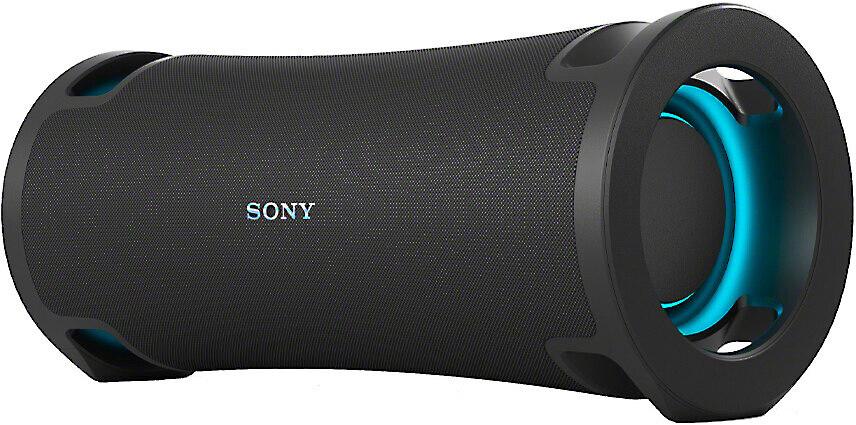
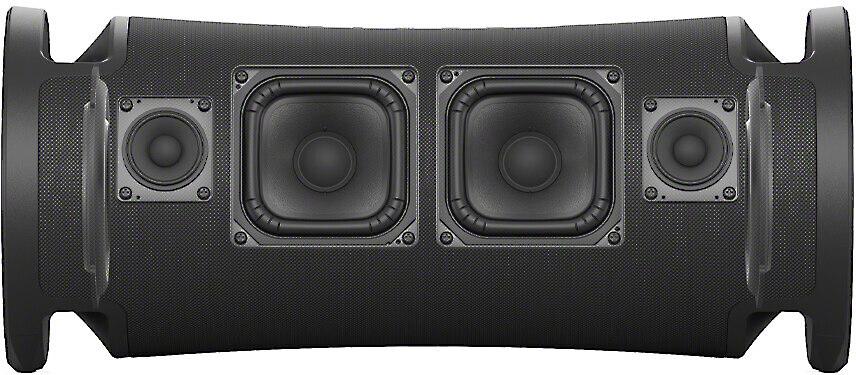
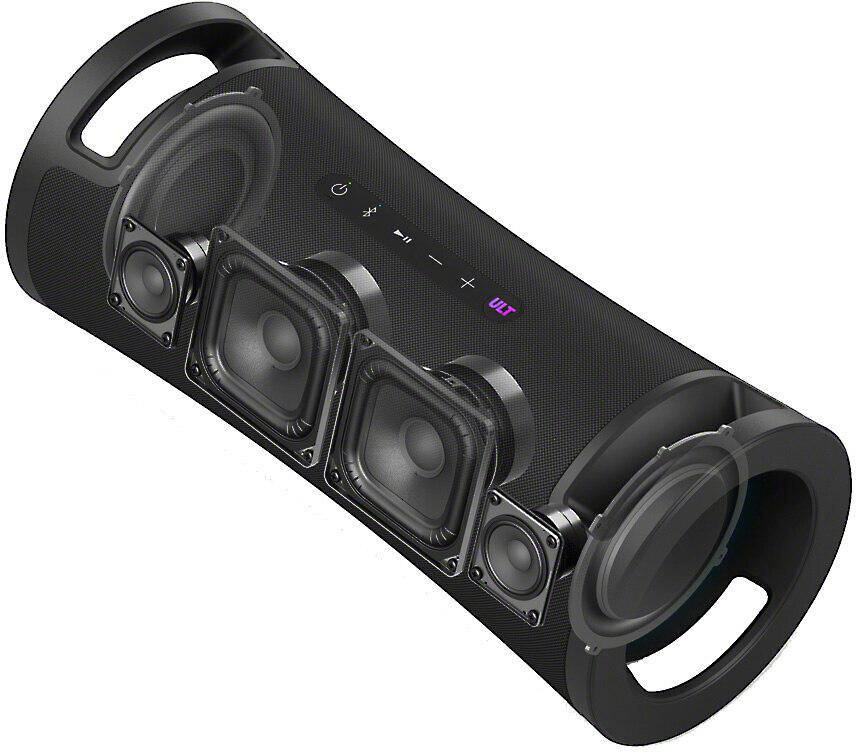
The Sony takes a different approach with its X-Balanced Speaker Unit design. Instead of circular drivers, Sony uses rectangular-ish drivers that can move more air within the same footprint. It's clever engineering that helps explain how the Sony ULT FIELD 7 achieves impressive volume despite smaller overall dimensions.
Both speakers suffer from a common high-output challenge: as you approach maximum volume, something has to give. Professional reviews consistently note that the SOUNDBOKS Go maintains its V-shaped sound signature (boosted bass and treble, recessed midrange) even at high volumes, while the Sony ULT FIELD 7 experiences bass compression—the low frequencies lose definition as the speaker struggles to maintain clarity across all frequency ranges simultaneously.
Battery endurance separates serious outdoor speakers from pretenders, and this is where the SOUNDBOKS Go establishes clear dominance. Its 40-hour runtime at moderate listening levels isn't just impressive—it's practically unmatched in the category. Even at maximum volume, it delivers 10 hours of continuous playback.
The secret lies in both battery chemistry and power management. SOUNDBOKS uses lithium iron phosphate (LiFePO4) batteries, which offer better longevity and thermal stability compared to standard lithium-ion cells. More importantly, the battery is completely swappable. Pop out the depleted battery, slide in a fresh one, and you're back to full power instantly. It's like having a gas station for your speaker.
The Sony ULT FIELD 7 delivers respectable 30-hour battery life, which still outperforms most speakers in this category. However, when that battery dies, you're waiting for a recharge cycle. For single-day events, this rarely matters. For multi-day camping trips or festival use, the difference becomes significant.
From a technical standpoint, both speakers support pass-through charging—you can use them while plugged in without damaging the battery. The SOUNDBOKS Go even includes a USB-C port on the battery itself, turning it into a power bank for charging phones and other devices.
Here's where things get interesting, and where your priorities will determine the right choice. Neither speaker prioritizes audiophile-grade sound quality—they're engineered for impact and volume over subtle detail retrieval. But their approaches differ meaningfully.
The SOUNDBOKS Go embraces a party-focused sound signature. Reviews consistently describe pronounced bass response and bright treble, with vocals sitting further back in the mix. This works brilliantly for electronic music, hip-hop, and rock—genres that benefit from powerful low-end impact. The SOUNDBOKS app provides EQ customization, but you're working within the constraints of that fundamental V-shaped character.
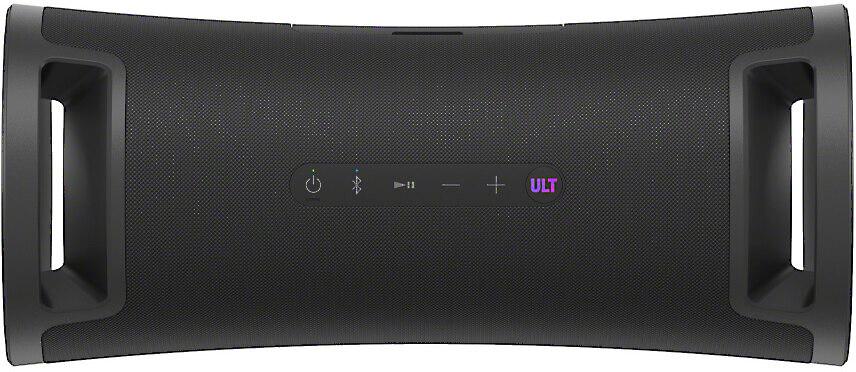
The Sony ULT FIELD 7 offers more balanced sound quality overall. Professional reviewers note better vocal clarity and more natural midrange response. The signature ULT button provides two levels of bass enhancement—ULT1 adds depth without overwhelming other frequencies, while ULT2 delivers the earth-shaking impact that bass-heavy music demands.
However, the Sony faces a critical limitation that doesn't affect the SOUNDBOKS: directivity issues. Sound doesn't project consistently from different angles, particularly in the treble frequencies. If you're standing to the side of the Sony ULT FIELD 7, the audio experience degrades noticeably. The SOUNDBOKS Go maintains more consistent sound regardless of listening position.
For home theater use, neither speaker represents an ideal choice. Both lack the precise imaging and neutral response that home theater demands. However, if you're looking for a speaker that can pull double duty—serious outdoor performance plus casual indoor listening—the Sony ULT FIELD 7 edges ahead with its more balanced sound signature and lower weight for repositioning.
Weather resistance separates outdoor speakers from indoor pretenders, and both speakers handle the elements differently. The SOUNDBOKS Go carries an IP65 rating, meaning complete dust protection and resistance to water jets from any direction. In practical terms, it handles rain, pool splashes, and dusty environments without concern. However, full submersion will damage it.
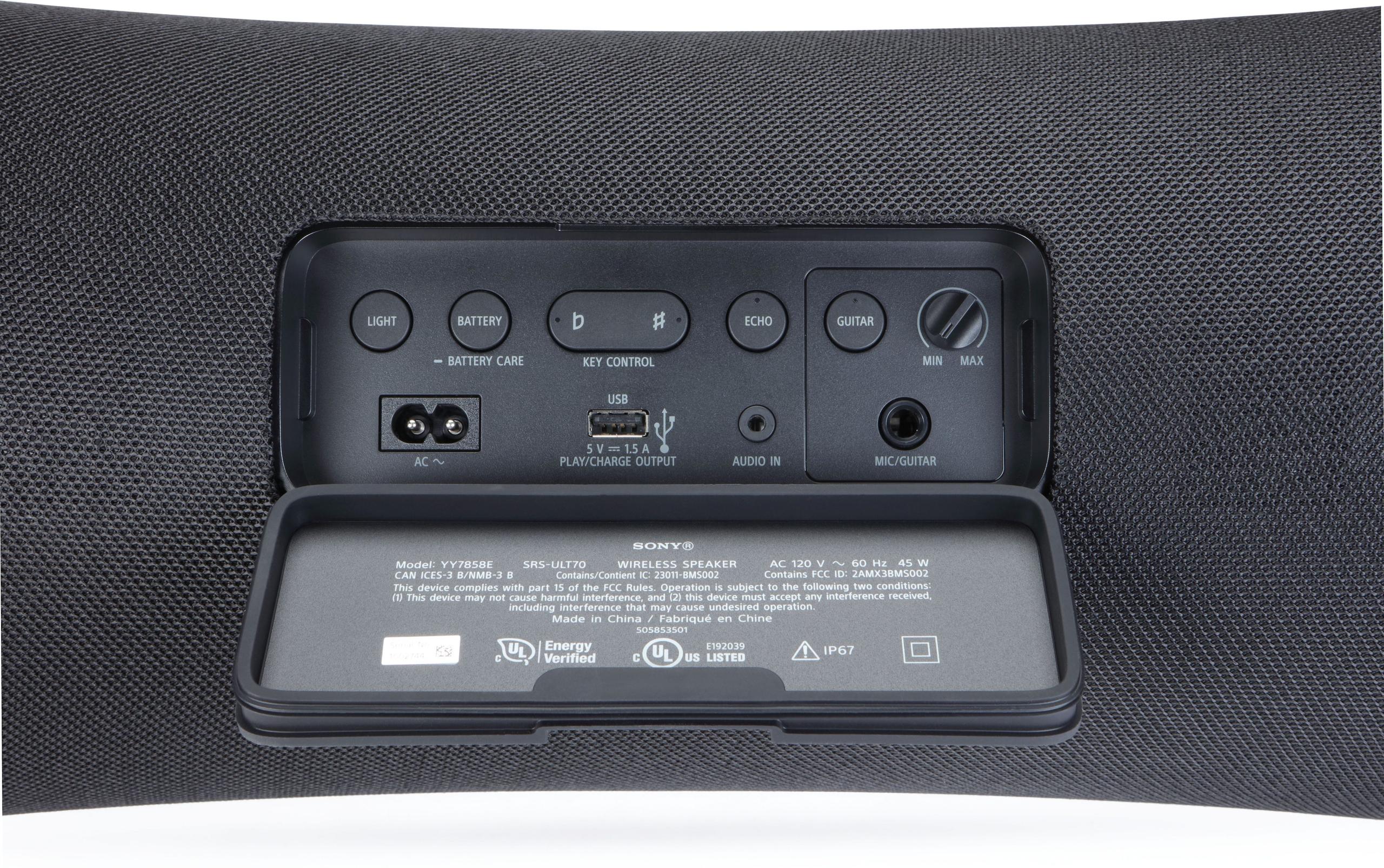
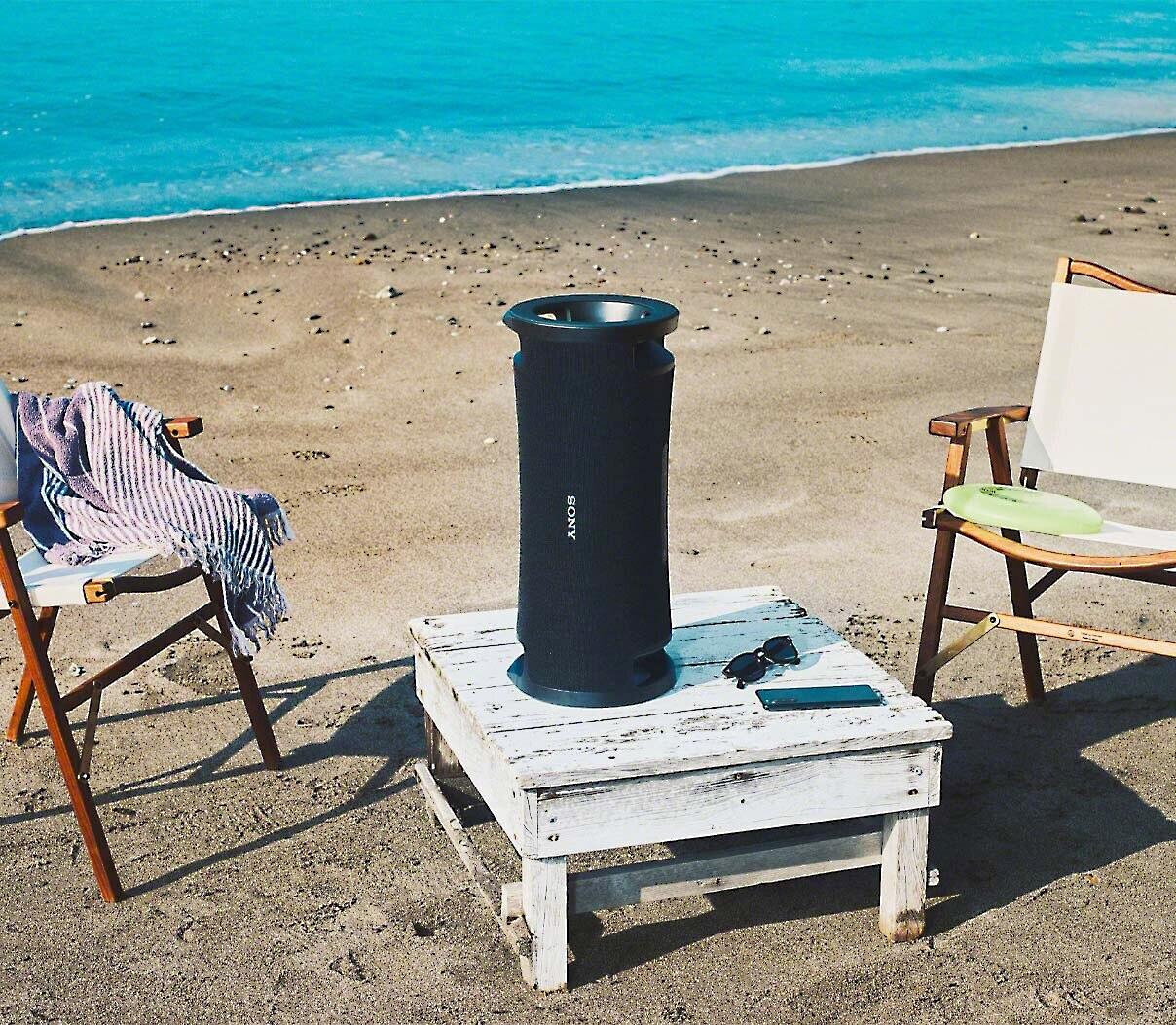
The Sony ULT FIELD 7 ups the ante with IP67 protection—full submersion up to one meter for 30 minutes. This makes it genuinely pool-party friendly. Drop it in shallow water, and it survives. The higher IP rating reflects Sony's focus on consumer-friendly versatility.
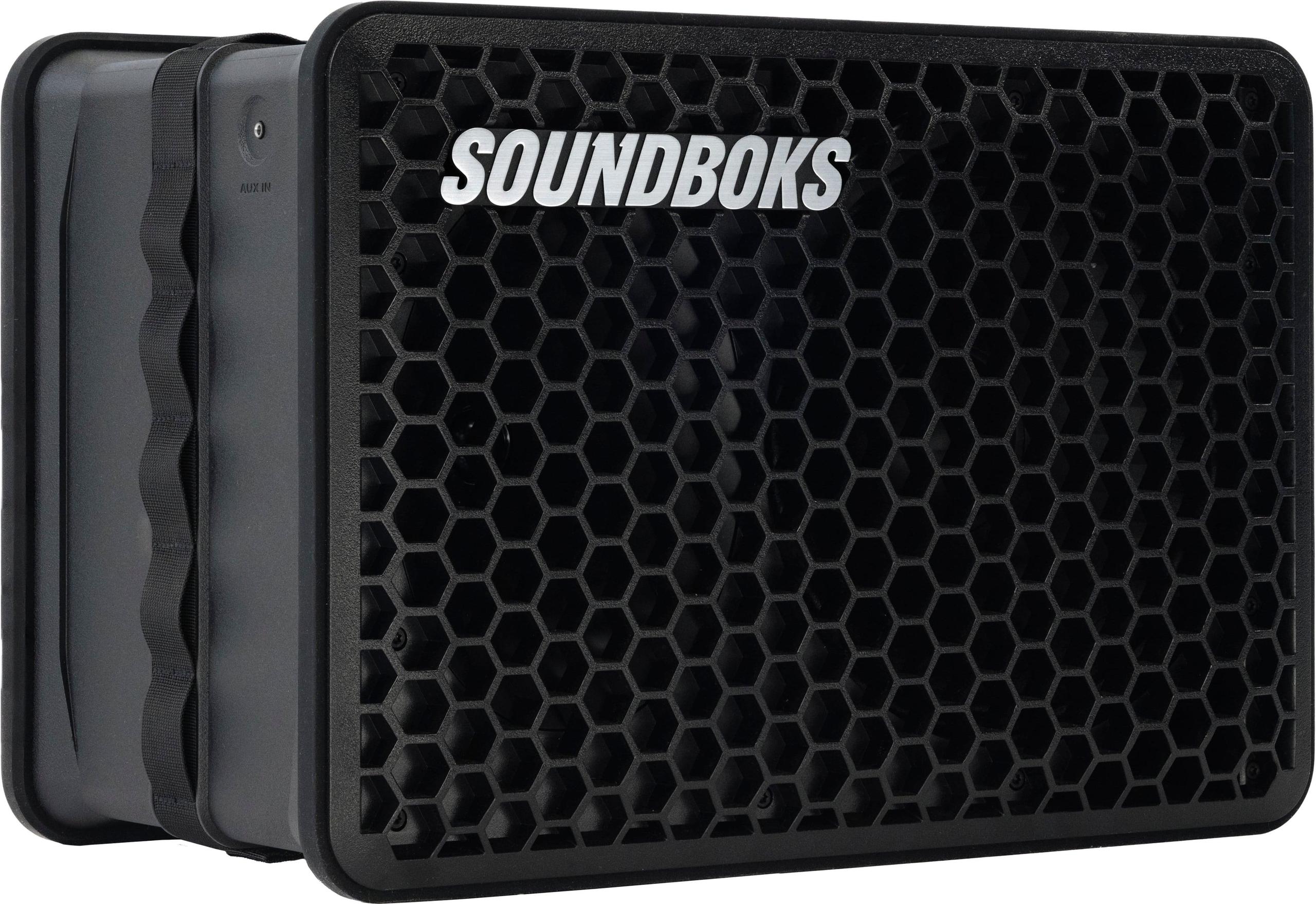
Build quality tells another story. The SOUNDBOKS Go feels like audio equipment designed for roadies—heavy-duty ABS and polycarbonate construction with silicone rubber bumpers that can absorb serious impacts. Professional reviewers consistently compare its build quality to Pelican cases, the gold standard for protective equipment cases.
The Sony ULT FIELD 7 achieves impressive durability while prioritizing portability. At roughly 14 pounds compared to the SOUNDBOKS's 20 pounds, it's significantly easier to transport. The weight difference becomes crucial if you're frequently moving the speaker between locations.
Modern high-output speakers go far beyond basic Bluetooth connectivity, and these two take notably different approaches. The SOUNDBOKS Go focuses on professional-grade wireless networking through SKAA Technology, which enables ultra-low-latency connections between up to five compatible speakers. This matters enormously for DJ use, where audio delay can ruin beat matching and crowd response.
SKAA Technology operates independently of standard Bluetooth, creating a dedicated wireless network between speakers with latency measured in single-digit milliseconds. It's sophisticated technology that most casual users won't fully appreciate, but it's crucial for professional applications.
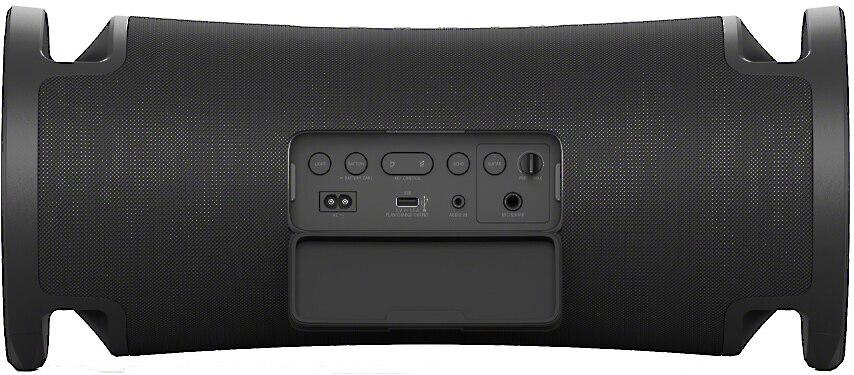
The Sony ULT FIELD 7 emphasizes party-focused features instead. Its Party Connect system can link up to 100 compatible Sony speakers—a massive scaling advantage for large events. More importantly for many users, it includes a 6.3mm microphone/guitar input with built-in effects processing. Karaoke fans will appreciate the pitch adjustment and echo effects, while musicians can use it as a portable amplifier.
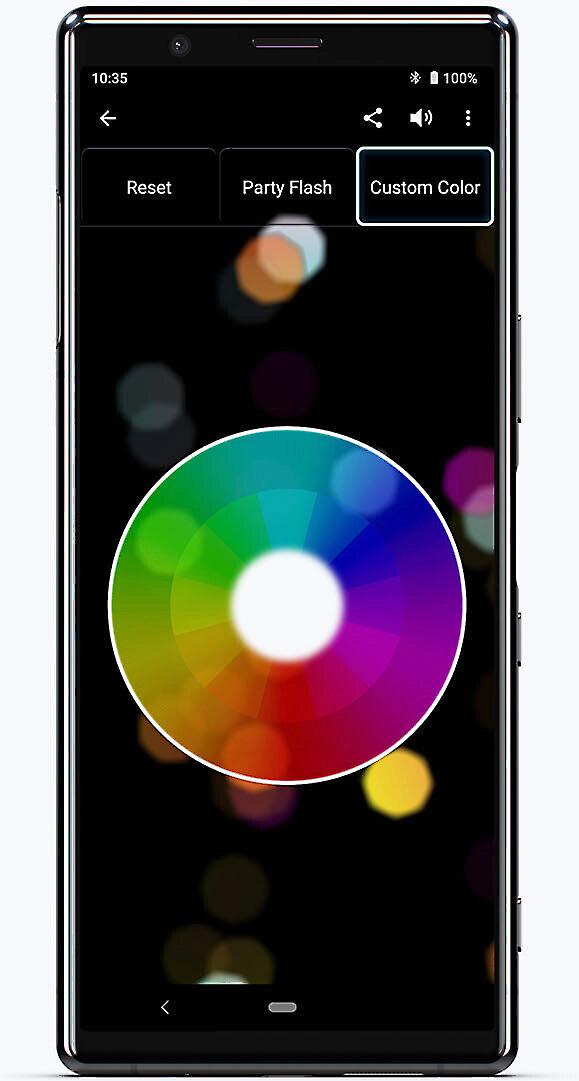
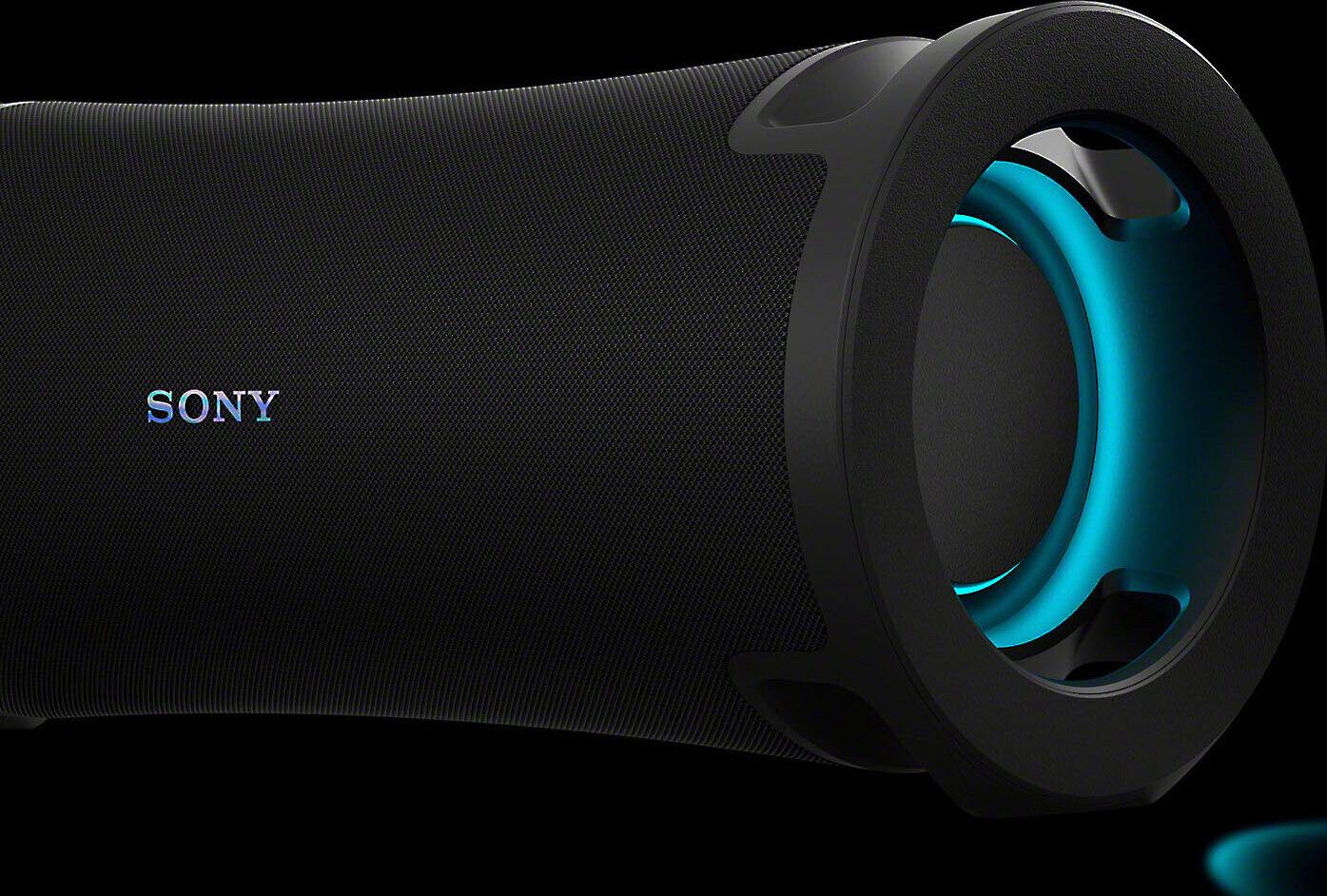
The Sony's RGB lighting system adds visual entertainment value, automatically syncing light shows to music playback. While this might seem gimmicky, it genuinely enhances the party atmosphere in ways that pure audio performance cannot.
Both speakers offer comprehensive app control, but with different strengths. The SOUNDBOKS app focuses on audio customization and multi-speaker management, while Sony's Music Center app adds environmental optimization features like Sound Field Optimization, which automatically adjusts settings based on ambient noise levels.
The SOUNDBOKS Go launched in 2022 as a more portable alternative to the company's flagship models, incorporating lessons learned from years of professional speaker development. Its swappable battery system represented a genuine innovation in portable audio—most manufacturers still use sealed batteries that require complete downtime for charging.
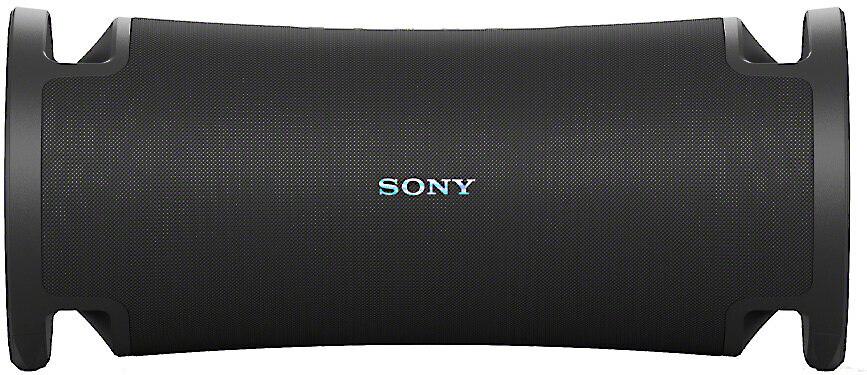
The Sony ULT FIELD 7 arrived in 2024 as part of Sony's ULT series launch, representing a significant evolution in the company's portable speaker strategy. The ULT branding replaced Sony's previous EXTRA BASS marketing, reflecting more sophisticated bass enhancement technology rather than simple EQ boosting.
Since 2022, key technological improvements in this category include better battery management systems, more efficient Class D amplification, and improved weather sealing. Both speakers benefit from these advances, though they implement them differently based on their design philosophies.
At the time of writing, the SOUNDBOKS Go commands roughly double the price of the Sony ULT FIELD 7, positioning them in distinctly different market segments despite comparable performance levels. The pricing differential reflects their different target audiences and feature priorities.
The Sony ULT FIELD 7 delivers exceptional value for users who want serious volume and solid battery life without premium pricing. You're getting roughly 80-85% of the SOUNDBOKS's performance at 50% of the cost, plus superior water resistance and entertainment features. For most casual users, this represents outstanding value.
The SOUNDBOKS Go justifies its premium through specialized features that matter enormously to specific users: swappable batteries, maximum volume output, and professional-grade construction. If you need 40-hour battery life, the convenience of instant battery swaps, or absolute maximum volume, the price premium becomes defensible.
The SOUNDBOKS Go makes sense for users who prioritize maximum performance over convenience. Professional DJs who need reliable monitoring speakers, event organizers running multi-day gatherings, and serious audiophiles who want the loudest possible portable speaker will appreciate what they're paying for. The swappable battery system alone could justify the price for users who regularly face situations where downtime isn't acceptable.
The Sony ULT FIELD 7 better serves users who want impressive performance without the associated compromises. If you're throwing occasional backyard parties, want a speaker for camping trips, or need something that can handle pool parties while remaining practical for indoor use, the Sony's combination of performance, features, and reasonable pricing makes more sense.
For home theater applications, both speakers face limitations due to their party-focused tuning. However, the Sony ULT FIELD 7's more balanced sound signature and lighter weight make it more practical for users who want one speaker to handle both outdoor events and casual indoor listening.
The decision ultimately comes down to specific priorities: maximum performance and specialized features versus practical performance and broad versatility. Both speakers excel in their intended roles, but they're designed for meaningfully different users and use cases.
In our evaluation of expert reviews and user feedback, the SOUNDBOKS Go consistently impresses users who need its specific advantages, while the Sony ULT FIELD 7 delivers broader appeal through its combination of performance, features, and accessible pricing. Neither represents a wrong choice—they're simply optimized for different priorities and budgets.
| SOUNDBOKS Go | Sony ULT FIELD 7 |
|---|---|
| Maximum Volume Output - Critical for large outdoor spaces and competing with ambient noise | |
| 121 dB (124 dB with bass boost) - Extremely loud, rivals small PA systems | Very loud but likely peaks around 110-115 dB - Still impressive for most gatherings |
| Battery Life - Essential for all-day events without power access | |
| 40 hours mid-volume / 10 hours max volume - Industry-leading endurance | Up to 30 hours - Excellent but shorter than SOUNDBOKS Go |
| Weight and Portability - Affects how often you'll actually use the speaker | |
| 20 lbs (9.2 kg) - Substantial but manageable with built-in handle | 13.9 lbs (6.3 kg) - Significantly lighter and easier to transport |
| Water Resistance - Determines outdoor durability and peace of mind | |
| IP65 (dustproof, splash-resistant) - Handles rain and pool splashes | IP67 (submersible to 1 meter) - Can survive accidental drops in water |
| Battery System - Game-changer for extended events | |
| Swappable LiFePO4 battery - Instant replacement, no downtime | Built-in non-removable - Must wait for recharge cycles |
| Sound Quality Balance - Affects listening enjoyment across music genres | |
| V-shaped signature (boosted bass/treble, recessed mids) - Party-focused tuning | More balanced with better vocal clarity - Versatile for various music types |
| Driver Configuration - Determines frequency response and power handling | |
| 10" woofer + 1" silk dome tweeter - Larger drivers for deeper bass impact | 4.4" woofer + 1.8" tweeter - Smaller but efficient X-Balanced design |
| Amplification Power - Raw electrical power driving the speakers | |
| Dual 72W Class D (144W total) with Merus Audio technology | Not specified but sufficient for high output levels |
| Multi-Speaker Connectivity - Expands system for larger events | |
| SKAA TeamUP (5 speakers max) - Ultra-low latency, professional-grade | Party Connect (100+ speakers) - Massive scalability for huge events |
| Professional Inputs - Adds versatility beyond Bluetooth | |
| 3.5mm AUX only - Basic but reliable wired connection | 6.3mm mic/guitar input with effects - Built for karaoke and live performance |
| Entertainment Features - Enhances party atmosphere beyond just audio | |
| Minimal lighting, focus on pure audio performance | RGB lighting sync + karaoke effects - Full party entertainment package |
| Build Quality and Construction - Affects long-term durability | |
| Reinforced ABS/polycarbonate with rubber bumpers - Tank-like construction | Solid but prioritizes portability over maximum protection |
| App Control and Customization - Fine-tunes performance to your preferences | |
| SOUNDBOKS app with custom EQ and sound profiles | Sony Music Center with 7-band EQ and Sound Field Optimization |
| Price Positioning - Value proposition varies significantly | |
| Premium pricing for specialized features and maximum performance | Mid-range pricing offers excellent performance-per-dollar ratio |
The SOUNDBOKS Go is significantly louder, reaching 121 dB (124 dB with bass boost) compared to the Sony ULT FIELD 7 which achieves very high volume levels but likely peaks around 110-115 dB. The SOUNDBOKS Go rivals small PA systems in output capability, making it better for extremely large outdoor gatherings.
The SOUNDBOKS Go offers superior battery life with 40 hours at mid-volume and 10 hours at maximum volume. The Sony ULT FIELD 7 provides up to 30 hours of playback, which is still excellent but shorter than the SOUNDBOKS. The key advantage of the SOUNDBOKS Go is its swappable battery system for instant replacement.
The Sony ULT FIELD 7 is more portable at 13.9 pounds compared to the SOUNDBOKS Go at 20 pounds. The Sony's lighter weight makes it significantly easier to transport frequently, while the SOUNDBOKS Go requires more effort to move but offers superior performance.
Both speakers handle outdoor conditions well but differently. The Sony ULT FIELD 7 has superior IP67 water resistance and can survive submersion up to 1 meter, making it ideal for pool parties. The SOUNDBOKS Go offers IP65 protection (splash-resistant) with more rugged overall construction for harsh outdoor use.
The Sony ULT FIELD 7 provides more balanced sound quality with better vocal clarity and midrange response, making it versatile for various music genres. The SOUNDBOKS Go uses a V-shaped sound signature with boosted bass and treble that's optimized for party music but may sound harsh for critical listening.
Yes, both support multi-speaker connectivity but with different approaches. The SOUNDBOKS Go uses SKAA TeamUP technology to connect up to 5 speakers with ultra-low latency, ideal for professional use. The Sony ULT FIELD 7 supports Party Connect for linking up to 100+ speakers, offering massive scalability for large events.
The Sony ULT FIELD 7 offers superior value, delivering roughly 80-85% of the SOUNDBOKS Go performance at approximately half the cost. The Sony provides excellent performance-per-dollar with additional features like lighting and karaoke inputs, while the SOUNDBOKS Go commands premium pricing for specialized features.
The Sony ULT FIELD 7 is better suited for karaoke and live performance with its dedicated 6.3mm microphone/guitar input and built-in audio effects like pitch adjustment and echo. The SOUNDBOKS Go only offers a 3.5mm AUX input, limiting its versatility for live performance applications.
Both speakers deliver powerful bass but with different approaches. The SOUNDBOKS Go uses a larger 10-inch woofer for deeper, more impactful bass output. The Sony ULT FIELD 7 features dual ULT bass modes that provide dynamic control over bass response, though bass compression can occur at maximum volumes.
For maximum volume outdoor events, the SOUNDBOKS Go excels with its 121 dB output and 40-hour battery life, plus swappable batteries for multi-day events. The Sony ULT FIELD 7 works better for moderate-sized gatherings where portability, water resistance, and entertainment features like RGB lighting matter more than absolute maximum volume.
Yes, both the SOUNDBOKS Go and Sony ULT FIELD 7 support pass-through charging, allowing continuous use while plugged into power. The SOUNDBOKS Go also functions as a power bank through its USB-C port, enabling you to charge other devices from the speaker's battery.
The SOUNDBOKS Go offers more rugged construction with reinforced ABS/polycarbonate materials and silicone rubber bumpers designed for professional roadie-level abuse. The Sony ULT FIELD 7 provides solid durability with better water resistance (IP67) but prioritizes portability over maximum protection, making the SOUNDBOKS Go better for extremely harsh conditions.
We've done our best to create useful and informative comparisons to help you decide what product to buy. Our research uses advanced automated methods to create this comparison and perfection is not possible - please contact us for corrections or questions. These are the sites we've researched in the creation of this article: bestbuy.com - beachaudio.com - youtube.com - crutchfield.com - digitaldjtips.com - comparisontabl.es - eftm.com - sweetwater.com - bestbuy.com - compsource.com - sweetwater.com - store.djtechtools.com - youtube.com - scheels.com - soundboks.com - connection.com - scheels.com - skaastore.com - thomannmusic.com - soundboks.eu - gearjunkie.com - rtings.com - hifipicks.com - thesonyshop.ca - techradar.com - rtings.com - sony-africa.com - videoandaudiocenter.com - sony.com - youtube.com - johnlewis.com

Privacy Policy
Terms and Conditions - Affiliate Policy
Home Security
© Copyright 2008-2026.
11816 Inwood Rd #1211, Dallas, TX 75244