


When you're looking to upgrade your music setup for parties, outdoor gatherings, or just want something louder than your phone's speaker, the world of portable party speakers can feel overwhelming. Two speakers that frequently come up in discussions are the Soundboks Go and the Sony SRS-XV500, but they couldn't be more different in their approach to delivering great sound.
At the time of writing, these speakers sit in completely different price brackets—the Soundboks Go commands a premium price point around $800, while the Sony SRS-XV500 typically sells for roughly half that amount. But this isn't simply a case of expensive versus cheap. These are fundamentally different products designed for different lifestyles and use cases.
Before diving into specifics, it's worth understanding what makes a party speaker different from your average Bluetooth speaker. Party speakers prioritize three main things: getting really loud without distorting, lasting all day (or night) on battery power, and surviving the chaos that comes with outdoor events and enthusiastic partygoers.
The most important performance metric is maximum sound pressure level (SPL), measured in decibels. To put this in perspective, normal conversation happens around 60 dB, a busy restaurant might hit 80 dB, and a rock concert reaches about 115 dB. Quality party speakers aim for at least 100 dB to cut through outdoor ambient noise and fill large spaces.
Battery life becomes crucial because parties don't always happen near power outlets. Weather resistance matters too—pool parties, beach trips, and camping adventures all put speakers through conditions that would destroy regular electronics.
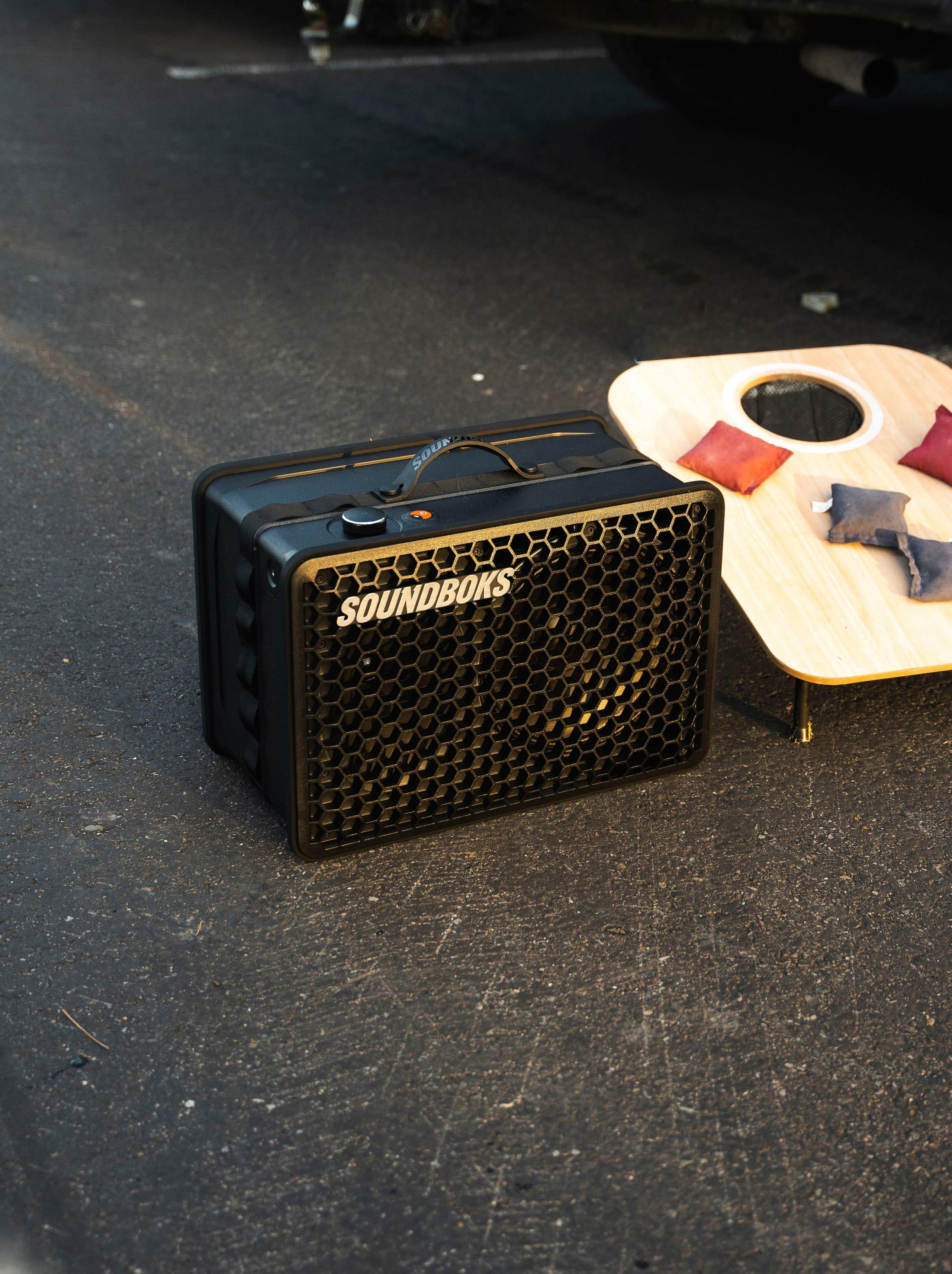
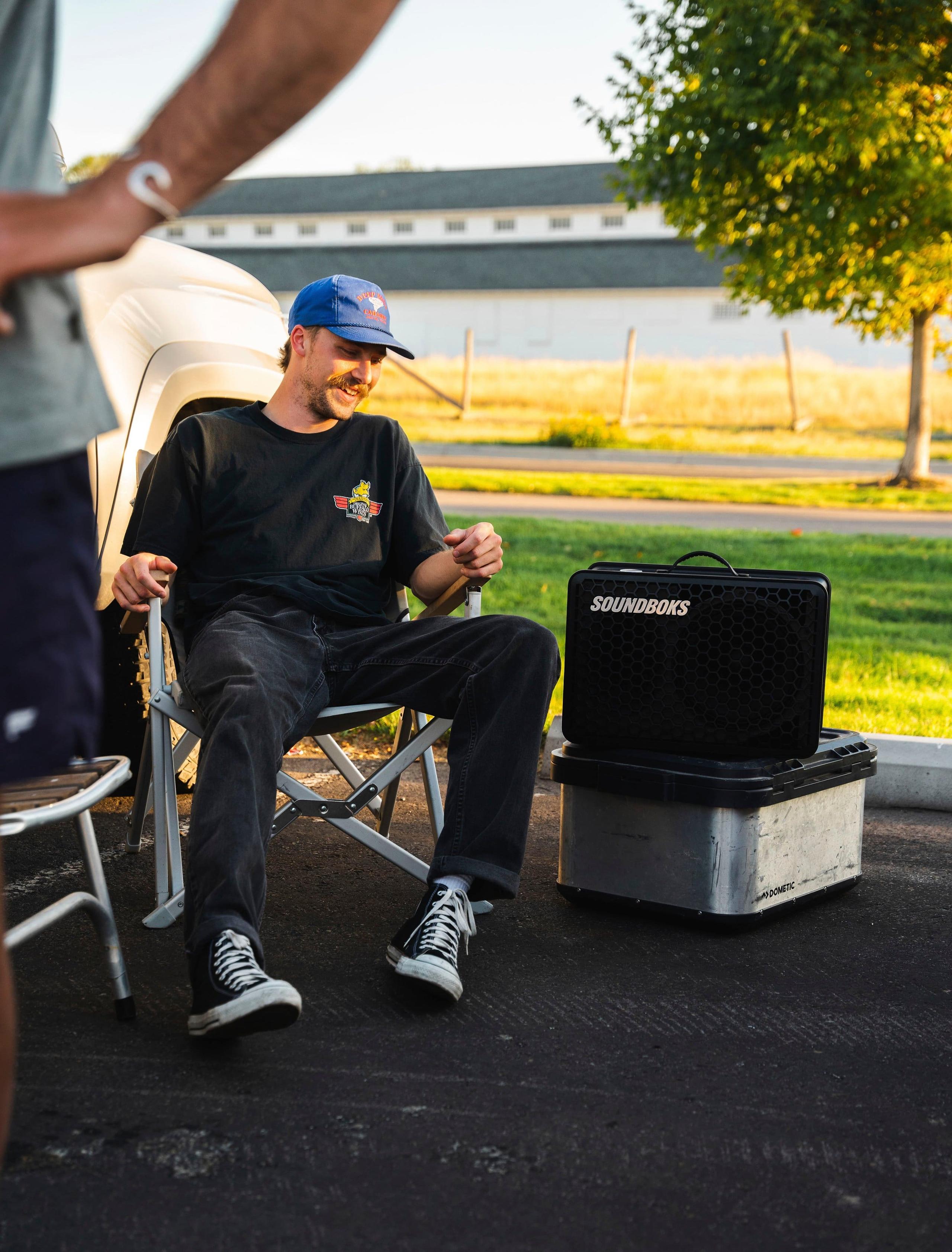
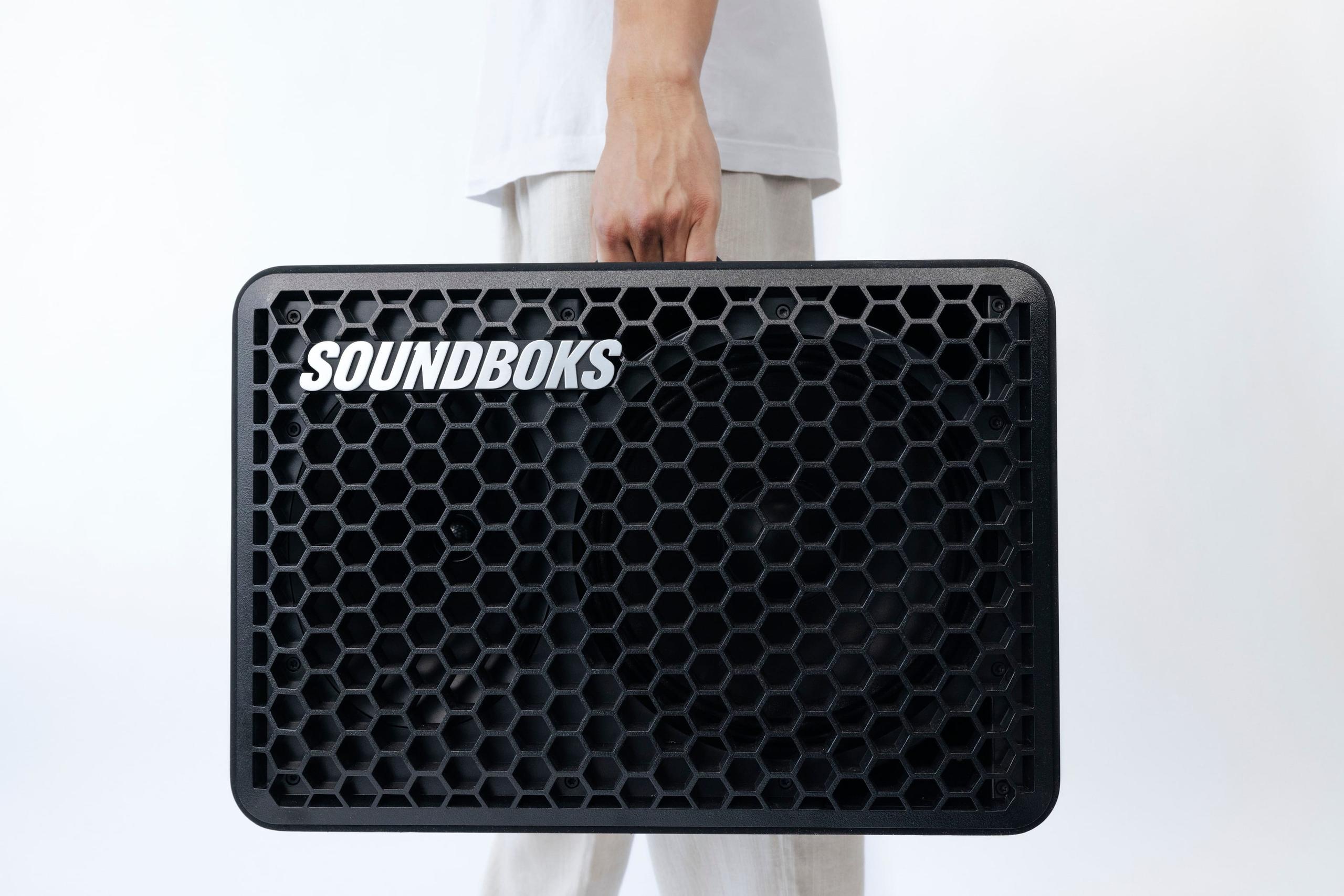
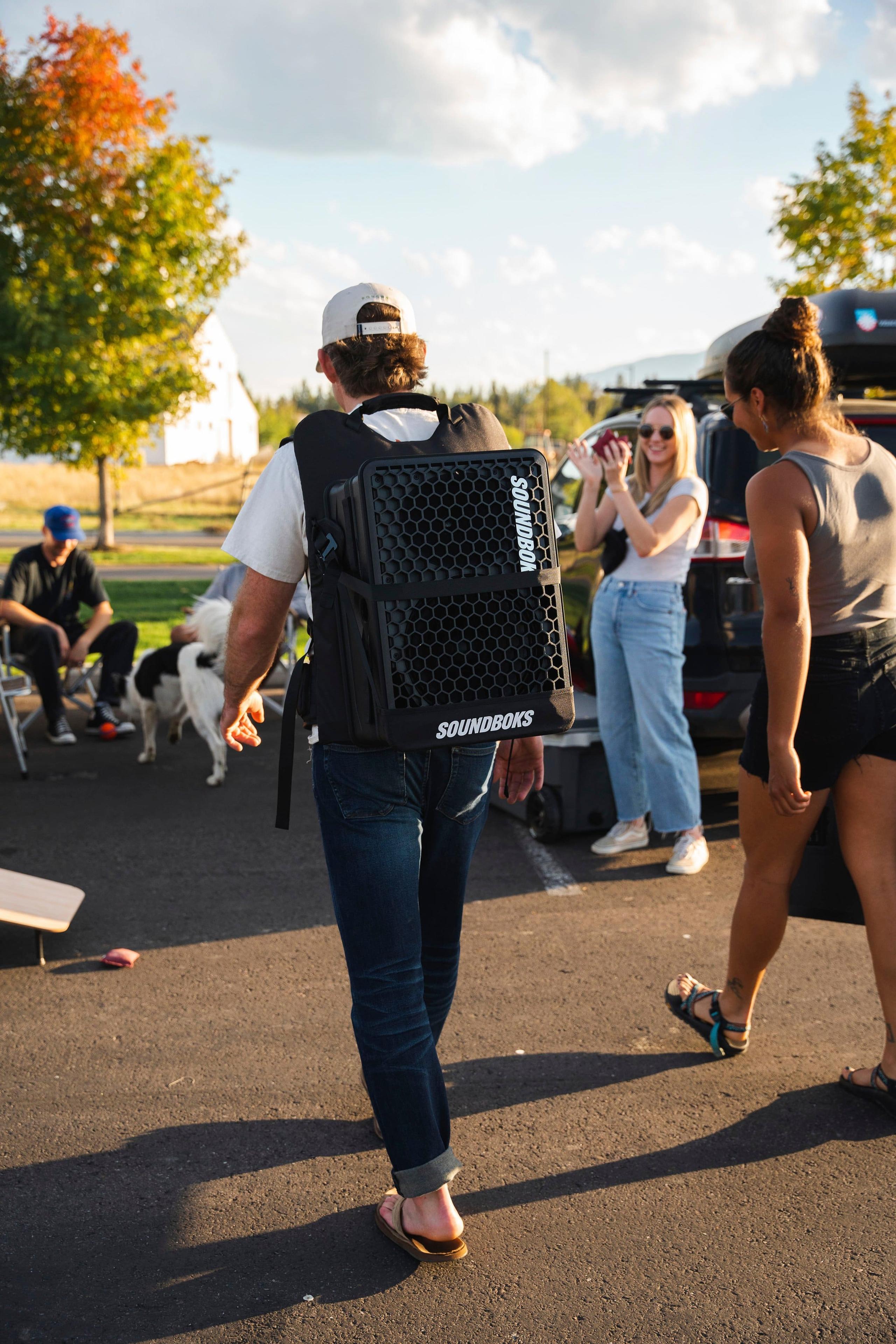
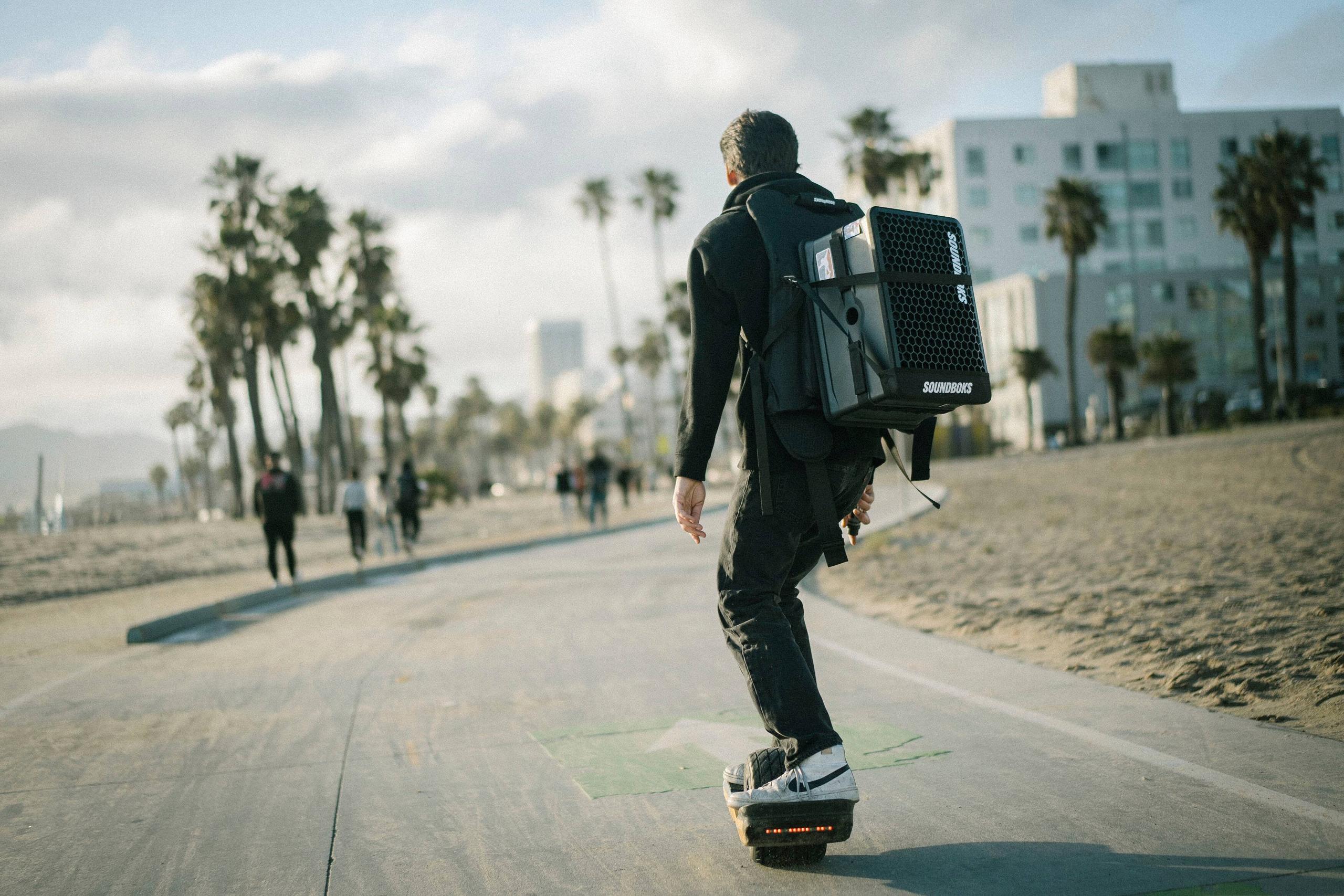
The Soundboks Go, released in 2022, represents what happens when a company obsesses over true portability without sacrificing performance. Weighing just 20 pounds, it's designed for people who actually carry their speakers places—hikers, campers, DJs, and anyone who refuses to be tied to power outlets.
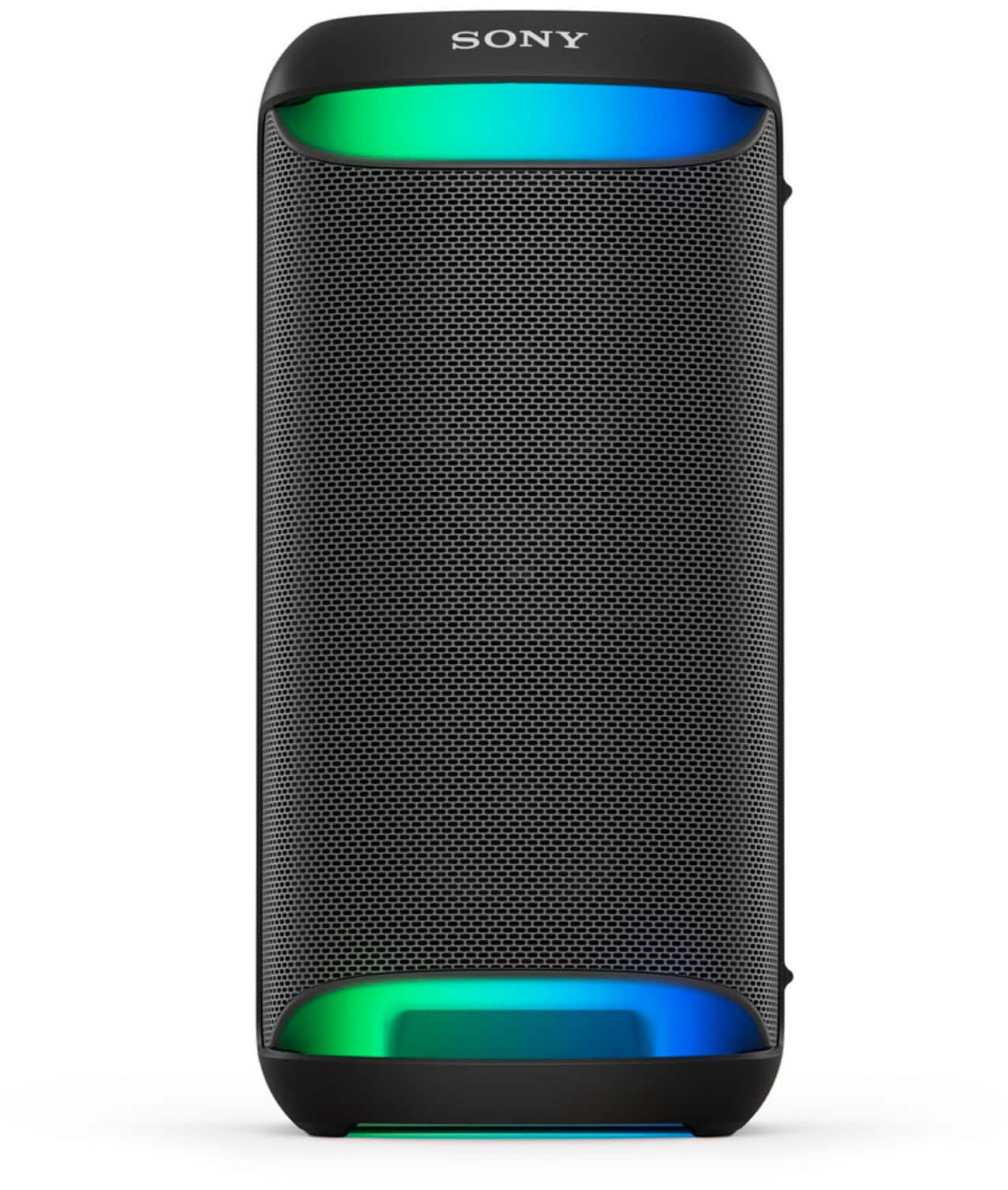
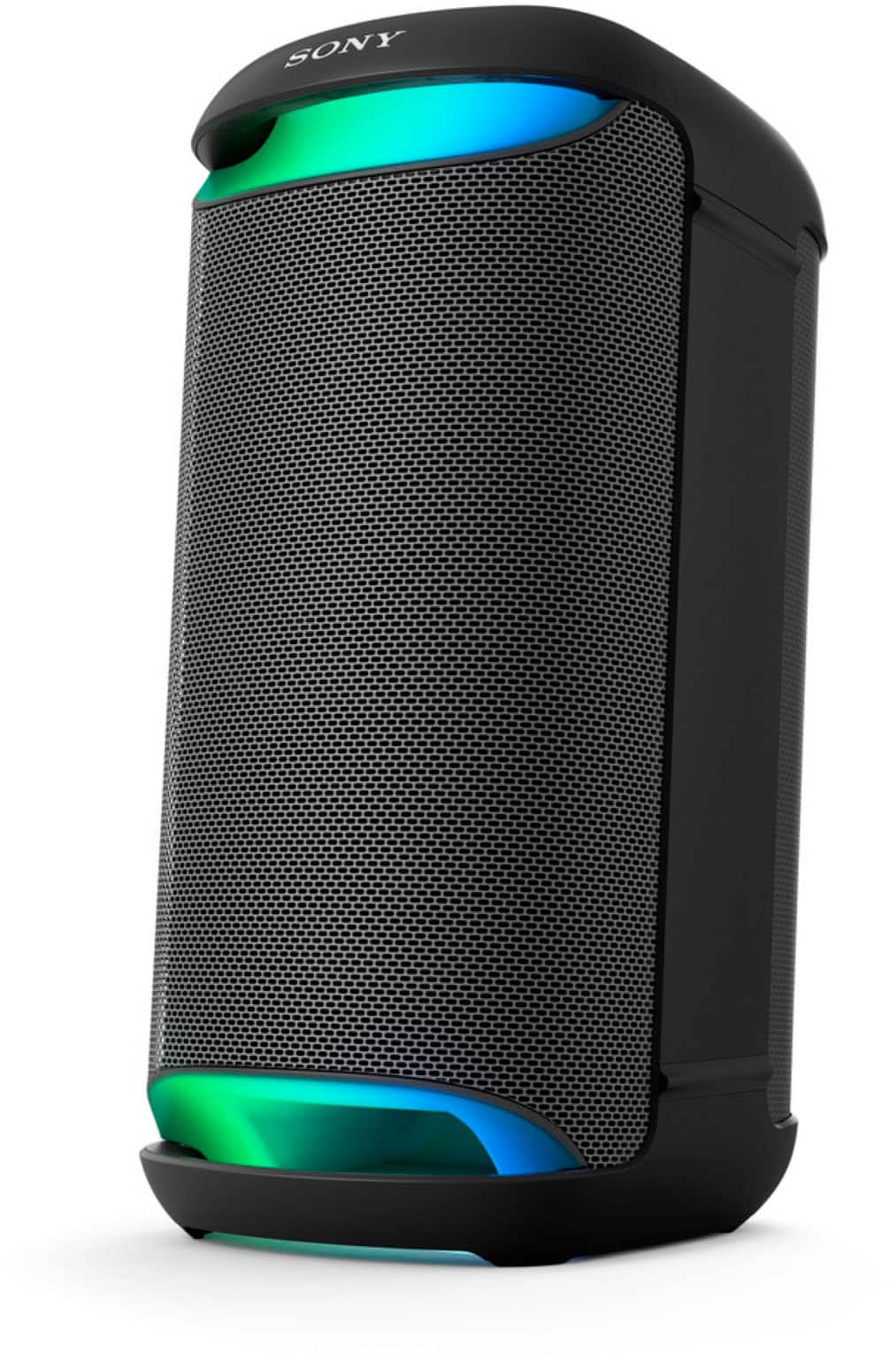
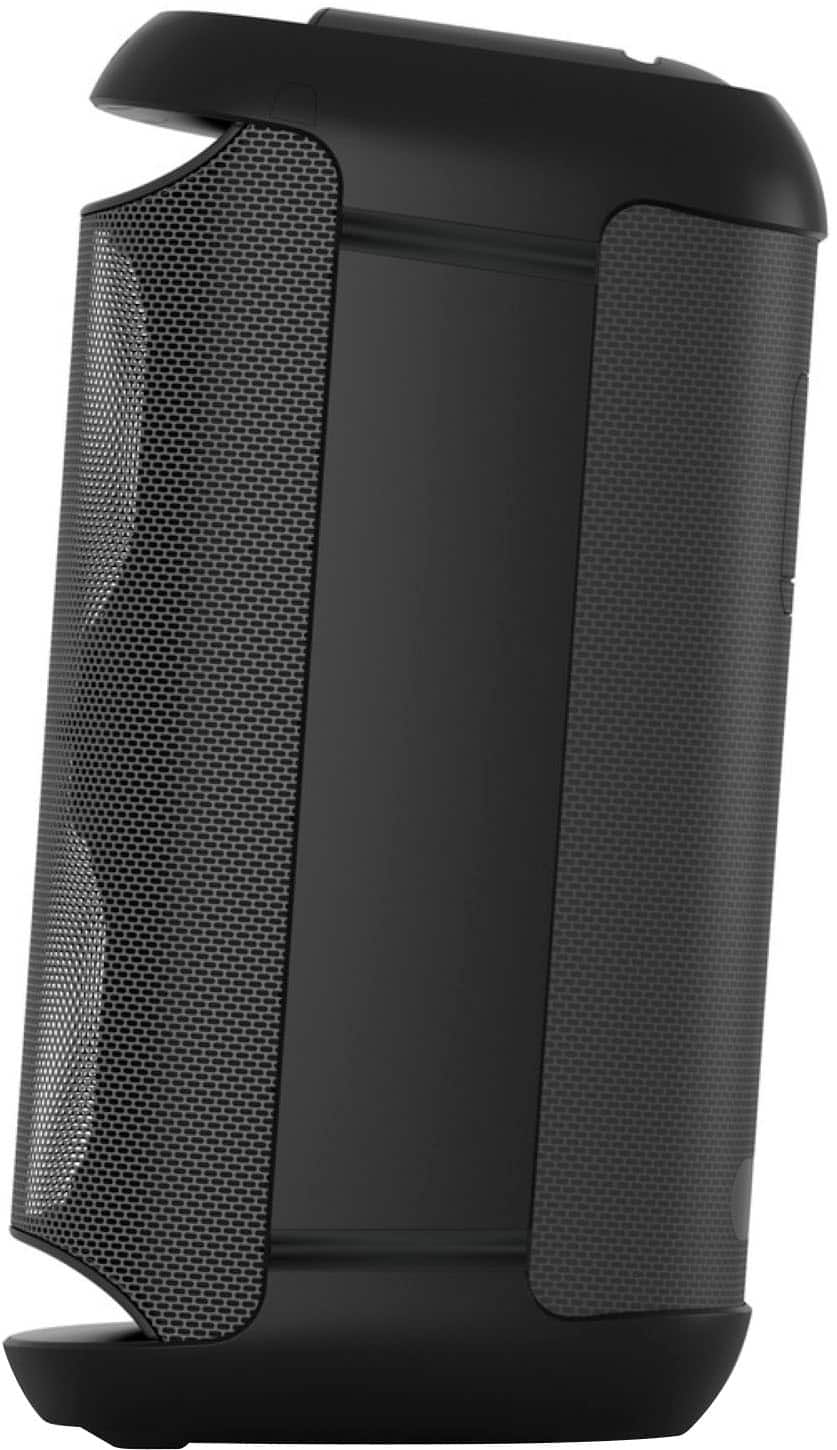
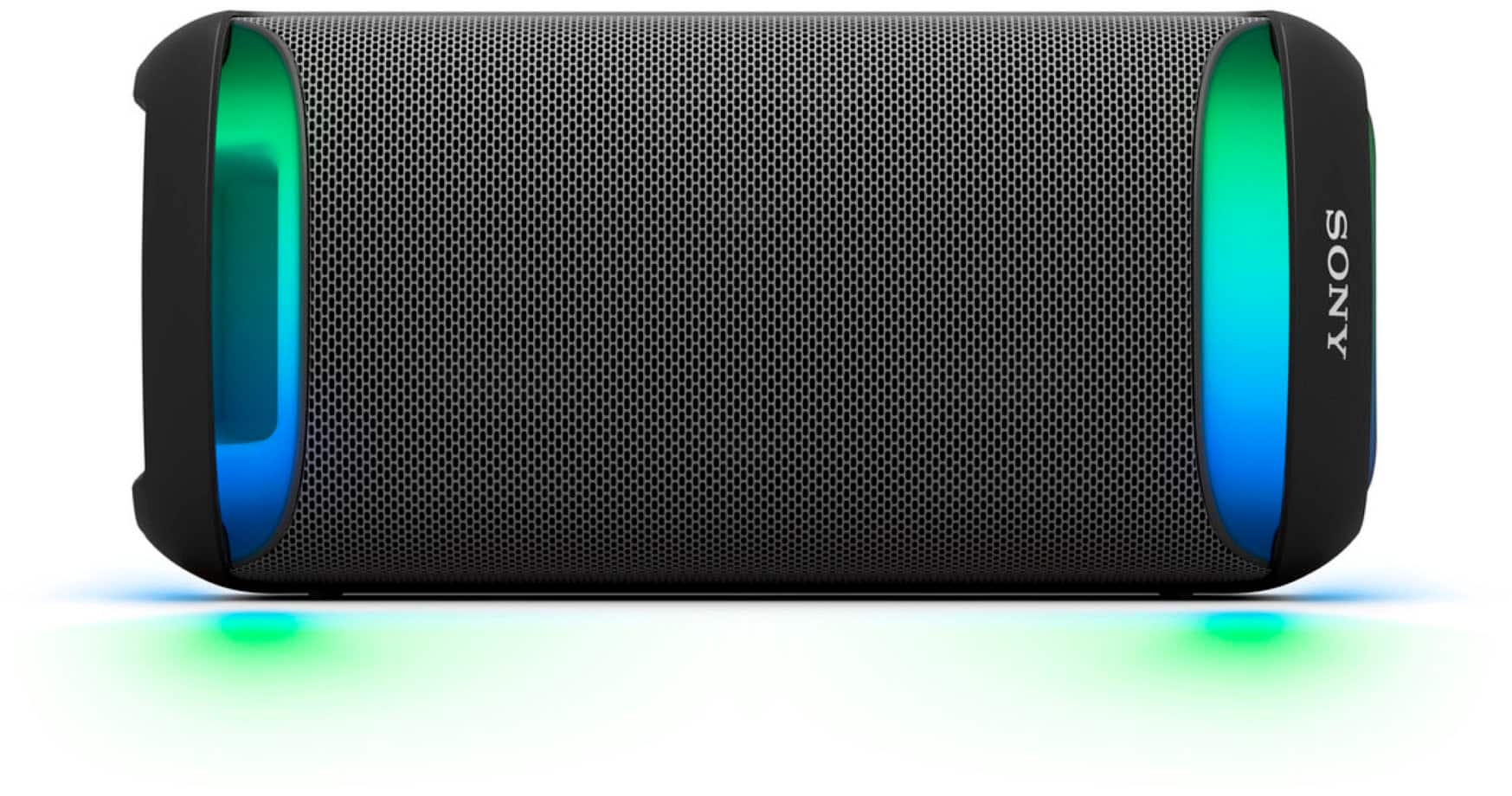
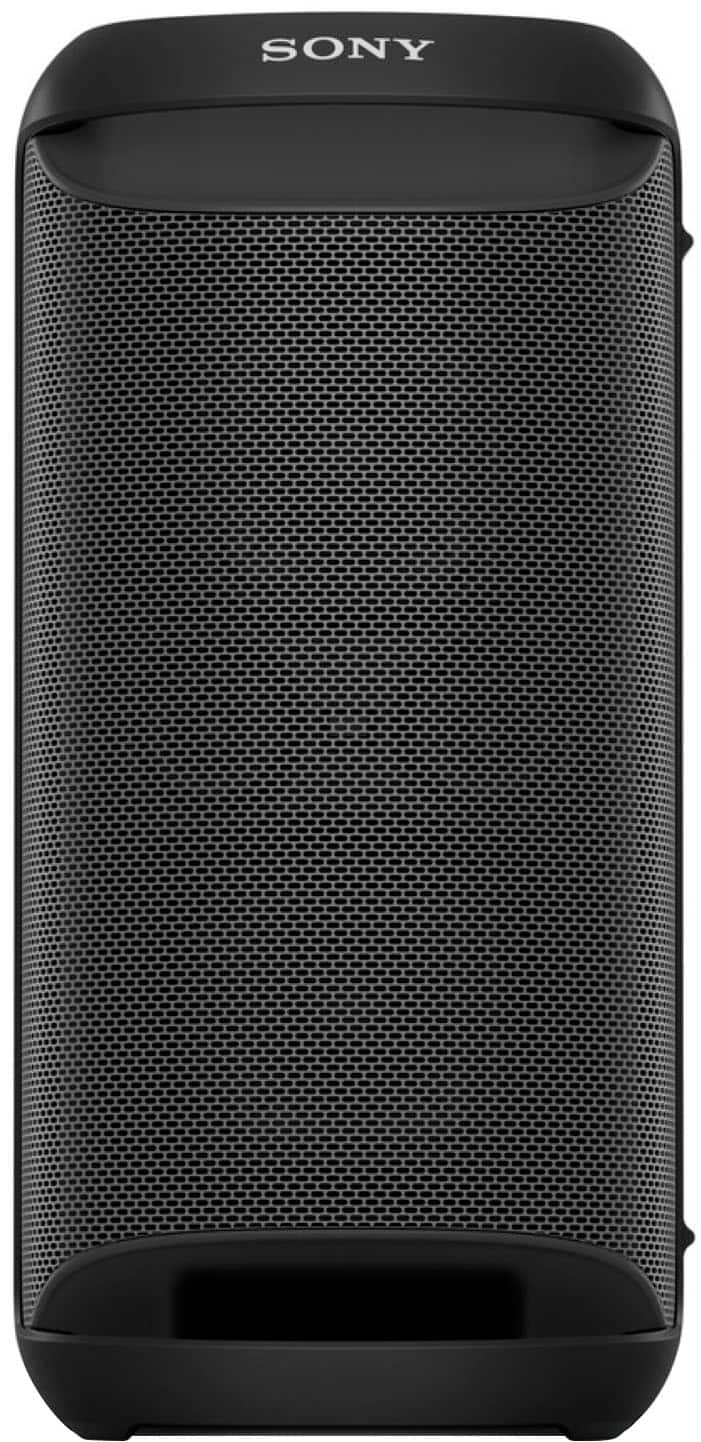
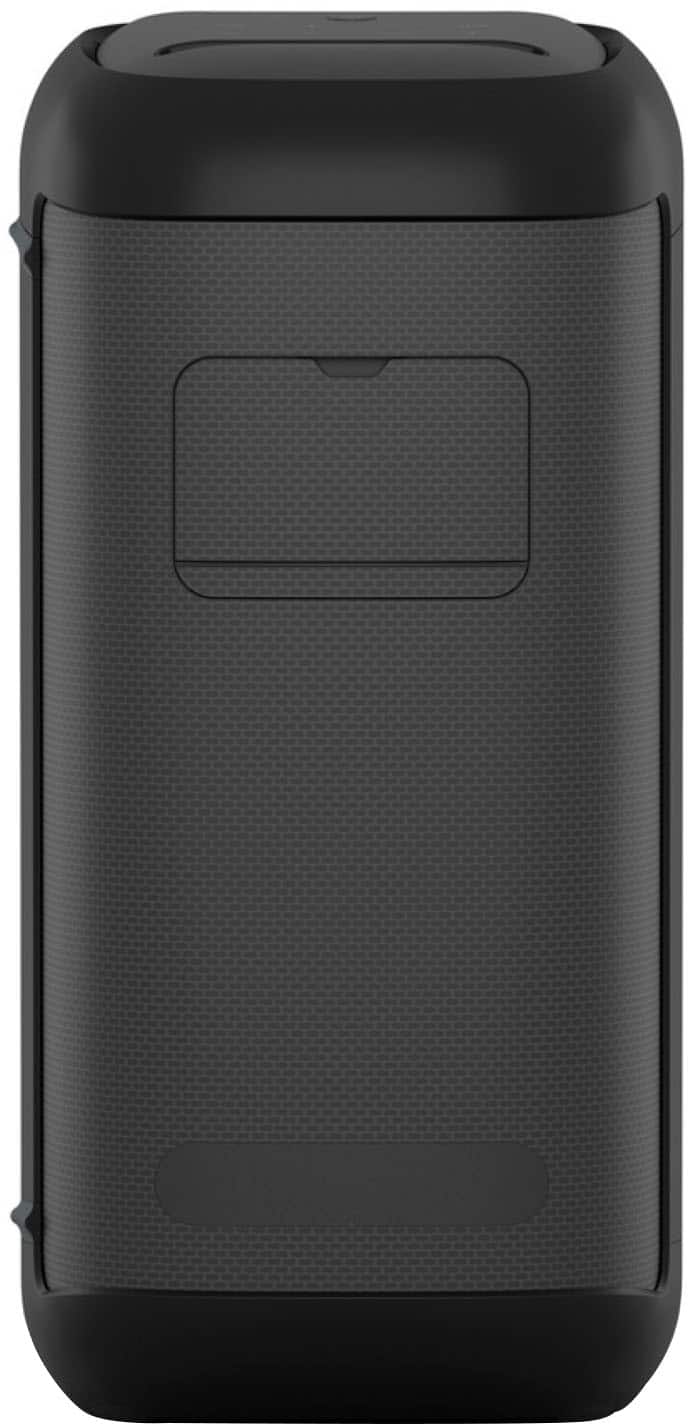
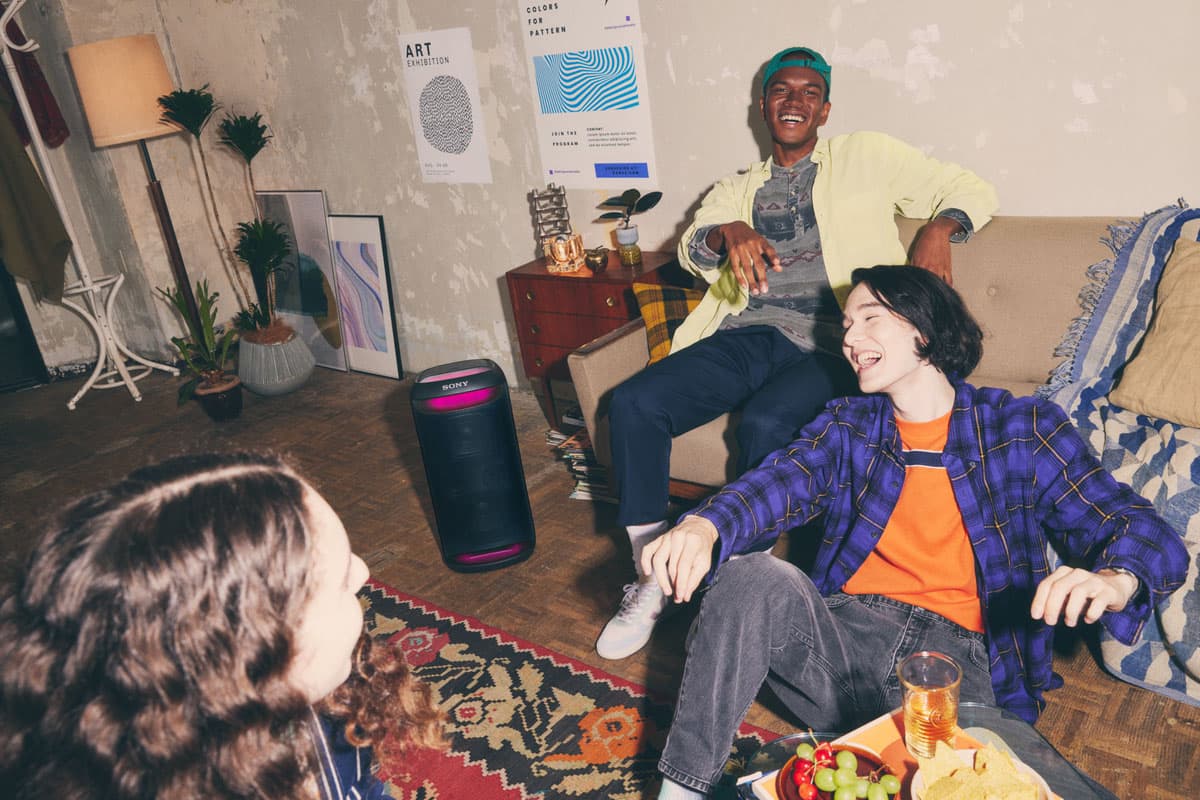
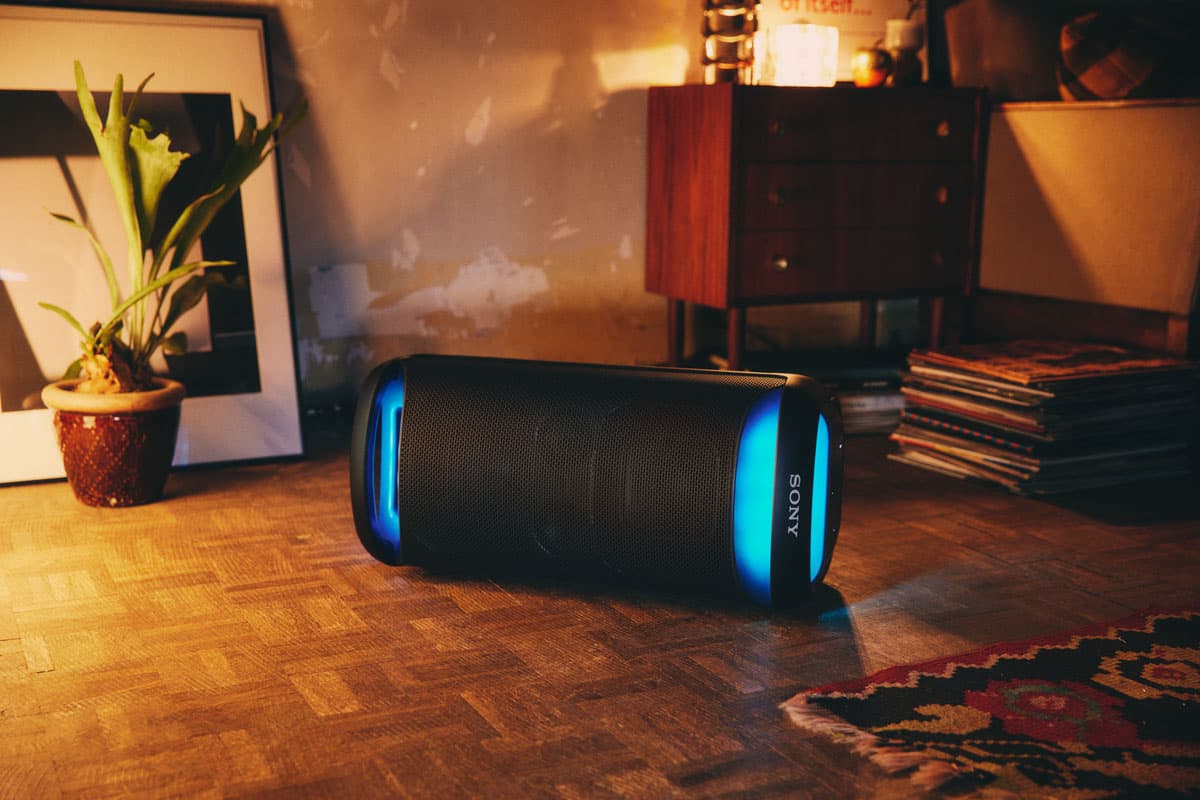
The Sony SRS-XV500, introduced in 2024, takes the opposite approach. At 97 pounds, it's not going anywhere once you set it up. Instead, Sony packed it with every party feature they could think of: karaoke inputs, guitar connections, synchronized lighting, and enough bass to rattle windows.
Neither approach is wrong—they're solving different problems for different people.
When it comes to sheer volume, the Soundboks Go is genuinely impressive for its size. Its 121 dB maximum SPL means it can compete with much larger speakers and even small PA systems. This comes from its 144-watt RMS Class-D amplifier using Merus Audio eximo technology—basically, very efficient amplification that squeezes maximum power from the battery without wasting energy as heat.
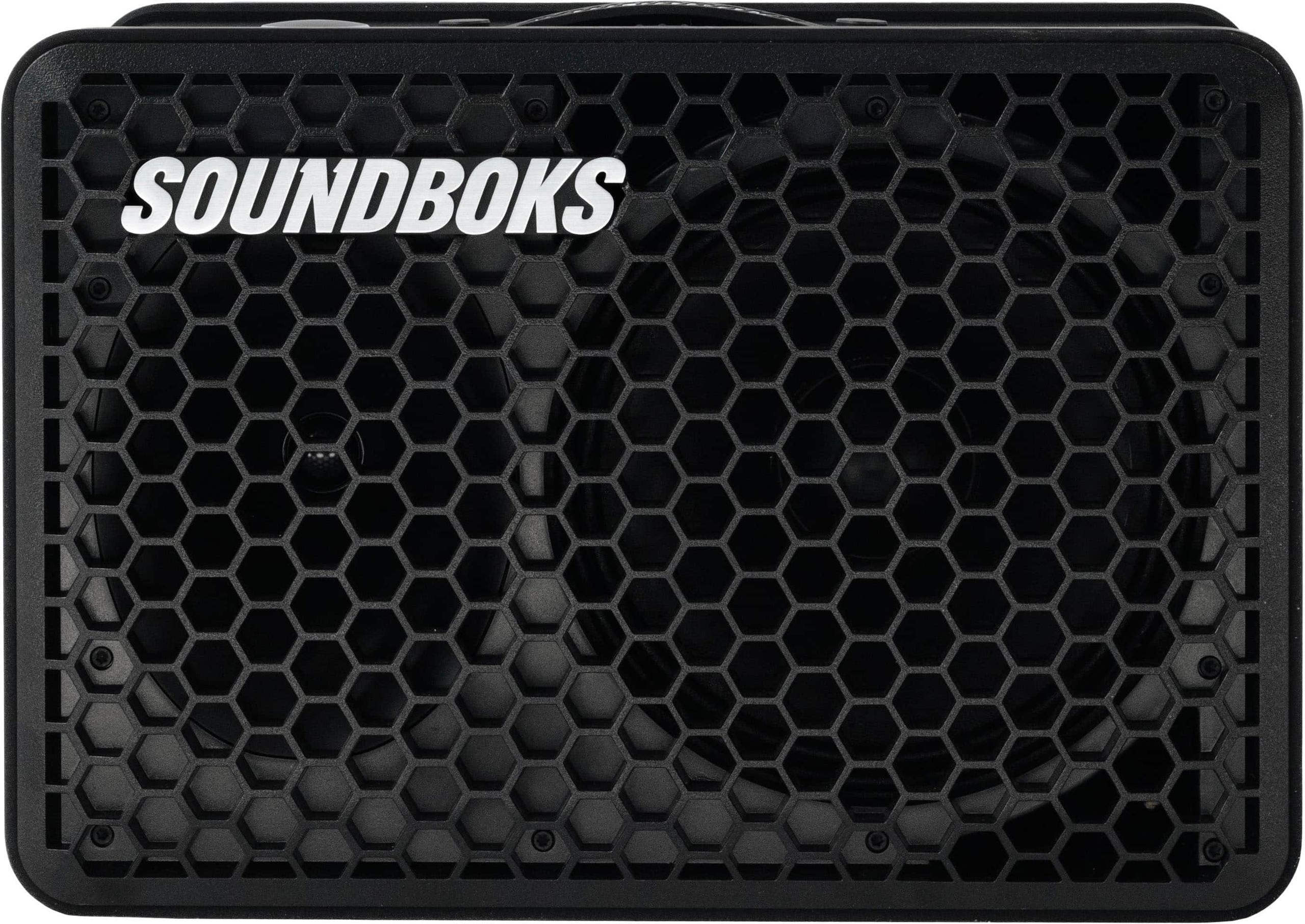
The driver configuration is deliberately simple: one 10-inch woofer handles bass and midrange frequencies, while a 1-inch silk dome tweeter takes care of highs. This 2-way design prioritizes clarity and efficiency over complexity. The frequency response spans 40 Hz to 20 kHz, which covers the full range of human hearing with decent bass extension.
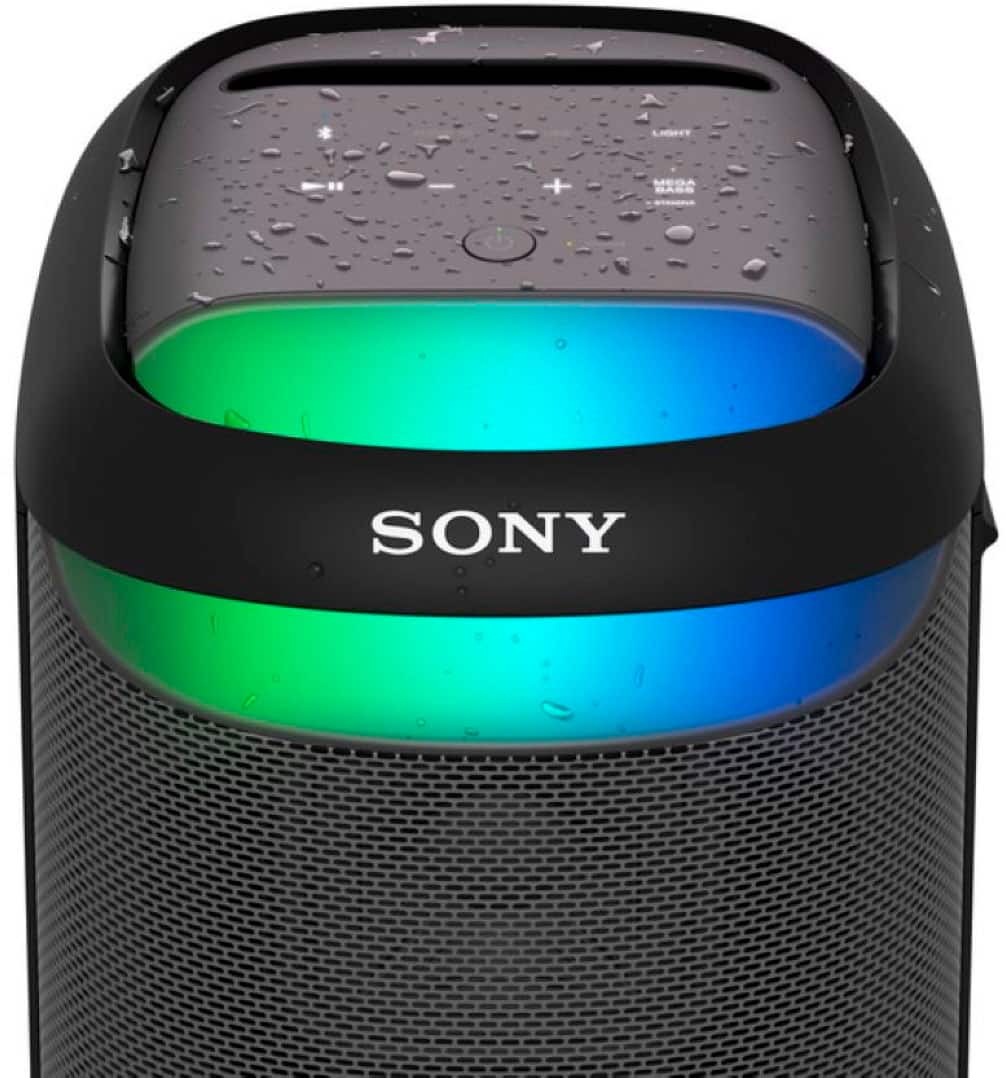
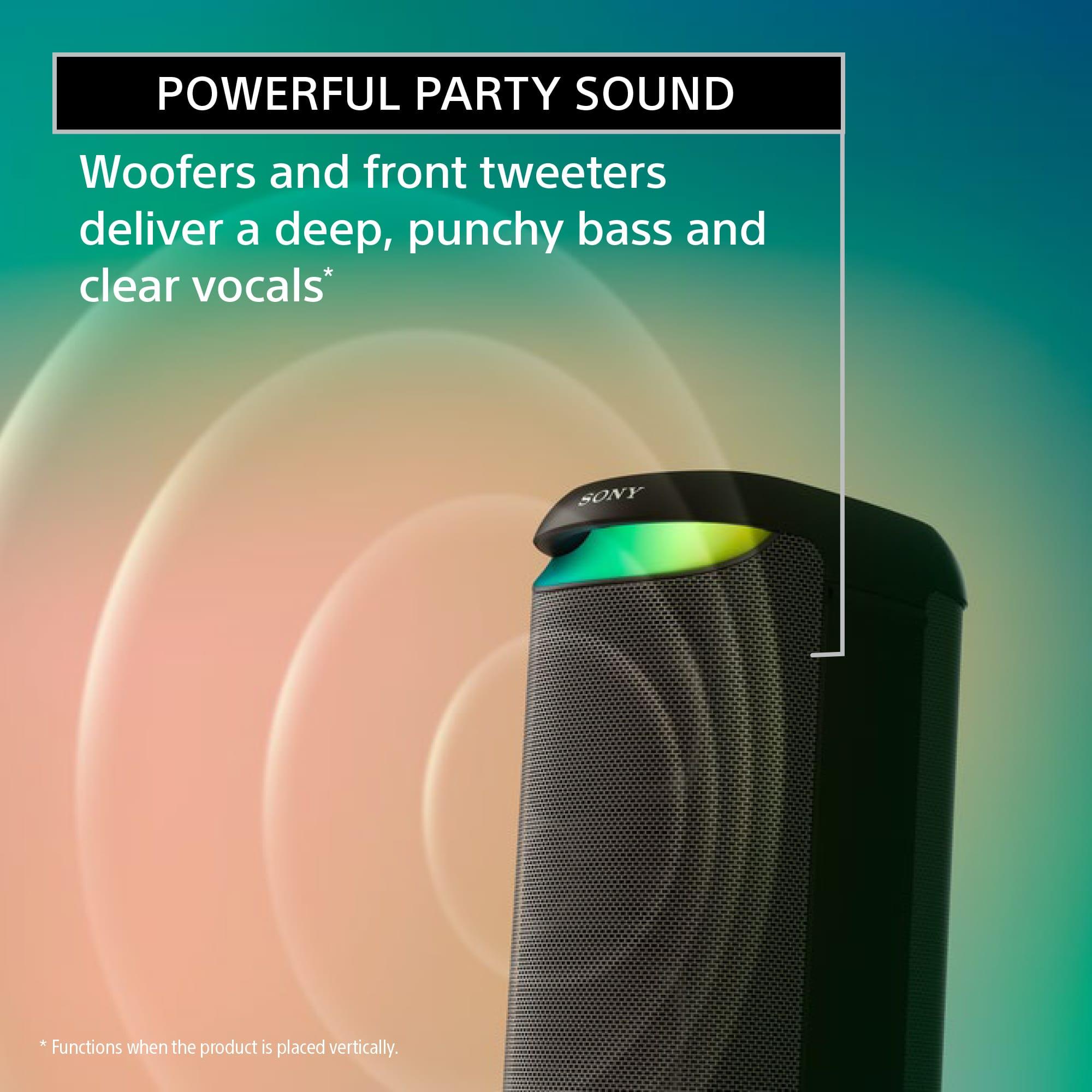
The Sony SRS-XV500 takes a different approach with its dual X-Balanced woofer design. These aren't traditional round drivers—they're rectangular, which Sony claims allows for more surface area and better bass response in the same cabinet space. With two 5.51-inch X-Balanced woofers and two 2.36-inch tweeters, it creates a proper stereo soundstage that the mono Soundboks Go can't match.
More importantly, the Sony digs deeper into bass frequencies, reaching down to 20 Hz compared to the Soundboks' 40 Hz. That 20 Hz difference is huge—it's the difference between feeling bass and just hearing it. Electronic music, hip-hop, and action movie soundtracks all benefit from that sub-bass extension.
However, maximum volume isn't Sony's focus. While they don't publish SPL figures, user reports suggest it gets plenty loud for most situations but won't match the Soundboks Go's raw output.
Battery performance reveals another fundamental difference in design philosophy. The Soundboks Go uses a swappable lithium iron phosphate (LiFePO4) battery system—something virtually unique in the consumer speaker market. At moderate volume levels, you'll get about 40 hours of playback. Crank it to maximum volume, and that drops to around 10 hours.
But here's the genius: when the battery dies, you just swap in a fresh one. No waiting around for charging, no finding power outlets. For multi-day festivals or camping trips, this is transformative. The battery also functions as a power bank, letting you charge phones and other devices through its USB-C port.
The Sony SRS-XV500 provides a more conventional 25-hour battery life that stays relatively consistent regardless of volume level. It compensates with quick-charging technology—10 minutes of charging gives you about 2.5 hours of playback. Since it's designed for stationary use, you can leave it plugged into AC power and never worry about the battery dying during events.
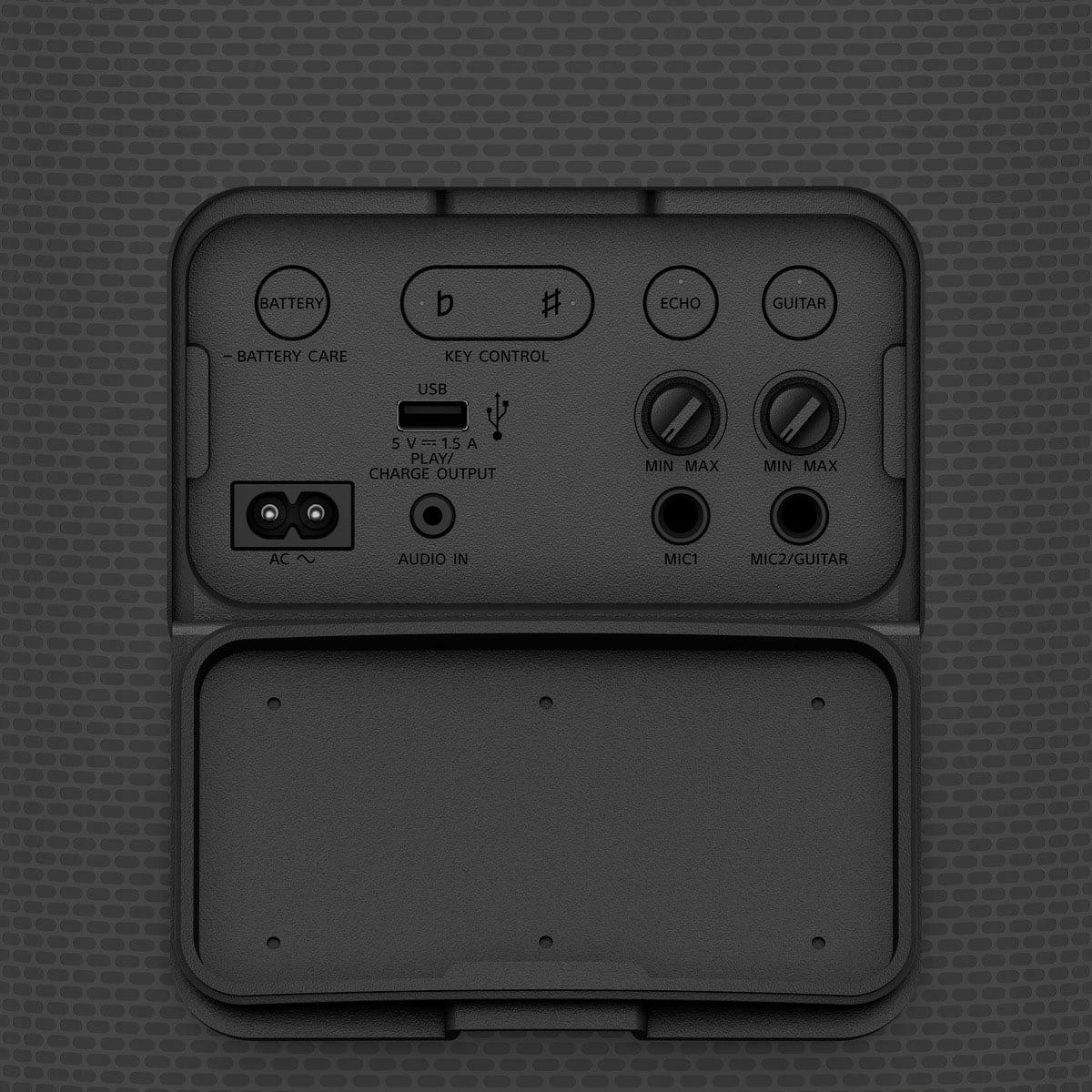
Both speakers can charge other devices, but the Sony uses a traditional USB-A port rather than the more versatile USB-C found on the Soundboks.
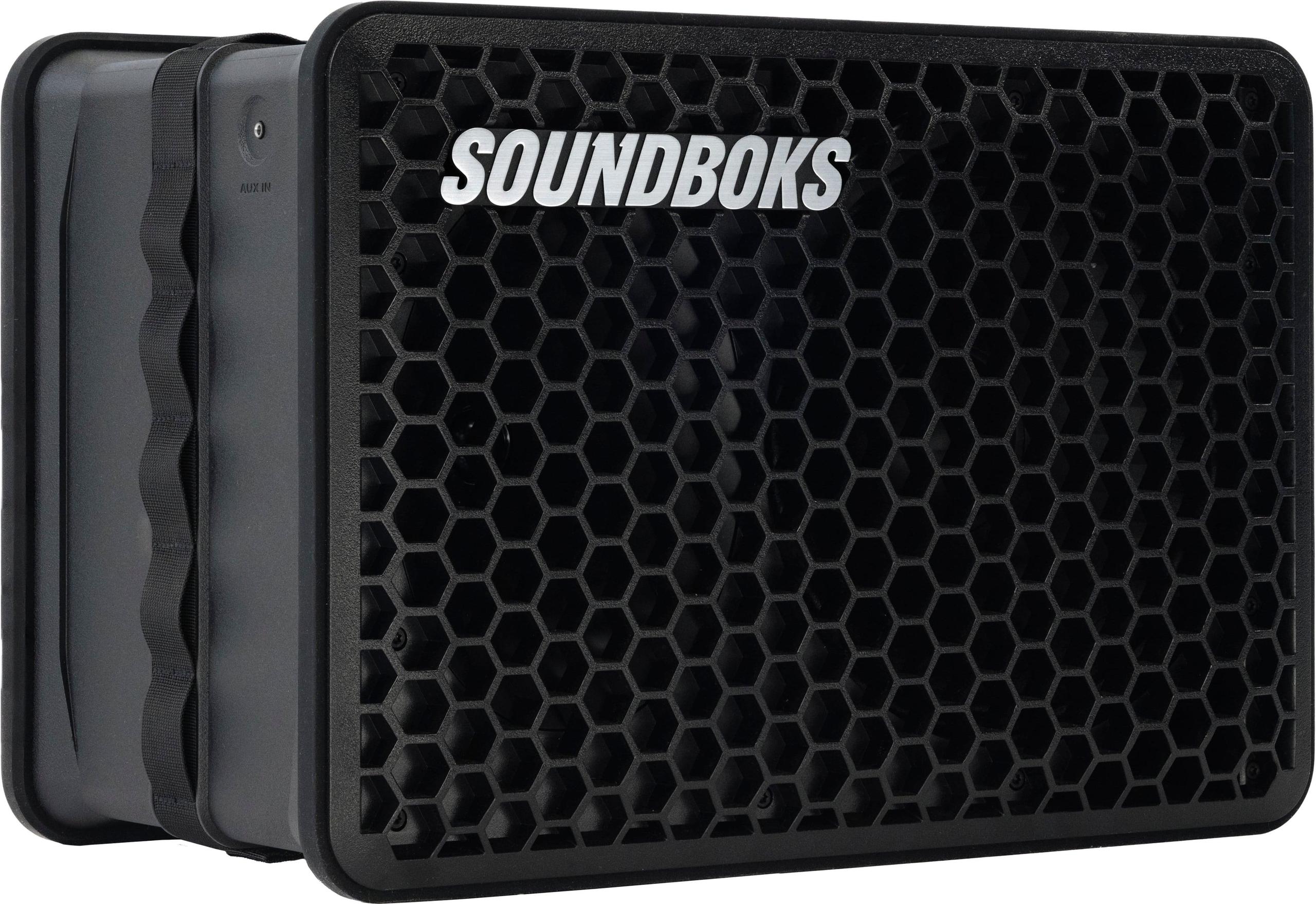
This is where the fundamental difference becomes crystal clear. The Soundboks Go weighs 20 pounds and measures roughly the size of a large backpack. It includes a sturdy handle and attachment points for an optional carrying strap. The IP65 rating means it's completely dustproof and can handle water spraying from any direction—perfect for beach trips where sand and saltwater would destroy lesser speakers.
The construction uses reinforced ABS and polycarbonate with silicone rubber bumpers, designed to survive drops and impacts. It feels like audio equipment built for military use.
The Sony SRS-XV500, at 97 pounds and over 22 inches tall, is essentially furniture. You're not carrying this to different rooms easily, let alone taking it camping. The IPX4 rating provides splash protection for poolside use but nothing approaching the Soundboks' weather resistance.
However, that weight isn't wasted space. Sony used it to pack in features that simply wouldn't fit in a portable design.
The Soundboks Go keeps things deliberately simple. You get Bluetooth 5.0 connectivity, a 3.5mm auxiliary input, and TeamUP technology that lets you link up to five compatible Soundboks speakers with ultra-low latency. That's it—no lights, no microphone inputs, no apps with dozens of features.
This minimalism serves the target audience. When you're setting up speakers in challenging outdoor environments, possibly in low light with gloved hands, simple controls become valuable. The SKAA technology used for multi-speaker linking is particularly impressive—it maintains perfect synchronization between speakers, something crucial for DJ applications or large outdoor setups.
The Sony SRS-XV500 goes in the opposite direction, embracing every party feature Sony could engineer. Two 1/4-inch inputs handle microphones and guitars, each with individual volume controls. Dedicated echo and key control knobs let you add reverb effects and change pitch in real-time for karaoke sessions.
The built-in RGB lighting system synchronizes with your music, creating visual effects that enhance the party atmosphere. Touch-sensitive controls on the top panel provide intuitive access to sound modes, lighting settings, and Bluetooth pairing. The Sony Music Center and Fiestable apps unlock additional customization options, including custom EQ settings and advanced lighting control.
For connecting multiple speakers, Sony's Party Connect technology can link up to 100 compatible speakers—far more than Soundboks' five-speaker limit, though with potentially higher latency.
Based on extensive user feedback and professional reviews, these speakers have distinctly different sound signatures. The Soundboks Go tends toward a V-shaped frequency response—emphasized bass and treble with slightly recessed midrange. This tuning works well for electronic music and outdoor environments where bass and clarity matter more than perfect tonal balance.
However, some users find the sound can become harsh at very high volumes, particularly in the upper frequencies. The single-driver approach per frequency range also means less stereo separation compared to true stereo designs.
The Sony SRS-XV500 leans heavily toward bass-focused sound, especially with the MEGA BASS feature enabled. The dual woofer design provides impressive low-frequency impact that you feel as much as hear. However, this bass emphasis can sometimes overwhelm vocals and midrange details, particularly in smaller rooms.
Sony includes several sound modes to address this: Clear Audio+ for enhanced clarity, DSEE (Digital Sound Enhancement Engine) to improve compressed music files, and custom EQ options through their app. The LIVE SOUND mode attempts to create a more spacious, concert-like experience.
Both speakers support connecting multiple units, but with different approaches and limitations. The Soundboks Go's TeamUP feature using SKAA technology prioritizes perfect synchronization over quantity. Five speakers might seem limiting, but the ultra-low latency ensures all speakers play in perfect harmony—crucial for maintaining sound quality across large areas.
The Sony's Party Connect system impressively supports up to 100 speakers, making it theoretically possible to create massive sound systems for huge events. However, with that many speakers, maintaining perfect synchronization becomes challenging, and some latency is inevitable.
For most users, the practical limit is much lower—maybe 4-6 speakers for large backyard parties or indoor events.
Neither speaker was designed specifically for home theater use, but they can serve this purpose in certain situations. The Sony SRS-XV500 actually works better here due to its stereo driver configuration and ability to stay plugged into AC power.
However, both speakers use Bluetooth as their primary connection method, which introduces latency that makes lip-sync issues likely when watching movies. The auxiliary inputs provide better timing, but you lose the convenience of wireless connectivity.
For dedicated home theater use, you'd be better served by traditional soundbars or speaker systems designed for that purpose.
The Soundboks Go makes sense for people whose speakers actually travel with them. If you're the type who brings music to beach trips, camping adventures, or outdoor sports events, the combination of genuine portability, extreme weather resistance, and impressive volume output justifies the premium price. DJs and musicians also appreciate the low-latency multi-speaker capability and professional-grade durability.
The swappable battery system is particularly valuable for multi-day events or locations without reliable power access. Festival camping, extended camping trips, or outdoor work sites all benefit from this flexibility.
However, if your speaker will live in one location most of the time, you're paying extra for portability you won't use.
The Sony SRS-XV500 excels as a stationary entertainment hub. If you host regular parties, want built-in karaoke capabilities, or need deep bass for electronic music and movies, it delivers impressive value at its price point. The 25-hour battery life handles most events, and the AC power option eliminates battery anxiety during extended use.
The comprehensive feature set—microphone inputs, guitar connectivity, party lighting, and extensive app control—would cost significantly more if purchased separately. For basement parties, garage gatherings, or patio entertainment, it's hard to beat the combination of features and performance.
Both speakers represent 2020s technology, but they've evolved differently since their releases. The Soundboks Go benefits from firmware updates that improve battery management and multi-speaker connectivity, though the core hardware remains unchanged.
The Sony SRS-XV500, being newer (2024 release), includes more modern Bluetooth 5.2 connectivity and benefits from Sony's ongoing app development. The Party Connect ecosystem continues expanding with new compatible speakers.
However, both speakers should remain relevant for years. The fundamental technologies—Bluetooth connectivity, lithium battery chemistry, and digital amplification—are mature and stable.
The choice between these speakers ultimately comes down to lifestyle rather than pure performance preferences. The Soundboks Go demands a premium for its unique combination of portability and power, while the Sony SRS-XV500 offers exceptional value for stationary entertainment setups.
Consider the Soundboks Go if genuine portability matters to your music enjoyment. Its ability to deliver festival-quality volume anywhere, survive harsh conditions, and operate independently of power infrastructure makes it uniquely capable.
Choose the Sony SRS-XV500 if you want a comprehensive party system that happens to be portable enough to move between rooms occasionally. Its entertainment features, deep bass response, and attractive price point deliver impressive value for most users.
Neither speaker is perfect for every situation, but each excels in its intended role. The key is honestly evaluating whether you need a speaker that travels with you or one that makes wherever you are sound amazing.
| Soundboks Go Portable Bluetooth Speaker | Sony SRS-XV500 Wireless Party Speaker |
|---|---|
| Maximum Volume Output - Critical for outdoor events and large spaces | |
| 121 dB SPL (exceptionally loud, competes with PA systems) | Not specified (plenty loud for most parties, but less than Soundboks) |
| Weight and Portability - Determines whether you'll actually take it places | |
| 20 lbs with handle and strap points (genuinely portable) | 97 lbs, 22+ inches tall (semi-permanent installation) |
| Battery Life - How long your party lasts without power outlets | |
| 40 hours moderate / 10 hours max volume (swappable battery) | 25 hours consistent regardless of volume |
| Weather Resistance - Survival in outdoor conditions | |
| IP65 (dustproof, heavy water spray protection) | IPX4 (splash resistant only) |
| Bass Extension - How deep and impactful the low frequencies sound | |
| 40 Hz (good bass, but not sub-bass territory) | 20 Hz (true sub-bass, feel-it-in-your-chest deep) |
| Driver Configuration - Affects stereo imaging and sound quality | |
| Mono: 1× 10" woofer, 1× 1" tweeter | Stereo: 2× 5.51" X-Balanced woofers, 2× 2.36" tweeters |
| Multi-Speaker Connectivity - Expanding your sound system | |
| TeamUP links 5 speakers (ultra-low latency, perfect sync) | Party Connect links 100 speakers (more flexibility, some latency) |
| Entertainment Features - Built-in party capabilities | |
| Basic: Bluetooth + AUX input only | Full hub: Karaoke mics, guitar input, RGB lighting, touch controls |
| Amplifier Power - Raw electrical power driving the speakers | |
| 144W RMS Class-D with Merus Audio technology | Not specified (adequate for the driver configuration) |
| Charging and Power - How you keep the music going | |
| USB-C swappable battery system, no AC adapter included | AC power + internal battery, quick charge (10 min = 2.5 hours) |
| Price Positioning - Value consideration at time of writing | |
| Premium tier (~$800 range) | Mid-tier (~$300-400 range) |
| Warranty Coverage - Long-term protection | |
| 3 years with registration | Standard 1 year coverage |
| Best Use Case - Who this speaker is designed for | |
| Mobile adventurers, DJs, outdoor enthusiasts | Home party hosts, karaoke lovers, stationary entertainment |
The Soundboks Go is significantly louder, reaching 121 dB maximum volume compared to the Sony SRS-XV500 which doesn't publish SPL figures but is noticeably quieter in real-world use. If maximum volume for large outdoor spaces is your priority, the Soundboks Go delivers professional-grade loudness.
The fundamental difference is portability versus features. The Soundboks Go weighs 20 pounds and focuses on true mobility with swappable batteries, while the Sony SRS-XV500 weighs 97 pounds and emphasizes entertainment features like karaoke inputs, guitar connectivity, and RGB lighting for stationary use.
The Sony SRS-XV500 has deeper bass extension, reaching down to 20 Hz compared to the Soundboks Go's 40 Hz limit. The Sony's dual X-Balanced woofers deliver more impactful sub-bass that you can feel, especially with electronic music and hip-hop genres.
The Soundboks Go provides 40 hours at moderate volume or 10 hours at maximum volume with swappable batteries for unlimited runtime. The Sony SRS-XV500 offers consistent 25-hour battery life regardless of volume level, plus quick charging that provides 2.5 hours of playback from a 10-minute charge.
Yes, both support multi-speaker setups but differently. The Soundboks Go can link up to 5 speakers with ultra-low latency using TeamUP technology, while the Sony SRS-XV500 connects up to 100 speakers through Party Connect, though with potentially higher latency for synchronized playback.
The Soundboks Go is purpose-built for outdoor use with IP65 weather resistance (dustproof and water spray protection), 40-hour battery life, and genuine portability at 20 pounds. The Sony SRS-XV500 has only IPX4 splash resistance and weighs 97 pounds, making it impractical for camping or beach trips.
The Sony SRS-XV500 excels at karaoke with dedicated microphone inputs, echo controls, and pitch adjustment features built-in. The Soundboks Go lacks microphone inputs entirely and focuses purely on music playback, making the Sony the clear choice for karaoke enthusiasts.
The Sony SRS-XV500 provides exceptional value with comprehensive party features, deep bass, and karaoke capabilities in the mid-price range. The Soundboks Go commands a premium price for its unique portability, extreme volume, and professional durability—justified if you need true mobility.
Neither speaker is ideal for home theater due to Bluetooth latency causing lip-sync issues. However, the Sony SRS-XV500 works better for this purpose with its stereo driver configuration and auxiliary input option. Both are primarily designed for music rather than movie dialogue clarity.
The Soundboks Go offers superior weather protection with IP65 rating, handling dust, rain, and harsh outdoor conditions. The Sony SRS-XV500 has basic IPX4 splash resistance suitable for poolside use but not for beach trips or camping where sand and moisture are concerns.
The Soundboks Go is designed for transport with a 20-pound weight, built-in handle, and optional carrying strap. The Sony SRS-XV500 at 97 pounds is essentially stationary once positioned, though it technically has handles for occasional room-to-room movement within homes.
The Soundboks Go uses the basic SOUNDBOKS app for sound profiles and multi-speaker setup. The Sony SRS-XV500 offers more comprehensive app integration with Sony Music Center for EQ customization and Fiestable for advanced lighting and party features, providing greater control over the entertainment experience.
We've done our best to create useful and informative comparisons to help you decide what product to buy. Our research uses advanced automated methods to create this comparison and perfection is not possible - please contact us for corrections or questions. These are the sites we've researched in the creation of this article: bestbuy.com - beachaudio.com - youtube.com - crutchfield.com - digitaldjtips.com - comparisontabl.es - eftm.com - sweetwater.com - bestbuy.com - compsource.com - sweetwater.com - store.djtechtools.com - youtube.com - scheels.com - soundboks.com - connection.com - scheels.com - skaastore.com - thomannmusic.com - soundboks.eu - gearjunkie.com - bestbuy.com - rtings.com - bestbuy.com - youtube.com - rtings.com - versus.com - youtube.com - versus.com - youtube.com - youtube.com - guidingtech.com - crutchfield.com - sony.com - sony.com - bestbuy.com - helpguide.sony.net - smappliance.com - youtube.com - helpguide.sony.net - videoandaudiocenter.com - electronics.sony.com - linqcdn.avbportal.com

Privacy Policy
Terms and Conditions - Affiliate Policy
Home Security
© Copyright 2008-2026.
11816 Inwood Rd #1211, Dallas, TX 75244