

When you need a speaker that can power a backyard barbecue or keep the energy high at an outdoor graduation party, regular Bluetooth speakers simply won't cut it. That's where high-output portable party speakers come in—these are the heavy hitters designed to fill large spaces with concert-level sound while running on battery power for hours.
The high-output portable speaker market has evolved dramatically since companies like Soundboks pioneered the category in the mid-2010s. These speakers prioritize maximum volume output (typically 120+ decibels), marathon battery life, and rugged construction that can handle being dragged from party to party. They're engineered to do what smaller speakers can't: cut through crowd noise at outdoor events and deliver bass you can feel in your chest.
Today, we're comparing two standout options that represent different philosophies in this space: the Soundboks Go, which launched in 2022 as a more portable take on the company's festival-tested formula, and the Marshall Bromley 750, which debuted in 2024 as Marshall's first serious entry into the party speaker arena.
Before diving into the comparison, it's worth understanding what sets high-output portable speakers apart from your typical Bluetooth speaker. The key difference is power output and how it's delivered. While a premium portable speaker might output 20-40 watts, these party speakers pump out 140-500 watts through larger drivers (the components that actually produce sound) and more sophisticated amplifier systems.
The magic number in this category is around 120 decibels (dB)—that's roughly as loud as a rock concert or chainsaw. For context, normal conversation happens at about 60 dB, while most Bluetooth speakers max out around 85-95 dB. The difference matters because sound doesn't scale linearly—every 10 dB increase represents roughly a doubling of perceived loudness.
But raw volume isn't everything. These speakers also need to maintain sound quality at extreme volumes, run for entire events on battery power, and survive the inevitable bumps and weather that come with outdoor use. That's a much tougher engineering challenge than building a small indoor speaker.
The most dramatic difference between the Soundboks Go and Marshall Bromley 750 lies in their power output approaches. The Soundboks Go delivers 144 watts RMS (RMS means "root mean square"—basically the continuous power the speaker can handle without distortion) through a relatively simple two-amplifier system. The Marshall Bromley 750 takes a more complex approach with 500 watts total spread across eight separate Class D amplifiers.
This power difference translates directly to volume capability. The Soundboks Go reaches 121 dB maximum, while the Marshall Bromley 750 hits 127 dB. That 6 dB difference represents roughly double the perceived loudness—a significant advantage for the Marshall when you need to fill truly massive outdoor spaces or compete with very loud ambient noise.
However, more power isn't automatically better. The Soundboks Go's more conservative power rating often means cleaner sound at moderate volumes. When you're not pushing the limits, the Soundboks tends to deliver more detailed midrange frequencies (where vocals and most instruments live) and less distortion. The Marshall's higher power gives it more headroom for extreme situations, but that comes with trade-offs in efficiency and complexity.
From our research into user experiences, the volume difference becomes most apparent in challenging acoustic environments—think large outdoor fields or venues with significant background noise. For typical backyard parties or even moderately sized outdoor gatherings, both speakers provide more than enough output.
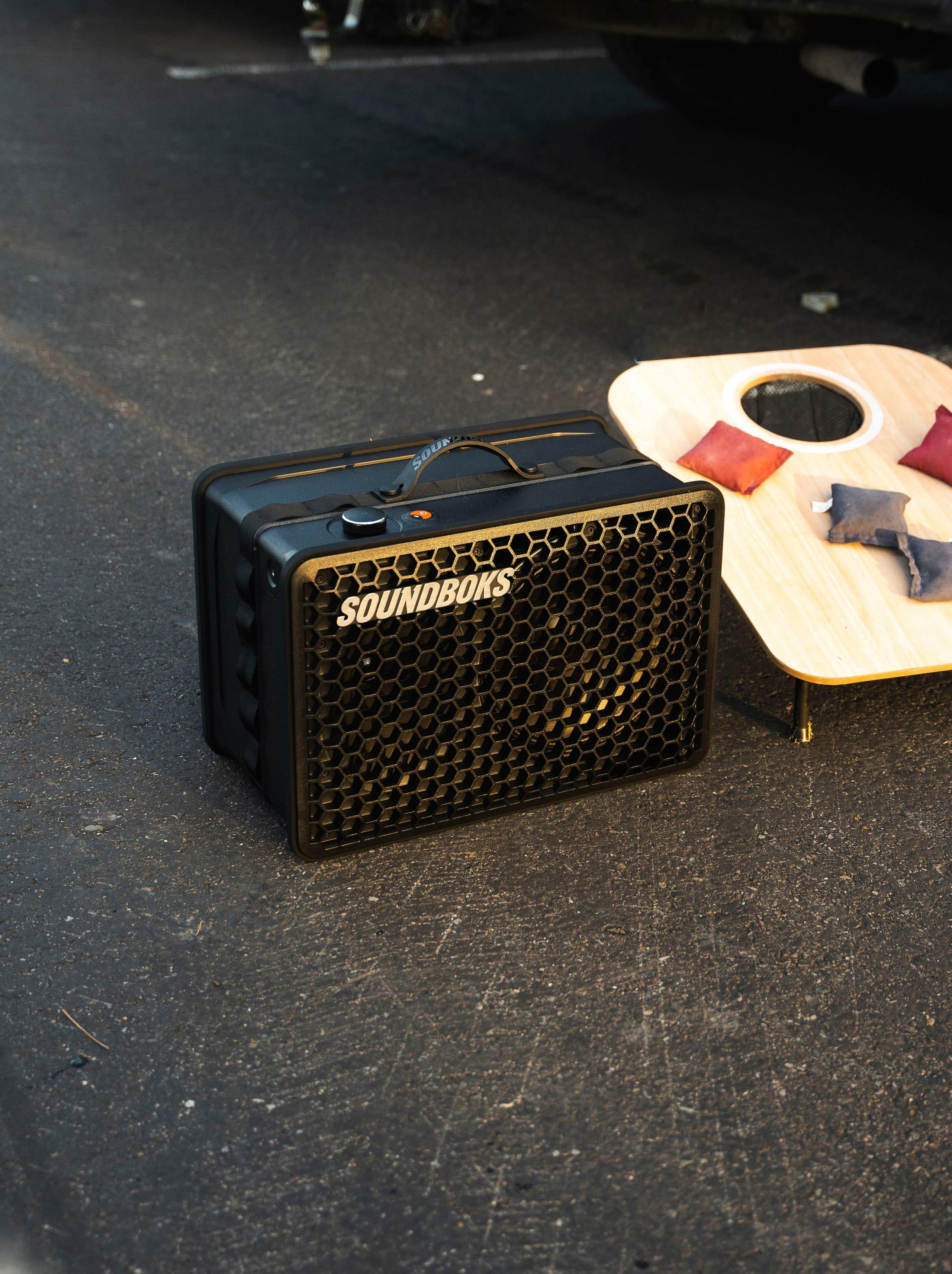
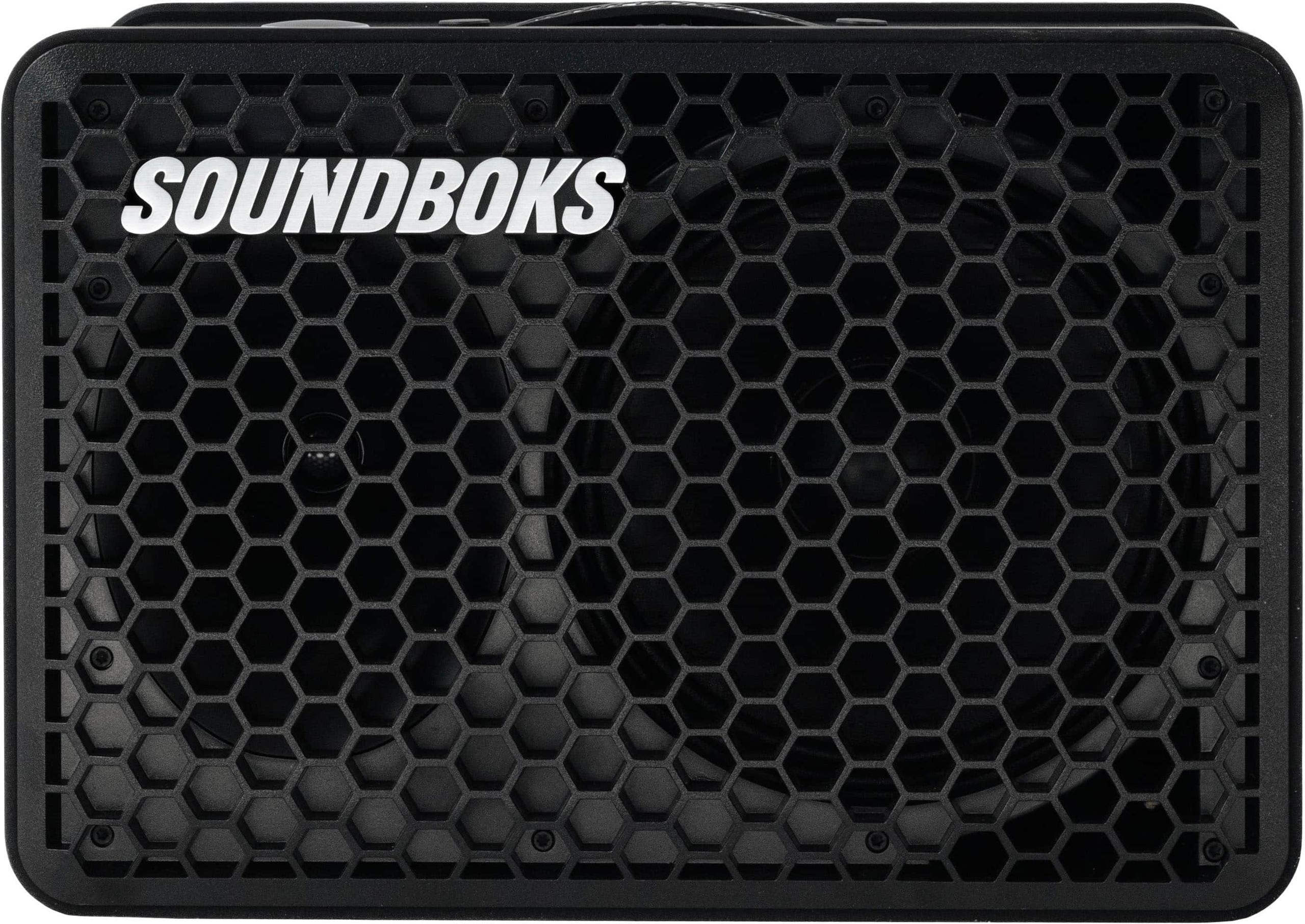
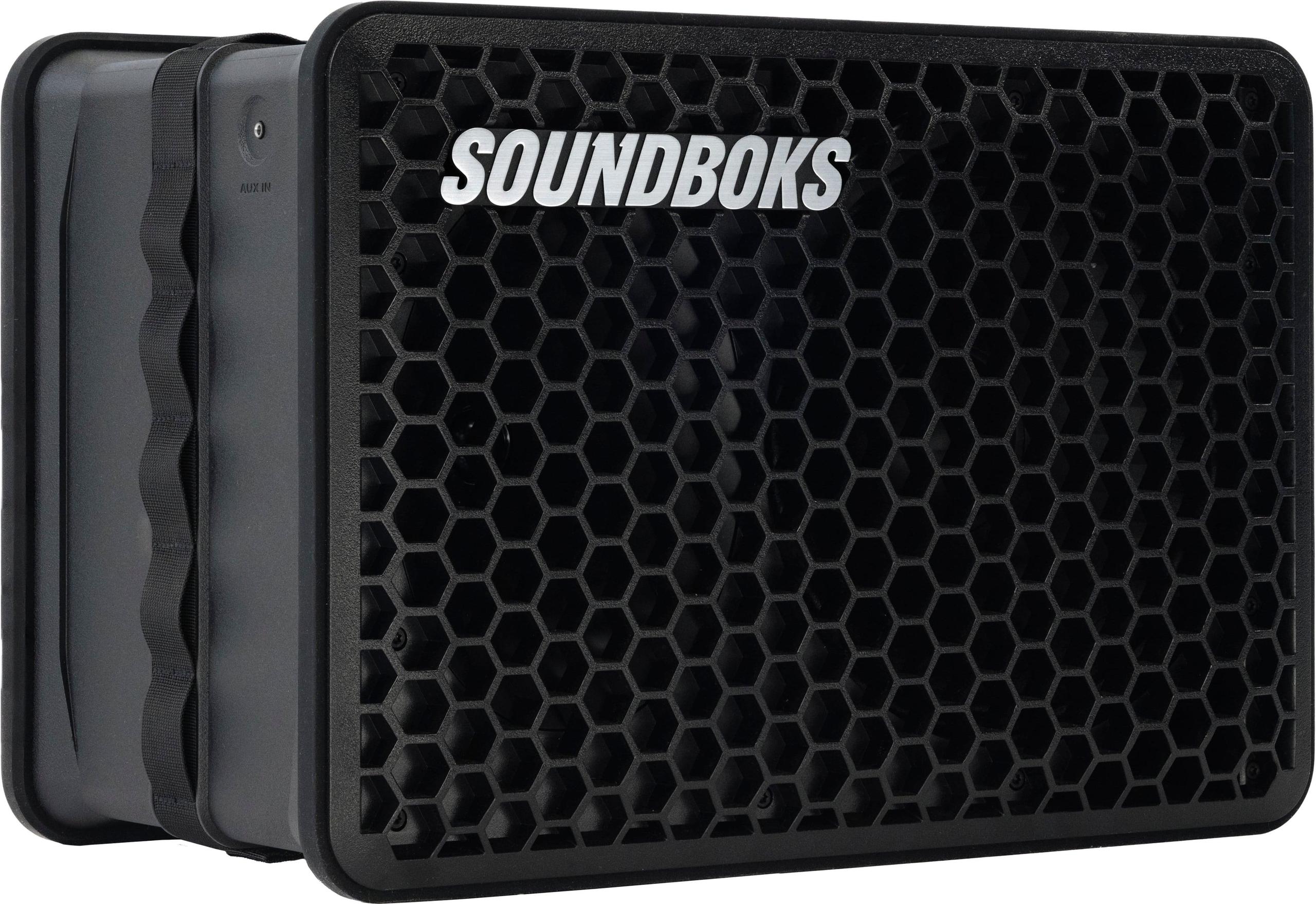
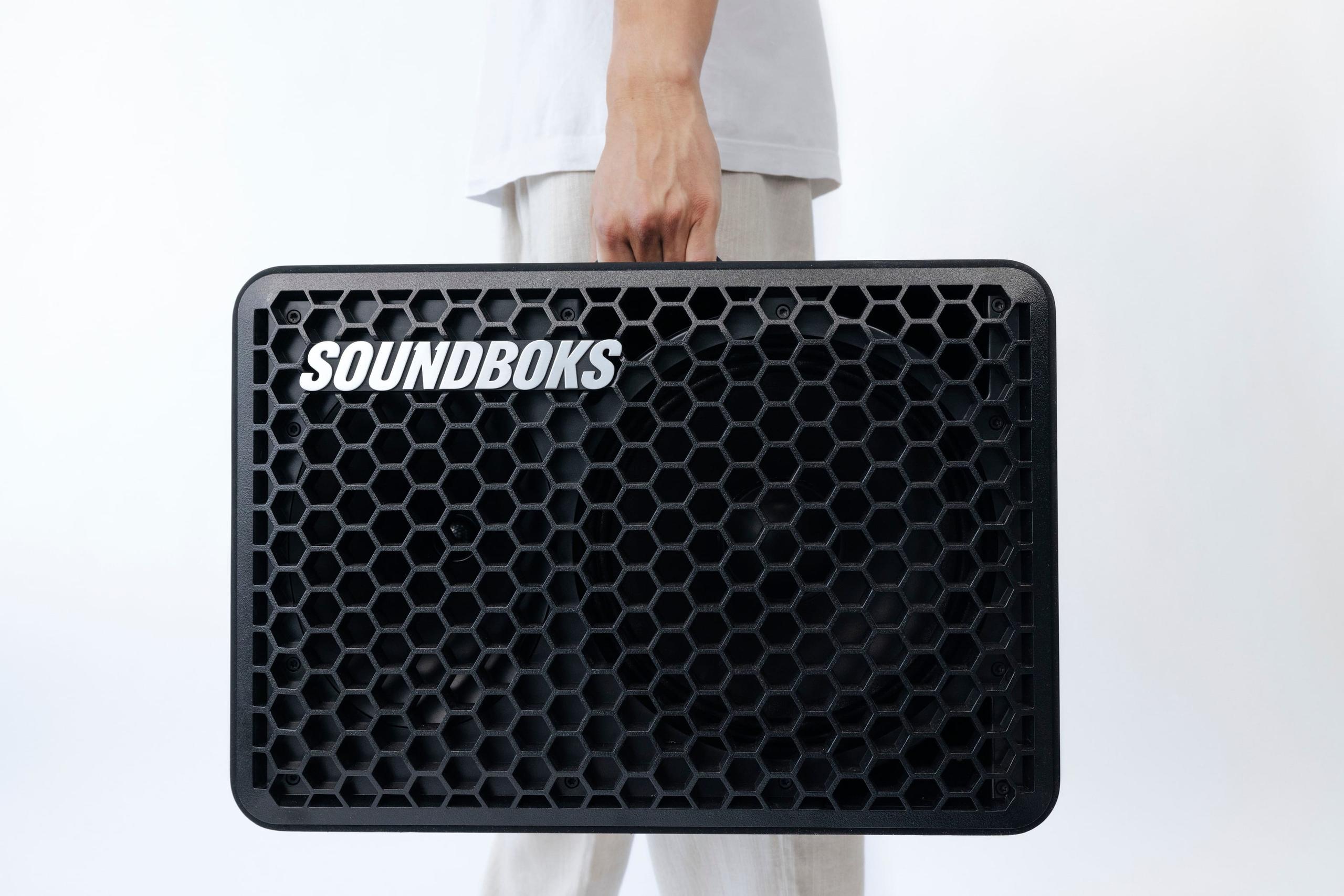
Perhaps the most innovative difference between these speakers lies in how they distribute sound. The Soundboks Go uses a conventional forward-firing design with a single 10-inch woofer (for bass) and 1-inch silk dome tweeter (for high frequencies) mounted on the front face. This creates focused, directional sound that's loudest directly in front of the speaker and gradually decreases as you move to the sides or behind it.
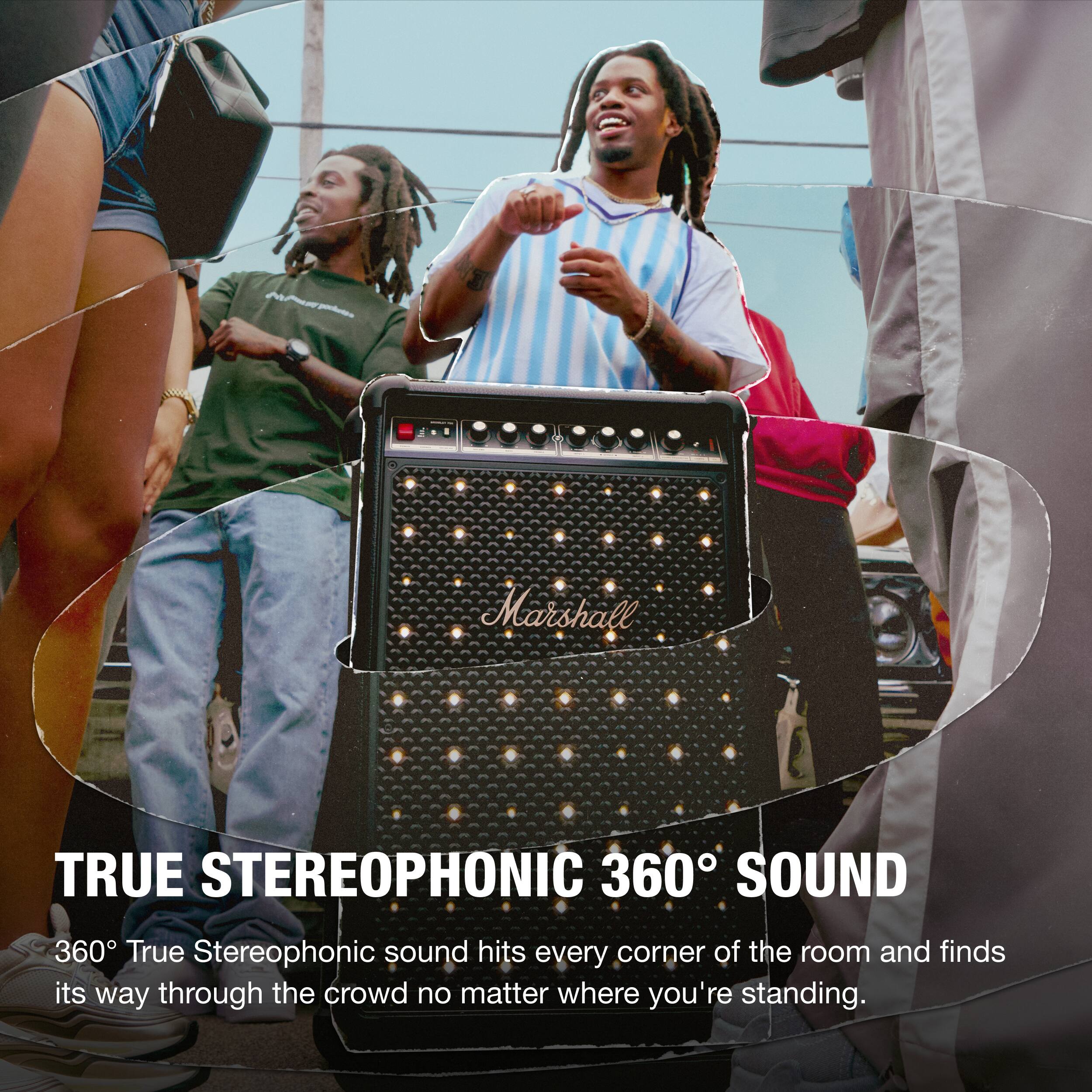
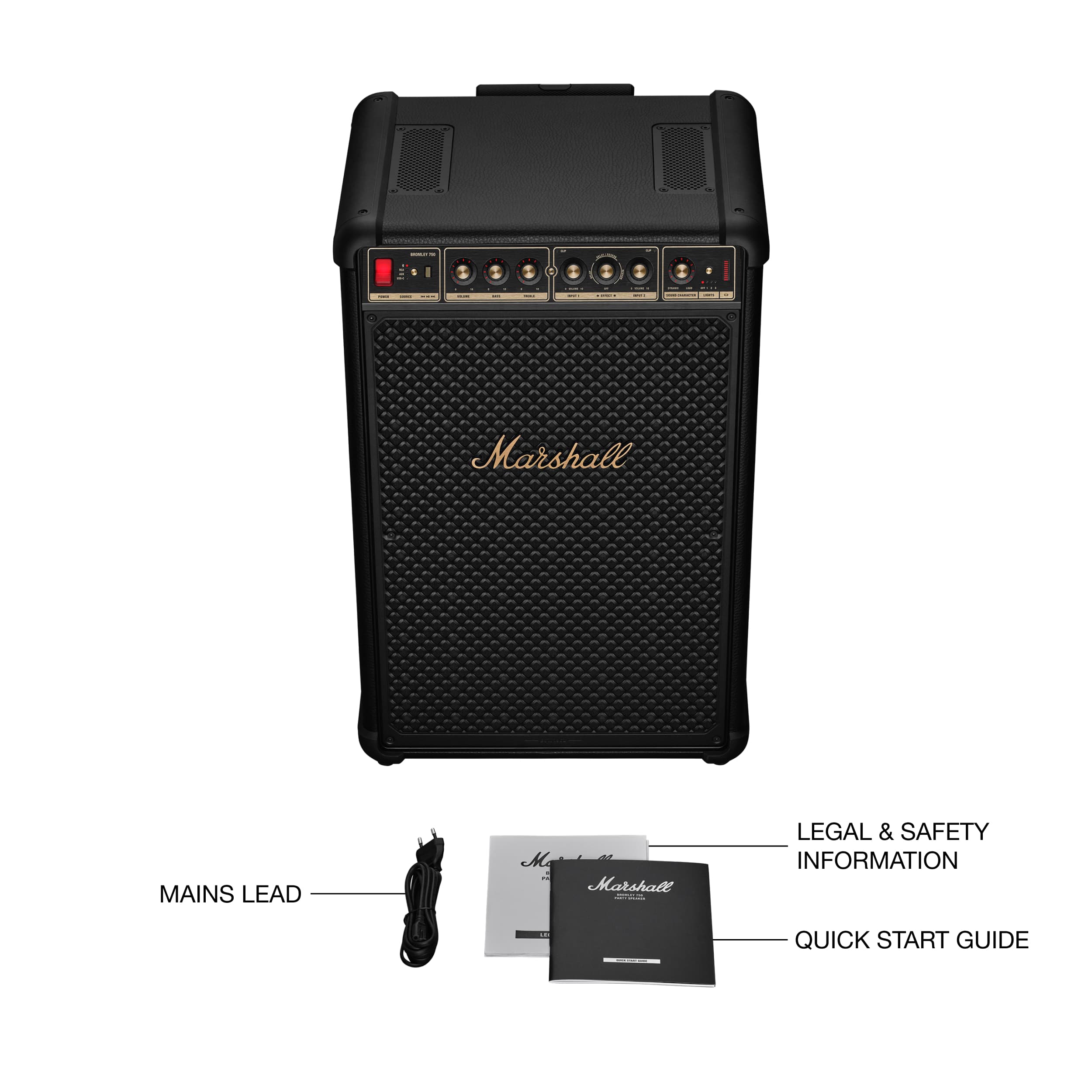
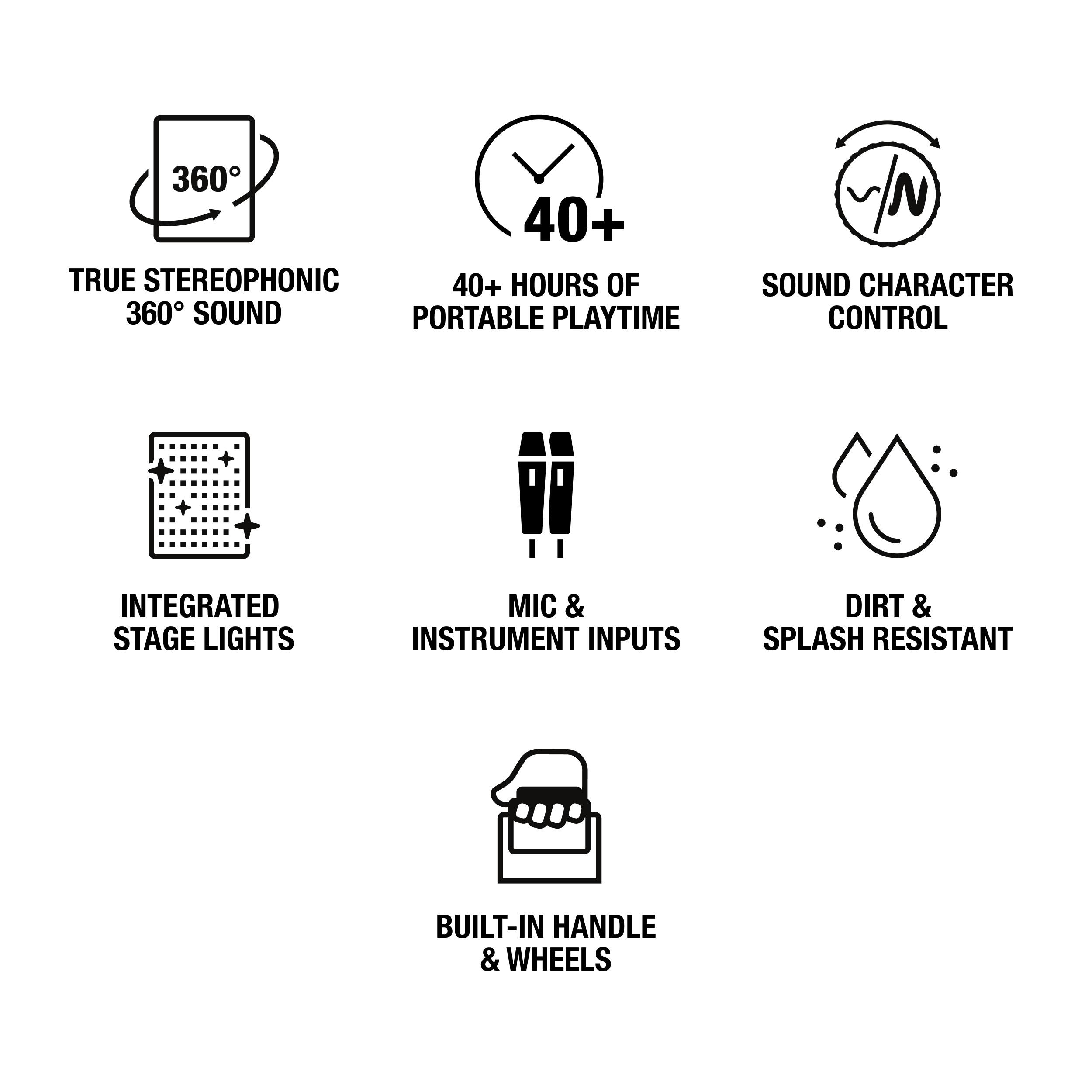
The Marshall Bromley 750 takes a revolutionary approach with what Marshall calls "360° True Stereophonic" sound. Instead of firing all drivers forward, the Marshall spreads eight drivers around the entire cabinet: two 10-inch woofers, two mid-range drivers, and four tweeters positioned to fire forward, backward, to the sides, and even upward. This creates omnidirectional coverage that theoretically sounds consistent from any angle around the speaker.
The practical difference is significant. With the Soundboks Go, you need to position the speaker carefully to ensure your audience is in the "sweet spot" where it sounds best. Move too far to the side or behind it, and the sound becomes noticeably quieter and less detailed. The Marshall Bromley 750 eliminates this issue—whether you're standing directly in front, to the side, or behind the speaker, you get consistent volume and frequency response.
For party applications, the Marshall's approach makes more sense. Crowds move around constantly, and having consistent sound coverage means everyone gets the same experience regardless of where they end up relative to the speaker. However, the Soundboks's directional approach has advantages too—it's better for situations where you want to focus sound in one direction (like a DJ setup) or when you're using two speakers to create true stereo separation.
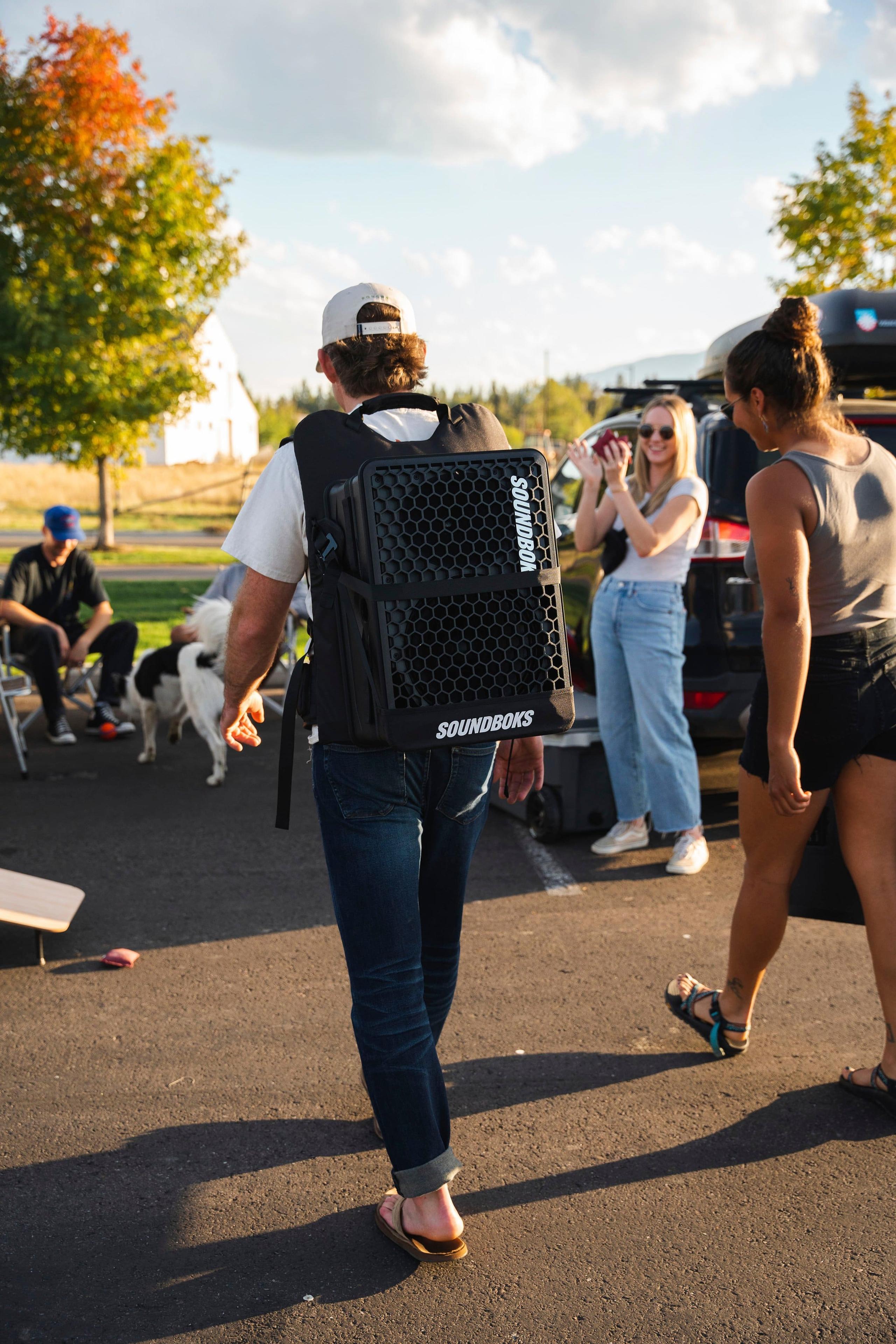
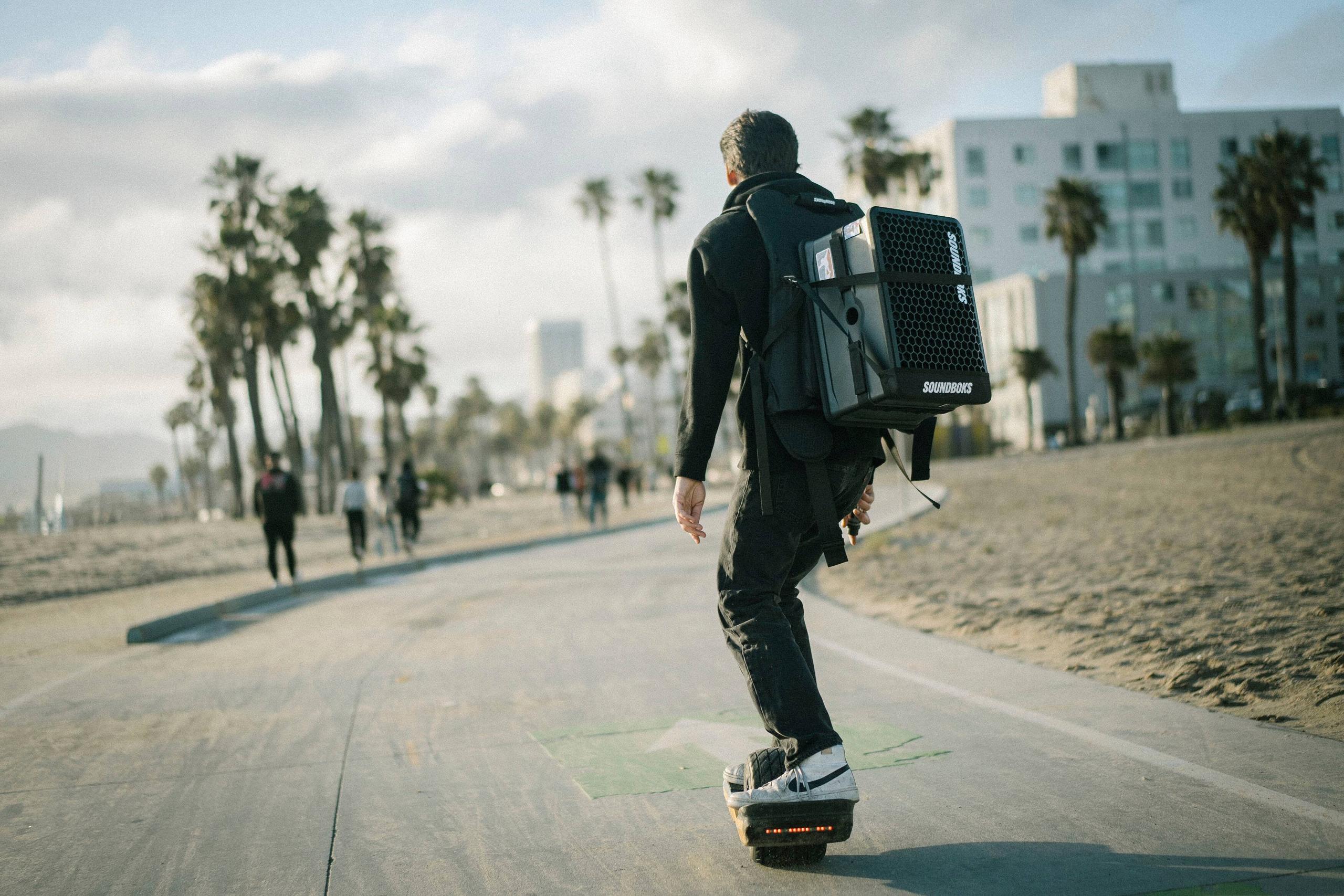
Here's where the biggest practical difference emerges. The Soundboks Go weighs 20.3 pounds and measures roughly the size of a large cooler, while the Marshall Bromley 750 tips the scales at 52.7 pounds—nearly triple the weight.
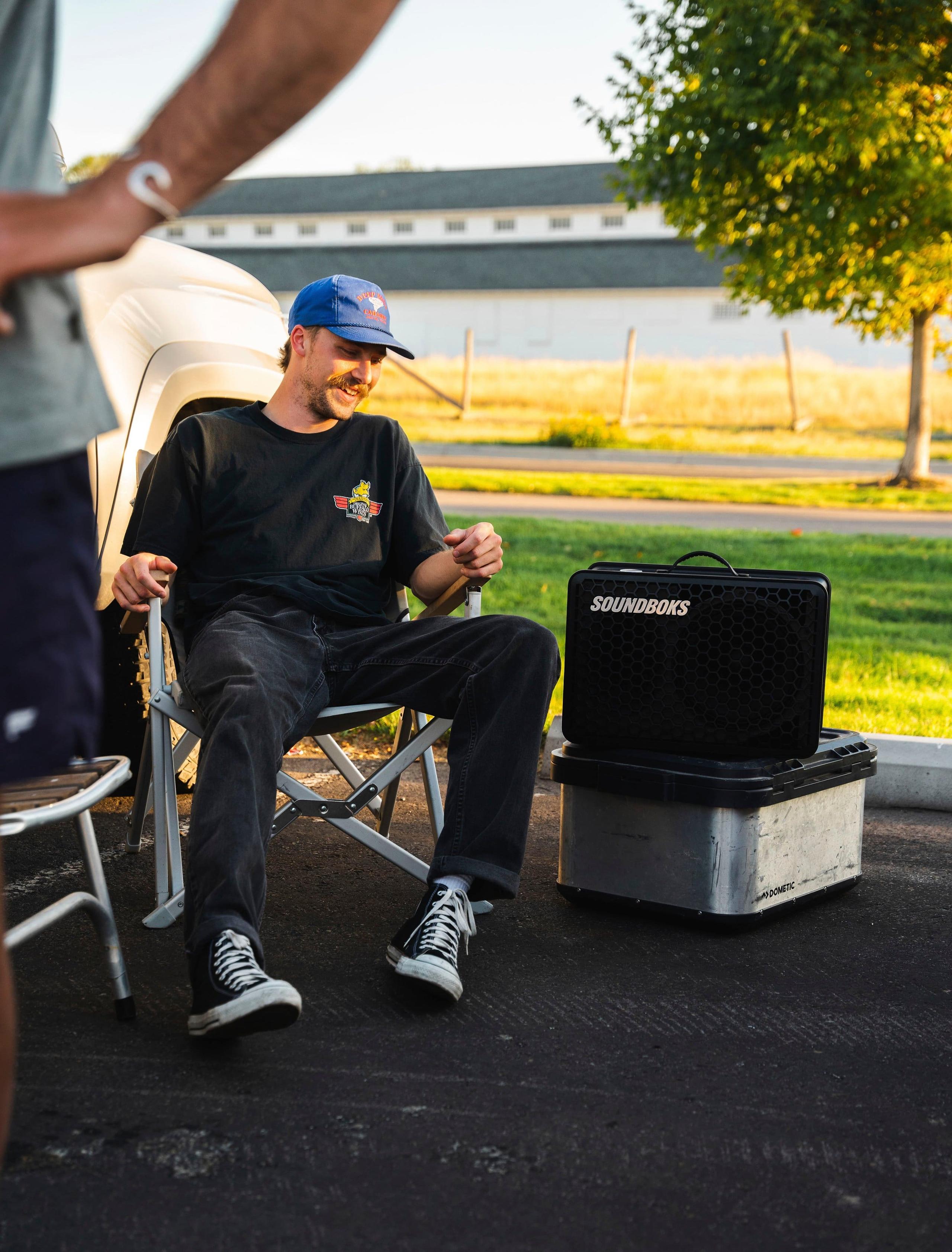
This isn't just a numbers game. That weight difference fundamentally changes how you use these speakers. The Soundboks Go can be carried by one person without much difficulty, thrown in a car trunk, or even taken on public transportation. Its built-in handle and optional shoulder strap make it genuinely portable in the way we think of portable speakers.
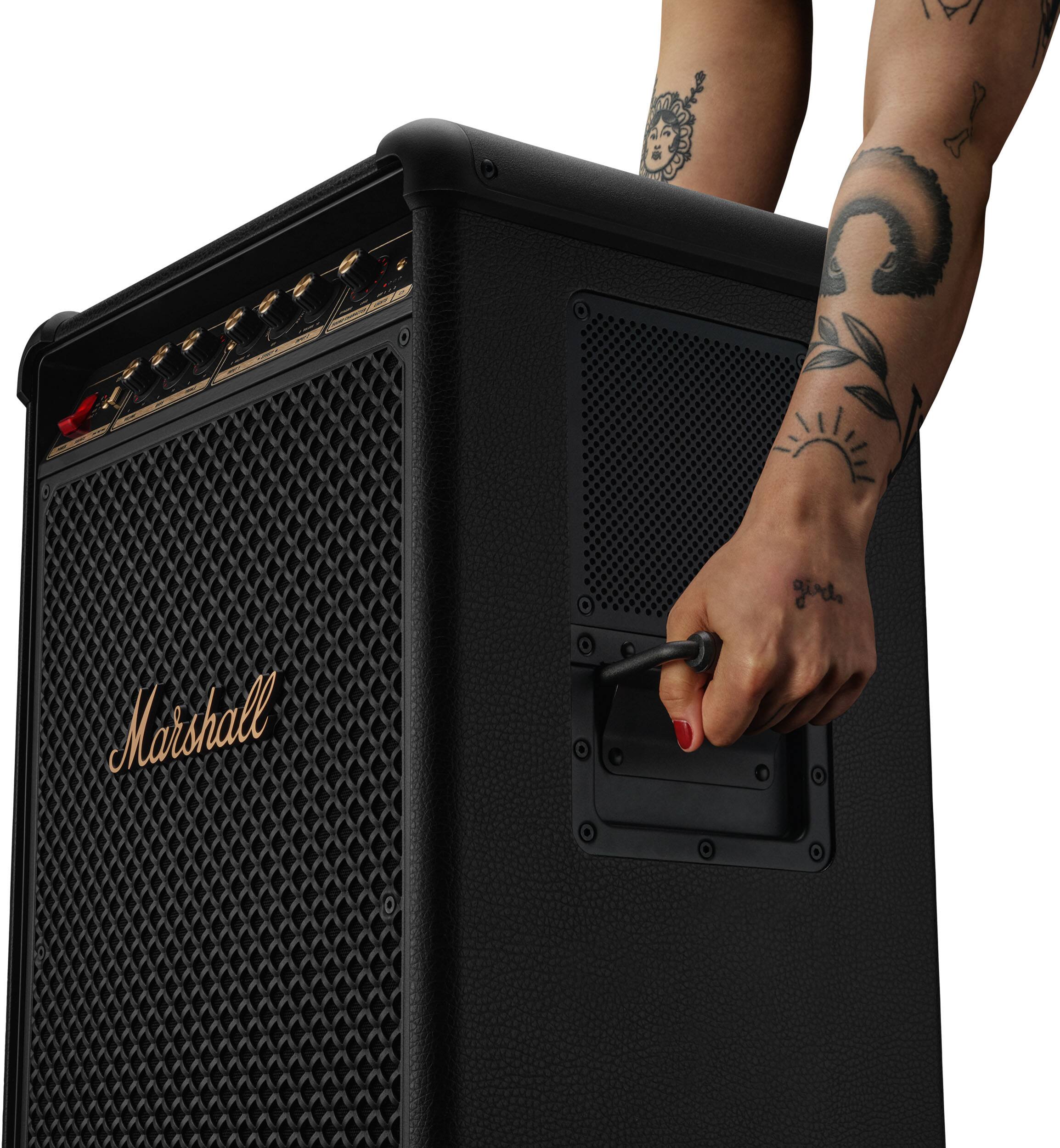
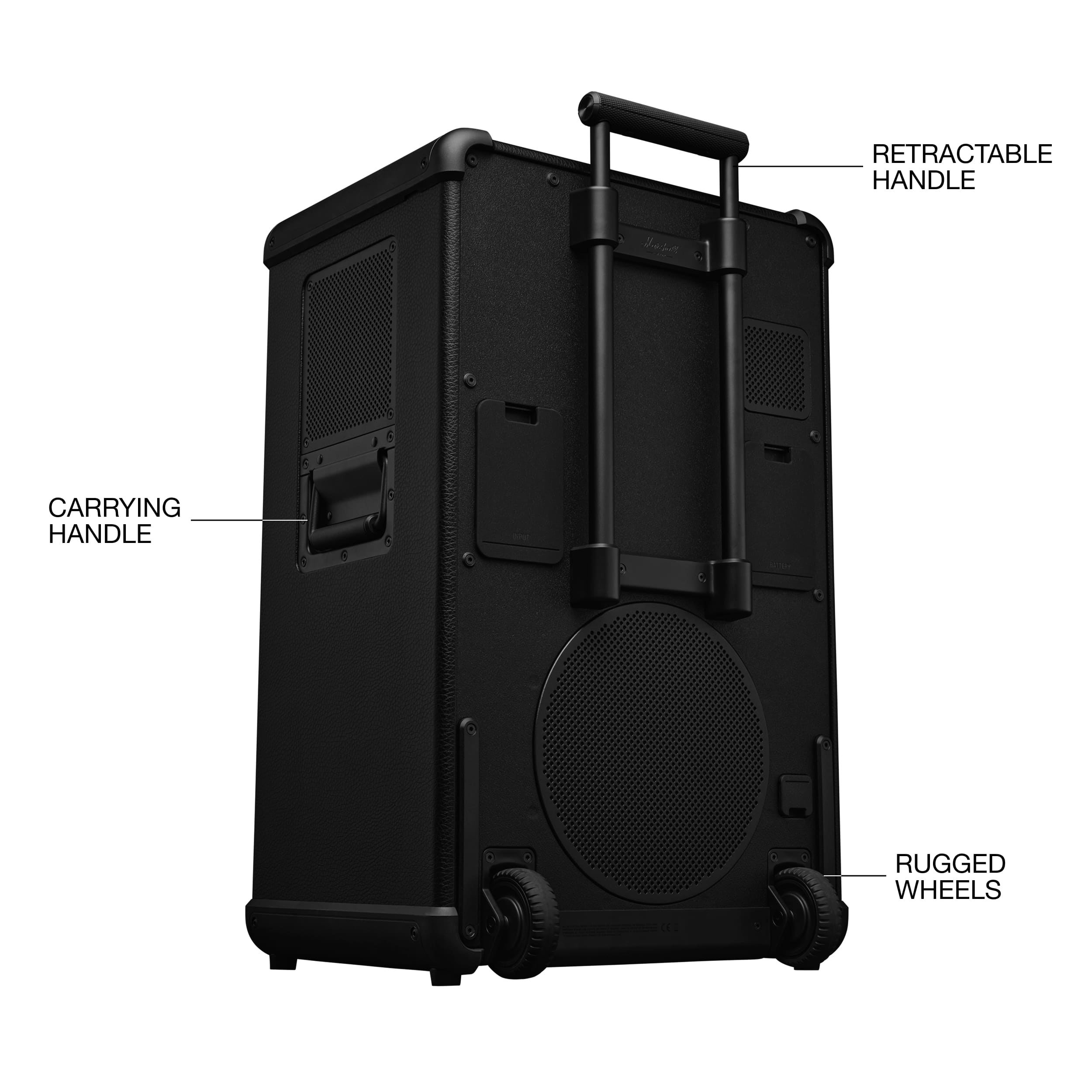
The Marshall Bromley 750, despite its built-in wheels and telescoping handle that make it rollable like luggage, is really more of a "transportable" speaker than a portable one. You're not carrying this thing any significant distance by hand, and it requires more planning to move between locations.
Both speakers achieve their weight through different engineering choices. The Soundboks Go uses a reinforced ABS plastic and polycarbonate construction with protective rubber bumpers—materials that prioritize durability while keeping weight down. The Marshall Bromley 750 employs metal grilles, premium synthetic leather wrapping, and a more complex internal structure that contributes to its heft but also gives it a more substantial, professional appearance.
For most users, portability matters more than they initially think. Based on user feedback we've analyzed, people tend to use truly portable speakers more frequently because the barrier to bringing them places is lower. If moving your speaker requires significant effort or planning, you're less likely to bring it to spontaneous gatherings or events where you need to walk any distance.
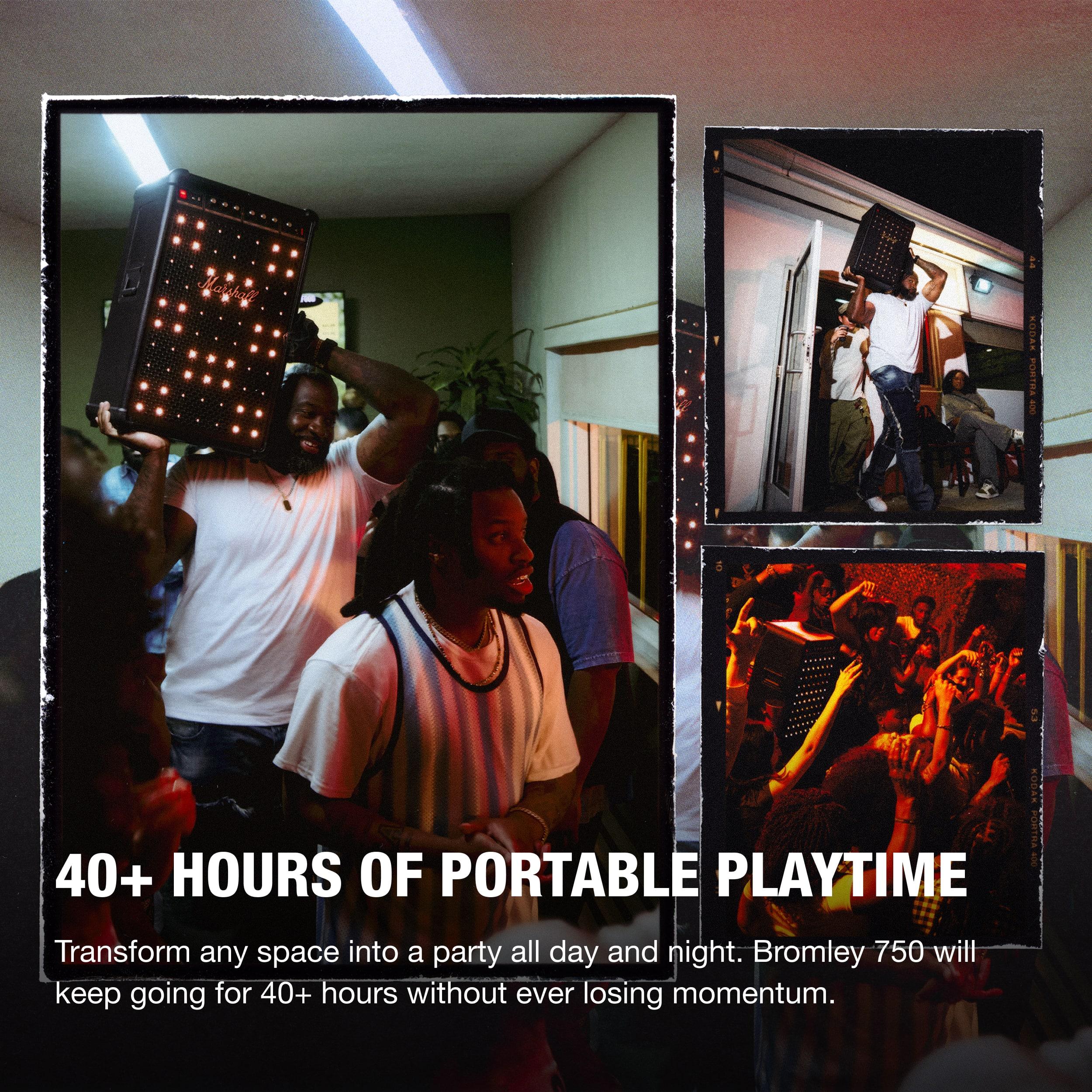
Both speakers excel in battery endurance, delivering 40+ hours of playback—impressive by any standard. But their approaches to power management differ significantly.
The Soundboks Go uses a 99.84 watt-hour lithium iron phosphate (LiFePO4) battery that's completely swappable. This battery chemistry is known for safety, longevity, and consistent power delivery across its discharge cycle. More importantly, the ability to hot-swap batteries means unlimited runtime if you have spares charged and ready.
The Marshall Bromley 750 also features a swappable battery system, though specific capacity details are less readily available. However, it adds quick charging capability—20 minutes of charging reportedly provides 5 hours of playback. Both speakers can function as power banks, charging your phone or other devices through USB-C connections.
In real-world usage, both speakers easily handle full-day events. The battery life ratings appear conservative based on user reports—many people get even more runtime at moderate volumes. The Soundboks Go specifies 40 hours at moderate volume but only 10 hours at maximum output, which gives you a sense of how power consumption scales with volume.
The swappable battery feature is more valuable than it might initially appear. Beyond extended runtime, it means the speaker won't become obsolete when the battery eventually degrades after years of use. You can simply buy a replacement battery instead of a whole new speaker.
The connectivity options reveal each speaker's target audience. The Soundboks Go keeps things relatively simple with Bluetooth 5.0 and a 3.5mm auxiliary input. But where it shines is wireless multi-speaker capability through its TeamUP system, which uses SKAA technology to wirelessly link up to five Soundboks speakers with virtually no audio delay.
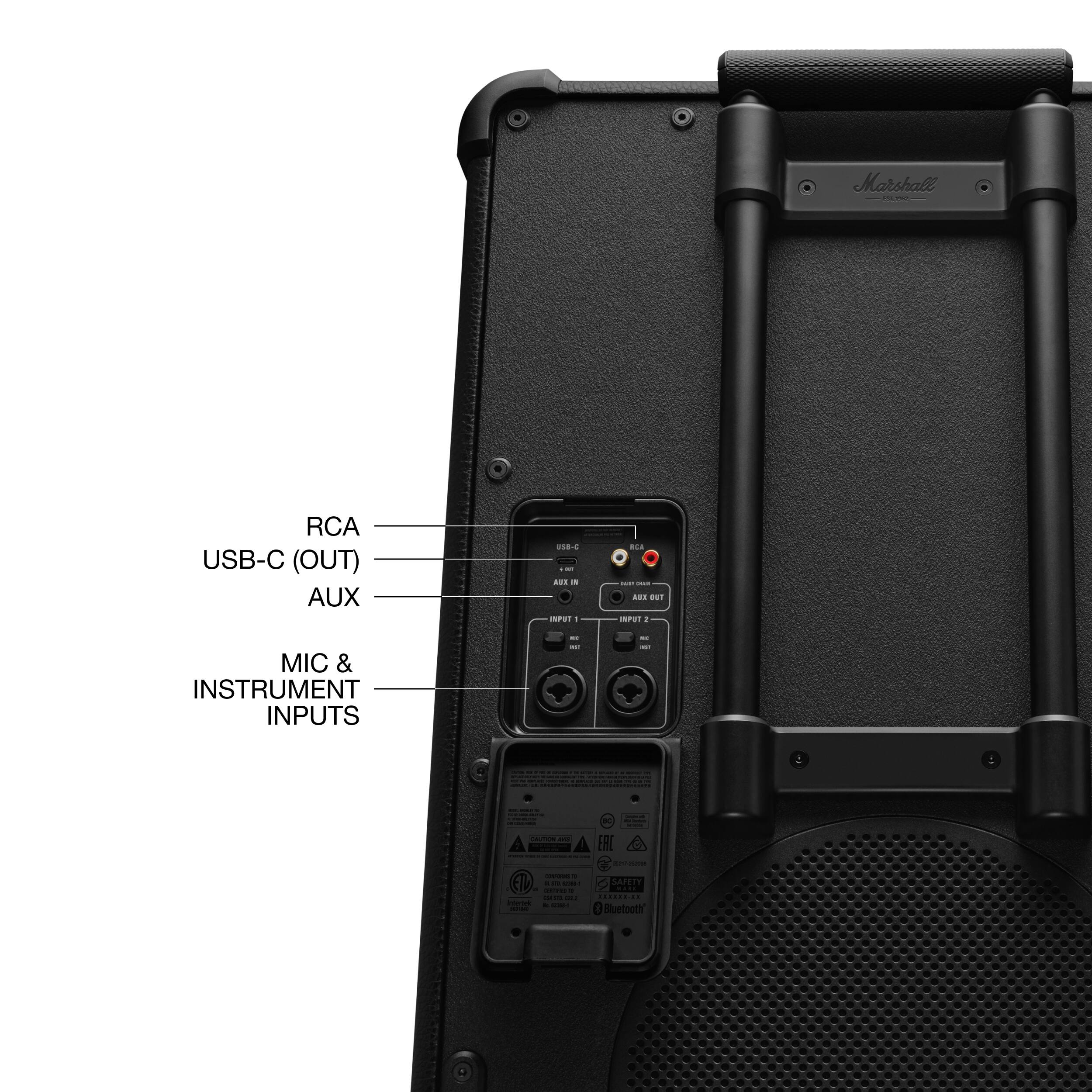
The Marshall Bromley 750 takes a more professional approach. Beyond Bluetooth 5.3 (a newer, more stable version), it includes dual XLR/6.35mm combination inputs for microphones or instruments, RCA inputs for DJ equipment, and built-in effects processing with reverb and delay. This makes it suitable for karaoke, live music, or DJ setups where you need to connect multiple audio sources.
The multi-speaker capabilities differ significantly. The Soundboks Go's TeamUP system creates a true wireless mesh network between speakers, allowing you to position them around a space for distributed sound coverage. The Marshall Bromley 750 can be daisy-chained through its auxiliary outputs, but this requires physical cables and doesn't offer the same flexibility.
For home theater use, neither speaker is ideal for traditional surround sound setups due to their mono (single-channel) nature and party-oriented tuning. However, the Soundboks Go's ability to wirelessly link multiple units makes it more suitable for creating a distributed audio system in a large room, while the Marshall's 360° sound design could work well as a single-point solution for casual movie watching in open spaces.
Both speakers are built to withstand outdoor use, but they take different approaches to durability. The Soundboks Go achieves IP65 rating, meaning it's completely dustproof and can handle direct water jets from any direction. Its construction emphasizes practical durability—the kind that survives being knocked over, dropped, or caught in sudden weather.
The Marshall Bromley 750 carries an IP54 rating, which provides splash protection but isn't as comprehensive as the Soundboks's rating. However, it includes a built-in drainage system to channel water away from critical components, and its metal grille and premium materials suggest durability of a different kind—more about long-term structural integrity than shock resistance.
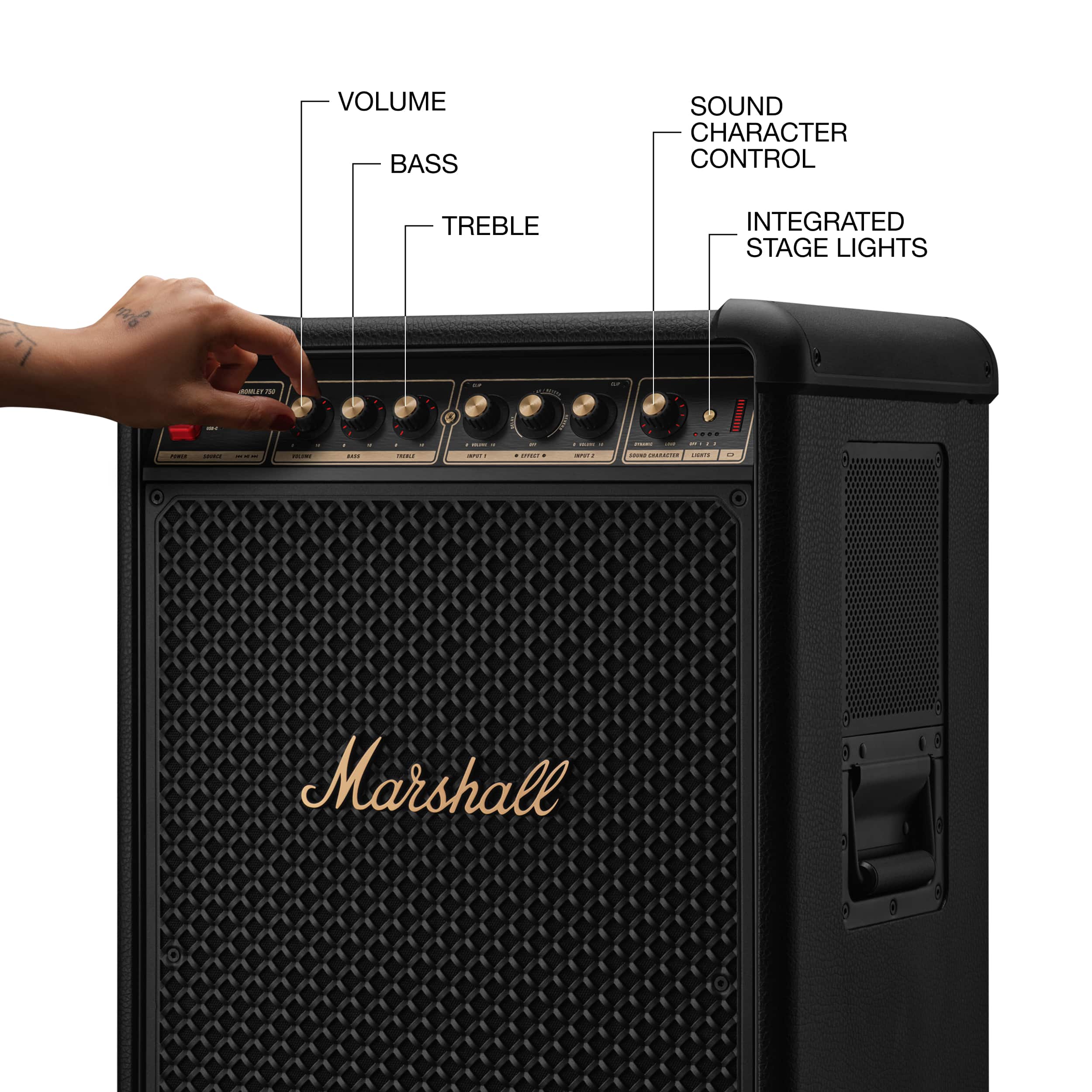
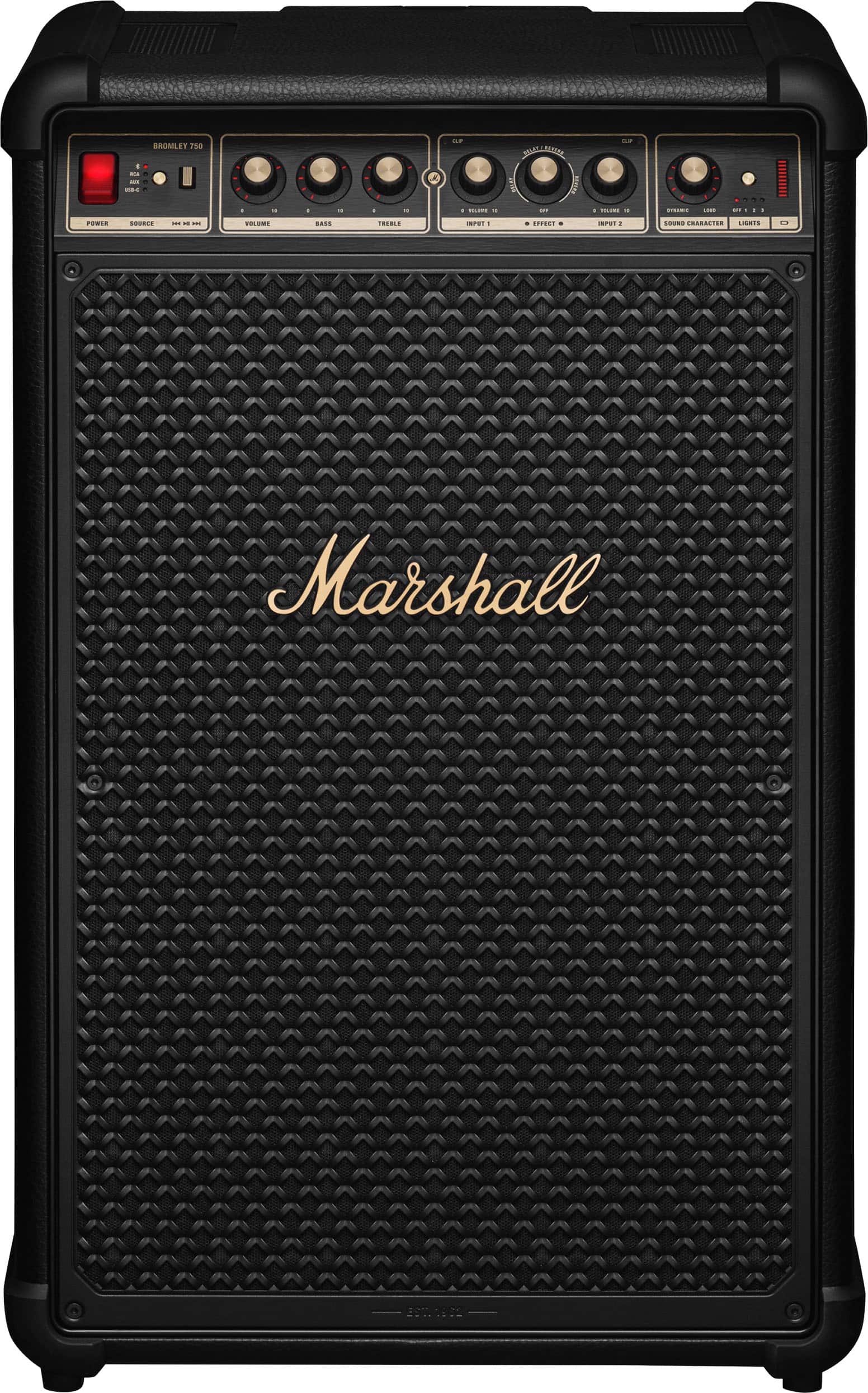
The design philosophies reflect their intended use. The Soundboks Go looks like equipment designed to be used and abused. The Marshall Bromley 750 carries Marshall's iconic amplifier aesthetic with brass-topped control knobs and the classic script logo—it's meant to be seen and appreciated, not just heard.
Raw specifications only tell part of the story. How these speakers actually sound reveals important differences in their engineering priorities.
The Soundboks Go tends toward a more neutral sound signature with extended frequency response (40 Hz to 20 kHz covers nearly the entire range of human hearing). Its adaptive DSP (digital signal processing) automatically adjusts the sound profile based on volume level, maintaining clarity as you turn it up. This results in cleaner midrange reproduction—vocals and instruments sound more natural and detailed, especially at moderate volumes.
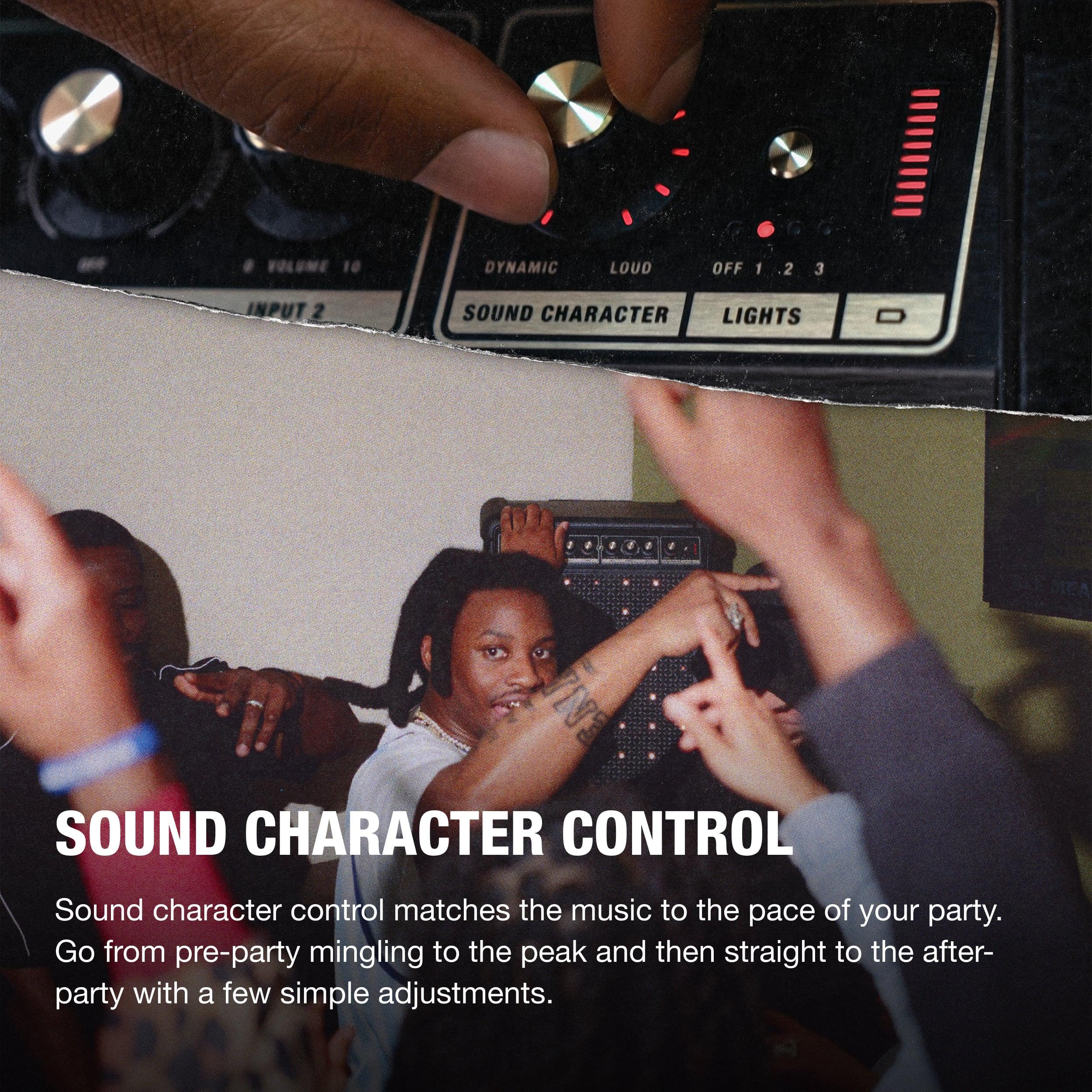
The Marshall Bromley 750 offers manual control over its sound character through a unique feature: a dedicated knob that switches between "Dynamic" mode for indoor listening and "Loud" mode for outdoor use. This gives users more control over the speaker's sound profile, but it also requires more active management to get optimal performance.
Based on extensive user feedback analysis, the Soundboks Go delivers more consistent sound quality across its volume range, while the Marshall Bromley 750 can sound more impressive at high volumes but may lose some detail in complex musical passages. The Marshall's 360° design trades some directional clarity for consistent coverage, which some listeners prefer while others find less engaging than traditional stereo presentation.
At the time of writing, these speakers occupy different price tiers, with the Soundboks Go positioned as the more affordable option despite its premium performance. The Marshall Bromley 750 commands a significant premium, reflecting both its newer technology and Marshall's brand positioning.
From a pure performance-per-dollar perspective, the Soundboks Go delivers exceptional value. You get about 80% of the Marshall's maximum volume capability at roughly 60% of the cost, with superior portability and arguably better multi-speaker capabilities. The Marshall's premium pricing reflects its unique 360° sound innovation and professional connectivity, but these features may not justify the cost difference for casual users.
The value equation changes if you specifically need the Marshall's unique features—omnidirectional sound coverage, professional inputs, or its distinctive visual presence. For users who can take advantage of these capabilities, the premium becomes more justifiable.
After analyzing extensive user feedback and expert opinions, the Soundboks Go emerges as the better choice for most people. Its combination of high performance, exceptional portability, proven reliability, and competitive pricing makes it the more versatile option. The TeamUP wireless linking capability is particularly valuable for users who might eventually want to expand their setup.
The Marshall Bromley 750 serves a more specialized audience. Choose it if you're hosting stationary parties where 360° sound coverage is crucial, need professional connectivity for microphones or instruments, or simply want Marshall's distinctive heritage design. Its recent 2024 launch means it incorporates the latest Bluetooth technology and represents Marshall's fresh take on the category, but it's also unproven in long-term reliability compared to Soundboks's battle-tested design.
For home theater applications, neither speaker is ideal for traditional surround sound, but the Soundboks Go's wireless multi-speaker capability makes it more suitable for creating distributed audio systems in large rooms.
The bottom line: most people will be happier with the Soundboks Go's balance of performance, portability, and value. The Marshall Bromley 750 is the choice for specific use cases where its unique features justify the premium—and where portability isn't a primary concern.
Both represent the current state of the art in high-output portable speakers, but they're designed for different priorities. Choose based on how you actually plan to use the speaker, not just the impressive specifications on paper.
| Soundboks Go Portable Bluetooth Speaker | Marshall Bromley 750 Party Speaker |
|---|---|
| Maximum Volume - Critical for outdoor events and large spaces | |
| 121 dB SPL (concert-level loudness) | 127 dB SPL (roughly twice as loud as Soundboks) |
| Power Output - Determines volume capability and headroom | |
| 144W RMS (2×72W amplifiers) | 500W RMS (8× Class D amplifiers) |
| Weight - Major factor in actual portability and ease of transport | |
| 20.3 lbs (easily carried by one person) | 52.7 lbs (requires wheels/handle, not hand-portable) |
| Sound Design - Affects coverage area and positioning flexibility | |
| Directional (focused forward sound) | 360° omnidirectional (consistent sound from all angles) |
| Battery Life - Runtime for all-day events | |
| 40 hours moderate / 10 hours max volume | 40+ hours (quick charge: 20 min = 5 hours) |
| Multi-Speaker Connectivity - Essential for larger venues or stereo sound | |
| TeamUP wireless (up to 5 speakers, ultra-low latency) | Basic daisy-chaining via aux cables |
| Weather Protection - Important for outdoor reliability | |
| IP65 (dustproof, water jet resistant) | IP54 (splash resistant with drainage system) |
| Professional Inputs - Needed for microphones, instruments, or DJ equipment | |
| 3.5mm aux only | Dual XLR/6.35mm combo, RCA, built-in effects |
| Driver Configuration - Affects sound quality and frequency response | |
| 1×10" woofer, 1×1" silk dome tweeter | 2×10" woofers, 2× mid-range, 4× tweeters |
| Bluetooth Version - Impacts connection stability and features | |
| Bluetooth 5.0 | Bluetooth 5.3 with Auracast |
| Build Materials - Durability and aesthetic appeal | |
| ABS/polycarbonate with rubber bumpers | Metal grille, synthetic leather, premium construction |
| Visual Features - Party atmosphere enhancement | |
| No lighting (audio-focused design) | Integrated LED stage lighting with music sync |
The Marshall Bromley 750 is significantly louder, reaching 127 dB compared to the Soundboks Go's 121 dB maximum output. That 6 dB difference represents roughly double the perceived loudness, making the Marshall better for extremely large outdoor events or venues with high ambient noise.
The Soundboks Go is far more portable at 20.3 pounds versus the Marshall Bromley 750's 52.7 pounds. The Soundboks can be easily carried by one person, while the Marshall requires its built-in wheels and telescoping handle for transport, making it more "transportable" than truly portable.
The Soundboks Go offers superior multi-speaker connectivity through its TeamUP system, allowing up to 5 speakers to connect wirelessly with ultra-low latency. The Marshall Bromley 750 can only be daisy-chained using physical aux cables, which is less flexible for large setups.
The Soundboks Go generally delivers cleaner, more detailed sound at moderate volumes with better midrange clarity for vocals and instruments. The Marshall Bromley 750 provides 360° omnidirectional sound that's consistent from all angles but may sacrifice some directional clarity for coverage.
Both speakers offer excellent battery life, with the Soundboks Go providing 40 hours at moderate volume (10 hours at max) and the Marshall Bromley 750 delivering 40+ hours with quick charging capability (20 minutes charging = 5 hours playback).
The Soundboks Go offers superior weather protection with IP65 rating (dustproof and water jet resistant) compared to the Marshall Bromley 750's IP54 rating (splash resistant). The Soundboks is better equipped for harsh outdoor conditions and unexpected weather.
The Marshall Bromley 750 is much better suited for karaoke and live music with dual XLR/6.35mm combo inputs for microphones and instruments, plus built-in effects processing. The Soundboks Go only has a 3.5mm aux input, making it less suitable for professional applications.
The Soundboks Go typically offers better value, delivering about 80% of the Marshall's volume at a lower cost while being significantly more portable. The Marshall Bromley 750 commands a premium for its unique 360° sound design and professional features.
Neither speaker is ideal for traditional home theater surround sound as they're mono speakers designed for parties. However, the Soundboks Go's wireless multi-speaker capability makes it more suitable for creating distributed audio in large rooms, while the Marshall Bromley 750's 360° design could work for casual movie watching in open spaces.
The Marshall Bromley 750 offers extensive professional connectivity including XLR inputs, RCA connections, and built-in effects processing, making it suitable for DJs and musicians. The Soundboks Go focuses on simplicity with just Bluetooth and aux input.
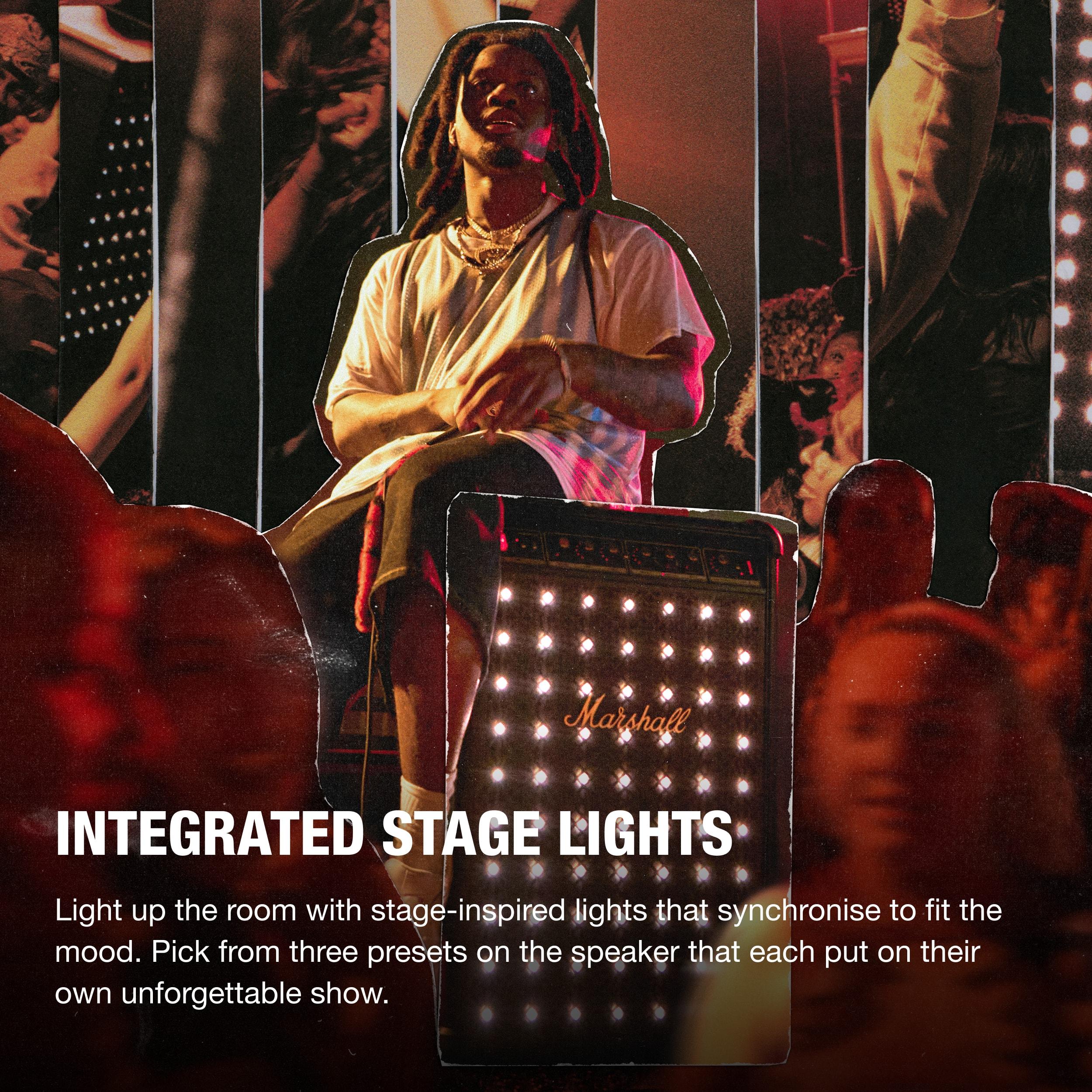
Only the Marshall Bromley 750 features integrated LED stage lighting with three modes, including music-reactive patterns that enhance party atmosphere. The Soundboks Go has no lighting effects, focusing purely on audio performance.
Choose the Soundboks Go if you prioritize portability, value, wireless multi-speaker capability, and superior weather protection. Select the Marshall Bromley 750 if you need maximum volume, 360° sound coverage, professional inputs for microphones/instruments, or want integrated lighting effects for stationary party setups.
We've done our best to create useful and informative comparisons to help you decide what product to buy. Our research uses advanced automated methods to create this comparison and perfection is not possible - please contact us for corrections or questions. These are the sites we've researched in the creation of this article: bestbuy.com - beachaudio.com - youtube.com - crutchfield.com - digitaldjtips.com - comparisontabl.es - eftm.com - sweetwater.com - bestbuy.com - compsource.com - sweetwater.com - store.djtechtools.com - youtube.com - scheels.com - soundboks.com - connection.com - scheels.com - skaastore.com - thomannmusic.com - soundboks.eu - gearjunkie.com - theluxereview.com - techradar.com - whathifi.com - routenote.com - techradar.com - marshall.com - newatlas.com - marshall.com - youtube.com - wallpaper.com - sweetwater.com - soundguys.com - t3.com - bestbuy.com - hiconsumption.com - architeg-prints.com

Privacy Policy
Terms and Conditions - Affiliate Policy
Home Security
© Copyright 2008-2026.
11816 Inwood Rd #1211, Dallas, TX 75244