


When it comes to portable party speakers, you're essentially choosing between two philosophies: speakers that prioritize entertainment features and all-in-one functionality, versus those that focus on raw power and professional-grade performance. The Rockville Rock Party 9 and Soundboks Go perfectly represent these competing approaches, and understanding their differences will help you make the right choice for your specific needs.
Both speakers were released in the early 2020s, with the Soundboks Go arriving in 2022 and representing a more refined approach to portable party audio. Since their release, we've seen the portable speaker market evolve significantly, with manufacturers pushing both battery technology and amplifier efficiency to new heights. The Class D amplifiers (which convert electrical signals to sound more efficiently than older designs) in both speakers benefit from improvements in switching technology that have made powerful portable audio more practical than ever.
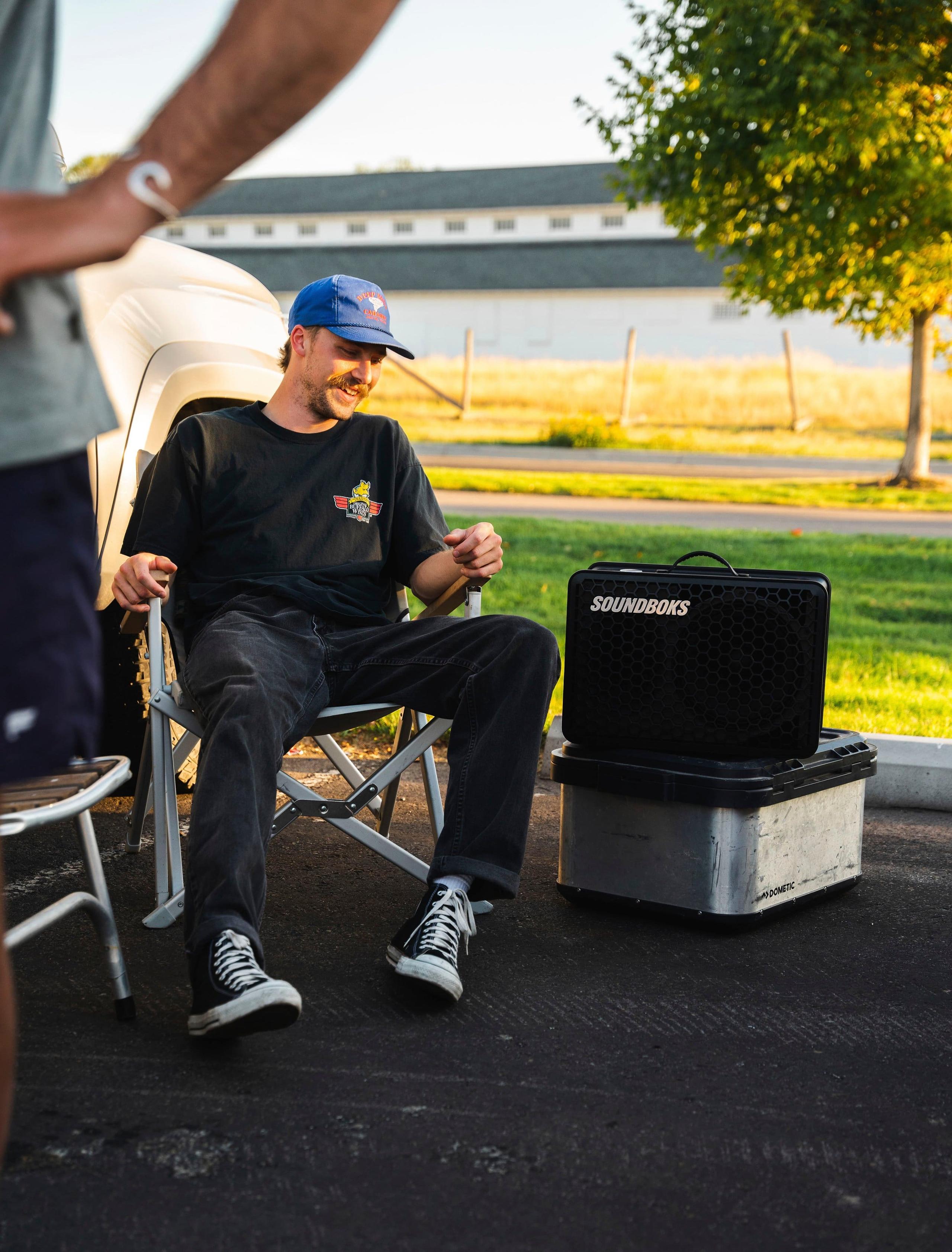
Before diving into specifics, it's worth understanding what sets party speakers apart from regular Bluetooth speakers. These aren't designed for quiet background music or critical listening sessions in your living room. Instead, they're engineered to fill large outdoor spaces with sound, survive rough handling, and keep the energy going for hours on end.
The key performance metrics that matter most in this category are maximum sound pressure level (SPL) measured in decibels, battery runtime at various volume levels, and the speaker's frequency response range (how low and high it can reproduce sound). Unlike bookshelf speakers for your home theater, party speakers typically emphasize volume and bass impact over balanced, neutral sound reproduction.
When evaluating these speakers, we've focused on real-world performance data from professional reviews and user feedback rather than just manufacturer specifications, which can sometimes be optimistic. The consensus from audio testing sites and user experiences paints a clearer picture of how these speakers actually perform in typical use scenarios.
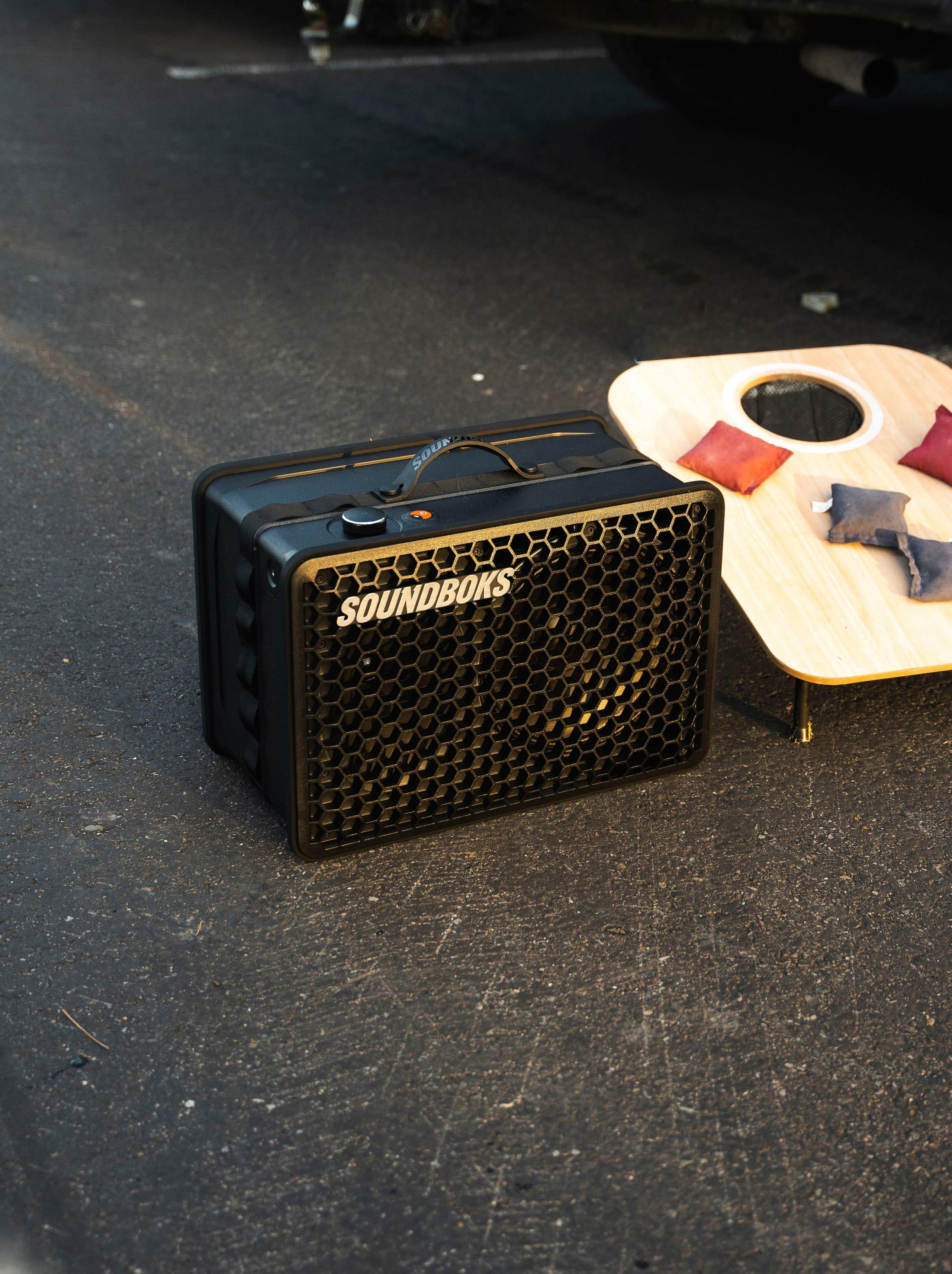
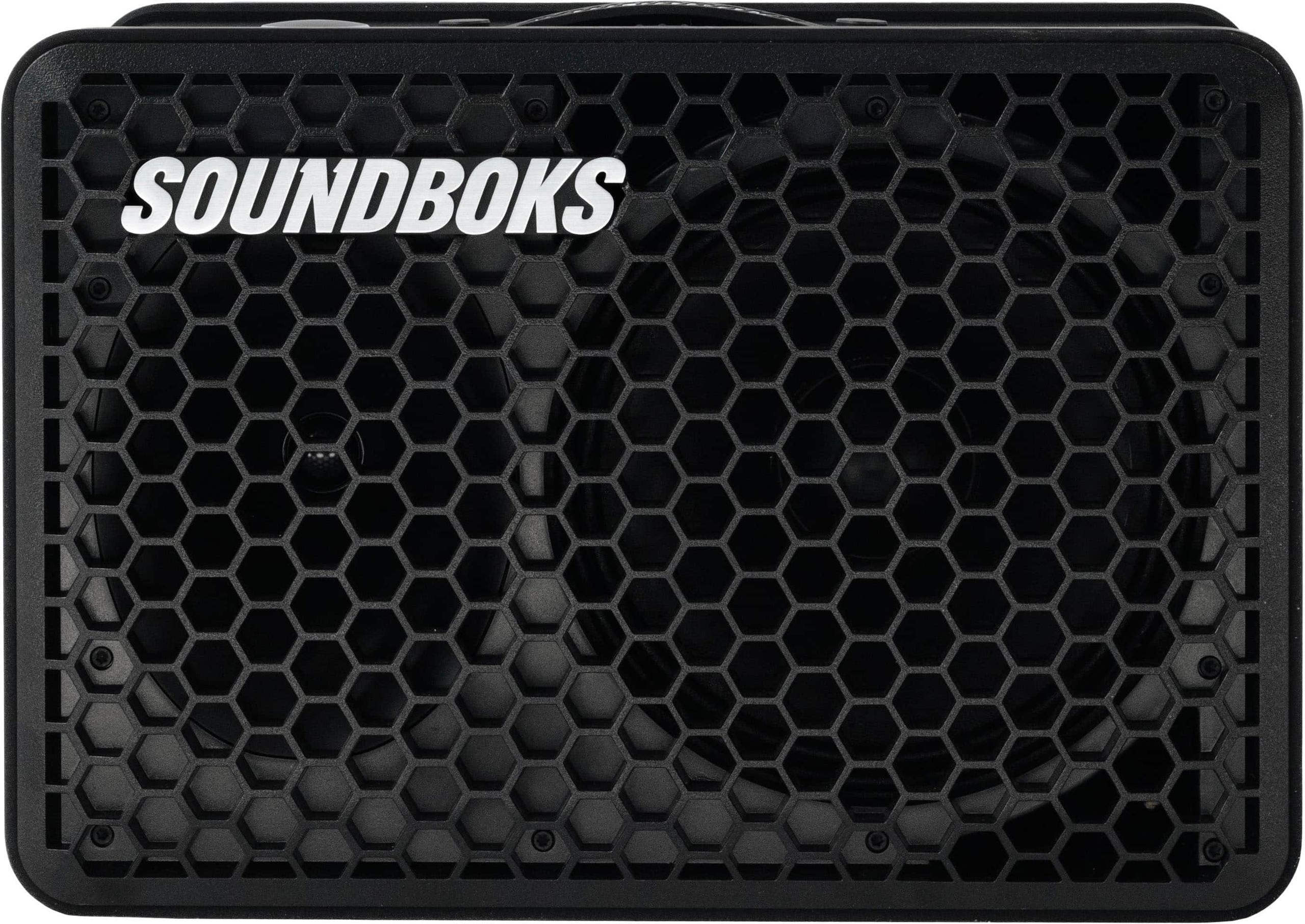
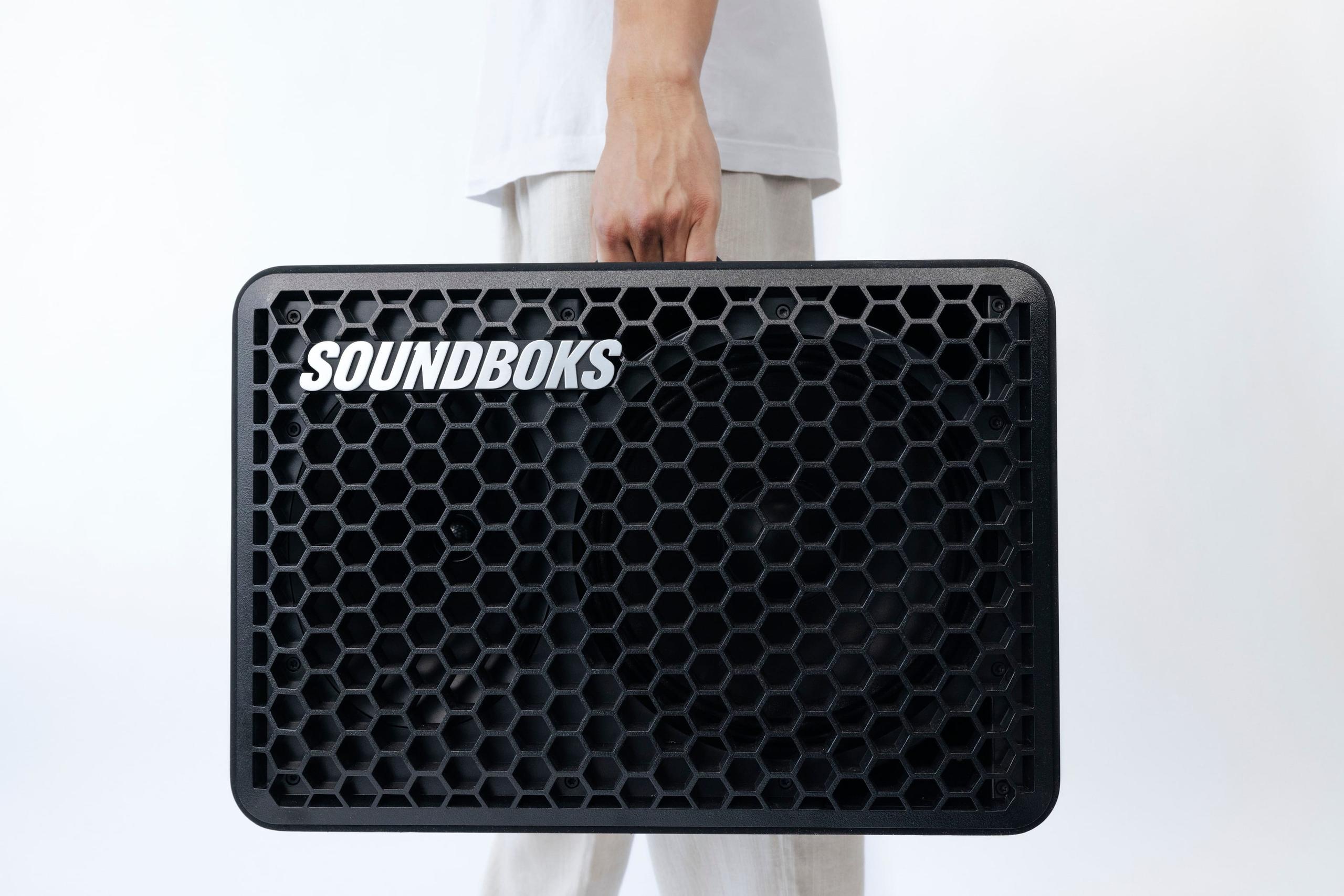
The Soundboks Go takes the crown for sheer volume capability, reaching 121 decibels at maximum output. To put this in perspective, that's about as loud as a rock concert or chainsaw – genuinely ear-damage territory if you're standing too close. The speaker achieves this through a carefully tuned 10-inch polypropylene woofer paired with a 1-inch silk dome tweeter, powered by a 144-watt RMS Class D amplifier using Merus Audio's advanced switching technology.
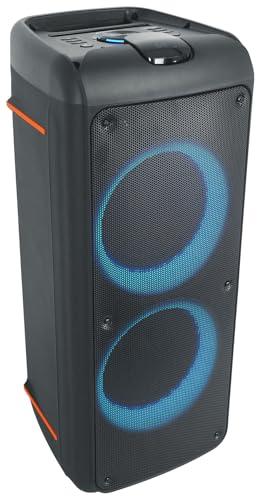
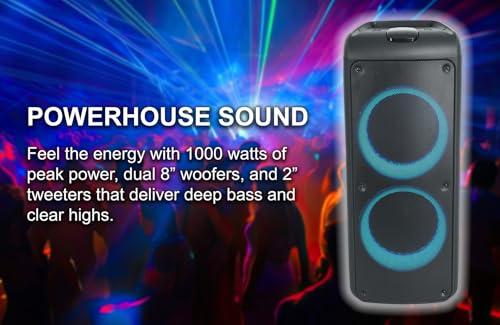
The Rockville Rock Party 9, while still impressively loud, takes a different approach with dual 8-inch woofers and dual 2-inch tweeters driven by a 250-watt RMS amplifier (1000 watts peak power). Peak power specifications can be misleading since they represent brief bursts rather than sustained output, but the RMS rating gives you a better sense of real-world performance. Based on user reports and professional testing, the Rock Party 9 delivers solid outdoor party volume but doesn't quite match the Go's ability to fill truly massive spaces.
Both speakers prioritize impact over audiophile accuracy, but they achieve this differently. The Soundboks Go employs what audio engineers call a "V-shaped" frequency response – emphasized bass and treble with somewhat recessed midrange frequencies. This creates an exciting, energetic sound that cuts through outdoor noise and ambient conversation, though it can sound harsh during quieter listening sessions.
The Rockville Rock Party 9 also emphasizes bass and treble, but its dual-woofer design creates a different character. User reviews consistently mention the speaker's ability to produce "earth-shaking bass" while maintaining clear highs, though some note that the treble can become shrill at higher volumes. The frequency response spans 50Hz to 20kHz, which covers most of the audible spectrum effectively.
For home theater use, neither speaker is ideal due to their party-focused tuning, but the Rockville Rock Party 9 offers more flexibility with its multiple input options and EQ controls if you need occasional indoor use.
Both speakers use Class D amplification, which has revolutionized portable audio by dramatically improving power efficiency compared to older Class AB designs. The Soundboks Go incorporates Infineon's MERUS multilevel amplifier technology, which reduces power consumption while maintaining dynamic range – essentially letting you play louder for longer on battery power.
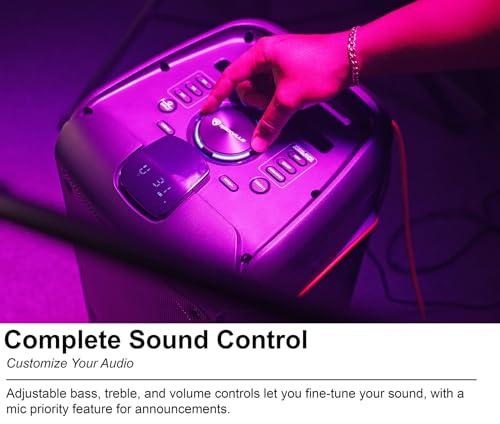
The Rockville Rock Party 9 uses a more conventional Class D design but compensates with user-adjustable bass and treble controls, giving you more flexibility to tune the sound to your preferences or environment.
This category reveals the most significant performance gap between these speakers. The Soundboks Go delivers an impressive 40 hours of playback at moderate volume levels, dropping to about 10 hours when pushed to maximum output. More importantly, it features a swappable battery system – you can literally pop out the depleted battery and insert a fresh one without missing a beat.
The swappable battery concept is brilliant for extended events. The battery uses lithium iron phosphate (LiFePO4) chemistry, which offers excellent longevity and safety characteristics compared to standard lithium-ion batteries. It also includes a USB-C port that lets you charge other devices, essentially turning your speaker into a portable power bank.
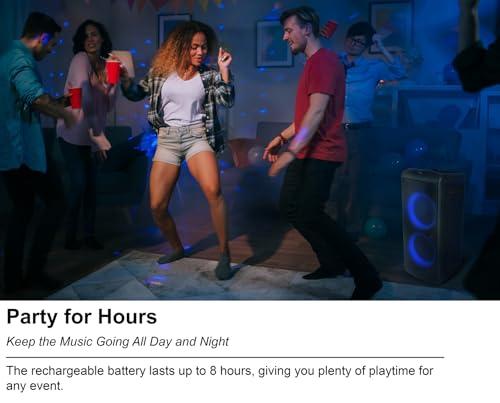
The Rockville Rock Party 9 provides 6-8 hours at 25% volume, dropping to just 2-3 hours at maximum output. While this is typical for speakers in this price range, it's a significant limitation for all-day events. The battery isn't user-replaceable, so once it's dead, you're tethered to a power outlet.
For users who need uninterrupted playback – think wedding DJs, outdoor festivals, or day-long tailgate parties – the Soundboks Go's battery advantage is substantial enough to justify its higher price point.
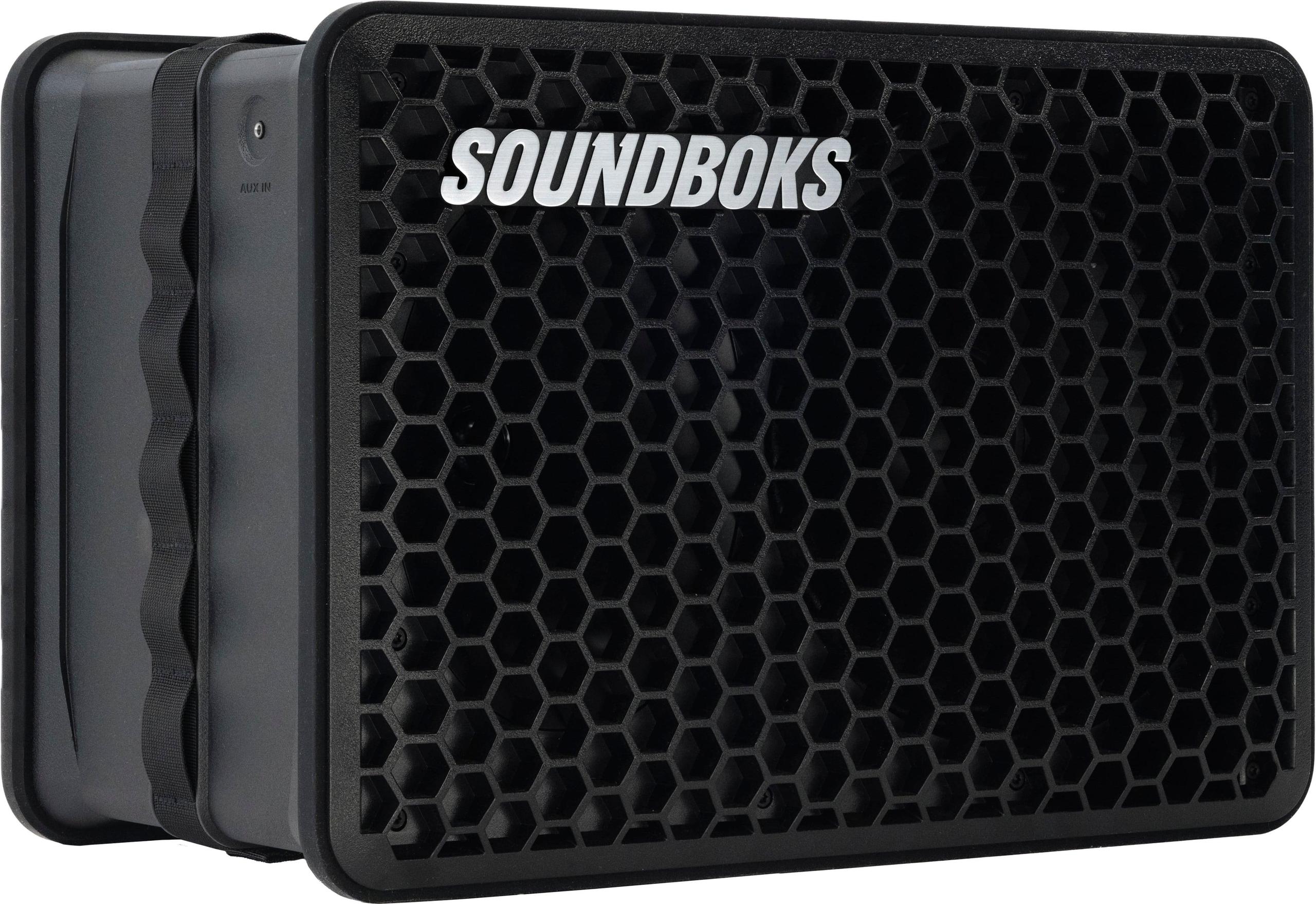
The construction differences between these speakers reflect their target markets. The Soundboks Go features an IP65 rating, meaning it's completely dustproof and can handle water jets from any direction (though not full submersion). The cabinet combines ABS plastic and polycarbonate with silicone rubber bumpers designed to absorb impacts. Professional reviewers consistently describe the build quality as "tank-like," comparing it to protective cases used for sensitive equipment.
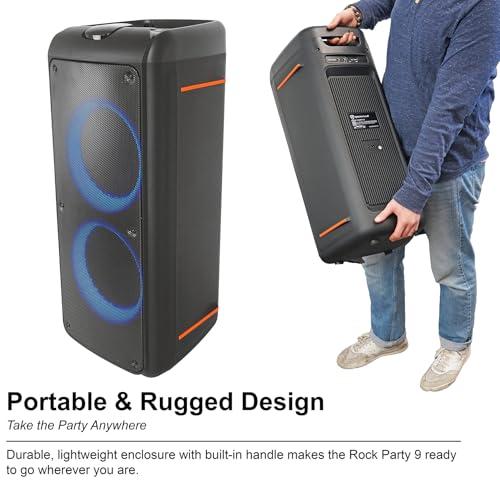
The Rockville Rock Party 9 uses a polypropylene enclosure that's reasonably durable for casual outdoor use, but it lacks any official water resistance rating. While it can probably handle light rain or splashing, you wouldn't want to leave it exposed to the elements like you could with the Soundboks.
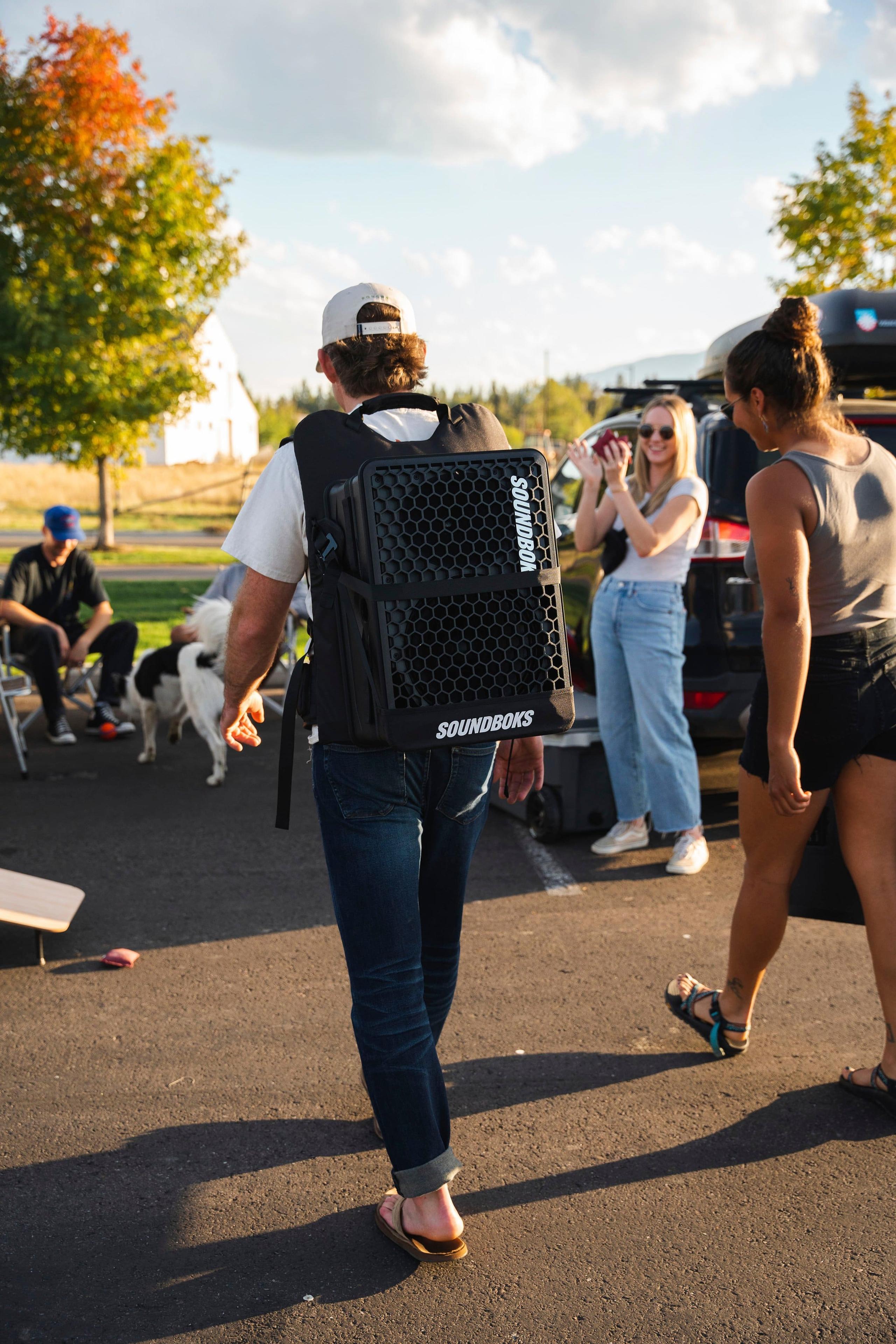
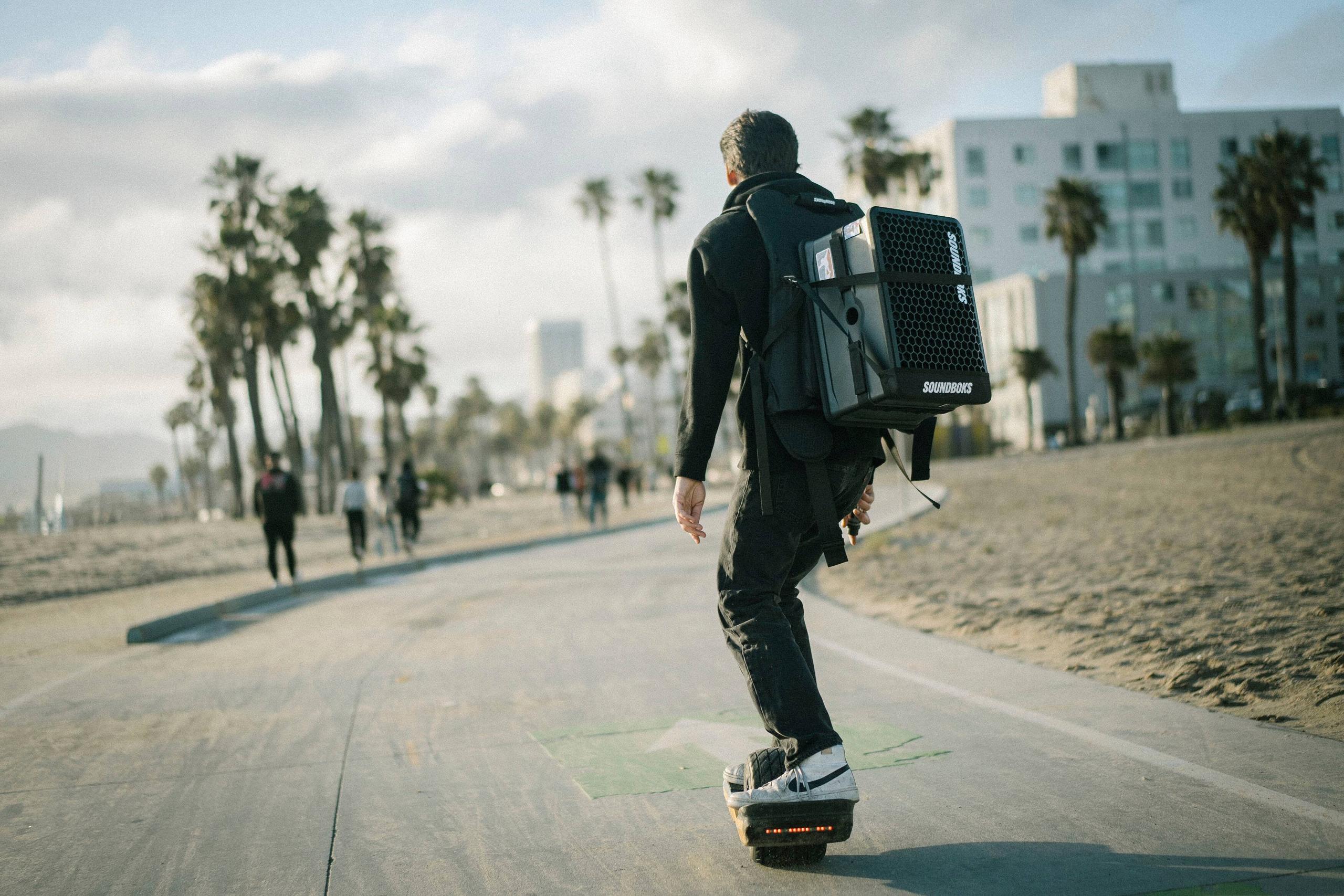
Both speakers weigh around 20 pounds, which puts them at the upper limit of truly portable speakers, but both include sturdy carrying handles. The Soundboks Go adds MOLLE attachment points (the webbing system used on military gear) for securing straps and accessories.
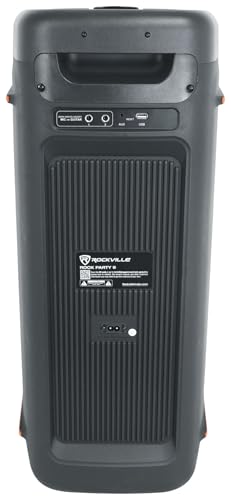
This category highlights the speakers' different design philosophies most clearly. The Rockville Rock Party 9 offers extensive connectivity options: USB input supporting up to 128GB drives, TF/MicroSD card slots, 3.5mm auxiliary input, and dual 6.35mm inputs for microphones or guitars. This makes it incredibly versatile for different audio sources and use cases.
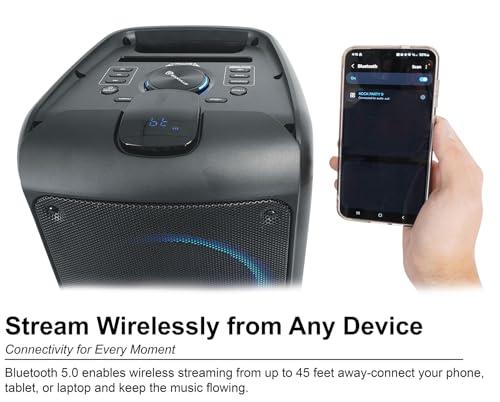
The Soundboks Go focuses on fewer, higher-quality connections. It includes Bluetooth 5.0 and a 3.5mm auxiliary input, but the real innovation is its SKAA wireless networking technology. This system allows up to five Soundboks speakers to connect with ultra-low latency – crucial for maintaining audio synchronization across multiple speakers. The SKAA Pro mode reduces latency even further for professional applications.
For most users, the Rockville's broader input selection provides more day-to-day utility. You can plug in USB drives loaded with music, connect older devices through the auxiliary input, or quickly set up karaoke with the dedicated microphone inputs.
The Rockville Rock Party 9 positions itself as a complete entertainment system. Its karaoke features include auto-tune and voice-changing effects – technologies that process your voice in real-time to correct pitch or add creative effects. The dual microphone inputs include echo control and a "mic priority" function that automatically lowers music volume when someone speaks into the microphone, perfect for announcements or smooth karaoke transitions.
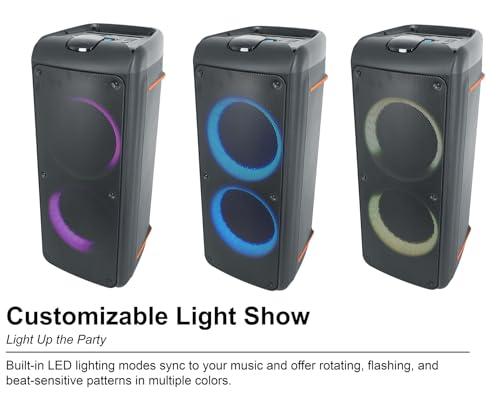
The customizable LED light system adds visual excitement with modes that can rotate, flash, or sync to the music's beat. While some might consider this gimmicky, these features genuinely enhance the party atmosphere and provide good value for users who want an all-in-one solution.
The Soundboks Go deliberately omits these entertainment features, focusing entirely on audio performance. However, it includes a sophisticated smartphone app that provides custom EQ settings, sound profiles for different environments, and advanced controls like remote power management and security features.
At the time of writing, these speakers occupy different price tiers, with the Rockville Rock Party 9 positioned as a budget-friendly option and the Soundboks Go commanding a premium price. The value equation depends heavily on your priorities and use cases.
The Rockville delivers impressive feature density for its price point. When you factor in the karaoke capabilities, LED lighting, multiple input options, and decent audio performance, it represents solid value for casual users who want maximum functionality per dollar spent.
The Soundboks Go justifies its higher price through superior audio performance, exceptional battery life, professional-grade durability, and unique features like swappable batteries and ultra-low latency wireless networking. For users who need maximum reliability and performance, the premium is worthwhile.
You're hosting backyard parties, family gatherings, or casual outdoor events where entertainment features matter as much as sound quality. The karaoke capabilities make it excellent for social gatherings, while the LED lighting adds atmosphere. It's also ideal if you need to connect various audio sources throughout an event – USB drives for background music, auxiliary input for older devices, and microphones for announcements or singing.
The Rock Party 9 works well for users who want a single speaker that can handle diverse entertainment needs without requiring additional equipment or significant technical expertise.
You need maximum volume for large outdoor spaces, all-day battery life, or professional reliability. It's the better choice for DJs, event organizers, or anyone who regularly hosts large gatherings where audio quality and dependability are paramount. The swappable battery system alone makes it valuable for extended events where stopping to recharge isn't practical.
The Go also makes sense if you plan to eventually expand to multiple speakers, since its SKAA networking technology provides seamless multi-speaker coordination that traditional Bluetooth systems can't match.
For outdoor use, both speakers perform well, but the Soundboks Go's superior weather resistance and maximum volume give it advantages in challenging conditions. Wind, ambient noise, and large spaces all work against portable speakers, and the Go's ability to reach 121dB ensures your music will cut through environmental challenges.
Indoor use favors the Rockville Rock Party 9 somewhat, since its multiple inputs and entertainment features are more valuable in controlled environments, and its maximum volume is adequate for most indoor spaces. The LED lighting also has more visual impact indoors where it's not competing with sunlight.
The choice between these speakers ultimately comes down to whether you prioritize comprehensive features or pure performance. The Rockville Rock Party 9 offers incredible versatility and entertainment value, making it ideal for users who want a single device that can handle various party scenarios. Its karaoke features, multiple inputs, and LED lighting create a complete entertainment package that's hard to match at its price point.
The Soundboks Go takes a more focused approach, delivering superior audio performance, exceptional battery life, and professional-grade reliability. It's the better investment if you regularly host large events, need maximum volume, or value long-term durability over immediate feature diversity.
Both speakers represent solid choices within their respective market segments, and your decision should align with how you actually plan to use the speaker rather than trying to cover every possible scenario.
| Rockville Rock Party 9 | Soundboks Go |
|---|---|
| Maximum Volume - Critical for outdoor events and large spaces | |
| 1000W peak / 250W RMS (loud enough for most parties) | 121 dB SPL (exceptionally loud, rivals PA systems) |
| Battery Life - Determines event duration without power access | |
| 6-8 hours at 25% volume, 2-3 hours at max (typical for budget speakers) | 40 hours at mid volume, 10 hours at max with swappable battery (game-changing for all-day events) |
| Weather Resistance - Protection for outdoor use | |
| Polypropylene enclosure, no official IP rating (light outdoor use) | IP65 rated - dustproof and water-resistant (built for harsh conditions) |
| Driver Configuration - Affects sound quality and bass response | |
| Dual 8" woofers + dual 2" tweeters (strong bass, clear highs) | Single 10" woofer + 1" silk dome tweeter (professional 2-way design) |
| Karaoke Features - Entertainment value for parties | |
| Auto-tune, voice effects, dual mic inputs, echo control (complete karaoke system) | None (pure audio focus) |
| LED Lighting - Visual party enhancement | |
| Customizable modes: rotating, flashing, beat-syncing (full light show) | None (professional appearance) |
| Multi-Speaker Connectivity - Expanding your sound system | |
| Basic wireless linking (standard Bluetooth pairing) | SKAA technology links up to 5 speakers with ultra-low latency (professional-grade networking) |
| Input Options - Versatility for different audio sources | |
| USB, TF card, 3.5mm AUX, dual 6.35mm mic/guitar (extremely versatile) | 3.5mm AUX only (minimalist but reliable) |
| Weight and Portability - Ease of transport | |
| 19.6 lbs with carry handle (manageable for most users) | 20.3 lbs with reinforced handle and strap points (slightly heavier but better grip) |
| App Integration - Advanced controls and customization | |
| Basic remote control functions (simple operation) | SOUNDBOKS app with custom EQ, sound profiles, security features (comprehensive control) |
| Build Quality - Long-term durability | |
| Standard party speaker construction (adequate for casual use) | Military-grade ABS/polycarbonate with rubber bumpers (professional durability) |
| Frequency Response - Audio range and clarity | |
| 50Hz - 20kHz (full audio spectrum coverage) | 40Hz - 20kHz (slightly deeper bass extension) |
The Soundboks Go is significantly louder, reaching 121 dB maximum sound pressure level, which rivals professional PA systems. The Rockville Rock Party 9 delivers 1000W peak power but doesn't match the Go's raw volume output. For large outdoor events or spaces where maximum loudness is critical, the Soundboks Go is the clear winner.
Battery life differs dramatically between these speakers. The Rockville Rock Party 9 provides 6-8 hours at moderate volume and only 2-3 hours at maximum volume. The Soundboks Go offers exceptional 40-hour runtime at mid volume and 10 hours at maximum output, plus it features swappable batteries for continuous use during extended events.
The Rockville Rock Party 9 is purpose-built for karaoke with dual microphone inputs, auto-tune, voice-changing effects, and echo control. It also includes LED lighting that syncs with music. The Soundboks Go has no microphone inputs or karaoke features, focusing purely on audio performance instead.
The Soundboks Go features IP65 rating, making it dustproof and water-resistant for harsh outdoor conditions. The Rockville Rock Party 9 has a durable polypropylene enclosure but lacks official water resistance rating, making it suitable for light outdoor use but not extreme weather conditions.
Both speakers support multi-speaker connectivity but use different technologies. The Soundboks Go uses advanced SKAA technology to link up to 5 speakers with ultra-low latency, ideal for professional setups. The Rockville Rock Party 9 offers basic wireless linking through standard Bluetooth pairing for stereo or party mode.
Both speakers prioritize volume and bass over audiophile accuracy. The Soundboks Go delivers professional-grade sound with a V-shaped frequency response and deeper bass extension. The Rockville Rock Party 9 offers strong bass from dual 8" woofers and clear highs, though it can become harsh at higher volumes.
The Rockville Rock Party 9 excels in connectivity with USB, TF card, 3.5mm AUX, and dual microphone/guitar inputs. The Soundboks Go keeps it simple with Bluetooth 5.0 and 3.5mm AUX input, focusing on reliability over versatility for professional applications.
The Soundboks Go features military-grade construction with ABS/polycarbonate housing, rubber bumpers, and IP65 weather protection. While both speakers weigh around 20 pounds, the Rockville Rock Party 9 offers adequate durability for casual use but doesn't match the Go's professional-grade build quality.
Neither speaker is optimized for home theater due to their party-focused sound tuning. However, the Rockville Rock Party 9 offers more flexibility for indoor use with multiple input options and EQ controls. For dedicated home theater applications, both speakers would be overpowered and lack the balanced sound signature needed for movie audio.
Value depends on your priorities. The Rockville Rock Party 9 delivers exceptional feature density with karaoke capabilities, LED lighting, and multiple inputs at a budget-friendly price point. The Soundboks Go commands a premium but justifies it through superior volume, battery life, and professional-grade durability.
The Soundboks Go is better suited for professional use with its 121 dB output, ultra-low latency multi-speaker networking, and rugged construction. The Rockville Rock Party 9 works for casual DJ setups but lacks the volume and reliability needed for large professional events.
Both speakers feature carry handles and similar weights, but the Soundboks Go includes MOLLE strap attachment points and reinforced construction for frequent transport. The Rockville Rock Party 9 offers a smartphone/tablet slot and simpler operation, making it more user-friendly for casual users who prioritize convenience over professional features.
We've done our best to create useful and informative comparisons to help you decide what product to buy. Our research uses advanced automated methods to create this comparison and perfection is not possible - please contact us for corrections or questions. These are the sites we've researched in the creation of this article: youtube.com - wiki.ezvid.com - youtube.com - youtube.com - walmart.com - soundcore.com - youtube.com - rtings.com - rockvilleaudio.com - youtube.com - youtube.com - youtube.com - review-rating.com - manuals.plus - support.rockvilleaudio.com - reverb.com - rockvilleaudio.com - privacy.we-conect.com - audiosavings.com - youtube.com - youtube.com - bestbuy.com - beachaudio.com - youtube.com - crutchfield.com - digitaldjtips.com - comparisontabl.es - eftm.com - sweetwater.com - bestbuy.com - compsource.com - sweetwater.com - store.djtechtools.com - youtube.com - scheels.com - soundboks.com - connection.com - scheels.com - skaastore.com - thomannmusic.com - soundboks.eu - gearjunkie.com

Privacy Policy
Terms and Conditions - Affiliate Policy
Home Security
© Copyright 2008-2026.
11816 Inwood Rd #1211, Dallas, TX 75244