

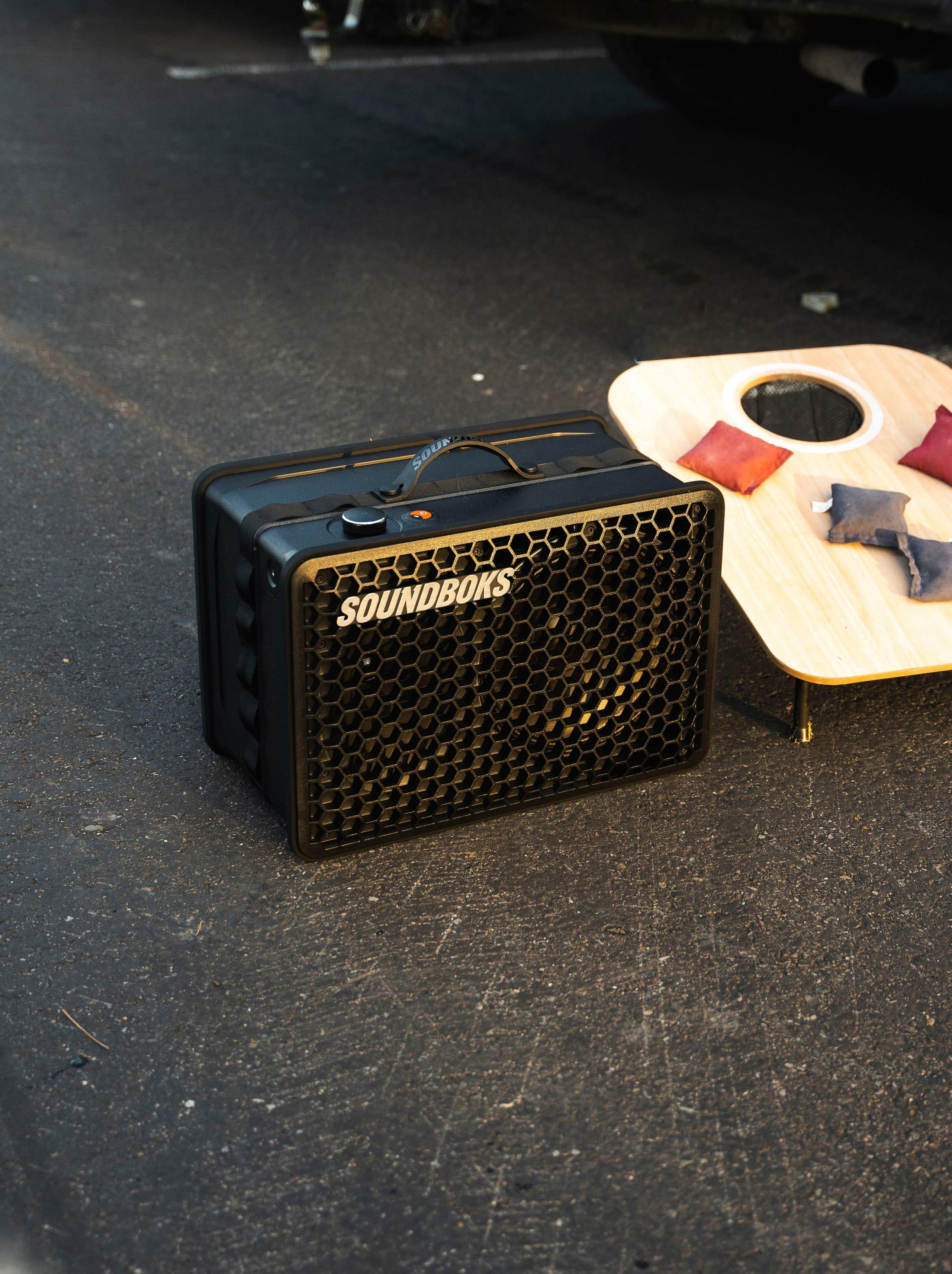
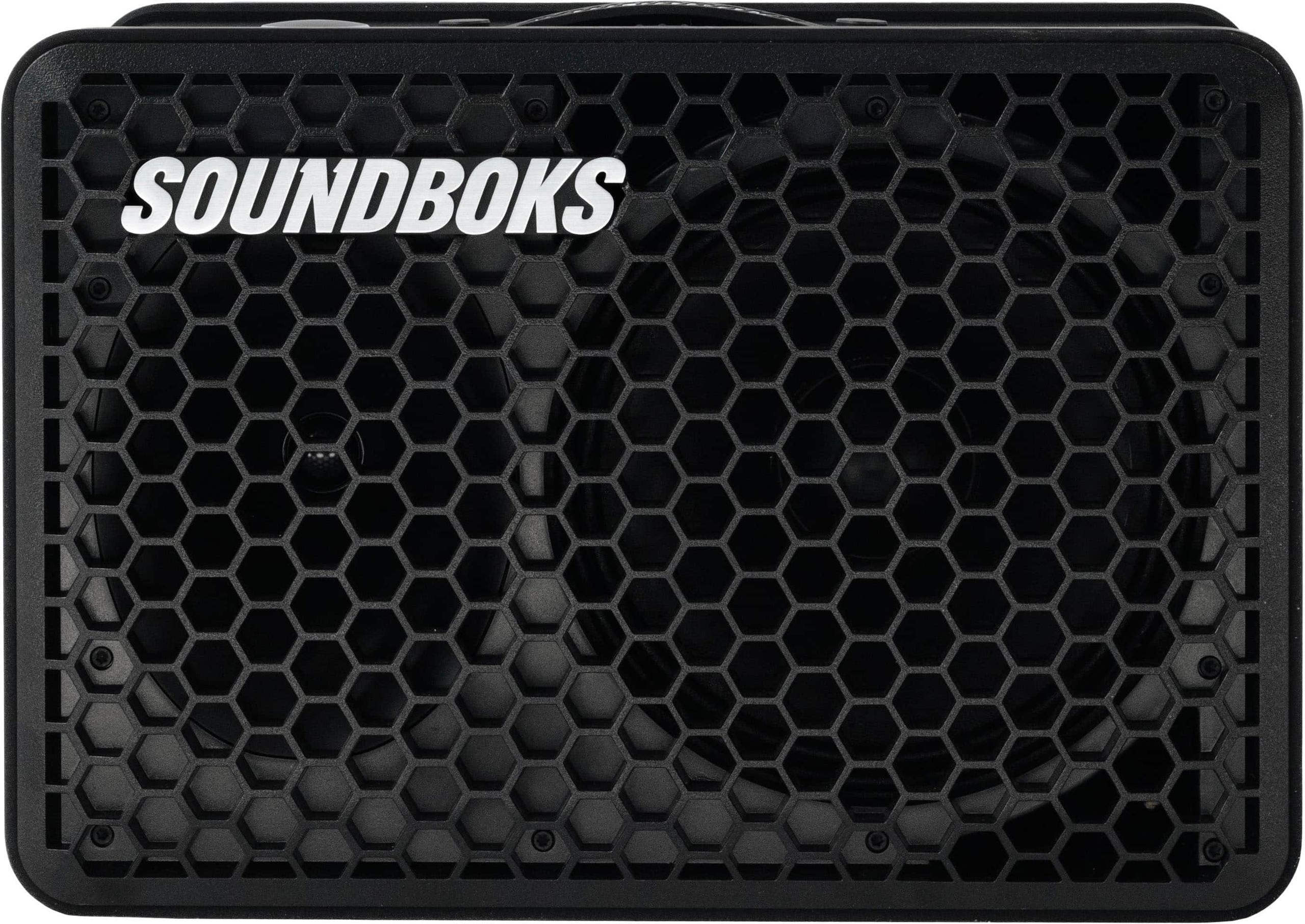
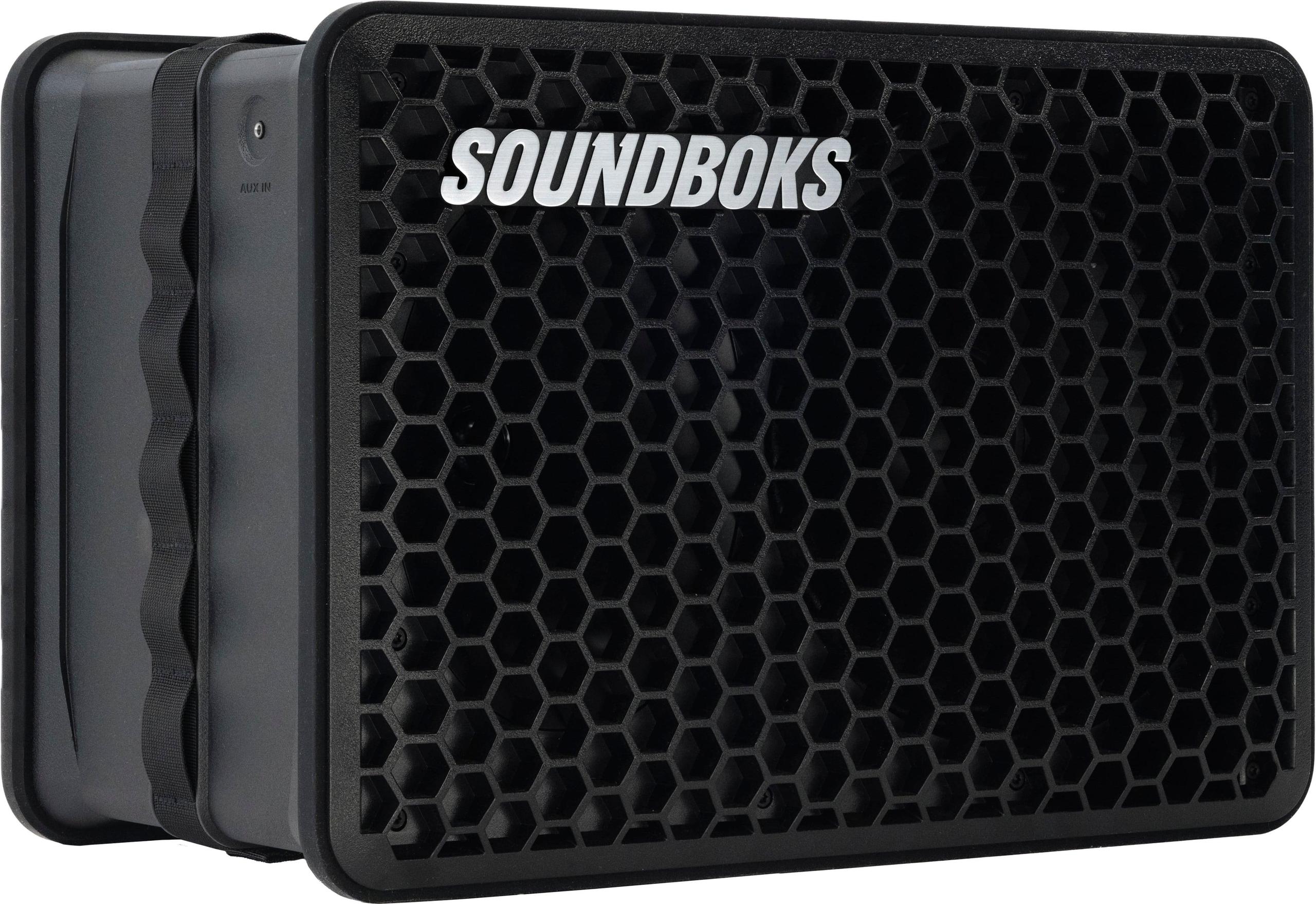

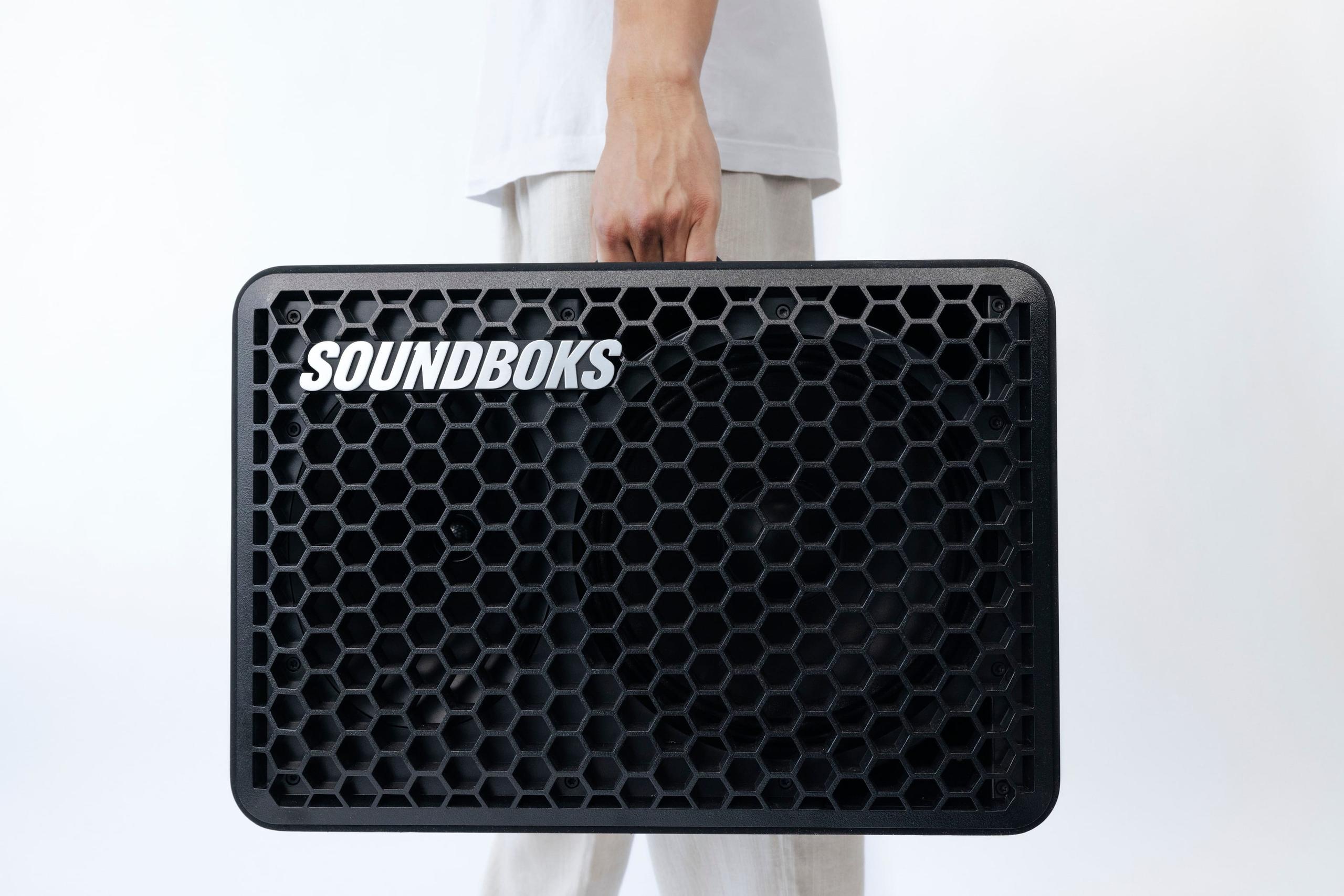

When you're looking to amp up your next gathering with serious sound, the portable party speaker market offers some compelling choices. Today we're diving deep into two very different approaches to portable audio power: the rugged Soundboks Go and the entertainment-focused Samsung MX-ST40F.
These aren't your typical Bluetooth speakers designed for personal listening. Party speakers are built to fill large spaces with sound, survive outdoor conditions, and keep the music going for hours on end. But as we'll see, these two speakers take dramatically different paths to achieve those goals.
Before we jump into the comparison, it's worth understanding what sets party speakers apart from regular portable speakers. These devices prioritize maximum volume output—measured in decibels (dB)—above all else. Where a typical Bluetooth speaker might hit 80-90 dB, party speakers aim for 110+ dB, which is literally ten times louder due to the logarithmic nature of decibel measurement.
They also need substantial battery life since parties don't always happen near power outlets, plus durability to handle outdoor conditions, spilled drinks, and the general chaos that comes with large gatherings. Finally, many include party-specific features like LED light shows, microphone inputs for karaoke, and the ability to connect multiple speakers together for even bigger sound.
The key performance metrics we'll focus on are maximum volume output, battery life, audio quality across different volume levels, durability ratings, and overall value proposition.
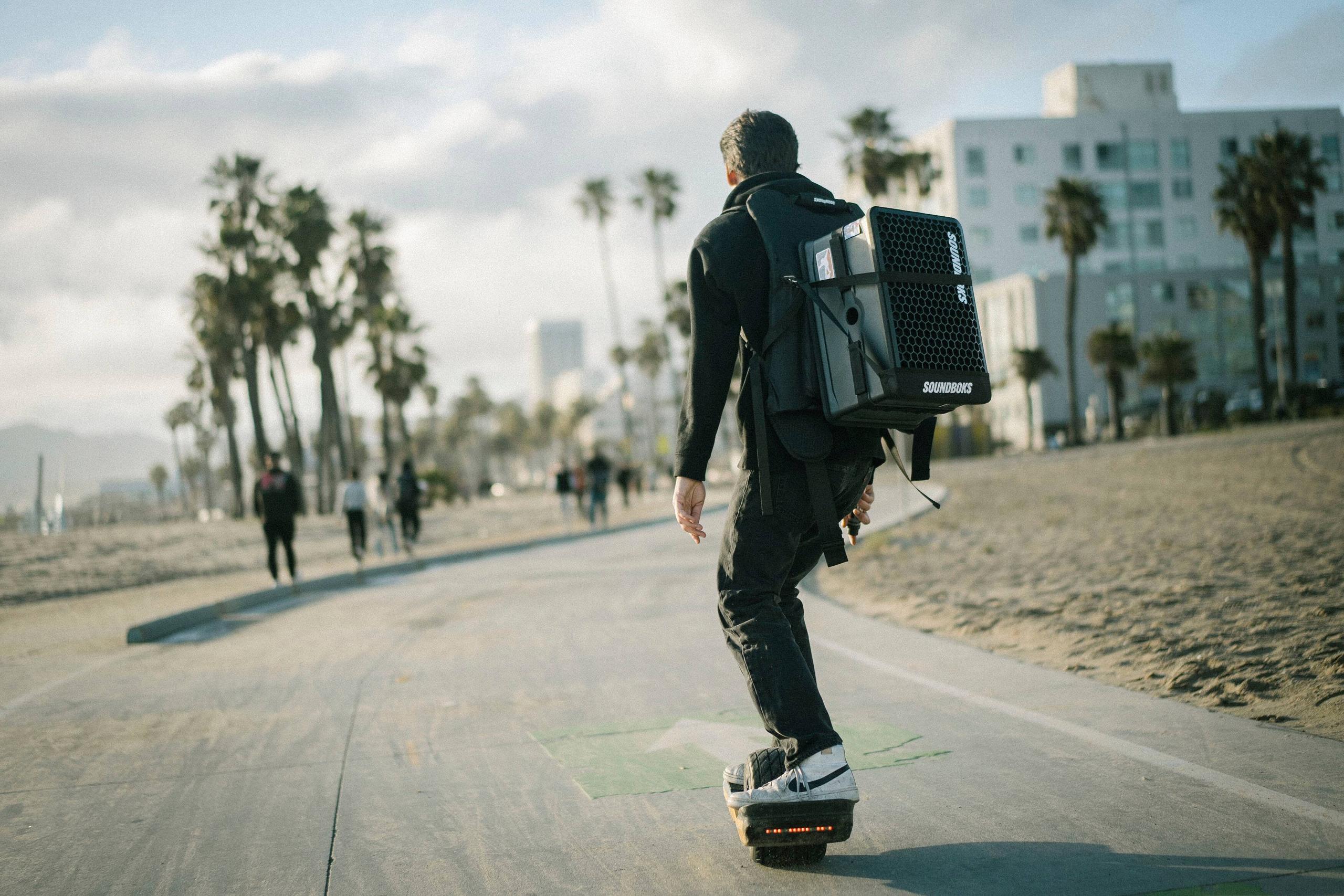
The Soundboks Go arrived in 2022 as the smaller sibling to Soundboks's flagship models. The Danish company built their reputation on creating speakers that could literally compete with small PA systems while remaining portable enough for one person to carry. Since 2022, the portable speaker market has seen significant improvements in battery technology and amplifier efficiency, but the Go's core design remains competitive.
Samsung's MX-ST40F launched in 2024 as part of their renewed push into the premium portable audio space. This timing is significant—Samsung leveraged their ownership of Harman (which includes brands like JBL) to incorporate advanced audio technologies that weren't available just a few years ago. The speaker benefits from Samsung's broader ecosystem integration and their experience in both audio engineering and consumer electronics.
The Soundboks Go delivers 144 watts RMS (Root Mean Square), which represents continuous power output rather than peak power. This is crucial because many speakers advertise peak power numbers that they can only sustain briefly. The Go's Class D amplifier with Merus Audio technology ensures this power delivery remains consistent, achieving a maximum volume of 121 dB—loud enough to be heard clearly from several hundred feet away.
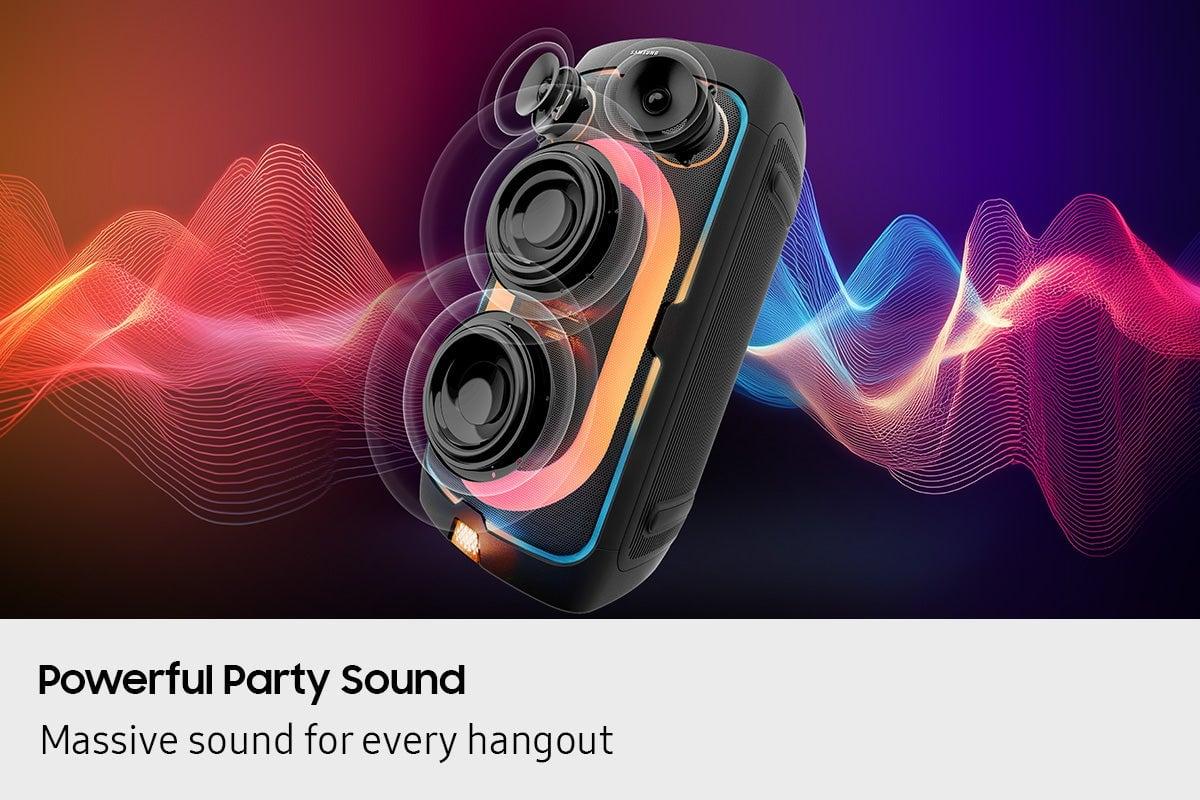
The Samsung MX-ST40F takes a different approach with 160 watts when plugged into AC power, but drops to 80 watts on battery. This power split is important because it means you get maximum performance only when tethered to an outlet. The dual 5.25-inch woofers and dual 20mm dome tweeters with waveguide technology (which helps spread high frequencies more evenly) create impressive volume, though Samsung doesn't publish specific dB ratings.
From a practical standpoint, both speakers will easily fill a backyard party or beach gathering. The Soundboks Go maintains consistent performance regardless of power source, while the Samsung MX-ST40F offers peak performance when plugged in but more modest output on battery.
The Soundboks Go uses a traditional two-way design with a single 10-inch woofer handling bass and midrange, paired with a 1-inch silk dome tweeter for highs. The frequency response spans 40 Hz to 20 kHz, covering the full range of human hearing. However, user feedback consistently points to a V-shaped sound signature—strong bass and treble with recessed midrange. This makes vocals and instruments in the midrange frequency band less prominent, though the companion app offers EQ adjustments to help balance this.
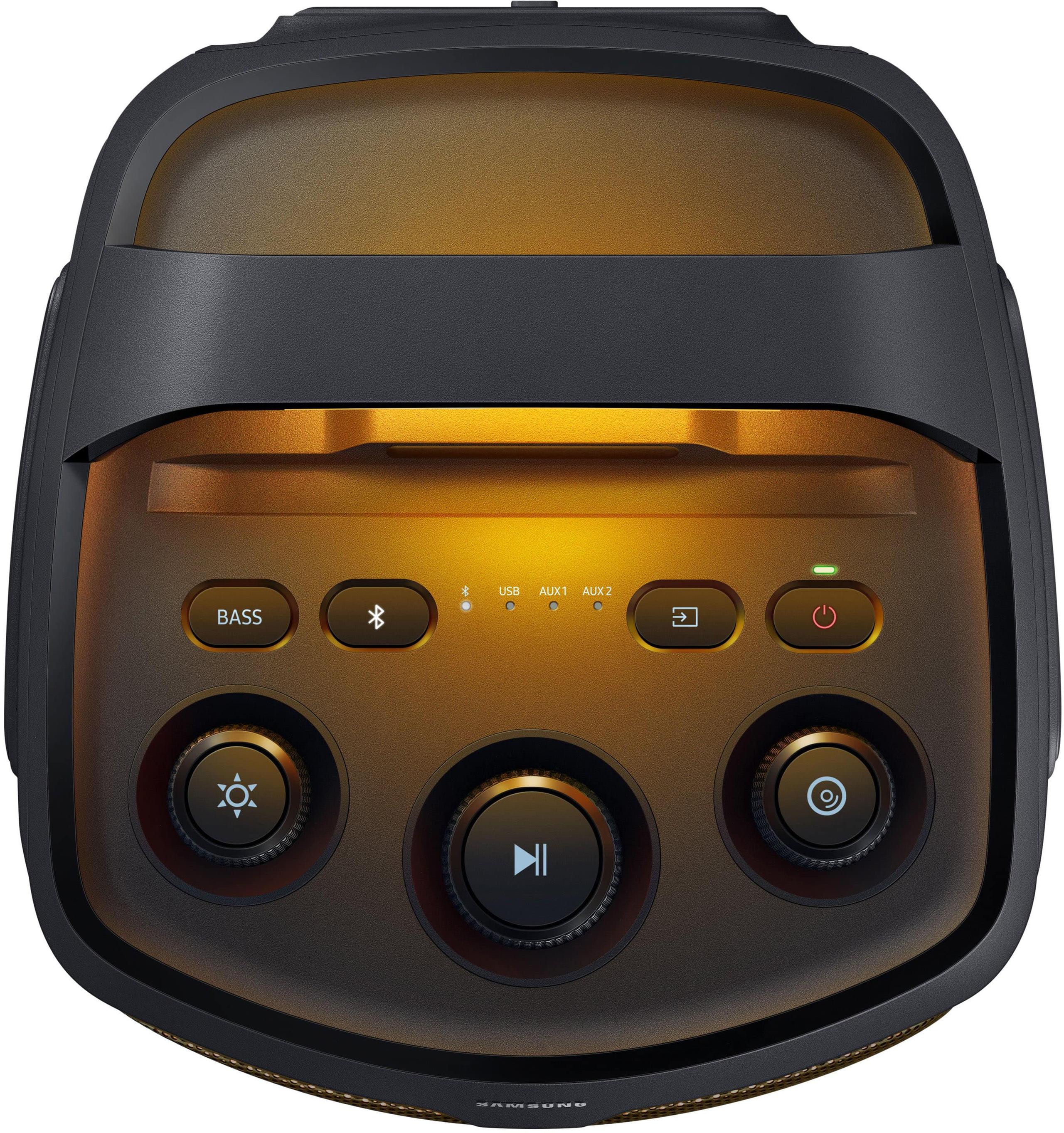
The Samsung MX-ST40F employs dual smaller woofers (5.25-inch) instead of one large driver, which can provide more controlled bass response and better power handling. The dual tweeters with waveguide technology should theoretically provide better stereo imaging and more even high-frequency dispersion throughout the room. Samsung includes four sound modes (Standard, Wide, Stadium, Outdoor) plus three bass settings (Deep, Punchy, Gentle), giving users more granular control over the sound character.
Based on expert reviews and user consensus, the Samsung MX-ST40F appears to offer more balanced sound out of the box, while the Soundboks Go prioritizes maximum impact and volume over tonal balance.
This is where these speakers diverge most dramatically. The Soundboks Go delivers an industry-leading 40 hours of playback at moderate volume levels, dropping to about 10 hours when cranked to maximum. More importantly, it uses a completely swappable battery system. When the battery dies, you can pop in a fresh one in seconds and keep the party going indefinitely.
The battery technology here deserves explanation. The Go uses a 99.84 Wh (watt-hour) lithium iron phosphate battery, which is known for longevity and safety. The capacity might seem modest compared to some power banks, but remember that efficient amplifier design means less power waste. The battery also doubles as a power bank with a USB-C port for charging phones and other devices.
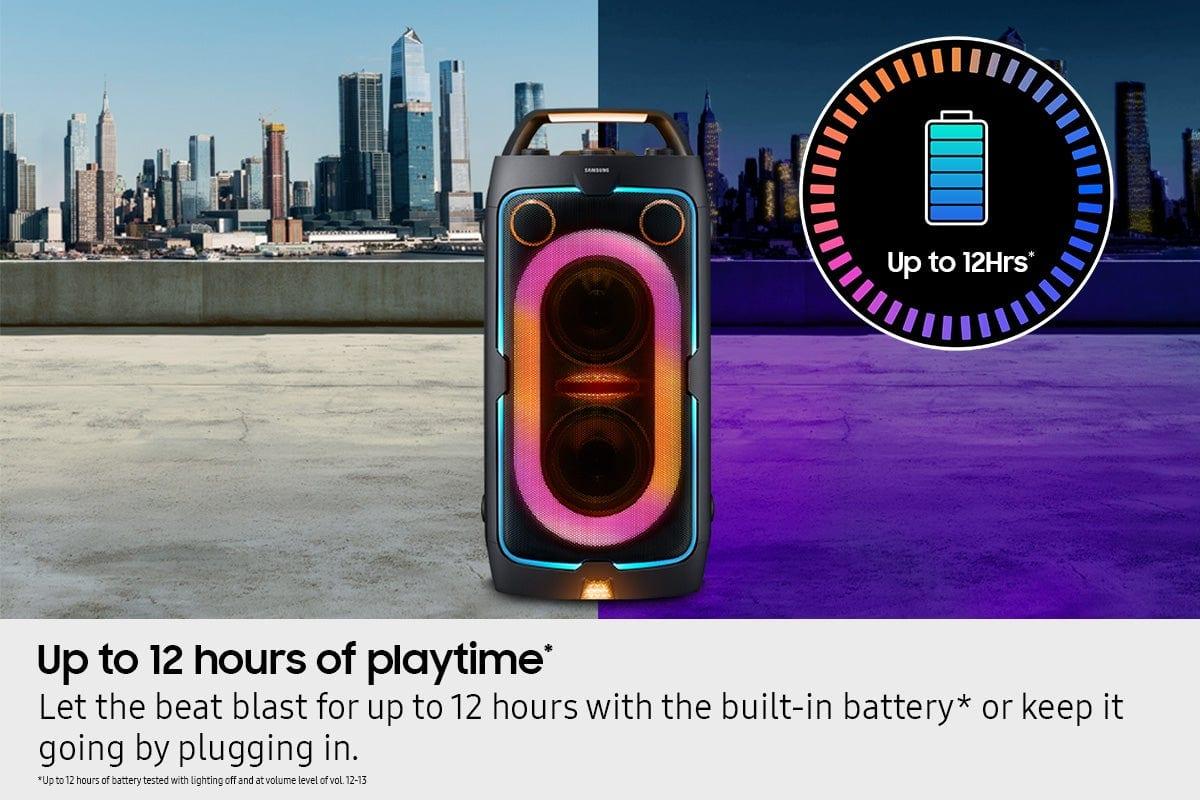
The Samsung MX-ST40F offers 12 hours of battery life with a replaceable battery system. While 12 hours covers most party scenarios, it's less than a third of the Soundboks's moderate-volume runtime. For weekend camping trips or all-day outdoor events, this difference becomes critical.
The swappable battery concept isn't just about runtime—it's about long-term ownership. Batteries degrade over time, and with both speakers, you can replace them rather than buying a whole new speaker when performance drops after a few years.
Outdoor events mean exposure to elements, spilled drinks, and rough handling. The Soundboks Go carries an IP65 rating, meaning it's completely dustproof and protected against water jets from any direction. The reinforced ABS and polycarbonate cabinet with silicone rubber bumpers gives it a tank-like feel that inspires confidence for beach trips, camping, or construction sites.
The Samsung MX-ST40F features IPX4 water resistance, which protects against splashes but isn't as comprehensive. IPX4 means it can handle rain or poolside splashes but shouldn't be submerged or hit with high-pressure water. For most backyard parties, this is adequate, but the Soundboks offers more peace of mind for rugged outdoor use.
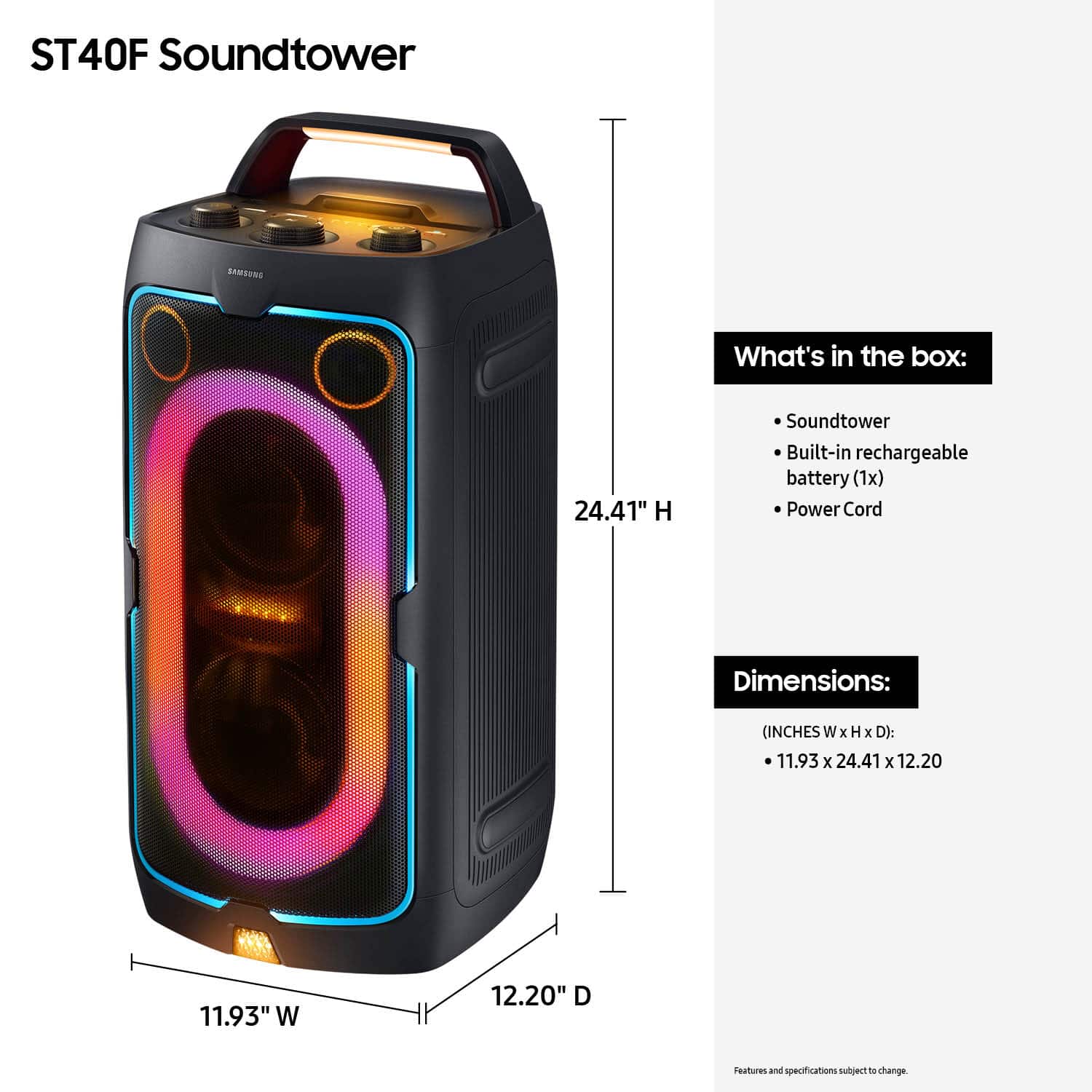
Weight factors into durability discussions too. The Soundboks Go weighs 20 pounds while the Samsung MX-ST40F comes in around 28 pounds. That eight-pound difference becomes significant when carrying speakers up stairs, across beaches, or loading into vehicles.
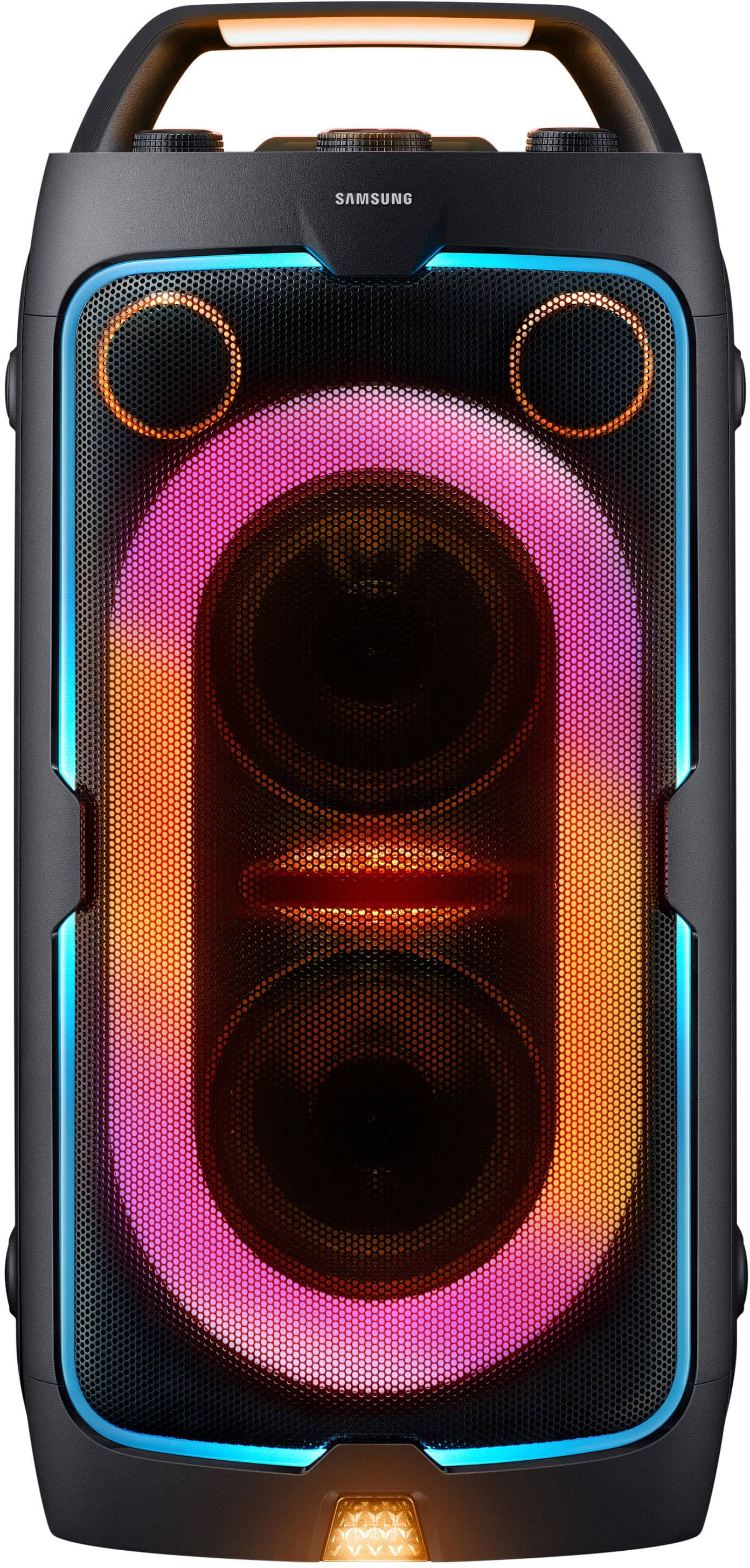
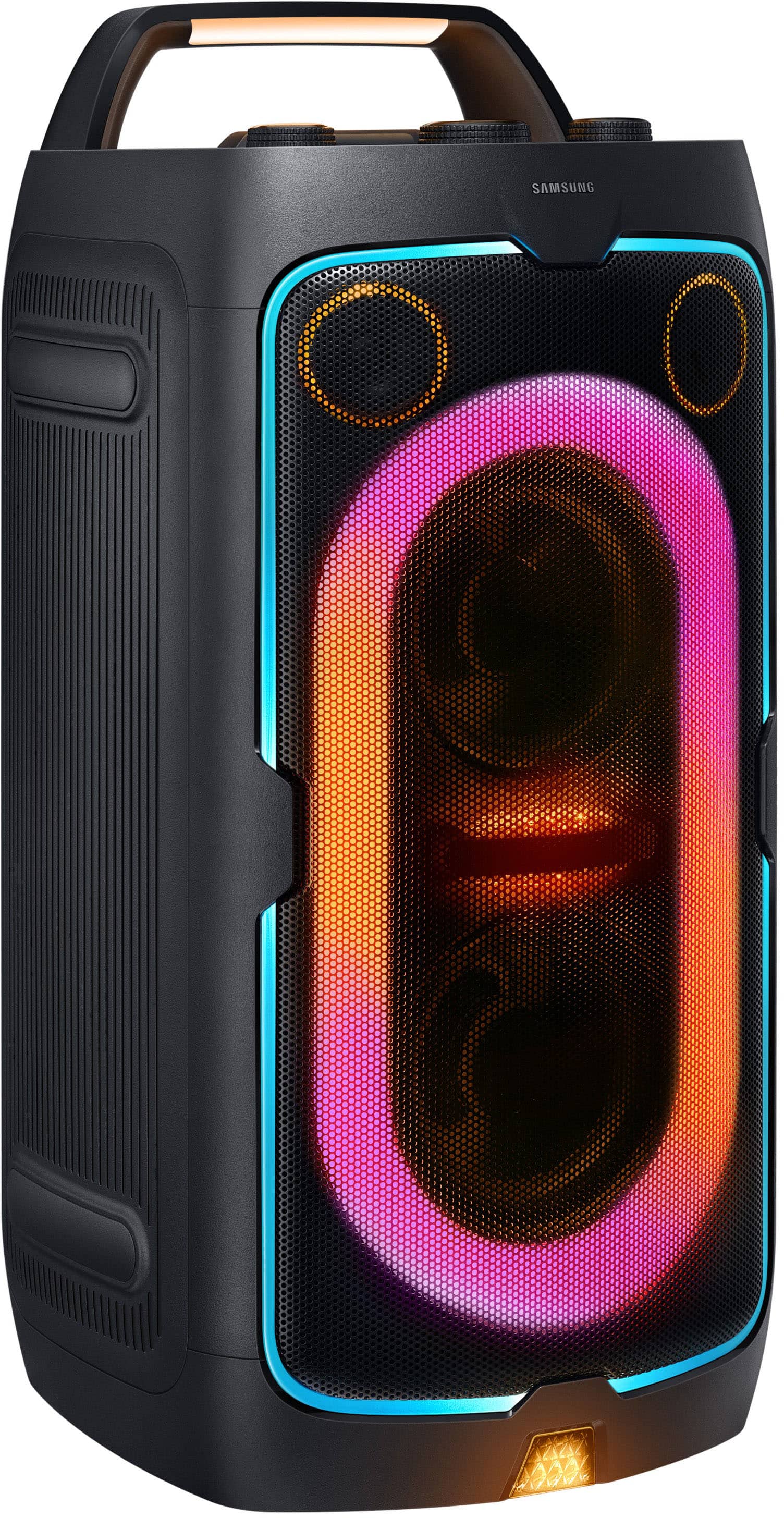
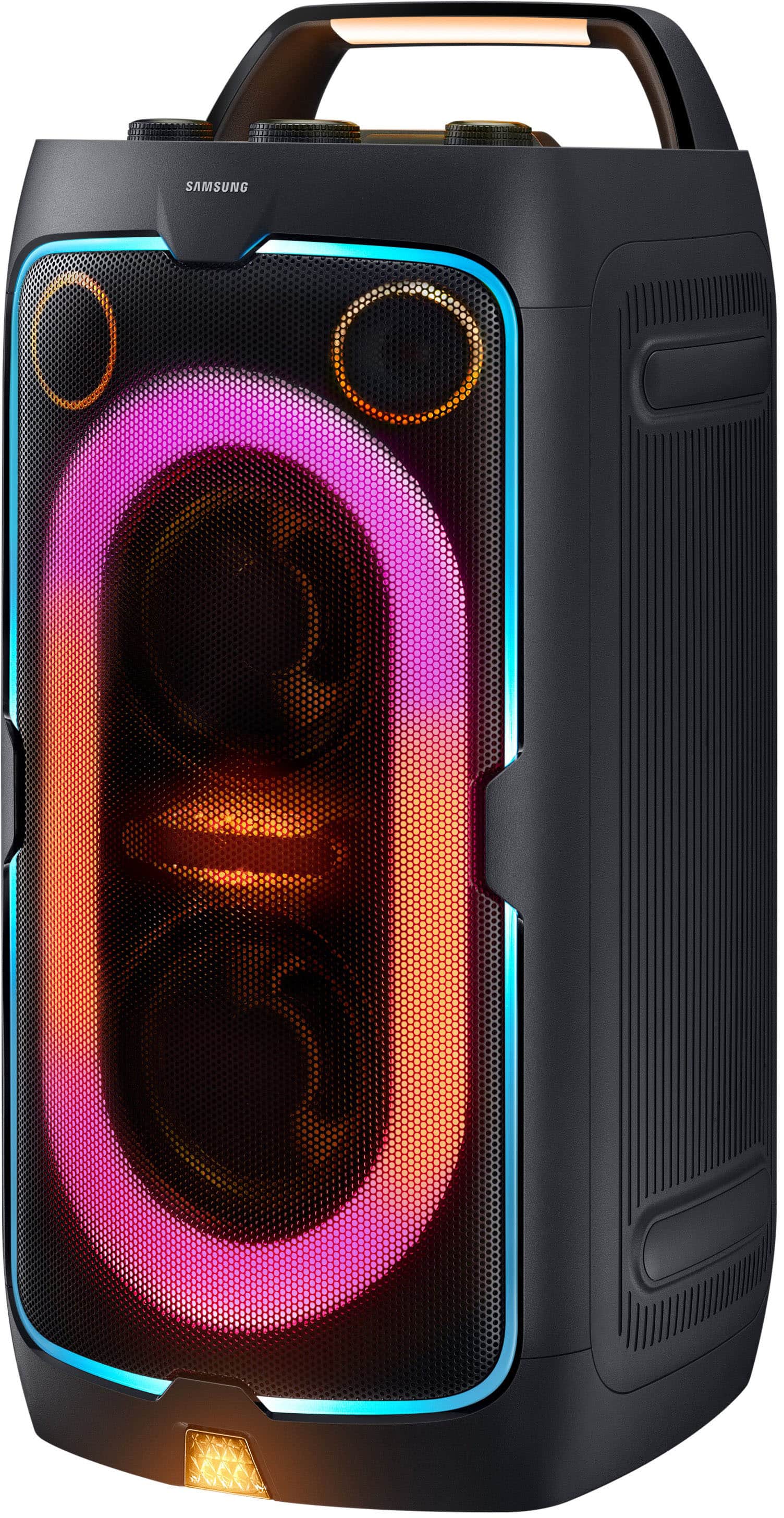
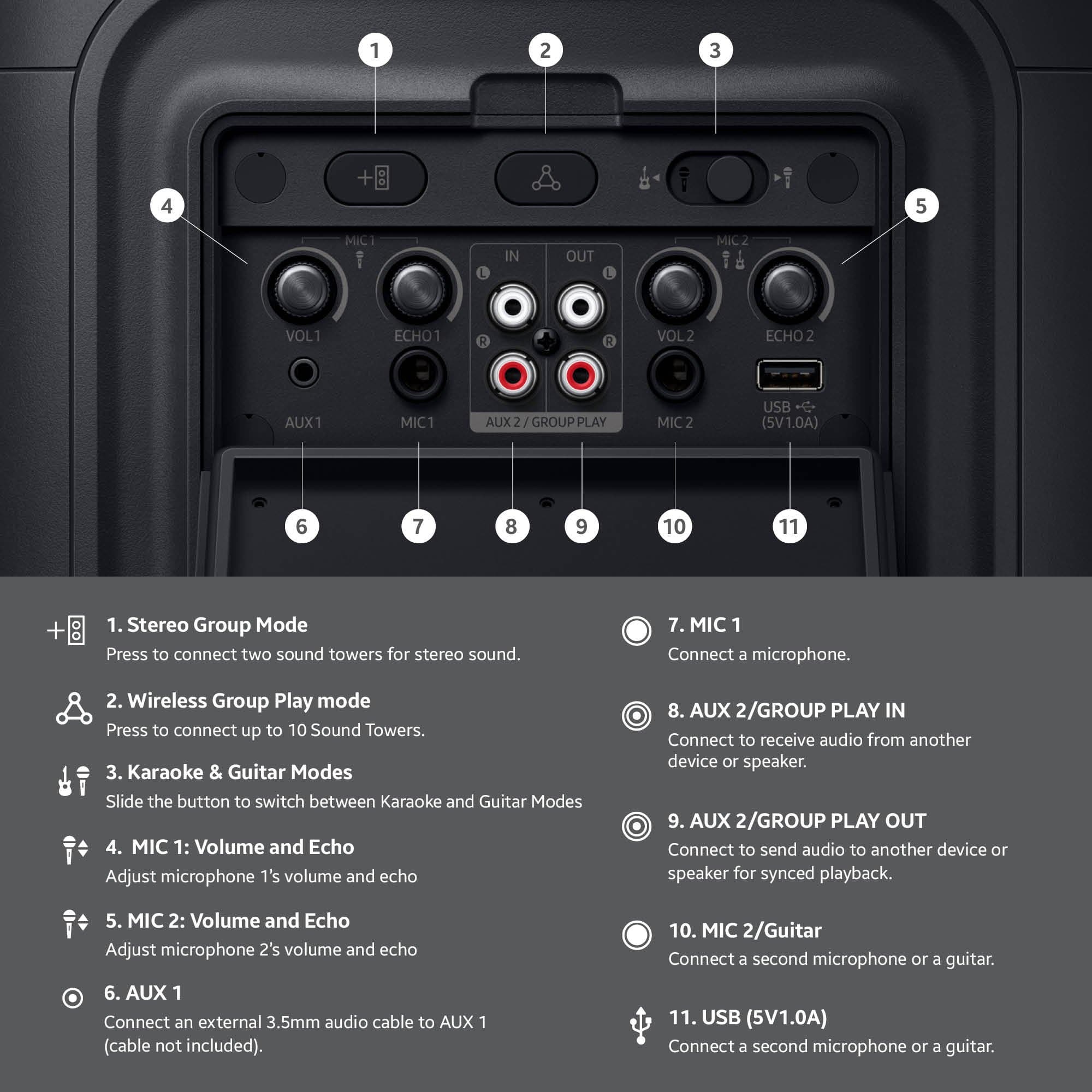
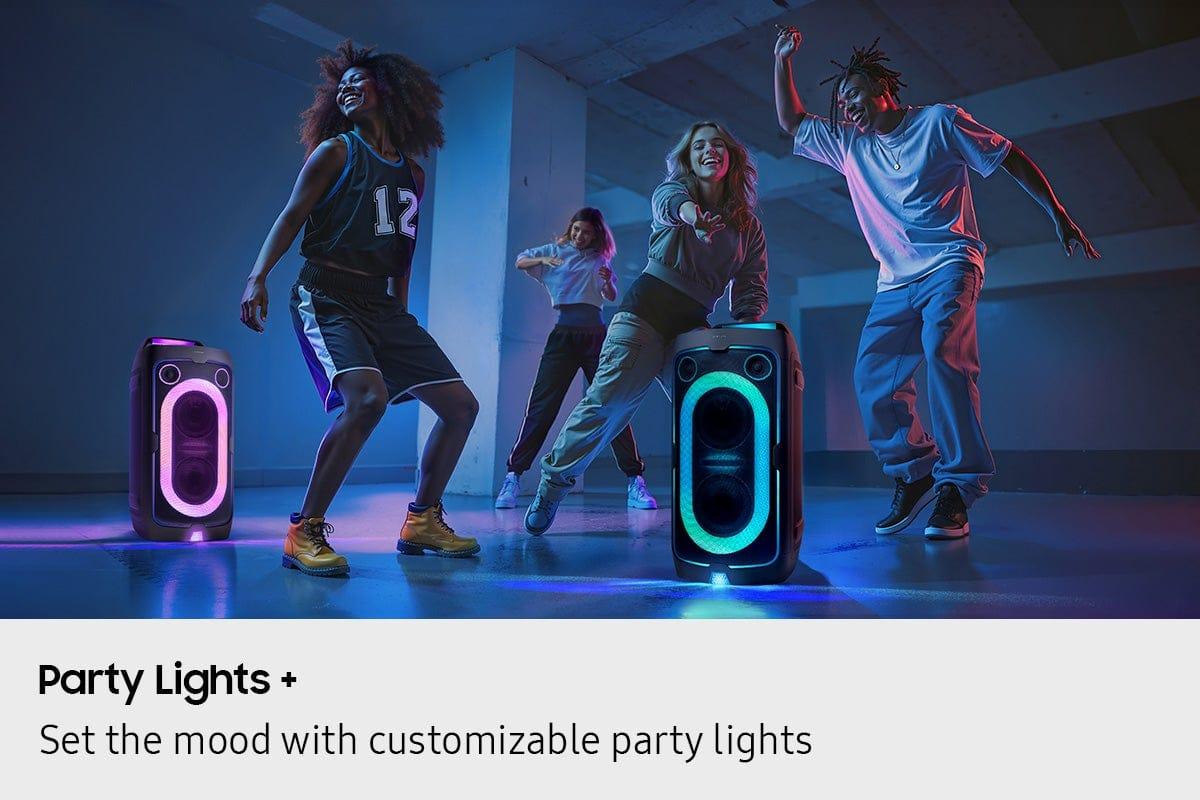
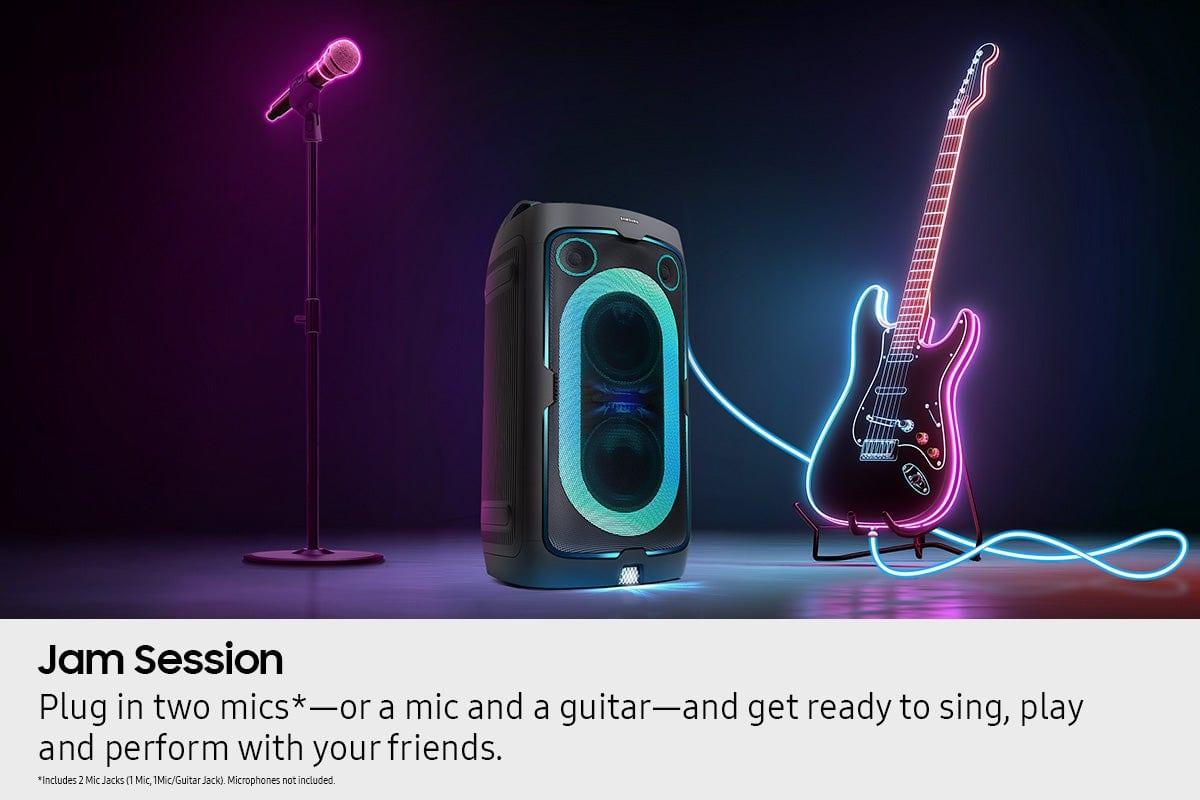
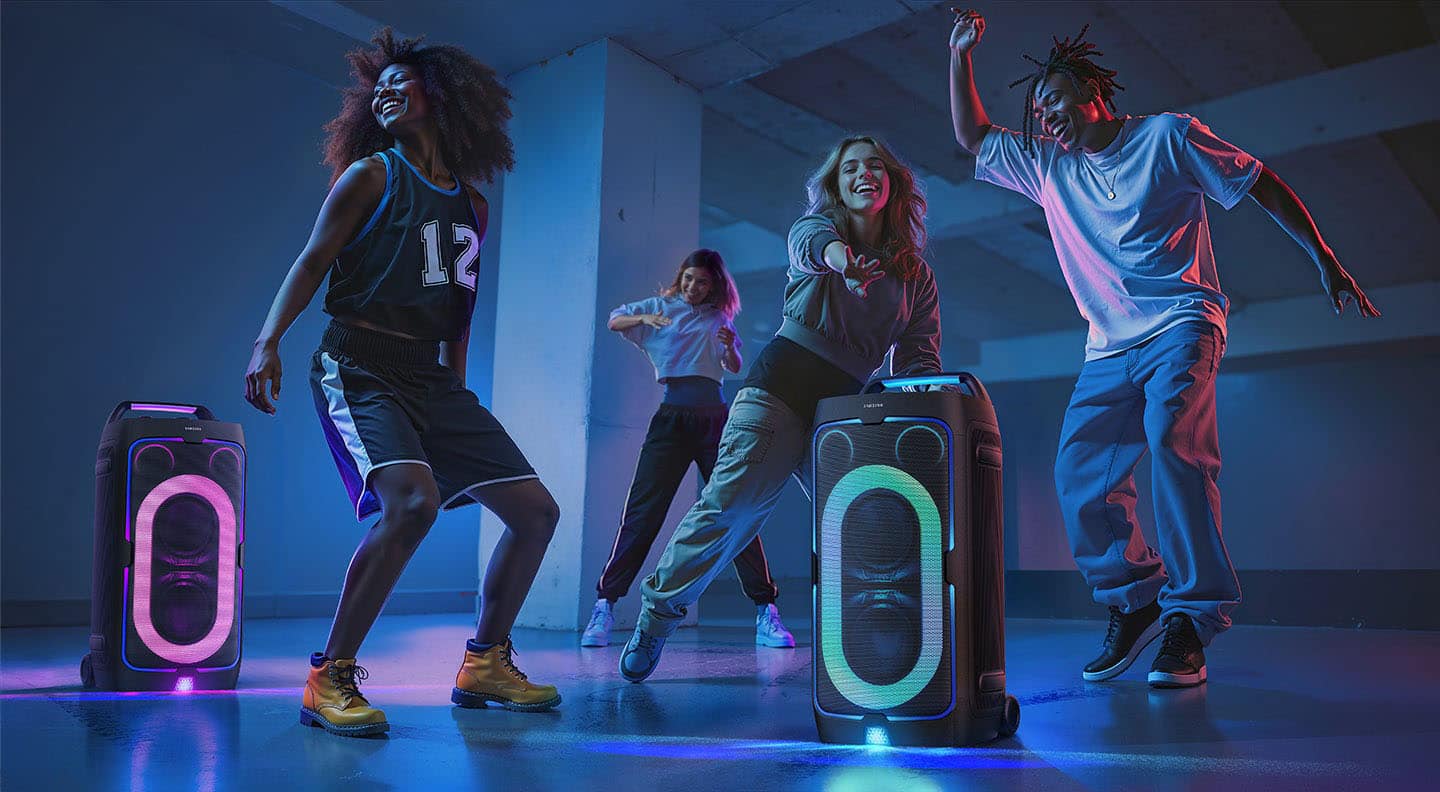
Here's where the Samsung MX-ST40F really shines. It's designed as an entertainment hub with customizable LED party lights that sync to music, creating a visual spectacle that transforms any space. The karaoke functionality includes dual microphone/guitar inputs, voice effects, and even voice removal technology that strips vocals from existing songs to create karaoke tracks.
The speaker also features Bluetooth multi-connection, allowing two phones to connect simultaneously—perfect for parties where multiple people want DJ privileges without the awkward handoff of devices. Samsung's Auracast technology can wirelessly link up to ten speakers together, creating a massive distributed sound system.
The Soundboks Go takes a more utilitarian approach. Its TeamUP technology using SKAA (a low-latency wireless audio protocol) connects up to five speakers with minimal delay—crucial for applications where audio sync matters. The companion app offers detailed EQ controls and sound profiles optimized for different environments, but lacks the entertainment pizzazz of Samsung's offering.
For home theater applications, the Samsung MX-ST40F supports True Wireless Stereo pairing, where two units can create left and right channels for TV audio enhancement. The Soundboks Go can also pair for stereo, but its mono design and outdoor-focused tuning make it less ideal for indoor home theater use.
At the time of writing, the Soundboks Go commands a significant premium over the Samsung MX-ST40F—roughly $300 more. This price difference reflects their different target markets and design philosophies.
The Soundboks premium buys you exceptional battery life, superior weather protection, and proven reliability in harsh conditions. It's positioned as a professional-grade tool that happens to look good at parties, rather than primarily an entertainment device. The company's Danish engineering heritage and focus on durability justify the higher cost for users who need dependable performance.
The Samsung MX-ST40F delivers impressive value by bundling powerful audio with comprehensive entertainment features at a more accessible price point. Samsung's scale and manufacturing efficiency allow them to include features like party lighting and advanced connectivity that would cost significantly more from smaller brands.
Both speakers incorporate interesting technologies that weren't available in earlier generations. The Soundboks Go's Merus Audio amplifier technology includes automatic tweeter protection that monitors temperature to prevent damage—something that becomes crucial when pushing speakers to their limits for extended periods.
The Samsung MX-ST40F's waveguide technology for the tweeters represents sophisticated acoustic engineering that was typically reserved for high-end studio monitors. This technology helps maintain consistent frequency response as you move around the room, rather than having a narrow "sweet spot" for optimal sound.
Both speakers support firmware updates through their respective apps, suggesting they'll gain new features over time rather than becoming obsolete.
After extensive research into user experiences and expert evaluations, clear use-case patterns emerge.
Choose the Soundboks Go if you're serious about outdoor adventures, extended events, or professional mobile applications. Its superior battery life, weather protection, and consistent performance make it ideal for camping trips, beach parties, outdoor weddings, or mobile DJ work. The premium price makes sense if you need the speaker to perform reliably in challenging conditions over many years.
The Samsung MX-ST40F excels for users who prioritize entertainment value and versatility for typical party scenarios. Its party lighting, karaoke capabilities, and multi-device connectivity create more engaging social experiences. The lower price point makes it accessible for occasional use, while still delivering impressive audio performance for backyard gatherings, house parties, or basement hangouts.
For home theater enhancement, the Samsung MX-ST40F wins with its balanced sound signature and stereo pairing capabilities, while the Soundboks Go's outdoor-optimized tuning and mono design make it less suitable for this application.
These speakers represent fundamentally different approaches to portable audio. The Soundboks Go is the premium choice for users who need maximum reliability, extended battery life, and don't mind paying extra for those capabilities. It's built like a tool that happens to sound great.
The Samsung MX-ST40F prioritizes fun and features, delivering solid performance with entertainment capabilities that create more engaging party experiences. It offers better value for typical users who want powerful sound plus the bells and whistles that make parties more memorable.
Neither choice is wrong—they're optimized for different priorities and budgets. Consider your actual usage patterns, whether you need the extended battery life and ruggedness of the Soundboks, or if the entertainment features and value proposition of the Samsung better match your needs. Both will deliver impressive sound that transforms any gathering, just through different approaches to the same goal.
| Soundboks Go | Samsung MX-ST40F |
|---|---|
| Maximum Power Output - Determines how loud and clear sound remains at high volumes | |
| 144W RMS continuous (consistent power delivery) | 160W AC mode / 80W battery mode (higher peak, lower sustained) |
| Maximum Volume - Critical for outdoor events and large spaces | |
| 121 dB (extremely loud, fills large outdoor areas) | Not specified but powerful output (likely similar performance) |
| Battery Life - Most important factor for extended events | |
| 40 hours moderate / 10 hours max volume (industry-leading endurance) | 12 hours total (adequate for most parties) |
| Battery System - Affects long-term usability and event flexibility | |
| Swappable 99.84Wh battery, doubles as power bank | Replaceable battery, standard charging |
| Weight & Portability - Important for frequent transport | |
| 20 lbs with handle and strap options (easier to carry) | 28 lbs with handle only (heavier but manageable) |
| Weather Resistance - Critical for outdoor reliability | |
| IP65 (dustproof, water jet resistant from any angle) | IPX4 (splash resistant, less comprehensive protection) |
| Driver Configuration - Affects sound quality and dispersion | |
| 1× 10" woofer, 1× 1" silk dome tweeter (mono design) | Dual 5.25" woofers, dual 20mm tweeters with waveguide (stereo design) |
| Sound Customization - Helps optimize audio for different environments | |
| App-based EQ and sound profiles, bass enhancer | 4 sound modes, 3 bass settings, more granular control |
| Multi-Speaker Connectivity - For scaling up to larger events | |
| TeamUP connects 5 speakers with low latency (SKAA technology) | Auracast connects 10 speakers wirelessly (larger capacity) |
| Entertainment Features - Added value for interactive parties | |
| Basic controls, focus on pure audio performance | LED party lights, karaoke with dual mic inputs, DJ effects |
| Bluetooth Connectivity - Affects device compatibility and convenience | |
| Bluetooth 5.0 with advanced app controls | Bluetooth multi-connection (2 devices), True Wireless Stereo |
| Build Quality & Materials - Long-term durability and professional use | |
| Reinforced ABS/polycarbonate with silicone bumpers (tank-like construction) | Standard party speaker construction (adequate for typical use) |
| Charging Requirements - Affects setup complexity | |
| Requires separate 65W USB-C charger (not included) | Includes power cable, standard charging |
| Frequency Response - Technical audio specification | |
| 40 Hz - 20 kHz (full range coverage) | Not specified (likely similar range) |
| Price Category - Value positioning at time of writing | |
| Premium pricing for professional-grade features | Mid-range pricing with entertainment focus |
The Soundboks Go is superior for outdoor parties due to its IP65 weather resistance, 40-hour battery life, and rugged construction. It's designed to handle harsh outdoor conditions like rain, dust, and drops. The Samsung MX-ST40F offers IPX4 splash resistance which works for poolside use, but the Soundboks Go provides more comprehensive protection for extended outdoor events.
The Soundboks Go delivers exceptional 40 hours of playback at moderate volume (10 hours at maximum volume), making it ideal for multi-day events. The Samsung MX-ST40F provides 12 hours of battery life, which covers most single-day parties but falls short for extended camping trips or festivals where the Soundboks Go excels.
Both speakers achieve impressive maximum volumes, but the Soundboks Go reaches a confirmed 121 dB with consistent 144W RMS power delivery. The Samsung MX-ST40F produces 160W when plugged in but drops to 80W on battery power. For consistent loud performance regardless of power source, the Soundboks Go has the advantage.
The Samsung MX-ST40F includes comprehensive karaoke features with dual microphone/guitar inputs, voice effects, voice removal technology, and recording capabilities. The Soundboks Go lacks built-in karaoke features and focuses purely on audio performance. For karaoke parties, the Samsung MX-ST40F is the clear winner.
Yes, both support multi-speaker setups but use different technologies. The Samsung MX-ST40F uses Auracast to connect up to 10 speakers wirelessly for massive sound coverage. The Soundboks Go connects up to 5 speakers using SKAA technology with ultra-low latency. The Samsung MX-ST40F wins for larger setups, while the Soundboks Go offers better sync for professional applications.
The Samsung MX-ST40F works better for home theater with its balanced sound signature, True Wireless Stereo pairing capability, and dual-tweeter design for better stereo imaging. The Soundboks Go uses a mono design optimized for outdoor use, making the Samsung MX-ST40F more suitable for enhancing TV audio and indoor entertainment.
The Soundboks Go weighs 20 pounds with a built-in handle and optional carry strap, making it more portable despite its power. The Samsung MX-ST40F weighs around 28 pounds with only a handle for transport. For frequent moving and outdoor adventures, the lighter Soundboks Go provides better portability.
The Samsung MX-ST40F offers better value for entertainment-focused users, providing party lights, karaoke features, and powerful sound at a lower price point. The Soundboks Go commands a premium but justifies it with superior battery life, weather protection, and professional-grade build quality. Value depends on your priorities and usage patterns.
Only the Samsung MX-ST40F includes customizable LED party lights that sync with music, offering 6 lighting patterns and 5 mood presets controlled through the Samsung app. The Soundboks Go focuses solely on audio performance without lighting effects. For visual party enhancement, the Samsung MX-ST40F is the obvious choice.
Yes, both speakers support playthrough charging, allowing use while plugged in. The Soundboks Go requires a separate 65W USB-C charger (not included) while the Samsung MX-ST40F includes its power cable. When plugged in, the Samsung MX-ST40F delivers its full 160W power output versus 80W on battery.
Sound quality depends on your preferences. The Samsung MX-ST40F offers more balanced audio out of the box with dual woofers, waveguide tweeters, and multiple sound modes. The Soundboks Go has a V-shaped sound signature (strong bass and treble) that's optimized for maximum impact and volume. The Samsung MX-ST40F provides more versatile sound customization options.
Yes, both the Soundboks Go and Samsung MX-ST40F feature replaceable battery systems, extending their useful life beyond typical built-in battery speakers. The Soundboks Go's swappable battery system allows hot-swapping for unlimited runtime, while the Samsung MX-ST40F has a replaceable battery for long-term maintenance. This feature makes both speakers better long-term investments.
We've done our best to create useful and informative comparisons to help you decide what product to buy. Our research uses advanced automated methods to create this comparison and perfection is not possible - please contact us for corrections or questions. These are the sites we've researched in the creation of this article: bestbuy.com - beachaudio.com - youtube.com - crutchfield.com - digitaldjtips.com - comparisontabl.es - eftm.com - sweetwater.com - bestbuy.com - compsource.com - sweetwater.com - store.djtechtools.com - youtube.com - scheels.com - soundboks.com - connection.com - scheels.com - skaastore.com - thomannmusic.com - soundboks.eu - gearjunkie.com - samsung.com - samsung.com - youtube.com - samsung.com - youtube.com - thefrogpadappliances.com - bestbuy.com - standardtvandappliance.com - samsung.com - youtube.com - youtube.com - youtube.com - news.samsung.com - videoandaudiocenter.com - arrowassociatedstores.com - shopjetson.com

Privacy Policy
Terms and Conditions - Affiliate Policy
Home Security
© Copyright 2008-2026.
11816 Inwood Rd #1211, Dallas, TX 75244