




When you're shopping for high-quality headphones, you'll quickly discover that not all audio gear is created equal. Today we're comparing two fundamentally different approaches to great sound: gaming-focused wireless headsets versus professional studio monitoring headphones. These represent completely different philosophies, and understanding which approach fits your needs will save you from buyer's remorse.
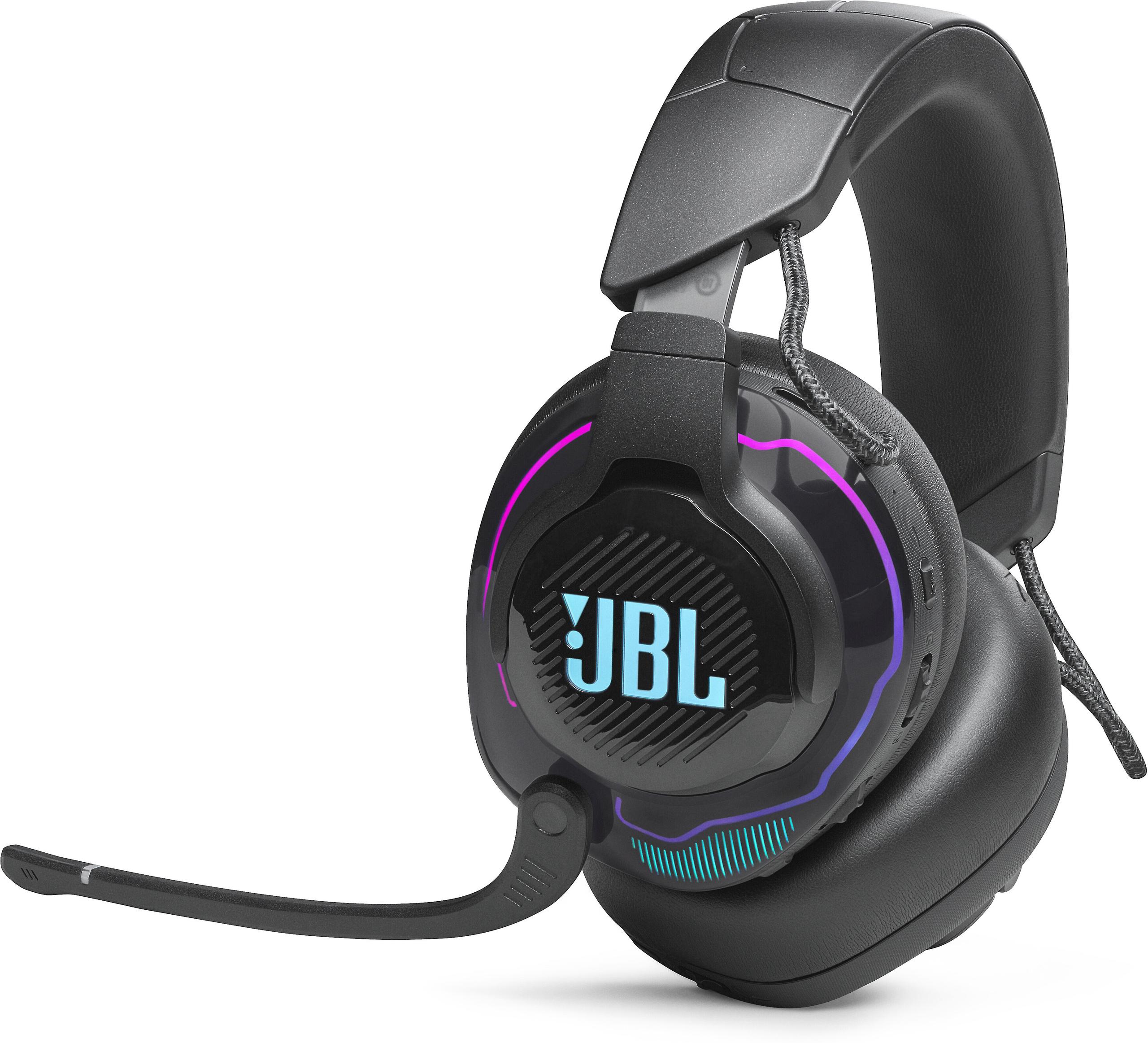
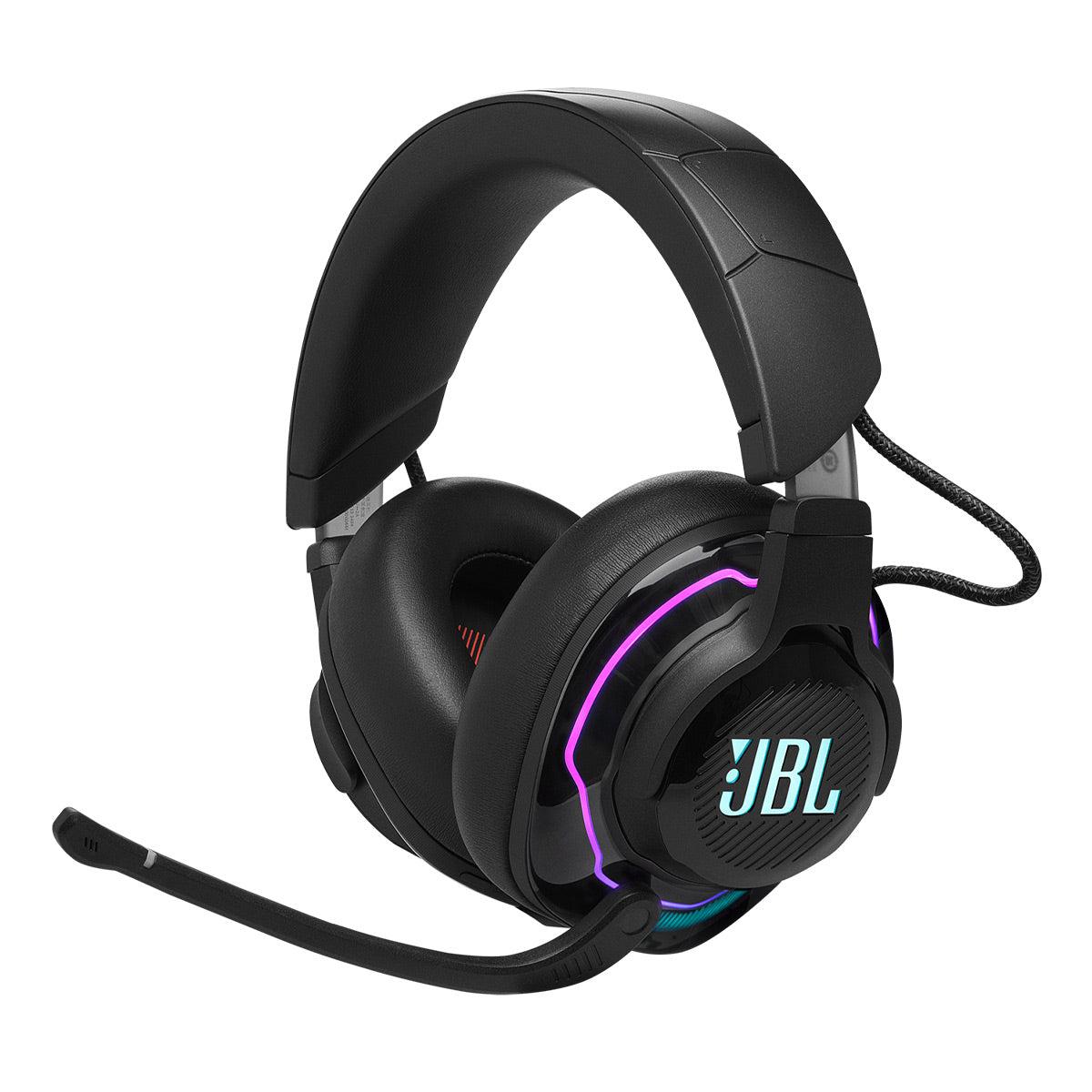
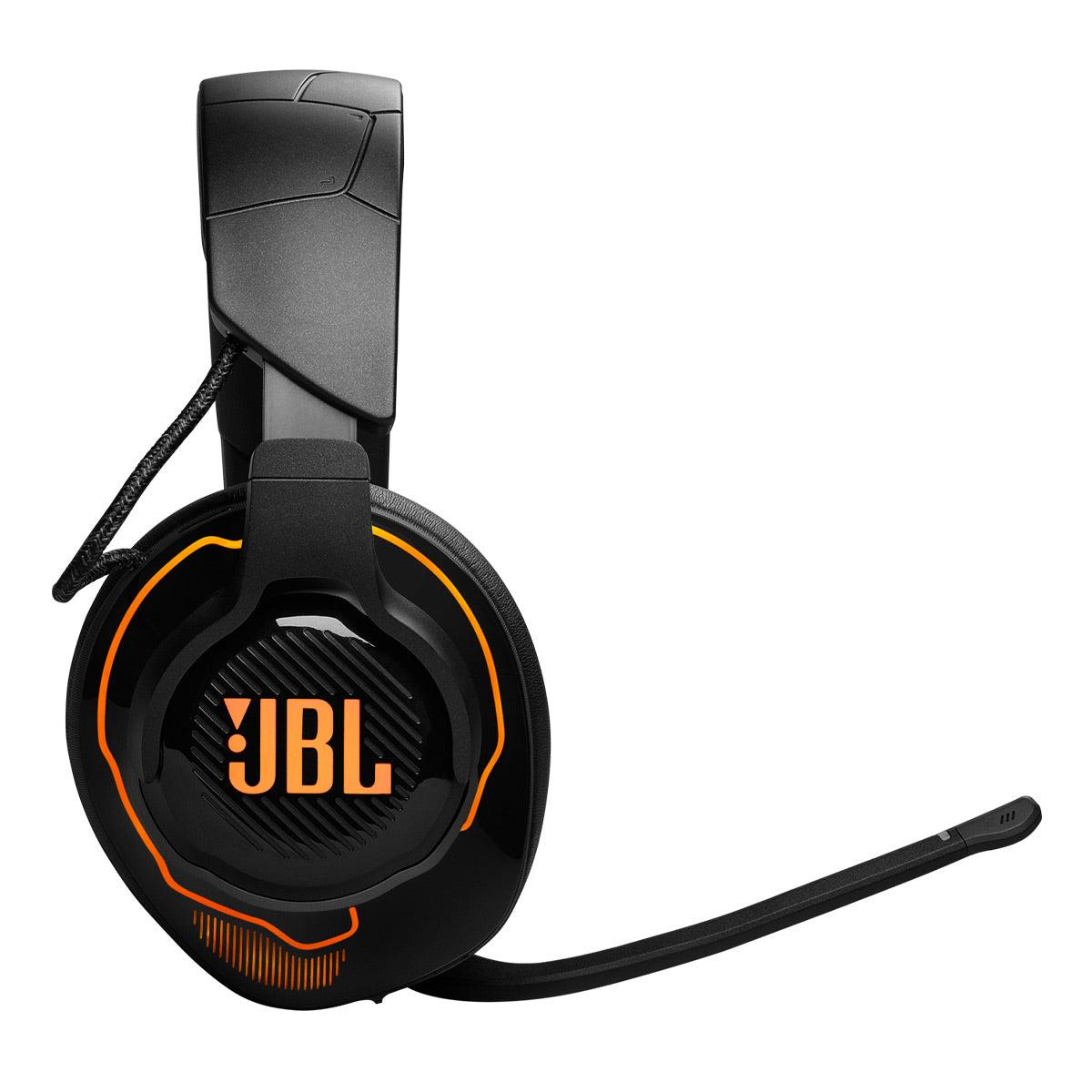
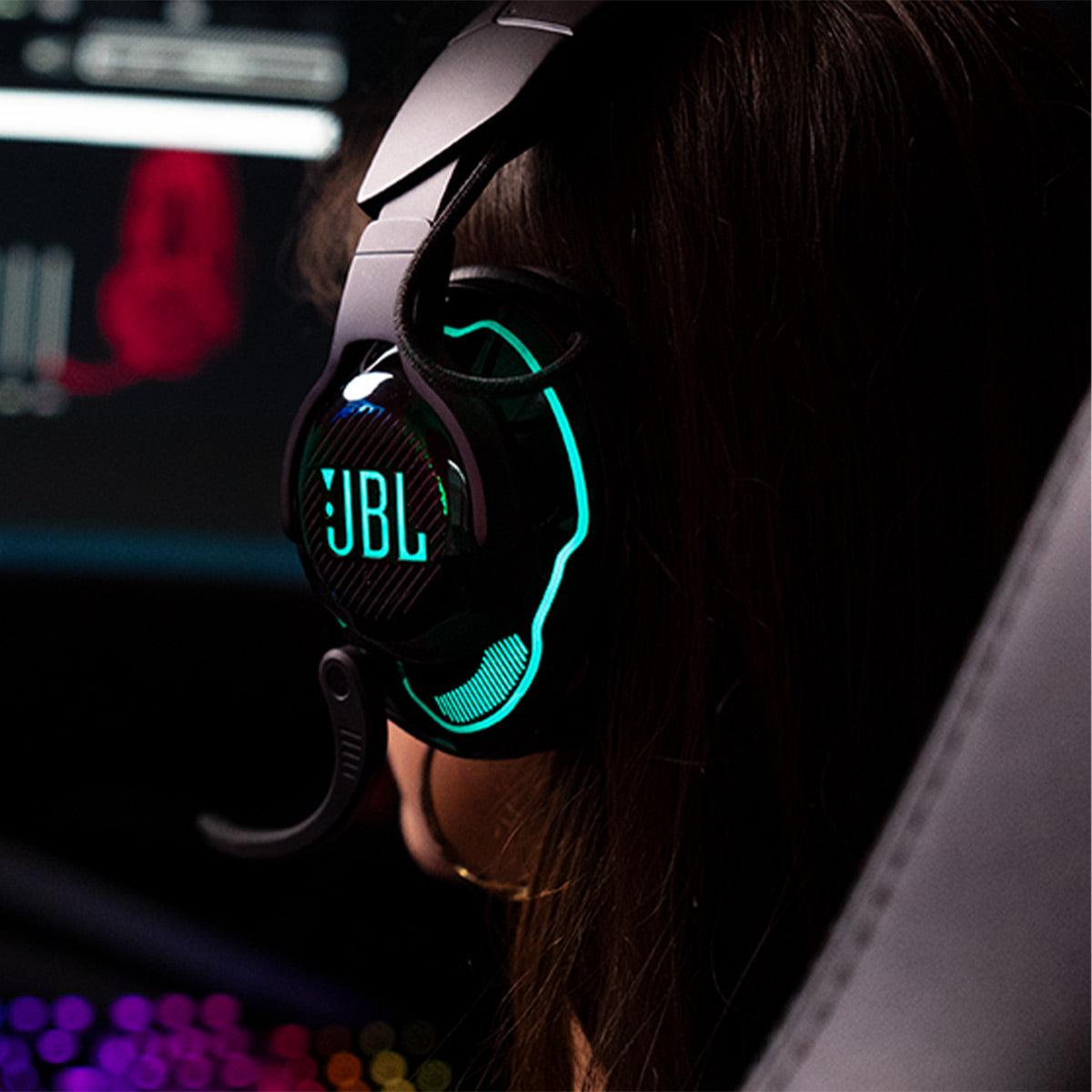
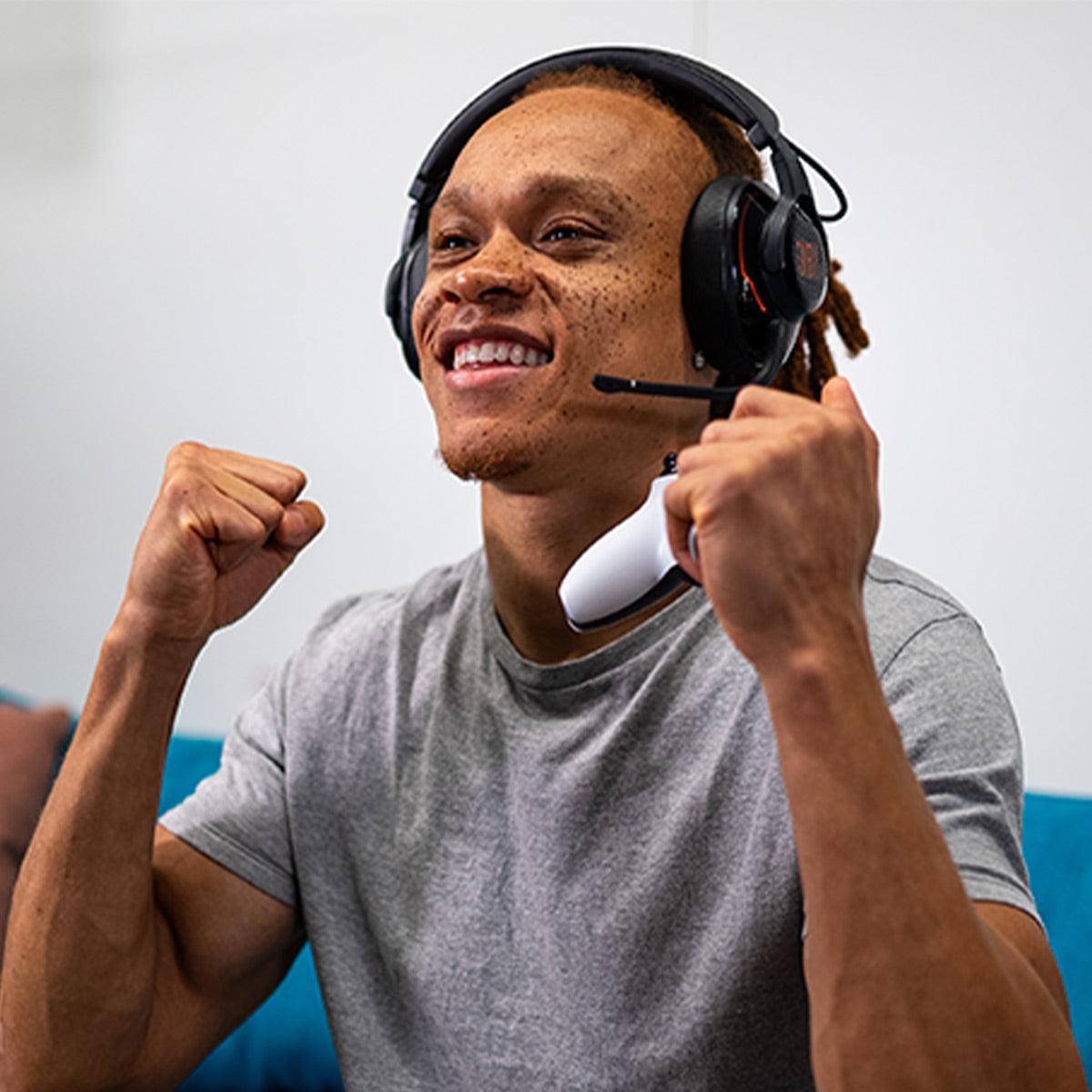
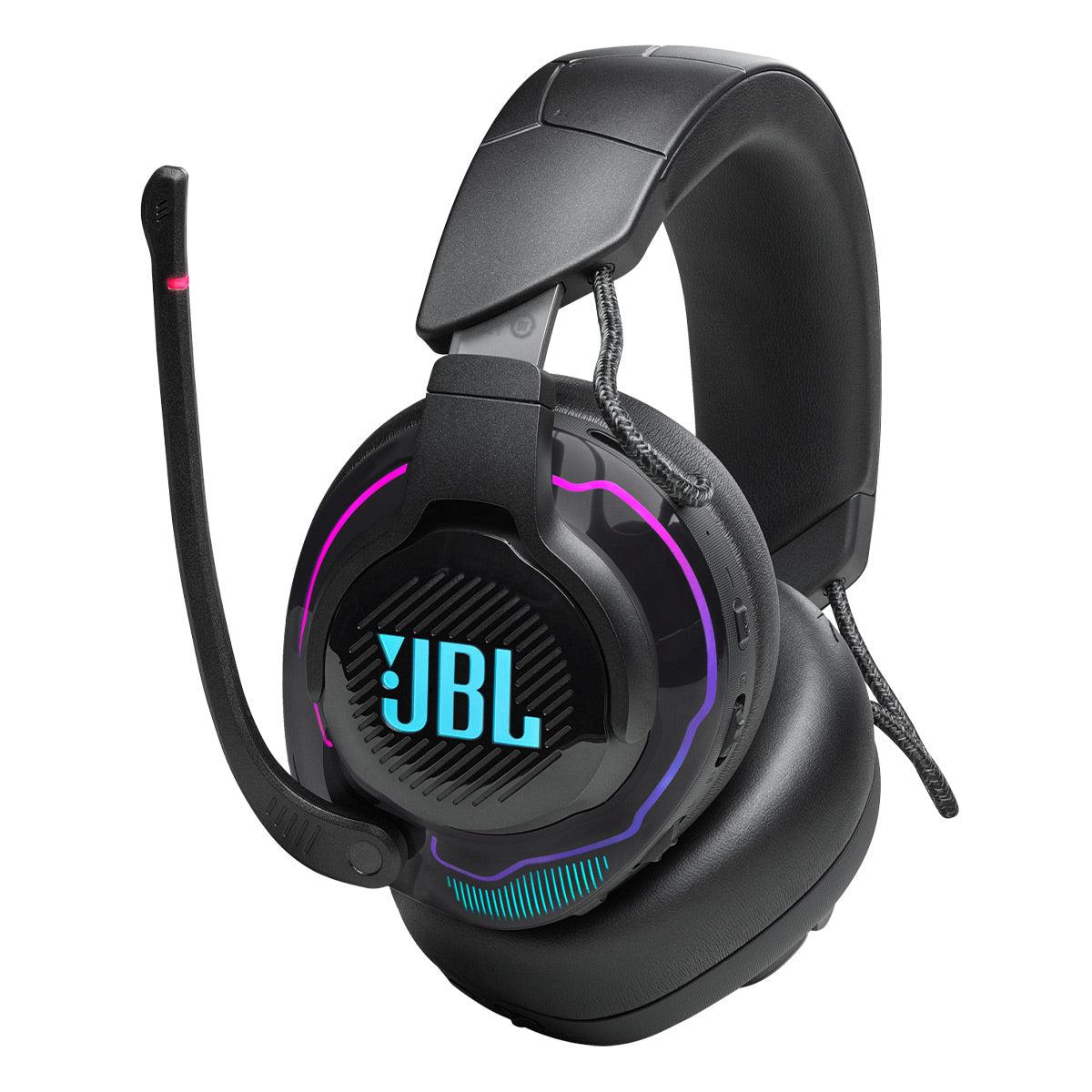
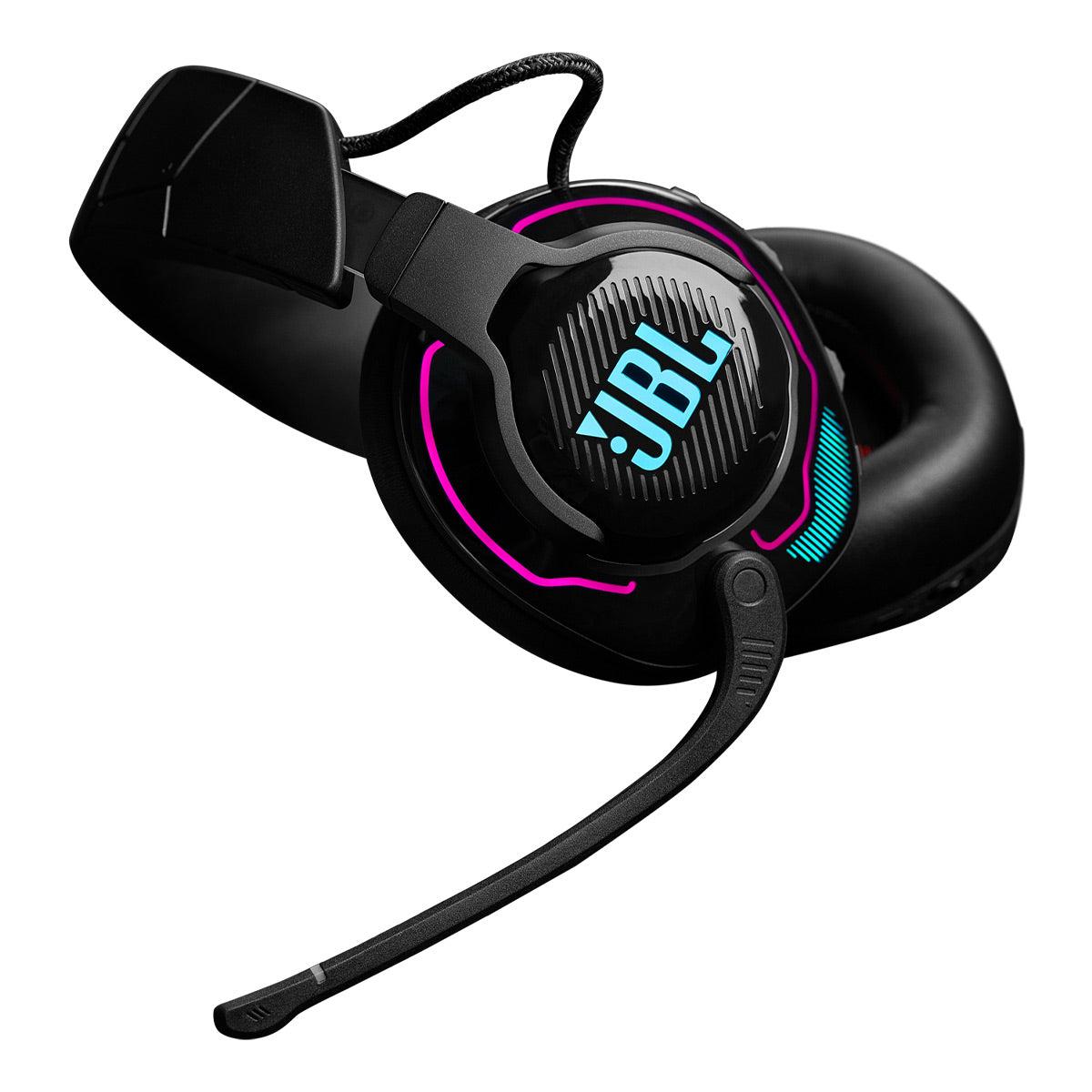
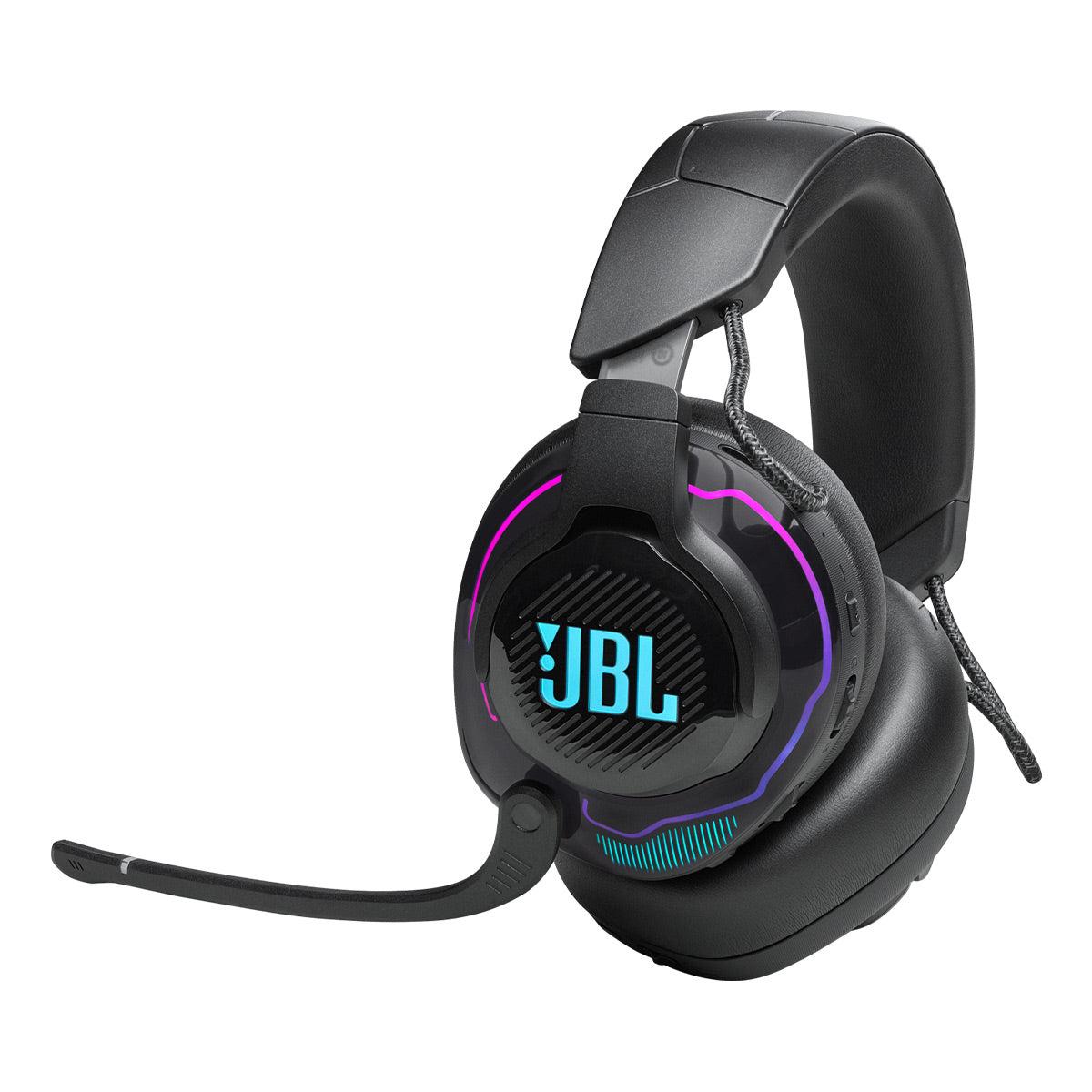
The JBL Quantum 910 Wireless gaming headset and OneOdio Pro-10 wired headphones perfectly illustrate this divide. At the time of writing, they're separated by roughly a 10x price difference, but that gap reflects entirely different engineering priorities rather than simple quality differences.
Before diving into specifics, it's crucial to understand what separates gaming headsets from professional audio equipment. Gaming headsets prioritize features that enhance competitive gameplay: spatial audio (surround sound that helps you locate enemies), low wireless latency (minimal delay between game action and sound), and built-in microphones for team communication. They often boost certain frequencies to make footsteps and gunshots more prominent.
Professional audio headphones, on the other hand, aim for neutral, accurate sound reproduction. They're designed so audio engineers, DJs, and musicians can hear exactly what's in their recordings without coloration or enhancement. Think of gaming headsets as sports cars tuned for specific performance, while studio monitors are precision measuring instruments.
The key technical specifications that matter most are frequency response (the range of sounds the headphones can reproduce), sensitivity (how loud they can get with a given amount of power), and impedance (how much power they need to drive effectively). For gaming, wireless latency and battery life become critical factors that don't apply to wired professional gear.
The JBL Quantum 910 Wireless, released in 2022, represents JBL's flagship gaming technology. It arrived during the wireless gaming headset boom when manufacturers finally solved the latency problems that plagued early wireless gaming gear. The integration of head tracking technology was revolutionary—this feature tracks your head movement and adjusts the audio accordingly, creating a more immersive experience where sounds seem to come from fixed positions in space even as you turn your head.
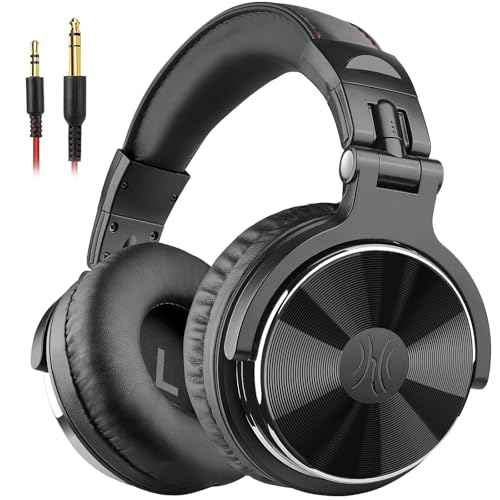
The OneOdio Pro-10, launched around 2019, takes a more traditional approach focused on professional audio fundamentals. Its key innovation is the dual jack system that eliminates the need for adapters when connecting to different audio equipment. While this might seem simple compared to wireless tech, it addresses a real pain point for audio professionals who constantly switch between devices.
Since their respective launches, the wireless gaming market has continued advancing with better battery life and more sophisticated spatial audio processing, while the professional audio space has seen increased focus on value-oriented products that bring studio-quality features to budget-conscious users.
Both headphones use 50mm neodymium drivers—the speakers inside the earcups. Neodymium magnets are stronger than traditional ferrite magnets, allowing for more precise driver movement and better sound quality. However, having the same driver size doesn't mean identical performance.
The JBL Quantum 910 implements what JBL calls their "QuantumSOUND Signature," which is specifically tuned for gaming. This means certain frequencies are emphasized to make game audio more engaging and competitive. Footsteps get more presence, explosions have more impact, and spatial cues are enhanced. The frequency response extends from 20Hz to 40kHz in wired mode (though humans can only hear up to about 20kHz), earning it Hi-Res Audio certification.
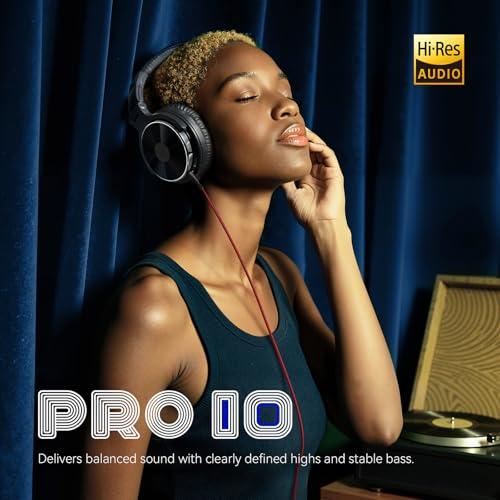
The OneOdio Pro-10 pursues a more neutral approach with a 20Hz-20kHz response that covers the full range of human hearing without artificial enhancement. User reviews consistently describe its sound signature as "mildly V-shaped"—slightly emphasized bass and treble with clear, forward midrange frequencies. This balance works well for both critical listening and DJ applications where you need to hear all elements of a mix clearly.
In practical terms, the JBL will make games sound more exciting and immersive, while the OneOdio will give you a more accurate representation of how your music actually sounds. Neither approach is inherently better; they're optimized for different goals.
Both headphones share 32-ohm impedance, making them relatively easy to drive from smartphones, computers, or gaming consoles. The JBL Quantum 910 has slightly higher sensitivity at 111dB versus the OneOdio's 110dB, meaning it will play marginally louder with the same input power.
However, the OneOdio's standout spec is its 1600mW maximum input power handling. This massive power capacity means it can handle the output from professional amplifiers without distortion—crucial for studio environments where you might need reference-level volumes for critical listening.
The JBL Quantum 910's most impressive feature is its integrated head tracking system. Using built-in sensors, it monitors your head position and adjusts the audio accordingly through JBL's QuantumSPHERE 360° technology. This creates a remarkably immersive experience where sounds appear to come from fixed positions in your environment rather than moving with your head.
In competitive gaming, this technology provides a genuine advantage. When you hear footsteps to your left, turning your head left makes those sounds appear to come from directly ahead—just like real life. This natural spatial awareness can significantly improve your reaction time and situational awareness in first-person shooters.
The system includes a calibration microphone that measures your room acoustics and personalizes the spatial audio to your specific environment. While this might sound like marketing gimmickry, the technology genuinely works and represents a major step forward in gaming audio immersion.
Wireless latency—the delay between when a sound is generated and when you hear it—can be game-breaking for competitive players. The JBL Quantum 910 uses a proprietary 2.4GHz wireless system optimized for near-zero latency, essential for timing-critical games where even 20-30 milliseconds of delay can affect performance.
The headset's dual wireless capability is particularly clever: it maintains a 2.4GHz connection for game audio while simultaneously connecting to your phone via Bluetooth 5.2 for calls or music. This means you can stay connected to Discord on your phone while gaming on PC, or take calls without switching devices.
Battery life of 39 hours (with RGB lighting disabled) puts the JBL among the best in its class. The play-and-charge feature ensures you're never completely offline, though the charging process does add weight and cable management complexity.
Unlike most ANC implementations designed for travel, the JBL Quantum 910's noise cancelling is specifically tuned for gaming environments. Rather than completely isolating you from the world, it targets steady background noise like computer fans, air conditioning, or household activity while preserving important spatial audio cues.
This gaming-focused ANC approach makes sense—you want to eliminate distractions without losing the environmental awareness that spatial audio provides. In practice, it creates a focused "audio bubble" around your gaming experience without the disconnected feeling of traditional noise cancelling.
The OneOdio Pro-10 excels in professional applications where accuracy matters more than excitement. Its neutral sound signature makes it excellent for mixing, mastering, and critical listening tasks where you need to hear flaws and make precise adjustments to audio content.
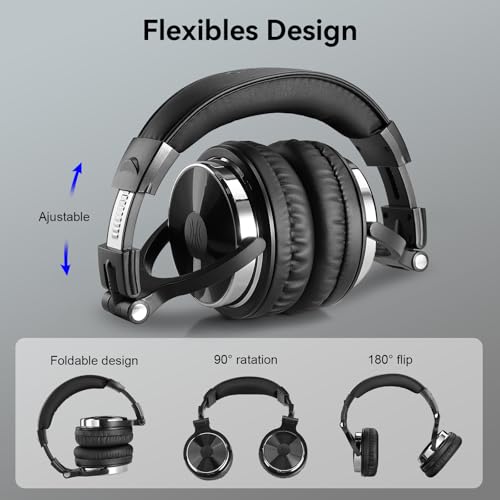
The 90-degree swiveling earcups are essential for DJ applications, allowing single-ear monitoring while keeping one ear free to hear the room or communicate with others. This feature, combined with the lightweight 246-gram design, makes it practical for long DJ sets or extended studio sessions.
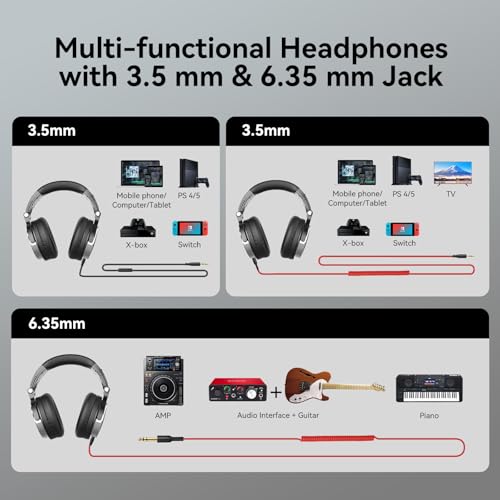
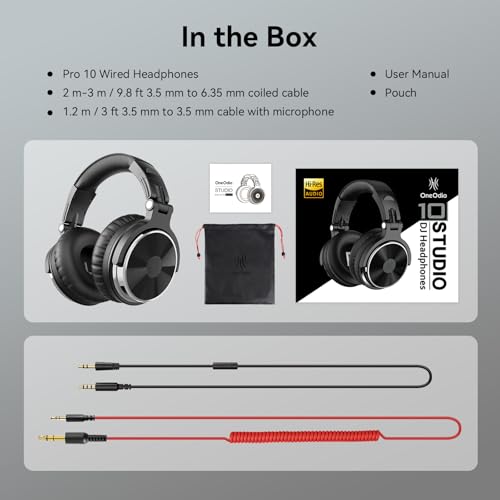
The dual jack system sets the OneOdio Pro-10 apart from consumer headphones. Having both 3.5mm and 6.35mm connections directly on the earcups eliminates the need for adapters when switching between consumer devices (phones, laptops) and professional audio equipment (mixers, audio interfaces, instruments).
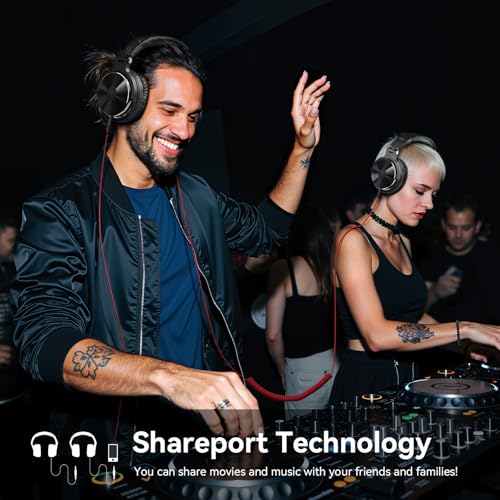
The SharePort daisy-chaining feature allows connecting a second pair of headphones directly to the first, enabling collaborative listening sessions without splitters or additional equipment. This seemingly simple feature is incredibly valuable in professional environments where multiple people need to monitor the same audio source.
At the time of writing, the OneOdio Pro-10 delivers professional-grade features at a fraction of typical studio headphone prices. Comparable dual-jack systems from established audio brands often cost three to five times more, making the OneOdio an exceptional value for budget-conscious professionals or students entering audio production.
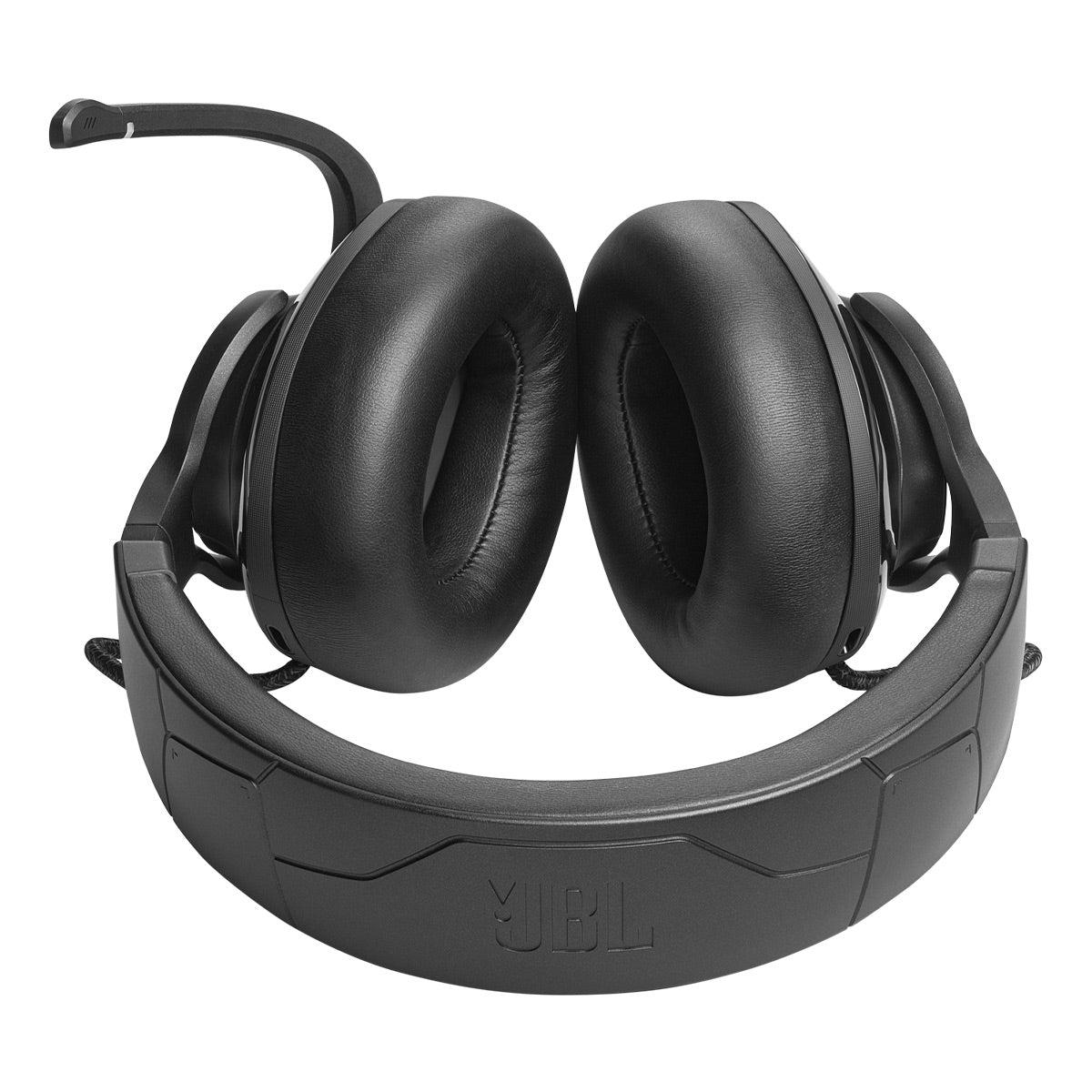
Comfort becomes critical during extended use, and both headphones take different approaches. The JBL Quantum 910 uses premium leather-wrapped memory foam ear cushions that provide excellent long-term comfort despite the 420-gram weight. The well-balanced design distributes weight effectively, and the adjustable headband accommodates various head sizes.
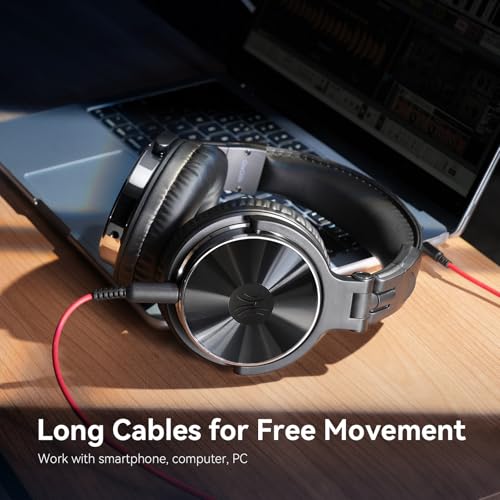
The OneOdio Pro-10 prioritizes portability with its 246-gram weight—nearly 40% lighter than the JBL. However, user reviews note that the ear cup openings are relatively small, which may cause discomfort for users with larger ears during extended sessions. The padding is adequate but not premium, reflecting the budget positioning.
Build quality reflects the price difference: the JBL uses more premium materials and construction methods, while the OneOdio delivers solid durability at its price point without premium flourishes.
Both headphones can enhance home theater experiences, but in different ways. The JBL Quantum 910's spatial audio and head tracking create an impressive surround sound experience for movies, especially action films where directional audio matters. The active noise cancelling helps isolate you from household distractions during critical movie moments.
However, the gaming-tuned sound signature may not be ideal for all movie content. Dialog might sound slightly colored, and the enhanced bass could overwhelm subtle soundtrack elements in quieter films.
The OneOdio Pro-10 provides more accurate movie sound reproduction, letting you hear soundtracks and dialog as the filmmakers intended. The neutral signature works particularly well for films where audio quality matters—concerts, documentaries, or critically acclaimed dramas with complex soundscapes.
For home theater use, consider your priorities: immersive, exciting sound (JBL) versus accurate, filmmaker-intended audio (OneOdio).
The JBL Quantum 910 represents cutting-edge gaming technology with head tracking, advanced wireless protocols, and sophisticated DSP (digital signal processing). These features position it well for future gaming developments, particularly as VR and AR gaming become more mainstream.
The OneOdio Pro-10 takes a more timeless approach, focusing on fundamental audio principles that won't become obsolete. Professional audio standards change slowly, making this a safer long-term investment for professional applications.
Choose the JBL Quantum 910 Wireless if gaming is your primary audio activity and you value technological innovation. The head tracking and spatial audio genuinely enhance competitive gaming, while the wireless convenience and long battery life suit modern gaming lifestyles. The premium price reflects genuinely advanced technology rather than just marketing.
This headset also makes sense for content creators who need high-quality microphones for streaming or recording, or anyone who wants cutting-edge wireless audio technology for multiple device connectivity.
Choose the OneOdio Pro-10 if you need professional audio capabilities at an exceptional value point. Whether you're a DJ, music producer, podcast creator, or serious music listener, the neutral sound signature and professional connectivity options provide genuine utility that expensive alternatives can't match.
The OneOdio also suits users who prefer wired reliability, need maximum portability, or simply want excellent sound quality without paying for gaming-specific features they won't use.
These headphones excel in their respective domains with minimal overlap, making the choice relatively straightforward once you identify your primary use case. The JBL Quantum 910 justifies its premium pricing through genuinely innovative gaming technology, while the OneOdio Pro-10 delivers remarkable professional audio value.
Rather than viewing this as an expensive versus cheap comparison, consider it a choice between specialized gaming technology and versatile professional audio tools. Both represent excellent value within their intended markets, and choosing based on your actual needs rather than seeking a compromise will lead to greater satisfaction with your purchase.
The 10x price difference reflects fundamental engineering priorities: cutting-edge wireless gaming technology versus exceptional professional audio value. Both approaches have merit, and both products execute their respective visions exceptionally well.
| JBL Quantum 910 Wireless Gaming Headset | OneOdio Pro-10 Over Ear Wired Headphones |
|---|---|
| Primary Use Case - Determines which features matter most | |
| Gaming and wireless entertainment | Professional audio, DJ work, studio monitoring |
| Connectivity - Affects convenience vs reliability | |
| Dual wireless (2.4GHz + Bluetooth 5.2) plus wired backup | Wired only with dual jacks (3.5mm + 6.35mm) |
| Driver Size - Larger drivers typically produce better bass and soundstage | |
| 50mm neodymium drivers with Hi-Res certification | 50mm neodymium drivers optimized for studio accuracy |
| Sound Signature - Gaming enhancement vs neutral monitoring | |
| Gaming-tuned QuantumSOUND with enhanced spatial cues | Neutral, slightly V-shaped for accurate reproduction |
| Frequency Response - Extended range indicates higher audio quality potential | |
| 20Hz-40kHz (wired), 20Hz-20kHz (wireless) | 20Hz-20kHz (covers full human hearing range) |
| Weight - Impacts comfort during extended use | |
| 420g (heavier but well-balanced) | 246g (40% lighter, more portable) |
| Special Gaming Features - Technology that enhances competitive gameplay | |
| Head tracking, spatial audio, ANC, RGB lighting, chat dial | None (focused on professional audio accuracy) |
| Professional Audio Features - Tools for studio and DJ work | |
| Limited professional connectivity | 90° swiveling earcups, SharePort daisy-chaining |
| Microphone Quality - Important for gaming communication and calls | |
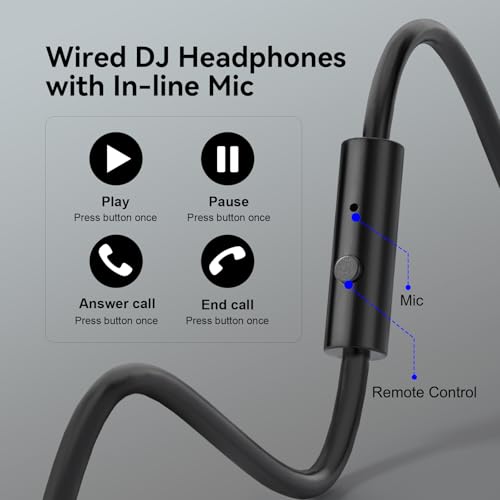
| Flip-up boom mic with echo/noise suppression | Basic in-line microphone on cable |
| Battery Life - Only relevant for wireless models | |
| 39 hours (excellent for wireless gaming) | N/A (wired connection) |
| Build Quality - Affects durability and premium feel | |
| Premium leather memory foam, robust construction | Solid plastic construction, good value engineering |
| Noise Management - Different approaches for different environments | |
| Active Noise Cancelling tuned for gaming | Passive noise isolation through closed-back design |
| Value Proposition - What you get for your investment | |
| Premium gaming technology at flagship pricing | Exceptional professional audio features at budget price |
| Best For - Target user and primary scenarios | |
| Serious gamers, content creators, wireless convenience seekers | DJs, audio producers, budget-conscious professionals |
The JBL Quantum 910 Wireless Gaming Headset is specifically designed for gaming with features like head tracking, spatial audio, active noise cancelling, and a high-quality boom microphone. The OneOdio Pro-10 can work for gaming but lacks gaming-specific features and has only a basic in-line microphone.
The JBL Quantum 910 Wireless is a premium wireless gaming headset with advanced features like head tracking and ANC, while the OneOdio Pro-10 is a budget-friendly wired headphone designed for professional audio work like DJ monitoring and studio use.
Both use 50mm drivers but serve different purposes. The JBL Quantum 910 has gaming-tuned sound with enhanced spatial cues, while the OneOdio Pro-10 offers neutral, accurate sound reproduction better suited for professional audio work and critical listening.
The JBL Quantum 910 Wireless excels for home theater with its spatial audio creating an immersive surround sound experience and ANC blocking household distractions. The OneOdio Pro-10 provides more accurate movie sound reproduction without gaming enhancements.
The JBL Quantum 910 features premium leather-wrapped memory foam cushions for extended comfort but weighs 420g. The OneOdio Pro-10 is lighter at 246g but has smaller ear cup openings that may cause discomfort for some users during long sessions.
The JBL Quantum 910 Wireless offers 39-hour battery life and dual wireless connectivity (2.4GHz + Bluetooth) for convenience and mobility. The OneOdio Pro-10 provides wired reliability with zero latency and professional dual-jack connectivity without battery concerns.
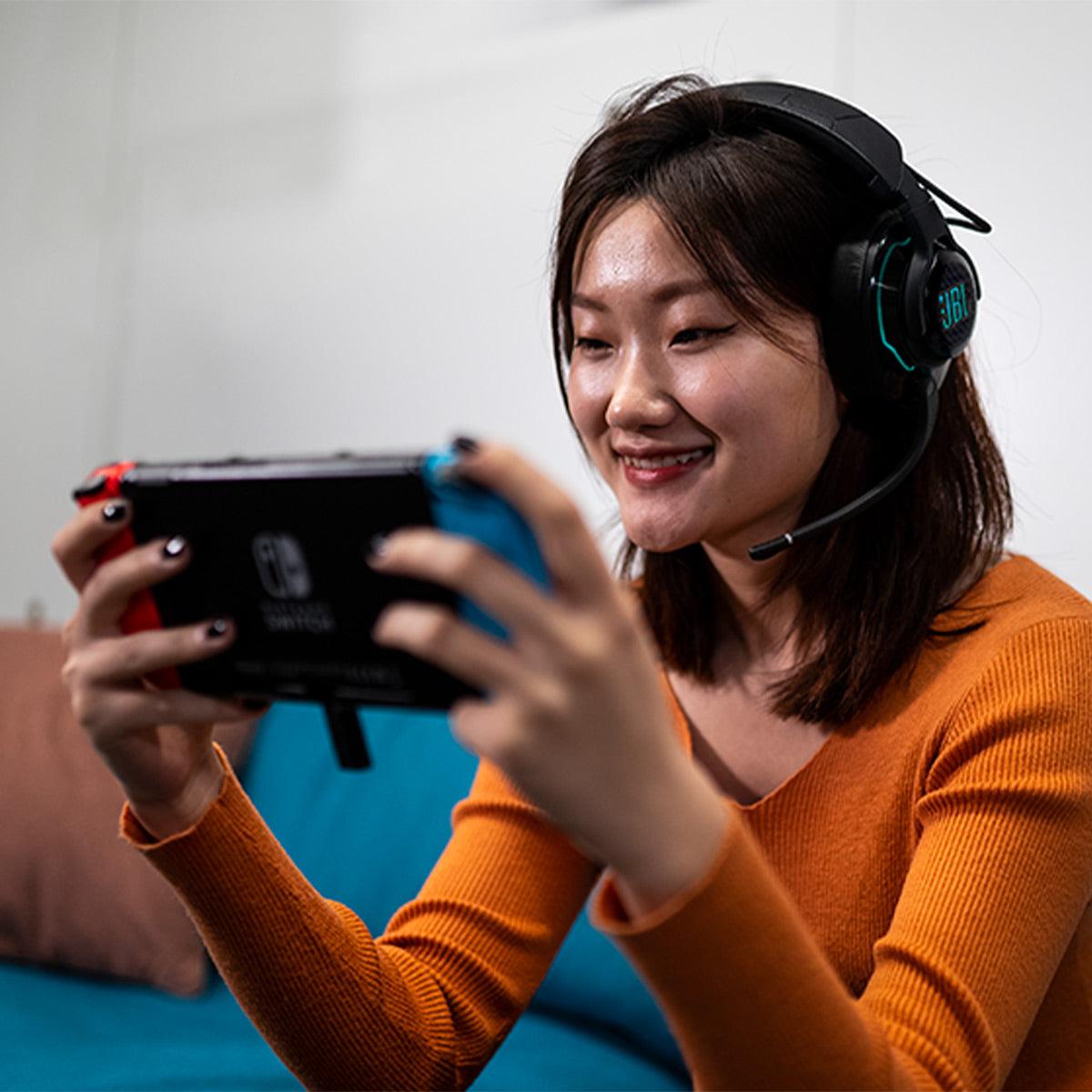
The JBL Quantum 910 connects wirelessly to PC, PlayStation, Nintendo Switch, and Bluetooth devices, plus wired to most devices. The OneOdio Pro-10 works with any device through its dual 3.5mm/6.35mm jacks, making it ideal for professional audio equipment.
The JBL Quantum 910 Wireless uses premium materials with leather memory foam and robust construction befitting its higher price point. The OneOdio Pro-10 offers solid build quality with durable plastic construction that's appropriate for its budget-friendly positioning.
The OneOdio Pro-10 is specifically designed for professional audio with neutral sound signature, 90° swiveling earcups for single-ear monitoring, and SharePort daisy-chaining. The JBL Quantum 910 has gaming-colored audio that's less suitable for accurate mixing work.
The JBL Quantum 910 Wireless has a professional flip-up boom microphone with noise suppression and can connect via Bluetooth for calls. The OneOdio Pro-10 includes a basic in-line microphone on the cable for phone calls when connected to mobile devices.
The OneOdio Pro-10 provides exceptional value with professional audio features at a budget price point. The JBL Quantum 910 Wireless justifies its premium pricing through advanced gaming technology like head tracking and sophisticated wireless connectivity.
Choose the JBL Quantum 910 Wireless if gaming is your primary use and you want wireless convenience with gaming-specific features. Select the OneOdio Pro-10 if you need professional audio accuracy, prefer wired reliability, or want exceptional value for music listening and audio work.
We've done our best to create useful and informative comparisons to help you decide what product to buy. Our research uses advanced automated methods to create this comparison and perfection is not possible - please contact us for corrections or questions. These are the sites we've researched in the creation of this article: techradar.com - stereoguide.com - ausdroid.net - majorhifi.com - ign.com - youtube.com - soundguys.com - versus.com - impulsegamer.com - versus.com - jbl.com - jbl.com.tw - crutchfield.com - th.jbl.com - harmanaudio.com - jbl.com - jbl.com - youtube.com - bestbuy.com - harmanaudio.com - jbl.com - th.jbl.com - bhphotovideo.com - audioreviews.org - youtube.com - attackmagazine.com - versus.com - head-fi.org - versus.com - youtube.com - oneodio.com - youtube.com - youtube.com - walmart.com - teqclub.com - head-fi.org - manuals.plus - terrycartermusicstore.com - oneodio.com - matzotech.com - oneodio.com - target.com - techbuzzireland.com - youtube.com

Privacy Policy
Terms and Conditions - Affiliate Policy
Home Security
© Copyright 2008-2026.
11816 Inwood Rd #1211, Dallas, TX 75244