

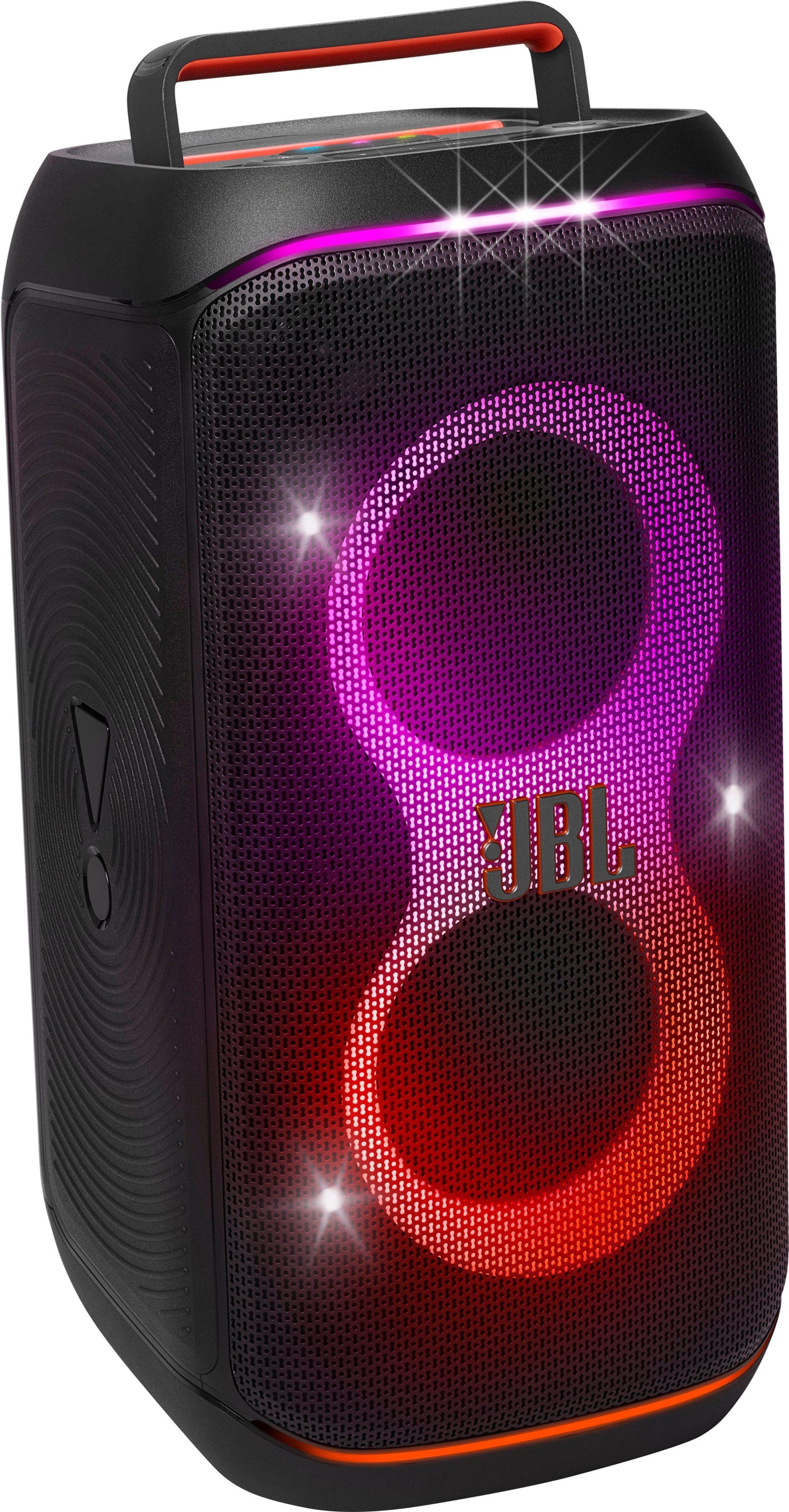
When JBL released their updated PartyBox lineup in 2024, they made a bold statement about where party speakers were heading. The JBL PartyBox Club 120 and JBL PartyBox Ultimate represent two completely different philosophies for getting people moving—one prioritizes portability and versatility, while the other goes all-in on raw power. After diving deep into user reviews, professional measurements, and real-world testing scenarios, it's clear these speakers serve vastly different audiences despite sharing the same brand name.
Party speakers aren't just regular speakers turned up loud. They're engineered specifically for social gatherings, which means they need to handle sustained high-volume playback without distorting, remain clear even in noisy environments, and often include features like light shows and microphone inputs that regular speakers skip entirely.
The most critical performance metric is dynamic range—how much difference there is between the quietest and loudest sounds the speaker can reproduce cleanly. Party speakers with good dynamic range maintain clarity when the bass drops hit hard while keeping vocals intelligible over crowd noise. This requires powerful amplifiers, robust drivers (the individual speakers inside the cabinet), and smart signal processing to prevent distortion.
Another key factor is sound pressure level (SPL), measured in decibels. Most home speakers top out around 95-100 dB, but party speakers need to reach 110+ dB to fill large spaces and overcome ambient noise. However, raw volume means nothing if the sound becomes harsh or muddy at high levels.
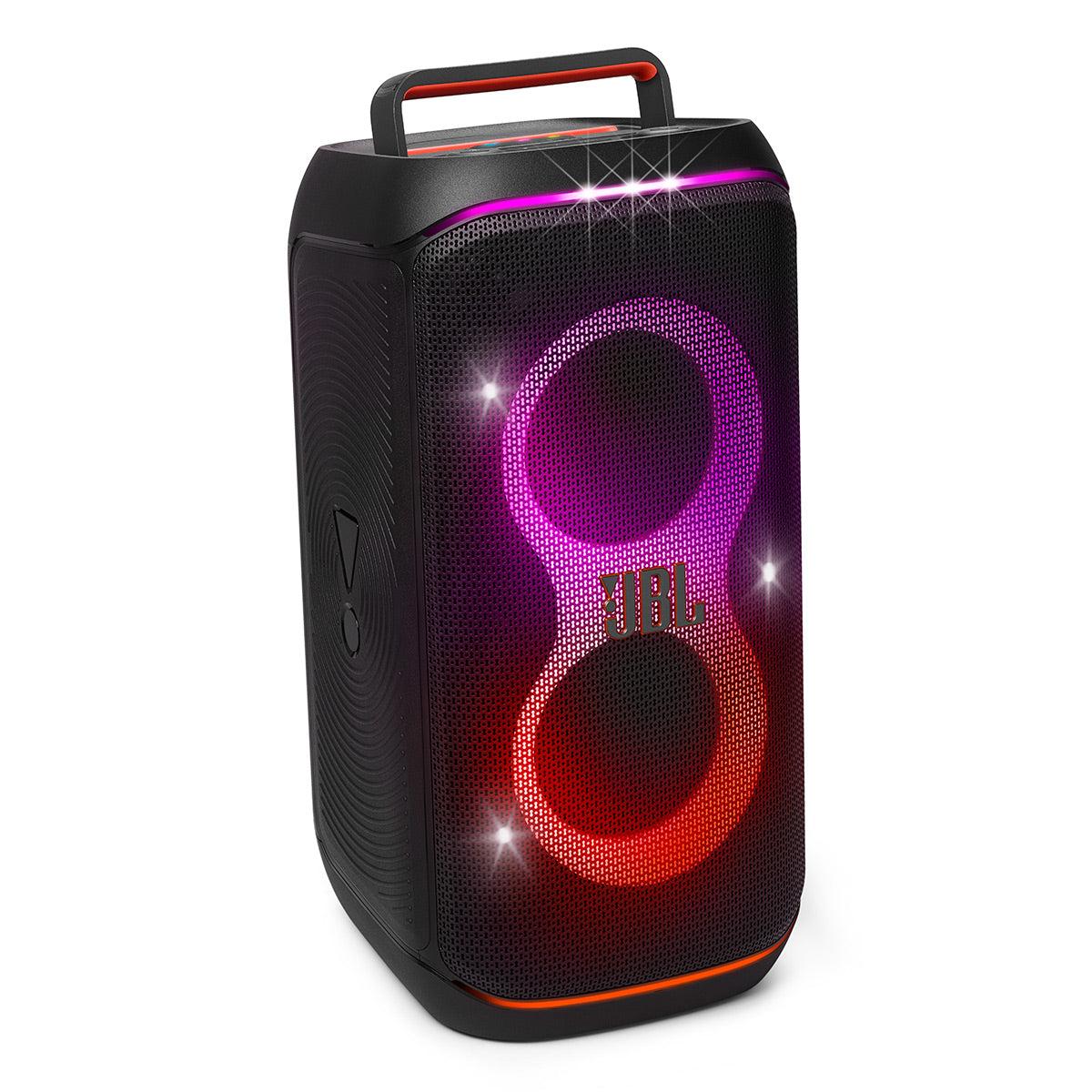
The PartyBox Club 120 weighs about 24 pounds and delivers 160 watts of power through a two-way speaker system. That might not sound like much compared to home theater receivers that claim 500+ watts, but speaker power ratings are often misleading. The Club 120's 160W RMS (Root Mean Square) rating represents continuous, sustainable power output—a much more honest measurement than peak power claims.
What sets the Club 120 apart from cheaper party speakers is its balanced frequency response. Many budget party speakers pump up the bass so aggressively that vocals get buried and instruments sound muddy. The Club 120 uses JBL's "Signature Sound" tuning, which emphasizes bass for that party feel while maintaining clear midrange reproduction for vocals and lead instruments.
The AI Sound Boost feature deserves special mention. This technology uses real-time analysis to predict how the speakers will behave at high volumes and adjusts the signal to prevent distortion. Think of it like having a smart audio engineer constantly monitoring your music to keep it sounding clean, even when you crank it up for that perfect party moment.
In practical terms, the Club 120 can comfortably fill a medium-sized backyard or living room with clean, powerful sound. Professional reviews consistently note its ability to maintain clarity at maximum volume—something many speakers in this size range struggle with.
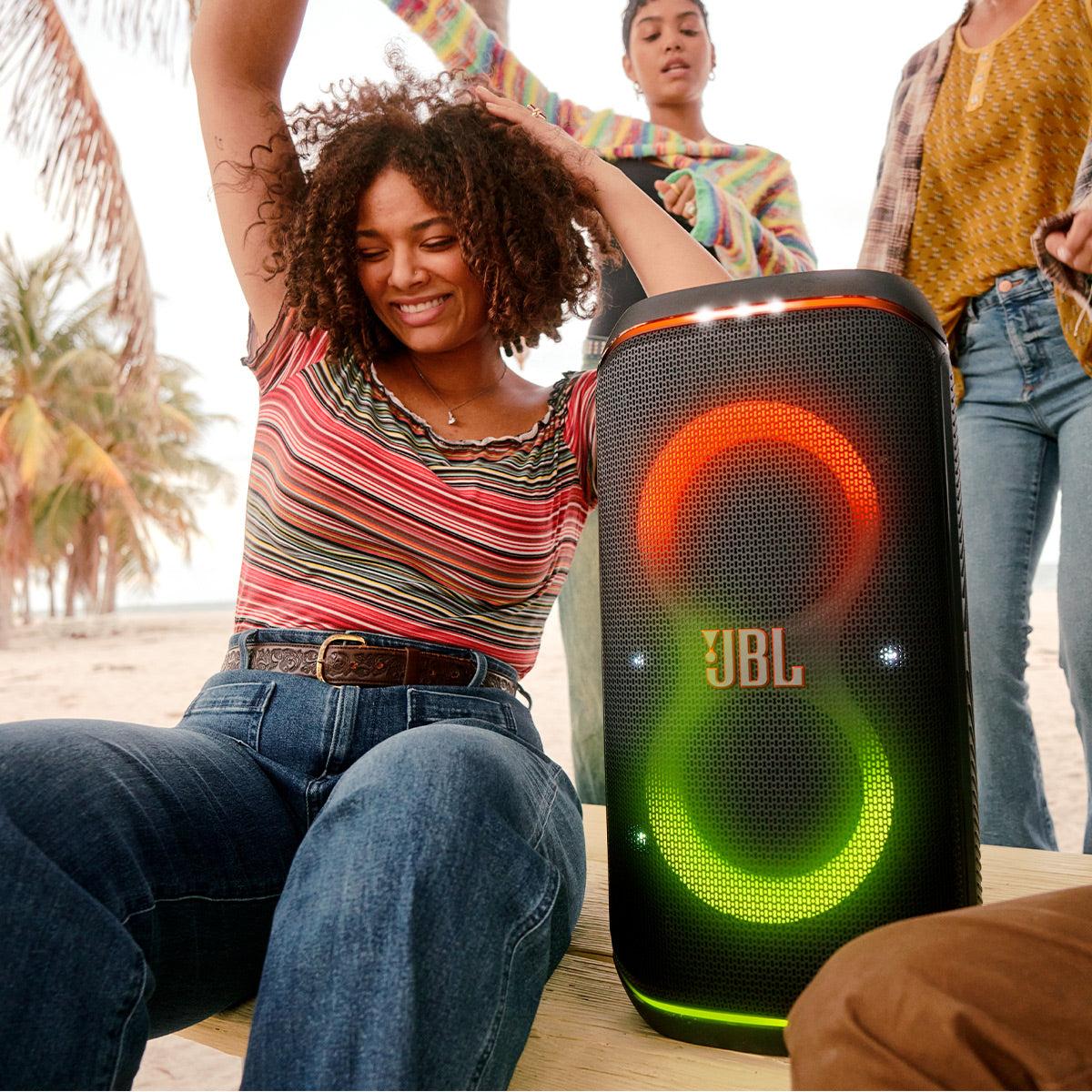
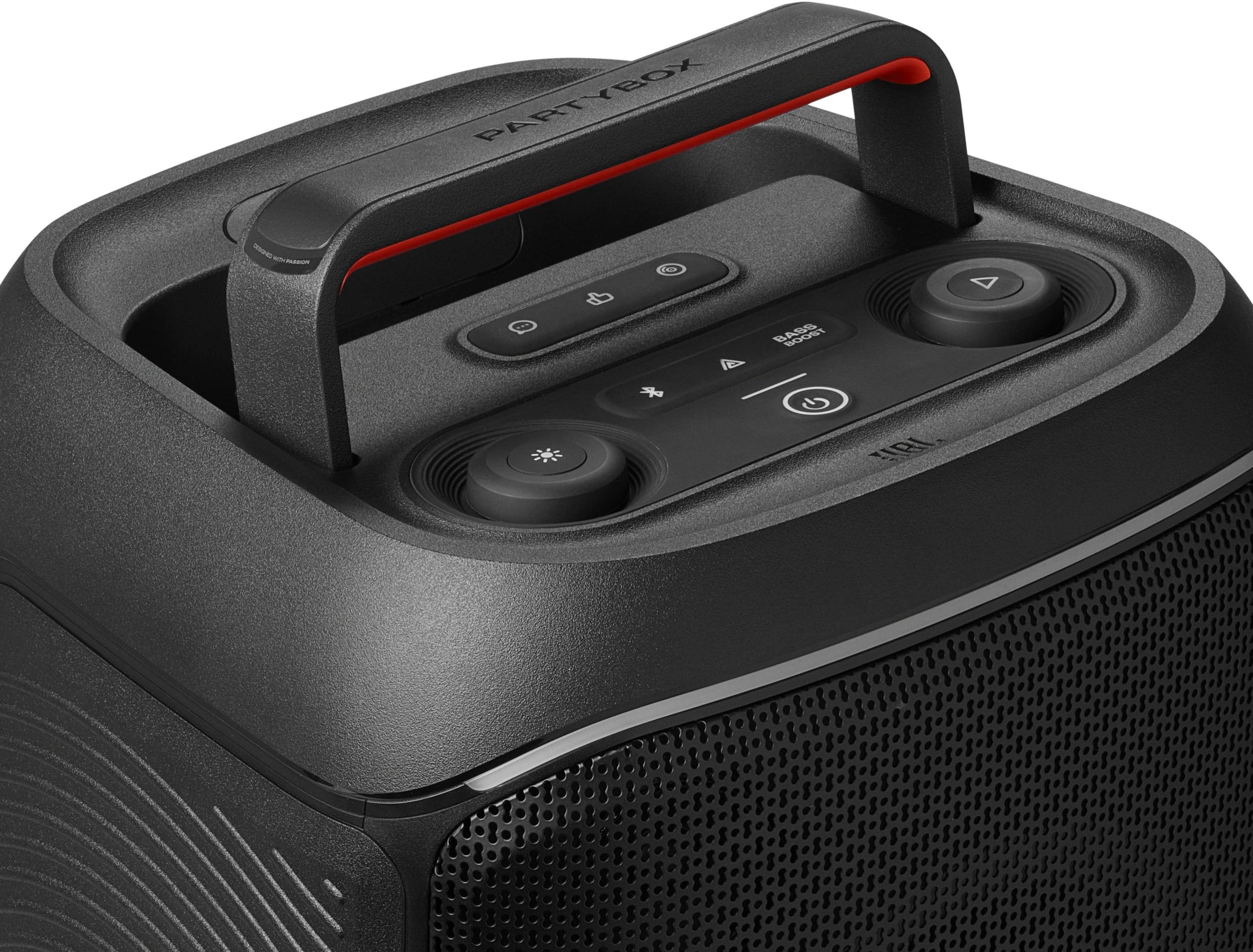
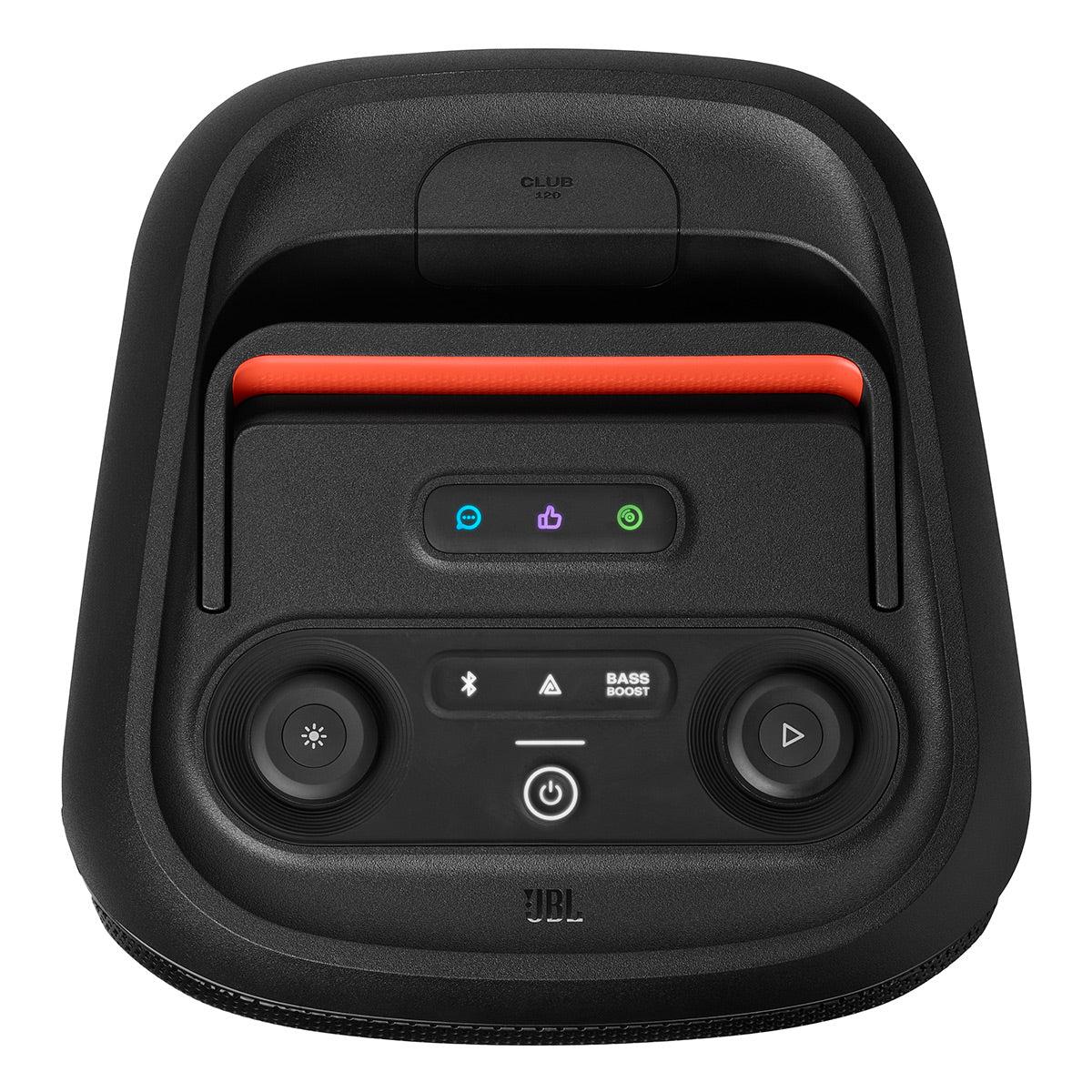
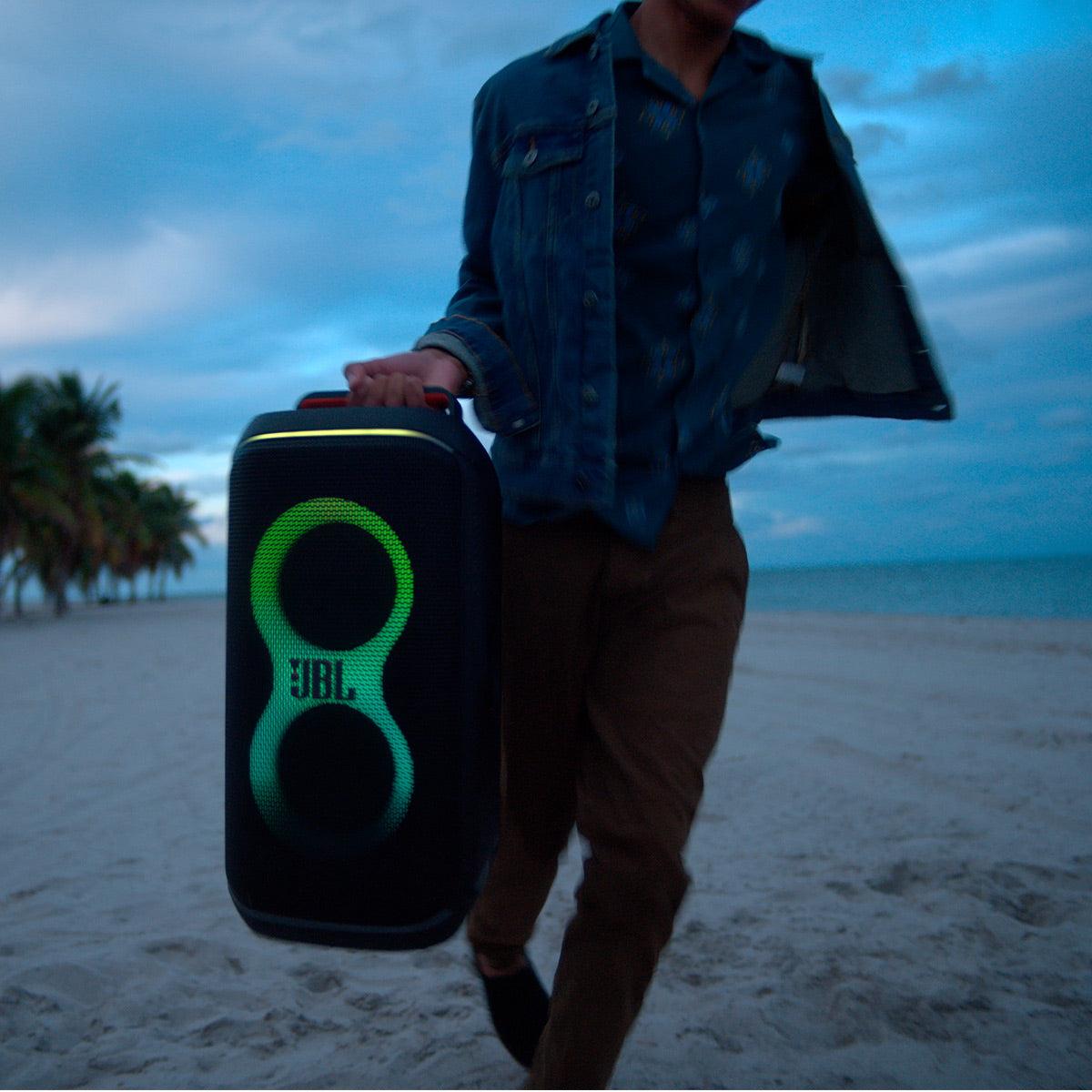
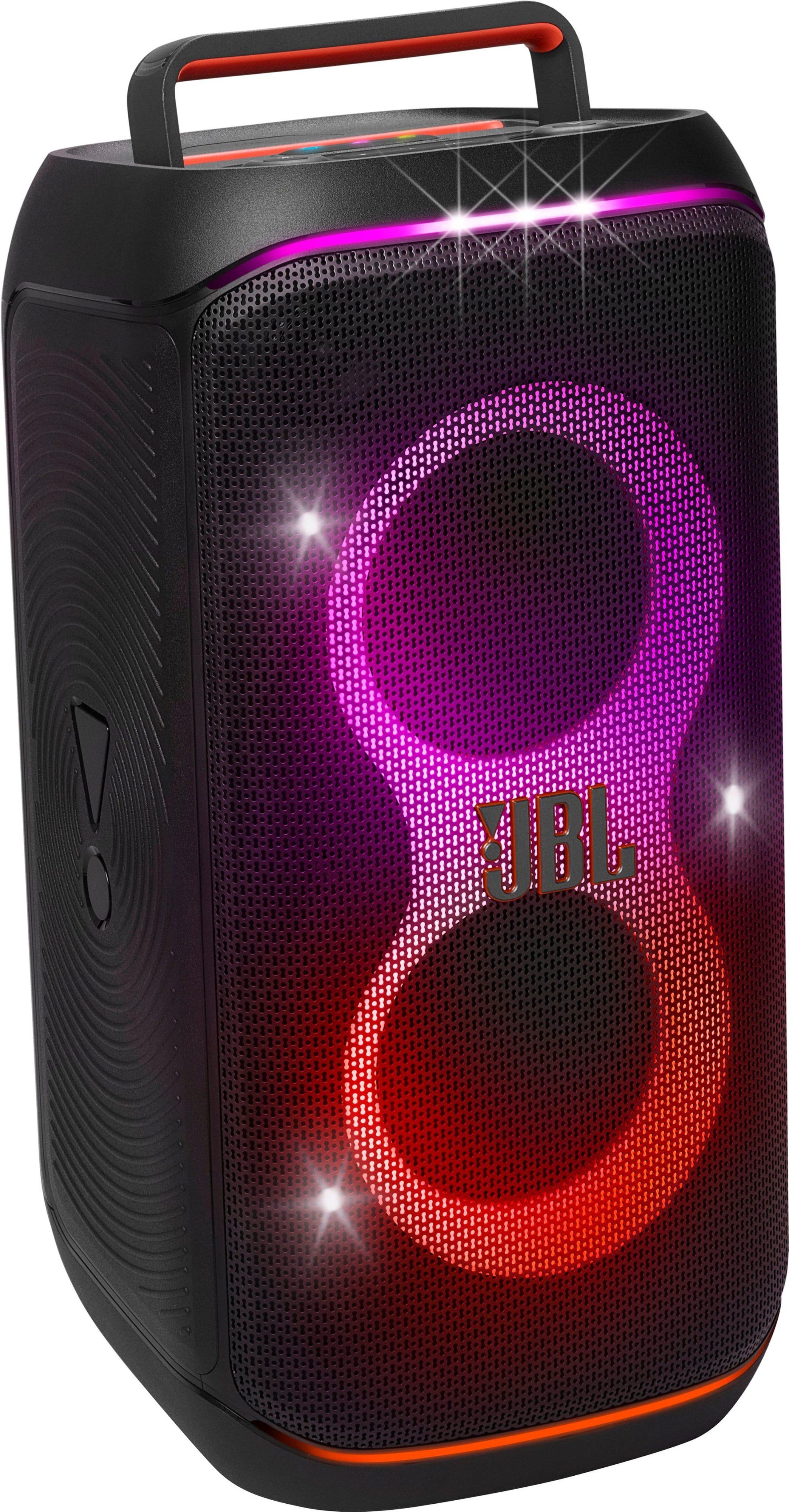
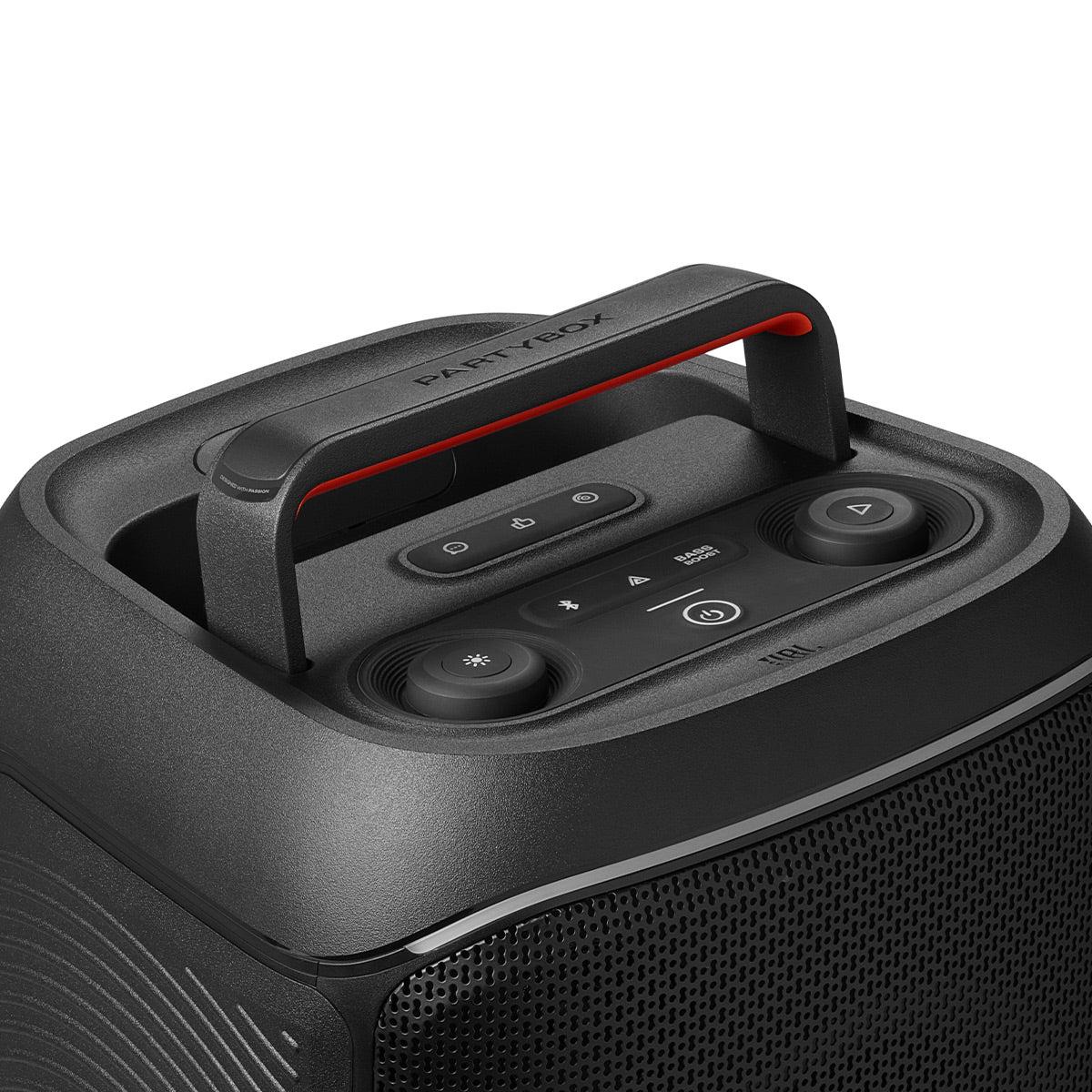
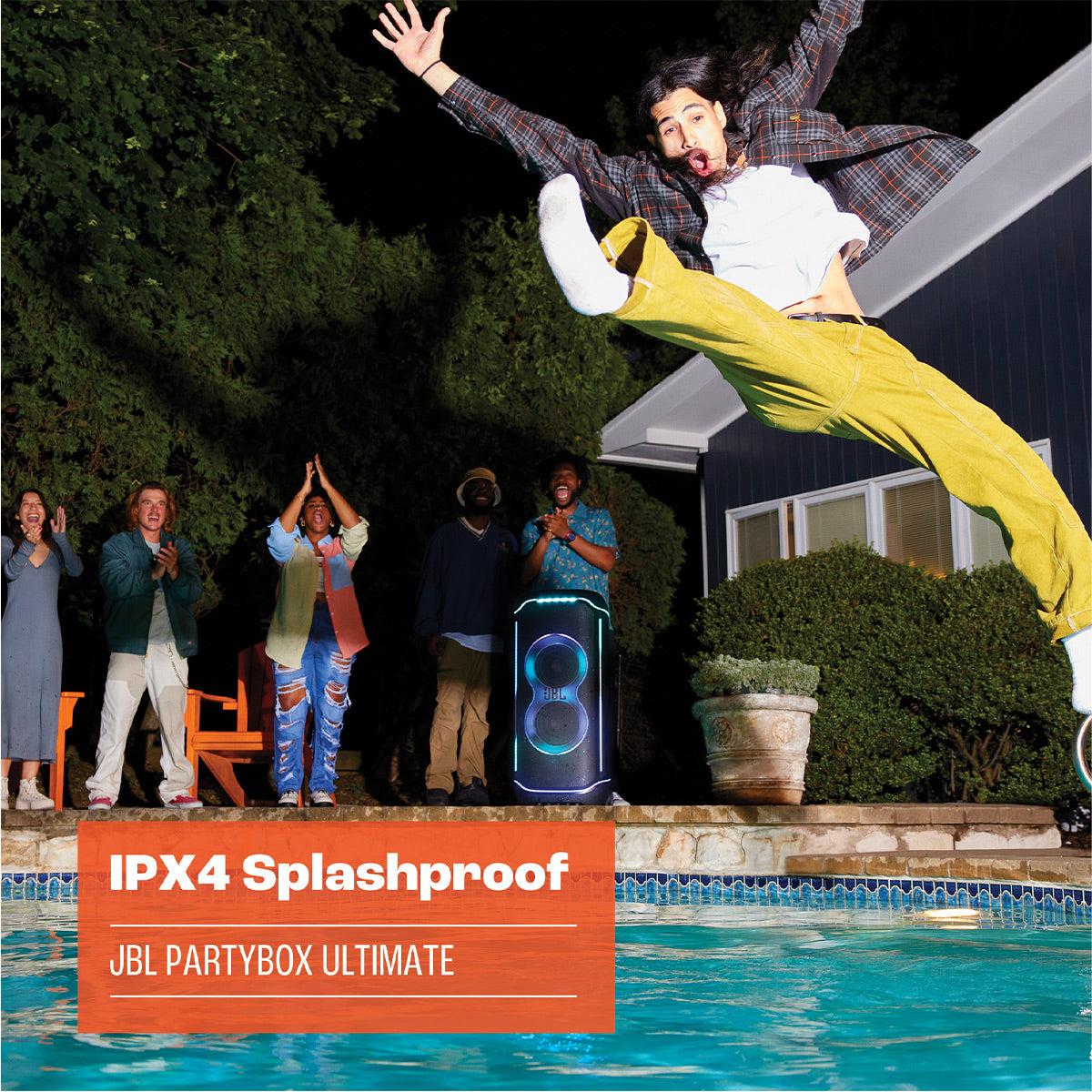
Here's where the Club 120 shines: it actually delivers on the promise of portability. The foldable handle isn't just for show—the weight distribution is engineered so one person can comfortably carry it up stairs or to different rooms. The IPX4 splash-proof rating means you don't need to panic if it starts raining during your outdoor party.
The replaceable battery is a game-changer. Most portable speakers have built-in batteries that eventually die and render the entire speaker useless. The Club 120's battery pops out, so you can buy a spare for extended parties or replace it years down the road when it starts holding less charge.
Battery life claims are always optimistic, but the Club 120 delivers closer to its promised 12 hours than most competitors. At moderate volume with the light show off, users report getting close to the full claim. Crank it up with all the lights flashing, and you're looking at 8-10 hours—still impressive for a speaker this powerful.
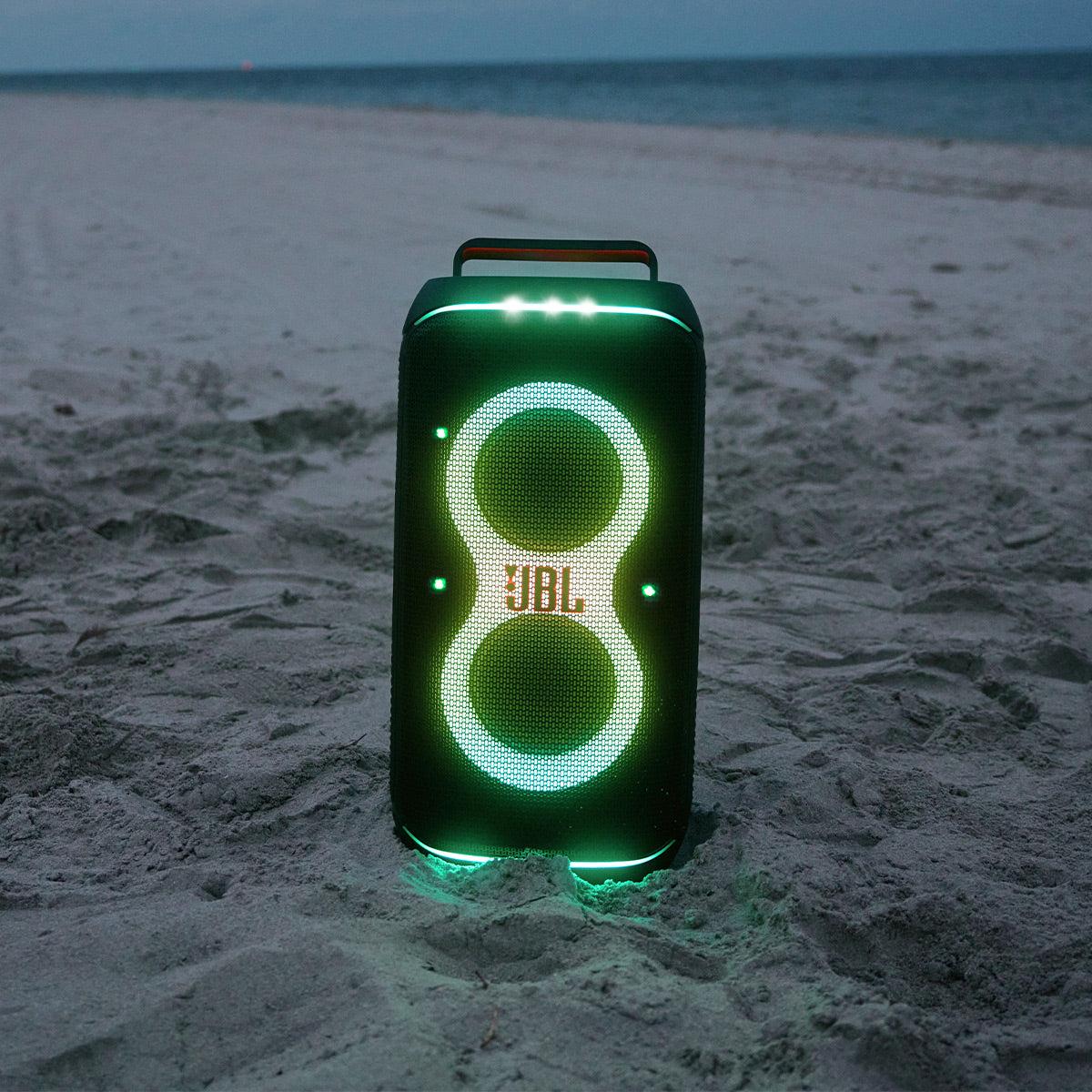
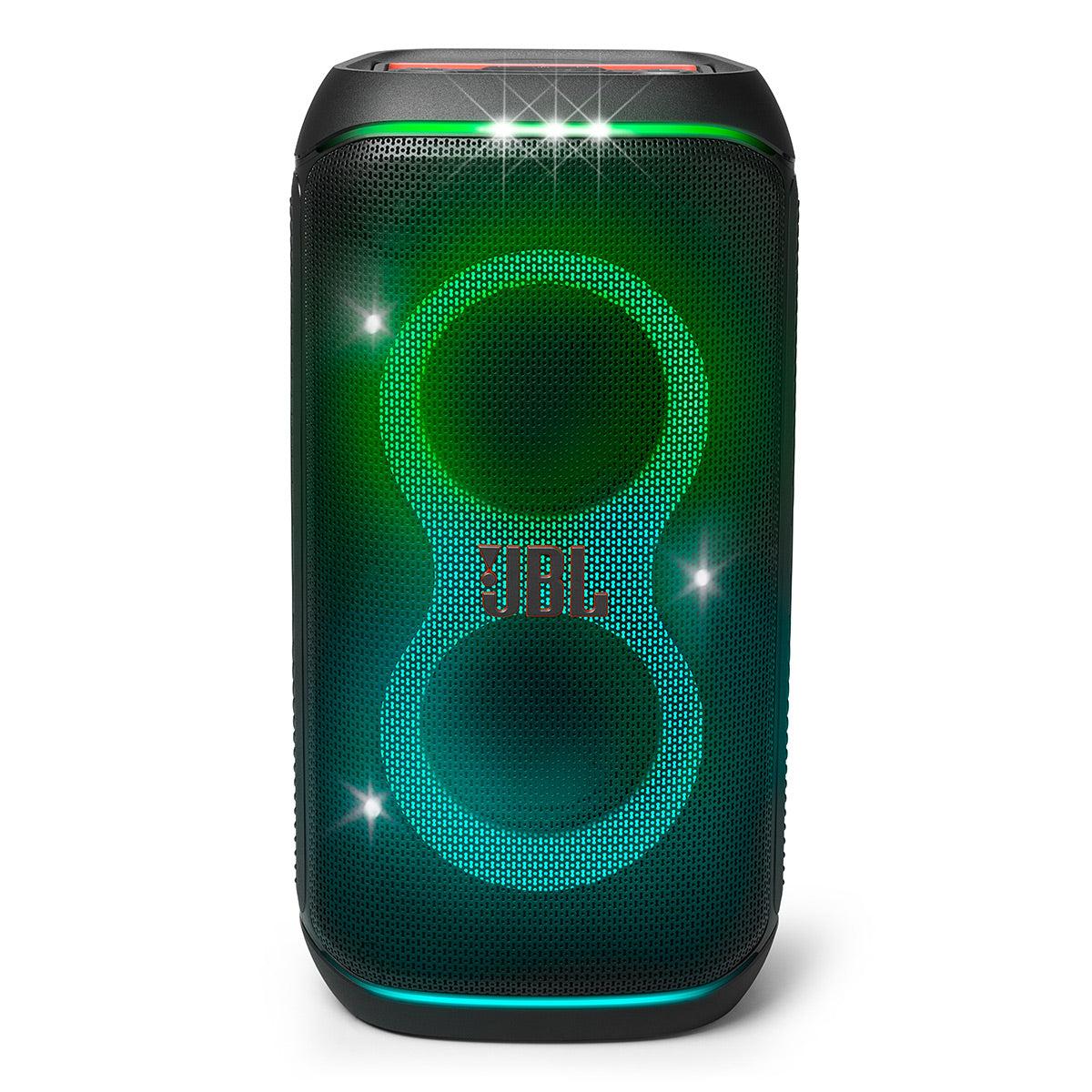
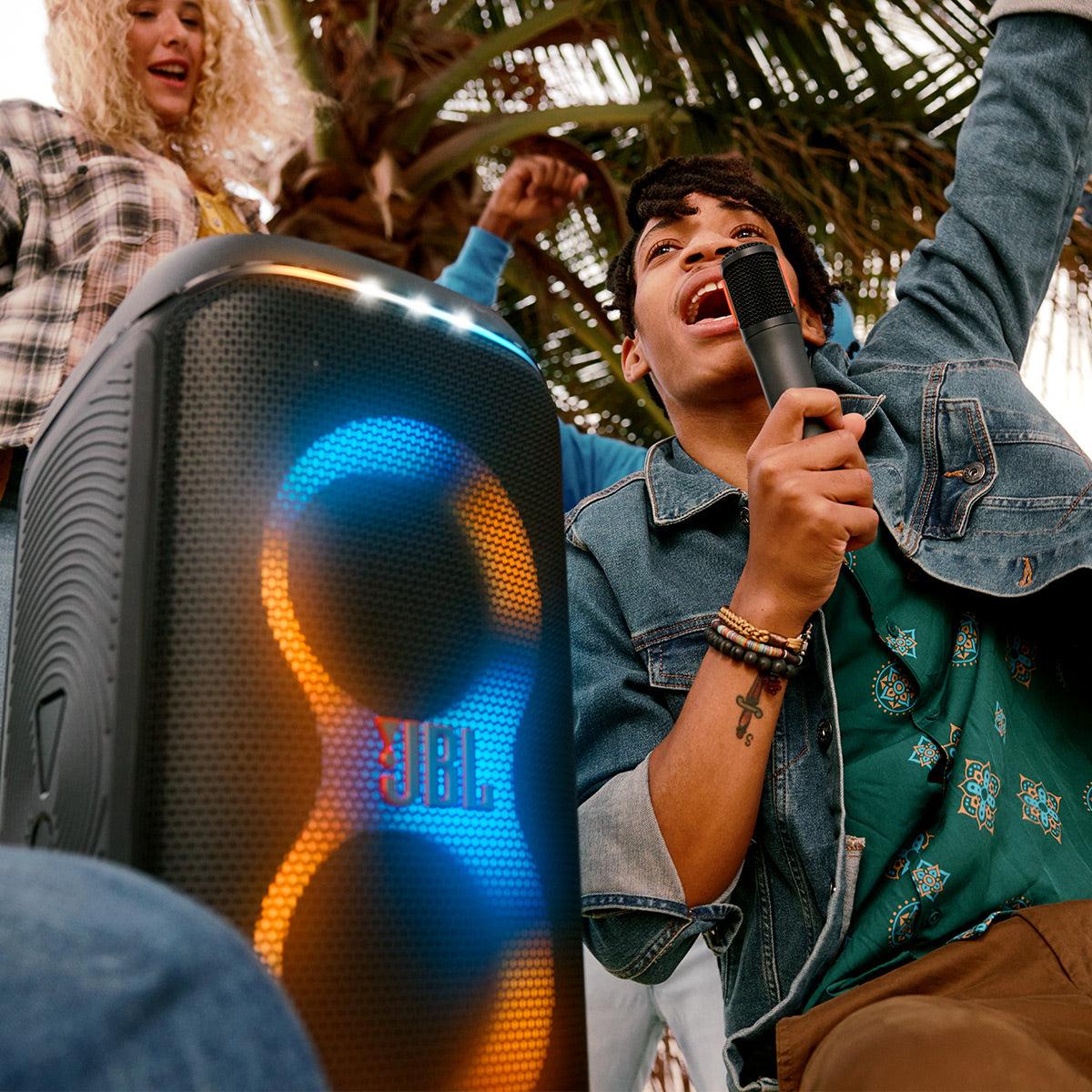
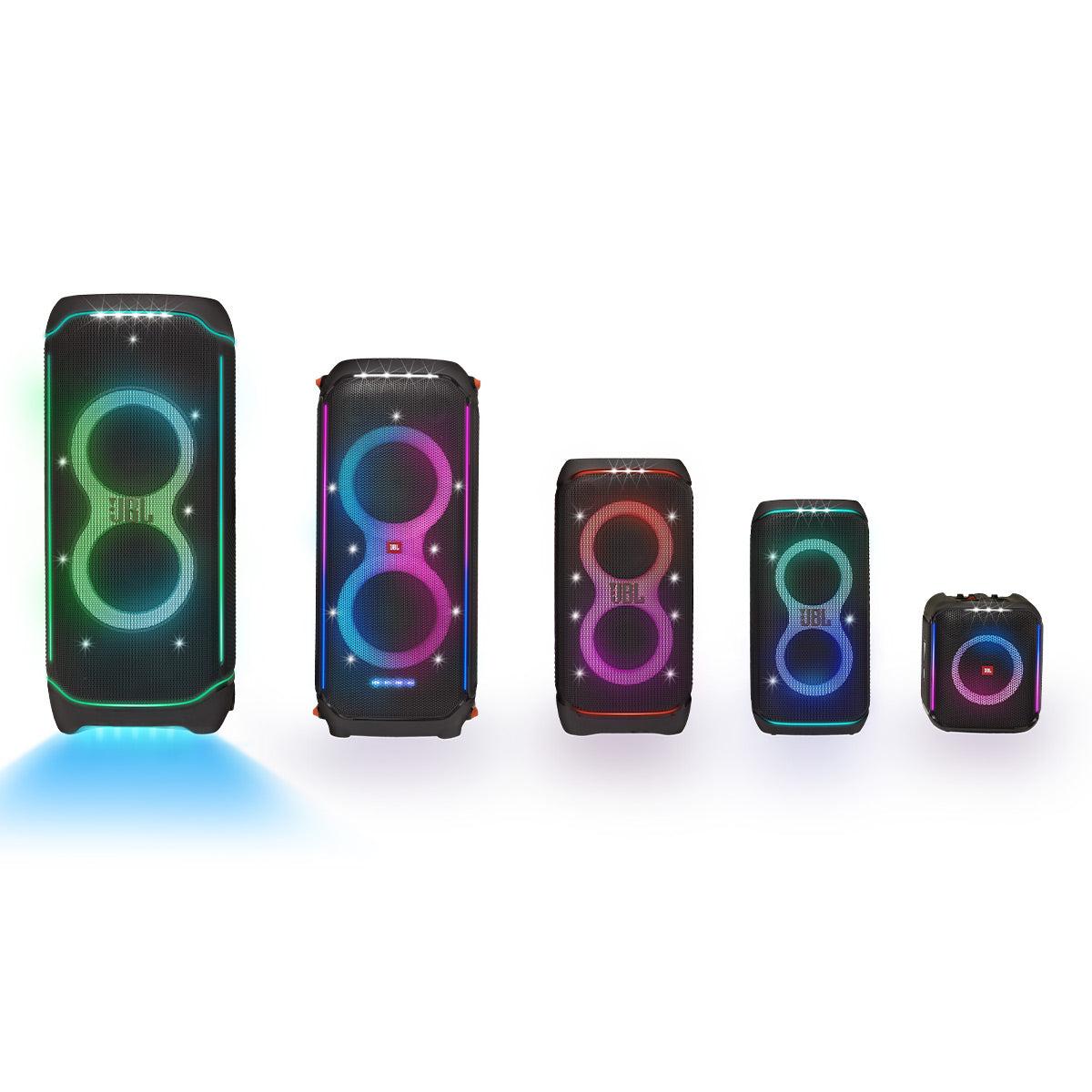
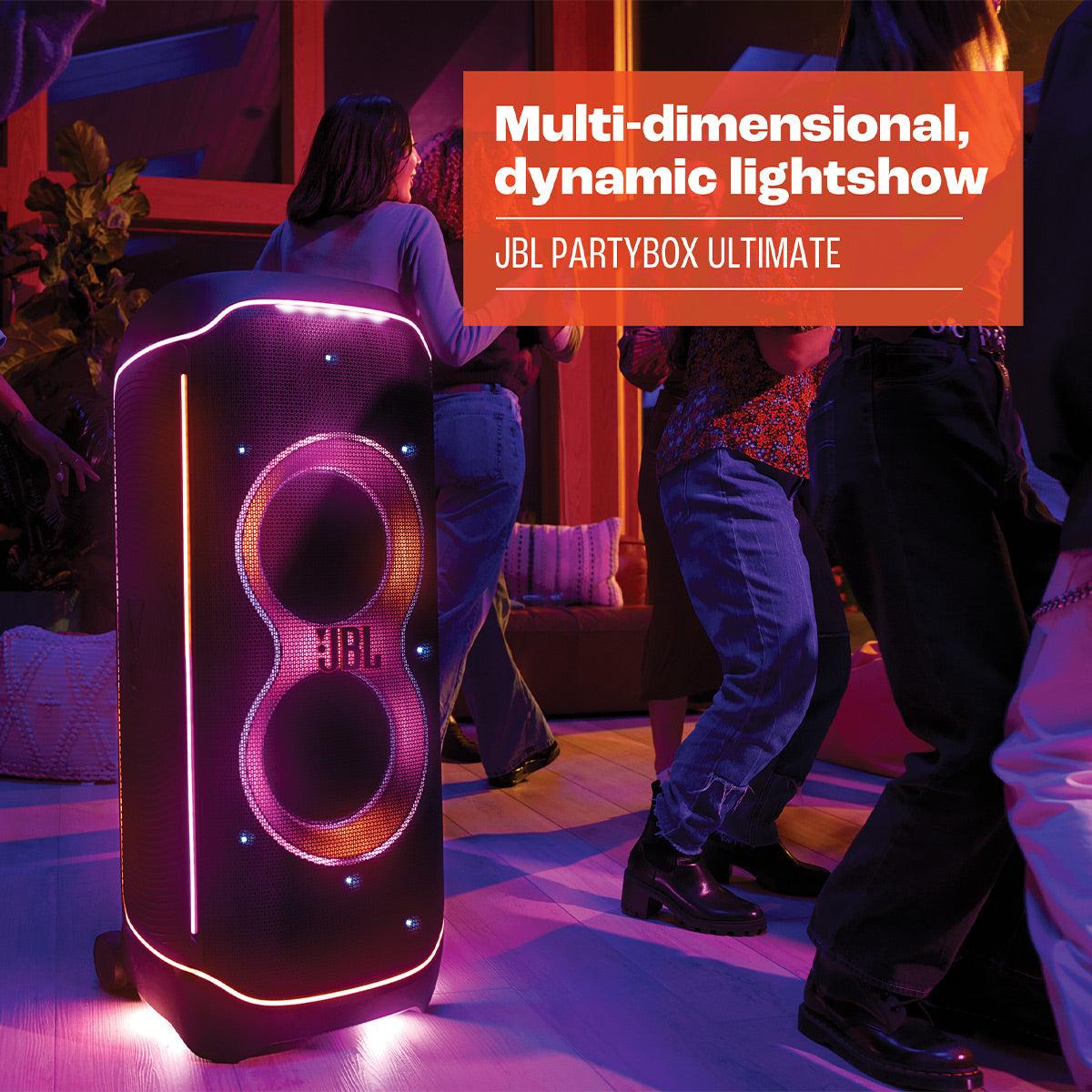
The customizable light show isn't just a gimmick. The RGB LEDs, starry effects, and strobe patterns sync to the music's beat in ways that genuinely add to the party atmosphere. Unlike cheap speakers where the lights feel tacked on, the Club 120's lighting system is integrated into the overall design and can be fine-tuned through the JBL PartyBox app.
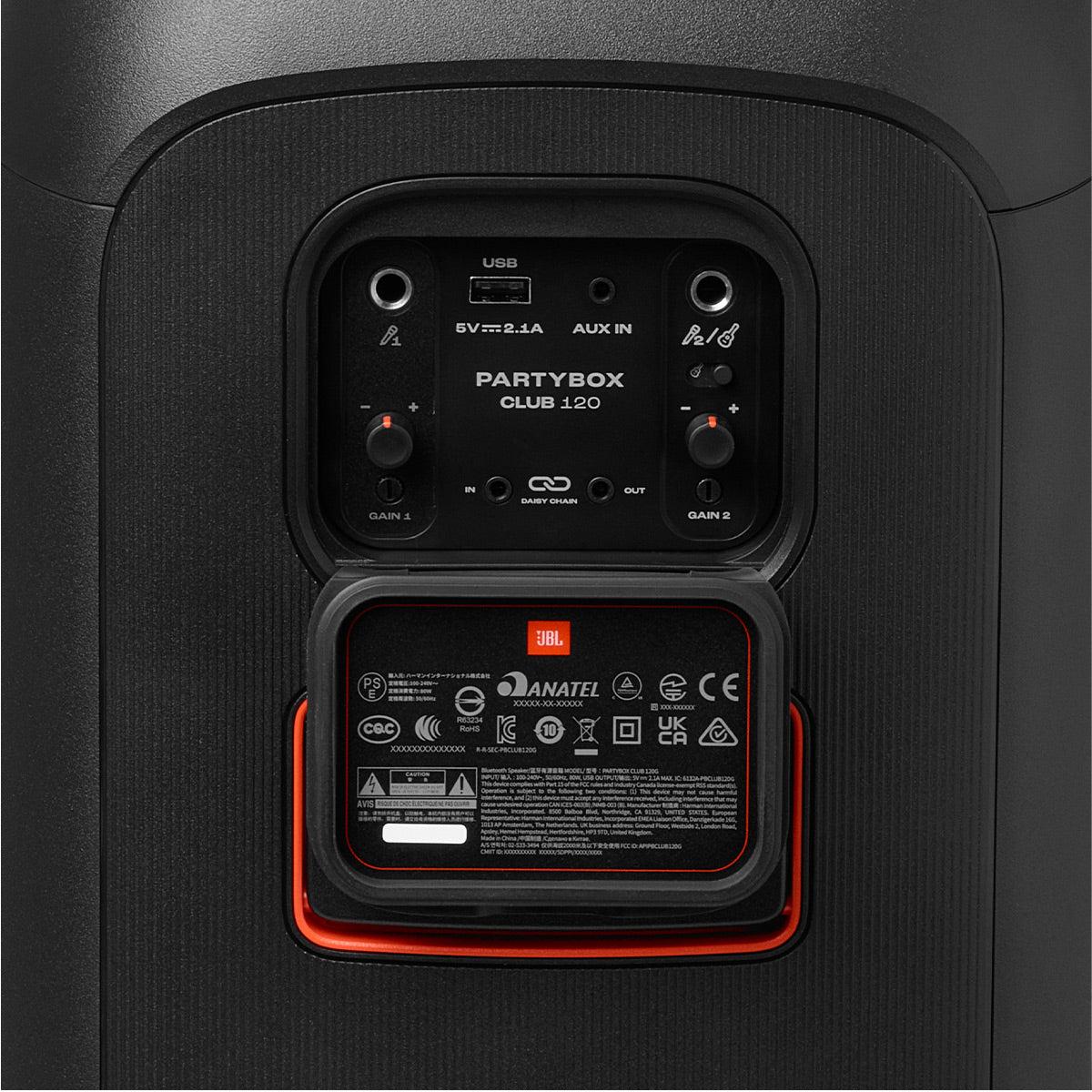
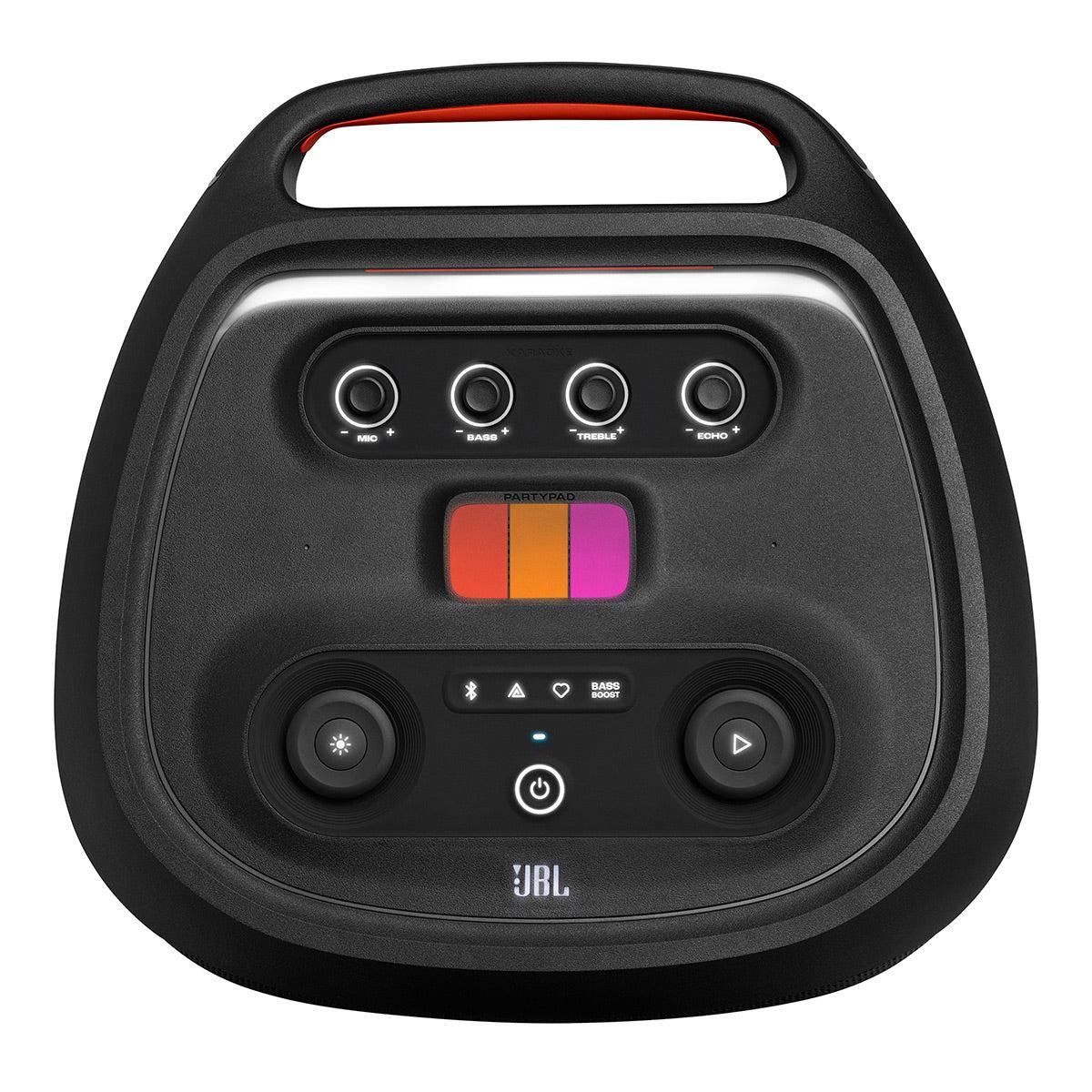
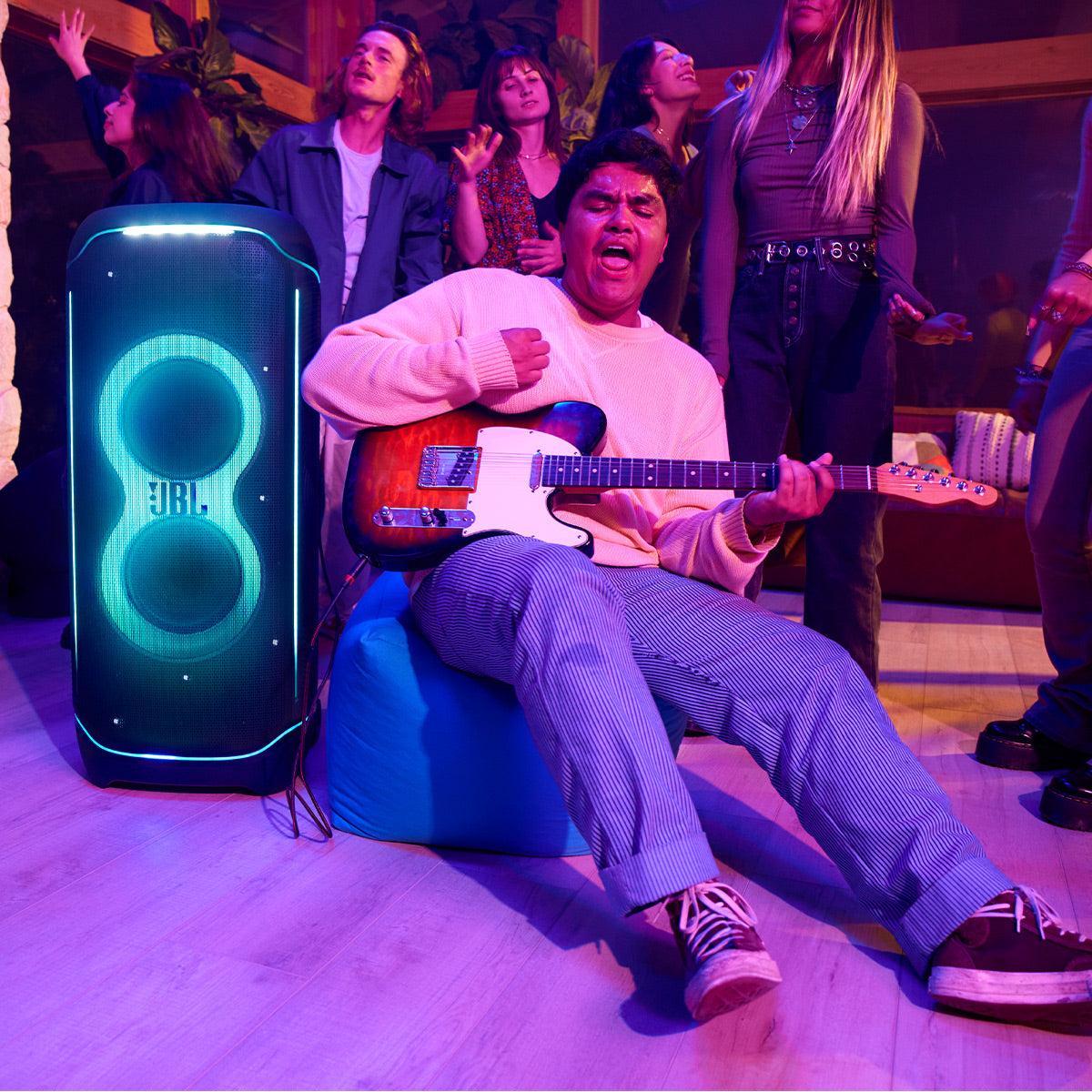
The dual microphone and guitar inputs transform this from a simple playback device into a performance tool. The independent volume and gain controls for each input mean you can balance a singer and guitarist properly, and the karaoke EQ tuning actually works to make vocals stand out in the mix.
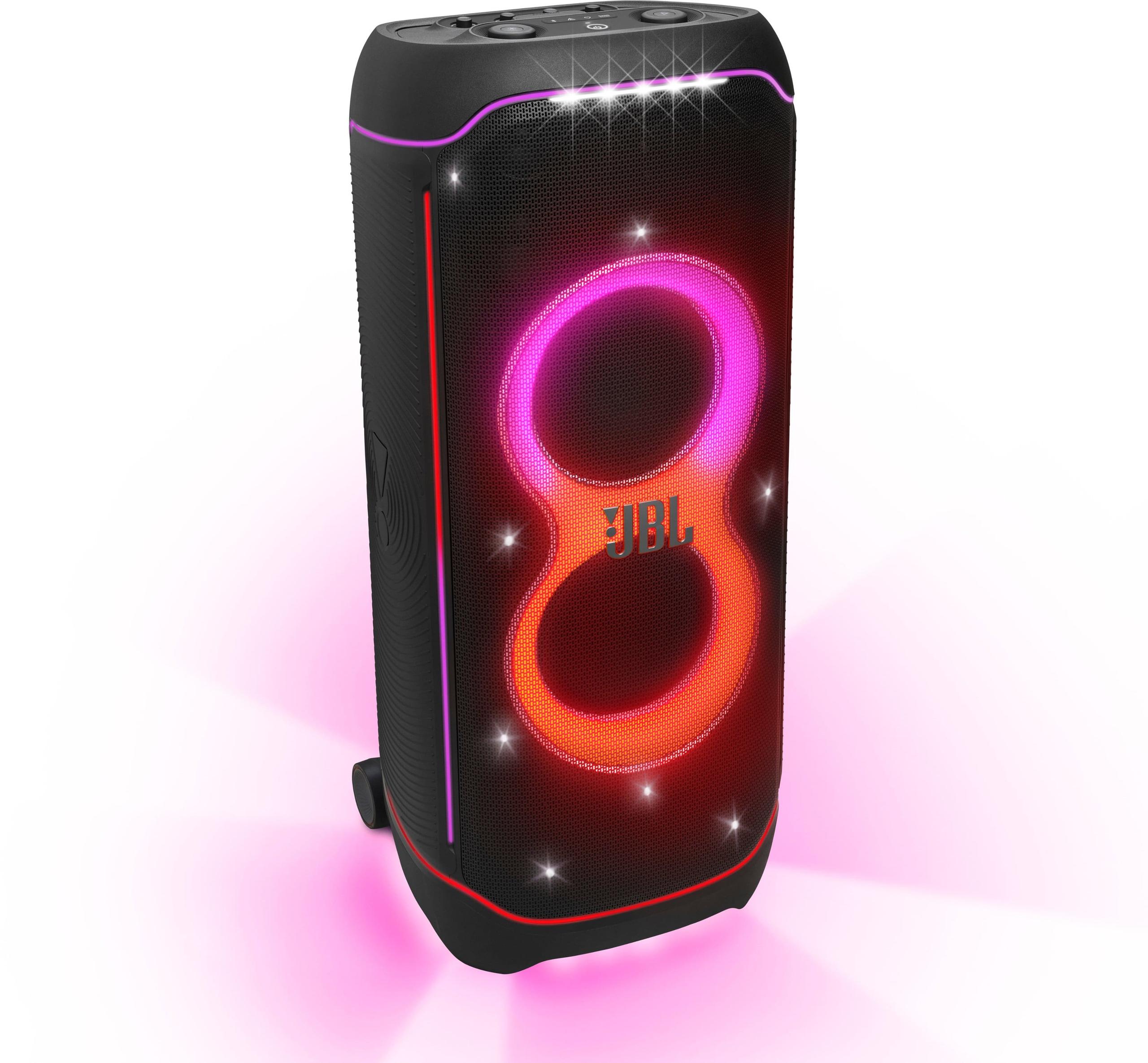
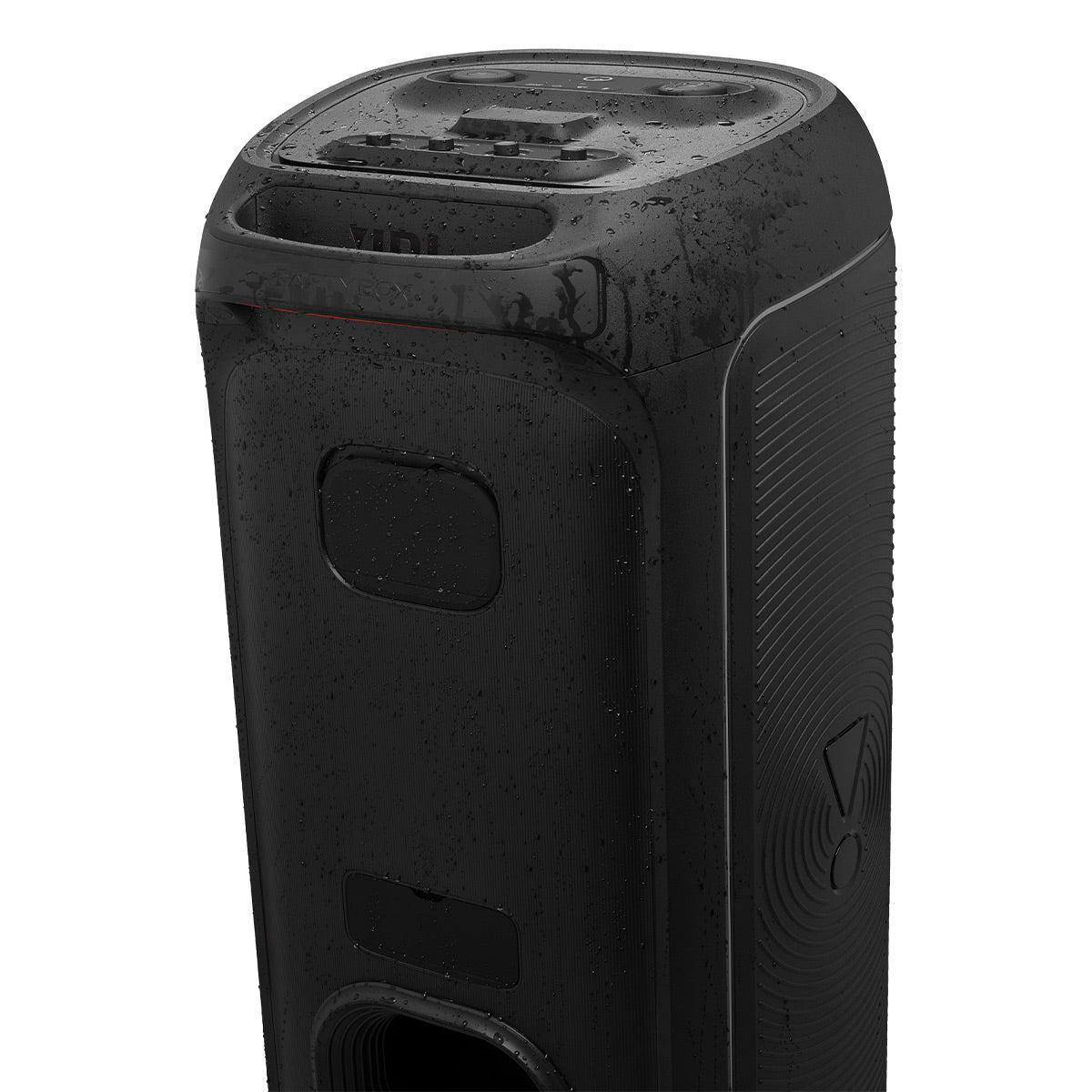
When JBL designed the PartyBox Ultimate, they clearly had professional venues in mind. At 87 pounds and requiring constant AC power, this isn't something you'll casually move around. But that massive size houses some seriously impressive audio hardware.
The 1100W RMS output isn't just marketing—this speaker can achieve sound pressure levels that border on concert levels. The driver configuration tells the whole story: dual 9-inch woofers for bass, 4.5-inch midrange drivers for vocals, and 2.75-inch tweeters for highs. Compare that to the Club 120's 5.25-inch woofers, and you understand why the Ultimate can move so much more air.
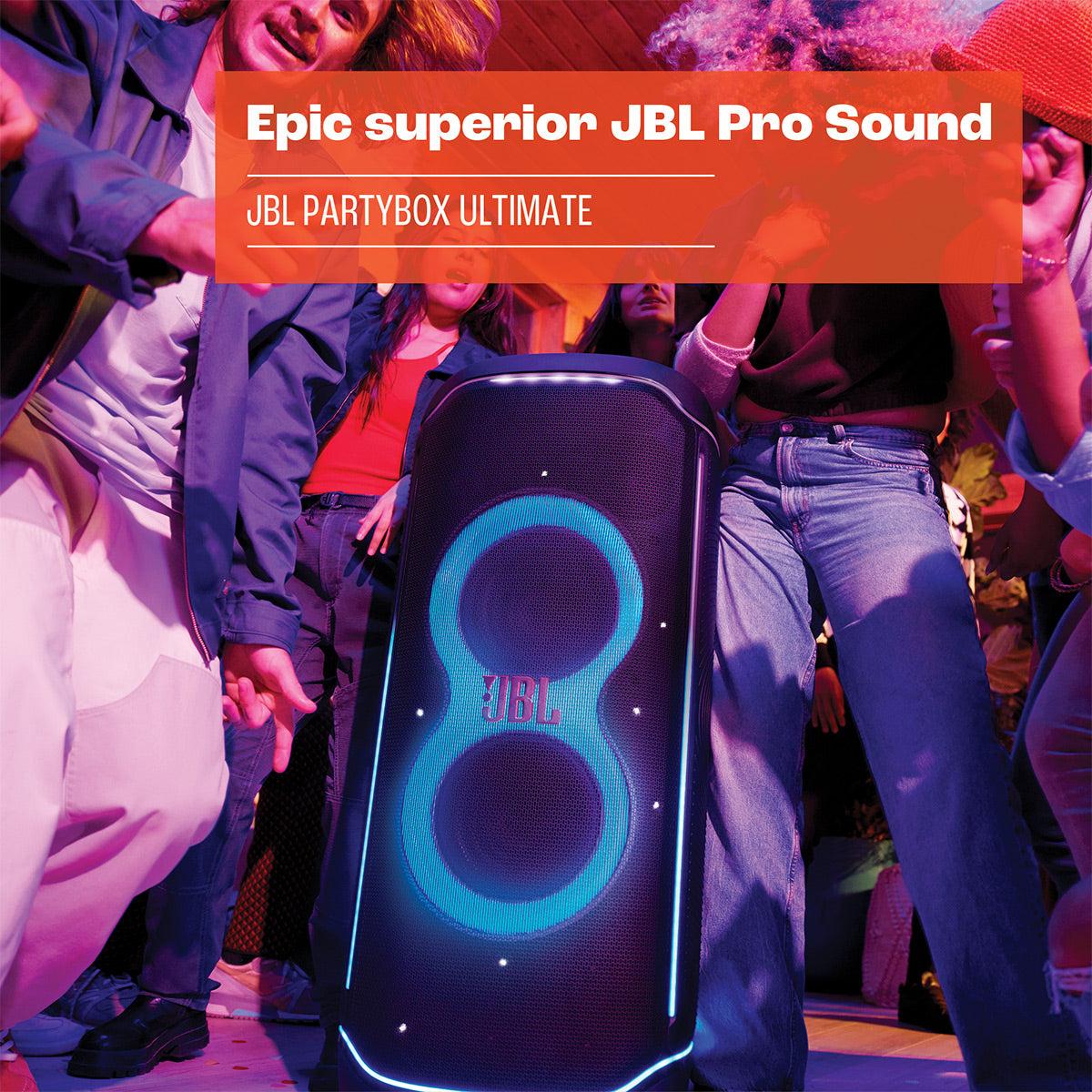
Professional measurements show the Ultimate reaching 116+ dB at one meter—loud enough to cause hearing damage with prolonged exposure. This isn't hyperbole; it's genuinely powerful enough to fill spaces the size of small auditoriums or large outdoor venues.
The Ultimate is one of the first party speakers to support Dolby Atmos, a surround sound technology that creates three-dimensional audio experiences. While most party speakers are essentially loud mono or basic stereo, Dolby Atmos uses psychoacoustic processing to make sounds appear to come from above, beside, and behind the listener.
This feature only works when streaming over Wi-Fi (not Bluetooth), and it requires compatible source material. When it works, the effect is genuinely impressive—drums seem to surround you, and vocals appear to float in space. For a party speaker, this represents a significant technological leap forward.
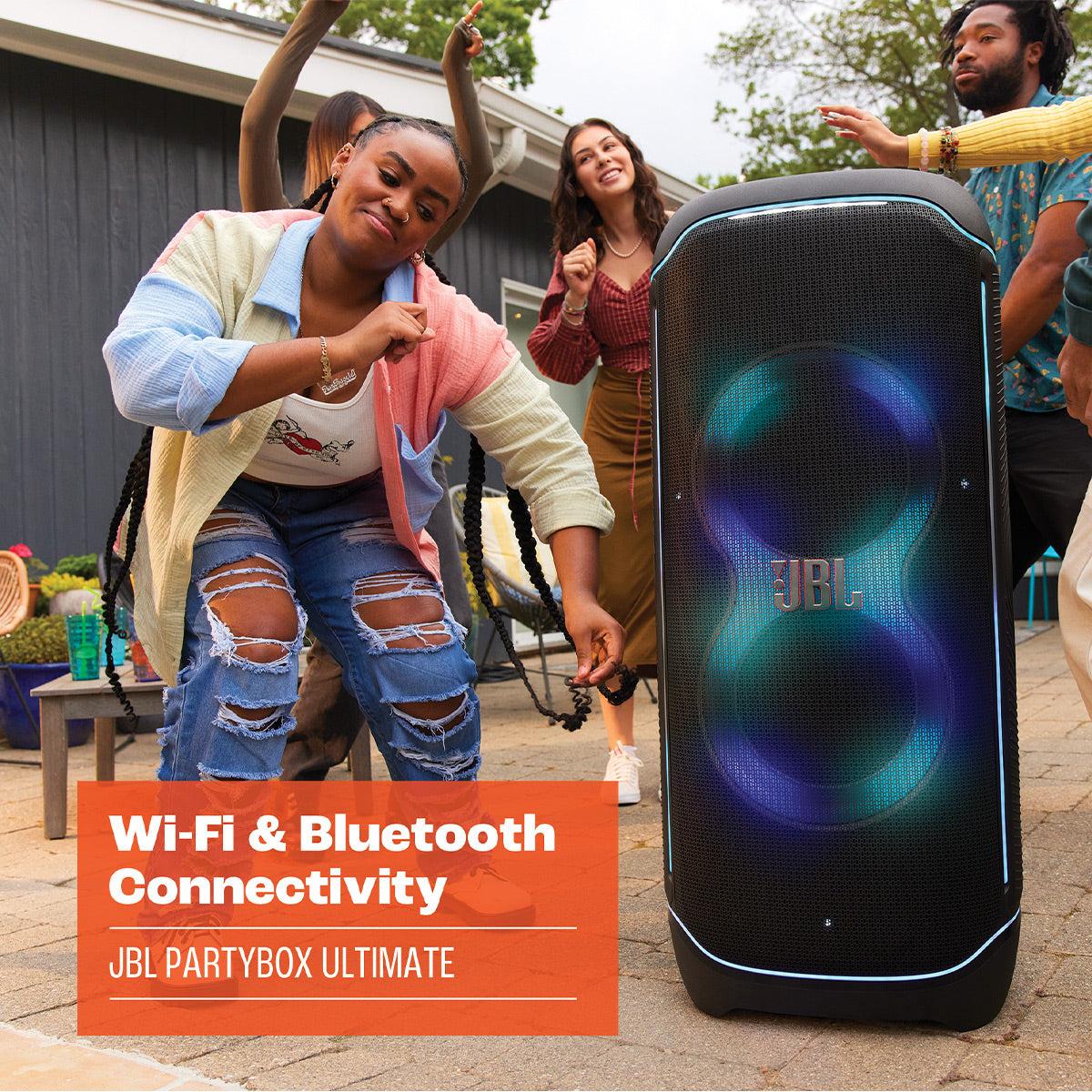
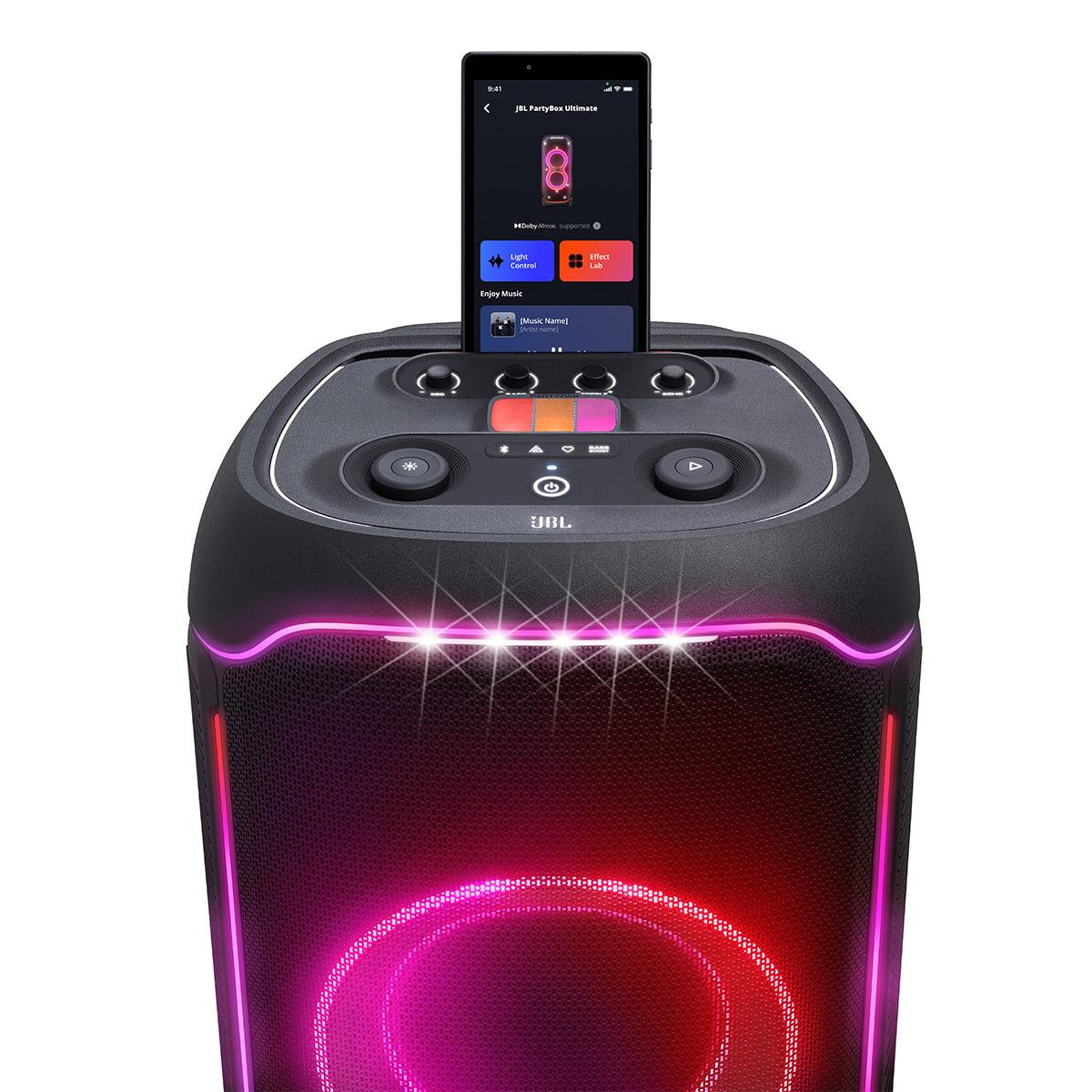
The Ultimate's Wi-Fi 6 support enables features impossible with Bluetooth alone. Lossless audio streaming maintains full quality without the compression that Bluetooth requires. Multi-room integration through protocols like AirPlay 2 and Chromecast means the speaker can integrate with smart home systems and stream different music to different zones simultaneously.
The practical benefit? Your phone stays connected to the speaker even when someone calls you, eliminating those awkward party interruptions when the music suddenly stops.
The Club 120 comfortably handles gatherings of 10-15 people in typical home environments. Push it beyond that, and while it won't distort, it starts to strain in larger spaces or outdoors where sound dissipates quickly.
The Ultimate is designed for 50+ person events. In professional testing scenarios, it easily fills spaces where the Club 120 would sound overwhelmed. However, this power comes with a significant downside for home use—it's genuinely too loud for most residential applications.
The Club 120 aims for versatility. Its balanced tuning works equally well for background dinner music and late-night dance sessions. The frequency response accommodates everything from hip-hop's deep bass to classical music's delicate highs without obvious weaknesses.
The Ultimate prioritizes impact over subtlety. The sound signature is tuned for maximum excitement—punchy bass that you feel in your chest, forward vocals that cut through crowd noise, and bright highs that maintain presence at extreme volumes. It's thrilling at a party but potentially fatiguing for extended listening sessions.
Both speakers handle Bluetooth reliably, but the Ultimate adds Wi-Fi capabilities that the Club 120 can't match. However, most party scenarios don't require lossless streaming or smart home integration—Bluetooth works fine for typical use.
The Club 120's Auracast wireless multi-speaker connection is more immediately useful for most people. You can pair two units for stereo sound or connect multiple speakers for larger coverage areas without running cables or dealing with Wi-Fi network complications.
Neither speaker is designed as a primary home theater solution, but they handle different secondary roles well. The Club 120 works great for outdoor movie nights or moving the party from the living room to the patio without missing a beat.
The Ultimate could theoretically serve as a powerful center channel or main speaker for a basement theater, but its party-oriented tuning and lack of precise imaging make it less than ideal. The absence of HDMI or optical inputs also limits integration with TV systems.
Mobile DJs increasingly choose the Club 120 for smaller venues because it combines serious audio quality with practical portability. The microphone inputs support announcements and karaoke, while the battery operation eliminates power concerns in challenging venues.
The Ultimate targets permanent installations or events with dedicated power infrastructure. Wedding planners, corporate event coordinators, and venue operators appreciate its ability to handle large crowds without requiring complex multi-speaker systems.
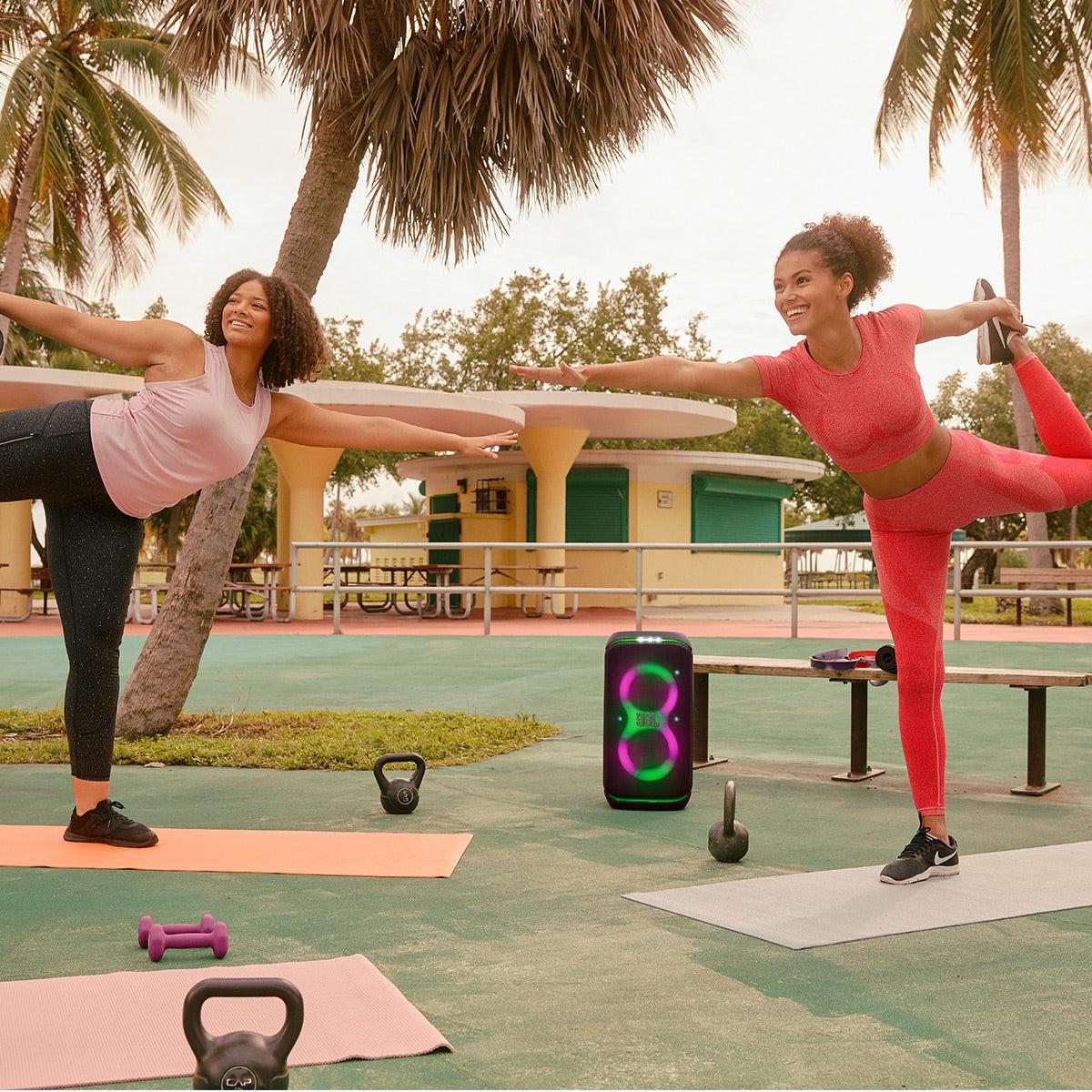
This is where the fundamental difference becomes clear. The Club 120 dominates outdoor applications thanks to its battery operation and weather resistance. Pool parties, camping trips, beach gatherings, and backyard barbecues all benefit from its grab-and-go convenience.
The Ultimate requires AC power, immediately limiting outdoor use to venues with electrical infrastructure. While it could theoretically run on a generator, the setup complexity defeats the purpose of portable entertainment.
At the time of writing, the Club 120 costs significantly less than the Ultimate—roughly one-third the price. This creates an interesting value proposition where the cheaper speaker actually offers more practical utility for most consumers.
The Club 120 delivers exceptional performance-per-dollar, including features like battery operation, weather resistance, and live inputs that speakers costing twice as much often omit. Its build quality matches speakers in higher price brackets, and the replaceable battery extends its useful life considerably.
The Ultimate represents commercial-grade equipment pricing, which makes sense given its professional-level output and features. However, the high cost becomes harder to justify if you can't utilize its full capabilities due to space or power limitations.
JBL's 2024 PartyBox refresh incorporated several technologies that have since influenced the broader party speaker market. The AI Sound Boost processing in the Club 120 represents a significant advancement in preventing distortion at high volumes—something that required expensive professional equipment just a few years ago.
The Ultimate's integration of Dolby Atmos into a party speaker format was genuinely pioneering. While other manufacturers have since followed suit, JBL was first to make immersive audio accessible in this market segment.
Both speakers benefit from improved Bluetooth codecs and more stable wireless connections compared to earlier generations. The multi-speaker pairing capabilities represent a major step forward in creating flexible audio systems without the complexity of traditional PA setups.
The decision between these speakers ultimately comes down to honest assessment of your actual needs versus your aspirations. The Club 120 serves 90% of real-world party scenarios brilliantly, while the Ultimate targets the remaining 10% that require maximum impact.
Choose the Club 120 if you value versatility, portability, and practical features over maximum output. It's the better choice for home use, outdoor events, and situations where you need to move the speaker regularly. The battery operation alone makes it infinitely more flexible than AC-powered alternatives.
The Ultimate makes sense if you're buying for commercial applications, have dedicated event spaces with power access, or regularly host very large gatherings. Its technological advances are impressive, but they come with significant practical limitations for typical consumer use.
Both speakers represent excellent engineering within their intended use cases. The key is choosing the one that matches your actual needs rather than getting swept up in maximum power specifications that you may never be able to fully utilize.
| JBL PartyBox Club 120 | JBL PartyBox Ultimate |
|---|---|
| Power Output - Determines maximum volume and room coverage | |
| 160W RMS (fills medium spaces, 15 people max) | 1100W RMS (fills large venues, 50+ people) |
| Portability - Critical for versatile use and outdoor events | |
| 24.35 lbs with foldable handle, single-person transport | 87 lbs with wheels, requires two people to move |
| Power Source - Affects placement flexibility and outdoor use | |
| Built-in battery (up to 12 hours), fully wireless operation | AC-powered only, requires electrical outlet access |
| Weather Protection - Important for poolside and outdoor parties | |
| IPX4 splash-proof (handles rain and spills) | No specified weather resistance |
| Audio Quality Approach - Different tuning philosophies | |
| Balanced sound for versatile listening and parties | Commercial tuning optimized for maximum impact |
| Advanced Connectivity - Streaming quality and smart features | |
| Bluetooth 5.4, Auracast multi-speaker pairing | Wi-Fi 6, Bluetooth 5.3, AirPlay 2, Chromecast, Dolby Atmos |
| Live Performance Features - Microphone and instrument support | |
| Dual mic/guitar inputs with individual controls, karaoke EQ | Dual mic/guitar inputs, limited live performance details |
| Lightshow Features - Visual entertainment value | |
| RGB lights, starry effects, trails, app-customizable | Multi-dimensional show with ground projection, PartyPad DJ controls |
| Driver Configuration - Affects bass response and sound quality | |
| 2x 5.25" woofers, 2x 2.25" tweeters | 2x 9" woofers, 2x 4.5" midrange, 2x 2.75" tweeters |
| Maximum Sound Pressure - Raw volume capability | |
| Suitable for backyard parties and medium indoor spaces | 116+ dB capability, concert-level output |
| Multi-Speaker Connectivity - Expanding your sound system | |
| True Wireless Stereo pairing, Auracast wireless connection | Wireless pairing, daisy-chaining via audio cable |
| Value Proposition - Performance per dollar spent | |
| Exceptional features and performance for the price point | Professional-grade equipment at commercial pricing |
| Ideal Use Cases - Who should buy each speaker | |
| Home parties, outdoor events, portable DJ setups | Large venues, commercial events, permanent installations |
The JBL PartyBox Club 120 is significantly better for home use due to its manageable size, battery operation, and balanced sound tuning. At 24 pounds, it can easily move between rooms and outdoors without requiring power outlets. The JBL PartyBox Ultimate weighs 87 pounds and produces commercial-level volume that's often too loud for residential spaces, making it impractical for most home environments.
The primary difference is scale and portability. The JBL PartyBox Club 120 is a portable, battery-powered speaker designed for gatherings of 15 people or fewer, while the JBL PartyBox Ultimate is a massive, AC-powered speaker built for large venues and events with 50+ attendees. The Ultimate delivers nearly 7 times more power but sacrifices all portability.
Only the JBL PartyBox Club 120 works outdoors without power thanks to its built-in rechargeable battery that provides up to 12 hours of playtime. The JBL PartyBox Ultimate requires constant AC power connection, limiting outdoor use to venues with electrical infrastructure like pavilions or event spaces with generators.
The JBL PartyBox Ultimate is dramatically more powerful with 1100W output compared to the Club 120's 160W. The Ultimate can reach concert-level volumes of 116+ dB and fill spaces equivalent to two basketball courts. However, this extreme power is often unnecessary and impractical for typical consumer use cases.
Both speakers support karaoke and live performances with dual microphone and guitar inputs. The JBL PartyBox Club 120 offers more detailed live performance controls with individual volume and gain settings, plus dedicated karaoke EQ tuning. The Ultimate has similar inputs but focuses more on raw power than performance features.
Sound quality depends on your priorities. The JBL PartyBox Club 120 offers more balanced, versatile sound suitable for various music genres and listening scenarios. The JBL PartyBox Ultimate delivers more impactful, commercial-grade sound with deeper bass and higher volume capability, but it's tuned for maximum excitement rather than balanced listening.
Yes, both speakers support multi-speaker connectivity but through different methods. The JBL PartyBox Club 120 uses Auracast wireless technology and True Wireless Stereo pairing for easy setup. The Ultimate supports wireless pairing and can also daisy-chain via audio cables for expanded coverage in large venues.
The JBL PartyBox Club 120 offers exceptional value with its combination of portability, battery operation, weather resistance, and comprehensive features at a much lower price point. The Ultimate represents commercial-grade equipment pricing, which is justified for professional applications but may be excessive for typical consumer needs.
Neither speaker is designed as a primary home theater solution. The JBL PartyBox Club 120 works better for supplemental use like outdoor movie nights or moving entertainment between rooms. The Ultimate lacks home theater-specific features like HDMI inputs and produces sound that's more suited to parties than precise movie dialogue.
The JBL PartyBox Ultimate offers superior connectivity with Wi-Fi 6, AirPlay 2, Chromecast, and Dolby Atmos support over Wi-Fi streaming. The Club 120 focuses on practical connectivity with reliable Bluetooth, USB playback, and multi-speaker wireless pairing that's easier to set up for most users.
The JBL PartyBox Club 120 features IPX4 splash-proof rating, protecting against water splashes and light rain, making it suitable for poolside use. The Ultimate doesn't specify weather resistance and requires AC power, making it unsuitable for typical pool party scenarios where splashing and moisture are concerns.
For large outdoor events, choose based on power availability. If you have electrical access, the JBL PartyBox Ultimate provides the volume and coverage needed for big crowds. However, if you need true portability without power infrastructure, the Club 120 is your only option, though it may require multiple units for very large spaces.
We've done our best to create useful and informative comparisons to help you decide what product to buy. Our research uses advanced automated methods to create this comparison and perfection is not possible - please contact us for corrections or questions. These are the sites we've researched in the creation of this article: stereoguide.com - armorsound.com - rtings.com - rtings.com - bestbuy.com - youtube.com - soundguys.com - youtube.com - lbtechreviews.com - youtube.com - youtube.com - versus.com - jbl.com - rtings.com - versus.com - ro.harmanaudio.com - dell.com - jbl.com - jbl.com - projectorscreenstore.com - audioadvice.com - youtube.com - crutchfield.com - youtube.com - youtube.com - youtube.com - youtube.com - versus.com - youtube.com - rtings.com - youtube.com - youtube.com - jbl.com - pcx.com.ph - global.jbl.com - gzhls.at - electronicexpress.com - harmanaudio.in - jbl.com - dell.com - robot-advance.com - device.report - ro.harmanaudio.com

Privacy Policy
Terms and Conditions - Affiliate Policy
Home Security
© Copyright 2008-2026.
11816 Inwood Rd #1211, Dallas, TX 75244