

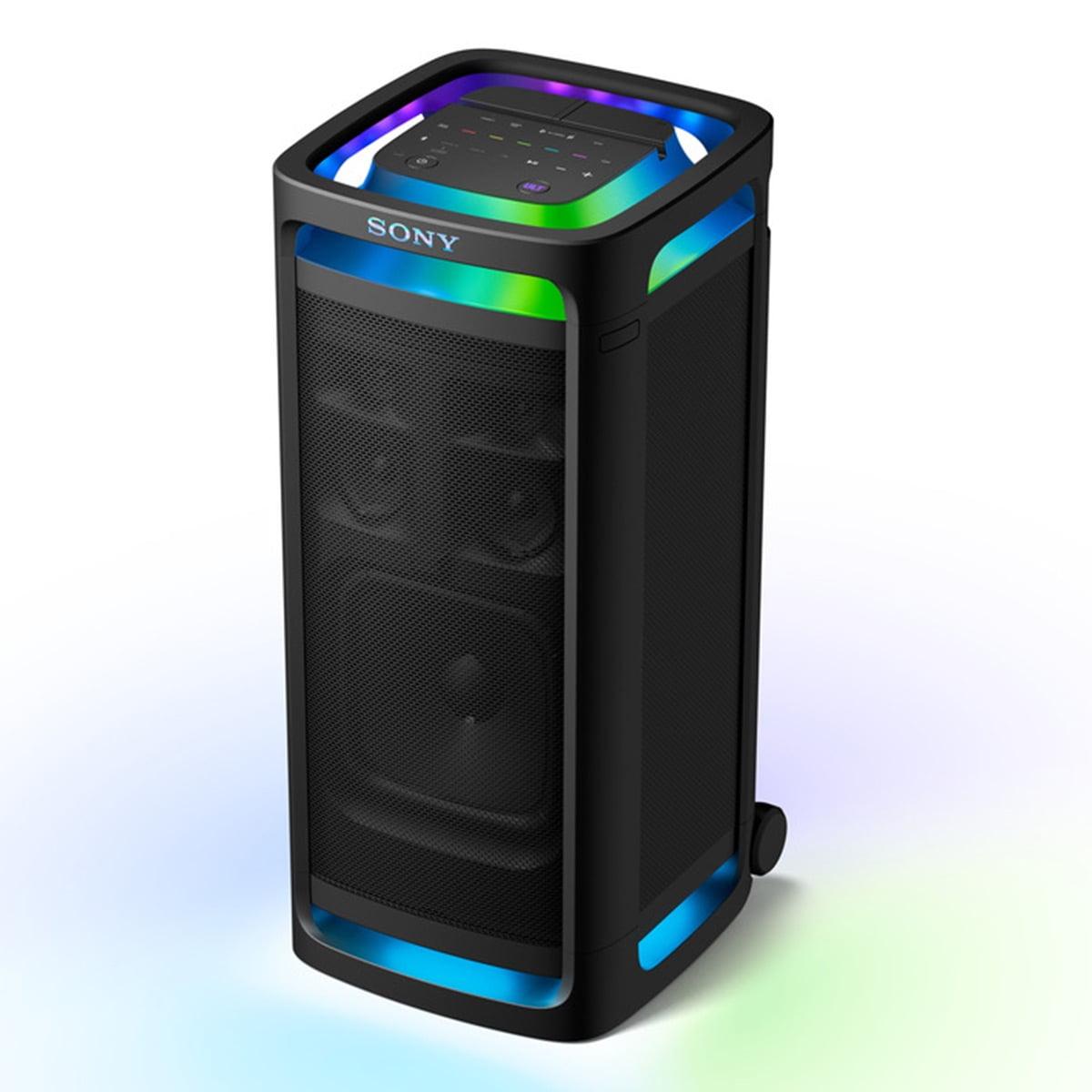
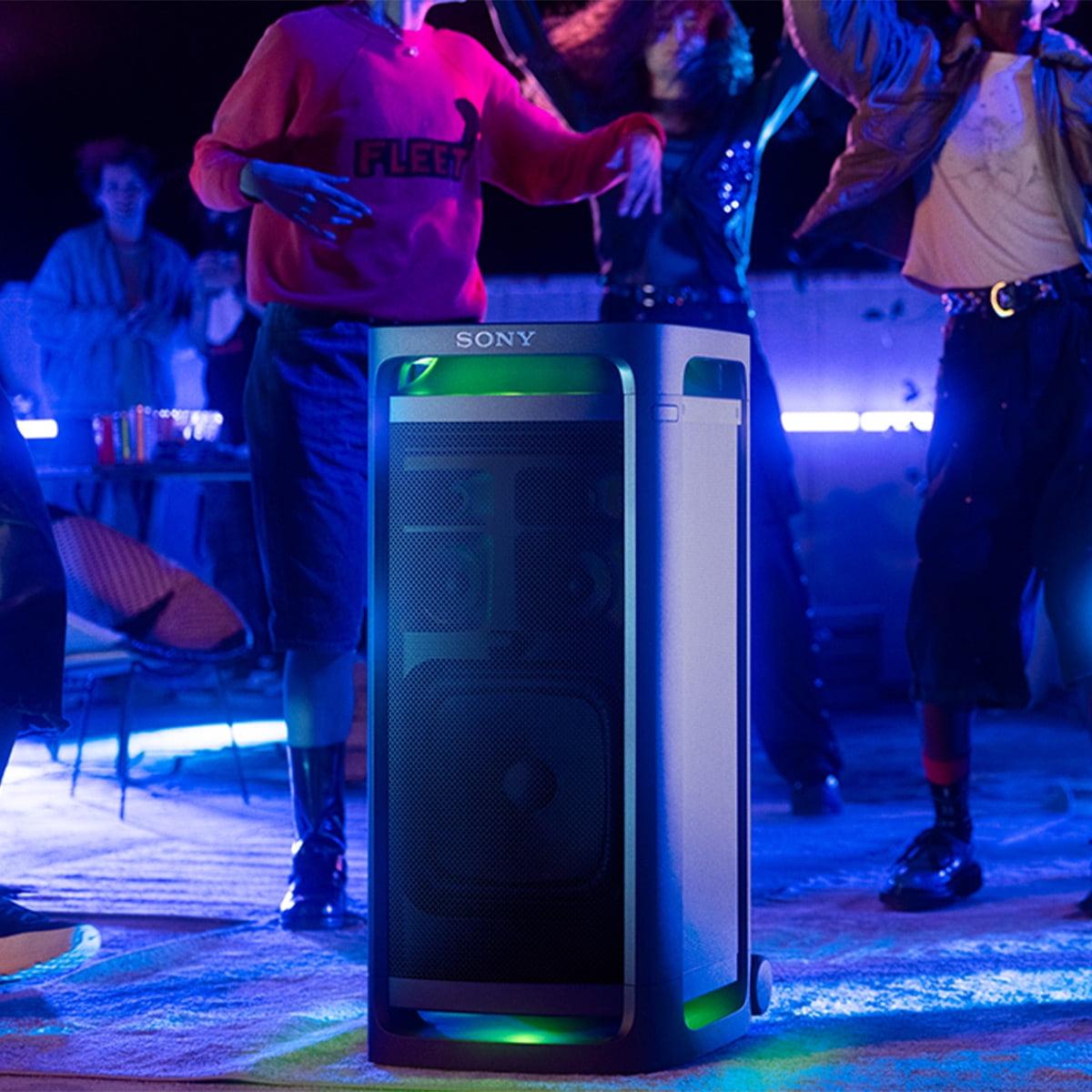
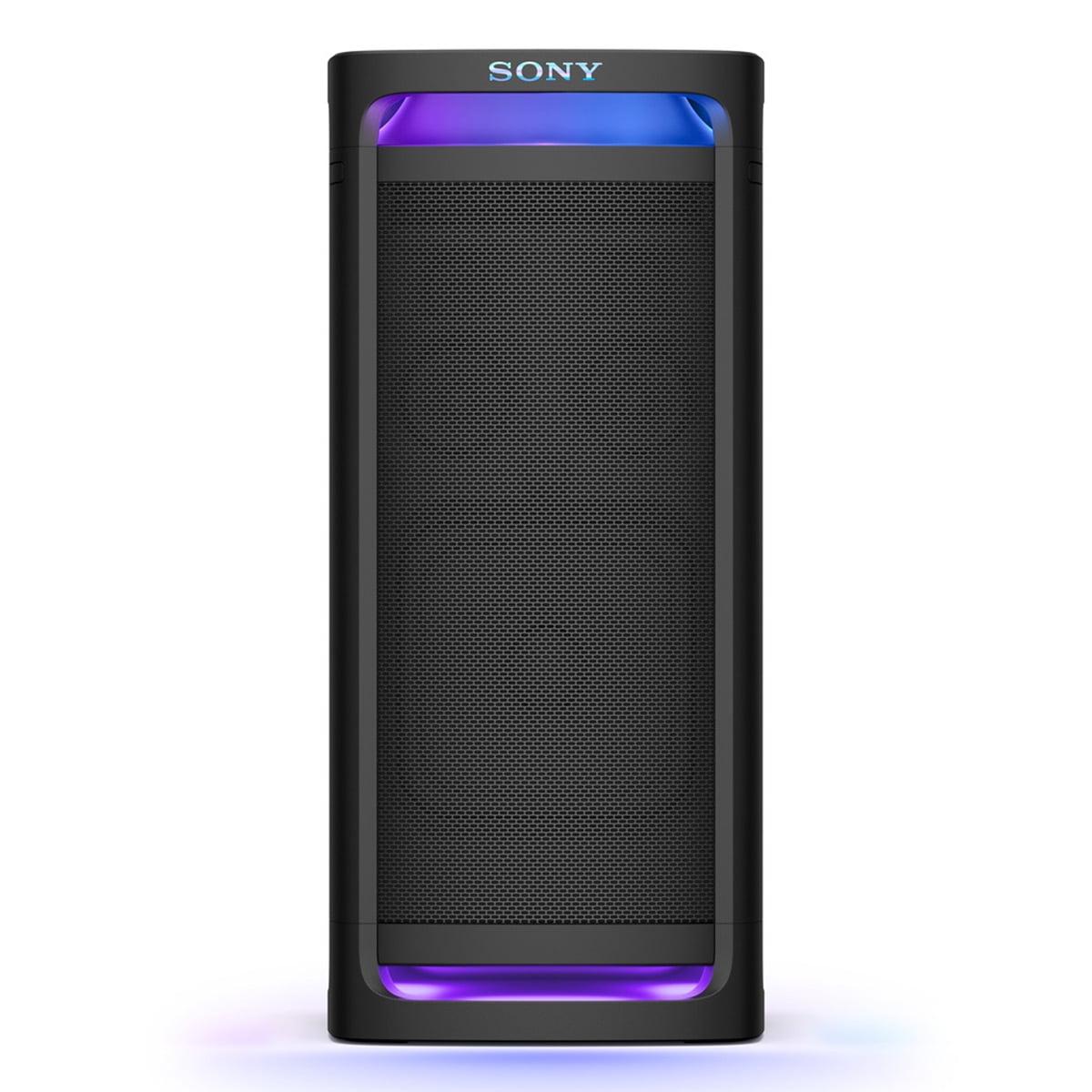
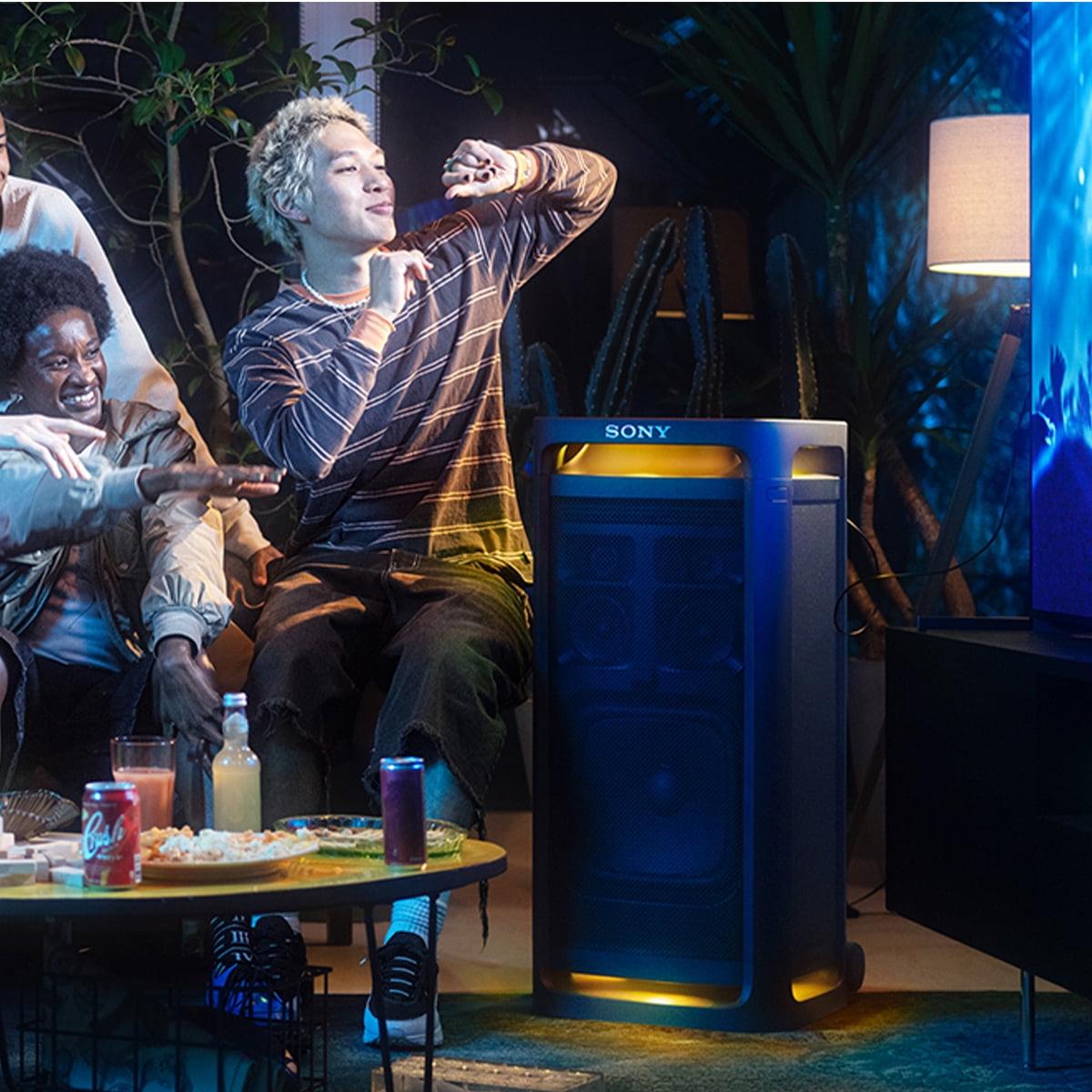
When you're planning the perfect party, nothing kills the vibe faster than weak, distorted audio struggling to fill your space. That's where high-powered party speakers come in—these audio beasts are designed to pump out serious volume while maintaining crystal-clear sound quality that gets everyone moving. Today, we're diving deep into two heavyweights: the Sony ULT Tower 9AC and the JBL PartyBox Ultimate.
Party speakers aren't just regular speakers turned up loud. They're engineering marvels that balance multiple competing demands. First, they need massive power output—we're talking about filling spaces equivalent to gymnasiums or large backyards where regular speakers would sound like whispers. Second, they must maintain audio clarity even at ear-splitting volumes, which requires sophisticated driver designs and digital signal processing (DSP)—computer chips that optimize the audio signal in real-time.
The bass response is particularly crucial. Dance music, hip-hop, and electronic genres demand deep, punchy low frequencies that you can feel in your chest. This requires large woofers (the big speakers that handle bass) and carefully designed enclosures that amplify these low frequencies without creating muddy, boomy sound.
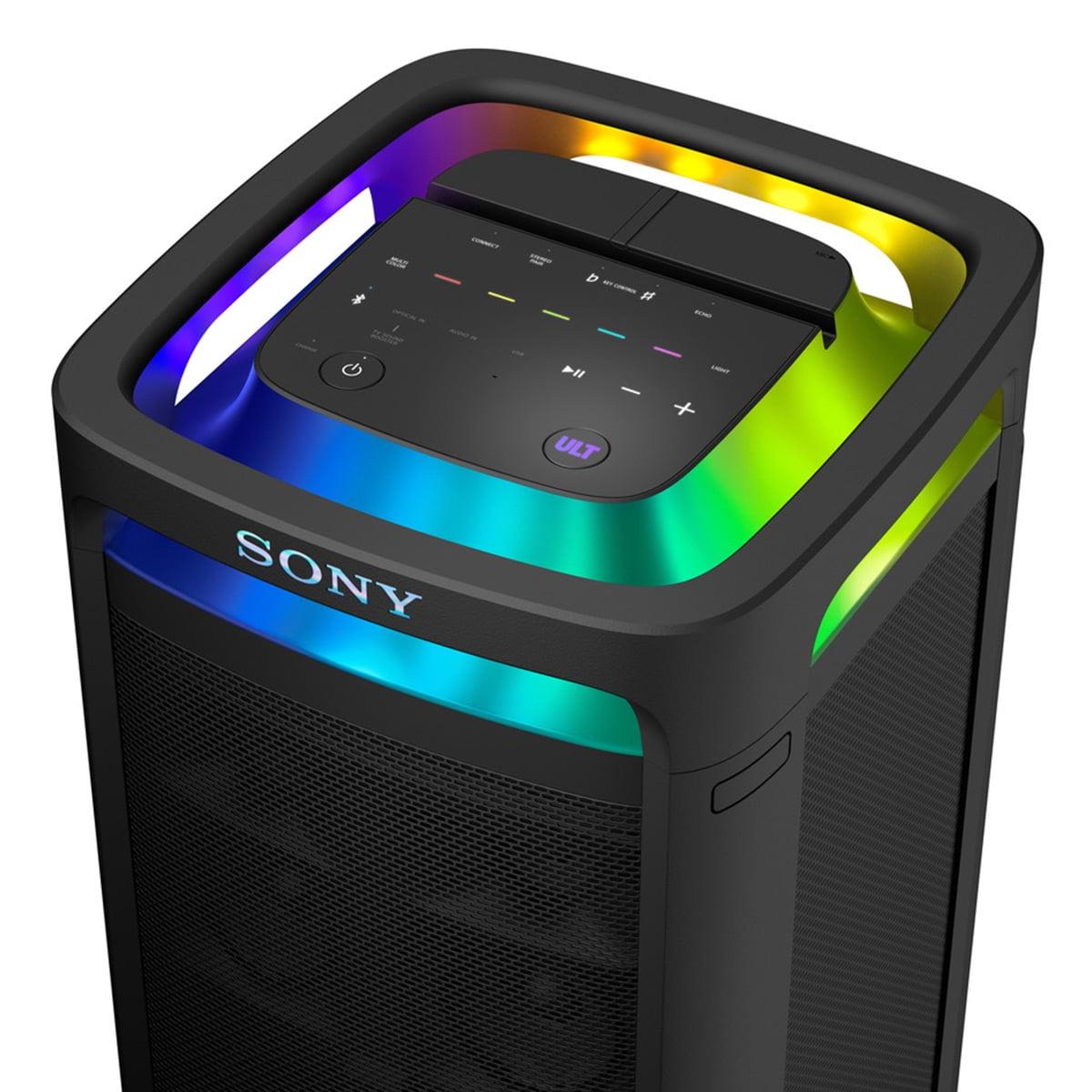
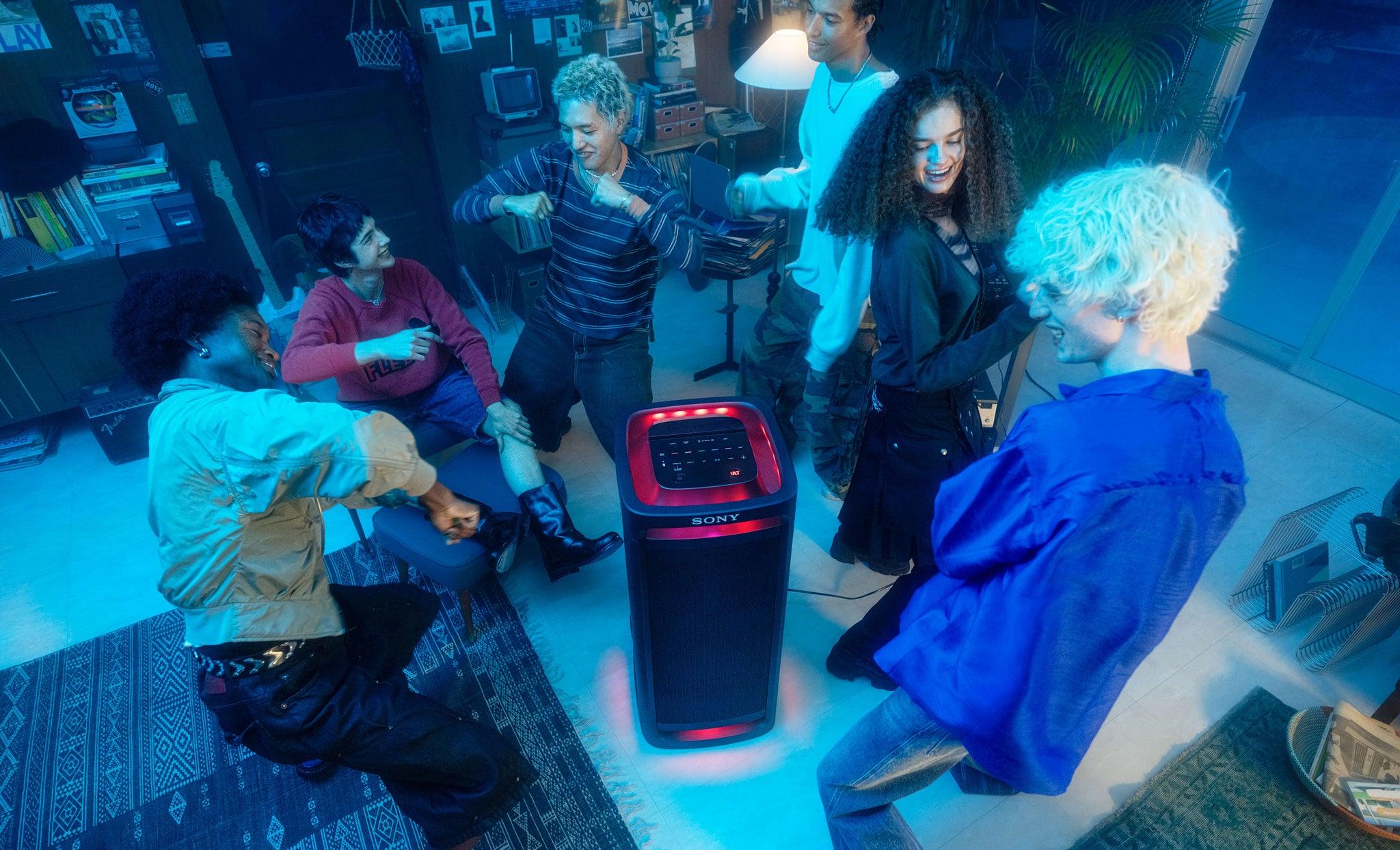
Visual appeal matters too. Modern party speakers incorporate synchronized lighting systems that pulse and flash with the music, creating an immersive experience that transforms any space into a mini nightclub. These aren't just decorative—the lighting systems use advanced algorithms to analyze the music and trigger appropriate visual effects.
The Sony ULT Tower 9AC, released in 2024, represents Sony's renewed focus on the party speaker market after years of relative absence. Sony's approach emphasizes precision and control—they want to give users tools to shape their audio experience rather than just blasting sound at maximum volume.
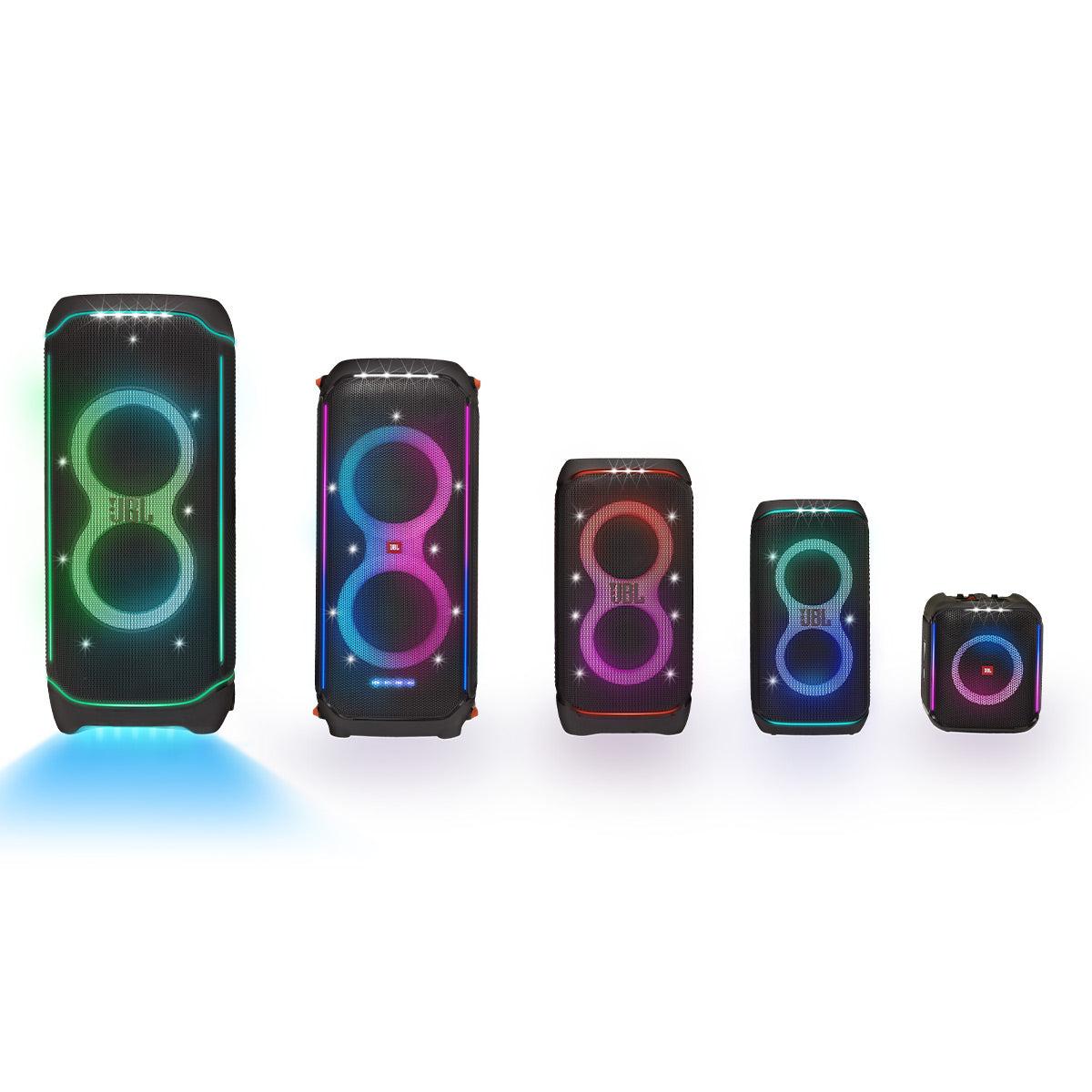
The JBL PartyBox Ultimate, also launched in 2024, takes a different approach. JBL has dominated the party speaker category for years, and this model represents their "no compromise" philosophy—maximum power, maximum features, maximum impact. It's their flagship model designed to outperform everything else in their extensive lineup.
In party speakers, power output directly correlates with how large a space you can effectively fill with quality sound. This isn't about being the loudest neighbor (though it might have that side effect)—it's about maintaining audio clarity and bass impact across large areas where people are spread out.
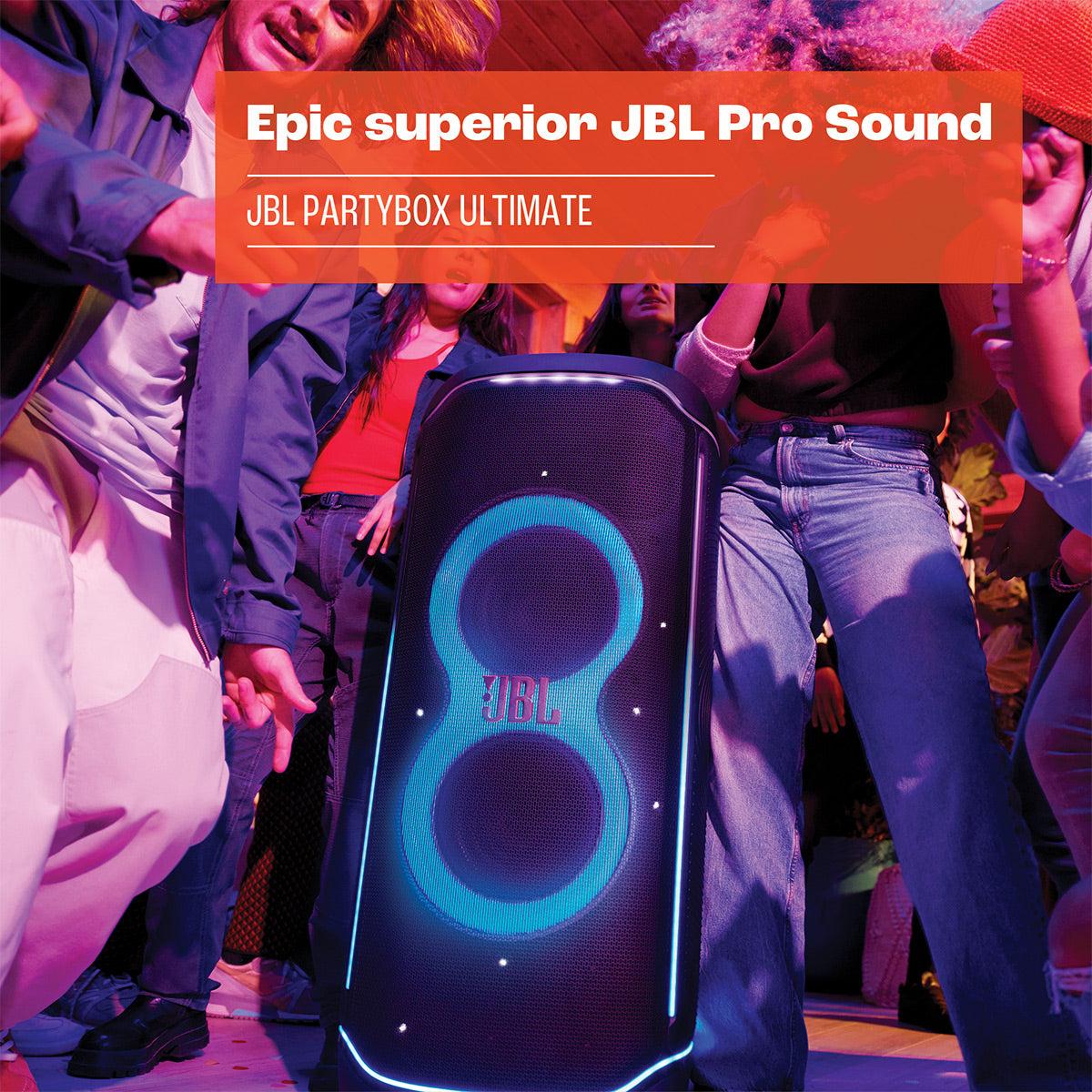
The JBL PartyBox Ultimate delivers a staggering 1100 watts RMS (Root Mean Square)—the honest measurement of continuous power output, not the inflated "peak" numbers you sometimes see advertised. This translates to measured sound levels reaching 109.4 decibels on the A-weighted scale (which emphasizes frequencies our ears are most sensitive to) and 116.7 decibels on the C-weighted scale (which captures more low-frequency content). To put this in perspective, 110 decibels is roughly equivalent to standing near a chainsaw or motorcycle.
The Sony ULT Tower 9AC doesn't publish its RMS wattage, but based on its 148-watt power consumption and typical amplifier efficiency, it's likely producing somewhere in the 80-120 watt RMS range. This might sound dramatically less powerful, but Sony's efficiency-focused design still produces impressive volume levels—just not quite at the JBL's stadium-filling intensity.
For practical purposes, the JBL can effectively cover spaces equivalent to two basketball courts, while the Sony excels in medium to large indoor spaces like big living rooms, garages, or moderate-sized backyards. The power difference becomes most apparent when you're trying to maintain bass impact and vocal clarity at longer distances.
Bass reproduction separates good party speakers from great ones. It's not just about making things loud—it's about creating that physical sensation that makes people want to dance.
The Sony ULT Tower 9AC features Sony's innovative X-Balanced woofer technology. Instead of a traditional circular driver, Sony uses a nearly square 320mm × 320mm woofer. This unconventional shape maximizes the surface area within the speaker cabinet, allowing the driver to move more air with less distortion. The result is bass that's not just loud but controlled and articulate.
Sony's ULT button system gives you two distinct bass modes: ULT1 emphasizes deeper, sub-bass frequencies that you feel more than hear, while ULT2 provides more punchy, mid-bass impact that cuts through other instruments. This level of bass customization is rare in party speakers and addresses a common complaint—that most party speakers have overwhelming, one-note bass that drowns out everything else.
The JBL PartyBox Ultimate takes a more traditional but aggressive approach with dual 9-inch woofers. While these are smaller individually than Sony's massive square driver, having two of them provides several advantages. The combined surface area is substantial, and the dual-woofer design can handle more power while reducing individual driver stress. User reports suggest the JBL's bass is approximately 20% more powerful than even JBL's previous flagship models.
However, this raw power comes with trade-offs. Multiple reviews note that the JBL's bass can be overwhelming in typical indoor spaces, making it less suitable for home use unless you have a very large room or primarily use it outdoors.
Raw power means nothing if the sound quality suffers, and this is where the engineering philosophies really diverge.
The Sony ULT Tower 9AC uses a seven-driver configuration specifically designed for 360-degree sound projection. This includes the large square woofer, two 120mm midrange drivers, two front-facing tweeters, and two rear-facing tweeters. The rear tweeters are particularly clever—they bounce sound off walls to create a more immersive soundfield that fills the entire space rather than just projecting forward.
Sony's Sound Field Optimization technology uses built-in microphones to analyze your room's acoustics and automatically adjust the sound signature. This means the speaker actually adapts to your environment, compensating for hard surfaces that might create echo or soft furnishings that absorb high frequencies.
The JBL PartyBox Ultimate counters with Dolby Atmos support over Wi-Fi—a feature typically found in high-end home theater systems. Dolby Atmos creates three-dimensional sound by precisely controlling how audio elements are positioned in space, making you feel like you're inside the music rather than just listening to it. The JBL also includes self-tuning acoustic calibration that automatically optimizes performance based on placement.
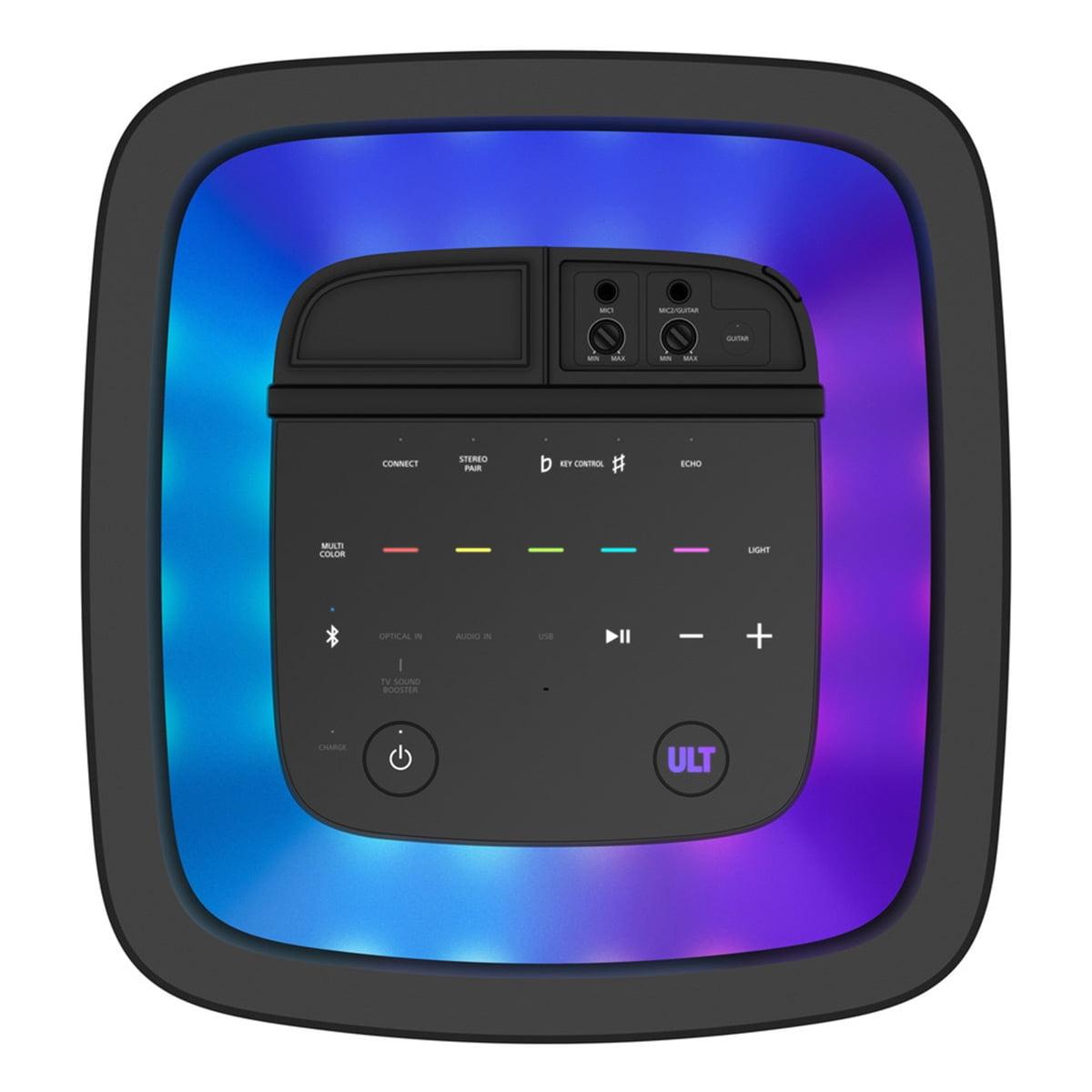
For home theater use, both speakers offer interesting possibilities. The Sony ULT Tower 9AC includes a dedicated TV Sound Booster mode and optical digital input, making it easy to connect to your TV and dramatically upgrade your entertainment system's audio. The rear tweeters help create a wider soundstage for movies and TV shows.
The JBL PartyBox Ultimate relies on its Wi-Fi connectivity for home theater integration, supporting AirPlay 2 and Chromecast for wireless streaming from compatible devices. While it lacks dedicated TV inputs, the Dolby Atmos processing can create impressive spatial effects for movie watching when streaming content wirelessly.
Modern party speakers are as much about visual spectacle as audio performance, and both speakers take this seriously, though with different approaches.
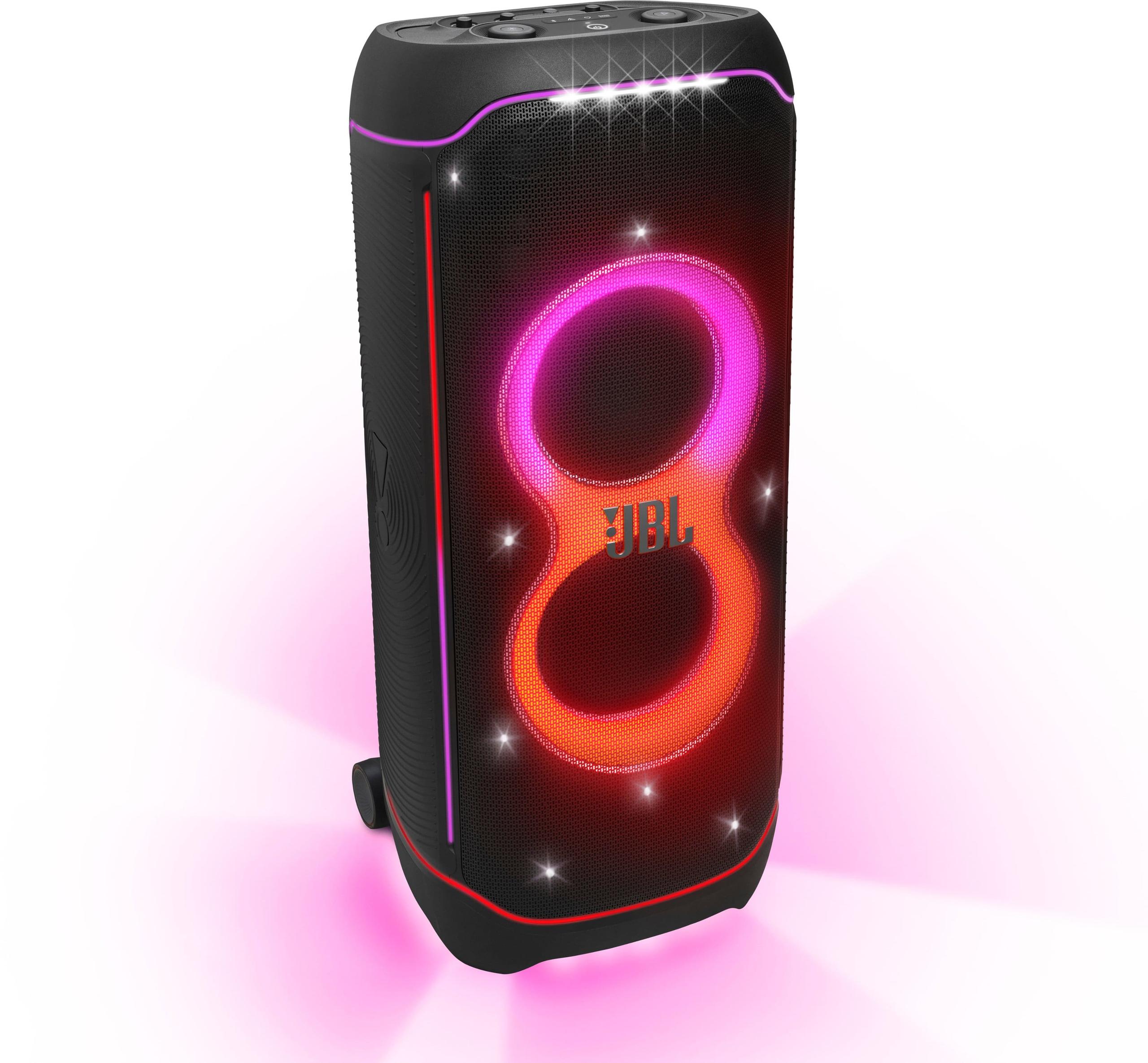
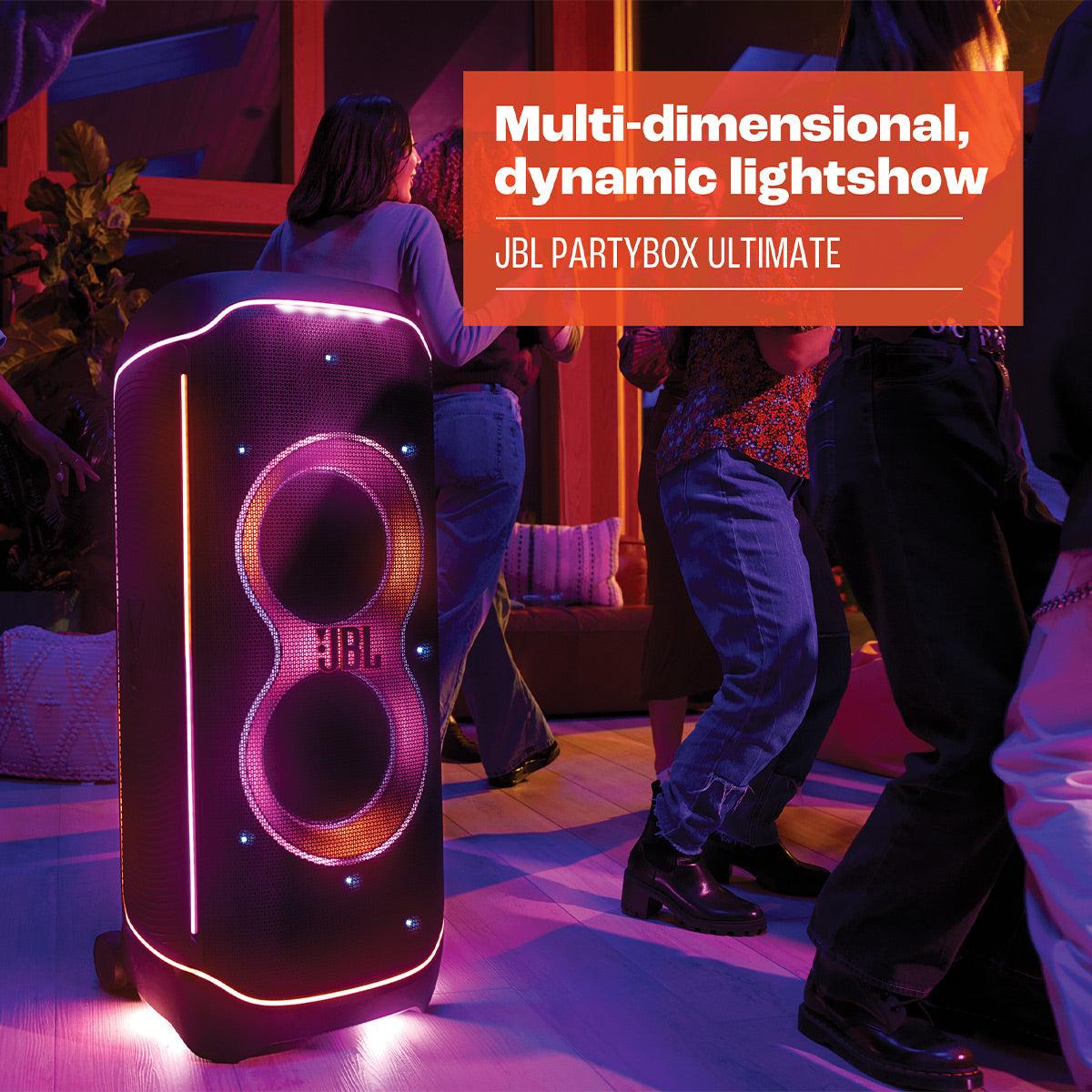
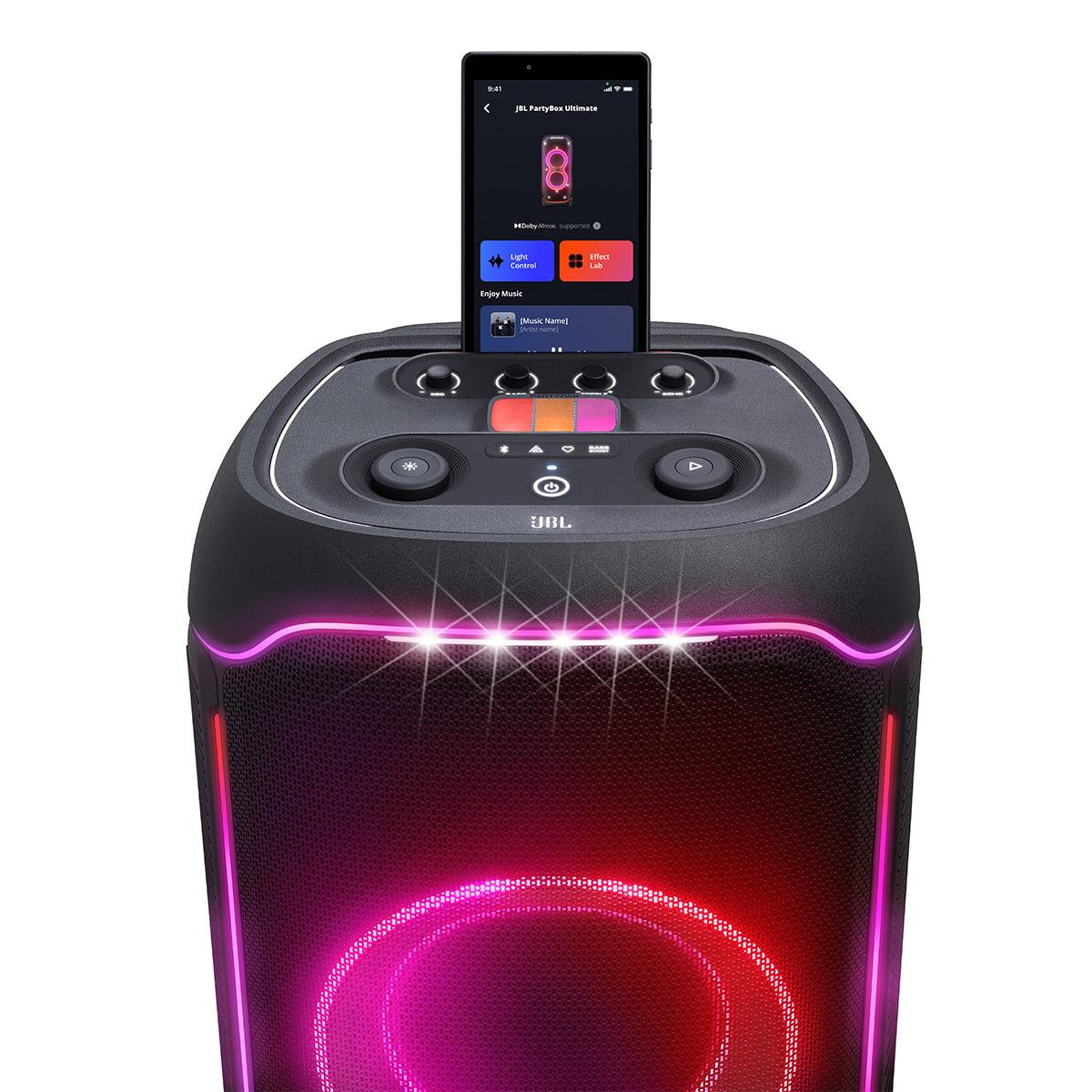
The JBL PartyBox Ultimate features what's arguably the most sophisticated lighting system in any party speaker. It includes multiple layers of RGB lighting: starry night LED arrays, light trails that sweep across the speaker, strobe effects, and ground projection that creates patterns on nearby surfaces. The system analyzes the music in real-time and synchronizes different lighting elements to create truly mesmerizing displays.
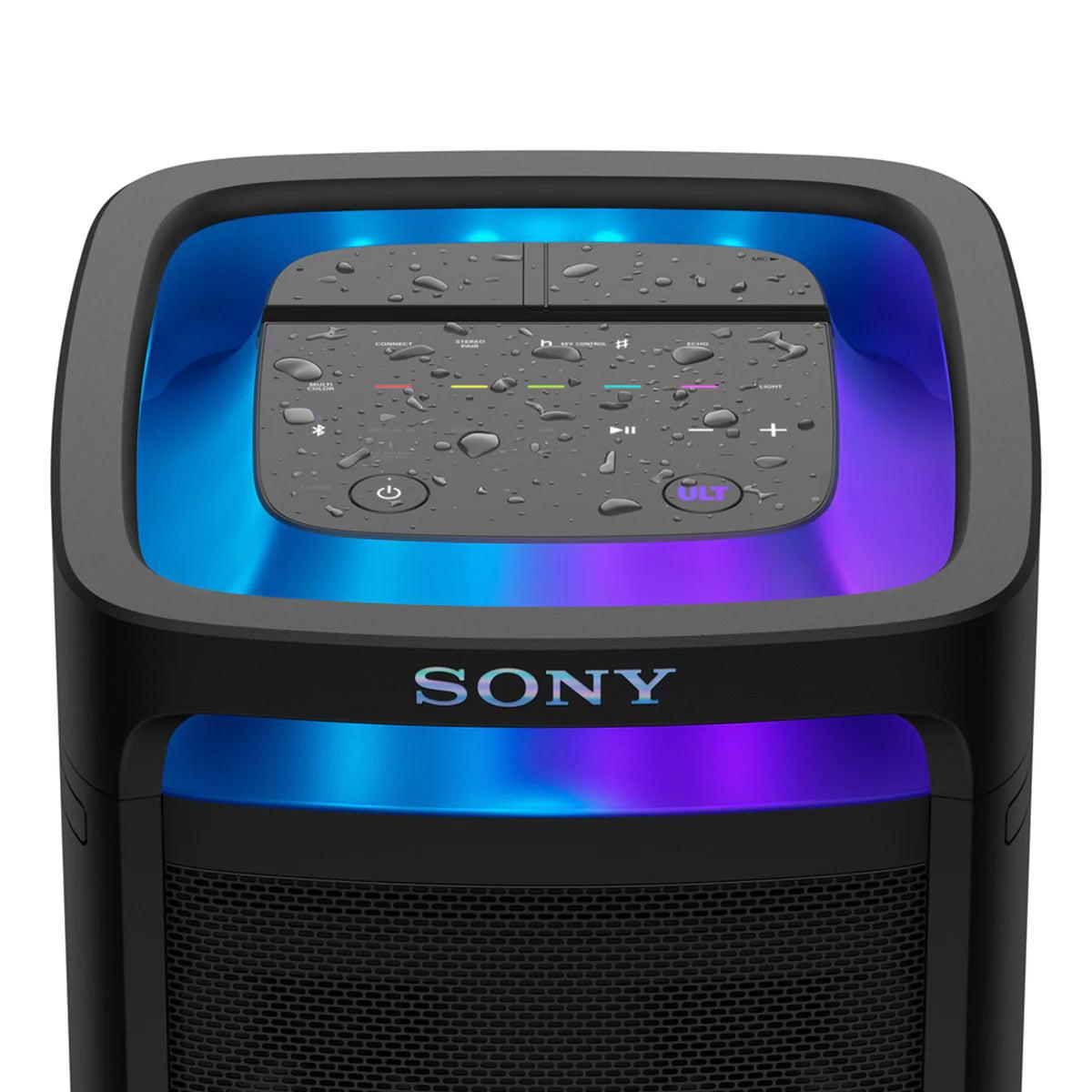
The Sony ULT Tower 9AC offers 360-degree party lighting that wraps around the entire speaker. While not as elaborate as the JBL's multi-layered system, Sony's approach ensures the visual effects are visible from any angle around the speaker. The lighting can be customized through Sony's mobile app, allowing you to adjust colors, patterns, and intensity.
Both systems work well, but the JBL's lighting is genuinely impressive enough to serve as the primary visual entertainment for a party, while Sony's system is more about enhancing the overall atmosphere.
Both speakers recognize that modern parties involve multiple audio sources and often multiple speakers working together.
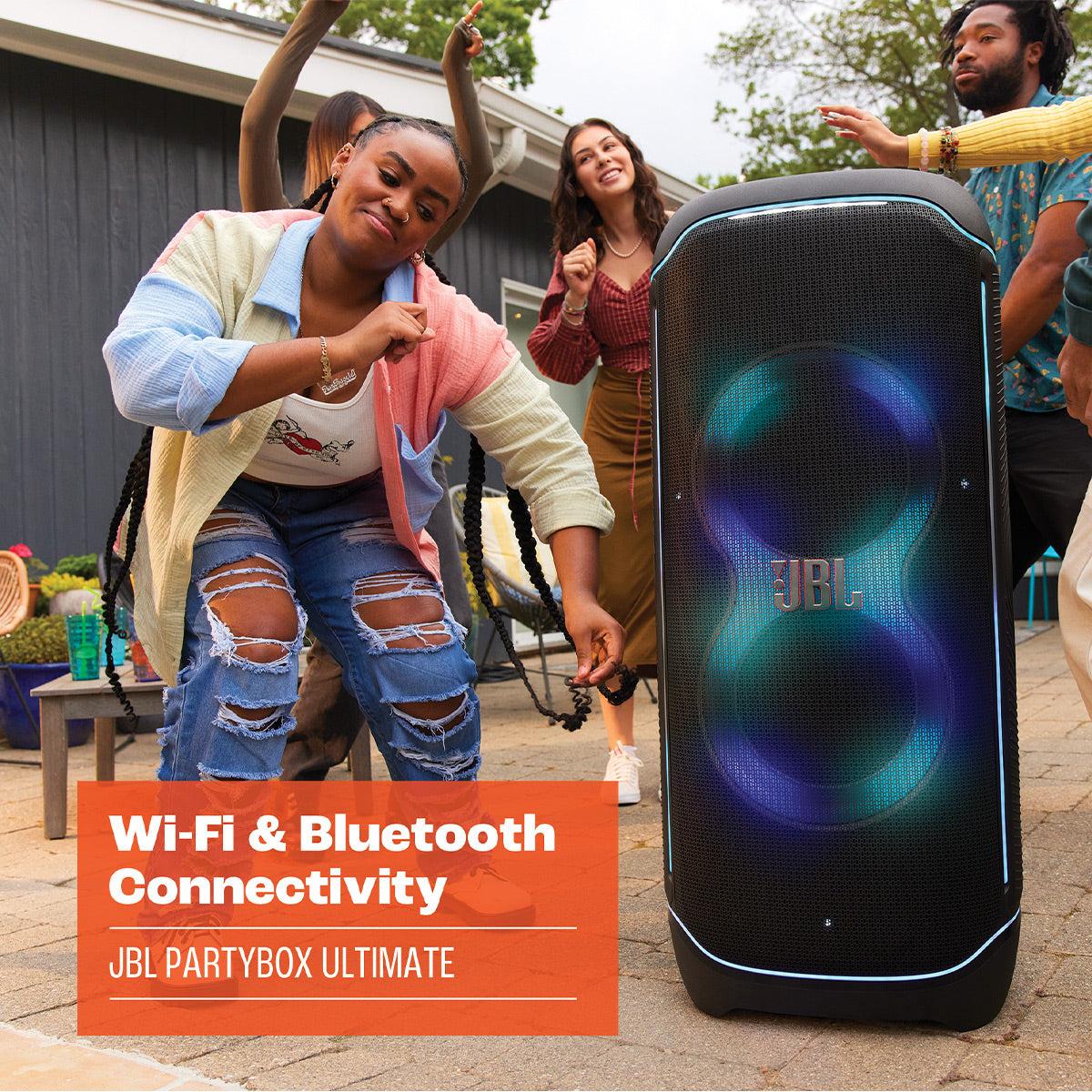
The JBL PartyBox Ultimate embraces the latest wireless technologies with Wi-Fi 6 support, enabling high-resolution audio streaming without the compression typically associated with Bluetooth. The Wi-Fi connection also allows for uninterrupted music playback even when someone calls or texts the connected phone—a surprisingly common party-killing scenario with Bluetooth-only speakers.
AirPlay 2, Chromecast built-in, and Spotify Connect support means virtually any smartphone, tablet, or computer can stream to the speaker without installing special apps. The speaker also supports True Wireless Stereo (TWS) pairing and can connect to multiple other JBL PartyBox speakers for larger events.
The Sony ULT Tower 9AC focuses more on wired connectivity options while still offering solid wireless features. Bluetooth 5.3 includes support for Sony's LDAC codec, which transmits nearly three times more data than standard Bluetooth, resulting in noticeably better wireless audio quality from compatible Android devices and Sony products.
Sony's Party Connect feature can link up to 100 compatible speakers—far more than most people would ever need, but it demonstrates the system's scalability for truly massive events.
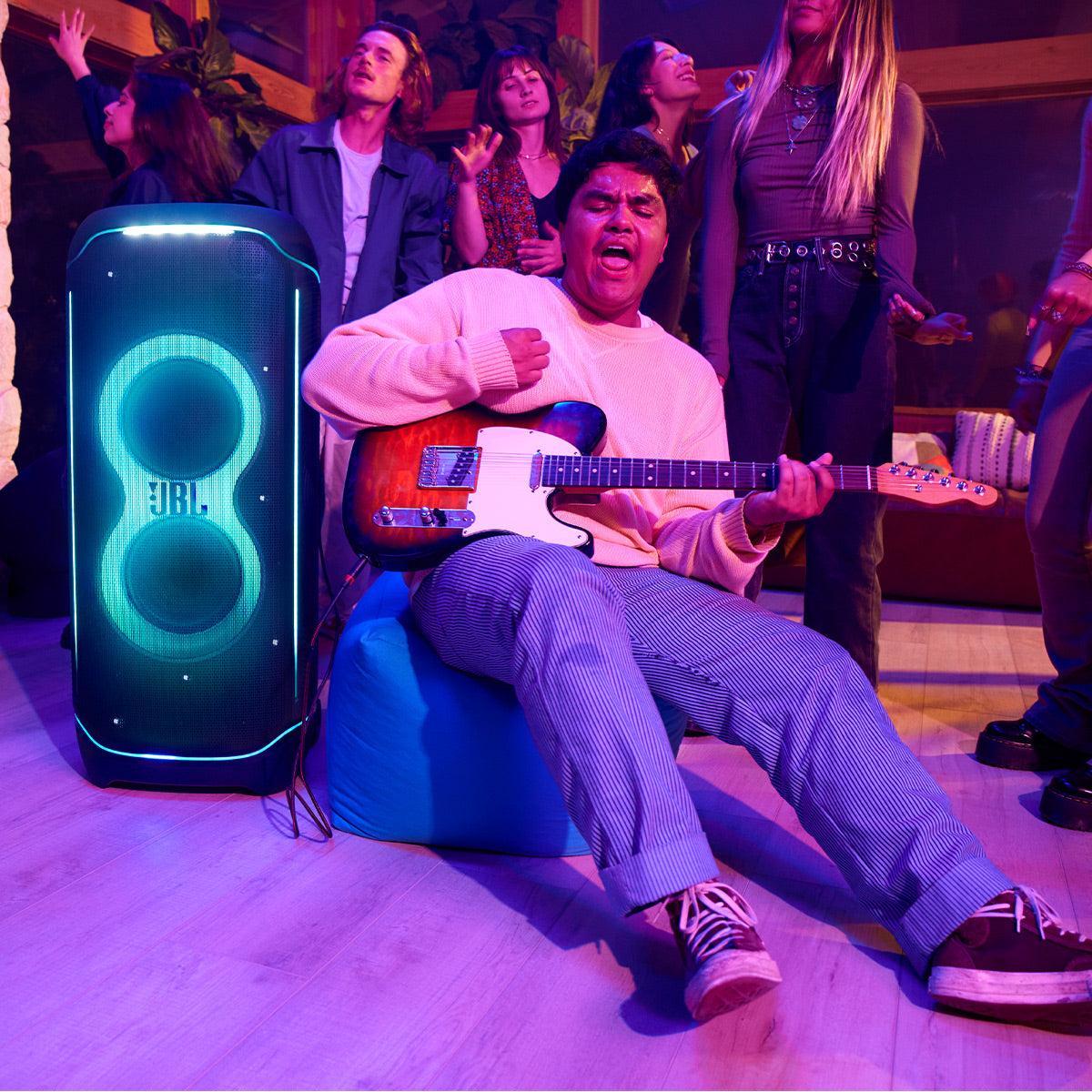
Both speakers recognize that great parties often involve live performance, whether it's karaoke, acoustic guitar, or someone grabbing the microphone to make announcements.
The Sony ULT Tower 9AC excels here with thoughtful design touches. It includes fold-out microphone holders on both sides—a small detail that makes a huge difference when you're juggling microphones during a karaoke session. The Key Control feature allows pitch adjustment for karaoke tracks, helping singers hit those challenging notes or accommodating different vocal ranges.
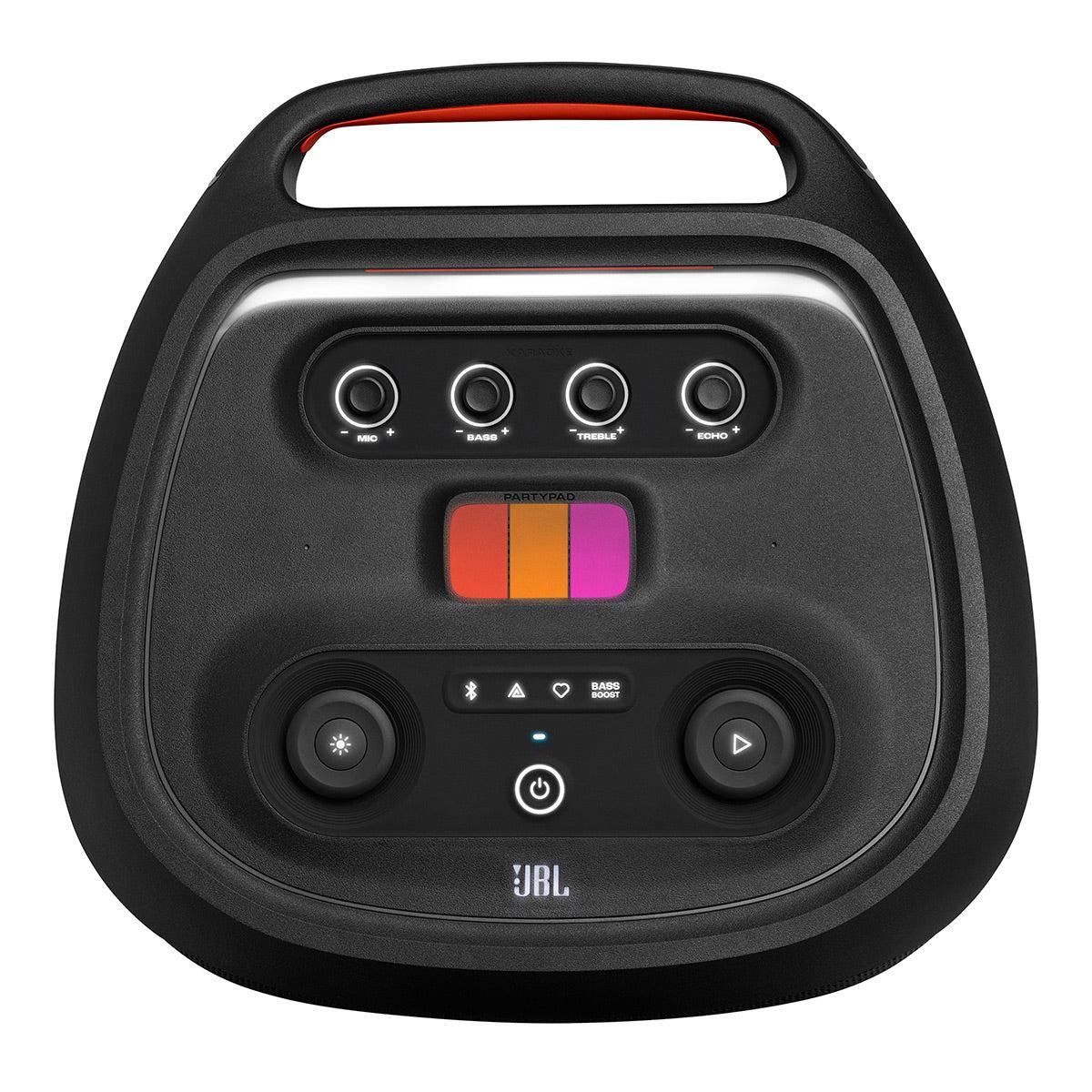
The JBL PartyBox Ultimate includes the innovative PartyPad interactive DJ control system. This touch-sensitive panel on top of the speaker allows real-time mixing with effects like horn blasts, repeaters, and filters. You can trigger these effects by tapping, holding, or sliding across the colored pads, adding a hands-on element that makes everyone feel like a professional DJ.
Both speakers include dual microphone inputs with independent volume controls and echo effects, plus guitar inputs for live performances. The quality of the microphone preamps (the circuits that boost mic signals) is surprisingly good in both speakers—clean, clear, and with minimal feedback issues when positioned properly.
Let's address the obvious limitation: neither speaker is truly portable in the traditional sense. Both require AC power and weigh enough to make casual transport challenging.
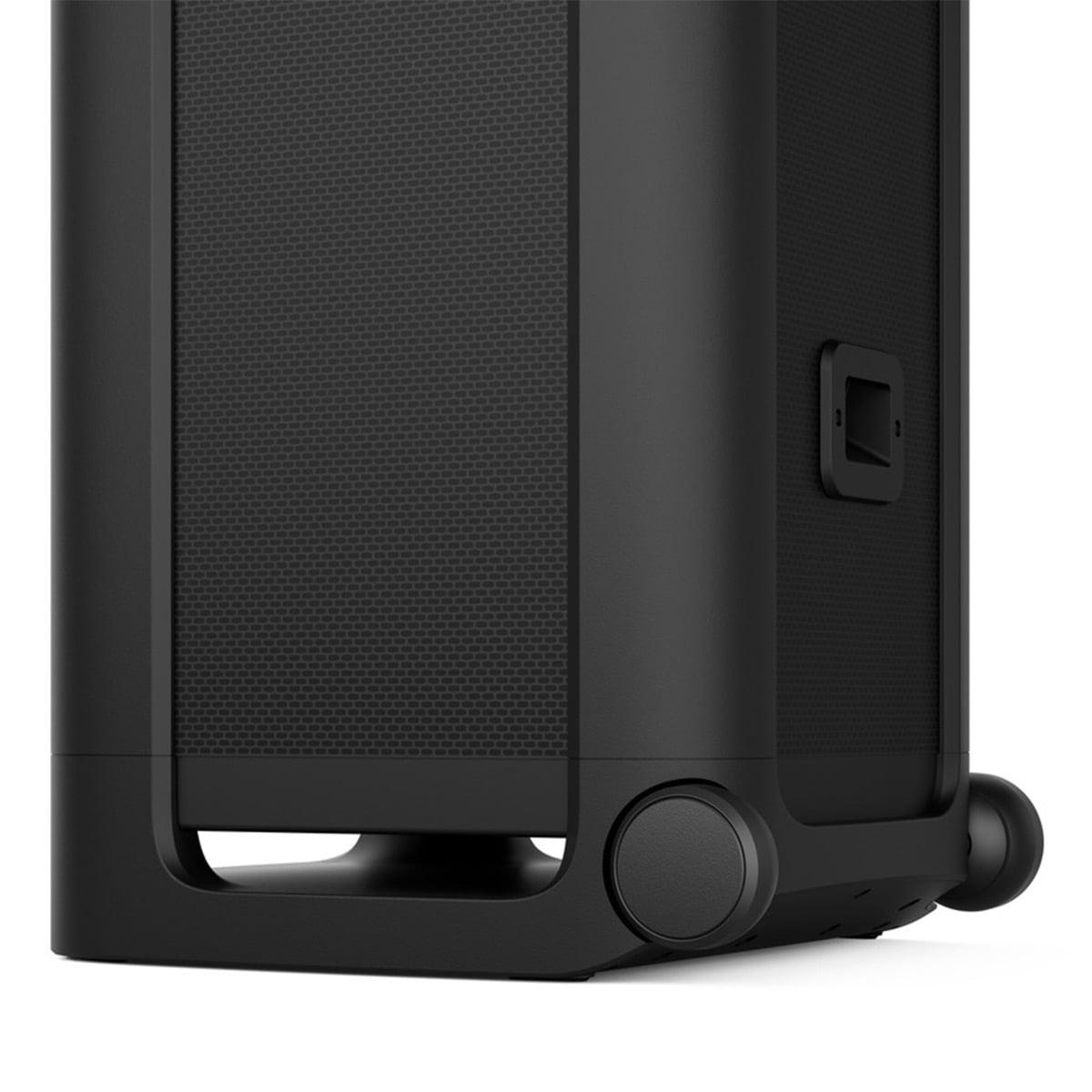
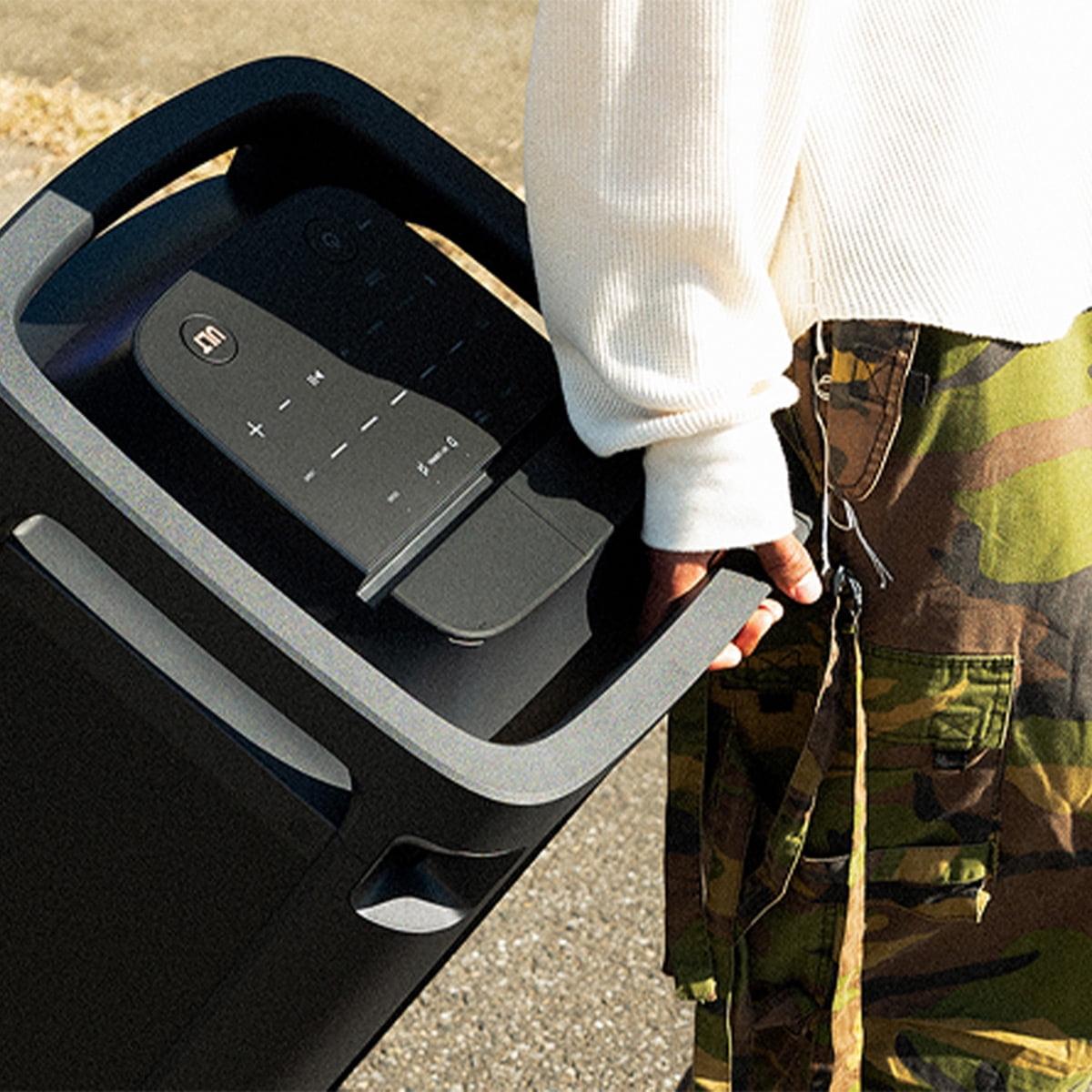
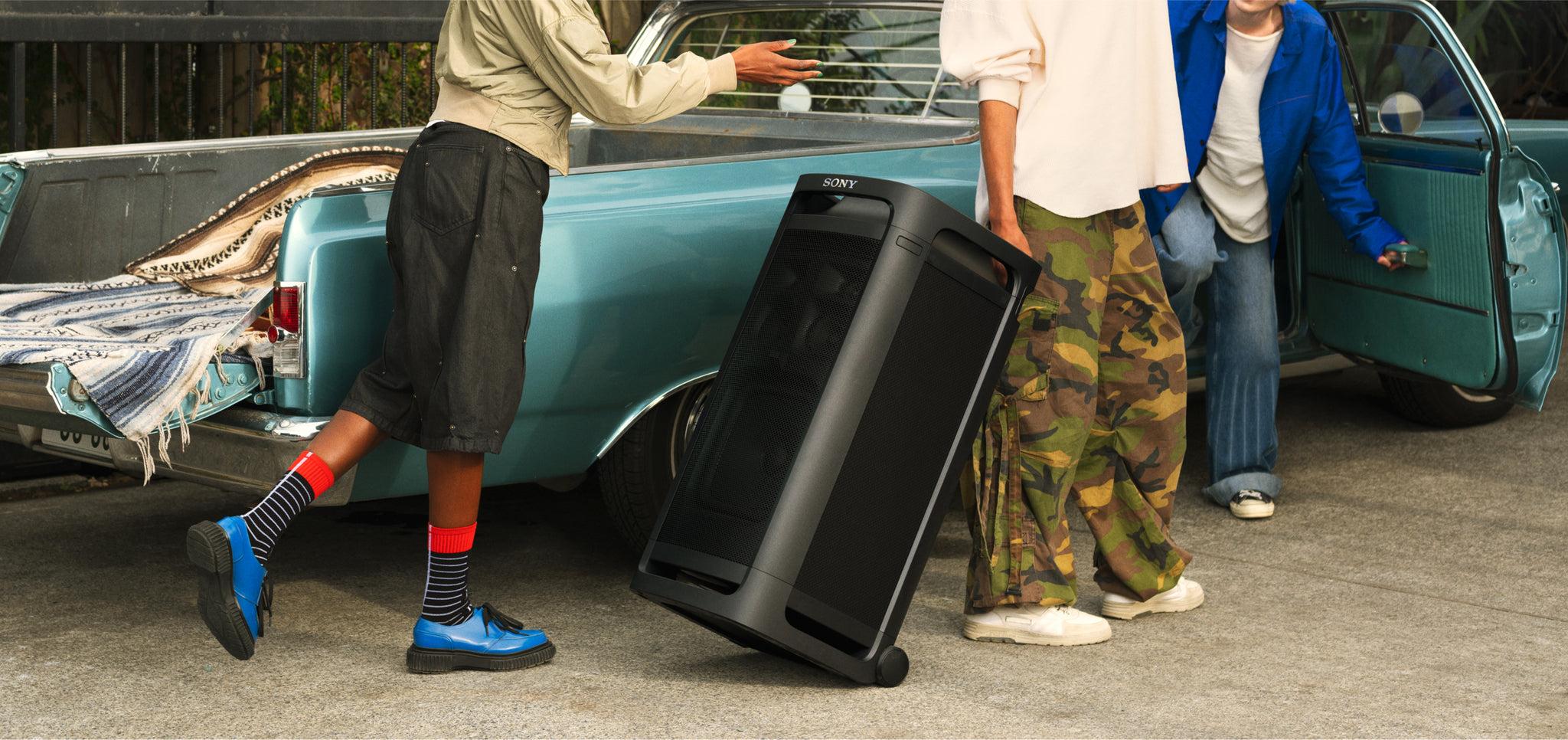
The Sony ULT Tower 9AC weighs 62.8 pounds and includes built-in wheels and a handle. While still substantial, this is notably lighter than the JBL and more manageable for moving between rooms or loading into vehicles.
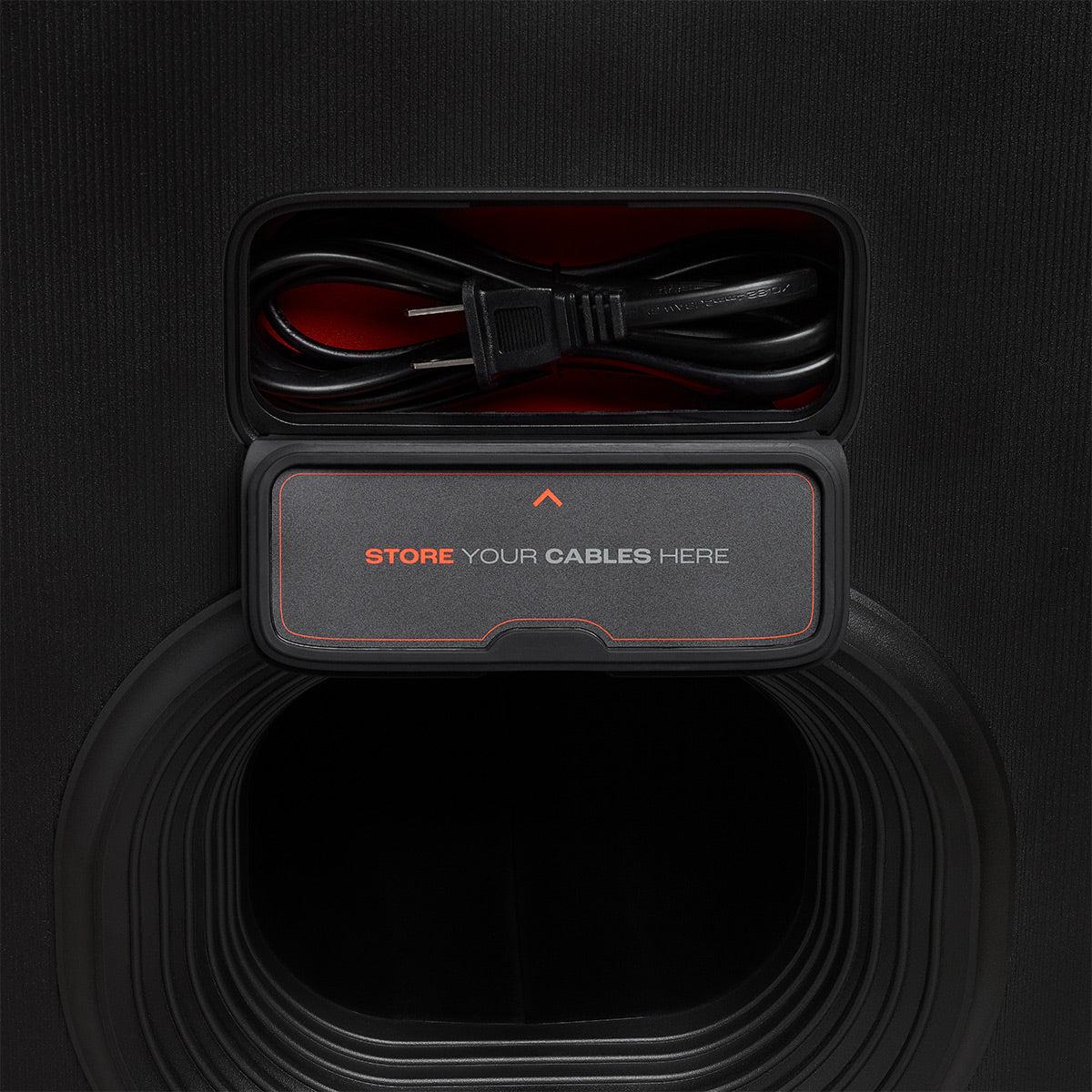
The JBL PartyBox Ultimate tips the scales at 87.1 pounds—nearly 25 pounds heavier than the Sony. JBL includes heavy-duty wheels and a sturdy handle, plus a cable management compartment that keeps setup cleaner, but this is definitely a two-person lift for anything involving stairs or vehicle loading.
Both speakers are better thought of as semi-portable rather than truly portable. They're designed to be set up in one location for an event rather than moved around constantly during the party.
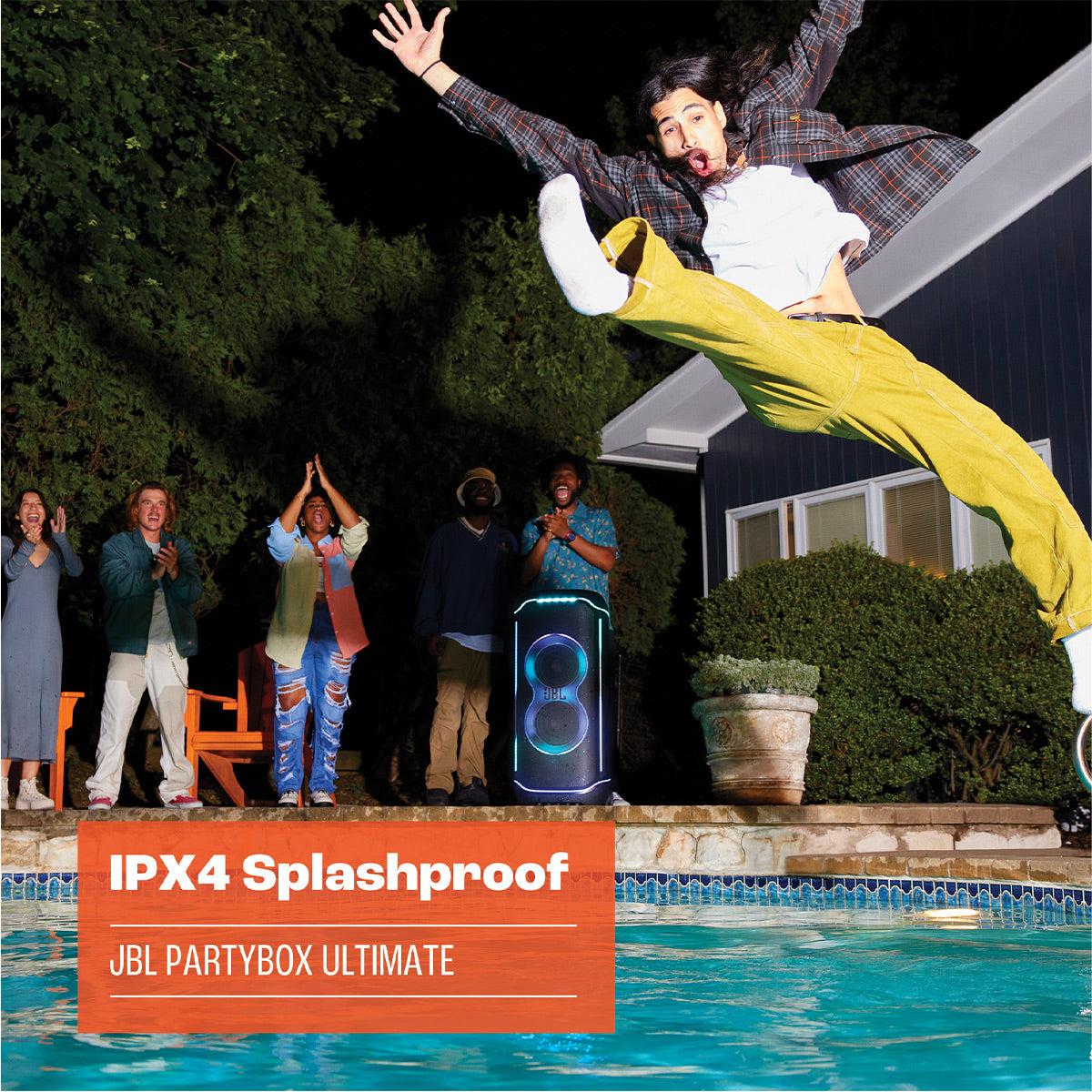
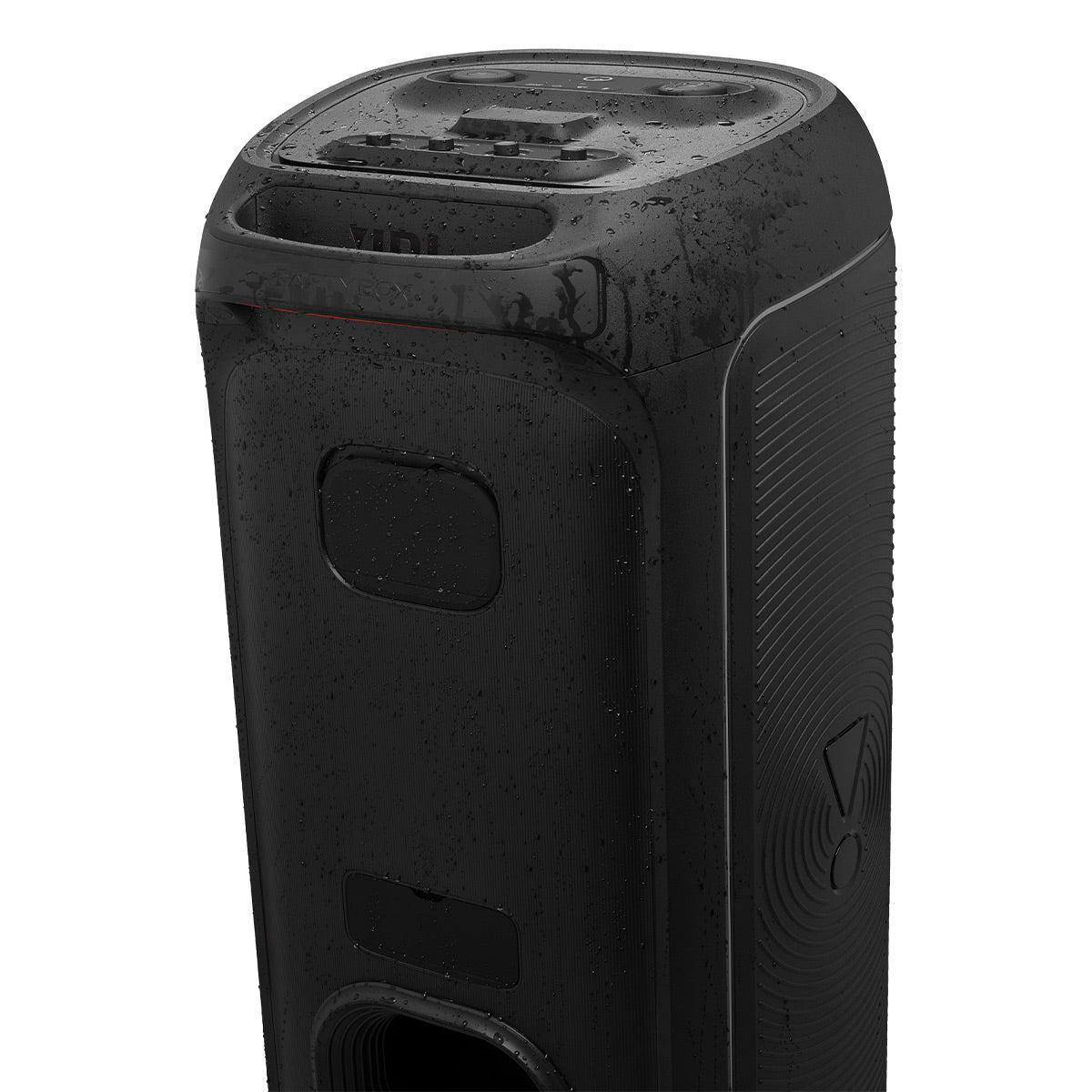
The JBL PartyBox Ultimate includes IPX4 splashproof rating throughout the entire unit, meaning it can handle splashes and light rain without damage. This makes it significantly more confident for poolside parties or outdoor events where weather might be unpredictable.
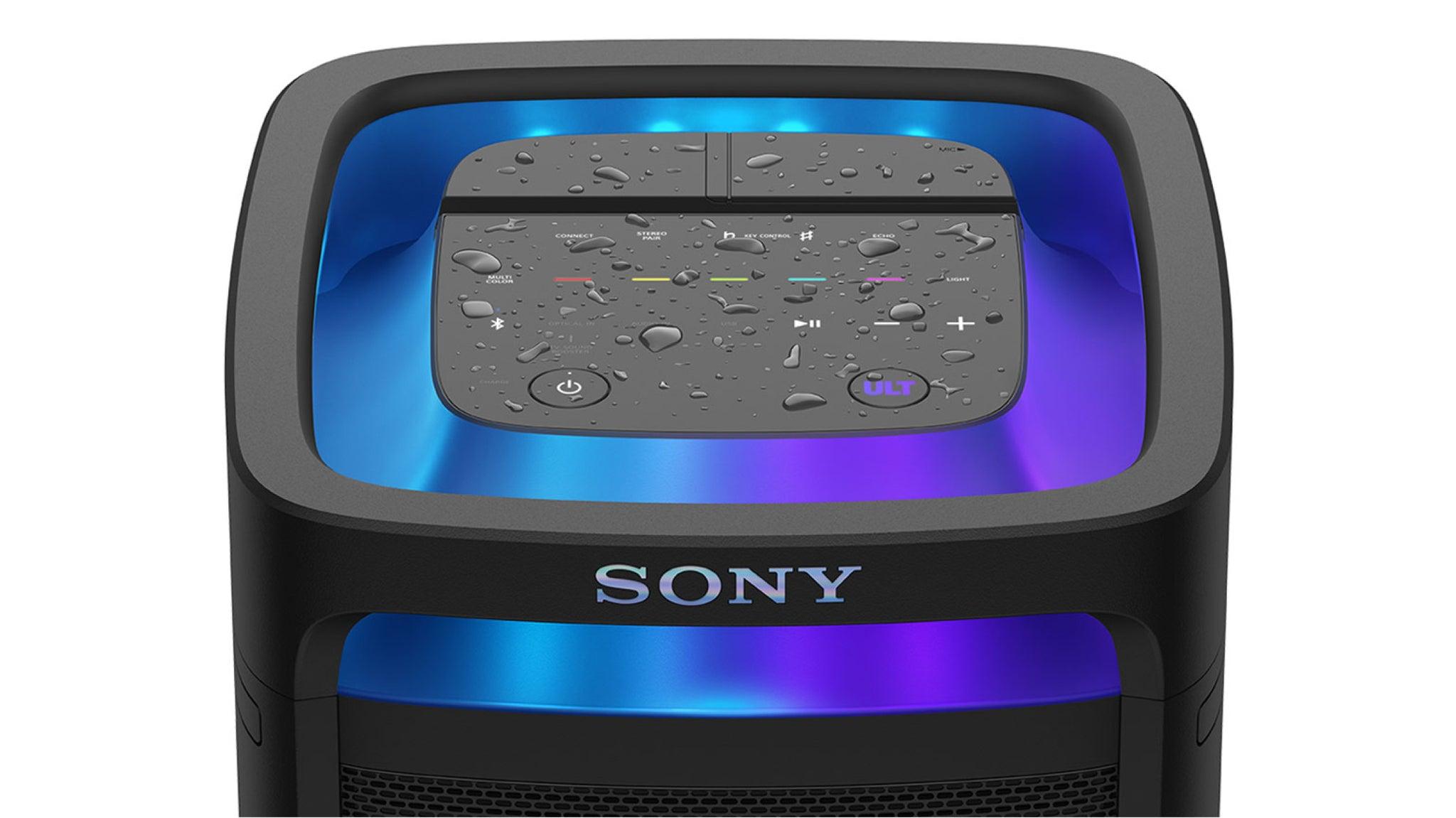
The Sony ULT Tower 9AC offers splash resistance only on the top control panel, and only when all ports are properly sealed. This provides some protection against drink spills but isn't suitable for outdoor use in wet conditions.
At the time of writing, the Sony ULT Tower 9AC typically retails for significantly less than the JBL PartyBox Ultimate, making it the more budget-conscious choice while still delivering impressive performance.
The Sony offers excellent value for most typical party scenarios. Its 360-degree sound design means you get consistent audio quality throughout medium-sized spaces, and the bass customization options provide flexibility that more expensive speakers often lack. The comprehensive karaoke features and TV integration capabilities add versatility that extends beyond just party use.
The JBL commands premium pricing but justifies it with best-in-class volume output, the most sophisticated lighting system available, and advanced connectivity features like Wi-Fi 6 and Dolby Atmos. If you're hosting large outdoor gatherings or semi-professional events, the additional cost may be worthwhile.
The Sony ULT Tower 9AC is the smarter choice for most people. If you're hosting indoor parties for 20-50 people, value bass control and customization, want comprehensive karaoke features, or plan to integrate the speaker with your home theater system, Sony's approach will serve you better. The lighter weight and lower cost make it more accessible, while the 360-degree sound design ensures everyone at your gathering enjoys the same audio quality regardless of where they're standing.
Choose the JBL PartyBox Ultimate if you regularly host large outdoor gatherings, need maximum volume to fill very large spaces, want the most impressive visual light show available, or require semi-professional DJ capabilities. The premium pricing makes sense for users who will fully utilize its advanced features and massive power output.
Both speakers represent significant improvements over earlier party speaker designs, with better power efficiency, more sophisticated digital processing, and enhanced connectivity options reflecting the technological advances of 2024. Whichever you choose, you're getting a capable performer that will transform your gatherings into memorable events—the question is simply whether you need stadium-level power or prefer more balanced, versatile performance.
The reality is that most people's party hosting needs are better served by the Sony ULT Tower 9AC's more measured approach, while the JBL PartyBox Ultimate is genuinely overkill unless you're regularly entertaining very large crowds. Both will make you the neighbor everyone wants to be friends with—or the one they complain about to the building management.
| Sony ULT Tower 9AC | JBL PartyBox Ultimate |
|---|---|
| Power Output - Determines how large a space you can fill with quality sound | |
| ~80-120W RMS (estimated from 148W power consumption) | 1100W RMS (fills spaces equivalent to two basketball courts) |
| Maximum Volume - Critical for outdoor events and large gatherings | |
| Suitable for medium-large indoor spaces (20-50 people) | 109.4 dB / 116.7 dB measured (massive outdoor venues, 100+ people) |
| Bass System - The foundation that makes people want to dance | |
| Single 320mm × 320mm X-Balanced square woofer with ULT1/ULT2 modes | Dual 9" traditional woofers (~20% stronger bass than previous JBL flagships) |
| Driver Configuration - Affects sound distribution and clarity | |
| 7 drivers total: 1 woofer, 2 midrange, 4 tweeters (360° sound) | 6 drivers total: 2 woofers, 2 midrange, 2 tweeters (directional projection) |
| Wireless Connectivity - Modern streaming capabilities | |
| Bluetooth 5.3 with LDAC codec, Party Connect (up to 100 speakers) | Wi-Fi 6 + Bluetooth 5.3, AirPlay 2, Chromecast, Spotify Connect |
| Special Audio Features - Advanced processing that enhances the experience | |
| Sound Field Optimization, 360° sound, TV Sound Booster mode | Dolby Atmos over Wi-Fi, self-tuning acoustic calibration |
| Lighting System - Visual impact for party atmosphere | |
| 360° Party Light with app customization | Multi-dimensional RGB with starry effects, light trails, strobes, ground projection |
| Karaoke & Live Performance - Features for interactive entertainment | |
| Dual mic inputs, Key Control, echo effects, fold-out mic holders | Dual mic/guitar inputs, JBL PartyPad DJ controls with interactive effects |
| Physical Specs - Important for transport and placement | |
| 62.8 lbs, wheels + handle, AC power only | 87.1 lbs, heavy-duty wheels + handle, AC power only |
| Weather Protection - Durability for outdoor events | |
| Splash-resistant top panel only (when ports sealed) | IPX4 splashproof rating throughout entire unit |
| Home Theater Integration - Versatility beyond just parties | |
| Optical input, TV Sound Booster mode, rear tweeters for soundstage | Wi-Fi streaming with Dolby Atmos, no dedicated TV inputs |
| Value Positioning - Who gets the better deal | |
| Lower cost, excellent performance for typical home parties | Premium pricing justified for professional-level features and maximum power |
The JBL PartyBox Ultimate is significantly louder with 1100W RMS output, reaching measured levels of 109.4-116.7 dB. It can fill spaces equivalent to two basketball courts. The Sony ULT Tower 9AC is powerful enough for medium to large indoor gatherings but can't match the JBL's stadium-level volume output.
Both excel at bass but differently. The Sony ULT Tower 9AC offers more controlled, customizable bass with its X-Balanced square woofer and ULT1/ULT2 modes for different bass styles. The JBL PartyBox Ultimate delivers approximately 20% more raw bass power through dual 9" woofers, though it can be overwhelming in smaller indoor spaces.
The Sony ULT Tower 9AC is better for home theater use with its optical input, TV Sound Booster mode, and rear tweeters that create a wider soundstage for movies. The JBL PartyBox Ultimate supports Dolby Atmos over Wi-Fi but lacks dedicated TV inputs, relying on wireless streaming for home entertainment integration.
The Sony ULT Tower 9AC is more portable at 62.8 pounds with built-in wheels and handle. The JBL PartyBox Ultimate weighs 87.1 pounds and requires two people for stairs or vehicle loading, though it includes heavy-duty wheels and better cable management features.
No, both the Sony ULT Tower 9AC and JBL PartyBox Ultimate require AC power outlets to operate. Neither has built-in batteries, making them semi-portable speakers best suited for locations with electrical access rather than truly portable outdoor use.
The JBL PartyBox Ultimate has superior lighting with multi-dimensional RGB effects including starry night patterns, light trails, strobes, and ground projection. The Sony ULT Tower 9AC offers 360° party lighting that's visible from all angles but isn't as elaborate or visually impressive as the JBL's system.
Yes, both support multi-speaker connections. The Sony ULT Tower 9AC uses Party Connect to link up to 100 compatible Sony speakers. The JBL PartyBox Ultimate supports wireless pairing and daisy chaining through its audio output, plus True Wireless Stereo mode for dual-speaker setups.
The Sony ULT Tower 9AC edges ahead for karaoke with fold-out microphone holders, Key Control for pitch adjustment, and comprehensive echo effects. The JBL PartyBox Ultimate counters with the interactive PartyPad DJ controls that let you add live sound effects and mixing capabilities during performances.
The JBL PartyBox Ultimate offers more advanced wireless features with Wi-Fi 6, AirPlay 2, Chromecast, and Spotify Connect for high-quality streaming. The Sony ULT Tower 9AC uses Bluetooth 5.3 with LDAC codec support for superior Bluetooth audio quality, especially with Android devices and Sony products.
The Sony ULT Tower 9AC typically offers better value for most home party scenarios, providing excellent sound quality, 360° coverage, and comprehensive features at a lower cost. The JBL PartyBox Ultimate justifies its premium pricing only if you regularly need maximum volume for very large spaces or professional-level DJ features.
The JBL PartyBox Ultimate has IPX4 splashproof protection throughout the entire unit, making it suitable for poolside parties and light rain. The Sony ULT Tower 9AC only has splash-resistant controls on top when ports are sealed, offering minimal weather protection for outdoor use.
For large outdoor events with 75+ people, choose the JBL PartyBox Ultimate for its superior volume output and weather resistance. For indoor parties up to 50 people, the Sony ULT Tower 9AC provides better value with its 360° sound distribution, controlled bass, and comprehensive home integration features.
We've done our best to create useful and informative comparisons to help you decide what product to buy. Our research uses advanced automated methods to create this comparison and perfection is not possible - please contact us for corrections or questions. These are the sites we've researched in the creation of this article: stereoguide.com - videoandaudiocenter.com - bestbuy.com - electronics.sony.com - rtings.com - youtube.com - hindustantimes.com - helpguide.sony.net - soundguys.com - sony.com - youtube.com - bestbuy.com - youtube.com - youtube.com - youtube.com - shopjetson.com - youtube.com - sony.com - sonyworld.co.za - sony.com - audioadvice.com - youtube.com - crutchfield.com - youtube.com - youtube.com - youtube.com - youtube.com - versus.com - youtube.com - rtings.com - youtube.com - youtube.com - jbl.com - pcx.com.ph - global.jbl.com - gzhls.at - electronicexpress.com - harmanaudio.in - jbl.com - dell.com - robot-advance.com - device.report - ro.harmanaudio.com

Privacy Policy
Terms and Conditions - Affiliate Policy
Home Security
© Copyright 2008-2026.
11816 Inwood Rd #1211, Dallas, TX 75244