


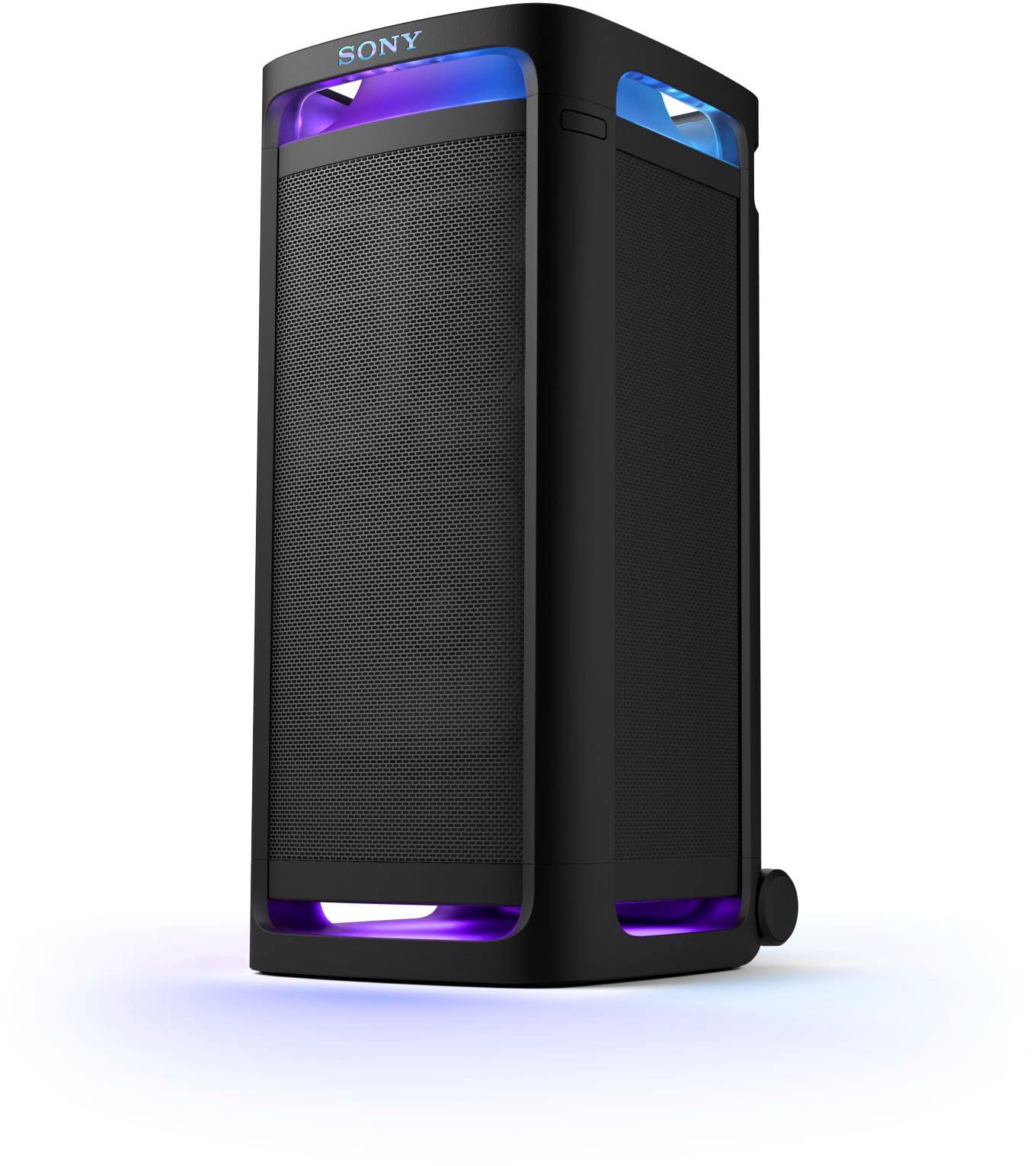
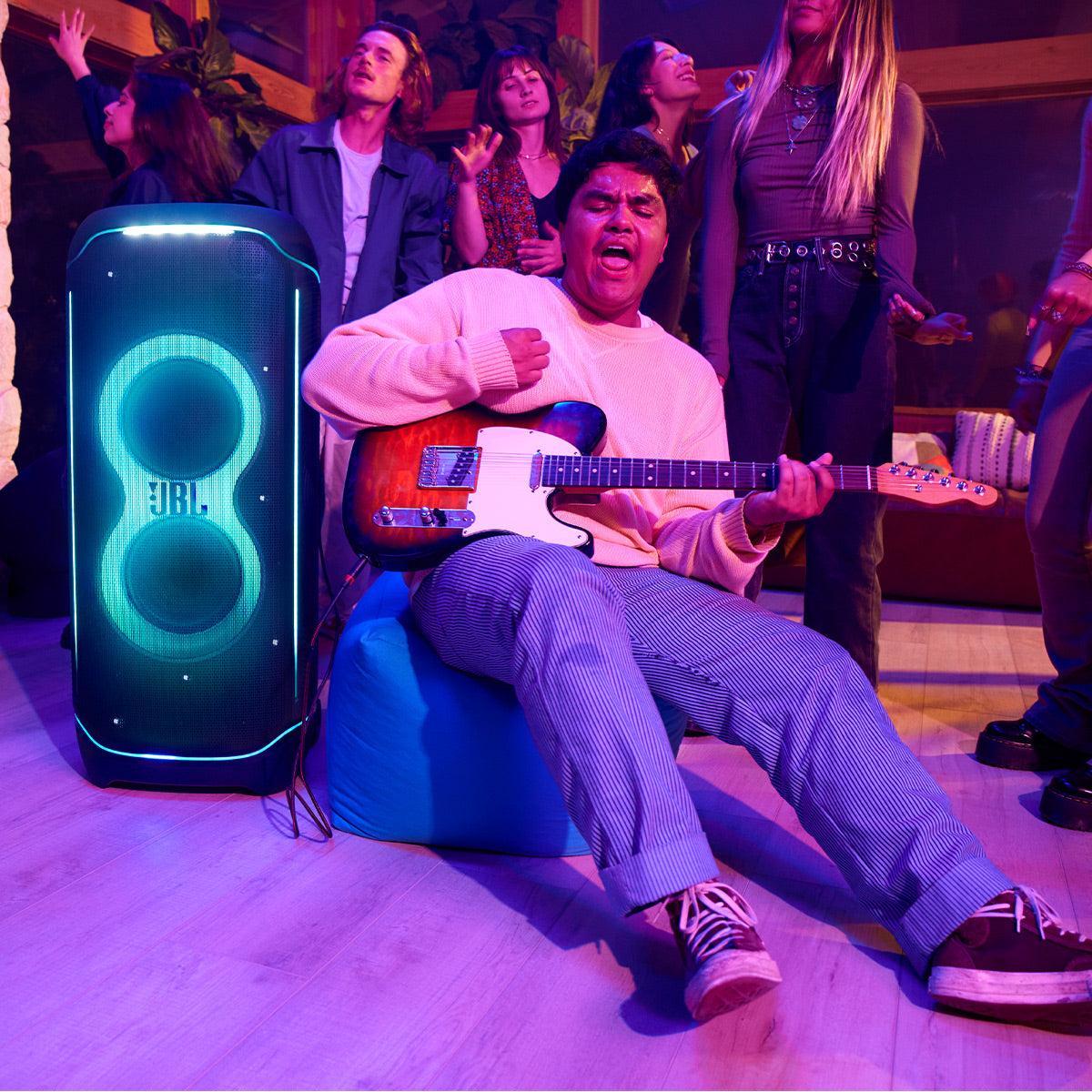
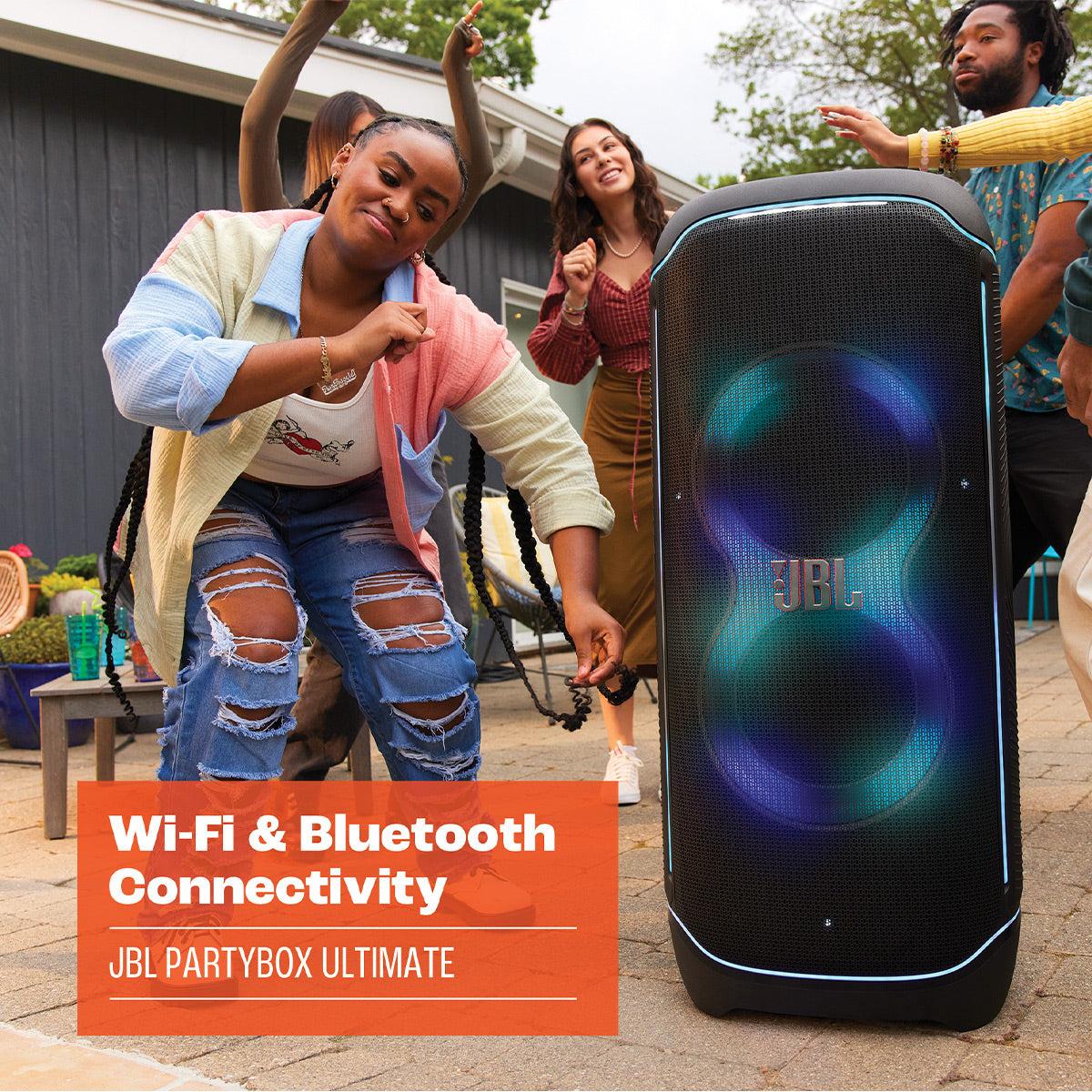
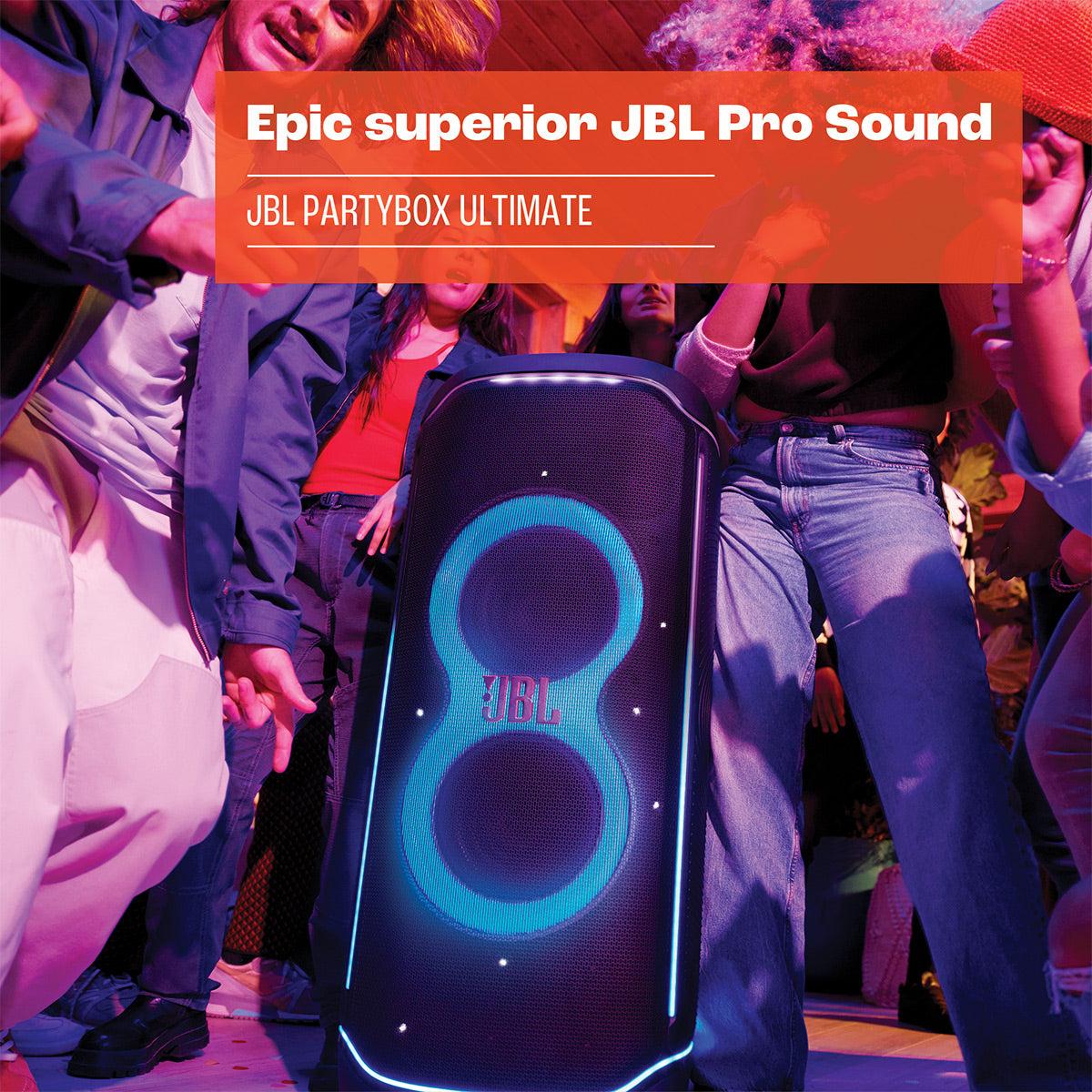
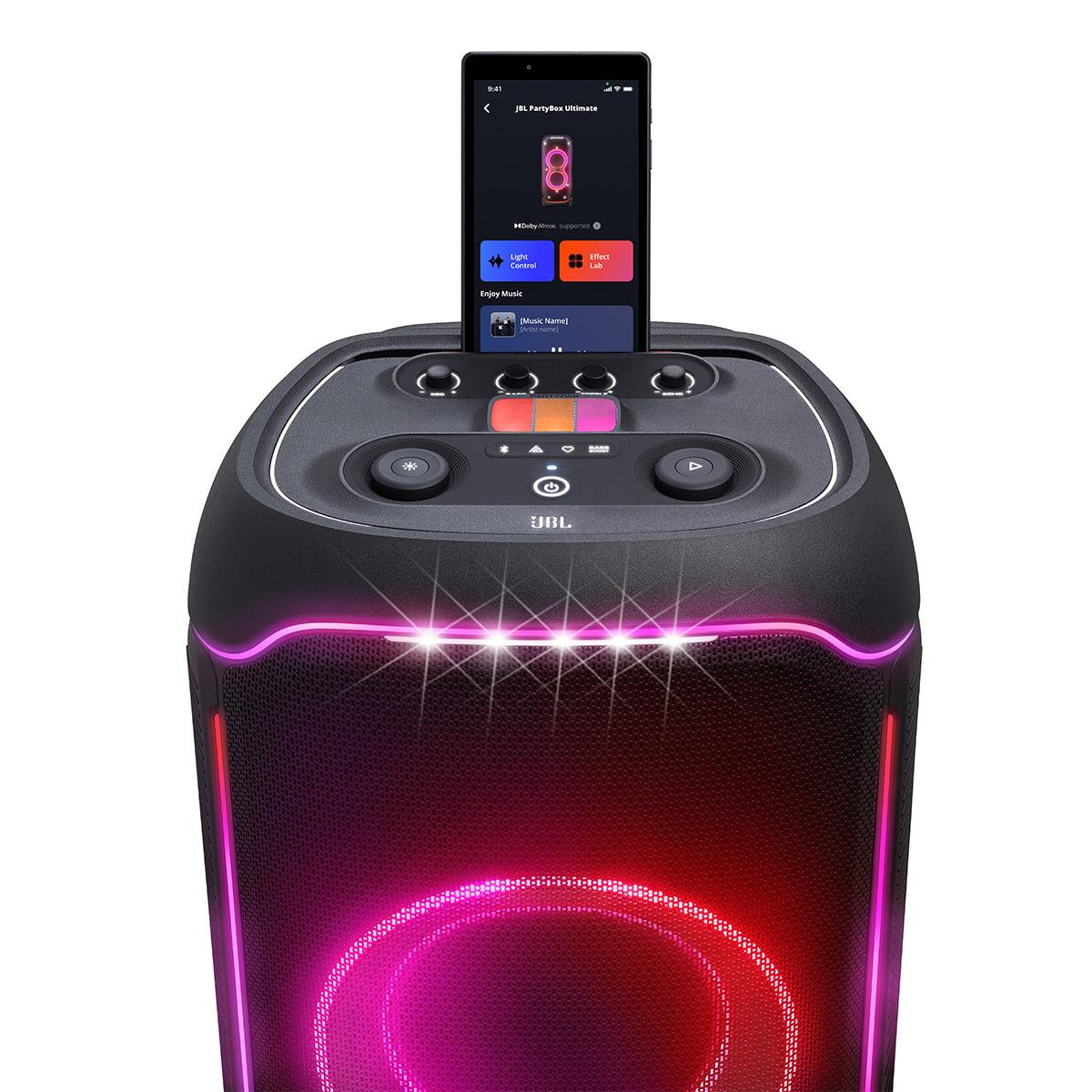
If you've ever tried to get a party pumping with a regular Bluetooth speaker, you know the struggle. The music sounds thin, the bass disappears into the void, and half your guests can't even hear what's playing. That's where high-power party speakers come in—these audio beasts are designed to fill large spaces with room-shaking sound while adding visual flair through synchronized lighting effects.
The party speaker market has exploded in recent years, with manufacturers like Sony and JBL pushing the boundaries of what's possible in portable audio. Two speakers that represent the current pinnacle of this category are the Sony ULT TOWER 9, released in 2024, and the JBL PartyBox Ultimate, which also debuted in 2024. Both promise to transform any gathering into an unforgettable event, but they take dramatically different approaches to get there.
Before diving into the specifics, it's worth understanding what separates party speakers from regular portable speakers. These aren't just bigger versions of your typical Bluetooth speaker—they're engineered entertainment systems that combine several key elements.
Sound pressure level (SPL) is perhaps the most critical factor. Measured in decibels (dB), this determines how loud a speaker can get before the sound starts breaking up or distorting. For reference, normal conversation happens around 60 dB, while a rock concert reaches about 110 dB. Great party speakers need to hit at least 100 dB cleanly to overcome ambient noise and fill large spaces.
Bass response is equally important. This isn't just about volume—it's about how low the speaker can reproduce frequencies and how much physical impact those low notes have. Bass frequencies between 20-80 Hz create that chest-thumping sensation that makes music feel alive at a party.
Sound dispersion refers to how evenly the speaker distributes audio throughout a space. Some speakers focus their energy forward like a flashlight beam, while others spread sound in all directions like a light bulb. The right choice depends on your typical party setup.
Finally, entertainment features like lighting effects, microphone inputs for karaoke, and app-based controls have become essential for creating an engaging party atmosphere that goes beyond just playing music.
The Sony ULT TOWER 9 and JBL PartyBox Ultimate represent two distinct approaches to party audio. Sony built theirs around the concept of "portable power"—delivering maximum performance in a battery-powered package that you can actually move around. JBL took the "absolute performance" route, creating the loudest, most feature-rich party speaker possible without worrying about portability constraints.
This fundamental difference shapes every aspect of these speakers, from their internal components to their pricing. At the time of writing, the Sony ULT TOWER 9 positions itself in the premium portable category, while the JBL PartyBox Ultimate commands nearly double the price as an ultra-premium stationary system.
When our research dove into professional measurements and user experiences, the differences became clear. The JBL PartyBox Ultimate delivers approximately 111 dB of maximum output with bass hitting 108 dB, while the Sony ULT TOWER 9 reaches about 108 dB overall with 105 dB bass intensity.
Those numbers might seem close, but in the world of audio, every 3 dB represents a doubling of power. The JBL's advantage means it can genuinely fill spaces the size of two basketball courts, while the Sony handles large rooms and outdoor patios exceptionally well.
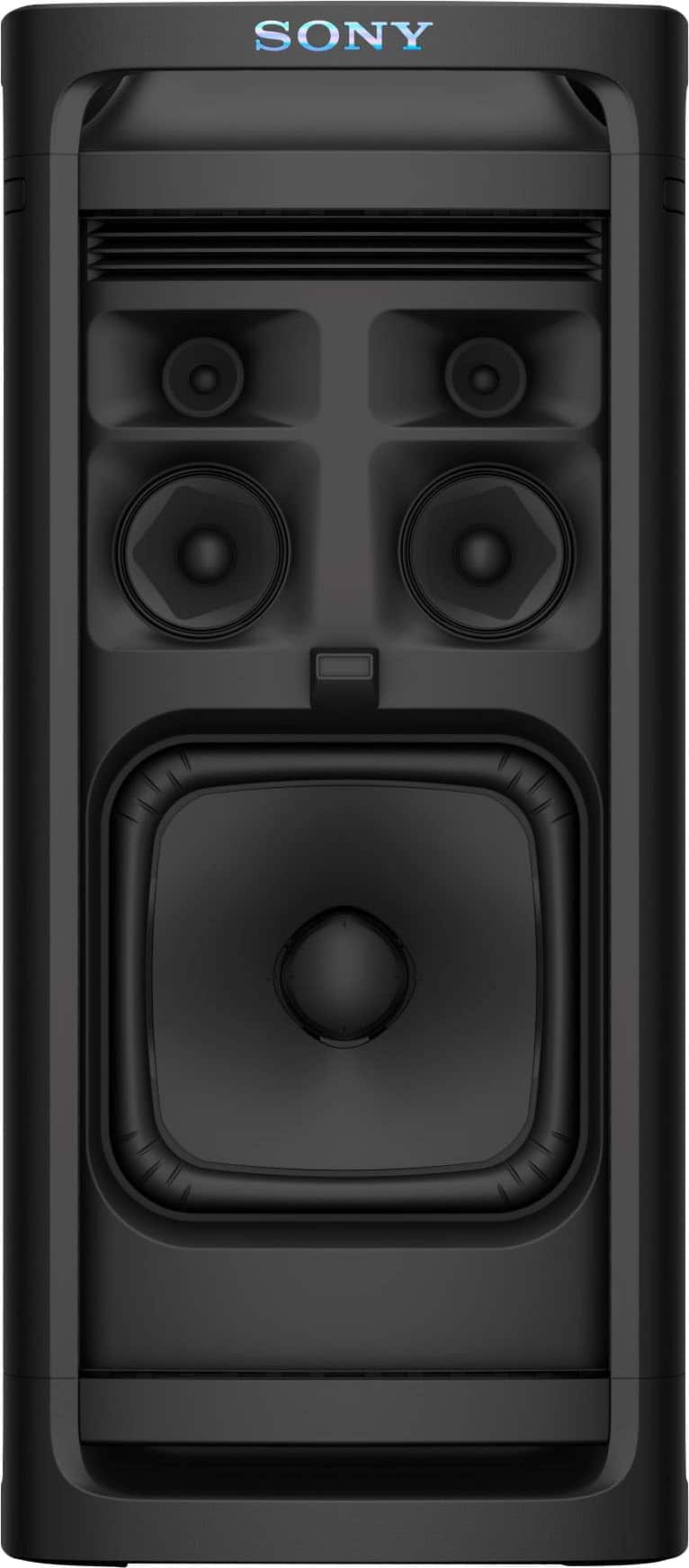
However, raw numbers don't tell the complete story. The Sony ULT TOWER 9 uses something called the X-Balanced Speaker Unit—a rectangular woofer design instead of the traditional circular one. This creates more surface area without adding distortion, resulting in bass that feels more physical and punchy even if it doesn't measure quite as loud on paper.
Here's where things get interesting. The JBL PartyBox Ultimate can reproduce frequencies down to about 20 Hz—the very bottom of human hearing—creating that deep, rumbling bass you feel in your chest at live concerts. The Sony ULT TOWER 9 doesn't dig quite as deep, bottoming out around 30-35 Hz, but what it lacks in extension, it makes up for in impact.
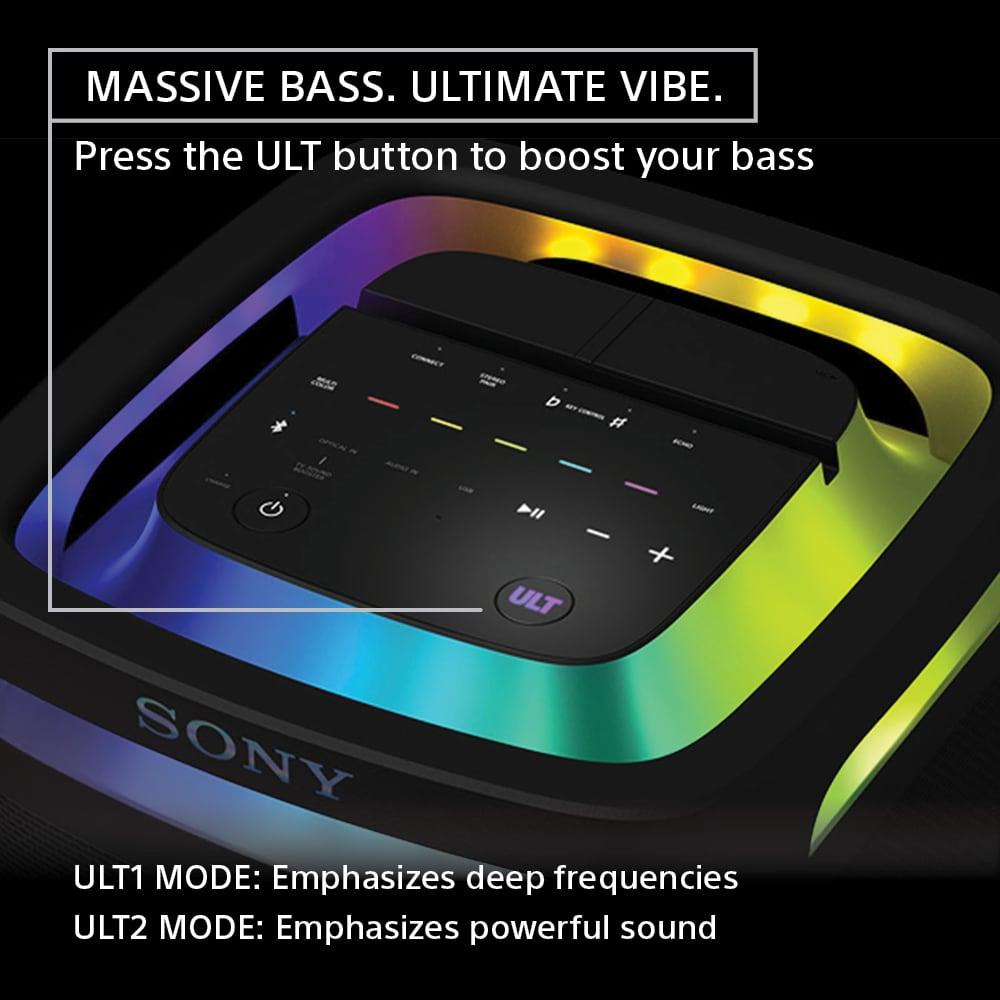
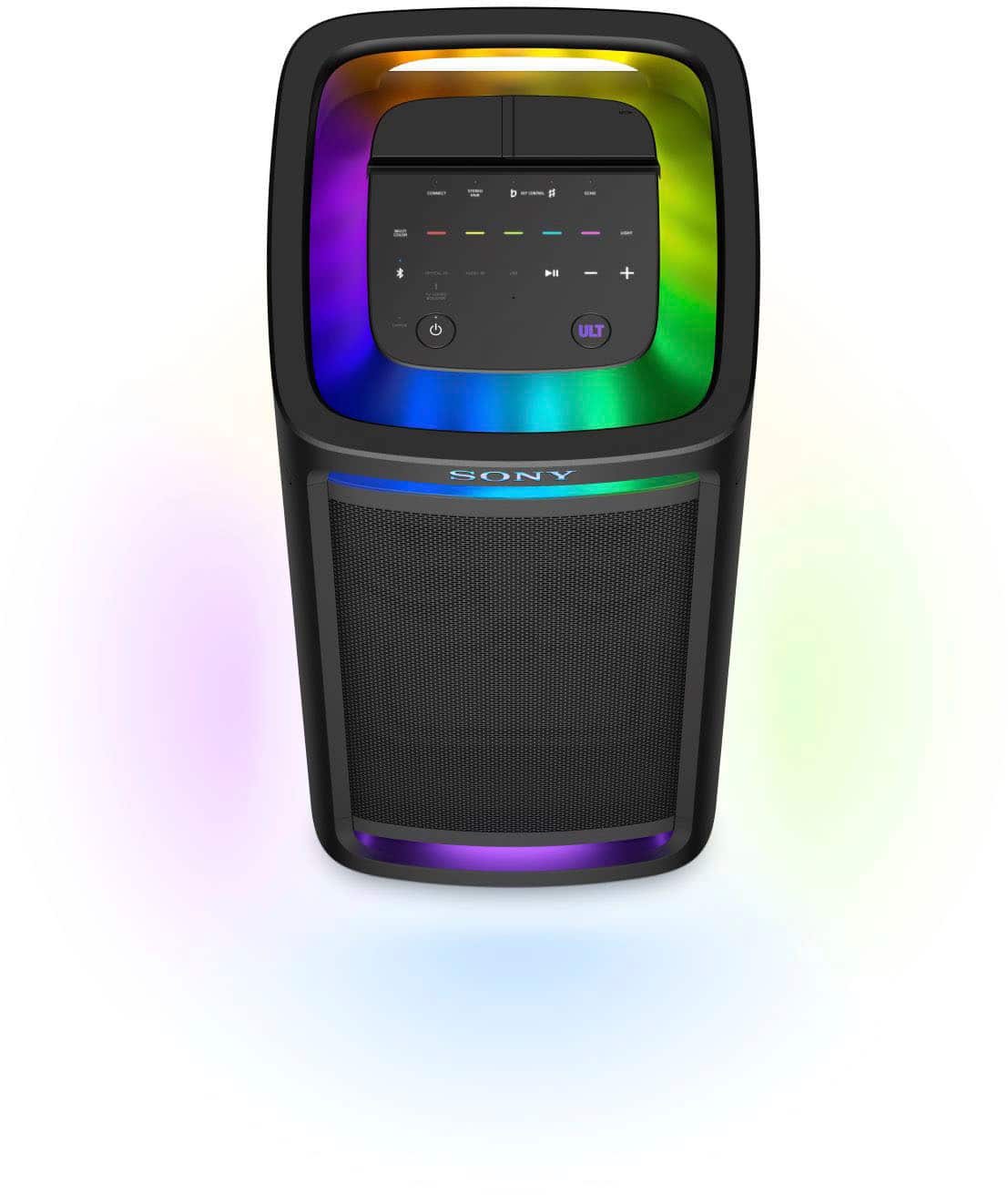
Sony's ULT button activates special bass enhancement modes. ULT Mode 1 provides aggressive bass boost that emphasizes the frequencies most people associate with "powerful" bass—that punchy mid-bass around 40-80 Hz that makes hip-hop and electronic music hit hard. ULT Mode 2 pushes even more upper bass but can make the sound muddy according to user feedback we've analyzed.
The JBL PartyBox Ultimate takes a more neutral approach, delivering bass that extends deeper but doesn't emphasize any particular frequency range. This makes it better for audiophiles who want accurate sound reproduction, while the Sony caters more to those who want that "club sound" that prioritizes impact over accuracy.
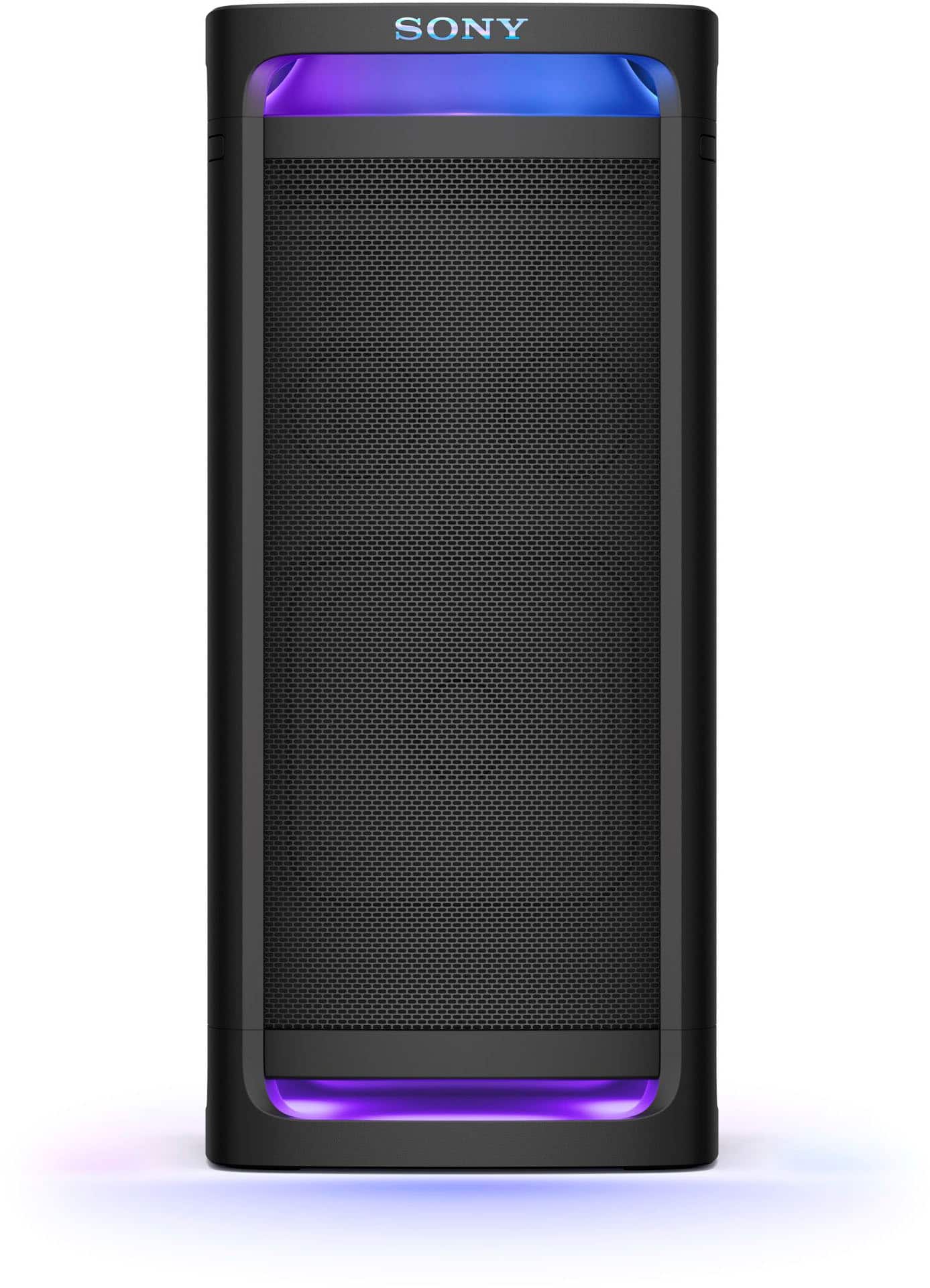
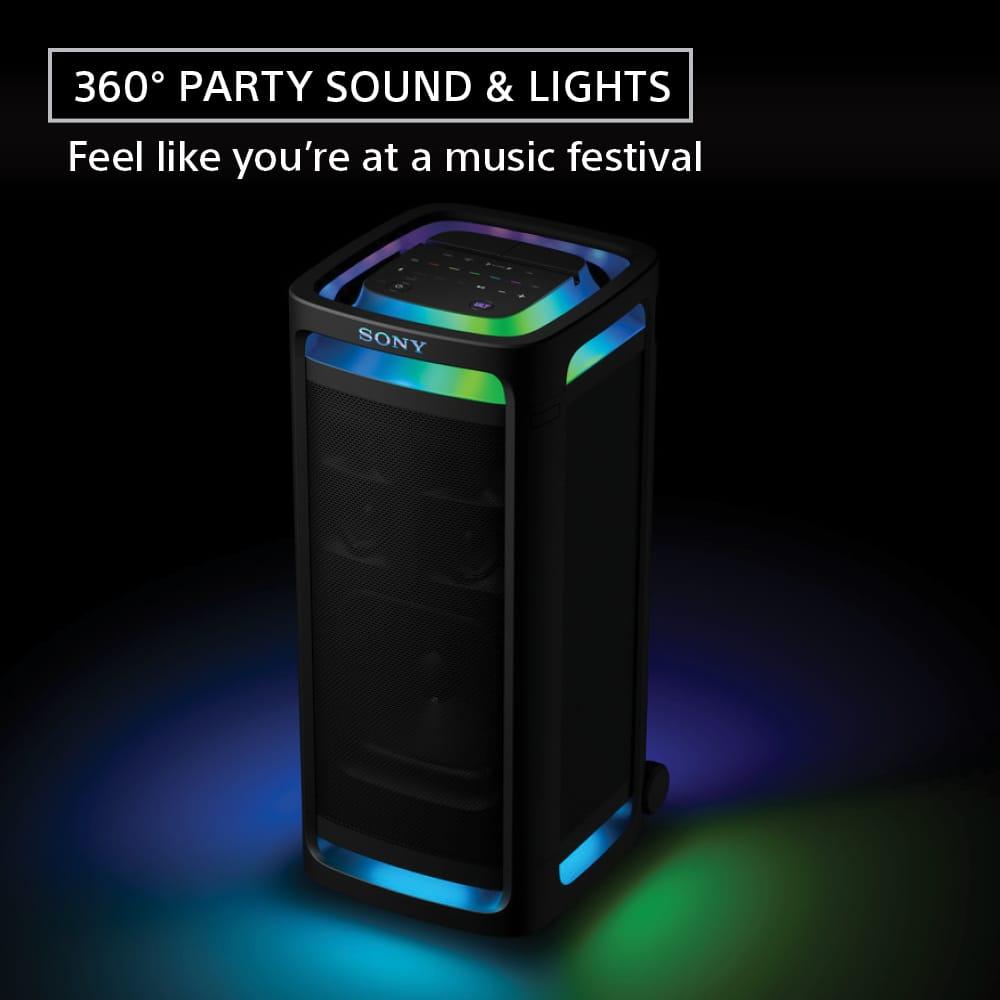
One of the Sony ULT TOWER 9's most clever design features is its use of four tweeters—the drivers responsible for high frequencies like cymbals and vocals. Two face forward like most speakers, but Sony added two more facing backward. This creates what they call "360° Party Sound," eliminating dead zones where people might not hear the music clearly.
The JBL PartyBox Ultimate uses a more traditional forward-facing driver arrangement but compensates with raw power and Dolby Atmos support over Wi-Fi. Dolby Atmos creates a three-dimensional sound field that makes it feel like audio is coming from all around you, not just from the speaker itself. This technology was previously limited to high-end home theater systems, making its inclusion in a party speaker quite remarkable.
Based on user reports we've examined, the Sony's omnidirectional approach works better for casual party atmospheres where people are scattered around a space, while the JBL's focused power and spatial audio excel when there's a primary listening area where most guests congregate.
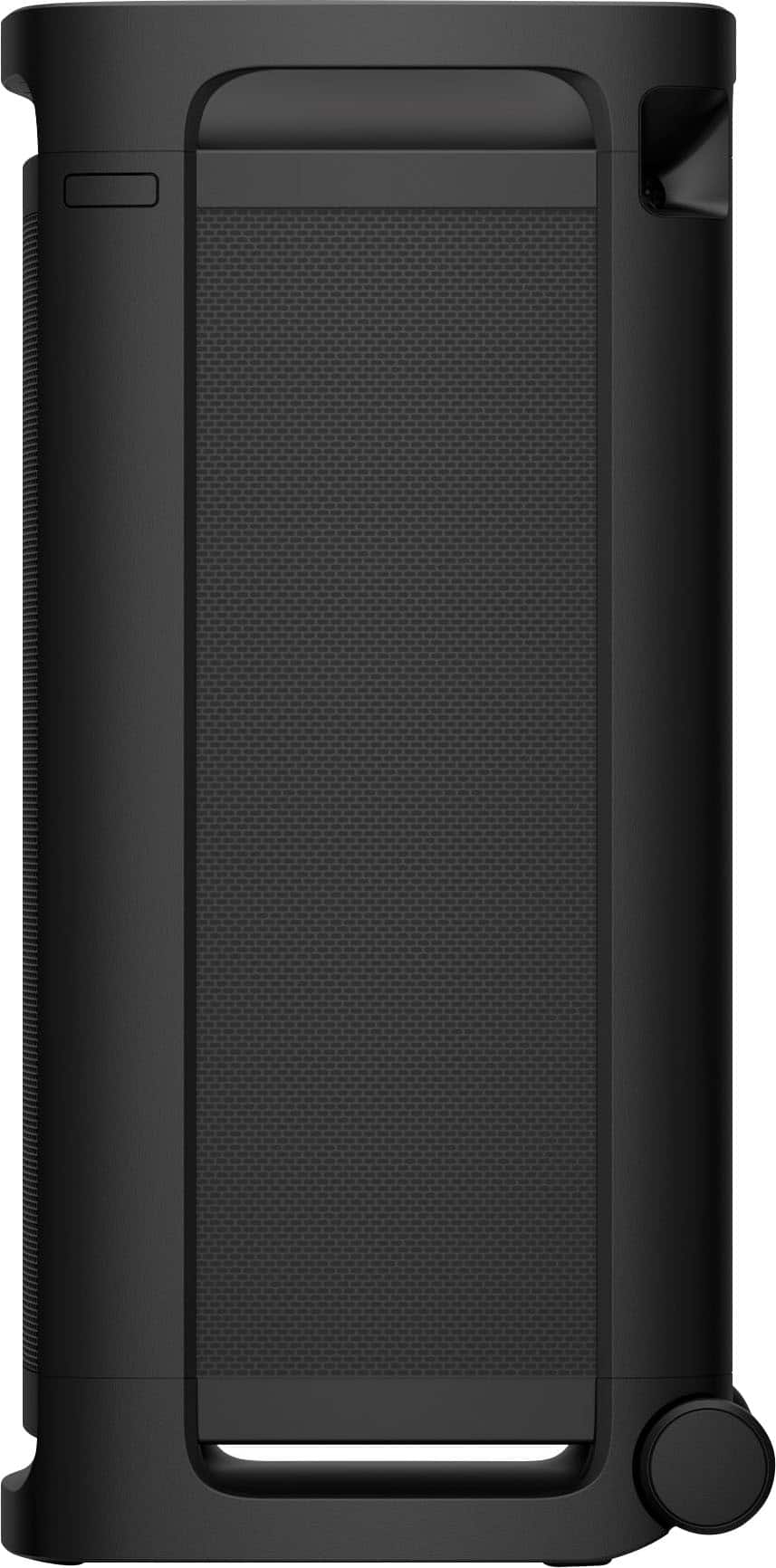
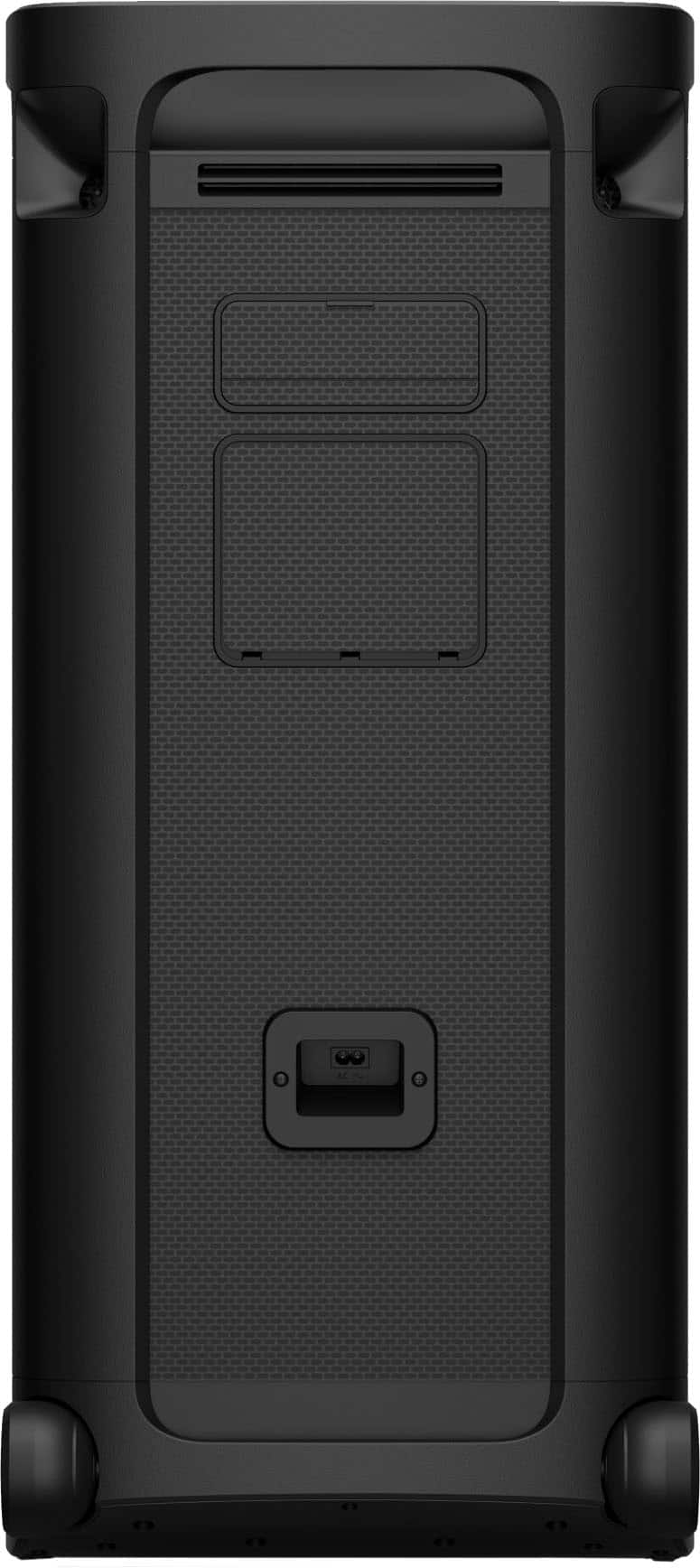
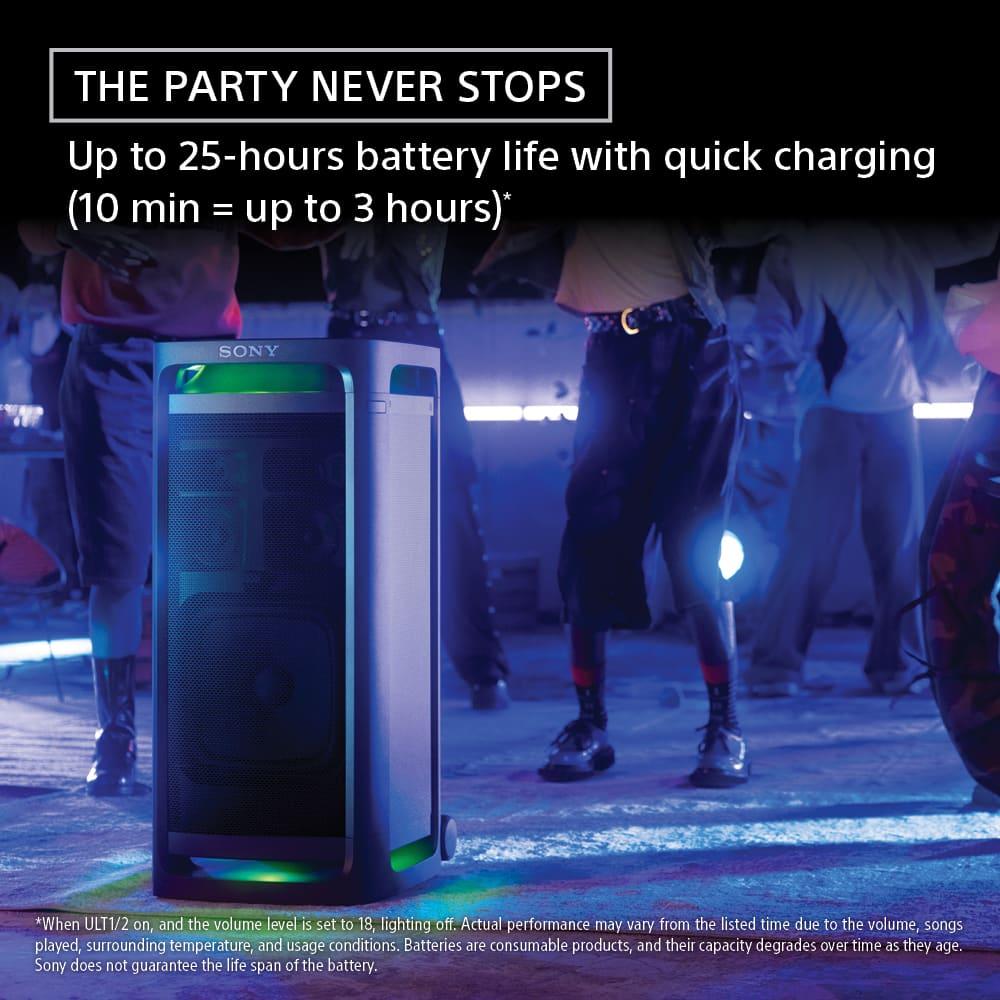
This is where these speakers diverge most dramatically. The Sony ULT TOWER 9 weighs 65 pounds and includes a built-in handle plus wheels, but more importantly, it packs a 25-hour battery. That battery life isn't just impressive—it's game-changing for anyone who wants to take their party outdoors, use the speaker in multiple rooms, or have a backup audio source during power outages.
The quick-charge feature deserves special mention: just 10 minutes of charging provides 3 hours of playback. This means even if you forget to charge before a party, a quick pit stop can save the day.
The JBL PartyBox Ultimate weighs 87 pounds and requires constant AC power. While it includes wheels designed for rolling the speaker into position against walls, it's clearly meant as a semi-permanent installation rather than something you regularly transport.
From a practical standpoint, both speakers push the limits of what most people would consider "portable." At 65+ pounds, carrying either one upstairs or loading it into a car requires planning and possibly help from friends. However, the Sony's battery power opens up use cases that simply aren't possible with the JBL.
Both speakers embrace Bluetooth 5.3, the latest version of the wireless standard, which provides more stable connections and better audio quality compared to older Bluetooth versions. However, their additional connectivity options reveal their different priorities.
The JBL PartyBox Ultimate includes Wi-Fi 6 support, enabling features that require internet connectivity. Wi-Fi streaming means your phone won't interrupt the music when you receive calls or notifications—the speaker maintains its own connection to your music streaming service. This also enables the Dolby Atmos processing and allows for firmware updates that can add new features over time.
The Sony ULT TOWER 9 skips Wi-Fi but includes an optical digital input—a feature typically found on home theater equipment. This means you can connect the Sony directly to your TV and use it as a massive soundbar, dramatically improving your home theater experience. The rear tweeters become particularly effective in this application, creating a more immersive surround sound effect than traditional soundbars can achieve.
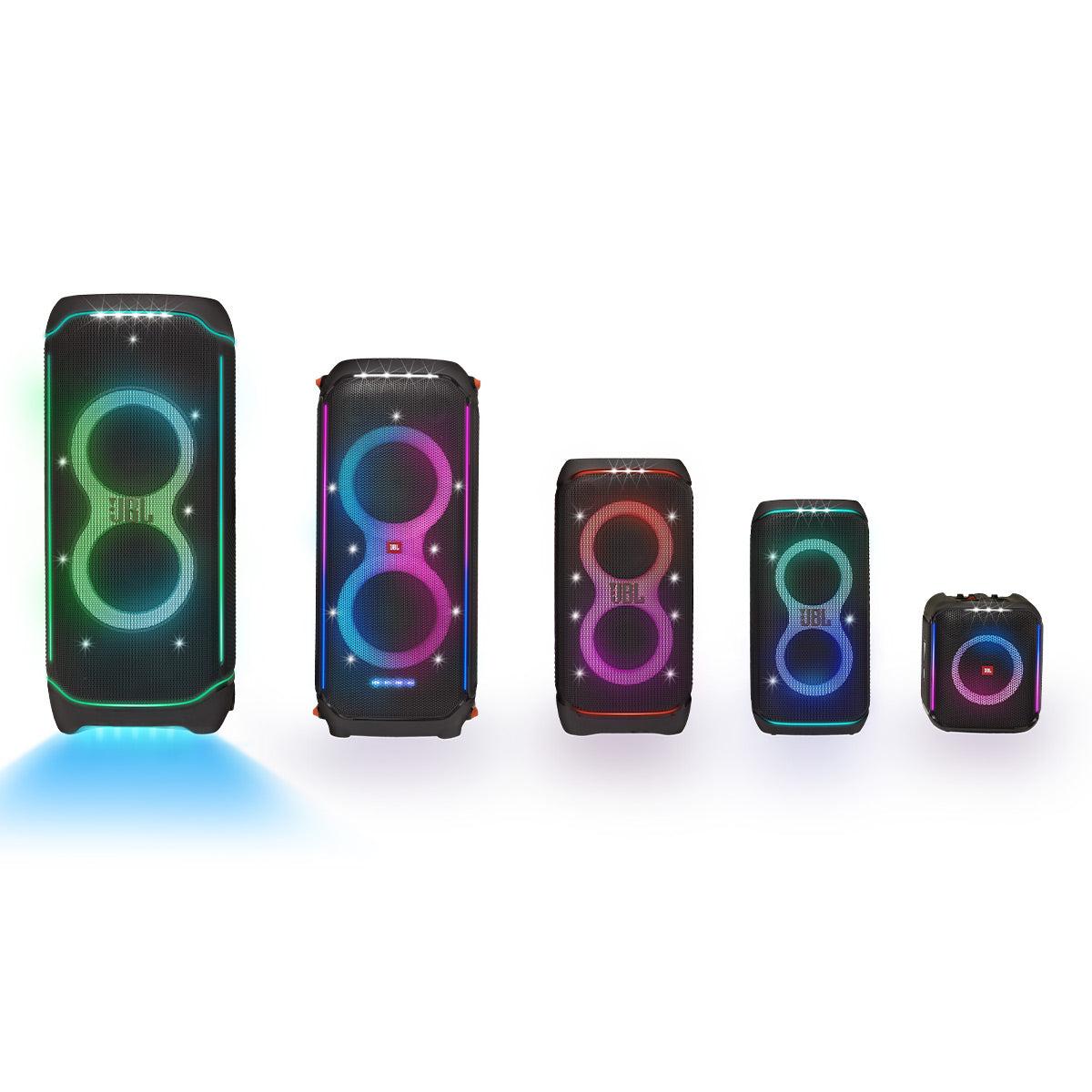
Both speakers support connecting multiple units together for even larger events, but they use different approaches. Sony's Party Connect can link up to 100 compatible speakers, while JBL focuses on daisy-chaining and true wireless stereo pairing for more precise control over multi-speaker setups.
Modern party speakers have evolved into entertainment centers, and both of these models embrace that role enthusiastically. The lighting systems deserve particular attention, as they've become almost as important as sound quality for creating party atmosphere.
The Sony ULT TOWER 9 features 360° Party Light that synchronizes with your music's beat and can be customized through Sony's mobile app. User feedback indicates some app connectivity issues with the lighting controls, but when working properly, the system effectively transforms any space into a mini dance floor.
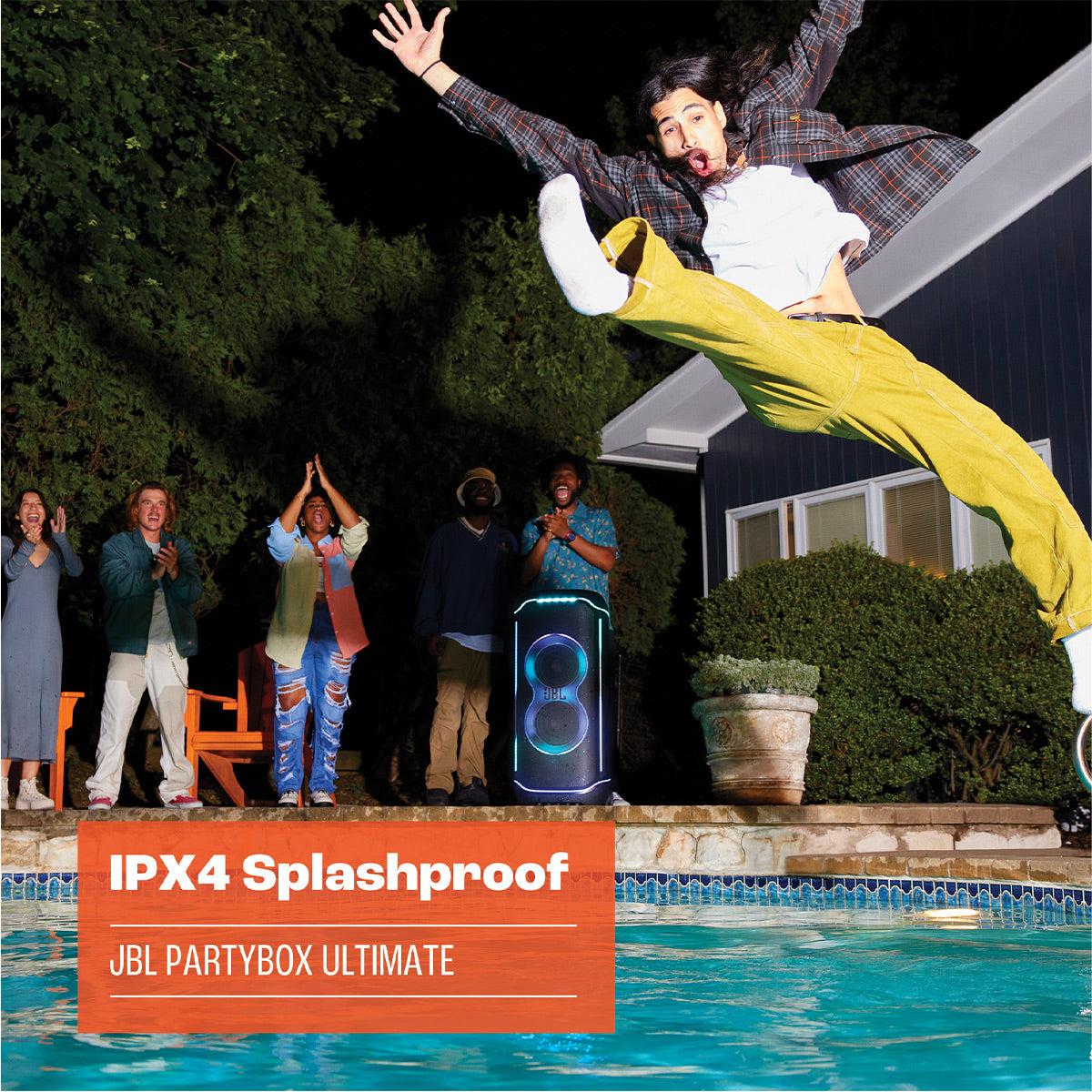
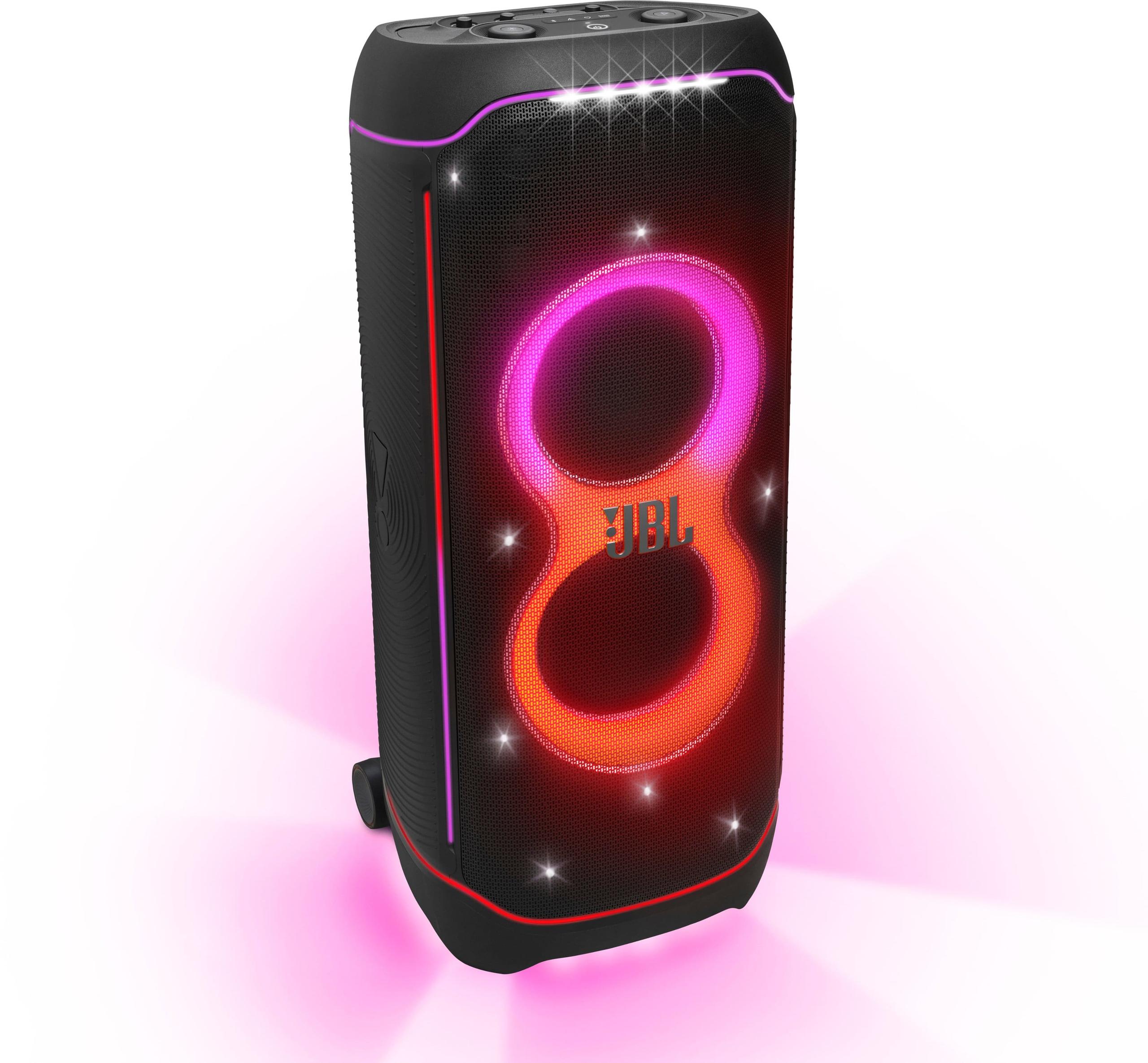
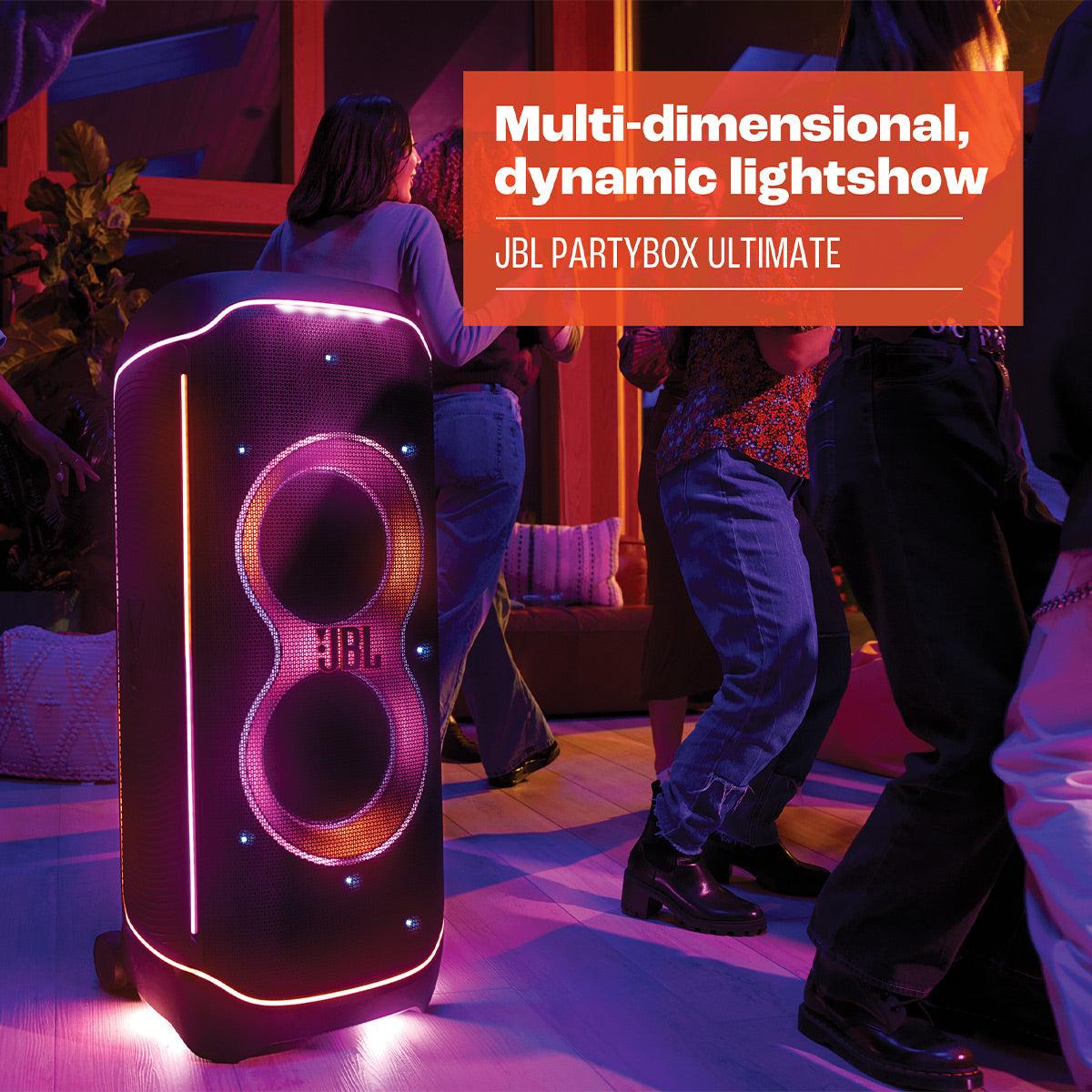
The JBL PartyBox Ultimate takes lighting to another level with what reviews consistently describe as "breathtaking" effects. The system includes starry night patterns, light trails, strobes, and even ground projection—essentially turning the speaker into a complete party lighting system that rivals dedicated DJ equipment.
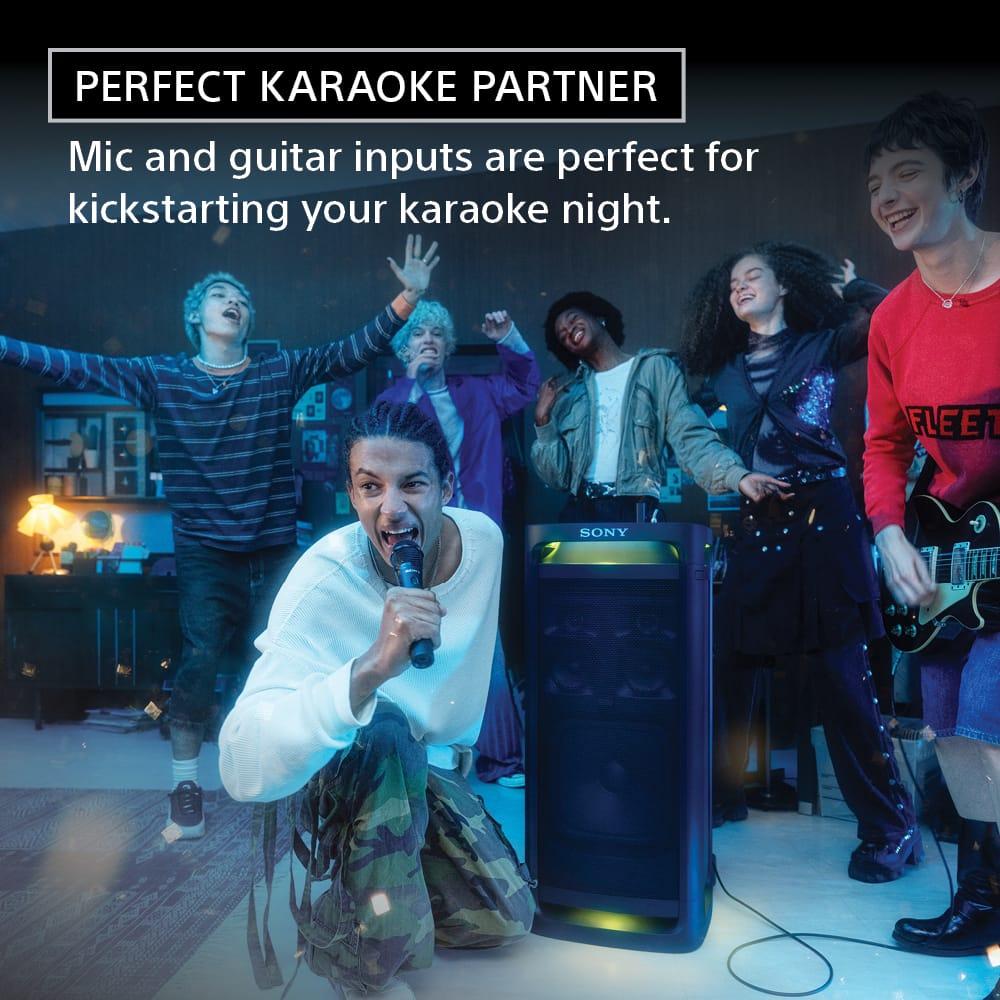
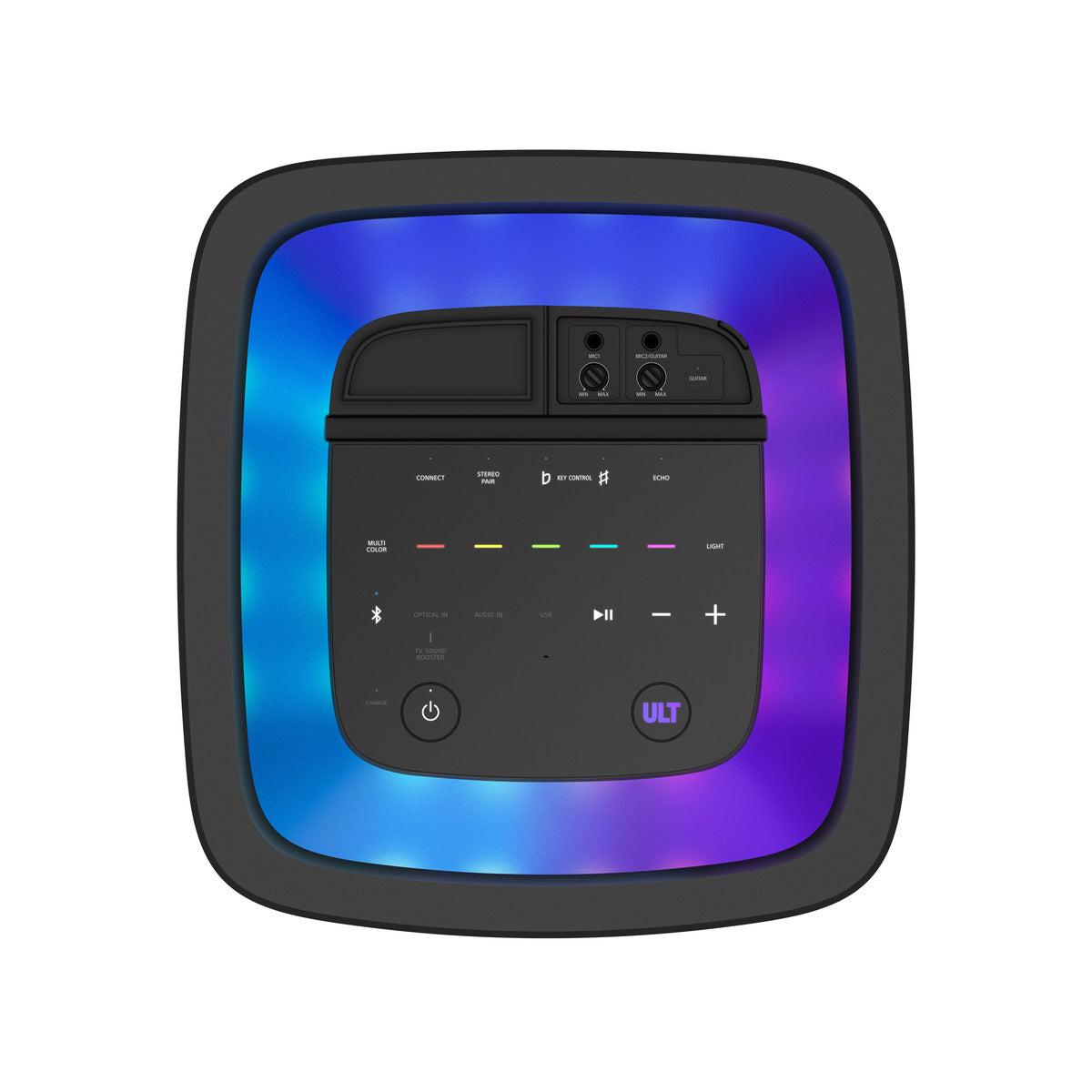
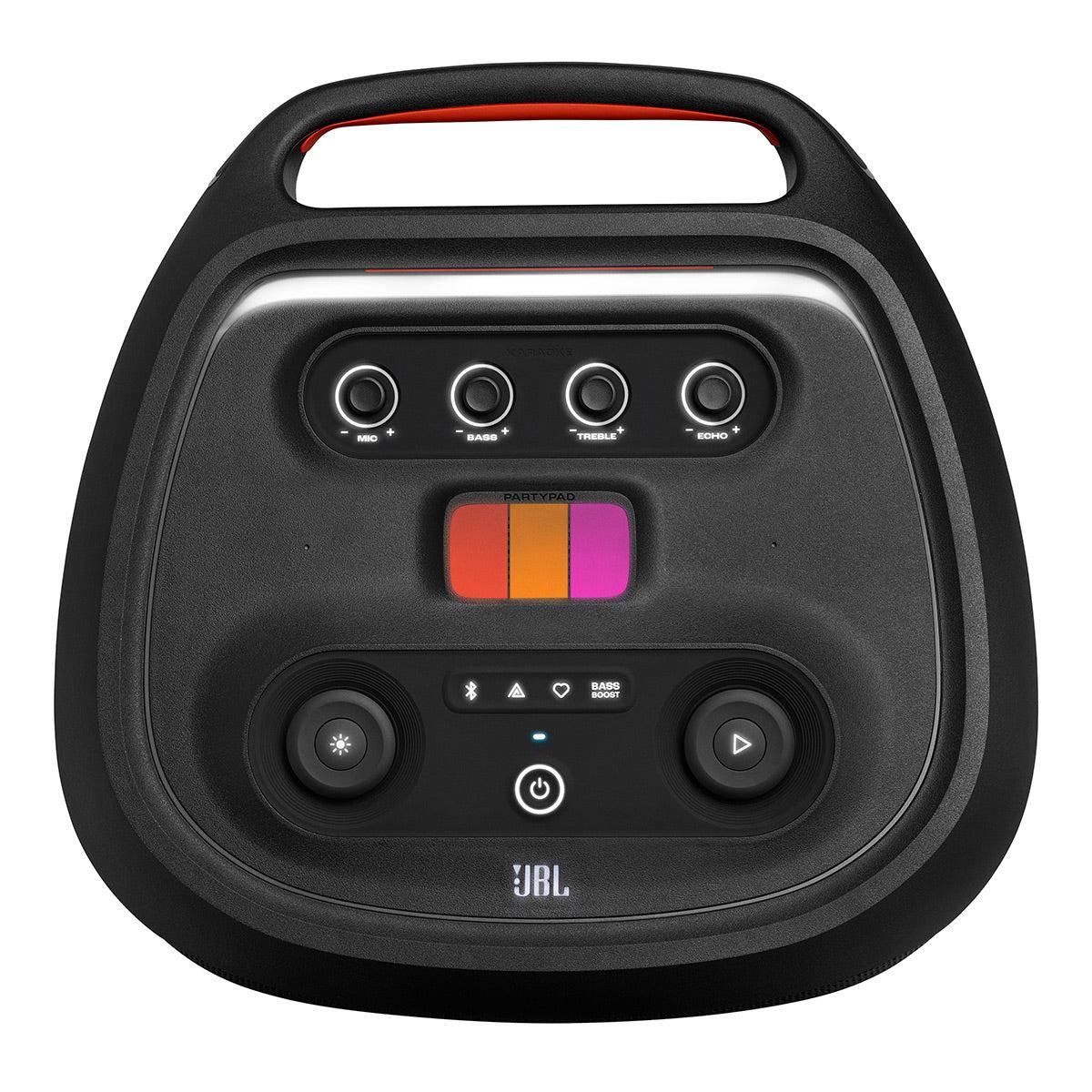
For karaoke and live performance, both speakers include dual microphone inputs with independent volume controls. The Sony ULT TOWER 9 adds voice modification effects through its app, allowing singers to add robot voices, echo, and other effects that can make karaoke more entertaining (or more embarrassing, depending on your perspective).
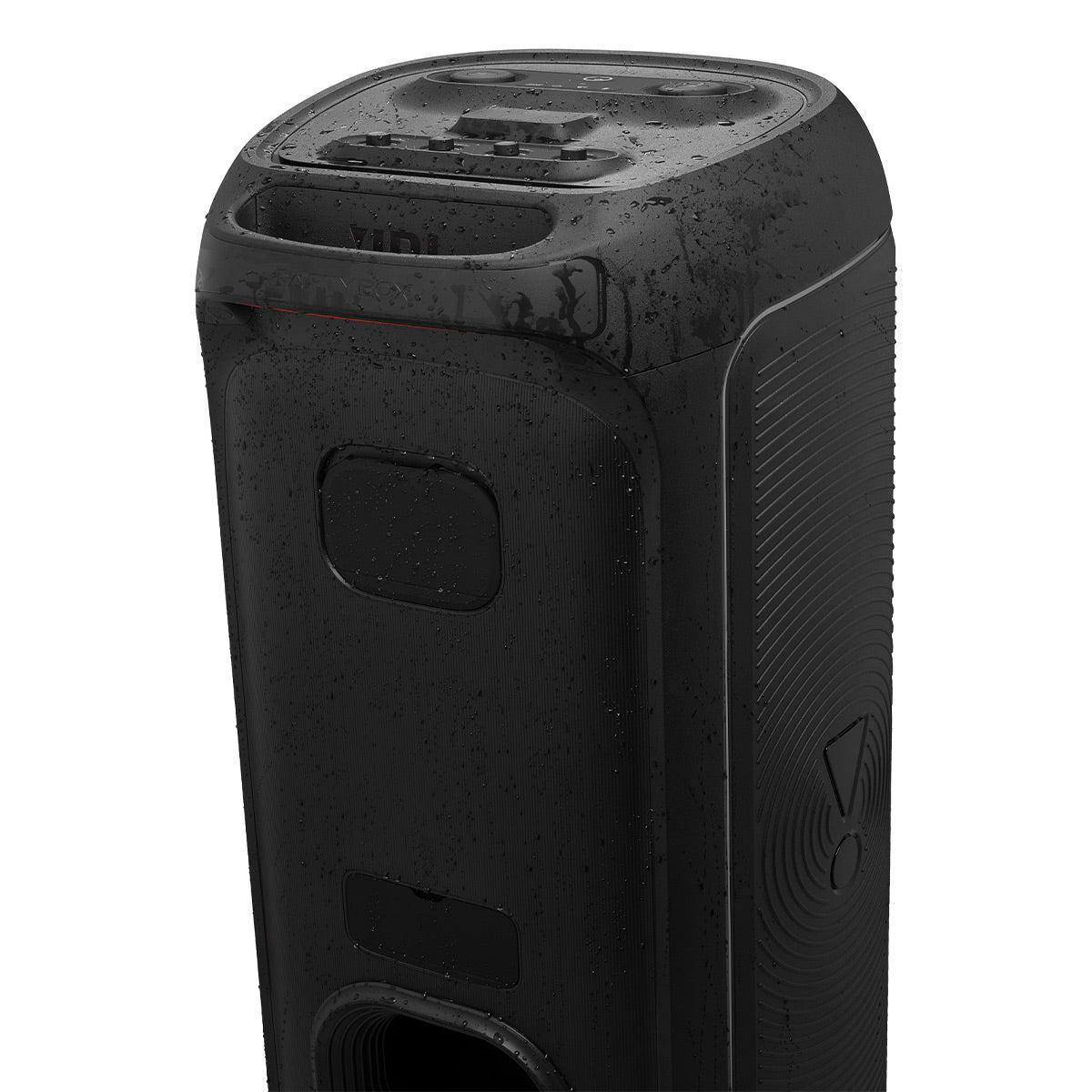
The JBL PartyBox Ultimate includes something called the JBL PartyPad—a touch-sensitive control panel on top of the speaker that lets you trigger DJ-style sound effects like horns, scratches, and filters in real-time. This hands-on control adds an interactive element that can make anyone feel like a professional DJ.
At the time of writing, the pricing difference between these speakers is substantial, with the JBL PartyBox Ultimate costing nearly twice as much as the Sony ULT TOWER 9. This pricing gap reflects their different target audiences and use cases.
The Sony ULT TOWER 9 offers exceptional value for anyone prioritizing versatility. Its battery power alone justifies much of its cost when you consider that no other speaker in its performance class offers 25-hour runtime. Add the optical input for TV use, the 360° sound dispersion, and the aggressive bass response, and it becomes clear why Sony positioned this as a premium all-around solution.
The JBL PartyBox Ultimate commands its premium through absolute performance leadership. If your goal is to create the loudest, most visually impressive party possible, and you have a dedicated space with reliable AC power, the performance increase may justify the cost. Professional event organizers and serious audio enthusiasts are the most likely to appreciate what the extra money buys.
While both speakers excel at parties, the Sony ULT TOWER 9 doubles as an impressive home theater upgrade thanks to its optical input. Connecting it to your TV transforms movie watching into a much more immersive experience. The rear tweeters create ambient sound effects, while the massive woofer adds impact to explosions and action sequences that regular soundbars simply can't match.
The JBL PartyBox Ultimate lacks TV connectivity options, which limits its usefulness in home entertainment setups. However, its Dolby Atmos support over Wi-Fi means it can provide spatial audio effects when streaming compatible content, though this requires using your phone or streaming device rather than direct TV connection.
Based on our analysis of user experiences and professional reviews, the choice between these speakers comes down to your specific priorities and use cases.
Choose the Sony ULT TOWER 9 if you value flexibility above all else. This speaker makes sense for people who want to host parties in different locations, take their audio system outdoors regularly, or need a backup entertainment solution during power outages. The battery life and TV connectivity make it genuinely useful in ways that go beyond just party hosting. The bass response particularly appeals to people who prefer that punchy, club-style sound over neutral accuracy.
The JBL PartyBox Ultimate is for people who have decided that bigger is better and budget isn't the primary constraint. If you have a dedicated party space, reliable AC power, and want the absolute loudest, most visually impressive system available, the performance increase over the Sony becomes meaningful. The Wi-Fi streaming and Dolby Atmos support also appeal to technology enthusiasts who want the latest features.
For most people reading this, the Sony ULT TOWER 9 probably represents the sweet spot between performance, features, and value. Its versatility means you're more likely to use it regularly, and the battery power opens up possibilities that simply don't exist with AC-only speakers. However, if you're planning major events or have a serious commitment to audio excellence, the JBL PartyBox Ultimate delivers performance that justifies its premium positioning.
Both speakers push the boundaries of what's possible in party audio, representing the current state of the art in their respective categories. The choice ultimately depends on whether you prioritize flexibility and value or absolute performance and cutting-edge features.
| Sony ULT TOWER 9 | JBL PartyBox Ultimate |
|---|---|
| Maximum Sound Output - Critical for filling large spaces | |
| 108.2 dB (handles large rooms and patios) | 111.1 dB (can fill spaces up to two basketball courts) |
| Bass Performance - Determines impact and chest-thumping feel | |
| 105 dB bass with ULT enhancement modes for punchy club-style sound | 108 dB bass with deeper 20 Hz extension for more natural low-end |
| Power Source - Affects where and how you can use the speaker | |
| 25-hour battery life with 10-minute quick charge (3 hours playback) | AC-powered only (requires wall outlet at all times) |
| Weight and Portability - Important for transport between locations | |
| 65 lbs with handle and wheels (genuinely portable) | 87 lbs with wheels (designed for semi-permanent placement) |
| Sound Dispersion - How evenly music fills your space | |
| 360° coverage with rear tweeters (eliminates dead zones) | Forward-focused with Dolby Atmos spatial effects |
| Connectivity Options - Determines versatility and streaming quality | |
| Bluetooth 5.3, optical input for TV, USB-A charging | Bluetooth 5.3, Wi-Fi 6, AirPlay 2, Chromecast built-in |
| Lighting System - Visual impact for party atmosphere | |
| 360° Party Light with app control (some reported app bugs) | Multi-dimensional RGB with starry effects and ground projection |
| Interactive Features - Entertainment beyond music playback | |
| Voice modification effects, DJ app controls, karaoke features | JBL PartyPad touch controls, real-time DJ effects |
| Multi-Speaker Support - For scaling up to larger events | |
| Party Connect (up to 100 speakers) and stereo pairing | Daisy-chaining and true wireless stereo pairing |
| Home Theater Use - Dual-purpose entertainment value | |
| Optical input enables direct TV connection as massive soundbar | No TV connectivity (Wi-Fi streaming only) |
| Value Positioning - Performance per dollar consideration | |
| Premium portable with exceptional battery life at mid-tier pricing | Ultra-premium stationary system at nearly double the cost |
The JBL PartyBox Ultimate is significantly louder, reaching 111.1 dB compared to the Sony ULT TOWER 9's 108.2 dB maximum output. This 3 dB difference represents nearly double the acoustic power, allowing the JBL PartyBox Ultimate to fill much larger spaces like gymnasiums or outdoor venues.
Only the Sony ULT TOWER 9 offers battery operation, providing up to 25 hours of continuous playback on a single charge. The JBL PartyBox Ultimate requires constant AC power and cannot operate on battery, making it unsuitable for outdoor events without electrical access.
Both excel at bass but in different ways. The Sony ULT TOWER 9 delivers more punchy, club-style bass with its ULT enhancement modes, while the JBL PartyBox Ultimate provides deeper extension down to 20 Hz for more natural, powerful low-end response. For typical party music, the Sony ULT TOWER 9's aggressive bass often feels more impactful.
Both speakers are quite heavy - the Sony ULT TOWER 9 weighs 65 pounds while the JBL PartyBox Ultimate weighs 87 pounds. However, both include wheels and handles for transport. The Sony ULT TOWER 9 is more genuinely portable due to its battery power, while the JBL PartyBox Ultimate is better suited for semi-permanent installation.
The Sony ULT TOWER 9 includes an optical input that allows direct connection to TVs, essentially turning it into a massive soundbar with rear tweeters for immersive sound. The JBL PartyBox Ultimate lacks TV connectivity options, limiting its use to wireless streaming and audio inputs only.
The JBL PartyBox Ultimate generally receives higher praise for its lighting system, featuring multi-dimensional RGB effects, starry patterns, light trails, and ground projection. The Sony ULT TOWER 9 offers 360° Party Light that syncs with music, though some users report occasional app control issues with the lighting features.
Both the Sony ULT TOWER 9 and JBL PartyBox Ultimate include dual microphone inputs with volume controls for karaoke use. The Sony ULT TOWER 9 adds voice modification effects through its app, while the JBL PartyBox Ultimate offers dedicated karaoke EQ tuning for clearer vocals.
Yes, both support multi-speaker connectivity. The Sony ULT TOWER 9 uses Party Connect to link up to 100 compatible speakers, while the JBL PartyBox Ultimate supports daisy-chaining and wireless stereo pairing. Both allow synchronized audio and lighting across multiple units.
The Sony ULT TOWER 9 typically offers better value, delivering premium performance with unique features like 25-hour battery life and TV connectivity at a significantly lower price point. The JBL PartyBox Ultimate costs nearly twice as much but provides the absolute highest performance and most advanced features.
Both maintain excellent clarity at high volumes. The Sony ULT TOWER 9 uses 360° sound dispersion with rear tweeters to eliminate dead zones, making it better for ambient party atmosphere. The JBL PartyBox Ultimate offers Dolby Atmos spatial effects and slightly cleaner sound at maximum output, better for focused listening experiences.
The Sony ULT TOWER 9 excels for outdoor use thanks to its 25-hour battery and weather-resistant design. The JBL PartyBox Ultimate can be used outdoors but requires access to electrical power, limiting placement options. Both are loud enough to overcome outdoor ambient noise effectively.
For home entertainment versatility, the Sony ULT TOWER 9 is the clear winner due to its optical TV input, battery operation for moving between rooms, and 360° sound dispersion. The JBL PartyBox Ultimate lacks TV connectivity and is better suited for dedicated party spaces rather than multi-purpose home use.
We've done our best to create useful and informative comparisons to help you decide what product to buy. Our research uses advanced automated methods to create this comparison and perfection is not possible - please contact us for corrections or questions. These are the sites we've researched in the creation of this article: theshortcut.com - skybygramophone.com - bestbuy.com - crutchfield.com - soundguys.com - videoandaudiocenter.com - electronics.sony.com - helpguide.sony.net - youtube.com - youtube.com - youtube.com - sony.com - youtube.com - skybygramophone.com - sony.com - manuals.plus - stereoguide.com - helpguide.sony.net - audioadvice.com - youtube.com - crutchfield.com - youtube.com - youtube.com - youtube.com - youtube.com - versus.com - youtube.com - rtings.com - youtube.com - youtube.com - jbl.com - pcx.com.ph - global.jbl.com - gzhls.at - electronicexpress.com - harmanaudio.in - jbl.com - dell.com - robot-advance.com - device.report - ro.harmanaudio.com

Privacy Policy
Terms and Conditions - Affiliate Policy
Home Security
© Copyright 2008-2026.
11816 Inwood Rd #1211, Dallas, TX 75244