

Party speakers have evolved far beyond simple portable Bluetooth devices. These powerhouse audio systems represent the sweet spot between consumer electronics and professional sound equipment, designed to fill massive spaces with chest-thumping bass while creating an immersive audiovisual experience. Whether you're hosting backyard barbecues, organizing corporate events, or just want to be the house with the legendary sound system, choosing the right party speaker can make or break your gatherings.
The party speaker market has exploded over the past few years, with manufacturers pushing boundaries in power output, battery technology, and integrated lighting systems. Two standout contenders have emerged from this competitive landscape: the Marshall Bromley 750, which launched in 2024 as Marshall's bold entry into the party speaker arena, and the JBL PartyBox Ultimate, released the same year as JBL's flagship party machine.
At the time of writing, these speakers occupy different price tiers, with the Marshall Bromley 750 positioned as the more affordable option while the JBL PartyBox Ultimate commands a significant premium for its advanced feature set. Understanding which speaker delivers better value requires diving deep into their technical capabilities, design philosophies, and real-world performance characteristics.
Before we dive into the specifics, it's important to understand what separates exceptional party speakers from the pack. The most critical factor is raw power output, measured in watts RMS (root mean square) - this tells you how much continuous power the speaker can deliver without distortion. However, wattage alone doesn't tell the whole story. Driver configuration, amplifier quality, and acoustic design all play crucial roles in determining how that power translates into actual sound quality and room-filling capability.
Sound pressure level, measured in decibels (dB), indicates how loud a speaker can get. For context, normal conversation sits around 60 dB, while a rock concert hits about 110-115 dB. Party speakers typically need to reach at least 100 dB to effectively energize large gatherings, but the best models push well beyond this threshold.
Connectivity options have become increasingly important as our music consumption habits have evolved. Modern party speakers need to handle everything from high-resolution Wi-Fi streaming to analog inputs for DJ equipment and live instruments. Battery life remains crucial for outdoor events, while durability ratings like IP54 (protection against dust and water splashes) determine whether your investment can survive pool parties and beach gatherings.
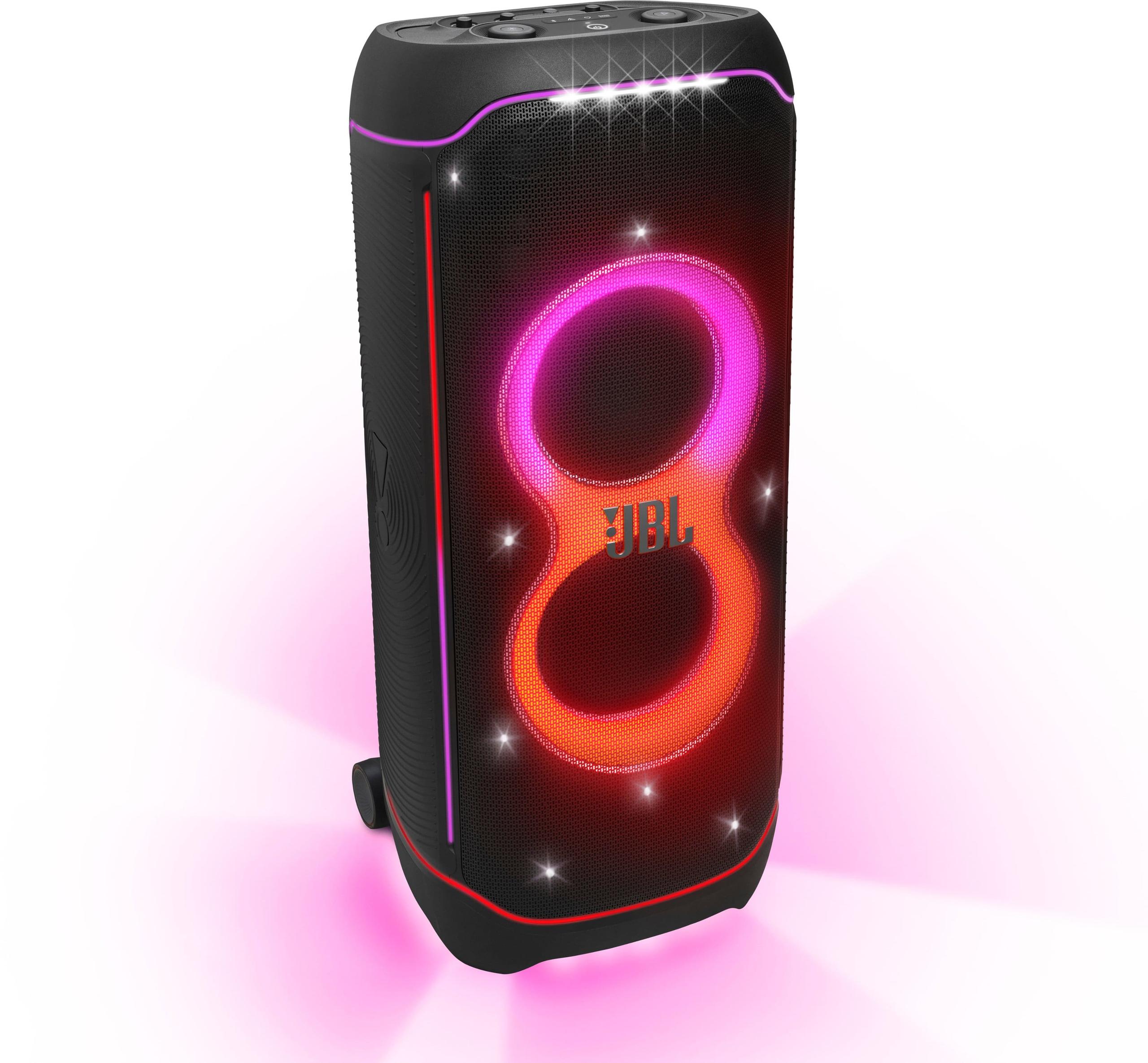
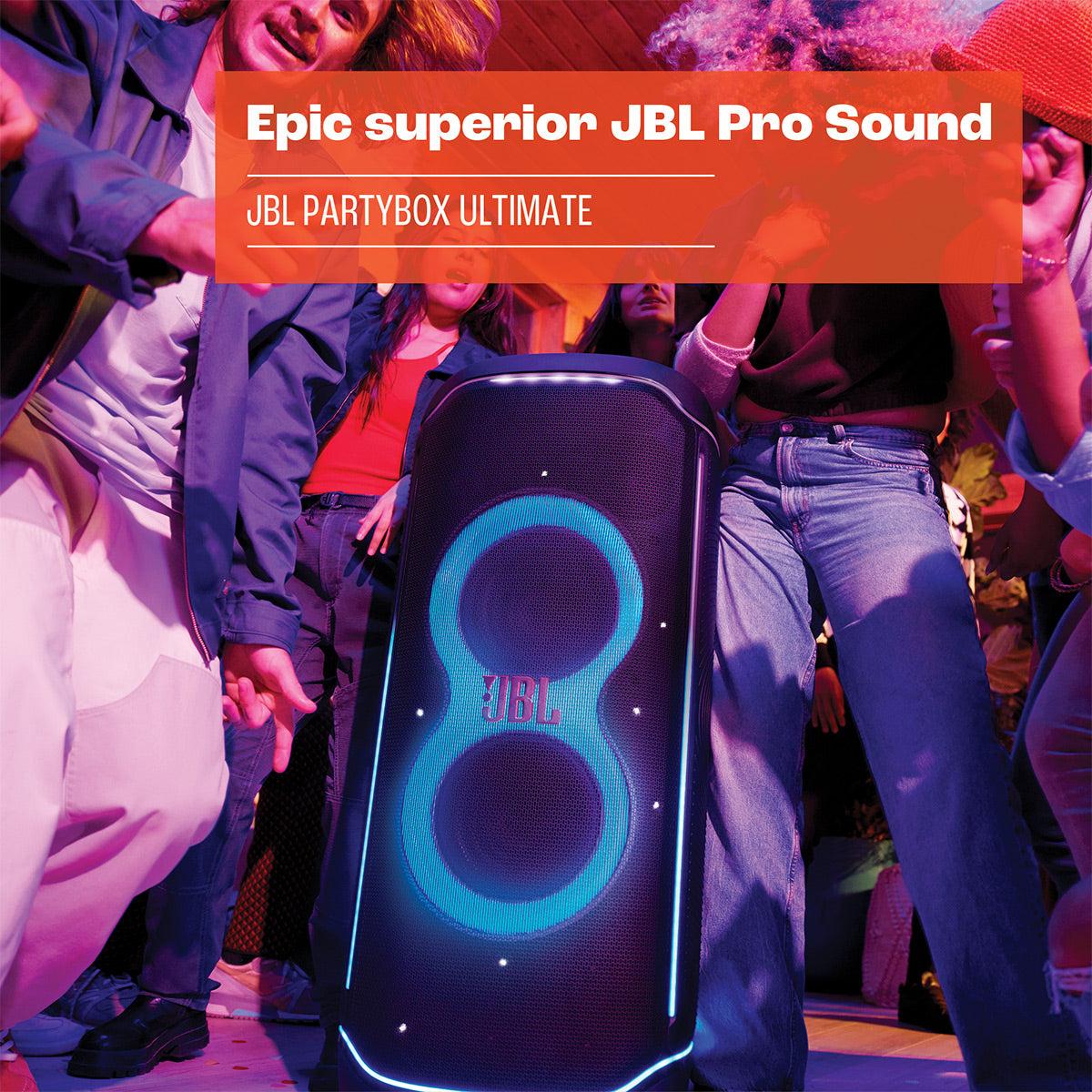
The JBL PartyBox Ultimate absolutely dominates in raw power, delivering 1100 watts RMS through an impressive driver array. This system employs dual 9-inch woofers for deep bass, 4.5-inch midrange drivers for vocal clarity, and 2.75-inch tweeters for crisp high frequencies. In real-world testing by audio reviewers, this configuration produces sound pressure levels reaching 116.7 dB on the DBC scale (which emphasizes bass frequencies), making it capable of filling spaces equivalent to two basketball courts with authoritative sound.
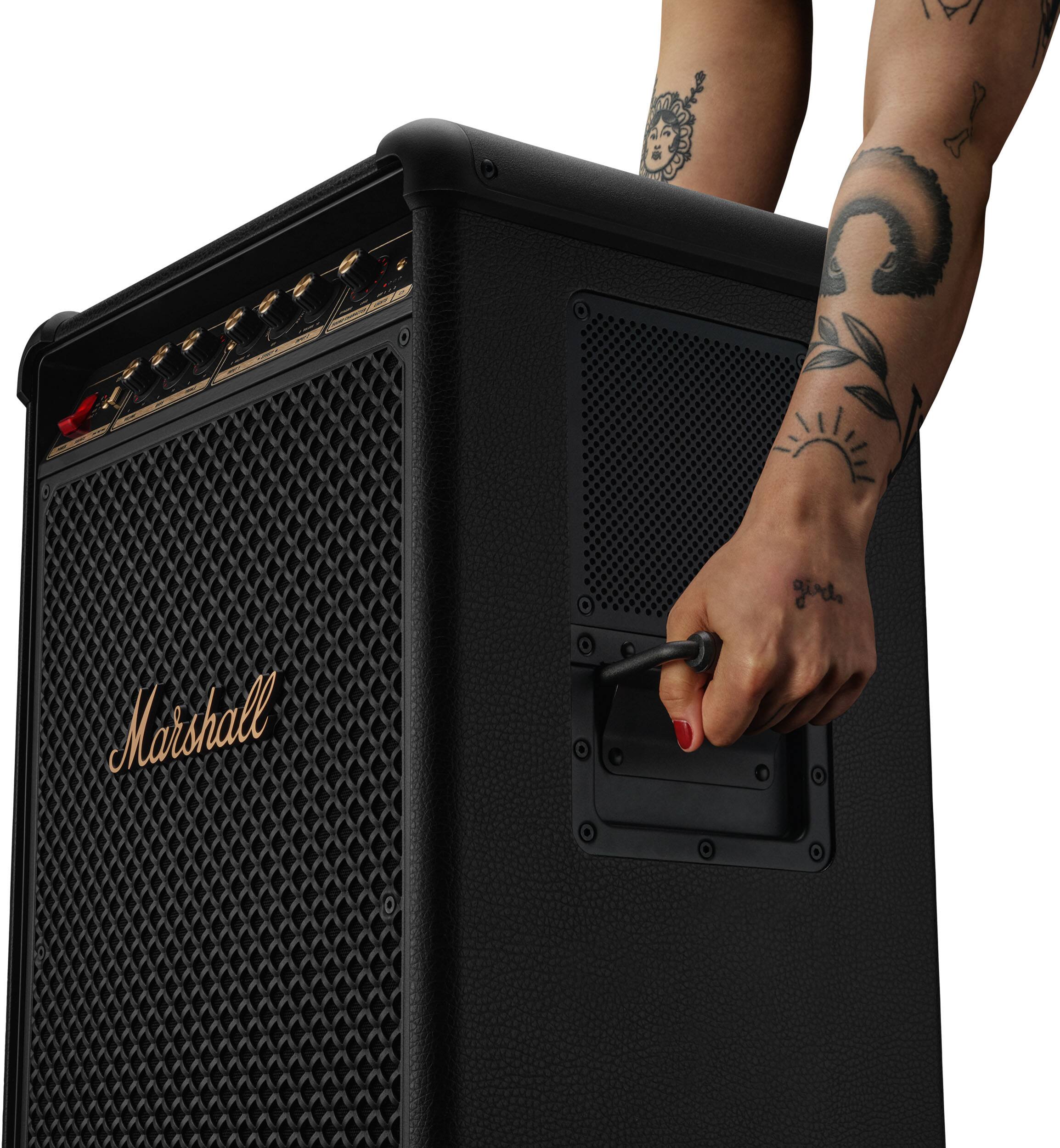
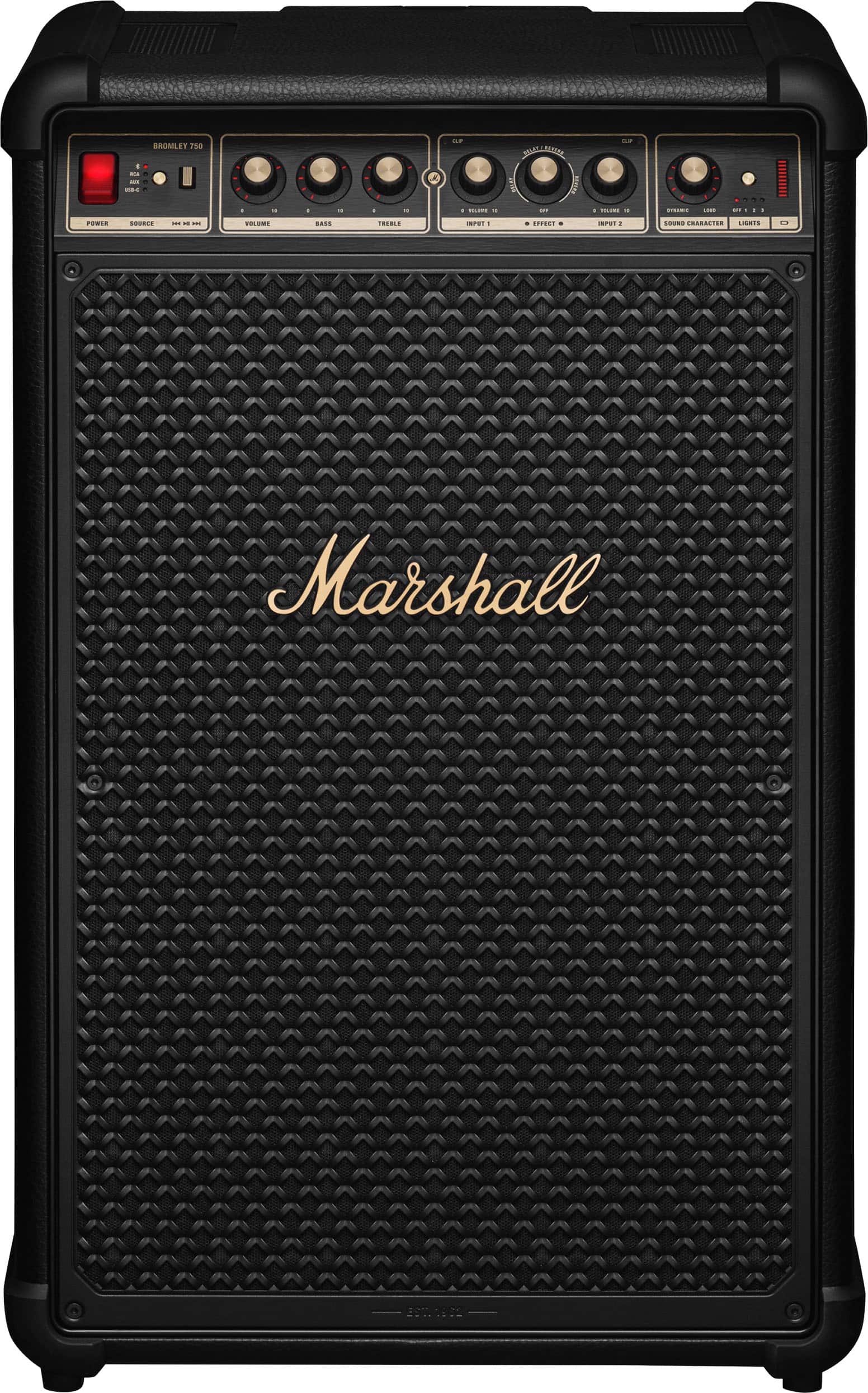
The Marshall Bromley 750 takes a different approach with 500 watts total output distributed across eight Class D amplifiers - these are highly efficient digital amplifiers that generate less heat and waste less power than traditional analog designs. Marshall's system uses dual 10-inch woofers, 5.25-inch mid-range drivers, and both 1-inch and 0.8-inch tweeters strategically positioned throughout the cabinet. While less powerful on paper, this setup still achieves impressive 127 dB SPL (sound pressure level) capability.
The power difference translates directly to coverage area and headroom. The JBL PartyBox Ultimate excels when you need to energize truly massive spaces or compete with significant ambient noise. However, the Marshall Bromley 750 provides more than adequate power for most residential and small commercial applications while offering superior efficiency from its battery system.
What's particularly interesting is how these speakers handle dynamic range - the difference between quiet and loud passages in music. The JBL's massive power reserves mean it can effortlessly reproduce sudden bass drops and dynamic peaks without compression, while the Marshall's more modest power output requires more careful gain staging but delivers surprisingly punchy performance when properly dialed in.
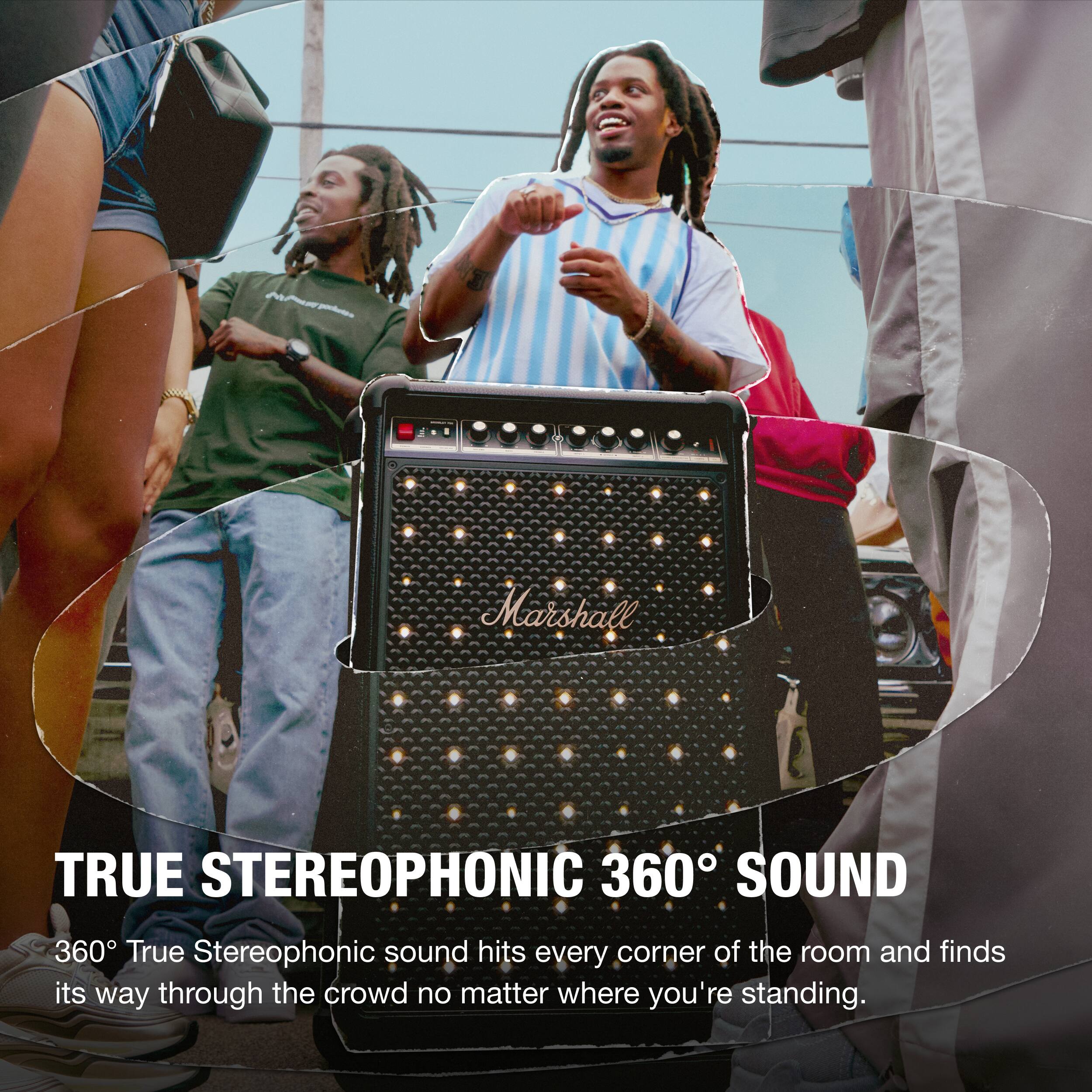
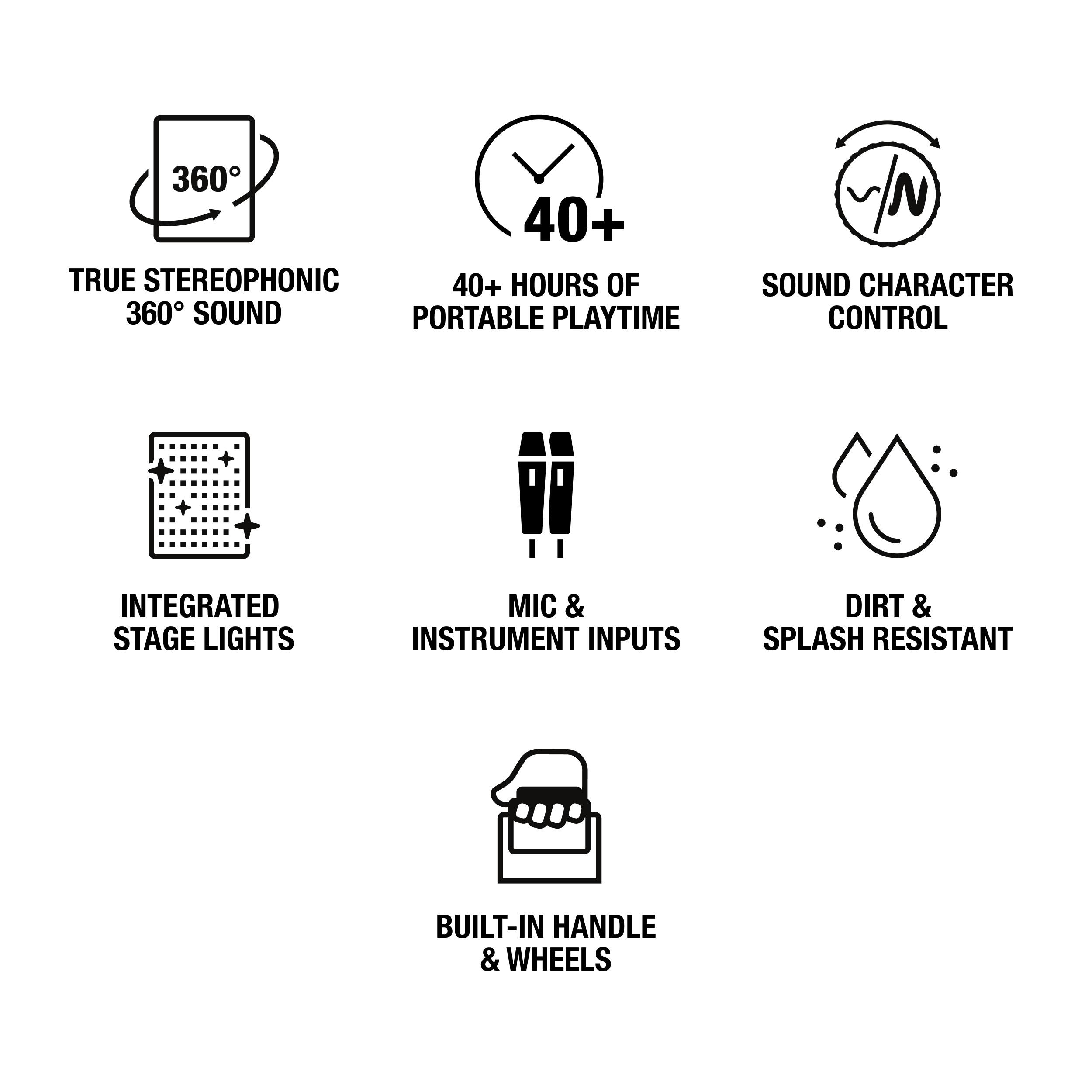
Sound quality represents where these speakers diverge most dramatically in their engineering approaches. The Marshall Bromley 750 employs what Marshall calls "True Stereophonic 360° sound" - a sophisticated driver arrangement that fires audio in multiple directions simultaneously. This includes front-firing drivers for direct sound, side-firing elements for room ambiance, rear-firing drivers for spaciousness, and top-firing tweeters that bounce sound off ceilings to create an enveloping soundstage.
This omnidirectional approach means listeners experience consistent sound quality regardless of their position relative to the speaker. Traditional front-firing speakers create "sweet spots" directly in front of the drivers, but Marshall's design ensures everyone at your party gets the full sonic experience. The closed-box acoustic design (a sealed cabinet without ports) provides tighter, more controlled bass response compared to ported designs, though it typically requires more power to achieve the same low-frequency output.
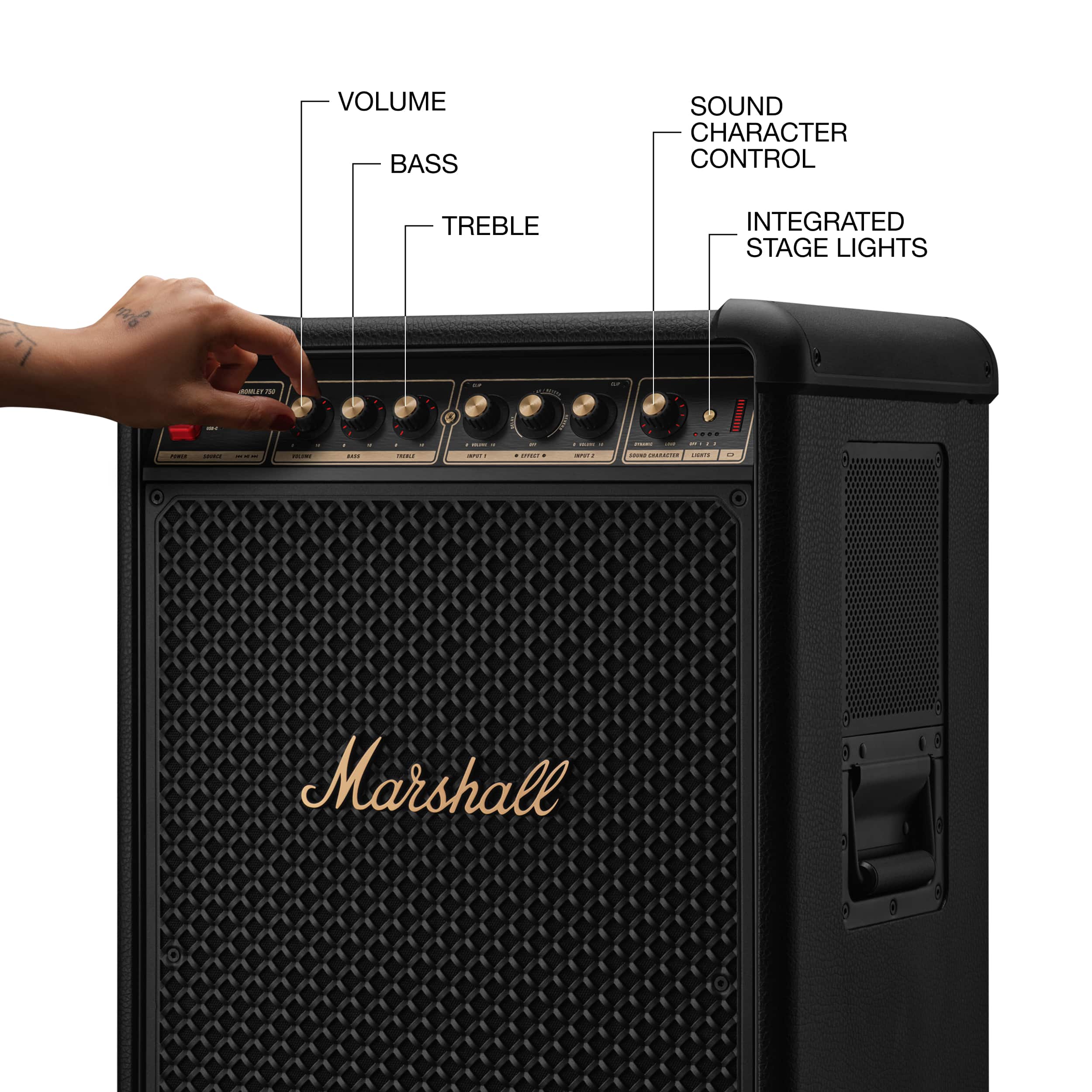
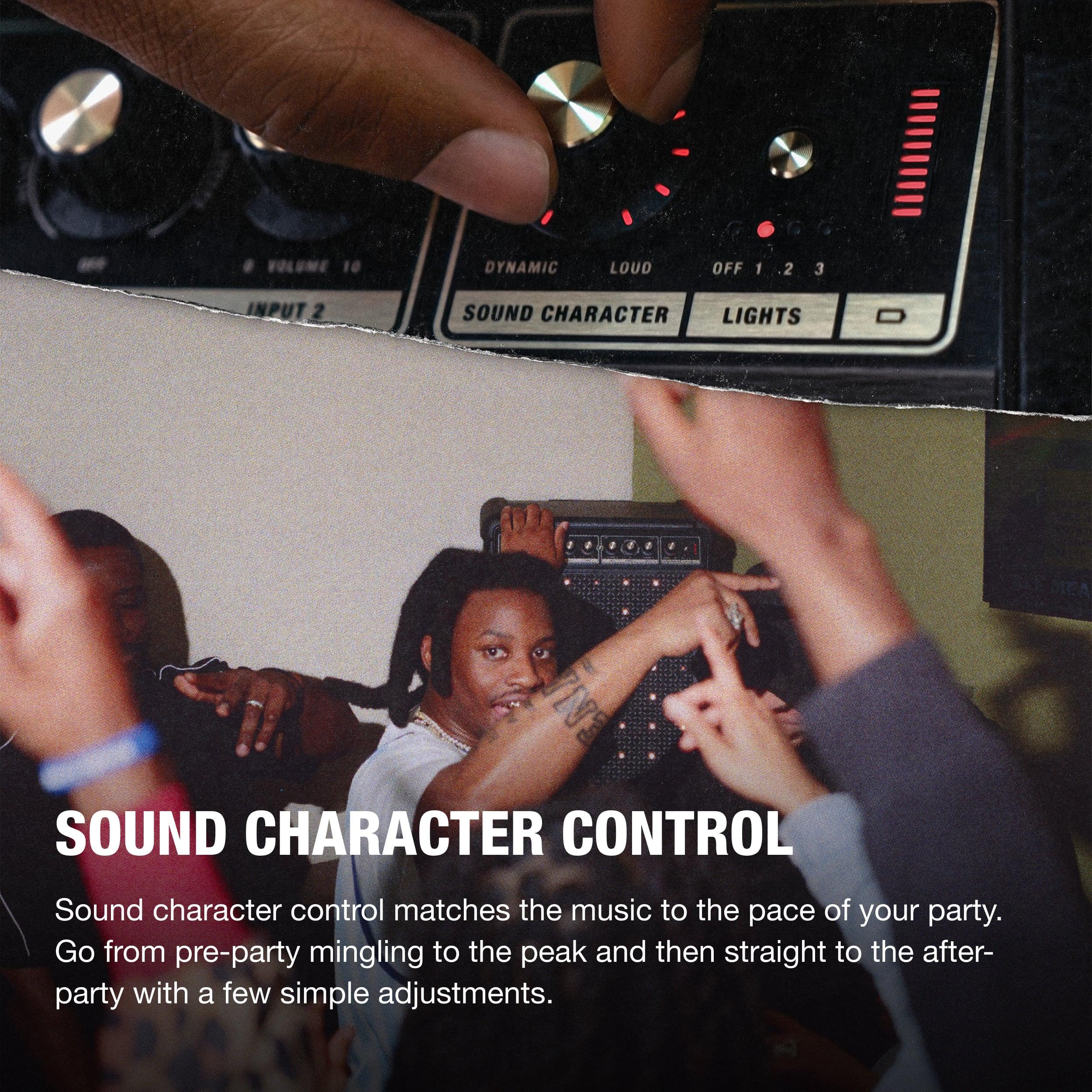
The Marshall Bromley 750 also features unique "Sound Character" control - a dedicated knob that switches between "Dynamic" and "Loud" modes. Dynamic mode optimizes the frequency response for detailed listening at moderate volumes, emphasizing midrange clarity and controlled bass. Loud mode reconfigures the EQ for high-volume outdoor use, boosting bass impact and increasing midrange presence to cut through ambient noise and crowd chatter.
The JBL PartyBox Ultimate takes a more traditional approach with front-firing drivers but compensates with Dolby Atmos processing when connected via Wi-Fi. Dolby Atmos creates three-dimensional soundscapes by processing audio into object-based surround sound, making listeners feel like they're inside the music rather than just listening to it. However, this feature only works when streaming via Wi-Fi - it's not available through Bluetooth or wired connections.
User reviews consistently describe the JBL's sound signature as "bass-heavy" and "clean," with particularly impressive low-frequency impact that's reportedly 20% stronger than JBL's previous flagship models. The bass response is not just loud but physically felt, creating the visceral experience that makes people want to dance. However, some critical listeners note that the emphasis on bass can sometimes overshadow midrange detail, particularly at moderate volumes.
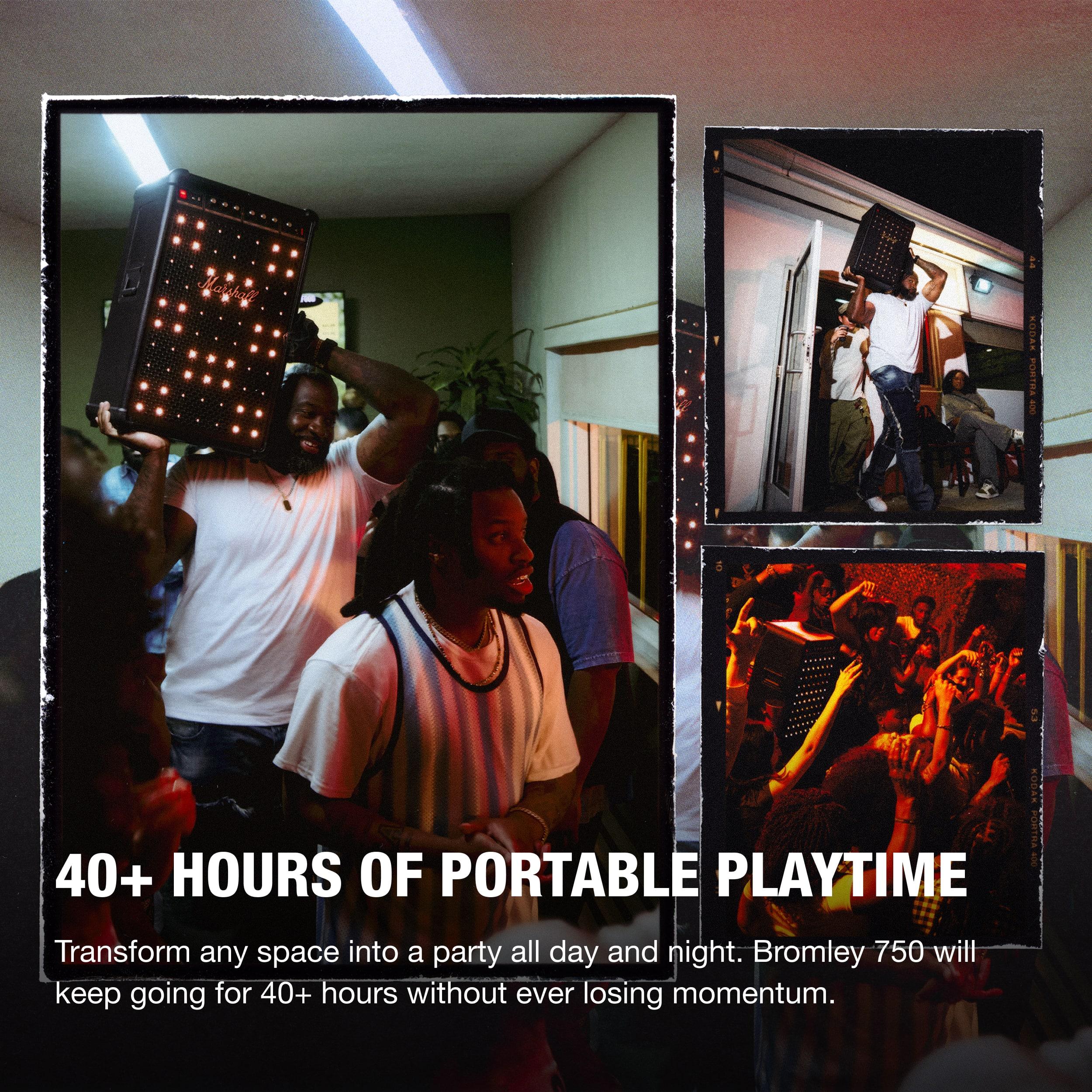
Here's where the fundamental difference between these speakers becomes most apparent. The Marshall Bromley 750 features a user-replaceable battery system that delivers over 40 hours of continuous playback - an absolutely extraordinary runtime that outperforms virtually every competitor in this category. This battery also functions as a power bank, capable of charging phones and other USB devices through a dedicated port.
The replaceable battery design is particularly clever. Rather than being permanently installed like most portable speakers, the Marshall's battery can be swapped out for a fresh one, enabling theoretically unlimited runtime for extended events. Quick charging provides five hours of playback from just 20 minutes of charging time, making it practical to top up between sets or during brief breaks.
In contrast, the JBL PartyBox Ultimate operates exclusively on AC power, requiring proximity to electrical outlets. This design choice allows JBL to dedicate all available space and weight to drivers, amplifiers, and cooling systems rather than battery components. The result is significantly more powerful audio performance, but at the cost of placement flexibility.
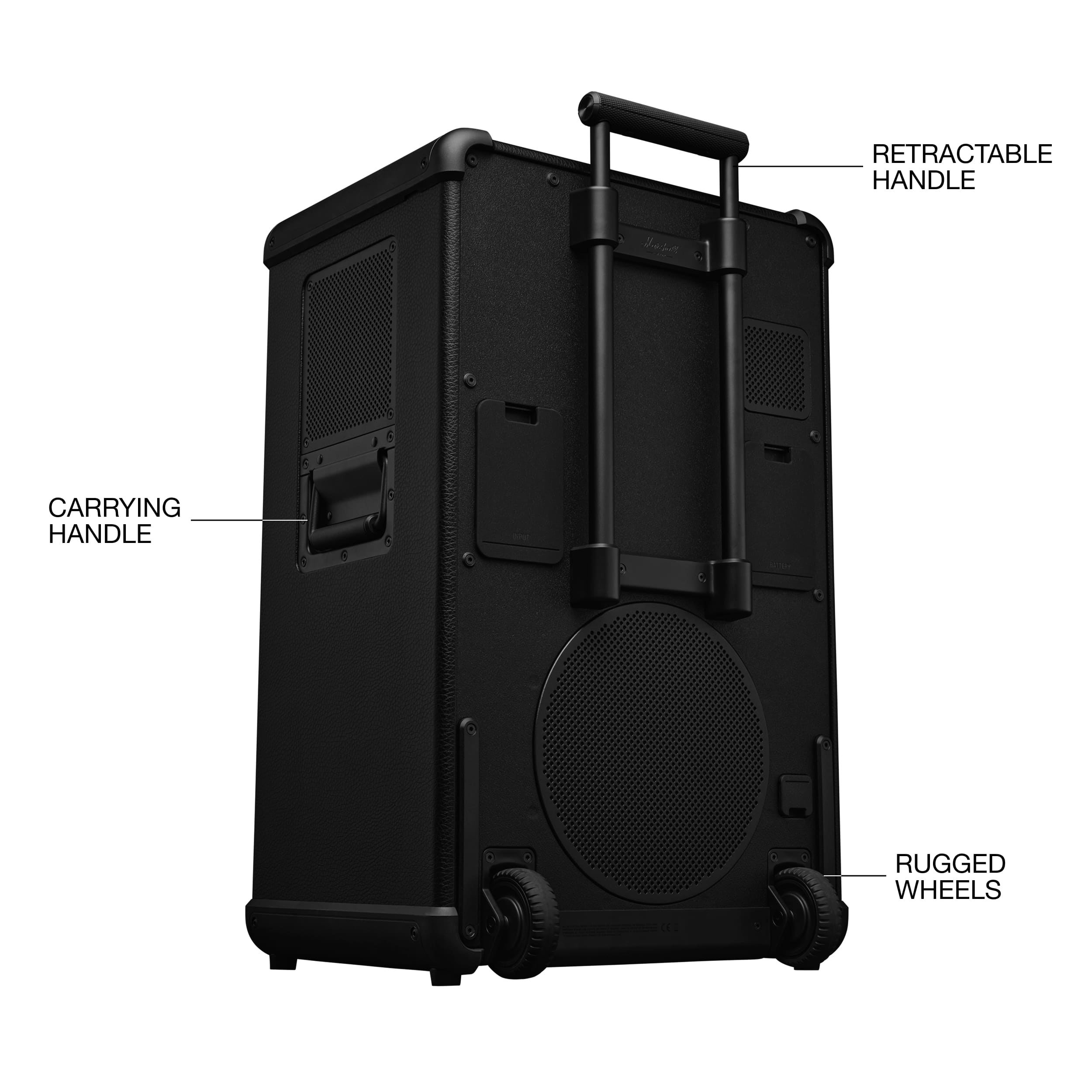
Both speakers weigh substantially more than typical portable speakers - the Marshall Bromley 750 tips the scales at 52.7 pounds while the JBL PartyBox Ultimate weighs a hefty 87 pounds. Both include wheels and telescoping handles for transport, but the weight difference is significant when loading vehicles or navigating stairs.
The portability advantage clearly goes to the Marshall Bromley 750, not just for its lighter weight but for its complete independence from power outlets. This makes it ideal for beach parties, camping trips, outdoor festivals, or any venue where electrical access is limited or inconvenient.
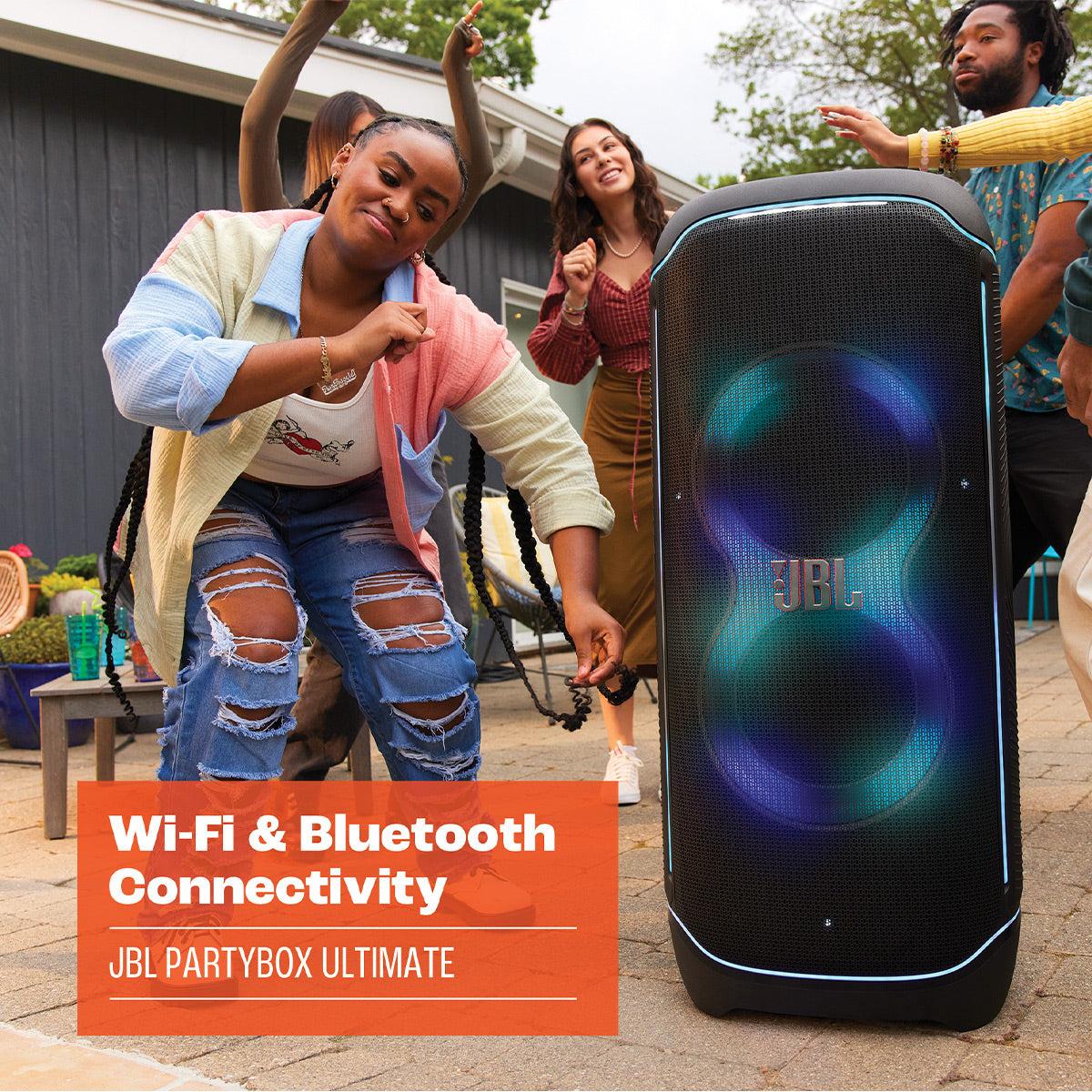
Modern party speakers need to accommodate diverse audio sources, from streaming services to DJ equipment to live instruments. The JBL PartyBox Ultimate excels in this area with comprehensive connectivity including dual-band Wi-Fi 6 (the latest and fastest Wi-Fi standard), Bluetooth 5.3, USB-A input, auxiliary input/output, and dual quarter-inch inputs for microphones and guitars.
The Wi-Fi 6 connectivity enables several advanced features unavailable through Bluetooth alone. High-resolution audio streaming maintains full quality from services like Tidal or Apple Music, while AirPlay 2 and Chromecast built-in provide seamless integration with iOS and Android devices respectively. Most importantly, Wi-Fi streaming doesn't interrupt when you receive phone calls or notifications, unlike Bluetooth which can cause audio dropouts.
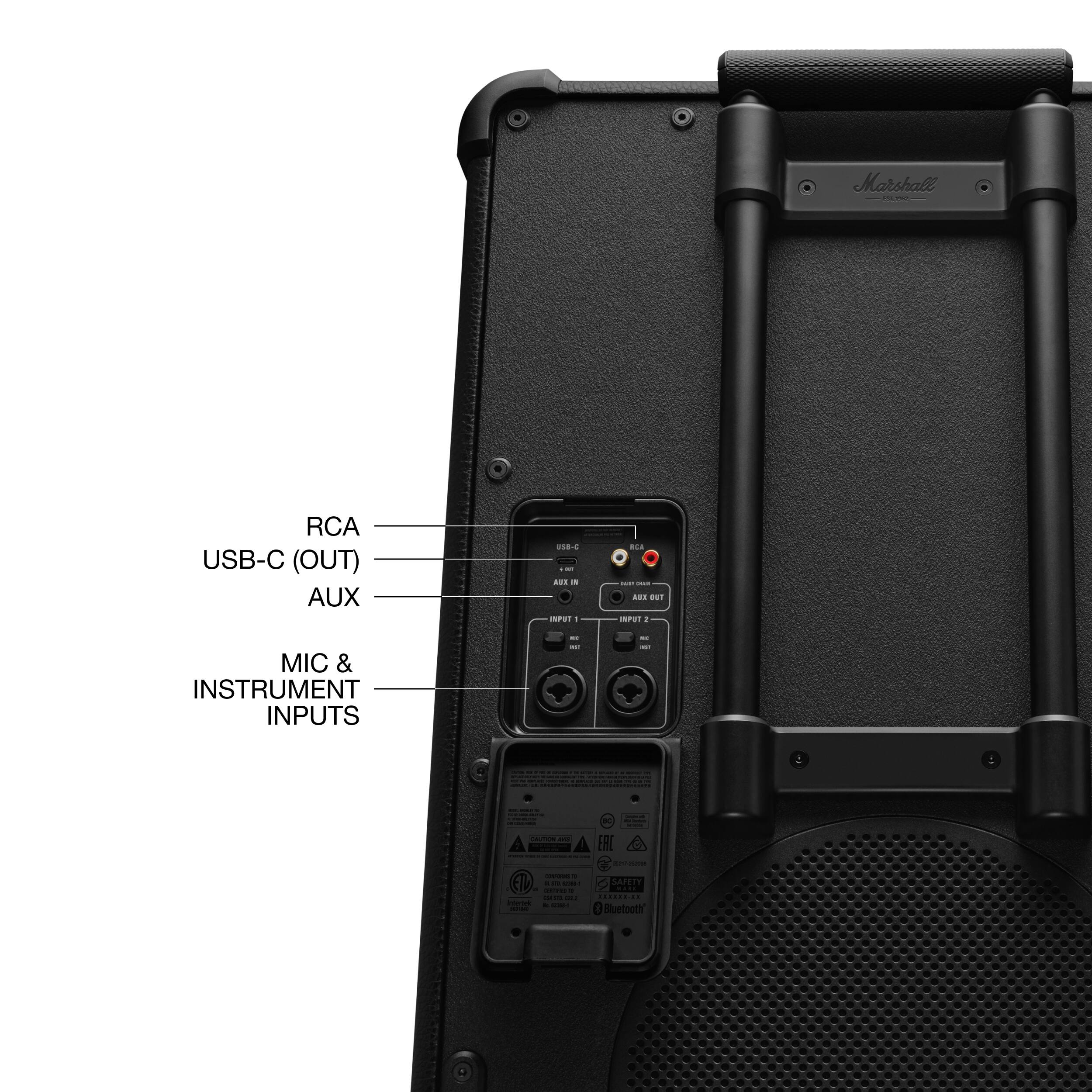
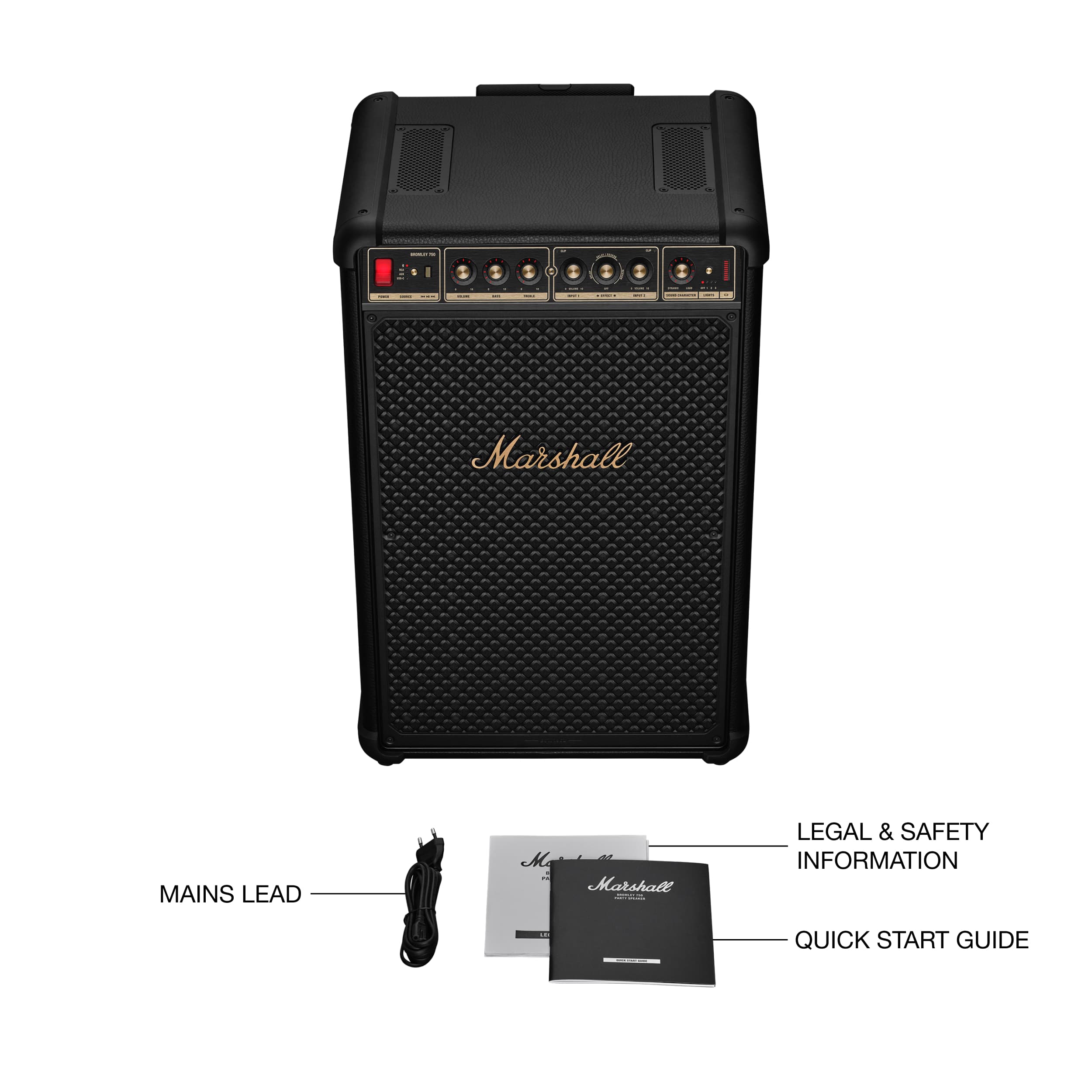
The Marshall Bromley 750 offers a different but equally comprehensive approach with Bluetooth 5.3 featuring Auracast technology. Auracast allows multiple compatible speakers to receive the same audio stream simultaneously, creating a true wireless multi-room system. The wired connectivity includes 3.5mm auxiliary, USB-C, RCA inputs, and dual XLR/6.35mm combo jacks that accept both professional microphones and musical instruments.
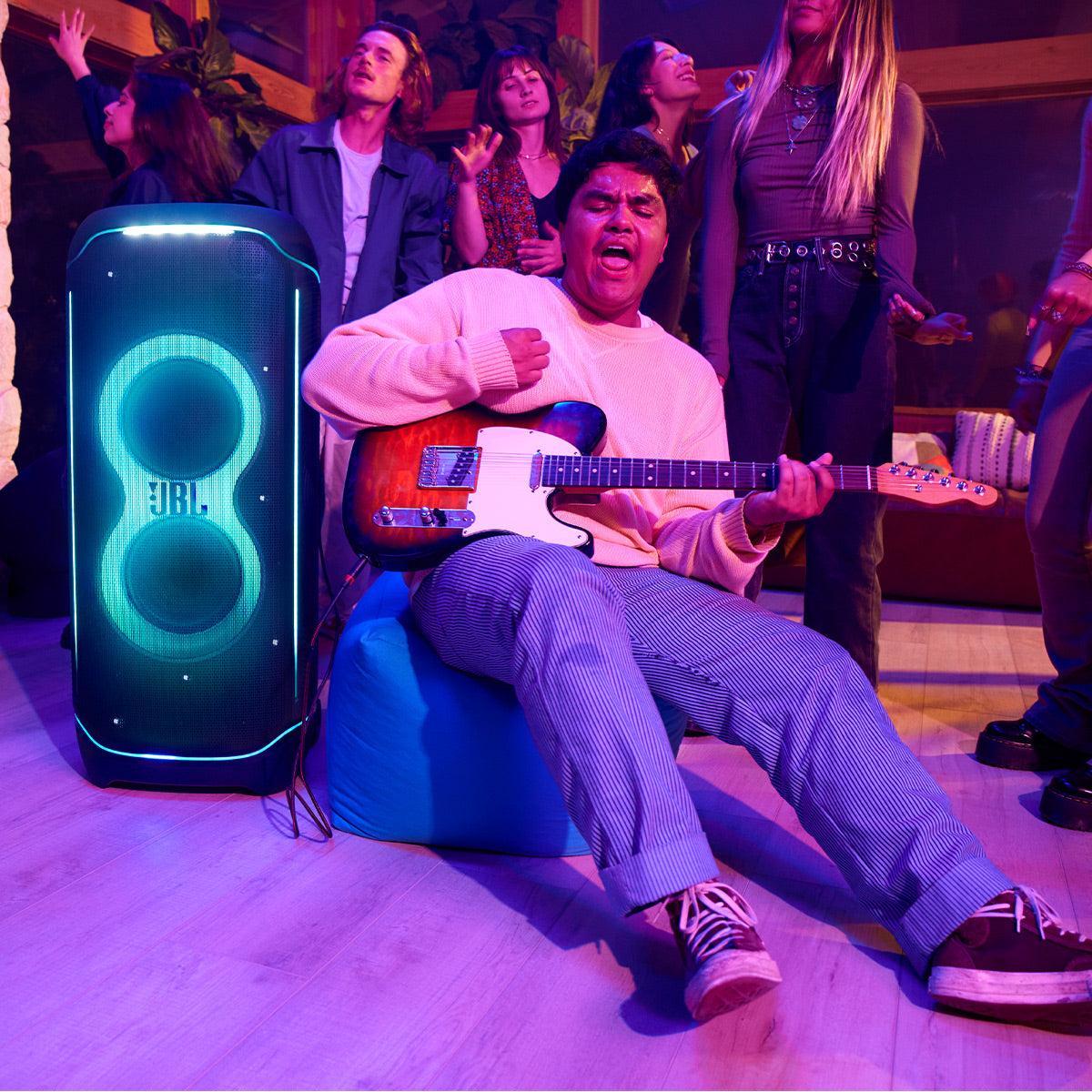
Marshall includes onboard audio processing with reverb and delay effects, making it suitable for karaoke and live performance without additional equipment. The auxiliary output allows daisy-chaining multiple speakers together using standard audio cables, providing redundancy if wireless connectivity becomes unreliable.
For home theater applications, both speakers face limitations. Neither includes HDMI inputs for direct TV connection, though both can connect to TVs via auxiliary outputs or Bluetooth. The JBL PartyBox Ultimate has an advantage here with its Wi-Fi connectivity, allowing it to function as an AirPlay or Chromecast target for streaming TV audio wirelessly.
The entertainment factor separates party speakers from traditional hi-fi systems, and both manufacturers have developed unique approaches to engagement beyond just playing music.
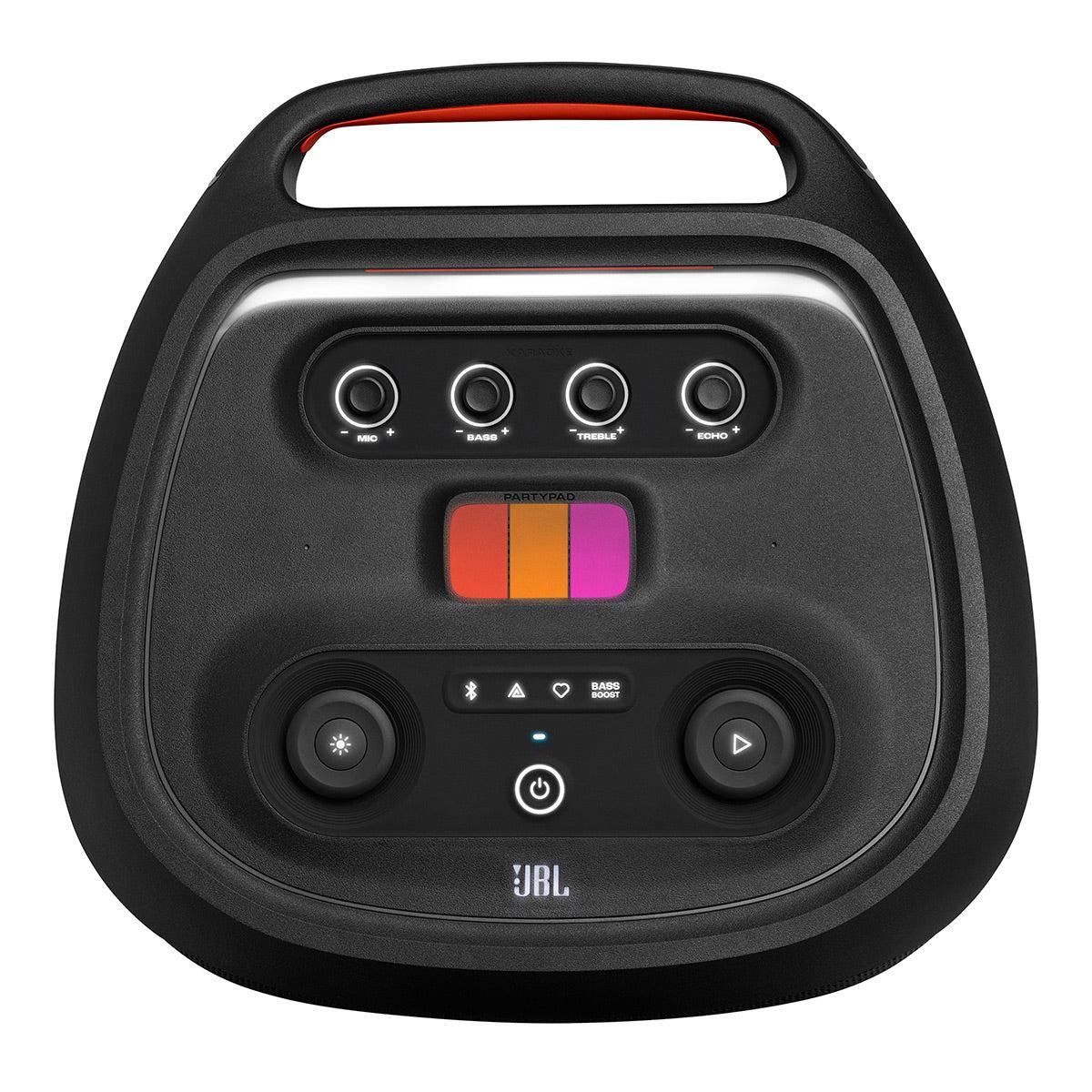
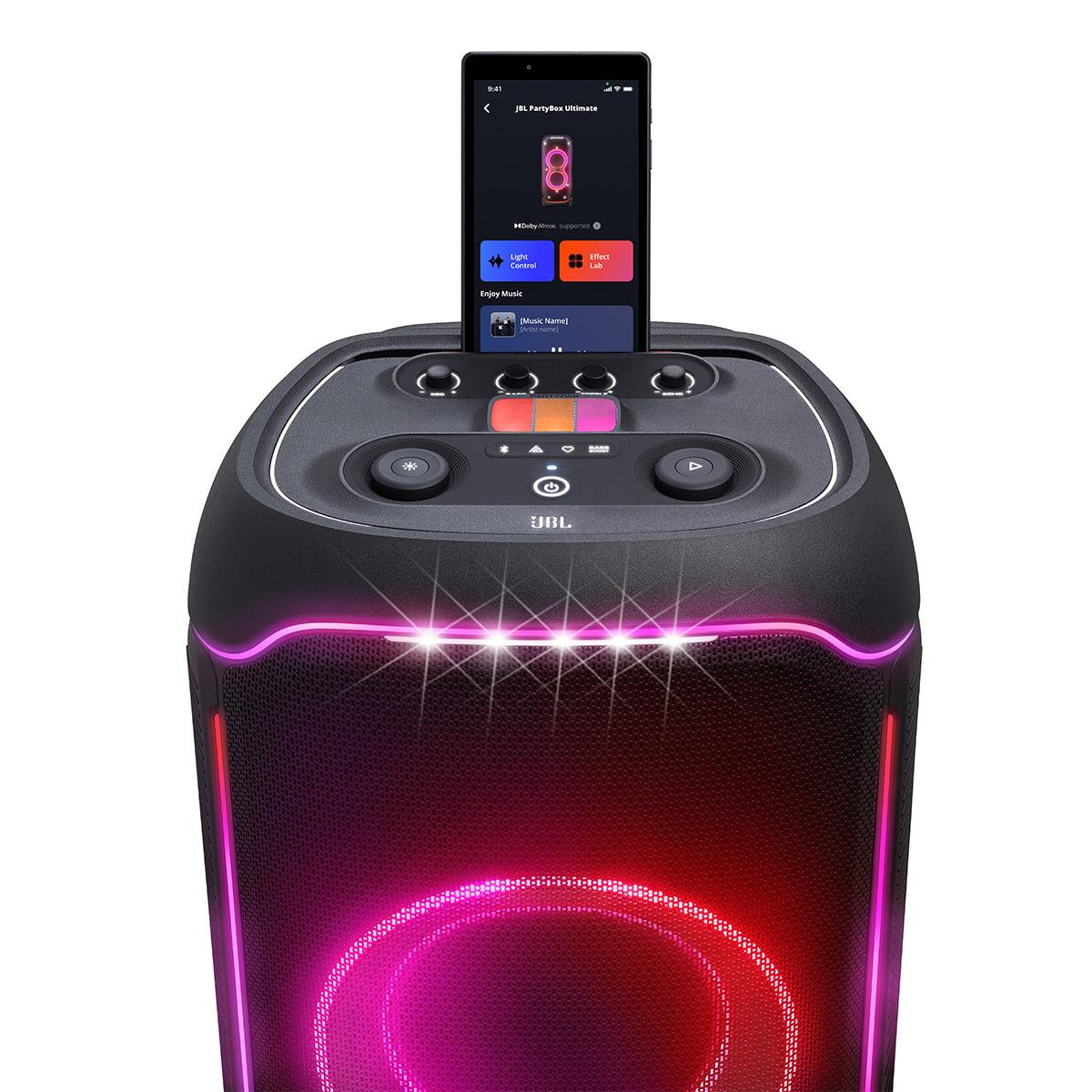
The JBL PartyBox Ultimate features the innovative JBL PartyPad - an interactive DJ control surface built into the top of the speaker. This touch-sensitive panel includes three color-coded sections that trigger different sound effects: horn sounds, repeater effects (which stutter and repeat audio segments), and filter effects that sweep frequency ranges up and down. Users can tap for short effects, hold for sustained effects, or slide their fingers across the pads for smooth transitions.
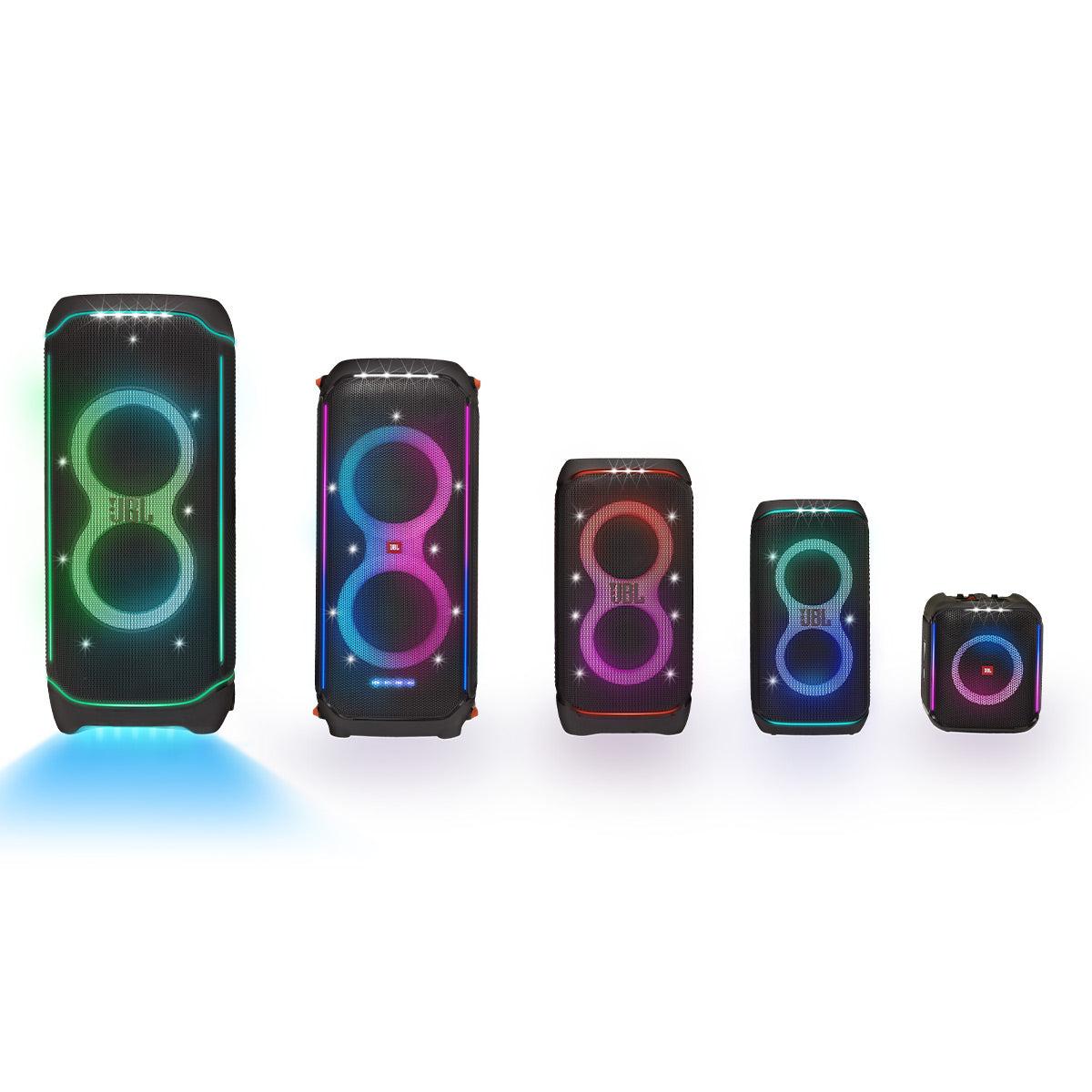
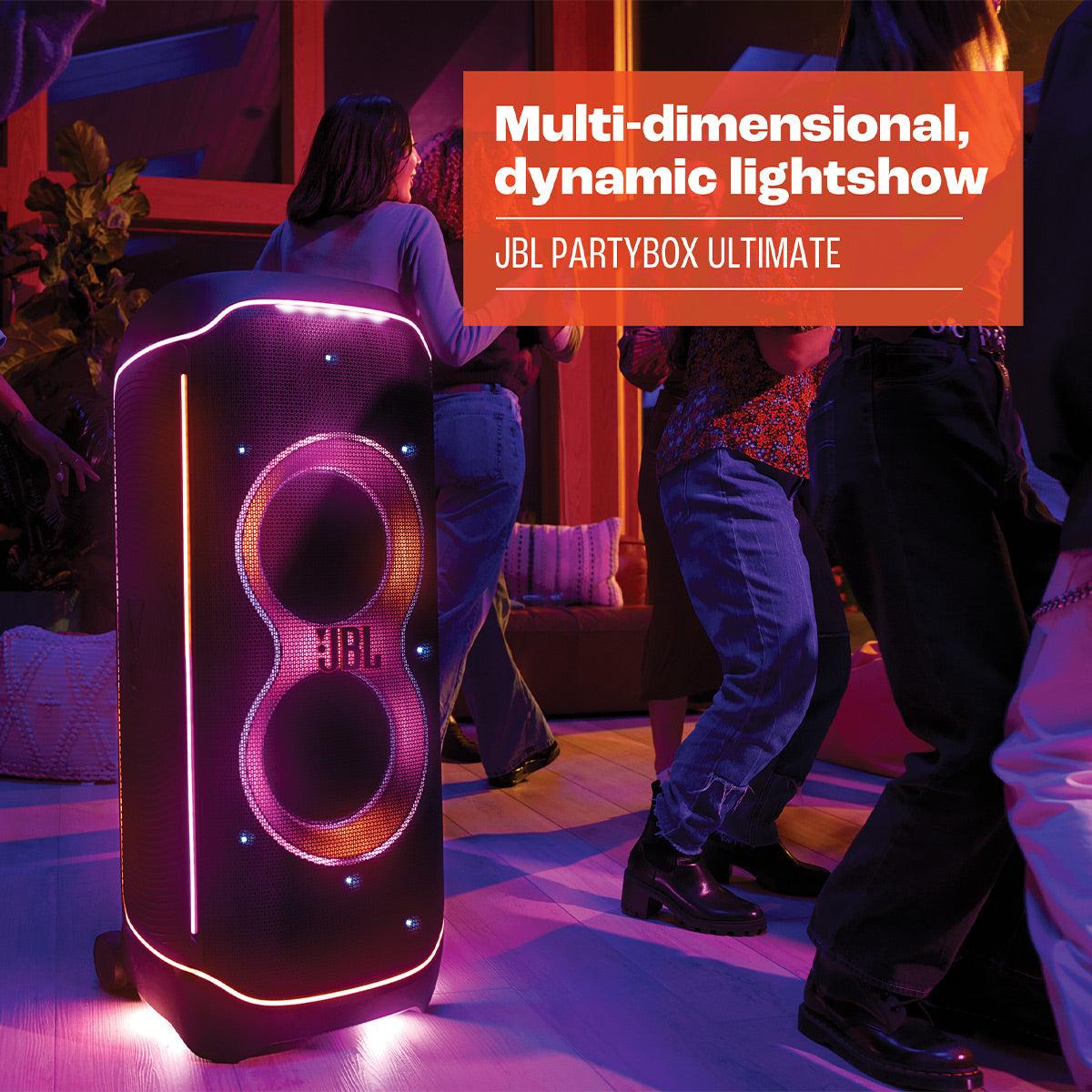
The lightshow on the JBL PartyBox Ultimate represents the most advanced implementation in JBL's lineup. Multi-dimensional RGB lighting includes starry night effects that twinkle across the speaker grille, light trails that sweep in patterns, synchronized strobes for high-energy moments, and ground projection that casts colored patterns onto nearby surfaces. All lighting effects automatically sync to music tempo and can be customized through the JBL One app.
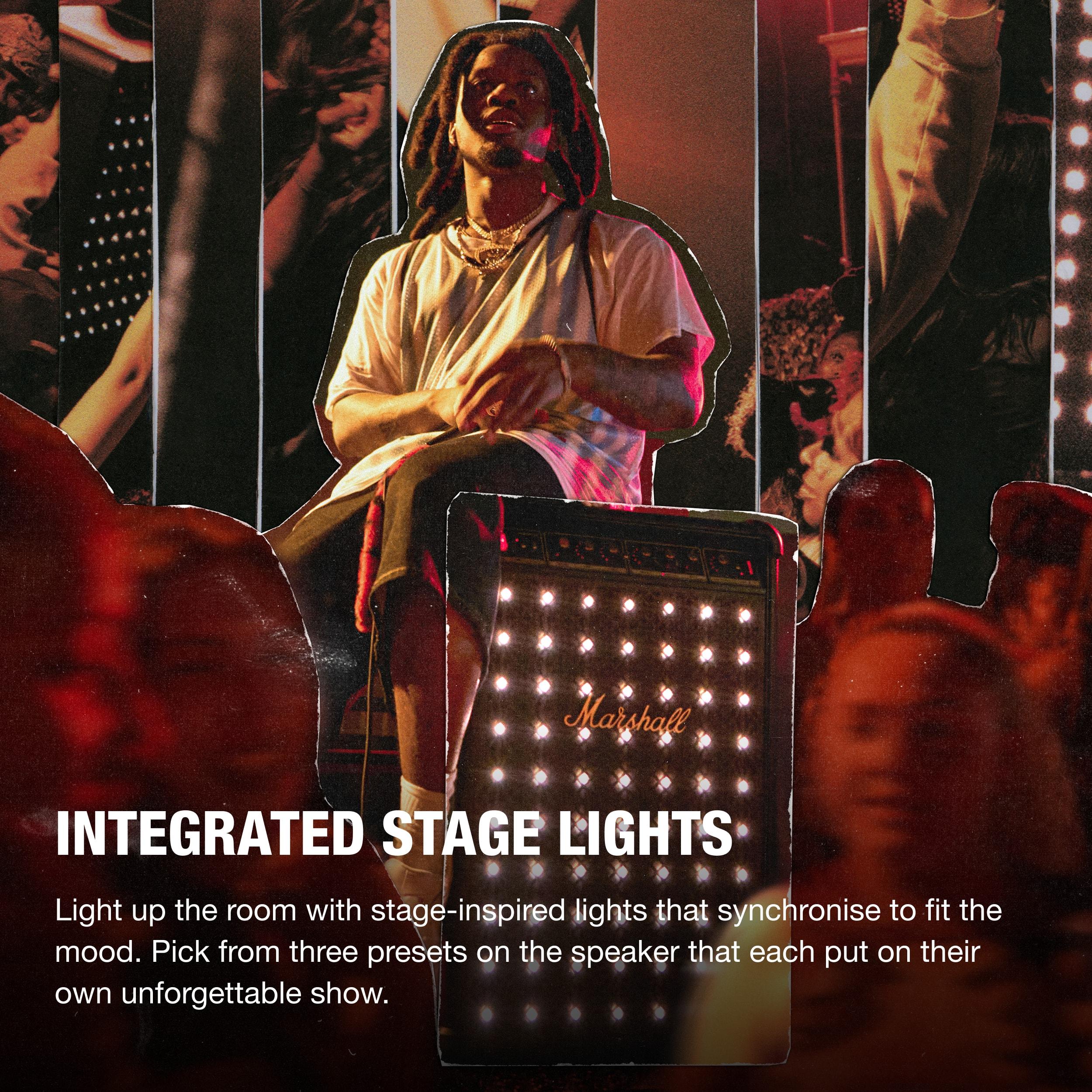
The Marshall Bromley 750 takes a more sophisticated approach to lighting with stage-inspired LED arrays hidden behind the metal grille. Rather than colorful disco effects, Marshall's lighting resembles professional stage spotlights and marquee signage with warm, almost white illumination. Three preset modes include static ambient lighting and two music-reactive settings that pulse and breathe with the audio.
Marshall's approach reflects their heritage in professional amplification - the lighting enhances the atmosphere without overwhelming the music or creating distraction. When turned off, the LEDs remain completely invisible, maintaining the classic amplifier aesthetic.
Outdoor use demands robust construction and weather resistance. The Marshall Bromley 750 achieves IP54 rating, providing protection against both dust ingress and water splashes from any direction. More importantly, the drivers themselves feature built-in drainage systems that channel water away from sensitive components, allowing the speaker to continue operating even if splashed or caught in light rain.
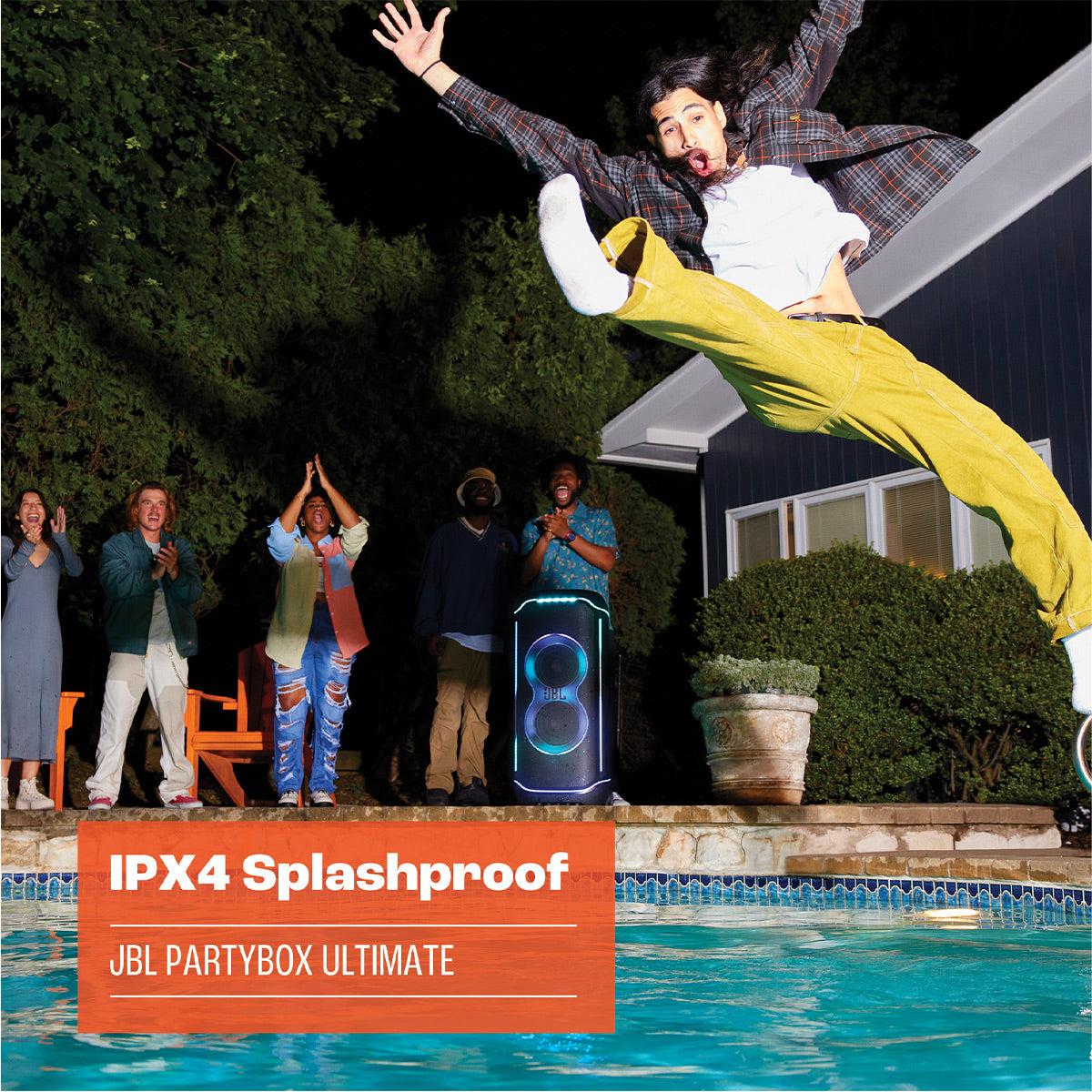
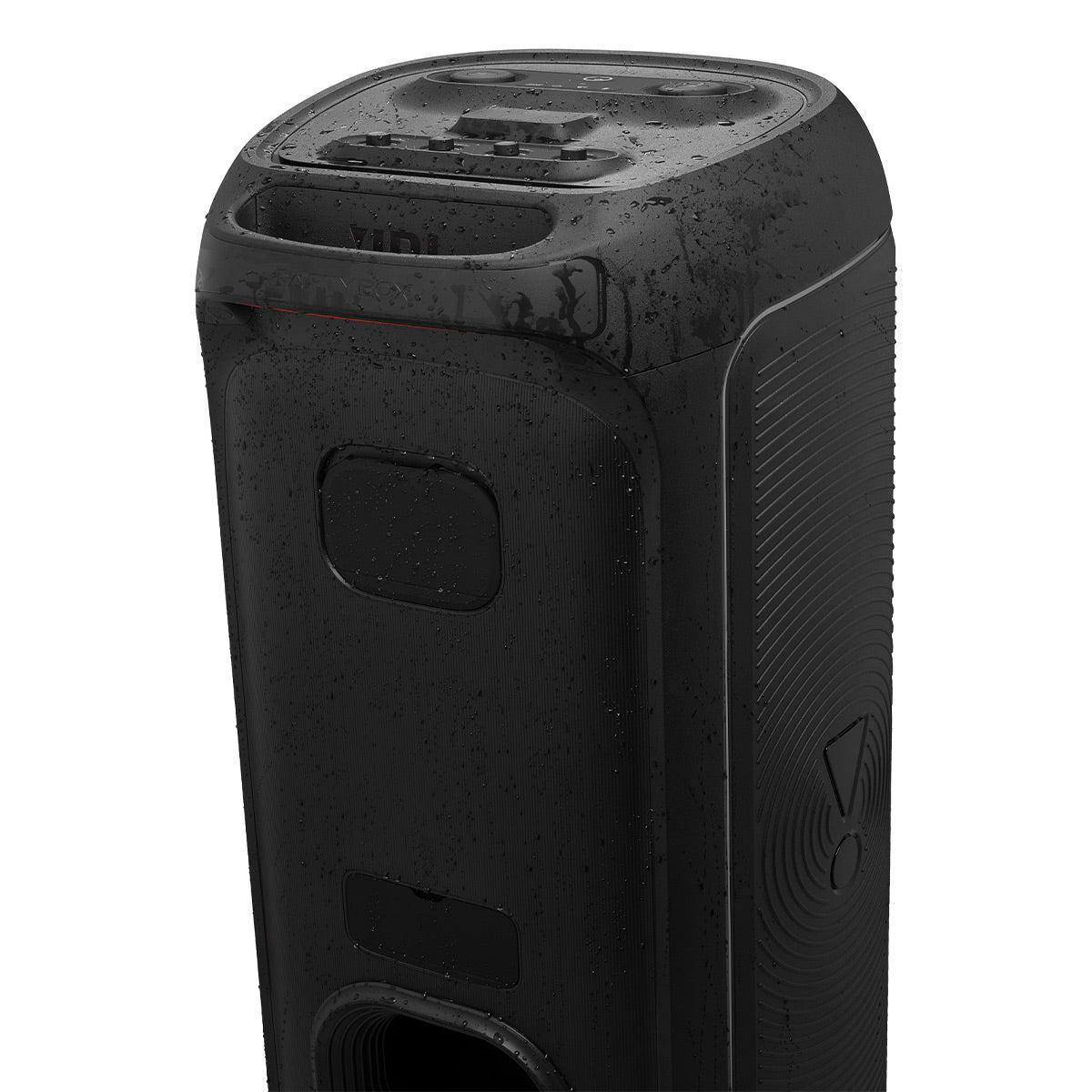
The JBL PartyBox Ultimate offers IPX4 rating, which protects against water splashes but provides no dust protection. While suitable for poolside use, it's less robust for sandy beaches or dusty outdoor venues.
Both speakers feature durable construction with reinforced corners and protective grilles, but the Marshall's superior weather resistance makes it more suitable for challenging outdoor environments.
The JBL PartyBox Ultimate includes automatic self-tuning technology that uses built-in microphones to analyze room acoustics and adjust the frequency response accordingly. This system scans the environment when first powered on and automatically optimizes bass response, midrange clarity, and treble balance for the specific space and placement.
This feature eliminates the guesswork from speaker placement and ensures optimal sound quality whether the speaker is positioned against a wall, in a corner, or in the center of an outdoor space. The self-tuning runs automatically but can also be manually triggered through the JBL One app when the speaker is moved to a new location.
The Marshall Bromley 750 relies on manual optimization through its Sound Character control, requiring users to switch between Dynamic and Loud modes based on their environment and desired sound signature. While less automated, this approach gives users direct control over the sonic character and can be adjusted in real-time during events.
The JBL One app provides comprehensive remote control over the JBL PartyBox Ultimate, including EQ customization, lightshow programming, multi-speaker management, and firmware updates. The app also enables advanced features like creating custom light shows synchronized to specific songs and managing multiple PartyBox speakers as a connected system.
Marshall's app approach focuses on essential controls and maintains the straightforward, no-nonsense philosophy reflected in their hardware design. While less feature-rich than JBL's offering, it provides reliable control over core functions without complexity.
For intimate indoor gatherings of 10-30 people, both speakers provide more than adequate power, but the Marshall Bromley 750 excels with its 360° sound distribution and Dynamic mode optimization. The omnidirectional design ensures everyone experiences full-range sound regardless of seating arrangements.
Large outdoor events favor the JBL PartyBox Ultimate with its superior power output and automatic room correction. The higher SPL capability ensures the music remains authoritative even in open spaces with significant ambient noise.
For mobile DJs and performers, the Marshall Bromley 750 offers unmatched flexibility with its 40+ hour battery life and professional input options. The ability to operate completely wirelessly for extended periods makes it ideal for venues without convenient power access.
Corporate events and wedding receptions benefit from the Marshall Bromley 750's sophisticated aesthetic and refined lighting, which enhances ambiance without overwhelming conversation during dinner portions of events.
The decision between these exceptional speakers ultimately depends on your specific needs and usage patterns. The Marshall Bromley 750 excels as a versatile, high-quality party speaker that prioritizes portability, battery life, and musical refinement. Its 40+ hour runtime, weather resistance, and 360° sound design make it ideal for users who need reliable performance across diverse environments and extended events.
Choose the Marshall Bromley 750 if you frequently host outdoor events without guaranteed power access, value sound quality and musical detail over maximum volume, prefer sophisticated aesthetics over flashy party effects, or need a speaker that can handle marathon playback sessions without interruption.
The JBL PartyBox Ultimate represents the pinnacle of party speaker technology with maximum power, advanced features, and spectacular visual effects. Its 1100-watt output, Dolby Atmos processing, and interactive PartyPad create an unmatched party experience for users who have consistent access to AC power.
Choose the JBL PartyBox Ultimate if you need maximum volume for very large spaces, have reliable access to electrical power, want the most advanced lightshow and interactive features, value Wi-Fi streaming quality and smart home integration, or host professional events requiring ultimate impact and presence.
Both speakers represent excellent value within their respective market positions at the time of writing, though the Marshall Bromley 750 offers superior value for most residential users who don't require the JBL's extreme power output. The JBL's premium pricing is justified for users who need its advanced feature set and maximum performance capabilities.
The evolution of party speakers continues at a rapid pace, with both Marshall and JBL pushing boundaries in different directions. Marshall's entry into this market segment brings their legendary audio engineering expertise and professional aesthetic, while JBL continues advancing the interactive entertainment aspects that define modern party speakers. Your choice between these two exceptional options will depend on whether you prioritize the Marshall's refined musicality and portability or the JBL's maximum impact and cutting-edge features.
| Marshall Bromley 750 | JBL PartyBox Ultimate |
|---|---|
| Power Output - Determines maximum volume and room coverage | |
| 500W total (eight Class D amplifiers) | 1100W RMS (significantly louder for large spaces) |
| Maximum Sound Level - Critical for outdoor events and large gatherings | |
| 127 dB SPL (loud enough for most parties) | 116.7 dB DBC scale (fills spaces up to two basketball courts) |
| Power Source - Affects placement flexibility and event duration | |
| 40+ hour rechargeable battery (user-replaceable) | AC power only (requires electrical outlet access) |
| Weight and Portability - Important for setup and transport | |
| 52.7 lbs with wheels and telescoping handle | 87 lbs with heavy-duty wheels (significantly heavier) |
| Sound Design - Affects listener experience and coverage area | |
| 360° True Stereophonic (omnidirectional sound) | Front-firing drivers with Dolby Atmos over Wi-Fi |
| Weather Resistance - Essential for outdoor use | |
| IP54 rating (dust and splash protection with drainage) | IPX4 rating (splash protection only, no dust resistance) |
| Connectivity Options - Determines audio source flexibility | |
| Bluetooth 5.3, USB-C, RCA, dual XLR/6.35mm combo jacks | Wi-Fi 6, Bluetooth 5.3, USB-A, dual 1/4" inputs, daisy-chaining |
| Advanced Audio Features - Enhances sound quality and user control | |
| Sound Character control (Dynamic/Loud modes), onboard reverb/delay | Dolby Atmos, automatic self-tuning, comprehensive EQ via app |
| Interactive Features - Adds entertainment value beyond music playback | |
| Stage-inspired LED lighting (3 presets, music-reactive) | JBL PartyPad DJ controls, multi-dimensional RGB lightshow |
| Battery Life - Critical for untethered operation | |
| 40+ hours continuous playback, doubles as power bank | Not applicable (AC powered only) |
| Multi-Speaker Connectivity - For larger events and sound systems | |
| Bluetooth Auracast pairing, auxiliary daisy-chaining | Wireless TWS pairing, multi-speaker app management |
| Professional Audio Inputs - Important for live performance and karaoke | |
| Dual XLR/6.35mm combo jacks with onboard effects | Dual 1/4" mic/guitar inputs with dedicated controls |
| Smart Features - Modern convenience and optimization | |
| Manual sound character adjustment via physical controls | Automatic room calibration, comprehensive app control |
The JBL PartyBox Ultimate is significantly louder with 1100W RMS of power compared to the Marshall Bromley 750's 500W total output. The JBL can fill spaces equivalent to two basketball courts, while the Marshall is better suited for medium to large gatherings. If maximum volume is your priority, the JBL PartyBox Ultimate delivers superior loudness capabilities.
The Marshall Bromley 750 has exceptional battery life with over 40 hours of continuous playback from its user-replaceable battery system. The JBL PartyBox Ultimate doesn't have a battery at all and requires AC power. For outdoor events or locations without power outlets, the Marshall Bromley 750 is the clear winner for portability and extended use.
The Marshall Bromley 750 generally offers superior sound quality with its 360° True Stereophonic design and Sound Character control that optimizes audio for different environments. The JBL PartyBox Ultimate emphasizes bass-heavy party sound with Dolby Atmos over Wi-Fi. For critical music listening, the Marshall Bromley 750 provides more refined audio, while the JBL excels at creating powerful party atmospheres.
Both speakers support karaoke and live performance. The Marshall Bromley 750 features dual XLR/6.35mm combo jacks with built-in reverb and delay effects. The JBL PartyBox Ultimate includes dual 1/4" microphone inputs with dedicated volume controls. Both offer professional-grade inputs, though the Marshall Bromley 750 provides slightly more versatile connectivity options for instruments and microphones.
The Marshall Bromley 750 is significantly more portable, weighing 52.7 pounds compared to the JBL PartyBox Ultimate's 87 pounds. More importantly, the Marshall operates on battery power for complete portability, while the JBL requires AC power outlets. Both have wheels and handles, but the Marshall Bromley 750 offers superior portability for outdoor events and venues without power access.
The Marshall Bromley 750 is better suited for outdoor use with its IP54 rating providing both dust and splash protection, plus built-in drainage systems. The JBL PartyBox Ultimate has IPX4 splash protection but no dust resistance. For beach parties, camping, or dusty outdoor venues, the Marshall Bromley 750 offers superior weather protection and doesn't require power outlets.
The JBL PartyBox Ultimate has more advanced party features with multi-dimensional RGB lighting including starry effects, light trails, strobes, and ground projection, plus the interactive JBL PartyPad for DJ effects. The Marshall Bromley 750 features more sophisticated stage-inspired white LED lighting with three presets. For flashy party atmospheres, the JBL PartyBox Ultimate provides more entertainment value.
Both speakers support multi-speaker connectivity but use different methods. The Marshall Bromley 750 offers Bluetooth Auracast wireless pairing and auxiliary cable daisy-chaining. The JBL PartyBox Ultimate provides wireless TWS pairing and comprehensive app-based multi-speaker management. The JBL offers more advanced wireless coordination, while the Marshall Bromley 750 provides backup wired connections.
The Marshall Bromley 750 typically offers better value with its 40+ hour battery life, 360° sound design, weather resistance, and professional build quality. The JBL PartyBox Ultimate commands a premium for its higher power output, advanced lightshow, and Wi-Fi streaming capabilities. For most users, the Marshall Bromley 750 provides excellent performance at a more accessible price point.
Neither speaker is specifically designed for home theater use, lacking HDMI inputs for direct TV connection. However, the JBL PartyBox Ultimate has an advantage with Wi-Fi connectivity supporting AirPlay and Chromecast for wireless TV audio streaming. Both can connect via Bluetooth or auxiliary cables. For dedicated home theater use, specialized soundbars would be more appropriate than either the Marshall Bromley 750 or JBL PartyBox Ultimate.
Both speakers offer professional features, but serve different needs. The Marshall Bromley 750 excels for mobile DJs with its 40+ hour battery life, professional XLR inputs, and complete portability. The JBL PartyBox Ultimate suits venue-based DJs with its higher power output, interactive PartyPad controls, and advanced lightshow. Mobile performers should choose the Marshall Bromley 750, while stationary setups benefit from the JBL PartyBox Ultimate.
The JBL PartyBox Ultimate offers more advanced connectivity with Wi-Fi 6, enabling high-resolution streaming, AirPlay, Chromecast, and Dolby Atmos. The Marshall Bromley 750 focuses on reliable connections with Bluetooth 5.3 Auracast, USB-C, RCA, and professional XLR inputs. For streaming quality and smart home integration, choose the JBL PartyBox Ultimate. For versatile professional inputs and battery operation, the Marshall Bromley 750 is superior.
We've done our best to create useful and informative comparisons to help you decide what product to buy. Our research uses advanced automated methods to create this comparison and perfection is not possible - please contact us for corrections or questions. These are the sites we've researched in the creation of this article: theluxereview.com - techradar.com - whathifi.com - routenote.com - techradar.com - marshall.com - newatlas.com - marshall.com - youtube.com - wallpaper.com - sweetwater.com - soundguys.com - t3.com - bestbuy.com - hiconsumption.com - architeg-prints.com - audioadvice.com - youtube.com - crutchfield.com - youtube.com - youtube.com - youtube.com - youtube.com - versus.com - youtube.com - rtings.com - youtube.com - youtube.com - jbl.com - pcx.com.ph - global.jbl.com - gzhls.at - electronicexpress.com - harmanaudio.in - jbl.com - dell.com - robot-advance.com - device.report - ro.harmanaudio.com

Privacy Policy
Terms and Conditions - Affiliate Policy
Home Security
© Copyright 2008-2026.
11816 Inwood Rd #1211, Dallas, TX 75244